
Ginkgopolis
At a glance
Rules, cards and Q&A (Chinese)
The rules, card data and player questions for this game are written in Chinese. Open the Chinese page to read them.
Where to find full rules
Full rules and card lookup are available in the cunlema app at cunlema.cn — pick this game and ask about any rule, card or turn you are unsure about.
Related games
Rulebook text (Markdown)
This game has 2 rulebook Markdown file(s) in our library; 2 rendered inline below — expand to read or download.
rules_zh_银杏城_629.md17.8 KB
银杏城 中文规则书
来源:
ginkgopolis_source_zh_629.pdf(集石文档 629,扫描件,无文本层)
转写:本机 MinerU 3.4.5 + MinerU2.5-Pro-2605-1.2B(vlm-engine),2026-10-30
说明:原书图位保留为「〔图:images/xxx.jpg〕」并在mineru/images/存原图;文字条款以本文件为准,涉及图标数量的细节与英文官方规则书交叉核对。
銀杏樹(Ginkgo Biloba),歷史上最悠久也最強壯的樹種,也是一種與自然共生的建築象徵。
西元 2212 年,人類耗盡了地球所給予的資源,居住空間日益減少,人類的建設面臨艱困的挑戰,發展城市時必須在生產資源與消費間找到一個平衡點。
為了因應這種新類型城市的開發,你找了一群專業的專家組成團隊,為了成為“銀杏之城”裡最優秀的城市規劃師而努力。
遊戲概要與目標
在銀杏之城裡,玩家擔任開發及營運城市的規畫師。玩家要盡可能的在遊戲過程獲取分數。
每一回合,玩家一起從手上選擇一張卡來執行這次的行動。單純使用卡片允許玩家營運城市中的建設,配合建築版塊打出的卡片可以蓋一個新的建築以及營運鄰近的多個建築。玩家依回合順序輪流執行動作。
當遊戲結束時,擁有最多分數的玩家贏得遊戲。
遊戲內容物
● 60 建築版塊:
每個顏色 20 個(藍、紅、黃)數字為 1-20
● 99 張卡:
12 城市化卡,A-L
60 建築卡,3 種顏色各 20 張,數字 1-20
27 角色卡
● 125 個資源:每個玩家顏色各 25 個
- 10個新手牌指示物
● 12 個城市化指示物:A-L
- 5個玩家顏色的屏風
- 分數:1、3、5、10分
- 15個施工點
- 1個起始玩家標記
- 1 本規則書
重要的遊戲元素
資源
〔图:images/cff420f3ee9114ce03fd5b71db5c92a3ac5d9c3d63b1f733fdbcae3ccfe5da78.jpg〕
資源用來建造建築物與使用建築物。與玩家顏色相同,所以也可以用來識別建築物的擁有者。
建築卡片
每張建築卡片都對應一個建築版塊。
當卡片被打出,該卡片指定了有同樣數字與顏色的城市上的建築。
〔图:images/4902d4511a0542585075118c11bb40f890b5099a1e53ce4045df212db1855e67.jpg〕
建築版塊
建築版塊代表玩家可以建造的建築。版塊上都有顏色與數字,每一塊都視唯一的。
〔图:images/a40bf270ed5052eded329e7cfca4fd71a04a69c4322f998293142ccd5ba3c547.jpg〕
版塊也可能重疊而形成一個多層的單一建築。在這種情況下,最上面的建築
版塊定義此建築的數字與顏色。建築物的樓層數永遠與建築物上的資源數箱等。
紅色的建築可以生產資源,藍色的建築可以幫你獲得建築版塊,黃色的建築則可以獲得分數。
城市化指示物與卡片
城市化指示物位於城市的郊區,顯示了何處可以蓋新的建築物。每張城市化卡片都對應了一個城市化指示物。
〔图:images/2ec288065ebf575cd965b07487d2d3d6d8f969fc4699b0fda806d73060ee736b.jpg〕
角色卡
每個玩家起始時都有3張角色,如果玩家進行新手遊戲,那麼使用預設的角色卡(詳見遊戲設置)
〔图:images/63b54b68866b78089747d3112bf14223da9f8c932339234a6c8090c7a848f191.jpg〕
遊戲設置
-
隨機放置 9 個數字為 1、2、3 的建築版塊(每顏色各 3 塊)成為 3×3 的正方形,將 12 片城市化版塊照順序如圖放置。
-
隨機混洗剩餘的建築版塊,並且面朝下放置成為供應區,遊戲中玩家若需領取版塊皆從此處領取。如果是2-3人遊戲,那麼隨機移除6個版塊(不展示)。
-
放置分數與施工點在建築版塊旁。
-
將 1 2 張城市化卡(A-L)與 9 張建築卡(數字 1-3)混洗成牌庫。在 2-3 人遊戲,棄掉頂端 7 張卡片放置在牌庫旁(如圖)。
-
依照顏色將剩餘建築卡片分為三疊,每疊各照數字4-20排序。
-
每位玩家選擇一個顏色,並將對應顏色的資源拿取下列數量放置在供應區:
2人遊戲-25個資源
3人遊戲-20個資源
4人遊戲-18個資源
5人遊戲 - 16個資源
將沒使用的資源放回盒子,不再使用。遊戲中玩家所能領取的資源僅能來自桌上的供應區。
- 每位玩家拿取對應顏色的屏風與2個新手牌指示物。
- 每位玩家拿取 3 張角色卡。
關於角色卡:
部分角色卡的右上有數字,同顏色中數字是不重複的。在新手遊戲中,將同樣數字的卡片分在一組,玩家隨機從數組卡片中選取其中一組(應是紅、黃、藍各一張)
在一般遊戲中,將用輪抽決定你的角色卡。每位玩家抽取4張角色卡,並且秘密的選擇一張,將剩餘3張卡片傳給左手邊的玩家,從右手邊的玩家收到3張卡片。如此進行,直到所有人都選了3張卡片,將為被選擇的角色卡放回盒子中。皆著每位玩家同時展示手上所有角色卡。
將你的3張角色卡放置在屏風前。每張角色卡的左上角都有符號(建築版塊、資源、分數)表示這些角色給你多少起始物資。拿取這些起始物資,並且放在屏風後。注意遊戲中你獲得的所有物資都要隱藏在屏風後。
以圖為例,此玩家獲得:4個資源、2分、2個建築版塊。
- 最近有種一顆樹的人為起始玩家。
10.每位玩家從牌庫抽4張卡片,遊戲開始!
〔图:images/885f9d6b7ac22a56f3d7de193a0130b89358685e5c028c2e94cf2d73bfc10139.jpg〕
(图内文字:4 5 4 4 4 A B C L 1 2 1 1 D K 2 1 2 E J 2 2 2 F I H G 2 6 1 3 5 10 3 8 7)
進行遊戲
一個回合共分為 3 個階段:(1)選擇一張卡片 (2)執行行動 (3)準備下一回合
階段一:選擇一張卡片
此階段每個玩家同時進行。
玩家從4張手牌中選擇一張牌,將牌正面朝下放置在屏風前,將未使用的3張卡片面朝放置在屏風旁。如果你有起始玩家卡,將其放在你這階段未使用的3張卡片上,讓每位玩家都能看到你是起始玩家。
卡片可在階段二根據玩家想執行的動作用下列兩種方式使用:(1)單獨使用卡片(2)配合建築版塊使用。如果你要配合建築版塊使用,從屏風後選擇版塊,並面朝下放置在卡片上。
新手牌指示物:每個玩家每場遊戲有兩次的機會,棄掉1個新手牌指示物,並且對其他玩家宣告「我要抽新手牌了!」接著棄掉手上4張卡片,抽新的4張卡片。
如果有多位玩家在這輪想要抽新手牌,則按照順序抽牌。換手牌並不會影響別人的回合進行。
遊戲結束時每個未使用的新手牌指示物一個2分。
〔图:images/b40b5786a460386a529858ef97436fc652f09b1ef73c92bb6d58560dfd415417.jpg〕
natural_image
Illustration of a bunch of food items including carrots, lettuce, and eggplant (no text or symbols)階段二:執行行動
從起始玩家開始,已順時針方向進行回合,每位玩家展示選擇的卡片與版塊(如果有的話),接著執行對應的行動。
行動取決於卡片的類型(城市化/建築)以及單獨使用卡片或配合建築版塊使用:
A.開發:單獨使用卡片
B.城市化:配合版塊使用城市化卡片
C.建設樓層:配合版塊使用建築卡片
A.開發:單獨使用卡片
- 如果打出的是城市化卡片,從供應區拿取 1 資源或 1 版塊。
〔图:images/91a67c40baae33d9d9f59abece40b53cf75cfd9e82eb0bc43d5341549cc88945.jpg〕
natural_image
Simple diagram showing a green landscape with trees, a blue square, and a red circle, connected by a black arrow (no text or symbols)- 如果打出的是建築卡片,根據卡片的顏色與對應建築領取物資:
紅色卡片 - 資源
藍色卡片 - 版塊
黃色卡片 - 分數
物資的數量取決於建築的樓層數,1樓給予1個物資,2樓給予2個物資,以此類推。
〔图:images/151563cf57ba44c2968f08fc41e43073823757fe17e23269679d9460bcb3843f.jpg〕
natural_image
Three blue rectangular objects with a small white object on the left, arranged horizontally with a rightward arrow (no text or symbols)- 如果有對應的卡片獎勵的話,領取卡片獎勵。這些獎勵卡來自於遊戲初期的角色卡,或是藉由建設樓層這個動作所獲得。
〔图:images/949780c91db3e39d6f9817c04acc15764641b12c06139c62691fef77d3c922e0.jpg〕
- 執行行動後,將打出的卡放入棄牌堆。
〔图:images/5c0663cf99e6ec936b67b9e477b906b300b9d9bf3f45f7675f16f5a695d9763b.jpg〕
(图内文字:Game interface screenshot showing a card with a red card, a game scene with a sandwich, and a grid of game pieces with numbered labels.)
範例:
A玩家單獨打了紅色7號卡片,對應了紅色7號建築。此建築兩層樓高,因此他從供應區獲得2個資源。
B.城市化:配合版塊使用城市化卡片
當你配合版塊打出城市化卡片,城市將擴展,新的建築會加入城市外圍,流程如下:
〔图:images/c2a7dee1aeb7f31dc75a829530d91e47cecfc4ce083f91c59877b788fb57adc2.jpg〕
-
找到卡片對應的城市化指示物,將版塊放置於該處。
-
從屏風後拿取資源,放置版塊上來標示你擁有此建築。同時放置一個施工點在版塊上,用來標明此版塊對應的卡片尚未進入牌庫中。
-
移動城市化指示物到與新版塊相鄰的空格(不可斜角)。在少數的情況,可能會沒有相鄰的空格,此時玩家可以任意移動城市化指示物,但需保持排序的規則(例:C需在B跟D中間),因此在這類的情況下,你可以移動數個城市化指示物。
-
與其他建築物相鄰會獲得好處,如同打出該建築物卡片一般,你獲得相鄰(對角線不算)建築物的物資,數量與樓層相同。以圖為例,這位玩家蓋在右上角的建築讓他獲得1個資源(來自左邊)與2個版塊(來自下方)
〔图:images/0f3c485fded00652ba537f9cab335c08758e6b41bc9de1567a2cf124de91b9a0.jpg〕
-
如果有對應的卡片獎勵的話,領取卡片獎勵。這些獎勵卡來自於遊戲初期的角色卡,或是藉由建設樓層這個動作所獲得。
-
執行行動後,將打出的卡放入棄牌堆。
C.建設樓層:配合版塊使用建築卡片
當你配合版塊打出建築卡片,新的樓層蓋在對應的建築上,流程如下:
- 將卡片指定的建築上所有資源還給原擁有者,如果原擁有者是其他玩家,則每個退回的資源可以讓他得到1分。如果是原擁有者自己,那麼無法獲得任何分數。
〔图:images/c6590595ee609536528ff350f456aad4d0c171b2657abcc01e514b84a4e8e776.jpg〕
- 放置建築版塊在卡片指定的建築上。如果有額外化費,則需支付。
額外花費 1:如果蓋上去的建築數字低於原建築,那麼必須用分數來支付差額。(例:如果你用 4 蓋住 5,那麼需支付 1 分。)
〔图:images/53ac16304f8b18ace11aad9a0d1cc809f45b22a09e78026c33c938fe55324315.jpg〕
額外花費 2:如果蓋上去的建築版塊顏色不同於原建築,那麼必須支付 1 資源到供應區。
- 放置你的資源到建築版塊上,建築物目前為幾層就放幾個資源。注意,所有建築物上的資源都應該是單色且符合建築層數。同時放置一個施工點在版塊上,用來標明此版塊對應的卡片尚未進入牌庫中。
〔图:images/d524e3741bb12beccc7545ee1993f91fd213bc74ac31ce58ece5c3c20ed463f5.jpg〕
-
如果有對應的卡片獎勵的話,領取卡片獎勵。這些獎勵卡來自於遊戲初期的角色卡,或是藉由建設樓層這個動作所獲得。
-
面朝上保留這回合打出的卡片,這張卡片將在剩餘的遊戲時間提供你開發獎勵,共有2種:
-
常駐獎勵(黑色箭頭),遊戲中只要符合條件即可獲得。
-
結束獎勵(等號 =),遊戲結束將給你分數。
注意!如果你配合建築版塊使用卡片,卻付不出所需資源,將版塊收回屏風後,這回合視同你單獨使用卡片。
準備下一回合
當所有玩家的行動都執行完,每位玩家將這回合沒使用的卡片傳給左手邊的玩家(包含起始玩家卡),接著從起始玩家開始,每人抽1張卡片將手牌補至4張。
在任何時候,如果牌庫用光,起始玩家照下列流程準備新牌庫:
- 找出當前有施工點的建築版塊,從旁邊的三疊建築卡中尋找對應顏色與數字的卡片,將其加入棄牌堆。
- 混洗棄牌堆所有卡片,面朝下組成一個新的牌堆。
- 在 2-3 人遊戲,棄掉頂端 7 張卡片放置在牌庫旁。4-5 人遊戲,不用棄牌。
- 將施工點移除,放回供應區。
遊戲結束
當板塊第一次用光時,每個玩家可以照自己的希望加入版塊的遊戲中,流程如下:
- 玩家們同時在屏風後秘密的準備一疊版塊,所有人準備完畢後,同時展示。
2.每個玩家根據展示的版塊拿取分數,一個版塊1分。 - 將所有的版塊混洗成回新的版塊供應區,接著遊戲照常進行。
遊戲會在下列兩種情況結束遊戲:
- 供應區的版塊第二次用盡
2.一個玩家放置了他所有的資源在城市裡(2、3、4、5名玩家時分別為25、20、18、16個資源)
當達成上述兩個條件的其中一個,執行完本回合的執行行動階段,然後遊戲結束。
注意!也有可能因為別的玩家行動導致你放置僅存的資源而結束遊戲。
將下列所有分數加總,分數最高的即為贏家:
* 遊戲中獲得的分數(銀杏型狀的分數指示物)
* 依照卡片中 "遊戲結束獎勵" 獲得分數(卡片中的 = 符號)
* 每個未使用的新手牌指示物,一個2分。
* 根據玩家放置在”城市區”中的資源數獲得分數。
城市區:由兩個以上相鄰且同顏色的建築版塊所組成,孤立的建築版塊不會被視為一個區。
玩家計算每一區中各自擁有多少資源,該區擁有最多資源的玩家為第一名,獲得該區所有資源(不論顏色)總數的分數,第二名的玩家獲得等同於玩家區域內自己顏色資源的分數。
如果平手,則資源所在的建築層數最高的獲勝,如果還是平手,資源所在建築的數字最高的獲勝。
注意!如果一個地區上所有的資源都屬於同一個玩家,那麼他將同時獲得第一名與第二名,該地區每個資源點給予2分。
〔图:images/81edbcd48ccee01d5dccc0c9739534cb0960551751907ccfe9382c3f7abf9e70.jpg〕
natural_image
Illustration of five colorful food items on green backgrounds, no text or symbols present範例:
圖片中共有兩個區域,黃色與藍色,紅色的 20 號版塊因為只有單獨一個,所以不算在區域內。
在黃色區域內,因為米色玩家獨占此區域,因此他的3個資源共給他6分(3*2=6)。
在藍色區域共有7個資源,橘色玩家擁有最多資源,所以獲得7分。米色玩家與綠色玩家資源數相同,所在建築高度也相同,但米色玩家所在板塊數字較高,因此獲得第二名得到2分,綠色玩家沒有分數。
卡片獎勵
常駐獎勵
角色卡與部分的建築卡(1-9號)卡片下方有黑色箭頭。每張放置在你屏風前的這些卡,只要你做出對應的動作都可獲得獎勵。獎勵共用下列三種:
〔图:images/3fb0e5f22f0da88b3b5b5929a50cdf1f0e99a287c027ebb2e1d821de9e24db43.jpg〕
(图内文字:Sequence of six illustrated images showing a process with colored containers and objects, likely depicting a chemical or biological process.)
開發獎勵:
每次執行開發行動,可獲得1資源、1分數或1版塊。
城市化獎勵:
每次執行城市化行動,可獲得1資源、1分數或1版塊。
樓層獎勵:
每次執行建設樓層行動,可獲得1資源、1分數或1版塊。
結束獎勵
部分的建築卡(10-20 號)卡片下方有 " = " 符號。每張放置在你屏風前的這些卡,只要遊戲結束符合卡片上的條件就可獲得分數。
〔图:images/e7d90b9aaf47307e78715dc2c9f6eb23a350ba95444672518b0371bf252b7d7c.jpg〕
(图内文字:Illustration showing five identical 3D block diagrams with red, blue, and yellow blocks, each labeled with a equals sign.)
每個在卡片指定顏色版塊(黃、紅、藍)上的資源都獲得1分。
玩家屏風前每張與卡片指定顏色(黃、紅、藍)相同的卡片都獲得2分。
〔图:images/7121bcaff0922415240635e34bdacbad7b2075824c7082fde24b8185707b280f.jpg〕
每個你所擁有 1-2 層樓的建築,都獲得 1 分。
〔图:images/5a7a9ae3f2397ad5a7192107ee17919865eaa1ffb2a16eed37dd09d67bcc86de.jpg〕
每個你所擁有 3 層樓以上的建築,都獲得 3 分。
〔图:images/a5951ad1b6d0a6bb63a14cba78af46313796aee124c70ebfe307ae640d042c4d.jpg〕
此卡片如果放置在屏風前,獲得9分。
〔图:images/3721fcf06a9bdff72aadfc8fc3076fa8ca872bafe588fc2abe83415ee395ce78.jpg〕
玩家屏風前每張開發獎勵卡片,都獲得2分。
〔图:images/fe3d48ee51bf395dc4e22e9d2403394f7477e11550e5e96257a455326ab18eb3.jpg〕
玩家屏風前每張城市化獎勵卡片,都獲得2分。
〔图:images/ab88b457585695aa486afc422dc7ec218767f49d96b802c68f6292a5cba4b234.jpg〕
玩家屏風前每張樓層獎勵卡片,都獲得2分。
翻譯:納吉姆
部落格:http://nachimu.pixnet.net/blog
Download Markdownginkgopolis-rulebook.md30.5 KB

1 TO 5 plAyERS fROM 13 yEARS 45 MiNUTES
- Ginkgo Biloba, the oldest and strongest tree in the world, has become the symbol of a new method for building cities in symbiosis with nature. Humans have exhausted the resources that the Earth offered them, and humanity must now develop cities that maintain a delicate balance between resource production and consumption.
However, habitable space is scarce, and mankind must now face the challenge of building ever upwards. To develop this
new type of city, you will gather a team of experts around you, and try to become the best urban planner for Ginkgopolis.
OVERViEW ANd GOAL Of THE GAME
In Ginkgopolis, you are urban planners, who build and operate the buildings of the city in order to gain as many success points as you can. Each round, each player simultaneously chooses an action by each selecting one card from her hand. A card played by itself permits you to operate one building in the city, while a card played with a Building tile permits you to construct a new building and operate one or more adjacent buildings.
Actions are then resolved in turn order.
At the end of the game, the player who accrues the most success points wins the game.
IMPORTANT ELEMENTS Of THE GAME
RESSOURCES
The resources are necessary to construct and utilize buildings. They are the in the players' colors and are also used to identify the owner of a building.
BuildinG CARds
Each Building card is associated with a Building tile. When played, the Building card designates the building of the city whose topmost tile displays the same color and the same number.
Building Tiles
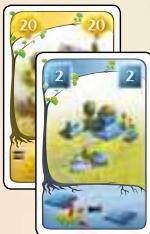
The Building tiles represent the buildings that the players can build. A tile is characterized by its color

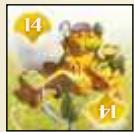
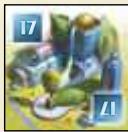
and by number. Each tile is unique. Several tiles can be stacked to form a single, multistory building. In such a case, the topmost tile defines the building's color and number. The number of floors in a building is always equal to the number of resources present on the building.
Red buildings are production buildings, which you can utilize to gain resources. Blue buildings are office buildings (academic, analysis, research, etc.), instrumental in developing real-estate projects; you can utilize them to gain Building tiles. Yellow buildings are buildings
GAME COMPONENTS
60 Building tiles — 20 Building tiles of each color (blue, red, and yellow), numbered 1 to 20.
99 cards:
12 Urbanization cards from A to L
60 Building cards, 20 in each of the 3 colors, numbered 1 to 20
27 Character cards
125 resources in the player colors (25 per color)
10 New Hand tokens
12 Urbanization tokens from A to L
5 screens in the player colors
Tokens for 1, 3, 5, and 10 success points
15 Construction Site pawns
1 First Player card
1 rulebook
for daily life (housing, commerce, leisure, etc.); you can utilize them to gain success points.
URbANizATiON TOkENS & CARds
The Urbanization tokens are situated on the outskirts

of the city. They designate the ground on which new buildings can be constructed. Each Urbanization card is associated with an Urbanization token.

CHARACTER CARds
Each player begins the game with 3 characters. In the introductory game, players take a predetermined set of cards.

points, bioengineers (blue) aid in project design (building tiles), and bio-technicians (red) help to produce or recycle resources.
SETUP
-
Randomly place the 9 Building tiles numbered 1, 2, and 3 (one such for each color) to form a 3×3 square. Place the 12 Urbanization tokens in alphabetical order, according to the illustration below.
-
Shuffle the remaining Building tiles, and place them in face-down piles. With 2 or 3 players, remove 6 random tiles from the game and return them to the box, without peeking. During the game, all the Building tiles the players gain will be taken from these piles, known as the general supply.
-
Put the success points and Construction Site pawns near the Building tiles.
-
Form a deck by shuffling together the 12 Urbanization cards (A to L) and the 9 Building cards that correspond to the starting buildings (the cards numbered 1–3). In a game with 2 or 3 players, discard the first 7 cards faceup next to the deck.
-
Sort the Building cards numbered 4–20 by color and by ascending order. Make 3 stacks with these cards, one for each color.
-
Each player chooses a color and places resources of that color in the general supply. Use 25 resources per player in a game with 2 players; 20 resources each with 3 players; 18 resources each with 4 players; 16 resources each with 5 players. Return any unused resources to the box. During the game, all resources the players gain will come from this general supply.
-
Each player receives a screen in her color and 2 New Hand tokens.
-
Each player starts the game with 3 Character cards.
In an introductory game, each player receives a random set of 3 Character cards that are identified by the same number.
In a normal game, you will draft your characters: Each player receives 4 Character cards from which she chooses one, and keeps it secret. She passes the remaining 3 cards to her left, and keeps one of the 3 cards passed to her from her right, and so on until each player has kept three cards.
Unselected Character cards are returned to the box. Next, all players simultaneously reveal their selected Character cards.
Place your 3 Character cards in front of your screen. In the top-left of each Character card, icons indicate how many items (Building tiles, resources, and success points) the character gives you for selecting it. Take these items, and place them behind your screen. All items you receive during the game will go behind your screen.
- The player who has most recently planted a tree receives the First Player card. She deals 4 cards from the deck to each player.
EXAMPLE
The setup for a 4-player game has been completed up through Step 7 (see illustration below). Because this is an introductory game, each player takes a set of 3 Character cards. Nell receives the #2 set of cards. The three cards she got enable her to start the game with 4 resources, 2 tiles, and 2 success points.
Note: We recommend keeping your Character cards per column, depending on the icon to the left of the arrow. Proceed in the same way when you earn cards with the Constructing a floor action.

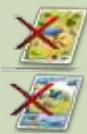
PLAYING THE GAME
The game is divided into a variable number of turns. A turn comprises 3 steps:
-
Choose a card
-
Resolve actions
-
Prepare for the next round
1. CHOOSEA CARd
Everyone does this step simultaneously. Look at your hand of 4 cards, choose one, and place it face-down in front of your screen. This card can be played by itself, or with a Building tile, depending on the action you wish to perform. If you are playing a tile with it, select the tile behind your screen, and place it face-down on the card that you played.
Place the 3 unused cards face-down in front of your screen. If you have the First Player card, put it on top of your unused cards, so that the first player is easily identifiable.

NEW HAND
Two times per game, you may discard a New Hand token in order to discard all 4 cards and draw 4 new cards. You must announce, «I'm getting a new hand.» If several players want to get a new hand during the same round, they do so in the order they announced it. Changing hand does not prevent a player from playing her turn normally. Each unspent New Hand token is worth 2 success points at the end of the game.
2. RESOlVEACTIONS
Starting with the first player, then proceeding in clockwise order, each player reveals her chosen card (and tile, if she included one), then resolves the corresponding action. The action is defined entirely by the type of card (Urbanization or Building) and by whether the card has been played alone or with a tile:
A. Exploiting: Playing a card by itself
B. Urbanizing: Playing an Urbanization card with a tile
C. Constructing a floor: Playing a Building card with a tile
A. ExploiTiNG: PLAyiNG A CARd by iTsELf
_
Then you gain the items indicated by the color of the card:
red card: you get resources,
2 blue card: you get tiles,
yellow card: you get success points.
The number of items you gain is determined by the height of the designated building. For each floor of the building, you get one item: a 1-floor building generates 1 item, a 2-floor building generates 2, etc.
If you have any cards with an Exploiting bonus in your area, you receive the items specified by these cards. These bonus cards are Character cards obtained early in the game, or cards earned through the Constructing a floor action.
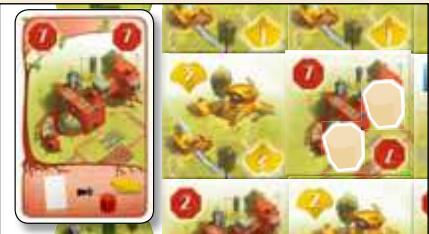
After resolving the action, place the played card in the discard pile.
EXAMPLE
Faye played the Red 7 by itself. Thus, she uses red number 7 building, which is a two-floor building. She gains 2 resources from the general supply and puts them behind her screen. Faye has two cards with an Exploiting bonus in her area. The first allows her to gain 1 tile, while the second grants her 1 success point. Finally, she discards the card.
B. URbANiZiNG: PLAyING AN URbANIZATION CARd wiTH A TiLE
When you play an Urbanization card with a tile, you expand the city by adding a new building on the outskirts. This is how it works:
1

Find the Urbanization token that corresponds to the card, and replace it with the tile.
2
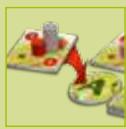
Place a resource from behind your screen on this tile in order to mark that you own the building. Also place a Construction Site pawn to indicate that the corresponding card has not yet been added to the deck.
3

Move the Urbanization token to an empty space orthogonally adjacent to the new tile (not diagonally). In rare cases in which no adjacent space is empty, you can place the Urbanization token elsewhere, provided you respect the alphabetical order of the Urbanization tokens (example: the C token must sit between B and D along the perimeter). In this and any other case, you can move one or more other Urbanization tokens, if necessary, in order to respect this rule.
4
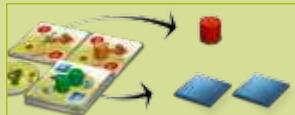
You utilize the buildings orthogonally adjacent to the one you just placed (but not diagonally). "Utilizing a building"” allows you to earn the items as if you had played those buildings' cards by themselves.
5
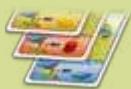
If you have any cards with an Urbanizing bonus in front of your screen, you receive the items specified by these cards (see Card Bonuses).
6

After resolving the action, place the played card in the discard pile.
EXAMPLE
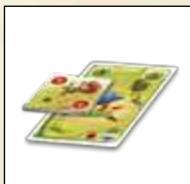
Miley has played the Urbanization card with the letter A along with the red number 4 tile. Therefore, she replaces Urbanization token A with her tile, and puts a resource and a Construction Site pawn on the tile. She moves the Urbanization token to an empty space adjacent to the tile she just played. Next, she utilizes the two adjacent buildings: She gains 1 resource and 2 tiles that she puts behind her screen. Miley has 1 red card with an Urbanizing bonus, so she gets 1 more resource. Finally, she discards the Urbanization card she played.
C. CONSTRUCTING A floOR: PLAyiNG A BuildiNG CARd wiTH A Tile
When you play a Building card with a tile, you add a floor by placing the new tile on the building in the city indicated by the card. This is how it works:
1
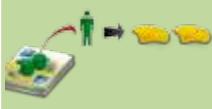
Return the resources present on the building designated by the card to their owner, who places them behind her screen. If the owner of the building is another player, she receives 1 success point per resource returned to her. Note: You don’t receive any success points for building onto one of your own buildings.

Place the tile you played atop the building designated by the card.
2
If the number on the tile you are playing is less than the number on the tile you are covering, you must pay the difference in success points (e.g.: if you place an 4 on an 5, you must pay 1 success point).
If the color of the tile you are playing is different than the color of the tile you are covering, you must discard 1 resource to the general supply.
3

Place your resources on the tile: 1 resource per level of the new building. All the resources on any given building will always belong to only one player, and will always match the number of tiles in that building.
4
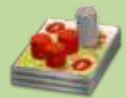
You also place a Construction Site pawn on it, which indicates that the corresponding card has not yet been added to the deck.
6
5
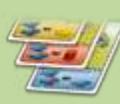

If you have any cards with a Constructing a floor bonus in your area, you receive the items specified by these cards (see Card Bonuses)
Keep the played card face-up in your area. This card will give you its bonus for the rest of the game. There are 2 types of bonuses: permanent bonuses (with black arrow), which are activated throughout the game, endgame bonuses (with the “=” icon), which will give you success points in the final scoring.
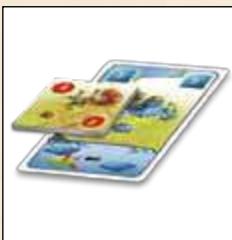
EXAMPLE
Nell played the blue number 5 Building card, and the red number 4 Building tile. The blue 5 building belongs to Faye, so she retrieves the two resources placed there and gets 2 success points. Nell places the number 4 tile on the blue 5 building. She must pay 1 success point because 4 is less than 5. She must discard a resource because the color of the new tile is different than the one it's covering. She places 3 of her resources and a Construction Site pawn on the new building. Because she has two Constructing a floor bonus cards, she earns 1 success point and 1 resource. She places the blue number 5 Building card face-up in front of her screen.
Note: If you play a card and a tile, but you do not have the items necessary to place the tile in the city, you take the tile back and put it behind your screen. You perform the action as if you had played the card by itself.
3. PREPARE FOR THE NEXT ROUND
After resolving all the players' actions, each player takes the unused cards (including the First Player card, if present) from her right-hand neighbor.
Then, starting with the new first player and continuing in player order, each player draws a card from the deck to once again have a hand of 4 cards.
At any time, if the deck is exhausted, the first player immediately reconstitutes it in the following way:
-
For each color, she announces the numbers of those tiles with a Construction Site pawn on them. Another player finds the announced cards in the 3 stacks of Building cards, and adds them to the discard pile.
-
She shuffles the discard pile, and makes a new deck with these cards.
-
In a game with 2 or 3 players, she discards the top 7 cards from the deck. (In a game with 4 or 5 players, do not discard any cards.)
-
Remove the Construction Site pawns, and put them back in the general supply.
EXAMPLE
The players have finished their actions, and have taken their right-hand neighbors' unused cards. The first player, Miley, draws the last card from the deck in order to get back to 4 cards in her hand. The deck has been exhausted, and must be reconstituted. She begins by announcing the numbers of the yellow tiles with a Construction Site token on them, which in this case are tiles 4, 5, and 9. Nell adds the yellow 4, 5, and 9 Building cards to the discard. They do the same for the red and blue Building tiles, then Miley shuffles the discards into a new deck. Next, she discards the first 7 cards (because there are only two players), and then removes all the Construction Site pawns from the city. Nell can finally draw her card.
ENd of THE GAME
When the supply of tiles is exhausted for the first time, each player can add as many tiles to the game as she wishes. Players simultaneously prepare a group of tiles behind their screens. They simultaneously reveal all those groups of tiles. Each player receives 1 success point per tile revealed in this way. All the revealed tiles are mixed together face-down to form a new general supply of tiles. Then the game continues normally.
The game ends when:
the supply of tiles has been exhausted for the second time, or
a player has placed all her resources (25, 20, 18, or 16, for 2, 3, 4, or 5 players) in the city.
As soon as one of those two conditions is met, finish the current round (resolve actions), and the game is over.
Note: The game ends even if the player who has placed all her resources ends up retrieving them, due to another player's action.
The winner is the player with the most success points. Add up the following success points:
those earned during the game in the form of tokens,
those from cards with an endgame bonus (cards with the “=” icon ),
2 success points for each unused New Hand token,
the success points according to players’ presence in the districts of the city.
A district is an area of the city formed by at least 2 adjacent buildings of the same color. An isolated building is never considered to be a district.
In each district, the players compare the number of resources in their respective colors. The player with the highest number gains as many success points as the total number of resources in the district (all colors). Second place gains as many points as the number of resources of her color in the district. In the case of a tie, the player with the tallest building in the district has the advantage. If it's still a tie, the player with the tallest building showing the highest number in the district has the advantage.
Note: If all the resources in a district belong to the same player, she receives the points for both first and second place, which works out to 2 success points per resource in that district.
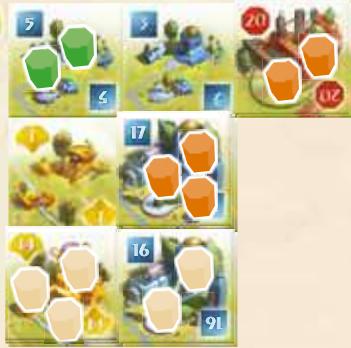
EXAMPLE
The tiles in the illustration form two districts: one blue and one yellow. The red number 20 tile does not form a district, because it is all by itself.
In the yellow district, Miley is all alone with her 3 resources; she earns 6 points. In the blue district, Faye has the most resources out of the 7 resources in the district; she earns 7 points. Miley and Nell are tied for both the number of resources and the heights of their buildings. Miley earns 2 points, because she has the building with the higher number.Nellearns no points.
SoliTAiRE VERSiON
The solitaire game is played against a virtual player, whom we shall name “Hal” for the following explanation.
SETUP
Set up the game as you usually would for a two-player game, with the following exceptions: You start the game with 6 resources, 6 tiles, and 6 success points, but you receive neither Character cards nor New Hand tokens. Hal has access to all the resources (the general supply is his personal supply). Hal starts the game with neither success points nor tiles.
In a game against Hal, you are always the first player.
PlAyiNG A ROUNd of THE GAME:
Draw 3 cards, and then give one card to Hal, face-down.
Choose your action (card + possible tile), and apply its effects according to the normal rules.
Reveal Hal's card, and draw a random tile, since Hal constructs every turn. When Hal urbanizes (he has played an Urbanization card), he receives 1 success point for each item produced by the adjacent buildings (he does not receive the tiles and resources). When Hal constructs a floor, he keeps the card he played; however, Hal does not receive a card bonus when he plays (the effect of the cards with the the black arrow is ignored).
Specifics:
If Hal constructs a floor on one of your buildings, you retrieve your resources, and get 1 success point per resource, as in the normal rules.
If you construct a floor on one of Hal's buildings, he receives 1 success point for each resource he retrieves.
You cannot change your cards.
When Hal urbanizes, you move the Urbanization token for him, as if it were your turn.
EndofTheGaMe
The game ends at the end of the turn during which the supply of tiles is exhausted, or if you have placed all your resources on buildings in the city, or when Hal has exhausted his resources. If Hal does not have enough resources for construction, this final action is not completed, and the game ends.
Hal counts the points he has received over the course of the game, all the cards with a “=” icon , and his districts, just like a normal player.
EXPERTLEVEL
In order to increase the difficulty (Expert Level): If Hal's card is an Urbanization card, draw a new card from the deck. Hal will use this new card's action if it is either a Building card (Hal constructs a floor), or an Urbanization card that would give Hal more points than the original card.

CARd BONUSES
CARds WiTH A pERMANENT bONUS
These are the Character cards and Building cards numbered 1 to 9. They are marked with a black arrow. For each such card you have in front of your screen, you receive a bonus each time you perform a particular action.


ExploitinG bONUS
The card gets you 1 resource, 1 success point, or 1 tile every time you perform the Play a card by itself action.
URbANiziNG bONUS
The card gets you 1 resource, 1 success point, or 1 tile every time you perform the Urbanize action.

CONSTRUCTING A flOOR bONUS
The card gets you 1 resource, 1 success point, or 1 tile every time you perform the Construct a floor action.
Note: The cards numbered 7 to 9 get you 2 success points, or 1 resource and 1 success point, or 1 tile and 1 success point whenever you perform that particular action.
CARds WiTH AN ENdGAME bONUS
These are the Building cards numbered from 10 to 20. They are marked with the “=” icon. For each such card you have in front of your screen, you receive success points at the end of the game if you meet certain conditions.
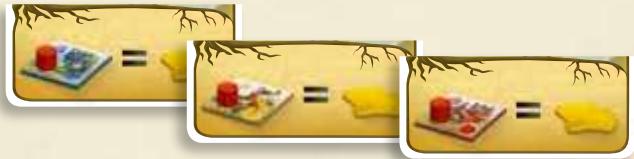
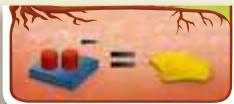
The card gets you 1 success point for each resource you have on a blue, yellow, or red building, depending on the card.
The card gets you 1 success point for each 1-floor or 2-floor building you own.


The card gets you 2 success points for each card with an Exploiting bonus you have in front of your screen, including your Character cards.
The card gets you 3 success points for each 3-floor or taller building you own.

The card gets you 2 success points for each card with a Constructing a floor bonus you have in front of your screen, including your Character cards.

The card gets you 2 success points for each card with an Urbanizing bonus you have in front of your screen, including your Character cards.

The card gets you 9 success points if it is in front of your screen.
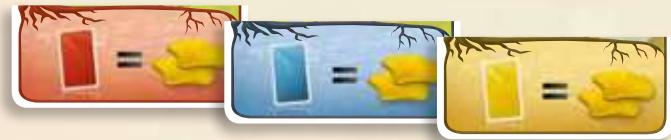
The card gets you 2 success points for each blue, red, or yellow card you have in front of your screen, including your Character cards.

© 2012 Z-Man Games, Inc. Z-Man Games inc. 3250 F.X. Tessier, Vaudreuil-Dorion, Québec, Canada, J7V 5V5 Copyright Z-Man Games, Inc www.zmangames.com.
Designer: Xavier Georges •
Computer graphics : megalopole.com
English Translation : Nathan Morse
Thanks
The designer and the publisher thank Etienne, Shadi, Anke, Madeline, Anaëlle, Maïlys,
Nell, Fanny, François, Muriel, Nathan, Marcus, Marie, Didier, Emmanuel,
In Ludo Veritas (Namur) and all others who helped us to finalize this project.

| 1 | Place the 9 starting buildings (1–3 of each color) and the 12 Urbanization tokens (A-L). |
| 2 | Shuffle the remaining Building tiles, and make several piles. With 2–3 players, remove 6 tiles from the game. Place the success points and Construction Site pawns near the Building tiles. |
| 3 | Each player chooses a color, and receives a screen and 2 New Hand tokens. 'The Resources supply comprises: 25 resources each for 2 players, 20 resources each for 3 players, 18 resources each for 4 players, or 16 resources each for 5 players. |
| 4 | Form the deck with the 12 Urbanization cards (A-L) and the 9 starting Building cards. With 2–3 players, put 7 cards on the discard. |
| 5 | Form 3 piles of building cards numbered 4–20. |
| 6 | Each player receives 3 characters (introductory game), or deal 4 to each player and draft 3 characters each. |
| 7 | Each player receives the Building tiles, the resources, and the success points corresponding to what is indicated in the upper-left corner of his Character cards. |
| 8 | The player who last planted a tree is the first player, and deals 4 card to each player. |

SUMMARY
SETUP
2
3




An Urbanization card lets you gain one resource OR one tile. A Building card lets you gain the items granted by the building's height.
GAME TURN
Option: Discard a New Hand token in order to discard your hand and draw 4 new cards.
Everyone at the same time: Choose your action by selecting a card and placing it face-down in front of your screen (+ a Building tile if urbanizing or constructing a floor).
The actions are resolved in clockwise order, starting with the 1st player (see explanations of the actions below).
Playing only a card allows you to gain items (SP, resources, tiles)
Preparation for the following turn: Take the 3 unused cards from your right-hand neighbor, and draw one card.
Reconstitute the deck: Add the cards corresponding to new buildings (Construction Site pawn) to the discard, and shuffle them to make a new deck. With 2–3 players, put 7 cards on the discard.
End of the game: When the general supply of tiles is exhausted for the second time, or when a player has placed all her resources in the city.
Final scoring: See page 7.



Cards with the Exploiting bonus give you the items to the right of the black arrow.
Discard the played card.
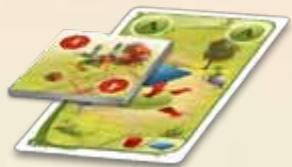
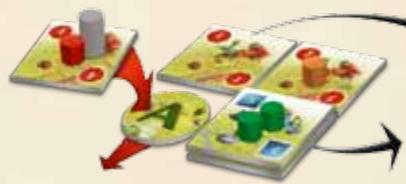


Playing an Urbanization card with a Building tile allows you to expand the city.
The building replaces the Urbanization token designated on the card; put a Construction Site pawn and a resource on it. Move the Urbanization token.
Orthogonally adjacent buildings give you items according to their respective heights.
Cards with the Urbanizing bonus give you the items to the right of the black arrow.
Discard the played card.
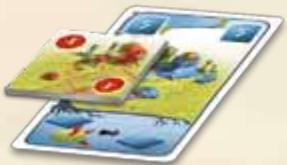

Playing a Buidling card with a
Building tile allows
you to construct a floor.
Place the Building tile on the Building
designated by the card; put a
Construction Site pawn
and a resource on it.
If it was someone else'’s, return her
resources to her, and she gets 1 SP
per resource.

If the new tile's color is different, you lose one resource. If the new tile's number is lower, you lose as many SP as the difference.
Cards with the Constructing a floor bonus give you the items to the right of the black arrow.
Keep the played card faceup as a bonus card.
Download MarkdownTexts are community-compiled or publicly released by publishers; copyright remains with the original authors. For personal reference only.