
Thurn and Taxis
At a glance
Rules, cards and Q&A (Chinese)
The rules, card data and player questions for this game are written in Chinese. Open the Chinese page to read them.
Where to find full rules
Full rules and card lookup are available in the cunlema app at cunlema.cn — pick this game and ask about any rule, card or turn you are unsure about.
Related games
Rulebook text (Markdown)
This game has 2 rulebook Markdown file(s) in our library; 2 rendered inline below — expand to read or download.
rules_zh_驿马当先_404.md12.6 KB
THURN TAXIS
Karen和Andreas Seyfarth设计- 10岁以上的2至4人游戏
游戏部件:
1个游戏板
驿马当先史文译:soul
80个木房子(四色每色20个)代表邮局
4张主公司牌
20张马车牌(3, 4, 5,6, and 7 辆马车各4张)
66城市牌(22个城市各3张)用于建邮路
30奖分板块(4 张 7程,3 张 6 程,2 张5程,4张所有省份,4 张 Baiern,3 张 Baden,
3 张Wü rttemberg/Hohenzollern, 3 张 Schweiz/Tyrol, 3 张 Bö hmen/Salzburg, 和 1 张 游戏结束)
1游戏规则



游戏准备
- 把游戏板放在桌子中央。
-把奖分板块面朝上放在游戏板上指定位置。在每堆,把板块按照升序放置,低分值的放在下面,高分值的放在上面。
-面朝下洗混城市牌,抽出6张面朝上放在游戏板上指定位置,其余牌面朝下放在游戏板旁边作为供应堆。
-将马车牌按数字分类放在游戏板上制定位置。
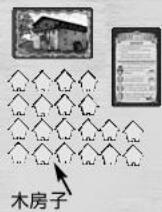
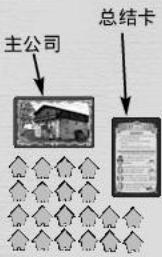
-每名玩家拿取一种颜色的木房子、一张总结卡和一张主公司牌,都放在自己面前。
- 玩家们选出一名起始玩家。
概览
每名玩家建设一个邮政系统。为此,每名玩家力图在游戏板上建设由各城市的邮局组成的网络,获取有价值的马车,并收集奖分板块。还可以从邮政官员那里获得帮助。
当某玩家获得一个价值7的马车或放完他的木房子,游戏进入最后一轮。当该轮结束,游戏马上结束。
拥有最多胜利分的玩家胜利!
游戏进程
从起始玩家开始,其他玩家按顺时针顺序行动。
当轮到玩家行动回合,按以下顺序进行行动:
-
玩家必须抓一张城市牌到手中。
-
玩家必须打出一张手中的城市牌。
3.玩家可以关闭并积分他的当前邮路。
然后,下一玩家进行其行动回合。
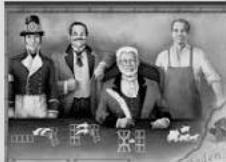
另外,玩家在其回合中可以借助一名官员的帮助(邮政承运人,邮政大师,管理人,或车匠)也即,玩家可以利用官员的一项特殊技能。
1. 抓一张城市牌
城市牌代表游戏板上的城市。玩家必须从游戏板上翻开的6张城市牌中抓一张或供应牌堆最上面抓一张到手中。如果抓了一张翻开的牌,他应从供应牌堆最上面翻一张放在游戏板上。当供应牌堆用完,把弃牌洗混组成新的供应牌堆。
该阶段官员的支持:

邮政大师:本阶段玩家接受邮政大师的帮助时,他可以从游戏板上或供应牌堆抓第二张城市牌。
如果回合开始时玩家手上没有牌,他在该回合必须选择邮政大师的帮助。这样做完后,他本回合当然不能再利用其他官员的帮助。
注:在游戏第一回合,每名玩家必须选择利用邮政大师的帮助。

管理人:当玩家不喜欢翻开的城市牌,他可以在抓牌前求助管理人的帮助更换所有翻开的城市牌。弃掉所有游戏板上的城市牌并从供应牌堆抽牌来替换。
2. 打出手中的一张城市牌
本游戏的核心要素是建设邮政网路。玩家必须打出手中的一张牌,放在自己面前开始一条新邮路或延长现有邮路。玩家将自己的城市牌挨着排成一行。这些行就是玩家的当前邮路。
玩家一次只能由一条邮路。为了延长邮路,玩家可以在当前行的左侧或右侧放城市牌。邮路不能有分支。延长邮路的牌必须合适,也就是说新加的城市
牌必须使相邻牌代表的城市在游戏板上直接相邻。玩家只有在自己面前没有当前邮路才可以开始一条新邮路。
这样,玩家在开始新邮路之前须关闭关闭当前邮路。
放置城市牌有两种可能:
- 玩家面前没有城市牌(没有当前邮路):
玩家打出一张牌,开始一条新邮路。
- 玩家面前有城市牌,即有当前邮路:
玩家在当前邮路行的左端或右端放一张牌。
如果玩家没有合适的牌可放或选择不延长当前邮路,他弃掉当前邮路的牌(不得分)并放一张新牌开始一条新邮路。
哪些城市牌可以相邻放成行?
-在游戏板上直接相邻的城市牌,且
-邮路中没有的城市牌可以加入邮路。
合适的牌必须符合上面两个条件。
以下不允许:

- 加入一张与邮路两端不相邻的城市牌;
-在当前邮路中插入一张牌或以任何方式重组当前邮路;
-或加入当前邮路已有的城市牌。
注:城市的颜色只提示城市所在邦国,对建设邮路没有任何意义。

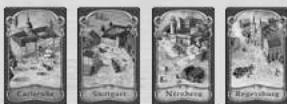
例:某玩家有一条邮路包含:
Carlsruhe, Stuttgart, Nürnberg, and Regensburg.玩家想加入Innsbruck。因为Innsbruck在游戏板上不与Carlsruhe 或 Regensburg 直接相连,该玩家不能加入该牌。
Würzburg 不可以放在 Stuttgart 和
Nüirnberg之间,因为当前邮路不能重组,只能在两端加牌。
Stuttgart 不可以添加,尽管它与
Carlsruhe相邻,因为 Stuttgart 在邮路已有了。


本阶段的官员支持:
邮政承运人:当玩家在其回合接受邮政承运人的帮助,他可以向邮路添加第二张牌,仍需遵守放置城市牌的通行规则。
3. 关闭当前邮路并计分
如果当前邮路至少包含3张城市牌,玩家可以关闭邮路并计分。
为关闭邮路并计分,玩家应:
a. 放置木房子;
b. 收集赢得的奖分板块;.
c. 收集赢得的新马车;
d. 把邮路的城市牌和和手上多余的牌面朝上放进弃牌堆。
a. 放置木房子

在关闭邮路沿线城市放置木房子时有两个选择:
1.可以在邮路经过的每个省,每张城市牌放置1个木房子;或:
2.可在邮路经过的1个省,每张城市牌放置1个木房子。
注:省份和城市在游戏板和牌上用颜色标记。

例:玩家关闭以下邮路:Sigmaringen,
Stuttgart, Nürnberg, Regensburg, Ingolstadt, 和 Augsburg.
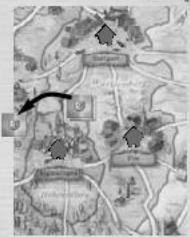
- 他在邮路经过的每个省放1个木房子(如右图所示):
在 Hohenzollern 他放1 个木房子在 Sigmaringen,在
Württemberg 他放 1 个木房子在 Stuttgart,且在 Baiern 他放1个木房子在 Baiem 4座城市之一,这个例子里是 Ingolstadt。这样,他不可以放房子在 Nürnberg, Regensburg, 和 Augsburg。或:
- 在邮路经过的一个省的每个城市放1个房子:
在 Baiern的4个城市各放1个房子:Nürnberg, Regensburg,

Ingolstadt,和 Augsburg。这样,他不可以在 Sigmaringen
and Stuttgart放房子。
注:在后续轮次,玩家仍允许打出已放置房子的城市牌。但是不管关闭邮路有多少次出现一个城市,玩家只能在每个城市拥有1个房子。玩家可以在其他玩家放有房子的城市上放置自己的房子。
b. 收集奖分板块
放好房子后,玩家检查是否满足以下一条或多条条件。只要满足任一条件,可以拿取相应奖分板块并面朝下放在自己面前。

长邮路的奖分板块(长度为5,6,或7个城市)
当邮路长为5,6,7,或更多城市,玩家得到对应长度的1张奖分板块。如果邮路超过7个城市,拿取数字7的奖分板块。
注:如果应得的奖分板块没有了,玩家拿取次长度的奖分板块。这条特别适用于长度超过7个城市。
注:在游戏过程中玩家可以收集多张同一数字长度的奖分板块。

省份的奖分板块
如果玩家在一个省份的所有城市或一组对省份的所有城市都有房子,他收集那个省份或那对省份最上面一张奖分板块。当关闭邮路时,玩家不必在所有城市放置房子,但可以在多条邮路上放房子。
为赢得”全省份”奖分板块,玩家只需要在每个省份至少1个城市有1个房子。
注:如果某玩家满足一个省份奖分板块的条件,但该种板块没有了,该玩家没有得板块。
注:一名玩家只可以每省或每省对收集1个奖分板块。
注:玩家必须确实在城市放房子以赢得奖分板块。因此,如果玩家用完房子而不能再放置,他不能再收集奖分板块。

例:红色玩家关闭一条邮路并在Sigmaringen和 Ulm放置房子。这样,他在 Württemberg 和 Hohenzollern 的所有3个城市有房子,并得到
t Württemberg/Hohenzollemn奖分板块堆最上面一张板块。

游戏结束奖分板块
首先获得价值7马车或放完最后房子而导致游戏结束的玩家得到”游戏结束”奖分板块。
c. 获得新马车

如果玩家邮路的长度至少与次高马车牌上的数字,他拿取次高马车牌。
玩家不能跳过马车牌,尽管他的邮路足够长。
例:某玩家关闭3城市的邮路并获得价值3的马车牌,并放在自己住公司牌的上面。
稍后,他关闭5城市的邮路并获得次高马车牌—价值4的马车牌,并放在价值3马车牌上面。
接下来,他关闭4城市的邮路但不得新马车牌。为得到价值5马车牌,它必须关闭至少5城市的邮路。
注:当收集马车牌时,邮路的城市牌数量很重要,而关闭邮路所能放置的房子数量没关系。

该阶段官员的支持:
车匠:该阶段接受车匠的支持时,如果其邮路少于必须的1或2个城市,玩家可以获得下一张马车牌。
如果少3个城市,车匠的帮助没有用。
例:玩家有价值6的马车牌并关闭5城市的邮路。他可以利用车匠的帮助获得价值7的马车牌。
d. 丢弃城市牌
玩家将关闭邮路的所有城市牌面朝上丢进弃牌堆,并将手牌减少到3张,选出多余的牌面朝上丢进弃牌堆。
在其下一回合,他将开始一条新邮路。
游戏结束和计分
当某玩家获得价值7的马车牌或放置自己最后一个房子,该轮为玩家最后一轮。
因此,本轮继续直到起始玩家右侧玩家完成其回合。游戏结束并计分。
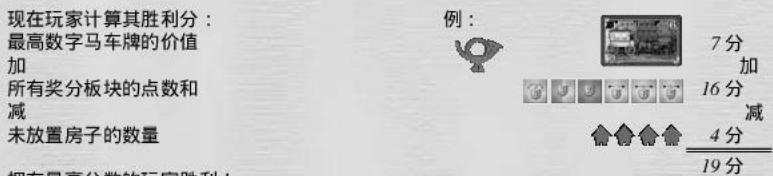
拥有最高分数的玩家胜利!
如果两人或多人平分,赢得”游戏结束”奖分板块的玩家胜利。如果平分的玩家没有得到游戏结束板块的,顺时针顺序最接近得到游戏结束板块的玩家的平分玩家为胜者。
For all their help in play testing and rule reading, the author and publisher thank Gregor Abraham, Karl-Heinz Schmiel, Hannes Wildner, Alex Weiß, members of the game group of Elke und Jürgen Hübler, all unnamed play testers, and especially Dieter Hornung.

A heartfelt thanks also goes to Peter Styra of the Thurn and Taxis Museum and Archive for his interest and help with the historical features of the game.
© 2006 Hans im Glück Verlags-GmbH If you have comments, questions, or suggestions, please write us at: RioGames@aol.com or Rio Grande Games, PO Box 45715, Rio Rancho, NM 87174
Download MarkdownThurn_und_Taxis_English_Rules.md12.9 KB
Thurn und Taxis
By Karen and Andreas Seyfarth For 2 to 4 players, ages 10 and up
A Rough Translation by Christine Biancheria
PLAYING MATERIALS
1 Game Board
80 Wooden Houses (Postal Branches) (20 in each of 4 colors)
4 Company Cards
20 Coach Cards (4 each of values 3, 4, 5, 6 and 7)
66 City Cards (3 each of 22 Cities)
30 Bonus Tiles (4 7-Routes, 3 6-Routes, 2 5-Routes, 4 Outside of Baiern or “Ausserhalb Baiern,” 4 Baiern, 3 Baden, 3 Wurttemberg/Hohenzollern, 3 Schweiz/Tyrol, 3 Bohmen/Salzburg, 1 “Spielende”)
4 Summary Cards
1 Rules Booklet
PREPARATION
Place the board in the middle of the table.
Sort the Bonus Tiles and place them faceup on the board on the spaces marked accordingly, in ascending order with the lowest numbered tile on the bottom.
Shuffle the City Cards to form a facedown draw pile, then draw the top six and place them faceup on the corresponding six spaces on the board.
Sort the Coach Cards by number and then place them in order along the top of the board as shown.
Each player takes the 20 Branches (houses) of one color along with a Company Card of the same color and a turn summary card.
The youngest player begins.
THE OBJECT OF THE GAME
Each player builds a postal network. To this end, players attempt to cleverly establish postal routes by building as many Branches (houses) in the Cities on the board as possible and to gain valuable Coach Cards and Bonus Tiles. Postal Officers stand ready to assist the players in their endeavors. The game ends when one player either obtains the Coach 7 card or has built all of his or her Branches. When either condition is met, the round is played through to the end, and the game is over. The player with the most victory points wins.
GAME PLAY
The starting player begins, and the other players follow in clockwise order.
On a turn, each player carries out the following actions in order:
-
The player must draw a City Card.
-
The player must play a card into his or her playing area.
-
The player may complete his or her Current Route and score it.
Additionally, a player may call upon the services of one postal official during a turn. When a player is finished, the next player in clockwise order takes his or her turn.
1. Drawing a City Card
The City Cards show Cities on the board. The player must take either a faceup City Cards from the board or a facedown City Card from the top of the draw pile. If the player takes a card from the board, it is immediately replaced with another from the draw pile. If the draw pile ever runs out, the discard pile formed during the game should be shuffled to form a new one.
Assistance of a Postal Official in this Phase:
Postmaster (Postmeister): By calling on the assistance of the Postmaster, the player may draw a second card from either the faceup selection or the top of the draw pile. If the player has no cards at the start of his or her turn, then the player must play the Postmaster card to draw two cards (note that, in the first round, this will be the case for each player). Once the player has used the services of the Postmaster, he or she cannot call upon any other postal officials during the same turn.
Bailiff (Amtmann): If the player is not satisfied with the faceup City Cards on offer, the player may call on the assistance of the Bailiff to clear the faceup cards from the board (before he or she draws any) by placing them in the discard pile and then refilling the six faceup slots from the draw pile.
2. Playing a City Card
A central element of the game is the establishment of postal routes. The player must play a card from his or her hand by placing it on the table in his or her playing area to either start a new route or add to the player’s existing one. City Cards are placed next to each other in a row and form the player’s Current Route. A player may only start a new route if the player has no Current Route in progress; in other words, each player may only work on one route at a time and may only start a new route after completing the Current Route. When adding to a Current Route, the player may only place a card to the left or the right of his or her Current Route cards. No branching off is allowed. Furthermore, the new City Card must fit into the Current Route.
To recap, in placing a card, there are two possibilities:
(i) The player has no cards in their playing area, and so the player plays a card from his or her hand and starts a new route, or
(ii) The player already has one or more City Cards in his or her playing area (i.e., a Current Route), in which case he or she simply adds a card to the left or right of the current route, making sure that the card fits in.
If a player cannot or chooses not to do perform one of these actions, the player must discard his or her entire Current Route and begin a new one using a card from the player’s hand.
A card fits in to the Current Route when the City on the card has a direct connection by road to the City on the City Card next to which it is placed and the new City is not already in the Current Route.
Accordingly, a player may not:
· Play a card into his or her Current Route if the City on it does not have a direct connection to the City on either end of the Current Route;
· Play a card into the middle of the Current Route;
· Rearrange the Current Route in any way; or
· Play the same City Card a second time into a Current Route.
Note: The color of the city indicates the region to which it belongs and has no meaning in determining whether a card can be played into a route.
Example: A player has a row of cards in the following order: Carlsruhe, Stuttgart, Nurnberg and Regensburg. Innsbruck has no direct connection by road to either Carlsruhe or Regensburg and so the player could not at this time add an Innsbruck City Card to either end of his Current Route. The player also is not permitted to place a Wurzburg card between the Stuttgart and Nurnberg cards even though there is a connection to those cities because the Current Route cannot be rearranged; nor could the player add another Stuttgart card into this same route.
Assistance of a Postal Officer in this Phase:
Coachman (Postillion): Players may call upon the Coachman during this phase to play a second card on a turn (as long as the second card can be legally placed).
3. Completing a Route
A player may complete his or her Current Route as along as it contains at least three City Cards. Whenever a route is finished, the player takes the following steps:
a. Place Branches;
b. Take Bonus Tiles, where appropriate;
c. Draw a Coach Card, where appropriate; and
d. Discard City Cards and excess hand cards into the discard pile as set forth below.
a. Place Branches
The player has two choices for placing Branches in cities which are part of the route that is being completed: either the player may place one Branch in one city of each region in his or her Current Route or the player may choose one Region of the Current Route and place one Branch in each City in that Region.
Note: The regions and the cities on the board and on the cards are indicated by color.
Example: the player finishes the following route: Sigmaringen, Stuttgart, Nurnberg, Regensburg, Ingolstadt and Augsburg. He or she places one Branch in one city of each region through which the route passes (see picture on Page 3): In the region of Hohenzollern, the player places one Branch in Sigmaringen; and in the region of Wurttemberg, the player places one Branch in Stuttgart; and in the region of Baiern, the player places one Branch in one of his four Bavarian cities (such as Ingolstadt, for instance, in which case he could not then also place a Branch in Nurnberg, Regensburg or Augsburg).
Or the player places one Branch in each city of one region on his route. For instance, the player in the above example could place a Branch in each of his cities in Baiern: Nurnberg, Regensburg, Ingolstadt and Augsburg. In this case, the player could not place a Branch in Sigmaringen and Stuttgart.
Note: A player is allowed to play a City Card into a Current Route even if the player already has a Branch in this City from a previous round. In this case, the player could play the card but would not be allowed to add a second Branch there. A player may, however, place a Branch in a city which contains Branches of other players.
b. Take Bonus Tiles
After placing Branches, the player checks to see if he or she has met the conditions for obtaining one or more bonus tiles. The player then places each collected tile facedown in his or her playing area.
Bonus Tiles for Route Length
Whenever a player’s route contains 5, 6, 7 or more cards, the player takes the top Bonus Tile from the corresponding pile. If there are none remaining, the player may take a Bonus Tile for the next shortest route for which a tile is still available. (In this manner, it would be possible to make a route of 8 or more cards and still collect a bonus tile.)
Bonus Tiles for Regions
When a player has Branches in each city in a single region or all cities in two related regions, he or she may take the top Bonus Tile from the corresponding stack of bonus tiles. Note that these Branches need not all have been placed during the completion of a single route; the Branches making a player eligible for a bonus tile may have been placed through completion of different routes.
To take the “Outside of Bavaria” Tile (“Ausserhalb Baiern”), the player must have at least one Branch in every region outside of Baiern. The player may still take this tile if he or she also has one or more Branches in Baiern itself.
Note: If the player is eligible to take a Bonus Tile for Regions but there are none left, the player does not get a Bonus Tile.
Note: A player may only take a Bonus Tile one time for any given Region or Region Combination.
Note: If a player does not have enough Branches to place in a city to obtain a Bonus Tile, then the player simply does not get that Bonus Tile.
Example (top of Page 4): By completing a new route, a player establishes Branches in the cities of Sigmaringen and Ulm. The player already has a Branch in Stuttgart, and so now, the player has Branches in all three cities of the regions of Wurttemberg and Hohenzollern and obtains the Bonus Tile from the top of the corresponding stack.
Bonus Tile for Game End
The player who, through his or her actions, causes the game to end (by taking the Coach 7 card first or else placing the last of his or her Branches) takes the Bonus Tile marked “Game End” (“Spielende”).
c. New Coach Card
If the player’s completed route contains at least as many cards as the number of the next available Coach Card (in ascending order), the player may take that Coach Card. A player may not skip over a coach size to take a higher Coach Card.
Example: A player finishes his first route in the game with three City Cards and obtains a Coach 3 card, placing it on top of the player’s company card. The player later finishes a second route containing five City Cards. This time, the player takes the next highest card, the Coach 4 Card, and places it on top of the old Coach 3 card. The player’s third route contains only four City Cards, and so the player does not get a Coach Card this time. To take the Coach 5 card, the player would have to complete a route with at least five City Cards in it.
Note: For purposes of taking Coach Cards, the placement of Branches is irrelevant because it depends only on the number of City Cards in the completed route.
Assistance of a Postal Officer in this Phase:
Wainwright (Wagner): By calling on the assistance of the Wainwright in this phase, the player may take the next available Coach Card if the player’s completed route is short by up to two cards. Example: A player already possesses the Coach 6 Card. The player now completes a route that contains only five City Cards and uses the assistance of the Wainwright to take the Coach 7 Card.
d. Discarding City Cards
The player places all of the City Cards of the completed route onto the discard pile and reduces his or her hand down to at most three cards of the player’s choosing. The excess City Cards are also placed on the discard pile. On the player’s next turn, he or she starts a new route.
GAME END AND SCORING
When one player has either obtained the Coach 7 card or places the last of his or her Branches on the board, the current round is played to its end (until the player to the right of the starting player has finished the last turn), and then the game is over. Now, the players calculate their victory points.
Victory points consist of:
The value of the player’s highest Coach Card, plus
The value of the player’s Bonus Tiles, minus
The number of Branches remaining in the player’s playing area (that have not been placed on the board).
The player with the most points wins. In case of a tie for first place, the player among them wins who took the game-ending Bonus Tile or, if none of them did, then the player who is seated closest to that player in clockwise order.
Download MarkdownTexts are community-compiled or publicly released by publishers; copyright remains with the original authors. For personal reference only.