
Twice As Clever
At a glance
Rules, cards and Q&A (Chinese)
The rules, card data and player questions for this game are written in Chinese. Open the Chinese page to read them.
Where to find full rules
Full rules and card lookup are available in the cunlema app at cunlema.cn — pick this game and ask about any rule, card or turn you are unsure about.
Related games
Rulebook text (Markdown)
This game has 3 rulebook Markdown file(s) in our library; 3 rendered inline below — expand to read or download.
rules_zh_双倍聪明_11064.md18.1 KB

在最後一輪的最後一位行動玩家完成他的回合,且其他玩家也完成了此輪的所有行動,遊戲結束。每位玩家都可以在這時候使用他尚餘的額外骰子行動,但尚餘的重擲行動全數作廢。
由一位玩家為每個人記下每個顏色區的分數,別忘了狐狸的分數,每隻狐狸等於所屬玩家最低分那區的分數。
計算總分,得分最高的玩家獲勝。如果平手,在單一顏色區獲得最高分數的玩家勝出。如果還是無法決定贏家,則平手玩家共享勝利。
單人遊戲
單人遊戲的目標是要盡量獲得最高的分數,規則大致上相同,但有以下改變。
單人遊戲進行6輪,遊戲開始時,你先擔任行動玩家,然後切換為其他玩家,接著再次成為行動玩家,以此類推。因此,你會進行6個回合,交替擔任行動玩家和其他玩家各6次。當你擔任其他玩家時,擲6顆骰子,將點數最小的3顆骰子放在銀盤上。若有點數相同的情形,依然擺放3顆骰子到銀盤上,但從相同點數中,選擇離銀盤較近的骰子。
注意:如同多人遊戲的規則,你擔任其他玩家時不能執行重擲行動。
你可將最後的總分對照下方表格,看看自己究竟有多聰明:
| 等級 | 分數 |
| 雙倍聰明! | >320 |
| 分數=IQ! | 300-319 |
| 佩服佩服! | 280-299 |
| 絕非靠運氣! | 260-279 |
| 照過來照過來! | 240-259 |
| 非常非常聰明! | 220-239 |
| 真是訓練有素! | 200-219 |
| 你應該很開心! | 180-199 |
| 你在正確的路上。 | 160-179 |
| 你能做得更好。 | 140-159 |
| 半吊子聰明! | <140 |
作者:Wolfgang Warsch
排版:Leon Schiffer
編輯:Thorsten Gimmler
中文翻譯:Abus Istanda
中文排版:彭于庭
版權所有:Schmidt Spiele GmbH. Lahnstr. 21, D-12055 Berlin, Germany
www.schmidtspiele.de www.schmidtspiele-shop.de
新天鵝堡
德國桌上遊戲
SWAN PANASIA GAMES


雙倍聰明! DOPPELT SO CLEVER (Twice as Clever!)
Wolfgang Warsch 所設計的機智骰子遊戲,適合1-4位8歲以上的玩家。
DOPPELT SO CLEVER
提示 為了加速了解這款遊戲,
所有和《絕頂聰明》不同的規則都
以灰底標示。
遊戲概述
在《雙倍聰明》中,雙倍巧妙地選擇骰子,並記錄在計分表上對應的顏色區,觸發連鎖得分機會,以推高累積分數!你未選擇的骰子和你所選的骰子一樣重要,因為每顆比你所選骰子點數小的骰子,都可能被其他玩家使用!遊戲結束時,總分最高的玩家獲勝!
骰子區 銀色區 藍色區 綠色區 粉色區
遊戲準備
每位玩家拿取一支黑筆和一張計分表,隨機選擇一人擔任起始玩家,他拿取6顆骰子。
遊戲配件

1本計分表
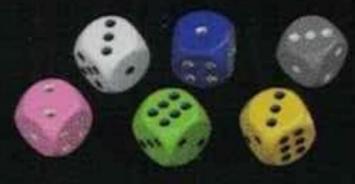
6顆骰子
4支黑筆
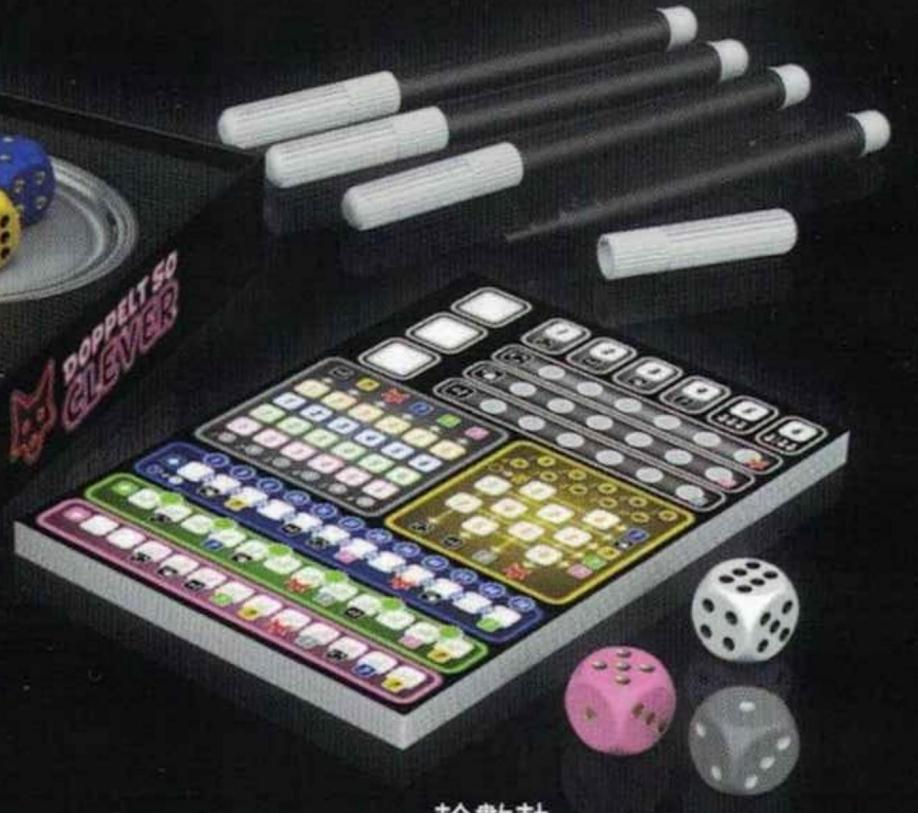
輪數軌

重擲行動
取回行動
額外骰子
行動
黃色區
獎勵
遊戲進行
遊戲共進行四輪(4人遊戲)、五輪(3人遊戲)或六輪(1-2人遊戲)。
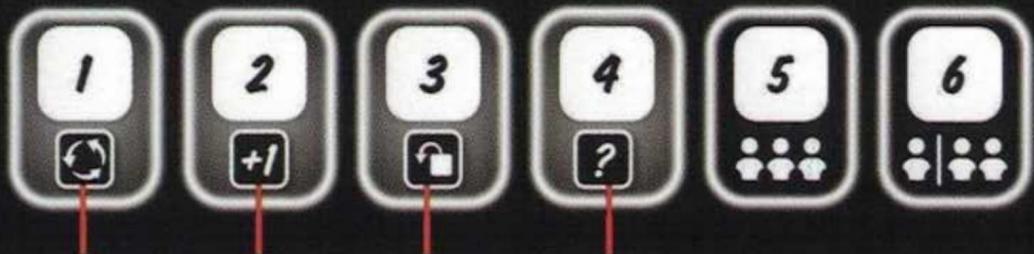
每輪開始時,每位玩家獲得指定的行動或獎勵。
前四輪開始時,依計分表輪數軌上所示,每位玩家獲得一個獎勵。
行動玩家
每輪由起始玩家開始,玩家依順時針方向輪流進行回合,進行回合的玩家稱為「行動玩家」,他以外的玩家稱為「其他玩家」。

若你是行動玩家,拿取6顆骰子進行擲骰,然後選擇一顆骰子,放在自己計分表左上方骰子區的其中一格上,不要改變該骰子的點數。
你依該骰子的點數和顏色,在計分表顏色相符的區域中記錄該數字(見「計分表」)。
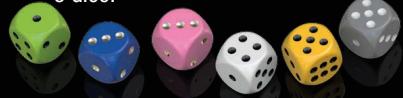
白色骰子是萬用骰,可以當作其他任何顏色的骰子使用。
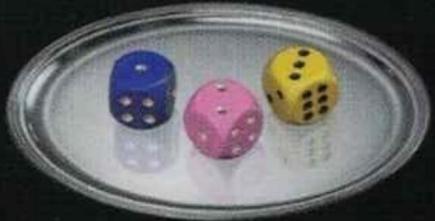
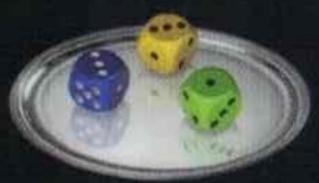
接著,你將比你所選骰子點數小的所有骰子,放在遊戲盒內側所印的銀盤上。如果你選了點數最小的骰子,銀盤上不會有任何骰子。你不能使用銀盤上的骰子(例外:額外骰子行動)。

你用剩下的骰子進行第二次擲骰,選擇一顆骰子,放在骰子區的一個空格上,並在計分表顏色相符的區域中記錄該數字,將所有比該骰點數小的骰子放在銀盤上。
你第三次擲殼,最後一次執行上述行動,然後將所有未被選入計分表中的骰子放在銀盤上。
若你決定在第一次或第二次擲骰中選擇較大點數的骰子,可能會沒有剩下的骰子讓你再次進行擲骰。如果發生這種情況,你的擲骰次數會少於三次。當然,最好避免這種情況發生。
行動玩家範例
- 由安琪進行回合,她是行動玩家,擲出6顆骰子。
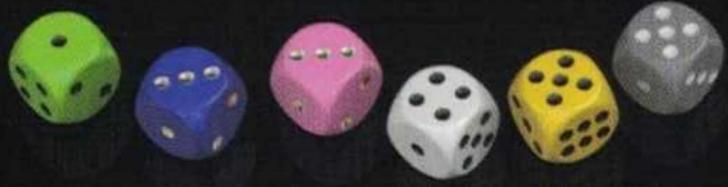
- 她選擇點數3的粉色骰子,放在計分表骰子區的空格上,接著在計分表的粉色區記下該骰子的點數(3)。
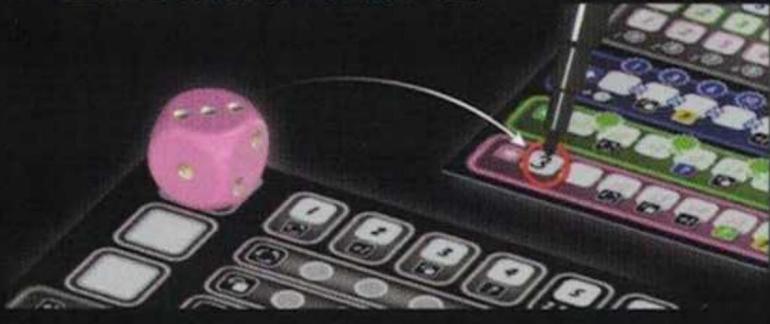
- 安琪將點數小於3的殼子放在銀盤上。


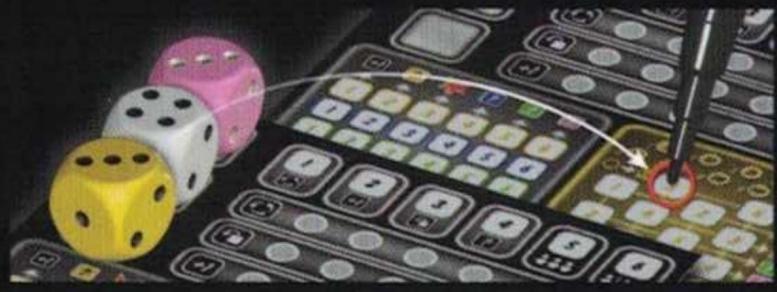
- 她選擇4點的白色萬用骰,放在計分表骰子區的空格上,並在計分表粉色區記下該骰子的點數(4)。

- 安琪將點數比4小的骰子放在銀盤上。

- 安琪使用僅剩的黃色骰子進行最後一次擲骰,擲出3點,將黃色骰子放在骰子區的最後一個空格上,接著在計分表的黃色區記下該骰子的點數(3)。
其他玩家
只有在行動玩家將3顆骰子放上計分表,或是因為剩下的骰子都在銀盤上而無法完成3次擲骰時,其他玩家才能進入遊戲。
所有其他玩家現在從銀盤上選擇一顆骰子,將它記錄在自己的計分表上對應的格子中。所有其他玩家同時選擇骰子,可以多人選擇同一顆骰子。每位玩家都在計分表上記錄好後,輪到行動玩家左側的玩家進行回合,他拿取6顆骰子,並依上述規則擲骰。
當每位玩家都進行過一個回合後,一輪結束。
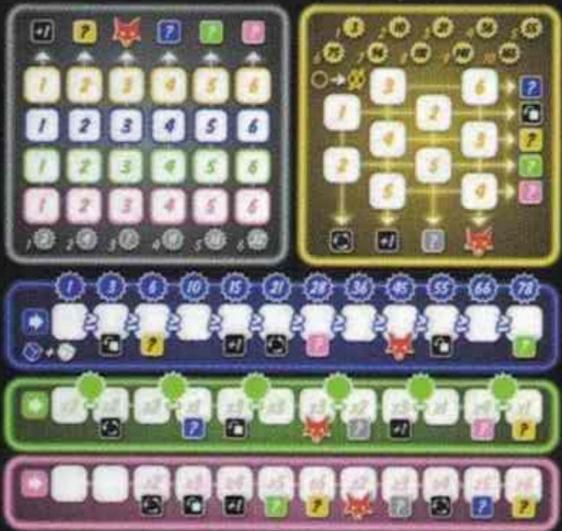
計分表
計分表有五個顏色區,你依所選骰子,將一個格子打叉、圈起來或寫上骰子的點數。
藍色、綠色、粉色三區的左側有個箭頭,你必須從最左側的空格開始填入數字,依序向右填寫,不可以跳過任何空格。


銀色和黃色兩區沒有這樣的箭頭,你要將數字打叉或圈起來,可以在任何位置。


白色骰子
白色骰子是萬用骰,可當作一顆銀色、黃色、綠色、或粉色骰子,或是和藍色骰子加總後,將數字填入藍色區。

銀色骰子
在銀色區記錄銀色骰子的點數,只需將一個相符的數字打叉,你可以自由選擇該數字的顏色(黃色、藍色、綠色或粉色)。
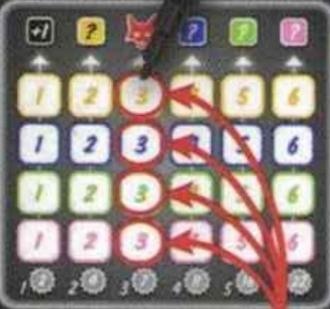
注意:此外,你可以將選擇銀色骰子後放上銀盤的任何骰子,記錄在銀色區。不可記錄選擇銀色骰子之前已放上銀盤的骰子,因為這些骰子不是由於選擇了銀色骰子才放上銀盤。
如果你選擇將白色骰子當作銀色記錄在銀色區,且因此將銀色骰子放上銀盤,可將銀色骰子視為任一顏色,記錄在銀色區;反之亦然,如果你選擇銀色骰子,且因此將白色骰子放上銀盤,可將白色骰子視為任一顏色,記錄在銀色區。
範例:菲力選擇了點數3的銀色骰子,他在銀色區打叉了綠色3°之後他將藍色1和白色2放上銀盤,他在銀色區打叉藍色1,並將白色骰子當作綠色,打叉綠色2°。
如果你選擇銀色骰子,卻無法記錄它(因為該數字已經都被打叉了),則不可選擇銀色骰子(這顆銀色骰子稍後若因數字小於你選擇的骰子而被放到銀盤上,你依然無法記錄它)。
如果其他玩家選擇銀色骰子,或是行動玩家選擇了銀色骰子來執行額外骰子行動,均可在銀色區打叉任一顏色的該數字。如果選擇銀色骰子後並未將任何其他骰子放上銀盤,便無法在銀色區額外打叉數字。
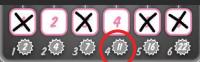
你的得分取決於每列中一共記錄了幾個數字,數量越多分數越高,銀色區底部灰色星號中的白色數字代表分數。例如:你在銀色區粉色列中共記錄了4個數字,則從該列獲得11分。將你四列(黃、藍、綠、粉)的得分加總,便是你銀色區的分數。

黃色骰子
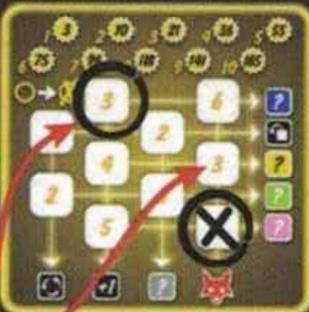
若你選擇黃色骰子,將黃色區中該數字圈起來,如果該數字已經圈起,則在上面打叉來記錄。○→∅
注意:若一行或一列(根據箭頭方向)中所有的數字都已圈起,便獲得指定的獎勵,這些數字是否已被打叉,不造成影響。
你的得分取決於在黃色區中打叉了幾個數字,數量越多分數越高,黃色區頂端黃色星號中的黑色數字就是你可能從本區獲得的分數。只打圈的數字不列入計算。

藍色骰子
若你選擇藍色骰子,可將藍色骰子的點數和白色骰子的點數相加 🖼 + 🖼(無論白色骰子當下位於何處),在藍色區寫下總和。你從最左側的空格開始,往右側填寫,不可跳過任何格子。每個空格中填入的數字必須小於或等於左側的數字。若你選擇將白色骰子當作藍色骰子,將藍色骰子當下的點數和白色骰子的點數相加,在藍色區寫下總和。此外,即使用來加總的那顆骰子位於任何玩家的骰子區或銀盤上,也不論選擇該骰子的是行動玩家還是其他玩家,此規則都適用。你在藍色區記錄時,不能只使用其中一顆骰子的點數。如果你在自己的回合中選擇了藍色骰子,並在其他玩家的回合中選擇白色骰子,你便能在同一輪中在藍色區寫下兩個數字。
遊戲結束時,藍色區中,你最後填寫的數字上方星號中的白色數字,就是你從這區獲得的分數。


綠色骰子
若你選擇綠色骰子,將骰子點數與綠色區最左側空格中的數字相乘,將結果記錄在該格中。你從最左側的空格開始,依序往右填寫,不可跳過任何格子。每兩個格子為一組,當一組中的兩個格子都填上數字,進行計算,將左側的數字減去右側的數字,將結果記錄在這兩格上方的綠色星號中,這就是你的得分。結果有可能是負數,因此,你要盡量在左側填入大的數字,右側的數字要相對較小。

注意:遊戲結束時,如果一組中的第二格沒填數字,你不會從這組獲得任何分數。但是,當你在一組中的第二格填入數字後,立刻獲得該格下側指定的獎勵。
範例:菲力選了綠色5,在第一格寫下10(5×2),之後的一輪中,選擇了綠色1,在第二格寫下2(1×2),他立刻在這兩格上方的綠色星號寫下8(10-2)。

遊戲結束時,你將所有綠色星號中的數字加總,即為你在此區的得分。

粉色骰子
5314≥4≥5≥6
你可以在粉色區的格子中記錄粉色骰子的點數,從最左側的空格開始,依序往右填寫,不可跳過任何格子。你在空格中記下所選粉色骰子的點數。此區沒有點數填寫的限制,任何擲出的點數都可以記錄在空格中。但是,只有在記下的點數大於或等於空格中的粉色數字時,你才會獲得該格下側的獎勵。
遊戲結束時,你將所有記錄在粉色區的數字加總,即為此區的得分。
特殊情况
如果你在其他玩家的回合中,無法使用銀盤上的骰子,則可選擇行動玩家骰子區的一顆骰子來使用,你也可以自願放棄使用銀盤上的骰子,但放棄後你不能選用行動玩家的骰子。如果你在回合中,無法或不想使用擲出的任何骰子,你可以放棄選擇骰子和在計分表上做記錄,該次擲骰仍計入你最多3次的擲骰中。
獎勵
遊戲中,你會獲得指定的獎勵,標示在特定格子的下側(藍色、綠色、粉色區),或者一行、一列的尾端(銀色、黃色區)。


當你打叉、圈起或記錄數字的格子旁有?獎勵時,立刻獲得該獎勵。你立刻在相應的顏色區(藍色、綠色、粉色區)中,填入任意數字(綠色區和粉色區填1-6,藍色區填2-12);或在相應的顏色區(銀色區、黃色區)立刻打叉或圈起一個數字(黃色區的數字須先圈起,若已圈起,則改為打叉)。獎勵不可保留,必須立刻使用。第4輪開始時,每位玩家會獲得黑色?獎勵,每位玩家可以自行選擇顏色。
當你打叉了銀色區一直行中的最後一個數字,或是圈起黃色區一列或一行中的最後一個數字時,也會獲得獎勵,立刻使用所對應的獎勵。如果你圈起了行動列的最後一格(詳見「行動」),立刻獲得所示獎勵。
獎勵摘要
單一格子的獎勵:你在該格填入數字時,立刻獲得。
一列或一行尾端的獎勵:你在該列/行全部的格子都打叉或圈起(黃色)時獲得。
每隻狐狸在遊戲結束時為你帶來的分數,等同你最低分那區的分數。例如:你分數最低的區域是綠色區,共得8分,則每隻狐狸讓你獲得8分。
注意:如果你在某個顏色區獲得0分,狐狸就毫無價值了!
行動

三條行動列會在遊戲中解鎖,跟獎勵不同的是,行動可以在解鎖後立刻執行,或是留待之後的遊戲中使用。
當你解鎖一個行動,圈起相符行動列中最左側的一個空格,使用一次該行動後,在最左側已圈起的格子上打叉,表示用掉一次。回合中,只要你仍有可用的行動,便可以執行任意次數,直到用完為止。


重擲行動 你只能在回合中執行此行動。如果你想要重擲剛剛擲出的所有骰子(不包含在計分表或銀盤上的骰子),可以花費一個重擲行動。執行該行動時,必須重擲所有剛剛擲出的骰子(也就是說,你不能忽略某些骰子,只重擲部分骰子)。

取回行動 你只能在回合中執行此行動。藉由此行動,取回一顆銀盤上的骰子,用於下一次擲骰中。你必須在擲骰前執行此行動,若已擲骰,便不可執行。
+1 額外骰子行動 你使用此行動來選擇一顆額外的骰子,只能在一輪結束前執行,亦即,在行動玩家已依正常規則放置所有骰子之後,或其他玩家已從銀盤上選擇骰子之後執行。執行此行動時,你可以選擇六顆骰子中的任何一顆,包含行動玩家計分表上的骰子,或甚至是你剛剛在一般行動中使用的骰子!你可以在同一輪中執行此行動多次,但是每顆骰子在一輪中,你只能以這種方式選擇一次。
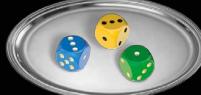
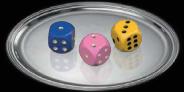
範例:安琪選擇了這些骰子 🚗 🚗 🚗 ,放在計分表上。她還有兩次額外骰子行動,第一次她選白色骰子作為額外骰子,當作黃色4;第二次她不能再選擇白色骰子,但是可以選擇藍色骰子,和白色骰子加總,在藍色區記錄7(藍色3+白色4=7)。
SH Games twice as clever rules for web 1.md19.5 KB

(Twice as Clever!)
The clever dice game by Wolfgang Warsch for 1-4 players, ages 8+.
O
1 Score pad
6 Dice
4 Felt-tip pens
CONTENTS
DOPPELT SO
To better understand this game, all rules that differ from Ganz Schön Clever are highlighted in grey.
GAME OVERVIEW
Choose your dice twice as cleverly in Doppelt So Clever, marking them in the matching colored areas on your Score sheet, putting together chain scoring opportunities, and racking up the points! The dice you don't use are as important as those you do, because every die that has a lower value than your chosen die can be used by the other players! The player with the most points at the end wins!
SETUP
Each player receives a Felt-tip pen and Score sheet. Randomly choose a starting player, who picks up the 6 dice.
Dicefield
Silver area
Blue area Green area Pink area
Round track
2 4 2 3 4 5 6 2 3 4 5 1 2 3 4 5 6 ,0 0 60
10 21 36 5 96 141 M65
→8
2 +1
Reroll Return Extra dice
Yellow area
日 ≥4 五日 2 ≥4 25
GAMEPLAY
The game is played over four (4 players), five (3 players), or six (1 and 2 player) rounds.
2 3日 4 5:::
Actions or bonuses that players receive at the start of each round
At the start of each of the first four rounds, each player gets one bonus, as shown on the Round track on the Score sheet.
ACTIVE PLAYER

The active player receives all the dice. They roll all 6 once, then choose a die, placing it onto one of their 3 Dice fields (top left of Score sheet), without changing the number of the die.
Using the chosen die, the player must now use the value and the color to mark on their Score sheet a corresponding number in the same color area (see Score sheet). The white die is a wild color and can be used in place of any other color.
Then the active player must place all dice that show a lower value than the currently selected die onto the Silver Platter printed in the box. If the active player selects the lowest value die, no dice are placed onto the Silver Platter. Dice on the Silver Platter can no longer be used by the active player (exception: Additional Dice action).
With the remaining dice, the active player rolls a second time. They again choose a die, place it onto a free Dice field, and enter its value in the matching color area on their Score sheet. All dice that show a lower value than the selected die again are placed onto the Silver Platter.
The active player then rolls a third time and executes the actions as described above one last time. Then they place ALL remaining dice not on their Score sheet onto the Silver Platter.
Attention: If a player decides in the first or second roll to take a high value die, it may happen that there are no dice left for a reroll. If this happens, the player simply performs fewer than three rolls. Of course, it's best to avoid this situation.
ACTIVE PLAYER EXAMPLE
- Angie is the active player and rolls all 6 dice.
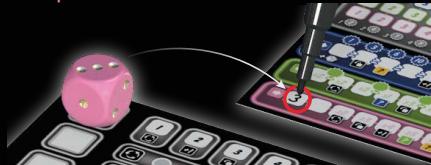
- She chooses the pink die, a 3, and places it onto an empty Dice field on her Score sheet. Angie then records the corresponding number (3) in the pink area of her Score sheet.
- Angie places all the dice that are less than 3 onto the Silver Platter.

- Angie rolls the 4 remaining dice a second time.
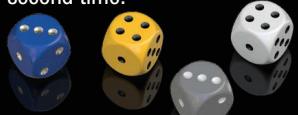
- She selects the white wild die, a 4, and places it onto an empty Dice field on her Score sheet. She then decides to record the corresponding number (4) in the pink area of her Score sheet.
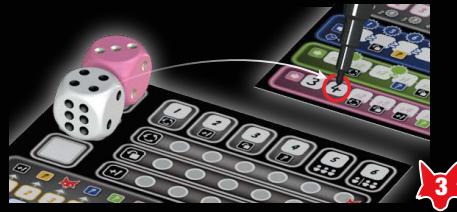
- Angie places all dice less than 4 on the Silver Platter.
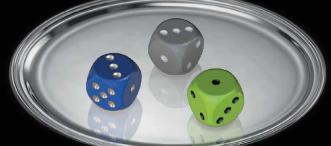
- For her final roll, only one yellow die remains. Angie rolls a 3, places the yellow die onto the last empty space in the Dice field, then records the corresponding number (3) in the yellow area of her Score sheet.
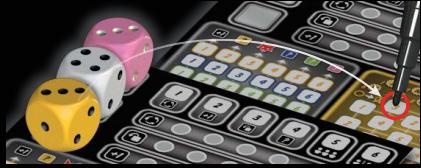
PASSIVE PLAYERS
Only after the active player has placed 3 dice onto their Score sheet, or can no longer reroll because all remaining dice are on the Silver Platter, do the other players (i.e. passive players) get to enter play.
All passive players may now take advantage of the dice set aside on the Silver Platter. Of these dice, each player can choose one die to use to mark a space on their Score sheet. All passive players choose simultaneously, and a die can be chosen by multiple passive players. After each passive player has marked their chosen die, the player to the left of the active player claims all six dice and rolls them based on the rules described above, as the new active player. They get all six dice and roll, as described above.
A round ends after each player has been the active player once.
SCORE SHEET
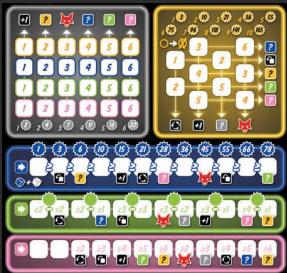
WHITE DICE
The Score sheet has five colored areas. For each die, a player will mark one space or write one number in one space.
Three areas (blue, green, pink) show an arrow on the left. You will start entering numbers at the left of these lines and proceed to the right in order, without skipping spaces.
In the two areas without an arrow (silver and yellow), the corresponding number can be marked or circled, no matter where it is.
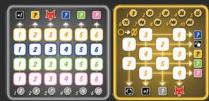
The white die is wild and can either be used as a silver, yellow, green, or pink die or can be combined with the blue die to create a sum for the blue area.
Silver dice are recorded by the player in this area. You simply mark the value of the chosen die in the silver area. The color of the marked number (yellow, blue, green, pink) can be chosen freely.
Attention: In addition, in the silver area the players can mark any dice that are moved onto the Silver Platter after choosing the silver die. Dice that have been placed on the Silver Platter before the silver die was chosen cannot be marked, as they have not been moved onto the Silver Platter by the silver die.
If a player chooses the white die for the silver area and thereby puts the silver die on the Silver Platter, any color can be marked for the silver die. The same goes the other way around. If the white die is put on the Silver Platter by choosing the silver die, then the white die acts as any color.
Example: Felix chooses a silver 3. Now he marks the green 3 in the silver area. Afterwards, he puts the blue 1 and the white 2 on the Silver Platter. Now he marks the blue 1 in the silver area and for the white 2 he decides to mark a green 2.
If a player cannot mark a number by using the silver die (as it has already been marked) they cannot choose this die (and thereby not mark the dice, which afterwards would have been put on the Silver Platter).
If the silver die gets chosen by a passive player or as an additional action die by an active player, a corresponding number in any color can be marked in the silver area. As no other die gets put on the Silver Platter afterwards, no additional numbers can be marked in the silver area.
Players receive points based on the number of marks made in each line. The grey stars at the bottom of the silver area show how many points (white number in the star) are granted for the total marks in every line. For 4 marks in a line, the player receives e.g. 11 points. The sum of all four rows yields the points for the silver area.

YELLOW DICE
Using yellow dice, players can circle the corresponding number in the yellow area. If a number has already been circled, it can then be marked. O→
Attention: Bonuses are activated by completing a row or a column (according to the arrows) with circles! Marks are not necessáry for the bonuses.
Players receive points based on the number of marks made in the yellow area. The yellow stars at the top of the yellow area show how many points (black number in the star) are granted for the total marks in the yellow area. Numbers that only have been circled do not count.
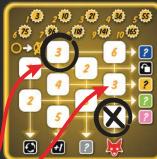
BLUE DICE
When a player decides to use the blue die, they add the value of the white die to the blue die +(no matter where the die is at that moment). The sum is written down in the blue area. Players must start at the leftmost space and proceed to the right, not skipping any spaces. For each space, the number entered must be less than or the same as the previous number.
The same applies in reverse, if the player uses the white die as a wild blue — they add the current value of the blue die to the white die to come up with a total. Again, this applies even if the second die is on a player's Dice field or if it is on the Silver Platter, and whether it is an active or passive player choosing. Players cannot opt to consider the value of only one die when filling in the blue area. If the active player chooses the blue die on one turn and the white die on another turn, they could potentially mark two blue area spaces during one round.
The white number in the star above the last filled in box indicates the number of points scored for this section at the end of the game.
1 6 10 21 28 O 9 7 5 5 + ? +1

GREEN DICE
Using green dice, players must multiply the number of the green die by the multiplier in the open green space. The corresponding result is then written down in the open green space. Players must start at the leftmost space and proceed to the right, not skipping any spaces.
As soon as two spaces have each been filled in with a number, a calculation is carried out and the player gets points. During the calculation, the value of the second space is subtracted from the value of the first space. The result is written down in the green star above. It is possible to get minus points. Therefore, a high number should be written in the first space and a relatively low number should be in the second space of a calculation.
Attention: A player receives zero points if the second space of a calculation is empty at the end of the game. However, a player gets the corresponding bonus immediately after writing down a number.
Example: Felix chooses a green 5 and writes down 5 x 2 = 10 in the first space. In a later
round he chooses a green 1 and writes down 1 x 2 = 2. Then he immediately writes down 8
(10 - 2 = 8) inside the green star above the calculation. 8 5 1
At the end of the game, players score the sum of all values that ?
have been written in the green stars.

PINK DICE Using pink dice, players can mark off spots in the pink area. Players must start at the leftmost space and proceed to the right, not skipping any spaces. For each space, players record the value of the selected pink die. There are no restrictions regarding the number written down. Any rolled result can be written in the space. However, one only receives bonuses if the number, which is written down, is equal to or greater than the value listed in the space. If this is not the case, the player does not get the bonus below the space.
At the end of the game, players score the sum of all recorded numbers from the pink row.
5 3 1 4Q 2日 2日
If the active player can't use or does not want to use any of the dice from a given roll, they simply cannot put a mark on their Score sheet for that roll. This still takes one of their maximum of 3 rolls.
BONUSES
certain spaces (blue, green, pink). green, pink).
Players can earn bonuses, which are listed at the end of rows or columns (silver, yellow) or directly below
香→图
As soon as a number is marked or written down on a space with a ?- bonus, the player receives the associated bonus. Then the player must immediately write down a number on a space in the color area of their choice (1-6 for green and pink, 2-12 for blue) or make a mark (silver and yellow – but yellow only if the space is already circled), or make a circle around a number (yellow). The bonus cannot be saved for a later moment in the game; it has to be used immediately.
At the beginning of round 4, every player can freely choose a color for the black?.
The bonuses are also activated when a player makes the last mark in a column in the silver area, or if the last number of a row or a column in the yellow area is circled. They immediately use the bonus displayed on the edge. If a player circles the last space on an action-bar (see Actions), they immediately receive the displayed bonus. Summary of Bonuses:
Bonus on an individual space = Redeemed immediately as a number is entered in this space. Bonus at the end of a line or column = Redeemed only once all spaces in the line/column are marked or have a circle around them 6(yellow).
Foxes award points at the end of the game. Each activated Fox will score as many points as the player's lowest-scoring colored area. For example, if a player's worst-scoring area is green, with 8 points, each Fox will score that player 8 points. Attention: If a player scores 0 points in an area, Foxes are worthless!
ACTIONS The three action bars can be unlocked during the game. Unlike bonuses, actions can either be used immediately after they have been
unlocked or can be saved for a later turn or round.
When a player unlocks an action, they should circle the next space in the corresponding
row. After they use the action, they should mark the first available 2 Ue ≥3
circled space. Players can perform as many actions as they wish in
a given turn, provided they still have actions available.
Reroll action:
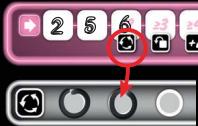
This can be used only by the active player. If they wish to reroll all of the dice they just threw (i.e. not dice on their Score sheet or on the Silver Platter), they can spend an action to do so. All rolled dice must be rerolled when doing this (i.e. you cannot keep some dice and reroll others).
This action can only be used by the active player. With this action, a die that had already been put on the Silver Platter can be returned and used in the next roll. Once the dice have been rolled, this action cannot be used.
+1 Extra die Action:
Using this action, an extra die can be selected. This action can only be performed at the end of a round (i.e. after the active player has regularly assigned all of their dice or after a passive player has chosen a die from the Silver Platter)
With this action, the player can choose any of the six dice, including a die that the active player has taken or even the die that the player just took with their regular action! Players can use multiple additional die actions during a single round, but each individual die can only be chosen once a round in this manner.
Example: Angie has chosen the dice and entered them onto her Score sheet. She still has two additional actions. For the first action she chooses the white die as an extra die, using it as a yellow 4. With a second extra die, choosing the white die again is not an option. However, she can choose the blue die and thus, together with the white die, tick one 7 in the blue area (blue 3 + white 4 = 7).
GAME END
The game ends after the last active player has finished their turn in the final round and after passive players have all taken their actions for this round. Each player can use additional die actions here, but any remaining Reroll actions will expire.
A player will then record the scores for each player in each colored area. Earned Foxes will be scored for each player. A player's Foxes are each worth the value of that player's lowest scoring area.
Points are summed, and the player with the highest total wins. If there is a tie, the player with the highest score in an individual area breaks the tie. If no winner can still be determined, the victory is shared.
SOLO GAME
The goal of the solo game is to score as many points as possible. The rules are largely the same.
The solo game lasts 6 rounds. The player starts as an active player then takes the role of the passive player before becoming active again. Thus, the player will be active and passive 6 times, alternatively. When the player is in the passive role, they roll all six dice and place the three lowest values onto the Silver Platter. If it's a tie, three dice are still placed, with the die closer to the Silver Platter breaking the tie.
Attention: Like in a multi-player game, as passive player you cannot use the re-roll action.
A player can determine how clever they are by checking their final score against this table:

| ★★★★★★★★★釘P | LEVEL | POINTS |
| Twice as clever! & | gt;320 | |
| oints = IQ! 300 | -319 | |
| ★★★★☆ | Respect! | 280-299 |
| ★★★☆☆ | This can't be luck! 260 | -279 |
| ★★★☆☆ | People, look at this! | 240-259 |
| ★★☆☆☆ | Pretty, pretty clever! | 220-239 |
| ★★☆☆☆ | You've been training! | 200-219 |
| ★a☆☆ù | You should be happy! | 180-199 |
| ★☆☆☆☆ | On the right way. | 160-179 |
| ☆☆☆☆☆ | You can do better. | 140-159 |
| ☆☆☆☆☆ | Half as clever. & | lt;140 |
Author: Wolfgang Warsch Layout: Leon Schiffer Editor: Thorsten Gimmler Localization: T.R. Knight

Schmidt Spiele GmbH Lahnstraße 21
12055 Berlin
www.schmidtspiele.de
www.schmidtspiele-shop.de

STRONGHOLDGAMES
Stronghold Games 7964 Emerald Winds Circle Boynton Beach, FL 33473 USA
Email: info@StrongholdGames.com
And visit our website at: StrongholdGames.com
© 2019 Stronghold Games All Rights Reserved.
Under license from Schmidt Spiele GmbH
Download Markdown简繁检索对照.md1.6 KB
270210_269210_twice-as-clever — 简体/繁体检索对照
本游戏的规则书是繁体中文原文。用户用简体提问时,把关键词按下面这张表转成繁体再去 grep 原文,命中率最高。
回答时用简体或繁体都可以,但引用的原文保持繁体。
简体 → 繁体 对照(按该游戏原文出现频率排序,共 60 字)
| 简体 | 繁体 | 原文出现次数 |
|---|---|---|
| 数 | 數 | 100 |
| 区 | 區 | 77 |
| 银 | 銀 | 62 |
| 动 | 動 | 54 |
| 选 | 選 | 53 |
| 择 | 擇 | 43 |
| 将 | 將 | 34 |
| 游 | 遊 | 32 |
| 戏 | 戲 | 32 |
| 点 | 點 | 32 |
| 记 | 記 | 31 |
| 掷 | 擲 | 29 |
| 计 | 計 | 29 |
| 后 | 後 | 28 |
| 蓝 | 藍 | 27 |
| 盘 | 盤 | 26 |
| 个 | 個 | 25 |
| 该 | 該 | 25 |
| 录 | 錄 | 25 |
| 时 | 時 | 24 |
| 颗 | 顆 | 24 |
| 获 | 獲 | 22 |
| 绿 | 綠 | 22 |
| 黄 | 黃 | 21 |
| 奖 | 獎 | 21 |
| 励 | 勵 | 21 |
| 轮 | 輪 | 20 |
| 为 | 為 | 19 |
| 侧 | 側 | 19 |
| 颜 | 顏 | 16 |
| 进 | 進 | 16 |
| 当 | 當 | 16 |
| 这 | 這 | 15 |
| 于 | 於 | 14 |
| 执 | 執 | 14 |
| 则 | 則 | 13 |
| 写 | 寫 | 13 |
| 结 | 結 | 12 |
| 总 | 總 | 11 |
| 会 | 會 | 11 |
| 从 | 從 | 11 |
| 来 | 來 | 11 |
| 开 | 開 | 10 |
| 额 | 額 | 9 |
| 无 | 無 | 9 |
| 聪 | 聰 | 7 |
| 过 | 過 | 7 |
| 并 | 並 | 7 |
| 两 | 兩 | 7 |
| 单 | 單 | 6 |
| 规 | 規 | 6 |
| 应 | 應 | 6 |
| 须 | 須 | 6 |
| 号 | 號 | 6 |
| 刚 | 剛 | 6 |
| 担 | 擔 | 5 |
| 对 | 對 | 5 |
| 范 | 範 | 5 |
| 组 | 組 | 5 |
| 胜 | 勝 | 4 |
Texts are community-compiled or publicly released by publishers; copyright remains with the original authors. For personal reference only.