
双倍聪明Twice As Clever
一句话概览
双倍聪明 是一款已收录于村了吗规则库的桌游,支持 1–4 人,原名 Twice As Clever。
本页内容:一句话概览 · 游戏概述 · 1. 游戏组件 · 2. 游戏设置 · 3. 游戏流程 · 4. 计分表与颜色区域 · 5. 白色骰子(万能骰) · 6. 各颜色区域详解 · 7. 特殊情况处理 · 8. 行动系统 · 9. 狐狸 —— 短板惩罚加成 · 10. 单人玩法(变体规则) · 关键规则与常见问题 · 常见问题
双倍聪明 规则速览
以下规则速览由本站整理,与官方规则书表述不同,仅供快速上手参考。
游戏概述
《双倍聪明》是一款机智的掷骰计分游戏,由 Wolfgang Warsch 设计。1–4 名 8 岁以上玩家参与。每位玩家在三轮掷骰中选择自己的一颗骰子填入对应颜色的计分区,同时将点数较小的骰子放置在公共银盘上供其他玩家拾取。你未选择的骰子与其他玩家息息相关,因为每一颗被你留在银盘上、比你选中骰子点数更小的骰子,都可能成为对手的得分素材。四至六轮结束后,统计全部区域分数,总分数最高者获胜。
核心机制: 多轮掷骰选择、手牌式骰池分配、彩色区域独立计分、连锁收益(银盘共享)、行动力管理(重骰 / 取回 / 额外骰子)
1. 游戏组件
| 组件 | 数量 / 说明 |
|---|---|
| 计分表 | 1 本,含五个颜色区域(银、黄、蓝、绿、粉)及行动列、轮数轨 |
| 六面骰子 | 6 颗(银、黄、蓝、绿、粉各 1 颗,白 = 万能骰 1 颗) |
| 签字笔 | 4 支黑色 |
| 银盘 | 印于游戏盒内侧,用于暂存未被选入计分表的骰子 |
2. 游戏设置
2.1 分发给每位玩家
- 1 支黑色签字笔
- 1 张计分表
2.2 确定起始玩家
- 随机选定一名玩家担任起始玩家
- 起始玩家拿取全部 6 颗骰子
2.3 游戏轮数
| 玩家人数 | 轮数 |
|---|---|
| 4 人 | 4 轮 |
| 3 人 | 5 轮 |
| 1–2 人 | 6 轮 |
3. 游戏流程
3.1 轮次结构
每轮开始时,依计分表上的轮数轨所示,每位玩家获得一项奖励。仅前四轮会发放轮数轨奖励(无论实际轮数是否为四轮以上)。
3.2 回合顺序
- 每轮由起始玩家首先进行回合
- 随后按顺时针方向依次进行
- 每名玩家完成一回合后,由其左侧的玩家接任新的行动玩家并拿取 6 颗骰子
- 所有玩家均完成一回合后,本轮结束,进入下一轮
每轮中角色分为两类:
- 行动玩家: 本回合正在掷骰、选择骰子并在计分表上记录的玩家
- 其他玩家: 等待行动玩家完成投掷后,从银盘上挑选骰子的玩家
3.3 行动玩家回合(共最多 3 次掷骰)
- 行动玩家手持 6 颗骰子进行一次掷骰
- 第一次掷骰 — 选择第 1 颗骰子:
- 从掷出的 6 颗骰子中任选 1 颗
- 将其置于计分表左上方「骰子区」的一个空格内(不改变朝向 / 点数)
- 依据该骰子的颜色和点数,在计分表对应颜色区域做相应记录
- 将点数严格小于所选骰子的其余骰子放置到银盘上
- 若所选骰子为点数最小值(如掷出 1),则银盘上不出现任何骰子 - 第二次掷骰:
- 用剩余骰子再掷一次
- 再选 1 颗骰子放入骰子区并记录
- 将比此次所选骰子点数小、且仍留在手上的骰子放到银盘 - 第三次掷骰:
- 再次用剩余骰子掷一次
- 选出第 3 颗骰子、记录
- 将所有未被选入骰子区的残余骰子放到银盘 - 若在第一次或第二次掷骰中选到了较大点数的骰子,导致手上剩余骰子不足以继续掷出下一次,则本回合掷骰次数自动少于 3 次(并非错误,属正常情况)
- 行动玩家骰子区的 3 颗骰子到此锁定——在本轮结束前不得改动
> 提示: 每次掷骰前均可利用已解锁的行动(见第 7 节「行动」)。
3.4 其他玩家环节
- 仅在以下两种情况下,其他玩家可以入场:
1. 行动玩家已完成全部 3 次掷骰、将 3 颗骰子放入骰子区
2. 行动玩家因剩余骰子全数落入银盘而无法完成 3 次掷骰 - 所有其他玩家同时从银盘上各选 1 颗骰子(可有多人选择同一颗),放入各自计分表的骰子区并做相应记录
- 全部完成后,本轮结束,由原行动玩家左侧的玩家接手成为新行动玩家
3.5 轮末状态
- 银盘上残留的所有骰子留待下一轮其他玩家环节继续使用
- 行动玩家的骰子区已锁定,非轮到额外骰子行动阶段不可再触碰
4. 计分表与颜色区域
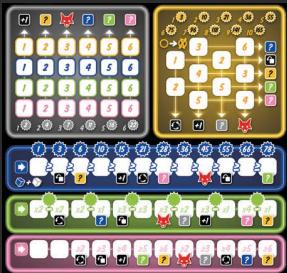
计分表设有五个颜色区域和一个骰子区。玩家根据自身所选骰子的类型在对应区域内做标记——打叉(×)、圈起(○)或在空格内写下数字。
| 区域 | 填写方式 | 方向限制 |
|---|---|---|
| 银色区 | 在任一格内打叉对应数字 | 无方向限制,可任意位置勾选 |
| 黄色区 | 首次圈起(○),已被圈过的再次打叉(→ ×) | 无方向限制,可任意位置勾选 |
| 蓝色区 | 在两色骰之和填入数字 | 从左至右连续填写,不可跳过空格;每格数字须 ≤ 左邻格 |
| 绿色区 | 乘法运算结果填入 | 从左至右连续填写,不可跳过空格;每两格为一组 |
| 粉色区 | 写入骰子点数 | 从左至右连续填写,不可跳过空格 |
5. 白色骰子(万能骰)
白色骰子为万能骰,具备跨区灵活使用能力:
- 可作为银色、黄色、绿色、粉色骰子直接使用,填入对应区域
- 可与蓝色骰子叠加计算:将两者点数相加,结果记入蓝色区(见第 6 节「蓝色区详解」)
> 白色骰子可在整局游戏中被反复以不同身份调用,只要它仍在银盘或计分板上存在。
6. 各颜色区域详解
6.1 银色区 —— 精准匹配加分
- 当行动玩家或其他玩家选择了银色骰子时:
- 在自身计分表的银色区内,打叉一个与该骰子点数相符的格子
- 打叉时可自行决定将其归入哪一色彩列(黄 / 蓝 / 绿 / 粉)
- 例外加分: 选择银色骰子后,凡因此次选择而新近落到银盘上的骰子(不含原本就在银盘上的),也可分别在银色区中各再打叉一次。被打叉的骰子颜色可自由指定
- 白色 / 银色互换: 若选了白色当银色,因而把银色丢上银盘 → 银色视为任意颜色,在银色区再打叉一次。反之亦然(选了银色,因而白色落盘 → 白色视为任意颜色打叉)
- 禁止规则:
- 若银色区内目标数字已全部打叉完毕,则不可再选择该银色骰子
- 此禁令亦适用于先前因选择该骰子而落于银盘的骰子(即使当时已成功记录)
-
选择银色骰子后如果未造成任何其他骰子落盘,则在银色区不得额外打叉
-
计分方式:
- 银色区底部灰色星号内有四个分值,分别对应四列(黄、蓝、绿、粉)
- 每列中打叉的数字个数越多,该项得分越高
- 银色区总分 = 四列得分相加
> 注意: 其他玩家选择银色骰子,或行动玩家以银色骰子执行额外骰子行动时,均可在银色区打叉任意颜色的该点数。
范例: 菲力掷出银色 3,他在银色区打叉了绿色 3°。之后蓝色 1 和白色 2 因点数更小而落盘,他又在银色区打叉蓝色 1,并将白色骰子当作绿色打叉绿色 2°。
6.2 黄色区 —— 连续圈叉连击奖
- 选择黄色骰子时:
- 找到黄色区内对应点数的空格,若为空则圈起(○)
- 若已被圈过,则在已有圆圈上打叉(×),形成 × 标记
- 一行或一列全部圈满时(含已打叉者),立刻获得该行列尾端标注的奖励
-
打叉与圈起均可触发行列奖励,区别只在计分
-
计分方式:
- 黄色区顶端的黄色星号标有四列的分值表
- 每列中只有已打叉(×)的数字计入分数,单纯圈起的不算
- 打叉越多 → 分数越高
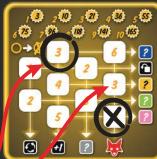
6.3 蓝色区 —— 双色叠加递增法
- 选择蓝色骰子时:
- 取出蓝色骰子的点数 + 白色骰子(不论其当前位于何处——计分板、银盘或其他人的板上皆可)的点数,二者相加
- 将总和记入蓝色区最左侧尚空的格子中
- 继续向右填充时,每一格的数字必须小于或等于其左侧相邻格的数字(序列不增)
- 每次记录必须同时使用两颗骰子的点数,不可仅记录单一骰子的值
-
若你在自己的回合选了蓝色骰子、又在其他玩家的回合里选了白色骰子,则你可以在同一轮中向蓝色区填入两笔数字
-
计分方式:
- 游戏结束时,查看蓝色区中你最后一笔填写的数字,该数字正上方星号内的白色数字即为本区得分
6.4 绿色区 —— 乘积定基 · 差值结算
- 选择绿色骰子时:
- 将骰子点数乘以绿色区最左侧空格中已有的数字,乘积记入该格
- 若最左侧尚无数字,则本骰直接填入最左格(此时无需相乘,视作乘以 1)
- 继续向右依序填写,不可跳跃空格
- 每两个连续格子组成一对;当一对的两格均已填满时,立即执行减法:左格数字 − 右格数字,结果写在两格上方的绿色星号中
-
差值可为负数——策略上应让左格尽量大、右格尽量小
-
注意事项:
- 一组中若第二格始终未填,游戏结束时该组不计分
-
一旦完成第二格的填入,除立即获得上述差值分外,还会触发该格下方标注的额外奖励(若有)
-
计分方式:
- 游戏结束时,将所有绿色星号中的差值加总,即为绿色区总分
范例: 菲力在第一轮选了绿色 5,第一格原有数字 2 → 写入 10(5×2)。第二轮选了绿色 1,第二格写入 2(1×2)。一对完成,星号中写下 8(10−2)。
6.5 粉色区 —— 阶梯门槛激励
- 选择粉色骰子时:
- 将骰子点数填入粉色区最左侧的空格中
- 向右逐格推进,不可跳过任何格子
- 此区不设递增 / 递减限制——可随意写入 1–6 中任一数值
- 门槛奖励机制:
- 粉色区每格内部刻有一个门槛数字(以粉色字体标注在格中)
- 仅当填入的数字 ≥ 格内门槛时,才能激活该格下方的奖励标识
-
若未达到门槛,该格不产生任何奖励(但仍会计入总数)
-
计分方式:
- 游戏结束时,将粉色区内所有写入的数字简单相加,即为粉色区总分
7. 特殊情况处理
7.1 银盘无骰可用时
- 在其他玩家的回合中,若从银盘上找不到合适的骰子(例如已被其他人抢先拿走),你可以转而选择行动玩家计分板上已锁定的骰子之一
- 你也可以主动放弃使用银盘上的骰子——但代价是此后在该回合中不能再选择行动玩家的骰子
7.2 一轮结束后仍未使用银盘骰子
- 当行动玩家已完成全部掷骰且所有其他玩家也都完成了骰子选择,一轮正式结束
- 此时每位玩家手中可能尚有未使用的额外骰子行动:你可使用它们来选择任意骰子(见 7.3)
- 剩余的重骰 / 取回行动在此刻自动作废,不可累积
7.3 放弃选择
- 若你在本回合中觉得没有一颗骰子值得使用:
- 可以选择放弃本次掷骰的选择权——既不在计分表上做记录,也不放置骰子
- 即便如此,该次掷骰仍计入你本回合的掷骰次数限额(最多 3 次)
- 未被选入骰子区的骰子仍会被放置在银盘上
7.4 奖励获取规则
- 当你在某格旁带有奖励标识(?)的格子完成记录(打叉 / 圈起 / 写入数字)时,立刻获得该奖励
- 奖励类型:
- 蓝色、绿色、粉色区: 可在该区空格里填入任意数字(绿色 / 粉色填 1–6;蓝色填 2–12)
- 银色区 / 黄色区: 可立刻在对应区域打叉或圈起一个数字(黄色区须先圈后叉)
- 不可保留: 奖励必须当轮立即使用,不得留存至后续轮次
- 第 4 轮起新增黑色问号奖励: 每位玩家可自行选择适用的颜色区域
7.5 行列完成奖励
- 银色区: 打叉一直行(某一颜色列)中最后一个数字时,获得该行末标注之奖励
- 黄色区: 圈起一行或一列中最后一个数字时,获得对应奖励
- 行动列: 圈起行动列最后格时,获得所示奖励
8. 行动系统
三组行动列会在游戏进程中逐步解锁。行动不同于一次性奖励——可随时在回合中使用,也可留到后续回合再施展。
8.1 解锁方式
- 当轮到某一轮且对应的行动列处于解锁状态时,圈起该列最左侧的空格
- 使用该行动一次后,在刚刚圈起的格子上打叉,表示已消耗
- 只要仍有未打叉的可用名额,可在单个回合内反复使用该行动
8.2 三种行动
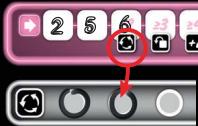
① 重骰行动
- 时机: 仅限在自己回合内、骰子尚未落地前使用
- 效果: 将当前轮次中刚刚掷出、且尚未放置到计分表或银盘上的所有骰子收回,重新掷出
- 限制: 必须一次性重掷全部未放置骰子,不可选择性丢弃部分、只重掷其余
② 取回行动
- 时机: 仅限在自己回合内、且必须在掷骰之前使用
- 效果: 从银盘上取回 1 颗骰子,放回手中供本次掷骰使用
- 限制: 一旦骰子已经掷出落地,便不可再执行取回
③ +1 额外骰子行动
- 时机: 可在本轮常规骰子阶段结束后执行——即行动玩家已完成骰子区摆放,或其他玩家已从银盘选好骰子之后
- 效果: 可从 6 颗骰子中任选 1 颗作为额外骰子使用,选择范围涵盖:
- 行动玩家计分板上的骰子
- 其他玩家的骰子
- 甚至你自己刚用过的那颗
- 限制:
- 每轮中同颗骰子只能被你使用一次额外骰子行动
- 可在同一轮中多次执行(只要还有不同骰子可选)
范例: 安琪已将三颗骰子放入骰子区。她剩余两次额外骰子行动——第 1 次她选白色骰子当作黄色 4 记录;第 2 次不能再选白色(已用过了),但改选蓝色骰子与白色骰子相加,在蓝色区记下 7(蓝 3 + 白 4)。
9. 狐狸 —— 短板惩罚加成
游戏结束时,计分表上的狐狸图标为每位玩家提供补底奖励:
- 每只狐狸的分数 = 该玩家五个颜色区域中最低的那一区分数
- 举例:若五区中分数最低的是绿色区(8 分),则每只狐狸为你带来 8 分
- 极端情况: 如果你在某个颜色区域得到 0 分——则该区的狐狸价值为零(毫无意义)
> 因此保持各个区域分数均衡至关重要。一味猛攻一区而荒废其余,反而会让狐狸成为拖累。
10. 单人玩法(变体规则)
单人游戏的总体目标为尽可能取得最高总分,基础规则与多人相同,但有以下调整:
- 游戏固定进行 6 轮
- 开局时你先担任行动玩家,然后交替扮演行动玩家与其他玩家,各出现 6 次
- 当你扮演其他玩家时:掷 6 颗骰子,将点数最小的 3 颗放入银盘
- 点数相同时,从相同点数中选取距离银盘较近者优先入盘
- 扮演其他玩家时同样不可执行重骰行动
单人评分对照
| 等级 | 分数区间 |
|---|---|
| 双倍聪明! | > 320 |
| 分数 = IQ! | 300–319 |
| 佩服佩服! | 280–299 |
| 绝非靠运气! | 260–279 |
| 照过来照过来! | 240–259 |
| 非常非常聪明! | 220–239 |
| 真是训练有素! | 200–219 |
| 你应该很开心! | 180–199 |
| 你在正确的路上。 | 160–179 |
| 你能做得更好。 | 140–159 |
| 半吊子聪明! | < 140 |
关键规则与常见问题
易错规则
- 每次掷骰都要选: 行动玩家每掷一次就得选一颗骰子放入计分板——共最多 3 次
- 银盘是公共资源: 其他玩家同时挑选,可能多人抢同一颗骰子
- 不能只用一颗骰子填蓝色区: 每次蓝色记录必须同时考虑蓝色骰 + 白色骰的和
- 蓝色区数字不增原则: 自左往右填写,每格须 ≤ 左邻格
- 绿色区必须成对才有分: 第二格没填时,该组不计分
- 黄色区只认叉不认圈: 打叉的才计分,单纯圈起的不计入总分
- 银色区打叉需有来源: 选择银色骰子后才落盘的骰子才可额外打叉,原本就在银盘上的不算
- 银色已满不可再选: 若银色区内目标数字已全部打叉,这颗骰子不能再选
- 行动不可累积到游戏终末: 额外骰子行动可留到一轮结束用,但重骰 / 取回一旦过期作废
- 奖励必须当轮立即使用: 不能存着等到下一轮
- 粉色区门槛达标才出奖励: 低于门槛仍可填数,但不触发奖励
- 放弃掷骰也算次数: 即便选择什么都不记录,该次掷骰仍计入 3 次限额
- 狐狸分数取决于最低区: 保持均衡发展,避免任一区得零分
常见问题
Q:白色骰子怎么用的?
A:白色为万能骰——可充当银、黄、绿、粉四种颜色使用,也可与蓝色骰相加填入蓝色区。
Q:蓝色区为什么要两色相加?
A:蓝色区的特色机制就是联合计分。每次选择蓝色时,将蓝色骰当前点数与白色骰当前点数相加,结果写入蓝色区。
Q:绿色区的第一格没有数字怎么办?
A:第一格为空时,直接将选中的绿色骰点数填入即可(相当于乘以 1),无需事先填写基准值。
Q:粉色区的门槛是什么?
A:每个粉色格子内刻有一个门槛数字,填入的点数须大于或等于该门槛才会触发格子下方的奖励。
Q:行动可以攒到最后吗?
A:重骰和取回只能在回合内、骰子落地前使用;额外骰子行动可以留到本轮常规阶段结束以后使用;到一轮彻底结束后,未用的重骰 / 取回自动作废。
Q:银盘上的骰子被其他人都抢走了怎么办?
A:可以从行动玩家已锁定的骰子中挑选一颗使用;也可主动放弃使用银盘骰子(但代价是不能再选行动玩家的骰子)。
Q:一轮还没掷完,手里的骰子不够第三次掷怎么办?
A:属于正常情况——掷骰次数自动少于 3 次,无需补救。
Q:狐狸分数怎么算?
A:游戏结束时,找出五个颜色区中分数最低的那个区,该分数即为每只狐狸的得分。若某区得零分,狐狸在此区无效。
Q:行动列什么时候解锁?
A:行动列随游戏进程逐步开放,具体解锁时机参考计分表上轮数轨与行动列的对应关系。
Q:第 4 轮的黑色问号奖励怎么用?
A:从第 4 轮起,每位玩家获得一枚黑色问号奖励,可自由选择应用于任意一个颜色区域。
Q:同一轮中能用多次额外骰子行动吗?
A:可以,只要在剩余骰子中挑不同的即可——每颗骰子在同一轮中只能被额外骰子行动选用一次。
常见问题(FAQ)
以下 1 条问答中 0 条来自站内玩家的真实提问,其余 1 条为本站整理的常见疑问;答复内容保持原样。
双倍聪明支持几个人玩?
1–4 人。
去哪查完整规则
想核对具体规则细节、卡牌效果或某个回合的结算方式,可以在村了吗里选中这款游戏后直接提问。
同类桌游
- 卡坦岛德式
- 工业革命:伯明翰德式
- 勃艮第城堡:特别典藏版德式
- 方舟动物园德式
- 卡卡颂抽象
- 瘟疫危机传承:第一季美式
- 阿瑞迪亚:勇踏征途美式
- 重塑宇宙德式
- 幽港迷城美式
- 埃多拉的德鲁伊德式
规则原文(Markdown)
本站收录这款游戏的规则原文 3 个文件,此处内联渲染 3 个,可直接展开阅读或下载。
rules_zh_双倍聪明_11064.md18.1 KB

在最後一輪的最後一位行動玩家完成他的回合,且其他玩家也完成了此輪的所有行動,遊戲結束。每位玩家都可以在這時候使用他尚餘的額外骰子行動,但尚餘的重擲行動全數作廢。
由一位玩家為每個人記下每個顏色區的分數,別忘了狐狸的分數,每隻狐狸等於所屬玩家最低分那區的分數。
計算總分,得分最高的玩家獲勝。如果平手,在單一顏色區獲得最高分數的玩家勝出。如果還是無法決定贏家,則平手玩家共享勝利。
單人遊戲
單人遊戲的目標是要盡量獲得最高的分數,規則大致上相同,但有以下改變。
單人遊戲進行6輪,遊戲開始時,你先擔任行動玩家,然後切換為其他玩家,接著再次成為行動玩家,以此類推。因此,你會進行6個回合,交替擔任行動玩家和其他玩家各6次。當你擔任其他玩家時,擲6顆骰子,將點數最小的3顆骰子放在銀盤上。若有點數相同的情形,依然擺放3顆骰子到銀盤上,但從相同點數中,選擇離銀盤較近的骰子。
注意:如同多人遊戲的規則,你擔任其他玩家時不能執行重擲行動。
你可將最後的總分對照下方表格,看看自己究竟有多聰明:
| 等級 | 分數 |
| 雙倍聰明! | >320 |
| 分數=IQ! | 300-319 |
| 佩服佩服! | 280-299 |
| 絕非靠運氣! | 260-279 |
| 照過來照過來! | 240-259 |
| 非常非常聰明! | 220-239 |
| 真是訓練有素! | 200-219 |
| 你應該很開心! | 180-199 |
| 你在正確的路上。 | 160-179 |
| 你能做得更好。 | 140-159 |
| 半吊子聰明! | <140 |

作者:Wolfgang Warsch
排版:Leon Schiffer
編輯:Thorsten Gimmler
中文翻譯:Abus Istanda
中文排版:彭于庭
版權所有:Schmidt Spiele GmbH. Lahnstr. 21, D-12055 Berlin, Germany
www.schmidtspiele.de www.schmidtspiele-shop.de
新天鵝堡
德國桌上遊戲
SWAN PANASIA GAMES


雙倍聰明! DOPPELT SO CLEVER (Twice as Clever!)
Wolfgang Warsch 所設計的機智骰子遊戲,適合1-4位8歲以上的玩家。
DOPPELT SO CLEVER
提示 為了加速了解這款遊戲,
所有和《絕頂聰明》不同的規則都
以灰底標示。
遊戲概述
在《雙倍聰明》中,雙倍巧妙地選擇骰子,並記錄在計分表上對應的顏色區,觸發連鎖得分機會,以推高累積分數!你未選擇的骰子和你所選的骰子一樣重要,因為每顆比你所選骰子點數小的骰子,都可能被其他玩家使用!遊戲結束時,總分最高的玩家獲勝!
骰子區 銀色區 藍色區 綠色區 粉色區
遊戲準備
每位玩家拿取一支黑筆和一張計分表,隨機選擇一人擔任起始玩家,他拿取6顆骰子。
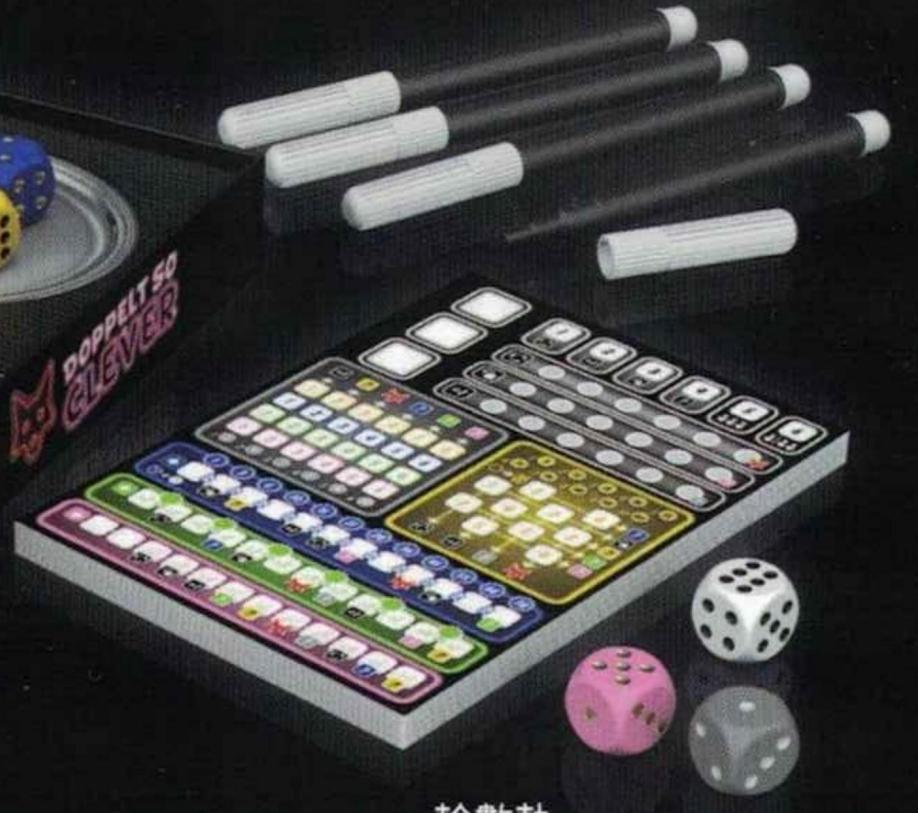
遊戲配件

1本計分表
6顆骰子
4支黑筆
輪數軌

重擲行動
取回行動
額外骰子
行動
黃色區
獎勵
遊戲進行
遊戲共進行四輪(4人遊戲)、五輪(3人遊戲)或六輪(1-2人遊戲)。

每輪開始時,每位玩家獲得指定的行動或獎勵。
前四輪開始時,依計分表輪數軌上所示,每位玩家獲得一個獎勵。
行動玩家
每輪由起始玩家開始,玩家依順時針方向輪流進行回合,進行回合的玩家稱為「行動玩家」,他以外的玩家稱為「其他玩家」。

若你是行動玩家,拿取6顆骰子進行擲骰,然後選擇一顆骰子,放在自己計分表左上方骰子區的其中一格上,不要改變該骰子的點數。
你依該骰子的點數和顏色,在計分表顏色相符的區域中記錄該數字(見「計分表」)。
白色骰子是萬用骰,可以當作其他任何顏色的骰子使用。
接著,你將比你所選骰子點數小的所有骰子,放在遊戲盒內側所印的銀盤上。如果你選了點數最小的骰子,銀盤上不會有任何骰子。你不能使用銀盤上的骰子(例外:額外骰子行動)。

你用剩下的骰子進行第二次擲骰,選擇一顆骰子,放在骰子區的一個空格上,並在計分表顏色相符的區域中記錄該數字,將所有比該骰點數小的骰子放在銀盤上。
你第三次擲殼,最後一次執行上述行動,然後將所有未被選入計分表中的骰子放在銀盤上。
若你決定在第一次或第二次擲骰中選擇較大點數的骰子,可能會沒有剩下的骰子讓你再次進行擲骰。如果發生這種情況,你的擲骰次數會少於三次。當然,最好避免這種情況發生。
行動玩家範例
- 由安琪進行回合,她是行動玩家,擲出6顆骰子。

- 她選擇點數3的粉色骰子,放在計分表骰子區的空格上,接著在計分表的粉色區記下該骰子的點數(3)。
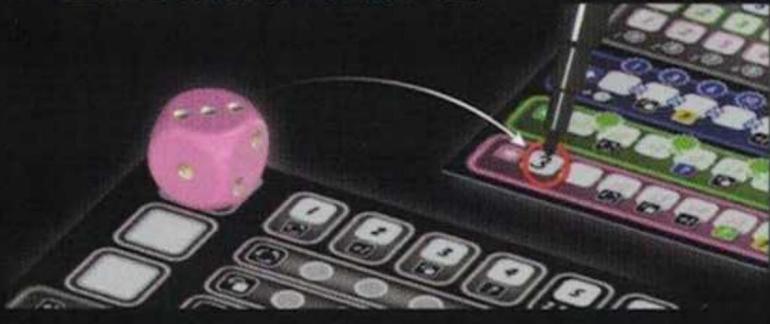
- 安琪將點數小於3的殼子放在銀盤上。


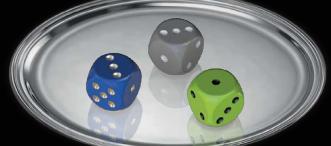
- 她選擇4點的白色萬用骰,放在計分表骰子區的空格上,並在計分表粉色區記下該骰子的點數(4)。

- 安琪將點數比4小的骰子放在銀盤上。

- 安琪使用僅剩的黃色骰子進行最後一次擲骰,擲出3點,將黃色骰子放在骰子區的最後一個空格上,接著在計分表的黃色區記下該骰子的點數(3)。

其他玩家
只有在行動玩家將3顆骰子放上計分表,或是因為剩下的骰子都在銀盤上而無法完成3次擲骰時,其他玩家才能進入遊戲。
所有其他玩家現在從銀盤上選擇一顆骰子,將它記錄在自己的計分表上對應的格子中。所有其他玩家同時選擇骰子,可以多人選擇同一顆骰子。每位玩家都在計分表上記錄好後,輪到行動玩家左側的玩家進行回合,他拿取6顆骰子,並依上述規則擲骰。
當每位玩家都進行過一個回合後,一輪結束。

計分表
計分表有五個顏色區,你依所選骰子,將一個格子打叉、圈起來或寫上骰子的點數。
藍色、綠色、粉色三區的左側有個箭頭,你必須從最左側的空格開始填入數字,依序向右填寫,不可以跳過任何空格。


銀色和黃色兩區沒有這樣的箭頭,你要將數字打叉或圈起來,可以在任何位置。


白色骰子
白色骰子是萬用骰,可當作一顆銀色、黃色、綠色、或粉色骰子,或是和藍色骰子加總後,將數字填入藍色區。

銀色骰子
在銀色區記錄銀色骰子的點數,只需將一個相符的數字打叉,你可以自由選擇該數字的顏色(黃色、藍色、綠色或粉色)。
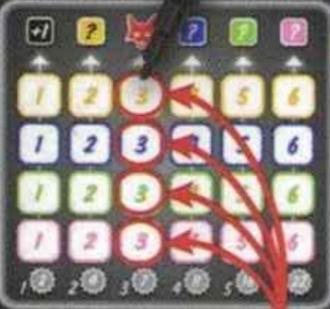
注意:此外,你可以將選擇銀色骰子後放上銀盤的任何骰子,記錄在銀色區。不可記錄選擇銀色骰子之前已放上銀盤的骰子,因為這些骰子不是由於選擇了銀色骰子才放上銀盤。
如果你選擇將白色骰子當作銀色記錄在銀色區,且因此將銀色骰子放上銀盤,可將銀色骰子視為任一顏色,記錄在銀色區;反之亦然,如果你選擇銀色骰子,且因此將白色骰子放上銀盤,可將白色骰子視為任一顏色,記錄在銀色區。
範例:菲力選擇了點數3的銀色骰子,他在銀色區打叉了綠色3°之後他將藍色1和白色2放上銀盤,他在銀色區打叉藍色1,並將白色骰子當作綠色,打叉綠色2°。
如果你選擇銀色骰子,卻無法記錄它(因為該數字已經都被打叉了),則不可選擇銀色骰子(這顆銀色骰子稍後若因數字小於你選擇的骰子而被放到銀盤上,你依然無法記錄它)。
如果其他玩家選擇銀色骰子,或是行動玩家選擇了銀色骰子來執行額外骰子行動,均可在銀色區打叉任一顏色的該數字。如果選擇銀色骰子後並未將任何其他骰子放上銀盤,便無法在銀色區額外打叉數字。
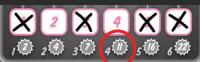
你的得分取決於每列中一共記錄了幾個數字,數量越多分數越高,銀色區底部灰色星號中的白色數字代表分數。例如:你在銀色區粉色列中共記錄了4個數字,則從該列獲得11分。將你四列(黃、藍、綠、粉)的得分加總,便是你銀色區的分數。

黃色骰子
若你選擇黃色骰子,將黃色區中該數字圈起來,如果該數字已經圈起,則在上面打叉來記錄。○→∅
注意:若一行或一列(根據箭頭方向)中所有的數字都已圈起,便獲得指定的獎勵,這些數字是否已被打叉,不造成影響。
你的得分取決於在黃色區中打叉了幾個數字,數量越多分數越高,黃色區頂端黃色星號中的黑色數字就是你可能從本區獲得的分數。只打圈的數字不列入計算。


藍色骰子
若你選擇藍色骰子,可將藍色骰子的點數和白色骰子的點數相加 🖼 + 🖼(無論白色骰子當下位於何處),在藍色區寫下總和。你從最左側的空格開始,往右側填寫,不可跳過任何格子。每個空格中填入的數字必須小於或等於左側的數字。若你選擇將白色骰子當作藍色骰子,將藍色骰子當下的點數和白色骰子的點數相加,在藍色區寫下總和。此外,即使用來加總的那顆骰子位於任何玩家的骰子區或銀盤上,也不論選擇該骰子的是行動玩家還是其他玩家,此規則都適用。你在藍色區記錄時,不能只使用其中一顆骰子的點數。如果你在自己的回合中選擇了藍色骰子,並在其他玩家的回合中選擇白色骰子,你便能在同一輪中在藍色區寫下兩個數字。
遊戲結束時,藍色區中,你最後填寫的數字上方星號中的白色數字,就是你從這區獲得的分數。


綠色骰子
若你選擇綠色骰子,將骰子點數與綠色區最左側空格中的數字相乘,將結果記錄在該格中。你從最左側的空格開始,依序往右填寫,不可跳過任何格子。每兩個格子為一組,當一組中的兩個格子都填上數字,進行計算,將左側的數字減去右側的數字,將結果記錄在這兩格上方的綠色星號中,這就是你的得分。結果有可能是負數,因此,你要盡量在左側填入大的數字,右側的數字要相對較小。

注意:遊戲結束時,如果一組中的第二格沒填數字,你不會從這組獲得任何分數。但是,當你在一組中的第二格填入數字後,立刻獲得該格下側指定的獎勵。
範例:菲力選了綠色5,在第一格寫下10(5×2),之後的一輪中,選擇了綠色1,在第二格寫下2(1×2),他立刻在這兩格上方的綠色星號寫下8(10-2)。

遊戲結束時,你將所有綠色星號中的數字加總,即為你在此區的得分。

粉色骰子
5314≥4≥5≥6
你可以在粉色區的格子中記錄粉色骰子的點數,從最左側的空格開始,依序往右填寫,不可跳過任何格子。你在空格中記下所選粉色骰子的點數。此區沒有點數填寫的限制,任何擲出的點數都可以記錄在空格中。但是,只有在記下的點數大於或等於空格中的粉色數字時,你才會獲得該格下側的獎勵。
遊戲結束時,你將所有記錄在粉色區的數字加總,即為此區的得分。
特殊情况
如果你在其他玩家的回合中,無法使用銀盤上的骰子,則可選擇行動玩家骰子區的一顆骰子來使用,你也可以自願放棄使用銀盤上的骰子,但放棄後你不能選用行動玩家的骰子。如果你在回合中,無法或不想使用擲出的任何骰子,你可以放棄選擇骰子和在計分表上做記錄,該次擲骰仍計入你最多3次的擲骰中。
獎勵
遊戲中,你會獲得指定的獎勵,標示在特定格子的下側(藍色、綠色、粉色區),或者一行、一列的尾端(銀色、黃色區)。


當你打叉、圈起或記錄數字的格子旁有?獎勵時,立刻獲得該獎勵。你立刻在相應的顏色區(藍色、綠色、粉色區)中,填入任意數字(綠色區和粉色區填1-6,藍色區填2-12);或在相應的顏色區(銀色區、黃色區)立刻打叉或圈起一個數字(黃色區的數字須先圈起,若已圈起,則改為打叉)。獎勵不可保留,必須立刻使用。第4輪開始時,每位玩家會獲得黑色?獎勵,每位玩家可以自行選擇顏色。
當你打叉了銀色區一直行中的最後一個數字,或是圈起黃色區一列或一行中的最後一個數字時,也會獲得獎勵,立刻使用所對應的獎勵。如果你圈起了行動列的最後一格(詳見「行動」),立刻獲得所示獎勵。
獎勵摘要
單一格子的獎勵:你在該格填入數字時,立刻獲得。
一列或一行尾端的獎勵:你在該列/行全部的格子都打叉或圈起(黃色)時獲得。
每隻狐狸在遊戲結束時為你帶來的分數,等同你最低分那區的分數。例如:你分數最低的區域是綠色區,共得8分,則每隻狐狸讓你獲得8分。
注意:如果你在某個顏色區獲得0分,狐狸就毫無價值了!
行動

三條行動列會在遊戲中解鎖,跟獎勵不同的是,行動可以在解鎖後立刻執行,或是留待之後的遊戲中使用。
當你解鎖一個行動,圈起相符行動列中最左側的一個空格,使用一次該行動後,在最左側已圈起的格子上打叉,表示用掉一次。回合中,只要你仍有可用的行動,便可以執行任意次數,直到用完為止。


重擲行動 你只能在回合中執行此行動。如果你想要重擲剛剛擲出的所有骰子(不包含在計分表或銀盤上的骰子),可以花費一個重擲行動。執行該行動時,必須重擲所有剛剛擲出的骰子(也就是說,你不能忽略某些骰子,只重擲部分骰子)。

取回行動 你只能在回合中執行此行動。藉由此行動,取回一顆銀盤上的骰子,用於下一次擲骰中。你必須在擲骰前執行此行動,若已擲骰,便不可執行。
+1 額外骰子行動 你使用此行動來選擇一顆額外的骰子,只能在一輪結束前執行,亦即,在行動玩家已依正常規則放置所有骰子之後,或其他玩家已從銀盤上選擇骰子之後執行。執行此行動時,你可以選擇六顆骰子中的任何一顆,包含行動玩家計分表上的骰子,或甚至是你剛剛在一般行動中使用的骰子!你可以在同一輪中執行此行動多次,但是每顆骰子在一輪中,你只能以這種方式選擇一次。
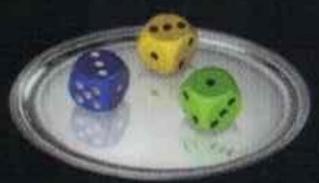
範例:安琪選擇了這些骰子 🚗 🚗 🚗 ,放在計分表上。她還有兩次額外骰子行動,第一次她選白色骰子作為額外骰子,當作黃色4;第二次她不能再選擇白色骰子,但是可以選擇藍色骰子,和白色骰子加總,在藍色區記錄7(藍色3+白色4=7)。
SH Games twice as clever rules for web 1.md19.5 KB

(Twice as Clever!)
The clever dice game by Wolfgang Warsch for 1-4 players, ages 8+.
O
1 Score pad
6 Dice
4 Felt-tip pens
CONTENTS
DOPPELT SO
To better understand this game, all rules that differ from Ganz Schön Clever are highlighted in grey.
GAME OVERVIEW
Choose your dice twice as cleverly in Doppelt So Clever, marking them in the matching colored areas on your Score sheet, putting together chain scoring opportunities, and racking up the points! The dice you don't use are as important as those you do, because every die that has a lower value than your chosen die can be used by the other players! The player with the most points at the end wins!
SETUP
Each player receives a Felt-tip pen and Score sheet. Randomly choose a starting player, who picks up the 6 dice.
Dicefield
Silver area
Blue area Green area Pink area
Round track
2 4 2 3 4 5 6 2 3 4 5 1 2 3 4 5 6 ,0 0 60
10 21 36 5 96 141 M65
→8
2 +1
Reroll Return Extra dice
Yellow area
日 ≥4 五日 2 ≥4 25
GAMEPLAY
The game is played over four (4 players), five (3 players), or six (1 and 2 player) rounds.
2 3日 4 5:::
Actions or bonuses that players receive at the start of each round
At the start of each of the first four rounds, each player gets one bonus, as shown on the Round track on the Score sheet.
ACTIVE PLAYER

The active player receives all the dice. They roll all 6 once, then choose a die, placing it onto one of their 3 Dice fields (top left of Score sheet), without changing the number of the die.
Using the chosen die, the player must now use the value and the color to mark on their Score sheet a corresponding number in the same color area (see Score sheet). The white die is a wild color and can be used in place of any other color.

Then the active player must place all dice that show a lower value than the currently selected die onto the Silver Platter printed in the box. If the active player selects the lowest value die, no dice are placed onto the Silver Platter. Dice on the Silver Platter can no longer be used by the active player (exception: Additional Dice action).
With the remaining dice, the active player rolls a second time. They again choose a die, place it onto a free Dice field, and enter its value in the matching color area on their Score sheet. All dice that show a lower value than the selected die again are placed onto the Silver Platter.
The active player then rolls a third time and executes the actions as described above one last time. Then they place ALL remaining dice not on their Score sheet onto the Silver Platter.
Attention: If a player decides in the first or second roll to take a high value die, it may happen that there are no dice left for a reroll. If this happens, the player simply performs fewer than three rolls. Of course, it's best to avoid this situation.
ACTIVE PLAYER EXAMPLE
- Angie is the active player and rolls all 6 dice.
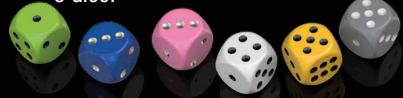
- She chooses the pink die, a 3, and places it onto an empty Dice field on her Score sheet. Angie then records the corresponding number (3) in the pink area of her Score sheet.
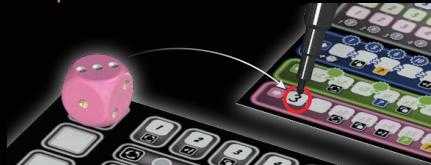
- Angie places all the dice that are less than 3 onto the Silver Platter.

- Angie rolls the 4 remaining dice a second time.

- She selects the white wild die, a 4, and places it onto an empty Dice field on her Score sheet. She then decides to record the corresponding number (4) in the pink area of her Score sheet.

- Angie places all dice less than 4 on the Silver Platter.
- For her final roll, only one yellow die remains. Angie rolls a 3, places the yellow die onto the last empty space in the Dice field, then records the corresponding number (3) in the yellow area of her Score sheet.

PASSIVE PLAYERS
Only after the active player has placed 3 dice onto their Score sheet, or can no longer reroll because all remaining dice are on the Silver Platter, do the other players (i.e. passive players) get to enter play.
All passive players may now take advantage of the dice set aside on the Silver Platter. Of these dice, each player can choose one die to use to mark a space on their Score sheet. All passive players choose simultaneously, and a die can be chosen by multiple passive players. After each passive player has marked their chosen die, the player to the left of the active player claims all six dice and rolls them based on the rules described above, as the new active player. They get all six dice and roll, as described above.
A round ends after each player has been the active player once.
SCORE SHEET
WHITE DICE
The Score sheet has five colored areas. For each die, a player will mark one space or write one number in one space.
Three areas (blue, green, pink) show an arrow on the left. You will start entering numbers at the left of these lines and proceed to the right in order, without skipping spaces.
In the two areas without an arrow (silver and yellow), the corresponding number can be marked or circled, no matter where it is.

The white die is wild and can either be used as a silver, yellow, green, or pink die or can be combined with the blue die to create a sum for the blue area.
Silver dice are recorded by the player in this area. You simply mark the value of the chosen die in the silver area. The color of the marked number (yellow, blue, green, pink) can be chosen freely.
Attention: In addition, in the silver area the players can mark any dice that are moved onto the Silver Platter after choosing the silver die. Dice that have been placed on the Silver Platter before the silver die was chosen cannot be marked, as they have not been moved onto the Silver Platter by the silver die.
If a player chooses the white die for the silver area and thereby puts the silver die on the Silver Platter, any color can be marked for the silver die. The same goes the other way around. If the white die is put on the Silver Platter by choosing the silver die, then the white die acts as any color.
Example: Felix chooses a silver 3. Now he marks the green 3 in the silver area. Afterwards, he puts the blue 1 and the white 2 on the Silver Platter. Now he marks the blue 1 in the silver area and for the white 2 he decides to mark a green 2.
If a player cannot mark a number by using the silver die (as it has already been marked) they cannot choose this die (and thereby not mark the dice, which afterwards would have been put on the Silver Platter).
If the silver die gets chosen by a passive player or as an additional action die by an active player, a corresponding number in any color can be marked in the silver area. As no other die gets put on the Silver Platter afterwards, no additional numbers can be marked in the silver area.
Players receive points based on the number of marks made in each line. The grey stars at the bottom of the silver area show how many points (white number in the star) are granted for the total marks in every line. For 4 marks in a line, the player receives e.g. 11 points. The sum of all four rows yields the points for the silver area.

YELLOW DICE
Using yellow dice, players can circle the corresponding number in the yellow area. If a number has already been circled, it can then be marked. O→
Attention: Bonuses are activated by completing a row or a column (according to the arrows) with circles! Marks are not necessáry for the bonuses.
Players receive points based on the number of marks made in the yellow area. The yellow stars at the top of the yellow area show how many points (black number in the star) are granted for the total marks in the yellow area. Numbers that only have been circled do not count.
BLUE DICE
When a player decides to use the blue die, they add the value of the white die to the blue die +(no matter where the die is at that moment). The sum is written down in the blue area. Players must start at the leftmost space and proceed to the right, not skipping any spaces. For each space, the number entered must be less than or the same as the previous number.
The same applies in reverse, if the player uses the white die as a wild blue — they add the current value of the blue die to the white die to come up with a total. Again, this applies even if the second die is on a player's Dice field or if it is on the Silver Platter, and whether it is an active or passive player choosing. Players cannot opt to consider the value of only one die when filling in the blue area. If the active player chooses the blue die on one turn and the white die on another turn, they could potentially mark two blue area spaces during one round.
The white number in the star above the last filled in box indicates the number of points scored for this section at the end of the game.
1 6 10 21 28 O 9 7 5 5 + ? +1

GREEN DICE
Using green dice, players must multiply the number of the green die by the multiplier in the open green space. The corresponding result is then written down in the open green space. Players must start at the leftmost space and proceed to the right, not skipping any spaces.
As soon as two spaces have each been filled in with a number, a calculation is carried out and the player gets points. During the calculation, the value of the second space is subtracted from the value of the first space. The result is written down in the green star above. It is possible to get minus points. Therefore, a high number should be written in the first space and a relatively low number should be in the second space of a calculation.
Attention: A player receives zero points if the second space of a calculation is empty at the end of the game. However, a player gets the corresponding bonus immediately after writing down a number.
Example: Felix chooses a green 5 and writes down 5 x 2 = 10 in the first space. In a later
round he chooses a green 1 and writes down 1 x 2 = 2. Then he immediately writes down 8
(10 - 2 = 8) inside the green star above the calculation. 8 5 1
At the end of the game, players score the sum of all values that ?
have been written in the green stars.

PINK DICE Using pink dice, players can mark off spots in the pink area. Players must start at the leftmost space and proceed to the right, not skipping any spaces. For each space, players record the value of the selected pink die. There are no restrictions regarding the number written down. Any rolled result can be written in the space. However, one only receives bonuses if the number, which is written down, is equal to or greater than the value listed in the space. If this is not the case, the player does not get the bonus below the space.
At the end of the game, players score the sum of all recorded numbers from the pink row.
5 3 1 4Q 2日 2日
If the active player can't use or does not want to use any of the dice from a given roll, they simply cannot put a mark on their Score sheet for that roll. This still takes one of their maximum of 3 rolls.
BONUSES
certain spaces (blue, green, pink). green, pink).
Players can earn bonuses, which are listed at the end of rows or columns (silver, yellow) or directly below
香→图
As soon as a number is marked or written down on a space with a ?- bonus, the player receives the associated bonus. Then the player must immediately write down a number on a space in the color area of their choice (1-6 for green and pink, 2-12 for blue) or make a mark (silver and yellow – but yellow only if the space is already circled), or make a circle around a number (yellow). The bonus cannot be saved for a later moment in the game; it has to be used immediately.
At the beginning of round 4, every player can freely choose a color for the black?.
The bonuses are also activated when a player makes the last mark in a column in the silver area, or if the last number of a row or a column in the yellow area is circled. They immediately use the bonus displayed on the edge. If a player circles the last space on an action-bar (see Actions), they immediately receive the displayed bonus. Summary of Bonuses:
Bonus on an individual space = Redeemed immediately as a number is entered in this space. Bonus at the end of a line or column = Redeemed only once all spaces in the line/column are marked or have a circle around them 6(yellow).
Foxes award points at the end of the game. Each activated Fox will score as many points as the player's lowest-scoring colored area. For example, if a player's worst-scoring area is green, with 8 points, each Fox will score that player 8 points. Attention: If a player scores 0 points in an area, Foxes are worthless!
ACTIONS The three action bars can be unlocked during the game. Unlike bonuses, actions can either be used immediately after they have been
unlocked or can be saved for a later turn or round.
When a player unlocks an action, they should circle the next space in the corresponding
row. After they use the action, they should mark the first available 2 Ue ≥3
circled space. Players can perform as many actions as they wish in
a given turn, provided they still have actions available.
Reroll action:
This can be used only by the active player. If they wish to reroll all of the dice they just threw (i.e. not dice on their Score sheet or on the Silver Platter), they can spend an action to do so. All rolled dice must be rerolled when doing this (i.e. you cannot keep some dice and reroll others).
This action can only be used by the active player. With this action, a die that had already been put on the Silver Platter can be returned and used in the next roll. Once the dice have been rolled, this action cannot be used.
+1 Extra die Action:
Using this action, an extra die can be selected. This action can only be performed at the end of a round (i.e. after the active player has regularly assigned all of their dice or after a passive player has chosen a die from the Silver Platter)
With this action, the player can choose any of the six dice, including a die that the active player has taken or even the die that the player just took with their regular action! Players can use multiple additional die actions during a single round, but each individual die can only be chosen once a round in this manner.
Example: Angie has chosen the dice and entered them onto her Score sheet. She still has two additional actions. For the first action she chooses the white die as an extra die, using it as a yellow 4. With a second extra die, choosing the white die again is not an option. However, she can choose the blue die and thus, together with the white die, tick one 7 in the blue area (blue 3 + white 4 = 7).

GAME END
The game ends after the last active player has finished their turn in the final round and after passive players have all taken their actions for this round. Each player can use additional die actions here, but any remaining Reroll actions will expire.
A player will then record the scores for each player in each colored area. Earned Foxes will be scored for each player. A player's Foxes are each worth the value of that player's lowest scoring area.
Points are summed, and the player with the highest total wins. If there is a tie, the player with the highest score in an individual area breaks the tie. If no winner can still be determined, the victory is shared.
SOLO GAME
The goal of the solo game is to score as many points as possible. The rules are largely the same.
The solo game lasts 6 rounds. The player starts as an active player then takes the role of the passive player before becoming active again. Thus, the player will be active and passive 6 times, alternatively. When the player is in the passive role, they roll all six dice and place the three lowest values onto the Silver Platter. If it's a tie, three dice are still placed, with the die closer to the Silver Platter breaking the tie.
Attention: Like in a multi-player game, as passive player you cannot use the re-roll action.
A player can determine how clever they are by checking their final score against this table:


| ★★★★★★★★★釘P | LEVEL | POINTS |
| Twice as clever! & | gt;320 | |
| oints = IQ! 300 | -319 | |
| ★★★★☆ | Respect! | 280-299 |
| ★★★☆☆ | This can't be luck! 260 | -279 |
| ★★★☆☆ | People, look at this! | 240-259 |
| ★★☆☆☆ | Pretty, pretty clever! | 220-239 |
| ★★☆☆☆ | You've been training! | 200-219 |
| ★a☆☆ù | You should be happy! | 180-199 |
| ★☆☆☆☆ | On the right way. | 160-179 |
| ☆☆☆☆☆ | You can do better. | 140-159 |
| ☆☆☆☆☆ | Half as clever. & | lt;140 |
Author: Wolfgang Warsch Layout: Leon Schiffer Editor: Thorsten Gimmler Localization: T.R. Knight

Schmidt Spiele GmbH Lahnstraße 21
12055 Berlin
www.schmidtspiele.de
www.schmidtspiele-shop.de

STRONGHOLDGAMES
Stronghold Games 7964 Emerald Winds Circle Boynton Beach, FL 33473 USA
Email: info@StrongholdGames.com
And visit our website at: StrongholdGames.com
© 2019 Stronghold Games All Rights Reserved.
Under license from Schmidt Spiele GmbH
下载 Markdown简繁检索对照.md1.6 KB
270210_269210_twice-as-clever — 简体/繁体检索对照
本游戏的规则书是繁体中文原文。用户用简体提问时,把关键词按下面这张表转成繁体再去 grep 原文,命中率最高。
回答时用简体或繁体都可以,但引用的原文保持繁体。
简体 → 繁体 对照(按该游戏原文出现频率排序,共 60 字)
| 简体 | 繁体 | 原文出现次数 |
|---|---|---|
| 数 | 數 | 100 |
| 区 | 區 | 77 |
| 银 | 銀 | 62 |
| 动 | 動 | 54 |
| 选 | 選 | 53 |
| 择 | 擇 | 43 |
| 将 | 將 | 34 |
| 游 | 遊 | 32 |
| 戏 | 戲 | 32 |
| 点 | 點 | 32 |
| 记 | 記 | 31 |
| 掷 | 擲 | 29 |
| 计 | 計 | 29 |
| 后 | 後 | 28 |
| 蓝 | 藍 | 27 |
| 盘 | 盤 | 26 |
| 个 | 個 | 25 |
| 该 | 該 | 25 |
| 录 | 錄 | 25 |
| 时 | 時 | 24 |
| 颗 | 顆 | 24 |
| 获 | 獲 | 22 |
| 绿 | 綠 | 22 |
| 黄 | 黃 | 21 |
| 奖 | 獎 | 21 |
| 励 | 勵 | 21 |
| 轮 | 輪 | 20 |
| 为 | 為 | 19 |
| 侧 | 側 | 19 |
| 颜 | 顏 | 16 |
| 进 | 進 | 16 |
| 当 | 當 | 16 |
| 这 | 這 | 15 |
| 于 | 於 | 14 |
| 执 | 執 | 14 |
| 则 | 則 | 13 |
| 写 | 寫 | 13 |
| 结 | 結 | 12 |
| 总 | 總 | 11 |
| 会 | 會 | 11 |
| 从 | 從 | 11 |
| 来 | 來 | 11 |
| 开 | 開 | 10 |
| 额 | 額 | 9 |
| 无 | 無 | 9 |
| 聪 | 聰 | 7 |
| 过 | 過 | 7 |
| 并 | 並 | 7 |
| 两 | 兩 | 7 |
| 单 | 單 | 6 |
| 规 | 規 | 6 |
| 应 | 應 | 6 |
| 须 | 須 | 6 |
| 号 | 號 | 6 |
| 刚 | 剛 | 6 |
| 担 | 擔 | 5 |
| 对 | 對 | 5 |
| 范 | 範 | 5 |
| 组 | 組 | 5 |
| 胜 | 勝 | 4 |
原文为社区整理/出版社公开资料,版权归原作者,仅供个人学习查阅。