
卓越的洛伦佐:合集版Lorenzo il Magnifico: Big Box
一句话概览
卓越的洛伦佐:合集版 是一款已收录于村了吗规则库的桌游,支持 2–5 人,原名 Lorenzo il Magnifico: Big Box。
本页内容:一句话概览 · 游戏概述 · 1. 游戏组件 · 2. 游戏设置 · 3. 游戏流程 · 4. 高塔与发展牌 · 5. 收获与生产区域 · 6. 市场 · 7. 议会宫殿 · 8. 梵蒂冈报告 · 9. 领袖牌(进阶规则) · 10. 终局计分 · 关键规则与常见问题 · 常见问题
卓越的洛伦佐:合集版 规则速览
以下规则速览由本站整理,与官方规则书表述不同,仅供快速上手参考。
游戏概述
文艺复兴时期的佛罗伦萨,每位玩家扮演一个贵族家族的族长,派遣家族成员前往城市各区域获取资源、发展领地、兴建工程、结交人物、开拓事业,积累声望与胜利点数。游戏分3个时期共6回合,每回合掷骰决定家族成员行动值,玩家需精打细算安排成员去向,并在每期末面对梵蒂冈信仰审判。终局时胜利点数最多者获胜。
核心机制: 骰子驱动的工人放置、资源管理、卡牌引擎构建、信仰/逐出机制
1. 游戏组件
| 组件 | 数量/说明 |
|---|---|
| 主游戏板 | 1块 |
| 个人面板 | 4块 |
| 家族成员 | 16个(每人3个有色+1个无色圆柱) |
| 标记圆片 | 16个(每人4个:胜利点数、军事点数、信仰点数、回合顺序) |
| 资源 | 木材、石材、仆从(小=1,大=5);金币(面值1、5) |
| 骰子 | 3颗(白色、黑色、橙色) |
| 发展牌 | 96张(领地/建筑/人物/事业各24张,分3期各8张) |
| 逐出板块 | 21张(3期各7张) |
| 逐出方块 | 12个(每人3个) |
| 盖板 | 4块(2-3人游戏时使用) |
| 个人奖励板块 | 4块(含基础面和进阶面) |
| 领袖牌 | 20张(进阶规则使用) |
| 贴纸板 | 4张 |
| 快速参考卡 | 1张 |
2. 游戏设置
2.1 主板与牌堆
- 主游戏板置于桌面中央
- 发展牌按类型(领地/建筑/人物/事业)和时期(牌背编号1/2/3)分开,每叠8张分别洗匀
- 组合成4堆牌:第三期在底、第二期在中、第一期在顶,放在高塔旁
2.2 逐出板块
- 按时期分开洗匀,每期各抽1张放在主板对应位置,其余收回盒子
2.3 人数组整
- 2人游戏: 所有盖板放在对应位置(带标记的区域)
- 3人游戏: 放2个小盖板(带标记的区域)
2.4 玩家个人设置
每位玩家选择颜色,获得:
- 1块个人面板
- 1块个人奖励板块(基础游戏中所有玩家使用同一面)
- 3个同色家族成员 + 1个无色家族成员(贴上对应颜色贴纸)
- 3个逐出方块
- 4个标记圆片:分别放在胜利点数轨道、军事点数轨道、信仰点数轨道的0位,以及回合顺序轨道
起始资源:2木材、2石材、3仆从。
起始金币按顺序递增:第1位5金币,第2位6金币,第3位7金币,第4位8金币。
3. 游戏流程
游戏共3个时期(Period),每个时期2回合,总计6回合。每回合分为4个阶段:
| 阶段 | 说明 |
|---|---|
| A 回合准备 | 翻开各牌堆顶4张放在主板上;首位玩家掷3颗骰子 |
| B 行动阶段 | 按回合顺序,玩家轮流放置家族成员执行行动 |
| C 梵蒂冈报告 | 仅在第2/4/6回合(时期结束时)执行 |
| D 回合结束 | 回收未取走的发展牌;依议会宫殿中的放置顺序调整回合顺序;家族成员收回个人面板 |
3.1 家族成员与行动值
- 每个家族成员顶部有骰子颜色符号(有色或无色),对应骰子点数即为其行动值
- 无色家族成员的行动值固定为0
- 放置前可消耗仆从提升行动值,比例1:1,无上限
- 高值成员可执行低值行动(例如点数5可执行要求值3的行动)
3.2 行动区域总览
玩家将家族成员放置到以下5个区域之一:
| 区域 | 简述 |
|---|---|
| 高塔 | 取发展牌并获得楼层奖励 |
| 收获区 | 激活领地永久效果和领地奖励 |
| 生产区 | 激活建筑永久效果和建筑奖励 |
| 市场 | 获取资源/军事点数/议会特权 |
| 议会宫殿 | 获取议会特权+金币,决定回合顺序 |
4. 高塔与发展牌
4.1 高塔结构
4座高塔,每座4层,每层1个行动位。放置家族成员即可取走该层展示的发展牌。
| 楼层 | 最低行动值要求 |
|---|---|
| 第1层 | ≥1 |
| 第2层 | ≥3 |
| 第3层 | ≥5 |
| 第4层 | ≥7 |
4.2 楼层奖励
第3、4层旁标有额外奖励(木材、石材、军事点数、金币)。放置时立即获得,可用于支付该牌费用。
4.3 高塔放置限制
- 已有成员: 同塔内已有家族成员(自己或他人)时,需额外支付3金币给公共供应。楼层奖励的金币不能用于支付此费用
- 同色限制: 同塔不能放2个同色家族成员;无色成员视为中立色(即同回合可用有色+无色成员取同塔2张牌)
- 每种牌上限: 个人面板上每种类型发展牌不超过6张
4.4 四种发展牌
领地(Territories,绿色)
- 费用: 无
- 放置条件: 需要军事点数。前2个位置无限制,后续位置需达到标注的军事点数要求(不消耗,仅需在放置时满足)
- 放置位置: 个人面板下方从左到右
- 永久效果: 在收获行动中激活,提供资源和点数
- 终局计分: 按领地总数计分
建筑(Buildings,黄色)
- 费用: 资源(木材、石材、仆从、金币)
- 放置位置: 个人面板上方从左到右
- 永久效果: 在生产行动中激活,进行资源交换或获取点数
- 注意: 激活建筑时,用于交换的资源必须在激活前已存在于个人供应中,不能用本次激活刚获得的资源
人物(Characters,蓝色)
- 费用: 仅金币
- 放置位置: 个人面板右下方
- 即时效果: 可能包括无需放置家族成员即执行额外行动(享受卡牌效果加成)
- 永久效果: 在特定条件下触发(如取特定类型牌时增加行动值或降低费用)
- 终局计分: 按人物总数计分
事业(Ventures,紫色)
- 费用: 资源或军事点数。部分牌有双重费用可选
- 军事点数费用: 需消耗2军事点数(从军事轨道后退),但取牌前必须至少有4军事点数
- 放置位置: 个人面板右上方
- 永久效果: 仅在终局计分时激活
4.5 取牌流程
- 放置家族成员到高塔行动位(满足值要求)
- 支付塔内已有成员的额外费用(3金币)
- 获得楼层奖励(第3/4层)
- 支付发展牌费用(领地无需费用,但需满足军事要求)
- 取牌放在个人面板对应位置
- 立即执行即时效果
5. 收获与生产区域
两个区域结构相同:左侧单人位(最多1个家族成员)和右侧多人位(不限人数,但行动值-3)。右侧多人位在2人游戏中不可用。
- 家族成员值≥1方可放置
- 同一区域不能放2个同色家族成员,但可放1个有色+1个无色
- 2人游戏中,放置在右侧多人位的家族成员行动值减3后仍需≥1
5.1 收获行动
激活个人奖励板块上的领地奖励,以及行动值≥其激活值的所有领地的永久效果。
5.2 生产行动
激活个人奖励板块上的建筑奖励,以及行动值≥其激活值的所有建筑的永久效果。
个人奖励板块: 激活值为1,执行收获/生产行动时总是会激活。
6. 市场
4个行动位,每个位最多放1个家族成员,同色成员可分散在不同位上。
| 行动位 | 效果 | 可用人数 |
|---|---|---|
| 位1 | 获得5金币 | 2-4人 |
| 位2 | 获得5仆从 | 2-4人 |
| 位3 | 获得3军事点数+2金币 | 2-4人 |
| 位4 | 获得2个不同的议会特权 | 仅4人 |
- 家族成员值≥1方可放置
7. 议会宫殿
- 只有1个行动位,可容纳任意数量的家族成员
- 家族成员值≥1方可放置
- 效果:获得1个议会特权 + 1金币
- 放置顺序从左到右,决定下回合的回合顺序(先放者下回合先行动)
议会特权(5选1):1木材+1石材 / 2仆从 / 2金币 / 2军事点数 / 1信仰点
8. 梵蒂冈报告
仅在第2、4、6回合(每个时期结束时)执行。
各时期信仰要求:第1期3点、第2期4点、第3期5点(标注在信仰轨道上)。
| 情况 | 结果 |
|---|---|
| 信仰点数不足 | 必须接受逐出:放置逐出方块到当前时期逐出板块上,承受该板块负面效果,信仰点数保留 |
| 信仰点数足够,选择不支持 | 同上(接受逐出,信仰点数保留) |
| 信仰点数足够,选择支持 | 消耗所有信仰点数(标记回到信仰轨道0位),获得当前信仰轨道位置所示的胜利点数 |
第6回合特别规则: 未达标者在承受逐出后,仍可获得信仰轨道当前位置的胜利点数,然后标记回到0位。
逐出效果: 从放置方块起持续到游戏结束,不可移除。
9. 领袖牌(进阶规则)
9.1 设置
- 个人奖励板块使用进阶面(反面),逆回合顺序每人选1块
- 领袖牌洗匀后每人发4张:自选1张保留,其余传给右边玩家;重复直到每人持有4张
9.2 领袖行动
在行动阶段可随时执行(放置家族成员之前或之后),无需放置家族成员,每回合可执行多次:
- 打出领袖牌: 满足要求(非费用,不消耗)后从手牌打出,面朝上放在个人面板旁。可打出多张
- 丢弃领袖牌: 从手牌丢弃,立即获得1个议会特权。可丢弃多张
- 激活一次性效果: 将已打出的领袖牌翻面,执行其"每回合一次"效果。可激活多张
9.3 领袖牌类型
- 一次性效果(Once Per Round): 翻面激活,每回合每张限一次
- 永久效果(Permanent): 持续生效,可在特定条件下多次触发
9.4 回合结束
所有翻面的领袖牌重新翻回正面。
10. 终局计分
第6回合结束(含梵蒂冈报告后)进行终局计分:
| 计分项 | 分值 |
|---|---|
| 领地总数 | 3张=1分,4张=4分,5张=10分,6张=20分 |
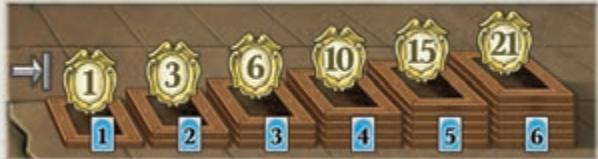
| 人物总数 | 1张=1分,2张=3分,3张=6分,4张=10分,5张=15分,6张=21分 |
| 事业牌 | 各牌面标注的胜利点数之和 |
| 军事力量排名 | 第1名5分,第2名2分;并列同享(多人并列第1各得5分,无人得第2分) |
| 资源总量 | 所有资源合计÷5,每5个得1分(向下取整) |
胜利点数最多者获胜。平局时回合顺序更靠前者胜。
关键规则与常见问题
易错规则
- 高塔已有成员时需额外支付3金币,楼层奖励金币不能用于支付此费用
- 无色家族成员行动值固定为0,但可通过仆从提升;无色成员视为中立色,不与有色成员冲突
- 建筑永久效果激活时,用于交换的资源必须在激活前已存在,不能跨建筑连锁使用刚获得的资源
- 领地无费用但有军事点数门槛(不消耗,仅需满足)
- 事业牌的军事点数费用需先有至少4军事点数才能选择支付
- 同一收获/生产区域不能放2个同色成员,但可放1有色+1无色
- 2人游戏中右侧多人行动位不可用
- 每种发展牌不超过6张
- 梵蒂冈报告选择支持教会需消耗全部信仰点数
- 逐出效果持续整个游戏,不可移除
FAQ
问:可以在同塔放2个自己的家族成员吗?
答:可以,但必须是1个有色+1个无色成员,且都需要支付3金币的额外费用。
问:领袖牌打出后还能丢弃吗?
答:不能,只能丢弃手牌中的领袖牌。已打出的领袖牌只能激活一次性效果或保持面朝上等待触发永久效果。
问:楼层奖励能否用于支付塔内已有成员的3金币费用?
答:不能。楼层奖励可以用于支付发展牌本身的费用,但不能用于支付塔内占用费。
问:收获/生产行动的行动值如何计算?
答:家族成员骰子值(可加仆从提升)加上卡牌效果的加成值。在多人位放置时需减3,减后仍需≥1。
问:2人游戏中盖板的作用是什么?
答:盖板覆盖特定行动位使其不可用,包括市场部分位置和收获/生产的多人位。
常见问题(FAQ)
以下 1 条问答中 0 条来自站内玩家的真实提问,其余 1 条为本站整理的常见疑问;答复内容保持原样。
卓越的洛伦佐:合集版支持几个人玩?
2–5 人。
去哪查完整规则
想核对具体规则细节、卡牌效果或某个回合的结算方式,可以在村了吗里选中这款游戏后直接提问。
同类桌游
- 卡坦岛德式
- 工业革命:伯明翰德式
- 勃艮第城堡:特别典藏版德式
- 方舟动物园德式
- 重塑宇宙德式
- 埃多拉的德鲁伊德式
- 1817 (2020)德式
- 甜蜜国度德式
- 卡里普索德式
- 铁路环游德式
规则原文(Markdown)
本站收录这款游戏的规则原文 4 个文件,此处内联渲染 3 个,可直接展开阅读或下载。
lorenzo-il-magnifico-rulebook.md36.9 KB
12 Excommunication Cubes (3 for each player color)

In Lorenzo il Magnifico, each player takes the role of a head of a noble family in Florence during the Renaissance. You must accumulate prestige and fame to gain more Victory Points than the others. To do so, you will send your family members to different areas of the city where they can attain various achievements. In some areas, you will get useful resources. In others, you will get development cards representing new territories, sponsored buildings, influenced characters or encouraged ventures. Elsewhere, you can activate the effects of these cards. Family members are not identical. At the beginning of each round, 3 dice are rolled to determine the family members’ value. You must carefully choose where to send your family members with a higher value.
There are several ways to gain Victory Points, but you must also pay attention to your relations to the Church. The game is divided into 3 periods, each formed by 2 rounds. At the end of each period, players must show their faith. Anyone who hasn’t prayed enough will suffer harsh penalties. After 6 rounds, you will calculate your final score and the player with most Victory Points will be the winner.
1 Board


4 Personal Boards

16 Family Members (each player has 3 colored pawns and 1 uncoloured pawn)


16 Marker Discs (4 for each player color)

Wood Stone Servant


21 Excommunication Tiles
Wooden resources:
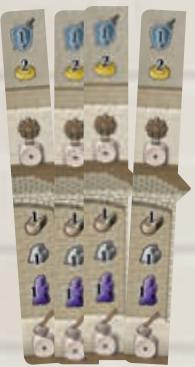
4 Personal Bonus Tiles

(16 small, (16 small, (18 small, 4 large) 4 large) 5 large)
Coins (1, 5)

4 Covering Tiles
3 Dice (white, black, orange)


96 Development Cards (4 types divided into 3 Periods)
4 sticker sheets
Zipbags
Rules
20 Leader Cards
Quick Reference Guide
Before the first game,you have to apply stickers to the Family Members (cylindric pawns). Stickers have the same background color as the players colors. Apply the stickers with a colored die on the colored pawns of each set. Apply the stickers with the neutral die and a 0 on the 4 uncolored pawns.
R Serup I
Place the Board in the center of the table.
Separate the Development Cards by type and period (color and back number). Shuffle each deck (formed by 8 cards) separately. Create 4 different decks (one for each type of card) by placing third period cards on the bottom, second period cards in the middle, and first period cards on the top. Place the decks next to the board, near the towers.
Separate the Excommunication Tiles by period (back number), shuffle them separately, then draw one tile from each stack and place them in the appropriate space on the board. (Place the leftover tiles back in the box.)
Place the resources and coins next to the board. They form the general supply. Small resources count as 1. Large resources count as 5. Resources are considered to be unlimited. (If you run out, find a way to take note of the resources you receive).
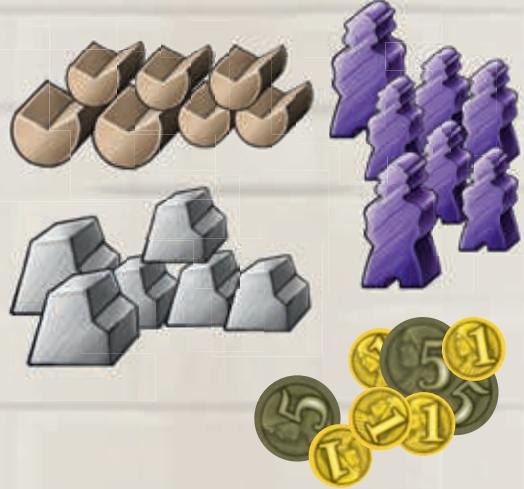
5Place the 3 Dice next to the Board.

In a 2-player game, place all the Covering Tiles in the appropriate spaces (with theandàsymbol).
In a 3-player game, place the 2 small Covering Tiles in the appropriate spaces (with the àsymbol).
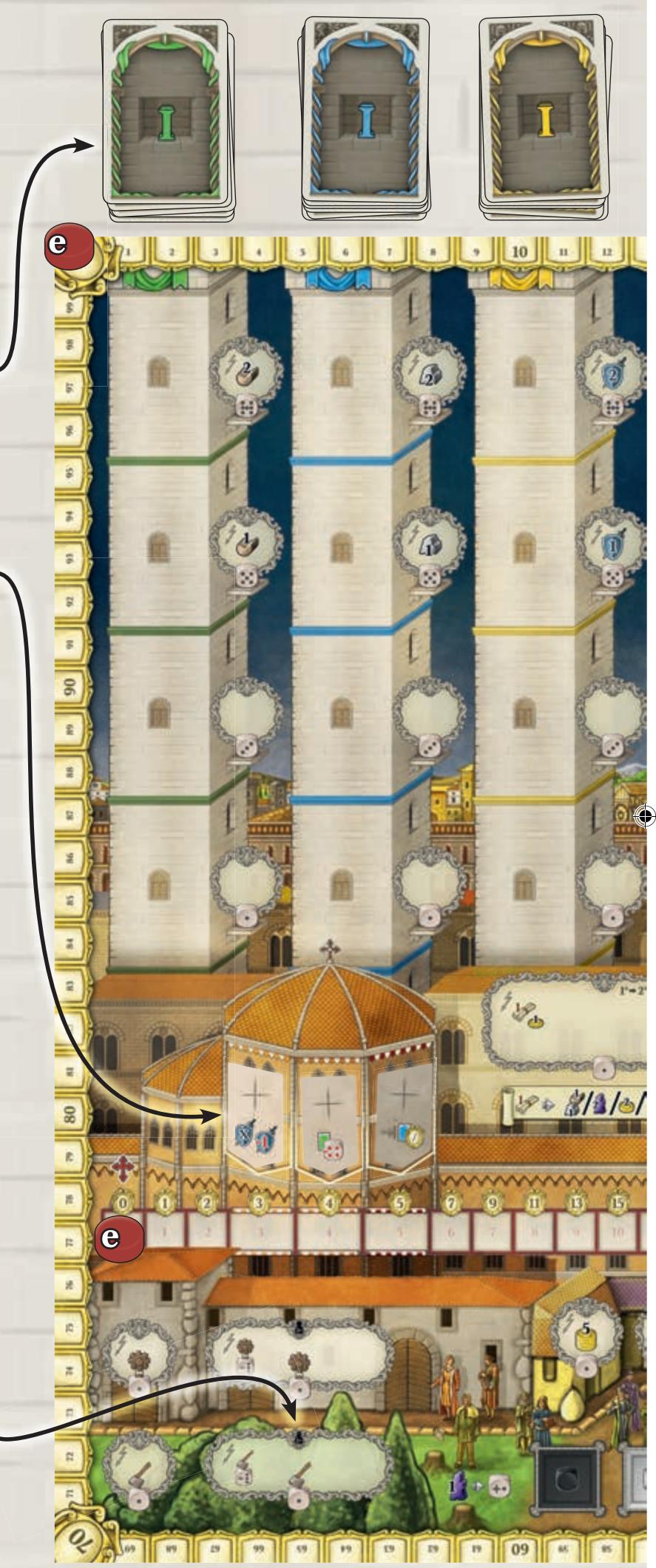


Each player chooses a color and receives:
a A Personal Board
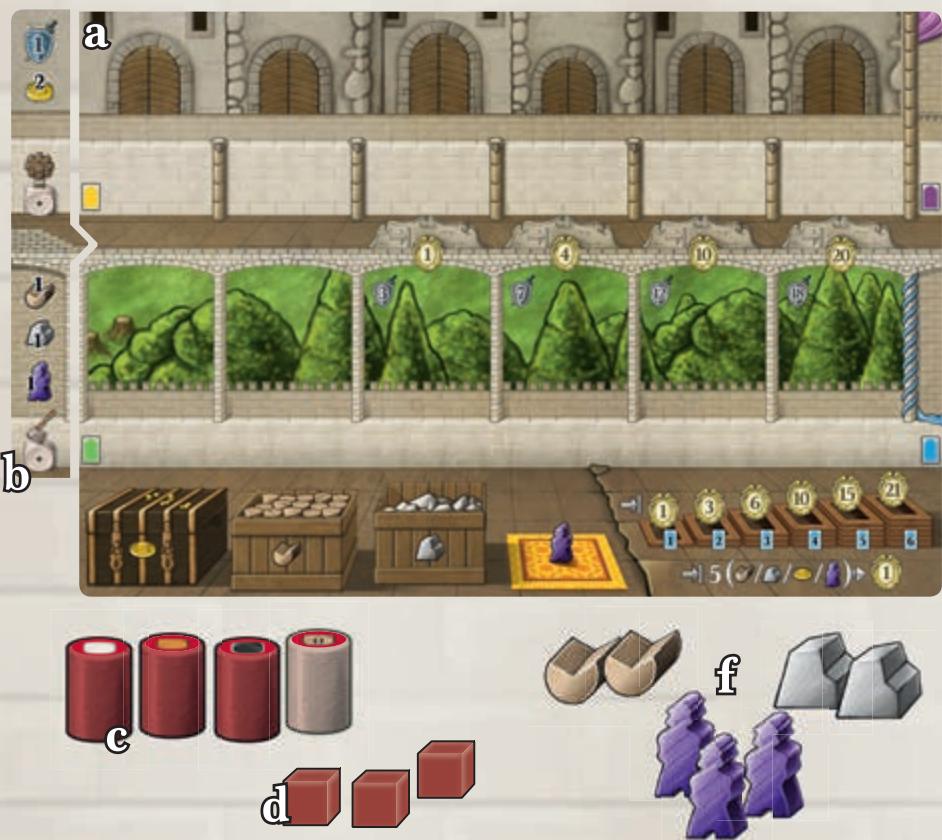
1 Personal Bonus Tile. (In the basic game, all players use this side.)
© 3 Family Members of their color and the uncolored Family Member with the sticker of their color
3 Excommunication Cubes
4 Marker Discs. Place 1 disc each on the 0 step of the Victory Points track, Military Points track, and Faith Points track, respectively. Place the last disc on the Turn Order track.

Victory Points track
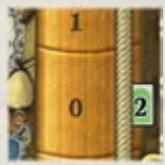
Military Points track


Faith Points track
Turn Order track
2 wood, 2 stone, 3 servants

Randomly choose the turn order and place the marker discs on the Turn Order track.

The first player receives 5 coins, second player receives 6 coins, third player receives 7 coins, fourth player receives 8 coins.
Lorenzo il Magnifico is a complex strategic game. Here we present the rules for the basic game to introduce play. To play a full game, read the Advanced Rules section on page 12 and integrate them with the basic rules.
oThe GameT
Lorenzo il Magnifico is played in 3 periods, each divided into 2 rounds, for a total of 6 rounds. Each round is divided into 4 phases.
A Round Setup
B Actions
C Vatican Report (only during round
2, 4, 6 at the end of a Period)
D End of the Round
A Round Setup
GDraw 4 Development Cards from the top of each deck and place them in the appropriate spaces of the board, from bottom to top.

The First player rolls the dice and places them on the appropriate spaces on the board.

B Actions
Following Turn Order, players must take their actions.
To take an action, you must place one of your Family Members in an action space and perform the corresponding action.

On top of each Family Member, there is a symbol (a colored or a neutral die). This symbol is related to the value of the corresponding die.
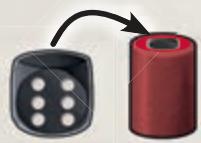
Each Family Member can perform an action at the value of its corresponding die (for example, if you rolled a 4 on the white die, all Family Members with the white die symbol on top will have a value of 4 during the current round). The neutral Family Members have a value of 0. (The colored sticker reminds that an uncolored Family Member belongs to a certain player.)


For some actions, you will need a Family Member of value 1. For other actions, you will need higher values. Some actions allow you to decide your Family Member's value depending on your needs. The minimum value needed for every action is depicted inside the die symbol under the action space.

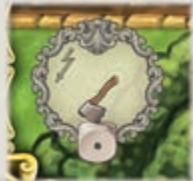
Note: A Family Member with a certain value can always take an action that requires a lower value.
Before placing a Family Member, you can always spend servants to increase the Family Member's value, in a 1:1 ratio, without limit. (For example, you can spend 3 servants to increase your uncolored Family Member's value to 3.)
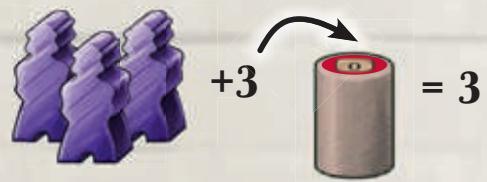
There are 5 different areas where you can place your Family Members. Different rules are applied to the action spaces in different areas.
Towers for Development Cards
There are 4 Towers, each with 4 floors. On every floor, there is an action space that allows the player to take the corresponding card and, if present, some bonuses.
The Cards
There are 4 different types of Development Cards: Territories (green), Buildings (yellow), Characters (blue), and Ventures (purple).
All cards, Territories excepted, have a cost indicated in their upper left corner. When you have to take a card (as an effect of a Family Member placed or another card’s immediate effect), you must always pay its cost.
Most cards have an immediate effect. This is indicated in the middle part of the card, beside the flash symbol. You may receive resources, Points (Victory, Military or Faith) or bonus actions. These bonus actions could be taking a card without placing a Family Member or performing a Harvest/Production action. (see page 8.)
Most cards have a permanent effect. This is indicated in the lower part of the card. Each type of card has a permanent effect that is activated in a different way.
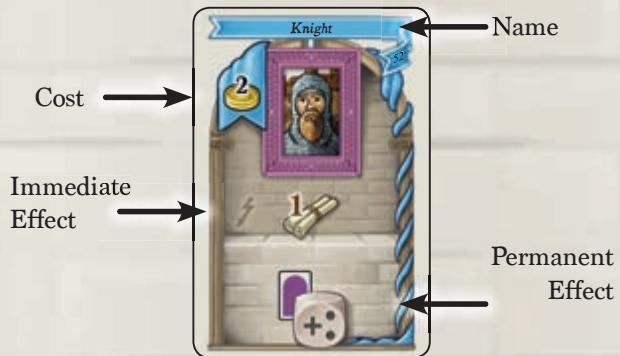
Territories
Territories don't have a cost, but it is not that simple to conquer new territories. To take a new Territory Card, you must place it in the first free space on the left of your Personal Board (in the lower line).

The first 2 spaces are always available. The others will become available when your military power increases. On every space of the lower line of your Personal Board (except the first 2), you can see the number of Military Points required to place a card there. You don't have to spend Military Points. You only have to have them in the moment you place the card. (After you have placed a card, the requirement is covered and you can forget it.)

Territories are an important source of goods. Their permanent effects are activated with a Harvest action. (See Activating permanent effects at page 8.)
In addition, they provide Victory Points at the end of the game in relation to the total number of Territory Cards you have. (See End of the Game and Final Scoring on page 11.)
/////+//0
Take the depicted number of resources or Points
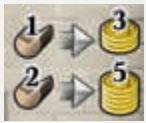
= Pay the resources or Points on the left to receive the resources or Points on the right, only one time per activation (if there are two arrows, you must choose which one to execute)
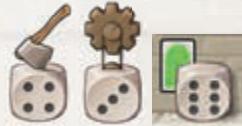
= You get a discount of the resources on the right when you take a specific type of Card = Perform a specific action ata specific value without placing a Family Member
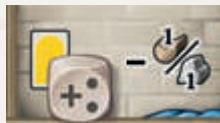


= Receive the coins or Victory Points on the left for each number of Cards or Military Points on the right you have
= When you are performing a specific action (Harvest, Production, or Taking a specific Card), increase your action value by the depicted number of dots
GBuildings
Buildings always cost resources (wood, stone, servant, coin). When you acquire a Building Card, you must spend the required resources and return them to the general supply. If you don't have the required resources, you can't take the card.

Place the Building in the appropriate space on your Personal Board (in the upper line) from left to right.

Buildings provide resources or allow you to exchange a resource for either another resource or Points. Their permanent effects are activated with a Production action. (See Activating permanent effects on page 8.)
Permanent Effects examples:
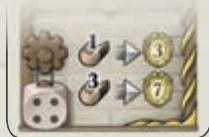
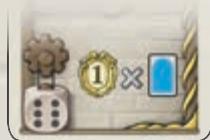
Pay 1 wood to receive 3 Victory Points OR Pay 3 wood to receive 7 Victory Points
Gain 1 Victory Point for every Character Card you have next to your Personal Board

Pay 4 coins to receive 3 wood and 3 stone

Pay 1 wood OR 1 stone to receive 2 Faith Points
Characters
Characters only ever cost coins. When you acquire a Character Card, you must spend the required coins and return them to the general supply. If you don’t have the required coins, you can't take the card.
Place the card in a line beside your Personal Board (in the lower right corner).

Some Characters’immediate effects may give you the ability to perform a bonus action without using your Family Members. In this case, all rules are applied normally to that action.
Immediate Effects examples:
Receive 1 Faith Point. In addition, you can perform an action at value 4 to take a card of any type without placing a Family Member. (You can change the action value with servants and cards effects.) Pay 3 additional coins if the tower is already occupied and take the bonus resources from the third/fourth floor. (See page 7.)

Perform an action at value 6 to take a Building card without placing a Family Member. (You can change the action value with servants and cards effects.) The cost of the card you take is reduced by 1 wood and 1 stone. Pay 3 additional coins if the tower is already occupied and take the bonus resources from the third/ fourth floor. (See page 7.)

Receive 2 Faith Points. In addition, you can perform a Harvest action at value 4 without placing a Family Member. You can pay servants to increase the action value. (If you have cards that modify the Harvest value, calculate that bonus.)

Receive 2 Victory Points for each Character Card next to your Personal Board, including this one.

Receive 3 different Council Privileges.

Characters’ permanent effects are activated in specific circumstances (usually when you are performing another action). Some of them give a bonus to the action value, some provide a discount on the costs.
Permanent Effects examples:
Whenever you perform an action to take a Character card (through a Family Member or as an effect of another card), increase the value of the action by 2. In addition, the cost of the card you take is reduced by 1 coin.

Whenever you perform a Harvest action (through a Family Member or as an effect of another card), increase the value of the action by 2.

You don't take the bonuses when you take a Development Card from the third and the fourth floor of the towers (through a Family Member or as an effect of another card.)

In addition, Character Cards provide Victory Points at the end of the game in relation to their total number. (See End of the Game and Final Scoring on page 11.)
Ventures
Ventures cost resources or Military Points. Some Venture Cards have a double cost, which means you can choose which cost to pay. If you dont have the resources or Points required, you cant place the Family Member to take the card.
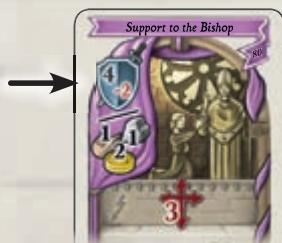
This symbol means that you must pay 2 Military Points and may do so only if you have at least 4 Military Points before taking the card. (Move your disc back on the Militaty Track.) OR pay using resources.
Place the card in a line next to your Personal Board (in the upper right corner).
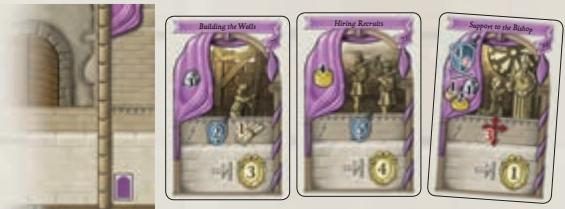
Ventures' permanent effects are always activated at the end of the game, when you calculate the final scoring. (See End of the Game and Final Scoring on page 11.)
Rules for placing a Family Member on a tower
GThe Family Member you want to place here must have a specific value, depending on the floor where you will place it:

On the first floor, you must place Family Members of value 1 or more.

On the second floor, you must place Family Members of value 3 or more.
On the third floor, you must place Family Members of value 5 or more.

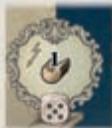
On the fourth floor, you must place a Family Member of value 7 or more. To place here, you must spend at least 1 servant or have a card power that increases a Family Member's value
GThere is no rule regarding the placement order on the floors. (Players don’t have to place on the first floor first.)
GBeside the action spaces on the third and fourth floor, you will find some bonuses: 1 or 2 wood, 1 or 2 stone, 1 or 2 Military Points, 1 or 2 coins. When you place a Family

Member in one of these spaces, immediately receive the bonus. You may use this bonus to pay the cost of the card you want to take.
GIf there are Family Members (one or more, yours or of other players) already present in the same tower where you want to place your Family Member, you must pay 3 coins to the supply before placing it. If you place in a space that gives coins as a bonus, you can't use them to pay these 3 additional coins.
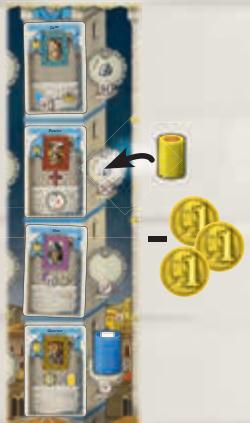
There can't be two Family Members of the same color in the same tower. Uncolored Family Members are considered to be of a neutral color. (A single player can take 2 cards from the same tower in the same round, but only using their uncolored Family Member or using a card effect.)

6After taking a card, place it in the corresponding space of your Personal Board: Territories on the lower line, Buildings on the upper line, Characters on the lower right, Ventures on the upper right. If the card has an immediate effect, resolve it now.
GYou may not have more than 6 cards of the same type on your Personal Board.
Recap: Place a Family Member on a tower floor. (It must have a value equal to or higher than the value required by the action space. If there are already Family Members in the same tower, pay 3 additional coins to the supply. There can't be 2 Family Members of the same color in the same tower.) Take the bonus if present. Pay the cost of the card (and if it is a Territory, you must have the Military Points required.) Take the card and place it on your personal board. Apply the immediate effect of the card if present.
Harvest and Production Area
Both of these areas are divided into two action spaces. The first action space on the left may contain only one Family Member. The larger action space on the right may contain any number of Family Members. (This space is not available in 2-players games.)

The Family Member you want to place here must have a value of 1 or higher. The second section gives a penalty of -3 to the action value. To place a Family Member here, you must activate an action at value 1 or higher.
Players may not place two of their colored Family Members in the two action spaces of each area, but they can place a colored and the uncolored Family Member.
The value of the Family Members you place here determines the value of the action. Their value can be increased by spending servants or by cards’ effects.
GHarvest activates the corresponding personal bonus and the permanent effects of all Territories on your Personal Board, but only of those Territories that have a value equal to or lower than your Harvest action value.
GProduction activates the corresponding personal bonus and the permanent effects of all Buildings on your Personal Board, but only of those Buildings that have a value equal to or lower than your Production action value.
GPersonal bonus is indicated on your Personal Bonus Tile beside your Personal Board. This bonus is activated with an action at value 1, so it is always activated when you perform a Harvest/Production action.
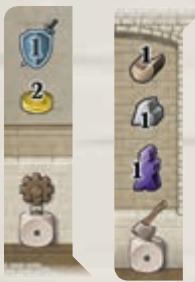
Activating permanent effects
When you activate a line of Territories, you receive resources and Points from the activated cards. In addition, you receive bonuses from your Personal Bonus Tile.
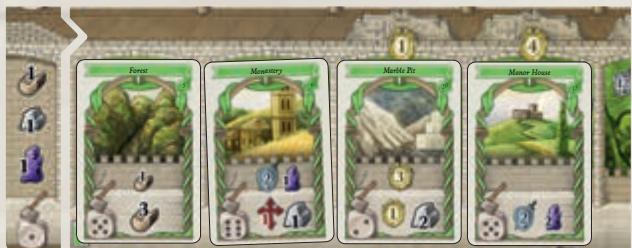
You place a Family Member with a value of 3 on the first Harvest action space. You have 2 servants in your personal supply and decide to spend them to increase your action value up to 5. You receive 1 wood, 1 stone, and 1 servant from your Personal Bonus Tile; 3 wood from the Forest; 2 Military Points and 2 servants from the Manor House; and 1 Victory Point and 2 stone from the Marble Pit. You don't receive bonuses from the Monastery because it has an activation value of 6 and your action has a value of 5.
When you activate a line of Buildings, you activate their permanent effects. In addition, you receive bonuses from your Personal Bonus Tile.
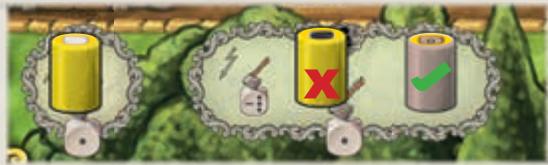
All the resources you want to use to activate the exchanging effects (those effects that change a resource into another) must already be present in your personal supply before starting the activation. (You can't use resources that you received from a permanent effect for another building's permanent effect.) To remember, place the resources you want to use from your personal supply on the cards that will use those resources before activating.

You place a Family Member with a value of 6 on the second Production action space, so your action has a value of 3. You can decide
a) not to spend servants and activate only the Treasury and the personal bonus. You gain 1 Military Point and receive 2 coins from the Personal Bonus Tile and you spend 1 or 2 coins to gain 3 or 5 Victory Points
b) to spend 1 servant to also activate the Carpenter's Shop. You spend 1 wood to receive 3 coins or 2 wood to receive 5 coins
c) to spend 2 servants to also activate the Fortress. You receive 1 Council Privilege and gain 2 Victory Points In any case, you can't use the coins you receive from the Personal Bonus Tile (or from the Carpenter's Shop) to activate the Treasury. You must already have the coins in your personal supply before the activation.
The Market

There are 4 action spaces in the Market. (The 2 spaces with this symbol 8 are only available in 4-players games.)
Each space may contain only 1 Family Member. There can be any number of Family Members of the same color in the Market area. (A player can place a Family Member in more action spaces here.)
CThe Family Members you want to place here must have a value of 1 or higher.
Spaces are:

Receive 5 coins
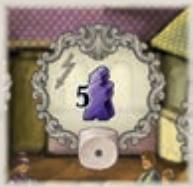
Receive 5 servants
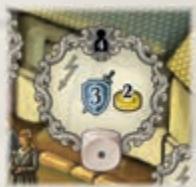
Gain 3 Military Points and receive 2 coins
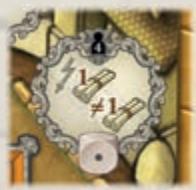
Receive 2 different Council Privileges. (You may not take the same bonus twice.)
When you receive resources, take them from the general supply and place them in the appropriate spaces on your Personal Board. When you gain Points, move your Marker Disc on the appropriate track.
The Council Palace

There is one action space in the Council Palace.
GThis space may contain any number of Family Members. There can be more than one of any color of Family Member in the Council Palace. (A player may place multiple Family Members in this action space.)
The Family Member you want to place here must have a value of 1 or higher.
When you place in the Council Palace,, place the Family Members in order from left to right.
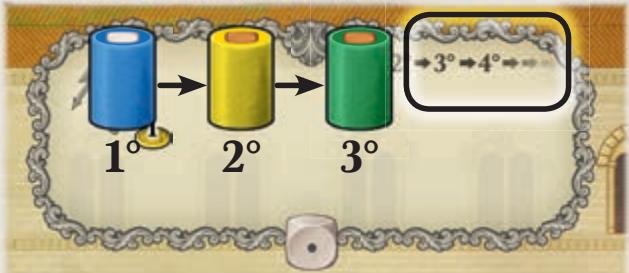
Immediately receive 1 Council Privilege and 1 coin.
Note: At the end of each round, Turn Order changes in relation to the order in which Family Members are placed in the Council Palace. (See End of the Round at page 11.)

Council Privilege is a bonus of your choice between:

1 wood and 1 stone / 2 servants / 2 coins /
2 Military Points / 1 Faith Point

Vatican Report
This phase only occurs in rounds 2/4/6. There is no round marker in the game. You must look at the Development Cards to calculate the round, if you don't remember it. If the cards on the top of the decks are a different period than the cards on the board, then it is an even round.
During this phase, players must show their support to the Church through their Faith Points.
Each period has a certain amount of Faith Points required: 3/4/5 Faith Points for Period 1/2/3, respectively. This is indicated on the Faith Points track.
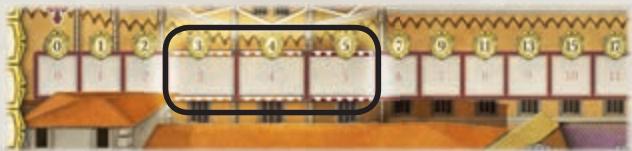
There are 3 different possibilities:
GIf a player does not have the Faith Points required at the end of a Period (their marker on the Faith track isn’t on the required step), they are not able to support the Church and will suffer an Excommunication. Excommunicated players must place one of their cubes on the Excommunication Tile of the current period. From now on, they will suffer the negative effects of their excommunication. They leave their disc on the Faith Points track where it is.

If a player does have the Faith Points required at the end of a Period (their marker on the Faith track is on the required step or further), they can decide to support or not to support the Church.
GIf they decide not to support it, they will suffer an excommunication as if they did not have the required level of Faith Points. They must place their cube on the Excommunication Tile of the current Period and suffer the negative effects of their excommunication from now on. They leave their disc on the Faith track where it is.
If they decide to support the Church, they must spend all their Faith Points to prevent themself from receiving an excommunication. However, the Pope will thank them with a certain amount of Victory Points. The players receive the Victory Points indicated on the step of the Faith track they are currently on. Then they move their marker back to the first step of the Faith track.

(Suffering an excommunication will give you negative effects for the rest of the game, but it preserves your Faith Points.)
At the end of the 6th Round, the players who do not have the Faith Points required, after suffering excommunication, gain the Victory Points indicated on the step of the Faith track they are currently on. Then they move their marker back to the first step of the Faith track. For a detailed description of Excommunication Tiles, see the Quick Reference Guide.

After the Actions phase of round 2, the red player has 2 Faith Points and does not have the 3 Faith Points required by the first Period Vatican Report. They suffer the first Period Excommunication. They leave their disc where it is.
The green player has 3 Faith Points and can decide whether or not to support the Church.
If not, they suffer Excommunication and leaves their disc where it is.
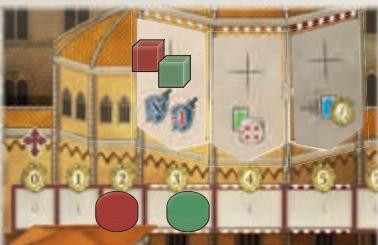
If they support the Church, they gain 3 Victory Points and move their disc back to the 0 space of the Faith track.


End of the Round
At the end of the round, perform the following actions.
GTake all the faceup Development Cards from the board. They won't be used again in this game.
GChange the Turn Order following the order of the Family Members placed in the Council Palace. The player who placed first becomes first player for the next round. Place their disc on the first space of the Turn Order, and so on with other players. If some players didn't place a Family Member in the Council Palace, they remain in their relative order. Uncolored Family Members count for the Turn Order as well. If a player placed more Family Members here, the first on the left is counted for Turn Order. If there are no Family Members in the Council Palace, leave the Turn Order as it is.
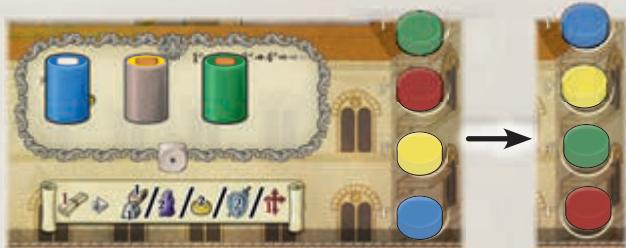
Players then move their Family Members from the Board to their Personal Board.
You are now ready to start the following round.
aEnd of the Game 2 and Final Scoring
The game ends at the end of the sixth round, after the End of the Round phase. You can now calculate the Final Scoring.
Players will score Victory Points for the following results, indicated by this symbolM
a Thanks I
Virginio and Flaminia: We would like to thank everybody who played the game and helped in making it better, in particular: Marco Pranzo, Gabriele Ausiello, Tommaso Battista, Davide Pellacani, Davide Malvestuto, Jamil Zabarah, Riccardo Rabissoni, Francesca Vilmercati, Filippo Di Cataldo, Luca and Livia Ercolini, Alessandro Lansuisi, Carlo Lavezzi, Claudia Dini, Walter Nuccio. Special thanks to Antonio Tinto and Stefano Luperto: together with them in Acchittocca, we learned to create games.
Conquered Territories: 1/4/10/20 Victory Points for 3/4/5/6 Territory Cards on your Personal Board.

GInfluenced Characters: 1/3/6/10/15/21 Victory Points for 1/2/3/4/5/6 Character Cards next to your Personal Board.
GEncouraged Ventures: The sum of all Victory Points on the Venture Cards next to your Personal Board.

GMilitary Strength: If there is a tie between first players, they all gain 5 Victory Points and nobody gains 2 Victory Points. If there is a tie between second players, they all gain 2 Victory Points.

Collected Resources: 1 Victory Point for every 5 resources of all types. (Add all the resources together, then divide the result by 5.)

The player with most Victory Points is the winner.
In case of a tie, the player more advanced on the Turn Order is the winner.
Simone: I would like to thank Samantha Milani, Marco & Simona, Francesco Stifani, Andrea Frizzo, Roberto Pellei and Simone Scalabroni, Rolling Gamers and Spazio Ludico associations; special thanks to Daniel Marinangeli for his many playtests and to Ido Traini for the “fourth Family Member" rule.
Cranio Creations: We would like to thank Paolo Mori who let us use the “Lorenzo il Magnifico" name; special thanks to Alessandro Corsi who took care of the historical review and prepared the Leaders' description.

Advanced Rules
To play the full game, add these advanced rules. A setup rule provides the ability to customize your Personal Bonus Tile. Then, an important element of the game is introduced: the Leader Cards. These cards are used in the Actions phase. They have strong special abilities, but you will need to satisfy some requirements to play them.
Setup
GInstead of taking a Personal Bonus Tile, place them with the advanced side faceup on the table. In a reverse turn order, each player chooses a Personal Bonus Tile and places it next to their Personal Board.

GShuffle the Leader Cards and give 4 cards to each player. Choose 1 card to keep and pass the others to the player on your right. Continue drafting cards until each player has 4 cards.
Leader Cards
Each Leader card has some requirements you must satisfy to play it. These are indicated in the upper part of the card. Requirements are not costs. You dont have to pay them. You only need to have them when you play

the card. (It doesn't matter if you lose some requirements afterward.)
Each Leader has a special ability that is either Once Per Round or Permanent, indicated in the lower part of the card.
Once Per Round abilities give you bonuses when you activate it with a Leader Action (see below). These effects can be activated only once per round.
Permanent abilities usually have effects that are applied in specific circumstances, so they can be applied more than once per round.
(For a detailed description of Leader cards, see the Quick Reference Guide.)
Leader Actions
During their Actions Phase, players may perform one or more special actions without placing a Family Member. These instant actions can be performed at any time, before or after placing their Family Member.
Discarding a Leader Card
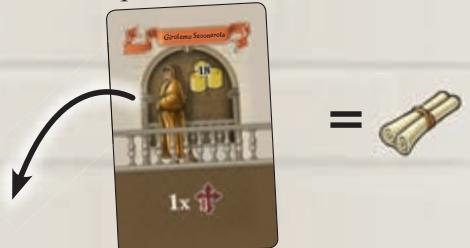
You can decide to discard a Leader card from your hand. If you do so, you immediately receive a Council Privilege. You may do this more than once per turn.
Playing a Leader Card
You can play a Leader Card from your hand if you satisfy the Leader requirements. Place the Leader card face up next to your Personal Board. You may do this more than once per turn.

Example: The moment you have 10 wood in your personl supply, you may play this Leader Card.
Activating a Leader's Once Per Round Ability
Turn the Leader Card face down and resolve its “Once Per Round" Ability. You may activate more than one card per round.

End of the Round
Turn facedown Leader cards faceup.
CMON EDITION:
下载 Markdownrules_en_lorenzo-il-magnifico-new-leaders-3_366471.md1.1 KB
Lorenzo il Magnifico: New Leaders #3
逐页 VLM 转写(qwen3-vl-plus),保留原文结构,未翻译。
New Leaders
Vitellozzo Vitelli
E per dirlo ad un tratto non ci fu guerra famosa nell’Italia, che Francesco Sforza non vi si trovasse, e le Repubbliche, Principi, Re e Papi andavano a gara per haverlo al suo sevigiо.
Requirement: 15 Military Points.
Once per round ability: Activate one (and only one) Territory card with an Harvest value of 6. You can increase this value by spending servants or with the effect of Character cards you have.
Beato Angelico
Donna Lucretia, benché avvezza homai a mutar mariti secondo il capriccio et interesse dei suoi, […] si trattenne fin che il tempo unico medico di queste passioni le fece volger l’animo a più soavi pensieri.
Requirement: 10 Faith Points.
Once per round Ability: Activate one (and only one) Building card with a Production value of 6. You can increase this value by spending servants or with the effect of Character cards you have.
rules_en_lorenzo-il-magnifico-new-leaders-3_366471.md1.1 KB
Lorenzo il Magnifico: New Leaders #3
逐页 VLM 转写(qwen3-vl-plus),保留原文结构,未翻译。
New Leaders
Vitellozzo Vitelli
E per dirlo ad un tratto non ci fu guerra famosa nell’Italia, che Francesco Sforza non vi si trovasse, e le Repubbliche, Principi, Re e Papi andavano a gara per haverlo al suo sevigiо.
Requirement: 15 Military Points.
Once per round ability: Activate one (and only one) Territory card with an Harvest value of 6. You can increase this value by spending servants or with the effect of Character cards you have.
Beato Angelico
Donna Lucretia, benché avvezza homai a mutar mariti secondo il capriccio et interesse dei suoi, […] si trattenne fin che il tempo unico medico di queste passioni le fece volger l’animo a più soavi pensieri.
Requirement: 10 Faith Points.
Once per round Ability: Activate one (and only one) Building card with a Production value of 6. You can increase this value by spending servants or with the effect of Character cards you have.
原文为社区整理/出版社公开资料,版权归原作者,仅供个人学习查阅。