
得分沙拉Point Salad
一句话概览
得分沙拉 是一款已收录于村了吗规则库的桌游,支持 2–6 人,原名 Point Salad。
本页内容:一句话概览 · 游戏概述 · 1. 游戏组件 · 2. 游戏设置 · 3. 游戏流程 · 4. 计分卡类型 · 5. 游戏结束 · 6. 最终计分 · 7. 策略提示 · 关键规则与常见问题 · 常见问题
得分沙拉 规则速览
以下规则速览由本站整理,与官方规则书表述不同,仅供快速上手参考。
游戏概述
玩家扮演沙拉厨师,通过卡牌轮抽收集蔬菜和计分卡,用自己桌面上的蔬菜组合满足计分卡上的条件来获取最多分数。游戏仅 108 张双面卡牌,规则极简但决策层次丰富——每张卡正面是蔬菜、背面是计分条件,何时取蔬菜、何时拿计分、何时翻面转换,构成核心博弈。
核心机制: 卡牌轮抽、牌库构建、多重计分引擎
人数 / 时长: 2–6 人 · 15–30 分钟
1. 游戏组件
| 组件 | 数量 | 说明 |
|---|---|---|
| 双面卡牌 | 108 张 | 正面为蔬菜、背面为计分条件;6 种蔬菜各 18 张,108 种独特计分条件 |
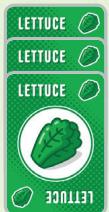
六种蔬菜: 每种 18 张卡牌,共 108 张蔬菜面。每张卡背面是独一无二的计分条件,共 108 种。
2. 游戏设置
2.1 根据人数调整牌组
根据玩家人数,取出或移除以下数量的每种蔬菜卡(不看计分面):
| 人数 | 操作 | 使用总数 |
|---|---|---|
| 2 人 | 取出每种 6 张 | 36 张 |
| 3 人 | 取出每种 9 张 | 54 张 |
| 4 人 | 移除每种 6 张 | 72 张 |
| 5 人 | 移除每种 3 张 | 90 张 |
| 6 人 | 使用全部牌组 | 108 张 |
移除的卡牌放回盒中,确保玩家看不到哪些计分卡被移除。
2.2 构建抽牌堆与蔬菜市场
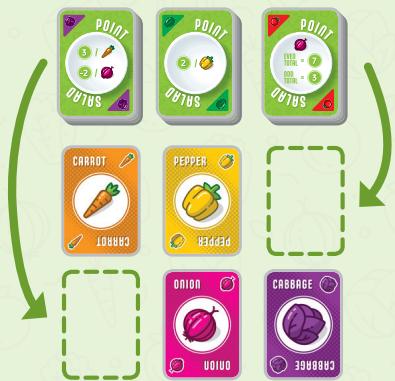
- 将剩余卡牌洗匀,以计分面朝上分成大致相等的三叠抽牌堆
- 从每叠抽牌堆翻出 2 张卡,翻至蔬菜面朝上,放在该堆正下方的纵列中
- 每堆下方形成一个蔬菜市场的槽位,共 6 个市场槽位(3 堆 × 2 行)
2.3 确定起始玩家
随机选择一名起始玩家。
> 多轮游戏建议: 由于单局非常快速,可以进行多轮累计计分后判定最终胜者。2 人建议将牌组分为 3 轮(每轮 36 张);3 人建议分为 2 轮(每轮 54 张),以便用完整副牌组。
3. 游戏流程
游戏按回合进行,从起始玩家开始顺时针轮流行动。轮到你时,执行以下步骤:
3.1 轮抽卡牌
每回合你必须选择以下其中一种方式获取卡牌:
| 选项 | 取牌方式 | 数量 |
|---|---|---|
| A. 取计分卡 | 从任意一叠计分抽牌堆的顶部抽取 | 1 张(计分面朝上) |
| B. 取蔬菜卡 | 从蔬菜市场中选择可用的蔬菜卡 | 2 张(蔬菜面朝上) |
取得的卡牌以正面朝上放入你面前的个人展示区(tableau),所有玩家可见。
3.2 自由行动:翻转计分卡
每回合最多一次,你可以将自己展示区中的任意一张计分卡翻面,使其变为蔬菜卡。
- 可以翻转本回合刚拿的计分卡,也可以翻转之前回合拿的计分卡
- 不可逆向翻转: 不能将蔬菜卡翻为计分卡
- 蔬菜类型标注在卡牌的角落处
3.3 回合结束:补满市场
你完成取牌后,从对应的抽牌堆中抽取卡牌,翻至蔬菜面朝上,补满蔬菜市场中所有空缺的槽位。
抽牌堆耗尽时: 将剩余最大的那叠抽牌堆大致对半分开,把下半部分移至空缺的堆位替换(确保该叠顶部的计分卡不移动位置)。补满完成后,轮到左手边的下一位玩家。
4. 计分卡类型
每张计分卡都有独特的计分条件。以下是主要的计分方式类型:
| 计分类型 | 说明 | 示例 |
|---|---|---|
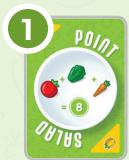
| 组合计分 | 收集指定蔬菜组合,每组得固定分数 | 每组番茄 + 生菜 + 胡萝卜:8 分 |
| 配对计分 | 每凑齐一对指定蔬菜得分 | 每对胡萝卜:5 分 |
| 逐一计分 | 每拥有一个指定蔬菜得(或扣)固定分数 | 每个胡萝卜 +3 分,每个洋葱 −2 分 |
| 比拼计分 | 拥有某种蔬菜数量最多(或并列最多)的玩家获得固定分数 | 洋葱数量最多:10 分 |
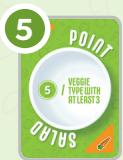
| 门槛计分 | 拥有至少 N 个某类蔬菜即得分 | 每种达到 3 个以上的蔬菜类型:5 分 |
5. 游戏结束
当所有计分抽牌堆和蔬菜市场中的卡牌都被拿完时,游戏立即结束。
6. 最终计分
6.1 计分规则
玩家逐一检查自己的每张计分卡,根据卡上的条件计算得分,所有计分卡的得分相加即为最终总分。
核心规则:每张蔬菜卡可用于满足所有计分卡的条件。 也就是说:
- 同一个蔬菜可以同时计入多张计分卡的计算
- 同一张计分卡也可以被多次满足(例如卡上写「每对胡萝卜 5 分」,你有 6 个胡萝卜则计 3 次)
- 不匹配任何计分条件的蔬菜不产生分数
6.2 计分示例
以一位玩家的展示区为例,假设有 2 个番茄、2 个生菜、5 个胡萝卜、3 个洋葱:
| 计分卡 | 计算方式 | 得分 |
|---|---|---|
| 每组(番茄 + 生菜 + 胡萝卜)8 分 | 最多组成 2 组 → 8 × 2 | 16 分 |
| 每对胡萝卜 5 分 | 5 个胡萝卜 = 2 对 → 5 × 2 | 10 分 |
| 每个胡萝卜 +3 分,每个洋葱 −2 分 | 5×3 + 3×(−2) | 9 分 |
| 洋葱数量最多 10 分 | 若为全场最多 | 10 分 |
| 每种达 3 个以上的蔬菜类型 5 分 | 胡萝卜 5、洋葱 3,共 2 种达标 → 5 × 2(加上番茄、生菜、胡萝卜、洋葱的计算) | 15 分 |
| 合计 | 60 分 |
> 注意: 示例中的 4 号计分卡(洋葱最多 10 分)需要与其他所有玩家比较,仅当你的洋葱数量全场最多(或并列最多)时才可获得。
6.3 平局打破
- 单张计分卡平局: 若两位玩家在某张计分卡的比拼条件上打成平手(例如洋葱数量相同),持有该计分卡的玩家获得该分数
- 总分平局: 总分相同时,回合顺序中较后行动的玩家获胜
7. 策略提示
卡牌价值的双重性: 每张卡正面是蔬菜、背面是计分条件,取一张计分卡意味着同时放弃两种蔬菜。翻转自由行动可以在关键时刻将不需要的计分卡转为蔬菜,但不可反向操作。
引擎构建思路:
- 广撒网: 收集多种蔬菜各少量,配合多样化的计分卡
- 单点爆发: 集中大量同一种蔬菜,配合「每个 X 得 N 分」型计分卡
- 组合收割: 确保各类蔬菜数量均衡,收割「每组组合」型高分计分卡
关键规则与常见问题
易错规则
- 每回合只能选一种方式取牌: 要么取 1 张计分卡,要么取 2 张蔬菜卡,不能同时取两种
- 计分卡可翻面为蔬菜卡,蔬菜卡不可翻面为计分卡: 翻转是单向的
- 每回合最多翻转一张计分卡: 翻面是自由行动,但每回合仅限一次
- 市场补满时新卡翻至蔬菜面朝上: 从抽牌堆(计分面朝上)取出后,放入市场前必须翻面
- 抽牌堆耗尽时分拆最大的堆: 仅移动下半部分,确保顶部计分卡位置不变
- 同一蔬菜可计入多张计分卡: 不会因已被一张卡使用而「消耗掉」
- 比拼计分卡平局时: 持有该计分卡的玩家获得分数
- 不匹配任何条件的蔬菜不计分
常见问题
-
Q:蔬菜市场空了但抽牌堆还有牌怎么办?
A:回合结束时从对应抽牌堆翻牌补满市场。只有当抽牌堆和市场同时都空了,游戏才结束。 -
Q:可以拿市场里刚被对手补充的卡吗?
A:可以。轮到你时市场中所有蔬菜卡都可以选择,无论何时放入。 -
Q:翻转一张计分卡后还能再翻另一张吗?
A:不能。每回合最多执行一次翻面自由行动。 -
Q:计分时一种蔬菜可以同时满足多张计分卡吗?
A:可以。每张蔬菜卡的全部蔬菜都用于每张计分卡的计算,没有「消耗」概念。 -
Q:2 人游戏用 36 张卡,会不会计分卡种类不够?
A:不会。36 张卡中有 18 种计分条件,足以提供多样化的计分引擎。
常见问题(FAQ)
以下 1 条问答中 0 条来自站内玩家的真实提问,其余 1 条为本站整理的常见疑问;答复内容保持原样。
得分沙拉支持几个人玩?
2–6 人。
去哪查完整规则
想核对具体规则细节、卡牌效果或某个回合的结算方式,可以在村了吗里选中这款游戏后直接提问。
同类桌游
- 卡坦岛德式
- 工业革命:伯明翰德式
- 勃艮第城堡:特别典藏版德式
- 方舟动物园德式
- 重塑宇宙德式
- 埃多拉的德鲁伊德式
- 1817 (2020)德式
- 甜蜜国度德式
- 卡里普索德式
- 铁路环游德式
规则原文(Markdown)
本站收录这款游戏的规则原文 2 个文件,此处内联渲染 2 个,可直接展开阅读或下载。
rules_zh_得分沙拉_3180.md7.4 KB
EC
遊戲設計:Molly Johnson, Robert Meloin, Shawn Stankewich圖像設計:Dylan Mangini
工作人員
遊戲設計Shawn Stankewich, Molly Johnson, Robert Melvin
| 项目總監 Nicolas Bongiu | 中文版翻譯 陳浩仁 |
| 生產 | 中文版監修 |
| Dave Lepore | 何仲焜 |
| 開發指導 Todd Rowland | 中文版美術 |
美術指導
Shawn Stankewich, Molly Johnson, Robert Melvin
圖像設計Dylan Mangini, Flatout Games
英文版編輯
Todd Rowland, Edward Bolme
特別鳴謝
Nicolas Bongiu, Joseph Chen, John D Clair, Ryan Dancey, Alastair Hulme, Fiona Hulme, Chad Martinell, Jan Martinell, Lee Nicol, Vladimir Orellana, Sarah Reed, Will Reed, Kathy Rowland, Seattle Tabletop Designers, Josh Wood, John Zinser
©2019 Alderac Entertainment Group. Point Salad and all related marks are ™ and
Alderac Entertainment Group, Inc. 2505 Anthem Village Dr., Suite E-521, Henderson, NV. 89052 USA.
All rights reserved. Printed in China.
©2020版權屬栢龍玩具有限公司,保留一切權利


沪来治股针工作章
栢龍玩具有限公司Broadway Toys Limitedsticplongshore.com.hkTet+85223631990
遊戲概覽
得分沙拉是一款明快有趣的卡牌挑選遊戲,無論家庭或派對聚會,同樣樂趣無窮!超過一百個得分途徑,千變萬化,每局遊戲都帶來獨一無二的遊戲體驗!
遊戲配件
·108張蔬菜/得分雙面卡牌
·遊戲說明書
蔬菜面包括6種蔬菜各18張;得分面則共有108款得分方

遊戲設置
按玩家人數使用不同數量的蔬菜,把沒有用到的放回遊戲盒。設置卡牌時,請以蔬菜面朝上,不要查看背面的内容:
2人遊戲:每種蔬菜隨機使用6張(共36張)。
3人遊戲:每種蔬菜隨機使用9張(共54張)。
4人遊戲:每種蔬菜隨機使用12張(共72張)。
5人遊戲:每種蔬菜隨機使用15張(共90張)。
6人遊戲:使用全部卡牌。
2.洗匀本局遊戲使用的卡牌,隨機分成大約相同張数的3疊牌庫,以得分面朝上。
3.翻開每疊牌庫頂2張牌,放到各牌庫下面,組成蔬菜市場(詳見第5頁)。
④ 隨機決定起始玩家。
注意:由於本遊戲節奏非常快,你們可以預先決定要遊玩幾局!每局結束之後,記下每位玩家的得分,遊玩指定局數之後總分最高的玩家勝出。若是2人遊戲,我們建議把全部108張牌平均分成3堆,每堆36張牌(見上述),共遊玩三局:若是3人遊戲,則把全部108張牌平均分成2堆,每堆各54張牌,共遊玩兩局。這樣使得你們遊玩過每張牌一次,還可以節省把牌分類移除,然後設置牌庫的時間!
得分牌牌庫


蔬菜市場

加盟n




進行遊戲
輪到你的回合時,你會挑選1-2張牌。你可以選擇拿取:
1)任何一疊牌庫頂的1張得分牌,或
2)蔬菜市場裏任何2張蔬菜牌。
你拿牌後,把它們加到你前面,然後你的回合就結束了。
可選額外行動:玩家在自己的回合可選擇自己1張得分牌(本輪拿取或之前拿取的均可),把它翻到蔬菜面。不過永遠不可把蔬菜牌翻到得分面!
注意:牌的角落畫著該牌的蔬菜種類。

回合完結
你挑選卡牌後,從牌庫抽牌填補相同直行蔬菜市場的空位。每有一個空位,便翻開相應牌庫頂的1張牌,以蔬菜面填補。若任何牌庫被抽光,便從最多牌的牌庫大約分出一半,其下半疊作為新牌庫填補被抽光的牌庫;上半疊
留在原位(因此,該牌庫頂那張牌仍會留在相同位置)。
填補市場和牌庫後,輪到左邊玩家的回合。


遊戲結束
牌庫和蔬菜市場所有牌都被抽光後,遊戲結束,最高分的玩家勝出。


得分
每位玩家把自己的蔬菜跟得分牌配對,查看每張得分牌獲得幾分,然後計算自己的總分。若最高分遇平手,他們當中最後行動的玩家勝出。計算得分時,每張得分牌都會點算該玩家的全部蔬菜牌。
若滿足條件,玩家會因同一張得分牌多次得分或扣分,而同一張蔬菜牌亦可使多張得分牌得分或扣分。若得分條件要求持有玩家的指定蔬菜數量最多或最少(例如最多洋蔥),而他的數量與其他玩家遇平手,則持有該牌的玩家仍然能夠得分。
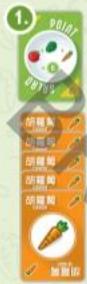








注意不符合任何得分牌的蔬菜牌不會得分(上例即是甘蓝)。
-
每組番茄、生菜、胡蘿蔔可得8分
8x2=16分 -
每對胡蘿萄可得5分:5×2=10分
-
每張胡蘿萄可得3分;每張洋蔥要扣2分:
3x5+(-2×3)=9分 -
在所有玩家當中擁有最多洋蒽(平手亦可)可得10分:10分
-
每種蔬菜有最少3張可得5分: 5×3=15分
$$
\dot { \boldsymbol { * } } \dot { \boldsymbol { \mathcal { Q } } } = 1 6 + 1 0 + 9 + 1 0 + 1 5 = 6 0 \boldsymbol { \mathcal { Q } }
$$

PS_RuleBook.md7.4 KB
POINT SALAD. TM
Designed by Molly Johnson, Robert Melvin, and Shawn StankewichDesigned by Molly Johnson, Robert Melvin, and Shawn Stankewich
Graphic Design by Dylan Mangini Graphic Design by Dylan Mangini
CREDITS
Game Design
Shawn Stankewich, Molly Johnson and Robert Melvin
Director of Projects
Nicolas Bongiu
Production
Dave Lepore
Development Lead
Todd Rowland
Creative Direction
Shawn Stankewich, Molly Johnson and Robert Melvin
Graphic Design
Dylan Mangini and Flatout Games
Editing
Todd Rowland, Edward Bolme
Special Thanks
Nicolas Bongiu, Joseph Chen, John D Clair, Ryan Dancey, Alastair Hulme, Fiona Hulme, Paul Hulme, Chad Martinell, Jan Martinell, Lee Nicol, Vladimir Orellana, Sarah Reed, Will Reed, Kathy Rowland, Seattle Tabletop Designers, Josh Wood and John Zinser
© 2019 Alderac Entertainment Group. Point Salad and all related marks are ™ and ©
Alderac Entertainment Group, Inc.
555 N El Camino Real #A393, San Clemente, CA 92672 USA.
All rights reserved. Printed in China.

Warning: Choking Hazard! Not for use by children under 3 years of age.
A game for 2 to 6 players, ages 14+ by Flatout Games
OVERVIEW
Point Salad is a card-drafting and tableau-building game for 2–6 players. Players take turns building a salad of veggies and collecting point cards in order to score the most points for the ingredients in their salad!
COMPONENTS
• 108 double-sided veggie/point cards
• 1 Rulebook
Double-sided cards feature 18 each of 6 diferent veggies with 108 unique scoring conditions on their point card backs.
VEGGIE SIDE

VEGGIE TYPE

POINT SIDE

POINT SCORING CONDITIONS
VEGGIE TYPE ON OPPOSITE SIDE
SETUP
Based on the number of players, count out or remove the following number of each of the 6 veggie cards from the game (without looking at the point card backs):
2 Players: Count out 6 of each veggie (36 total)
3 Players: Count out 9 of each veggie (54 total)
4 Players: Remove 6 of each veggie (72 total)
5 Players: Remove 3 of each veggie (90 total)
6 Players: Use the entire deck
Place any removed cards back inside the box so that players do not see which point cards have been removed.
Shufle all remaining cards and create three roughly equal draw piles with point card sides face up.
Flip over two cards from each draw pile and place them in a column below the pile. This creates a veggie market below the piles (see page 5).
4. Randomly choose a start player.
Note: Since Point Salad is so quick-playing, you may decide to play multiple rounds! You may keep track of scores over multiple rounds and declare a winner at the end. For 2 players, we suggest splitting the deck into 3 equal rounds of 36 cards each (see above), or for 3 players, 2 equal rounds of 54 cards each. This will allow you to use the full deck through multiple rounds and spend less time sorting the cards!
POINT CARD DRAW PILES
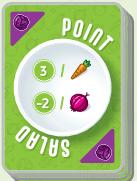

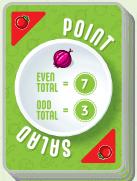
VEGGIE MARKET


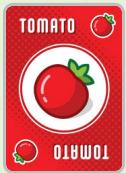


GAMEPLAY
On your turn you draft one or more cards. You may draft either (1) one point card from the top of any of the draw piles or (2) two veggie cards from those available in the market. After you select your card(s), add them to a face-up tableau in front of yourself, then your turn is complete.
Optional free action: Once per turn, you may choose to flip over any one of your point cards (either drafted this turn, or on a previous turn) and turn it into a veggie card (but you cannot flip a veggie card into a point card).
Note: The veggie type is indicated in the corners of the card.
TURN END
Once you have drafted your card(s), refill the veggie market by drawing cards from corresponding draw piles in each column, filling any empty slots. Flip the cards over from the point side to the veggie side as they enter the market. If one of the draw piles of point cards runs out, split the largest pile
roughly in half, and move the bottom half to replace the empty pile (ensuring the point card on top of the largest pile does not move). Once the market refill has been completed, play continues with the next player to the left.
GAME END
The game ends when all cards from both the point card piles and veggie market have been drafted. The player with the most points is the winner.
SCORING
Players tabulate their victory points by counting how many points each of their own point cards are worth and adding these scores together to obtain their final score. If two players are tied in total victory points, then the player who played later in the turn order is the winner. When tabulating a point card, a player’s full tableau of veggie cards are considered
for each point card, meaning that each veggie card is used to score each point card. Players may score a point card multiple times, and they may also use the same veggie card to score multiple point cards. If two players are tied for a scoring condition on a card (e.g., most onions), then the player with the point card scores the victory points.



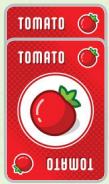


Note: Veggies that do not match scoring conditions on point cards are not scored (e.g., cabbage)
-
8 points for each combination of tomato, lettuce, and carrot: 8pts x 2 = 16pts
-
5 points for each pair of carrots: 5pts x 2 = 10pts
-
3 points for each carrot, -2 points for each onion: (3pts x 5) + (-2pts x 3) = 9pts
-
10 points for having the most (or tied for the most) onions of all players: if it is the most = 10pts
-
5 points per veggie type with at least 3: 5pts x 3 = 15pts
TOTAL SCORE = 16 + 10 + 9 + 10 + 15 = 60 pts

原文为社区整理/出版社公开资料,版权归原作者,仅供个人学习查阅。