
蒂卡尔古城Tikal
一句话概览
蒂卡尔古城 是一款已收录于村了吗规则库的桌游,支持 2–4 人,原名 Tikal。
本页内容:一句话概览 · 游戏概述 · 1. 游戏组件 · 2. 游戏设置 · 3. 游戏流程 · 4. 行动详解 · 5. 计分规则 · 6. 拍卖版本规则 · 7. 关键规则与常见问题 · 常见问题
蒂卡尔古城 规则速览
以下规则速览由本站整理,与官方规则书表述不同,仅供快速上手参考。
游戏概述
在危地马拉北部密林深处,古老的玛雅文明蒂卡尔遗址沉睡千年。玩家扮演探险队队长,率领队伍深入丛林遗迹,探索多层神庙、挖掘珍贵财宝、争夺地盘积分。四轮探索结束后统计得分,获得最多胜利点的探险队获胜。
核心机制: 行动点分配、板块放置、区域控制、骰子替代表分
1. 游戏组件
| 组件 | 数量/说明 |
|---|---|
| 游戏图板 | 1块(含计分区) |
| 地形卡片 | 36张六边形:15张神庙卡、10张林地卡、8张宝藏卡、3张火山卡 |
| 财宝圆片 | 24个,8种类型各3个 |
| 神庙卡片(升级层) | 48张方形:2(3张)、3(6张)、4(9张)、5(11张)、6(8张)、7(5张)、8(3张)、9(2张)、10(1张) |
| 探险队长标志 | 4个(每色1个) |
| 探险队工人标志 | 72个(每色18个) |
| 营地标志 | 8个(每色2个) |
| 计分标志 | 4个(每色1个) |
| 计分便捷卡片 | 4张(每色1张,用于辅助记录财宝) |
| 回合指示标志 | 4个(拍卖版本使用) |
| 游戏手册 | 1本 |
2. 游戏设置
2.1 图板设置
- 将游戏图板放在中央位置。
- 从牌堆中翻出4张起始地形卡片置于图板上:1张大本营卡、2张神庙卡、1张林地卡(均为无神庙层的最底层)。
2.2 地形卡片准备
- 将所有36张地形卡片按背面字母标记(A–G),面朝上逐个分拣成摞。
- 将A–G七摞按字母顺序叠放,A在最上方,B至G依次在下。
- 整叠牌放置在图板旁作为抽牌堆。
2.3 神庙层准备
- 将48张神庙方形卡片混洗后分成两摞备用。
2.4 财宝准备
- 将24个财宝圆片面朝下混洗后分成两摞备用。
2.5 玩家设置
- 每位玩家选择一种颜色,领取对应颜色的所有标志:
- 1个探险队长
- 18个探险队工人
- 2个营地标志
- 1个回合指示标志(仅拍卖版本需要)
- 所有玩家的计分标志初始放在计分区数字1旁边。
3. 游戏流程
3.1 总览
- 玩家人数:2–4人,10岁以上。
- 起始玩家为年纪最大的玩家。
- 每位玩家的回合分为两个阶段:
1. 放置地形卡片阶段——从顶抽取1张地形卡并放置到图板上。
2. 探索阶段——花费最多10个行动点数执行探索行动。 - 按顺时针方向轮流进行。
3.2 地形卡片放置规则
- 新放置的地形卡必须与已有卡片至少有一条边相邻。
- 两张相邻地形卡的对应边上只要有一方有石头标志,探险队员即可在其间通行。
- 若两边都没有石头标志,则两者不可直接通行。
- 火山卡不可穿越——即使存在石头标志也无法进入或经过。
- 地形卡一经放置即生效,满足石头标志条件的位置可立即派员到达。
3.3 火山卡特殊效果
- 当玩家抽到的地形卡是火山时,该玩家先把火山卡放到一旁(暂时不上板)。
- 该玩家仍可正常花费10个行动点数执行本轮探索行动。
- 行动结束后,其他玩家依次执行自己的行动+计分。
- 所有其他玩家结算完毕后,由抽到火山卡的玩家最后将火山卡放置到图板上,再额外花费10个行动点数行动一次。
3.4 火山卡触发即时计分
- 火山卡被抽出后的计分阶段中,先行动再计分(而非先计分后行动)。
- 所有玩家均按顺时针方向依次行动→计分。
- 抽到火山卡的玩家最后行动+计分,并将火山卡上板后再额外行动一次。
3.5 行动点数
- 每轮每位玩家拥有10个行动点数,未使用的点数不保留到下轮。
- 行动点数可以在多种行动之间自由分配,也可全部投入同一种行动。
- 各项行动的费用如下表:
|| 行动 | 费用(AP)||----|---------|| 放置/移动1名队员到营地 | 1 || 经1个石头标志移动跨越地形卡 | 1 || 探索1层神庙 | 2 || 挖掘1个财宝 | 3 || 交换1个财宝 | 3 || 建立营地 | 5 || 放置守卫 | 5 |
4. 行动详解
4.1 放置/移动队员到营地
将1名探险队员从手牌放置到大本营卡或自己已建的营地卡上;或将队员在大本营与自己营地之间、以及自己的两个营地之间移动。
要点:
- 消耗1个行动点数,队长和工人费用相同。
- 每次回合可以放置/移动的队员总数上限为10个(即不会在放置环节用完超过10个队员)。
- 营地之间的移动必须沿连通的隐秘路径(石头标志链)。
- 不能使用其他玩家的营地作为中转——只允许通过自己建立的营地连线。
- 大本营到新建营地之间的路径连通后,可花费1个AP再从补给区拿取1名队员到新营地。
4.2 移动队员
控制队员在地形卡之间移动——每经过1个石头标志消耗1个行动点数。
要点:
- 队长和工人费用相同,但计票时队长算3人。
- 移动必须在同一回合内完成,剩余AP不足以支付整条路线则不能出发。
- 例如途经3个石头标志则需花费3AP,必须一个回合付清。
- 可在同一回合多次移动,累计不超过10AP。
- 队员可以停留或穿越其他玩家的营地卡。
4.3 探索神庙
在神庙卡上至少有1名队员的前提下,逐层揭开隐藏的神庙内部,提升分值。
步骤:
1. 在该神庙卡上放置1名探险队员(占用该队员)。
2. 花费2个行动点数探索一层。
3. 从外部神庙牌堆中取一张编号比当前顶层大1的神庙卡叠到上方。
限制与细节:
- 每个神庙每回合最多探索2层。
- 每次探索必须使用不同的队员(不可重复使用同一个队员探索同一神庙的多层)。
- 神庙层必须按数字顺序依次叠加。
- 如果没有对应编号的神庙卡可用,则该神庙停止升高。
- 可跨多个不同神庙探索,总花费不超过10AP。
- 神庙的最终分数等于其最上层卡片的数字(基础1–10)。
4.4 挖掘财宝
在宝藏卡上至少有1名队员的前提下,从堆顶挖取财宝圆片。
步骤:
1. 在该宝藏卡上放置1名探险队员(占用该队员)。
2. 花费3个行动点数。
3. 移开最上面的1个或一组财宝圆片,面朝上收入自己手中。
限制与细节:
- 每块宝藏卡每回合最多挖掘2个。
- 每挖掘1个财宝必须使用不同的队员。
- 成组财宝(2个一组的"对"或3个一组的"套")不可分开。
- 可跨多张宝藏卡挖掘,总花费不超过10AP。
- 宝藏卡上的财宝全被挖走后,此卡被视为林地卡——可在上面建营地。
4.5 交换财宝
用自己的单个财宝与其他玩家手中的单个财宝互换。
要点:
- 花费3个行动点数。
- 可选择任意玩家进行交换,对方不得拒绝。
- 成组财宝(2个一组或3个一组)不可拆开单独交换。
4.6 建立营地
花费5个行动点在林地卡或已空的宝藏卡上建立自己的营地。
要点:
- 不必在该卡上有队员也可以建造。
- 一块卡上只能有一个营地。
- 每个玩家整个游戏中最多建2个营地。
- 补给机制: 如果从大本营到新营地的隐秘路径连通,可额外花费1个AP从补给区拿走1名队员放入该营地。
4.7 放置守卫
在神庙卡上拥有人数优势的玩家花费5个AP放置守卫,永久锁定该神庙分数。
步骤:
1. 确认自己在该神庙卡上的队员数最多(队长算3人)。
2. 花费5个行动点数放置1个守卫。
3. 将该卡上你的所有其他队员放回盒子移出游戏,这些队员不再回到供给区。
要点:
- 游戏中每人最多放置2个守卫。
- 守卫一旦放置不可移动或移除。
- 放置守卫后,该神庙不能再继续探索(无法叠加新层)。
- 该神庙分数永久归属守卫持有者,直至终局。
- 其他玩家仍可留在、经过该神庙卡。
- 计数时1个队长=3个工人,决定谁占优势。
- 如果之后有人在该卡上超越人数,原守卫仍有效且继续获得该神庙分数。
5. 计分规则
5.1 即时计分(火山触发时)
当火山卡被抽出时,所有玩家按顺时针依次执行:行动 → 计分。
神庙分数:
- 神庙顶层的数字即为该神庙的分数。
- 神庙分数归属判定优先级:
1. 设有守卫的玩家:固定获得该神庙分数。
2. 无人设守时:场上队员最多的玩家获得分数。
3. 出现并列时:无人获得该神庙分数。
- 如果一个神庙同时有守卫和其他人占优,守卫方优先。
财宝分数:
|| 排列方式 | 得分 ||---------|------|| 单个财宝 | 1分 || 2个一组 | 3分 || 3个一组 | 6分 |
- 每种财宝类型有3个,总计8种不同类型。
- 单独的财宝每个1分,2个一组的共3分,3个一组的共6分。
- 成组财宝不可拆分计分。
- 建议使用计分便捷卡片辅助记录和核对。
5.2 最终计分与游戏结束
基本规则终止条件
当地形卡片全部放置完毕、所有玩家完成最后一轮行动后,进入最终计分阶段。
最终计分顺序(基本规则):
- 所有玩家按顺时针方向依次行动(最多10AP)→ 结算分数。
- 所有人结算完毕,游戏结束。
- 最高分者获胜。
拍卖规则终止条件与顺序
当最后一张地形卡被拍卖使用完毕后:
- 最终计分按得分从低到高依次进行:得分最低的选手最先行动+计分,然后次低,依此类推。
- 若有平局,则按顺时针方向紧挨着放置最后一张卡玩家的选手优先。
计分区说明
- 游戏板计分区有100分刻度。如玩家总分超过100,计分标志可沿圈继续前进,只需自行记录超出部分。
6. 拍卖版本规则
6.1 主要差异
- 地形卡不再随机抽取,改为竞拍获取。
- 每轮游戏进行等同于玩家人数的回合。
- 起始计分:所有玩家的计分标志放在计分区20分位置,作为首轮竞拍的资本。
6.2 每轮流程
6.2.1 展示地形卡
- 按玩家人数抽取相应数量的地形卡,面朝上公开展示。
6.2.2 竞拍起始权
- 从年纪最大的玩家开始竞价,顺时针出价。
- 每次出价必须高于前一位。可选择"过(Pass)",一旦Pass不能再参与本轮竞拍。
- 最高出价者赢得本回合起始权,将自己的计分标志向后移动对应格数(扣除相应分数)。
- 若无任何玩家出价(全部Pass),则首个提出Pass的玩家以0分获得起始权。
6.2.3 执行行动
- 赢得起始权的玩家选择一张展示中的地形卡放置上板,花费10AP行动。
- 完成后将回合指示标志翻到反面(表示本轮已用过)。
6.2.4 竞拍后续回合
- 上一回合最后一个行动的选手左手边的人发起下一回合竞拍。
- 只有回合指示标志正面向上的玩家有资格竞拍。
- 最高出价者同样扣减分数、选卡、行动、翻转标志。
6.2.5 新一轮
- 所有已展示的地形卡用完后,新一轮重新开始:抽取与人数等量的新卡展示,上轮最后一位行动者的左手边玩家发起新一轮竞拍。
6.3 火山卡在拍卖版本的特殊规则
- 火山触发时依然先行动再计分。
- 计分过程中不翻转回合指示标志。
- 所有玩家行动+计分完毕后,由抽到火山的玩家最后将火山卡上板,再额外花费10AP行动,然后才翻回回合指示标志。
6.4 "起始回合"(第一轮首个回合)
- 第一轮第一回合不用竞拍,还没行动过的玩家免费获得起始权。
- 将最后一张翻开的卡放置上板,花费10AP行动。
- 所有玩家完成行动后,翻转回合指示标志,准备进入下一轮竞拍。
7. 关键规则与常见问题
易错规则
- 火山卡抽到后立即行动再计分——不是先结算分数再行动。
- 火山卡处理完毕后,抽到火山卡的玩家额外再行动一次(放卡上板后花10AP)。
- 队长在人数量判定时=3个工人,但行动费用和工人一样都是1AP。
- 放置守卫时,你在这座神庙上的所有其他队员全部移出游戏不再使用——这是重大代价。
- 守卫一旦放置不可移动,神庙不可再叠加。
- 成组财宝(2个或3个一组)不可拆散——无论是挖掘还是交换都不行。
- 交换财宝对方不可拒绝——只要你有单张财宝就能换掉对方的单张财宝。
- 每回合最多在每张宝藏卡上挖2个、在每个神庙上探2层。
- 营地只能通过自己的营地连线建立补给路径——不能用别人的营地做中转。
- 火山卡不可穿越——即使连接边上有石头标志也不能通行。
- 宝藏卡财宝挖光后视为林地卡——此时可以建营地。
- 每个玩家最多建2个营地、最多放2个守卫。
- 放置/移动队员上限10个/回合——不是无限的。
- 地形卡必须与已有卡相连放置——不允许空中落子。
- 拍卖版本最终计分顺序反转——从得分最低的开始,而非顺时针。
常见问题
- Q:火山卡触发时,大家是按什么顺序行动和计分?
A:从抽到火山卡的玩家开始,顺时针方向各自行动→计分。全部结束后,由抽火山玩家放卡上板+额外行动。
- Q:神庙分数到底怎么结算?如果有人在上面放了守卫还有人在上面有更多队员呢?
A:优先看有无守卫——有守卫就归守卫方。只有在没有守卫的神庙里,才比较场上队员数量,多数者得。
- Q:队长到底算什么?行动费贵吗?
A:队长行动费和工人完全一样(都1AP)。只在计算谁在某卡上人多的时候,1个队长当作3个工人算。
- Q:宝藏卡上可以同时有多组财宝吗?
A:是的,宝藏卡中间可能显示多个黄金面具图标,表示放上去多组或散件财宝。挖的时候按组挖,不可拆分。
- Q:如果一座神庙有两个玩家队员数一样多怎么办?
A:并列则无人获得该神庙分数。
- Q:建立营地后能立刻补给吗?
A:需要先检查从大本营到新营地是否连通。如果连通,可再花1AP补给1名队员到该营地。
- Q:拍卖版游戏的起始分数是多少?
A:所有玩家从20分开始,胜出的竞拍者要扣减相应分数。
- Q:最终超过100分怎么处理?
A:计分标志绕回起点继续向前,自己额外记录超出的部分即可。
- Q:放置守卫后还能不能在同一个神庙继续探索?
A:不能。放置守卫意味着该神庙封停,不再叠加新层,分数永久锁定给守卫方。
常见问题(FAQ)
以下 1 条问答中 0 条来自站内玩家的真实提问,其余 1 条为本站整理的常见疑问;答复内容保持原样。
蒂卡尔古城支持几个人玩?
2–4 人。
去哪查完整规则
想核对具体规则细节、卡牌效果或某个回合的结算方式,可以在村了吗里选中这款游戏后直接提问。
同类桌游
- 卡坦岛德式
- 工业革命:伯明翰德式
- 勃艮第城堡:特别典藏版德式
- 方舟动物园德式
- 重塑宇宙德式
- 埃多拉的德鲁伊德式
- 1817 (2020)德式
- 甜蜜国度德式
- 卡里普索德式
- 铁路环游德式
规则原文(Markdown)
本站收录这款游戏的规则原文 2 个文件,此处内联渲染 2 个,可直接展开阅读或下载。
rules_zh_蒂卡尔古城_413.md24.0 KB

2-4个玩家,10岁+ Authors: M. Kiesling / W. Kramer Illustration / Design: Franz Vohwinkel Rio Grande Games #132
游戏配件
1张【游戏图板】36块【地形卡片】(六边形),其中:·15块 神庙卡片·10块 林地卡片· 8块 宝藏卡片· 3块 火山卡片
24个【财宝】(圆片)3个*8种
48个【神庙】(方形卡片),其中:3 x “2”, 6 x “3", 9 x “4", 11 x “5”, 8 x “6”,5 x “7", 3 x “8", 2 x “9", 1 x "10"
4个【探险队长】标志
72个【探险队工人】标志
8个【营地】标志
4个【计分标志】,各1种颜色
4张【计分便捷卡片】
4个【回合指示标志】(拍卖规则才需要使用)

历史背景
Tikal is the most important and largest of all Mayan sites. It is located in the midst of an impenetrable jungle in northern Guatemala. The Mayans lived in Tikal from 600 BC to 900 AD, but little is known of the civilization that thrived there for 1500 years. As of this writing only a small fraction of the site has been excavated and investigated. Up to 4 expeditions plan to further explore the site to excavate and recover other temples and treasures.

游戏目标
每个玩家扮演一支探险队的队长,率领自己的探险帝国的蒂卡尔古城(Ti kal)探索埋藏在千年神庙中的宝藏。

玩家通过探索蒂卡尔城的宝藏获得积分,四轮游戏之后统计分数。最终获得最多计分的探险队将获得游戏的胜利!

游戏准备
把【游戏图板】放在游戏区中间的位置。游戏从游戏图板中的4块起始地形开始:1块大本营卡片,2块神庙卡片和1块林地卡片(没有神庙和废墟)。
按照地形卡片背面的字母,把所有地形卡片字母面朝上洗牌后分摞放好。然后,按照字母顺序把他们摞叠到一起字母A在最上,下面依次是B直至G。然后把这摞地形卡片放在游戏图板旁边。
每个玩家选择一个颜色,然后拿取对应颜色的所有标志。包括:1个探险队长,18个探险队工人,2个营地和1个回合指示标志。(回合指示标志只在拍卖规则中使用)
按照方形的神庙卡片 把财宝圆片面向下洗背面的数字,把他们 牌,然后分成2摞放分摞放好,然后放到 在游戏图板旁边。游戏图板旁边。 7
把4个计分标志放在,游戏图板的计分区数字1的旁边。 1
开始游戏
年纪最大的玩家成为【起始玩家】。游戏的每个回合中,玩家可以依次执行下面的行动:
·抽取最上面1张【地形卡片】,然后面向上放到游戏图板中,接下来...
·可以使用10个行动点数执行行动,探索蒂卡尔(Ti kal)。
游戏按照顺时针方向进行,每个玩家可以放置1张新的地形卡片,然后使用10个行动点数探索一次。

放量地形卡片
在地形卡片的六个边上,可能有1个或多个的石头标志。石头标志表示,玩家的探险队员可以在两个相邻的六边形地形卡片之间移动的【秘密路径】。
如果相邻两块地形卡片对应的边上,都没有石头标志。
那么探险队不能在这两块地形卡片之间直接移动。
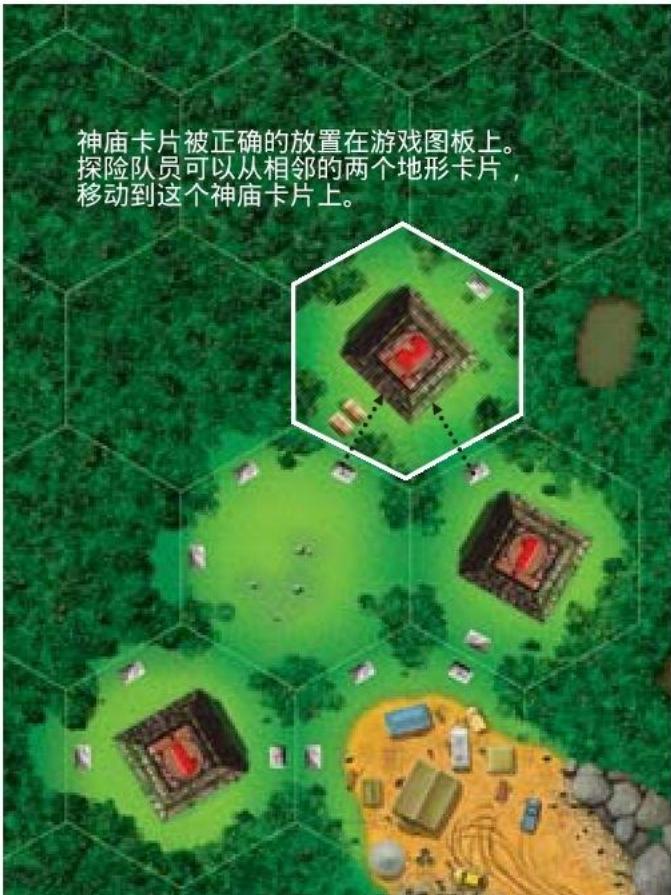
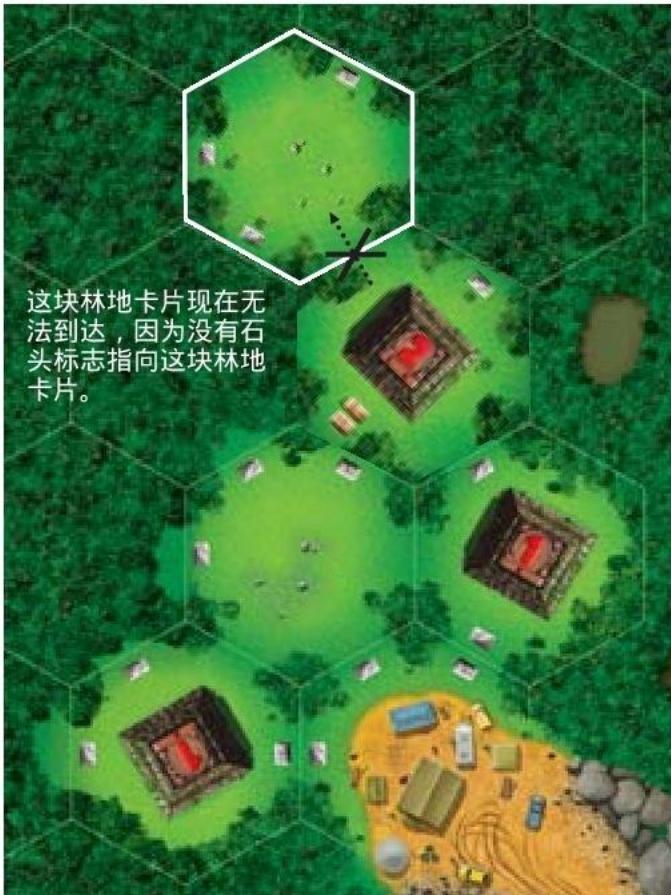
玩家摆放新的地形卡片时,必须与之前放置的地形卡片相连(包括起始的4块地形卡片)。
地形卡片一经放置,探险队员就可以移动到上面。前提是至少有1个石头标志与新放置的地形卡片相连。
相邻地形卡片的对应边上,只要有1个石头标志,探险队员就可在两块地形卡片间移动。注意,火山卡片不可以穿越,因此石头标志也不起作用。
游戏中有【4种】不同类型的地形卡片:

林地卡片:探险队可以在林地卡片上建立【营地】。营地之间、营地与大本营之间必须有连通的【隐秘路径】。

神庙卡片:虽然神庙卡片布满荆棘,却可探索很多的财富。如果玩家在神庙卡片上有1个或者多个探险队员,那么玩家可以探索神庙的一部分(层)。

宝藏卡片:当放置一块宝藏卡片时,玩家需要同时在卡片上放置【财宝】。放置财宝的数量通过宝藏卡片中间黄金面具的数量表示。如果玩家宝藏卡片上拥
有探险队队员,那么这些财宝可以被发掘获得。当宝藏卡片上的财宝都被玩家发掘干净后,这个卡片可以被视为林地卡片,玩家可以在这张卡片上建立营地。

火山卡片:当一张火山卡片被抽取时,所有玩家要立即开始计分阶段。当计分阶段结束后,抽取火山卡片的玩家继续当前回合的行动,放置火山卡片并使用
10个行动点数探索。但是,探险队不能进入或穿越火山卡片,即使有石头标志的指引。
便用10个行动点数执行行动探索蒂卡尔(Tikal),玩家抽取并放置地形卡片之后,可以使用10个行动点数(AP)探索蒂卡尔。当然,玩家可以不全部用光这10个行动点数,但是剩下的行动点数不会保留到之后的回合。行动点数可以全部执行一种行动,或者执行多种行动。行动种类如下:
符号图示
行动

放置1个探险队员到大本营卡片或营地卡片上,或者在营地卡片之间移动1个探险队员。
耗费AP


移动1个探险队员,通过1个石头标 志,到另外一个地形卡片上。

特别注释
玩家不可以通过这个行动,把自己的探险队员放到其他玩家的营地卡片上。
探险队在两个地形卡片之间的移动必须在这个回合里完成。但是,假如两块地形卡片上有3个石头标志,探险队成员不能先通过2个石头标志,之后的再经过下1个石头标志。

探索1层神庙

挖掘1个财宝

在一个回合里,玩家可以在每个神庙上最多探索2层。并且,每探索一层神庙,都必须使用1个探险队员(不可重复使用)。



交换1个财宝

在一个回合里,玩家可以在每个宝藏卡片上最多挖掘2个财宝。并且,每挖掘一个财宝,都必须使用1个探险队员(不可重复使用)。

交换不可以被拒绝。成组的财宝(2个一组,3个一组的财宝)不可被分开。
建立1个营地

只可以建立在林地卡片或已经空的宝藏地形卡片上。

放置1个探险队员到神庙卡片上,守卫这座神庙

在放置1个守卫时,玩家必须在该神庙卡片上拥有人数优势。每个玩家在游中只可以放置2个守卫。
探险队员
每个玩家的探险队成员包括:1名探险队长和18名探险队工人。所有探险队成员的放置和移动都耗费相同的行动点数(AP)。同样的挖掘财宝和探索神庙也耗费相同的行动点数。然而,当统计哪个玩家在同一块地形卡片上占有优势时,1名探险队长可以当作3名探险队工人计算。
B→n 放量1名探险队员在两块地营地之间移动探险队员
·玩家从自己手里,拿取1个探险队员放置到游戏图板的大本营卡片,或者自己建立的营地卡片上,需要耗费1个行动点数(队长和工人相同)。
·每个玩家每轮最多可以放置10个探险队成员进入游戏营地。
·玩家也可以控制探险队成员在大本营和自己的1个营地之间移动,或者是自己的2个营地之间进行移动,每次耗费1个行动点数。前提是,探险队员移动必须凭借已经被发现的隐秘路线进行,并且是已经建立的营地。并且,在这个营地间的直接移动中,【不能使用】其他玩家营地卡片上的隐秘路径。

B→ 移动探险队成员
·玩家控制探险队成员在地形卡片之间移动时,每个探险队员经过的每1个石头标志,都要耗费1个行动点数(队长和工人相同)。每个探险队员耗费的行动点数必须在一个回合内付清,如果剩下的行动点数不足消耗的行动点数,那么这次移动不能在本回合内执行。例如,如果路线上有3块石头标志,那么移动1个探险队员要耗费3个行动点数。在一个回合里,玩家可以多次移动探险队员,但消耗的行动点数不能超过10。
在地形卡片上放置人物标志时,请不要把他们放在卡片的石头标志、财宝标志或者是神庙上。

举例:从2号神庙卡片移动到林地卡片需要消耗3个AP。从2号神庙卡片不允许直接移动到宝藏卡片。可以途经林地卡片,抵达宝藏卡片,但是需要耗费3个AP。从2号神庙卡片移动到1号神庙卡片需要消耗1个AP。

探索神庙
在计算分数时,神庙的分数等于神庙卡片上面的数字。神庙的基本分数为1-6,但是受到某些效果的影响,分数可以增加一点。为了增加神庙的分数,玩家可以通过使用探险队成员探索神庙来进行。具体方法是,在这个神庙卡片上玩家必须至少拥有1名探险队员(队长和工人均可),探索每层神庙要耗费2个行动点数。玩家探索每层神庙都要占用1名探险队员,并且每个神庙一个回合里只能探索2层。每当神庙被探索后,玩家要从游戏图板外的神庙卡片中,拿取比当前神庙卡片数字大1的神庙卡片,放到当前这个神庙卡片上。

如果没有适合数字的神庙卡片可以被摆放,那么这个神庙就不能再被探索了。神庙卡片必须按照数字的顺序被依次使用,即使1回合中被探索了2层。玩家在1个回合中,可以探索多个神庙,但是消耗的行动点数不可以超过10。

挖掘財宝
当挖掘财宝时,玩家必须在对应的宝藏卡片上拥有至少1名探险队员(队长和工人均可),获得1个财宝需要耗费3个行动点数。挖掘每个财宝必须占用1个探险队员,在一个回合里,每块宝藏卡片上玩家最多可以挖掘2个财宝。挖掘财宝后,玩家可以拿取最上面的财宝,面向上放到自己面前。在一个回合里,玩家可以在多个地形卡片上挖掘财宝,但是消耗的行动点数不可以超过10。
财宝的分数
游戏中有8种不同的财宝,每种财宝有3种得分方式。在计分阶段,财宝的计分参考如下:
单独1个财宝: 2 个一组的财宝: 136 分分分3个一组的财宝:
百咖百商百图M商S图窗网

交换財宝
玩家可以耗费3个行动点数,把自己的1个单独的财宝,与其他玩家手中的1个单独的财宝进行交换。玩家可以选择和哪个玩家进行交换,并且可以选择要得到哪个财宝。被选择的玩家不可以拒绝这个交易。然而,2个一组和3个一组的财宝不可以被分开。
建立营地
玩家可以消耗5个行动点数,在任何一个林地卡片或者是已经空的宝藏卡片上建立一个自己的营地。
建立营地时,玩家不必在选择的地形卡片上拥有探险队员,但可以有自己或者其他玩家的探险队员存在。
假如,从大本营到新建立营地之间的隐秘路线可以连通。那么这个玩家可以耗费1个行动点数,从给养区拿取1个探险队员,放到这个营地卡片中。
一块地形卡片上只能建立1个营地,
玩家的探险队员可以在其他玩家的营地卡片上停留,或是穿越。
注意,一个玩家在游戏中最多只能建立2个营地。


在神庙上,放量一个守卫
在同一个神庙卡片中,如果一个玩家拥有最多的探险队员,那么这个玩家可以耗费5个行动点数,
在这个神庙卡片上放置1个守卫。这样
做,可以使自己在之后的所有计分阶
段里,一直获得这个神庙卡片的分
数。在计算探险队员数量时,
1个队长当作3个工人计算人数。
在玩家放置了1个守卫后,要把在这块神庙卡片上自己的其他所有探险队员放回盒子里。这些探险队员标志不能再拿回给养区,以后的游戏不可以继续被使用。

这块卡片上其他玩家的探险队员可以继续
保留在卡片上,根据其他玩家的意图,或是继续呆在卡片上,或移动走。放在地形卡片上的守卫要一直保留在这个卡片上,不能被移动或者重新放置。
还在游戏中的所有玩家的探险队员,可以和之前一样途经这块地形卡片。这个神庙卡片不能继续被探索;神庙的分值要一直保持到游戏结束。在游戏中,一个玩家最多可以放置2个守卫。
一个轮次计分

当火山卡片被抽出时,游戏立即进入一个计分阶段。计分阶段行动参照如下顺序:
·抽出火山卡片的玩家先把火山卡片放在一旁,然后可以耗费10个行动点数执行行动。
·之后,根据自己当前的局面,计算得分。
玩家计算得分时,分成2个部分:神庙和财宝

神庙卡片上面的数字为神庙的分数。
·在神庙卡片上放置守卫的玩家,可以获得这个神庙的分数;
·或者在神庙卡片上拥有最多探险队员的玩家,可以获得这个神庙的分数。
·如果出现平局,那么没有玩家可以获得分数。

财宝得分计算参见第8页。
最后,玩家根据自己获得的神庙和财宝分数,移动自己在记分区的玩家标志。
当抽取火山卡片的玩家计算完分数后,按照顺时针方向,一下个玩家使用10个行动点数执行行动,然后计算自己的分数。
当所有的玩家,计算完自己的分数后,抽取火山卡片的玩家,按照规则把火山卡片放到游戏图板中(不能再抽取其他的地形卡片)。然后再耗费10个行动点数执行行动。
当下一个火山卡片被抽出时,开始新一轮的计分阶段。
最终计分与游戏结束
当最后一块地形卡片被放置,玩家执行完行动之后(最多耗费10个行动点数),开始最终计分阶段。与之前的3个计分阶段相同,每个玩家都可以先耗费10个行动点数执行行动,然后计算自己当前局面的分数。当所有玩家都计算完分数后,游戏结束。
获得最多分数的玩家赢得游戏的胜利!
游戏图板上有100分,如果玩家获得的分数超过100,那么计分标志可以在记分区上重复使用。单独记下之前获得的分数。

计分阶段举例:
抽取火山卡片的玩家,把卡片先放到一旁。然后这个玩家可以
使用10个行动点数执行行动。执行完行动之后,开始结算当前的分数。这个玩家有足够的探险队员,在以下的神庙卡片上占有优势:1个“3”,2个“5”和1个“8″分的神庙。这个玩家由此可获得21分。接下来,这个玩家有一组2个的财宝和2个单独的财宝,因此可以获得8分。之后,左手的下一个玩家开始计分阶段。当所有的玩家计算完分数后,抽取火山卡片的玩家放置卡片,然后使用10个行动点数执行行动。
拍卖版本规则
如果玩家想让游戏更富有策略性,可以使用这个【拍卖版本规则】。游戏中多数规则都和基本规则一致,只是抽取地形卡片的方式,替换为拍卖地形卡片的方式进行。每轮游戏将要进行同玩家数量的回合。
游戏准备
把玩家的计分标志放在记分区上20分的位置。这20分将作为玩家在首轮游戏中参与竞价拍卖的资本。玩家拿取自己颜色的回合指示标志,面向上放在自己旁边。
进行游戏

展示拍卖的地形卡片
按照玩家的多少,抽取相应数目的地形卡片,并面向上摆放展示给所有玩家。
B+Q1...0-
拍卖“起始权”
现在,玩家们要竞标【起始权】。从年纪最大的玩家开始竞价,按照顺时针方向依次出价,玩家可以选择Pass。当前玩家的出价必须高于上一个玩家的出价。一旦玩家选择Pass,那么这个玩家就不能再次参与此次竞价。当有玩家胜出时,拍卖结束。赢得竞价的玩家获得本轮游戏的【起始权】。
“第三回合”的行动权拍卖也是如此。注意,如果没有玩家参与竞价,都选择Pass,那么拍卖的起始玩家可以无偿获得这一个回合的行动权。
“本轮游戏的最后一个回合”
0
“起始回合”
最后一个回合行动权不用拍卖,还没执行行动的玩家可以【无偿获得】最后一个回合行动的权利。把最后一张翻开的地形卡片放到游戏图板中,并可使用10个行动点数执行行动。当最后一个玩家执行完行动后,所有的玩家都把回合指示标志翻到正面,开始新一轮次游戏。
竞标“第二回合”和“第三回合”的行动权
首先,赢得竞拍的玩家,把记分区上自己的【计分标志】往回移动竞拍价格相应的位置。然后,这个玩家可以【选择】一块地形卡片放到游戏图板中,并且可以使用10个行动点数执行行动。当这个玩家完成自己回合的行动之后,把自己的回合指示标志翻到背面,表示自己在这一轮中已经结束了自己回合的行动。
“起始回合”玩家结束之后,左手边的玩家成为起始玩家,并开始竞标“第二回合”的行动权。只有回合指示标志正面向上的玩家有权参与之后的拍卖。和上一回合竞价一样,最高出价的玩家获得胜利,要把自己的计分标志往回移动相应的位置,然后选择并放置一块地形卡片,之后也可使用10个行动点数执行行动。
“新一轮次的游戏”
再次按照玩家的数量抽取地形卡片,并面向上放在游戏区域中间展示给所有玩家。和上一轮一样开始拍卖。上一轮中最后执行行动玩家的左手玩家,成为拍卖的起始玩家。按照这个规则继续游戏,直到所有的地形卡片都被使用完,最后一个玩家执行完自己回合的行动后结束。
Example of the turn sequence with 4 players (A, B, C, D)
To begin the game the first 4 terrain hexagons are drawn and displayed. Bidding begins with the oldest player and continues in clockwise order. B bids the highest with 5 and takes the first turn. B moves his scoring marker backwards 5 spaces, selects a terrain hexagon, places it on the board, uses 10 AP and tums his turn indicator up-side-down. C now begins the bidding for the second turn (being the first player clockwise from B). Only A, C and D may bid; B may not bid again this round. A has the highest bid at 4. A pays 4 points, selects a terrain hexagon, places it on the board, uses 10 actions points, and turns his turn indicator up-side-down. The
+6+0
计分
同基本规则游戏时一样,当玩家得到一个火山卡片时,立即开始计分阶段。火山卡片要先放到一旁,先开始计算分数。在开始计算分数前,拿取火山卡片的玩家可以使用10个行动点数执行行动。再计算当前分数。拿取火山卡片玩家计算完分数后,顺时针方向的下一个玩家可以先使用10个行动点数执行行动,然后再计算分数。其他玩家依此类推。计分过程中【不翻转】回合指示标志。当所有玩家计分结束之后,拿取火山卡片的玩家开始放置火山卡片,然后可以使用10个行动点数执行行动。最后,这个玩家把回合指示标志翻到背面。
bidding for the third turn begins with C. C and D are the only possible bidders as A and B have taken their turns. Both C and D choose to pass. Since C was the first to pass, he takes his turn, paying nothing, selecting and playing a terrain hexagon, using 10 action points to explore Tikal and turning his turn indicator up-side-down. Finally, there is just one hexagon left and one player who has not taken a turn. D pays nothing, places the last hexagon on the board, and uses 10 action points to explore Tikal. A, B and C turn their turn indicators face up to prepare for the next round of turns. 4 terrain hexagons are drawn and displayed and A (the clockwise neighbor of D) begins the bidding for the new hexagons.
最终计分与游戏结束
当最后一块地形卡片被使用,最后一个玩家的回合结束之后,开始进入最终计分阶段。注意,拍卖规则中的最终计分顺序与基本规则不同。最终计分顺序,将依据玩家的当前得分多少进行。当前得分最少的玩家最先开始计分阶段,这个玩家可以先使用10个行动点数执行行动,然后计算当前局面的最终分数。之后是之前得分第二少的玩家。如此反复。如果得分出现平局,在顺时针方向,最靠近放置最后一张地形卡片玩家的人先计算分数。
当所有的玩家完成最终计分阶段后,游戏结束。赢得最多分数的玩家获得游戏的胜利。
© 2005 Rio Grande Games All Rights Reserved

RIO GRANDE GAMES
下载 MarkdownTikal - rules SM-Eng print 1.03.md29.6 KB
GAME QUERVIEW AND PLAYER MOVEMENT
Turns take place in clockwise order.
The oldest player goes first.
During their turn, each player performs the following actions:
The player draws a Terrain tile from the top stack, and places the tile face up on the board, ensuring the placement follows the rules outlined in the Terrain Rules section (right).
2 The player uses up to 10 Action Points (AP) to explore the areas of Tikal that have yet been discovered. Action Points allow players to move, uncover Temples, build Forward Camps for faster travel, and recover the ancient Treasures of Tikal.
PLACING A TERRAIN TILE
Each Terrain tile has 1, 2, or 3 stone markers, representing how difficult the path is when crossing into a new area. The more stone markers, the more Action Points are required to cross into the next area. When placing Terrain tiles, be sure that the following occurs:
• Any new Terrain tiles must be placed adjacent to existing Terrain tiles, or adjacent to the Base Camp.
• Each Terrain tile placed must create at least one path to at least one adjacent tile.
Paths may consist of anywhere between 1 and 6 stone markers (ex. 3 stone markers on each tile).
Exception: As Volcanos are impassable, they can be placed next to any Terrain tile, regardless of the location of stone markers on an adjacent tile.
USING ACTION POINTS
After placing a Terrain tile, a player receives 10 Action Points (AP) which they may use to explore Tikal. These points are used to perform specific actions, and any unused points at the end of the turn are lost.
Actions can be performed multiple times, up to 10 AP, and in any order the player wishes.
Refer to the player aid, or the chart to the right, for Action Point cost.
TERRAIN RULES

Each Terrain tile is placed on the board so that expeditions may reach it.

In this example, the Temple 4 tile is played. It creates a path to Temple 3, but not to the Clear


Here, Temple 3 creates a path to the Clearing, but not to Temple 4.

create a path to Temple 5, or the Ruins.
ACTION
TERRAIN TYPES There are four terrain types:
Temples : Temple tiles have an initial value when placed. Additional levels of the temple may be added by moving an explorer to the temple, and choosing the “Uncover a temple level”

action. This increases the value of the temple.
Clearings : Clearings are ideal locations for Forward Camps. A Forward Camp allows for immediate travel between Base Camp and any other Forward camps of the same color. They are created by choosing the

“Establish a Forward Camp" action, and is usable only by the player who placed it.
Ruins : When a player places a Ruins tile, they immediately place a number of Treasure tokens face-down on the Ruin equal to the number of masks shown on the Ruin. Treasures can be claimed by choosing the “Excavate a Treasure action with the following rules: - only 2 Treasures can be recovered per turn
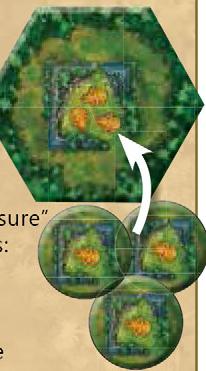
- the player must have one
expedition member on the tile
per treasure recovered.
Ruins become Clearings when all Treasures are recovered, allowing for camp placement.
Volcanos : When a Volcano tile is drawn, the tile is set aside temporarily and play immediately enters a scoring round. Scoring rounds follow these rules: - going clockwise, each player uses 10 Action Points as in a normal turn, then scores the temples they own, the treasures they own, and moves their score marker accordingly. Once all players score, play resumes normally, with the player placing the Volcano tile, then using their 10 Action Points to explore Tikal. There are three Volcano tiles in located in B. D, and F tilesets.

COST OF ACTION
| Bring a new Explorer into play | -1AP | 1 AP |
| Move from one Camp to another | ▲▲=1AP | 1 AP |
| Move to an adjacent Terrain tile | -1AP/ | 1-6 AP |
| Uncover a Temple level | -2AP | 2 AP |
| Excavate a Treasure | X-3AP | 3 AP |
| Exchange a Treasure | -3AP | 3 AP |
| Establish a Forward Camp | -5AP | 5 AP |
| ■ Place a Temple Guard | =5AP | 5 AP |


BRING A NEW EXPLORER INTO PLAY
Explorers are used to discover new Terrain tiles, to uncover Temple pieces, and to excavate buried treasure from Ruin tiles.
Placing an explorer or your Expedition Leader costs 1 AP. Take the Explorer from your supply and place it on the Base Camp or any of your Forward Camps.

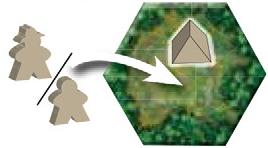
You may place as many Explorers as you want per turn. You are only limited by your Action Points and your available supply.
Your Expedition Leader is also an Explorer. Whenever the rules refer to an Explorer, include Explorers and/or the Expedition Leader.

MOVE FROM ONE CAMP TO ANOTHER
Your Explorers use secret trails known only to members for your expedition. Moving one of your Explorers from Base Camp to a Forward Camp, or from one Forward Camp to another, costs 1 AP.

MOVE TO AN ADJACENT TERRAIN TILE
Your Explorers move using stone markers, which represent trails of varying difficulty. Moving an Explorer to a new Terrain tile costs 1AP per stone marker connecting the two tiles. Any movement between two Terrain tiles must be completed in a single turn.

You may not move onto, or through, a Volcano tile.

Stone markers are used to indicate trails, and also how difficult the trail is. The number of stone markers represent how many Action Points (AP) are needed to move between two Terrain tiles.
If there are no stone markers where two Terrain tiles meet, then no trail exists and you cannot move to the adjacent tile.
Volcanos are dangerous areas of the jungle. You may not move on to, or through, a Volcano tile.
Rival camps and Explorers do not block your movement.
When placing an Explorer, make sure that all information on a Terrain tile remains visible. Do not place Explorers over stone markers, Temple pieces, or Ruins.

UNCOUERING TEMPLES
Expeditions score points for the temples they control during each scoring round. Temples can be uncovered during gameplay to increase their point value. Uncovering a Temple costs 2 AP per level.
You may uncover up to 2 levels per turn on the same Temple, but you must use two Explorers to do so, with each Explorer spending 2 AP to uncover. (4 AP total)

When a player excavates a new level of a Temple, take one of the available floors from the supply whose value is one higher than shown on the Temple. If two levels of the same Temple are uncovered, then the player takes the next two higher value tiles and adds them to the Temple.
You may not uncover more than two levels of a single Temple during your turn, but you may excavate multiple Temples in the same turn.


In the above example, the Explorer may move to the adjacent Temple for 3 AP, since there are 3 stone markers making up the trail.日
The Explorer would benefit from taking the alternate route, as it would only cost 2 AP, since each trail is made up of one stone marker each.
The Explorer is unable to move to two of the adjacent tiles, since one is a Volcano, and the other
shows no stone markers.
As players uncover Temples, they build them upwards, and increase their point value.
If the next Temple floor is not available in the supply, then the Temple can no longer be uncovered further, and its point value does not increase.

EXCAVATING FOR TREASURE
Treasures score points in each scoring round. Excavating a treasure with an Explorer costs 3 AP.
The player takes the top most Treasure token from the stack and places it face-up in front of them. You can excavate up to two Treasures per turn, but must use two Explorers to do so, with each spending 3AP.


You may not excavate more than two treasures from a single Ruin during your turn, but you may excavate multiple Ruins in the same turn.
When there are no more treasure tokens on a Ruin, it becomes a Clearing.

EXCHANGE A TREASURE
You may exchange a Treasure with another player for 3 AP.
The Treasure must not be part of a set. If any player has two or more Treasures of the same type, they cannot be exchanged.
The other players may not refuse the exchange.
Treasures collected by players are placed in front of them, visible to all other players.

ESTABLISH A FORUARD CAMP
Establishing a Forward camp helps you explore Tikal faster. Establishing a Forward Camp with an Explorer costs 5 AP.
An Explorer must be on the Terrain tile where the Forward Camp will be placed. Only one Forward Camp may be placed on a Terrain tile.
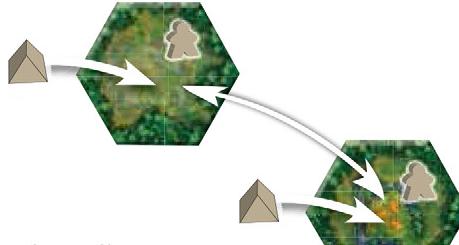
When all Treasures are
recovered from a Ruin,
it becomes a Clearing, on which
Forward Camps can be placed.
Once placed, you may travel between any camp of the same color, or the Base Camp for 1 AP per Explorer.
All Explorers may enter, cross, or
remain on tiles that contain another player's camp.

PLACING A TEMPLE GUARD
By placing a Temple Guard, you are guaranteed to score that Temple during subsequent scoring rounds. Placing a Temple Guard costs 5 AP. To place a Guard:
• you must have more Explorers on the Temple tile than any other player. • you must not already have two Temple Guards in play.
When determining who controls the Temple, you may use your Expedition Leader to count as three (3) normal Explorers, but only when determining the control of a Temple.
If you win control of the Temple, take one Explorer from the tile and place it on the Temple as the Guard. This is a permanent action; the Guard can no longer be used as an Explorer. Remove all of your other Explorers from the tile, and return them to the box; they are removed from play. Explorers belonging to other players are not removed from the tile and are still in play.

When a Temple is guarded, it can no longer be uncovered for more points, and its Guard cannot be moved.

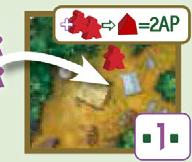
Example of first round of play. Henry (red player) draws a Ruins tile. He places the tile, then draws and places 4 Treasure tokens on top. He then uses his 10 AP as follows:

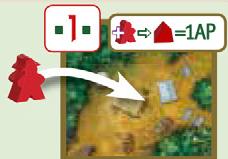

For 1 AP, Henry places his Expedition Leader at Base Camp. He then moves to the Ruin tile. This costs him 2 AP to navigate the trail, which consists of 2 stone markers total. He has 7 AP left.
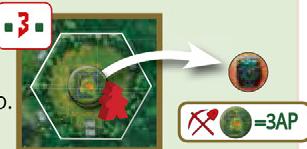
3 He uses 3 AP to pick up one Treasure token. This leaves him with 4 AP left to spend.
4 Since Henry cannot excavate any more treasure, he spends 2 AP and places two new Explorers at the Base Camp.

5 He then moves one of the new Explorers to the nearest Temple, which costs him 2 AP, since there are two stone markers designating the trail.
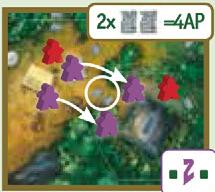
Marion (purple player) is next, and she draws and places a Clearing tile. She then plays her 10 AP.

1 Marion uses 2 AP to place two new Explorers at Base Camp. Marion then moves both Explorers to the nearby Temple. Since the trail requires 2 AP to move through, she spends 4 AP moving the two Explorers, leaving her 4 AP left.

3 Marion decides to uncover

one of the Temples. Because she has two Explorers on the tile, she can uncover two levels. This costs her 4 AP in total (2 x 2AP), and she places two new levels on the Temple.


SCORÍNG PRESTIGE POÍNTS
Scoring rounds trigger when a player draws a Volcano, and also at the very end of the game.
WHEN A VOLCANO TILE IS DRAWN
When a player draws a Volcano tile, normal play stops, and the Volcano is set aside temporarily.
Starting with the player who drew the Volcano, the players will each in turn:
• Use up to 10 Action Points (AP)
• Score their Prestige points on the scoring track.
Once all players finish, the player who drew the Volcano places it, then continues his original turn by using 10 AP.
SCORING AT THE END OF THE GAME
When the last Terrain tile is played, the end of game scoring begins. Each of the players (starting with the player to the left of the person who played the last tile) will do the following:
Use up to 10 Action Points (AP)
Score their Prestige points on the scoring track.
The winner is the player who has accumulated the most Prestige points overall in the game.
In case of a tie, the player who has a guard on the highest value Temple wins.
If still a tie, the player with the most treasure chips wins.
If still tied after that, both tied players share victory.
CALCULATING PRESTIGE POÍNTS
After using their 10 AP, each player calculates their points: For Temples: If a player has a Guard, or a majority of Explorers on a Temple tile (remember, the Expedition Leader is worth 3 Explorers when determining control), they score the value of the Temple.
As each player has 10 AP to use before scoring, it is possible for the majority to change on a Temple, and for that Temple to be scored on multiple people during that scoring round.
For Treasures:
1 treasure token scores 1 Prestige point.
2 identical treasure tokens scores 3 Prestige points.
3 identical treasure tokens scores 6 Prestige points.


CREDITS
Auteurs : Wolfgang Kramer et Michael Kiesling Team Super Meeple : Sébastien de Poortere, Charles Amir Perret, Bernard Philippon, Alexandre Pierru et Arnaud Pierru
Illustration de couverture : Paul Mafayon
Illustration de plateau et jeton : Christophe Swal
Rédaction et révision des règles : Guillaume Gille-Naves et Bernard Philippon

Direction Artistique : Igor Polouchine
Développement et maquette : ORIGAMES
English rules translation:
BGG/Scottishzombie,
QUICk RULES
BGG/Norse_code
The oldest player begins:
• Draws one Terrain tile and plays it.
• Uses up to 10 AP to play specific actions in any order
Any unused Action Points at the end of the round are lost. Players are not obliged to use Action Points; they may choose not to use them.
The chart below summarizes each action you can take, and the cost in AP to play that action.
| Cost ACTIONS of Action | |
| Bring a new Explorer into play | 含 1 AP |
| Move from one Camp to another | 1 AP |
| Move to an adjacent Terrain tile | 1-6 AP |
| Uncover a Temple level | 2 AP |
| Excavate a Treasure | 3 AP |
| Exchange a Treasure | 3 AP |
| Establish a Forward Camp. | XA 5 AP |
| Place a Temple Guard. | 5 AP |
After the player's turn is finished, play moves clockwise. Each time a player draws a Volcano, begin a scoring round. When no more Terrain tiles can be drawn, gameplay ends, and one final scoring round is done before congratulating the most prestigious archaeologist at Tikal!
Merci à tous les testeurs, à tous ceux et celles qui nous ont aidés dans ce projet, à nos familles et nos amis pour leur soutien. Un merci particulier à Igor et Guillaume de Origames pour leur aide précieuse.
Tikal est un jeu édité par

SUPERMEEPLE - 6, rue de la grange aux belles - 75010 Paris
©2015 SUPERMEEPLE. SUPERMEEPLE et son logo sont des marques déposées de Super Meeple.
Fabriqué en Chine par Whatz Games.
Suivez-nous sur


ADUANCED RULES

If you want to play a more tactical version of the game, which leaves less room for chance, you may wish to use the following Auction variant, where the starting Terrain tiles are bid on by players, and then placed out on the board. Except when noted below, the basic rules remain the same.
SETTING UP THE AUCTION VARIANT
Each player starts with 20 Prestige points, and places their scoring marker at 20
on the scoring track.
Each player also recieves the Totem token of their color, and places it face-up in
front of them.
AUCTION VARIANT QUERVIEW
1 Draw Terrain tiles equal to the number of players. Place them face up in front of all players to see.
-
All players bid Prestige points to win the bid. The player who wins takes their turn as Player 1, and no longer bids this turn.
-
The auction to determine Player 2 starts. The remaining players bid Prestige points to win the bid as Player 2. The winner takes their turn.
The auction to determine Player 3 starts. The remaining two players bid Prestige points to win the bid. The player who wins takes their turn.
S. The final player takes their turn, without spending any Prestige points. The next bidding round begins.
Draw Terrain tiles equal to the number of players, and place face up.

During this phase, players bid their Prestige points to be the first player in turn order.
The oldest player makes the initial offer. Proceeding clockwise, each player places a higher bid, or chooses to pass. Once a player passes, they can no longer make an offer during this bidding phase.
Bidding then passes back to the first player, until all but one player passes.
The player who wins the auction moves their scoring marker back the number of points they bid, then chooses the Terrain tile of their choice, and places it on the board. After the tile is placed, they then complete their turn by spending their 10 AP performing various actions.
Finally, the player turns over their Totem token to indicate that they cannot participate in any future auctions during this round.

3-4, ZND AND 3RD AUCTIONS
The player sitting to the left of the winner of the previous auction places their bid. Only players who have not turned over their Totem tokens are allowed to bid. Players bid until all but one player passes.
The player who wins the auction then moves their scoring marker, places their tile, and proceeds to play their 10 AP. Once finished, they turn over their Totem. Then the next auction is started.
If no player chooses to bid, the player who passed first chooses a tile and completes their turn. Proceeding clockwise, other players choose a tile and complete their turn.
S. FINAL PLAYER
The final player may place the last Terrain tile free of charge, since they did not win any bids. They then play their 10 AP.
After the last player completes their turn, all players turn their Totem token face-up and a new round of bidding begins.
NEW TURN
Draw a new set of tiles equal to the number of players.
The person to the left of the player who started the last auction will open the bidding this round. Continue through the steps of each auction, until the final player completes their turn.
AUCTIONS AND VOLCANOS
While playing with the Auction variant, a Volcano tile may be available to play. As in the normal rules, the scoring round begins as soon as a Volcano is drawn by a player.
The player sets aside the Volcano tile, then uses 10 AP to position his Explorers on the board. The player then scores Prestige points based off the Temples they control, and any treasures in their possession.
The player to the left then uses 10 AP, and scores their turn. This continues until all players have scored.
Finally, the first player who drew the Volcano places it, then plays their 10 AP, completing their turn.

END OF GAME AND FINAL SCORING
When the last Terrain tile has been placed, and the player has completed their turn, a final scoring round starts.
Unlike the normal rules, the final scoring order is determined by ascending order of Prestige points. The player with the least Prestige points takes their turn, followed by the next highest, and so on.
In case of players who are tied, the player who is sitting closest to the player who drew the last tile, clockwise, will play first.
Each player plays a final 10 AP, then scores their Prestige points.
After all player complete their turn, the game ends.
The winner is the player with the most Prestige points.
If tied, the player with a Guard on a Temple with the highest point value wins. If tied again, the player with the most Treasure tokens wins.
In the event that players are still tied, there are multiple winners.
Example of Auction variant with 4 players: Henry -> Marion -> Marcus -> Sallah
At the beginning of the game, four Terrain tiles are turned over. Marcus, being the oldest, starts the auction:
Marcus bids 1, Sallah bids 2, Henry passes (and therefore no longer bids), and Marion bids 3. Marcus then bids 4, Sallah bids 5, Marion passes. Marcus then passes. Sallah wins.
Sallah reduces his Prestige points by 5 (to 15). He then chooses a tile, places it, uses his 10 AP, then flips over his Totem token to indicate he will not be bidding in the next round.
Since Henry sits to Sallah's left, Henry begins the new bidding phase. Henry bids 1, Marion bids 3, Marcus passes, then Henry passes. Marion wins. She reduces her Prestige points by 3 (to 17), plays the tile of her choice, plays her 10 AP, then flips over her Totem.
Since Marion won the last bid, Marcus starts the next auction. Marcus bids 2, Henry bids 4, Marcus passes. Henry wins. Henry reduces his Prestige points to by 4 (to 16). He chooses a tile to play, uses his 10 AP and turns over his Totem token.
Finally, Marcus, having never won an auction, takes the remaining tile and places it for free. He does not reduce his Prestige points. Marcus then plays his 10 AP. After Marcus completes his turn, a new auction round starts.
All players turn their Totems face-up, four new Terrain tiles are displayed, and the next round of bidding begins, with Sallah starting the bidding, since he sits to the left of Marcus, who started the last auction.

HISTORY
Tikal is located in the midst of an impenetrable jungle in northern Guatemala and is by far the most important and largest of all the Mayan sites. The Mayans lived in Tikal from 600BC to 900AD, but little is known of the civilization that thrived there for 1500 years. At present, only a small fraction of the site has been excavated and investigated by archaeologists. Several expeditions plan to explore the site further in an attempt to uncover its temples, and recover its priceless treasures which have been buried for over 1000 years. The importance of the site has made Tikal National Park a UNESCO World Heritage site since 1979.
GOALS
Each player is the director of an expedition intent on uncovering the lost Mayan temples of Tikal, which have remained hidden under a dense layer of jungle for the past 1000 years. As you explore the area, you will also discover ancient Ruins containing the priceless artifacts left by the Maya. A player receives points for each treasure in their possession, and for each temple under their control across four scoring rounds. Be wary however, as both temples and treasures can change hands during the course of your exploration. The expedition that earns the most prestige exploring Tikal wins the game!
PREPARATION
Place the game board1on the table
within easy reach of the players. The
game board represents the
unexplored jungle. As you explore
with your expedition, you will place
the hexagonal pieces on the board
revealing temples and treasure
locations. Scoring is kept by using
the scoring track which circles the
board. At the start of the game,
four areas have already been
uncovered: Base Camp
two temples
and a clearing
TIBAL
A GAME OF EXPLORATION, EXCAVATION AND AREA CONTROL
CONTENTS
1 Game board 1
36 hexagonal Terrain tiles
24 Treasure tokens3
48 Resin temple pieces
4 Player aids
1 Rulebook


Sort the hexagonal Terrain tiles
by the letters shown on their backs. With the letters facing up, shet a ach steckd them so that the A set is on top, and the others follow in_
alphabetical order,BthroughG.
Place this stack next to the game board.

Shuffle the round Treasure toker and place them face down, in 2 separate stacks, next to the game board.

Sort out the resin temple pieces4 by their numbers, and stack them next to the game board. The resin pieces consist of 3x tier 2, 6x tier 3, 9x tier 4, 11x tier 5, 8x tier 6, 5x tier 7, 3x tier 8, 2x tier 9, and 1x tier 10.

For each player color: 1 Expedition Leader 18 Explorers

2 Forward camps
1 Scoring marker
1 Totem token (Adv. rules)
Each player receives a player aid which provides a summary of the actions a player can perform each turn, and how many Action Points (AP) each action costs. The violet side is used for the basic game, while the yellow side is used for the auction variant (see Advanced Rules).

Each player also receives the following, in their choice of color: 1 Expedition Leader 18 Explorers


2 Forward Camps

1 Scoring marker

1 Totem token (used only when playing with Advanced rules).


原文为社区整理/出版社公开资料,版权归原作者,仅供个人学习查阅。