
Brass: Lancashire
At a glance
Rules, cards and Q&A (Chinese)
The rules, card data and player questions for this game are written in Chinese. Open the Chinese page to read them.
Where to find full rules
Full rules and card lookup are available in the cunlema app at cunlema.cn — pick this game and ask about any rule, card or turn you are unsure about.
Related games
Rulebook text (Markdown)
This game has 3 rulebook Markdown file(s) in our library; 3 rendered inline below — expand to read or download.
rules_zh_工业革命_兰开夏_1343.md42.2 KB
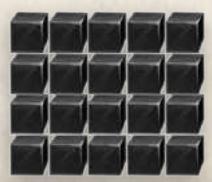
24×煤炭指示物


U 区 2-4 60-120 14+
關於工業革命
這款桌遊講述了1770-1870年英國工業革命時期,蘭開夏郡及其周邊地區企業家們相互競爭的故事。在遊戲中,你將透過建立運河和鐵軌,並開發建設棉花廠、煤礦、鐵工廠、造船廠以及港口在内的各項設施來壯大你的企業帝國。
數位教學影片
你想透過影像來學習此遊戲嗎?交給我們吧!打開你的網頁瀏覽器,輸入以下網址:roxley.com/brass-tutorial,透過影片教程來學習如何遊玩吧!
製作人員名單
Game Design: Martin Wallace
Game Development: Gavan Brown & Matt Tolman Illustration & Graphic Design: David Forest & Lina Cossette, Damien Mammoliti, Gavan Brown
Expert Player Advisor: Edward Chen
Rulebook Writing & Editing: Simon Rourke, Gavan Brown, Matt Tolman, Michael Van Biesbrouck, Orin Bishop, Ricky Patel, Daniel Danzer
Rulebook Feedback & Criticism: Adam Allett, Dan Le, Dave Thomas, David Goldfarb, David Werner, Gimo Barrera, Graeme Edgeler, Jeff Lee, Jered Biard, John Merlino, Jorgen Grondal, Mark Nichols, Mikolaj Sobocinski, Sam Lambert
Historical Advisor: Judith Bennett
Rulebook Lead Translators: Alexandre Limoges (French), Ketty Galleguillos (Spanish), Daniel Danzer (German), Andrea Mondani & Guido Marzucchi (Italian)
Rulebook Translation Feedback & Criticism: Raphaël Biolluz, Marielle Dessel, Andréa Trépanier, Marco Ghitti, Marco Paccagnella, Raffaele Mesiti, Nicolas De les Essarts, Christophe Fergeau, Xabier Pérez and Daniel Gómez
BRASS
LANCASHIRE
翻譯、校對:Koming Chen、Weiwei Lai排版、潤飾:Weiwei Lai
遊戲內容物


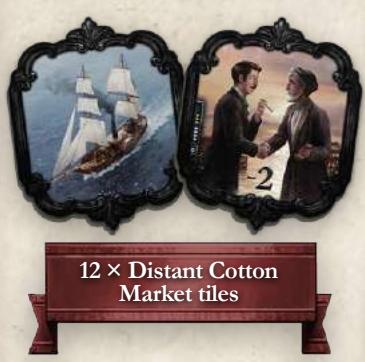
12×遠方的棉花市場板塊


4×玩家圖版

4×勝利點數指示物


Copyright 2018 Roxley Games. All Rights Reserved Worldwide.
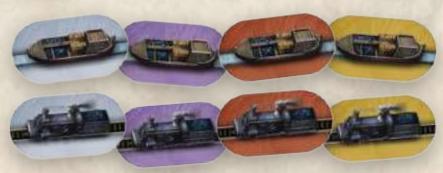
56×連結板塊(每個顏色14個)
4×收入指示物


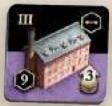
12個棉花廠
8個港口


此文件僅供翻譯學習參考,如有商業行為,後果自負


4×玩家幫助卡
16×銅鐵指示物


6個造船廠


7個煤礦
4個鐵工廠


148×工業板塊(每個顏色37個)

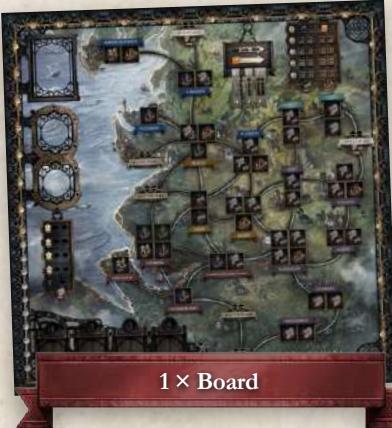
1×牌庫版塊
This rule book is a living document. Download the latest version from roxley.com/brass-lancashire-rulebook

圖版設置


將圖版顯示完整地圖那面朝上放置,以供所有玩家使用(2-4人)。
不要使用另一面,左上角標有且地點較少的那面。


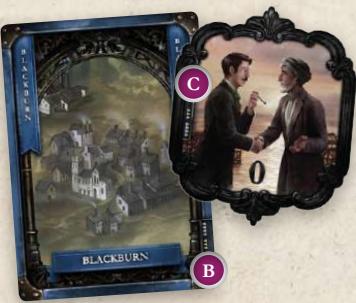
移除所有標示大於玩家數量的卡牌以及遠方的棉花市場板塊。
2人遊戲()、3人遊戲(2)以及4人遊戲()皆標示在卡牌正面的右下角,與板塊正面的左側,也確保移除掉標有 圖示的2張卡牌。


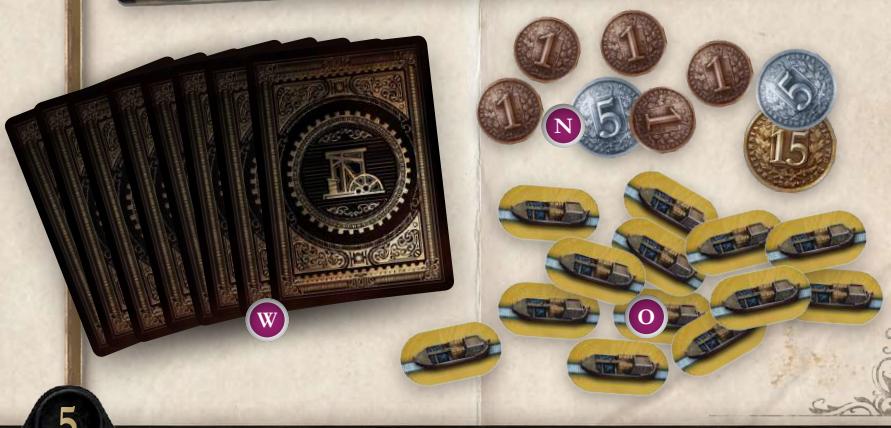
將留下來的卡牌洗混,並將其面朝下放在抽牌區,視為抽牌庫。


將牌庫版塊的“史提芬森火箭號”那側面朝上,插入到抽牌庫中。而插入的位置為,從底部往上算,相等於玩家人數的張數(例:3人遊戲就插在底部算上來三張後的位置),這些卡牌在運河時期不會被使用。


將剩餘下來的遠方的棉花市場板塊洗混,並將其面朝下放在板塊抽取區。


將遠方的棉花市場指示物放置在遠方的棉花市場轨最高的位置。


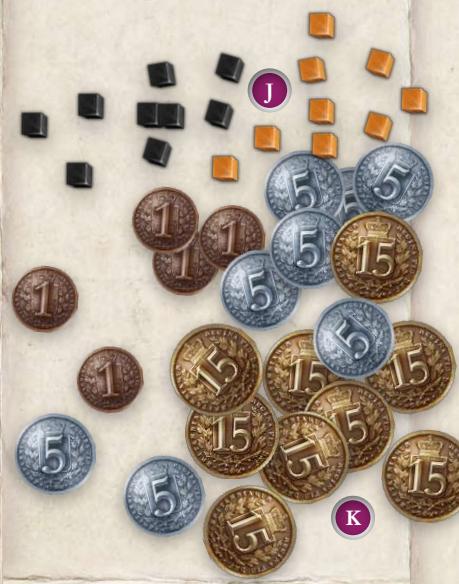
在每個煤炭市場的空格1 個黑色方塊。


放置
在每個鋼鐵市場的空格1個橘色方塊。

將剩餘的方塊放在圖版旁,當作一般供應區。


將錢幣指示物放在圖版旁,當作銀行K。

地點旗幟
為了幫助玩家找到圖版上的地點,這些地點的旗幟顏色都與抽牌庫中地點牌的顏色相對應,以下依玩家數量而定:

• 2 人遊戲:蓝色 與藍綠色的地點不會在抽牌庫中。

·3人遊戲:蓝綠色的地點不會在抽牌庫中。
· 4 人遊戲:所有的地點牌都在抽牌庫中。


玩家區域設置


拿取一張玩家圖版。
從銀行


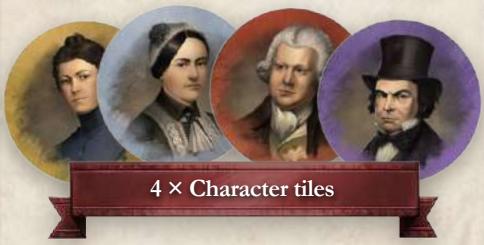
選擇一個角色板塊。
拿取£30。

在你的玩家區域放置你角色相對應顏色的連結板塊。
將你角色相對應顏色的所有工業板塊堆疊在玩家圖版中對應的空格(由棉花廠、港口、造船廠R、鐵工廠以及煤礦所組成),所有板塊上半部黑色那面朝下擺放。


將你的勝利點数(VP)指示物放在進程軌“0”的位置。


將你的收入指示物放在進程軌“10”的位置。


從抽牌庫抽取8張牌到你手上,不要讓其他玩家看到這些牌

為你的玩家區域留一個空間來放置你棄掉的牌,視為棄牌堆。
在所有玩家都設置完自己的玩家區域後,將所有玩家的角色板塊洗混,然後隨機將其放在回合順序軌上。


PLAYINGTHE GAME
遊戲目標
本遊戲將會進行二個時代:運河時代(1770-1830)以及鐵路時代(1830-1870)。在鐵路時代結束

後,獲得最多勝利點數(VPs)的玩家就是勝利者。在每個時代結束時,計算運河/鐵路的連結板塊與翻面的工業板塊來獲得VPs。
遊戲輪數
每個時代都會進行數輪,一直持續到抽牌堆以及玩家手牌皆耗盡為止。在4/3/2人遊戲時,將會剛好進行8/9/10輪。在一輪進行時,玩家依照他們在回合順位軌上角色板塊的順序,依序進行各自的回合。

玩家回合
輪到你的回合時,總共可以執行2個行動。**例外:在運河時代的第一輪,每位玩家只能執行1個行動。**
每個你執行的行動都需要從手上棄一張牌至你的棄牌堆(面朝上)。
在你執行完所有行動後,從抽牌堆抽牌,將你的手牌補到8張。

將這回合你花費的金錢放置於你角色的回合順位格上。

當抽牌堆耗盡時,由於你不能再補充牌,所以每回合你的手牌數都會減少。

注意:在運河時代,區隔牌庫版塊下方的牌將不被視為抽排堆的一部分,且不能被使用。
行動種類
每次的行動,你可以從以下選擇其中一種來執行(你可以執行同一種行動二次):

建造-放置一個你的工業板塊到圖版上並支付相應的花費,以及消耗任何所需的煤炭/鐵。

運輸網-放置一個你的連結板塊到圖版上,來擴張你的運河或鐵路。


發展-從你的玩家圖板上移除工業板塊,來獲得建造更高等級板塊的權


出售-將你建造的棉花廠板塊翻面,代表銷售棉花到遠方的棉花市場,或將一個港口板塊翻面。

⑤貸款-從銀行拿£10/£20/
£30,然後將你的收入指示物向後退 1/2/3 個收入等級(不是進程軌的空格)。

跳過-你可以選擇跳過,來放棄執行行動,但每個你放棄的行動,仍須棄掉1張手牌。
花錢-任何時候以花錢的方式來執行1個行動時,你必須將花掉的錢全數放在你回合順位軌的角色板塊上,而不是放回銀行,這些錢將使你在下一輪時,能決定玩家回合順位。


一輪結束
每位玩家都執行各自的回合後,在進行下一輪之前,先依序執行下列步骤:
決定下一輪的回合順位這將重新安排在回合順位軌上的角色

·此輪花最少錢的玩家,在下輪成為起始玩家B,所以同樣地,花最多錢的玩家將會排在最後順位。

·若有複數玩家花了同樣數量的錢,那他們的相對順位將維持不變。


·然後,將所有玩家版塊上的錢全數繳回銀行,每位玩家花費的錢將重置,並從下一輪開始重新計算。


②拿取收入
從銀行拿取等同於你收入等級的錢。**例外:在遊戲的最後一輪,將不會拿取收入。**
·你的收入等級是在進程轨上你目前所在的收入市場旁標示的硬幣圖示,其上的數值即為你的收入等級。


·若你的收入等級為負值付等值的錢給銀行。

·若你付不起負值的收入,你必須從圖版上移除1個以上你的工業板塊(不能是連結板塊),每個被移除的板塊價值它花費一半,向下取整。你可以保留付清後剩餘的錢。

·若你沒有任何可以償還負債的方法,你每欠£1將失去1VP(如果可以)。

注意:你可以移除任何你的工業板塊,但當你已經擁有足夠的錢去支付負債時,就必須停止。除了支付負債外,你不能以任何其他原因來販售工業板塊。


END OF ERA MAINTENANCE
運河&鐵路時代的結束
每個時代在所有玩家的手牌全數用盡那輪結束,當這個情況發生時,依照下列步驟執行:

計算運河/鐵路連結的分數
每一個你的連結板塊,與有標示圖示板塊(右上角)的地點相鄰就獲得VP,有幾個圖示就獲得幾VP,將你進程軌上的VP 指示物向前移動後,從圖版上移除該連結板塊。

②翻面的工業板塊計分
在所有玩家都移除他們的連結板塊
後,計算你翻面的工業板塊(那些上半部為黑色的板塊)分數,標示於

該板塊的左下角,同樣將你進程

軌上的VP指示物向前移動。那些未翻面的板塊不會讓你獲得分數。

注意:若你獲得超過100VPs,在進程軌上重新開始新的一圈,然後累加上去。

運河時代的結束
當運河時代結束時,依序執行以下的額外步骤:

③移除廢棄的工業板塊
從圖版上移除所有等級1的工業板塊(不是從玩家圖版上移除),然後將它們放回遊戲

盒。所有等級2以上的工業板塊將會留在圖版上。

④重置遠方的棉花市場
將遠方的棉花市場指示物放置在遠方的棉花市場軌最上方的空格,將棄掉的遠方棉花市場板塊與板塊抽取區的結合起來,洗混後面朝下放在板塊抽取區。

⑤重洗抽牌堆
將牌庫板塊下的所有牌與所有玩家的棄牌堆結合起來,洗混後面朝下放在抽牌區域。
插入牌庫版塊
將牌庫版塊 Nathan Rothschild 那面朝上,插入抽牌堆底部數來,每位玩家2張牌的位置。(例如:3人遊戲時,插在6張牌前的位置)


鐵路時代的結束
當鐵路時代結束時,依序執行以下的額外步骤:
得分金幣-你的玩家區域內,每£10就獲得1VP,將你進程軌上的指示物向前移動。

遊戲獲勝
在鐵路時代計分結束後:
·擁有最多 VPs的玩家獲勝。
·若平手,先比較誰的收入等級高,若還是平手在比較誰剩餘的錢多。
·若仍然平手,那這些玩家以平局告終。


GAMEPLAYCONCEPTS

已翻面的工業板塊
每個時代結束時,計算已翻面的工業板塊的分數,上半面有黑色底色且左下角有VP分數的那一面。
不同工業板塊有不同的翻面方式
· 棉花廠與港口:當你執行一個出售行動時翻面。
·煤礦與鐵工廠:當板塊上的最後一個方塊被移除時翻面。通常會發生在對手的回合期間。
· 造船廠:當建造造船廠板塊時立刻翻面。


增加你的收入

每當你的工業板塊翻面時,按照板塊右下角所示的收入金額,立刻從黑色的進程軌移動你的收入指示物,移動的格數等同於金額數量。(不是收入等級的金色格數)


**你的收入等級不能超過30元**


你的運输網
如果下列敘述至少有一條符合,則該地點視為你運輸網的一部分:
·地點上有包含你一個或更多的工業板塊

·地點上有鄰接你一個或更多的連結板塊
已連接的地點

如果你可以從像地點到地點沿著路線,經由連結板塊(不論你自己或其他玩家的)連接著的話,此兩個地點被視為“已連接”。
消耗鋼鐵
執行一個發展行動且建造某些工業板塊都需要消耗鋼鐵。消耗鋼鐵時,工業板塊不需要連接一個鋼鐵資源。
鋼鐵必須從下列方式消耗:


任何未翻面的鐵工廠(不論你自己或其他玩家的);如果你需要一個或多個鋼鐵,你可以自由選擇從不同鐵工廠板塊上拿取,此種方式消耗鋼鐵是免費的。

如果圖版上沒有未翻面的鐵工廠你需要從鋼鐵市場購買,從最便宜的價格開始購買。如果鋼鐵市場已清空,你還是可以用每£5/的價格購買鋼鐵。

消耗鋼鐵方塊後,把它放回一般供應區。歷史註釋:這些工業設施一般來說鋼鐵體積通常不大,所以也可以利用馬車或手推車來運送。
煤炭必須從下列方式消耗:

最接近(最少連結板塊的距離)未翻面且以連接的煤礦板塊(不論你自己或其他玩家的),如果有多個煤礦距離一樣近,則任一選擇。如果一個煤礦資源已耗盡而你需要更多,則選擇你第二個最接近煤礦的板塊,此種方式消耗煤炭為免費。

如果你沒有連接到未翻面的煤礦板塊,你可以從煤炭市場上購買,從最便宜的開始購買。此方式需要一個連結市場交易的圖示(顯示在已翻面或未翻面的港口板塊上,且圖板上有些地點周圍旁邊也有)如果煤炭市場已清空,你還是可以用每£5/的價格購買。


消耗煤炭方塊後,把它放回一般供應區。歷史註釋:煤炭需求量大,所以建造一個強大的運輸網是至關重要的。

ACTIONS
建造行動
執行建造行動可以讓你在圖版上的一個地點放置工業板塊。
執行建造行動:

從手上打出相對應的卡牌,你可以從你的手牌打出任意卡牌,打出的卡牌面朝上放置於你的棄牌堆。:
·地點卡
可以建造任何工業板塊在卡牌所描述的地點上即使該地點不是你運輸網的一部分。

·工業卡
可以建造符合卡牌左上角所描述的工業板塊,建造的地點必須是你運輸網的一部分。
·雙重行動建造
兩個行動當作一個行動來執行此動作,捨棄任意兩張卡,視為一個可任意建造的地點卡,如果可以,你可以補滿兩張至手牌中。

② 接著拿起你玩家圖版上
低的工業板塊(上半部有黑色底色那面朝下)放置在你選擇的未開發空格地點上且遵守以下規則:
• 如果可以,先放置在有相對應的工
· 除此之外也可以放置在跟其他工業圖示混搭在一起的對應圖案上。

• 如果未開發的空格地點上沒有符合你的工業圖案,則你不能放置此地點

**例外:(詳見翻建工業板塊)**
每個工業板塊的建造價格,顯示在你玩家圖版的每個空格槽的左手邊,放置金錢在你回合順序軌的角色板塊上,且消耗任何有鋼鐵或煤炭的需求。
記住:如果要消耗煤炭,你建設的地點必須要連接有煤炭資源的地方(詳見“消耗煤炭”與“已連接得地點”)。

如果你建造一個煤礦或是鐵工廠:放置煤炭或是鋼鐵在工業板塊上,數量等同於板塊右下角所顯示的數量。


移動煤炭與鋼鐵到市場
如果你建立了兩者其中之一:
·煤礦,可以連接到有市場交易的圖
示(顯示在所有翻面或未翻面的港口板塊,還有圖板上某些地點的旁邊也會有此符號);或者

·鐵工廠,未翻或沒有連接到市場交易的圖示;你必須依照下列叙述流程執行:

立刻移動在可用的工業板塊上的方塊指示物到對應的市場上(從價格最昂貴的空間開始填滿)。
每個已移動的方塊,依照每個市場空格的左側上所顯示金幣價格賺取其金額
如果最後一個方塊從你的工業板塊移到市場的話,將板塊翻面並移動你的收入指示物,前進的數量如右下角板塊所示。

記住:煤炭與鋼鐵方塊只能在工業設施板塊被建造時的行動階段期間,才能銷售到市場,不能在回合之後才售出到市場。
如果在主圖板上沒有你的板塊
如果你沒有工業板塊或是連結板塊在主圖板上,你可以(當作一個行動)棄掉一張工業卡建造跟工業卡相符合的板塊在任意未開發且需符合圖示的地點上。

建造一個造船廠
造船廠板塊上面顯示著有表示不能被建造,這些板塊只能通過使用“發展行動”從你的玩家

圖板上移除。在您要使用更高等級的造船廠板塊之前,必須將它移除。
運河時代的建築
•你最多只能在每個地點建造一個工業板塊,但是可以跟其他玩家的板塊在相同地點上。

·玩家圖版放置造船廠板塊的空格,左邊顯示有符號,表示你不能在運河時代建造。
鐵路時代的建築
·你可以在每個地點上建造多個工業板塊。

· 玩家圖版上放置工業板塊空格的左邊顯示有符號,表示你不能在鐵路時代建造,移除這些板塊(且要建造更高等級工業板塊)你必須執行“發展行動”。

ACTIONS
建造行動(續)
翻建工業板塊
有時候你可以用較高等級的工業板塊替代已經放置的同類型的板塊(你仍必須支付建造價格)。這被稱為翻建板塊,當翻建板塊時:
如果你重新放置工業板塊是你自己時

·你可以翻建任何的工業板塊。
·如果原工業板塊上有任意鋼鐵/煤炭方塊的話,放回一般供應區中。
如果你重新放置工業板塊是其他玩家時

·你只能翻建其他對手的煤礦與鐵工廠板塊。
·主地圖上的工業板塊包含市場上面必須不能有同翻建的板塊類型的資源方塊,才可翻建。
把被替代的工業板塊設施從遊戲中放回盒子裡(它們不會得到VPs)。被移除板塊的玩家也不會損失收入與VPs。

出售行動
執行出售行動你需要將已建造的棉花廠板塊翻面,某些情況港口板塊也需要翻面。執行出售行動:

從手中棄掉任意一張牌且正面朝上放到你的棄牌堆上。


選擇一個你未翻面的棉花廠並執行下列其中之一:
使用一個港口出售
你可以出售棉花到一個未翻面的港口板塊上(任意玩家皆可),且棉花廠必須連接到一個未翻面的港口板塊。


- 將港口板塊翻面,之後將你的收入指示物按照板塊右下角所顯示的金額移動進程軌的格數接著進行步骤③。


出售到遠方的棉花市場
如果遠方的棉花市場指示物沒有放到X空格上的話,你可以出售棉花到棉花市場。棉花廠必


須以連接到有市場交易的圖示(顯示在已翻面或未翻面的港口板塊上,且有些圖板上的地點周圍也會有此圖示)。
注意:如果你使用一個未翻面的港口板塊來出售到遠方的棉花市場的話,不要將港口板塊翻面。
-
將最上面的遠方的棉花市場板塊翻面 放到下面的板塊棄牌區域。
-
移動遠方的棉花市場指示物沿著勉花市場路線按照已翻面的棉花市場板塊所顯示的數字往下移動格數。

- 將你的收入指示物往前移動,移動的格數按照棉花市場中的指示物所停留在哪個位置比照左邊所顯示

- 如果遠方的棉花市場指示物已到達“X”空格,立刻終止出售行動。不要進行步骤3。


將你的棉花廠板塊翻面,之後依照以翻面板塊右下角的收入金額,沿著進
程軌往前移動你的收入指示物。


你可以回到步骤②,重複執行每個你未翻面棉花廠的上述過程。

ACTIONS
貸款行動
執行貸款行動讓你獲得更多的金錢。貸款不需償還,取而代之的,要降低你的收入等級。
·你不能在鐵路時代(當抽牌庫沒有牌)的最後四輪中執行貸款行動。
為了幫助你記住這件事,前一輪的最後一個玩家補充完他的手牌後,牌庫板塊NathanRothschild那面將會展露出來。

·當牌庫板塊出現時放置此板塊在銀行旁邊,以表示下一輪是你可以執行貸款行動的最後一輪。
·在最後可執行貸款的那一輪結束後,將牌庫板塊翻面到有史提文森火箭號那面,以表示你不能再執行貸款行動。
執行貸款行動:

從你的手中棄掉任意一張牌且正面朝上放到你的棄牌堆上。


從銀行拿£10/£20/£30且你的收入指示物往後移動1/2/3/個收入等級(不是空格),把你的收入指示物放在移動後數字較高的空格位置上①。
**例外:你不能貸款超過-10以下的收入等級。**

發展行動
執行發展行動需要從你的玩家圖版上移除工業板塊。這方式可讓你獲得較高等級的工業板塊且不用去建設完所有低等級的板塊。
執行發展行動:

從你的手中棄掉任意一張牌且正面朝上放到你的棄牌堆上。

從你的玩家圖板移除1個或2個工業板塊,把它們放回盒子裡,每個被移除的工業板塊不需要相同種

類,但是都必須是你最低等級的工業板塊(當它被移除時)


每個被移除的板塊都需要消耗一個鋼鐵(詳見“消耗鋼鐵”)。
運輸網行動
執行運輸網行動你需要放置連結板塊去擴展你的運輸網以及接駁到新地點。

執行運輸網行動:

運河時代的運輸網
·你不能建造鐵路板塊。
·你可以建造運河板塊在一個未開發的運河路線上。
·你可以最多建造一條運河並支付£3。

鐵路時代的運輸網
·你不能建造運河板塊。
·你可以建造鐵路板塊在一個未開發的鐵路路線

•你可以建造一條鐵路並支付£5。
•你可以最多建造2條鐵路並支付£15。

TIPSANDVARIANTS
記住這些事
·執行每種單一個行動你都需要棄掉一張牌,包含跳過。
·你可以在一個回合執行相同行動2次,例如,你可以執行運輸網行動來放置一個運河連結板塊,接著再次執行運輸網行動,然後把運河連結板塊放到其他位置。
·你也可以棄掉任意2張牌,合併使用你兩個行動當作一個行動,來建設你任意的工業板塊到有相對應的圖示空格的任意地點上。
·運河時代期間,每位玩家最多只能在每個地點建造一個工業板塊。
·你可以執行任意次數的翻建板塊來翻建你任意數量的工業板塊。
·當任意的工業板塊與市場上沒有任何煤炭/鋼鐵方塊時,你也可以翻建對手的煤礦/鐵工廠。
·你必須連接到有圖示才能出售棉花,且需要從市場中消耗煤炭(不是鋼鐵)
當你要建造板塊時,地點必須是你運輸網的一部分(除非你使用地點卡或是雙重行動建造)。
入門玩法
由於工業革命是一款相當燒腦的遊戲,有些玩家更喜歡在短時間內初次入門體驗一下遊戲,入門玩法跟玩整場遊戲一樣,差别在只需要進行運河時代及增加新的計分方式來讓玩家在運河時代得分時更有成就感受。
玩入門玩法,首先,跟一般規則一樣進行整個運河時代包含結束時的計算得分。

初學者提示
·別害怕貸款,比起你的收入等級,在遊戲結束時VPs更值得,儘管收入等級較低,有經驗的玩家贏得比賽並不罕見。
·等級2以上的工業板塊在運河時代不會被移除,所以如果建造的早,可以得分兩次。比如一個已翻面等級3的棉花廠在兩個時代總共可獲得高達18VPs,因此發展行動是你的好朋友。
• 玩家圖版上個空格左邊有的圖示表示此工業板塊在鐵路時代不能被建造,試著在運河時代期間建造或發展至少一個煤礦與一個鐵工廠,如此一來你就不用在鐵路時代執行發展行動來清除你玩家圖版上的工業板塊。
·沒有人喜歡跳過,鐵路時代期間,當牌庫板塊NathanRothschild被揭露時,你只剩一輪可以貸款,如果你資金短缺,則要確保你至少還有一次貸款行動,否則在最後一輪的遊戲中,你可能無法做很多事情。
·搞清楚如何在鐵路時代開始的時候如何建立你最好的運輸網,對初學者來說可能很困難,建議建造鐵路連結板塊到有煤炭資源來擴大你的運輸網,如果你沒有,則建立一個煤礦。
玩家額外計算以下得分方式:
①金錢
玩家區域内每£4等於1VPs(最多到15VPs)。

收入等級
VPs等同於你的收入等級,如果你的收入等級為負,損失VPs。
③工業板塊

所有你等級2以上的板塊計算得分乘於2。

经典規则
Roxley強烈建議您使用本說明書中改良與精簡的規則版本。但是如果您想感受原始的遊戲,可以依照下面的規則更改來玩。
虛線連結
原來的規則包括一點古怪、很少使用的虚線連結規則:
· 如果 Livepool 或者 Birkenhead 其中之一是你運輸網的一部分,那麼你可以使用工業卡建造另外一個。
記住:如果需要煤炭,你建造的地點必須要有連接到煤炭資源,煤炭不能通過虚線來連接。

經典3-4人玩家牌庫設置
原來的規則沒有在起始設置時而移除卡片的規則,使用經典牌庫設置,須按照以下改變:
·忽略步骤2的“圖板設置”。
• 以下取代步骤4的圖版設置:
把牌庫板塊插到抽牌牌庫底下,3人遊戲從底下算起第9張牌的位置上面;4人遊戲則在第6張牌的位置上。
·當鐵路時代設置之後將抽牌庫洗牌(時代結束的步骤5-僅運河時代),3人遊戲移除6張牌;4人遊戲移除2張牌並放回遊戲盒子裡。
網路社群的2人遊戲變體
Brass工業革命最初是由Martin Wallace所設計的3-4人遊戲,然而在2009年,工業革命的社群成員們開發了2人遊戲變體,使用客製化的地圖與起始設置;所有其他規則保持不變,Roxley2018的新規則讓社群2人遊戲變體棄置,但是我們已包含了此規則來保留遊戲的歷史性。要玩社群2人遊戲變體,請依照以下設置更改(其餘規則仍不變):
·將備用圖板正面朝上放置,其中地點較少且左上角有一個閱讀手册的圖示。B


·忽略卡片上顯示的玩家人數,取而代之的是,移除所有右下角沒有齒輪圖示的卡牌來建立一套40張牌的抽牌庫。
·忽略遠方的棉花市場板塊上顯示的玩家人數,以移除板塊上左邊沒有齒輪圖示的板塊(一個“-1”,一個“-3”,2個“0”)代替。①

·起始金錢為£25不是£30。

6d-brass-lancashire-rulebook.md51.4 KB
4 Iron Works


区 品 2-4 60-120 14+
AN INDUSTRIAL REVOLUTION
Brass: Lancashire tells the story of competing entrepreneurs in Lancashire and the surrounding area during England's Industrial Revolution, between the years 1770-1870. During the game, you will expand your empire by establishing canals and rails, and building and developing various industries, including Cotton Mills, Coal Mines, Iron Works, Shipyards, and Ports.
VIDEO & DIGITAL TUTORIALS
Are you more of a visual learner? We've got you covered. Open your web browser and head over to roxley.com/brass-tutorial for tutorials on how to play!
CREDITS
Game Design: Martin Wallace
Game Development: Gavan Brown & Matt 'Tolman Illustration & Graphic Design: David Forest & Lina Cossette, Damien Mammoliti, Gavan Brown
Expert Player Advisor: Edward Chen
Rulebook Writing & Editing: Simon Rourke, Gavan Brown, Matt 'Tolman, Michael Van Biesbrouck, Orin Bishop, Ricky Patel, Daniel Danzer
Rulebook Feedback & Criticism: Adam Allett, Dan Le, Dave T'homas, David Goldfarb, David Werner, Gimo Barrera, Graeme Edgeler, Jeff Lee, Jered Biard, John Merlino, Jørgen Grøndal, Mark Nichols, Mikolaj Sobocinski, Sam Lambert
Historical Advisor: Judith Bennett
Rulebook Lead Translators: Alexandre Limoges (French), Ketty Galleguillos (Spanish), Daniel Danzer (German), Andrea Mondani & Guido Marzucchi (Italian)
Rulebook Translation Feedback & Criticism: Raphaël Biolluz, Marielle Dessel, Andréa Trépanier, Marco Ghitti, Marco Paccagnella, Raffaele Mesiti, Nicolas De les Essarts, Christophe Fergeau, Xabier Pérez and Daniel Gómez

BRASS
LANCASHIRE
COMPONENTS

4 × Player Mats
56 × Link tiles (14 per colour)
Copyright 2018 Roxley Games. All Rights Reserved Worldwide.

66 × Location and Industry cards
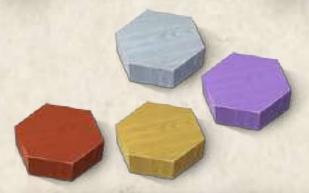
4× VP Markers
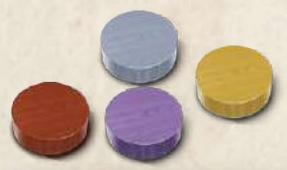
4× Income Markers
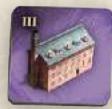
12 Cotton Mills
24 × Coal cubes

8 Ports
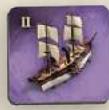
6 Shipyards
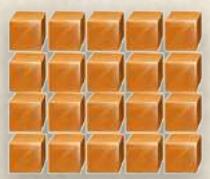
16 × Iron cubes


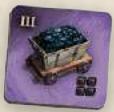
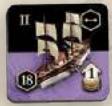
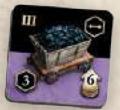
7 Coal Mines
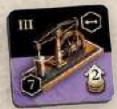
148 × Industry tiles (37 per colour)
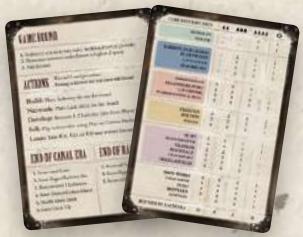

1 × Distant Cotton Market Marker

This rule book is a living document. Download the latest version from roxley.com/brass-lancashire-rulebook
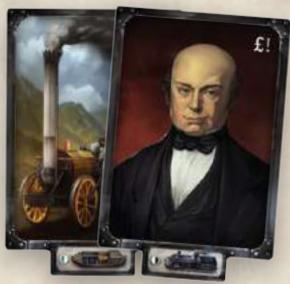
1 × Deck tile
AUT
HISTORICALFIGURES
INDUSTRIALREVOLUTION

Sir Richard Arkwright (23 December 1732 – 3 August 1792) Taught to read and write by his cousin, Arkwright began as an apprentice barber, but after an early widowing his business ambitions grew, and his second marriage provided the funds to pursue wigmaking. When wigs fell out of fashion, he turned to textiles and made improvements on the spinning jenny with the clockmaker John Kay. 'Taking his business to the small village of Cromford, Arkwright encouraged weavers with large families to move there and work in his mill, including children as young as seven. Arkwright pioneered the use of the steam engine with textile machinery, a precursor to Edmund Cartwright's development of the power loom. In his later years, after an extended court battle, Arkwright lost many of his patents and his domination of the textile industry, but shortly after this he was knighted. Ambitious, religiously devout, and at times difficult to work with, Arkwright's ingenuity and organizational skills would make him known as the "father of the modern industrial factory system."

Eliza Tinsley
(17 January 1813 – 17 January 1882)
Following the death of her husband
T'homas and his father, along with the
death of her eldest of six children, 'Tinsley continued both her late husband and her late father-in-law's businesses in the Black Country as one under her own name. 'The Eliza 'Tinsley company produced nails for horseshoes, and chains and anchors for
ships, the latter of which would become the focus as motor vehicles replaced
horses. Chainmaking was a particularly
male-dominated industry, but 'Tinsley
excelled, employing around 4000 workers, and she established an offshoot company in Australia. Many of 'Tinsley's employees were women and young girls, and she
fought against government efforts to restrict women, and girls under 14, from working in the nail and chainmaking industries.
arguing that "the conditions of both
trades are favourable to moral and physical health." Known as "T'he Widow," Tinsley was respected for her industry expertise. She sold the company at 58, but it would continue operating under her name into the 21st century.

Robert Owen
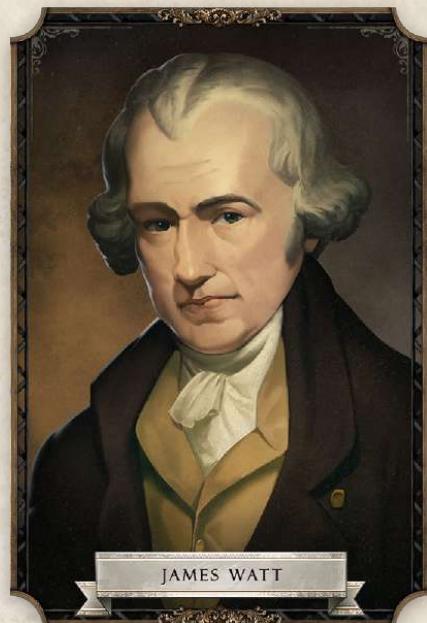
James Watt

(30 January 1736 – 25 August 1819) Tinkering with models and ship's instruments at his father's workbench from an early age, Watt left for Glasgow at 17 to learn to make measuring instruments such as scales and compasses, and befriended the chemist Joseph Black. In his 30s, while repairing a model of the Newcomen steam engine used widely for pumping water out of mines, Watt noticed that the design wasted energy on cooling and reheating the cylinder, and he improved upon it by adding a separate condenser which would revolutionize the steam engine. However he was unable to make progress on this venture for several years as he was busy at his day job surveying Scottish canals. 'This changed when English manufacturer Matthew Boulton took an interest in his patent, and Watt moved to Birmingham to form a partnership that would last 25 years and spread his improved steam engine across the world of industry. 'T'hough a somewhat feeble businessman on his own (Watt once said he "would rather face a loaded cannon than settle an account or make a bargain"), he was greatly respected by his peers, and the basic unit of power, the "watt," bears his name.
(14 May 1771 – 17 November 1858) Falling in love with Caroline Dale, daughter to the owner of the New Lanark mill co-founded by Richard Arkwright, Owen convinced his business partners to purchase the mill. He ran it with great success, but displeased his partners with egalitarian activities such as paying wages to his workers over a four month period in which the mills were closed during the War of 1812. An avid scholar, Owen became critical of prevailing religious thought on human self-determinism, and he developed his own philosophy that one's circumstances are largely the result of external forces, and that therefore education and philanthropy should be paramount in society. He undertook a variety of social reform projects such as lobbying for workers and children's rights and for an 8-hour work day, and temporarily left Britain to found a socialist commune in America called New Harmony. 'T'he experiment was an economic failure that bankrupted Owen, but it did produce one of the first public libraries and a free school open to both boys and girls, and his philosophies are deeply woven into socialist movements within the United States.
Isambard Kingdom Brunel
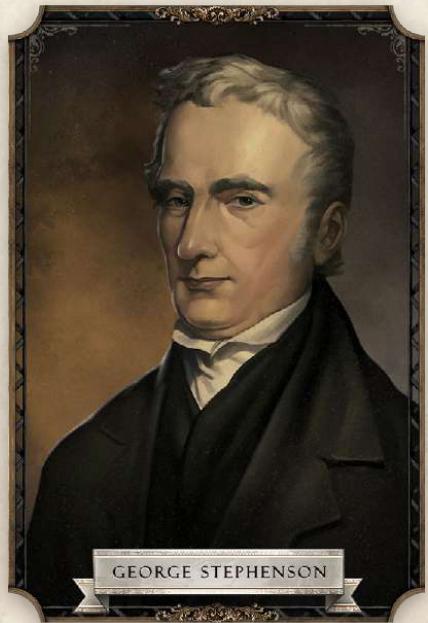
George Stephenson
(9 June 1781 – 12 August 1848) After the death of his wife and daughter, the 25-year-old Stephenson, having no formal education, left for Scotland to find work but returned to West Moor when his father was blinded in a mining accident. When he offered to improve the mine's deficient pumping engine, Stephenson was made enginewright and became an expert in steam-engine technology. His Northumberland accent made him unpopular with the scientific community, and when he presented his design for a safer mining lamp that would not cause explosions, the Royal Society accused him of stealing the concept from parallelinventor Humphry Davy. But Stephenson's big claim to fame was his contribution to rail transport, and the invigoration of the rail industry. At age 40 he began work on the first public railway, and his locomotive known as 'Stephenson's Rocket' won a competition by achieving the record speed of 36 miles per hour, which led some to fear that such speeds would cause women's uteruses to literally fly out of their bodies. T'hankfully this did not occur.
(9 April 1806 – 15 September 1859) At the age of 15, Brunel's father Marc was sent to a debtors' prison, but his debts were paid by the British government when he made it known that the 'Tsar had offered him a position as an engineer in Russia. Brunel studied in France under the clockmaker Abraham Louis Breguet. Upon returning to England he became an assistant on Marc's project to create a tunnel under the 'T'hames, but a nearlyfatal flooding incident put the 22-year-old out of commission for several months. This didn't stop Brunel from becoming one of the most prolific engineers in history, creating tunnels, bridges, railways, a portable hospital, and a vacuum-powered atmospheric railway', though unfortunately for the latter the leather flaps sealing the vacuum pipes were eaten by rats. His Great Western' was the first steamship to conduct transatlantic service, and his Great Eastern' was the largest ship ever built up to that time, but Brunel died of a stroke at 53 just before her maiden voyage. Brunel is known today as an engineering giant.

Sir Henry Bessemer (19 January 1813 – 15 March 1898) Like Isambard Kingdom Brunel's father, Bessemer's father Anthony was forced to flee France during the French Revolution. Anthony had become a member of the Académie des sciences at 26 for his improvements on the optical microscope, and made his fortune in Britain with a process for making gold chains. Bessemer's first innovation mirrored his father's affinity for gold. After carefully analyzing bronze powder from Nuremberg, used in the manufacture of gold paint, he reverse engineered the process and created a series of six steam-powered machines that could manufacture the powder. He later developed a cheap system of creating steel by blowing air through molten pig iron to burn off impurities. 'T'he goal was initially to reduce the cost of military ordnance, but this technique of affordable steel revolutionized structural engineering and made bridges and railroad tracks, previously reliant on wrought and cast iron, much safer. Bessemer pioneered over 100 inventions in the fields of metalworking and glass, including a steamship cabin on gimbals intended to stay level to prevent seasickness which was sadly lost at sea, and he gained considerable commercial success leveraging his innovations.

Eleanor Coade
(3 June 1733 – 16 November 1821) Bringing her up a devout Baptist, Coade's parents were both successful merchants. Her grandmother Sarah Enchmarch had run the family textile business in 'Tiverton with 200 employees, using spies to acquire new manufacturing techniques, and was known for travelling around town in a sedan chair. After Coade's family moved to London, she ran her own linen draper business at age 30. Six vears later she purchased an artificial stone business from the struggling Daniel Pincot, but fired him within two years for "representing himself as the chief proprietor." Her ceramic stoneware called "Coade's Lithodipyra" went on to be used in over 700 sculptures across the globe, many of them overseen by the sculptor John Bacon, though she worked with a number of high-profile designers and architects as it allowed her to produce multiple copies of their designs. T'he South Bank Lion may be Coade's most iconic piece, but her product was also used for the Gothic screen of St George's Chapel, and in the restoration of Buckingham Palace.
BOARD SETUP

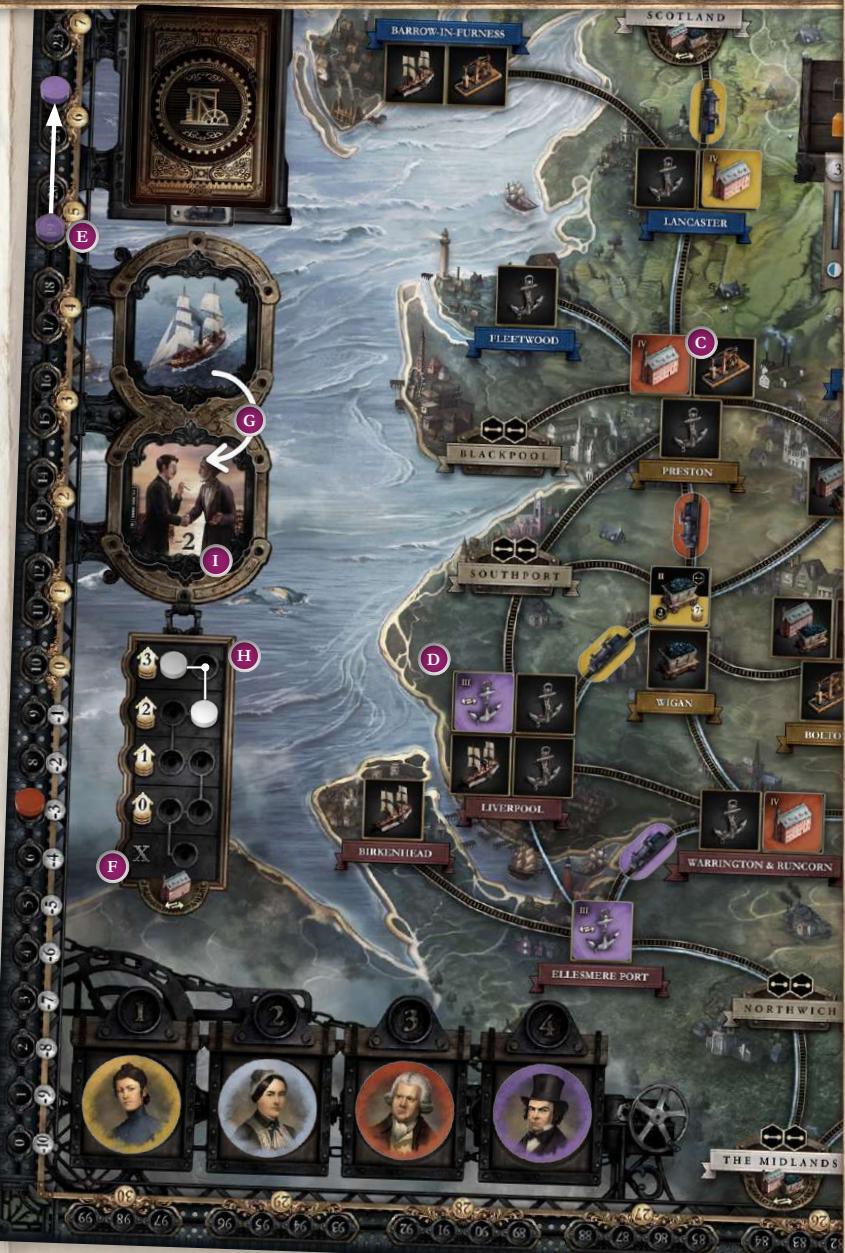
Place the board face up displaying the Full Map, which is used for all player counts (2-4).
Do not use the Alternate Map, which features fewer locations and the0icon in the top left.

Remove all cards and Distant Cotton Market tiles that do not show your player count and return them to the box.
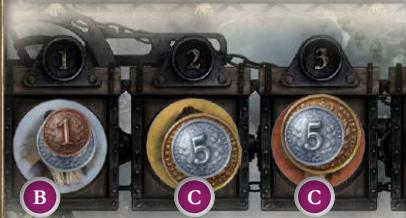
The 2-player (22), 3-player (222), and 4-player () counts are shown in the bottom right corner on the front of the cards B, and on the left side of the front of the tiles C. Be sure to remove the 2 cards with theIicon on them.

Shuffle the remaining cards and place them face down on the Card Draw Area ; this is the Draw Deck.

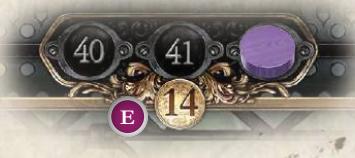
Insert the Deck tile, Stephenson's Rocket side E face up, near the bottom of the Draw Deck, so that there is 1 card per player beneath it (e.g. 3 cards for a 3-player game). These cards are not used during the Canal Era.


Shuffle the remaining Distant Cotton Market tiles and place them face down on the Tile Draw Area

Place the Distant Cotton Market Marker on the topmost space of the Distant Cotton Market Track .

Place 1 black cube on each space of the Coal Market .

Place 1 orange cube on each space of the Iron Market ①

Place the remaining cubes beside the board; this is the General Supply

Place the money beside the board R; this is the Bank.
LOCATION BANNERS
In addition to helping players find locations on the board, the colours of the location banners also indicate which Location cards are in the Draw Deck. This varies with the player count:
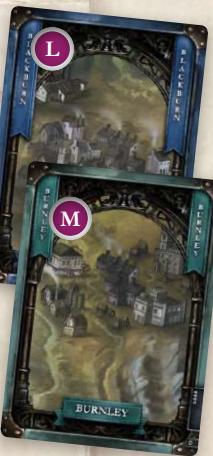
• 2 players: blue and teal coloured Location cards are not in the Draw Deck.
• 3 players: teal coloured Location cards are not in the Draw Deck.
• 4 players: all Location cards are in the Draw Deck.

PLAYER AREA SETUP
Take a Player Mat.


Take £30 from the Bank


Choose a coloured Character tile.

Place the matching coloured Link tiles in your player area.

Stack the matching coloured Industry tiles (which consist of Cotton Mills P, Ports Q Shipyards R, Iron Works , and Coal Mines T) on their appropriate slots on your Player Mat. The side of the tiles with the black top half should be face down.

Place your Victory Point (VP) Marker on the "" space of the Progress Track 0

Place your Income Marker on the "10" space of the Progress Track


Draw 8 cards from the Draw Deck; this is your Hand. Do not reveal your Hand to other players
Leave a space in your player area for your discarded cards; this will be your Discard Pile.
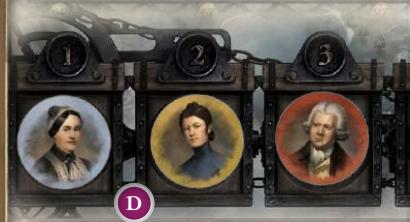
After all players have set up their player area, shuffle all players' Character tiles together and place them in a random order on the Turn Order Track x

PLAYINGTHEGAME
ENDOFERAMAINTENANCE
THE GOAL

The game is played over 2 eras: the Canal Era (1770-1830) and the Rail Era (1830-1870). The winner is the player who has the
most Victory Points (VPs) following the end of the Rail Era. VPs are scored at the end of each era for your Link tiles and flipped Industry tiles.
ROUNDS
Each era is played in rounds, which continue until both the Draw Deck and players' Hands are exhausted. There are exactly 8/9/10 rounds per era in a 4/3/2-player game. During each round, players take turns in the order of their Character tiles on the Turn Order Track.

PLAYER TURNS
On your turn, perform a total of 2 actions.
**Exception: During the first round of the Canal Era, each player performs only 1 action.**
For each action you perform, you must discard a card from your Hand and place it face up on top of your Discard Pile.
After all of your actions have been completed, refill your Hand back up to 8 cards with cards from the Draw Deck.

Place all money spent during your turn on top of your Character tile on the Turn Order Track.
Once the Draw Deck has been exhausted, your Hand will decrease each round until you have no cards left.

Note: During the Canal Era, cards under the Deck tile are not considered part of the Draw Deck and may not be used.
ACTION LIST
For each action, you may choose to perform one of the following (you may perform the same action twice):

Build - Place one of your Industry tiles onto the board, paying the appropriate cost and consuming any required coal / iron.


Network - Expand your canal or rail network by adding Link tiles to the board.

③Develop - Gain Deveiop -Gain
access to higher-level industries by removing Industry tiles from your Player Mat.


Sell - Flip your built Cotton Mill tiles, by selling to the Distant Cotton Market or by flipping a Port tile.

Loan - Take a £10/£20/£30 ld from the Bank, and move your Income Marker 1 / 2 / 3 income levels (not spaces) backwards.

Passing - You may choose to pass instead of performing an action, but must still discard a card for each action you pass.
Spending Money - Any time you spend money to perform an action, you must place it on top of your Character tile on the Turn Order Track. Placing spent money here, rather than in the Bank, will allow you to determine the players' turn order for the next round.
END OF ROUND
After all players have taken their turn, perform the following before moving on to the next round:

Determine turn order for the next round Rearrange the Character tiles on the Turn Order Track.
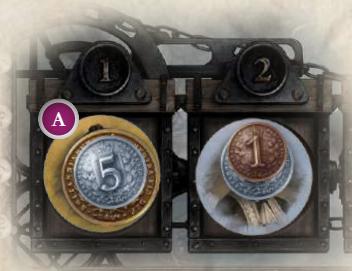
• The player who spent the least money this round will go first next round B and so on, while the player who spent the most will go last
• If multiple players have spent an equal amount, their relative turn order remains the same .
• Afterwards, take all money from the Character tiles, and place it back into the Bank . This resets the money spent, ready for the next round.
Take Income

Take money from the Bank equal to your income level. **Exception: Income is not collected at the end of the final round of the game.**
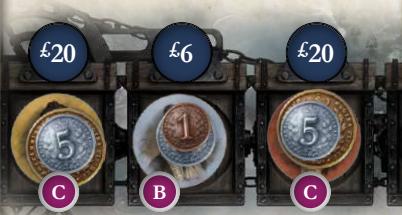
Your income level is the number displayed on the coin beside your Income Marker's current location on the Progress Track B
• If your income level is negative , you must pay that amount of money to the Bank.
• If you have a shortfall
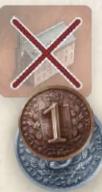
when paying negative income, you must acquire money by removing one or more of your Industry tiles (not Link tiles) from the board; each being worth half of its cost, rounded down. You keep any excess money.
If you have no way to pay a shortfall, lose 1 VP (if possible) for each £1 you are short.

Note: You may remove any of your Industry tiles, but must stop as soon as you have acquired enough money to cover the shortfall. You may not sell Industry tiles for any reason other than paying for a shortfall.

END OF CANAL & RAIL ERA
Each era ends following the round in which all players use the final cards in their Hands. When this occurs, perform the following

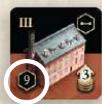
Score Canal/Rail Links For each of your Link tiles G score 1 VP for each displayed in adjacent locations, by advancing your VP Marker along the Progress Track H. Remove Link tiles from the board as they are scored.

Score Flipped Industry Tiles
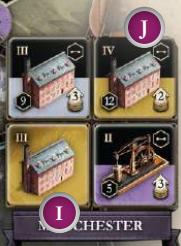
After all players have removed their Link tiles, score the VPs shown in the bottom left corner of your flipped Industry tiles (those with a black top half), by advancing your VP Marker along the Progress Track H. Unflipped Industry tiles do not score.

Note: If you score more than 100 VPs, record the additional points by starting another loop of the Progress Track.
END OF CANAL ERA
Perform the following additional steps at the end of the Canal Era:

Remove Obsolete Industries
Remove all level 1 Industry tiles from the board (not from Player Mats), and return them to the box. All level 2 or
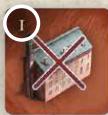
greater Industry tiles remain on the board


Reset Distant Cotton Market
Place the Distant Cotton Market Marker back on the topmost space of the Distant Cotton Market Track K. Combine discarded Distant Cotton Market tiles with those on the Tile Draw Area, shuffle them, and place them face down on the Tile Draw Area L

Shuffle Draw Deck Combine the cards below the Deck tile with all players' Discard Piles, shuffle them, and place them face down on the Card Draw Area

Insert Deck Tile
Insert the Deck tile, Nathan Rothschild side face up, near the bottom of the Draw Deck, so that there are 2 cards per player beneath it (e.g.6 cards for a 3-player game).

END OF RAIL ERA
Perform the following additional step at the end of the Rail Era:

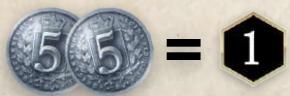
Score Cash - Score 1 VP for every £10 in your player area, by advancing your VP Marker along the Progress Track.
WINNING THE GAME
After performing Rail Era scoring:
• The player with the most VPs is declared the winner.
• Ties are broken, first by the highest income, and then by the most money remaining.
GAMEPLAYCONCEPTS
FLIPPING INDUSTRY TILES
At the end of each era, flipped Industry tiles score VPs. When flipped, they have a black top half and a VP icon in the bottom left corner.
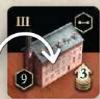
Different Industry tiles are flipped in different ways:
• Cotton Mills and Ports: Flipped when you perform a Sell action.
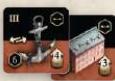
Coal Mines and Iron Works: Flipped when the last cube is removed from the tile. This often happens during an opponen turn.
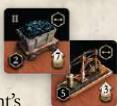
• Shipyards: Flipped immediately when built.

INCREASING YOUR INCOME
Whenever one of your
Industry tiles is flipped,
immediately advance your
Income Marker along the
Progress Track by the
number of spaces (not income
levels) shown in the bottom right corner of the tile.

**Exception: You cannot increase your income level above level 30.**
YOUR NETWORK
A location on the board is considered to be a part of your network if at least one of the following is true:
• The location contains one or more of your Industry tiles B;
• The location is adjacent to one or more of your Link tiles
CONNECTED LOCATIONS
Two locations are considered "connected" to each other if you can trace a route of Link tiles (owned by any player) from one location to the other B
CONSUMING IRON
Iron is required to perform the Develop action, and to build certain Industry tiles. To consume iron, an Industry tile does not need a connection to a source of iron. Iron must be consumed from:
Any unflipped Iron Works 0

(owned by any player); it does not have to be the closest. If you need more than 1 iron, you can consume each iron from a different Iron Works. Consuming iron in this way is free.

If there are no unflipped Iron Works, you can purchase iron from the Iron Market G, starting at the cheapest price. If the Iron Market is empty, you can still purchase iron for £5/
Consumed iron cubes are placed back into the General Supply.
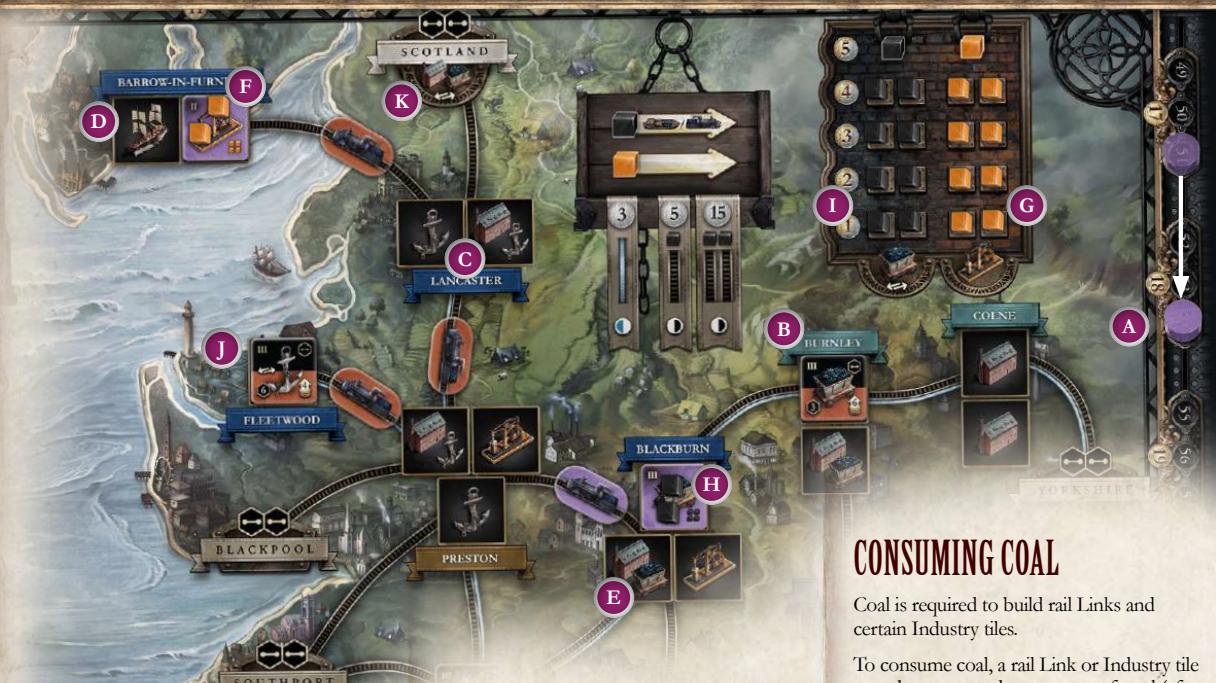
To consume coal, a rail Link or Industry tile must be connected to a source of coal (after it is placed).
Coal must be consumed from:
Historical Note: These industries generally required iron in low volumes, so it could also be transported via horse and wagon.

The closest (fewest Link tiles distant) connected unflipped Coal Mine H (owned by any player). If multiple Coal Mines are equally close, choose one. If a Coal Mine runs out of coal, and you need more, choose the next closest Coal Mine. Consuming coal in this way is free.

If you are not connected to an unflipped Coal Mine, you can purchase coal from the Coal Market ①, starting at the cheapest price. This requires a connection to the market trade icon(shown on all flipped or unflipped Port tiles , and some locations around the edge of the board ). If the Coal Market is empty, you can still purchase coal for £5 /
Consumed coal cubes are placed back into the General Supply.
Historical Note: Coal was required in large quantities, so a robust transportation network was critical.
BUILD ACTION
Performing the Build action allows you to place Industry tiles onto a location on the board.

To perform the Build action:

Discard an appropriate card. Unlike other actions, which allow you to use any card from your Hand, the Build action requires an appropriate card be discarded face up onto your Discard Pile:
Location card May be used to build any Industry tile at the location named on the card, even if the location is not a part of your network.

Industry card May be used to build the matching Industry tile, shown in the top corner of the card, in a location that is a part of your network.

· Double Action Build
May be used instead of both of your turn's actions. Discard any 2 cards and regard them as any 1 Location card. You still refill your Hand with 2 cards, if possible.
ACTIONS

Take the lowest level tile of the chosen industry from your Player Mat and place it (the side with the black top half face down) on an undeveloped space in your chosen build location, obeying the following rules:
• If possible, place it on a space displaying only that industry's icon M.
Otherwise, place it on a space displaying that industry's icon with another industry's icon
spaces display your industry's icon, you may not place it in that location. **Exception: (see"Overbuilding'”)**


The cost of the Industry tile you are building is displayed, to the left of its slot, on your Player Mat . Place money onto your Character tile on the Turn Order Track, and consume any required iron and coal Remember: If coal is required, the location you are building in must be connected to a source of coal (see "Consuming Coal" and "Connected Locations").

If you built a Coal Mine or Iron Works: Place coalor iron onto the Industry tile, equal to the quantity shown in the bottom right corner of the tile.

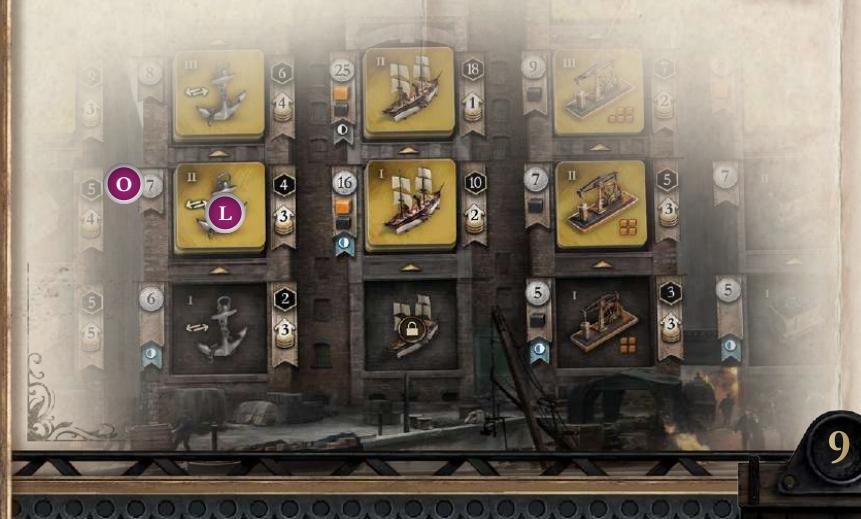

Moving Coal and Iron to the Market
If you build either a:
• Coal Mine that is connected to the
market trade icon (shown on all flipped or unflipped Port tiles, and some locations around th edge of the board); or

Iron Works, regardless of whether or not it is connected to the
market trade icon;
you must do the
following:


Immediately move as many cubes as possible from the Industry tile to available spaces in its associated Market (filling the most expensive spaces first).

For each cube moved, collect the corresponding amount of money displayed on the coin to the left side of its Market space P

If the last cube is moved from your Industry tile to its Market, flip the Industry tile and advance your Income Marker along the Progress Track by the number of spaces shown in the bottom right corner of the tile.

Note: Coal and iron cubes may only be sold to their Markets during the action when their Industry tile is built. They are never sold to their Markets in later turns.
Building If You Have No Tiles on the Board
If you have no Industry or Link tiles on the board, you may (as an action) discard an Industry card to build the matching Industry tile in any location with an undeveloped space displaying that industry's icon.
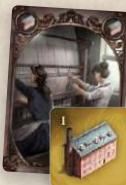
Building A Shipyard
Shipyard tiles that show a may not be built. These tiles may only be removed from your Player Mat through use of the Develop action. They must be removed before you can access the higherlevel Shipyard tiles.

Canal Era Building
• You may have a maximum of 1 Industry tile per location, but may have an Industry tile in the same location as other players.
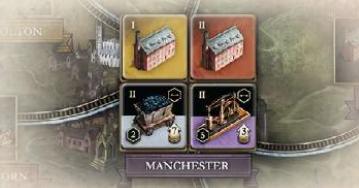
• Shipyard tiles with a ① to the left of their slot on your Player Mat may not be built.
Rail Era Building
• You may build multiple Industry tiles in each location.
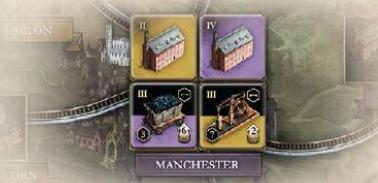
• Industry tiles with a to the left of their slot on your Player Mat may not be built. To remove these tiles (and access the higher-level tiles) you must perform the Develop action.

ACTIONS
ACTIONS
BUILD ACTION (CONTINUED)
Overbuilding
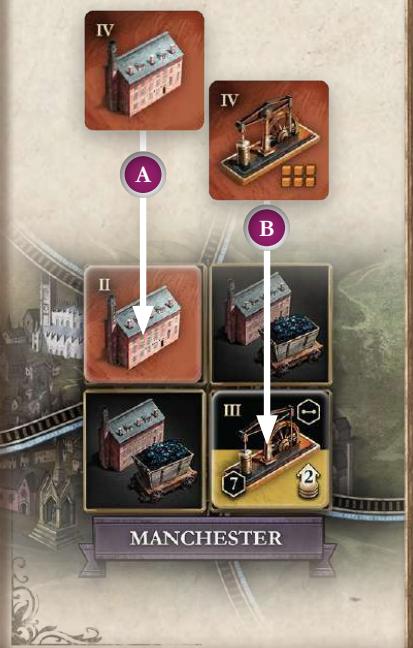
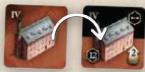
Sometimes you are allowed to replace an already placed Industry tile with a higher level tile of the same industry type (you must still pay the necessary build costs). This is known as Overbuilding. When Overbuilding:
If the tile you are replacing is your own
• You may Overbuild any Industry tile
• If there are any iron / coal cubes on the tile being replaced, place them back into the General Supply.
If the tile you are replacing is owned by an opponent B:
• You may Overbuild only a Coal Mine or an Iron Works.
There must be no resource cubes on the entire board, including in its Market, of the same type as the Industry tile being replaced.
Remove overbuilt Industry tiles from the game, and return them to the box (they will not score VPs). Players do not lose income or VPs if their Industry tiles are overbuilt.
SELL ACTION
Performing the Sell action allows you to flip built Cotton Mill tiles, and sometimes Port tiles.
To perform the Sell action:

Discard any card from your Hand and place it face up onto your Discard Pile.

Choose 1 of your unflipped Cotton Mills , and perform 1 of the following:
Selling using a Port You may sell cotton to an unflipped Port tile (owned by any player). The Cotton Mill must be connected to the unflipped Port tile

- Flip the Port tile, and advance its owner's Income Marker along the Progress Track by the number of spaces shown in the bottom right corner of the tile. Proceed to step

Selling to the Distant Cotton Market

You may sell cotton to the Distant Cotton Market if the Distant Cotton Market Marker is not on the "X" space F. The Cotton Mill must be connected to the market trade icon(shown on all flipped or unflipped Port tiles, and some locations around the edge of the board).
Note: If you are using an unflipped Port tile to sell to the Distant Cotton Market, do not flip the Port tile.
-
Flip the topmost Distant Cotton Market tile and place it onto the Tile Discard Area.
-
Move the Distant Cotton Market Marker along the Distant Cotton Market Track H by the number of spaces shown in the bottom centre of the flipped tile

-
Advance your Income Marker along the Progress Track by the number of spaces displayed on the Income icon to the left of the Distant Cotton Market Marker. Proceed to step
-
If the Distant Cotton Market Marker reaches the "X" space F, immediately end the Sell action. Do not continue to step 3.


**Exception: You cannot take a loan if it will take your income level below -10.**
You may go back to step ② and repeat the process for each of your unflipped Cotton Mills.
LOAN ACTION
Performing the Loan action allows you to acquire more money. Loans are never repaid, but instead lower your income level.
• You may not take a loan during the final 4 rounds of the Rail Era (when there are no cards left in the Draw Deck).
To aid you in remembering this, the preceding round will end with the last player refilling their Hand and revealing the Deck tile, Nathan Rothschild side up.

• When the Deck tile appears, place it beside the Bank to indicate that the
next round is the last round in which you may take loans.
Following the final round for loans, flip the Deck tile over to the Stephenson's Rocket side, to indicate that you can no longer take loans.
To perform the Loan action:

Discard any card from your Hand, and place it face up onto your Discard Pile.

Take £10/£20/£30 from the Bank, and move your Income Marker 1/2/3 income levels (not spaces) backwards down the Progress Track. Place your Income Marker on the highest space within the lower income level

DEVELOP ACTION
Performing the Develop action allows you to remove Industry tiles from your Player Mat. This allows you to gain access to higher-level Industry tiles without having to build all of the lower-level tiles of that industry.

To perform the Develop action:


Discard any card from your Hand, and place it face up onto your Discard Pile.
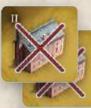

Consume 1 iron for each tile removed (see "Consuming Iron").
NETWORK ACTION
Performing the Network action allows you to place Link tiles, which expand your network and gain you access to new locations
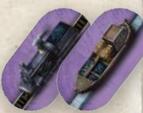
To perform the Network action:

Discard any card from your Hand, and place it face up onto your Discard Pile.

Place a Link tile on an undeveloped line on the board . The placed Link tile must be adjacent to a location that is a part of your network.
Network During Canal Era:
• You may not build rail Links. • You may build canal Links on undeveloped canal lines .
• You may build a maximum of 1 canal Link for £3.
Network During Rail Era:
• You may not build canal Links.
• You may build rail Links on undeveloped railroad lines
• You may build 1 rail Link for £5.
• You may build a maximum of 2 rail Links for £15.
You must consume 1 coal for each rail Link built (see "Consuming Coal"). Remember: Each rail Link is placed separately and must be connected to a source of coal (after it is placed).
TIPSANDVARIANTS
THINGS TO REMEMBER
• Discard 1 card for every single action you perform, including passing.
You can perform the same action twice in a turn. For instance, you may place only 1 canal Link with the Network action, but may use the Network action a second time to place another canal Link.
You may also discard any 2 cards to use both of your actions at the same time. This allows you to build any Industry tile in any location with a space for that industry.
• During the Canal Era, each player may place a maximum of 1 of their Industry tiles in each location.
【中文校注·口径】此句的 “you / each player” 指建造者本人:每名玩家在同一地点最多只能有 1 个自己的工业板块;不同玩家可以在同一地点各自建造 1 个。不是「整个地点只准有 1 个板块」。
依据:伯明翰中文版原文「你最多只能在每個地點建造一個工業板塊,但可以跟其他玩家的板塊在相同地點上」;Birmingham / Lancashire 英文原文「each player may place a maximum of 1 of their Industry tiles in each location」。
• You may Overbuild any of your own Industry tiles at any time.
• You may also Overbuild opponents' Coal Mines/Iron Works, but only when there are no coal/iron cubes left on any Industry tiles or in the Market.
You must be connected to aicon to sell cotton, and to consume coal (but not iron) from the Market.
• A location must be a part of your network for you to build there (unless you use that specific Location card or the double-action build).
BEGINNER TIPS
• Do not be afraid of taking loans. Your income level at the end of the game is not worth VPs. It is not uncommon for experienced players to win the game despite having a low income level.
• Level 2 or greater Industry tiles are not removed at the end of the Canal Era, so could score twice if built early. A flipped level 3 Cotton Mill would score a whopping 18 VPs over both eras. The Develop action is your friend.
Tiles with a icon to the left of their slot on your Player Mat cannot be built during the Rail Era. Try to build or develop at least 1 Coal Mine and 1 Iron Works during the Canal Era, so that you do not have to use a Develop action during the Rail Era to clear these industries from your Player Mat.
Nobody likes passing. During the Rail Era, when the Deck tile is revealed Nathan Rothschild side up, you have only one more round to take loans. If you are short on money, make sure you take at least one loan, or you may find yourself unable to do much during the final rounds of the game.
Figuring out how best to expand your network at the beginning of the Rail Era can be difficult for beginners. Expand your network by building rail Links to sources of coal. If you don't have access to any coal, build a Coal Mine.
INTRODUCTORY GAME

Players then score additional points as follows:
① Money Score 1 VI
Score 1 VP for every £4 in your player area (up to a maximum of 15 VPs).
To play the introductory game, first, play the entire Canal Era as normal, including the end of Canal Era scoring.

②Income level
Score VPs equal to your income level. If your income level is negative, you lose VPs.

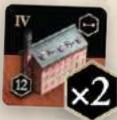
Industry tiles Score the points a second time for all your level 2 or greater Industry tiles.
CLASSIC RULES
Since Brass is such a deep game, some players may prefer to play a shorter introductory game for their first experience. The introductory game plays exactly like the full game, except you only play the Canal Era and there are additional scoring rules to make players' scores more closely reflect their success in the Canal Era.
Roxley strongly recommends you play using the updated and streamlined rules outlined in this manual. But in case you are feeling nostalgic, you can play the original game by implementing the rule changes below.
Virtual Link
The original rules included the quirky, rarely used, Virtual Link rule:
• If either Liverpool or Birkenhead is a part of your network, then you may use an Industry card to build in the other. Remember: If coal is required, the location you are building in must be connected to a source of coal. Coal does not travel across the Virtual Link

Classic 3-4 Player Deck Setup
The original rules did not have a static list of cards that were removed during setup. To play with the classic deck setup, apply the following rules changes:
• Ignore step 2 in ‘Board Setup".
Instead of step 4 in "Board Setup": Insert the Deck tile near the bottom of the Draw Deck, so that there are 9 cards beneath it in a 3-player game, or 6 cards beneath it in a 4-player game.
Brass was originally designed by Martin Wallace as a 3-4 player game. However, in 2009, a 2-player variant was developed by members of the Brass community. This used a customised map and setup; with all other rules remaining the same. Roxley's 2018 ruleset makes this Community 2-player variant obsolete, but we've included it to preserve the history of the game. To play the community 2-player variant, perform the following setup changes (the rest of the rules remain the same):
Community 2-Player Variant
• After shuffling the Draw Deck when setting up the Rail Era (step 5 of "End of Era Maintenance - Canal Era Only'), remove 6 cards in a 3-player game, or 2 cards in a 4-player game; and return them to the box
• Place the board face up displaying the Alternate Map, which features fewer locations and the read manual icon in the upper left B


• Ignore the player counts on the cards. Instead, create a 40 card Draw Deck by removing all cards that do not feature a cog icon in the bottom right corner


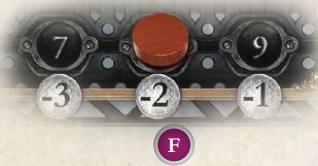
Ignore the player counts on Distant Cotton Market tiles. Instead, remove all tiles that do not feature a icon on the left side (one “-1", one “-3" and both “0')D.
• Start with £25 instead of £30.

简繁检索对照.md1.6 KB
022_28720_brass-lancashire — 简体/繁体检索对照
本游戏的规则书是繁体中文原文。用户用简体提问时,把关键词按下面这张表转成繁体再去 grep 原文,命中率最高。
回答时用简体或繁体都可以,但引用的原文保持繁体。
简体 → 繁体 对照(按该游戏原文出现频率排序,共 60 字)
| 简体 | 繁体 | 原文出现次数 |
|---|---|---|
| 块 | 塊 | 173 |
| 个 | 個 | 99 |
| 时 | 時 | 76 |
| 业 | 業 | 73 |
| 动 | 動 | 68 |
| 铁 | 鐵 | 63 |
| 图 | 圖 | 58 |
| 将 | 將 | 54 |
| 运 | 運 | 49 |
| 点 | 點 | 46 |
| 场 | 場 | 43 |
| 游 | 遊 | 42 |
| 结 | 結 | 41 |
| 戏 | 戲 | 40 |
| 执 | 執 | 40 |
| 数 | 數 | 39 |
| 后 | 後 | 38 |
| 从 | 從 | 37 |
| 来 | 來 | 36 |
| 连 | 連 | 36 |
| 厂 | 廠 | 33 |
| 级 | 級 | 28 |
| 轮 | 輪 | 26 |
| 库 | 庫 | 24 |
| 张 | 張 | 24 |
| 弃 | 棄 | 24 |
| 当 | 當 | 23 |
| 设 | 設 | 22 |
| 网 | 網 | 22 |
| 钢 | 鋼 | 22 |
| 进 | 進 | 22 |
| 为 | 為 | 20 |
| 钱 | 錢 | 20 |
| 须 | 須 | 20 |
| 则 | 則 | 20 |
| 区 | 區 | 19 |
| 发 | 發 | 19 |
| 输 | 輸 | 18 |
| 远 | 遠 | 18 |
| 与 | 與 | 18 |
| 会 | 會 | 18 |
| 轨 | 軌 | 17 |
| 这 | 這 | 16 |
| 于 | 於 | 15 |
| 开 | 開 | 15 |
| 矿 | 礦 | 15 |
| 对 | 對 | 15 |
| 显 | 顯 | 15 |
| 没 | 沒 | 15 |
| 应 | 應 | 14 |
| 过 | 過 | 13 |
| 获 | 獲 | 13 |
| 计 | 計 | 13 |
| 贷 | 貸 | 13 |
| 规 | 規 | 13 |
| 并 | 並 | 12 |
| 顺 | 順 | 11 |
| 边 | 邊 | 10 |
| 们 | 們 | 10 |
| 标 | 標 | 9 |
Texts are community-compiled or publicly released by publishers; copyright remains with the original authors. For personal reference only.