
工业革命:兰开夏Brass: Lancashire
一句话概览
工业革命:兰开夏 是一款已收录于村了吗规则库的桌游,支持 2–4 人,原名 Brass: Lancashire。
本页内容:一句话概览 · 游戏概述 · 1. 游戏组件 · 2. 游戏设置 · 3. 游戏流程 · 4. 行动详解 · 5. 资源管理 · 6. 网络与连接 · 7. 收入系统 · 8. 时代结束计分 · 9. 时代结束维护 · 10. 获胜条件 · 11. 入门游戏 · 12. 经典规则变体 · 关键规则与常见问题 · 常见问题
工业革命:兰开夏 规则速览
以下规则速览由本站整理,与官方规则书表述不同,仅供快速上手参考。
游戏概述
在1770-1870年英格兰工业革命时期的兰开夏,玩家扮演相互竞争的企业家,通过建造运河和铁路、发展各类工业(棉纺厂、煤矿、铁工厂、造船厂、港口)来扩张工业帝国,最终在铁路时代结束时获得最多胜利点数(VP)者获胜。
核心机制: 手牌管理、板块放置、网络建设、资源管理、收入系统
1. 游戏组件
| 组件 | 数量/说明 |
|---|---|
| 游戏板 | 1块(全地图用于2-4人) |
| 玩家面板 | 4块 |
| 链接板块 | 56块(每色14块) |
| 工业板块 | 148块(每色37块):棉纺厂、港口、造船厂、铁工厂、煤矿 |
| 地点卡和工业卡 | 66张 |
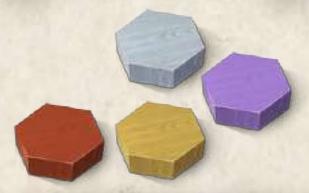
| VP标记 | 4个 |
| 收入标记 | 4个 |
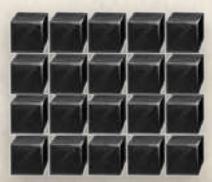
| 煤炭方块 | 24个(黑色) |
| 铁方块 | 16个(橙色) |
| 远程棉花市场标记 | 1个 |
| 牌组板块 | 1个(正反面:Stephenson's Rocket / Nathan Rothschild) |
| 金钱 | 银行资金 |
2. 游戏设置
2.1 板块设置
- 游戏板正面向上,使用全地图(2-4人均可)
- 根据玩家人数移除超出人数的卡片和远程棉花市场板块(卡片右下角/板块左侧标注玩家人数符号)
- 移除带⊕标记的2张卡片
- 剩余卡片洗匀面朝下放在抽牌区(抽牌堆)
- 将牌组板块(Stephenson's Rocket面朝上)插入抽牌堆底部附近,使牌组板块下方有每人1张牌(例如3人游戏放3张牌在下方)——这些牌在运河时代不使用
- 剩余远程棉花市场板块洗匀面朝下放在板块抽牌区
- 远程棉花市场标记放在远程棉花市场轨道最上方空间
2.2 资源市场设置
- 煤炭市场: 每个空间放1个黑色方块
- 铁市场: 每个空间放1个橙色方块
- 剩余方块放在一旁作为通用供应
- 金钱放在一旁作为银行
2.3 地点旗帜与卡牌分布
地点旗帜的颜色表示抽牌堆中有哪些地点卡:
- 2人游戏:蓝色和青色地点卡不在抽牌堆中
- 3人游戏:青色地点卡不在抽牌堆中
- 4人游戏:所有地点卡都在抽牌堆中
2.4 玩家个人设置
每位玩家获得:
- 1块玩家面板
- £30起始资金
- 1个角色板块(随机选择颜色)
- 对应颜色的链接板块
- 对应颜色的工业板块(棉纺厂、港口、造船厂、铁工厂、煤矿),黑色面朝下堆叠在面板对应槽位
- VP标记放在进度轨道"0"位置
- 收入标记放在进度轨道"10"位置
- 从抽牌堆抽8张牌作为手牌(不展示给其他玩家)
- 留出空间作为弃牌堆
2.5 起始玩家确定
所有玩家角色板块洗匀,随机放在回合顺序轨道上。
3. 游戏流程
3.1 时代结构
游戏分2个时代进行:
- 运河时代(Canal Era): 1770-1830年
- 铁路时代(Rail Era): 1830-1870年
3.2 回合数
每个时代进行固定回合数:
- 4人游戏:每时代8回合
- 3人游戏:每时代9回合
- 2人游戏:每时代10回合
回合持续到抽牌堆和所有玩家手牌耗尽。
3.3 回合顺序
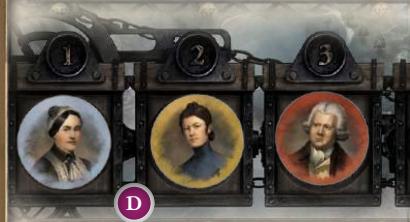
- 每回合玩家按回合顺序轨道上的角色板块顺序行动
- 回合结束时重新确定顺序: 本回合花费最少的玩家下回合先行动,花费最多者最后行动
- 若花费相同,保持原有相对顺序
- 之后将角色板块上的金钱归还银行
3.4 玩家回合
- 行动次数: 每回合执行2个行动
- 例外: 运河时代第一回合,每位玩家只执行1个行动
- 弃牌要求: 每执行1个行动必须弃1张手牌(面朝上放弃牌堆)
- 行动结束后,从抽牌堆补充手牌至8张
- 本回合花费的金钱放在回合顺序轨道上的角色板块上
3.5 回合结束
- 确定下回合顺序: 按花费金额排列角色板块
- 收取收入: 从银行获得等于当前收入等级的金钱
- 例外:游戏最后一回合不收取收入
- 若收入为负数,必须向银行支付该金额
- 若无法支付负收入,可移除板上自己的工业板块(非链接板块),每个价值其费用的一半(向下取整),够付即停;若仍不足,每缺£1失去1个VP
4. 行动详解
每回合可执行2个行动(可重复同一行动)。
4.1 建造(Build)
将工业板块放置到游戏板上的位置。
卡片使用规则:
- 地点卡: 可在卡上指定地点建造任何工业板块(即使该地点不在你的网络内)
- 工业卡: 可在网络内建造卡上图标对应的工业板块
- 双行动建造: 弃任意2张牌,视为1张地点卡使用,可建造任何工业板块到任何有该工业图标空间的地点
放置规则:
- 优先放在仅显示该工业图标的空间
- 否则放在同时显示该工业和其他工业图标的空间
- 若没有可用空间则不能建造(除非覆建)
建造费用和资源消耗:
- 板块费用显示在玩家面板槽位左侧
- 建造煤矿和铁工厂时,在板块上放置右下角所示数量的资源方块
- 铁工厂建造后,无论是否连接商人,都必须将尽可能多铁方块移到铁市场(先填高价空间),获得对应金钱
- 煤矿建造后,若连接到市场贸易图标(显示在所有港口板块及板边某些位置),必须将尽可能多煤炭方块移到煤炭市场(先填高价空间),获得对应金钱
- 若最后一个方块被移走,板块翻面并增加收入
注意: 煤炭和铁方块只能在建造时出售到市场,后续回合不再出售。
造船厂限制:
- 标有⊕的造船厂不能建造,只能通过发展行动从面板移除
运河时代建造限制:
- 每名玩家在每个地点最多 1 个:时代1(运河时代)里,同一名玩家在同一地点只能有 1 个自己的工业板块;不同玩家可以各自在同一地点各建 1 个(不是「整个地点只能有 1 个板块」)。到时代2(铁路时代)该限制取消,同一玩家可在同一地点建造多个。
铁路时代建造限制:
- 每个地点可建造多个工业板块
覆建(Overbuilding):
- 可用更高等级的同类型板块替换已放置的板块(仍需支付建造费用)
- 自己的板块: 可随时覆建,资源方块放回通用供应
- 对手的板块: 只能覆建煤矿或铁工厂,且整个游戏板上(包括市场)不能有该类型资源方块
- 被覆建的板块移出游戏(不计分),玩家不失去收入或VP
无板块在板上时的建造:
- 可弃工业卡在任何有该工业图标未开发空间的地点建造该工业板块
4.2 网络(Network)
放置链接板块扩展运河/铁路网络。
运河时代:
- 只能建造运河链接(在未开发的运河线路上)
- 每次行动最多建造1条运河链接,费用£3
铁路时代:
- 只能建造铁路链接(在未开发的铁路线路上)
- 每次行动可建造1条铁路链接,费用£5
- 或建造2条铁路链接,费用£15
- 每条铁路链接必须消耗1个煤炭
放置限制:
- 链接板块必须邻接你网络中的地点
- 例外:若你在板上无任何板块,可放在任何未开发线路上
4.3 发展(Develop)
从玩家面板移除工业板块,以解锁更高等级板块。
执行步骤:
1. 弃1张手牌
2. 从面板移除1个工业板块(必须是该工业的最低等级)
3. 每移除1个板块消耗1个铁
4.4 出售(Sell)
翻转已建造的棉纺厂板块。
执行步骤:
1. 弃1张手牌
2. 选择1个未翻转的棉纺厂,执行以下之一:
- 通过港口出售: 棉纺厂必须连接到未翻转的港口板块(任意玩家所有),翻转该港口板块,其所有者收入标记前进板块右下角所示格数
- 出售到远程棉花市场: 棉纺厂必须连接到市场贸易图标(需远程棉花市场标记不在"X"空间),翻开最上方远程棉花市场板块,移动市场标记板块所示格数,收入标记前进市场标记左侧所示格数
- 注意:若使用未翻转港口出售到远程棉花市场,不翻转港口板块
3. 若市场标记到达"X"空间,立即结束出售行动
4. 可对每个未翻转棉纺厂重复上述步骤
4.5 贷款(Loan)
从银行获得金钱(无需偿还,但降低收入)。
执行步骤:
1. 弃1张手牌
2. 获得£10/£20/£30,收入标记后退1/2/3个收入等级(不是格数),收入标记放在较低等级的最高空间
限制:
- 不能使收入等级低于-10
- 铁路时代最后4回合(抽牌堆耗尽后)不能贷款
- 当牌组板块Nathan Rothschild面朝上被翻开时,下一回合是最后一个可贷款的回合
4.6 跳过(Pass)
可选择跳过行动,但仍需弃1张牌。
5. 资源管理
5.1 煤炭消耗
建造铁路链接和某些工业板块时需要煤炭。板块放置后必须连接到煤炭来源。
消耗顺序:
1. 从最近的(最少链接数)已连接的未翻转煤矿消耗(任意玩家所有),若多个等距则任选
2. 若无未翻转煤矿,可从煤炭市场购买(从最低价开始),需连接到市场贸易图标
3. 市场空时仍可以£5购买
消耗的煤炭方块放回通用供应。
5.2 铁消耗
发展行动和建造某些工业板块需要铁。
消耗顺序:
1. 从任意未翻转铁工厂消耗(无需最近,可从不同铁工厂取多个),免费
2. 若无未翻转铁工厂,可从铁市场购买(从最低价开始)
3. 市场空时仍可以£5购买
注意: 消耗铁无需连接到铁来源。消耗的铁方块放回通用供应。
6. 网络与连接
6.1 你的网络
一个地点属于你的网络,若满足以下任一条件:
- 该地点有你的工业板块
- 该地点邻接你的链接板块
6.2 连接的地点
两个地点"连接"意味着可通过任意玩家的链接板块路线从一个地点到达另一个地点。
7. 收入系统
7.1 收入增加
- 板块翻面时,收入标记沿进度轨道前进所示格数(注意是格数不是等级)
- 收入等级上限为30
7.2 板块翻面时机
- 棉纺厂和港口: 执行出售行动时翻转
- 煤矿和铁工厂: 最后一个资源方块被移走时翻转(常在对手回合)
- 造船厂: 建造时立即翻转
8. 时代结束计分
8.1 链接板块计分
每个时代结束时,为每个链接板块计分:每个链接板块得1VP(每个相邻地点的工业图标),然后移除链接板块。
8.2 翻转板块计分
链接板块计分后,翻转的工业板块计分(显示在板块左下角)。未翻转的工业板块不计分。
注意: 若VP超过100,从进度轨道重新开始计算。
9. 时代结束维护
9.1 运河时代结束
- 计分链接板块和翻转板块
- 移除所有等级1的工业板块(从游戏板上,非玩家面板),放回盒子
- 重置远程棉花市场:标记放回最上方,混合已弃和未用的市场板块,洗匀面朝下放在板块抽牌区
- 洗牌:将牌组板块下方的牌与所有玩家弃牌堆混合,洗匀面朝下放在抽牌区
- 插入牌组板块(Nathan Rothschild面朝上)到底部附近,下方有每人2张牌
9.2 铁路时代结束
- 计分链接板块和翻转板块
- 现金计分: 每£10得1VP(玩家区域内金钱)
10. 获胜条件
铁路时代结束后,VP最高者获胜。平局则比较收入等级,再比较剩余金钱。
11. 入门游戏
只玩运河时代,结束时额外计分:
- 金钱: 每£4得1VP(最多15VP)
- 收入等级: 收入等级数=VP(负数则失去VP)
- 工业板块: 等级2+的板块再次计分一次
12. 经典规则变体
12.1 虚拟链接
若利物浦或伯肯黑德在你的网络中,可用工业卡在另一个地点建造。注意:煤炭不能通过虚拟链接运输。
12.2 经典3-4人牌组设置
不按玩家人数移除固定卡片,改为:牌组板块下方放9张牌(3人)或6张牌(4人)。铁路时代设置时,移除6张牌(3人)或2张牌(4人)。
12.3 社区2人变体
- 使用备用地图(较少地点)
- 创建40张牌的抽牌堆(移除无齿轮图标的牌)
- 远程棉花市场板块:移除无图标的板块(1张"-1"、1张"-3"和2张"0")
关键规则与常见问题
易错规则
- 每行动必弃牌: 包括跳过行动也要弃1张牌
- 同行动可执行两次: 如可在同一回合执行2次建造
- 运河时代每地点限1个工业板块
- 覆建限制: 只能覆建对手的煤矿/铁工厂,且整个板上无该类型资源
- 煤炭需连接,铁不需连接: 消耗煤炭需连接来源,消耗铁无需连接
- 双行动建造弃2张牌: 视为1张地点卡,可建造任何工业到任何有该图标的位置
- 收入变化是格数不是等级: 贷款后退1/2/3个等级(不是格数),板块翻面前进格数
- 最后一回合不收取收入
- 造船厂⊕标不能建造: 必须先通过发展移除才能解锁更高等级
- 铁路时代最后4回合不能贷款
常见问题
-
Q:双行动建造和普通建造有何区别?
A:弃任意2张牌,视为1张地点卡,可在任何有该工业图标的位置建造,不受网络限制 -
Q:何时可以建造造船厂?
A:标有⊕的造船厂不能建造,必须先通过发展行动从面板移除 -
Q:建造煤矿时市场如何出售?
A:建造时必须立即出售到市场(若连接市场贸易图标),之后不再出售 -
Q:覆建对手板块有什么限制?
A:只能覆建煤矿/铁工厂,且整个板上(包括市场)不能有该类型资源方块 -
Q:收入可以超过30吗?
A:不可以,收入等级上限为30 -
Q:铁路时代可以建运河链接吗?
A:不可以,运河时代不能建铁路链接,铁路时代不能建运河链接 -
Q:何时不能贷款?
A:铁路时代最后4回合(抽牌堆耗尽后),当Nathan Rothschild面朝上的牌组板块被翻开时,下一回合是最后可贷款的回合 -
Q:资金不足时可以随意变卖工业板块吗?
A:不可以,只能变卖到刚好够付负收入为止,多余金钱保留;不能为了其他目的变卖 -
Q:远程棉花市场何时不能出售?
A:当市场标记到达"X"空间时,不能再出售到远程棉花市场
常见问题(FAQ)
以下 9 条问答来自站内玩家的真实提问,答复由本站依据规则资料作答;答复内容保持原样,仅对提问做了去口语化的轻微整理。
炸铁怎么行动?
「炸铁」对应的是规则里的翻建(Overbuilding)——即用你自己的板块顶掉对手已经放好的铁工厂。下面是原文给出的完整做法。
结论
你可以翻建对手的铁工厂,但有一条硬前提:整个版图上的工业板块上、以及铁市场里,都不能再有任何铁方块。满足这个条件后,你才能用一块更高等级的同类型(铁工厂)板块把它替换掉。
前提条件
翻建对手的板块时,原文只允许翻建煤矿或铁工厂这两种。所以「炸铁」要满足:
- 被顶掉的是对手的铁工厂;
- 版图上所有工业板块上没有铁方块,且铁市场里也没有铁方块(即铁被彻底清空)。
也就是说,只要有任何一块铁还留在某个板块上或市场里,就不能翻建对手的铁工厂。
具体执行步骤
1. 执行一次建造行动,按规则弃 1 张手牌。
2. 用你玩家图版上更高等级的同类型板块(铁工厂)替换对手那块铁工厂。你仍然要支付该板块的建造费用,把钱放到回合顺序轨上你的角色板块上。
3. 遵守放置规则:优先放在只显示铁工厂图标的空间;否则放在同时显示铁工厂和其他工业图标的空间。若该地点空格没有铁工厂图标,则不能建(翻建是这条限制的例外情形)。
4. 按板块需求消耗所需资源(建造铁工厂本身是否需要煤,以你图版槽位左侧显示的费用为准)。
如果你这次建的仍是铁工厂
因为新建的是铁工厂,按建造规则你要:
- 在板块上放上右下角所示数量的铁方块;
- 并且无论是否连接到市场贸易图标,都必须立刻把尽可能多的铁方块移到铁市场(先填最贵的格子),按市场格子左侧硬币所示收取对应金额;
- 若最后一块被移走,板块翻面并按右下角所示格数前进收入。
被翻掉的对手板块如何处理
- 被翻建的板块移出游戏、放回盒子,不参与计分;
- 原板块上若有铁/煤方块,放回通用供应;
- 对手不会损失收入,也不会损失 VP。
对照:翻建自己的板块
顺便区分一下:如果你翻建的是自己的板块,则没有上述限制——你可以翻建自己任意类型的工业板块;若有铁/煤方块留在上面,放回通用供应。
原文未明确的部分
- 规则原文没有出现「炸铁」这一术语,以上是按「翻建对手铁工厂」的规则作答。
- 关于「同类型资源被清空」的判断范围,原文表述为整个版图上的工业板块(含市场),据此执行即可。
本内容仅供参考,如有冲突以说明书和身边大佬为准。
连接的版图上自带交易的市场呢?
结论:可以。 版图边缘“自带的交易市场”位置,规则中就是市场贸易图标的一种来源,和港口板块上印的市场贸易图标效力相同。所以只要你的棉纺厂连接到这些版图边缘的市场贸易图标,就可以出售到远程棉花市场;同样,当你需要从煤炭市场购买煤炭时,连接到这类版边图标也满足“需要连接到市场贸易图标”的条件。
具体条件与例外:
-
出售到远程棉花市场
- 前提:远程棉花市场标记不在“X”空间。
- 条件:棉纺厂必须连接到市场贸易图标(所有已翻面或未翻面的港口板块,以及版图边缘的某些位置都提供该图标)。
- 流程:翻出最上方远程棉花市场板块并放到板块弃牌区,按其底部中央所示数值移动远程棉花市场标记,你的收入标记前进市场标记左侧所示格数。
- 例外:如果标记到达“X”空间,立即结束出售行动,不再前进收入。 -
不能借版边图标走“通过港口出售”这条路
- “通过港口出售”要求的是未翻面的港口板块(任意玩家所有),棉纺厂须与其连接,出售后翻转该港口。
- 版图边缘位置不是港口板块,所以那里没有港口可翻,只能走远程棉花市场这条路线。 -
购买煤炭时同样适用
- 若未连接到未翻面煤矿,可从煤炭市场按最低价购买煤炭,这需要连接到市场贸易图标;版图边缘的这类位置同样满足。市场空时仍可以 £5 购买。
几点提醒:
- 市场贸易图标出现在两类地方:所有已翻面或未翻面的港口板块,以及版图边缘的某些位置。
- 消耗铁不需要连接到铁来源,因此不涉及市场贸易图标。
- 若你用未翻面的港口来出售到远程棉花市场,不要翻转该港口板块。
规则书中未找到对“版图边缘具体哪些位置”的逐一列举,仅说明它们是“版图边缘的某些位置”。
连接版图市场只能卖给远洋市场吗?
结论:不是。 出售棉纺厂有两条途径,卖给远程棉花市场只是其中一条;而“连接到市场贸易图标”是卖给远程棉花市场时所要求的连接条件,并不是说你连上了图标就只能走远程市场这一条路。
具体两种出售方式:
-
通过港口出售
- 棉纺厂必须连接到一个未翻面的港口板块(该港口可以是任意玩家所有)。
- 出售后翻转该港口板块,其所有者收入标记前进港口板块右下角所示格数。 -
出售到远程棉花市场
- 前提是远程棉花市场标记不在“X”空间。
- 棉纺厂必须连接到市场贸易图标(该图标显示在所有翻面或未翻面的港口板块上,以及板上边缘的某些位置)。
- 翻出最上方的远程棉花市场板块并按其上数值移动市场标记,你的收入标记前进市场标记左侧所示格数。
- 例外/注意: 如果你是用一个未翻面的港口来出售到远程棉花市场,不翻面该港口板块。
所以关键区别是:
- 想走“通过港口出售”,连接的对象必须是未翻面的港口板块;
- 想走“出售到远程市场”,连接的对象必须是市场贸易图标(未翻面港口、已翻面港口,或板边某些位置都提供该图标)。
- 由于未翻面的港口本身就带市场贸易图标,当你连着一个未翻面的港口时,通常两条路都可以选;而如果你只连接着板边等位置的市场贸易图标(那里没有港口可翻),那就只能走远程棉花市场(且市场标记未到“X”)。
另外提醒:远程棉花市场一旦标记到达“X”空间,就要立即结束出售行动,不能再继续卖给远程市场。
本内容仅供参考,如有冲突以说明书和身边大佬为准。
任意两张牌可以去任意地点建造任意产业吗?
结论:可以——但这会用掉你本回合的两个行动,而且目标地点必须有该产业的空位。
具体做法与条件:
怎么做
- 弃掉任意2张牌,把它们当作1张地点卡使用,一次完成建造。
- 这被视为你的双行动建造(Double Action Build),会一次性用掉本回合的两个行动(取代两个行动,而不是额外多做一个行动)。
- 之后照常把补手牌补满8张(如果抽牌堆够的话)。
能建什么、建在哪
- 可以在任意地点建造任意产业板块,不受你的网络限制——因为这是把它当作一张地点卡来用。
- 建完后仍要照常支付该板块的建造费用,并消耗所需的煤/铁(煤需要连接来源,铁不需要)。
例外与限制
- 目标地点必须有该产业的空位才行;如果那里没有任何显示该产业图标的未开发空间,就不能在那里建(除非符合覆建规则)。
- 运河时代每位玩家在每个地点最多只能有1个自己的工业板块;铁路时代同一地点可放多个。
- 带⊕标记的造船厂不能建造,必须先通过发展行动从面板上移除才能解锁更高等级。
- 覆建对手板块的限制照常适用(只能覆建对手的煤矿/铁工厂,且全板包括市场上不能有该类型资源方块)。
顺带区分一下普通建造(避免混淆):
- 每次行动弃1张地点卡:可在卡上写明的地点建造任意产业,即使该地点不在你的网络中。
- 每次行动弃1张工业卡:只能在你网络内的地点建造卡上对应的那个产业。
- 若你板上完全没有板块,也可弃1张工业卡,在任意有该产业图标未开发空位的地点建造该产业。
本内容仅供参考,如有冲突以说明书和身边大佬为准。
出售棉花厂的话如果有码头优先用码头么?
结论:规则里没有“有码头就必须优先用码头”这条要求。 出售棉花厂时,用码头(Port)还是卖到远程棉花市场(Distant Cotton Market),由你自由选择,两者是并列的两个选项。
具体做法是这样:
执行出售行动时,先弃 1 张手牌,然后选择 1 个自己未翻面的棉花厂,在下面两者中任选其一:
① 通过码头出售
- 卖给一个未翻面的码头板块(谁的都行,可以是别人的)。
- 你的棉花厂必须与该未翻面码头相连。
- 翻面该码头板块,并让其拥有者的收入标记按板块右下角所示格数前进(注意:受益的是码头拥有者,不一定是你)。
② 卖到远程棉花市场
- 前提:远程棉花市场标记不在「X」格。
- 你的棉花厂必须连接到市场贸易图标(该图标出现在所有翻面或未翻面的码头板块上,以及板边某些地点)。
- 翻开最上面的远程棉花市场板块,按板块底部中央所示格数移动市场标记,再按市场标记左侧的收益图标前进你的收入标记。
- 若市场标记到达「X」格,立即结束本次出售行动,不再继续下一步。
补充一点容易混的地方:码头板块本身带有市场贸易图标,所以当你把棉花卖到远程棉花市场时,也可以借一个码头板块来提供“连接到市场贸易图标”这个条件——但此时该码头板块不翻面。
选择①还是②、以及先用哪个棉花厂,规则都没有规定先后或优先级;只要满足各自条件,你可以自行决定,并且可以回到选择步骤,对每个未翻面的棉花厂重复处理。
本内容仅供参考,如有冲突以说明书和身边大佬为准。
高级板块是运河时代和工业革命时代各记一次分么?
结论:是这样的——等级 2 及以上的高级板块可以“两度得分”,但必须它在两个时代结束时都处于“已翻面”状态。 等级 1 的板块做不到,因为水道时代结束时它会被直接移除。
具体条件和例外:
1. 计分只看“已翻面”
每个时代结束时,只有已翻面的工业板块按板块左下角的分数计 VP;未翻面的板块不计分。所以想两度得分,板块必须在水道时代结束前就已经翻面,并且到铁路时代结束前仍保持已翻面。
2. 等级 2+ 才能留到下一个时代
水道时代结束维护时,会把版图上所有等级 1 的工业板块移除放回盒子,等级 2 以上的板块留在版图上。因此:
- 等级 2+ 板块:水道时代末计一次,铁路时代末再计一次,共两次。
- 等级 1 板块:水道时代末计分后就被移除,铁路时代末不再存在于版图上,无法二度得分。
3. 翻面时机决定它能否及时计分
- 棉纺厂、港口:要执行出售行动才翻面;
- 煤矿、铁工厂:最后一个资源方块被移走时翻面(常在对手回合);
- 造船厂:建造时立即翻面。
如果某个高等级板块到水道时代结束时还没翻面,那这一时代它计 0 分,只有铁路时代末才有机会计一次分。
4. 参考量级
规则里举过一个例子:一个已翻面的等级 3 棉花厂,两个时代合计最多可拿到 18VP——这正是“两度得分”的体现,也是鼓励玩家尽早用发展行动解锁并建造高等级板块的原因。
本内容仅供参考,如有冲突以说明书和身边大佬为准。
卖东西可以通过他人建设的路卖吗?
结论:可以。 出售(Sell)时判断的是路线是否“连接(connected)”,而连接可以使用任意玩家拥有的链接板块,不要求是你自己修的路。
具体做法:
- 通过港口卖棉花: 你可以把棉花卖给一个未翻转的港口板块,而且这个港口可以属于任何玩家。唯一条件是:你的棉纺厂必须与这个未翻转的港口相连。
- 之后翻转该港口板块,并让港口所有者的收入标记按板块右下角所示格数前进(收益归港口主人,不是卖棉花的你)。
- 连接的判定: 两个地点之间只要能用任意玩家拥有的链接板块(运河或铁路)连成一条路线,就算相连。所以即使整条运输路线都是别人建的,只要路线通到港口,你的棉纺厂依然算与它相连,可以出售。
- 卖到远程棉花市场: 同理,只要求你的棉纺厂连到市场贸易图标(图标出现在所有港口板块以及板边部分地点上),同样不要求链接板块属于你。用未翻转的港口卖到远程市场时,不翻转该港口。
要点区分与例外:
- 只有建造行动才要求地点属于你自己的网络;“出售”和“消耗煤炭”要求的是“连接”,可以用任何玩家的链接板块。
- 从市场买煤也只需连到市场贸易图标,同样不要求是你自己的链接板块。
- 例外:当远程棉花市场标记已到达“X”空间时,不能再卖到远程棉花市场。
第一动造铁厂空降也需要运输网络运煤么?
结论:不能一概而论,要看你建的这块铁工厂板块本身是否需要煤。
- 如果这块铁工厂建造时需要消耗煤:即使你用地點卡或「双行动建造」把它空降到不在你运输网内的地点,这个建造地点仍然必须连接到煤炭来源。空降只免除「建造地点必须在你网络内」这一条,并不免除「消耗煤必须连接来源」的要求。所以照样要有网络运煤(免费从最近的已连接未翻面煤矿取;没有连接煤矿就从煤炭市场买,买煤需连接到市场贸易图标;市场空了仍可按每个 £5 购买)。
- 如果这块铁工厂建造时不需要消耗煤:那就不需要为它运煤。消耗铁不需要连接到铁来源,所以铁的部分不用建网络运送。
另外提醒两点:
- 每块工业板建造时到底要不要煤/铁,显示在你玩家图版对应槽位左侧的成本里,按它显示的需求来。规则书没有单独列出「铁工厂一定需要多少煤」。
- 运河时代第一回合每位玩家只执行 1 个行动,而双行动建造是占用「一回合的两个行动」;第一回合能否直接使用双行动建造,规则书没有明确说明。
本内容仅供参考,如有冲突以说明书和身边大佬为准。
翻建对方铁厂需要市场空着么?
需要。翻建对手的铁工厂时,铁市场必须是空的。
具体条件如下:
翻建对手的板块时,规则只允许翻建煤矿或铁工厂。而翻建前提是:
- 与被翻建板块同类型的资源方块,在整个版图上(包括该资源对应的市场里)一个都不能剩。
被翻建的是铁工厂,所以要求的是:
- 铁市场里没有任何铁方块;
- 版图上任何工业板块上也没有铁方块。
煤炭不受这条限制:煤市场里有没有煤、版图上有没有煤方块,都不影响你翻建对手的铁工厂——规则只要求「同类型资源」清空。
另外区分一下:翻建自己的铁工厂没有这个限制,随时可以翻建。
规则原文里没有出现「炸铁」这个术语,以上是按「翻建对手铁工厂」的原文规则作答。
本内容仅供参考,如有冲突以说明书和身边大佬为准。
去哪查完整规则
想核对具体规则细节、卡牌效果或某个回合的结算方式,可以在村了吗里选中这款游戏后直接提问。
同类桌游
- 卡坦岛德式
- 工业革命:伯明翰德式
- 勃艮第城堡:特别典藏版德式
- 方舟动物园德式
- 重塑宇宙德式
- 埃多拉的德鲁伊德式
- 1817 (2020)德式
- 甜蜜国度德式
- 卡里普索德式
- 铁路环游德式
规则原文(Markdown)
本站收录这款游戏的规则原文 3 个文件,此处内联渲染 3 个,可直接展开阅读或下载。
rules_zh_工业革命_兰开夏_1343.md42.2 KB
24×煤炭指示物


U 区 2-4 60-120 14+
關於工業革命
這款桌遊講述了1770-1870年英國工業革命時期,蘭開夏郡及其周邊地區企業家們相互競爭的故事。在遊戲中,你將透過建立運河和鐵軌,並開發建設棉花廠、煤礦、鐵工廠、造船廠以及港口在内的各項設施來壯大你的企業帝國。
數位教學影片
你想透過影像來學習此遊戲嗎?交給我們吧!打開你的網頁瀏覽器,輸入以下網址:roxley.com/brass-tutorial,透過影片教程來學習如何遊玩吧!
製作人員名單
Game Design: Martin Wallace
Game Development: Gavan Brown & Matt Tolman Illustration & Graphic Design: David Forest & Lina Cossette, Damien Mammoliti, Gavan Brown
Expert Player Advisor: Edward Chen
Rulebook Writing & Editing: Simon Rourke, Gavan Brown, Matt Tolman, Michael Van Biesbrouck, Orin Bishop, Ricky Patel, Daniel Danzer
Rulebook Feedback & Criticism: Adam Allett, Dan Le, Dave Thomas, David Goldfarb, David Werner, Gimo Barrera, Graeme Edgeler, Jeff Lee, Jered Biard, John Merlino, Jorgen Grondal, Mark Nichols, Mikolaj Sobocinski, Sam Lambert
Historical Advisor: Judith Bennett
Rulebook Lead Translators: Alexandre Limoges (French), Ketty Galleguillos (Spanish), Daniel Danzer (German), Andrea Mondani & Guido Marzucchi (Italian)
Rulebook Translation Feedback & Criticism: Raphaël Biolluz, Marielle Dessel, Andréa Trépanier, Marco Ghitti, Marco Paccagnella, Raffaele Mesiti, Nicolas De les Essarts, Christophe Fergeau, Xabier Pérez and Daniel Gómez
BRASS
LANCASHIRE
翻譯、校對:Koming Chen、Weiwei Lai排版、潤飾:Weiwei Lai
遊戲內容物


12×遠方的棉花市場板塊


4×玩家圖版

4×勝利點數指示物


Copyright 2018 Roxley Games. All Rights Reserved Worldwide.
56×連結板塊(每個顏色14個)
4×收入指示物


12個棉花廠
8個港口


此文件僅供翻譯學習參考,如有商業行為,後果自負


4×玩家幫助卡
16×銅鐵指示物


6個造船廠


7個煤礦
4個鐵工廠


148×工業板塊(每個顏色37個)

1×牌庫版塊
This rule book is a living document. Download the latest version from roxley.com/brass-lancashire-rulebook

圖版設置


將圖版顯示完整地圖那面朝上放置,以供所有玩家使用(2-4人)。
不要使用另一面,左上角標有且地點較少的那面。


移除所有標示大於玩家數量的卡牌以及遠方的棉花市場板塊。
2人遊戲()、3人遊戲(2)以及4人遊戲()皆標示在卡牌正面的右下角,與板塊正面的左側,也確保移除掉標有 圖示的2張卡牌。


將留下來的卡牌洗混,並將其面朝下放在抽牌區,視為抽牌庫。


將牌庫版塊的“史提芬森火箭號”那側面朝上,插入到抽牌庫中。而插入的位置為,從底部往上算,相等於玩家人數的張數(例:3人遊戲就插在底部算上來三張後的位置),這些卡牌在運河時期不會被使用。


將剩餘下來的遠方的棉花市場板塊洗混,並將其面朝下放在板塊抽取區。


將遠方的棉花市場指示物放置在遠方的棉花市場轨最高的位置。


在每個煤炭市場的空格1 個黑色方塊。


放置
在每個鋼鐵市場的空格1個橘色方塊。

將剩餘的方塊放在圖版旁,當作一般供應區。


將錢幣指示物放在圖版旁,當作銀行K。

地點旗幟
為了幫助玩家找到圖版上的地點,這些地點的旗幟顏色都與抽牌庫中地點牌的顏色相對應,以下依玩家數量而定:

• 2 人遊戲:蓝色 與藍綠色的地點不會在抽牌庫中。

·3人遊戲:蓝綠色的地點不會在抽牌庫中。
· 4 人遊戲:所有的地點牌都在抽牌庫中。


玩家區域設置


拿取一張玩家圖版。
從銀行


選擇一個角色板塊。
拿取£30。

在你的玩家區域放置你角色相對應顏色的連結板塊。
將你角色相對應顏色的所有工業板塊堆疊在玩家圖版中對應的空格(由棉花廠、港口、造船廠R、鐵工廠以及煤礦所組成),所有板塊上半部黑色那面朝下擺放。


將你的勝利點数(VP)指示物放在進程軌“0”的位置。


將你的收入指示物放在進程軌“10”的位置。


從抽牌庫抽取8張牌到你手上,不要讓其他玩家看到這些牌

為你的玩家區域留一個空間來放置你棄掉的牌,視為棄牌堆。
在所有玩家都設置完自己的玩家區域後,將所有玩家的角色板塊洗混,然後隨機將其放在回合順序軌上。


PLAYINGTHE GAME
遊戲目標
本遊戲將會進行二個時代:運河時代(1770-1830)以及鐵路時代(1830-1870)。在鐵路時代結束

後,獲得最多勝利點數(VPs)的玩家就是勝利者。在每個時代結束時,計算運河/鐵路的連結板塊與翻面的工業板塊來獲得VPs。
遊戲輪數
每個時代都會進行數輪,一直持續到抽牌堆以及玩家手牌皆耗盡為止。在4/3/2人遊戲時,將會剛好進行8/9/10輪。在一輪進行時,玩家依照他們在回合順位軌上角色板塊的順序,依序進行各自的回合。

玩家回合
輪到你的回合時,總共可以執行2個行動。**例外:在運河時代的第一輪,每位玩家只能執行1個行動。**
每個你執行的行動都需要從手上棄一張牌至你的棄牌堆(面朝上)。
在你執行完所有行動後,從抽牌堆抽牌,將你的手牌補到8張。

將這回合你花費的金錢放置於你角色的回合順位格上。

當抽牌堆耗盡時,由於你不能再補充牌,所以每回合你的手牌數都會減少。

注意:在運河時代,區隔牌庫版塊下方的牌將不被視為抽排堆的一部分,且不能被使用。
行動種類
每次的行動,你可以從以下選擇其中一種來執行(你可以執行同一種行動二次):

建造-放置一個你的工業板塊到圖版上並支付相應的花費,以及消耗任何所需的煤炭/鐵。

運輸網-放置一個你的連結板塊到圖版上,來擴張你的運河或鐵路。


發展-從你的玩家圖板上移除工業板塊,來獲得建造更高等級板塊的權


出售-將你建造的棉花廠板塊翻面,代表銷售棉花到遠方的棉花市場,或將一個港口板塊翻面。

⑤貸款-從銀行拿£10/£20/
£30,然後將你的收入指示物向後退 1/2/3 個收入等級(不是進程軌的空格)。

跳過-你可以選擇跳過,來放棄執行行動,但每個你放棄的行動,仍須棄掉1張手牌。
花錢-任何時候以花錢的方式來執行1個行動時,你必須將花掉的錢全數放在你回合順位軌的角色板塊上,而不是放回銀行,這些錢將使你在下一輪時,能決定玩家回合順位。


一輪結束
每位玩家都執行各自的回合後,在進行下一輪之前,先依序執行下列步骤:
決定下一輪的回合順位這將重新安排在回合順位軌上的角色

·此輪花最少錢的玩家,在下輪成為起始玩家B,所以同樣地,花最多錢的玩家將會排在最後順位。

·若有複數玩家花了同樣數量的錢,那他們的相對順位將維持不變。


·然後,將所有玩家版塊上的錢全數繳回銀行,每位玩家花費的錢將重置,並從下一輪開始重新計算。


②拿取收入
從銀行拿取等同於你收入等級的錢。**例外:在遊戲的最後一輪,將不會拿取收入。**
·你的收入等級是在進程轨上你目前所在的收入市場旁標示的硬幣圖示,其上的數值即為你的收入等級。


·若你的收入等級為負值付等值的錢給銀行。

·若你付不起負值的收入,你必須從圖版上移除1個以上你的工業板塊(不能是連結板塊),每個被移除的板塊價值它花費一半,向下取整。你可以保留付清後剩餘的錢。

·若你沒有任何可以償還負債的方法,你每欠£1將失去1VP(如果可以)。

注意:你可以移除任何你的工業板塊,但當你已經擁有足夠的錢去支付負債時,就必須停止。除了支付負債外,你不能以任何其他原因來販售工業板塊。


END OF ERA MAINTENANCE
運河&鐵路時代的結束
每個時代在所有玩家的手牌全數用盡那輪結束,當這個情況發生時,依照下列步驟執行:

計算運河/鐵路連結的分數
每一個你的連結板塊,與有標示圖示板塊(右上角)的地點相鄰就獲得VP,有幾個圖示就獲得幾VP,將你進程軌上的VP 指示物向前移動後,從圖版上移除該連結板塊。

②翻面的工業板塊計分
在所有玩家都移除他們的連結板塊
後,計算你翻面的工業板塊(那些上半部為黑色的板塊)分數,標示於

該板塊的左下角,同樣將你進程

軌上的VP指示物向前移動。那些未翻面的板塊不會讓你獲得分數。

注意:若你獲得超過100VPs,在進程軌上重新開始新的一圈,然後累加上去。

運河時代的結束
當運河時代結束時,依序執行以下的額外步骤:

③移除廢棄的工業板塊
從圖版上移除所有等級1的工業板塊(不是從玩家圖版上移除),然後將它們放回遊戲

盒。所有等級2以上的工業板塊將會留在圖版上。

④重置遠方的棉花市場
將遠方的棉花市場指示物放置在遠方的棉花市場軌最上方的空格,將棄掉的遠方棉花市場板塊與板塊抽取區的結合起來,洗混後面朝下放在板塊抽取區。

⑤重洗抽牌堆
將牌庫板塊下的所有牌與所有玩家的棄牌堆結合起來,洗混後面朝下放在抽牌區域。
插入牌庫版塊
將牌庫版塊 Nathan Rothschild 那面朝上,插入抽牌堆底部數來,每位玩家2張牌的位置。(例如:3人遊戲時,插在6張牌前的位置)


鐵路時代的結束
當鐵路時代結束時,依序執行以下的額外步骤:
得分金幣-你的玩家區域內,每£10就獲得1VP,將你進程軌上的指示物向前移動。

遊戲獲勝
在鐵路時代計分結束後:
·擁有最多 VPs的玩家獲勝。
·若平手,先比較誰的收入等級高,若還是平手在比較誰剩餘的錢多。
·若仍然平手,那這些玩家以平局告終。


GAMEPLAYCONCEPTS

已翻面的工業板塊
每個時代結束時,計算已翻面的工業板塊的分數,上半面有黑色底色且左下角有VP分數的那一面。
不同工業板塊有不同的翻面方式
· 棉花廠與港口:當你執行一個出售行動時翻面。
·煤礦與鐵工廠:當板塊上的最後一個方塊被移除時翻面。通常會發生在對手的回合期間。
· 造船廠:當建造造船廠板塊時立刻翻面。


增加你的收入

每當你的工業板塊翻面時,按照板塊右下角所示的收入金額,立刻從黑色的進程軌移動你的收入指示物,移動的格數等同於金額數量。(不是收入等級的金色格數)


**你的收入等級不能超過30元**


你的運输網
如果下列敘述至少有一條符合,則該地點視為你運輸網的一部分:
·地點上有包含你一個或更多的工業板塊

·地點上有鄰接你一個或更多的連結板塊
已連接的地點

如果你可以從像地點到地點沿著路線,經由連結板塊(不論你自己或其他玩家的)連接著的話,此兩個地點被視為“已連接”。
消耗鋼鐵
執行一個發展行動且建造某些工業板塊都需要消耗鋼鐵。消耗鋼鐵時,工業板塊不需要連接一個鋼鐵資源。
鋼鐵必須從下列方式消耗:


任何未翻面的鐵工廠(不論你自己或其他玩家的);如果你需要一個或多個鋼鐵,你可以自由選擇從不同鐵工廠板塊上拿取,此種方式消耗鋼鐵是免費的。

如果圖版上沒有未翻面的鐵工廠你需要從鋼鐵市場購買,從最便宜的價格開始購買。如果鋼鐵市場已清空,你還是可以用每£5/的價格購買鋼鐵。

消耗鋼鐵方塊後,把它放回一般供應區。歷史註釋:這些工業設施一般來說鋼鐵體積通常不大,所以也可以利用馬車或手推車來運送。
煤炭必須從下列方式消耗:

最接近(最少連結板塊的距離)未翻面且以連接的煤礦板塊(不論你自己或其他玩家的),如果有多個煤礦距離一樣近,則任一選擇。如果一個煤礦資源已耗盡而你需要更多,則選擇你第二個最接近煤礦的板塊,此種方式消耗煤炭為免費。

如果你沒有連接到未翻面的煤礦板塊,你可以從煤炭市場上購買,從最便宜的開始購買。此方式需要一個連結市場交易的圖示(顯示在已翻面或未翻面的港口板塊上,且圖板上有些地點周圍旁邊也有)如果煤炭市場已清空,你還是可以用每£5/的價格購買。


消耗煤炭方塊後,把它放回一般供應區。歷史註釋:煤炭需求量大,所以建造一個強大的運輸網是至關重要的。

ACTIONS
建造行動
執行建造行動可以讓你在圖版上的一個地點放置工業板塊。
執行建造行動:

從手上打出相對應的卡牌,你可以從你的手牌打出任意卡牌,打出的卡牌面朝上放置於你的棄牌堆。:
·地點卡
可以建造任何工業板塊在卡牌所描述的地點上即使該地點不是你運輸網的一部分。

·工業卡
可以建造符合卡牌左上角所描述的工業板塊,建造的地點必須是你運輸網的一部分。
·雙重行動建造
兩個行動當作一個行動來執行此動作,捨棄任意兩張卡,視為一個可任意建造的地點卡,如果可以,你可以補滿兩張至手牌中。

② 接著拿起你玩家圖版上
低的工業板塊(上半部有黑色底色那面朝下)放置在你選擇的未開發空格地點上且遵守以下規則:
• 如果可以,先放置在有相對應的工
· 除此之外也可以放置在跟其他工業圖示混搭在一起的對應圖案上。

• 如果未開發的空格地點上沒有符合你的工業圖案,則你不能放置此地點

**例外:(詳見翻建工業板塊)**
每個工業板塊的建造價格,顯示在你玩家圖版的每個空格槽的左手邊,放置金錢在你回合順序軌的角色板塊上,且消耗任何有鋼鐵或煤炭的需求。
記住:如果要消耗煤炭,你建設的地點必須要連接有煤炭資源的地方(詳見“消耗煤炭”與“已連接得地點”)。

如果你建造一個煤礦或是鐵工廠:放置煤炭或是鋼鐵在工業板塊上,數量等同於板塊右下角所顯示的數量。


移動煤炭與鋼鐵到市場
如果你建立了兩者其中之一:
·煤礦,可以連接到有市場交易的圖
示(顯示在所有翻面或未翻面的港口板塊,還有圖板上某些地點的旁邊也會有此符號);或者

·鐵工廠,未翻或沒有連接到市場交易的圖示;你必須依照下列叙述流程執行:

立刻移動在可用的工業板塊上的方塊指示物到對應的市場上(從價格最昂貴的空間開始填滿)。
每個已移動的方塊,依照每個市場空格的左側上所顯示金幣價格賺取其金額
如果最後一個方塊從你的工業板塊移到市場的話,將板塊翻面並移動你的收入指示物,前進的數量如右下角板塊所示。

記住:煤炭與鋼鐵方塊只能在工業設施板塊被建造時的行動階段期間,才能銷售到市場,不能在回合之後才售出到市場。
如果在主圖板上沒有你的板塊
如果你沒有工業板塊或是連結板塊在主圖板上,你可以(當作一個行動)棄掉一張工業卡建造跟工業卡相符合的板塊在任意未開發且需符合圖示的地點上。

建造一個造船廠
造船廠板塊上面顯示著有表示不能被建造,這些板塊只能通過使用“發展行動”從你的玩家

圖板上移除。在您要使用更高等級的造船廠板塊之前,必須將它移除。
運河時代的建築
•你最多只能在每個地點建造一個工業板塊,但是可以跟其他玩家的板塊在相同地點上。

·玩家圖版放置造船廠板塊的空格,左邊顯示有符號,表示你不能在運河時代建造。
鐵路時代的建築
·你可以在每個地點上建造多個工業板塊。

· 玩家圖版上放置工業板塊空格的左邊顯示有符號,表示你不能在鐵路時代建造,移除這些板塊(且要建造更高等級工業板塊)你必須執行“發展行動”。

ACTIONS
建造行動(續)
翻建工業板塊
有時候你可以用較高等級的工業板塊替代已經放置的同類型的板塊(你仍必須支付建造價格)。這被稱為翻建板塊,當翻建板塊時:
如果你重新放置工業板塊是你自己時

·你可以翻建任何的工業板塊。
·如果原工業板塊上有任意鋼鐵/煤炭方塊的話,放回一般供應區中。
如果你重新放置工業板塊是其他玩家時

·你只能翻建其他對手的煤礦與鐵工廠板塊。
·主地圖上的工業板塊包含市場上面必須不能有同翻建的板塊類型的資源方塊,才可翻建。
把被替代的工業板塊設施從遊戲中放回盒子裡(它們不會得到VPs)。被移除板塊的玩家也不會損失收入與VPs。

出售行動
執行出售行動你需要將已建造的棉花廠板塊翻面,某些情況港口板塊也需要翻面。執行出售行動:

從手中棄掉任意一張牌且正面朝上放到你的棄牌堆上。


選擇一個你未翻面的棉花廠並執行下列其中之一:
使用一個港口出售
你可以出售棉花到一個未翻面的港口板塊上(任意玩家皆可),且棉花廠必須連接到一個未翻面的港口板塊。


- 將港口板塊翻面,之後將你的收入指示物按照板塊右下角所顯示的金額移動進程軌的格數接著進行步骤③。


出售到遠方的棉花市場
如果遠方的棉花市場指示物沒有放到X空格上的話,你可以出售棉花到棉花市場。棉花廠必


須以連接到有市場交易的圖示(顯示在已翻面或未翻面的港口板塊上,且有些圖板上的地點周圍也會有此圖示)。
注意:如果你使用一個未翻面的港口板塊來出售到遠方的棉花市場的話,不要將港口板塊翻面。
-
將最上面的遠方的棉花市場板塊翻面 放到下面的板塊棄牌區域。
-
移動遠方的棉花市場指示物沿著勉花市場路線按照已翻面的棉花市場板塊所顯示的數字往下移動格數。

- 將你的收入指示物往前移動,移動的格數按照棉花市場中的指示物所停留在哪個位置比照左邊所顯示

- 如果遠方的棉花市場指示物已到達“X”空格,立刻終止出售行動。不要進行步骤3。


將你的棉花廠板塊翻面,之後依照以翻面板塊右下角的收入金額,沿著進
程軌往前移動你的收入指示物。


你可以回到步骤②,重複執行每個你未翻面棉花廠的上述過程。

ACTIONS
貸款行動
執行貸款行動讓你獲得更多的金錢。貸款不需償還,取而代之的,要降低你的收入等級。
·你不能在鐵路時代(當抽牌庫沒有牌)的最後四輪中執行貸款行動。
為了幫助你記住這件事,前一輪的最後一個玩家補充完他的手牌後,牌庫板塊NathanRothschild那面將會展露出來。

·當牌庫板塊出現時放置此板塊在銀行旁邊,以表示下一輪是你可以執行貸款行動的最後一輪。
·在最後可執行貸款的那一輪結束後,將牌庫板塊翻面到有史提文森火箭號那面,以表示你不能再執行貸款行動。
執行貸款行動:

從你的手中棄掉任意一張牌且正面朝上放到你的棄牌堆上。


從銀行拿£10/£20/£30且你的收入指示物往後移動1/2/3/個收入等級(不是空格),把你的收入指示物放在移動後數字較高的空格位置上①。
**例外:你不能貸款超過-10以下的收入等級。**

發展行動
執行發展行動需要從你的玩家圖版上移除工業板塊。這方式可讓你獲得較高等級的工業板塊且不用去建設完所有低等級的板塊。
執行發展行動:

從你的手中棄掉任意一張牌且正面朝上放到你的棄牌堆上。

從你的玩家圖板移除1個或2個工業板塊,把它們放回盒子裡,每個被移除的工業板塊不需要相同種

類,但是都必須是你最低等級的工業板塊(當它被移除時)


每個被移除的板塊都需要消耗一個鋼鐵(詳見“消耗鋼鐵”)。
運輸網行動
執行運輸網行動你需要放置連結板塊去擴展你的運輸網以及接駁到新地點。

執行運輸網行動:

運河時代的運輸網
·你不能建造鐵路板塊。
·你可以建造運河板塊在一個未開發的運河路線上。
·你可以最多建造一條運河並支付£3。

鐵路時代的運輸網
·你不能建造運河板塊。
·你可以建造鐵路板塊在一個未開發的鐵路路線

•你可以建造一條鐵路並支付£5。
•你可以最多建造2條鐵路並支付£15。

TIPSANDVARIANTS
記住這些事
·執行每種單一個行動你都需要棄掉一張牌,包含跳過。
·你可以在一個回合執行相同行動2次,例如,你可以執行運輸網行動來放置一個運河連結板塊,接著再次執行運輸網行動,然後把運河連結板塊放到其他位置。
·你也可以棄掉任意2張牌,合併使用你兩個行動當作一個行動,來建設你任意的工業板塊到有相對應的圖示空格的任意地點上。
·運河時代期間,每位玩家最多只能在每個地點建造一個工業板塊。
·你可以執行任意次數的翻建板塊來翻建你任意數量的工業板塊。
·當任意的工業板塊與市場上沒有任何煤炭/鋼鐵方塊時,你也可以翻建對手的煤礦/鐵工廠。
·你必須連接到有圖示才能出售棉花,且需要從市場中消耗煤炭(不是鋼鐵)
當你要建造板塊時,地點必須是你運輸網的一部分(除非你使用地點卡或是雙重行動建造)。
入門玩法
由於工業革命是一款相當燒腦的遊戲,有些玩家更喜歡在短時間內初次入門體驗一下遊戲,入門玩法跟玩整場遊戲一樣,差别在只需要進行運河時代及增加新的計分方式來讓玩家在運河時代得分時更有成就感受。
玩入門玩法,首先,跟一般規則一樣進行整個運河時代包含結束時的計算得分。

初學者提示
·別害怕貸款,比起你的收入等級,在遊戲結束時VPs更值得,儘管收入等級較低,有經驗的玩家贏得比賽並不罕見。
·等級2以上的工業板塊在運河時代不會被移除,所以如果建造的早,可以得分兩次。比如一個已翻面等級3的棉花廠在兩個時代總共可獲得高達18VPs,因此發展行動是你的好朋友。
• 玩家圖版上個空格左邊有的圖示表示此工業板塊在鐵路時代不能被建造,試著在運河時代期間建造或發展至少一個煤礦與一個鐵工廠,如此一來你就不用在鐵路時代執行發展行動來清除你玩家圖版上的工業板塊。
·沒有人喜歡跳過,鐵路時代期間,當牌庫板塊NathanRothschild被揭露時,你只剩一輪可以貸款,如果你資金短缺,則要確保你至少還有一次貸款行動,否則在最後一輪的遊戲中,你可能無法做很多事情。
·搞清楚如何在鐵路時代開始的時候如何建立你最好的運輸網,對初學者來說可能很困難,建議建造鐵路連結板塊到有煤炭資源來擴大你的運輸網,如果你沒有,則建立一個煤礦。
玩家額外計算以下得分方式:
①金錢
玩家區域内每£4等於1VPs(最多到15VPs)。

收入等級
VPs等同於你的收入等級,如果你的收入等級為負,損失VPs。
③工業板塊

所有你等級2以上的板塊計算得分乘於2。

经典規则
Roxley強烈建議您使用本說明書中改良與精簡的規則版本。但是如果您想感受原始的遊戲,可以依照下面的規則更改來玩。
虛線連結
原來的規則包括一點古怪、很少使用的虚線連結規則:
· 如果 Livepool 或者 Birkenhead 其中之一是你運輸網的一部分,那麼你可以使用工業卡建造另外一個。
記住:如果需要煤炭,你建造的地點必須要有連接到煤炭資源,煤炭不能通過虚線來連接。

經典3-4人玩家牌庫設置
原來的規則沒有在起始設置時而移除卡片的規則,使用經典牌庫設置,須按照以下改變:
·忽略步骤2的“圖板設置”。
• 以下取代步骤4的圖版設置:
把牌庫板塊插到抽牌牌庫底下,3人遊戲從底下算起第9張牌的位置上面;4人遊戲則在第6張牌的位置上。
·當鐵路時代設置之後將抽牌庫洗牌(時代結束的步骤5-僅運河時代),3人遊戲移除6張牌;4人遊戲移除2張牌並放回遊戲盒子裡。
網路社群的2人遊戲變體
Brass工業革命最初是由Martin Wallace所設計的3-4人遊戲,然而在2009年,工業革命的社群成員們開發了2人遊戲變體,使用客製化的地圖與起始設置;所有其他規則保持不變,Roxley2018的新規則讓社群2人遊戲變體棄置,但是我們已包含了此規則來保留遊戲的歷史性。要玩社群2人遊戲變體,請依照以下設置更改(其餘規則仍不變):
·將備用圖板正面朝上放置,其中地點較少且左上角有一個閱讀手册的圖示。B


·忽略卡片上顯示的玩家人數,取而代之的是,移除所有右下角沒有齒輪圖示的卡牌來建立一套40張牌的抽牌庫。
·忽略遠方的棉花市場板塊上顯示的玩家人數,以移除板塊上左邊沒有齒輪圖示的板塊(一個“-1”,一個“-3”,2個“0”)代替。①

·起始金錢為£25不是£30。

6d-brass-lancashire-rulebook.md51.4 KB
4 Iron Works


区 品 2-4 60-120 14+
AN INDUSTRIAL REVOLUTION
Brass: Lancashire tells the story of competing entrepreneurs in Lancashire and the surrounding area during England's Industrial Revolution, between the years 1770-1870. During the game, you will expand your empire by establishing canals and rails, and building and developing various industries, including Cotton Mills, Coal Mines, Iron Works, Shipyards, and Ports.
VIDEO & DIGITAL TUTORIALS
Are you more of a visual learner? We've got you covered. Open your web browser and head over to roxley.com/brass-tutorial for tutorials on how to play!
CREDITS
Game Design: Martin Wallace
Game Development: Gavan Brown & Matt 'Tolman Illustration & Graphic Design: David Forest & Lina Cossette, Damien Mammoliti, Gavan Brown
Expert Player Advisor: Edward Chen
Rulebook Writing & Editing: Simon Rourke, Gavan Brown, Matt 'Tolman, Michael Van Biesbrouck, Orin Bishop, Ricky Patel, Daniel Danzer
Rulebook Feedback & Criticism: Adam Allett, Dan Le, Dave T'homas, David Goldfarb, David Werner, Gimo Barrera, Graeme Edgeler, Jeff Lee, Jered Biard, John Merlino, Jørgen Grøndal, Mark Nichols, Mikolaj Sobocinski, Sam Lambert
Historical Advisor: Judith Bennett
Rulebook Lead Translators: Alexandre Limoges (French), Ketty Galleguillos (Spanish), Daniel Danzer (German), Andrea Mondani & Guido Marzucchi (Italian)
Rulebook Translation Feedback & Criticism: Raphaël Biolluz, Marielle Dessel, Andréa Trépanier, Marco Ghitti, Marco Paccagnella, Raffaele Mesiti, Nicolas De les Essarts, Christophe Fergeau, Xabier Pérez and Daniel Gómez

BRASS
LANCASHIRE
COMPONENTS


4 × Player Mats

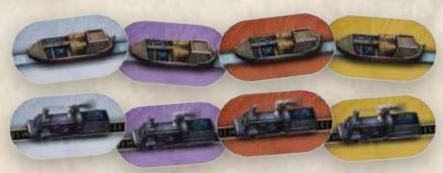
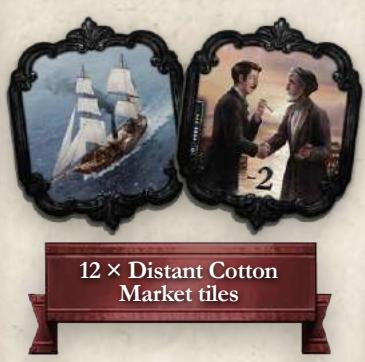
56 × Link tiles (14 per colour)
Copyright 2018 Roxley Games. All Rights Reserved Worldwide.

66 × Location and Industry cards
4× VP Markers

4× Income Markers

12 Cotton Mills
24 × Coal cubes

8 Ports

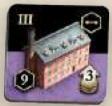
6 Shipyards

16 × Iron cubes


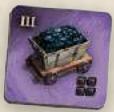

7 Coal Mines
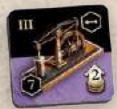

148 × Industry tiles (37 per colour)
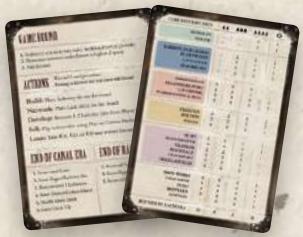

1 × Distant Cotton Market Marker

This rule book is a living document. Download the latest version from roxley.com/brass-lancashire-rulebook


1 × Deck tile
AUT
HISTORICALFIGURES
INDUSTRIALREVOLUTION

Sir Richard Arkwright (23 December 1732 – 3 August 1792) Taught to read and write by his cousin, Arkwright began as an apprentice barber, but after an early widowing his business ambitions grew, and his second marriage provided the funds to pursue wigmaking. When wigs fell out of fashion, he turned to textiles and made improvements on the spinning jenny with the clockmaker John Kay. 'Taking his business to the small village of Cromford, Arkwright encouraged weavers with large families to move there and work in his mill, including children as young as seven. Arkwright pioneered the use of the steam engine with textile machinery, a precursor to Edmund Cartwright's development of the power loom. In his later years, after an extended court battle, Arkwright lost many of his patents and his domination of the textile industry, but shortly after this he was knighted. Ambitious, religiously devout, and at times difficult to work with, Arkwright's ingenuity and organizational skills would make him known as the "father of the modern industrial factory system."

Eliza Tinsley
(17 January 1813 – 17 January 1882)
Following the death of her husband
T'homas and his father, along with the
death of her eldest of six children, 'Tinsley continued both her late husband and her late father-in-law's businesses in the Black Country as one under her own name. 'The Eliza 'Tinsley company produced nails for horseshoes, and chains and anchors for
ships, the latter of which would become the focus as motor vehicles replaced
horses. Chainmaking was a particularly
male-dominated industry, but 'Tinsley
excelled, employing around 4000 workers, and she established an offshoot company in Australia. Many of 'Tinsley's employees were women and young girls, and she
fought against government efforts to restrict women, and girls under 14, from working in the nail and chainmaking industries.
arguing that "the conditions of both
trades are favourable to moral and physical health." Known as "T'he Widow," Tinsley was respected for her industry expertise. She sold the company at 58, but it would continue operating under her name into the 21st century.


Robert Owen
James Watt

(30 January 1736 – 25 August 1819) Tinkering with models and ship's instruments at his father's workbench from an early age, Watt left for Glasgow at 17 to learn to make measuring instruments such as scales and compasses, and befriended the chemist Joseph Black. In his 30s, while repairing a model of the Newcomen steam engine used widely for pumping water out of mines, Watt noticed that the design wasted energy on cooling and reheating the cylinder, and he improved upon it by adding a separate condenser which would revolutionize the steam engine. However he was unable to make progress on this venture for several years as he was busy at his day job surveying Scottish canals. 'This changed when English manufacturer Matthew Boulton took an interest in his patent, and Watt moved to Birmingham to form a partnership that would last 25 years and spread his improved steam engine across the world of industry. 'T'hough a somewhat feeble businessman on his own (Watt once said he "would rather face a loaded cannon than settle an account or make a bargain"), he was greatly respected by his peers, and the basic unit of power, the "watt," bears his name.
(14 May 1771 – 17 November 1858) Falling in love with Caroline Dale, daughter to the owner of the New Lanark mill co-founded by Richard Arkwright, Owen convinced his business partners to purchase the mill. He ran it with great success, but displeased his partners with egalitarian activities such as paying wages to his workers over a four month period in which the mills were closed during the War of 1812. An avid scholar, Owen became critical of prevailing religious thought on human self-determinism, and he developed his own philosophy that one's circumstances are largely the result of external forces, and that therefore education and philanthropy should be paramount in society. He undertook a variety of social reform projects such as lobbying for workers and children's rights and for an 8-hour work day, and temporarily left Britain to found a socialist commune in America called New Harmony. 'T'he experiment was an economic failure that bankrupted Owen, but it did produce one of the first public libraries and a free school open to both boys and girls, and his philosophies are deeply woven into socialist movements within the United States.
Isambard Kingdom Brunel
George Stephenson
(9 June 1781 – 12 August 1848) After the death of his wife and daughter, the 25-year-old Stephenson, having no formal education, left for Scotland to find work but returned to West Moor when his father was blinded in a mining accident. When he offered to improve the mine's deficient pumping engine, Stephenson was made enginewright and became an expert in steam-engine technology. His Northumberland accent made him unpopular with the scientific community, and when he presented his design for a safer mining lamp that would not cause explosions, the Royal Society accused him of stealing the concept from parallelinventor Humphry Davy. But Stephenson's big claim to fame was his contribution to rail transport, and the invigoration of the rail industry. At age 40 he began work on the first public railway, and his locomotive known as 'Stephenson's Rocket' won a competition by achieving the record speed of 36 miles per hour, which led some to fear that such speeds would cause women's uteruses to literally fly out of their bodies. T'hankfully this did not occur.
(9 April 1806 – 15 September 1859) At the age of 15, Brunel's father Marc was sent to a debtors' prison, but his debts were paid by the British government when he made it known that the 'Tsar had offered him a position as an engineer in Russia. Brunel studied in France under the clockmaker Abraham Louis Breguet. Upon returning to England he became an assistant on Marc's project to create a tunnel under the 'T'hames, but a nearlyfatal flooding incident put the 22-year-old out of commission for several months. This didn't stop Brunel from becoming one of the most prolific engineers in history, creating tunnels, bridges, railways, a portable hospital, and a vacuum-powered atmospheric railway', though unfortunately for the latter the leather flaps sealing the vacuum pipes were eaten by rats. His Great Western' was the first steamship to conduct transatlantic service, and his Great Eastern' was the largest ship ever built up to that time, but Brunel died of a stroke at 53 just before her maiden voyage. Brunel is known today as an engineering giant.


Sir Henry Bessemer (19 January 1813 – 15 March 1898) Like Isambard Kingdom Brunel's father, Bessemer's father Anthony was forced to flee France during the French Revolution. Anthony had become a member of the Académie des sciences at 26 for his improvements on the optical microscope, and made his fortune in Britain with a process for making gold chains. Bessemer's first innovation mirrored his father's affinity for gold. After carefully analyzing bronze powder from Nuremberg, used in the manufacture of gold paint, he reverse engineered the process and created a series of six steam-powered machines that could manufacture the powder. He later developed a cheap system of creating steel by blowing air through molten pig iron to burn off impurities. 'T'he goal was initially to reduce the cost of military ordnance, but this technique of affordable steel revolutionized structural engineering and made bridges and railroad tracks, previously reliant on wrought and cast iron, much safer. Bessemer pioneered over 100 inventions in the fields of metalworking and glass, including a steamship cabin on gimbals intended to stay level to prevent seasickness which was sadly lost at sea, and he gained considerable commercial success leveraging his innovations.

Eleanor Coade
(3 June 1733 – 16 November 1821) Bringing her up a devout Baptist, Coade's parents were both successful merchants. Her grandmother Sarah Enchmarch had run the family textile business in 'Tiverton with 200 employees, using spies to acquire new manufacturing techniques, and was known for travelling around town in a sedan chair. After Coade's family moved to London, she ran her own linen draper business at age 30. Six vears later she purchased an artificial stone business from the struggling Daniel Pincot, but fired him within two years for "representing himself as the chief proprietor." Her ceramic stoneware called "Coade's Lithodipyra" went on to be used in over 700 sculptures across the globe, many of them overseen by the sculptor John Bacon, though she worked with a number of high-profile designers and architects as it allowed her to produce multiple copies of their designs. T'he South Bank Lion may be Coade's most iconic piece, but her product was also used for the Gothic screen of St George's Chapel, and in the restoration of Buckingham Palace.
BOARD SETUP

Place the board face up displaying the Full Map, which is used for all player counts (2-4).
Do not use the Alternate Map, which features fewer locations and the0icon in the top left.

Remove all cards and Distant Cotton Market tiles that do not show your player count and return them to the box.
The 2-player (22), 3-player (222), and 4-player () counts are shown in the bottom right corner on the front of the cards B, and on the left side of the front of the tiles C. Be sure to remove the 2 cards with theIicon on them.
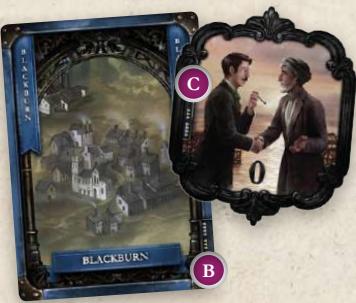

Shuffle the remaining cards and place them face down on the Card Draw Area ; this is the Draw Deck.

Insert the Deck tile, Stephenson's Rocket side E face up, near the bottom of the Draw Deck, so that there is 1 card per player beneath it (e.g. 3 cards for a 3-player game). These cards are not used during the Canal Era.


Shuffle the remaining Distant Cotton Market tiles and place them face down on the Tile Draw Area

Place the Distant Cotton Market Marker on the topmost space of the Distant Cotton Market Track .

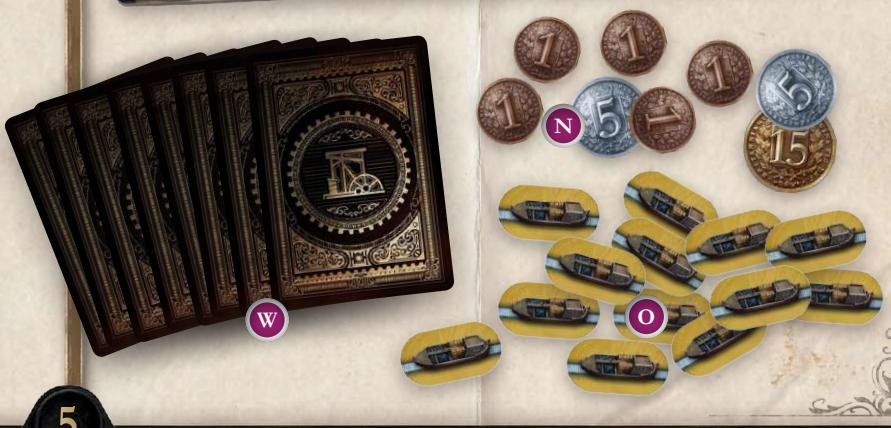
Place 1 black cube on each space of the Coal Market .

Place 1 orange cube on each space of the Iron Market ①

Place the remaining cubes beside the board; this is the General Supply

Place the money beside the board R; this is the Bank.

LOCATION BANNERS
In addition to helping players find locations on the board, the colours of the location banners also indicate which Location cards are in the Draw Deck. This varies with the player count:

• 2 players: blue and teal coloured Location cards are not in the Draw Deck.
• 3 players: teal coloured Location cards are not in the Draw Deck.
• 4 players: all Location cards are in the Draw Deck.

PLAYER AREA SETUP
Take a Player Mat.


Take £30 from the Bank


Choose a coloured Character tile.

Place the matching coloured Link tiles in your player area.

Stack the matching coloured Industry tiles (which consist of Cotton Mills P, Ports Q Shipyards R, Iron Works , and Coal Mines T) on their appropriate slots on your Player Mat. The side of the tiles with the black top half should be face down.

Place your Victory Point (VP) Marker on the "" space of the Progress Track 0

Place your Income Marker on the "10" space of the Progress Track


Draw 8 cards from the Draw Deck; this is your Hand. Do not reveal your Hand to other players
Leave a space in your player area for your discarded cards; this will be your Discard Pile.
After all players have set up their player area, shuffle all players' Character tiles together and place them in a random order on the Turn Order Track x

PLAYINGTHEGAME
ENDOFERAMAINTENANCE
THE GOAL

The game is played over 2 eras: the Canal Era (1770-1830) and the Rail Era (1830-1870). The winner is the player who has the
most Victory Points (VPs) following the end of the Rail Era. VPs are scored at the end of each era for your Link tiles and flipped Industry tiles.
ROUNDS
Each era is played in rounds, which continue until both the Draw Deck and players' Hands are exhausted. There are exactly 8/9/10 rounds per era in a 4/3/2-player game. During each round, players take turns in the order of their Character tiles on the Turn Order Track.

PLAYER TURNS
On your turn, perform a total of 2 actions.
**Exception: During the first round of the Canal Era, each player performs only 1 action.**
For each action you perform, you must discard a card from your Hand and place it face up on top of your Discard Pile.
After all of your actions have been completed, refill your Hand back up to 8 cards with cards from the Draw Deck.

Place all money spent during your turn on top of your Character tile on the Turn Order Track.
Once the Draw Deck has been exhausted, your Hand will decrease each round until you have no cards left.

Note: During the Canal Era, cards under the Deck tile are not considered part of the Draw Deck and may not be used.
ACTION LIST
For each action, you may choose to perform one of the following (you may perform the same action twice):

Build - Place one of your Industry tiles onto the board, paying the appropriate cost and consuming any required coal / iron.


Network - Expand your canal or rail network by adding Link tiles to the board.


③Develop - Gain Deveiop -Gain
access to higher-level industries by removing Industry tiles from your Player Mat.


Sell - Flip your built Cotton Mill tiles, by selling to the Distant Cotton Market or by flipping a Port tile.


Loan - Take a £10/£20/£30 ld from the Bank, and move your Income Marker 1 / 2 / 3 income levels (not spaces) backwards.

Passing - You may choose to pass instead of performing an action, but must still discard a card for each action you pass.
Spending Money - Any time you spend money to perform an action, you must place it on top of your Character tile on the Turn Order Track. Placing spent money here, rather than in the Bank, will allow you to determine the players' turn order for the next round.
END OF ROUND
After all players have taken their turn, perform the following before moving on to the next round:

Determine turn order for the next round Rearrange the Character tiles on the Turn Order Track.
• The player who spent the least money this round will go first next round B and so on, while the player who spent the most will go last
• If multiple players have spent an equal amount, their relative turn order remains the same .
• Afterwards, take all money from the Character tiles, and place it back into the Bank . This resets the money spent, ready for the next round.

Take Income

Take money from the Bank equal to your income level. **Exception: Income is not collected at the end of the final round of the game.**
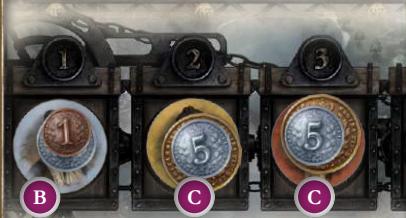
Your income level is the number displayed on the coin beside your Income Marker's current location on the Progress Track B
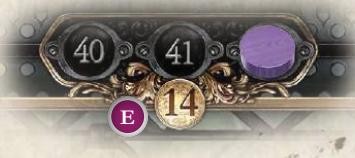
• If your income level is negative , you must pay that amount of money to the Bank.
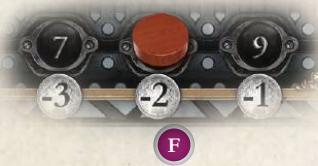
• If you have a shortfall
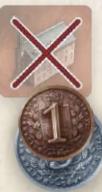
when paying negative income, you must acquire money by removing one or more of your Industry tiles (not Link tiles) from the board; each being worth half of its cost, rounded down. You keep any excess money.
If you have no way to pay a shortfall, lose 1 VP (if possible) for each £1 you are short.

Note: You may remove any of your Industry tiles, but must stop as soon as you have acquired enough money to cover the shortfall. You may not sell Industry tiles for any reason other than paying for a shortfall.

END OF CANAL & RAIL ERA
Each era ends following the round in which all players use the final cards in their Hands. When this occurs, perform the following

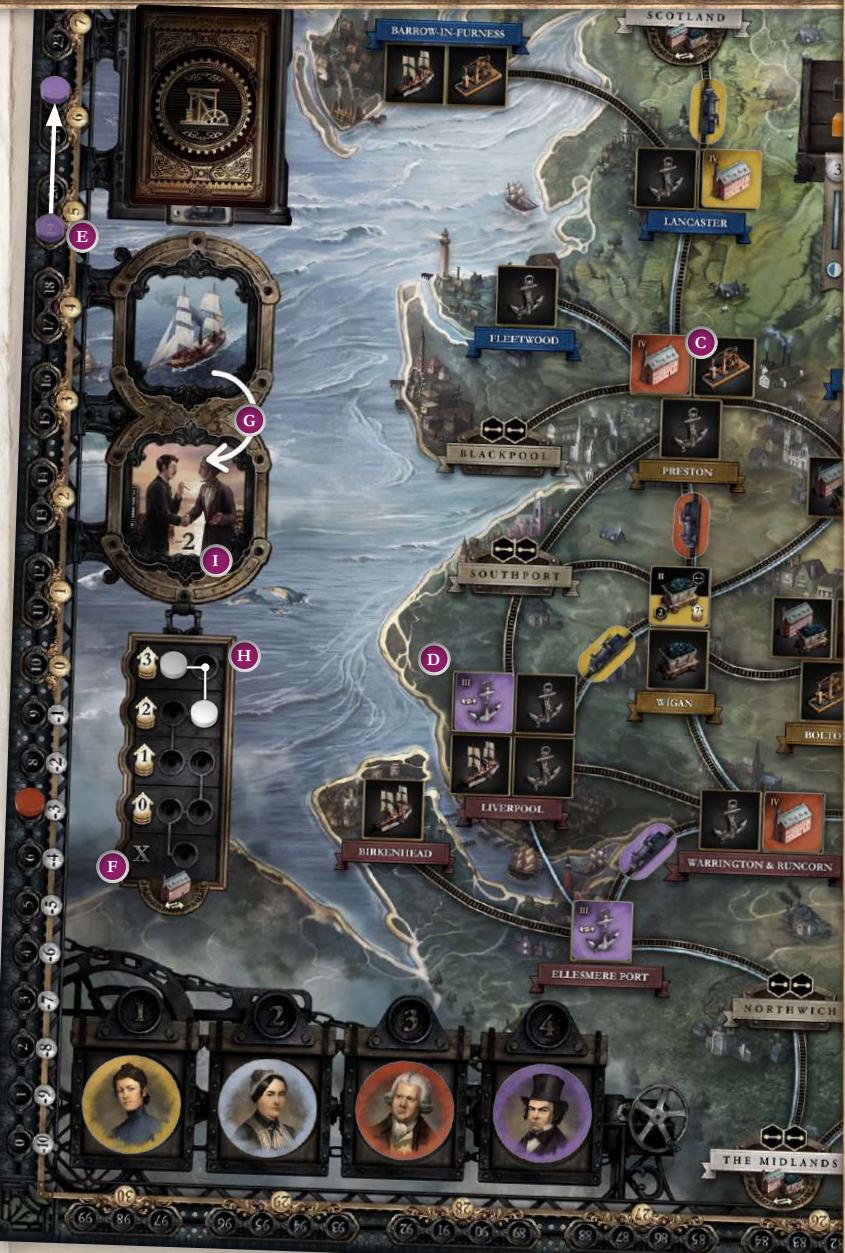
Score Canal/Rail Links For each of your Link tiles G score 1 VP for each displayed in adjacent locations, by advancing your VP Marker along the Progress Track H. Remove Link tiles from the board as they are scored.

Score Flipped Industry Tiles
After all players have removed their Link tiles, score the VPs shown in the bottom left corner of your flipped Industry tiles (those with a black top half), by advancing your VP Marker along the Progress Track H. Unflipped Industry tiles do not score.
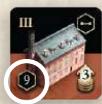

Note: If you score more than 100 VPs, record the additional points by starting another loop of the Progress Track.

END OF CANAL ERA
Perform the following additional steps at the end of the Canal Era:

Remove Obsolete Industries
Remove all level 1 Industry tiles from the board (not from Player Mats), and return them to the box. All level 2 or

greater Industry tiles remain on the board


Reset Distant Cotton Market
Place the Distant Cotton Market Marker back on the topmost space of the Distant Cotton Market Track K. Combine discarded Distant Cotton Market tiles with those on the Tile Draw Area, shuffle them, and place them face down on the Tile Draw Area L

Shuffle Draw Deck Combine the cards below the Deck tile with all players' Discard Piles, shuffle them, and place them face down on the Card Draw Area

Insert Deck Tile
Insert the Deck tile, Nathan Rothschild side face up, near the bottom of the Draw Deck, so that there are 2 cards per player beneath it (e.g.6 cards for a 3-player game).


END OF RAIL ERA
Perform the following additional step at the end of the Rail Era:

Score Cash - Score 1 VP for every £10 in your player area, by advancing your VP Marker along the Progress Track.


WINNING THE GAME
After performing Rail Era scoring:
• The player with the most VPs is declared the winner.
• Ties are broken, first by the highest income, and then by the most money remaining.
GAMEPLAYCONCEPTS
FLIPPING INDUSTRY TILES
At the end of each era, flipped Industry tiles score VPs. When flipped, they have a black top half and a VP icon in the bottom left corner.
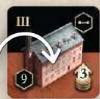
Different Industry tiles are flipped in different ways:
• Cotton Mills and Ports: Flipped when you perform a Sell action.

Coal Mines and Iron Works: Flipped when the last cube is removed from the tile. This often happens during an opponen turn.
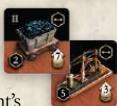
• Shipyards: Flipped immediately when built.

INCREASING YOUR INCOME
Whenever one of your
Industry tiles is flipped,
immediately advance your
Income Marker along the
Progress Track by the
number of spaces (not income
levels) shown in the bottom right corner of the tile.

**Exception: You cannot increase your income level above level 30.**

YOUR NETWORK
A location on the board is considered to be a part of your network if at least one of the following is true:
• The location contains one or more of your Industry tiles B;
• The location is adjacent to one or more of your Link tiles
CONNECTED LOCATIONS
Two locations are considered "connected" to each other if you can trace a route of Link tiles (owned by any player) from one location to the other B
CONSUMING IRON
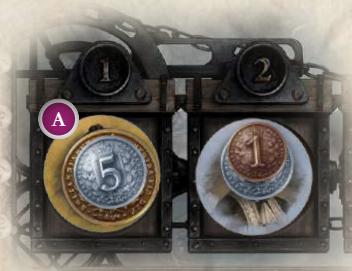
Iron is required to perform the Develop action, and to build certain Industry tiles. To consume iron, an Industry tile does not need a connection to a source of iron. Iron must be consumed from:
Any unflipped Iron Works 0

(owned by any player); it does not have to be the closest. If you need more than 1 iron, you can consume each iron from a different Iron Works. Consuming iron in this way is free.

If there are no unflipped Iron Works, you can purchase iron from the Iron Market G, starting at the cheapest price. If the Iron Market is empty, you can still purchase iron for £5/
Consumed iron cubes are placed back into the General Supply.
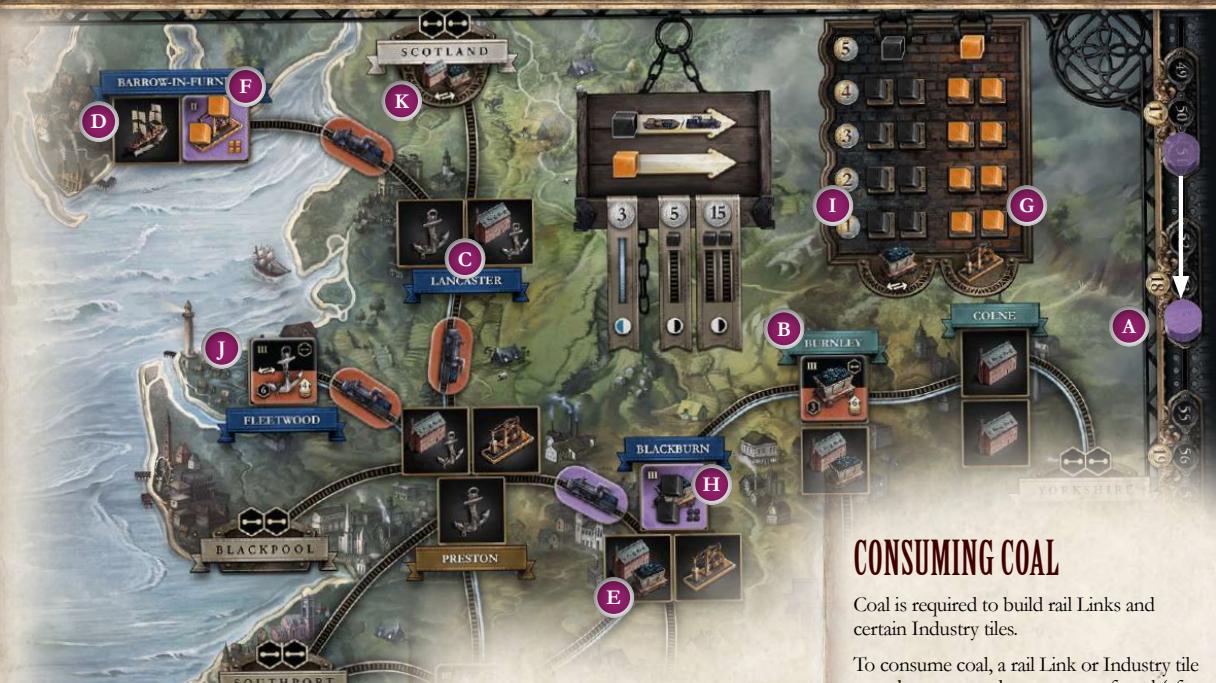
To consume coal, a rail Link or Industry tile must be connected to a source of coal (after it is placed).
Coal must be consumed from:
Historical Note: These industries generally required iron in low volumes, so it could also be transported via horse and wagon.

The closest (fewest Link tiles distant) connected unflipped Coal Mine H (owned by any player). If multiple Coal Mines are equally close, choose one. If a Coal Mine runs out of coal, and you need more, choose the next closest Coal Mine. Consuming coal in this way is free.

If you are not connected to an unflipped Coal Mine, you can purchase coal from the Coal Market ①, starting at the cheapest price. This requires a connection to the market trade icon(shown on all flipped or unflipped Port tiles , and some locations around the edge of the board ). If the Coal Market is empty, you can still purchase coal for £5 /
Consumed coal cubes are placed back into the General Supply.
Historical Note: Coal was required in large quantities, so a robust transportation network was critical.
BUILD ACTION
Performing the Build action allows you to place Industry tiles onto a location on the board.

To perform the Build action:

Discard an appropriate card. Unlike other actions, which allow you to use any card from your Hand, the Build action requires an appropriate card be discarded face up onto your Discard Pile:
Location card May be used to build any Industry tile at the location named on the card, even if the location is not a part of your network.

Industry card May be used to build the matching Industry tile, shown in the top corner of the card, in a location that is a part of your network.

· Double Action Build
May be used instead of both of your turn's actions. Discard any 2 cards and regard them as any 1 Location card. You still refill your Hand with 2 cards, if possible.

ACTIONS

Take the lowest level tile of the chosen industry from your Player Mat and place it (the side with the black top half face down) on an undeveloped space in your chosen build location, obeying the following rules:
• If possible, place it on a space displaying only that industry's icon M.
Otherwise, place it on a space displaying that industry's icon with another industry's icon
spaces display your industry's icon, you may not place it in that location. **Exception: (see"Overbuilding'”)**


The cost of the Industry tile you are building is displayed, to the left of its slot, on your Player Mat . Place money onto your Character tile on the Turn Order Track, and consume any required iron and coal Remember: If coal is required, the location you are building in must be connected to a source of coal (see "Consuming Coal" and "Connected Locations").

If you built a Coal Mine or Iron Works: Place coalor iron onto the Industry tile, equal to the quantity shown in the bottom right corner of the tile.

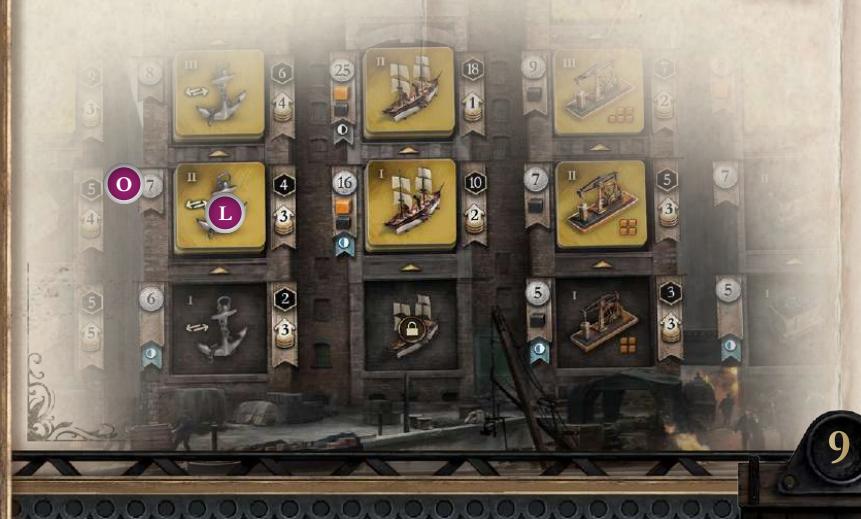

Moving Coal and Iron to the Market
If you build either a:
• Coal Mine that is connected to the
market trade icon (shown on all flipped or unflipped Port tiles, and some locations around th edge of the board); or

Iron Works, regardless of whether or not it is connected to the
market trade icon;
you must do the
following:


Immediately move as many cubes as possible from the Industry tile to available spaces in its associated Market (filling the most expensive spaces first).

For each cube moved, collect the corresponding amount of money displayed on the coin to the left side of its Market space P

If the last cube is moved from your Industry tile to its Market, flip the Industry tile and advance your Income Marker along the Progress Track by the number of spaces shown in the bottom right corner of the tile.

Note: Coal and iron cubes may only be sold to their Markets during the action when their Industry tile is built. They are never sold to their Markets in later turns.
Building If You Have No Tiles on the Board
If you have no Industry or Link tiles on the board, you may (as an action) discard an Industry card to build the matching Industry tile in any location with an undeveloped space displaying that industry's icon.

Building A Shipyard
Shipyard tiles that show a may not be built. These tiles may only be removed from your Player Mat through use of the Develop action. They must be removed before you can access the higherlevel Shipyard tiles.

Canal Era Building
• You may have a maximum of 1 Industry tile per location, but may have an Industry tile in the same location as other players.
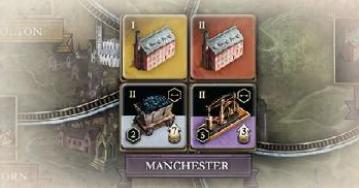
• Shipyard tiles with a ① to the left of their slot on your Player Mat may not be built.
Rail Era Building
• You may build multiple Industry tiles in each location.
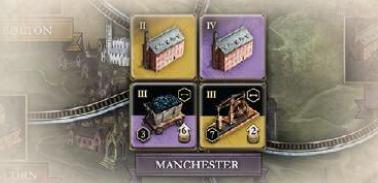
• Industry tiles with a to the left of their slot on your Player Mat may not be built. To remove these tiles (and access the higher-level tiles) you must perform the Develop action.

ACTIONS
ACTIONS
BUILD ACTION (CONTINUED)
Overbuilding
Sometimes you are allowed to replace an already placed Industry tile with a higher level tile of the same industry type (you must still pay the necessary build costs). This is known as Overbuilding. When Overbuilding:
If the tile you are replacing is your own
• You may Overbuild any Industry tile
• If there are any iron / coal cubes on the tile being replaced, place them back into the General Supply.
If the tile you are replacing is owned by an opponent B:
• You may Overbuild only a Coal Mine or an Iron Works.
There must be no resource cubes on the entire board, including in its Market, of the same type as the Industry tile being replaced.
Remove overbuilt Industry tiles from the game, and return them to the box (they will not score VPs). Players do not lose income or VPs if their Industry tiles are overbuilt.

SELL ACTION
Performing the Sell action allows you to flip built Cotton Mill tiles, and sometimes Port tiles.
To perform the Sell action:

Discard any card from your Hand and place it face up onto your Discard Pile.

Choose 1 of your unflipped Cotton Mills , and perform 1 of the following:
Selling using a Port You may sell cotton to an unflipped Port tile (owned by any player). The Cotton Mill must be connected to the unflipped Port tile

- Flip the Port tile, and advance its owner's Income Marker along the Progress Track by the number of spaces shown in the bottom right corner of the tile. Proceed to step

Selling to the Distant Cotton Market

You may sell cotton to the Distant Cotton Market if the Distant Cotton Market Marker is not on the "X" space F. The Cotton Mill must be connected to the market trade icon(shown on all flipped or unflipped Port tiles, and some locations around the edge of the board).
Note: If you are using an unflipped Port tile to sell to the Distant Cotton Market, do not flip the Port tile.
-
Flip the topmost Distant Cotton Market tile and place it onto the Tile Discard Area.
-
Move the Distant Cotton Market Marker along the Distant Cotton Market Track H by the number of spaces shown in the bottom centre of the flipped tile

-
Advance your Income Marker along the Progress Track by the number of spaces displayed on the Income icon to the left of the Distant Cotton Market Marker. Proceed to step
-
If the Distant Cotton Market Marker reaches the "X" space F, immediately end the Sell action. Do not continue to step 3.


**Exception: You cannot take a loan if it will take your income level below -10.**
You may go back to step ② and repeat the process for each of your unflipped Cotton Mills.
LOAN ACTION
Performing the Loan action allows you to acquire more money. Loans are never repaid, but instead lower your income level.
• You may not take a loan during the final 4 rounds of the Rail Era (when there are no cards left in the Draw Deck).
To aid you in remembering this, the preceding round will end with the last player refilling their Hand and revealing the Deck tile, Nathan Rothschild side up.

• When the Deck tile appears, place it beside the Bank to indicate that the
next round is the last round in which you may take loans.
Following the final round for loans, flip the Deck tile over to the Stephenson's Rocket side, to indicate that you can no longer take loans.
To perform the Loan action:

Discard any card from your Hand, and place it face up onto your Discard Pile.

Take £10/£20/£30 from the Bank, and move your Income Marker 1/2/3 income levels (not spaces) backwards down the Progress Track. Place your Income Marker on the highest space within the lower income level

DEVELOP ACTION
Performing the Develop action allows you to remove Industry tiles from your Player Mat. This allows you to gain access to higher-level Industry tiles without having to build all of the lower-level tiles of that industry.

To perform the Develop action:


Discard any card from your Hand, and place it face up onto your Discard Pile.


Consume 1 iron for each tile removed (see "Consuming Iron").
NETWORK ACTION
Performing the Network action allows you to place Link tiles, which expand your network and gain you access to new locations
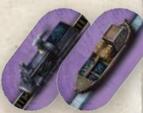
To perform the Network action:

Discard any card from your Hand, and place it face up onto your Discard Pile.

Place a Link tile on an undeveloped line on the board . The placed Link tile must be adjacent to a location that is a part of your network.
Network During Canal Era:
• You may not build rail Links. • You may build canal Links on undeveloped canal lines .
• You may build a maximum of 1 canal Link for £3.
Network During Rail Era:
• You may not build canal Links.
• You may build rail Links on undeveloped railroad lines
• You may build 1 rail Link for £5.
• You may build a maximum of 2 rail Links for £15.
You must consume 1 coal for each rail Link built (see "Consuming Coal"). Remember: Each rail Link is placed separately and must be connected to a source of coal (after it is placed).
TIPSANDVARIANTS
THINGS TO REMEMBER
• Discard 1 card for every single action you perform, including passing.
You can perform the same action twice in a turn. For instance, you may place only 1 canal Link with the Network action, but may use the Network action a second time to place another canal Link.
You may also discard any 2 cards to use both of your actions at the same time. This allows you to build any Industry tile in any location with a space for that industry.
• During the Canal Era, each player may place a maximum of 1 of their Industry tiles in each location.
【中文校注·口径】此句的 “you / each player” 指建造者本人:每名玩家在同一地点最多只能有 1 个自己的工业板块;不同玩家可以在同一地点各自建造 1 个。不是「整个地点只准有 1 个板块」。
依据:伯明翰中文版原文「你最多只能在每個地點建造一個工業板塊,但可以跟其他玩家的板塊在相同地點上」;Birmingham / Lancashire 英文原文「each player may place a maximum of 1 of their Industry tiles in each location」。
• You may Overbuild any of your own Industry tiles at any time.
• You may also Overbuild opponents' Coal Mines/Iron Works, but only when there are no coal/iron cubes left on any Industry tiles or in the Market.
You must be connected to aicon to sell cotton, and to consume coal (but not iron) from the Market.
• A location must be a part of your network for you to build there (unless you use that specific Location card or the double-action build).
BEGINNER TIPS
• Do not be afraid of taking loans. Your income level at the end of the game is not worth VPs. It is not uncommon for experienced players to win the game despite having a low income level.
• Level 2 or greater Industry tiles are not removed at the end of the Canal Era, so could score twice if built early. A flipped level 3 Cotton Mill would score a whopping 18 VPs over both eras. The Develop action is your friend.
Tiles with a icon to the left of their slot on your Player Mat cannot be built during the Rail Era. Try to build or develop at least 1 Coal Mine and 1 Iron Works during the Canal Era, so that you do not have to use a Develop action during the Rail Era to clear these industries from your Player Mat.
Nobody likes passing. During the Rail Era, when the Deck tile is revealed Nathan Rothschild side up, you have only one more round to take loans. If you are short on money, make sure you take at least one loan, or you may find yourself unable to do much during the final rounds of the game.
Figuring out how best to expand your network at the beginning of the Rail Era can be difficult for beginners. Expand your network by building rail Links to sources of coal. If you don't have access to any coal, build a Coal Mine.
INTRODUCTORY GAME

Players then score additional points as follows:
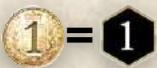
① Money Score 1 VI
Score 1 VP for every £4 in your player area (up to a maximum of 15 VPs).
To play the introductory game, first, play the entire Canal Era as normal, including the end of Canal Era scoring.

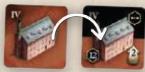
②Income level
Score VPs equal to your income level. If your income level is negative, you lose VPs.
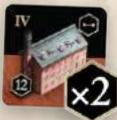
Industry tiles Score the points a second time for all your level 2 or greater Industry tiles.
CLASSIC RULES
Since Brass is such a deep game, some players may prefer to play a shorter introductory game for their first experience. The introductory game plays exactly like the full game, except you only play the Canal Era and there are additional scoring rules to make players' scores more closely reflect their success in the Canal Era.
Roxley strongly recommends you play using the updated and streamlined rules outlined in this manual. But in case you are feeling nostalgic, you can play the original game by implementing the rule changes below.
Virtual Link
The original rules included the quirky, rarely used, Virtual Link rule:
• If either Liverpool or Birkenhead is a part of your network, then you may use an Industry card to build in the other. Remember: If coal is required, the location you are building in must be connected to a source of coal. Coal does not travel across the Virtual Link

Classic 3-4 Player Deck Setup
The original rules did not have a static list of cards that were removed during setup. To play with the classic deck setup, apply the following rules changes:
• Ignore step 2 in ‘Board Setup".
Instead of step 4 in "Board Setup": Insert the Deck tile near the bottom of the Draw Deck, so that there are 9 cards beneath it in a 3-player game, or 6 cards beneath it in a 4-player game.
Brass was originally designed by Martin Wallace as a 3-4 player game. However, in 2009, a 2-player variant was developed by members of the Brass community. This used a customised map and setup; with all other rules remaining the same. Roxley's 2018 ruleset makes this Community 2-player variant obsolete, but we've included it to preserve the history of the game. To play the community 2-player variant, perform the following setup changes (the rest of the rules remain the same):
Community 2-Player Variant
• After shuffling the Draw Deck when setting up the Rail Era (step 5 of "End of Era Maintenance - Canal Era Only'), remove 6 cards in a 3-player game, or 2 cards in a 4-player game; and return them to the box
• Place the board face up displaying the Alternate Map, which features fewer locations and the read manual icon in the upper left B


• Ignore the player counts on the cards. Instead, create a 40 card Draw Deck by removing all cards that do not feature a cog icon in the bottom right corner


Ignore the player counts on Distant Cotton Market tiles. Instead, remove all tiles that do not feature a icon on the left side (one “-1", one “-3" and both “0')D.
• Start with £25 instead of £30.

简繁检索对照.md1.6 KB
022_28720_brass-lancashire — 简体/繁体检索对照
本游戏的规则书是繁体中文原文。用户用简体提问时,把关键词按下面这张表转成繁体再去 grep 原文,命中率最高。
回答时用简体或繁体都可以,但引用的原文保持繁体。
简体 → 繁体 对照(按该游戏原文出现频率排序,共 60 字)
| 简体 | 繁体 | 原文出现次数 |
|---|---|---|
| 块 | 塊 | 173 |
| 个 | 個 | 99 |
| 时 | 時 | 76 |
| 业 | 業 | 73 |
| 动 | 動 | 68 |
| 铁 | 鐵 | 63 |
| 图 | 圖 | 58 |
| 将 | 將 | 54 |
| 运 | 運 | 49 |
| 点 | 點 | 46 |
| 场 | 場 | 43 |
| 游 | 遊 | 42 |
| 结 | 結 | 41 |
| 戏 | 戲 | 40 |
| 执 | 執 | 40 |
| 数 | 數 | 39 |
| 后 | 後 | 38 |
| 从 | 從 | 37 |
| 来 | 來 | 36 |
| 连 | 連 | 36 |
| 厂 | 廠 | 33 |
| 级 | 級 | 28 |
| 轮 | 輪 | 26 |
| 库 | 庫 | 24 |
| 张 | 張 | 24 |
| 弃 | 棄 | 24 |
| 当 | 當 | 23 |
| 设 | 設 | 22 |
| 网 | 網 | 22 |
| 钢 | 鋼 | 22 |
| 进 | 進 | 22 |
| 为 | 為 | 20 |
| 钱 | 錢 | 20 |
| 须 | 須 | 20 |
| 则 | 則 | 20 |
| 区 | 區 | 19 |
| 发 | 發 | 19 |
| 输 | 輸 | 18 |
| 远 | 遠 | 18 |
| 与 | 與 | 18 |
| 会 | 會 | 18 |
| 轨 | 軌 | 17 |
| 这 | 這 | 16 |
| 于 | 於 | 15 |
| 开 | 開 | 15 |
| 矿 | 礦 | 15 |
| 对 | 對 | 15 |
| 显 | 顯 | 15 |
| 没 | 沒 | 15 |
| 应 | 應 | 14 |
| 过 | 過 | 13 |
| 获 | 獲 | 13 |
| 计 | 計 | 13 |
| 贷 | 貸 | 13 |
| 规 | 規 | 13 |
| 并 | 並 | 12 |
| 顺 | 順 | 11 |
| 边 | 邊 | 10 |
| 们 | 們 | 10 |
| 标 | 標 | 9 |
原文为社区整理/出版社公开资料,版权归原作者,仅供个人学习查阅。