
阿顿神Aton
一句话概览
阿顿神 是一款已收录于村了吗规则库的桌游,支持 2 人,原名 Aton。
本页内容:一句话概览 · 游戏概述 · 1. 游戏组件 · 2. 游戏设置 · 3. 游戏流程 · 4. 椭圆框 · 5. 冥界里的标记 · 6. 计分 · 7. 游戏结束 · 关键规则与常见问题 · 常见问题
阿顿神 规则速览
以下规则速览由本站整理,与官方规则书表述不同,仅供快速上手参考。
游戏概述
阿顿神是一款由 Thorsten Gimmler 设计的双人游戏:两名玩家各扮演古埃及底比斯城中一名争权夺利的大祭司,通过在四个神庙中放置与移除祭司标记来得分,率先达成获胜条件者胜出。每轮双方各暗出一张牌,按照四个椭圆框依次比大小、决定行动顺序、决定作用的神庙、放置标记,如此反复直到有人获胜。
核心机制: 手牌管理、盲牌对抗、区域多数控制
1. 游戏组件
| 组件 | 数量/说明 |
|---|---|
| 游戏牌 | 72 张,面值从 1 到 4,蓝色和红色各 36 张 |
| 游戏板 | 1 个,由六部分组成 |
| 祭司标记 | 58 个,用红色或蓝色标记表示(每名玩家 29 个) |
| "交换"标记 | 2 个(白色) |
| 计分标记 | 2 个(红色和蓝色各一) |
| 游戏指引 | 1 套 |
2. 游戏设置
- 将游戏板拼在一起放在两名玩家之间。
- 每名玩家拿取自己颜色的 29 个标记、一套牌和一个白色"交换"标记。
- 玩家洗混自己的牌并面朝下放在游戏板旁边。
- 计分标记放在计分条"1"分区旁边的区域里。
3. 游戏流程
- 每名玩家拿起自己牌堆最上面 4 张牌,看好后在自己的每个椭圆框下面朝下放 1 张牌。
- 游戏中一旦玩家出示交换标记以便抓 4 张新牌替换已抓的 4 张牌,原有 4 张牌丢弃,他的交换标记也从游戏中移除(每名玩家的交换标记只有 1 个)。
- 当两名玩家都放好自己的牌,翻开这些牌并逐个评估,从第 1 椭圆框到第 4 椭圆框。
- 轮到行动的玩家依次评估椭圆框 2 到 4,然后另一玩家行动。
- 当所有 8 张牌都已评估,翻开的牌丢弃,每人抓 4 张新牌,新一轮开始。
- 当面朝下的牌堆用完,将弃牌洗混叠成新的牌堆供使用。
4. 椭圆框
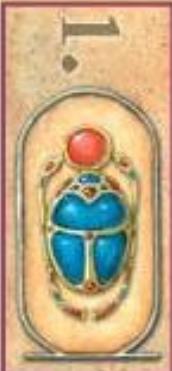
4.1 第 1 椭圆框——分数
两名玩家牌的价值进行比较,较高价值的玩家获得双倍点数差的得分。如果双方平局,无人得分。
- 示例:Peter 在这里打出一张"1",Elke 是一张"4",分差是 3,Elke 得到双倍分差,即 6 分。
- 分数记录在计分条上,计分标记前移得分数量的格子。
4.2 第 2 椭圆框——游戏顺序 / 标记的移除
放在这里的牌决定两件事:
a) 游戏顺序: 决定余下轮中两人的游戏顺序。低面值牌的玩家先行。如果牌面值相同,"椭圆框 1"刚出牌面值小的玩家先行。如果牌面值仍相同,两名玩家从自己牌堆抽牌,直到其中一人抽到的牌比对方面值小,先行玩家然后开始行动(抽出的牌放回牌堆底部)。
b) 移除标记(第 1 轮不进行): 轮到行动的玩家现在从神庙移除标记,移除的数量为放置牌面值减去 2。
- 如果结果为正数,对手相应数量的标记被移除;
- 如果结果为 -1,玩家必须移除自己 1 个标记;
- 如果神庙里的标记不够移除,则只移除那些已有的标记。
4.3 第 3 椭圆框——决定神庙
放在这里的牌决定哪个神庙将移除标记或引入标记。标号小于或等于放置牌面值的神庙将使用。
- 示例:对于面值为 2 的牌,可以在神庙 1 和 2 上移除或放置标记。
- 放在椭圆框 3 旁的牌决定哪些神庙可以移除标记,移除的标记放在冥界。
4.4 第 4 椭圆框——放置标记
放置在这里的牌决定本轮玩家可以从自己供应堆中拿取并放在神庙上的标记数量。1 个标记总是放在一个神庙的 1 个未占据方格上。如果玩家自己供应堆里没有标记,则他不能放置标记。每个不能放置的标记放到冥界的一个空方格上。
- 示例:如果玩家在该椭圆框旁放一张 4 牌,他可以移除 4-2=2 个的对手标记;对于面值 2 的牌,不移除标记。
- 示例:Peter 可以在神庙 1 和 2 放 4 个标记。神庙 1 还有 1 个空格,神庙 2 还有 2 个空格,这样他第 4 个标记没有位置,这个标记就放到冥界里。
- 放在椭圆框 3 旁的牌决定哪些神庙可以放置标记。
5. 冥界里的标记
以下情况下,标记放到冥界里:
- 标记从神庙移除;或
- 标记不能放进一个神庙(没有空位)。
标记应放在冥界的空格上。如果冥界全满了,两名玩家完成自己的回合然后马上计分。
注:如果玩家不得不放进冥界的标记比冥界空格还多,多余的标记放回自己的供应堆。
6. 计分
计分时,奖励以下分数:
- 神庙 1: 在该神庙有最多标记的玩家得到该神庙两人标记数量差的分数。
- 神庙 2: 在该神庙有最多标记的玩家得 5 分。
- 神庙 3: 在该神庙拥有最多标记的玩家得到他在那里放置标记数量的分数。
- 神庙 4: 在该神庙有最多标记的玩家,每占领 1 个蓝色方格(四个神庙每个有 1 个蓝色方格)得 3 分。
- 黑色方格: 在黑色方格里有最多标记的玩家得 8 分。
- 奖分方格: 占据奖分方格的玩家得到方格上标记的额外奖分(+1 或 +2)。
如果某神庙没有多数赢家,无人得分。这条规则也适用于黑色方格计分。
计分回合后,两名玩家轮流从神庙里移除自己 4 个标记,从领先者开始(如果两人平分,红色先行)。
- 进行移除时,如果可能,玩家必须每个神庙移除 1 个自己的标记。如果玩家在某神庙里没有标记,那么他可以从标记最多的神庙里多移除 1 个。
- 冥界里的标记和刚移除的标记放回各自供应堆。
- 如果游戏还没结束,进行新一轮。
7. 游戏结束
- 如果以下四个条件之一发生,游戏立即结束:某人达到 40 分;一个神庙的所有方格占满;占领四个神庙的所有黄色方格;占领四个神庙的所有绿色方格(即所有黄色或绿色方格占满)。满足这一条件的玩家胜利。
- 另外,在计分时某人达到或超过 40 分的情况下,游戏结束,此时计分过程进行完整。
- 拥有最高分数的玩家胜利(超出 40 的分数也计算在内)。如果玩家平分,游戏平局。
关键规则与常见问题
易错规则
- 计分条上的得分是"双倍点数差":由第 1 椭圆框比较两张牌价值,较高者得双倍差值;平局无人得分。
- 第 2 椭圆框同时决定顺序与移除数量:低面值牌先行;移除数量=放置牌面值-2。
- 结果为 -1 时的惩罚:此时不移除对手标记,而是玩家必须移除自己 1 个标记。
- 移除不受足量限制:如果神庙里的标记不够移除,则只移除那些已有的标记。
- 第 3 椭圆框决定作用的神庙:标号小于或等于放置牌面值的神庙才会被使用。
- 第 1 轮不进行移除标记。
- 标记无处可放时才进冥界:从神庙移除的标记、以及无法放进神庙(没有空位)的标记都放到冥界。
- 冥界溢出处理:必须放进冥界的标记比冥界空格还多时,多余的标记放回自己的供应堆。
- 冥界全满时:两名玩家完成自己的回合然后马上计分。
- 某神庙没有多数赢家时无人得分,该规则同样适用于黑色方格计分。
- 神庙 3 的得分=该玩家在此神庙放置的标记数量,而非两人标记差。
- 计分后各移除 4 个标记:从领先者开始,尽可能每个神庙移除 1 个;某神庙无标记时,可从标记最多的神庙多移除 1 个。
常见问题
-
Q:两张牌价值相同怎么定先后?
A:先看"椭圆框 1"刚出的牌,面值小的玩家先行;若仍相同,两人从自己牌堆抽牌,直到其中一人抽到的牌比对方面值小,抽出的牌放回牌堆底部。 -
Q:交换标记怎么用?
A:玩家可出示交换标记抓 4 张新牌替换已抓的 4 张牌,原有 4 张牌丢弃,该交换标记随即从游戏中移除。 -
Q:面值 2 的牌放在第 2 椭圆框会怎样?
A:移除数量为 2-2=0,不移除标记。 -
Q:放不进神庙的标记去哪?
A:放到冥界的空格上;若冥界已满且仍需放置,多余标记放回自己的供应堆。 -
Q:什么时候会立刻计分?
A:冥界全满时,两名玩家完成自己的回合后马上计分。 -
Q:神庙 4 和黑色方格如何计分?
A:神庙 4 由占多数者每占领 1 个蓝色方格得 3 分;黑色方格由占多数者得 8 分;无多数赢家则无人得分。 -
Q:游戏何时结束、如何判定胜负?
A:某人达到/超过 40 分、某神庙方格占满、或四个神庙的所有黄色/绿色方格占满时游戏结束(计分时达到 40 分的情况会把计分过程走完);最高分者胜利,平分则平局。
常见问题(FAQ)
以下 1 条问答中 0 条来自站内玩家的真实提问,其余 1 条为本站整理的常见疑问;答复内容保持原样。
阿顿神支持几个人玩?
2 人。
去哪查完整规则
想核对具体规则细节、卡牌效果或某个回合的结算方式,可以在村了吗里选中这款游戏后直接提问。
同类桌游
- 卡坦岛德式
- 工业革命:伯明翰德式
- 勃艮第城堡:特别典藏版德式
- 方舟动物园德式
- 卡卡颂抽象
- 瘟疫危机传承:第一季美式
- 阿瑞迪亚:勇踏征途美式
- 重塑宇宙德式
- 幽港迷城美式
- 埃多拉的德鲁伊德式
规则原文(Markdown)
本站收录这款游戏的规则原文 2 个文件,此处内联渲染 2 个,可直接展开阅读或下载。
rules_zh_阿顿神_3256.md7.2 KB
中文翻译:soul
Thorsten Gimmler 设计的双人游戏
中文
游戏目标
每名玩家扮演古埃及的底比斯里一名争权夺利的大祭司。
赢家是首先获得以下条件的玩家:
游戏部件和准备
- 72张游戏牌,其面值从1到4,蓝色和红色各36张。
- 1个六部分组成的游戏板
- 获得40分,或
- 占领一个神庙的所有方格,或
- 占领四个神庙的所有黄色方格,或
- 占领四个神庙的所有绿色方格。
- 58个祭司,用红色或蓝色标记表示
- 2 “交换” 标记 (白色)
- 2 计分标记 (红色和蓝色各一)
- 1 套游戏指引

游戏准备
将游戏板拼在一起放在两名玩家之间。
每名玩家拿取自己颜色的29个标记、一套牌和一个白色“交换”标记。
玩家洗混自己的牌并面朝下放在游戏板旁边。计分标记放在计分条“1”分区旁边的区域里。

游戏进程
每名玩家拿起自己牌堆最上面4张牌,看好并面朝下每个自己的椭圆框下放1张牌。
游戏中一旦玩家出示交换标记以便抓4张新牌替换已抓的4张牌,原有4张牌丢弃掉,他的交换标记也从游戏中移除。
当两名玩家都放好自己的牌,翻开这些牌并逐个评估。
[见: 第1椭圆框到第4椭圆框]
当所有8张牌都已评估,翻开的牌丢弃掉,每人抓4张新牌。新一轮开始。当面朝下的牌堆用完,将弃牌洗混叠成新的牌堆供使用。


椭圆框
第1椭圆框 - 分数:
两名玩家牌的价值进行比较,较高价值的玩家获得双倍点数差的得分。如果双方平局,无人得分。
如图:Peter在这里打出一张“1”。Elke是一张“4”,分差是3。Elke得到双倍分差,即6分。
注:分数记录在计分条上。计分标记前移得分数量的格子。
- 椭圆框 2-4 决定游戏顺序和显示哪个神庙有多少个标记移除或引入。
- 轮到行动的玩家依次评估椭圆框2到4,然后另一玩家行动。
第2椭圆框 - 游戏顺序 / 标记的移除:
放在这里的牌决定两件事:
a) 余下轮中两人的游戏顺序。
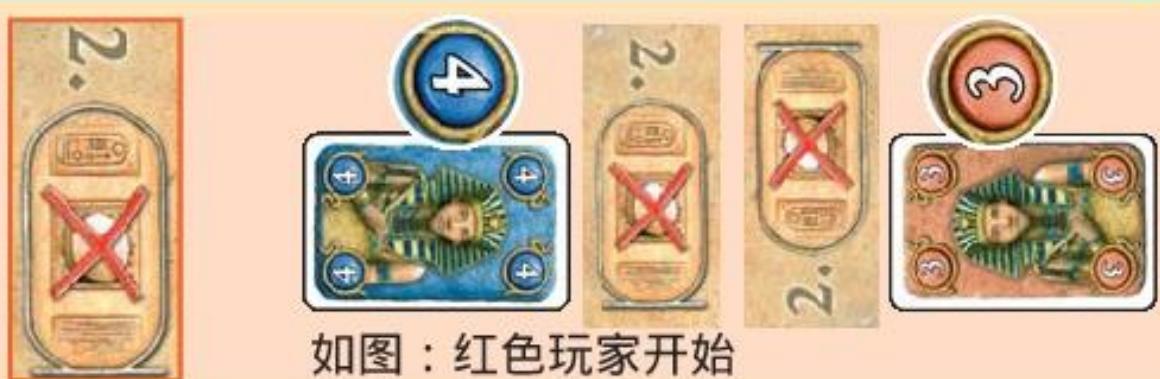
如图:红色玩家开始
低面值牌的玩家先行。如果牌面值相同,“椭圆框1”刚出牌面值小的玩家先行。如果牌面值仍相同,两名玩家从自己牌堆抽牌直到其中一人抽到的牌比对方面值小。先行玩家然后开始行动。(抽出的牌放回牌堆底部。)
b) 移除标记 (第1轮不进行)
轮到行动的玩家现在从神庙移除标记。移除的数量为放置牌面值减去2。
- 如果结果为正数,对手相应数量的标记被移除;
- 如果结果为-1,玩家必须移除自己1个标记;
如果神庙里的标记不够移除,则只移除那些已有的标记。
第3椭圆框 - 决定神庙:
放在这里的牌决定哪个神庙将移除标记或引入标记。标号小于或等于放置牌面值的神庙将使用。
第4椭圆框 - 放置标记:
放置在这里的牌决定本轮玩家可以从自己供应堆中拿取并放在神庙上的标记数量。1个标记总是放在一个神庙的1个未占据方格上。如果玩家自己供应堆里没有标记,则他不能放置标记。
每个不能放置的标记放到冥界的一个空方格上。
冥界里的标记:
以下情况下,标记放到冥界里:
- 标记从神庙移除;或
- 标记不能放进一个神庙(没有空位)
标记应放在冥界的空格上。如果冥界全满了,两名玩家完成自己的回合然后马上计分。


例:如果玩家在该椭圆框旁放一张4牌,他可以移除 $4 - 2 = 2$ 个的对手标记。对于面值2的牌,不移除标记。
注:椭圆框3旁的牌决定哪些神庙可以移除标记。
移除的标记放在冥界。

例:对于面值为2的牌,可以在神庙1和2上移除或放置标记。
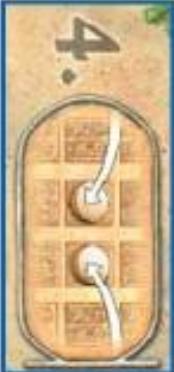
如图:这里,红色玩家有4个方格可以选择放置标记。

注:放在椭圆框3旁的牌决定哪些神庙可以放置标记。
例:Peter可以在神庙1和2放4个标记。神庙1还有1个空格。神庙2还有2个空格。这样他第4个标记没有位置。这个标记就放到冥界里。
注:如果玩家不得不放进冥界的标记比冥界空格还多,多余的标记放回自己的供应堆。
计分
计分时,奖励以下分数:
- 神庙 1:在该神庙有最多标记的玩家得到该神庙两人标记数量差的分数。
- 神庙 2:在该神庙有最多标记的玩家得5分。
- 神庙 3:在该神庙拥有最多标记的玩家得到他在这里放置标记数量的分数。
- 神庙 4:在该神庙有最多标记的玩家,每占领 1 个蓝色方格(四个神庙每个有 1 个蓝色方格)得 3 分。
- 黑色方格:在黑色方格里有最多标记的玩家得8分。
- 奖分方格:占据奖分方格的玩家得到方格上标记的额外奖分(+1或+2)。
计分回合后,两名玩家轮流从神庙里移除自己4个标记,从领先者开始。(如果两人平分,红色先行。)
进行移除时,如果可能,玩家必须每个神庙移除1个自己的标记。如果玩家在某神庙里没有标记,那么他可以从标记最多的神庙里多移除1个。
冥界里的标记和刚移除的标记放回各自供应堆。
如果游戏还没结束,进行新一轮。
游戏结束
- 如果以下四个条件之一发生,游戏立即结束:某人达到40分;一个神庙的所有方格占满;所有黄色或绿色方格占满。
满足这一条件的玩家胜利。

神庙 1: 红方得 3 分
[6个红色标记减去3个蓝色标记 = 3 分]
神庙 2: 蓝方得 5 分 [占多数方得 5 分]
神庙 3: 红方得 4 分
[占多数方有4个标记 $= 4$ 分]
[占多数方每占据1个蓝色方格得3分 =9分]
黑色方格:红方得8分[占多数方得8分]
奖分方格:红方得4分;蓝方得4分[按方格标注的1或2分]
注:如果某神庙没有多数赢家,无人得分。这条规则也适用于黑色方格计分。
- 另外在计分时某人达到或超过40分情况下,游戏结束。在这种情况下,计分过程进行完整。
拥有最高分数的玩家胜利(超出40的分数也计算在内)。如果玩家平分,游戏平局。
下载 MarkdownAton Quick Rules.md8.2 KB
ATON
| 2006 | 2 Players | 30 Mins. | Ancient | ||
Object
Each player takes the role as one of two high priests of the great Egyptian deities: Aton or Amon. Each player is fighting for supremacy in the four temples in Thebes, working to place their priests in crucial positions. There are three ways to win the game: the player who is able to gain 40 points first, or occupy all the squares of one temple, or all of the green or yellow squares of all four temples, will win the game.
Setup
• Put the board together, placing it between the two players. Each player should be facing one of the sides with cartouches.
Each player is given a deck of cards of one colour (red or blue). The colour of their deck also indicates the token colour that they control.
• Each player receives a supply of their red or blue tokens.
• Each player receives one white “exchange” counter.
• Players shuffle their cards and place them face down in front of them.
• Each player's larger scoring token of their colour is placed beside the “1” on the score track.
Rules of Play
• The game is played over a series of rounds, with each player completing their turn in order. This continues until a winner is determined.
A round begins with each player taking the top 4 cards from their pile, looking at them, and then assigning one card face down beside each of their cartouches (numbered 1 through 4).
Once each player has assigned their cards, all 8 cards are revealed at once. The cards are then resolved one at a time, starting with cartouche 1 and ending with cartouche 4.
Each player has a white “exchange” token. They may, after drawing four cards at the beginning of a round, discard their exchange token to discard all four cards and draw four new cards. This may only be done once per game.
After the second player has played their turn, all 8 face-up cards are discarded into their own discard pile. Four new cards are then taken by each player and the next round begins. (Note that if any draw pile has been exhausted, the player shuffles their discard pile to form a new draw pile.)
• The cartouches are now resolved in order.
Step 1: Resolve 1st Cartouche
The value of both players' cards on the 1st cartouche are compared. The player with the higher value receives double the difference in points. If both cards tie, no points are awarded. (For example: player 1 plays a '3'; player 2 plays a '1'. 3 – 1 = 2. 2X2 = 4. Player 1 receives 4 points.)
Step 2: Resolve 2nd Cartouche
The value of each player's card on their 2nd cartouche is compared. The player with the lower value immediately becomes the first player. Ties are broken by the player who played the lower valued card on the first cartouche. A further tie is broken by the players drawing cards from their decks one at a time until one player shows a lower card. This player becomes the start player. (These drawn cards are then placed at the bottom of their respective draw piles.)
The current player now plays out the remainder of their turn, resolving cartouches 2-4. Once they have fully resolved their turn, the second player fully resolves their cartouches.
• The active player looks at the value of their 2nd cartouche card and then subtracts 2.
• --- If the result is a positive number, the player will remove this number of their opponent's tokens from a temple (or temples) as determined by the card they played on cartouche 3 (more later).
• --- If the result is a negative number, the current player must remove exactly one of their own tokens from a temple as determined by their cartouche 3 card.
Important: Adding or removing tokens when resolving the 2nd cartouche is skipped in the first round.
The 3rd Cartouche
Similar to each cartouche, the card here shows a number between 1 to 4. This card indicates which temples the current player may remove tokens from / add tokens to when resolving the 2nd and 4th cartouches. The temples that are affected is the temple with the matching number as the card on the 3rd cartouche, plus any numbered temple that is lower. As such, a play of a '1' card means only in the '1' temple may tokens be added or removed. A play of a '4' card means all four temples may have tokens added or removed (at the appropriate time).
Step 3: Resolve 4th Cartouche
The current player resolves this cartouche after resolving the 2nd cartouche. The number on this card indicates how many of their own tokens they must take from their token supply and place in the temples (as determined by the 3rd cartouche card).
• Tokens are placed only on unoccupied squares. If a player has no more tokens in their supply, they cannot place any.
If the player has tokens but cannot legally place any token on the selected temple (or temples), each token which could not be placed is placed on one of the empty squares in the “Kingdom of the Dead” (found at the bottom of the board).
Kingdom of the Dead
Tokens that are removed when resolving the 2nd cartouche or could not be placed during the 4th cartouche are placed in the Kingdom of the Dead row.
If the Kingdom of the Dead row is ever full, the players finish the current round and then a scoring phase takes place. (Any additional tokens that were to go onto the Kingdom of the Dead are returned to the player's supply).
Second Player's Turn
Once the first player has fully resolved their 2nd to 4th cartouche, the second player takes their turn. Like the first player, they also add to and possibly remove tokens from the board as determined by their 2nd to 4th cartouche cards. If a scoring round does not happen, a new round begins. Players then discard their played cards and draw 4 new cards (as normal).
Scoring
• When scoring occurs (due to the Kingdom of the Dead being filled) the following points are awarded:
• --- Temple 1: The player with the most tokens in this temple gets a number of points equal to the difference between the total of each player's tokens.
• --- Temple 2: The player with the most tokens in this temple receives 5 points.
• --- Temple 3: The player with the most tokens in this temple receives a number of points equal to the number of tokens they have in this temple.
• --- Temple 4: The player with the most tokens in this temple receives 3 points for each of the blue squares occupied by him in all four temples.
• --- Black squares: The player who has the most tokens on the black squares in all four temples receives 8 points.
• --- Bonus squares: Each player receives points based on the bonus amount shown on these squares.
After scoring, both players take turns to remove 4 of their tokens from the temples, one at a time, beginning with the player who has the most points. (If there is a tie, red removes first). One token from each of the four temples must be removed if possible. Each player alternates, taking one token until they have removed four tokens.
If a player doesn't have any tokens in one or more of the four temples, they must remove a token from the temple where they have the most tokens, after removing one token from each of the temples they do occupy. (Note: Players may wish to place their removed tokens above the temples so that they don't forget which temples they have already removed tokens from.)
• These removed tokens and any tokens from the Kingdom of the Dead are then returned to their supplies.
• Note that no player scores for a temple or black squares if there is a tie in that competition.
End of Game
• The game continues until either:
• --- a) a player receives 40 points;
• --- b) all the squares of one temple have been filled by one player; or
• --- c) one player fills all the yellow squares or the green squares in all four temples.
The player who first fulfills one of these three conditions is the winner. The game ends immediately if one of the above winning conditions occurs during a player's turn. Otherwise, the game ends after the scoring round where one or both players received at least 40 points. The player who received the highest amount of points at that point is the winner. Ties are shared equally.
Uploaded by “freechinanow” to boardgamegeek.com – July 2018
下载 Markdown原文为社区整理/出版社公开资料,版权归原作者,仅供个人学习查阅。