
瘟疫危机传承:第一季Pandemic Legacy: Season 1
一句话概览
瘟疫危机传承:第一季 是一款已收录于村了吗规则库的桌游,支持 2–4 人,原名 Pandemic Legacy: Season 1。
本页内容:一句话概览 · 游戏概述 · 1. 游戏组件 · 2. 游戏设置 · 3. 游戏流程 / 回合结构 · 4. 行动详解 · 5. 抽牌阶段 · 6. 感染阶段 · 7. 爆发机制 · 8. 角色能力 · 9. 角色伤痕与丢失 · 10. 卡牌规则 · 11. 研究站 · 12. 游戏结束与终局升级 · 关键规则与常见问题 · 常见问题
瘟疫危机传承:第一季 规则速览
以下规则速览由本站整理,与官方规则书表述不同,仅供快速上手参考。
游戏概述
四种疾病正在全球蔓延,你的团队身处抗疫前线,更糟的是其中一种已出现抗药性迹象。这是一款合作游戏,所有玩家必须齐心协力研发治愈方案、阻止疫情爆发,在四种疾病彻底吞噬人类之前完成目标任务。你们将共同胜利或共同失败。
核心机制: 合作游戏、传承机制(跨局永久改变)、手牌管理、行动点分配、疫情传播与爆发链
1. 游戏组件
| 组件 | 数量/说明 |
|---|---|
| 游戏板 | 1块 |
| 角色卡 | 5张 |
| 玩家指示物 | 4个 |
| 玩家卡牌 | 61张(城市卡48张、流行病卡5张、事件卡8张) |
| 参考卡 | 4张(每种玩家颜色各1张) |
| 感染卡 | 48张 |
| 传承卡 | 62张 |
| 平民卡 | 4张 |
| 档案袋 | 5个 + 1张贴纸页 |
| 治愈标记 | 4个(药瓶面/根除面∅) |
| 感染率标记 | 1个 |
| 提醒标记 | 1个 |
| 爆发标记 | 1个 |
| 研究站 | 6个 |
| 疾病方块 | 96个(4种颜色各24个) |
| 编号包裹 | 8个(装在包裹盒中) |
| 钢笔 | 需自备 |
2. 游戏设置
2.1 传承机制简介
与每次完全重置的游戏不同,传承机制会将部分元素从一局延续到下一局。你在第1局做出的决定将永久保留。有时你需要在游戏组件上写字、贴贴纸,甚至撕毁卡牌——这些改动都是永久性的。
每局结束时,团队选择两项「终局升级」为未来对局做准备。游戏过程中会指示你打开密封包裹,未收到指示前不要打开。档案袋中也包含隐藏信息。规则书中标注A至Y的缺失规则会在游戏过程中逐步获得并粘贴入册。
2.2 游戏月份
游戏分为12个月份,从1月开始。当月成功则进入下一个月;失败则获得一次重试机会;再次失败必须进入下一个月。
2.3 传承卡组
传承卡组按特定顺序排列,不得翻阅或洗混。每局开始时从顶部翻卡,直到翻到背面写着「STOP」的卡牌。该卡会告知何时继续翻卡(可能是局中、局末或下月开始)。传承卡组是单向旅程,即使重玩某月也不要把传承卡放回。
2.4 档案袋与包裹
五个档案袋包含后续会贴到游戏中的贴纸。传承卡会指示你打开档案袋上的对应编号门。八个编号包裹会在游戏过程中被指示打开。首次游戏前,将「打开包裹8」贴纸贴到包裹盒的8号门上。
2.5 目标
每局开始时会有一个或多个需要完成的目标。某月需要完成的目标数量见游戏板上该月标注。标记为「强制」的目标必须完成才能获胜。无需在开局时决定尝试哪些目标。部分目标持续有效,部分会在特定月份到期,新目标也会随游戏进程引入。
2.6 资金
每局开始时,根据当前资金等级向玩家牌组中加入对应数量的资助事件卡(由团队选择)。起始资金等级为4,最低0,最高10。
2.7 初始设置步骤
- 翻阅任务简报: 首次游玩某月时,从传承卡组翻至STOP卡,阅读任务简报并整合新卡牌
- 摆放游戏板与配件: 放置研究站(初始仅亚特兰大有起始研究站贴纸)、按颜色分四堆疾病方块
- 放置爆发、治愈标记与目标: 爆发标记放在爆发轨道「0」位;4个治愈标记药瓶面朝上放在疾病追踪区底部;所有当前目标放入目标区
- 选择资助事件并分配手牌: 团队选择资助事件卡加入玩家牌组,洗匀后发牌(2人各4张、3人各3张、4人各2张)。传承机制中玩家手牌始终面朝上
- 准备玩家牌组(堆叠法): 将剩余玩家卡分成尽量等厚的5叠,每叠洗入1张流行病卡面朝下,再叠成玩家牌组(较小的叠放底部)
- 选择角色与起始位置: 每位玩家选角色和颜色,拿取对应参考卡和指示物,放在任意研究站上(首次游戏从亚特兰大出发)。所有角色必须在同一研究站开始
- 使用获胜奖励: 赢得某月可获得下月奖励(首局无奖励)
- 确定起始玩家: 盲选一个指示物,该玩家先手,顺时针进行
- 放置感染率标记并感染9座城市: 感染率标记放在感染率轨道最左侧「2」位。翻3张感染卡各放3个对应色方块,再翻3张各放2个,再翻3张各放1个(共放置18个方块,感染9座城市)。这9张卡面朝上放入感染弃牌堆
3. 游戏流程 / 回合结构
每位玩家的回合分为3个步骤:
- 执行4个行动
- 抽取2张玩家卡
- 感染城市
完成感染后,左手边玩家开始回合。玩家之间应充分讨论、互相建议,但轮到谁就由谁做最终决定。
4. 行动详解
每回合最多执行4个行动,可自由组合,同一行动可重复执行。角色特殊能力可能改变行动方式。需要弃牌的行动,弃牌均放入玩家弃牌堆。
4.1 移动行动
| 行动 | 规则 |
|---|---|
| 驾车/渡轮 | 移动到白线相连的相邻城市(白线可「绕回」板面另一端,如悉尼与洛杉矶相连) |
| 直飞 | 弃1张城市卡,移动到该卡对应城市。暴动、崩溃或陷落的城市不可直飞进出 |
| 包机 | 弃1张与当前城市匹配的城市卡,移动到任意城市。暴动、崩溃或陷落的城市不可包机进出 |
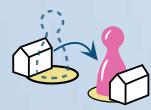
| 穿梭 | 从有研究站的城市移动到另一个有研究站的城市 |
4.2 建造建筑
弃1张与当前城市匹配的城市卡,在该城市放置一座建筑。初期只有研究站可用。若某类建筑全部已放置在板上,可从板上任意位置移动一座到当前城市。每座城市每种建筑最多一座。
4.3 治疗疾病
移除当前城市的1个疾病方块放回供应堆。若该颜色疾病已被治愈,则移除该城市该颜色的全部方块。若同一城市有多种已治愈疾病的方块,每种颜色仍需各执行一次治疗行动。
根除疾病: 若已治愈疾病的最后一个方块从板上移除,该疾病被根除,将治愈标记翻至「∅」面。首次根除某种疾病时,为其命名并写在游戏板疾病追踪区。根除不是获胜的必要条件,但根除后该颜色城市被感染时不再放置新方块。
4.4 分享知识
在你和另一名玩家同处一座城市时,可以:
- 将与该城市匹配的城市卡交给对方,或
- 从对方手中拿取与该城市匹配的城市卡
双方必须同意。若拿卡后手牌超过7张,必须立即弃牌或打出事件卡。
4.5 研发治愈方案
在任意研究站弃5张同色城市卡,治愈该颜色疾病。将治愈标记覆盖疾病图标。若此时板上无该颜色方块,该疾病即被根除。若因正面突变使研发治愈无需行动,玩家可在任意玩家回合立即弃牌。
5. 抽牌阶段
执行完4个行动后,从玩家牌组顶抽取2张卡。若牌组剩余不足2张,游戏立即结束,团队失败。
5.1 流行病卡
抽到流行病卡不加入手牌也不补抽,立即按顺序执行:
- 增长: 感染率标记在感染率轨道上前进1格
- 感染: 从感染牌组底部翻1张卡。除非该颜色疾病已被根除,在该城市放置3个对应色方块。若该城市已有该颜色方块,则补至3个后触发爆发。弃入感染弃牌堆
- 加剧: 将感染弃牌堆洗匀后放在感染牌组顶部
若同时抽到2张流行病卡,依次完整执行上述三步。因方块不足无法放置所需数量时,游戏立即失败。
6. 感染阶段
根据当前感染率翻相应数量的感染卡(感染率标记下方数字),逐张感染:在对应城市放置1个匹配色方块。若该疾病已被根除则不放置。若该城市已有3个该颜色方块,不放第4个,改为触发爆发。弃入感染弃牌堆。
7. 爆发机制
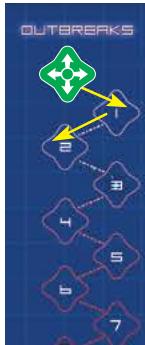
爆发发生时,爆发标记前进1格,然后在该城市每条白线相连的相邻城市各放置1个该颜色方块。若相邻城市已有3个该颜色方块,不放第4个,改为在当前感染卡解决完毕后触发连锁爆发。连锁爆发时爆发标记再前进1格,但不向已在此轮爆发过的城市放置方块。
一座城市可同时拥有多种颜色的方块,每种颜色最多3个。爆发标记到达轨道末端时,游戏立即失败。
7.1 恐慌等级
每座爆发过的城市恐慌等级上升1级。恐慌等级效果如下(累积生效):
| 等级 | 状态 | 效果 |
|---|---|---|
| 1 | 动荡 | 无额外效果 |
| 2 | 暴动 | 不可直飞或包机进出;研究站被摧毁且无法重建 |
| 3 | 崩溃 | 进入该城市需额外弃1张该城市颜色的卡 |
| 4 | 陷落 | 进入该城市需额外弃2张该城市颜色的卡(共2张);角色处于陷落城市时会丢失 |
恐慌等级达到2时,移除该城市的研究站(若是起始研究站则用摧毁研究站贴纸覆盖)。恐慌等级达到5时爆发仍正常结算但不再贴贴纸。
7.2 伤痕检查
处于爆发城市的角色获得1个伤痕。
8. 角色能力
| 角色 | 特殊能力 |
|---|---|
| 调度员 | 可花费行动将任意指示物移至另一指示物所在城市(需物主同意),或以自己方式移动他人指示物(使用调度员的伤痕和升级,弃调度员的手牌) |
| 多面手 | 拥有4个角色升级槽位,每回合5个行动 |
| 医疗兵 | 治疗时移除该城市该颜色全部方块(非仅1个);已治愈疾病自动移除所在城市全部方块(不花费行动,包括他人回合);阻止已治愈疾病在所在城市放置方块和爆发 |
| 科学家 | 研发治愈方案只需4张同色城市卡(而非5张) |
| 研究员 | 分享知识时可将手中任意城市卡交给同城玩家(无需匹配当前城市),可在任意玩家回合进行 |
9. 角色伤痕与丢失
角色可在游戏过程中受到精神或身体伤害,选择可用伤痕贴到角色卡上。当伤痕槽已满仍需贴伤痕时,角色丢失。角色处于陷落城市时也会丢失。
角色丢失时:撕毁角色卡(此后永远不可使用),弃掉所有手牌,拿取对应平民卡,将指示物放在有研究站的城市(无研究站则放在亚特兰大)。若在回合中丢失,可继续完成剩余行动。
10. 卡牌规则
10.1 玩家卡
城市卡可在游戏过程中被贴上事件贴纸(每张城市卡限1张贴纸)。打出贴有贴纸的城市卡时,选择作为城市卡使用或使用贴纸效果,不可同时使用两者。玩家可随时查看弃牌堆。
10.2 手牌上限
手牌超过7张时(处理完流行病卡后),必须弃牌或打出事件卡直到7张。仅玩家卡计入手牌上限。
10.3 事件卡
打出事件卡不消耗行动,由打出者决定使用方式,可在任意时间打出(但不能在抽牌和结算之间)。打出后弃入玩家弃牌堆。
11. 研究站
研发治愈方案需要在研究站进行,也可在研究站之间穿梭飞行。暴动城市的研究站被摧毁(起始研究站用摧毁贴纸覆盖)。暴动、崩溃或陷落的城市不可建造研究站。每座城市每种建筑限一座。
12. 游戏结束与终局升级
12.1 胜利
满足所需数量的目标时立即获胜,即使在回合中途或爆发连锁中。
12.2 失败条件
- 爆发标记到达轨道末端
- 无法放置所需数量的疾病方块
- 玩家抽牌阶段牌组不足2张
12.3 终局处理
获胜: 获得下月获胜奖励;进入下一个月;资金等级降低2(最低0)。
失败: 若为当月首次失败,重试当月;否则进入下月。资金等级增加2(最高10)。
无论胜负: 团队选择两项终局升级,可重复选同一升级:
- 资助事件: 在玩家牌组中任意城市卡上贴事件贴纸(该卡此后可当城市卡或事件卡使用,每卡限1张贴纸,不受资金等级影响)
- 起始研究站: 选择一座已有研究站的城市贴起始研究站贴纸,此后每局设置时在所有贴有该贴纸的城市放置研究站
- 角色升级: 给参战角色添加升级(每人2个槽位,多面手4个),可覆盖已有升级
- 正面突变: 若本局根除了某疾病,可为其贴正面突变贴纸;获得「高效测序」突变的疾病,研发治愈无需行动且可在他人回合进行
随后清理所有配件,城市卡全部洗回牌组重置,传承卡不放回(继续从上次位置进行)。重玩同月时任务简报和目标不变。
关键规则与常见问题
易错规则
- 流行病卡不补抽: 抽到流行病卡后不加入手牌,也不补抽替代卡
- 任意研究站可研发治愈: 研发治愈方案不要求研究站所在城市颜色与疾病颜色匹配
- 分享知识方向: 你可以在自己的回合从同城玩家手中拿取匹配当前城市的城市卡
- 研究员特殊分享: 可从研究员手中拿取任意城市卡(双方需同城)
- 手牌上限即时生效: 从他人处获得卡牌后立即检查手牌上限
- 伤痕来源: 角色处于爆发城市即获得伤痕
- 连锁爆发不重复: 连锁爆发不向本轮已爆发过的城市放置方块
- 根除后仍可感染: 治愈但未根除的疾病仍会被感染和爆发
- 医疗兵自动移除在他人回合也生效
- 每座城市每种建筑限一座
- 恐慌等级效果累积生效
- 传承卡组不可翻阅或洗混
常见问题
-
Q:抽到流行病卡要补抽吗?
A:不需要。流行病卡不加入手牌,也不补抽替代卡。 -
Q:研发治愈方案必须在特定颜色城市的研究站吗?
A:不需要。可以在任意研究站研发任意颜色疾病的治愈方案。 -
Q:如何从其他玩家处获得卡牌?
A:你和对方必须在同一座城市,且卡牌必须匹配该城市。研究员可给出任意城市卡。 -
Q:手牌超过7张怎么办?
A:必须立即弃牌或打出事件卡直到7张。从他人处获得卡牌后也需即时检查。 -
Q:角色在爆发城市会怎样?
A:会获得1个伤痕。伤痕槽满时角色丢失,角色卡被撕毁永久移除。 -
Q:根除和治愈有什么区别?
A:治愈只需研发治愈方案;根除需治愈且板上无该颜色方块。根除后感染不再放置该颜色方块。 -
Q:游戏失败后可以重来吗?
A:当月首次失败可重试一次;再次失败必须进入下月。资金等级会相应调整。 -
Q:终局升级选什么好?
A:资助事件和起始研究站提供永久优势;角色升级和正面突变需满足特定条件。两项可重复选同一类型。
常见问题(FAQ)
以下 1 条问答来自站内玩家的真实提问,答复由本站依据规则资料作答;答复内容保持原样,仅对提问做了去口语化的轻微整理。
瘟疫危机:传承 第一季里疫情爆发怎么处理?
结论: 当一座城市已经拥有 3 个某色疾病方块、而又需要放第 4 个时,不放方块,改为在该城市触发一次疫情爆发。
一、爆发的结算步骤
- 推进爆发标记:把爆发标记在爆发轨道上前进 1 格。
- 向相邻城市放方块:与爆发城市每条白线相连的每座城市,各放 1 个该颜色的方块。
- 连锁爆发:若相邻城市中某座已有 3 个该色方块,则不放过第 4 个,而是在当前这次爆发结算完毕后,在该城触发一次连锁爆发。连锁爆发同样先把爆发标记前进 1 格,再按上面的方式向相邻城市放方块——但不向本轮(当前这张感染卡结算过程中)已经爆发过或连锁爆发过的城市再放方块。
- 颜色叠加:爆发结算后,一座城市可以有多种颜色的方块,每种颜色最多 3 个。
- 失败判定:只要爆发标记到达爆发轨道的最后一格,游戏立即结束,团队失败。
二、爆发的传承后果
- 恐慌等级 +1:每座爆发的城市恐慌等级上升 1 级。第一次贴 1 级贴纸(不稳定),之后再爆发就依次用 2 级、3 级……贴纸覆盖前一张。各等级效果累积:
- 1 级(不稳定):无效果。
- 2 级(暴动):玩家不能乘直飞或包机进出该城;研究站被摧毁且不能重建。
- 3 级(崩坏):用「开车/渡轮」行动进入该城,需弃 1 张该城市颜色的牌。
- 4 级(沦陷):原书此格文字在规则文本中残缺、无法完整辨读,只能读出「用开车/渡轮进入需再弃 1 张该城颜色的牌(共 2 张)」以及一句指向「角色失散(Lost Characters)」的说明;这一级的具体完整效果,规则书该处未给出可辨读的完整文字。
- 恐慌等级达到 2 时:移除该城的研究站;如果该城有起始研究站贴纸,则用「研究站被摧毁」贴纸覆盖它。
- 城市已是 5 级恐慌:不再贴贴纸,但爆发仍照常结算。
- 孤立城市:在后来的游戏中城市可能被孤立,其爆发不影响相邻城市——这种情况下只提升该城恐慌等级,不推进爆发轨道标记。
- 角色伤痕:角色若站在爆发的城市里,获得 1 个伤痕。
- 因爆发导致游戏本应结束时的处理:只对前 8 次爆发提升恐慌等级;如果有超过 8 座城市(因连锁反应)将要爆发,由玩家自行选择哪些城市爆发并提升恐慌等级,到第 8 次爆发时停下。
三、什么情况会引发爆发
- 感染时:被感染的城市若已有 3 个该色方块,就不放第 4 个,改为爆发。
- 流行病时:在该城补方块,若已有该色方块则补至 3 个,然后触发爆发。
两个常见注意点: ① 连锁爆发不会向本轮已经爆发过的城市放方块;② 疾病被「治愈」但未被「根除」时,仍会被感染并引发爆发(只有根除后才能免疫)。
……(完整内容可在村了吗查询)
去哪查完整规则
想核对具体规则细节、卡牌效果或某个回合的结算方式,可以在村了吗里选中这款游戏后直接提问。
同类桌游
规则原文(Markdown)
本站收录这款游戏的规则原文 2 个文件,此处内联渲染 2 个,可直接展开阅读或下载。
rules_zh_瘟疫危机传承_第一季_1022.md40.3 KB
瘟疫危机:传承
PANDEMIC
LEGACY
SEASON 1
By Matt Leacock and Rob Daviau
中文翻译:Shoye
世界正在崩溃,四种传染疾病已经席卷全球,而你的队伍奋战在对抗疾病的前线。更糟糕的是,有一种疾病已经显现出可能对所有治疗都具备抗性。
《瘟疫危机:传承》是一款合作游戏,所有的玩家必须共同努力,在四种疾病感染全人类之前,研发药物和预防疾病爆发。你们能在这一年里生存下来并拯救全人类吗?
初始配件

5张角色卡

4个棋子


61张玩家卡牌(48张城市牌、5张蔓延牌、8张事件牌)
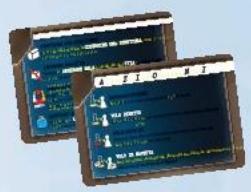
4张参考卡(每 名玩家一张

48张传染牌

62张传承牌

4张平民卡

5份档案袋和一页贴 纸


根除面
4个解药标记

“”
1个传染速率标记


1个爆发标记
1个提醒标记

96个疾病方块(24个/4色)

1张游戏版图
8个带编号的黑盒
6个研究所
你们还需要一支笔,这不包含在游戏中
游戏概述
如何进行一个传承游戏?
和大部分每次重新玩就完全重置的游戏不同,《瘟疫危机:传承》中的部分元素会遗留到下一场游戏,你在第一场游戏做的决定,将会影响到第二场、第三场和之后的每一场游戏。
不同的团队在游戏中将会作出不同的决定,并产生不同的经验,结果将会导致每个游戏对每个进行游戏的团队都是独一无二的。
有时你会在游戏上书写,有时你会在卡牌或者版图上贴上贴纸,有时你甚至会摧毁(撕掉)一张卡牌,这些改动,将是永久性的。
同样,在每次游戏结束的时候,团队将会获得2个升级用来准备之后的游戏,你们将会在版图、卡牌或者角色上贴上贴纸。
随着游戏进行,你们将会发现其他改变游戏的方式。同时,在第一次游戏之前,游戏中的有些元素是被隐藏和封存的,你在游戏过程中会收到一些指示去打开那些牌包,不要打开箱子中的牌包直到你收到指示。档案袋中同样包含了隐藏信息,将会随着游戏进行而被揭示。
有一些标记着从A到Y的规则在这本规则书上是缺失的,你将会在游戏的过程中获得他们,并将他们贴在规则书上,从那一刻起,游戏规则将永久性的改变。
如果你们从未玩过瘟疫危机…
我建议你们多进行几次不包含“传承规则”的普通游戏,来体会你们将会作出的决定。
阅读规则书并进行游戏,不使用如下规则:
·游戏月份、传承牌堆、档案袋
•目标、资助、游戏日历、恐慌等级
·伤痕和损失角色
·阶段结束升级
这个热身游戏的目标是在不触发任何游戏失败条件的前提下治愈4种疾病(见规则书第14页)
如果你们已经玩过了瘟疫危机…
你们会发现第一次游戏会和普通瘟疫危机十分相似,只有少许改动(下一页会解释)
什么会保留?什么会重置?
版图上的书写、卡牌或版图上的贴纸、摧毁的配件将是永久性的改变。
在其他的方面,每次游戏开始前都是重置的:版图上的配件、手牌、爆发标志等等,都是全新的。
游戏月份
《瘟疫危机:传承》被分成了12个月,从1月开始。
如果你们的团队在某个月份取得了成功,则前进并进行下个月的游戏。
如果你们失败了,你们将会获得一次额外的机会重新进行这个月的游戏,开始一局新游戏,使用你们失败的这个月份的设置、规则和目标。如果你们再次失败,你们下次开始时,必须进行下个月的游戏。
传承牌堆
传承牌堆包含了一系列卡牌,描述了在游戏12个月的过程中将会发生的情况。它被给予了一个明确的指示:千万不要查阅和洗混这些卡牌。
在每个游戏开始前,每次抽取并阅读一张卡牌,直到你抽到一张卡牌背面写着STOP。这张卡将告诉你下次从哪继续抽牌,有可能是游戏中、游戏结束时、或者是下个月的开始时。

传承牌堆是一次“单程旅行”,即使你重玩某个月份,也不要把传承卡牌放回去。
游戏内衬设计有2个空位放置传承卡牌,一个用来放置已经用过的,一个放置还未使用的。
如果传承牌堆不小心散落了,请由未参与游戏的人按照右下角的编号将卡牌重新放置回去,右侧显示的是传承牌堆的第一张卡牌(LD01B)

为了避免这种情况发生,如果你拆开了牌包,请把传承牌堆放在内衬的对应存储位置。
档案袋
五个档案袋中包含了之后将会加入游戏的贴纸。
在使用传承牌堆时,你会遇见部分卡牌上标注了了档案袋的编号或字母。当你拿到这样的牌时,撕开对应编号或字母的档案袋上已经预留好的开口一次打开一个,贴好之后再打开下一个。
有些档案袋的开口包含了一次性的贴纸,将会用来创建一张卡牌,供之后的游戏中使用。
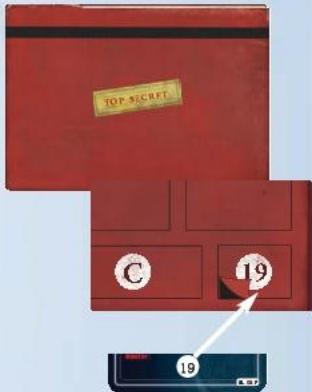
黑盒
游戏中有8个黑盒。在游戏过程中,黄色边框的提示将指导你打开具体的黑盒
重要:在你的第一次游戏之前,将“打开8号牌包”贴纸贴在8号黑盒的开口边上。

游戏概述
目标
每次游戏开始之前,你会有一个或多个目标,为了获得胜利,你必须完成目标。每个月获胜所需要完成的目标数量将会标示在游戏版图上对应的月份下方。


如果一个目标被标注为强制性(mandatory),则必须完成它。游戏开始时你并不用决定要完成哪些其他目标,你只需要随着游戏的展开等待就行。
有些目标将留在游戏中直到团队完成了它,其他的则将在一些特定的月份的月底结束。随着全年的展开,有可能会有新的目标出现。
资助
在每次游戏开始的时候,你们将会根据资助等级,增加资助事件卡牌到玩家牌堆中(团队选择),在第一次游戏开始时(一月),你们的资助等级是4,资助等级将会随着游戏进行上升或下降,最低是0,最高是10.
游戏日历
使用游戏日历来记录你们的进程,成功与失败、参与的玩家和你们当前的资助等级。游戏日历在这本规则书的封底。
GAME CALENDAR
In caso di vittoria, si procede al mese successivo e i finanzianenti si ríducano di 2. In caso di sconflita nella prima metà del mese si gioca la seconda metó del mese e i finanziamenti aumventano di 2 In caso di sconfitta nella seconda metà del mese 1 flranziamenti aumentano di 2 e pol si procede al mese successivo. I finanzianenti non possano scendere a meno di 0 o salire altre 10.

提醒标记

这个标记在游戏中偶尔会使用到,用来提醒玩家记住一些事项
游戏版图
地区
版图分为6个地区,每个地区代表一个大洲。
目标区域
在版图的一角是一个用来放置目标的区域。
1月开始的时候只有一个目标,其他目标将会在后面的月份中增加或移除。
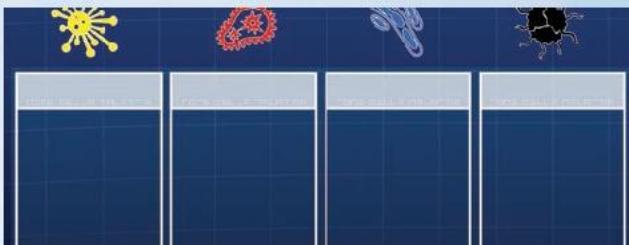
疾病记录区域
在游戏版图的这个区域追踪和记录4种疾病的变化。
恐慌等级
当城市中的疾病占据上风时,城市将陷入恐慌。
每当城市中发生一次疾病爆发,它的恐慌等级将会上升1。当城市第一次陷入恐慌时,从恐慌等级贴纸盒中拿出1级贴纸(不安)贴在城市边。之后的贴纸将贴在之前的贴纸之上(2级、3级等等)。恐慌等级的效果显示如下。这些效果是累积的。
①1 不安 没有效果
数2-3 暴乱 玩家不能通过直航或包机进出,研究所被破坏,无法重建
4 崩溃中 要进入城市必须先弃掉一张该城市颜色的卡牌,通过驾车或乘船行动进入
陷落 要进入城市必须先额外弃掉一张该城市颜色的卡牌,通过驾车或乘船行动进入(总共弃掉2张牌)
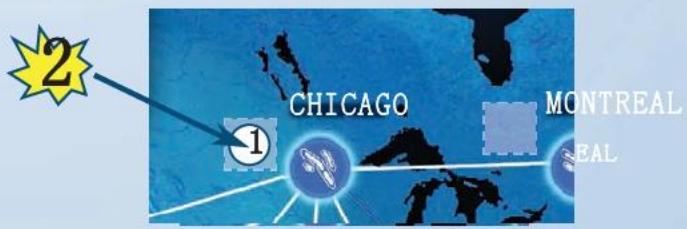
将2级恐慌贴纸贴上后,这个城市的恐慌等级由不安上升到了暴乱
角色
每个玩家都有一个能力独特的角色来帮助团队,第一次游戏时,每个玩家需要创建角色:从角色卡牌中选择一个角色并给他/她起个名字。
将规则贴纸A贴在这里
这些角色会帮助你进行一场又一场的游戏,而你可能会失去他们(见下文)。你的每一场游戏中,你不一定要使用同个角色。
·Rimuovi tutti i cubi di un colore quando esegui Arginare Mhaiaautomaticamente i cubi delle malattie curate dalla città in cui ti trovi (e impedisci che ve ne vengano collocati altri).

伤痕
角色们在游戏中可能会受到精神或肉体上的伤害。
如果受到伤害,选择一个合适的伤痕并加到你的角色卡牌上。当角色身处城市并遭遇疾病爆发时就会受到伤害,在之后的规则中,角色可能因为其他原因受伤。
当你需要向角色卡上添加新的伤痕而角色卡已经没有位置容纳时,你将失去这个角色(角色死亡)。
失去角色
当你需要向角色卡上添加新的伤痕而角色卡已经没有位置容纳时,或当你的角色身处城市而城市陷落时,你将失去这个角色。
当你失去一个角色时,摧毁(撕毁)这张角色卡,这个角色无法再进行任何游戏。弃掉你的所有手牌,拿取一张和你棋子同色的市民卡,将你的棋子放置到一个有研究所的城市中(可以是当前城市),如果版图上已经没有研究所,把棋子放到亚特兰大(Atlanta)。
如果你在当前回合失去了角色,继续这个回合,执行还能执行的行动。
角色参考
参考这个章节,以便于你学习如何善用这些角色。

调度员
调度员可以执行如下行动:
• 经过拥有者同意后,移动任何一个棋子到任何一个有其他角色的城市中,或经过拥有者同意后,如同移动自己的棋子一样移动其他玩家的棋子。
•对于其他棋子,调度员只能移动,而不能直接用其他棋子执行行动,比如治疗疾病。
当调度员如同移动自己的棋子一样去移动其他玩家的棋子时,使用调度员的伤痕和升级,而不是其拥有者的。
•当因直航、包机或进入崩溃中、陷落的城市而要弃牌时,弃掉调度员的牌。
• 包机弃掉的牌必须与所进入城市颜色匹配。

全才
行动专家有4个不同类型的角色升级槽,而且每回合可执行5个行动

医疗兵
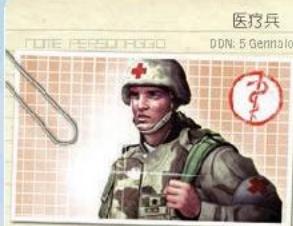
医疗兵在执行治疗疾病行动时,移除所有该颜色的方块而不是一个。
如果一种疾病被治愈,当他进入或身处一个城市时,将自动移除所有的该色方块,这不需要花费一个行动。
医疗兵所在的位置,将阻止已经治愈的疾病的爆发和该种方块的增加。医疗兵自动移除疾病方块的行为也会发声在其他玩家的回合里。

科学家
科学家在研发解药时只需要弃掉4张与该疾病同色的城市卡。
研究员
在执行分享知识的行动时,研究员可以给和她同处一个城市的其他玩家任何城市卡,而不需要匹配这个城市。卡牌只能从她手中到另一个玩家手中,但是可以在这两个玩家的任一个回合发生。

游戏设置
你们可能注意到,有些设置步骤是缺失的,这些步骤将在游戏过程中增加。
1
阅读任务简报
当第一次进行某个月的游戏时,从传承牌堆顶上抽牌直到遇到STOP
阅读任务简报,并将新卡牌加入游戏(如果有的话)。
2
设置版图及配件
把所有的建筑(一开始你只有研究所)放到版图上。把所有的方块按颜色分成4个供应堆,在每个有研究所贴纸的城市放置1个研究所(游戏开始时只有亚特兰大Atlanta有1个),在之后的游戏中,可能会增加别的配件。
3
放置爆发标记、解药标记和目标
把爆发标记放在爆发记录条0的位置。把4个治愈标记的“瓶子”面向上,放在疾病记录区域的底部,把所有的当前目标放在目标区域
爆发标记
爆发轨道
5
选择资助事件,加入牌堆,然后分发玩家卡牌
作为一个团队,玩家们共同决定将哪些资助事件牌加入玩家牌堆。玩家牌堆可加入的资助牌数量等同于当前的资助等级(第一次游戏时资助等级为4)。将资助牌和城市牌一起洗混,然后发给玩家形成起始手牌,手牌数量由玩家数量决定
玩家数 卡牌数2名玩家 每人4张手牌3名玩家 每人3张手牌4名玩家 每人2张手牌
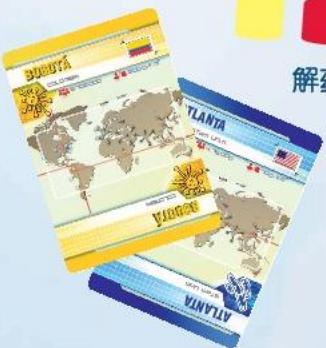
在《瘟疫危机:传承》中,手牌始终保持面朝上放置。
6
准备玩家牌库
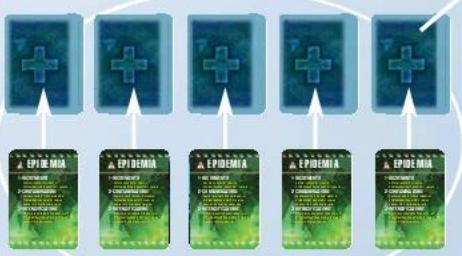
将剩余的玩家牌面朝下平均分成5堆,在每堆牌中洗入一张蔓延牌,然后面朝下将5堆牌堆在一起形成玩家牌库,数量最少的那堆放在底部
7
选择角色与起始地点
每名玩家选择一个角色和颜色,拿取对应的参考卡和棋子,把棋子放在任意研究所(第一次游戏时在亚特兰大)所有的角色共同开始,剩余的角色卡和棋子放回盒子。如果游戏中已经没有研究所,角色们在亚特兰大的废墟开始
解药标记
牌堆
洗入
疾病记录区域

传染速率
传染速率标记
传染牌弃牌堆

玩家牌堆
玩家弃牌堆
放置传染速率标记并感染9个城市
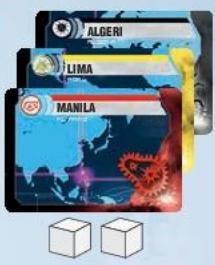
放置传染速率标记到传染速率记录条最左边的“2”的位置。洗混传染牌堆然后翻出3张:
每个城市放置3个和城市颜色一致的疾病方块。
再翻开3张卡牌:每个城市放置2个和城市颜色一致的疾病方块 再翻开3张卡牌:每个城市放置1个和城市颜色一致的疾病方块 (总共放置18个方块,每个都和城市颜色匹配) 关放置18个万块,母个都和城门颜色匹配)
把这9张卡牌面朝上放进传染牌的弃牌堆,其他的传染牌形成传染牌堆。


使用疾病方块要与卡牌颜色一致
规则贴纸B
规则贴纸C
8
9
规则贴纸D
使用阶段胜利奖励
赢得某个月的游戏将会获得用于下个月的奖励。玩家们必须现在就使用这个奖励(第一次游戏时是没有奖励的)
10
开始游戏
拿取所有的棋子并盲抽一个,那个玩家成为起始玩家,顺时针进行游戏。
进行游戏
每个玩家回合分为3步
-
执行4个行动
-
抽2张牌
-
传染城市
在一名玩家执行完第三步后,他左手边的玩家开始游戏。
玩家们可以自由的讨论并给出建议和意见,但由回合玩家决定采取什么样的行动。
手牌中可以有城市卡和事件卡,城市卡用来执行某些行动,事件卡则可以在任何时候打出。
玩家回合
规则贴纸E
你每回合可以执行4个行动
选择以下行动的组合来执行。你可以执行多次相同的行动,每次算一个行动。你的角色能力可能会对行动产生影响。某些行动会使你弃掉手牌,弃掉的牌进入玩家弃牌堆。
移动
驾车/乘船
从你所在的城市移动到与其通过白线连接的另一个城市。


从版图边缘消失的白线将“环绕地球一圈”从另一边的版图边缘连接到一个城市例如:悉尼和洛杉矶是连接起来的
直航

弃掉一张与城市名相同的卡牌来移动到这个城市。
不能通过直航来进入或离开处于暴乱、崩溃中、陷落状态的城市
包机
弃掉一张与你所在城市匹配的卡牌来移动到任何城市。
不能通过包机进入或离开处于暴乱、崩溃中、陷落状态的城市
班机
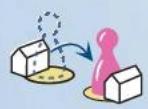
从一个有研究所的城市移动到另一个有研究所的城市
规则贴纸F
其他行动

建造建筑
弃掉一张与你所在城市相同的卡牌来在当地建造一个建筑。在1月,你只能建造研究所,之后的月份则能建造更多种类的建筑。从供应堆中拿取建筑,如果某种建筑已经被全部建完,你可以从版图任何一个地方拿取一个该类建筑并移动到你所在城市。每个城市能包含每种建筑各一个。
治疗疾病

从你所在的城市移除一个疾病方块并放回供应
堆。如果这种疾病已经被治愈(见下方研发解药的章节),则从当前城市移除全部该色方块。
如果某个城市有多种已经被治愈的疾病,你仍然只能一次治疗一种疾病来移除该种方块。如果某种被治愈的疾病的最后一个方块从版图上移除,则该种疾病被根除。将治愈标记从小瓶面翻转到面
第一次根除某种疾病时,请为该疾病命名,将名字写在版图疾病记录区域。根除疾病将在游戏结束时允许你给这个疾病选择一次正向突变来作为奖励。正向突变只能用于刚结束的游戏中被根除的疾病上。
根除疾病并不是胜利所必须的。但当某个城市被根除的疾病感染时,不用放置疾病方块(见P11-P12蔓延与传染章节)。移除某种未被治愈的疾病的最后一个方块并没有这种效果
分享知识
执行这种行动有两种方式:
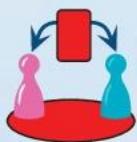
城市
将你所在城市的城市卡给另一名玩家,或者从另一名玩家那拿取你所在城市的城市卡。
分享知识的另一名玩家必须与你在同一个城市,双方必须都同意才能分享。
如果玩家拿取卡牌后手牌超过7张,必须立刻弃掉一张牌或打出一张事件牌。
例子:如果你与另一名玩家同在莫斯科,并且你手上有莫斯科的城市卡,你可以把这张卡给那名玩家。或者如果另一名玩家有莫斯科卡并且你们都在莫斯科,你可以从他手上拿取那张卡。不论哪种情况,你们双方都必须达成一致才能给予卡牌

莫斯科

研发解药
在任何研究所,弃掉5张同色城市卡来获得该色疾病的解药,视为该疾病被治愈。
将疾病标志(疾病记录区域顶端)用解药标记覆盖。如果版图上没有这种疾病方块,则该疾病被根除,将解药标记翻到根除面。
如果研发解药不需要行动(由于正向突变),则玩家可以立刻弃掉研发解药所需要的卡牌,即使不是该玩家的回合。如果某种疾病被治愈,版图上仍有该种疾病方块,在蔓延和传染阶段(见P11-P12蔓延与传染章节)新的方块仍能继续放置。
不论如何,治疗该种疾病变得简单多了。
游戏实例:第一个回合,喵喵子执行4个行动
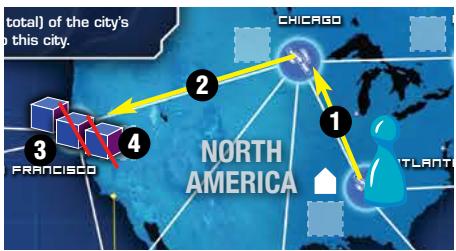
(1)从亚特兰大驾车前往芝加哥;
(2) 驾车前往旧金山;
(3)在旧金山治疗疾病,移除一个蓝色疾病方块;
(4) 再次治疗疾病,移除第二个蓝色疾病方块喵喵子完成了他回合的所有行动。
游戏实例:
在之后的游戏中,红色疾病已经被治愈。
马尼拉仍有3个红色方块,科学家东妮(粉色棋子)开始她的回合:
(1)在马尼拉治疗疾病,移除3个红色方块
红色疾病被根除,红色解药标记翻到面

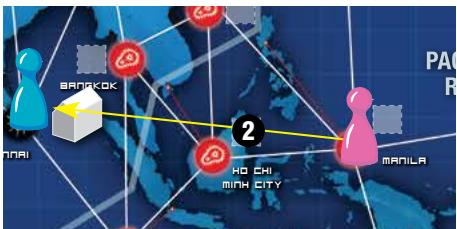
研究员喵喵子(绿色棋子)在印度金奈,当地已经建立了一个研究所。喵喵子手上有开罗城市卡,他决定把开罗卡等东妮到达金奈后交给她(作为研究员,喵喵子可以给出任何手牌),东妮弃掉马尼拉卡执行了(2)包机,移动她的棋子到达金奈。

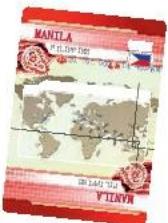
东妮弃掉马尼拉卡执行了(2)包机,移动她的棋子到达金奈。

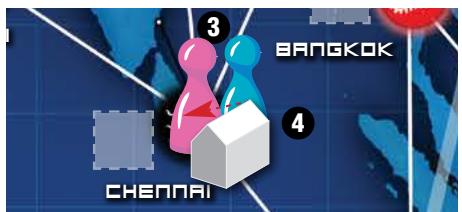
东妮执行(3)共享知识,从喵喵子手上拿取了开罗卡。现在东妮有了4张黑色卡牌,仍不足以研发解药。


但是东妮是科学家。她研发解药只要4张同色卡牌。东妮执行(4)研发解药,她在金奈研究所弃掉4张黑色卡牌,黑色解药标记移动到顶端覆盖了黑色的病毒标记,表明黑色疾病已经被治愈。
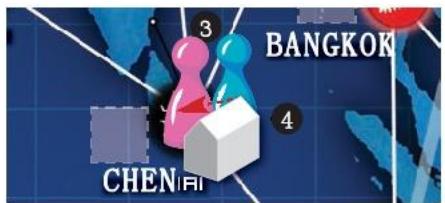
现在东妮执行完了她回合里的所有行动


规则贴纸 G
规则贴纸L
规则贴纸 M
规则贴纸H
规则贴纸 N
规则贴纸I
规则贴纸 J
规则贴纸0
规则贴纸K
抽牌
执行完4个行动后,从玩家牌堆顶上抽2张牌。

如果当玩家抽牌时,玩家牌堆少于2张牌,则游戏结束,玩家团队失败。(不允许洗混弃牌堆来形成新玩家牌堆)
规则贴纸P
蔓延牌
如果你抽到了任何蔓延牌,不要加入手牌(也不要抽取别的卡牌替换),立刻按照以下步骤执行:
1、增加传染速率:在传染速率条上,将传染速率标记前进一格
2、传染:从感染牌堆底部抽取卡牌,除非该色疾病已经被根除,否则,放置3个该色疾病方块到与卡牌同名的城市上。如果这个城市已经有该色疾病的方块,则改为放置方块直到该城市有3个方块,然后该色疾病将在这个城市爆发(见P13爆发章节)。之后将这张卡牌弃置到感染弃牌堆。

如果供应堆中的疾病方块已经不足以让你放置要求数量的该色方块,则游戏结束,玩家团队失败。这会发生在蔓延、爆发或感染阶段(见下面的爆发和传染章节)
3、强化:洗混感染牌弃牌堆,然后将洗混后的牌放在感染牌堆顶部。

执行这个步骤时,记住是从感染牌堆底部抽牌,并且只洗混感染牌的弃牌堆,洗混后放到感染牌堆顶部。
在极少数情况下可能会抽取2张蔓延牌,执行以上的完整步骤一次后再执行第二次。
在这种情况下,第二个蔓延的传染卡就会成为唯一需要洗混的牌,将它直接放到感染牌堆顶部。在感染过程中这个城市将发生一次疾病爆发(见P12传染病章节),除非有事件牌可以阻止它(见P15事件卡)
在解决完蔓延卡牌后,弃置它。
规则贴纸Q
传染
根据当前的传染速率,从传染牌堆顶翻出对应数量的传染牌。这个数量由传染速率标志所在数字决定。每翻开一张,就传染卡牌上的城市。感染城市时,放置1个对应传染牌颜色的疾病方块到城市上,除非该疾病已被根除。如果这个城市已经有3个该颜色的疾病方块,不用放置第4个方块,这个城市立刻发生一次该疾病的爆发(见P13爆发章节)。之后将该牌弃置进传染牌弃牌堆。



游戏实例(续):东妮在传染城市阶段后结束了她的回合,当前的传染速率是3,所以东妮翻开了传染牌堆上面的3张牌:首尔,然后是巴黎,然后是阿尔及尔。
现在红色极影已经被根除,所以东妮弃掉了首尔 牌。
巴黎已经有一个蓝色方块,所以东妮放置了第二个蓝色方块到巴黎然后弃掉了巴黎卡。
黑色疾病已经被治愈,但还未根除(版图上仍有黑色方块),所以东妮必须感染阿尔及尔,目前阿尔及尔已经有3个黑色方块,于是黑色疾病在阿尔及尔发生了爆发。
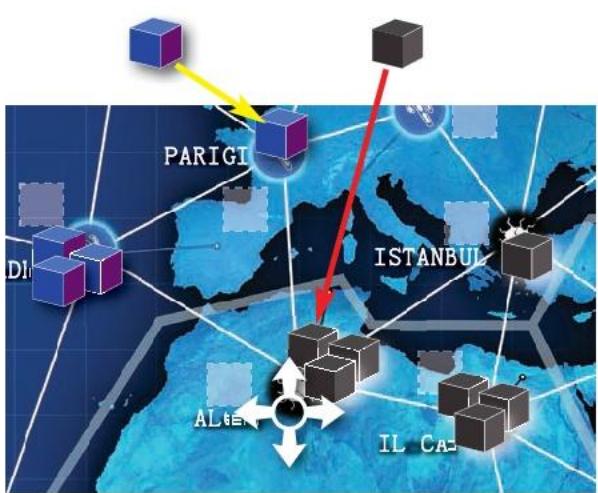
规则贴纸 R
规则贴纸 S
规则贴纸 T
爆发
当发生疾病爆发时,在爆发记录条上向前移动爆发标记一格。然后在每一个与爆发城市连接的城市上放置一个该疾病方块,如果其中某个城市的该疾病已经有3个,则在当前爆发结束后,在那个城市产生连锁爆发。
当连锁爆发发生时,先将爆发标记向前移动一格,然后如上述放置疾病方块,但是不向在结算当前传染牌时已经发生过爆发或连锁爆发的城市放置方块(一张传染牌只会导致同一个城市发生一次爆发)。
一个城市发生过爆发后,可能会有多种疾病方块,每种方块最多3个。

如果爆发标记到达爆发记录条最后一格,游戏结束,玩家团队失败。
提高恐慌等级
将每个发生疾病爆发的城市的恐慌等级提高。如果游戏由于疾病爆发而结束,只提高前8个爆发的恐慌等级。如果爆发的城市可能超过8个(由于连锁爆发),玩家们可以选择是哪8个提高恐慌等级。
如果一个城市的恐慌等级达到2级,移除该城市的所有研究所。如果当地有一个起始研究所的贴纸(见P14解释),用一个“摧毁的研究所”贴纸覆盖它。
如果一个恐慌等级为5的城市发生疾病爆发,如常结算爆发,但不用贴上贴纸。
在之后的游戏中,城市有可能被隔离,这样它的爆发就不会影响相邻城市。在这种情况下,增加这个城市的恐慌等级但不用移动爆发标记。
检查伤痕
位于疾病爆发的城市中的角色获得一个伤痕。
规则贴纸
回合结束
在传染城市和弃置传染牌后,你的回合结束。
你左手边的玩家开始他的回合。


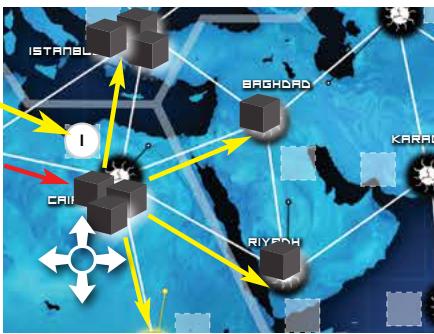
游戏实例(续):黑色疾病在阿尔及发发生爆发,东妮将爆发标记向前移动一格,并将下一级的恐慌等级贴纸贴在阿尔及尔城市边。然后在与阿尔及尔相连的每个城市放置了一个黑色疾病方块:马德里、巴黎、伊斯坦布尔、开罗。开罗已经有3个黑色方块,所以东妮没有在开罗放置第4个方块,取而代之的是:开罗发生了连锁爆发。
东妮将爆发标记又向前移动一格,将下一级的恐慌等级贴纸贴在开罗上,然后在每个与开罗相连的城市上放置了一个黑色方块:伊斯坦布尔、巴格达、利雅得和喀士穆,由于结算这张传染牌时阿尔及尔已经发生过爆发,所以东妮没有在阿尔及尔放置方块,然后,东妮弃掉了阿尔及尔传染牌。

游戏结束
当你们达到目标所需的要求时,游戏立刻结束,即使现在正处于玩家回合中或一系列的爆发中。
以下情况会导致游戏结束且玩家团队失败:
• 爆发标记到达爆发记录条最后一格,立刻结束游戏;
·当需要放置疾病方块而该种方块不足放置时,立刻结束游戏,之后不再放置方块和结算爆发。
•当玩家行动结束后玩家牌堆不足以抽取两张手牌时。
规则贴纸 V
不论输赢,在游戏结束时,玩家团队选择两个游戏阶段升级
如果玩家获胜
●获得用于下个月游戏的胜利奖励,这个奖励描述在传承牌堆的卡牌上。
●玩家的下一场游戏开始于下个月月初。
●如果有条件的话,你们的资助等级削减2个(最少为0)
•记录新的资助等级
如果玩家失败
●如果这是这个月的第一次游戏,你们必须再次尝试这个月的游戏。如果不是的话,下一场游戏从下个月开始。
●为了尽快解决这个困境,你们的资助顶级增加2(最大为10)
•记录新的资助等级
不论是哪种情况(输或赢)
• 选择两项升级
• 清除版图上的配件
• 弃掉所有城市卡,重置所有牌为下场游戏做准备即使是进行同一个月的游戏,也不要把任何传承卡牌放回传承牌堆。放过传承牌堆并继续。
• 如果再次进行同一个月的游戏,游戏任务简报和目标是一样的。
按照P6-7设置下一场游戏。
游戏阶段升级
不论输赢,你们可以在每次游戏结束时选择两项升级,可以选择同一个升级两次。
非资助事件
选择一个事件贴纸,贴到玩家牌堆中的任何城市牌上。现在这张牌既是城市牌,又是事件牌,可以以任一方式使用(不能同时做两种使用)。这些城市/事件牌将在每个游戏中都生效(它们不受资助等级影响),每张城市牌只能贴一张贴纸。
起始研究所
选择一个目前包含研究所的城市并贴上一个起始研究所贴纸。在之后所有的游戏的设置阶段,每个有起始研究所贴纸的城市都放置一个研究所。贴贴纸时尽量靠近城市(类似印在亚特兰大边上的研究所),不要贴到恐慌等级的格子上。
角色升级
给角色进行一个升级。每个角色有2个升级格子(行动专家除外,他有4个)。角色升级时可能会覆盖之前的升级。角色升级只能在刚结束的游戏后应用升级。
正向突变
如果你们在游戏过程中根除了某种疾病,你们可以给这种疾病增加一个正向突变,这样在之后的游戏中研发该疾病的解药将变得更简单。在版图上的疾病记录区域里贴上一张正向突变贴纸。
获得了有效的基因突变的疾病,在玩家弃掉了所需数量的卡牌时将立刻被治愈。这将不耗费行动,并可以在其他玩家的回合发生。
规则贴纸 W
卡牌
玩家卡牌
游戏过程中,你可能会在城市牌上贴上贴纸,每张城市可以贴一张贴纸,当你打出一张带有贴纸的城市牌时,你可以选择将它作为城市牌或根据贴纸效果使用,只能选择其
玩家可以随时查看玩家弃牌堆。
手牌上限
如果你的手牌超过7张(在第一次结算蔓延牌后你可能会抓牌),弃牌或打出事件牌来让你是手牌保持在7张。只有玩家卡牌会计入你的手牌上限。
事件牌
打出事件牌并不算做行动。打出事件牌的玩家决定该牌如何使用。除了在正在抓牌或结算卡牌时以外。事件牌可以在任何时刻打出,。
例子:在传染阶段,第一张抓出的事件牌导致了一次疾病爆发,玩家此时无法打出“远程治疗”来阻止它,在这次爆发结算后,你可以在下次翻出传染牌之前打出“远程治疗”。
事件牌使用后进入玩家弃牌堆。
容易被忽略的规则
牌
·在抽取蔓延卡牌后,不能抽取替用卡
•你可以在任何研究所执行研发解药的行动,那个城市的颜色和要治愈的疾病颜色无关
• 在你的回合,你可以从别的玩家那里拿取卡牌,只要你们在同一个城市且该卡牌与所在城市一致。
• 在你的回合,你可以从研究员手上拿取任何卡牌,只要你们在同一个城市。
•I你的手牌上限会在你从别的玩家那里拿取卡牌后立刻结算。
•I当城市发生疾病爆发时,身处其中的玩家会得到一个伤痕。
当搞混规则而又无法回头时怎么办?
在多数情况下,这并没有关系。偶尔搞混规则、遗漏某个牌堆的某张牌、忘记了细节等都不会对游戏造成非常大的影响。
注意一下然后继续游戏吧。
在有些情况下,忘记或搞混规则可能会导致整个游戏变得太简单或太困难。在这种情况下,玩家团队必须决定是增加(意外导致游戏太困难)还是削减(意外导致游戏太简单)下一场游戏的资助等级。
建筑
每个城市可以建设每种建筑各一个。
研究所
你必须在研究所才能执行研发解药行动。

你可以使用班机方式在两个研究所之间移动。当城市陷落时,研究所会被摧毁,如果该城市有个起始研究所贴纸,用被摧毁的研究所贴纸覆盖它。暴乱、崩溃中、陷落的城市无法建造研究所。
规则贴纸 X
规则贴纸Y
致谢
游戏设计: Matt Leacock e Rob Daviau
美工: Chris Quilliams
平面设计: Philippe Guérin
规则编排:Marie-Eve Joly
编辑: Jean-François Gagné
中文翻译:Shoye
Playtester: Sherrie Alder, Robby Anderson, Chris Aylott, Margaret e Richard Bliss, Michael Bretzlaff, Brett Burgess, Danny Calderon, Mickie Grantz, Chris Grim, Philip Gross, Shelby Hemker, David Heron, Carissa Josephic, Jesse Josephic, Tim Keating, David Kloba, Shawn Murphy, Colleen, Donna, Ruth e Tim Leacock, Patrick Neary, Steve Nix, Dave Nolin, Jonathan Owens, Bryan Reed, Jason Schklar, Jenn Skahen, Ken Tidwell, Stephen Waldron, Paul Madden e Nicholas Kent.
Ringraziamenti speciali: Tom Lehmann, Beth Heile e John Knoerzer.
Edizione italiana
Traduzione: Fiorenzo Delle Rupi Revisione: Massimo Bianchini Impaginazione e adattamento grafi co: … Brunelli
米TEN
Asterion Press s.r.l. Via Martiri di Cervarolo, 1/B 42015 Correggio (RE) - ITALY
Regole del gioco disponibili sul sito: www.asterionpress.com
© 2015 F2Z Entertainment Inc. 31 rue de la Coopérative Rigaud QC JOP 1PO - info@zmangames.com www.zmangames.com

游戏日历
如果玩家获胜,前进到下个月并削减资助等级2。
如果玩家在某个月第一次失败,尝试第二次该月游戏并增加资助等级2。
如果玩家在某个月第二次失败,增加资助等级2,并前进到下个月。资助等级不能低于0或高于10。
| 资助等级 | 日期 | 玩家与角色 | 胜利或失败 | ||
| 一月 | 第一次游戏 | 4 | |||
| 第二次游戏 | |||||
| 第一次游戏 | |||||
| 二月 | 第二次游戏 | ||||
| 第一次游戏 | |||||
| 三月 | 第二次游戏 | ||||
| 第一次游戏 | |||||
| 第二次游戏 | |||||
| 五月 | 第一次游戏 | ||||
| 第二次游戏 | |||||
| 六月 | 第一次游戏 | ||||
| 第二次游戏 | |||||
| 七月 | 第一次游戏 | …… | |||
| 第二次游戏 | |||||
| 八月 | 第一次游戏 | ||||
| 第二次游戏 | |||||
| 九月 | 第一次游戏 | . | |||
| 第二次游戏 | |||||
| 十月 第一次游戏 | |||||
| 十一月 | 第二次游戏 | ||||
| 第一次游戏 | |||||
| 第二次游戏 | |||||
| 第一次游戏 十二月 |
aa-pandemic-legacy-season-1-rulebook.md42.2 KB
MATTLEACOCK ROB DAVIAU
SEASON 1
PANDEMIC LEGACY
SEASON 1
by Matt Leacock and Rob Daviau
The world is falling apart. Four diseases are sweeping the planet and your team is on the front lines. Worse yet, one disease has shown signs that it may become resistant to any treatment. Pandemic Legacy is a cooperative game where all players must work together to develop cures and prevent disease outbreaks, before 4 diseases contaminate humanity. You will all win or lose together. Can you survive the year and save humanity? Can vou survive the vear and save humanity?
STARTING CONTENTS

5 Character cards


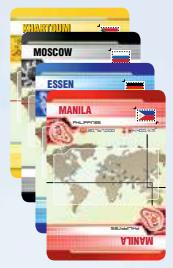
4 Pawns

61 Player cards (48 City cards, 5 Epidēmic cards, 8 Event cards)
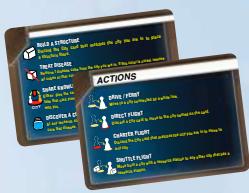
4 Reference cards (one per player color)

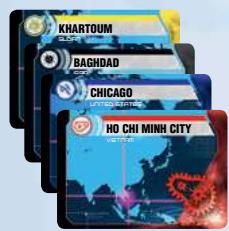

48 Infection cards
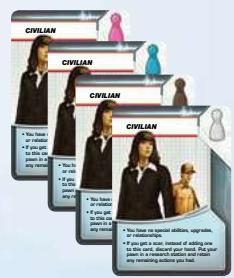
62 Legacy cards
4 Civilian cards

5 Dossiers and 1 Sticker sheet



Eradication “Ø” side

4 Cure markers
1 Infection rate marker
1 Reminder token


1 Outbreaks marker
6 Research stations

96 Disease cubes 24 in 4 colors
1 Board
1 Package box with 8 numbered packages
You will need a pen. It is not included in this box.
OVERVIEW
HOW DO YOU PLAY A LEGACY GAME?
Unlike most games, which fully reset every time you play, Pandemic Legacy carries some elements forward from one game to the next. Decisions you make in game 1 will be there in game 2, 3, and every game played with your copy of the game. Different groups will make different decisions and will have a different experience. What results is a game unique to the group that plays it.
Sometimes you will write on parts of the game. Sometimes you will put stickers on cards or the board. Sometimes you will even destroy (tear up) a card. These changes are permanent.
Also, at the end of each game, the group will make two Game End Upgrades to prepare for future games. You will put stickers on the board, cards, and character.
As you play, you will learn about other ways the game will change.
Also, some elements of play are hidden and sealed off before your very first game. As you play, you will find instructions that tell you when to open these packages. Do not open the packages in the box until you receive instructions to do so. The dossiers also contain hidden information that will be revealed as you play.
Some rules, labeled A through Y, are missing throughout this rulebook. As you play, you will gain these missing rules and stick them into the rulebook. From that point on, the rules will be permanently changed.
IF YOU'VE NEVER PLAYED PANDEMIC...
We recommend that you play a few games without any of the special “Legacy” rules to get a feel for the decisions you will have to make.
Read this rulebook then play without using the following rules:
• Game Months, Legacy Deck, Dossiers
• Objectives, Funding, Game Calendar, Panic Level
• Scars and Lost Characters
• Game End Upgrades
The object of these warm-up games is to cure four diseases before any of the game-losing conditions are triggered (noted on page 14 of these rules). You should play at least two games this way to get a feel for the game before adding the additional rules.
IF YOU HAVE PLAYED PANDEMIC...
You will see that game 1 of Pandemic Legacy plays like Pandemic with a few changes, explained in the next few pages.
WHAT STAYS AND WHAT GETS RESET?
Writing on the board, putting stickers on the board or on cards, and possibly tearing up or destroying components are permanent changes. In all other ways, the game resets for the start of each game. The pieces on the board, cards in hand, outbreaks, etc. all start fresh.
GAME MONTHS
Pandemic Legacy is broken into 12 months, starting with January. If your group succeeds in a month, you move on to play the next month. If you fail, you get one more chance to succeed in the current month. Start a new game with the current set of rules and objectives for the month you just lost. If you lose again, you must move on to the next month for your next game.
THE LEGACY DECK
The Legacy Deck contains cards that will describe what happens over the course of the game's 12 months. It is arranged in a specific order-do not look through or shuffle these cards. At the start of a game, draw the cards and read them one at a time, until you get to a card that says STOP on the back. This card will tell you when to continue drawing from the deck, which might be mid-game,

at the end of a game, or at the start of the next month. The Legacy Deck is a one-way trip. Even if you repeat a month, do not put Legacy cards back. The tray was designed with two spaces for used Legacy cards: one for the used cards, the other for cards that will be used in future games.
If the Legacy Deck becomes scattered, have someone who is not playing the game put the cards back in order using the numbers in the corner of each card. Shown to the right is the first Legacy Deck card (LD 01 B).
To ensure this does not happen, once you've removed it from its packaging, leave the Legacy Deck in the storing tray.

THE DOSSIERS
The five dossiers contain the stickers that will go onto the game. As you go through the Legacy Deck, you will come across cards that have dossier numbers or letters on them. When you do, open up-and tear off using the precut corner—the dossier doors matching the numbers (or letters) on the card, one at a time, resolving each one before opening the next. Some of these dossier doors will contain one-time stickers. Others will create a card that will be used from time to time in future games.

THE PACKAGES
There are eight packages in the game. As you play through the game, yellow boxes will instruct you to open specific packages.
Important: Before your very first game, place the Open Package 8 sticker on door 8 of the package box, in the frame designed for it.
OVERVIEW
OBJECTIVES
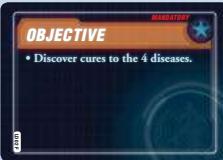
At the beginning of each game, you will have an objective (or objectives) you need to complete in order to win. The number of objectives needed to win in a month is shown on the board for that month.

If an objective is marked as mandatory, it must be completed in order to win. You do not need to decide which other objectives you are trying to accomplish at the beginning of any game; you may wait to see how the game unfolds.
Some objectives will remain in play until the group completes them; others will expire at the end of a particular month. As the year unfolds, new objectives will be introduced.
FUNDING
At the beginning of each game, you will add Funded Event cards (of the group's choice) to the Player Deck equal to your Funding Level. Your Funding Level is 4 at the beginning of the first game in January but will go up and down from game to game. The minimum funding is 0 and the maximum is 10.
GAME CALENDAR
Use the game calendar to record your progress, wins and losses, players involved, and your current Funding Level. The game calendar can be found on the back cover of this rulebook.
GAME CALENDAR


REMINDER TOKEN
This token is used occasionally during games to remind players to remember something.
THE GAME BOARD
REGIONS
The board is broken up into six regions, each roughly equivalent to a continent. These will come into play later.
OBJECTIVES SECTION
In one corner of the board is a section where objectives are placed. January will start with one objective. Other objectives will be added and removed in future months.
DISEASE TRACKING AREA
Use this area of the board to apply changes to any of the four diseases.

PANIC LEVEL
Cities are panicking as these diseases take hold. Whenever an outbreak occurs in a city, its panic level will go up by one. The first time a city panics, place the level 1 sticker (unstable) in the panic level sticker box near the city. After that, place the next numbered sticker over the previous one (level 2, then level 3, etc.). The effects of panic levels are shown below. These effects are cumulative.
LEVEL  | STATE Unstable | EFFECT No effect. |
| 原 | Rioting | Players cannot take Direct Flights or Charter Flights in or out. Research stations are destroyed and cannot be rebuilt |
| Collapsing | Discard 1 card of the city's color to enter this city with the Drive/Ferry action. | |
| Fallen is lost. See Lost Characters on page 5. | Discard an additional card of the city's color to enter this city with the Drive/Ferry action (for a total of 2 cards). If your character is in a city when it falls, it |

By placing the level 2 panic level sticker, the city's panic level goes from unstable to rioting.
CHARACTERS
Each player has a specific character with special abilities to improve the team's chances. Each player begins game 1 by creating a character.
To create a character: Select a Character card (each one has different special abilities) and give your character a name.
RULE STICKER A will go here
These characters will carry through from game to game and they may become /ost (see below). You do not have to play the same character in every game.


SCARS
Characters can be mentally or physically damaged over the course of play. When this happens, choose an available scar and add it to your character's card. Characters are scarred when they are in a city that outbreaks and may be scarred in other ways that will be noted in future rules.
Whenever you must place a scar on a character that has no room for it, that character becomes lost.
LOST CHARACTERS
If you have to put a scar on your character and it has no more scar slots, or if your character is in a city when it falls, your character is lost.
When your character is lost, destroy (rip up) your Character card. It cannot be played in this or in future games. Discard all cards you have, take the Civilian card matching your pawn, and place your pawn in a city with a research station (this may be your current city). If there are no research stations in play, place your pawn in Atlanta. If your character was lost during your turn, continue with your turn, keeping any remaining actions you have.
CHARACTER REFERENCE
Refer to this section after you've learned how to play the game for fine points regarding each of the characters.

Dispatcher
The Dispatcher may, as an action, either:
● move any pawn, if its owner agrees, to any city containing another pawn, or
• move another player's pawn, if its owner agrees, as if it were his own.
The Dispatcher can only move other players' pawns; he may not direct them to do other actions, such as Treat Disease.
When the Dispatcher moves a player's pawn as if it were his own:
● use the Dispatcher's scars and upgrades, not those belonging to the character he is moving,
cards that need to be played or discarded (for Direct and Charter Flights or to enter a collapsing or fallen city) come from the Dispatcher's hand. A card discarded for a Charter Flight must match the city the pawn is moving from.
Generalist

The Generalist has slots for 4 different character upgrades and gets 5 actions per turn.
Medic

The Medic removes al/ cubes, not 1, of the same color when doing the Treat Disease action.
If a disease has been cured, he automatically removes all cubes of that color from a city, simply by entering it or being there. This does not take an action.
The Medic also prevents placing disease cubes (and outbreaks) of cured diseases in his location. The Medic's automatic removal of cubes also happens during other players' turns.
Scientist

The Scientist needs only 4 (not 5) City cards of the same disease color to Discover a Cure.

Researcher
When doing the Share Knowledge action, the Researcher may give any City card from her hand to another player in the same city as her, without this card having to match her city. The transfer must be from her hand to the other player's hand, but it can occur on either player's turn.


Outbreaks Marker Outbreaks Track
SETUP
You may notice that some steps are missing. They will be added later.
Read the Mission Briefing
When playing a month for the first time, draw cards off the top of the Legacy Deck until you reach one that says STOP. Read the mission briefing and integrate new cards (if any) to the game.
Set out the board and pieces
Put all structures (initially you'll only have research stations) nearby. Separate the cubes by color into 4 supply piles. Place a research station in each city with a starting research station sticker. (You begin the game with one in Atlanta.) In future games there may be other pieces you place.
Place outbreaks, cure markers, and objectives
Place the outbreaks marker on the “0” space of the Outbreaks Track. Place the 4 cure markers, “vial” side up, at the bottom of the disease tracking area. Place all current objectives in the objectives area.
Select Funded Events, add them to the deck, and deal out Player cards
As a group, decide which Funded Event cards are going into the Player Deck. The Player Deck can have as many Funded Event cards as your current funding level. (Your funding level is 4 for your first game.) Shuffle these Event cards and City cards together and deal cards to the players to form their initial hands. Give cards according to the number of players:
In Pandemic Legacy, players keep their hands faceup at all times.

Prepare the Player Deck
Stack
Divide the remaining player cards into 5 facedown piles, as equal in size as you can. Shuffle 1 Epidemic card into each pile, facedown. Stack these piles to form the Player Deck, placing smaller piles at the bottom.


Select Characters and Starting Location
Have each player select a character and player color. Give them the corresponding Reference card and pawn. Place their pawns at any one research station. (Players will start their first game in Atlanta.) All the characters must start together. Place any remaining character cards and pawns back in the box. If there are no research stations, players start in the ruins of Atlanta.

8
RULE STICKER D
9
Use game winning bonus
Winning a month will result in getting a bonus for the next month played. The group should use that bonus now. (You won't have a bonus for your first game.)
10 Begin play
Take all the pawns and blindly select one. That player goes first and play proceeds clockwise.
Place infection rate marker and infect 9 cities
Place the infection rate marker on the left-most “2” space of the Infection Rate Track. Shuffle the Infection cards and flip over 3 of them. Put 3 disease cubes of the matching color on each of these cities. Flip over 3 more cards: put 2 disease cubes on each of these cities. Flip over 3 more cards: put 1 disease cube on each of these cities. (You will place a total of 18 disease cubes, each matching the color of the city.) Place these 9 cards faceup on the Infection Discard Pile. The other Infection cards form the Infection Deck.

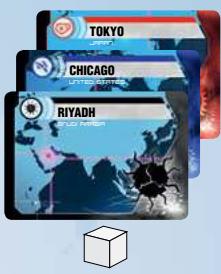
Use disease cubes matching the card colors.
RULE STICKER B
RULE STICKER C
PLAY
Each player turn is divided into 3 steps:
-
Do 4 actions.
-
Draw 2 Player cards.
-
Infect cities.
After a player is done infecting cities, the player on their left goes next.
Players should freely give each other advice. Let everyone offer opinions and ideas. However, the player whose turn it is decides what to do.
Your hand can have City and Event cards in it. City cards are used in some actions and Event cards can be played at any time.
ON YOUR TURN
RULE STICKER E
You may do up to 4 actions each turn.
Select any combination of the actions listed below. You may do the same action several times, each time counting as 1 action. Your character's special abilities may change how an action is done. Some actions involve discarding a card from your hand; all these discards go to the Player Discard Pile.
MOVEMENT ACTIONS

Drive / Ferry
Move to a city connected by a white line to the one you are in.
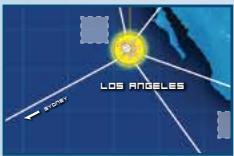
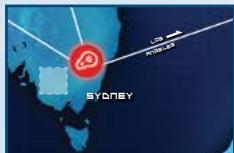
A white line that goes off the board “wraps around” to the other edge and connects to a city. Example: Sydney and Los Angeles are connected.

Direct Flight
Discard a City card to move to the city named on the card. You cannot use Direct Flight in or out of a city that is rioting, collapsing, or fallen.

Charter Flight
Discard the City card that matches the city you are in to move to any city. You cannot use Charter Flight into or out of a city that is rioting, collapsing, or fallen.
Shuttle Flight
Move from a city with a research station to any other city that has a research station.
RULE STICKER F
OTHER ACTIONS

Build a Structure
Discard the City card that matches the city you are in to place a structure there. In January, the only structures you have available are research stations; more will come later. Take the structure from the pile next to the board. If all structures of a type have been built, you may take one from anywhere on the board and move it to your current city. Each city may contain one of each type of structure.

Treat Disease
Remove 1 disease cube from the city you are in, placing it in the cube supply next to the board. If this disease color has been cured (see Discover a Cure below), remove all cubes of that color from the city you are in.
If there are cubes from several cured diseases in a city, you must still Treat Disease once for each cured color to remove these cubes.
If the last cube of a cured disease is removed from the board, this disease is eradicated. Flip its cure marker from its vial side to its “∅” side.
The first time you eradicate a disease, invent a name for it, then write its new name on the board in the disease tracking area. Eradicating a disease also gives you the option to give it a positive mutation at the end of the game as one of your bonuses. Positive mutations may only be applied to diseases that were eradicated in the just-played game.
Eradicating a disease is not needed to win. However, when cities of an eradicated disease are infected, no new disease cubes are placed there (see Epidemics and Infections on pages 11-12). Removing the last cube of a disease that is not cured has no effect.
Share Knowledge

You can do this action in two ways:
give the City card that matches the city you are in to another player, or
take the City card that matches the city you are in from another player.
The other player must also be in the city with you. Both of you need to agree to do this.
If the player who gets the card now has more than 7 cards, that player must immediately discard a card or play an Event card.
Example: If you have the Moscow City card and are with another player in Moscow, you can give this card to that player. Or, if another player has the Moscow card and you both are in Moscow, then you can take it from that player. In either case, you both must agree before handing the card over.

MOSCOW
Discover a Cure
CITY

At any research station, discard 5 City cards of the same color from your hand to cure the disease of that color. Cover the disease icon (shown at the top of the disease tracking area) with the matching cure marker. If no cubes of this color are on the board, this disease is eradicated. Flip its cure marker to its eradicated side.
If no action is required to Discover a Cure (due to positive mutations) then a player may discard the needed cards from their hand immediately, even if it isn't their turn.
When a disease is cured, its cubes remain on the board and new cubes can still be placed during epidemics or infections (see Epidemics and Infections on pages 11-12). However, treating this disease is now easier.
(1) Drive to Chicago (from Atlanta), (2) Drive to San Francisco, (3) Treat Disease in San Francisco, removing a blue disease cube there, and (4) Treat Disease in San Francisco again, removing a second blue disease cube.
George has finished the Actions step of his turn.
Play Example: Later in the game, the red disease has been cured.
3 red cubes remain on the board in Manila, where Anna the Scientist (pink pawn) begins her turn. Anna (1) Treats Disease in Manila, removing all 3 cubes with one action (since this disease has been cured). This eradicates the red disease, so the red cure marker is flipped over to its “∅” side.

George, the Researcher (turquoise pawn), is in Chennai, having built a research station there.
George has the Cairo card in his hand and offers to let Anna take it from him if she can get to Chennai (being the Researcher, George can give any card from his hand). Anna discards her Manila City card for a (2) Charter Flight, moving her pawn to Chennai.

Anna then (3) Shares Knowledge with George, taking his Cairo card. Doing this gives Anna 4 black cards, which is not enough to cure a disease.
However, Anna is the Scientist and needs to discard only 4 cards of the same color to cure the corresponding disease. Anna (4) Discovers a Cure, discarding her 4 black cards at the Chennai research station. The black cure marker is moved to cover up the black virus on the board to show that it has been cured. Anna has finished the Actions part of her turn.




RULE STICKER G
RULE STICKER H
RULE STICKER I
RULE STICKER J
RULE STICKER K
RULE STICKER L
RULE STICKER M
RULE STICKER N
RULE STICKER O
DRAW CARDS
After doing 4 actions, draw the top 2 cards together from the Player Deck.

If, as you are about to draw, there are fewer than 2 cards left in the Player Deck, the game ends and your team has lost! (Do not reshuffle the discard to form a new deck.)
RULE STICKER P
EPIDEMIC CARDS
If your draws include any Epidemic cards, do not add them to your hand (and do not draw replacement cards for them). Instead, immediately do the following steps in order:
-
Increase: Move the infection rate marker forward 1 space on the Infection Rate Track.
-
Infect: Draw the bottom card from the Infection Deck. Unless its disease color has been eradicated, put 3 disease cubes of that color on the named city. If the city already has cubes of this color, do not add 3 cubes to it. Instead, add just enough cubes so that it has 3 cubes of this color and then an outbreak of this disease occurs in the city (see Outbreaks on page 13). Discard this card to the Infection Discard Pile.

If you cannot place the number of cubes actually needed on the board, because there are not enough cubes of the needed color left in the supply, the game ends and your team has lost! This can occur during an epidemic, an outbreak, or infections (see Outbreaks and Infections below).
- Intensify: Reshuffle just the cards in the Infection Discard Pile and place them on top of the Infection Deck.

When doing these steps, remember to draw from the bottom of the Infection Deck and to then reshuffle only the Infection Discard Pile, placing it on top of the existing Infection Deck.
It is rare but possible to draw 2 Epidemic cards at once. In this case, do all three steps above once and then again.
In this case, the second epidemic's Infection card will be the only card to “reshuffle”, ending on top of the Infection Deck. An outbreak will then occur in this city during Infections (see Infections on page 12), unless an Event card is played to prevent this (see Event Cards on page 15).
After resolving any Epidemic cards, discard them.
RULE STICKER Q

INFECTIONS
Flip over as many Infection cards from the top of the Infection Deck as the current infection rate. This number is below the space of the Infection Rate Track that has the infection rate marker. Flip these cards over one at a time, infecting the city named on each card.
To infect a city, place 1 disease cube matching its color onto the city, unless this disease has been eradicated. If the city already has 3 cubes of this color, do not place a 4th cube. Instead, an outbreak of this disease occurs in the city (see Outbreaks on page 13). Discard this card to the Infection Discard Pile.

Play Example (cont.): Anna ends her turn by infecting cities. The current infection rate is 3, so Anna flips over the top 3 Infection cards: Seoul, then Paris, then Algiers.
The red disease is eradicated, so Anna simply discards the Seoul card.
Paris has a blue cube on it, so Anna adds a second blue cube there and discards the Paris card.
The black disease has been cured– but not eradicated (black cubes are still on the board) – so Anna must infect Algiers. Since 3 black disease cubes are already in Algiers, Anna does not place a 4th cube there. Instead, a black disease outbreak happens in Algiers.

RULE STICKER R
RULE STICKER S
RULE STICKER
OUTBREAKS
When a disease outbreak occurs, move the outbreaks marker forward 1 space on the Outbreaks Track. Then, place 1 cube of the disease color on every city connected to the city. If any of them already has 3 cubes of the disease color, do not place a 4th cube in those cities. Instead, in each of them, a chain reaction outbreak occurs after the current outbreak is done.
When a chain reaction outbreak occurs, first move the outbreaks marker forward 1 space. Then, place cubes as above, except do not add a cube to cities that have already had an outbreak (or a chain reaction outbreak) as part of resolving the current Infection card.
As a result of outbreaks, a city may have disease cubes of multiple colors on it; up to 3 cubes of each color.
If the outbreaks marker reaches the last space of the Outbreaks Track, the game ends and your team has lost!
INCREASE PANIC LEVEL
Increase the panic level of all cities that have an outbreak. If the game would end due to outbreaks, only increase the panic level for the first 8 outbreaks. If more than 8 cities would outbreak (due to chain reactions) players may choose which cities outbreak and increase their panic level, stopping when you get to the 8th outbreak.
If a city's panic level reaches level 2, remove any research station present in that city. If there is a starting research station sticker in that city (explained on page 14), cover that sticker with a destroyed research station sticker.
When an outbreak occurs in a city at panic level 5, do not place a sticker, but resolve the outbreak as usual.
In later games, it is possible for cities to become isolated so that outbreaks in it do not affect any adjacent cities. In this case, increase the panic level of the outbreaking city but do not raise the Outbreaks Track marker.
CHECK FOR SCARS
Characters standing in an outbreaking city receive a scar.
RULE STICKER U
TURN END
After infecting cities and discarding Infection cards, your turn is over.
The player on your left begins their turn.

Play Example (cont.): A black disease outbreak occurs in Algiers. Anna moves the outbreaks marker forward 1 space, puts the next panic level sticker for Algiers, and places 1 black cube on every city connected to Algiers: Madrid, Paris, Istanbul, and Cairo. Cairo already has 3 black cubes, so Anna does not place a 4th cube there. Instead, a chain reaction outbreak occurs in Cairo.
Anna moves the outbreaks marker forward 1 more space. She puts the next panic level sticker for Cairo. She places 1 black cube on every city connected to Cairo: Istanbul, Baghdad, Riyadh, and Khartoum – but not Algiers, as Algiers has already had an outbreak while resolving this Infection card. Then, Anna discards the Algiers Infection card.
GAME END
You win as soon as you meet the necessary number of objectives. The game ends immediately, even if it is the middle of a player's turn or a series of outbreaks.
There are many ways for the game to end and the players to lose:
● Immediately when the outbreaks marker reaches the last space of the Outbreaks Track,
● Immediately if you are unable to place the number of disease cubes actually needed on the board. Any future cubes and/or outbreaks don't happen,
• If a player cannot draw 2 Player cards after doing their actions.
RULE STICKER V
WIN OR LOSE, THE GROUP CHOOSES TWO GAME END UPGRADES AT THE END OF THE GAME.
IF YOU WIN THE GAME
● You get the Win Bonus for the next month. This is described on cards in the Legacy deck.
● You start your next game at the beginning of the next month.
● Your Funding Level is cut by 2 (minimum of 0) as you clearly have the situation in hand.
● Record your new funding level.
IF YOU LOSE THE GAME
● If this is the first time the month has been played, you must try the month again. If not, move on to the next month for your next game.
● Your Funding Level is increased by 2 (maximum of 10) as this mess needs to be fixed ASAP.
● Record your new funding level.
IN EITHER CASE (WIN OR LOSE)
● Choose two upgrades (see next section).
• Clear the board of all game pieces.
● Discard all City cards. These all reset for the start of the next game. Do not put any Legacy cards back in the Legacy deck, even if playing the same month. Just continue where you left off in the Legacy deck.
● If playing the same month again, your mission briefing and objectives are the same.
Set up future games as described in Setup on pages 6-7.
GAME END UPGRADES
Win or lose, you choose two upgrades at the end of each game. You may choose the same upgrade twice.
UNFUNDED EVENTS
Select an event sticker to add to any City card in the Player Deck. This card is now both a City card and an Event card and can be used either way, but not both. These City/Event cards are available every game (they're unaffected by the funding level). Each City card can only have one sticker.
STARTING RESEARCH STATIONS
Select a city currently containing a research station and add a starting research station sticker. Add a research station to every city with one of these stickers during the setup of all future games. When placing a starting research station sticker, place it close to the city (similar to the one printed on the board for Atlanta). Do not place it in a panic level sticker box.
CHARACTER UPGRADES
Add an upgrade to a character. Each character has room for 2 upgrades (except the Generalist, who has 4). Players may stick an upgrade over an existing upgrade. Upgrades can only be applied to characters that were in the just-played game.
POSITIVE MUTATIONS
If you've eradicated a disease during this game, you may give that disease a positive mutation to make it easier to find a cure in future games. Put the positive mutation sticker on the disease tracking area of the board.
Diseases that gain the Efficient to Sequence mutation are cured as soon as one player discards the necessary number of cards. This does not require an action and can happen on another player's turn.
RULE STICKER W
CARDS
PLAYER CARDS
As you play, you will have the option to place stickers on City cards. Each City card can have one sticker. When you play a City card with a sticker, you choose whether it is being played as a City card or using the effect of the sticker, never both.
Players may always examine discard piles.
HAND LIMIT
If you ever have more than 7 cards in hand (after first resolving any Epidemic cards you may have drawn), discard cards or play Event cards until you have 7 cards in hand (see Event Cards).
Only Player cards count towards your hand limit.
EVENT CARDS
Playing an Event card is not an action. The player who plays an Event card decides how it is used. Event cards can be played at any time, except in between drawing and resolving a card.
Example: During infections, the first Infection card drawn causes an outbreak. You may not play the Remote Treatment to prevent this. After this outbreak happens however, you may use Remote Treament before flipping over the next Infection card.
After playing an Event card, discard it to the Player Discard Pile.
STRUCTURES
Each city may contain one of each type of structure.
RESEARCH STATIONS

You need to be at a research station to use the Discover a Cure action. You can also use the Shuttle Flight action to travel between two research stations. Destroy a research station in a city if it is rioting. If it was a starting research station, replace the starting research station sticker with a destroyed research station sticker. You cannot build a research station in a city that is rioting, collapsing, or fallen.
RULE STICKER X
RULE STICKER Y
OVERLOOKED RULES
● You do not draw a replacement card after drawing an Epidemic card.
● You may Discover a Cure at any Research Station — the color of its city does not need to match the disease you are curing.
● On your turn, you may take a card from another player, if you are both in the city that matches the card you are taking.
● On your turn, you may take any City card from the Researcher (only), if you are both in the same city.
● Your hand limit applies immediately after getting a card from another player.
● Characters gain a scar from standing in a city that outbreaks.
WHAT HAPPENS IF WE MESS UP A RULE SINCE WE CAN'T GO BACK?
In most cases, it won't matter. A little rule confusion here or there or a card left out of a deck or something forgotten will not greatly affect your game. Just note it and move on
In some cases a missing or confused rule will have resulted in a whole game being too easy or too hard. In this case, the group should decide whether to increase their funding for next game (if you accidentally made a game too hard) or reduce funding for the next game (if you made a game too easy).
CREDITS
Game design: Matt Leacock and Rob Daviau
Artwork: Chris Quilliams Graphic design: Philippe Guérin Rules Layout: Marie-Eve Joly Editing: Jean-François Gagné
Playtesters: Sherrie Alder, Robby Anderson, Chris Aylott, Margaret and Richard Bliss, Michael Bretzlaff, Brett Burgess, Danny Calderon, Chris and Kim Farrell Nathan Fluegel, Rich Fulcher, Mark Goetz, Jason Grantz, Mickie Grantz, Chris Grim, Philip Gross, Shelby Hemker, David Heron, Carissa Josephic, Jesse Josephic, Tim Keating, David Kloba, Shawn Murphy, Colleen, Donna, Ruth and Tim Leacock, Patrick Neary, Steve Nix, Dave Nolin, Jonathan Owens, Bryan Reed, Jason Schklar, Jenn Skahen, Ken Tidwell, Stephen Waldron, Kit Yona, and lan Zang. Gen Con Playtesters: Ryan Corder, Martin Lieser, Paul Madden, and Nicholas Kent. Special Thanks: Tom Lehmann, Beth Heile, and John Knoerzer.
Learn the rules to the original game online at: www.zmangames.com/pandemic-online-rules.html
© 2015 F2Z Entertainment Inc. 31 rue de la Coopérative Rigaud QC JOP 1P0 Canada

info@zmangames.com www.zmangames.com
Follow Pandemic The Board game on
GAME CALENDAR
If you win, advance to the next month and decrease your funding by 2.
If you lose the first half of the month, play the second half of the month and increase your funding by 2.
If you lose in the second half of the month, increase your funding by 2, then proceed to the next month.
Funding cannot go under 0 or over 10.
| Funding Date | Players and Characters | Win or Lose ? | |||
| January | Early Late | 4 | |||
| February | Early Late | ||||
| March | Early | ||||
| Late | |||||
| Early | |||||
| April May | Late | ||||
| Early | |||||
| June | Late | ||||
| Early | |||||
| July | Late | ||||
| Early | |||||
| August | Late | ||||
| Early Late | |||||
| Early September | |||||
| Late | |||||
| October | Early Late | ||||
| November | Early Late | ||||
| Early | |||||
| December | Late |
原文为社区整理/出版社公开资料,版权归原作者,仅供个人学习查阅。