
蓝月城Blue Moon City
一句话概览
蓝月城 是一款已收录于村了吗规则库的桌游,支持 2–4 人,原名 Blue Moon City。
本页内容:一句话概览 · 常见问题
这游戏怎么玩
- 本站已收录这款游戏的规则资料,可以在对话里直接提问规则细节。
常见问题(FAQ)
以下 1 条问答中 0 条来自站内玩家的真实提问,其余 1 条为本站整理的常见疑问;答复内容保持原样。
蓝月城支持几个人玩?
2–4 人。
去哪查完整规则
想核对具体规则细节、卡牌效果或某个回合的结算方式,可以在村了吗里选中这款游戏后直接提问。
同类桌游
- 卡坦岛德式
- 工业革命:伯明翰德式
- 勃艮第城堡:特别典藏版德式
- 方舟动物园德式
- 卡卡颂抽象
- 瘟疫危机传承:第一季美式
- 阿瑞迪亚:勇踏征途美式
- 重塑宇宙德式
- 幽港迷城美式
- 埃多拉的德鲁伊德式
规则原文(Markdown)
本站收录这款游戏的规则原文 1 个文件,此处内联渲染 1 个,可直接展开阅读或下载。
Blue Moon City Rules (2018).md33.8 KB
Incroduction
The Dark Age is over. The royal heirs, whose catastrophic war of succession destroyed the once beautiful capital city, are in exile. The courtiers who prolonged the war for their own benefit are in chains. The proud peoples of Blue Moon City, bitterly divided by the conflict, are coming together to help and to heal. As the dust finally begins to settle, harmony slowly returns to the city. Now is a time of hope.
While Blue Moon City lies in ruins, its former glory can still be glimpsed amidst the rubble. The undertaking ahead is clear: the city must be rebuilt and its magnificence restored. What's more, the people have the support of the three great Elemental Dragons, who have returned to help reunite the Holy Crystal of Psi and anoint a new steward. So, as the reconstruction begins, who shall prove themselves worthy to lead Blue Moon City into this new age of peace?
Concents
INTRODUCTION
OVERWVIEW.....
BASIC CONCEPTS
Building Tils 5
People Cards
SETUP .....
PLAYING THE GAME . 7
1. Movement Phase…………… 7
2. Contribution Phase . 7
3. Reset Phase
4. Pass Turn………8
SCORING BUILDINGS.. 9
Available Bonuses… 9
Golden Scales …
Dragons..
Scoring SGoldene Scales..
CRYSTALS & OBELISK..
Crystals.... 11
The Obelisk... 11
Offering Crystals to the Obelisk ... ..11
END OF THE GAME.. .11
CARD POWERS..
EXPANSION..
CREDITS.. 15
SUMMARY.
OVERVIEW
In Blue Moon City, you must take charge of the reconstruction of the great city and restore its sacred Obelisk. Throughout the game, you must move across the modular tile board, using contributions from the eight peoples of Blue Moon to rebuild the city's buildings. After enough contributions, a building will be completed and each player that helped in the reconstruction will be granted rewards for their efforts. What's more, if you contribute to a building in the presence of one of the mighty Dragons, they'll grant you a token of their appreciation. These rewards may be cards, golden dragon scales, or crystals: cards will help you make further building contributions, while golden scales can be traded for more crystals. Gather up these valuable crystals, for they are needed to make Offerings to the Obelisk. The first player to make a certain number of Offerings wins the game!
Components
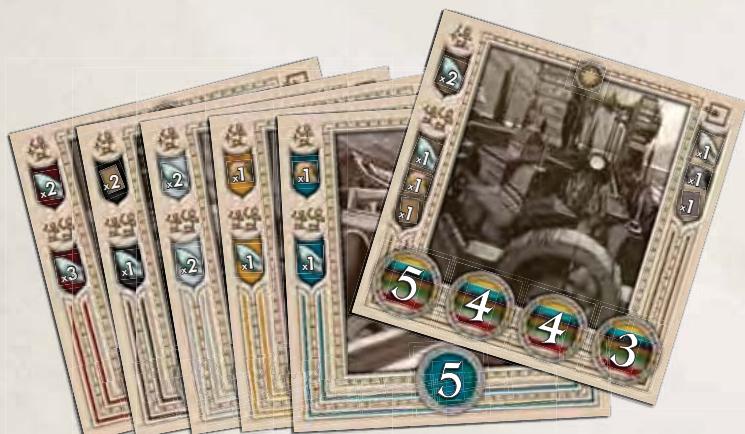
20 doußle-sided Building ciles +4 doußle-sided Expansion Building ciles (Rubble side and Reconstructed side)


4 plaγer miniacures
1 douBle-sided Courcyard tile


40 player markers (10 for each player)

3 dragon fiqures

12 Golden scale tokens
45 CRystal tokens (15 of value 1, 30 of value 3)

3 CoUnCER Bases (Blue, Green, and Red)

1 douBle-sided Obelisk
BasIC concEpts
BUILDING TILES
The city of Blue Moon is represented in the game by a set of Building tiles. These tiles show 2 different stages of development: the rubble of a former building and its reconstructed version.
The Rubble side of each Building tile is composed of its Rubble image, Contribution Spaces, Majority Bonus, Construction Bonus, and Neighborhood Bonus.
RUBBLE IMAGE: A depiction of a Building in ruins.
CONTRIBUTION SPACES: Each Building tile has spaces that show a color and a number. These spaces show how many contributions are necessary to reconstruct the building. The color refers to the type of card needed to contribute, and the number refers to the total value of cards that must be discarded. (For a more detailed description of Contributions, please see Contribution Phase on pg.7.)

MAJORITY BONUS: Indicates the rewards granted to the player that makes the most contributions to the Building's Reconstruction.

CONSTRUCTION BONUS: Indicates the rewards granted to all the players that contribute to the Reconstruction. This includes the player that receives the Majority Bonus.

NEIGHBORHOOD BONUS: Indicates the additional rewards granted to all players that contributed when an adjacent Building tile is reconstructed. This bonus is inactive while the rubble side is faceup.
After a Building has been reconstructed, the tile will be flipped over to its Reconstructed side and show only its Neighborhood Bonus, which is now active.
PEOPLE CARDS
The diverse peoples of Blue Moon are represented in the game by People cards. Each card has a value ranging from 1 to 3. These values represent your contribution to the reconstruction of the Buildings throughout the city. Cards with a value of 1 or 2 often have special powers that can be used on your turn. Cards with a value of 3 have no special powers. (For a more detailed description of the different special card powers, please see Card Powers on pg. 12.)
RUBBLE SIDE

Contribution Spaces
RECONSTRUCTED SIDE


Special Powers
No Special Powers
Setup
① Start building the city by placing the Courtyard tile in the center of the table. (It's the only tile with both sides colored.)
Then, randomly place the 4 Starting tiles (marked with orthogonaly adjacent to the Courtyard with their Rubble side faceup.
3 Shuffle the remaining Building tiles and randomly add them with their Rubble side faceup to complete the city's layout, as indicated in the illustration.
VARIANT SETUP: For more variety, place the Courtyard in the center and randomly add all other Building tiles (including the 4 Starting tiles) to complete the city layout.
IMPORTANT! The Buildings withbelong to the Expansion Building tiles, therefore are not used in the base game. If you do not wish to use the expansion, return them to the box. To learn how to play with the Expansion Building tiles, see pg. 14.
Attach the 3 Counter Bases to the 3 Dragon miniatures.
Then, place them next to the city. Place the Obelisk next to the city.
Use the side corresponding to the current player count (printed on the Obelisk.)
6 Place the Crystal tokens on one side of the Obelisk.
Place a number of Golden Scale tokens on the side of the Obelisk, based on the player count:
2 Players - 7 Golden Scales
3 Players - 10 Golden Scales
4 Players - 12 Golden Scales
Leave any unused Golden Scales in the game box.
Each player chooses a color. Place your Player Miniature on the Courtyard tile and the 10 corresponding Player Markers in front of you. In a 2- or 3-player game, leave the remaining Miniatures and Markers in the box.
Shuffle the People cards. Deal 8 to each player, and place the remaining deck of cards facedown next to the city.

playing the Game
Randomly select a first player. The game plays in turns, starting with the first player, and proceeds clockwise. On your turn, go through the following phases in order:
-
Movement Phase
-
Contribution Phase
-
Reset
-
Pass Turn
MOVEMENT PHASE
You may move your Miniature orthogonally up to 2 spaces along adjacent Building tiles. You may not move diagonally.
Moving is optional.
During your Movement Phase, you may discard as many cards as you wish to use their Power(s) (see pg. 12).

Example: Natasha is currently on the Hospice, but doesn’t have any Red cards to contribute there. She has several Brown cards in her hand, and she sees that the City Residence tile requires Brown cards. She is not allowed to move diagonally, so she moves 1 tile up and 1 tile to the left. This uses her 2 movement points for the turn, so she concludes her Movement Phase.
CONTRIBUTION PHASE
You may contribute to the reconstruction of the Building on which you end your movement (if you decided not to move, you may contribute to the reconstruction of the Building you are currently on.)
OR
If you end your movement on the Courtyard, you may make an offering to the Obelisk.
Contributing is optional.
To contribute to a Building's reconstruction, you must discard from your hand any number of cards that have a total value equal to or greater than 1 of the Contribution Spaces. All discarded cards must match the space's color. Then, after satisfying the Contribution Space's requirements, place 1 of your Player Markers on it. That contribution will no longer be available for any other players.
IMPORTANT! Player markers are limited. If a player doesn't have any available markers, they cannot make a Contribution.
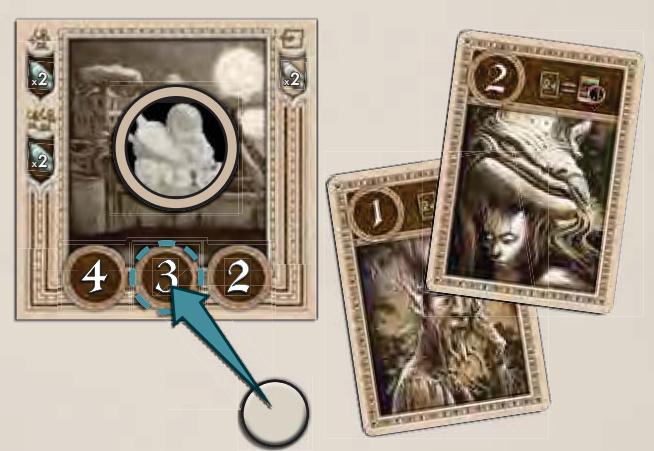
Example: Natasha just moved 2 spaces from the Hospice to the City Residence. Now, she can contribute to its reconstruction. The City Residence has 3 brown Contribution Spaces: 4, 3, 2. Natasha then discards 2 brown cards with a total value of 3 to place her marker on the 3’ space. The next player that ends their movement on the City Residence will only have 2 options of Contribution Spaces: 2 or 4.
You may contribute to a Building tile as many times as you like on your turn. However, each contribution is its own distinct action. As such, you may not use the same cards or any left-over value from a previous contribution to add to another contribution.
During your Contribution Phase, you may discard as many cards as you wish to use their Power(s). However, once played, the cards can no longer be used towards a contribution, unless their special power directly relates to a players contributions. (see pg. 12)

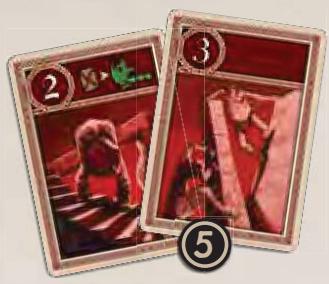

Example: Aman finished his movement on the Earth Temple. There are 3 available Contribution Spaces: 5, 4, 3 in red. He has a total value of 8 red (3, 2, 2, 1) in his hand. Since he can make 2 different combinations that satisfy 2 different spaces - 5 (3 + 2) and 3 (2 + 1) - Aman can choose to make 2 contributions to the Fire Temple's reconstruction. He discards the 4 red cards from his hand and places 2 Markers on the corresponding spaces on the Building tile.

Example: Laura finished her movement on the University. There are 2 available contributions she can make: 5 and 2 in white. She has a total value of 7 white (3, 3, 1) in her hand. However, she can only make 1 contribution since she must pay for each contribution separately. Laura thus decides to make the 5’ contribution, discarding the two 3 value cards from her hand, and places her Marker on the corresponding space.
RESET PHASE
First, you may discard up to 2 People cards from your hand onto the faceup discard pile.
Then, from the deck, draw 2 cards more than the number you discarded. (Example: If you discard 0 cards, draw 2 from the deck.)
If the deck runs out at any point during the game, reshuffle the discarded cards to form a new deck. Cards discarded in this phase do not add to your contribution or have their special powers activated.
You cannot skip the Reset phase.
PASS TURN
Pass the turn to the next player to your left.
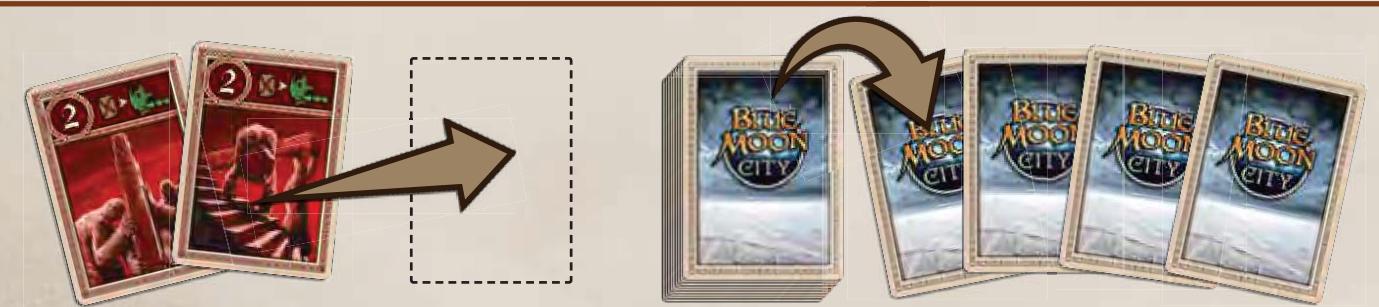
Example: Having just contributed to the University, Laura assesses her hand. She decides that she doesn't need her 2 red cards right now, so she discards them. She then draws 2 more cards than the amount she discarded, drawing a total of 4 (2 + 2) new cards from the deck.
SCORING BUILSINGS
When a marker is placed on the last empty Contribution Space of a Building, its reconstruction is complete. Then, players that contributed to its reconstruction receive some of the following bonuses:

MAJORITY BONUS: The player who has the most markers on the scoring Building receives the Majority Bonus. If there is a tie for most markers, the tied player ith the leftmost marker receives the bonus.
CONSTRUCTION BONUS: Each player with at least 1 marker on the scoring Building receives the Construction Bonus. (This includes the player receiving ority Bonus!)


NEIGHBORHOOD BONUS: Each player with at least 1 marker on the scoring Building receives the Neighborhood Bonus of each reconstructed Building orthogonally adjacent to the scoring Building. Even if you have multiple markers on the scoring Building, you only score a reconstructed Building's Neighborhood Bonus once.
After scoring a Building, players retrieve their markers on the scoring Building. Then, the Building tile is flipped to its reconstructed side. Any Miniatures or Dragons that are present return to the tile after it is flipped.
AVAILABLE BONUSES
The available bonuses are Golden Scale tokens, Crystal tokens, and People cards. Place any Golden Scale tokens and Crystal tokens you receive in front of you, keeping your Crystals facedown so that only you know their values. Place any cards you receive facedown in front of you without looking at them, and add them to your hand after your turn is over.
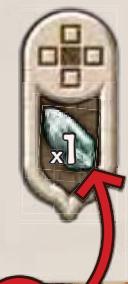
Example: Carol made the last contribution required to reconstruct the Water Temple. With 2 contributions, Carol contributed more to the reconstruction than Aman and receives the tile's Majority Bonus: 2 Crystals.
Both players receive the Construction Bonus (3 Crystals) and the Neighborhood Bonus of the adjacent Buildings: 1 Crystal (from the Citadel) and 1 Crystal (from the Aqueduct). The Monastery Tower and the Trading House are also adjacent to the Water Temple, but Carol

and Aman won't receive those bonuses though (1 Crystal and 1 Dragon Scale), as these Buildings have yet to be reconstructed. At the end of scoring, Carol receives a total of 7 Crystals, while Aman receives a total of 5 Crystals.


Golden scales & DRAGONS
GOLDEN SCALES
Golden Scales can be traded for Crystals if you manage to acquire enough of them. 'There are 2 ways to receive Golden Scale tokens:
Score a reconstructed Building OR
Make a contribution to a Building in the presence of a Dragon
DRAGONS
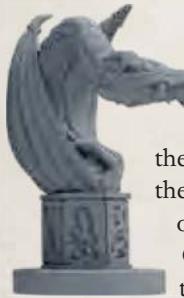
Dragons are the ancient protectors of Blue Moon and move through the city using the special card powers (see page 12). Every time a contribution is made to he Building tile where any of the Dragons are, he contributor receives 1 Golden Scale as a token of the Dragon's appreciation. You can receive Golden Scale tokens from different Dragons for the same contribution; however, if you make more than one contribution during your turn, you only receive e contribution during your turn, you only receive the Golden Scale(s) for your first contribution. ale(s) for your first contribution.
SCORING GOLDEN SCALES
When the last Golden Scale token is taken from the pool, they are scored. While Golden Scales are limited, Scales that you gain, but can not collect because the pool ran out, still count towards your total for scoring.
The player with the most Golden Scale tokens receives 6 Crystals. If there is a tie, the tied players score 3 Crystals each. Then, they must return their Golden Scales to the pool. All other players who have at least 3 Golden Scales gain 3 Crystals. Then, they must return their Golden Scales to the pool. Players who have fewer than 3 Golden Scales don't receive any Crystals. However, they keep their Golden Scales.

Example: Aman currently has 5 Golden Scale tokens. Natasha has 3, while Laura has 2. Carol has 1 token.
Aman makes a contribution to the Monastery Tower in the presence of the Blue Dragon and receives 1 Golden Scale token. Aman's contribution was the last contribution available to that building, completing its reconstruction.

Carol and Natasha also contributed to the building. As the 3 of them made an equal number of contributions, the Majority Bonus goes to the player whose marker is furthest to the left: Carol receives 1 Golden Scale token.
There is only 1 adjacent Building to the Monastery Tower that is complete: the Water Temple. Aman, Carol, and Natasha also receive the Water Temple's neighborhood bonus, 2 Golden Scale tokens each.

There is only 1 Golden Scale available in the pool; however, the players are still awarded the tokens earned, even though the pool is empty.
Aman: had 5 Golden Scales + 1 Golden Scale received from the Blue Dragon + 2 Golden Scales received from the Neighborhood bonus8 Golden Scales.
Carol: had 1 Golden Scale + 1 Golden Scale received from the Majority bonus + 2 Golden Scales received from the Neighborhood bonus4 Golden Scales.
Natasha: had 3 Golden Scales + 2 Golden Scales received from the Neighborhood bonus 5 Golden Scales.
Laura: did not contribute to the Building's Reconstruction, therefore, no Golden Scales were added to her 2 Golden Scales.
The Golden Scales are now scored. With a total of 8, Aman has the most Golden Scales, so he receives 6 Crystals. Natasha has 5 Golden Scales and Carolhas 4, sotheyboth receive3 Crystals. Allof themmust return all their Golden Scales to the pool after scoring their Crystals. Since Laura only has 2 Golden Scales, she doesn’treceive any Crystals. However, she gets to keep her Golden Scales for future scoring.

CRystals & Obelisk
Before the Dark Age, the Courtyard had been the social axis around which all city life rotated. In its center stood a towering Obelisk and, at its pinnacle, rested the Holy Crystal of Psi. Only by restoring the Holy Crystal of Psi, shattered during the war of succession, will Blue Moon City truly be rebuilt.
CRYSTALS
Crystals are gained throughout the game and are used to reconstruct the most important monument in Blue Moon City: The Obelisk. Crystals gained must be kept facedown, concealing the amount from other players.
IMPORTANT! Unlike Golden Scales and Player Markers, the Crystals in the game are unlimited. If the Crystal pool runs out, keep counting their score.
THE OBELISK
The Obelisk has 11 spaces for Crystal Offerings for a 2-player game and 13 spaces in a 3+ player game, numbered from 7 to 12. The Obelisk spaces are filled from the bottom up, using Player Markers to track each Offering. If a player doesn't have a marker available, they cannot make an Offering.
OFFERING CRYSTALS TO THE OBELISK
To contribute to the reconstruction of the Obelisk, players offer Crystals instead of cards. The Offering must be made in the Courtyard, and it must satisfy the required amount of Crystals printed in the next available space of the Obelisk (moving from lowest value to highest).
If you make an Offering to the Obelisk in the presence of a Dragon, you do not receive any Golden Scale tokens. Unlike other Buildings, you may not make 2 or more Offerings to the Obelisk in a single turn without the use of particular cards' Special Powers (see pg. 12).

end of the Game
A player wins the game as soon as they have made the following number of Offerings to the Obelisk:
2-player game: 6 offerings
◆ 3-player game: 5 offerings
◆ 4-player game: 4 offerings
If every Building tile in the city is rebuilt and no player has enough Crystals to make the necessary number of Offerings, play until every player has made as many Offerings as they can. The player who has made the most Offerings to the Obelisk wins. Ties go to the player who has the most remaining Crystals. If this is also tied, the tied players share the victory.
IMPORTANT! If all players run out of Player Markers (by placing them all on unfinished Buildings and the Obelisk) and none made enough Offerings to win the game, the game ends immediately in a draw.
CaRd pOweRs
You may discard as many cards as you wish during your Movement and/or Contribution Phases for their special power(s). However, once played, these cards can no longer be used towards a contribution. Note that the Khind and the Mimix cards are exceptions to this rule, as their special powers directly relate to player contributions.
DURING THE MOVEMENT PHASE
VULCA (BLACK)
Masters of the flame, the Vulca Revere lIkathe fIre dragon, protectIna the cIty wIth theIR sORcery.

VALUE 1: Discard to move the Red Dragon to any space (the Dragon may be inside or outside the City).

VALUE 2: Discard to move the Red Dragon up to 3 spaces (only if the Dragon is already in the City). Dragons move orthagonally, just like Player Miniatures.
TERRAH (RED)
Mastersoftheearch,theterrahrevere doran the Earch dragon, harvesting the cIty's surRoundInG fIelds.

VALUE 1: Discard to move the Green Dragon to any space (the Dragon may be inside or outside the City).
AQUA (BLUE)

Masters of the seas, the dqua revere Sesha the Water dragon, guarding the cIty's sacred waters.
VALUE 2: Discard to move the Green Dragon up to 3 spaces (only if the Dragon is already inthe City). Dragons move orthagonally, just like Player Miniatures.
VALUE 1: Discard to move the Blue Dragon to any space (the Dragon may be inside or outside the City).
VALUE 2: Discard to move the Blue Dragon up to 3 spaces (only if the Dragon is already in the City). Dragons move orthagonally, just like Player Miniatures.
FLIT (GREY)
Masters of the sKIes, the flIt soar above the cIty, keepIng a watchful gaze OvER the cIty's RESIdEnts.
VALUE 1: Discard to move your Player Miniature to any space.
VALUE 2: Discard to move your Player Miniature up to 2 additional spaces.

CaRd pOwERs
DURING THE CONTRIBUTION PHASE
KHIND (GREEN)
Pranksters, the chIldlIke Khind roam the cIty In Bands, causing merry chaos as they go.

ANY KHIND: All Khind cards are wild cards of value 1 and can be used as or added to any color to make 1 contribution.
MIMIX (BROWN)
Naturalists, the MimIx have found a perfect elemental Balance, carIng for the cIty's ResIdentS.


VALUE 1 OR 2: The combination of any 2 Mimix cards (Value 1 or 2)may count as a wild card of value 3.This can be used alone in a contribution or added to any color.
HOAX (WHITE)
phIlosophers, the hoax constantly develop InnovatIve Ideas, guIdIng the communIty with theIr teachIngs.

VALUE 1: Discard to change the color of up to 4 cards into another color when making a contribution. All cards converted must be of the same color and will all change to the same color.

VALUE 2: Discard to change the color of 1 card when making a contribution.


PILLAR (YELLOW)
advencurers, the PIllar often travel Into the unknown, RetUrNInG wIth exotIC artIfacts to trade.
VALUE 1: After contributing to the Obelisk, discard this card to make 1 additional contribution. This additional Offering costs 1 Crystal more than the number printed on the Offering space.
VALUE 2: After contributing to the Obelisk, discard this card to make 1 additional contribution. This additional Offering costs 2 Crystals more than the number printed on the Offering space.

Expansion

addicional Buildings setup
Start building the city's layout by placing the Courtyard tile in the center of the table. Randomly place the 4 Starting tiles (marked with) orthogonaly adjacent to the Courtyard with their Rubble side faceup.
Finally, shuffle the remaining Building tiles along with the Expansion Building Tiles (marked with7)and randomly add them with their Rubble side faceup to complete the city's layout, forming a grid with 5 tiles x 5 tiles, as indicated in the illustration.
VARIANT SETUP: For more variety, place the Courtyard in the center and randomly add all other Building tiles (including the 4 Starting tiles and the 4 Expansion Building tiles) to complete the city layout.


special Buildings
When you end your turn on 1 of the Special Buildings, you can perform an additional action as follows:


Additional Action: Move to any Building tile. You cannot contribute to the Building you are moving to, make an Offering, or use its additional action (in case of a Special Building)
MAIN HALL
Majority Bonus:
3 Crystals
Construction Bonus:
2 Crystals
Neighborhood Bonus:
2 Crystals


Additional Action: Draw 2 People cards


HOSPITAL
Majority Bonus:
1 Crystal
Construction Bonus:
2 Crystals
Neighborhood Bonus:
2 Crystals
GOLDEN
SHRINE
Majority Bonus:
1 Golden Scale
Construction Bonus:
1 Crystal,
1 Golden Scale, and
1 People card
Neighborhood Bonus: 2 Golden Scales
Additional Action: Make 1 Offering to the Obelisk. You cannot use
the Pillar card to gain more Offerings
THEATRE
Majority Bonus:
2 People cards
Construction Bonus:
2 People cards
Neighborhood Bonus:
2 People cards
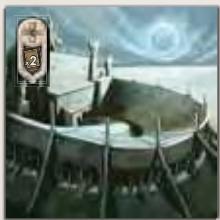

Additional Action: No additional action
expansion


Example: Natasha finished her movement on the Main Hall. The Main Hall allows the player to move to any Building tile. Natasha wants to move to the Courtyard, as she has 9 Crystal tokens, which is the next Offering space available on the Obelisk. However, she will not be able to make the Offering this turn - no contributions or Offerings are allowed to be made on the tile she lands on using the Main Hall's additional action. She has, however, 1 red card with the value of 1'. She decides to make a contribution to the Main Hall before using its additional action. After she makes the contribution, she moves to the Courtyard. She will make an Offering during her next turn.
CREdiCS
Game Design: Reiner Knizia
Artwork: Nicolas Fructus
Graphic Design: Fabio de Castro, Mathieu Harlaut, & Louise Combal Sculptors: BigChild Creatives: Hugo Gomez Briones & Daniel
Fernández-Truchaud
Engineering: Vincent Fontaine
Publisher: David Preti
Production: Isadora Leite (Lead), Renato Sasdelli (Lead),
Thiago Aranha, Patricia Gil, Thiago Gonçalves, Guilherme Goulart,
& Bryan Steele
Rules: Colin Young
Proofreading: Jason Koepp & Danny Renaud
© Dr. Reiner Knizia, 2018. All rights reserved. No part of this product may be reproduced without specific permission. Artwork ©CMON Global Limited, 2018.
Spaghetti Western Games, CMON, and the CMON logo are registered trademarks of CMON Global Limited. Actual components may vary from those shown.
Figures and plastic components included are pre-assembled and unpainted. Made in China.
Rules Summary
GAMEPLAY
-
MOVEMENT PHASE: (Optional) Move up to 2 spaces along adjacent Building tiles. You may discard cards to use their Special Powers.
-
CONTRIBUTION PHASE: (Optional) EITHER contribute to the Building in which you ended your movement, OR make an offering to the Obelisk (in Courtyard). You may discard cards to use their Special Powers.
-
RESET PHASE: (Mandatory) You may discard up to 2 cards, then draw 2 cards more than you discarded.
-
PASS TURN: (Mandatory) Pass turn to the player on your left.
SCORING BUILDINGS

MAJORITY BONUS: Awarded to the player with the most markers on the scoring Building. (In case of a tie, the tied player with the leftmost marker receives the bonus.)

CONSTRUCTION BONUS: Each player with at least 1 marker on the scoring Building receives the Construction Bonus. (This includes the player receiving the Majority Bonus!)

NEIGHBORHOOD BONUS: Each player with at least 1 marker on the scoring Building receives a bonus as depicted on all reconstructed Buildings orthogonally adjacent to the scoring Building.
SCORING GOLDEN SCALES
Player with Most Golden Scales6 Crystals.
(If tied, 3 Crystals each.) Then, return Scales to the pool. All other players with 3+ Golden Scales3 Crystals.
Then, return Scales to the pool. Players with fewer than 3 Golden Scales0 Crystals.
However, they keep their Scales.
END OF THE GAME
You win the game when you make the following number of Offerings to the Obelisk:
2-player game: 6 Offerings
3-player game: 5 Offerings
4-player game: 4 Offerings
If every Building tile in the city is rebuilt and no player has enough Crystals to make the necessary number of Offerings, play until every player has made as many Offerings as they can. The player who has made the most Offerings to the Obelisk wins. (Ties go to the player who has the most remaining Crystals. If this is also tied, the tied players share the victory.).
IMPORTANT! If all players run out of Player Markers, the game ends in a draw.
PEOPLE CARD POWERS
THE VULCA (BLACK)
Value 1: Discard to move the Red Dragon to any space.
Value 2: Discard to move the Red Dragon up to 3 spaces.
THE TERRAH (RED)
Value 1: Discard to move the Green Dragon to any space.
Value 2: Discard to move the Green Dragon up to 3 spaces.
THE AQUA (BLUE)
Value 1: Discard to move the Blue Dragon to any space.
Value 2: Discard to move the Blue Dragon up to 3 spaces.
THE FLIT (GREY)
Value 1: Discard to move your Player Miniature to any space. Value 2: Discard to move your Player Miniature up to 2 additional spaces.
THE KHIND (GREEN)
Any Khind: All Khind cards = wild cards of value 1.
THE MIMIX (BROWN)
Value 1 or 2: 2 Mimix cards = wild card of value 3.
THE HOAX (WHITE)
Value 1: Discard to change the color of up to 4 cards.
Value 2: Discard to change the color of 1 card.
THE PILLAR (YELLOW)
Value 1: Discard to make 1 additional Offering. This action costs 1 additional Crystal.
Value 2: Discard to make 1 additional Offering. This action costs 2 additional Crystals.
下载 Markdown原文为社区整理/出版社公开资料,版权归原作者,仅供个人学习查阅。