
流画溢彩Canvas
一句话概览
流画溢彩 是一款已收录于村了吗规则库的桌游,支持 1–5 人,原名 Canvas。
本页内容:一句话概览 · 游戏概述 · 1. 游戏组件 · 2. 游戏设置 · 3. 游戏流程 / 回合结构 · 4. 游戏结束与计分 · 5. 单人变体 · 6. 布景布局 · 7. 成就 · 8. 卡牌意思参考 · 关键规则与常见问题 · 常见问题
流画溢彩 规则速览
以下规则速览由本站整理,与官方规则书表述不同,仅供快速上手参考。
游戏概述
《流画溢彩》(原名 Canvas / 侠技霸涂)由 Jeffrey Chin 与 Andrew Nerger 设计,Luan Huynh 负责插画。支持 1-5 人,建议 14 岁以上,单局约 30 分钟。
你们是在一个著名的艺术节上比赛的画家。游戏过程中你会获得透明的艺术卡,并把它们像图层一样叠加以生成画作。卡牌上有各类图标,这些图标会根据条件得分,而它们会因为你选择的卡牌与叠放顺序而被显示或被遮盖——只有可见的图标才算分数,被遮盖的图标会被无视。
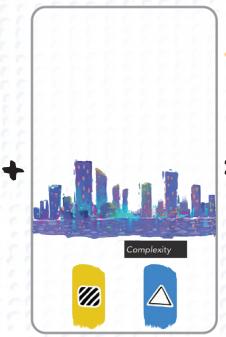
每个画作均由 3 张艺术卡和 1 张背景卡组合而成,不同的组合会创作出有趣且独特的画作与作品名字。当所有玩家完成 3 个作品时游戏结束,拥有最高分数的玩家获胜。
核心机制: 手牌管理、卡牌选择与排序、图层叠加、条件得分
1. 游戏组件
| 组件 | 数量/说明 |
|---|---|
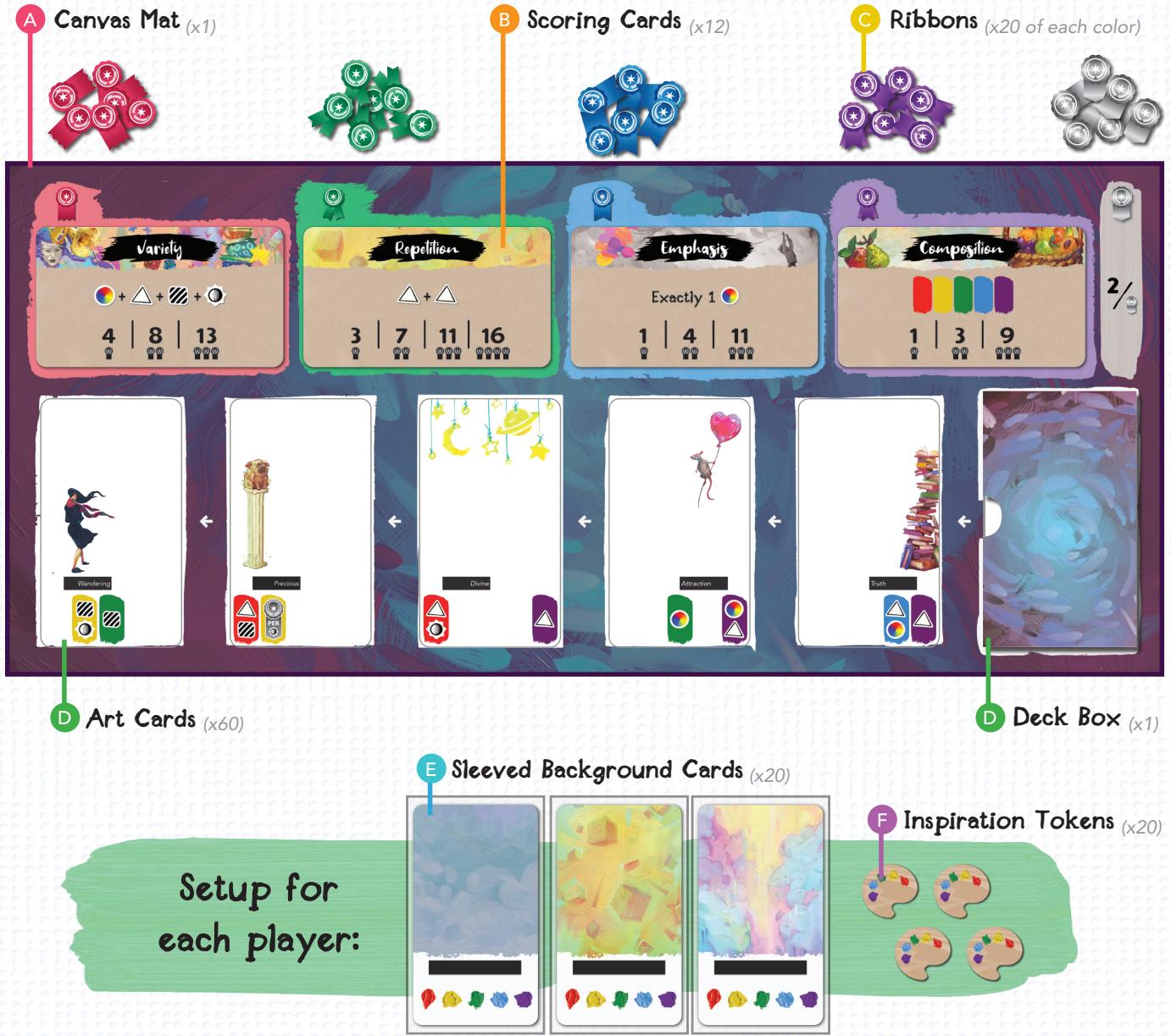
| 画布垫子 | 1 块,置于桌子中央,用于放置得分卡与勋章 |
| 艺术卡 | 透明卡牌;洗匀后放入卡牌盒,场上始终保持 5 张翻开的卡 |
| 背景卡 | 每位玩家选择 3 张,并为每张套上牌套(用于装载 3 张艺术卡) |
| 得分卡 | 共放置 4 张,压在画布垫子上填充了颜色的格子里 |
| 勋章 | 按颜色分成 5 份,放在画布垫子上对应的图标处,按颜色计分 |
| 调色板指示物 | 每位玩家 4 个,用于跳过艺术卡 |
| 牌套 | 用于背景卡,也是画作的装载容器 |
| 卡牌盒 | 既装艺术卡,又作为牌堆位置(艺术卡从盒中翻出,摆在盒的左侧) |
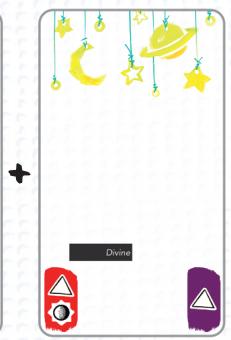
艺术卡上的图标说明:
- 画作作品名图标:用于生成作品名字。
- 4 个元素图标:代表这个设计中使用的元素,不同组合的元素会让你得分。
- 奖励图标:可以让你为每个匹配的元素获得一个奖励勋带。
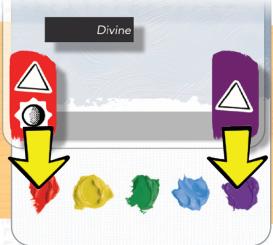
- 图标位置有辅助识别标记(例如红色色卡永远在最左侧的位置)。
- 艺术卡上有一层保护膜,你可以直接撕走它,也可以先玩几场游戏——使用时保护膜会松脱,更容易撕下。
2. 游戏设置
2.1 画布垫与得分卡
- 将画布垫子置于桌子中央。
- 将任意 4 张得分卡放在画布垫子上填充了颜色的格子,或者使用规则书最后页中的一个预设方案。第一次游戏建议使用「多样 Variety」「重复 Repetition」「强调 Emphasis」「构图 Composition」。将其余得分卡放回盒子里。
- 将勋章分成 5 份,放在画布垫子上对应的图标处。
2.2 艺术卡与卡牌盒
- 洗匀艺术卡,将它们置入卡牌盒中,把卡牌盒放在牌堆处。
- 从卡牌盒中抽 5 张,面朝上放在卡牌盒的左边。
2.3 背景卡与玩家配置
- 为所有背景卡套上牌套,然后每位玩家选择 3 张背景卡;其余背景卡连同牌套一起放回盒子里。
- 给每位玩家 4 个调色板指示物,其余放回盒子里。
3. 游戏流程 / 回合结构
由最近画过画的玩家开始游戏,之后顺时针轮流。
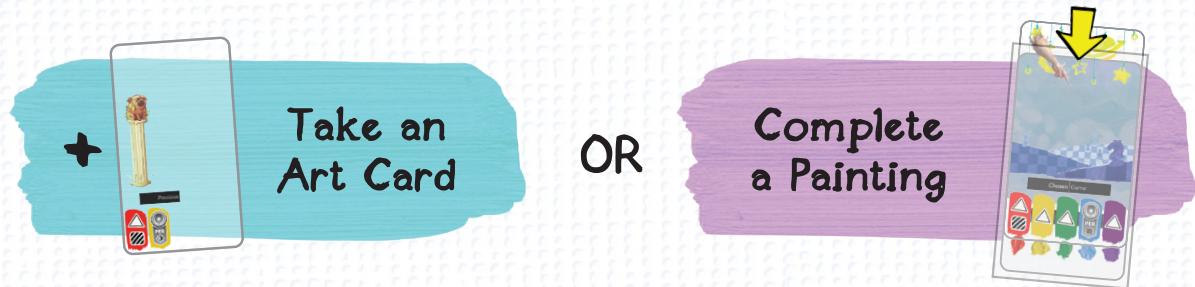
在你的回合,你必须从「获取一张艺术卡」或「完成画作」中选择一个行动执行。你手上最多拥有 5 张艺术卡;如果你手上已经有 5 张艺术卡,你必须选择完成画作作为你的行动。
3.1 行动:获取一张艺术卡
如果你手牌中少于 5 张艺术卡,你可以从画布垫子上获取一张艺术卡。
- 距离卡牌盒最远的艺术卡是免费的。
- 如果你选择跳过它,你必须在每张被跳过的卡牌上放一个调色板指示物。
- 如果你选择的那张卡上有调色板指示物,你将一并获取它们。
然后将剩余的卡牌(和它们上面的指示物)向远离卡牌盒的方向移动,并翻开新的艺术卡放在空白位置,始终保持卡牌盒的左侧有 5 张翻开的艺术卡。
示例: 玩家 A 想要选择第三张卡,他需要在最左侧的卡牌上放一个调色板跳过,再在第二张卡上放一个调色板跳过,然后取走第三张卡。空位右侧的卡牌左移填充空位,然后从卡牌盒里翻出一张新的艺术卡置于卡牌盒左侧。轮到玩家 B 时他选择第二张牌,因此他先在第一张卡上放置一个调色板,然后将第二张卡和玩家 A 放下的调色板一起取走。
3.2 行动:完成画作
如果你手上有至少三张艺术卡,你便可以选择完成画作。选择 3 张艺术卡,将它们加入到一个背景卡的卡套里面。它们的顺序由你自己决定,但只有可见的图标会算分数,被遮盖的图标会被无视。剩余的手牌留待后续继续使用。
示例: 玩家 A 从手牌中选择 3 张艺术卡并调整它们的顺序,剩余的卡牌留待以后使用;然后按自己的顺序将这 3 张艺术卡加入 1 个卡套中。
3.3 得分结算
将你的画作展示给其他玩家看,然后读出作品名字,把画作上的图标与得分卡上的条件进行对比:
- 每当你的画作达成一个条件,便从垫子上获取对应的勋章。
- 再为每个匹配的奖励元素获取一个奖励勋带。
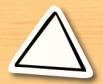
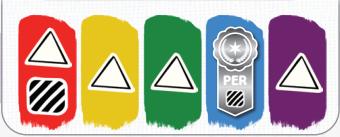
示例: 玩家 A 的画作完成了构图(Composition)的得分条件——所有五个色卡都有图标,因此他获得一个紫色勋章;他的画作达成重复(Repetition)的得分条件两次——画作中有两对相同元素,因此他获得 2 个绿色勋章;检查完所有得分卡后,他还因为奖励图标上有一个匹配的元素,额外获得一个奖励勋章。
4. 游戏结束与计分
当所有玩家完成三张画作时,游戏结束。当你完成第三张画作时,你后面的回合会被跳过。
将每个颜色的勋章对应分数加起来就是你的分数——在对应颜色的得分卡上写着该颜色勋章的价值。奖励勋带每个价值 2 分。拥有最高分数的玩家胜出;如果平分,则拥有最多调色板的玩家胜出;如果仍然平分,则由一个不参与游戏的人判断,拥有最好看的画作的玩家得分。
5. 单人变体
在单人游戏中,你会将你的分数对照表格以决定你是何等程度的成功。除非其他说明,否则按正常流程玩。
| 总分 | 评价 |
|---|---|
| 0-24 | 参与奖 |
| 25-29 | 新兴艺术家 |
| 30-34 | 荣誉奖 |
| 35-39 | 亚军 |
| 40+ | 全场最佳 |
5.1 单人变体 1:和文森特一起画
在这个变体中你会和「文森特」一起玩,他是一个开始就会有 4 个调色板指示物的人。文森特不会完成画作和得分。
- 第一轮从你开始。
- 轮到文森特时,将他的调色板指示物投在桌上;每个面朝上的指示物用于跳过卡牌。文森特最多一次使用 4 个指示物。
- 如果没有面朝上的指示物,文森特会选择离卡牌盒最远的一张。
- 被文森特选择的卡牌会被舍弃,然后文森特会获得该卡牌上的调色板。
- 记住:即使你选择完成画作,文森特仍然有他的轮次。
5.2 单人变体 2:单人拼图
在这个变体中,你完全掌控可以被选择的艺术卡。
- 除了你自己的调色板指示物外,在艺术卡左侧位置建立一个调色板池,里面放四个调色板。
- 当你需要使用调色板时,不要将它们放在艺术卡上,而是将它们加入调色板池。
- 被跳过的艺术卡会被舍弃;获取艺术卡后,将剩余艺术卡往左顺延,然后从卡牌盒中拿出新的艺术卡,保持场上有 5 张艺术卡。
- 每当你选择最左侧的艺术卡时,从调色板池中获得一个调色板。
- 每当你完成一个画作时,从调色板池中获得一个调色板。
- 如果调色板池为空,则你不能获取调色板。
6. 布景布局
你可以用任意四张得分牌开始游戏,或者选择以下预设组合以形成有趣的特色互动。
- 冷遇模式 Chill Mode(简单): 作为一个较简单的游戏,只使用任意三张得分卡。
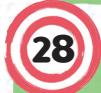
- 协同 Synergy: 这些得分条件里面有很多重叠的地方,会让你更容易获得更多勋章。
- 第一次玩 First Time Playing(正常): 这一组卡牌很容易讲解,而且是一个对新人很友好的入门用配置(构图、多样、强调)。
- 家庭游戏 Family Game: 使用「重复」「多样」等配置,是家庭游戏和新手局的理想模式,非常简单的配置但覆盖全部基础玩法。
- 平衡 Balanced: 面面俱到的游戏体验,使用 2 张包含元素的卡和 2 张不包含元素的卡(一致性、强调、层次结构、比例)。
- 奖励 Bonus(复杂): 如果你可以组合出满足条件和正确的奖励图标位置的话,你将获得大量的分数(层次结构、运动、比例)。
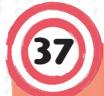
- 空间限制 Spatial: 这个配置需要你专注于元素的特殊位置(运动、接近原则、空间、对称)。
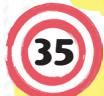
- 无元素 No Elements: 这些卡牌都不需要特定的元素,使所有艺术卡的价值都平均。
- 全员元素 All Elements: 这些卡牌中除非挑战多色勋章,否则条件全部不重复。
7. 成就
当你完成每项成就时,将旁边的颜料滴填色:
- 一幅画达成全部 4 种得分条件。
- 一幅画获得 4 个奖励勋带。
- 一幅画获得 7 个勋章。
- 一幅画内有 5 个相同元素。
- 从 4 张得分卡中获得全部勋章。
- 获得 7+ 个奖励勋带。
- 获得 14+ 个勋章。
- 玩一遍全部布景。
- 获得 40+ 分。
- 挑战设计师的最高分(47)。
8. 卡牌意思参考
| 得分卡卡牌 | 意思 |
|---|---|
| Composition | 构图 |
| Consistency | 一致性 |
| Emphasis | 强调 |
| Hierarchy | 层次结构 |
| Movement | 运动 |
| Proportion | 比例 |
| Proximity | 接近原则 |
| Repetition | 重复 |
| Space | 空间 |
| Style | 风格 |
| Symmetry | 对称 |
| Variety | 多样 |
关键规则与常见问题
易错规则
- 每回合只能执行一个行动: 获取一张艺术卡 或 完成画作,二选一。
- 手牌上限 5 张: 手牌已有 5 张时必须选择完成画作。
- 跳过卡牌要付代价: 每跳过一张,就在该卡上放一个调色板指示物;只有距卡牌盒最远的艺术卡是免费的。
- 拿走卡牌时连同其上的调色板一起拿走。
- 每次取卡后都要补牌,始终保持卡牌盒左侧有 5 张翻开的艺术卡。
- 完成画作至少需要 3 张艺术卡,顺序由自己决定。
- 只有可见图标算分,被遮盖的图标一律无视。
- 同一画作可以多次触发同一个得分条件(例如两对相同元素即算两次)。
- 一般玩法中,每个元素只可以在一个条件中被计算一次。
- 不能获取多于得分卡上描述数量的勋章;罕见情况下勋章用完,请使用替代品作为指示物。
- 奖励勋带每个价值 2 分。
- 完成第三张画作后,你的后续回合被跳过,直到所有玩家都完成三张画作后游戏结束。
常见问题
- Q:一个画作由什么组成?
A:由 3 张艺术卡和 1 张背景卡组合而成。 - Q:手牌已经 5 张还能不能拿新卡?
A:不能,你手上最多拥有 5 张艺术卡,此时必须选择完成画作。 - Q:跳过卡牌要付什么?
A:在被跳过的每张卡上放一个调色板指示物,而这些指示物最终会被后来选择该卡的玩家一并取走。 - Q:画作里的图标都算分吗?
A:不是,只有可见的图标会算分,被遮盖的图标会被无视。 - Q:一个条件能重复得分吗?
A:有些得分条件可以被同一个画作多次触发,但每个元素一般只在一个条件中被计算一次。 - Q:勋带可以拿超过得分卡上标注的数量吗?
A:不可以,你不可以获取多于得分卡上描述的数量的勋章。 - Q:游戏什么时候结束?
A:当所有玩家完成三张画作时游戏结束;你完成第三张后,后面的回合会被跳过。 - Q:分数相同时怎么判定?
A:先比较调色板数量,多者胜出;若仍平分,则由一个不参与游戏的人判断,拥有最好看的画作的玩家得分。 - Q:单人模式的分数怎么看?
A:对照单人得分表:0-24 参与奖,25-29 新兴艺术家,30-34 荣誉奖,35-39 亚军,40+ 全场最佳。
常见问题(FAQ)
以下 1 条问答中 0 条来自站内玩家的真实提问,其余 1 条为本站整理的常见疑问;答复内容保持原样。
流画溢彩支持几个人玩?
1–5 人。
去哪查完整规则
想核对具体规则细节、卡牌效果或某个回合的结算方式,可以在村了吗里选中这款游戏后直接提问。
同类桌游
- 卡坦岛德式
- 工业革命:伯明翰德式
- 勃艮第城堡:特别典藏版德式
- 方舟动物园德式
- 卡卡颂抽象
- 瘟疫危机传承:第一季美式
- 阿瑞迪亚:勇踏征途美式
- 重塑宇宙德式
- 幽港迷城美式
- 埃多拉的德鲁伊德式
规则原文(Markdown)
本站收录这款游戏的规则原文 2 个文件,此处内联渲染 2 个,可直接展开阅读或下载。
rules_zh_流画溢彩_21409.md14.0 KB
侠技霸涂 Canvas
1-5 14+ 30
Game Design by Jeffrey Chin & Andrew Nerger
Illustration by Luan Huynh
Graphic Design by Jeffrey Chin
©2020 Road To Infamy Games. All Rights Reserved.
翻译由狗蛋(道格艾格_DogEgg)提供

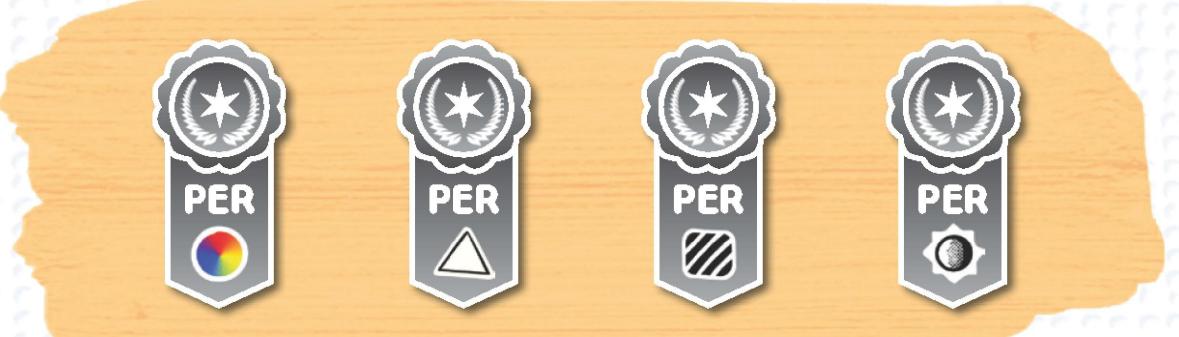
概述
你们是在一个著名的艺术节上比赛的画家,在游戏过程中你会获得透明的艺术卡并通过把它们像图层一样叠加以生成出画作。卡牌上会有一些图标可以根据条件得分,而这些图标会因为你选择的卡牌和顺序而显示或被遮盖。
不同的卡牌组合会创作出有趣且独特的画作和作品名字,但所有玩家完成3个作品时,游戏将会结束,拥有最高分数的玩家会在游戏中获胜。

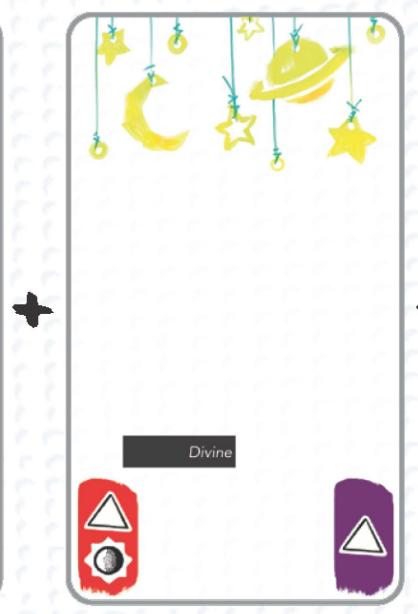
艺术卡



Shape
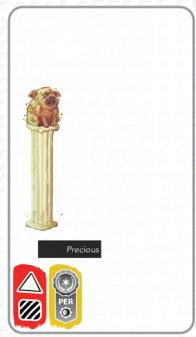
每个画作均需要为三张艺术卡和一个背景卡所组合而成。
画作作品名图标
这4个元素图标代表这个设计中使用的元素,不同组合的元素会让你得分。


奖励图标可以让你为每个匹配的元素获得一个奖励勋带()。
( ) 可以辅助你识别图标位置,比如红色色卡永远在最左侧的位置。


艺术卡上有一层保护膜,你可以选择撕走它或先玩几场游戏,使用时会使保护膜松脱,更容易撕下来。



准备
A 将画布垫子置于桌子中央。
B 将任意4张得分卡放在画布垫子上填充了颜色的格子,或者用规则书最后页中的一个预设方案。如果这是你第一次游戏,建议你用 多样
(Variety)、重复(Reppetiton)、强调(Emphasis)和构图(Composition)。将其余得分卡放回盒子里。
© 将勋章分成5份放在画布垫子上对应的图标处。
画布垫子 (x1)
D 洗均艺术卡,然后将它们置在卡牌盒里,将卡牌盒放在牌堆处()。抽5张面朝上放在卡牌盒的左边。

E 为所有背景卡套一个牌套,然后每个玩家选择3张背景卡,其余背景卡和牌套一起放回盒子里。

F 给每个玩家4个调色板指示物,其余放回盒子里。

开始时每个玩家拥有:
到你的轮次
由最近画过画的玩家开始游戏,然后顺时针轮流。
在你的回合,你必须从获取一张艺术卡或完成画作中选择一个行动。你手上最多拥有5张艺术卡,如果你手上已经有5张艺术卡,你必须选择完成画作作为你的行动。
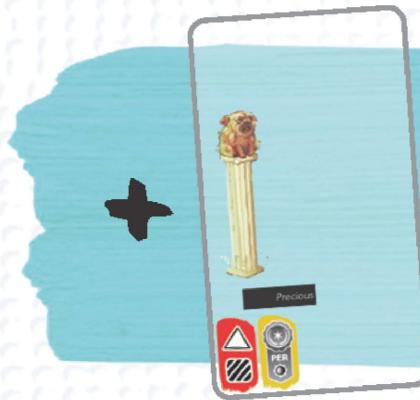
获取一张 艺术卡
或
完成画作

获取一张艺术卡
如果你手牌中少于5张艺术卡,你可以从画布垫子上获取一张艺术卡,选择距离卡牌盒最远的艺术卡是免费的,如果你选择跳过它,你必须在每张被跳过的卡牌上放一个调色板指示物()。如果你选择的卡牌上有调色板,你将获取它们。
然后将剩余的卡牌(和它们上面的指示物)往远离卡牌盒的方向移动,并翻开新的艺术卡放在空白位置,保持卡牌盒的左侧有5张翻开的艺术卡。

玩家A想要选择第三张卡,他需要在最左侧的卡牌上方一个调色板跳过,然后在第二张卡上再放置一个调色板以跳过,然后取走第三张卡。

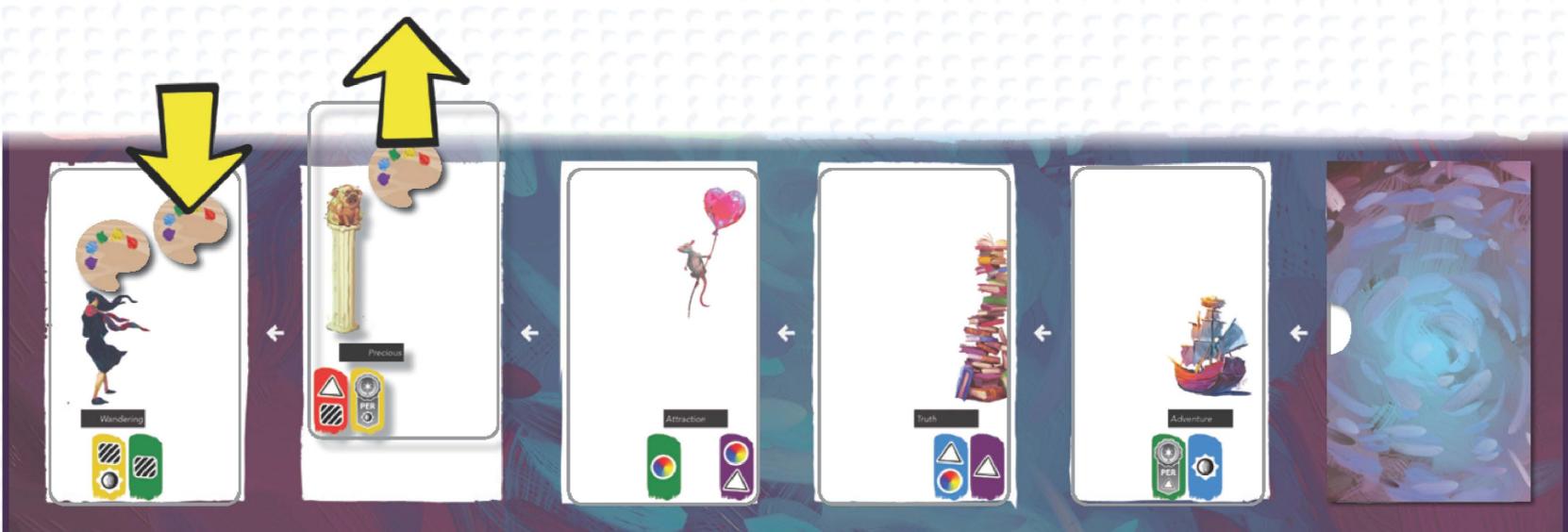
空位右侧卡牌将左移填充空位,然后从卡牌盒里面翻出一张新的艺术卡出来置于卡牌盒左侧。
轮到玩家B的轮,他选择第二张牌,因此他需要先在第一张卡上放置一个调色板,然后将第二张卡和玩家A放下的调色板一起取走。
完成画作
如果你手上有至少三张艺术卡,你便可以选择完成画作。选择3张艺术卡,然后将它们加入到一个背景卡的卡套里面。它们的顺序由你自己决定,但只有可见的图标会算分数,而被遮盖的图标会被无视。剩余的手牌留待后续继续使用。

玩家A从手牌中选择3张艺术卡,然后调整它们的顺序。剩余的卡牌留待以后使用。

然后,玩家A将3张艺术卡按自己顺序加入到1个卡套中。
将你的画作展示给吉他玩家看,然后读出作品名字,将画作上的图标和的得分牌上的条件进行对比,没当你的画作达成一个条件,从垫子上获取对应的勋带,然后为每个匹配的奖励元素获取一个奖励勋带()。
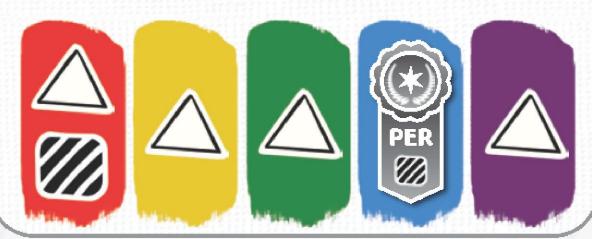
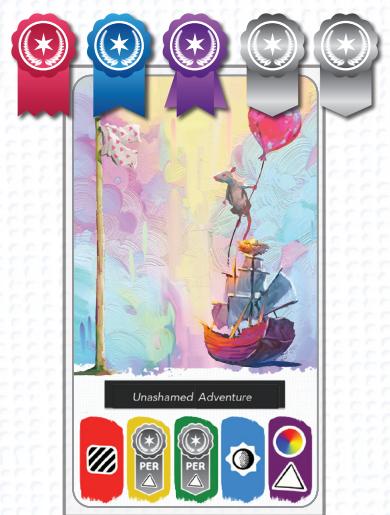
玩家A的画作图标。
Repetition主题
得分条件
分数





玩家A的画作也完成了构图(Composition)的得分条件,因为所有五个色卡都有图标,因此他获得一个紫色勋带。
玩家A的画作达成重复(Repetition)的得分条件两次,因为它的画作中有两对 $\triangle$ ,因此他获得2个绿色勋带。

在检查所有得分卡后,玩家A因为奖励图标上有一个匹配的(),所以额外获得一个奖励勋带。
有些得分条件可以被同一个画作多次触发,在一般玩法中,每个元素只可以在一个条件中被计算一次。在每张得分卡的背后会有对应的说明,你不可以获取多于得分卡上描述的数量的勋带。在一些较罕见的情况下你可能用完勋带,请使用替代品作为指示物。


游戏结束
当所有玩家完成三张画作时,游戏结束。当你完成第三张画作时,你后面的回合会被跳过。
将每个颜色的勋带对应分数加起来就是你的分数。在对应颜色的得分卡上会写着该颜色的勋带价值。奖励勋带()每个价值2分。拥有最高分数的玩家胜出,如果平分,则拥有最多调色板的玩家胜出,如果仍然平分,则由一个不参与游戏的人判断,拥有最好看的画作的玩家得分。

分数例子
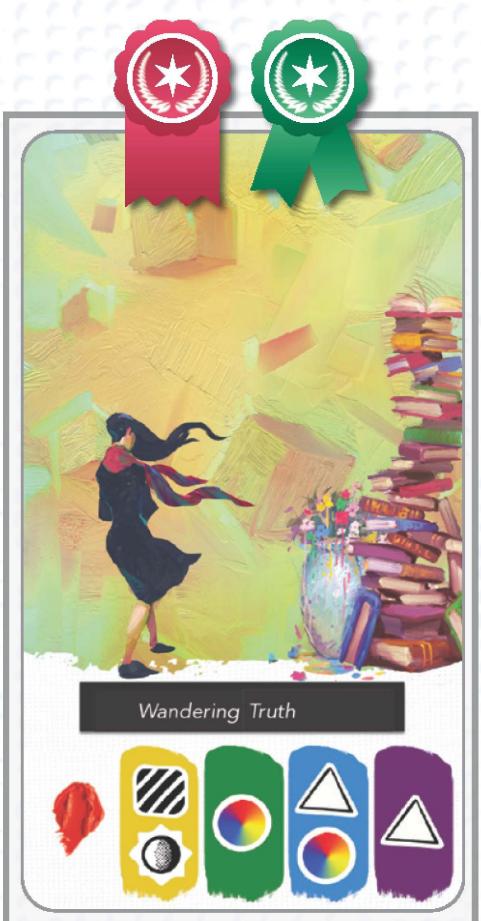



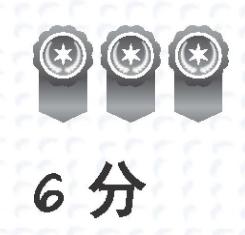
8 分
11 分

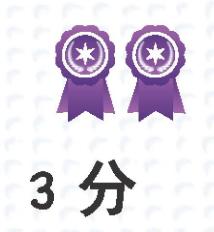
3 分
总分 = 29 分
单人变体
在单人游戏中,你会将你的分数对照下面的表格以决定你是何等程度的成功。除非其他说明,否则按正常流程玩。
单人变体1:和文森特一起画
在这个变体中,你会和文森特一起玩,一个开始会有4个调色板指示物的人。文森特不会完成画作和得分。第一轮从你开始,轮到文森特时,将他的调色板指示物投在桌上,每个面案朝上的指示物用于跳过卡牌。文森特最多一次使用4个指示物。如果没有面朝上的指示物,文森特会选择离卡牌盒最远的一张。被文森特选择的卡牌会被舍弃,然后文森特会获得该卡牌上的调色板。记住,即使你选择完成画作,文森特仍然有他的轮次。
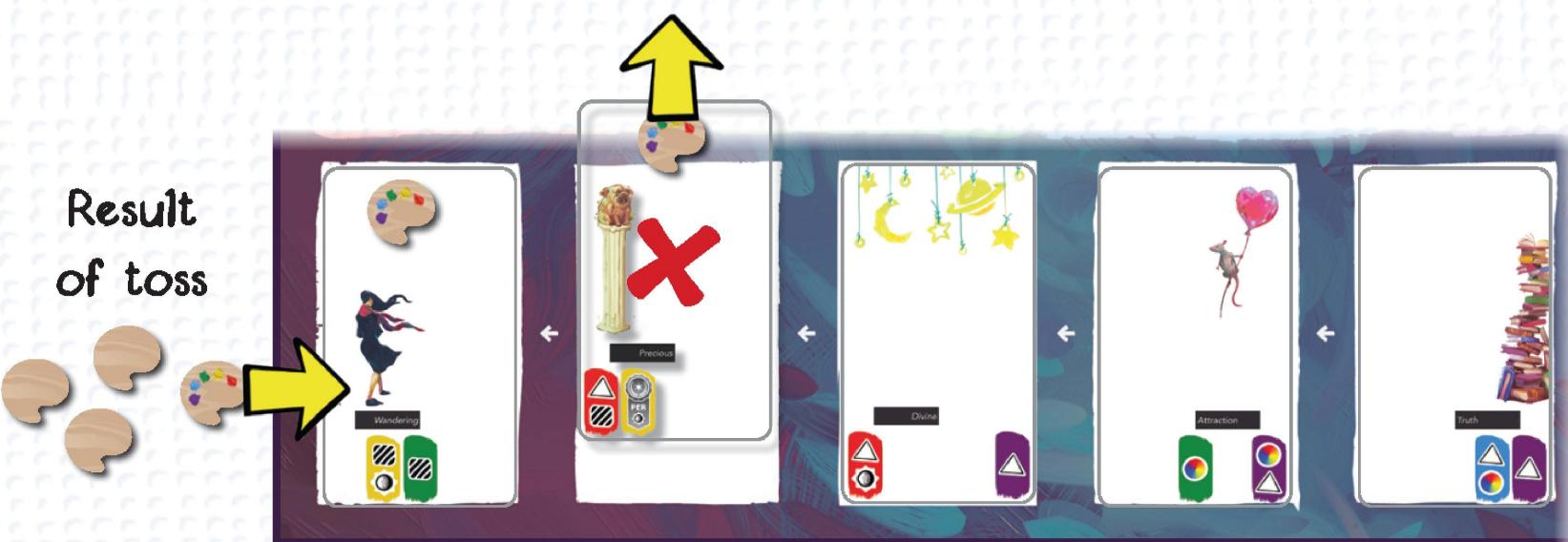
轮到文森特时,投出他的所有指示物,只有一个面朝上,因此面朝上的指示物会放在第一张艺术卡上,第二张艺术卡会被舍弃,然后文森特获取第二张艺术卡上的调色板。
单人变体2:单人拼图
在这个变体中,你完全掌控可以被选择的艺术卡。除了你自己的调色板指示物外,在艺术卡左侧位置建立调色板池,里面有四个调色板。当你需要使用调色板时,不要将它们放在艺术卡上,而是将他们加入调色板池。被跳过的艺术卡会被舍弃,获取艺术卡后,将剩余艺术卡往左顺延,然后从卡牌盒中拿出新的艺术卡,保持场上有5张艺术卡。每当你选择最左侧的艺术卡时,从调色板池中获得一个调色板。每当你完成一个画作时,从调色板池中获得一个调色板。如果调色板池为空,则你不能获取调色板。

你想选择第三张艺术卡的话,你需要向调色板池提交两个调色板,然后第一和第二张艺术卡会被舍弃,然后你获得第三张。
单人得分
| 0-24 Points | 25-29 | 30-34 | 35-39 | 40+ |
| 参与奖 | 新兴艺术家 | 荣誉奖 | 亚军 | 全场最佳 |
布局
你可以用任意四张得分牌开始游戏,或者选择一下预设的组合以形成有趣的特色互动。
简单
冷遇模式 Chill Mode
作为一个较简单的游戏,只使用任意三张得分卡。
随机
随机
随机
无
协同 Synergy
这些得分条件里面有很多重叠的地方,会让你更容易获得更多勋带。
比例
Proximity 空间
Space
多样
Variety无
家庭游戏和新手局的理想模式,非常简单的配置但覆盖全部基础玩法
构图
Composition
正常
无
第一次玩
First Time Playing
这一组卡牌很容易讲解,而且是一个对新人很友好的入门用配置。
构图
Composition
多样
Variety
无
强调
Emphasis
家庭游戏 Family Game
重复
Repetition 多样
Variety
平衡 Balanced
面面俱到的游戏他体验,像以下配置一样使用2张包含元素的卡和2张不包含元素的卡。
一致性
Consistency
强调
Emphasis
层次结构
Hierarchy
比例 Proportion
复杂
奖励 Bonus
层次结构
Hierarchy
运动
Movement
如果你可以组合出满足条件和正确的奖励图标位置的话你将获得大量的分数。
比例 Proportion
无元素 No Elements
全员元素 All Elements
这些卡牌都不需要特定的元素,使所有艺术卡的价值都跟平均。
风格Style
这些卡牌中除非挑战多色勋带,否则条件全部不重复。
强调
Emphasis
一致性
Consistency
构图
Composition
重复
Repetition层次结构
Hierarchy
风格Style
比例 Proportion
对称 Symmetry
空间限制 Spatial
这个配置需要你专注于元素的特殊位置。
运动
Movement
比例 Proximity
空间Space
对称 Symmetry
成就
当你完成每项成就时,将旁边的颜料滴填色。
一幅画达成全部 4 种得分条件。
一幅画获得 4 个奖励勋带。
一幅画获得 7 个勋带。
一幅画内有 5 个相同元素。
从 4 张得分卡中获得全部勋带。
获得 7+ 个奖励勋带。
获得 14+ 个勋带。
玩一遍全部布景。
获得 40+ 分。
挑战设计师的最高分(47)。
卡牌意思参考
| 得分卡卡牌 | 意思 |
| Composition | 构图 |
| Consistency | 一致性 |
| Emphasis | 强调 |
| Hierarchy | 层次结构 |
| Movement | 运动 |
| Proportion | 比例 |
| Proximity | 接近原则 |
| Repetition | 重复 |
| Space | 空间 |
| Style | 风格 |
| Symmetry | 对称 |
| Variety | 多样 |
Canvas_Rulebook_v09.md16.0 KB
Canvas
L 1-5 14+ 30
Game Design by Jeffrey Chin & Andrew Nerger Illustration by Luan Huynh Graphic Design by Jeffrey Chin
©2021 R2i Games. All Rights Reserved.
Overview
You are a painter competing in a prestigious art festival. Over the course of the game, you will collect transparent Art Cards and layer them to create paintings. Depending on which cards you choose and the order in which you place them, you will reveal or cover icons that trigger various scoring conditions. Each card combination creates a fun, unique illustration and title for your painting. When all players have completed 3 paintings, the game ends. The player with the most points wins Best In Show!
The Art Cards


Each painting is comprised of exactly 3 Art Cards and a Background Card.
Each Art Card has a removable plastic film to protect it during manufacturing. You can remove it or leave it on for a few games. The film loosens with use, making it easier to peel off.
Illustration
Title Icons


These 4 Element Icons represent the elements of design. Various combinations of Elements will score points.



Silver Bonus Icons let you take a Silver Ribbon () for each matching Element on the painting. Bonus Icons are not Elements.




The Color Swatches () are visual aids to help identify an icon's position. For example, a red Swatch is always in the leftmost position.


Setup
A Place the Canvas Mat in the center of play.
Place any 4 Scoring Cards on the Canvas Mat's colored spaces, or use a Scenario setup found on the last page of the rulebook. For your first game, try playing with Variety, Repetition, Emphasis, and Composition. Return the remaining Scoring Cards to the box.
C Place the Ribbons in 5 piles next to the matching Ribbon icons on the Canvas Mat.
Shuffle the Art Cards and place them inside the Deck Box. Place the Deck Box on the deck space. Draw and place 5 Art Cards face-up on the spaces to the left of the Deck Box.
E Place each Background Card in a sleeve. Each player takes 3 sleeved Background Cards. Return the remaining Background Cards and sleeves to the box.
F Each player takes 4 Inspiration Tokens. Return any remaining Inspiration Tokens to the box.
On Your Turn
The player who painted most recently takes the first turn, and then players take turns in clockwise order. On your turn, you must either Take an Art Card or Complete a Painting. You can have a maximum of 5 Art Cards in hand. If you already have 5 cards in hand, you must Complete a Painting as your next action.
Take an Art Card
If you have fewer than 5 Art Cards in hand, you may take 1 of the Art Cards from the mat. You may take the card farthest from the deck for free, or you may skip cards to access those farther down the row by placing an Inspiration Token () on every skipped card. If the card you take has Inspiration Tokens on it, take them along with the card. Next, slide each remaining card (and any tokens on it) away from the deck to fill in the empty space. Draw a new Art Card from the deck and place it in the now empty space next to the deck.

On Abby's turn, she wants to take the third card. She places 1 of her Inspiration Tokens on the first card to skip it, another token on the second card to skip it, and then takes the third card.


The cards slide to the left to fill in the empty space. A new card is drawn and placed in the space next to the deck.
On Charlotte's turn, she wants to take the second card. She skips the first card by adding 1 of her tokens to it. Then she takes the second card with the token that Abby placed last turn.
Title
Scoring Condition
Points
Complete a Painting
If you have at least 3 Art Cards, you may Complete a Painting. Select exactly 3 of your Art Cards and sleeve them with 1 of your Background Cards. Layer your Art Cards in any order you choose, however only the visible icons count for scoring. Covered icons are ignored. Keep any leftover cards to use in future paintings.

Abby chooses 3 Art Cards from her hand to arrange into a painting. She keeps her remaining cards for later.

Next, Abby arranges the 3 chosen Art cards to her liking and then places them in 1 of her sleeves.
Show your painting to the other players and read its title. Compare the icons on your painting to each scoring condition. Each time your painting meets a condition, take a Ribbon from its supply.Take a Silver Ribbon () from the supply for each Element matching a Silver Bonus Icon.
Some scoring conditions can be met multiple times with a single painting. As a general rule, each Element can only be counted once per scoring condition. Clarifications can be found on the back'of each Scoring Card. You can not take more Ribbons than are depicted on the Scoring Card. In the rare case that you run out of Ribbons, use any reasonable substitute token.
The icons of Abby's painting.


Abby's painting has met the Repetition scoring condition twice because she has 2 pairs of △, so she takes 2 Green Ribbons.


Abby's painting has also met the Composition scoring condition because all 5 Swatches have icons, so she takes a Violet Ribbon.


After checking all the Scoring Cards, Abby take\$ 1 Silver Ribbon because the painting has 1Imatching her Silver Bonus Icon.
Game End
When all players have completed 3 paintings, the game ends. Once you complete your third painting, your turns are skipped.
Calculate your score by adding the points from each set of matching Ribbons. To determine the value of each Ribbon set, compare the number of Ribbons in the set to the corresponding Scoring Card. Silver Ribbons () are worth 2 points each. The player with the most points wins. If tied, the player with more Inspiration Tokens wins. If still tied, have a neutral person judge the artwork of the tied players and declare a winner.
Example Scoring




8 Points

11 Points
1 Point

3 Points

6 Points

Total Score = 29 Points
Variants
For these variant game modes, follow the standard rules of play with the following exceptions.
Painting with Vincent (for 1-2 players)
In this variant, you play with a simulated, non-scoring player called Vincent. You can use this variant as a solo mode, or in a 2-player game to increase the turnover of the available cards. Vincent begins with 4 Inspiration Tokens. Vincent goes last in turn order. On Vincent's turn, shake and toss all his Inspiration Tokens. Any tokens that land face-up are spent to skip cards. At most, Vincent can spend 4 tokens. If no tokens land face-up or if he has no Inspiration Tokens, Vincent selects the card farthest from the deck. Vincent discards the selected Art Card from the game and gains any Inspiration Tokens that were on it. Vincent will never Complete a Painting. Remember, Vincent still gets a turn even if you Complete a Painting as your action.
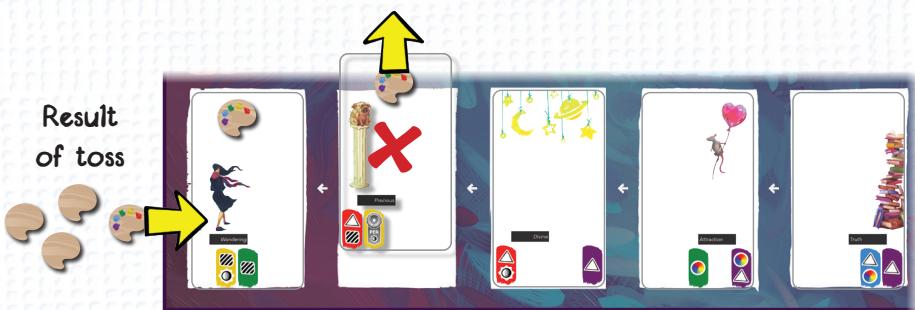
On Vincent's turn, his Inspiration Tokens are tossed and 1 lands face-up. The face-up token is placed on the first Art Card. The second card is discarded, and Vincent gains the Inspiration token that was on it.
Solo Puzzle (for 1 player)
In this variant, you have complete control of the available Art Cards. In addition to your 4 starting Inspiration Tokens, create a separate supply pile of 4 Inspiration Tokens next to the leftmost Art Card. When spending Inspiration Tokens, do not place them on the Art Cards. Instead, place them into the supply. Any skipped Art Cards are discarded from the game. After taking an Art Card, slide the remaining Art Cards all the way to the left. Draw cards to refill all empty spaces. Whenever you take the leftmost Art Card, gain 1 Inspiration Token from the supply. Whenever you Complete a Painting, gain 1 Inspiration Token from the supply. If there are no Inspiration Tokens in the supply, you do not gain an Inspiration Token.

You want to take the third card. You pay 2 Inspiration Tokens to the supply to discard the first 2 cards. Then you take the third card.
Solo Scoring
Before playing a solo game, declare your difficulty level. If you meet or exceed the goal () for that difficulty level, you win! Or if playing with a Scenario (see the next page), you win if you meet or exceed its goal.

Easy

Normal

Hard

Master


Scenarios
Choose one of the following setups that features interesting card interactions. If any player's score meets or exceeds the goal (O), the Scenario is completed! Color in the paint blob () beside the Scenario.

Simplified


Ideal for families and new gamers, this very simple setup covers all the basics.


This set of cards is easy to teach and is a great introductory setup for new players.


Composition

Composition
These cards do not overlap their conditions. Expect a challenge to score multiple Ribbons.
Emphasis
none
none
Repetition

Variety

Chill Mode
For a simpler puzzle, play with any 3 Scoring Cards.

Random
Random
none
Emphasis
Random

Balanced

Use 2 cards with Elements and 2 cards without Elements, like this setup, for a well-rounded puzzle experience.
Consistency
Emphasis
Hierarchy
Proportion
Repetition
Style
Spatial

This setup requires you to focus on the specific placement of Elements.
Movement
Proximity
Space
Symmetry
Synergy

No Elements

There is a lot of overlap in these scoring conditions, making it easier to get more Ribbons.

Proximity

Space
These cards do not require specific Elements, making all Art Cards more balanced in value.
Variety
none
Composition
Consistency
Proportion
Symmetry
Bonus
Score big points if you can combine these scoring conditions with the right Bonus Icons.
Hierarchy
Movement
Proportion
Style

Color in the paint blob beside each achievement when completed.
Meet all 4 scoring conditions with 1 painting
Score 4 Silver Ribbons with 1 painting
Score 7+ Ribbons with 1 painting
Have 5 of the same Element on 1 painting
Get max Ribbons from all 4 Scoring Cards
Score 7+ Silver Ribbons
Score 14+ Ribbons
Complete every Scenario
Score 40+ points
Beat the designers' top score (47)
下载 Markdown原文为社区整理/出版社公开资料,版权归原作者,仅供个人学习查阅。