
卡卡颂:非洲旅游Carcassonne Safari
一句话概览
卡卡颂:非洲旅游 是一款已收录于村了吗规则库的桌游,支持 2–5 人,原名 Carcassonne Safari。
本页内容:一句话概览 · 游戏概述 · 1. 游戏组件 · 2. 游戏设置 · 3. 游戏流程 · 4. 游戏结束与最终计分 · 关键规则与常见问题 · 常见问题
卡卡颂:非洲旅游 规则速览
以下规则速览由本站整理,与官方规则书表述不同,仅供快速上手参考。
游戏概述
《卡卡颂:非洲旅游》是一款非洲大草原上、合作即竞争的策略性动物拼放游戏,适合7岁以上、2-5人同乐。热带气候的高温笼罩着非洲草原,玩家来到这片一望无际的草原,希望看到这里最受欢迎的大型动物:猴子在树枝上摆荡,狮子在树荫下休憩,大象缓慢的步伐震动着大地,水池边总是聚集着多种不同的动物。
每回合玩家轮流拼放游戏版图,版图上包含了大草原、小径、猢狲树和灌木丛。你可以将旅客派遣到灌木丛或小径上观赏动物(站着),也可以派遣到猢狲树下睡午觉(躺着)。灌木丛或小径完成时,你会依其上的动物种类来得到分数;在猢狲树下睡午觉会让你得到新的动物/水池片。通过动物/水池片你可以提高得分,或在大草原上挖个水池。这些都会让你在游戏过程中或游戏结束时得分,最终计分后便可知道谁是赢家。
核心机制: 版图拼放、米宝(旅客)放置、成套收集(动物种类)、区域完成计分、公用护林车移动
1. 游戏组件
| 组件 | 数量/说明 |
|---|---|
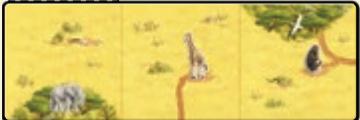
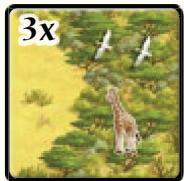
| 游戏版图 | 72片,在草地上分别绘有小径、猢狲树和许多动物隐没其间的灌木丛;版图背面都是一样的 |
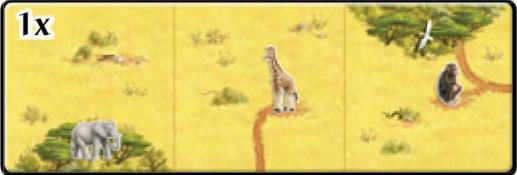
| 起始版图 | 1片,面积等于3片一般版图,游戏开始时翻开放在桌面中央 |
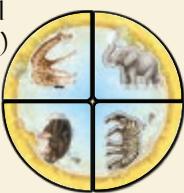
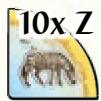
| 动物/水池片 | 50张,其上有5种不同的大型动物,每种10片;可在计分时提供帮助,也可用4张组成一个完整的水池 |
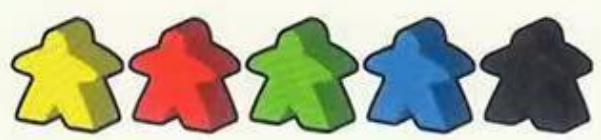
| 旅客(木质米宝) | 30名,分为黄、红、绿、蓝、黑五色,每色6名 |
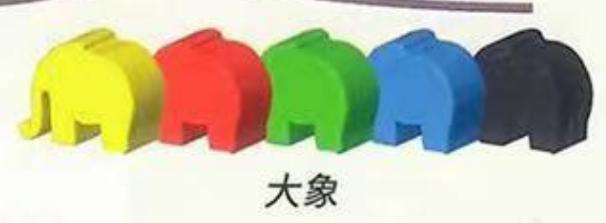
| 大象 | 每色1只,放在计分板上0的格子中,用于记录该玩家的分数 |
| 计分板 | 1块,放在桌子外缘 |
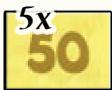
| 计分片 | 5张,正面50、背面100,放在计分板旁 |
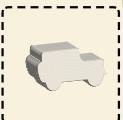
| 护林车 | 2辆白色、公用的公园护林车,简称护林车,不属于任何玩家 |
说明:本作使用的米宝比一般卡卡颂版本中的米宝稍小一些,是为了在游戏过程中不要遮住版图上呈现的细节,以避免造成误解。将未使用的配件放回游戏盒中。
2. 游戏设置
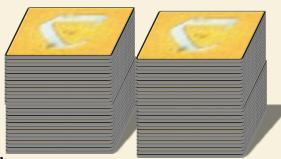
- 版图堆: 将72片版图覆盖洗匀后,叠成数叠置于桌子的边缘,供玩家稍后抽取。
- 起始版图: 将起始版图(面积等于3片一般版图)翻开放在桌面中央。
- 护林车: 2辆白色公用护林车,放在起始版图旁所示位置(并非放在起始版图上)。
- 动物/水池片: 将50张动物/水池片覆盖着洗匀,发给每名玩家2张。每个人将自己获得的动物/水池片面朝上放在自己面前;其他的动物/水池片面朝下放在版图叠旁备用。
- 计分片: 将5张计分片(正面50、背面100)放在计分板旁。
- 旅客与大象: 每名玩家选择一色,并拿取该色的6名旅客,置于自己面前,这些是你可派遣的人手。将计分板放在桌子外缘,每名玩家将所属颜色的大象放在计分板上0的格子中。
3. 游戏流程
在《卡卡颂:非洲旅游》中,玩家依照顺时针方向轮流进行回合,回合中请依序执行下列行动,之后轮到左手边的玩家进行回合。
- 摆放版图: 玩家必须抽取并摆放刚好1片新的版图,该版图必须至少一侧与桌面上既存的版图相连。
- 派遣1名旅客到刚摆放的那片版图上,或移动1辆护林车,或新建/扩大水池。
- 计分: 若新摆放的版图导致任何计分的可能,必须立刻进行计分。
3.1 小径
摆放版图: 刚抽到的版图上有1条小径时,摆放时必须留意是否与相邻的版图妥善地相邻(小径接小径、大草原连大草原、灌木丛连灌木丛)。
派遣旅客: 版图放妥后,你可以决定是否要在这片版图的小径上派遣一名旅客,前提是这条小径尚无其他旅客。
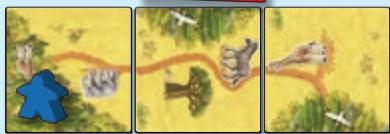
计分: 当一条小径的两端被灌木丛或大草原阻断,或者小径连成一个圈,这条小径就完成了。即使这片版图是由其他玩家所拼放,你的小径一样完成了。你获得的分数因在这条小径上的动物种类多寡而异。有多少动物在这条小径上并不影响你的得分,动物的种类才是关键。计分后,将游戏版图上为你获得分数的旅客拿回自己面前。
| 动物种类 | 1 | 2 | 3 | 4 | 5 |
|---|---|---|---|---|---|
| 分数 | 1 | 3 | 6 | 10 | 15 |
提高分数: 为了提高分数,你可以在计分时放弃至多1张动物/水池片,来增加动物的种类。当然,你放弃的这张动物/水池片,其上的动物种类必须与你计分小径上的动物种类不同。
记录分数: 立即移动你在计分板上的大象以记录你的得分(例如得到6分就向前移动6格)。每次计分后,每名玩家必须将计过分的旅客拿回自己面前。所有用来提高分数的动物/水池片,请正面朝上放在一旁。当有人获得动物/水池片(参见猢狲树的说明)时,若牌叠旁的动物/水池片已用尽,将所有放在一旁(使用过的)动物/水池片覆盖并洗匀后,面朝下放在版图叠旁备用。
当你的大象再次经过计分板上0的格子时,拿取一片50/100计分片,让50那面朝上,代表你的总分为大象所在格子上的分数加上50分;若你的大象再次经过计分板上0的格子时,将计分片翻面,让100那面朝上,代表你的总分为大象所在格子上的分数加上100分。
3.2 灌木丛
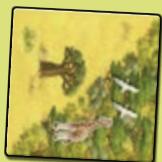
摆放版图: 先抽取一片版图,将它和桌面上既有的版图适当地拼放在一起,这片版图上的灌木丛必须与灌木丛相连。
派遣旅客: 看看这片灌木丛中是否已经有其他的旅客了?没有的话,你可以派遣一名旅客到这片灌木丛中。
计分: 当一片有灌木丛的版图,所有有灌木丛的边缘都与另一片有灌木丛边缘的版图相连时(不再有开放的边缘),且其中无任何未拼放版图的空洞时,灌木丛就完成了。如果这片灌木丛中有你的旅客,你进行计分。你获得的分取决于在此灌木丛中动物种类的多寡(与前述计分表相同:1种1分、2种3分、3种6分、4种10分、5种15分)。
提高分数: 为了提升分数,你可以在计分时放弃至多1张动物/水池片来增加动物的种类,放弃的这张其上的动物种类必须与你计分灌木丛中的动物种类不同。
鸟的额外得分: 鸟不是大型动物,不计入动物种类中,但灌木丛上的每只鸟额外获得1分。(例如灌木丛中有猴子和长颈鹿2种动物,放弃1张斑马/水池片后有3种动物得6分,其上的3只鸟让你额外获得3分,共9分。)计分后,将游戏版图上为你获得分数的旅客拿回自己面前。
3.3 猢狲树
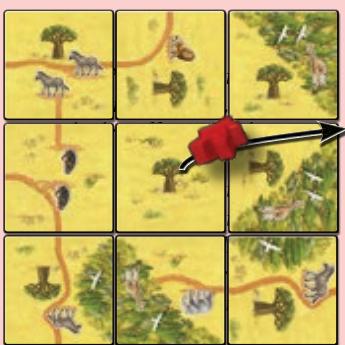
摆放版图: 当你抽到有猢狲树的版图时,将它和桌面上既有的版图适当地拼放在一起。猢狲树总是在版图的中央,拼放时要留意它的边缘必须与相邻的版图搭配。
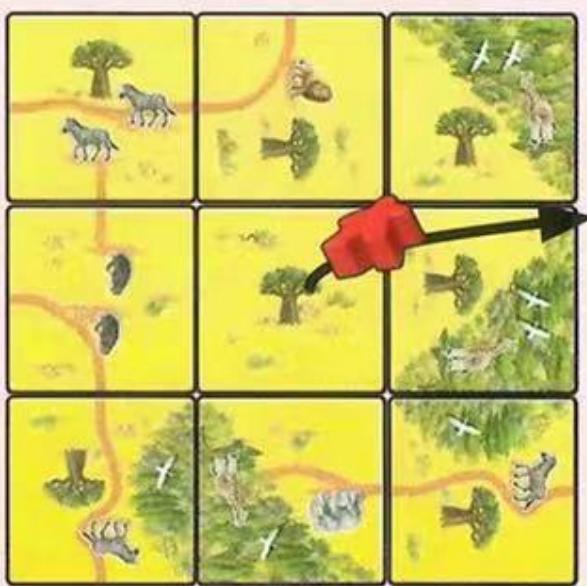
派遣旅客: 你可以派遣一名旅客到刚拼放版图上的猢狲树下睡午觉,平躺放置。然后,从牌叠旁抽取2张动物/水池片,面朝上放在自己面前。
计分: 当你的猢狲树被8片版图围绕时,这名旅客的午觉时间结束,精神饱满地离开,虽然不会得到分数,但可以再从版图叠旁抽取2张动物/水池片,面朝上放在自己面前。
3.4 护林车
护林车有2种移动方式,一种会让你得分,另一种不会。
- 1a 摆放版图: 你将这回合抽取的版图放在没有护林车的位置上。
- 2a 不派遣旅客: 若你在回合中不派遣旅客,你可移动其中一辆护林车,到桌面上既存版图旁的空位上,并额外获得3分。
- 1b 摆放版图到护林车所在位置: 照常抽取一片版图,当你将版图适当地摆放在有护林车的位置上时,将护林车放在你面前;移动护林车并不会为你带来分数。
- 2b 派遣一名旅客: 你可以派遣一名旅客到刚拼放版图上,如果要派遣到灌木丛或小径,必须其上并无其他旅客才行。
- 3 计分: 所有已完成的区域进行计分。
注意: 每回合只能移动1辆护林车。当你将版图放在护林车所在的位置上时(1b),你只能移动这辆护林车,即使该回合中你未派遣旅客(2a)你也不能再移动另一辆护林车。2辆护林车不能放在同一个位置上。
3.5 水池
动物/水池片不只可以提高小径和灌木丛的得分,也可以用来在大草原上建造水池。
新建水池: 若你在回合中不派遣旅客,你可以新建一个水池。你从自己面前拿取一张动物/水池片放在桌上既有版图的空角落上,该版图无须是你刚拼放的那片版图,而空的角落意指该处为大草原的一部分(若其上有些小草或小灌木,并不会妨碍你在该处建造水池)。动物/水池片只能放在版图的角落,且你必须派遣一名旅客到该水池上。你立刻获得3分。
扩大水池: 若你在回合中不派遣旅客,你可以扩大一个水池。你从自己面前拿取一张动物/水池片放在桌上既有版图的空角落上,并延伸原有的水池;你新加入的动物/水池片上的动物,必须尚未出现在该水池中,且你不能派遣自己的旅客到该水池上。你获得的分因你放置的动物/水池片是该水池中的第几片而异:第二片4分、第三片5分、第四片6分。
注意: 当你无法派遣旅客到新建的水池上时,你无法新建该水池。
例外: 你可以在一个既有水池的对角新建一个水池。当这两张动物/水池片并未相连时,你可以派遣你的旅客到其上;在此情况下,它们也可以是相同的动物。未来,当这两张动物/水池片相连时,其上会有2名旅客,也可能有2只一样的动物。
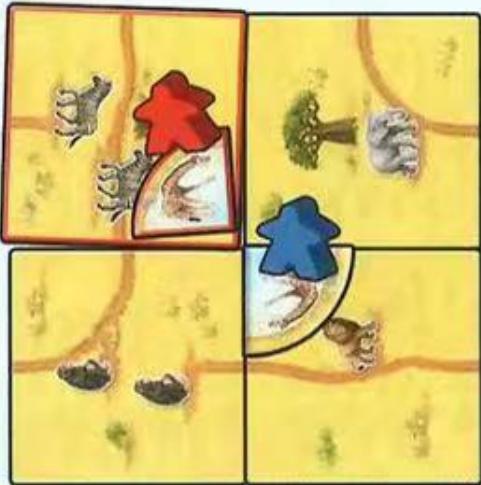
完成水池: 当一个水池由4张动物/水池片组成一个圆时,它就完成了。水池中的旅客为其所属的玩家赢得3分,将其拿回面前;如果这个水池中有2名旅客,这2名旅客都为所属玩家赢得3分;如果这2名旅客属于同一位玩家,则该玩家只获得3分。
3.6 不只一名旅客在同一地景上
虽然你无法派遣你的旅客到已经有旅客的小径或灌木丛上,游戏过程中有可能两个分开的地景在稍后变成一个相连的地景,有不只一名旅客在其上。如果你的旅客人数多于其他玩家,只有你获得此区的分数;如果2名以上玩家同有最多旅客在该地景上,这些玩家都会获得全额的分。
4. 游戏结束与最终计分
当摆放最后一片版图的回合结束时,游戏亦随同结束,接下来进行最终计分。尚在版图上的旅客还会带来分数。
| 计分项目 | 规则 |
|---|---|
| 小径和灌木丛 | 每只动物(包含鸟)为该区域旅客最多的玩家获得1分。动物种类现在不造成影响。 |
| 动物/水池片 | 你面前的每张动物/水池片为你带来1分。 |
| 猢狲树 | 猢狲树下的旅客无法获得分数。 |
| 水池 | 水池中的旅客无法获得分数。 |
完成最终计分后,总分最高的玩家获胜。如果最高分的玩家不只一名,则他们共享胜利。
关键规则与常见问题
易错规则
- 每回合必须抽取并摆放刚好1片版图,该版图必须至少一侧与桌面上既存的版图相连。
- 回合中必须三选一: 派遣1名旅客到刚摆放的版图上,或移动1辆护林车,或新建/扩大水池;只有"不派遣旅客"时才能移动护林车或建水池。
- 派遣的前提是"该小径或灌木丛上尚无任何旅客",包括你自己的旅客。
- 派遣旅客到猢狲树下时立刻抽2张动物/水池片,面朝上放在自己面前。
- 计分关键在动物"种类"而非数量:1种1分、2种3分、3种6分、4种10分、5种15分。
- 提高分数只能放弃至多1张动物/水池片,且其上的动物种类必须与你计分区域上的动物种类不同。
- 灌木丛上的每只鸟额外1分,但鸟不算大型动物种类。
- 猢狲树被8片版图围绕才算完成:旅客不得分,但可再抽2张动物/水池片。
- 移动护林车(2a)额外获得3分;把版图放在护林车所在位置(1b)本身不得分。
- 每回合只能移动1辆护林车,2辆护林车不能放在同一个位置上;用版图占据护林车所在位置并拿走护林车后,即使该回合未派遣旅客也不能再移动另一辆。
- 新建水池必须能派遣一名旅客到其上(立刻获得3分);无法派遣旅客时不能新建。
- 扩大水池不能派遣自己的旅客到该水池上,且新加入的动物种类必须尚未出现在该水池中。
- 扩大水池的得分按第几片计算: 第二片4分、第三片5分、第四片6分。
- 水池完成时每名旅客各3分,但同一玩家的2名旅客只获得3分。
- 同一地景有多名旅客时,只有旅客最多的玩家得分;并列最多则各获得全额分。
- 最终计分时猢狲树与水池中的旅客不得分,小径和灌木丛改为每只动物(含鸟)1分,不再看种类。
- 罕见情况: 刚抽取的版图完全无法与桌面上翻开的版图相连时,将这片版图移出游戏放回盒子中,另外抽取一片版图并继续进行游戏。
常见问题
-
Q:小径什么时候算完成?
A:当一条小径的两端被灌木丛或大草原阻断,或者小径连成一个圈时,该小径完成。即使完成它的版图是其他玩家拼放的,你的小径一样完成。 -
Q:灌木丛什么时候算完成?
A:当一片有灌木丛的版图,所有有灌木丛的边缘都与另一片有灌木丛边缘的版图相连(不再有开放的边缘),且其中无任何未拼放版图的空洞时,灌木丛就完成了。 -
Q:怎么提高一次计分的分数?
A:在计分时放弃至多1张动物/水池片来增加动物的种类,放弃的那张其上的动物种类必须与你计分的小径/灌木丛上的动物种类不同。 -
Q:用掉的动物/水池片放到哪里?
A:所有用来提高分数的动物/水池片正面朝上放在一旁;当牌叠旁的动物/水池片用尽时,将用过的片覆盖洗匀后面朝下放在版图叠旁备用。 -
Q:分数怎么记录?超过一圈怎么办?
A:用你在计分板上的大象向前移动相应格数。当大象再次经过计分板上0的格子时,拿取一片50/100计分片,50面朝上表示总分等于大象所在格分数加50;再次经过时翻面为100。 -
Q:猢狲树下的旅客怎么算?
A:派遣时平躺放置并立刻抽2张动物/水池片;当猢狲树被8片版图围绕时,旅客午觉结束离开,不得分但可再抽2张动物/水池片。 -
Q:护林车属于玩家吗?
A:不属于。游戏中有2辆白色、公用的公园护林车,不属任何玩家。 -
Q:不派遣旅客时能做什么?
A:可以新建/扩大水池,或者移动其中一辆护林车到桌面上既存版图旁的空位上并额外获得3分。 -
Q:水池里可以有相同的动物吗?
A:扩大水池时,新加入的动物/水池片上的动物必须尚未出现在该水池中。只有在"在既有水池的对角新建水池"的例外情形下,两张未相连的片才可以是相同的动物。 -
Q:水池完成时谁得分?
A:水池中的每名旅客为其所属玩家赢得3分,旅客拿回面前;若2名旅客属于同一位玩家,该玩家只获得3分。 -
Q:地景上有多位玩家的旅客时怎么算?
A:旅客人数最多的玩家获得此区的分数;若2名以上玩家同有最多旅客,这些玩家都获得全额的分;未得分玩家的旅客同样拿回面前。 -
Q:动物/水池片平时有什么用?
A:一是计分时放弃以增加动物种类(提高分数),二是用来在大草原上新建或扩大水池,此外游戏结束最终计分时你面前每张动物/水池片为你带来1分。 -
Q:最终计分时动物种类还算吗?
A:不算。最终计分时,小径和灌木丛上每只动物(包含鸟)为旅客最多的玩家获得1分,动物种类不再造成影响。 -
Q:平手怎么办?
A:如果最高分的玩家不只一名,则他们共享胜利。
常见问题(FAQ)
以下 1 条问答中 0 条来自站内玩家的真实提问,其余 1 条为本站整理的常见疑问;答复内容保持原样。
卡卡颂:非洲旅游支持几个人玩?
2–5 人。
去哪查完整规则
想核对具体规则细节、卡牌效果或某个回合的结算方式,可以在村了吗里选中这款游戏后直接提问。
同类桌游
- 卡坦岛德式
- 工业革命:伯明翰德式
- 勃艮第城堡:特别典藏版德式
- 方舟动物园德式
- 卡卡颂抽象
- 瘟疫危机传承:第一季美式
- 阿瑞迪亚:勇踏征途美式
- 重塑宇宙德式
- 幽港迷城美式
- 埃多拉的德鲁伊德式
规则原文(Markdown)
本站收录这款游戏的规则原文 3 个文件,此处内联渲染 3 个,可直接展开阅读或下载。
rules_zh_卡卡颂非洲旅游_8171.md21.7 KB
QICCASSONNE SAFARI AROUND

旅客(米寶)
一款非洲大草原上、合作即競爭的策略性動物拼放遊戲,適合7歲以上、2-5人同樂!
熱帶氣候的高溫籠罩著非洲草原,薰風徐徐,我們來到這片一望無際的草原,希望能看到這裡最受歡迎的大型動物。
猴子在樹枝上擺盪,獅子在樹蔭下休憩,大象緩慢的步伐震動著大地,水池邊總是聚集了多種不同的動物,非常值得在一旁靜靜等待,捕捉更多的曼妙身影。
遊戲配件與準備
歡迎來到卡卡頌非洲旅遊!本說明書讓您輕鬆學會卡卡頌這款經典遊戲的全新主題版本。
72片遊戲版圖:在草地上分別繪有小徑、猢狲樹和許多動物隱沒其間的灌木叢。

版圖的背面都是一樣的。
有小徑和獅子的版圖。
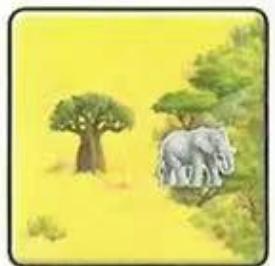
有大象在灌木中和猢狲樹在大草原上的版圖。

版圖的背面
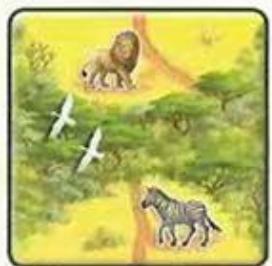
灌木叢中有鳥、小徑上有斑馬和獅子的版圖。
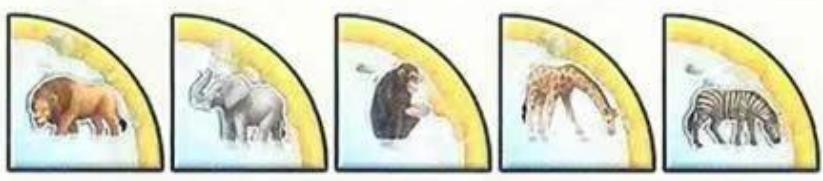
50張動物/水池片:其上有5種不同的大型動物,每種10片。這些動物/水池片會在計分時為你帶來幫助,詳見第4-5頁。
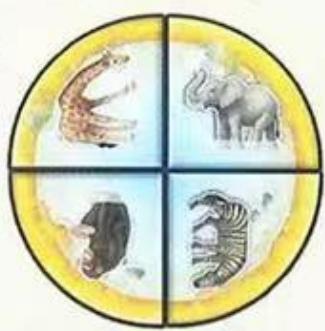
此外,你可以用4張動物/水池片組成一個完整的水池,並能獲得分數,詳見第6頁。
將72片版圖覆蓋洗勻後,疊成數疊置於桌子的邊緣,供玩家稍後抽取。
將起始版圖(面積等於3片一般版圖)翻開放在桌面中央。遊戲中有2輛白色、公用的公園護林車,簡稱護林車,不屬於任何玩家,請如右圖所示,放在起始版圖旁。

將50張動物/水池片覆蓋著洗勻,並發給每名玩家2張。每個人將自己獲得的動物/水池片面朝上放在自己面前。其他的動物/水池片面朝下放在版圖疊旁備用。


起始版圖
將5張計分片(正面50、背面100)放在計分板旁。



正面
背面
2 輛護林車分別放在上圖所示位置(並非放在起始版圖上)。


3 4 5 6
木質配件
首先,玩家們會獲得木質米寶,遊戲中稱為旅客,共有30名旅客,分為五色:黃、紅、綠、藍、黑,每色6名,每名玩家選擇一色,並拿取該色的6名旅客,置於自己面前,這些是你可派遣的人手。
在「卡卡頌非洲旅遊」中使用的米寶比一般卡卡頌版本中的米寶稍小一些,是為了在遊戲過程中,不要遮住版圖上呈現的細節,以避免造成誤解。
此外,每色包含一隻大象,請將計分板放在桌子外緣,每名玩家將所屬顏色的大象放在計分板上0的格子中,將未使用的配件放回遊戲盒中。

遊戲目標
每回合玩家們輪流拼放遊戲版圖,版圖上包含了大草原、小徑、猢狲樹和灌木叢。你可以將旅客派遣到灌木叢或小徑上觀賞動物(站著),也可以派遣到猢狲樹下睡午覺(躺著),灌木叢或小徑完成時,你會依其上的動物種類來得到分數,在猢狲樹下睡午覺會讓你得到新的動物/水池片。透過動物/水池片你可以提高得分,或在大草原上挖個水池。這些都會讓你在遊戲過程中或遊戲結束時得分,在遊戲結束時的最終計分後,便可知道誰是贏家!開始吧!
遊戲流程
在卡卡頌非洲旅遊中,玩家依照順時針方向輪流進行回合,回合中請依序執行下列行動,之後,輪到左手邊的玩家進行回合。在此列出所有的行動,並進行解說,還可一併了解遊戲版圖上包含哪些不同的地景。行動的內容如下:
擺放版圖:
玩家必須抽取並擺放剛好1片新的版圖,該版圖必須至少一
側與桌面上既存的版圖相連。
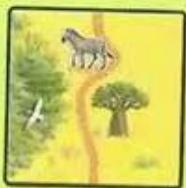
玩家派遣1名旅客到剛擺放的那片版圖上、
或

2
移動1輛護林車
或
新建/擴大水池。
3

計分:
若新擺放的版圖導致任何計分的可能,必須立刻進行計分。
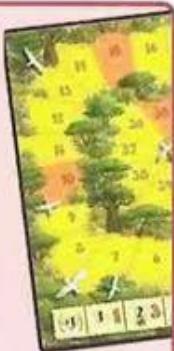
小徑
1. 擺放版圖
剛抽到的這片版圖上有1條小徑,當你擺放它時,必須留意是否與相鄰的版圖妥善地相鄰(小徑接小徑、大草原連大草原、灌木叢連灌木叢)。

2. 派遣一名旅客到小徑上
版圖放妥後,你可以決定是否要在這片版圖的小徑上派遣一名旅客,前提是這條小徑尚無其他旅客。

你放置了紅框圍繞的版圖,必須讓小徑與小徑相接,大草原與大草原相連。沒錯,就像這樣!
3. 計分
你在剛拼放的這片版圖上派遣一名旅客,由於這條小徑上沒有其他的旅客,所以,沒有問題!
當一條小徑的兩端被灌木叢或大草原阻斷,或者小徑連成一個圈,這條小徑就完成了。在右側的圖例中,你的小徑完成了,現在要進行計分。即使這片版圖是由其他玩家所拼放,你的小徑一樣完成了。你獲得的分數因在此小徑上的動物種類多寡而異,請參照下表來計分。
有多少動物在這條小徑上並不影響你的得分,動物的種類才是關鍵。
計分後,將遊戲版圖上為你獲得分數的旅客拿回自己面前。
| 動物種類 | 1 | 2 | 3 | 4 | 5 |
| 分數 | 1 | 3 | 6 | 10 | 15 |
為了提高分數,你可以在計分時放棄至多1張動物/水池片,來增加動物的種類。當然,你放棄的這張動物/水池片,其上的動物種類必須與你計分小徑上的動物種類不同。
提高分數
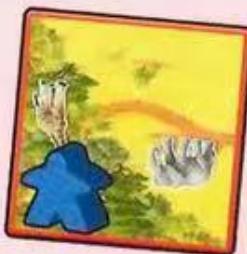


藍色拼放的版圖讓你的小徑完成了,這條小徑上有3種不同的動物,因此你獲得6分。

承上例,你的這條已完成小徑上有大象、斑馬和長頸鹿,如果,你放棄面前的1張獅子/水池片,你這條小徑因有4種不同動物,而獲得10分。
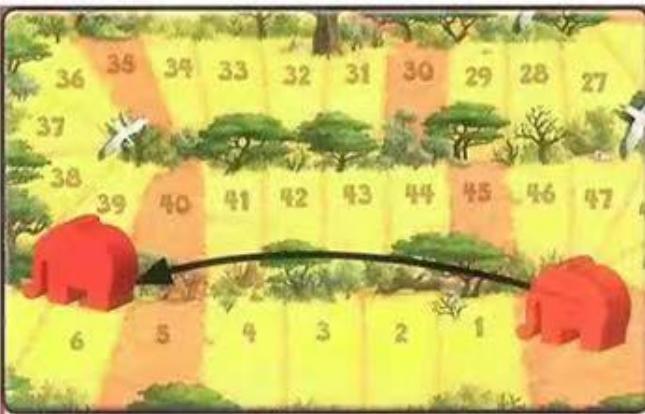
現在看看計分板,立即移動你在計分板上的大象以記錄你的得分。若你得到6分,將你的大象向前移動6格。
每次計分後,每名玩家必須將計過分的旅客拿回自己面前。
所有用來提高分數的動物/水池片,請正面朝上放在一旁。當有人獲得動物/水池片(參見猢猻樹的說明)時,若牌疊旁的動物/水池片已用盡,將所有放在一旁(使用過的)動物/水池片覆蓋並洗勻後,面朝下放在版圖疊旁備用。
當你的大象再次經過計分板上0的格子時,拿取一片50/100計分片,讓50那面朝上,代表,你的總分為大象所在格子上的分數,加上50分;若你的大象再次經過計分板上0的格子時,將計分片翻面,讓100那面朝上,代表,你的總分為大象所在格子上的分數,加上100分。
灌木叢
1. 擺放版圖
一如往常,先抽取一片版圖,將它與桌面上既有的版圖適當地拼放在一起。這片版圖上的灌木叢必須與灌木叢相連。

2. 派遣一名旅客
看看這片灌木叢中是否已經有其他的旅客了?沒有!那麼你可以派遣一名旅客到這片灌木叢中。

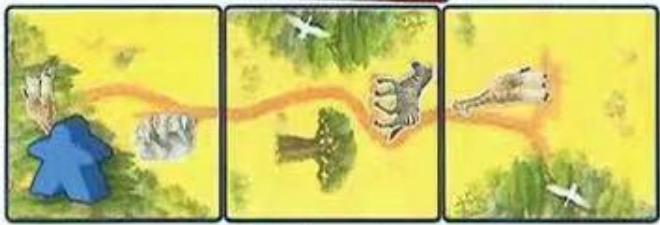
拼放這片版圖後,你讓兩片版圖上的灌木叢相連,而且這片灌木叢尚無旅客,因此
你可以派遣一名旅客去那哦!
3. 計分
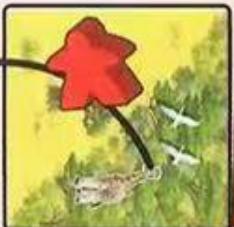
我們快轉一下,在你的下一個回合中抽到了這片版圖,正巧可以與你的灌木叢拼放在一起,讓這片灌木叢完成了!當一片有灌木叢的版圖,所有有灌木叢的邊緣都與另一片有灌木叢邊緣的版圖相連時(不再有開放的邊緣),且其中無任何未拼放版圖的空洞時,灌木叢就完成了。如果這片灌木叢中有你的旅客,你進行計分。你獲得的分數取決於在此灌木叢中動物種類的多寡(與小徑的計分方式相同,見下方計分表)。

| 動物種類 | 1 | 2 | 3 | 4 | 5 |
| 分數 | 1 | 3 | 6 | 10 | 15 |
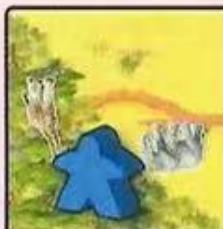
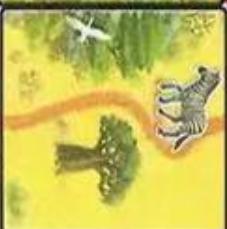

提高分數
為了提高分數,你可以在計分時放棄至多1張動物/水池片,來增加動物的種類。當然,你放棄的這張動物/水池片,其上的動物種類必須與你計分灌木叢中的動物種類不同。
鳥不是大型動物,不計入動物種類中,但灌木叢上的每隻鳥外獲得1分。
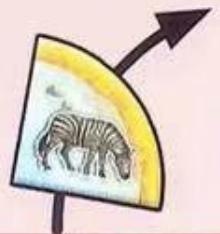
在你的灌木叢中有2種不同的動物:猴子和長頸鹿,如果,你放棄面前的1張斑馬/水池片,你這片灌木叢中就有3種不同動
計分後,將遊戲版圖上為你獲得分數的旅客拿回自己面前。

物,而獲得6分,其上的3隻鳥讓你額外獲得3分,因此,你一共獲得9分。
猢狲樹
1. 擺放版圖
當你抽到有猢狲樹的版圖時,將它與桌面上既有的版圖適當地拼放在一起。猢狲樹總是在版圖的中央,拼放這片版圖
時要留意它的邊緣必須與相鄰的版圖搭配。

2. 派遣一名旅客
你可以派遣一名旅客到剛拼放版圖上的猢狲樹下睡午覺,平躺放置。然後,從牌疊旁抽取2張動物/水池片,面朝上放在自己面前。
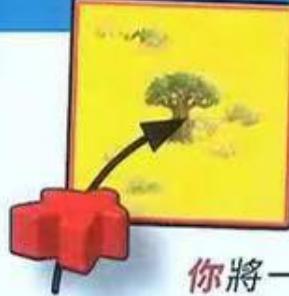


你將一名旅客派遣到剛拼放版圖上的猢狲樹下,並獲得2張動物/水池片。

3. 計分
當你的猢狲樹被8片版圖圍繞時,這名旅客的午覺時間結束,精神飽滿地離開,雖然不會得到分數,但可以再從版圖疊旁抽取2張動物/水池片,面朝上放在自己面前。

你在猢狲樹下睡午覺的旅客,周圍的8片版圖都已排滿,他睡飽了,將其拿回面前,並抽取2張動物/水池片。
護林車
護林車有2種移動方式,一種會讓你得分,另一種不會。
1a. 擺放版圖
你將這回合抽取的版圖放在沒有護林車的位置上。

2a. 不派遣旅客
若你在回合中不派遣旅客,你可移動其中一輛護林車,到桌面上既存版圖旁的空位上。

1b. 擺放版圖到護林車所在位置
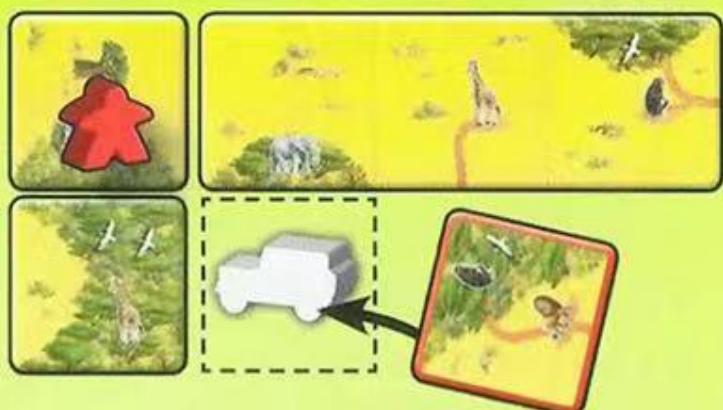
照常抽取一片版圖,當你將版圖適當地擺放在有護林車的位置上時,將護林車放在你面前。
你將適當的版圖放在護林車所在的位置上,將護林車拿回你面前。
2b. 派遣一名旅客
你可以派遣一名旅客到剛拼放版圖上,如果要派遣到灌木叢或小徑,必須其上並無其他旅客才行。

在你剛拼放版圖上可以派遣一名旅客。
3a. 計分
所有已完成的區域進行計分,移動護林車並不會為你帶來分數。
3b. 計分
所有已完成的區域進行計分,因為你移動護林車,可以額外獲得3分,將護林車放到桌面上既存版圖旁的空位上。

注意:每回合只能移動1輛護林車,當你將版圖放在護林車所在的位置上時(1b),你只能移動這輛護林車,即使該回合中你未派遣旅客(2a)你也不能再移動另一輛護林車。2輛護林車不能放在同一個位置上。
水池
動物/水池片不只可以提高小徑和灌木叢的得分,也可以用來在大草原上建造水池。
1. 擺放版圖
抽取一片版圖並將它與桌面上既有的版圖適當地拼放在一起。
2. 新建/擴大水池
新建水池
若你在回合中不派遣旅客,你可以新建一個水池。你從自己面前拿取一張動物/水池片放在桌上既有版圖的空角落上,該版圖無須是你剛拼放的那片版圖,而空的角落意指該處為大草原的一部分,若其上有些小草或小灌木,並不會妨礙你在該處建造水池。動物/水池片只能放在版圖的角落,且你必須派遣一名旅客到該水池上。
你立刻獲得3分。
擴大水池
若你在回合中不派遣旅客,你可以擴大一個水池。你從自己面前拿取一張動物/水池片放在桌上既有版圖的空角落上,並延伸原有的水池,你新加入的動物/水池片上的動物,必須尚未出現在該水池中,且你不能派遣自己的旅客到該水池上。
你獲得的分數因你放置的動物/水池片,是該水池中的第幾片而異,得分如下:
第二片:4分、第三片:5分、第四片:6分。
你擺放左上角的版圖來延伸你的小徑,並且未派遣旅客,你可以放置一張動物/水池片到既有的版圖上來新建一個水池而獲得3分。
注意:當你無法派遣旅客到新建的水池上時,你無法新建該水池。
例外:你可以在一個既有水池的對角新建一個水池,當這兩張動物/水池片並未相連時,你可以派遣你的旅客到其上,在此情況下,它們也可以是相同的動物,未來,當這兩張動物/水池片相連時,其上會有2名旅客,也可能有2隻一樣的動物。
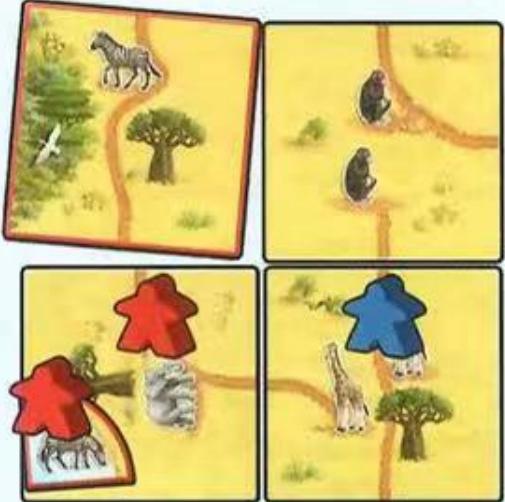

你擺放右下角的版圖來延伸你的小徑,並且未派遣旅客,你可以放置一張動物/水池片到既有的版圖上來擴大一個水池,你在已有斑馬和長頸鹿的水池中,加入猴子,它是這個水池中的第三張動物/水池片,讓妳獲得5分。
你擺放左上角的版圖來延伸你的小徑,並且未派遣旅客,你放置一張動物/水池片到剛拼放的版圖上來新建一個水池,由於它尚未與斜對角藍色玩家的水池相連,因此你也可以放置長頸鹿/水池片到該角落。
3. 完成水池
當一個水池由4張動物/水池片組成一個圓時,它就完成了,水池中的旅客為其所屬玩家贏得3分,將其拿回面前,如果這個水池中有2名旅客,這2名旅客都為其所屬玩家贏得3分。如果這兩名旅客屬於同一位玩家,則該玩家只獲得3分。
你擺放版圖且未派遣旅客,你完成了一個水池,你獲得6分,而藍色玩家獲得3分,並將其旅客拿回自己面前。

不只一名旅客在同一地景上
雖然你無法派遣你的旅客到已經有旅客的小徑或灌木叢上,遊戲過程中,有可能兩個分開的地景在稍後變成一個相連的地景,有不只一名旅客在其上,如果你的旅客人數多於其他玩家,只有你獲得此區的分數。如果2名以上玩家同有最多旅客在該地景上,這些玩家都會獲得全額的分數。範例如下:

先前,藍色和你各有一名旅客在2條分開的小徑上,你擺放這片版圖後,這兩條小徑就連成一條了,這條小徑完成了,其上有:猴子、獅子、長頸鹿、大象,共4種不同的動物,你另外放棄一張斑馬/水池片,而獲得15分。藍色未放棄動物/水池片,因此獲得10分。
總結
先前,藍色的1名旅客和你的2名旅客各在3片分開的灌木叢上,你拼放版圖後,把這3片灌木叢連在一起,同時,這片灌木叢完成了。因為你未放棄動物/水池片,因此你獲得11分(三種動物6分,加上五隻鳥5分)。你獲得分數因為你的旅客人數較多,而藍色無法得分,你們都將該灌木叢上自己的旅客拿回各自面前。

擺放版圖
·你必須將剛抽取的那片版圖與桌面上既有的版圖適當地擺放在一起。
· 在很罕見的狀況,剛抽取的版圖完全無法與桌面上翻開的版圖相連,則將這片版圖移出遊戲放回盒子中,另外抽取一片版圖,並繼續進行遊戲。
· 當你將版圖擺放在護林車所在的位置時,移動護林車。
派遣一名旅客
·你可以決定是否要派遣一名旅客到你剛擺放的那片版圖上,但必須該地景尚未有其他旅客(包括你自己的旅客)。
·當你派遣旅客到猢狲樹下時,獲得2張動物/水池片。
·當你在回合中未派遣旅客,你可以新建或擴大水池。當你在回合中未派遣旅客,你可以移動一輛護林車。
計分
· 回合結束時進行計分,計分後,每名玩家拿回自己計過分的旅客。
· 完成的小徑,依其上動物種類來計分。
· 完成的灌木叢,依其上動物種類來計分,其上的每隻鳥各加1分。
· 完成的猢狲樹(被8片版圖圍繞)讓你獲得2張動物/水池片。
- 計分的地景上,如果包含2名以上玩家的旅客,只有其上旅客最多的玩家得分。如果2名以上玩家同有最多旅客在該地景上,這些玩家都會獲得全額的分數。
遊戲結束與最終計分
再好玩的遊戲也有結束的時候……太可惜了!不過,我們必須藉由最終計分才能確定到底鹿死誰手!
當擺放最後一片版圖的回合結束時,遊戲亦隨同結束,接下來進行最終計分。尚在版圖上的旅客,還會帶來分數。
■小徑和灌木叢
每隻動物(包含鳥)為該區域旅客最多的玩家獲得1分。動物種類現在不造成影響。
■動物/水池片
你面前的每張動物/水池片為你帶來1分。
■ 猫孫樹
猢狲樹下的旅客無法獲得分數。
■水池
水池中的旅客無法獲得分數。
完成最終計分後,總分最高的玩家獲勝,如果,最高分的玩家不只一名,則他們共享勝利。

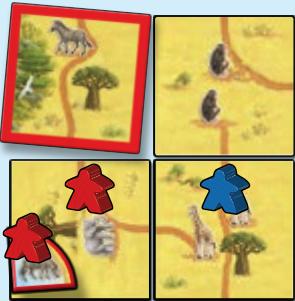
紅色面前的3張動物 / 水池片帶來3分。
紅色和藍色在大灌木叢中有旅客,因為紅色有2名,而藍色只有1名,所以只有紅色玩家會得分,共4隻大型動物和6隻鳥,紅色獲得10分。
猢狲樹下的藍色旅紅色旅客所在的小徑上客不得分。有2隻動物,獲得2分。
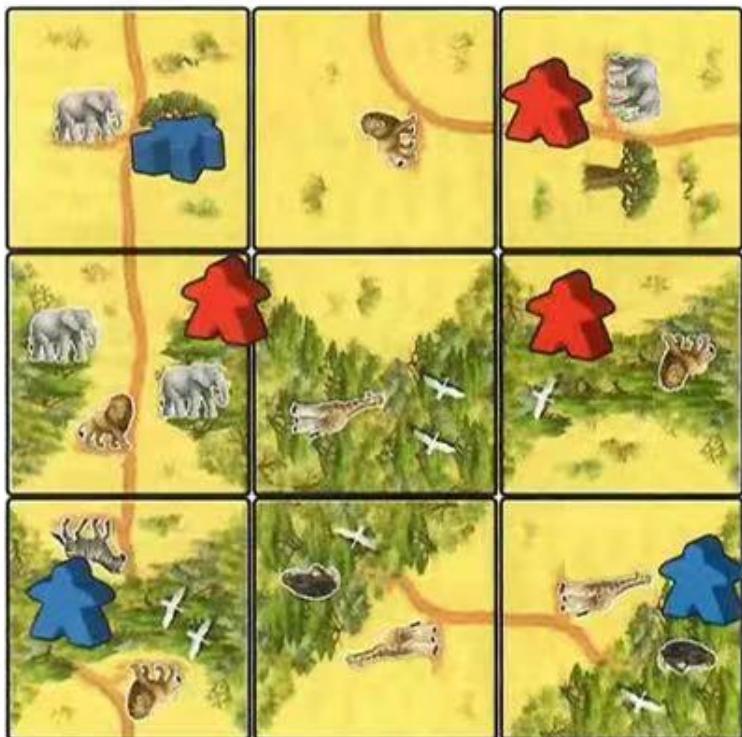
藍色的旅客單獨在右下角的灌木叢中,其中有一隻猴子和一隻鳥,他獲得2分。
Carcassonne Safari - English Rules.md29.6 KB
Klaus-Jürgen Wrede
arcassonne SAFARI SAROUND

Klaus-Jürgen Wrede

WCaSSONne SAFARI
A tile-laying game with animals set in the savannah of Africa, for 2–5 players, ages 7 and up A tropical heat lies over Africa, as we head into the steppe, where everyone is on the lookout for the popular
big animals of this mighty nation, Monkeys swing in the trees, lions rest in the shaded areas, and the elephants heavy steps shake the terrain, At the watering holes, many different animals can be seen frolicking. It is worthwhile for us to lie there in wait to view these magnificent creatures...
COMPONENTS AND SETUP
Welcome to Carcassonne Safari! In this booklet, we will guide you quickly through the rules of this latest iteration of the classic Carcassonne.
First, let's take a look at the 72 LANDSCAPE TILES. On them you can see savannahs, animal paths, baobab trees and bush areas, where many animals frolic.
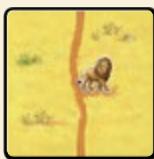
Tile with an animal path and a lion.
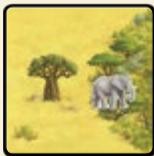
Tile with an elephant in the bush and a baobab tree in the savannah.
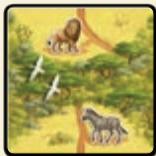
Tile with birds in the bush, as well as a zebra and a lion on 2 animal paths.
All landscape tiles share the same back.

Combining 4 Animal Tokens (as seen here) creates a Watering Hole, which earns you points (see page 6).
Back side
of the
andscape Tiles.
Next we have the 50 Animal Tokens, which show portions of watering holes and are comprised of Lions, Elephants, Monkeys, Giraffes and Zebras (10 each). These tokens (among other things) help you earn points.

More on these tokens on pages 4 and 5.
Shuffle all 72 Landscape Tiles together and place then face down on the table in stacks. The START TILE (comprised of a 3-sized Landscape Tile) is placed in the center of the table. The game features 2 white wooden RANGER VEHICLES (we will refer to them as RANGÉRS for short). These do not belong to any player. Place them in the (for now) empty spaces above and below the Start Tile, as shown to the right.
Mix face down the 50 Animal Tokens, and give each player Mix face down the 50 Animal Tokens, and give each (including yourself) 2 of them. Players place their tokens face up in front of them. The remaining Animal Tokens are placed as a face down supply next to the Landscape Tiles stacks.

Start Tile
Place the 50/100-POINT TOKENS next to the Score Board.


Front Side

Back Side
The Rangers are placed on two currently empty tile spaces as shown here.


Meeple figures
Finally we have the WOODEN PIECES. There are 30 Meeple figures, 6 in each color: yellow, red, green, blue and black. Give each player (including yourself) 6 Meeples in their chosen color, which form each player's personal supply.

Elephant figures
Note: The Meeple figures in Carcassonne; Safari are slightly smaller than those found in other games in the Carcassonne series. Because there are many features to be seen on the Landscape Tiles and Animal Tokens, the smaller Meeple size allows things to be seen more clearly.
In addition, there is 1 Elephant figure in each color, to be used for recording players' scores. Place the SCORE BOARD to the side of the playing area, and place each player's Elephant figure on the “0” space. All Meeple and Elephant figures not being used in this game can be returned to the box.

• Start or expand a Watering Hole.
OVERVIEW AND GOAL
What is Carcassonne Safari all about? Players will take turns placing landscape tiles. In this way you will begin to develop features such as savannahs, the bush, animal paths and baobab trees. You will place meeples in the bush, on the animal paths, or on a baobab tree. When a bush area or animal path is completed, you will earn points for different animals. Baobab trees reward you with animal tokens. Use the animal tokens to upgrade your scorings, or to dig watering holes in the savannah. You will score points in many ways, both during the game and at the end of the game. After a final scoring, the player with the most points is the winner. Let's get started!
GAMEPLAY
Carcassonne Safari is played in clockwise order. Starting with the first player, the active player performs the following actions in the order listed below, followed by the next player, and so on. We'll first give you a brief description of the actions you must do during one of your turns. These actions will be detailed as we present the various features of the landscape tiles.
Place a tile;
You must draw exactly 1 landscape tile from a stack and
place it face up with of its sides adjacent to previously placed tiles.

• Place a Meeple on the tile you just placed, ÓR
• Move one of the two
Rangers, OR
Score a feature; You must score any and all features completed by your tile placement.

The Animal Paths
1, Place a tile
The landscape you have drawn shows, among other features, an animal path. Place the tile, keeping in mind that you must place it in such a way that it continues the existing landscape (the tiles already in play).

You have just drawn the tile shown here with a red border. The animal path and savannah continues the features on the existing tile. Well done!
2. Place a Meeple on the Animal Path
After placing the tile, you may, if you wish, place 1 of your meeples on the animal path shown on the tile, but only if there isn't already another meeple on any section of the path.

On the newly-placed tile you place 1 of your meeples. This is possible because there is currently on other meeple on any section of the path.
3, Score a completed Animal Path
When both ends of an animal path are closed, that path is completed and scored. The end of a path is closed when it meets a bush area, ends in the savannah, or loops onto itself by meeting the other end. In the example shown here, even if your opponent placed the tile (outlined in red),
this still completes the animal path claimed by your meeple.
The number of points earned depends on the number of different types of animals that lie along the completed animal path. The table below (as well as the Score Board) show the points earned:
| different animal types | 2 | ||||
| 3 | |||||
| 4 | 5 | ||||
| points | 3 | 6 | 10 | 15 | |
Blue places a tile that completes your Animal Path. There are 3 different types of animals on it (Giraffe, Elephant and Zebra). You receive 6 points, since your meeple is alone on the path.
Remember: the total number of animals along the path does not matter for scoring; only count the number of different animal types. After scoring, return your meeple from the path back to your supply.
IMPROVING YOUR SCORING
To earn additional points, you may discard exactly 1 Animal Token (of a type that does not appear on the scored path) in order to earn the next higher score on the scoring table.

Continuing the example from above: Your animal path contains a Giraffe, an Elephant and a Zebra. You discard a Lion token from your supply. You now score 10 points, as if there were 4 different animals on the path.

We will now explain a little more about the Score Board. In order to keep track of your points throughout the game, mark your points with your Elephant figure on the Score Board. Čontinuing our example, you would move your Elephant figure 6 spaces forward on the track. After each scoring, players return any of their meeples from the scored feature back to their supply.
All discarded Animal Tokens are placed face up in a discard pile to the side of the play area. When a player earns an Animal Token (see the “Baobab Trees” section) but there are no more face down tokens remaining in the supply, shuffle the discarded tokens to create a new supply to draw from. lf your Elephant figure circles the score track and crosses the “0” space, take a 50/100-Point Token and place it in front of you with the “50” side face up. After circling the track again, turn the token so the “100” is face up.
The Bush
1. Place a tile
As usual, you draw
a tile and use it to
continue the
landscape. As always,
the features on the
newly-placed tile must match those on all adjacent, previouslyplaced tiles.
2. Place a Meeple in the Bush
Next, you check if a meeple already exists in this bush area. In this example, none do, so you can place
one of your meeples in the bush section of the tile.

You place this tile, which expands the bush area. Since it is still unoccupied, you place your meeple there to claim it.
3, Score a completed Bush area
Let us assume it is later in the game. You draw a tile which can be placed as shown below, to complete the bush area. A bush area is considered complete when it has no “open” edges, and there are no gaps or holes inside of it. Since your meeple stands alone in this bush area, you will now score it
and earn points for it. The number of points earned depends on the number of different animal types that lie within the bush area, and are calculated exactly as with the animal paths (see the table below or on the Score Board):
| different animal types | 1 | ||||
| 2 | 3 | ||||
| 4 5 | |||||
| points | 3 | 6 | 10 | 15 | |
IMPROVING YOUR SCORING
As with the animal paths, you may discard exactly 1 Animal Token to increase the number of animal types scored by 1. In addition, each Bird 7 appearing in the scored bush area earns 1 point.
After scoring, return your meeple from the bush back to your supply.

Your completed bush area contains a Monkey and a Giraffe. You discard a Zebra token from your supply.
This now counts as 3 animal types, which earns you 6 points. Since there are 3 Birds in this bush area, you earn an additional 3 points, for a total of 9 points.

The Baobab Trees
1, Place a tile
If you draw a landscape tile that shows a baobab tree, it is placed following the same rules às
any other type of
tile. As always, the
features on the
newly-placed tile
must match those
on all adjacent, previouslyplaced tiles.

2. Place a Meeple on the Baobab Tree
You may place a meeple from your supply on the baobab tree on the newly-placed tile. (Your explorer is taking a little rest in the shade of the tree.) lf you do place a meeple on the baobab tree, draw 2 Animal Tokens from the face down supply, and place them face up in front of you.

You place 1 of your meeples on the baobab tree, and take 2 Animal Tokens from the supply.

3, Score a completed Baobab Tree
When a baobab tree is completely surrounded by 8 landscape tiles, this signifies that your meeple's rest is over, and you return it from the tile back to your supply.
You do not earn any points from “completing” a baobab tree, but instead you may draw 2 Animal Tokens from the face down supply and put them face up in front of you.
All 8 spaces surrounding your baobab tree are occupied by landscape tiles. You retrieve your meeple and draw 2 Animal Tokens.

The Rangers

The are two ways to move a Ranger during the game; one way immediately earns points, and the other does not.
1a, Place a tile
You draw a tile and place it in a space where no Ranger lies.

1b, Place a tile AND displace a Ranger
If, after drawing a tile, you place it in a space containing a Ranger (following the usual placement rules), you take the Ranger and place it in front of you temporarily.
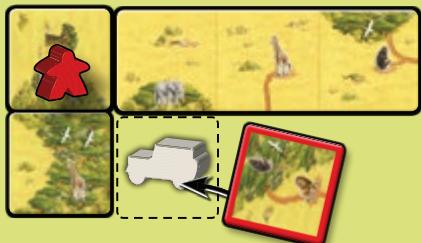
You place a tile in a space containing a Ranger, then take the Ranger and set it in front of you.
2a, DO NOT Place a Meeple
lf, after placing a tile, you decide not to place a meeple on it, you may move 1 of the 2 Rangers to another empty space next to 1 or more landscape tiles.

2b, Place a Meeple
As usual, you may place 1 of your meeples on the tile if there is not already another meeple on any section of the same feature (animal path or bush).
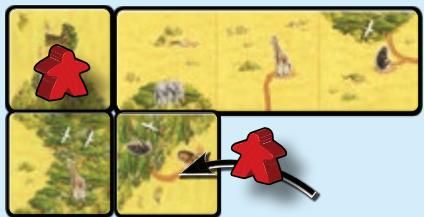
You decide to place a meeple on the newly-placed tile, on the animal path.
3a, Score a completed feature
Score any completed feature as normal. ln this case, you do not earn any points for moving the ranger.
3b. Score a completed feature
Score any completed feature às normal. In addition, for displacing a Ranger with your tile placement, you now earn 3 points.
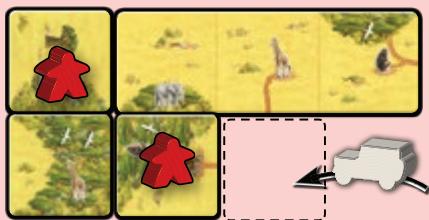
You place the Ranger in the empty space next to your claimed animal path.
Then return the displaced ranger back to the play area, in an empty space next to 1 or more landscape tiles.
IPORTANT: You may only move 1 Ranger on your turn. If you have displaced a Ranger (1b) by placing a tile in its space, you still move it to another empty space (2a) even if you do not place a meeple on the tile. There may never be 2 Rangers on the same empty space!
The Watering Holes
Instead of using the animal tiles to improve your scoring of a completed animal path or bush area, you may use them to dig watering holes in the savannah.
1. Place a tile
You draw and place a landscape tile, according to the usual rules.
2. Start or Expand a Watering Hole
STARTING A WATERING HOLE
Instead of placing a meeple on the newly-placed tile, you may start the construction of a watering hole. To do this, place an animal token from your supply on a free corner of any existing landscape tile (it does not need to be the newly-placed tile). A free corner is one that shows a savannah, and no obstacles such as an animal path or bush area (small shrubs or grasses depicted on a tile are not considered to be an obstacle). The token must be placed with its straight sides aligned with the edges of the tile. Then place 1 of your meeples on the animal token.
You place a tile that extends
your animal path. You decide
to not place a meeple on this tile, and instead start a watering hole by placing an animal token on the
corner of a tile, and placing a meeple on the token. You earn 3 points for this.
For starting a watering hole, you immediately earn 3 points.
EXPANDING A WATERING HOLE
Instead of placing a meeple on the newly-placed tile, you may expand a previously-begun watering hole. Place an animal token on the free corner of an adjacent landscape tile so the circle of the watering hole continues to close.
When doing this, however, you must use an animal token that shows an animal not already present at this watering hole. All animals in a watering hole must be different. You do not place a meeple when expanding a previously-begun watering hole.
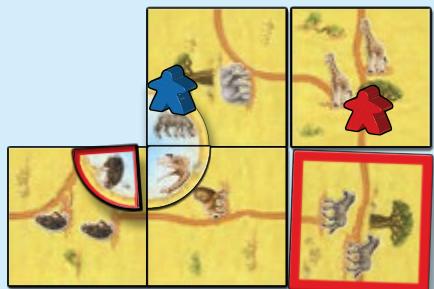
Depending on whether you have placed the 2nd, 3rd or 4th and final animal token at a watering hole, you earn a number of points:
2nd animal token: 4 points; 3rd animal token: 5 points;
4th animal token: 6 points.
You place the landscape tile outlined in red, and decide to not place a meeple on it. Instead, you expand the existing watering hole (with a Zebra and a Giraffe on it) by placing an animal token showing a Monkey. Because this is the 3rd token in the watering hole, you earn 5 points.
Important; You must always place a meeple on a watering hole when starting one.
Special case; You may place an animal token diagonally opposite an existing watering hole. Since the 2 tokens are not touching yet, this is considered to be a separate, new watering hole, and therefore you may place a meeple on it. When the remaining 2 corners are filled by animal tokens, the 2 watering holes become 1 completed hole with 2 meeples on it. In this case, it is allowed for 2 identical animal tokens to exist on it.
You place the landscape tile outlined in red, and start a
new watering hole on it. Since
your watering hole is not yet
connected to Blue's watering
hole, you are allowed to plače an animal token showing a Giraffe.

3, Score a completed Watering Hole
Once the 4th animal token is placed at a watering hole, it is complete. The owner of the watering hole earns 3 points and returns his meeple from the watering hole to his supply.
If 2 meeples are on the completed watering hole, both owners earn 3 points each. lf both meeples belong to the same player, that player only earns 3 points.
You place a tile but do not place a meeple. You instead place an animal token, completing the watering hole.

You earn 6 points, and Blue earns 3 points and retrieves his meeple.

More than 1 meeple on the same feature
Through clever tile and meeple placement, multiple meeples can occupy the same animal path or bush area. When such a feature is completed, only the play who has the most meeples in the scored feature earns the points. If there is a tie between 2 or more players for most meeples in a scored feature, all tied players earn the full points for the feature. Here are two examples:

Before your turn, You and Blue each have a meeple on 2 separate animal paths. You place the red-bordered tile, connecting both paths with it. The animal path is now complete. There are 4 different animals on the path (Monkey, Lion, Elephant and Giraffe).
You discard a Zebra token and earn 15 points. Blue does not use an animal token and earns 10 points.

Before your turn, You and Blue each have a meeple on 3 separate bush areas. You place the red-bordered tile, connecting all 3 bush areas, and also completing it. You decide not to discard an animal token. Therefore, you earn 11 points (6 points
for 3 different animal types plus 5 points for the birds). You alone earn the points because you have more meeples in the bush area than Blue. Blue earns no points. You both return your meeples to your supply areas.
Rules Summary
• The tile you draw must always be placed so that it continues the existing landscape (features must match).
1, • In the rare case that you cannot place the drawn tile, return it to the game box and draw a new tile.
• If you place a tile in an empty space containing a Ranger, you must displace him.
• You can only place a meeple on the tile you have just placed on your current turn. Remember that you cannot place a meeple on a feature if another meeple already exists on another section of the feature.
• If you place a meeple on a Baobab Tree, you do not earn any points; you receive 2 animal tokens instead. • lf you decide not to place a meeple on the newly-placed tile, you may either start or expand a Watering Hole or move a Ranger.
• lf a feature is completed, a scoring takes place at the end of a player's turn. After a scoring, all involved players return their meeples from the scored feature back to their supplies.
• A completed Animal Path earn points based on the number of different animal types on the path.
3, • A completed Bush earn points in the same way as an Animal Path, plus 1 point per Bird in the Bush area.
• A completed Baobab Tree earns 2 Animal Tokens.
• lf several players are involved in a scoring, the player with the most meeples in that feature earns the points. If there is a tie for most meeples in a feature, all tied players earn the full points.
GAME END, FINAL SCORING, AND WINNER
So here we are, at the end of this game of Carcassonne Safari. It's now time to find out who the winner is! The game ends when all landscape tiles have been drawn and placed. This is followed by a quick final scoring, in which players earn points for any meeples remaining on landscape tiles on the following features:
ANIMAL PATHS and BUSH AREAS
Each animal and bird earn the owner of a meeple on the feature 1 point. All animals are counted even if they are the same type(s).
ANIMAL TOKENS
Each animal token in a player's supply earns that player 1 point.
BAOBAB TREES
A meeple on a baobab tree at the end of the game earns no points.
WATERING HOLES
A meeple on a watering hole at the end of the game earns no points.
The player with the most points after the final scoring is the winner! If several players have the same number of points, they share the victory.
Blue earns no points for the meeple on the baobab tree.

Red earns 3 points for having 3 animal tokens.
Both Red and Blue have meeples in the large bush area. Since Red has more meeples here than Blue, Red earns the points for the Animals. For the 4 Animals and 6 Birds here, Red earns a total of 10 points.
Red earns 2 points for the 2 animals on the animal path.

Blue earns 2 points for the Monkey and the Bird in the bush area.
TILE OVERVIEW (72 Landscape Tiles, 50 Animal Tokens, 5 50/100 Point Tokens, 1 Start Tile)
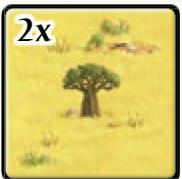
CS1 -1-
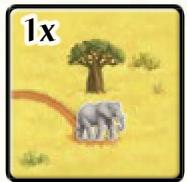
CS2E
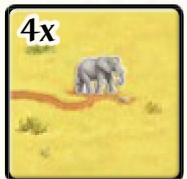
CS3 E|G|G|Z


CS4M|E|L

CS5L
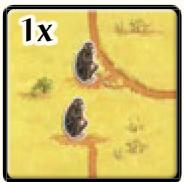
CS7E|G|G|L|Z
CS6 M|M|E|L
CS8 MM


CS9 MM

CS11 GG|ZZ|ZZ
CS10 LL|ZZ
CS12 z
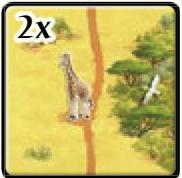

CS13 G|Z
CS14M|ME|ZZ

CS15 ME

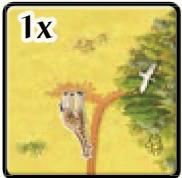
CS16 Z
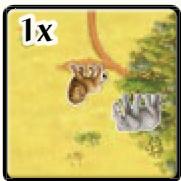
CS17 G
CS18 EL


CS19 EGG

CS20M|M|G|L|Z CS21E|L|Z|


CS22L
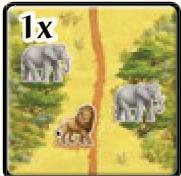
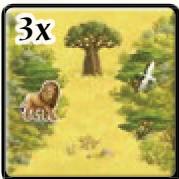

CS23 MEE

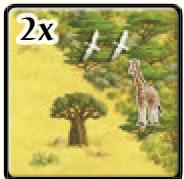
CS24 EEL

CS25 ML|ML|L CS26 EE|EG|EZ|LL|LZ CS27 MG|ML
CS28 G|Z
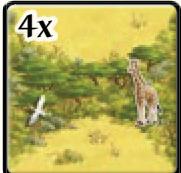
CS29 E
CS30 G|G|L|Z

CS31 LZ

CS32 GG
CS33 M|M|G



CSStart MEG
If several tiles with the same features layout are present, it is noted which and how many animals of each type occur. The individual tiles are separated by a dash.
M=Monkey | E=Elephant |G=Giraffe | L=Lion | Z=Zebra “–” = no animal | Birds are not listed in the overview.
Note; When selecting a title for this game, we deliberately chose “Safari”, because nowadays the term “Safari” more commonly refers to the observation of wild animals in their natural environment, rather than big game hunting and killing.
Designer; Klaus-Jürgen Wrede | Illustration; Anne Heidsieck | Layout; Christof Tisch | 3D Photos; Andreas Resch Thanks to the following proofreaders: Marion Haake, Dieter Hausdorf and Maik Neumann. www.carcassonne-forum,de Special thanks to Udo Schmitz for his numerous playtest sessions.

© 2018
Hans im Glück Verlags-GmbH
Birnauer Str. 15
80809 München
info@hans-im-glueck.de
www.hans-im-glueck.de
www.carcassonne.de

Great merchandise, mini-expansions, our spare parts service, and much more can be found at: www.cundco.de
We want to play with you! Every year we tour through Germany and set up our gaming tents, where you are welcome to come and play! Learn more at www.carcassonne-on-tour.de
下载 Markdown简繁检索对照.md1.6 KB
257065_256065_carcassonne-safari — 简体/繁体检索对照
本游戏的规则书是繁体中文原文。用户用简体提问时,把关键词按下面这张表转成繁体再去 grep 原文,命中率最高。
回答时用简体或繁体都可以,但引用的原文保持繁体。
简体 → 繁体 对照(按该游戏原文出现频率排序,共 59 字)
| 简体 | 繁体 | 原文出现次数 |
|---|---|---|
| 图 | 圖 | 100 |
| 动 | 動 | 92 |
| 计 | 計 | 50 |
| 这 | 這 | 47 |
| 径 | 徑 | 44 |
| 丛 | 叢 | 41 |
| 获 | 獲 | 39 |
| 将 | 將 | 33 |
| 游 | 遊 | 30 |
| 数 | 數 | 30 |
| 张 | 張 | 29 |
| 时 | 時 | 29 |
| 种 | 種 | 28 |
| 戏 | 戲 | 27 |
| 护 | 護 | 26 |
| 车 | 車 | 26 |
| 当 | 當 | 26 |
| 摆 | 擺 | 24 |
| 来 | 來 | 23 |
| 树 | 樹 | 22 |
| 与 | 與 | 21 |
| 并 | 並 | 21 |
| 为 | 為 | 20 |
| 个 | 個 | 20 |
| 该 | 該 | 18 |
| 后 | 後 | 17 |
| 须 | 須 | 17 |
| 会 | 會 | 16 |
| 类 | 類 | 16 |
| 连 | 連 | 15 |
| 无 | 無 | 13 |
| 让 | 讓 | 13 |
| 刚 | 剛 | 13 |
| 条 | 條 | 13 |
| 蓝 | 藍 | 12 |
| 只 | 隻 | 12 |
| 结 | 結 | 11 |
| 进 | 進 | 11 |
| 过 | 過 | 10 |
| 鸟 | 鳥 | 9 |
| 于 | 於 | 9 |
| 辆 | 輛 | 9 |
| 弃 | 棄 | 9 |
| 们 | 們 | 8 |
| 开 | 開 | 8 |
| 红 | 紅 | 8 |
| 适 | 適 | 7 |
| 边 | 邊 | 7 |
| 总 | 總 | 7 |
| 叠 | 疊 | 7 |
| 扩 | 擴 | 7 |
| 两 | 兩 | 7 |
| 带 | 帶 | 6 |
| 没 | 沒 | 6 |
| 缘 | 緣 | 6 |
| 终 | 終 | 6 |
| 狮 | 獅 | 5 |
| 颂 | 頌 | 5 |
| 经 | 經 | 5 |
原文为社区整理/出版社公开资料,版权归原作者,仅供个人学习查阅。