
卡森城Carson City
一句话概览
卡森城 是一款已收录于村了吗规则库的桌游,支持 2–5 人,原名 Carson City。
本页内容:一句话概览 · 游戏概述 · 1. 游戏组件 · 2. 游戏设置 · 3. 游戏流程 · 4. 行动详解 · 5. 建筑介绍 · 6. 人物介绍 · 7. 游戏结束与计分 · 8. 变体规则 · 关键规则与常见问题 · 常见问题
卡森城 规则速览
以下规则速览由本站整理,与官方规则书表述不同,仅供快速上手参考;其中 1 节为节选,完整内容可在村了吗查询。
游戏概述
《卡森城》(Carson City) 的背景设定在 1858 年内华达州的卡森市。玩家召集一群勇敢的牛仔,计划购买城镇最好的土地,建造最繁荣的农场、矿井、沙龙等;你需要有勇气与对手决斗以夺得最好的财产,还需要招募并获得卡森城中最有趣人物的帮助来发展事业。分数在游戏中和游戏结束时获得,最终由卡森城中最抢眼的市民(分数最高者)赢得游戏——游戏结束时,所有财产(金钱、建筑、领土、山脉、房屋)也会转换为分数。
核心机制: 手牌/人物卡选择、工人(牛仔)放置、区域占领、区块放置(建筑与道路)、决斗(骰子+火力值)、多种收入与计分行动。
1. 游戏组件
| 组件 | 数量 / 说明 |
|---|---|
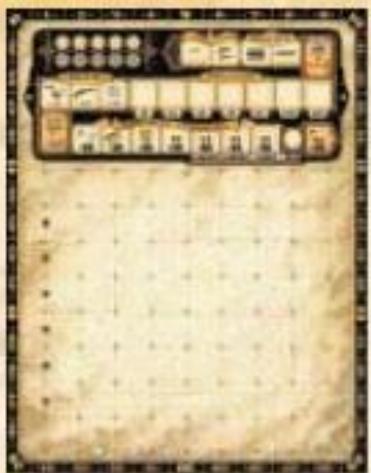
| 版图 | 1 张;描绘未来卡森城的领土范围,分成 64 个区域;版图上方表示各种行动;另一面包含卡森河(建议第一次游戏时不使用有河流的版图) |
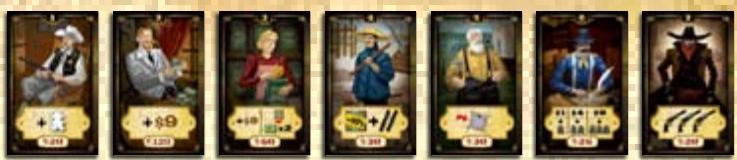
| 人物卡 | 7 张;卡上红色数值表示回合结束时该人物的现金上限;每人有特殊能力;一套黄色面(基础规则)、一套红色面(变体规则),建议第一次使用黄色面 |
| 房屋 | 20 个 |
| 牛仔 | 51 个(每种颜色 10 个,另有 1 个白色牛仔代表警长),用来选择行动 |
| 指示物 | 10 个(每种颜色 2 个),用于记录回合顺序和当前分数 |
| 建筑板块 | 30 个:6 牧场、6 矿场、4 药店、4 银行、3 旅馆、3 酒吧、2 教堂、2 监狱 |
| 山脉 | 9 个 |
| 道路 | 25 个黑色道路 |
| 包裹 | 1 个 |
| 所有权板块 | 60 个(每种颜色 12 块),用来表示区域的所有权 |
| 左轮手枪指示物 | 25 个 |
| 特殊指示物 | 1 个特殊的"三枪"指示物 |
| 决斗板块 | 30 个(仅于一个变体规则中使用) |
| 钱币 | $1(30 枚)、$5(20 枚)、$10(22 枚)、$20(6 枚) |
| 回合指示物 | 1 个 |
| 骰子 | 2 个 |
2. 游戏设置
- 每位玩家得到 $15、1 把左轮手枪、1 条路、12 个自己颜色的所有权板块和 3 个牛仔。道路和牛仔构成玩家的私人供应区。
- 剩下的钱放在版图旁构成银行。
- 房屋、左轮手枪、道路和剩下的牛仔放在版图旁作为公共供应区。
- 在建筑方框的"$3"位置和"$10"位置各放置一个牧场。
- 在建筑方框的"$4"位置和"$12"位置各放置一个矿场。
- 随机抽取 3 个建筑板块,放置于建筑方框中的"$5"、"$6"和"$8"位置。
- 掷骰决定卡森城的市中心(十字方向上,纵向由白色决定,横向由黑色决定);房屋放置在此区域,4 条路围绕房屋。这些道路之后将延伸到整个城市。
- 9 座山脉被随机放置在版图上(同样由骰子决定);如果该处已被放置了板块,则重新再掷一次骰子。
- 将"三枪"指示物放置到指定方框内;将回合指示物放置在起始位置。
- 从起始玩家开始,按顺序每个玩家依次选择一个区域放置一个自己的所有权指示物。
- 第一回合随机选择起始顺序,对应的指示物放置在回合顺序轨上以提醒回合顺序;之后从最后一个玩家开始倒回起始玩家,每个玩家选择第二个区域——任何区域都能被选择,包括山地或卡森城中心。
3. 游戏流程
游戏共进行 4 个回合,每个回合由 4 个阶段组成:
- 选择人物
- 放置牛仔
- 执行行动和决斗
- 回合结束
① 选择人物
所有人物卡放置在版图旁,之后每个玩家根据回合顺序选择人物卡。根据人物能力,某些选择可能直接与一个行动相关。当所有玩家都选择了人物后,回合顺序发生改变:根据已选人物卡上的数字,放置标志物在回合顺序条上排定次序。
② 放置牛仔
按顺序依次进行各自的回合。在你的回合,从下面选项中选择一个执行:
- 选择一个行动:从你的私人供应区放置 1 个牛仔到城市地图上方的 1 个行动方框。
- 选择一片土地:从你的私人供应区放置 1 个牛仔到 1 个区域。
- 进攻 / 防御一个建筑:从你的私人供应区放置 1 个牛仔攻击 1 个建筑(如果为己方建筑则为防御)。
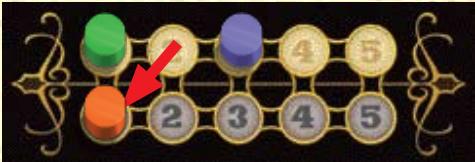
- 放弃:移动你的指示物到回合顺序条下排的第一个空位,本回合你不得再放置牛仔。
选择不是强制性的,但你必须选择其中一个(除非放弃)。你可以在同一回合购买数个区域(每个区域必须放上 1 个牛仔)。你也可以放置 1 个牛仔到一个已经被其他玩家牛仔占据的方框或者区域中,这将导致决斗;在一些方框,一个玩家能放置数个牛仔。
放弃与顺位: 当一个玩家选择放弃时,他移动他的指示物到回合顺序条下排的第一个空位。
③ 执行行动和决斗
所有玩家都放弃后,依版图上的顺序依次执行行动。行动一旦完成,牛仔返回公共供应区。
决斗: 如果几个玩家在相同的方框或者区域放置了牛仔,就开始决斗。每个玩家扔一个骰子,所得数值加上左轮手枪的数量和供应区里牛仔的数量(即火力值 = 手上的牛仔数 + 左轮手枪 + 骰子点数),数值最高的玩家获胜。获胜者赢得执行该行动的权力,其牛仔放入公共供应区。决斗失败者无法执行那个行动,并将自己的牛仔放回私人供应区;当超过 2 个玩家决斗时,所有失败者都放回各自的牛仔。平手时,回合顺序条靠前的玩家获胜。
④ 回合结束
所有行动被执行后:
- 回合指示物前移一个方框(向左),阻止一个"购买分数"方框在之后的游戏中被使用。
- 每个玩家从公共供应区拿取自己颜色的新牛仔放进私人供应区:第一回合结束时每人得到 4 个牛仔,第二、三回合结束时 5 个;私人供应区的牛仔最大数量为 10。
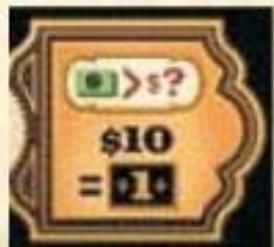
- 玩家的钱若超出现金上限(其人物卡上的红色标识),超出的钱必须花完;必须消费的钱每 $10 得 1 分(你也可以消费更多的钱,但依然是每 $10 得 1 分)。
- 没被购买的建筑依次朝价格低的方框移动;在下回合开始前,为每个空余的位置随机从袋子中抽取 1 个新建筑放在行动条上。
- 将人物卡放回原处,白色牛仔放回公共供应区。
4. 行动详解
任何玩家都能选择不执行他已选择的行动(例如他意识到没有足够的钱做任何事),即使这个行动是他决斗赢得的;但他的牛仔依然要放回公共供应区。行动总是按照版图上的顺序执行。
工资
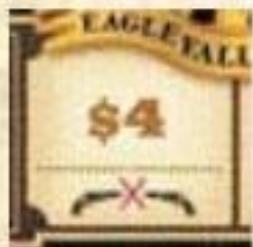
这个方框无法决斗。这个方框里玩家的每个牛仔收取 $4,这意味着一个玩家能在这个方框放置多个牛仔。
军火
赢得这个行动的玩家在回合的剩下阶段收到特殊的"三枪"指示物;回合结束时,该指示物放回版图原处。
道路(可决斗方框)
赢得这个行动的玩家获得 3 条新道路放进自己的私人供应区。私人供应区里的道路能在游戏中的任何时候放置到版图上。
道路(无决斗方框)
这个方框无法决斗。这个方框里玩家的每个牛仔获得 1 条道路,这意味着每个玩家能在这个方框放置多个牛仔。
注意:新建道路必须连接之前建造的道路。
购买区域
购买一个无主区域时,玩家必须在牛仔放置阶段于该处放置一个牛仔(不是放在"购买区域"这个方框上),他现在就可以购买。如果数个玩家试图购买相同区域,决斗胜者获得。该区域可能已经包含一座房屋或一座山脉。
区域地价为 $1,其上以及周边 3×3 个格子中每座建筑、山脉、房屋各增加 $1(含斜角相邻)。钱直接支付给银行,玩家放置自己颜色的所有权板块(牛仔放回公共供应区)。如果在"购买区域"行动时有超过一场决斗,则由涉及决斗的玩家中顺位靠前者决定决斗进行的顺序。
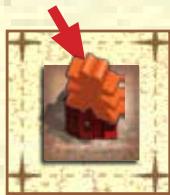
例:橙色玩家购买一块土地共花费 $6(区域地价 $1 + 两个房屋 $2 + 一个山脉 $1 + 两个酒吧 $2)。
建造建筑
有七个"建造建筑"的行动方框,每个方框底部都标示了建筑物的价格。要将建筑物建造在自己的所有权板块上,有两个条件:
- 该区域必须连接道路。 至少有一条路能连接到区域的角落。如果没有路能到达该区域,允许玩家从自己的私人供应区放置若干条道路。例外:牧场和矿场在修建前无需有路到达。
- 建造药店、旅馆、银行、酒吧、教堂或监狱时,玩家必须为被这一新行动吸引到的居民建造一栋新房屋。 这栋房屋不用花费,必须放置在一个连接道路的空白区域(没有建筑和山脉)。这个区域可能已经属于某玩家;房屋能建造在一个已经属于其他玩家的区域(经协商),也能建造在无主之地上;若为后者,该区域之后仍然能被购买。
注意: 玩家可以不立刻建造,而是把刚买的建筑保留在自己面前,等到之后的"建造建筑"行动结束后再建造(例如区域还没有道路连接,或者他找不到放置需求房屋的位置)。若那时有多名玩家都想建造建筑,则由当前回合顺序决定。所有玩家都能在自己面前有数个未建造的建筑。
游戏开始时,只有 9 块区域连接道路:市中心区域和周围的 8 块。不允许在山脉上建造建筑或房屋。
区域收入
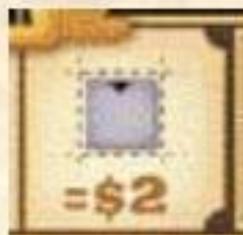
赢得这个行动的玩家,每个自己有所有权的区域获得 $2。
牛仔收入
赢得这个行动的玩家每点火力值得到 $2。火力值指的是玩家私人供应区里的牛仔数量和左轮手枪的数量之和,同时也包括"三枪"指示物和人物卡"雇佣兵"带来的火力值。
建筑收入
每个建筑根据附近的建筑和房屋为拥有者带来收入(见"建筑介绍")。这个行动是自动进行的,没必要把牛仔放到方框里来获得收入。
玩家可以把牛仔放到其他玩家的建筑上进攻它;玩家也能放置牛仔进自己的建筑帮助防御进攻者以保护自己的收入。若该建筑无人防御,或在决斗中防御者被击败,则视为进攻成功——进攻方可以从建筑所有者处窃取该建筑收入的一半(向下取整)。
注意: 当一栋房屋不属于特定玩家(当它建造在无主区域时),它能增加所有相邻建筑的收入,无论这个建筑的所有者是谁;然而当建造该房屋的区域属于某个玩家时,该房屋只利于那个玩家的建筑。本条规则同样适用于山脉和矿场。
例:橙色的酒吧(相邻 3 栋房屋)获得的收入比紫色(只有 2 栋相邻房屋,第三栋属于橙色)多 1 栋房屋的收入。
赌博收入
赢得这个行动的玩家扔两个骰子,数值之和即为收入。例如掷出一个 3 和一个 5,则得到 $8 收入。
区域计分
赢得这个行动的玩家获得与自己拥有的区域数量一半的分数(向下取整)。这些区域无需相邻;计算所有拥有的区域,无论是否已有建筑建在其上。
建筑计分
赢得这个行动的玩家获得与自己区域上建筑数量相同的分数(山脉和房屋除外)。
牛仔计分
赢得这个行动的玩家获得火力值一半的分数(向下取整)。火力值指的是玩家私人供应区里的牛仔数量和左轮手枪的数量之和,同时也包括"三枪"指示物和人物卡"雇佣兵"带来的火力值。
购买分数
赢得这个行动的玩家能分别以每 1 点分数 $2 / $3 / $4 / $5 的价格进行购买(该行动方框会随回合推进被回合指示物逐一封锁)。
5. 建筑介绍
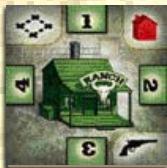
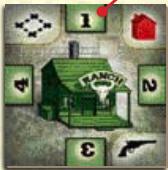
每个建筑有八个收入标识,分别表示该建筑从最低收入到最高收入的状况;收入标识放在所有权板块上,黑箭头指向当前该建筑的总收入。建造某些建筑时还能获得左轮手枪指示物。
| 建筑 | 放置条件 | 收入 | 特殊规则 |
|---|---|---|---|
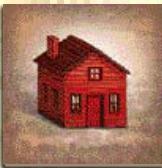
| 房屋 | 所在区域必须与道路相连 | 无 | 房屋永远不能被购买,只在其它建筑被建造时才进入游戏 |
| 牧场 | 无限制 | 周围每个空地提供 $1(无论空地所有者是谁,最低收入为 $1);数个牧场可从相同空地受益 | 为你增加 1 点火力值(左轮手枪 +1);计算药店、银行和酒吧收入时,牧场也被视为一栋房屋 |
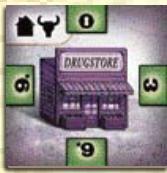
| 药店 | 区域必须与道路相连,玩家必须再建造一栋房屋 | 每个相邻的非其他玩家的房屋以及城市中己方牧场为你提供 $3 | 例:若玩家拥有一个药店,与一个己方牧场及三栋房屋相邻,他得到 $15——牧场被计算两次(一次作为相邻房屋,一次作为己方牧场) |
| 矿场 | 无限制 | 每个相邻的山脉提供 $3;数个矿场可以受益于同个山脉,但一旦你拥有一座山脉,它不再使其他玩家的矿场受益 | 为你增加 1 点火力值(左轮手枪 +1) |
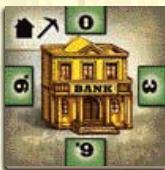
| 银行 | 区域必须与道路相连,玩家必须再建造一栋房屋 | 每个相邻的非其他玩家的房屋以及城市中己方矿场为你提供 $3 | 例:玩家拥有一个银行和一个矿场,银行直接与一栋房屋和一间旅馆相邻,银行收入 $12(矿场不需要一定与银行相邻) |
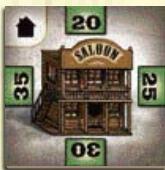
| 酒吧 | 区域必须与道路相连,玩家必须再建造一栋房屋 | 每个相邻的非其他玩家的房屋为你提供 $5 | — |
| 旅馆 | 区域必须与道路相连,玩家必须再建造一栋房屋 | $6 | 计算药店、银行和酒吧收入时,旅馆被视为两栋房屋 |
| 教堂 | 区域必须与道路相连,玩家必须再建造一栋房屋 | 无 | 计算药店、银行和酒吧收入时,教堂被视为一栋房屋;教堂使玩家免受攻击——直接与教堂相邻的己方建筑不会被攻击。若你建造教堂使其与你正被攻击的建筑相邻,攻击被取消,攻击方的牛仔返回其私人供应区。玩家不得攻击教堂 |
| 监狱 | 区域必须与道路相连,玩家必须再建造一栋房屋 | 无 | 为你增加 2 点火力值(左轮手枪 +2);玩家不可攻击监狱 |
6. 人物介绍
每张人物版块有两种不同的能力(黄色面为基本规则,红色面为变体规则)。刚开始游戏时建议使用黄色面;以后由玩家自行商议用哪一面(既可所有人物都用同一面,也可部分人物用不同颜色的一面),但一经决定,游戏中不得更改。
| 人物 | 基础规则(黄色面) | 变体规则(红色面) | 现金上限 |
|---|---|---|---|
| 警长 | 得到一个警长牛仔(白色牛仔),这允许他选择一个行动而不担心受到攻击(没有人能和警长决斗)。因此不能放置白色牛仔进攻建筑或和某人决斗(必须把牛仔放在无人的方框中) | 你不允许攻击任何建筑或者参与决斗(但依旧可以防御建筑);每场决斗失败都能获得 3 分 | 均为 $20 |
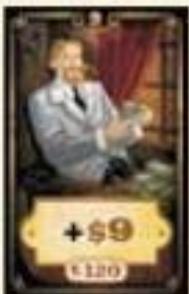
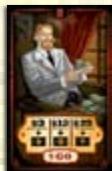
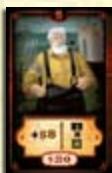
| 银行家 | 选择时立即获得 $9 | 回合结束前,你能够用 $3 / $12 / $25 购买 3 / 5 / 7 分 | 基础 $120;变体 $60 |
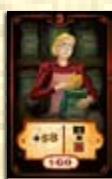
| 杂货商 | 允许你选择其中一项执行:选择一种类型的建筑的收入加倍(例如你的所有银行);如果一个双倍收入建筑被攻击,那么你和攻击者各获得一份正常收入,选择哪种建筑收入加倍必须在结算攻击前决定。或:获得 $8(立刻或在建筑收入阶段获得) | 你立刻得到 $8,或者在回合结束时每个你拥有的房屋为你带来 1 分(不包括牧场、旅馆和教堂) | 均为 $60 |
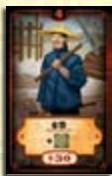
| 中国劳工 | 立刻得到两条道路;此外任何建筑价格减半(向上取整) | 你支付 $5 拿走一个已有的建筑,能立刻建造出来,或者保留到之后再建造;剩下的建筑立刻移向更低的价格,并从袋子中拿出一个新的建筑 | 均为 $30 |
| 定居者 | 立刻给你一块区域(必须在你获得时是无主的) | 你立刻得到 $8,或者在回合结束时每个你拥有的山脉为你带来 $1 | 基础 $30;变体 $20 |
| 船长 | 能够支付 $1 / $4 / $9 从公共供应区得到 1 / 2 / 3 个额外的牛仔 | 你支付 $3 / $9 购买 1 / 2 个左轮手枪指示物,保留至此回合结束 | 基础 $25;变体 $20 |
| 雇佣兵 | 这个回合雇佣兵给你带来额外 3 点火力值 | 这个回合雇佣兵给你带来 2 点火力值 | 基础 $20;变体 $30 |
7. 游戏结束与计分
第四回合,所有玩家消费完超过自己人物卡显示现金上限的钱后,游戏结束。
最终得分 = 游戏中得到的分数 + 下列分数:
- 每个建筑、房屋、山脉为其拥有者带来 2 分;
- 所有剩下的钱用来购买分数:每 $6 购买 1 分;
- 空置的所有权板块以及玩家私人供应区中的建筑不带来分数。
分数最高的玩家获得胜利。出现平局时,平局玩家中回合顺序条靠前的玩家获胜。
8. 变体规则
强权即是公理(决斗板块变体)
这个变体提议减少决斗中的随机性,用决斗板块替换骰子。游戏设置时:
- 2 人游戏: 每人得到从 0 到 5 共六个决斗板块和 $15。
- 3 至 5 人游戏: 每个玩家拿取从 0 到 5 共六个决斗板块并洗混,每人随机秘密拿取六个。每个玩家公布自己决斗板块的总点数,总数必须是 45(3 人游戏)、60(4 人游戏)或 75(5 人游戏);每个玩家得到(30 减去自己的决斗总点数)的钱作为起始现金。
如何进行决斗: 每个玩家选择并打出一个决斗板块以增加自己的火力值,来取代扔骰子。决斗板块使用后丢弃,作为新的供应区;当一个玩家的决斗板块用尽时,从供应区随机拿取三个新的决斗板块。
卡森河(河流版图变体)
使用有河流的反面版图,并进行如下改动:
- 游戏设置时,所有河流区域必须空置(不能有山脉和城市中心);用 6 座山脉版块取代原有的 9 座。
- 既不允许购买河流区域,也不允许在河流区域上建造建筑或房屋。
- 计算牧场收入时河流区域被视为空闲区域(因此每个河流区域 +$1)。
- 若一个矿场与河流区域相邻(对角也行,且不论有多少河流区域与其相邻),矿场增加 $3 收入,无论有多少河流区域与其相邻。
- 穿越河流必须要有两条路,穿越河流的两条路被称为"桥"。
- 游戏结束时,任何与桥相邻的区域(包含山脉、建筑或房屋,且角对角相邻也行)带来 3 分,而不是原有的 2 分。
加紧整备(同时放置牛仔变体)
这个变体通过允许玩家同时放置牛仔以缩短游戏时间,不建议没有经验的玩家和新手使用。第 3 页第 2 部分作如下修改:
一旦有玩家放置他的第一个牛仔在版图上,所有玩家都同时地把牛仔放置在他们希望放置的行动框上。所有玩家都能够反复地把任何牛仔移动和放置到任何行动框上。当一个玩家决定停止移动和放置他的牛仔时,他把自己的指示物放置在回合顺序条最前的空位上;从这一刻起,他不允许在本回合放置或转移任何牛仔。
公平竞争规则
- 只有一只手能用于在版图上放置牛仔;
- 保持冷静,移动精确,不要碰撞棋子和板块,或摇动版图;
- 不要用手把牛仔悬挂在版图上方影响其他玩家。
游戏结束后完成下面程序
每个玩家在自己回合顺序条后有几位玩家,就获得几分。
关键规则与常见问题
易错规则清单
- 火力值公式: 火力值 = 私人供应区里的牛仔数 + 左轮手枪数,另外还要计入"三枪"指示物和人物卡"雇佣兵"带来的火力值。决斗时的实际数值还要再加上骰子点数。
- 决斗平手: 平手时,回合顺序条靠前的玩家获胜。
- 购买区域不是在"购买区域"方框放牛仔: 必须在牛仔放置阶段把牛仔放到目标区域本身;若多人争同一区域则决斗决定归属。
- 区域地价算法: 地价 $1,加上该区域自身及周边 3×3(含斜角)中每座建筑、山脉、房屋各 $1。
- 建造建筑的两大前置条件: 区域必须连接道路;建造药店/旅馆/银行/酒吧/教堂/监狱时必须同时免费建造一栋房屋(房屋要放在连接道路的空白区域)。例外:牧场与矿场建造前无需道路到达。
- 收入归属规则: 无主区域上的房屋会提升所有相邻建筑的收入;属于某玩家的区域上的房屋只利于该玩家的建筑,山脉与矿场同理。
- 进攻建筑: 进攻成功才能窃取该建筑收入的一半(向下取整);防守方可以把牛仔放到自己建筑上防守,"建筑收入"行动本身是自动的,不需放牛仔。
- 现金上限: 回合结束时超过人物卡红色上限的钱必须花完,每 $10 得 1 分;你可以花更多的钱,但依然是每 $10 得 1 分。私人供应区的牛仔上限为 10。
- 回合结束补充牛仔: 第一回合结束每人得 4 个牛仔,第二、三回合结束各得 5 个。
- 回合指示物推进: 每回合结束向左推进一格,会永久封锁一个"购买分数"方框。
- 终局计分不包含的内容: 空置的所有权板块,以及玩家私人供应区(未建造)中的建筑,都不带来分数。
- 警长白色牛仔的限制: 不能用来进攻建筑或与人决斗,必须放在无人的方框中;警长免疫决斗。
常见问题(FAQ)
Q:回合顺序是怎样确定的?
A:每个阶段①选择人物后,根据已选人物卡上的数字在回合顺序条上排定新次序;游戏第一回合的起始顺序则随机决定。放弃时,玩家把指示物放到回合顺序条下排的第一个空位。
Q:牛仔用完了怎么办?
A:牛仔来自私人供应区,行动完成后返回公共供应区;每回合结束时你从公共供应区取回自己颜色的新牛仔(第 1 回合结束 4 个,第 2、3 回合结束各 5 个),私人供应区上限为 10 个。
Q:我能选择不执行自己已选(甚至已赢下决斗)的行动吗?
A:可以,但牛仔仍要放回公共供应区。行动总是按版图上的顺序依次执行。
Q:哪些行动方框不能决斗?
A:工资、道路(无决斗方框)这类方框无法决斗,玩家可以在其内放多个牛仔并分别按牛仔数量获得收益(工资每个牛仔 $4,道路每个牛仔 1 条道路)。
Q:新建的道路有什么限制?
A:新建道路必须连接之前建造的道路;购买建筑时区域若尚无道路到达,允许从私人供应区放置道路(牧场与矿场例外,建造前无需道路)。
……(完整内容可在村了吗查询)
常见问题(FAQ)
以下 1 条问答中 0 条来自站内玩家的真实提问,其余 1 条为本站整理的常见疑问;答复内容保持原样。
卡森城支持几个人玩?
2–5 人。
去哪查完整规则
想核对具体规则细节、卡牌效果或某个回合的结算方式,可以在村了吗里选中这款游戏后直接提问。
同类桌游
- 卡坦岛德式
- 工业革命:伯明翰德式
- 勃艮第城堡:特别典藏版德式
- 方舟动物园德式
- 卡卡颂抽象
- 瘟疫危机传承:第一季美式
- 阿瑞迪亚:勇踏征途美式
- 重塑宇宙德式
- 幽港迷城美式
- 埃多拉的德鲁伊德式
规则原文(Markdown)
本站收录这款游戏的规则原文 2 个文件,此处内联渲染 2 个,可直接展开阅读或下载。
rules_zh_卡森城_779.md29.5 KB
卡森城
翻译:张二二 制作:符琰二二
在1858年的肉华达州卡森市。你召集了一群勇敢的牛仔,计划购买城镇最好的土地,建造最繁荣的农场,矿井,沙龙等。你需要有勇气和对手决斗以获得最好的财产。你还需要招募并获得
最有趣的卡森城中人物的帮助以发展你的事业。卡森城中最抢眼的市民将赢得游戏,分数在游戏中和游戏结束时获得。
游戏结束时,所有玩家的财产(金钱,建筑,领土,山脉,房屋)也将转换为分数。
游戏配件
版图描绘了未来卡森城的领土范围,分成64个区域。

城市地图的上方表示了游戏中的各种行动。
版图的另外一面包含卡森河。建议第一次游戏时不适用有河流的版图。

7 张人物卡。在这些卡牌上的红色数值意味着回合结束时的该人物的现金上限。每个人物都有自己的特殊能力。一套人物卡是黄色的,另外一套是红色的。建议第一次游戏的时候使用黄色一面。



20个房屋

51个牛仔(每种颜色10个,1个白色牛仔代表警长)用来选择行动。






10个指示物(每种颜色2个)用于记录回合顺序和记录当前分数。
30个建筑板块
6牧场,6矿场,4药店,4银行,
3旅馆,3酒吧,2教堂,2监狱。
9个山脉

25个黑色道路

1个包裹

60个所有权板块(每种颜色12块)用来表示区域的所有权。

25个左轮手枪指示物

1个特殊的“三枪”指示物

30个决斗板块(仅于第一变体规则中使用)

钱币:\$1(30枚)
\$5(20枚)\$10(22枚)
\$20(6个)

1个回合指示物

2个骰子
游戏设置

每个玩家得到\$15, 1把左轮手枪, 1条路, 12个自己颜色的所有权板块和3个牛仔。
道路和牛仔构成玩家的私人供应区。

剩下的钱放置在版图旁构成银行。
房屋,左轮手枪,道路和剩下的牛仔放置在版图旁作为公共供应区。

在建筑方框的<<\$3>>位置和<<\$10>>位置各放置一个牧场。
在建筑方框的<<\$4>>位置和<<\$12>>位置各放置一个矿场。
随机抽取3个建筑板块放置于建筑方框中的<<\$5>>,<<\$6>>和<<\$8>>位置。

掷骰决定卡森城的市中心(十字方向上纵向由白色决定,横向由黑色决定)。
房屋放置在此区域,4条路围绕房屋。
这些道路之后将延伸到整个城市。

9座山脉被随机放置在版图上(同样由骰子决定)
如果该处已被放置了板块,则重新再掷一次骰子。

将“三枪”指示物放置到指定方框内。
以三人游戏为例






将回合指示物放置在起始位置。

从起始玩家开始,按顺序每个玩家依次选择一个区域放置一个他自己的所有权指示物。
第一回合随机选择起始顺序


对应的指示物放置在回合顺序轨上以提醒回合顺序。
之后从最后一个玩家开始倒回起始玩家,每个玩家选择第二个区域。任何区域都能被选择,包括山地或卡森城中心。上图为三人设置的案例。
如何游戏
游戏共进行4个回合,每个回合由4个阶段组成
① 选择人物
★ 所有人物卡放置在版图旁。之后每个玩家根据回合顺序选择人物卡。根据人物能力,某些选择可能直接与一个行动相关(看第7页)。
★ 当所有玩家都选择了人物,回合顺序发生改变。
根据已选人物卡上的数字,放置标志物在回合顺序条上排。
② 放置牛仔
按顺序依次进行各自的回合。在你的回合,在下面选项中选择一个执行:
★ 选择一个行动
从你的私人供应区放置1个牛仔到城市地图上方的1个行动方框(这些行动将在4-5详细说明)。
★ 选择一片土地
从你的私人供应区放置1个牛仔到1个区域。
★ 进攻/防御一个建筑
从你的私人供应区放置1个牛仔攻击1个建筑(如果为己方建筑则为防御)。
★ 放弃
移动你的指示物到回合顺序条下排的第一个空位,本回合你不得再放置牛仔。
选择不是强制性的
但是你必须选择其中一个,除非你放弃。你可以在同一回合购买数个区域(每个必须放上1个牛仔)。你也可以放置1个牛仔到一个已经被其他玩家牛仔占据的方框或者区域中。这将导致决斗。在一些方框,一个玩家能放置数个牛仔。
3 执行行动和决斗
★ 所有玩家都放弃后,依版图上的顺序依次执行行动(见4-5页:行动描述)
行动一旦完成,牛仔返回公共供应区。
★ 如果几个玩家在相同的方框或者区域放置1个牛仔,那么开始决斗。每个玩家扔一个骰子。所得数值将加上左轮手枪的数量和供应区里牛仔的数量。
数值最高的玩家获胜。获胜者赢得执行行动的权力。获胜者的牛仔放入公共供应区。
决斗失败者无法执行那个行动。放置自己的牛仔回私人供应区。当超过2个玩家决斗时,所有失败者都放回各自的牛仔。
平手时,回合顺序条靠前的玩家获胜。
4 回台结束
所有行动被执行后
* 回合指示物前移一个方框(左),阻止一个“购买分数”方框在之后的游戏中被使用。
★ 每个玩家从公共供应区拿取自己颜色的新牛仔放进私人供应区。
第一回合结束时,每个玩家得到4个牛仔,第二、三回合结束时5个,私人供应区的牛仔最大数量为10。
★ 超出现金上限的钱(你所拥有的人物卡上红色标识)必须花完。必须消费的钱每\$10得1分。你可消费更多的钱,但依然是每\$10得1分。
* 没被购买的建筑依次朝价格低的方框移动。在下回合开始前,为每个空余的位置随机从袋子中抽取1个新建筑放在行动条上。
★ 将人物卡放回原处,白色牛仔放回公共供应区。

所有玩家都选择了人物卡后,回合顺序发生改变。
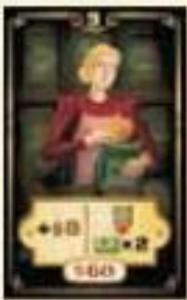
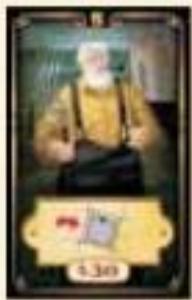
上图中,绿色选择了警长,橙色选择了杂货商,紫色则选择了雇佣兵。

当一个玩家选择放弃,他移动他的指示物到回合顺序条的下排的第一个空位。
如上图所示,橙色玩家第一个放弃。
决斗情况下的火力值=

手上的牛仔数 + 左轮手枪 + 骰子点数
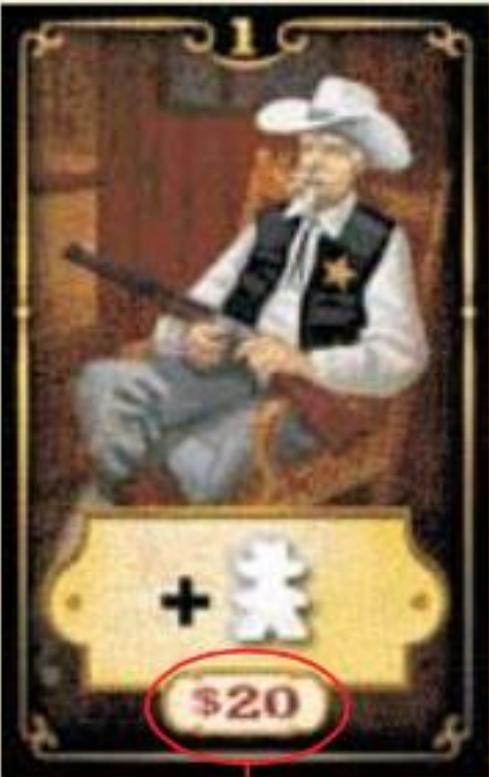
现金上限:
每张人物卡上的红色美元表示在回合结束时每个人能存储的最大现金数量。所有超过的部分必须消费完。
超出现金上限的钱:
行动选择
任何玩家都能选择不执行已选择的行动(例如,他意识到他没有足够的钱做任何事),即使这个行动是他萧决斗获得的。但是他的牛仔依然放回公共供应区。行动总是按照版图上的顺序执行。
工资
这个方框无法决斗。这个方框里玩家的每个牛仔收取\$4,这意味着一个玩家能在这个方框放置多个牛仔。

军火

道路
赢得这个行动的玩家获得三条新道路放进自己的私人供应区。
赢得这个行动的玩家在回合的剩下阶段收到特殊的“三枪”指示物,回合结束时放回版图。
私人供应区的道路能在游戏的任何时候放置到版图上。

道路
这个方框无法决斗。这个方框里玩家的每个牛仔获得一条道路。这意味着每个玩家能在这个方框放置多个牛仔。
注意:新建道路必须连接之前建造的道路。

购买区域
购买一个无主区域,牛仔放置阶段玩家必须在该处放置一个牛仔(不是放在此购买区域方框)。他能现在就购买。如果数个玩家试图购买相同区域,决斗胜者获得。该区域可能已经包含一座房屋或一座山。
区域地价为\$1,自身地块和周边3×3格子中每个建筑、山脉和房屋增加\$1。
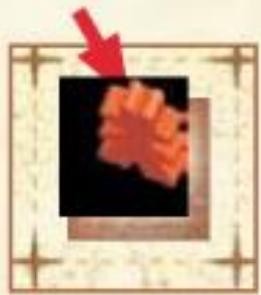
把钱直接支付给银行,玩家放置他颜色的所有权板块(牛仔放回公共供应区)。如果在购买区域行动时有超过一场决斗,则由顺位靠前的玩家(涉及决斗的玩家中)决定决斗顺序。
橙色玩家购买土地总计消费 $6$ :(区域地价 $1+$ 两个房屋 $2+$ 一个山脉 $1+$ 两个酒吧 $2$ )


\$12
建造建筑
有七个建造建筑的行动方框,每个方框底部都有标示的建筑物价格。
将建筑物建造在自己的所有权板块上有两个条件:
1 - 该区域必须连接道路。
至少有一条路能连接到区域的角落-见右图案例。如果没有路能够到达该区域,允许玩家从自己的私人供应区放置进若干条道路。例外: 牧场和矿场在修建前无需有路到达。
2 - 建造药店、旅馆、银行、酒吧、教堂或监狱时,玩家必须为被这一新行动吸引到的居民建造一栋新房屋。
这栋房屋不用花费,必须放置在一个连接道路的空白区域(没有建筑和山脉)。这个区域可能已经属于某玩家,房屋能建造在一个已经属于其他玩家的区域(经协商),也能建造在无主之地上。若为后者,则之后该区域仍能被购买。
注意:玩家可以不立刻建造,而是把刚买的建筑保留在自己面前,等到之后的建造建筑行动结束后再建造。
(例如区域还没有道路连接,或因为他找不到放置需求的房屋的位置)必须等到下个建造建筑的行动结束后才能建造到版图上。若那时有多名玩家都想建造建筑,则由当前回合顺序决定。所有玩家都能在自己面前有数个未建造的建筑。

游戏开始时,只有9块区域连接道路:市中心区域和周围的8块。
注意:不允许在山脉上建造建筑或房屋。
区域收入
赢得这个行动的玩家每个自己有所有权的区域获得\$2。
RETURN ONION BANK

牛仔收入
赢得这个行动的玩家每点火力值得到\$2。火力值指的是玩家私人供应区里的牛仔数量和左轮手枪的数量之和。同时也包括“三枪”指示物和人物卡“雇佣兵”带来的火力值。

建筑收入

每个建筑根据附近的建筑和房屋为拥有者带来收入。
(见第6页,建筑说明)。
这个行动是自动进行的,没必要把牛仔放到方框里来获得收入。可以把牛仔放到其他玩家的建筑上进攻它。
玩家也能过放置牛仔进自己的建筑帮助防御进攻者以保护自己的收入。若该建筑无人防御或在决斗中防御者被击败,则视为进攻成功。进攻成功时,进攻方可以从建筑所有者处窃取该建筑收入的一半(向下取整)。
注意:当一栋房屋不属于特定玩家(当它建造在无主区域时),它能增加所有相邻建筑的收入,无论这个建筑的所有者是谁。然而当建造该房屋的区域属于某个玩家时,该房屋只有利于那个玩家的建筑(见右图示例)。本条规则同样适用于山脉和矿场。
赌博收入
赢得这个行动的玩家扔两个骰子,数值之和即为收入。
一个3和一个5则得到\$8收入。

橙色酒吧(三栋相邻房屋)获得比紫色(只有两栋相邻房屋,第三栋属于橙色)的多1栋房屋的收入。
区域计分
赢得这个行动的玩家获得与自己拥有的区域数量一半的分数(向下取整)。这些区域无需相邻。计算所有拥有的区域,无论是否已有建筑建于其上。


赢得这个行动的玩家获得与自己区域上建筑数量相同的分数(山脉和房屋除外)
建筑计分
赢得这个行动的玩家获得火力值一半的分数(向下取整)。
牛仔计分
火力值指的是玩家私人供应区里的牛仔数量和左轮手枪的数量之和。同时也包括“三枪”指示物和人物卡“雇佣兵”带来的火力值。

购买分数
赢得这个行动的玩家能分别以每1点分数 $2/3/4/5$ 的价格进行购买。
游戏结束
第四回合所有玩家消费完超过自己人物卡显示现金上限的钱后游戏结束。
最终得分将是游戏中得到的分数加上下列分数:
每个建筑,房屋,山脉为拥有者带来2分;
所有剩下的钱用来购买分数:每\$6购买1分;
空置的所有权板块以及玩家私人供应区中的建筑不带来分数。

分数最高的玩家获得胜利。
出现平局时,平局玩家中回合顺序条靠前的玩家获胜。
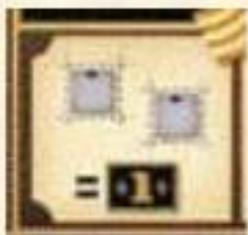
1 = \$6
建筑介绍
该建筑的总收入(正反两面各四格)
图标表明收入来源计算收入时,这栋建筑也被视为房屋。
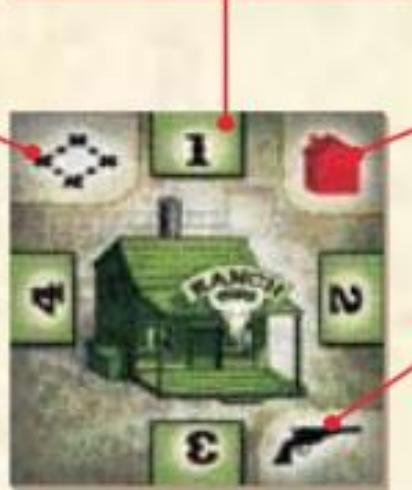
建造该建筑时获得1个左轮手枪。

房屋
放置条件:
房屋放置的区域必须与道路相连。
收入:无
特殊规则:
房屋永远不能被购买,当其它建筑被建造时才进入游戏。

牧场
放置条件:
无限制。
收入:周围每个空地提供\$1
无论空地的所有者是谁(最低收入为\$1)
数个牧场可从相同的空地上受益。
特殊规则:
为你增加1点火力值(左轮手枪+1)。
计算药店,银行和酒吧收入时,牧场也被视为一栋房屋。

药店
放置条件:
药店放置的区域必须与道路相连,玩家必须再建造一栋房屋。
收入:每个相邻的非其他玩家的房屋以及城市中己方牧场为玩家提供\$3
举例:
如果玩家拥有一个药店与一个牧场以及三栋房屋相邻,他得到\$15。实际上,牧场被计算了两次,第一次作为相邻房屋,第二次则作为己方牧场。
矿场
无限制
放置条件:
收入:每个相邻的山脉提供\$3
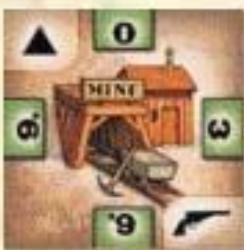
数个矿场可以受益于同个山脉。一旦你拥有一座山脉,它不再使其他玩家的矿场受益。
特殊规则:
为你增加1点火力值(左轮手枪+1)。
每个建筑有八个收入标识分别表示了该建筑从最低收入到最高收入的状况。
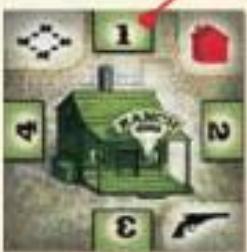
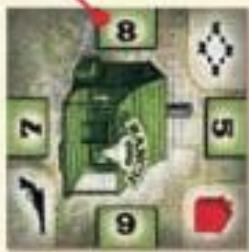
放在所有权板块上,黑箭头指向当前该建筑的总收入。


银行
放置条件:
银行放置的区域必须与道路相连,玩家必须再建造一栋房屋。
举例:
收入:每个相邻的非其他玩家的房屋以及城市中己方矿场为玩家提供\$3
一个玩家拥有一个银行和一个矿场。银行直接与一栋房屋和旅馆相邻,银行收入\$12(矿场不需要一定与银行相邻)。
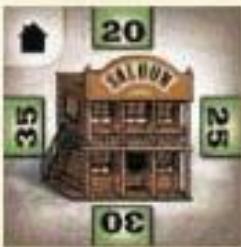
酒吧
放置条件:
酒吧放置的区域必须与道路相连,玩家必须再建造一栋房屋。
收入:每个相邻的非其他玩家的房屋为玩家提供\$5

旅馆
放置条件:
旅馆放置的区域必须与道路相连,玩家必须再建造一栋房屋。
收入:\$6
特殊规则:
计算药店,银行和酒吧收入时,旅馆被视为两栋房屋。

教堂
放置条件:
教堂放置的区域必须与道路相连,玩家必须再建造一栋房屋。
收入:无
特殊规则:
计算药店,银行和酒吧收入时,教堂被视为一栋房屋。教堂使玩家免受攻击,直接与教堂相邻的己方建筑不会被攻击。如果你建造的教堂与你将要被攻击的建筑相邻,攻击被取消,攻击方的牛仔返回其私人供应区。玩家不得攻击教堂。

特殊规则:
监狱
放置条件:
监狱放置的区域必须与道路相连,玩家必须再建造一栋房屋。
收入:无
为你增加2点火力值(左轮手枪+2),玩家不可攻击监狱。
人物介绍
每张人物版块有两种不同的能力(黄色一面为基础规则,红色一面为变体规则)。刚开始游戏时,我们建议你使用黄色一面,以后玩家自行商议用哪一面进行游戏。既可以所有人物都用同一面也可以部分人物用不同颜色的另一面。但一经决定,游戏中不得更改。
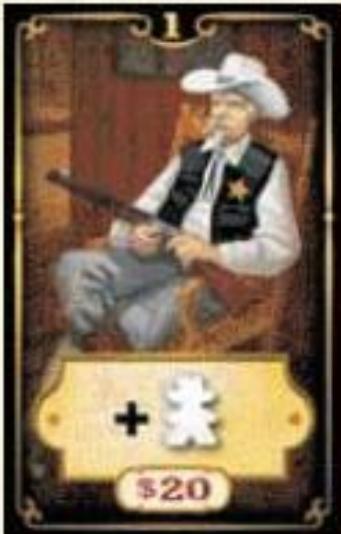
警长
玩家受到警长的帮助,得到一个警长牛仔(白色牛仔)。这允许他选择一个行动,不担心受到攻击(没有人能和警长决斗)。
因此不能放置白色牛仔进攻建筑或和某人决斗(必须把牛仔放在无人的方框中)。
现金上限:\$20
变体规则
你不允许攻击任何建筑或者参与决斗(但依旧可以防御建筑)每场决斗失败都能获得3分。
现金上限:\$20

银行家
选择银行家时,立即获得\$9。
现金上限高达:\$120

变体规则
回合结束前,你能够用
\$3/\$12/\$25购买3/5/7分。
现金上限:\$60
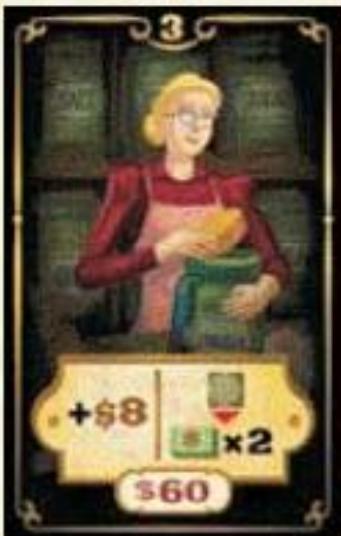
杂货商
杂货商允许你选择其中一项执行:选择一种类型的建筑的收入加倍(例如,你的所有银行)。

如果一个双倍收入建筑被攻击,那么你和攻击者各获得一份正常收入。选择哪种建筑收入加倍必须在结算攻击前决定。
· 获得\$8(立刻或在建筑收入阶段获得)。
现金上限:\$60
变体规则
你立刻得到\$8或在回合结束时每个你拥有的房屋为你带来1分。(不包括牧场、旅馆和教堂)。
现金上限:\$60
中国劳工

立刻得到两条道路。此外任何建筑价格减半(向上取整)。
现金上限:\$30
变体规则 你支付\$5拿走一个已有的

变体规则
你支付\$5拿走一个已有的建筑。你能立刻建造出来,或者保留到之后再建造。剩下的建筑立刻移向更低的价格,并从袋子中拿出一个新的建筑。现金上限:\$30
定居者

定居者立刻给你一块区域(必须在你获得时是无主的)。
现金上限:\$30
你立刻得到\$8或在回合结束时每个你拥有的山脉为你带来\$1。现金上限:\$20

船长
玩家受到船长帮助,能够支付\$1/\$4/\$9从公共供应区得到1/2/3个额外的牛仔。
现金上限:\$25

变体规则
你支付\$3/\$9购买1/2个左轮手枪指示物,保留至此回合结束。
现金上限:\$20
雇佣兵
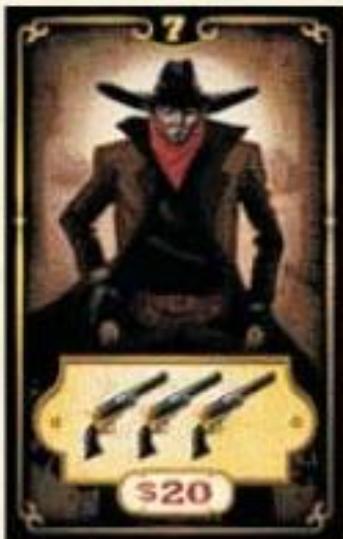
这个回合雇佣兵给你带来额外3点火力值。
现金上限:\$20

变体规则
这个回合雇佣兵给你带来2点火力值。
现金上限:\$30
变体规则
强权即是公理

这个变体提议减少决斗中的随机性,用决斗版块替换骰子。玩这个变体规则需要使用如下改动:

游戏设置时
2人游戏,每人得到从0到5共六个决斗版块和\$15。

3人游戏到5人游戏,每个玩家拿取从0到5共六个决斗板块并洗混。每人随机秘密拿取六个决斗版块。
卡森河
玩这个变体规则需要使用有河流的反面版图,并进行如下改动:
游戏设置时
· 所有河流区域必须空置(不能有山脉和城市中心)
·六座山脉版块取代原有的九座。
既不允许购买河流区域也不允许在河流区域上建造建筑或房屋。
计算牧场收入时河流区域被视为空闲区域(因此,每个河流区域 + \$1)。
若一个矿场与河流区域相邻(对角也行,且不论有多
加紧整备!

这个变体通过允许玩家同时放置牛仔以缩短游戏时间,不建议没有经验的玩家和新手使用。
第3页第2部分作如下修改:
一旦有玩家放置他的第一个牛仔在版图上,所有玩家都同时地把牛仔放置在他们希望放置的行动框上。所有玩家都能够反复地把任何牛仔移动和放置到任何行动框上。当一个玩家决定停止移动和放置他的牛仔时,他把自己的指示物放置在回合顺序条最前的空位上。
Author: Xavier Georges
每个玩家公布自己决斗版块的总点数。总数必须是45(3人游戏), 60(4人游戏)或75(5人游戏)。每个玩家得到(30减去自己的决斗总点数)的钱作为起始现金。
如何进行决斗:每个玩家选择并打出一个决斗版块以增加自己的火力值来取代扔骰子。决斗版块使用后丢弃作为新的供应区。当一个玩家的决斗版块用尽时,从供应区随机拿取三个新的决斗版块。
少河流区域与其相邻),矿场增加\$3收入,无论有多少河流区域与其相邻。穿越河流必须要有两条路,穿越河流的两条路被称为桥。
游戏结束时
任何与桥相邻的区域(包含山脉、建筑或房屋,且角对角也行)带来3分而不是原有的2分。

从这一刻起,他不允许在本回合放置或转移任何牛仔。
公平竞争规则
· 只有一只手能用于在版图上放置牛仔;
·保持冷静,移动精确。不要碰撞棋子和版块,或摇动版图。
· 不要用手把牛仔悬挂在版图上方影响其他玩家。
游戏结束后完成下面程序
每个玩家在自己回合顺序条后有几个玩家就获得几分。
Illustrations and graphic design: Alexandre Roche
www.alexandre-roche.com
Editor: Arno Quispel
www.qwggames.nl
ACKNOWLEDGMENTS
QWG wishes to thank: Ryan Laukat - Frank Quispel - Jeroen Hollander - Luk Van Lokeren - Albert Gho - Leonie Caljouw - Anke Hahn - Carsten Neumann - Julia Hammes and play-testers.
The author is thankful to all play-testers, particularly Vincent Barbiaux, Alice Blahova, Michel Detienne, Miguel Sebastian Santamaria, Fanny Cayron, Frédéric Gilles, Etienne Goetynck, Jean-François Lemire, Alexis Keyaerts, Nicolas Seinlet, Thierry Simon, Emmanuel Simonis, Aude Tefnin, Jean-Vincent Valkenberg, Frédéric Verollemans, Thierry Zamparutti, and all members of the boardgame club «In Ludo Veritas». Special thanks to: Laurent d'Aries, Pascal Cadot, Marc Dave, Patrick Fautré, Philippe Keyaerts and Arnaud Pétain for their precious help and constructive criticisms.
The author wishes to dedicate this game to Jean-François Wustefeld who was an exceptional player.
下载 MarkdownCarson City Rules English.md32.0 KB
CARSON CITY
Artwork: Aexandre Roche
The year is 1858 in Carson City, Nevada. You have rounded up a team of courageous cowboys, and your plan is to buy up the best parcels of land in this new town, then build them up with the most prosperous ranches, mines, saloons, etc. You will need guts to challenge your opponents to duels in order to secure and hold the best properties. You will also need to recruit and use the help of the most interesting “personalities" in CarsonCity to aid your cause. The winner will be the most prominent citizen in Carson City, as measured by victory points that can be won both during and after the game. At the end of the game all players' belongings (money, buildings, parcels, mountains, houses) will be converted into victory points as well.
GAME CONTENTS

The board represents the territory of the future town of Carson City, divided into 64 parcels.

Above the map of the city, the different actions of the game are depicted. The board on the reverse side includes the Carson river. We advise you to
play your first game(s) on the board without the river.
7 personality cards. The red numbers on these cards indicate the (end of turn) cash limit of this personality. Each personality has special functions. There is one set of personality cards in yellow and one in red. We advise you to play your first game(s)with the yellow cards.


20 houses

51 cowboys (10 per color, 1 white cowboy representing the sheriff), to select actions.





10 markers (2 per color) to be used on the turn order track and to score victory points.
30 building tiles: 6 ranches, 6 mines,
4 drugstores, 4 banks, 3 saloons, 3 hotels,
2 churches and 2 prisons.
9 mountain tiles


25 black sticks
1 bag

60 property tiles (12 tiles per color) to
25 revolver

chips.

1 special «3 guns» chip.
show the owner of each acquired parcel.

30 duel tiles (use only with the first variant)

Money: \$1 (30, small coins), \$5 (20, medium sized coins), \$10 (22, large coins) and \$20 (6, bills)

One round token to be used as « turn counter»

2 dice

GAME SETUP
The image below shows an example of set up for three players.

Every player gets \$15, 1 road, 12 property tiles of his color and 3 cowboys of his color.
Roads and cowboys constitute the personal reserve of the player.

The remaining money is piled near the board and constitutes the Central Bank. Houses, victory_ points,
roads and remaining cowboys are placed near the board in the general reserve.

One ranch is placed on the « \$3 » construction square and another on the « \$10 » square.

A mine is placed on the « \$4 » constructionsquare and another on the « \$12 » square.


Three other buildings are drawn randomly from the bag and set on the remaining « \$5 », « \$6 »
and « \$8 » construction squares.

The center of Carson City is determined by rolling the dice (at the intersection of nn designated by the white die and lesignated by the black die).
A house is set on that parcel and four roads are placed along the house, one per
side. These roads will later be extended through the rest of the town.

9 mountains are placed randomly on the board (using the dice as above). If the designated parcel is already occupied, roll the dice again.
The special (3) gun tile is set on its square.


The turn counter is set on the start position.
For the first turn, randomly choose the turn order.


The corresponding markers are set on the turn order ninder of turn order.
Starting with the first player and then in turn order, each player chooses a parcel by placing one of his property tiles on it. Next, starting from the last player and going back to the first player, each player chooses a second parcel. Any parcel may be chosen, including a parcel with a mountain or the center of Carson City. The picture above illustrates an example of setup for three players.
HOW TO PLAY
A game is divided into four turns, each composed of four phases:
1CHOICE OF PERSONALITY
All personality cards are placed near the board. Then, each player, according to turn order, chooses one of them. Certain choices may be directly followed by an action, depending on the personality (see page 7).
When all players have chosen a personality, the turn order is modified. The markers are placed on the upper turn order track in ascending order, according to the number indicated on the personality cards that have been chosen.
COWBOYPLACEMENT
On your turn, you choose one of the following options:
Choose an action. Place a cowboy from your reserve onto one of the action squares above the city's map (these actions will be detailed on pages 4-5).
Choose a parcel of land. Place a cowboy from your reserve onto one of the parcels.
Attack/defend a building. Place a cowboy from your reserve onto a building to attack it (or to defend it if this building is yours).
Pass. Move your marker onto the first free position of the lower turn order track. Your turn is over. You are not allowed to place additional cowboys during this turn. None of the options are obligatory. But you have to choose one of them, unless you have passed. You are allowed to buy several parcels during the same turn (a cow-boy must be placed on each). You may place a cowboy on a square or a parcel already occupied by another player's cowboy. This will lead to a duel. On some squares, one player can place several cowboys.
3PERFORMING THE ACTIONS AND DUELS
After all players have passed, the actions are performed one by one according to the sequence on the board (see pages 4 - 5: action description). As soon as an action is completed, the cowboy goes back to the general reserve.
If several players have placed a cowboy on the same square or parcel, a duel occurs. Every player involved rolls a die. The number obtained is added to the number of revolvers and cowboys in the respective player's reserve.
The winner is the player with the highest total. 'The winner has won the right to perform the action. The winner's cowboy goes into the general reserve.
The loser will not perform the action he was fighting for. He places his cowboy back into his personal reserve. When more than two players are involved in a duel, all losers recover their respective cowboys.
In case of a tie, the player (among the ones involved in the duel) with the lowest turn order number on the turn order track is the winner.
4END OFTURN
After all actions have been performed:
The turn counter token is moved one square forward (left), blocking one of the “victory points purchase" squares from being used for the rest of the game.
Every player receives new cowboys of his color. They are taken from the general reserve to be placed into the respective personal reserves. At the end of the 1st turn each player gets 4 cowboys, and each player gets 5 cowboys at the ends of the 2nd and 3rd turns. The maximum number of cowboys in your personal reserve is 10.
Money beyond your cash limit (indicated in red on the personality card in your possession) must be spent. You get 1 victory point per \$10 that you must spend. You are allowed to spend more money, but you always receive 1 victory point per \$10.
The buildings that have not been bought are shifted sequentially towards the squares with lower prices. For each remaining available position, one building is drawn randomly from the bag and placed on the Action track before the begin ning of the next turn.

After all players have chosen a personality card, the turn order is modified. In the example above, Green has chosen the sheriff, Orange the grocer, and Purple the mercenary.
When a player chooses to pass, he moves his marker onto the first free position of the lower turn order track. In the example above, Orange is the first player to pass.
The power of cowboys in case of a duel =


Cash limit: The dollar amount in red on each personality card indicates the maximum amount of cash you can have in reserve at the end of the turn. All money over this amount must be spent.
Money beyond your cash limit :

ACTIONS
Any player may decide to not perform an action that he has chosen (for example, if he realizes that he will not have enough money for everything), even if he won a duel for the action. Never-theless, his cowboy goes to the general reserve. The actions are always performed in the sequence indicated on the board:

WAGES
No duel on this square. A player receives \$4 for each of his cowboys on this square, which means that a player can place multiple cowboys on this square.


ROADS
The player who wins this action receives 3 new roads to put in his personal reserve. The roads in the personal reserve are available for construction and may be placed on the board at any time during the game.
AMMUNITION
The player who wins this action receives the special 3 guns chip for the rest of the turn. At the end of the turn this chip goes back to its place on the board.

ROADS
No duel on this square. Each player receives one road for each of his cowboys on this square which means a player can place multiple cowboys here.
Note: a newly constructed road must always must always extend previous placed roads.

PARCEL PURCHASE
To buy an owner-free parcel, a player must have put a cowboy on it (and not on the parcel purchase square) during the cowboy setting phase. He may buy it now. If several players try to buy the same parcel, a duel determines the winner. This parcel may already contain a house or a mountain.
purchases a parcel for a total cost of \$6 (\$1 + \$2 for the houses, + \$2 for the saloons, + \$1 for the mountain.
The parcel price is \$1, plus \$1 for every building, mountain or house situated on this parcel or next to it (including diagonally). The amount is paid to the Central Bank and the player must place a property tile of his color (the cowboy goes to the general reserve). If there is more than one duel during a parcel purchase action, the player (among the ones involved in the duel) with the lowest number on the turn order track decides in which order the duels take place.


BUILDING CONSTRUCTION
There are seven « building construction » squares, each giving the right to build one building at the price indicated on the bottom of the square. 'The building process consists of the player placing a building on one of his property tiles, with two conditions:
1 - The parcel must be reached by a road. At least one road must touch one corner of the parcel – see example on the right. If there is no road reaching the parcel yet, the player isallowed to place one or more roads on the board from his personal reserve. Exceptions: ranches and mines do not need to be reached by a road before being built.
2 - When building a drugstore, a mine, a bank, a saloon, a church or a prison, the player must also place a house for the new inhabitants attracted by this new activity. This house has no cost and must be placed on a free parcel (no building, no mountain) reached by a road. This parcel may already belong to the player. The house may also be built on a parcel already belonging to another player (upon agreement) or on an owner-free parcel. In this last case, the parcel may still be bought later.
Note: Instead of building it immediately, a player may also keep the building he has just bought in front of him, and build it later (for example, because the parcel has no road connection yet, or because he cannot find a position for the required house). To place it on the board, he must wait until the end of the next « building construction » action. All players may have several buildings in front of them.

At the beginning of the game, only 9 parcels are reached by a road: the central parcel and its 8 neighbouring parcels.
Note: It is not allowed to build a building or a house on a mountain
PARCELSINCOME
The player who wins this action gets \$2 per parcel he owns.
COWBOYINCOME
The player who wins this action gets \$2 for each firepower point. The firepower of a player is the number of cowboys and revolvers in his personal reserve.

ESTATE INCOME

Each building brings money to its owner, depending on the buildings and houses in the vicinity (see page 6, building description). This action is automatic; there is no need to put a cowboy ona square to get this income.
It is possible to put a cowboy on a building of another player to attack it. If the resulting duel/attack is successful, the attacker will steal half of
the income of that particular building (rounded down) from its owner. One player mayalso place a cowboy on his own building in order to help defend against an attacker in a duel and protect his income.
Note:When a house does not belong to a specific player (when it is built on anowner-free parcel), it can increase the values of all neighboring buildings, whoever the owner is. However, when built on a parcel belonging to a player, this house will only benefit the buildings of that player (see example on the right). The same applies to mountains and mines.
GAMBLINGINCOME
The player who wins this action must roll two dice and receives the rolled amount in cash. A3 and a 5 would result in \$8.

The orange saloon (3 neighbouring houses) gives a higher income than the purple one (2 neighbouring houses only, since the third one belongs to Orange).

PARCELS VICTORY POINTS
The player who wins this action gets a number of victory points corresponding to half the amount of parcels he owns (rounded down). These parcels do not have to be adjacent.

ESTATEVICTORY POINTS
The player who wins this action gets an amount of victory points corresponding to the number of buildings that are placed on his parcels (mountains and houses excluded).
The player who wins this action gets an amount of victory points corresponding to half his fire-power (rounded down). The firepower of a player is the number of cowboy and revolvers in his personal reserve.
COWBOY VICTORY POINTS

BUYINGVICTORY POINTS
The player who wins this action may buy victory points at the price of \$2, \$3, \$4 or \$5 per victory point.
END OF THE GAME
The game ends at the end of the fourth turn, after the players have spent the money that was beyond the cash limit of their personality card for that turn. In addition to the victory points acquired during the game:
Each building, house and mountain gives 2 victory points to their respective owner.
Any remaining money is also used to buy victory points (at \$6 per victory point).
Empty private parcels as well as buildings in the player's reserve do not reward victory points.

The winner is the player with the highest number of victory points. In case of a tie, the player (among those involved in the tie) with the lower number on the turn order track wins.

Total income of this building
This icon indicates the source of the income

This building is also considered as a house
+ 1 Revolver
HOUSE
Setting conditions: The parcel on which the house is built must be reached by a road. Income: None
Special rules: Houses are never bought. They come into play when other buildings are built.
RANCH
Setting conditions: No placement restrictions. Income: \$1 for every neighboring free parcel, no matter the owner of the free parcel (with a minimal income of \$1). Several ranches may benefit from the same free parcel.
Special rules: A ranch adds 1 point to your firepower (+1 revolver). A ranch is considered a house to calculate drugstore, bank and saloon incomes.
DRUGSTORE
Setting conditions: The parcel on which the drugstore is built must be reached by a road, and the player must also build a house.
Income: \$3 per neighboring house and per ranch owned by the player
Example: If a player owns a drugstore with a neighboring ranch of his and three neighboring houses, he gets \$15 (actually, the ranch is counted twice, the first time as a neighboring house, and the second time as a ranch).

MINE
Setting conditions: -
Income: \$3 per neighboring mountain. Several mines may benefit from the same mountain. Once you own a mountain, it no longer benefits other players' mines.
Special rules: A mine adds 1 point to your firepower (+1 revolver).
Each building displays 8 income indications.
Place each building on top of the property tile, such that the black arrow points to the total income for this building.


BANK
Setting conditions: The parcel on which the bank is built must be reached by a road, and the player must also build a house.
Income: \$3 per neighboring house and per mine owned by the player.
Example: A player who owns a bank and a mine, with one house and one hotel as a direct neighbor of his bank, receives a bank income of \$12.
SALOON
Setting conditions: The parcel on which the saloon is built must be reached by a road, and the player must also build a house.
Income: \$5 per neighboring house.

HOTEL
Setting conditions: The parcel on which the hotel is built must be reached by a road, and the player must also build a house.
Income: \$6.
Special rules: A hotel is considered two houses when calculating drugstore, bank, and saloon incomes.

CHURCH
Setting conditions: 'The parcel on which the church is built must be reached by a road, and the player must also build a house.
Income: None.
Special rules: A church is considered a house when calculating drugstore, bank, and saloon incomes. A church allows the player to prevent other players' attacks. All buildings of yours directly adjacent to your church cannot be attacked. If you build a church near one of your buildings being attacked, the attack is cancelled. The attacker returns his cowboy to his personal reserve. You are not allowed to attack a church.

PRISON
Setting conditions: The parcel on which the prison is built must be reached by a road, and the player must also build a house.
Special rules: The prison adds 2 points to your firepower (+2 revolvers). You are not allowed to attack a prison.
ariant: Before the end of the turn, you may purchase 3, 5, or 7 victory points for \$3, \$12 or \$25, respectively. Cash limit: \$60.
Every personality tile shows two different powers (common rules on the yellow side and variants on the red side). For your initial game, we recommend that you use the yellow side. In future games, the players may choose which personalities will be played during the game (either randomly chosen or decided by the players).

THE SHERIFF
The player helped by the sheriff gets the special “sheriff" cowboy from the general reserve (white cowboy). This allows him to select one action without
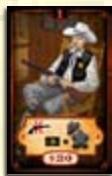
fear of being attacked (no one challenges the sheriff to a duel). Therefore, the white cowboy must not be placed to attack a building or to challenge
someone into a duel (it must be played on a cowboy-free square).
Cash limit: \$20.

Variant: You are not allowed to attack any building or engage in a duel (except to defend yourself). For every lost duel, you receive 3 victory points. Cash limit: \$20.

THE BANKER
When you choose the banker, you immediately receive \$9. The cash limit is particularly high: \$120.

The grocer allows you to:
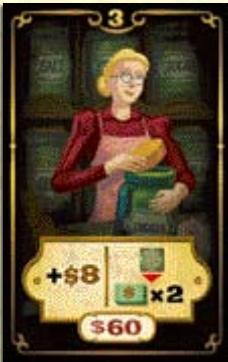
THEGROCER
• Either double the income for one particular building type (for example, all your banks) during the estate
• Or receive \$8 (immediately or during estate income phase). Cash limit: \$60.
income phase. If a building with double income is attacked, then you and the attacker receive normal income
The settler immediately gives you a parcel (it must be an owner-free parcel at the moment you take it). Cash limit: \$30
Variant: You receive either \$8 immediately or 1 victory point per house you own at the end of the turn (except ranches, hotels, and churches). Cash limit: \$60.
THE CHINESE COOLIE
THE SETTLER
When you choose the Chinese coolie, you immediately receive two roads. In addition, the price of any building is halved (rounded up). Cash limit: \$30.

Variant: you pay \$5 and take one of the available buildings. You may build it immediately, or keep it to build it later. The remaining buildings are immediately shifted towards lower prices, and a new building is drawn from the bag. Cash limit: \$30.
Variant: You receive either \$8 immediately, or you receive \$1 per mountain you own at the end of the turn.
Cash limit: \$20.

THE CAPTAIN
The player helped by the captain may pay \$1 to get one extra cowboy from the general reserve, or \$4 to get two extra cowboys from the general reserve,

or \$9 to get three extra cowboys from the general reserve. Cash limit: \$25.
Variant: You pay either \$3 to receive a revolver tile, or \$9 to receive two revolver tiles. You keep_these revolver tiles until the end of the game. Cash limit: \$20.
THE MERCENARY
During this turn, the player helped by the mercenary has 3 extra firepower points. Cash limit: \$20.
Variant: The mercenary gives 2 extra firepower R points during this turn. Cash limit: \$30.

VARIANTS
THE«MIGHT IS RIGHT»VARIANT

This variant proposes less randomly determined duels, replacing dice for duel tiles. To play this variant, you have to use the following modifications.

During game set up:
For a two-player game, each receives 6 duel tiles, numbered 0 to 5, and \$15.

For a three- to five-player game, take 6 duel tiles (from 0 to 5) per player, and mix them. Each player receives 6 duel tiles at random and keeps them secretly.
THE«CARSON RIVER»VARIANT
To play this variant, please use the reverse board showing a river. Please also use the following modifications:
During game set up :
• All river parcels must be kept free (no mountain and no city center);
• 6 mountains are placed instead of 9.
It is neither allowed to buy a river parcel nor to build a building or a house on a river parcel.
A river parcel is considered as a free parcel when calculating ranch incomes (thus, +\$1 per river parcel).
If a mine is in contact with the river, the mine income is increased
Each player announces the total ofpoints on his duel tiles. The sum of the totals must be 45 (if 3 players), 60 (if 4 players)or 75 (if 5 players). As starting cash, each player receives \$30 minus the total of his duel tile points.
How to perform duels: Instead of rolling dice, each player challenged to a duel chooses and plays a duel tile which adds that number of points to the fire power of the player. Duel tiles are discarded after use to make a new stockpile. When a player has no duel tiles left, he takes three new ones at random from the stockpile.
by \$3, whatever the number of river parcels in contact.
Two roads are necessary to cross the river. A double road crossing the river is called a bridge.
At the end of the game, any private parcel (with_mountain, building or house) in contact with a bridge brings 3 victory points instead of 2.

THE«KIT CARSON»VARIANT

This variant, non recommended for inexperienced players and tenderfeet, shortens the game duration by allowing simultaneous setting of the cowboys.
The section on page 3 point 2 is modified as follows:
As soon as the first player of the turn has set his first cowboy on the board, all players simultaneously may set their cowboys on the actions they wish. Any player may also decide to shift any cowboy of his and place it on another action, repeatedly. When a player decides to stop placing or shifting his cowboys, he places his marker on the first free position of the lower turn order track.
From this moment on, he is not allowed to place or shift cowboys any more during this turn.
Fair play rules:
• Only one hand may be used to set the cowboys down on the board;
• Make calm and precise movements, do not knock pawns and tiles over, or shake the gameboard;
Author: Xavier Georges
• Do not stay undecided with your cowboy while hanging your hand over the board, bothering other players.
End of the game is completed as follows: Each player gets 1 victory point per player after him on the turn order track.
Illustrations and graphic design: Alexandre Roche www.alexandre-roche.com
Editor: Arno Quispel www.qwggames.nl
ACKNOWLEDGMENTS
QWG wishes to thank: Ryan Laukat - Frank Quispel – Jeroen Hollander - Luk Van Lokeren - Albert Gho – Leonie Caljouw - Anke Hahn – Carsten Neumann – Julia Hammes and play-testers.
The author is thankful to all play-testers, particularly Vincent Barbiaux, Alice Blahova, Michel Detienne, Miguel Sebastian Santamaria, Fanny Cayron, Frédéric Gilles, Etienne Goetynck, Jean-François Lemire, Alexis Keyaerts, Nicolas Seinlet, Thierry Simon, Emmanuel Simonis, Aude Tefnin, Jean-Vincent Valkenberg, Frédéric Verollemans, Thierry Zamparutti, and all members of the boardgame club «In Ludo Veritas». Special thanks to: Laurent d’Aries, Pascal Cadot, Marc Dave, Patrick Fautré, Philippe Keyaerts and Arnaud Pétain for their precious help and constructive criticisms. The author wishes to dedicate this game to Jean-François Wustefeld who was an exceptional player.
下载 Markdown原文为社区整理/出版社公开资料,版权归原作者,仅供个人学习查阅。