
哥本哈根:骰笔版Copenhagen Roll Write
一句话概览
哥本哈根:骰笔版 是一款已收录于村了吗规则库的桌游,支持 2–4 人,原名 Copenhagen Roll Write。
本页内容:一句话概览 · 游戏概述 · 1. 游戏组件 · 2. 游戏设置 · 3. 回合结构 · 4. 阶段 1:掷骰子并选择建筑外观形状 · 5. 阶段 2:画出建筑外观形状 · 6. 阶段 3:其他玩家选择能力轨道 · 7. 能力详解 · 8. 两人游戏规则 · 9. 游戏结束 · 关键规则与常见问题 · 常见问题
哥本哈根:骰笔版 规则速览
以下规则速览由本站整理,与官方规则书表述不同,仅供快速上手参考。
游戏概述
丹麦城市哥本哈根以运河和港口闻名,其中最著名的「新港口」排列着色彩斑斓的山墙房屋。在《哥本哈根:骰笔版》中,玩家扮演建筑师,通过掷骰决定形状、将建筑立面方块绘制到个人面板上,完成行或列以获取分数。每位玩家同时使用五条能力轨道,当前玩家的骰子颜色决定其他玩家能解锁哪些能力——先达到 12 分的玩家触发终局,最高分者获胜。
核心机制: 掷骰选形、网格放置、同步行动、能力轨道、行列表格计分
1. 游戏组件
| 组件 | 数量 / 说明 |
|---|---|
| 玩家表 | 每人一张(含能力轨道、计分轨道、建筑绘图区、盾形纹章标记) |
| 建筑外观方块表 | 一张公共板,展示所有可用方块及其所属列(无限 ∞ 列 / × 列) |
| 建筑外观方块 | 不同颜色和形状的拼块,放置在建筑绘图区中使用 |
| 五颗定制六面骰子 | 六种面色:红、黄、蓝、绿、紫、白(白色为百搭) |
| 起始玩家区域 | 用于标记起始玩家(画 ×) |
| 铅笔 | 自备,用于在玩家表上画记号 |
2. 游戏设置
2.1 公共设置
- 将 建筑外观方块表 放在桌子中央,骰子放其旁边。
2.2 玩家个人设置
- 每位玩家获得一张 玩家表,置于自己面前。
- 准备铅笔供玩家在面板上做记号。
2.3 确定起始玩家
- 最年轻的玩家为起始玩家,在其玩家表的起始玩家区域画一个 × 。
3. 回合结构
游戏进行若干轮,每轮按顺时针方向轮流进行。每位玩家每轮的行动次数相同。一个完整回合分为三个连续阶段:
- 投掷骰子并选择建筑外观形状(当前玩家行动)
- 画出所选的建筑外观形状(当前玩家行动)
- 其他玩家选择一个能力轨道(非当前玩家行动)
当前玩家在每个自己的回合内可以使用任意数量的已解锁奖励和能力。完成第 3 阶段后,将骰子顺时针传给下一位玩家,进入下一回合。
3.1 计分与盾形纹章
放置形状时:
- 必须至少包含一个标记为 × 的方格,其余方格标记为 ○。玩家可以自由选择哪个方格标记为 × ,其余标记为 ○ 。
- 每次完成一行或一列后立即计分,并在建筑外观方块表对应位置做记号。
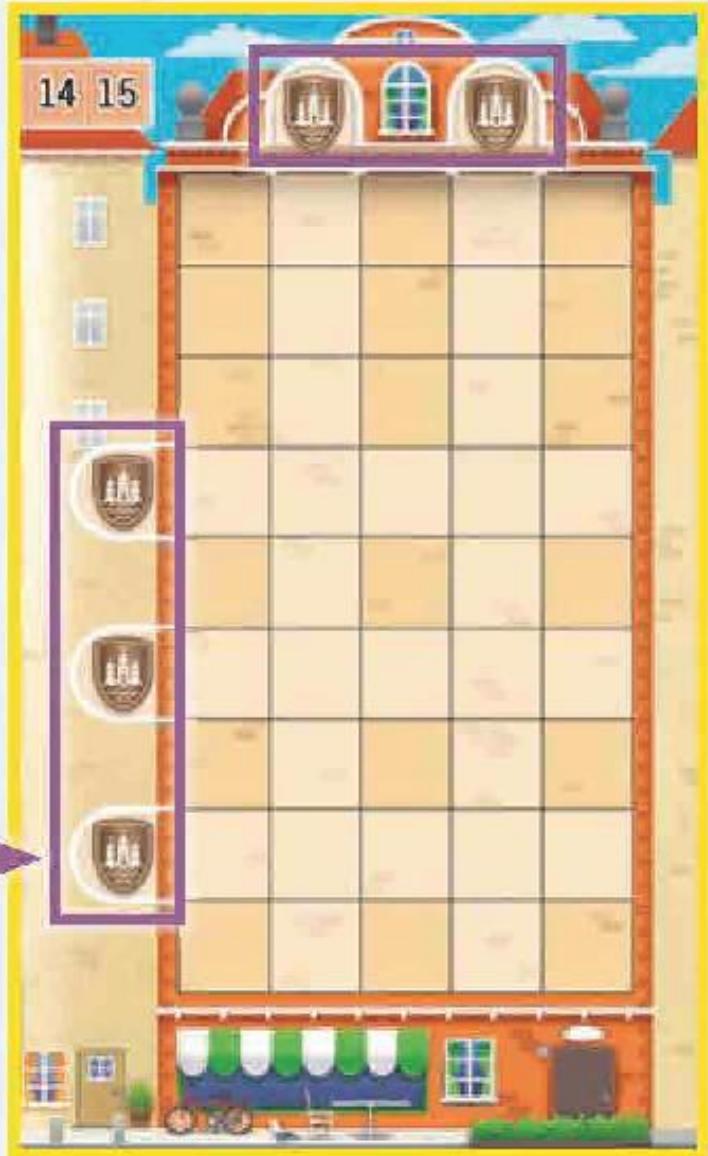
- 若一行或一列包含了描述盾形纹章的图案,则同时解锁盾形纹章,执行额外的特殊行动。
3.2 行与列的计分规则
| 类型 | 条件 | 得分 |
|---|---|---|
| 行 | 至少有一个 × | 1 分 |
| 行 | 全部由 ○ 组成(无 × ) | 2 分 |
| 列 | 至少有一个 × | 2 分 |
| 列 | 全部由 ○ 组成(无 × ) | 4 分 |
3.3 解锁盾形纹章
当玩家完成含有盾形纹章图案的一行或一列时,立即划掉该盾形纹章并选择以下两项特殊行动之一:
- a. 在建筑内绘制一个 单格方块(即只画一个格子),遵循绘画规则,标记为 ○ 。如果此单格方块恰好完成了一行或一列,则立即计分。若因此又解锁了另一个盾形纹章,继续执行另一个特殊行动(可连发)。
- b. 选择圈出 一条能力轨道 上的 2 个相邻格子。注意:这 2 格必须在 同一条 轨道上,不能跨两条不同的轨道。
4. 阶段 1:掷骰子并选择建筑外观形状
4.1 掷骰与选形
当前玩家掷出全部 5 颗骰子,然后根据掷骰结果从建筑外观方块表中选择一个形状。
选形规则:
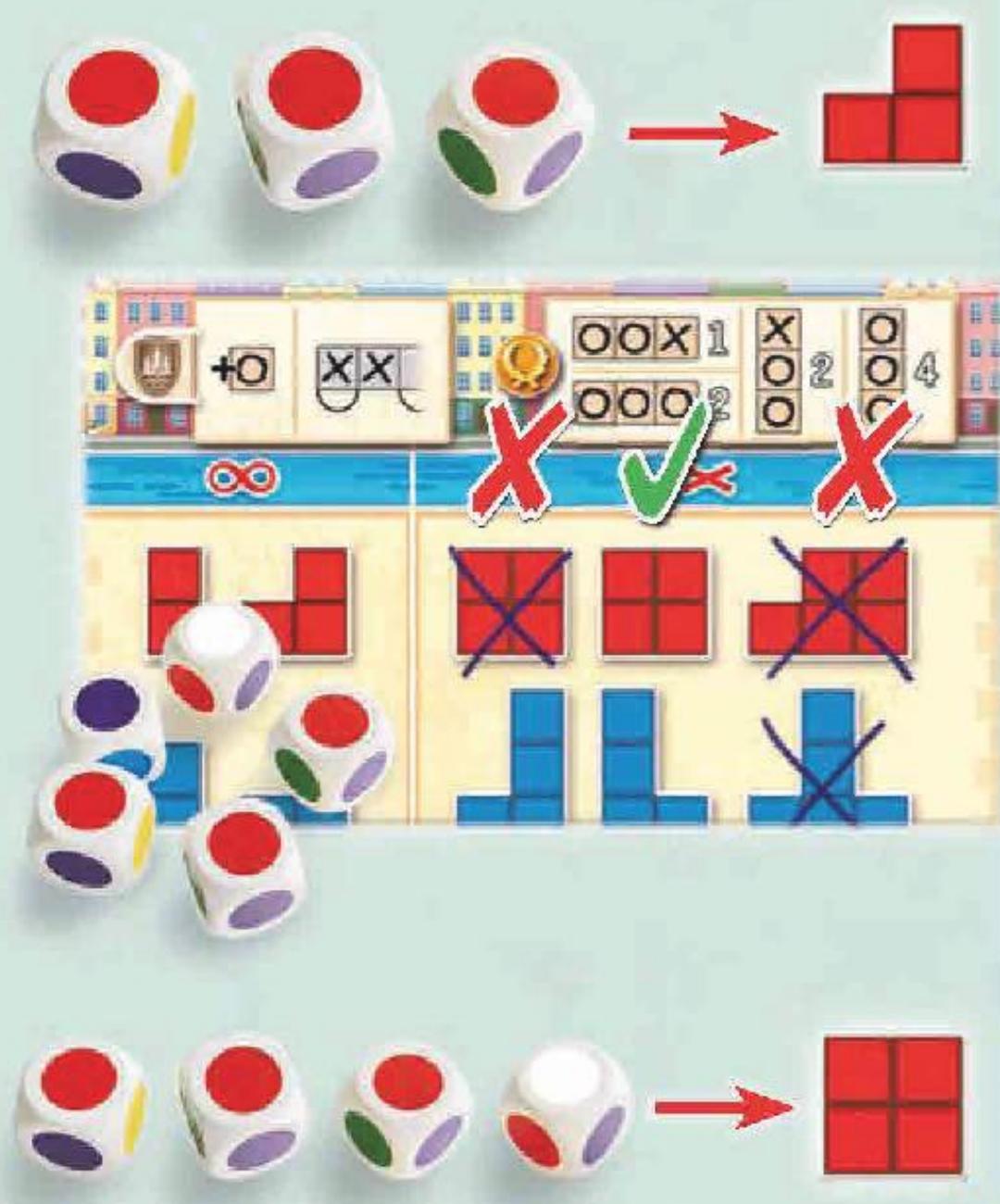
- 颜色匹配: 相同颜色的骰子数量必须 ≥ 所选形状所占的格子数。玩家也可以拿取比骰子数量更少的方块。
- 方块可用性: 所选形状必须来自无限列(∞)或 × 列中 尚未被划掉 的形状。
- 百搭骰子: 白色骰子可以代表任意一种颜色。
当某形状已从 × 列被选取时,在该形状上划掉一道,此后任何玩家都不能再使用它。
> 示例: 掷出 3 颗红色骰子。此时可以选择红色 2 格方块或红色 3 格方块。
5. 阶段 2:画出建筑外观形状
5.1 绘画规则
将所选形状放置到你的建筑绘图网格内,须遵守以下规则:
- 旋转任意方向: 可将形状旋转放置,但所有方格必须在网格范围内。
- 支撑要求: 每个形状必须放置在网格的 底部行,或者至少有一个方格位于之前已放置的形状上方(只需 一格接触 已有方块即可)。
- 标记: 放入形状后,其中一格标记为 × ,其余标记为 ○ (具体选择参见第 3.1 节)。
5.2 完成计分
完成一行或一列时按第 3.2 节规则计分。
5.3 盾形纹章
参见第 3.3 节。
6. 阶段 3:其他玩家选择能力轨道
6.1 基本流程
第 1 阶段掷出的每颗骰子(包括百搭)都对应一条能力轨道。未在当前玩家回合中被使用的骰子颜色,允许其他玩家在其中选择并推进自己的对应能力轨道。
- 非当前玩家可在未被使用的骰子颜色对应的能力轨道中,任选其一,在对应的能力轨道 下一格 画一个 × 。
- 多名非当前玩家可以选择 同一颗骰子的颜色。
- 如果白色骰子未被使用,每位非当前玩家可以在 任意一条 能力轨道上画 × (白色不固定对应某条轨道)。
- 如果当前玩家使用了全部 5 颗骰子(即骰子数量 ≥ 所选题型的格子数,用完了所有骰子),则其他玩家在本回合内 无法画 × 。
> 示例: 当前玩家使用 3 颗红色骰子。剩余 2 颗绿色 + 1 颗蓝色 + 1 颗白色。非当前玩家可在黄色、紫色、绿色、蓝色中选择,或在白色自由选任一条轨道。
6.2 奖励(+)与能力(★)
能力轨道从左到右依次推进。当画 × 的格子落在以下图标上时,立即解锁并获得效果:
- 奖励(+): 相当于额外一颗对应颜色的骰子——你可以在之后选择更大数量的方块来放置。使用时仍遵循同种颜色至多 2 个解锁奖励的限制。
- 能力(★): 改变游戏规则,给予你一定的战术优势。详见第 7 节。
每当奖励或能力被使用后,划掉该格,不可再次激活。
6.3 能力轨道已满
当一条能力轨道的所有格子都被填满时,玩家立即获得 2 分,并将该轨道清空(从第一个格子重新开始画 × )。
6.4 解锁奖励的颜色限制
在同一回合内,玩家只能使用 同一种颜色 的解锁奖励至多 2 个。这意味着不能混合使用不同颜色的奖励来放置超大形状。
7. 能力详解
所有能力只能在玩家 自己的回合 中使用。一名玩家可以在一个回合内使用多个已解锁的能力。
7.1 重掷(Re-roll)
在选择形状后、放置前,玩家可以指定任意数量的骰子重新投掷一次。每次重掷必须划掉能力轨道上一个 ★ 符号。重掷能力可在同一回合多次使用,但每次都要消耗一个独立的星星。每名玩家开局时已经解锁了 2 次重掷机会。
7.2 无 ×(No X)
绘画形状时,可以用 ○ 填满整个形状,无需标记 × 。即整块全部填 ○ 。
> 注意: 若同时使用「+一个 × 」能力,「无 × 」优先级更高——该额外单格标记为 ○ 而非 × 。
7.3 再次使用(Reuse)
可以选择已经被划掉的建筑外观方块形状,在建筑内再次绘制。该形状不需要在方块表上恢复。
7.4 颜色转变(Color Shift)
选择任意数量的骰子(须为同一种颜色),将其转变为另一种单一颜色。例如:将 2 颗黄色骰子转为红色 → 获得 4 颗红色骰子可用。
7.5 +一个 ×(Plus One X)
在完成形状放置后,可以再放置一个 单格方块 到任意合法的绘画区域内,且这个单格必须标记为 × 。
> 注意: 若也使用了「无 × 」能力,则该额外单格标记为 ○ 而非 × 。
8. 两人游戏规则
8.1 设置调整
- 每种颜色的 4 格方形 形状划掉一块(即从可用的 4 格方块中移除一种)。
- 每位玩家自行选择划掉一条能力轨道上前 2 格作为预设进度。
8.2 流程调整
- 在第 3 阶段中,非当前玩家可选择 2 颗 未被使用的骰子颜色,分别在对应该两种颜色的能力轨道上进一格。所选的两颗骰子可以是 同一种颜色。
9. 游戏结束
9.1 终局触发
当 至少一位玩家 的分数达到 12 分或以上时,在 该轮结束后 触发游戏结束。所有玩家完成最后一轮的最终计分。
9.2 胜负判定
- 最高分者获胜。
- 平局处理: 统计各自建筑内 空置方格 的数量(既没有 × 也没有 ○ 的格子)。空置方格最少的玩家获胜。
- 仍为平局: 共享胜利。
关键规则与常见问题
易错规则
- 选形时骰子数量 ≥ 格子数即可:不需要用完所有匹配的骰子,拿取比骰子数量更少的方块也是允许的。
- 白色骰子是百搭不是万能:只能代表一种你想要的颜色,不能同时当多种颜色用。
- 能力轨道上的两个格子必须在同一条轨道:盾形纹章选 b 选项时,不可跨轨道选两格。
- 能力轨道满了才重新计数得 2 分:不是填满就自动得分,而是整条轨道全满后一次性获得 2 分并归零。
- 同色解锁奖励最多 2 个:不能靠混合不同颜色的奖励来突破单个形状的大小上限。
- 绘画时只需一格接触旧形状即可:不要求大面积重叠,只要有一个方格在已有方块之上即可。
- 白色骰子未被使用时,其他玩家可以走任意轨道:不受特定颜色绑定。
- 两人游戏中第 3 阶段可跟两颗骰子:三人及以上每人跟一颗,两人时可跟两颗。
- 终局是 "至少一人 12 分的那一轮结束后":不是达标即刻结束,而是等该轮所有玩家都完成回合后再结算。
- 能力可在回合中随时组合使用:比如先用「颜色转变」凑出 5 颗红色,再选 5 格方块放置。
常见问题
-
Q:白色骰子在能力轨道阶段怎么用?
A:如果当前玩家没有使用白色骰子,每位非当前玩家可以在任意一条能力轨道上画 × ,不受颜色绑定限制。 -
Q:盾形纹章连发如何处理?
A:选择 a 选项放置单格 ○ 后若又完成了一个盾形纹章所在行列,立即再执行一次特殊行动(继续选 a 或 b),以此类推。 -
Q:「无 × 」和「+一个 × 」能否同时使用?
A:可以。「+一个 × 」放置的那个额外单格此时会受「无 × 」覆盖,标记为 ○ 而非 × 。 -
Q:能力轨道空了还能继续吗?
A:可以。整条填满得 2 分后归零,之后可以继续填充新获得的格子。 -
Q:× 列的形状被谁先选了?
A:谁先掷出了对应颜色的骰子并选择了该形状,谁就先划掉它。此后任何人都不能再使用。 -
Q:如果 5 颗骰子全被当前玩家用掉了怎么办?
A:其他玩家在该回合无法画 × ,跳过第 3 阶段直接进入下一轮。 -
Q:游戏结束时怎样算空置方格?
A:只统计网格中既没有 × 也没有 ○ 的空格子数,越少越好。
常见问题(FAQ)
以下 1 条问答中 0 条来自站内玩家的真实提问,其余 1 条为本站整理的常见疑问;答复内容保持原样。
哥本哈根:骰笔版支持几个人玩?
2–4 人。
去哪查完整规则
想核对具体规则细节、卡牌效果或某个回合的结算方式,可以在村了吗里选中这款游戏后直接提问。
同类桌游
- 卡坦岛德式
- 工业革命:伯明翰德式
- 勃艮第城堡:特别典藏版德式
- 方舟动物园德式
- 卡卡颂抽象
- 瘟疫危机传承:第一季美式
- 阿瑞迪亚:勇踏征途美式
- 重塑宇宙德式
- 幽港迷城美式
- 埃多拉的德鲁伊德式
规则原文(Markdown)
本站收录这款游戏的规则原文 2 个文件,此处内联渲染 2 个,可直接展开阅读或下载。
rules_zh_哥本哈根骰笔版_16133.md11.7 KB
COPENHAGEN
《哥本哈根》
投骰 & 写翻译 & 排版:陈斌华

游戏背景和目标
丹麦城市哥本哈根以运河和港口横穿而闻名。在其中一个港口坐落着“尼哈文”(新港口)及其五颜六色的山墙房屋。
玩家的任务是完成海滨新建筑的正面。在一个回合中,一个玩家将掷骰子并使用掷来的骰子颜色之一
配件 & 设置
- 玩家表
- 5 颗骰子

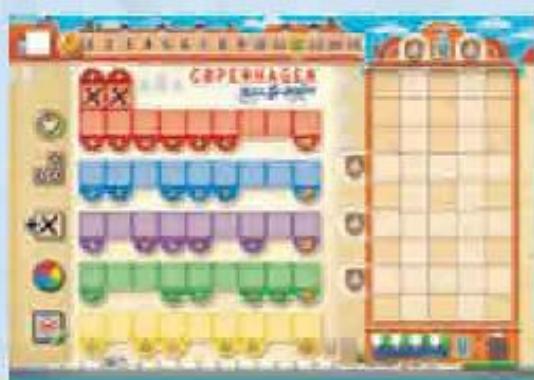
将建筑外观方块表放在桌子中央,骰子放置其旁边。然后每位玩家拿取一张玩家表并将其放到自己面前。每位玩家也需要一支铅笔(游戏不包括)
最年轻的玩家开始游戏并在起始玩家区域标记一个X。
来绘制建筑方块,每当他们完成一行或一列时都会得分。其他玩家可以使用未使用的骰子解锁他们在未来回合中使用的特殊能力。先获得12分的玩家触发游戏最后一轮,最后一轮得分最多的玩家将获胜。
- 建筑外观方块表
·1 本规则书

- 建筑外观表

- 起始玩家区域
·1 玩家表
起始玩家区域——在这里画 X 代表该玩家是此游戏的起始玩家。
计分轨道——玩家每次完成一行或一列时,通过在方格内画X来标记分数。
能力轨道——轨道的方格从左到右画X填充。一旦X被画在一个奖励(+)或一种能力(★)上方,玩家就能在其回合内使用它。奖励会帮助玩家画更大的建筑外观板块,而能力则改变游戏规则令其对玩家有利。
建筑——玩家将从建筑外观方块中选择将建筑方块画到他们的建筑上。方块的画法必须遵循规则(见第5页),以完成行或者列为目标。每完成一行或一列的玩家将获得分数并且可以解锁盾形纹章。
盾形纹章——通过在建筑内完成描述盾形纹章的一行或一列来解锁。玩家立即选择放置一个1格的建筑方块(一个单独的O)或者圈出一种能力轨道的2个正方形。


- 5 颗骰子
骰子的不同面展示了玩家可用的建筑外观颜色。白色面是百搭面并且可以代表任意其他5种颜色。
·1 建筑外观表
概述——展示了玩家在其建筑内完成一行或一列的奖励以及解锁一个盾形纹章的可能奖励行动。
建筑外观板块——这是玩家可以在其建筑内画的形状,为的是填充行或者列。无限列(∞)的形状可以在任意时刻选择,而X列(×)的形状只能被选择一次,之后将其划掉。


如何进行游戏
《哥本哈根 投骰 & 写》会进行若干轮游戏。被指定的起始玩家开始游戏并一直按照顺时针方向进行下去。
一个回合分为 3 个阶段:
-
投掷骰子并选择一个建筑外观形状
-
画建筑外观形状
-
其他玩家选择一个能力轨道
在玩家的回合中,玩家可以使用任意数量的解锁奖励和能力。
当一位玩家完成时,将骰子顺时针方向传给下一位玩家,此时轮到该玩家的回合。所有玩家将在游戏中进行相同数量的回合。游戏会在至少一位玩家的分数达到12或更高分时的那一轮后结束。最后拥有最多分数的玩家获胜。

回合的细节
1. 投掷骰子并选择建筑外观形状
当前玩家投掷所有的 5 颗骰子并根据骰子的结果从建筑外观方块中选择一个建筑外观形状。
为了选择一个建筑外观形状,玩家必须遵循这些规则:
a. 相同颜色的骰子数量必须匹配方块的数量和所选建筑外观形状。
注意:玩家允许拿取少于匹配骰子颜色数量的方块。
b. 建筑外观板块必须是可用的,这意味着该板块来自无限列(∞)或者来自 X 列(×)内未被划掉板块。
玩家可以将白色骰子视为他想要的骰子颜色。
如果所选形状已从 X 列 (×) 被选取,玩家划掉该形状。这个板块不能再被任何玩家选择。

举例:3 颗骰子是红色的。玩家现在可以选择红色 2 方块或红色 3 方块的建筑外观形状。
2. 画建筑外观形状
遵循以下规则来将所选建筑外观形状画在建筑上。
绘画规则:
a. 绘画形状时可以旋转任意方向,但必须在网格内绘画。
b. 形状必须放置在底部行,或者至少有一个方格位于之前放置的形状上面。只有一个方块需要在旧形状上面(见例子)

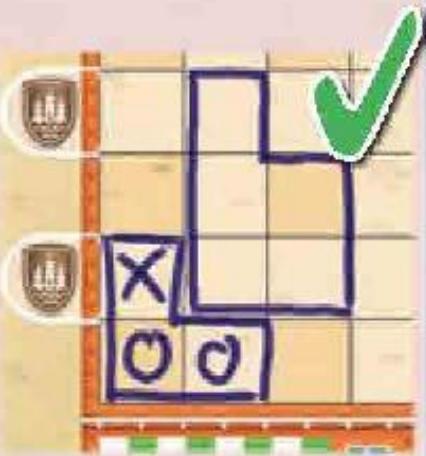
c. 在想要的区域绘画完形状后,该形状的其中一格方格必须被标记一个 X。该形状的其他方格被标记为 O。玩家可以选择任意一个方格被标记为 X。

计分和解锁盾牌纹章
如果玩家完成其建筑内的一行或一列,获得以下分数:
行:
该行至少有一个 X 就获得 1 分。


如果该行只由 O 组成则获得 2 分。


该列至少有一个 X 就获得 2 分。
如果该列只由 O 组成则获得 4 分。


解锁盾形纹章
如果玩家将含有盾形纹章的一行或一列完成,则玩家解锁一个盾形纹章。如果他已完成,则划掉这个盾形纹章并立即选择其中一个特殊行动:
a. 玩家在其建筑内绘画一个方格,遵循绘画规则,并标记一个 O。如果完成一行或一列则立即计分。如果解锁了另一个盾形纹章,玩家立即执行另一个特殊行动。
b. 玩家选择圈出一个能力轨道的2格。他不能在2个不同的轨道上标记。

3. 其他玩家选择一个能力轨道
所有其他玩家选择当前玩家未使用的一颗骰子并在对应能力轨道上的下一格标记一个X。非当前玩家可以选择同一颗骰子。如果白色骰子依旧未被使用,每个非当前玩家可以在任意一个能力轨道标记。
如果当前玩家使用了所有骰子,则其他玩家无法在本回合内标记格子。
能力轨道从左到右标记。如果 X 画在一个奖励(+)或一个能力(★)上,则玩家解锁它并且可以在之后的回合中使用它。
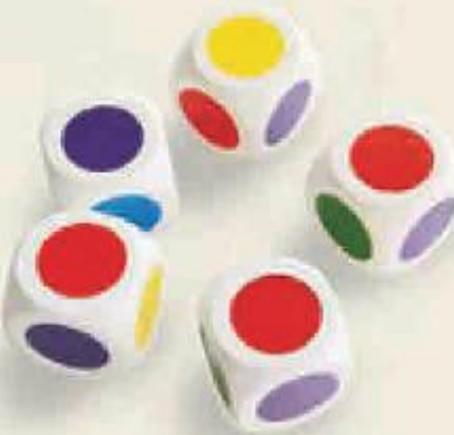
举例:当前玩家使用3颗红色骰子。其他玩家现在可以在黄色和紫色骰子之中选择。

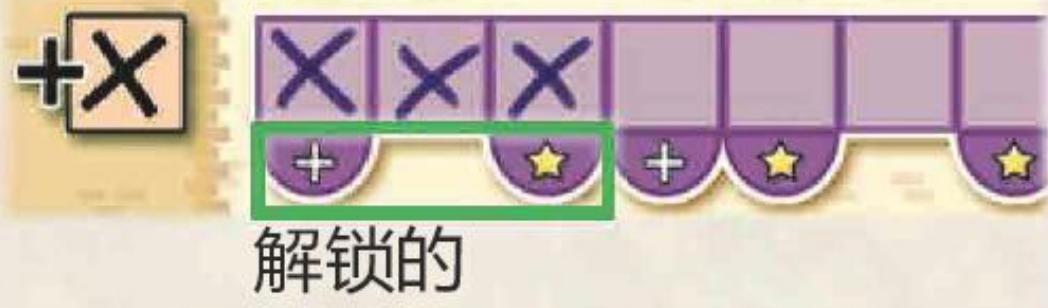


如果一条能力轨道完全被标记,玩家立即获得 2 分。
当一个奖励或能力被使用时,玩家划掉它并且不能再次使用它。
奖励(+)
当划掉奖励时可以将其视为额外一颗对应颜色的骰子,这允许玩家放置更大形状到其建筑上。
注意:玩家在其回合内只能使用同颜色的至多2个解锁奖励。
能力(★)
能力影响游戏规则并会给予当前玩家一定的优势。能力能做什么以及何时使用它们在本规则书的最后一页有详述。
游戏结束
在一位玩家的分数抵达 12 分或更多的那一轮结束时,游戏结束。玩家完成其最后计分,最高分的玩家获胜。



平局时,玩家统计自己建筑内空置方格的数量(没有O或X的方格)。拥有最少空置方格的玩家获胜。如果还是平局,则玩家将共享胜利。
能力只能在玩家自己的回合中使用。如果一个能力被使用,在对应轨道上的一个能力符号会被划掉。玩家可以在一个回合内使用多个能力,比如解锁他们想要使用的所有的所有能力。能力影响的游戏规则如下:

重新投掷——在玩家选择一个建筑外观板块来绘画,他可以选择任意数量的骰子并重新投掷这些骰子一次。重投能力可以在一个回合内被使用多次,但每次重投必须划掉一个星星符号。
每位玩家游戏开始时已经解锁了2次重投,这可以在游戏开始时立即使用。

无 X——当绘画建筑外观板块时,玩家可以使用 O 来填满整个形状(也就是说他无需标记一个 X)。
再次使用——玩家可以选择已经划掉的建筑外观方块上的建筑外观板块在其建筑内绘画(该形状无需被再次划掉)。
颜色转变——玩家可以选择一种颜色的任意数量骰子并将这些骰子转变成他想要的另一种单一颜色。
+X 一个 X —— 在玩家绘画完板块后,他可以放置一个 1 格的板块到任意合规绘画的区域,并标记一个 X。
注意:如果玩家也使用“无X”能力,则本回合放置的1格方块上面标记一个O而不是X。

2颗黄色骰子被转变成红色骰子,因此有4颗红色骰子可用。
2人游戏规则
在设置中的改动:
划掉每种颜色的 4 方块大小的其中一块板块,每位玩家选择划掉一条能力轨道上的前 2 格。
游戏流程的改动:
- 其他玩家选择一个能力轨道非当前玩家可以选择 2 颗未使用骰子并标记对应能力轨道。所选骰子可以是同一种颜色的。

Copenhagen_RW_US_Ansicht.md12.8 KB
COPENHAGEN ROLL&WRITE
Game idea and goal of the game
The Danish city of Copenhagen is famously traversed by canals and harbours. On one of these harbors lies “Nyhavn” (New Harbor) with its colorful gabled houses.
Players are tasked to finish the facades of new buildings on the waterfront. On a turn, one player will roll dice and use one of the colors
Components & Set-up
· Block of Player Sheets
• 5 Dice


Place one sheet from the facade block in the middle of the table and the dice next to it. Then, each player will take one sheet from the player block and place it in front of them. Each player will also need a pen (not included).
rolled to draw building pieces, scoring points whenever they complete a row or column. Other players may use the unused dice to unlock special abilities they can use on future turns. The player who reaches 12 points first triggers the last round and the winner will be the player who has the most points at the end of that last round.
The youngest player starts the game and marks the start player box with an X.
• Block of Facade sheets
• 1 Rules booklet

• Start player box
• 1 Player Sheet
Start player box – An X here marks which player is the starting player of this game.
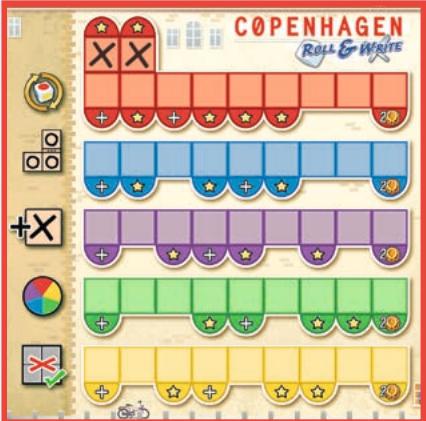
■ Scoring track – Points are marked by drawing X's in the squares every time the player finishes a row or column.
■Ability tracks – The squares of the tracks are filled from left to right by drawing an X in them. As soon as an X is drawn above a bonus () or an ability (), the player is able to use it on their turn. Bonuses help the player draw larger facade tiles, while abilities alter the rules of the game to the player's advantage.
Building – Players will draw the facade tiles they choose from the facade block here on their building. Blocks must be drawn following the rules (see page 5), with the goal of completing rows and columns. With each finished row or column the player will earn points and may unlock a coat-of-arms.
Coats-of-arms - Unlocked by completing a row or a column in the building showing a coat-of-arms. The player immediately decides to either place a size one facade block (a single O) or mark off two squares of one ability track.



• 5 Dice
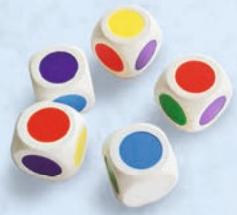
The different sides show the corresponding facade colors available to the players. The white side is wild and represents any of the other five colors.
• 1 Facade Sheet
Overview – Shows the points awarded to players for finishing rows and columns in their building and the possible bonus actions for unlocking a coat-of-arms.
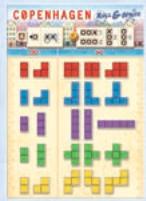
Facade tiles – These are the shapes players can draw in their buildings in order to complete rows and columns. The shapes in the infinity column (0) can be chosen any number of times, while the shapes in the X column () can only be chosen once, after which they are crossed out.

How to play
Copenhagen Roll & Write is played over a series of game rounds.
Play starts with the designated start player and continues clockwise.
A turn consists of three phases:
-
Roll dice and choose a facade shape
-
Draw the facade shape
-
Other players choose an ability track
On their turn, a player may use as many unlocked bonuses and abilities as they desire.
When a player is finished, the dice are passed to the next player clockwise and it becomes their turn. All players will take the same number of turns in a game. The game ends after the round in which at least one player reaches 12 or more points on the score track. The player with the most points is the winner.


A Turn in Detail
1. Roll dice and chooe a facade shape
The active player rolls all 5 dice and then, depending on the die results, chooses a facade shape from the facade block.
In order to choose a facade shape the player has to follow these rules:
a. The number of dice that show the same color has to match the number of squares and color of the chosen facade shape.
Note: The player is allowed to take a facade shape with fewer squares than matching colors of the dice.
b. The facade tile must be available, meaning be either a tile from the infinity column () or not be crossed out in the X column (X).
The player may choose which color they would like the die faces that show a white side to be.
If the chosen shape is picked from the X column (), the player crosses out the shape. This tile may no longer be chosen by any player.
2. Draw the facade shape
The chosen facade shape is drawn onto the building using the following rules.
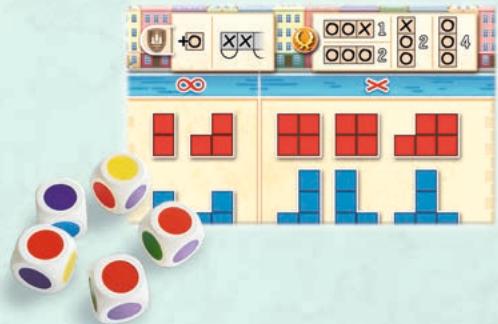
Expample: Three dice show red. The player now may choose either a red 2-square or a red 3-square facade shape.
Drawing rules:
a. The shape may be drawn rotated in any direction, but must able to fit on the grid.
b. A shape must be placed on the bottom row, or such that at least one square is directly above a previously placed shape. Only one square is needed to be above the old shape. (see examples)
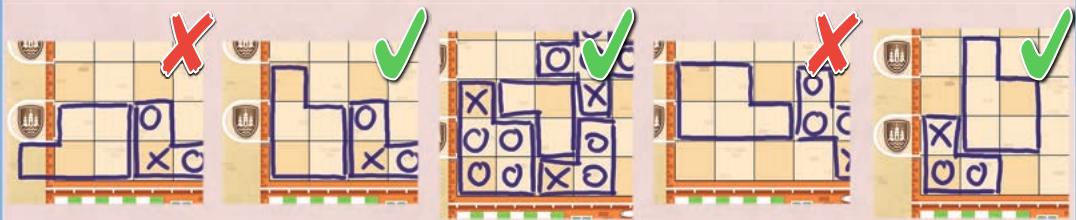
c. After drawing the shape in the desired location, one of the squares of the shape has to be marked with an X. The other squares of the shape are marked with an O. The player may choose which square to mark with an X.

Scoring points and unlocking coats-of-arms
If a player completes a row or a column in their building, points are awarded as follows:


Row:


1 point if the row contains at least one X.
2 points if the row is made up of only O's.
Column:
2 points if the column contains at least one X.
4 points if the column is made up of only O's.


Unlocking coats-of-arms:
A player unlocks a coat-of-arms if they have managed to complete a row or column with an attached coat-ofarms. If they have done so, they cross it off and immediately choose one of the two special actions:
a. The player draws one square, following the drawing rules, in their building and marks it with an O. If this completes a row or column score it immediately. If it unlocks another coat-of-arms, the player immediately gets to take another special action.
b. The player marks off two squares on one ability track of their choice. They cannot mark from two different tracks.
3. Other players choose an ability track
All other players choose one unused die of the active player and mark the next square of the corresponding ability track with an X. The nonactive players may choose the same die. If a white die remains unused, each non-active player may mark off an ability track of their choice.
If the active player used all their dice, the other players cannot mark a square this turn.
The ability tracks are marked from left to right. If an X is drawn above a bonus (+) or an ability () the player unlocks it and it may be used on a subsequent turn.
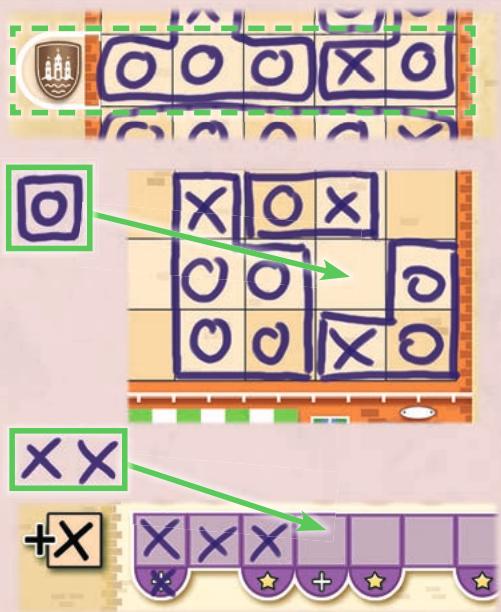

Example: The active player uses the three red dice. The other players may now choose between the yellow and purple dice.

unlocked

unlocked
If an ability track is fully marked the player immediately gains two points.
When a bonus or ability is used, the player crosses it out and it may not be used again.
Bonus (+)
Bonuses act as an extra die of the corresponding color when marked out, thus allowing the player to place the next larger size shape on their building.
Important: A player may only use up to two unlocked bonuses of the same color on their turn.
Ability ()
Abilities alter the rules of the game and give the active player an advantage. What the abilities do and when to use them is explained in detail on the last page of the rules.
End of the game
The game ends at the end of a round in which one player has reached or exceeded 12 points. Players will compare their final scores, and the highest score is the winner.


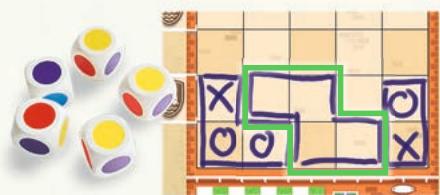


In case of a tie, the players count the empty squares in their building (squares that do not have an O or X). The player with the fewest empty squares is declared the winner. If the tie still persists then players will share the victory.
Abilities (☆)
Abilities may be used only on a player's own turn. If an ability is used, one ability symbol () on the corresponding track is crossed out. A player may use multiple abilities on a turn, provided they have unlocked all the abilities that they want to use. The abilities alter the rules of the game as follows:

Re-Roll – Before the player choses a facade tile to draw, they may choose any number
of dice and reroll them once. The
reroll ability can be used multiple
times in a turn, but for each roll, a
star symbol has to be crossed out.
Each player starts the game with two rerolls already unlocked, which may be used immediately from the start of the game.


O No X – When drawing the
00 facade tile, the player may fill the entire shape with O's
(i.e. they do not have to mark an X).

Color change – The player may choose as many dice of one color as they like and change the face to a single different color of their choice.
Two player rules

Use Again – The player may choose a facade shape on the facade block already crossed
out to draw in their building (the shape
does not need to be crossed out again).

+x ne Af tr the playerer place a single size one tile anywhere where it may be legally drawn, marking it with an X.
Note: If the player also uses the “No X”: ability, any single tiles placed this turn also receive an O instead of an X.

The two yellow dice are turned into red to have 4 red dice to use.
Changes during Set-up
Cross out one of the size 4 tiles in each color, and each player marks off the first two squares on one ability track of their choice.
Changes during game play
3. Other players choose an ability track
The non-active player may choose two unused dice and mark the corresponding ability tracks. The chosen dice may be of the same color.

原文为社区整理/出版社公开资料,版权归原作者,仅供个人学习查阅。