
诸神之战:传奇版Cyclades Legendary Edition
一句话概览
诸神之战:传奇版 是一款已收录于村了吗规则库的桌游,支持 2–6 人,原名 Cyclades Legendary Edition。
本页内容:一句话概览 · 游戏概述 · 1. 游戏组件 · 2. 游戏设置 · 3. 游戏流程 / 回合结构 · 4. 生物效果详解 · 关键规则与常见问题 · 常见问题
诸神之战:传奇版 规则速览
以下规则速览由本站整理,与官方规则书表述不同,仅供快速上手参考。
游戏概述
《诸神之战:传奇版》是德系策略游戏《诸神之战》的一个扩展版本。玩家在古典希腊世界争夺领土控制权,通过竞拍神圣建筑、招募英雄与怪兽、建设城邦积累财富与声望。
核心机制: 竞购、区域控制、雇佣军调度、资源转化
1. 游戏组件
| 组件 | 说明 |
|---|---|
| 版图 | 包含陆地区域与海域,相互连接 |
| 基本建筑 | 用于建造的普通建筑板块 |
| 建筑空地 | 版图上可放置建筑的位置 |
| 丰饶标记 | 双面标记:正面为1丰饶角面,反面为1金币面 |
| 英雄轨 | 用于放置英雄卡牌的轨道 |
| 基本部队储备区 | 每位玩家存放未部署基本部队的区域 |
| 佣兵储备区 | 存放未部署佣兵部队的区域 |
| 舰队 | 部署在海区的海军单位 |
| 英雄模型与卡牌 | 特殊单位,受特定保护 |
| 神话怪物弃牌堆 | 被使用后的怪物卡牌存放区 |
| 神话怪物牌组 | 待抽取的怪物牌堆 |
| 屏风前区域 | 存放已购买生物卡牌的区域 |
| 哲学家卡牌 | 特殊资源卡,集齐4张可建造大城邦 |
| 女祭司卡 | 可从其他玩家处偷取的特殊卡牌 |
| 雇佣军 | 可用于转化的军事单位 |
2. 游戏设置
- 将丰饶标记全部放置于供应区,翻至丰饶角面朝上
- 准备神话怪物牌组与弃牌堆
- 每位玩家分配各自的建筑储备区、部队储备区和佣兵储备区
- 将英雄卡牌置于英雄轨中
3. 游戏流程 / 回合结构
3.1 赢得拍卖神圣建筑
- 赢得后执行对应的免费强制行动
3.2 收入阶段
- 控制陆地区域与海域时获得收入
- 特定生物或效果可能改变收入归属或倍率
3.3 维护阶段
- 处理入场效果与维护效果
- 部分生物在此阶段执行破坏或添加标记动作
4. 生物效果详解
以下列出所有生物的特殊能力。
4.1 基础生物
奇美拉
免费打出一张神话怪物弃牌堆中的生物牌。然后弃置奇美拉(若神话怪物弃牌堆为空,则奇美拉被直接弃置)。
当奇美拉被放置入弃牌堆时,无论该奇美拉是使用后的,还是在回合初设置时因无人购买而被弃置,必须将神话怪物牌组和弃牌堆一起混洗,然后将洗好的牌组面朝下放置于拍卖板相应的位置上。
独眼巨人(库克罗普斯)
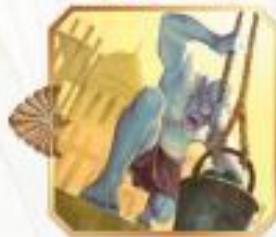
将你的一个基本建筑交换另一个储备区的基本建筑。
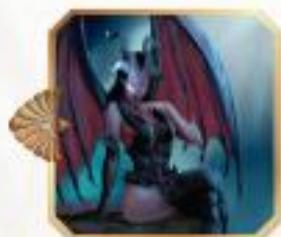
森林女神(树妖 德律阿得斯)
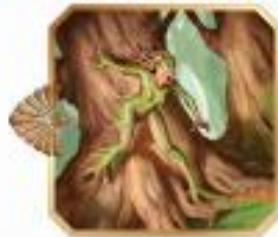
从其他玩家那里偷取一张女祭司卡。
针鼹
偷取对手的生物牌。拿取对手的生物卡并将其放置在你的屏风前面,之后你可以将该生物的模型移动到你选择的生物卡所示类型的区域(陆地或海洋)。
恩浦萨
在本回合中,再次执行你赢得拍卖神邸的免费强制行动。
巨人
从一个陆地区域偷取所有的雇佣军并将他们放置在你控制的一个或多个陆地区域上。
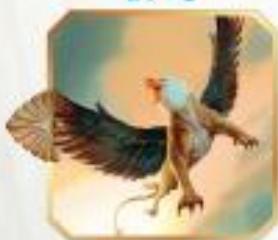
格里芬
从其他玩家手中偷取一半的金币(向下取整)。
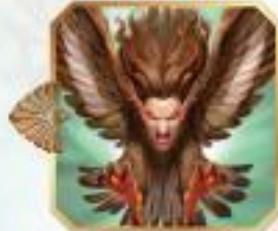
哈耳庇厄
摧毁一片陆地区域的一个部队。该部队可以是一支基本部队或雇佣军部队。哈耳庇厄不能摧毁英雄。
曼提柯尔
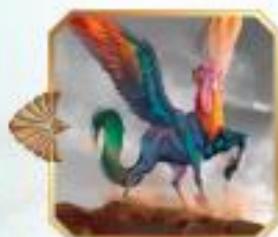
将2支雇佣军部队转化为一枚丰饶标记或一张女祭司卡或一张哲学家卡。你可以在拥有雇佣军的情况下进行多次转化。
丰饶标记立即放置在你选择的一个区域并翻至1丰饶角面。转化后的雇佣军部队返回储备区。
海马
将你控制海域中的舰队变成雇佣军部队。将由此获得的雇佣军部队放置在你控制的一个或多个陆地区域上。摧毁被转化的舰队并返回到你屏风前的储备区中。
珀加索斯(天马)
免费将你的全部或部分基本部队/雇佣军部队和英雄从一个陆地区域移动到另一个陆地区域。起始和结束区域可以是版图上任何地方,它们不必相邻就彼此可到达。
注意:珀伽索斯的能力无法帮助部队和英雄进入或离开美杜莎占领区域。
斯芬克斯
抽取三张生物牌,弃置2张,免费打出第3张。
风精灵
交换两个海域的舰队,不管由哪个玩家控制。这两个海域可以是版图的任何地方,它们不一定相邻。两个海域都必须包含舰队。
厄里倪厄斯
将一个丰饶标记(1个丰饶角面)从一个区域移动到另一个区域,无论是海洋还是陆地。移动的繁荣标记可以属于任何玩家。
命运三姐妹
重复一次收入阶段。当你使用命运三姐妹时,在你控制的陆地和海域中,你会收到每个丰饶角(在丰饶标记或地图上)1金币。
海卫士
偷取另一个玩家的一个基本建筑,并且把他放置在一个建筑空地上。如果你没有一个空置的建筑场地,你必须摧毁一个你的基本建筑来建造该建筑。
森林之神
从其他玩家手中偷取一张哲学家卡牌。
如果你使用此效果获得第4个哲学家卡牌,立刻弃置他们并且建造大城邦。
卡戎(冥河摆渡船夫)
将你的一个英雄与英雄轨中可用的英雄交换。以这种方式招募的新英雄不能在此回合中牺牲。
如果英雄轨中没有英雄卡牌,你就不能使用卡戎的效果,并且该卡牌被无效丢弃。
4.2 配有模型的生物
此类生物需放置模型在版图上,具有更强的区域影响能力。
卡吕冬野猪(将该生物放置在低地区域上)
此区域无法进入。该区域内的所有英雄和部队将被转移到允许进入的区域或被摧毁。
控制卡吕冬野猪的玩家可以按照自己选择的顺序和方向移动部队和英雄。属于不同玩家的军队不能占据同一区域。如果无法移动,部队和英雄将被摧毁。基本部队返回所有者储备区,雇佣军返回到储备区,英雄模型被放置到版图的一边,他们的卡牌被弃置。
刻耳柏洛斯(地狱三头犬)(将该生物放置在陆地区域上)
在收入阶段,你获得该区域的收入,而不是控制该区域的玩家。
三体巨人革律翁(九头蛇)
(源文件中未明确描述此生物的具体效果。)
卡律布狄斯与斯库拉(将该生物放置在各个不同的海域上)
将此生物放置在两个不同的海域上。将该生物放置在陆地区域上,你必须支付调动舰队在卡律布狄斯和斯库拉占领海域之间的移动费用。
此区域不能成为任何生物效果影响的目标。
吉里昂(北海巨妖)(将该生物放置在陆地区域上)
当任何基础部队和雇佣军部队或舰队被摧毁时,在吉里昂占领的区域放置1金币。这些将成为控制该区域玩家收入的一部分。
所有被摧毁的部队和舰队都会受到影响,无论其所属哪个玩家。
海德拉(将该生物放置在陆地或海洋区域上)
在收入阶段,该地区的收入翻倍。收益由控制海德拉所在区域的玩家获得。
当海德拉进场时,在每个维护阶段,如果可以,你必须摧毁一个舰队或部队在海德拉所在区域,或在邻近的区域,然后添加一个丰饶标记(翻至1丰饶角面)到海德拉所在区域。
克拉肯(将该生物放置在海洋区域上)
摧毁该区域所有的舰队。
如果在克拉肯被放置或移动到的海域有舰队,它们将被摧毁(将舰队归还所有者的储备区)。
在克拉肯所在的海域,克拉肯会阻止所有舰队(包括克拉肯操作玩家的舰队)的进入。
关键规则与常见问题
易错规则
- 奇美拉入弃牌堆必洗混: 无论使用后还是设置时无人购买被弃置,都要把牌组和弃牌堆一起洗匀重放
- 卡戎效果有条件限制: 英雄轨无卡时,卡戎被无效丢弃
- 哈耳庇厄不能摧毁英雄: 仅限基本部队或雇佣军
- 珀加索斯不能进出美杜莎占领区: 这是唯一被明确禁止的移动场景
- 海德拉进场须摧毁部队或舰队: 维护阶段尽可能执行,若无法摧毁则跳过
- 克拉ken封锁自身海域: 所有舰队(含自身玩家舰队)均不可进入
- 卡律布狄斯与斯库拉免疫一切生物效果: 但不能作为陆地区域上的普通建筑占用
- 革新利昂覆盖所有玩家: 不论队伍归属,只要被摧毁即产生金币
- 命运三姐妹重复整个收入阶段: 不只是额外获取,而是全面重来
- 森林之神获取第四个哲学家时立即建造大城邦: 无需等待回合
常见问题
-
Q:奇美拉的洗牌触发时机是什么时候?
A:每次奇美拉进入弃牌堆时即时触发,无论是使用后还是设置阶段 -
Q:卡吕冬野猪放置后可否移动?
A:控制者可以按自己选择的顺序和方向移动其区域内的部队和英雄,但区域本身无法进入 -
Q:海德拉的翻倍收入归谁?
A:归控制海德拉所在区域的玩家 -
Q:海卫士没有空建筑场地怎么办?
A:必须摧毁一个自己的基本建筑来腾出位置再放置偷来的建筑 -
Q:命运三姐妹使用后能获得多少金币?
A:在你控制的每个陆地和海域的每个丰饶角获得1金币 -
Q:福尔尼克斯(吉里昂)产生的金币何时计入收入?
A:作为控制该区域玩家收入的一部分,在下一次收入阶段结算
常见问题(FAQ)
以下 1 条问答中 0 条来自站内玩家的真实提问,其余 1 条为本站整理的常见疑问;答复内容保持原样。
诸神之战:传奇版支持几个人玩?
2–6 人。
去哪查完整规则
想核对具体规则细节、卡牌效果或某个回合的结算方式,可以在村了吗里选中这款游戏后直接提问。
同类桌游
- 卡坦岛德式
- 工业革命:伯明翰德式
- 勃艮第城堡:特别典藏版德式
- 方舟动物园德式
- 卡卡颂抽象
- 瘟疫危机传承:第一季美式
- 阿瑞迪亚:勇踏征途美式
- 重塑宇宙德式
- 幽港迷城美式
- 埃多拉的德鲁伊德式
规则原文(Markdown)
本站收录这款游戏的规则原文 3 个文件,此处内联渲染 3 个,可直接展开阅读或下载。
rules_zh_诸神之战传奇版_37089.md8.5 KB
生物效果概述

冥河摆渡船夫 卡戎

卡戎
将你的一个英雄与英雄轨中可用的英雄交换。以这种方式招募的新英雄不能在此回合中牺牲。
如果英雄轨中没有英雄卡牌,你就不能使用卡戎的效果,并且该卡牌被无效丢弃。
嵌合体 奇美拉

奇美拉
免费打出一张神话怪物弃牌堆中的生物牌。然后弃置奇美拉(若神话怪物弃牌堆为空,则奇美拉被直接弃置)。
独眼巨人
库克罗普斯
当奇美拉被放置入弃牌堆时,无论该奇美拉是使用后的,还是在回合初设置时因无人购买而被弃置,必须将神话怪物牌组和弃牌堆一起混洗,然后将洗好的牌组面朝下放置于拍卖板相应的位置上。
独眼巨人
将你的一个基本建筑交换另一个储备区的基本建筑。
树妖 德律阿得斯

森林女神

狮鹭
从其他玩家那里偷取一张女祭司卡。
针鼹
偷取对手的生物牌。拿取对手的生物卡并将其放置在你的屏风前面,之后你可以将该生物的模型移动到你选择的生物卡所示类型的区域(陆地或海洋)。
恩浦萨
在本回合中,再次执行你赢得拍卖神邸的免费强制行动。
巨人
从一个陆地区域偷取所有的雇佣军并将他们放置在你控制的一个或多个陆地区域上。
鹰身女妖
格里芬
从其他玩家手中偷取一半的金币(向下取整)。
哈耳庇厄
摧毁一片陆地区域的一个部队。该部队可以是一支基本部队或雇佣军部队。哈耳庇厄不能摧毁英雄。
■ 马身鸡尾兽
将2支雇佣军部队转化为一枚丰饶标记或一张女祭司卡或一张哲学家卡。
你可以在拥有雇佣军的情况下进行多次转化。
丰饶标记立即放置在你选择的一个区域并翻至1丰饶角面。转化后的雇佣军部队返回储备区。
马头鱼尾兽

海马
将你控制海域中的舰队变成雇佣军部队。将由此获得的雇佣军部队放置在你控制的一个或多个陆地区域上。
摧毁被转化的舰队并返回到你屏风前的储备区中。
狮身人面像

空气精灵
蝎狮
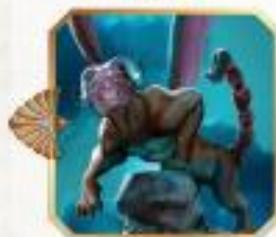
曼提柯尔
摧毁一个地图面板上的生物或英雄模型。将该模型移至版图的一边。该生物或英雄卡牌被弃置。

复仇女神
天马

珀加索斯
免费将你的全部或部分基本部队/雇佣军部队和英雄从一个陆地区域移动到另一个陆地区域。起始和结束区域可以是版图上任何地方,他们不必相邻就彼此可到达。
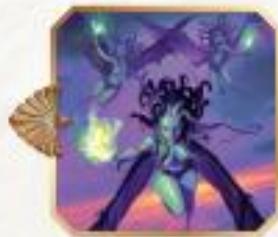
萨梯
格里伊三女神
注意:珀伽索斯的能力无法帮助部队和英雄进入或离开美杜莎占领区域。

森林之神

从其他玩家手中偷取一张哲学家卡牌。
如果你使用此效果获得第4个哲学家卡牌,立刻弃置他们并且建造大城邦。
特里同

斯芬克斯
抽取三张生物牌,弃置2张,免费打出第3张。
风精灵
交换俩个海域的舰队,不管由哪个玩家控制。这俩个海域可以是版图的任何地方,它们不一定相邻。
俩个海域都必须包含舰队。
厄里倪厄斯
将一个丰饶标记(1个丰饶角面)从一个区域移动到另一个区域,无论是海洋还是陆地。移动的繁荣标记可以属于任何玩家。
命运三姐妹
重复一次收入阶段。当你使用命运三姐妹时,在你控制的陆地和海域中,你会收到每个丰饶角(在丰饶标记或地图上)1金币。
海卫士
偷取另一个玩家的一个基本建筑,并且把他放置在一个建筑空地上。如果你没有一个空置的建筑场地,你必须摧毁一个你的基本建筑来建造该建筑。

配有模型的生物


卡吕冬野猪
将该生物放置在低地区域上
此区域无法进入。该区域内的所有英雄和部队将被转移到允许进入的区域或被摧毁。
控制卡吕冬野猪的玩家可以按照自己选择的顺序和方向移动部队和英雄。属于不同玩家的军队不能占据同一区域。如果无法移动,部队和英雄将被摧毁。基本部队返回所有者储备区,雇佣军返回到储备区,英雄模型被放置到版图的一边,他们的卡牌被弃置。
地狱三头犬
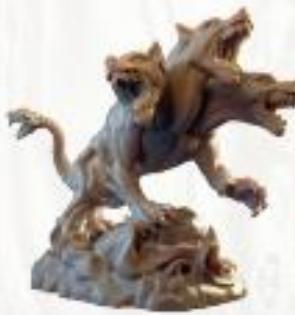
刻耳柏洛斯
将该生物放置在陆地区域上
在收入阶段,你获得该区域的收入,而不是控制该区域的玩家。

半人马凯隆

三体巨人革律翁


九头蛇
卡律布狄斯与斯库拉

将生物放置在個个不同的海域上
喀戎
这俩个区域对于你的舰队来说是相邻的。
将该生物放置在陆地区域上你必须支付调动舰队在卡瑞布狄斯和斯库拉占领海域之间的移动费用。
此区域不能成为任何生物效果影响的目标。
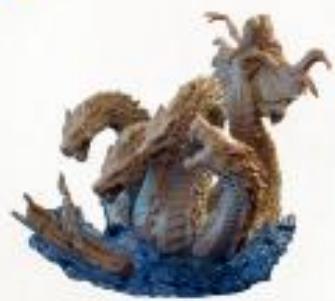
吉里昂
北海巨妖
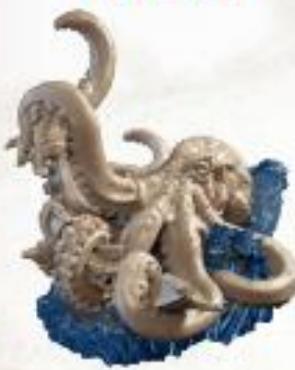
将该生物放置在陆地区域上
当任何基础部队和雇佣军部队或舰队被摧毁时,在吉里昂占领的区域放置1金币。这些将成为控制该区域玩家收入的一部分。
所有被摧毁的部队和舰队都会受到影响,无论其所属哪个玩家。
海德拉
将该生物放置在陆地或海洋区域上
在收入阶段,该地区的收入翻倍。收益由控制海德拉所在区域的玩家获得。
当海德拉进场时,在每个维护阶段,如果可以,你必须摧毁一个舰队或部队在海德拉所在区域,或在邻近的区域,然后添加一个丰饶标记(翻至1丰饶角面)到海德拉所在区域。
克拉肯
将该生物放置在海洋区域上
摧毁该区域所有的舰队。
如果在克拉肯被放置或移动到的海域有舰队。它们将被摧毁(将舰队归还所有者的储备区)。
在克拉肯所在的海域,克拉肯会阻止所有舰队(包括克拉肯操纵玩家的舰队)的进入。
下载 Markdownrules_en_cyclades-legendary-edition_380619.md48.6 KB
来源类型:纯文本规则(非 PDF 源,早期抓取/转换产物)
说明:原文未改动,仅调整存放位置与文件名;非 PDF 扫描件,无对应原书 PDF
Cyclades: Legendary Edition Rulebook | RulesPalRulesPalChatRulebookCyclades: Legendary EditionCyclades: Legendary Edition Rulebook Table of Contents Table of Contents Goal of the Game
Components
Setup Placement for 3 to 5 players*
Overview
1- Cycle Preparation Example - Cycle Preparation
Example - God Preparation - 4 players
2- Income
3- Offerings Example - Offerings - 3 players
4- Maintenance Costs
5- Actions Example - Turn Order - 3 players
Gods Athena
Zeus
Poseidon
Sea Move Example - Move
Sea Battle Example - Battle
Ares
Land Move
Land Battle Hera
Heroes Apollo
6- End of Cycle
End of Game
Metropolises Ultimate Version
Metropolis Bonuses
Mythological Creatures Example
Heroic Move Example
Specific Rules Team play with 4 and 6 players
Specific rules for 2 players
Creature Descriptions
Creatures with Miniatures
Hero Descriptions
Board Setup
Contents
Goal of the Game
Demonstrate the superiority of your faction by being the first player to control 3 Metropolises at the end of a Cycle.
Components
1 Auction Board
12 Archipelago tiles 1- Land Area
2- Sea Area
3- Construction site
4- Priestess symbol
5- Prosperity icon
30 Double-sided Prosperity wooden tokens (1 or 2 Cornucopias)
100 Gold Pieces (called GP in the following rules)
16 Mercenaries
1 Metropolis bonuses pouch**
29 miniatures* (Creatures and Heroes)
16 Hero cards (16 miniatures*)
31 mythological Creature cards (13 of which have miniatures*)
24 Metropolis tokens or 3D** (8 different bonuses, 3 copies each, with a basic side and a bonus side)
20 Priestess cards
20 Philosopher cards
5 Large double-sided God tiles (face-up side with Actions, face-down side without Actions)
40 Basic Building tokens or 3D**: Temples, Universities, Ports, Fortresses
For each player*: 1x Offering pawn, 1x Die, 7x Control tokens, 8x basic Troops, 1x Screen, 8x Fleets
Note: GP, Control and Prosperity tokens are not in limited number. If, during an Action, one of these materials is missing, you may replace it with a material of your choice.
*The Meeple version of the game comes with standees instead of miniatures, meeples for Troops or Fleets and a tuckbox to store them in.
**Included in the Ultimate version of the game.
Game elements are often referred to by their type and function, such as "Philosopher card" or "Building token". For convenience, when it is not confusing, only the function will be named. For example, "Draw 1 Philosopher" instead of "Draw 1 Philosopher card".
Setup
Place the Auction Board on the side of the table.
Shuffle the 5 large God tiles and place them face up on the 5 slots above Apollo.
With 5 players, turn the last tile (closest to Apollo) face down.
With 2 and 4 players, turn the last two tiles face down.
With 3 players, turn the last three tiles face down.
Make a deck with the Creature cards and place it face down in its slot. Reveal the first 4 cards of this deck and place them on the free spaces on the Creature track.
Make a deck with Hero cards and place it face down on its own slot. Reveal the first 2 cards of this deck and place them on the free spaces on the Hero track.
Place the Philosopher and Priestess cards in their respective slots on the Auction Board.
Place on the side of the board:
the Mythological Creatures and Heroes miniatures
the Gold Pieces
basic Building tokens
A stack of bonus face-down Metropolis tokens
the mercenary Troops
Take 2 Archipelago tiles at random for each player present and assemble them as you wish in the center of the table.*
Thus, each game takes place on a different playing surface, with its own unique features.
Note: the front and back versions of the Archipelago tiles cannot be played together. Choose one of the two sides for the entire playing surface.
When you play with the two Archipelago tiles containing a volcano (numbers 2 and 11), the two Land Areas are considered to be adjacent.
The game board is made up of Land Areas and Sea Areas.
A Land Area or several adjacent Land Areas surrounded by Sea Areas constitute an Island.
Land and Sea Areas are considered to be adjacent when they have a common border (white line).
Each player places their Control tokens, basic Troops, and Fleets in front of their Screen, and receives 5 GP, which they hide behind their Screen.
Take the Offering pawns from the players present and place them randomly on the Turn order track slots of the Auction Board.
Placement for 3 to 5 players*
The game begins with 2 rounds of placement.
1st Placement Round:
In turn order of the Turn order track, each player selects two unoccupied Land Areas, on two different Islands.
On each of these Areas, the player places a Control token of their own color. If an Area contains the Priestess icon, they immediately draw a Priestess card.
Then place a Fleet on an empty Sea Area that is adjacent to each Land Area they just selected.
2nd Placement Round:
In the reverse order of the Turn order track, each player:
Selects a third unoccupied Land Area: they place a Control token on it and place a Fleet on an adjacent empty Sea Area. Note: this third Land Area may be on an Island where the player is already present.
Then takes 3 basic Troops and distributes them as they wish over the 3 Land Areas they control. The Control tokens for Land Areas with Troops on them are then removed. Land Areas that have no Troops remain under the control of the player who placed the Control token there, until an opponent conquers them.
The first Cycle may now begin.
*For 2-player, 4-player and 6-player team play, the necessary adjustments are explained on page 13.
For your first games, you can use the recommended setups at the end of the rulebook.
Overview
The game is divided into Cycles. Each Cycle has the following Phases:
Cycle Preparation
Income
Offerings
Maintenance Costs
Actions
End of Cycle
1- Cycle Preparation
- Heroes
If Heroes were recruited in the previous Cycle, fill in the empty spaces by revealing new cards from the Hero Deck.
- Creatures
If a Creature card is placed on the 2 GP slot, discard it face down.
Then move the other Creatures down to fill all the least expensive slots. Finally, fill the remaining slots by revealing new cards from the Mythological Creature Deck.
- Gods
The order in which the Gods grant their Actions changes at the beginning of each Cycle.
Depending on the number of players, not all of the Gods will be available every time. Apollo is always available (and will always be played last).
For the first Cycle, the Gods are placed in random order at set-up.
Thereafter, at the beginning of each Cycle, remove the top God from the Auction board (the one furthest from Apollo) and slide all the others up one space. Then replace the God that was removed in the bottom position (closest to Apollo).
Careful: Depending on the number of players, there must always be the same number of Gods on the face-up side. With less than 6 players, turn the God you moved to the bottom slot face down and turn the highest of the face-down Gods face up.
Example - Cycle Preparation
In the previous Cycle, a player used the Creatures placed on the 3 GP and 5 GP slots. The track must now be updated for the start of the new Cycle:
Charon is discarded
The Chimera slides to the 2 GP slot
The 3 GP, 4 GP and 5 GP slots are filled with the first Creature cards from the Creature Deck.
Example - God Preparation - 4 players
At the beginning of a new Cycle:
Zeus in first position is removed from the Auction board.
All the Gods move up one slot.
Athena is flipped face up.
Zeus is placed in last position above Apollo and flipped face down.
2- Income
Each player receives 1 GP for each Cornucopia icon present in the Land and Sea Areas they control. An Area is under a player's control when they have a Control token, a Troop, a Fleet or a Hero in the Area.
The GP are kept hidden behind each player's Screen.
Note: Prosperity tokens have two sides: one with 1 Cornucopia and the other with 2, simplifying the increase of the Income in an Area without overloading the board.
3- Offerings
To earn the favor of the Gods and the Actions associated with them, players must sacrifice some of their wealth (GP).
In the order indicated by the Offering pawn on the Auction board's Turn order track, each player chooses a God and places their Offering pawn on the numbered space corresponding to the Offering the player wishes to make for that God.
A God only grants favors to one player!
If a player makes an Offering to a God who has already been selected by another player:
They must make a higher Offering than the current player. Then the player who made the previous Offering takes back their Offering pawn and must IMMEDIATELY bid on ANOTHER God.
Note 1: It is possible that the player who was kicked out may in turn kick out a player who is already bidding on another God. All cases must be resolved before the next player on the Turn order track may place their Offering Pawn.
Note 2: If a player is kicked out from the second God they chose, they may return to the first God they chose and bid on them.
Note 3: The player who makes an Offering to Apollo cannot be kicked out.
Note 4: It is impossible to overbid above 25 GP.
The Offering phase is over when each player has placed their Offering pawn on a different God.
Now it's time to pay the Offerings:
Each player pays the number of GP they have offered to their God, taking into account any discounts for Priestess cards in their possession. (see below)
Important: Even if the number of GP each player has is kept secret behind the screens, it is forbidden to make an Offering that you would not be able to pay. This makes the Gods VERY angry!
If a player is unable to pay their Offering, they must pay a fine of half of their GP, rounded down, and all players start a new Offering Phase.
Example - Offerings - 3 players
At the start of a new Cycle:
The purple player places his Offering pawn on Zeus' 3 GP space.
The yellow player would like to build a Temple during this Cycle and decides to outbid the purple player by placing her Offering pawn on the 5 GP space.
The purple player is kicked out and must immediately bid on another God. He decides to position himself on the 1 GP of Ares hoping that the blue player will come and kick him out.
The blue player absolutely needs to Recruit and move her Troops, so she kicks the purple player out by placing her Offering pawn on Ares' 7 GP space.
The purple player must then immediately move and chooses to outbid the yellow player on Zeus' 7 GP space, as expected, thus kicking the yellow player out.
The yellow player doesn't want to overbid in this Cycle and moves to Apollo's free space. The Bidding phase is over.
4- Maintenance Costs
Players who control Mythological Creatures may keep them by discarding one Priestess card for each Creature they wish to keep. During this payment, it is possible to move each Creature to a valid adjacent Area (of the type indicated by its card, and which does not contain another Creature, see page 12).
5- Actions
It is now time to activate the Gods, in the order determined at the beginning of the Cycle.
The player who has won the Offerings on the first God (farthest from Apollo) will perform the Actions specific to this God:
They MUST FIRST perform the MANDATORY free actions of that God.
THEN, in any order they choose, they MAY perform the OPTIONAL paid Actions of this God, paying the associated costs. It is possible to alternate actions.
When the player has completed all of these actions, they place their Offering pawn on the last available Turn order track slot on the Auction board.
The Actions available for the various Gods are described on the following pages.
Example - Turn Order - 3 players
The Purple player goes first: once he has completed his actions, he places his Offering pawn on spot 3.
The next player (Blue) places hers on spot 2, the Yellow player on spot 1. The Yellow player, who played Apollo during this Cycle, will make the first Offering in the next Cycle.
Gods
Athena
Free Mandatory Actions
- Build a UNIVERSITY
Place the basic Building on an empty construction site in one of the Land Areas you control.
Note: A construction site is a location in a Land Area where you can build basic Buildings and Metropolises.
If no construction site is available, you may choose to forgo this building, or remove one of your basic Buildings to build the University in its place.
University Effect: No effect, but it is one of the 4 basic Buildings you will need to build a Metropolis.
Metropolis: As soon as you have 1 Port + 1 Fortress + 1 Temple + 1 University in all the Land Areas you control, remove them and build a Metropolis (see page 11).
- Recruit a Philosopher
Take a Philosopher card and place it in front of your Screen.
Effect of Philosophers: As soon as you recruit your 4th Philosopher, discard the 4 cards and build a Metropolis! (see page 11).
Optional Paid Actions
- Recruit an additional Philosopher
You may recruit ONE additional Philosopher for 4 GP. Take a Philosopher card and place it in front of your Screen.
-
Buy Creatures (see page 12)
-
Heroic Moves (see page 12)
Zeus
Free Mandatory Actions
- Build a TEMPLE
Place the basic Building on an empty building site in one of the Land Areas you control.
If no building site is available, you may choose to forgo this construction, or remove one of your basic Buildings to build the Temple in its place.
Temple effect: Each Temple gives a 1 GP reduction when buying any of the 4 available mythological Creatures on the Creature track (this can result in a Creature having a cost of 0). Each Temple's reduction can only be used once per Cycle.
Metropolis: As soon as you have 1 Port + 1 Fortress + 1 Temple + 1 University, remove them and build a Metropolis (see page 11).
- Recruit a Priestess
Take a Priestess card and place it in front of your Screen.
Effect of Priestesses: Each Priestess you own gives you a reduction of 1 GP on the Offering to be paid at the beginning of the Cycle. (If your reduction is equal to or greater than the amount of your bid, you pay nothing.) Also, during the Maintenance Costs Phase, you may discard 1 Priestess for each Creature you wish to keep.
Optional Paid Actions
- Recruit an additional Priestess
You may recruit ONE additional Priestess for 4 GP. Take a Priestess card and place it in front of your Screen.
- Play the first Creature from the deck
Just once per Cycle, secretly learn about the first Creature in the Creature deck for free. You may pay 1 GP to play it. If you decide not to play it, put it back on top of the Creature deck face down.
Reminder: The Temple's reduction doesn't apply to this action.
-
Buy Creatures (see page 12)
-
Heroic Moves (see page 12)
Poseidon
Free Mandatory Actions
- Build a PORT
Place the basic Building on an empty building site in one of the Land Areas you control.
Note: A Port straddles a Land area and a Sea Area.
If no building site is available, you may choose to forgo this construction, or you may remove one of your basic Buildings and build the Port in its place.
Port effect: Your Fleets have Strength +1 in Battles in the Sea Area where the Port is located.
Metropolis: As soon as you have 1 Port + 1 Fortress + 1 Temple + 1 University, remove them and build a Metropolis (see page 11).
- Recruit a Fleet
Place this Fleet in a Sea Area adjacent to a Land Area you control. This Sea Area must be empty or already controlled by your Fleets.
Optional Paid Actions
- Recruit additional Fleets
The 1st Fleet costs 1 GP.
The 2nd Fleet costs 2 GP.
The 3rd Fleet costs 3 GP.
You may not recruit more than 3 additional Fleets in the same Cycle.
You can distribute these Fleets over empty Sea Areas or Areas already controlled by your Fleets, and adjacent to Land Areas you control.
- Move Fleets
For 1 GP, you may perform a Sea Move (see below).
You may perform this Action more than once, as long as you pay 1 GP for each move.
-
Buy Creatures (see page 12)
-
Heroic Moves (see page 12)
Sea Move
A Sea Move allows you to move one or more Fleets in the same Sea Area to an adjacent Sea Area.
You do not have to move all the Fleets present in the starting Area.
If the arrival Area is occupied by enemy Fleets, a Sea Battle immediately occurs.
An empty Sea Area is not controlled by anyone, even if it is empty following a move, or a Battle in which both parties are eliminated.
Example - Move
Starting position: The Black player decides to move his Fleets with the Poseidon Move Action to attack the Yellow player.
1st move: By paying 1 GP, he moves 2 Fleets to join his 2 other Fleets on the adjacent Sea Area (the vacated Area is no longer controlled by anyone).
2nd move: By paying another 1 GP, he moves 3 of his Fleets to the Yellow player's Sea Area, which immediately triggers a Sea Battle.
Sea Battle
A Sea Battle takes place in successive rounds until one of the parties is eliminated or decides to retreat.
In each round:
Each party determines their Battle Strength: they roll a die
they add a Strength of 1 for each of their Fleets engaged in battle.
they add a Strength of 1 for each Port under their control located in the Battle Area.
The player with the lowest total Battle Strength loses the Round. They remove one of their Fleets and place it in their reserve in front of their Screen (in case of a tie, both players lose the Round, and each removes one Fleet).
If both parties still have Fleets remaining, the defender may choose to retreat to an adjacent Sea Area that is either free or which they control. If the defender is unwilling or unable to retreat, the attacker may in turn choose to retreat. If neither party chooses to retreat, a new Round begins immediately. Resume at step 1.
This continues until there is only one player left in the Battle Area. This player takes control of the Sea Area. If both players eliminate each other, the Area is no longer controlled by anyone.
Example - Battle
The Yellow player decides to attack the Black player's Sea Area with 2 of his Fleets, using Poseidon's optional move action for 1 GP. The Battle starts immediately: Yellow, with 2 Fleets and 1 of his Ports located in the Battle Area, rolls his Battle die and gets a 2. His total Strength is 5. Black, with 1 Fleet and 1 of her Ports located in the Battle Area, rolls a 2. Her total Strength is 4.
Yellow wins the Round and Black must destroy her Fleet.
Ares
Free Mandatory Actions
- Build a FORTRESS
Place the basic Building on an empty building site in one of the Land Areas you control.
If no building site is available, you may choose to forgo this construction, or remove one of your basic Buildings and build the Fortress in its place.
Fortress effect: You have Strength +1 in Battles in the Land Area where the Fortress is located.
Metropolis: As soon as you have 1 Port + 1 Fortress + 1 Temple + 1 University, remove them and build a Metropolis (see page 11).
- Recruit a Troop
Place a basic Troop in a Land Area under your control.
Optional Paid Actions
- Recruit additional Troops
The 1st Troop costs 2 GP.
The 2nd Troop costs 3 GP.
The 3rd Troop costs 4 GP.
You may not recruit more than 3 additional basic Troops in the same turn.
You may place these basic Troops on Land Areas under your control.
- Move Troops and Heroes
For 1 GP, you may perform a Land Move.
You can do this multiple times, as long as you pay 1 GP for each move.
- Buy Creatures (see page 12)
There are two types of Troops
Basic Troops are the Troops of the player's color.
Mercenary Troops are gray Troops available to all players, that you can recruit through Hera's Actions.
Throughout the rules, the word "Troop" is used to refer to both types.
Land Move
A Land Move allows you to move one or more Troops and/or Mercenaries and/or Heroes from the same Land Area to an accessible Land Area.
A Land Area is accessible if:
it is on the same Island and adjacent to the starting Area.
it is on another Island and connected to the starting Area by a chain of Fleets placed on one or more Sea Areas controlled by the player.
You do not have to move all the Troops in the starting Area. But if you do, place a Control token of your own color there. This Land Area remains under your control as long as no opponent takes it.
If the destination Area is occupied by enemy Troops and/or Heroes controlled by an enemy, a Land Battle immediately occurs.
If the destination Area contains only an enemy Control token (with no Troops, or Heroes), return the token to its owner and take control of the Area.
When you take control of an Area marked with a "Priestess" icon, you immediately draw a Priestess card.
Warning: It is forbidden to attack a player's last Land Area, unless this allows the attacking player to control the number of Metropolises needed to end the game. At the end of this Cycle, the game ends, even if the attacking player loses one of the Metropolises that triggered the end of the game. The winner is the player who controls the most Metropolises (with a tie-breaker based on GP if necessary, see page 11).
Land Battle
A Battle takes place in successive Rounds until one of the parties is destroyed or decides to retreat.
In each Round:
Each party determines their Battle Strength: they roll a die.
they add a Strength of 1 for each basic Troop, mercenary Troop and Hero involved in the Battle.
the defender adds a Strength of 1 for each Fortress in that Land Area.
The player with the lowest total Battle Strength loses the Round. They remove one of their Troops engaged in the Battle and place it in their reserve if it is a basic Troop or in the general reserve if it is a mercenary Troop. The player may decide to remove one of their Heroes from the Battle, in which case the Hero card is discarded and the miniature is returned to its reserve next to the Auction board. In case of a tie, both players lose the Round, and each one removes a Troop or a committed Hero. If there are no Troops or Heroes left in the Area, the defender retains control of it (and thus places one of his Control tokens there).
If the parties still have Troops and/or Heroes left, the defender may decide to retreat to an accessible Land Area that is either empty or under their control (i.e. without Troops or Control token or Heroes of another player). If the defender is unwilling or unable to retreat, the attacker may in turn choose to retreat. If neither player chooses to retreat, a new Round begins immediately. Resume at step 1.
This continues until there is only one player left in the Battle Area. This player takes control of the Land Area.
Hera
Free Mandatory Actions
- Build a basic BUILDING
Choose a basic building (Port, Fortress, Temple, University) that you do not already own, and place it on an empty construction site in one of the Land Areas you control.
If no construction site is available, you may choose to forgo this construction, or remove one of your basic Buildings and build this building in its place.
Metropolis: As soon as you have 1 Port + 1 Fortress + 1 Temple + 1 University, remove them and build a Metropolis (see page 11).
- Recruit a mercenary Troop
Take a mercenary Troop from the general reserve and place it on one of the Land Areas you control.
Mercenaries: Mercenaries are considered to be Troops of your color. They move and fight, alone or with your other basic Troops, thanks to Ares or your Heroes. If a mercenary Troop is destroyed in Battle, it returns to the general reserve.
If you control a Land Area solely with mercenary Troops, place a Control token of your color in that Area.
Optional Paid Actions
- Recruit additional mercenary Troops
The 1st mercenary Troop costs 1 GP.
The 2nd mercenary Troop costs 3 GP.
The 3rd mercenary Troop costs 5 GP.
You may not recruit more than 3 additional mercenary Troops in the same turn.
Mercenary Troops must be placed in Land Areas you control.
- Recruit a Hero
You can recruit ONE Hero for a cost of 4 GP (see specific paragraph).
-
Buy Creatures (see page 12)
-
Heroic Moves (see page 12)
Heroes
When you recruit a Hero, place their miniature on a Land Area you control, and keep the card in front of you.
Each Hero is a unit with a Battle Strength of 1. It has two additional abilities:
A Military Power: this specific power applies only if the Hero is involved in the Action (if participating in Battle, moving alone or with Troops, etc.).
A Sacrificial Power: This is the Hero's most powerful ability; they make it easier to build Metropolises. If you have satisfied the conditions you may, at any time during your God's actions, sacrifice the Hero (which is removed from the game) and apply their effect.
Important:
A Hero cannot be sacrificed during the Cycle in which they are recruited.
You cannot sacrifice a Hero if you have chosen Apollo.
The list of Heroes and their powers is in the Appendix.
Apollo
The player who chooses Apollo will play last and has a much more limited choice of Actions. This player can neither buy mythological Creatures nor use their Heroes in any way.
Playing Apollo is technically the same as skipping a turn to save money... and being the first player to bid in the next round.
The player who chooses Apollo:
Gains 2 Prosperity tokens, one placed on a Land Area and the other on a Sea Area both on their 1-Cornucopia side. This increases the Income of these two Areas by 1 GP for the following Cycles. One Area can contain several Prosperity tokens.
Gains 2 GP
6- End of Cycle
Once all players have played, and have placed their Offering pawn back on the Turn Order Track, the Cycle is over.
The game ends:
if one or more players control 3 or more Metropolises AND/OR
if a player has been eliminated during this Cycle.
Otherwise, a new Cycle begins.
End of Game
The winner is the player who controls the most Metropolises. In the event of a tie, the player with the most GP behind their screen wins.
In the event of a further tie, victory is shared.
Metropolises
A Metropolis is a super-building that has the combined effects of every other basic Building.
There are 3 ways to build a Metropolis:
- Economic development
As soon as a player has all 4 types of basic Buildings (Port + Fortress + Temple + University), regardless of where they are on the Land Areas that player controls, they immediately remove them (they are returned to the common reserve). The player takes a Metropolis token and places it on an empty construction site in a Land Area they control.
- Cultural development
As soon as a player has 4 Philosopher cards, they discard them and build a Metropolis. The player takes a Metropolis token and places it on a free construction site in a Land Area they control. If no construction site is free, they must destroy one of their basic Buildings and replace it with the Metropolis.
- Heroic Action
Most Heroes have a sacrificial power, which allows the player, if the conditions described on the card are met, to sacrifice the Hero on their turn, and build a Metropolis.
The player takes a Metropolis token and places it on a free construction site in a Land Area they control. If no construction site is free, they must destroy one of their basic Buildings and replace it with the Metropolis.
When a player builds a Metropolis, they must take the first Metropolis token from the corresponding pile and turn it onto its bonus side to immediately receive the associated bonus.
There is a 4th way to get a Metropolis: Conquer a Land Area that already has one! When this happens, the owner who lost the Metropolis benefits immediately from the bonus of the Metropolis. The player who just conquered this Metropolis does not get the bonus, but will benefit from it if they lose that Metropolis later in the game.
Ultimate Version
In the Ultimate version, the Metropolis tokens are replaced by 3D Buildings. When a player builds a Metropolis, they must draw a Metropolis bonus token from the Metropolis bag and immediately benefit from the associated bonus. They then insert the token into the space below the 3D building.
Note: The Metropolis bonus can be consulted by any player at any time during the game.
Metropolis Bonuses
Gain two Troops
These basic Troops are placed on one or two Land Areas already under the player's control. (They do not have to be placed in the same Land Area where the Metropolis was built).
Gain a Prosperity token
The player places it on its 1 Cornucopia side in a Land Area or Sea Area under their control.
Gain a Priestess
The Player takes a Priestess card and places it in front of their Screen.
Gain 3 GP
The player takes 3 GP from the reserve and places them behind their Screen.
Gain two Fleets
These Fleets must be placed in one or two Sea Areas already under the player's control (They do not have to be adjacent to the Land Area where the Metropolis was built).
Reserve a Mythological Creature
The player places one of their Control tokens on a mythological Creature of their choice on the Creature track. Only the player can buy this Mythological Creature as long as the card remains on the Creature track.
Build a basic Building
The player takes a basic Building from the reserve and places it on an empty building site in a Land Area they control.
Gain a basic Troop and a Fleet
This basic Troop and Fleet are placed in a Land Area and a Sea Area already under their control (they do not have to be placed in the same Land Area or in a Sea Area adjacent to the Land Area where the Metropolis was built).
Mythological Creatures
With the exception of Apollo, all Gods grant access to Mythological Creatures.
By paying the cost listed below the card (2-5 GP, minus any Temple discounts), the player may take the corresponding Creature card and apply its effect.
A player can buy as many Creatures as they want, as long as they can pay the cost.
Most Creatures have immediate, one-time effects.
The powers of these Creatures must be used immediately (you can't save a Creature to play later.) The card then goes into its discard pile.
If you cannot use the Creature's effect, it is immediately discarded without effect.
Creature with Miniatures
Some Creatures have a miniature, which has effects on a Land or Sea Area on the board.
Place the miniature in an Area of the type indicated on its card, whether you control it or not. This Area must not already contain a Creature.
That Creature remains under your control, with its effects, as long as you decide to pay its maintenance costs in Cycle Phase 4.
Reminder: To keep a Creature, at the end of Phase 4 (Maintenance Cost), discard a Priestess card to keep a Creature under your control until the next Cycle. At that time, you may move that Creature to an adjacent Area of the type (Land or Sea) indicated on its card, as long as the Area does not already contain another Creature.
If you don't pay the Maintenance Costs, the miniature is removed from the board and the card goes into the Creature discard pile.
Note that you may not place a Mythological Creature in an area where a Mythological Creature is already present.
Example
Purchase: The Purple player buys the Kraken for 3 GP (the card is on the 5 GP slot, but the player benefits from a 2 GP reduction because he owns 2 Temples).
Placement: The Purple player decides to place the Kraken on a Sea Area controlled by the Yellow player. The 2 enemy Fleets are immediately destroyed and returned to their owner's reserve.
Maintenance & Movement: In the next Cycle, during his Maintenance Costs Phase, the Purple player decides to keep the Kraken. He discards 1 Priestess card. Then he decides to move it to an adjacent Sea Area containing a Black Fleet. This Fleet is immediately destroyed and returned to its owner's reserve.
Heroic Move
With the exception of Apollo, all Gods allow the use of Heroes to move Troops.
Reminder: Heroes are recruited using the power of HERA, for a cost of 4 GP. (see HERA).
Each of your Heroes allows you to move Troops, without having earned the favors of Ares!
Moving a Hero, and possibly accompanying Troops, costs:
1 GP for his 1st Heroic Move
2 GP for the 2nd Heroic Move
The Hero's 3rd Heroic Move would cost 3 GP, etc...
A Heroic Move is a movement from one Land Area to an immediately adjacent Land Area or one connected by a chain of Fleets belonging to the player.
When a Hero enters an enemy Land Area alone or accompanied, a LAND BATTLE begins. The Hero has a Battle Strength of 1. If the player controlling the Hero loses a Battle Round while accompanied by basic Troops or mercenary Troops, the player decides whether they lose a Troop or their Hero (see the Land Battle section).
Clarifications:
The Harpy cannot destroy a Hero.
The player who chose Apollo cannot move their Heroes or activate their sacrificial power.
If you have obtained Ares's favor, there are no heroic moves; the Heroes move like your other Troops.
Example
Initial position: After completing Athena's free Mandatory actions, the Yellow player uses the Heroic Move action.
1st move: She pays 1 GP to move Penthesilea to a Land Area under her control to join three other of her troops.
2nd move: She pays 2 GP to move Penthesilea and two of her Troops again (because of her Fleet connecting the two Land Areas), to attack an adjacent enemy Land Area controlled by the Purple player. A Land Battle begins immediately.
Specific Rules
Team play with 4 and 6 players
With 4 players, it is possible to play in teams. With 6 players, it is mandatory to play as a team.
In this game mode, the goal is to cooperate to control 3 Metropolises with the help of your teammate. For longer games, you can decide to play with 4 Metropolises.
Players on the same team play side by side so that they can communicate. Each player gets the game components in their color, but the GP are shared! The team starts with 10 GP.
The players are free to manage their shared GP as they see fit. Both players must be careful not to bet more than they have combined!
For 6-player team play, take the 10 Archipelago tiles and assemble them as you wish in the center of the table.
For 4-player team play, take 8 Archipelago tiles at random and assemble them as you wish in the center of the table.
During the first round of set-up, teammates may not place themselves on the same Island.
Thereafter, the game proceeds according to the normal rules. Each player manages their units individually, and the Priestess and Philosopher cards are not shared. You cannot build Metropolises (via cultural development) by combining all the Philosopher cards of one team.
In team play, you may move through the Land or Sea Areas belonging to your teammate by paying the associated costs, but you may not stop there. It is therefore impossible to fight your teammate.
As soon as a player builds a building that enables their team to own 4 different basic Buildings, they must build a Metropolis with these 4 Buildings (regardless of which ones are under their control and which are under their partner's control).
As with basic play, the game ends when one team manages to control the required number of Metropolises at the end of a Cycle.
Specific rules for 2 players
With 2 players, the rules are the same as in the 4-player team version.
For 2-player games, take 8 Archipelago tiles at random and assemble them as you wish in the center of the table.
Each player controls two factions and plays them following the same rules as the team play mode.
Creature Descriptions
Charon
Swap one of your Heroes with one of the available Heroes on the Hero track. The new Hero recruited in this way cannot be sacrificed during this Cycle.
If the Hero track contains no Hero cards, you cannot use Charon's effect and the card is discarded without effect.
Chimera
Play a Creature card from the Creature discard pile for free, then discard the Chimera (if the creature Discard Pile is empty, the Chimera is simply discarded).
When the Chimera is placed in the Discard Pile, whether it was played, or discarded during Cycle Initialization because no one bought it, you must shuffle the Creature deck and the Creature Discard Pile together and then place the newly shuffled deck face down on its space on the Auction Board.
Cyclops
Exchange one of your basic Buildings for another basic Building from the reserve.
Dryad
Steal a Priestess card from another player.
Echidna
Steal an enemy's Creature card. After collecting the enemy player's Creature card and placing it in front of your screen, you can move the Creature miniature to an Area of your choice of the type (Land or Sea) indicated on the Creature card.
Empusa
Perform the free mandatory Actions of the God whose auction you won on this Cycle once again.
Giant
Steal all mercenary Troops from one Land Area. Place them on one or more Land Areas you control.
Griffin
Steal half the GP (rounded down) from another player.
Harpy
Destroy a Troop in a Land Area. This can be a basic Troop or a mercenary Troop.
The Harpy cannot destroy a Hero.
Hippalectryon
Turn 2 of your mercenary Troops into 1 Prosperity token or 1 Priestess card or 1 Philosopher card.
You can do this transformation as many times as you have mercenary Troops.
The Prosperity token is immediately placed on an Area of your choice on its 1 Cornucopia side.
Transformed mercenary Troops are returned to the general reserve.
Hippocampus
Turn Fleets in a Sea Area you control into mercenary Troops. Place the mercenary Troops thus acquired on one or more Land Areas you control.
The transformed Fleets are destroyed and returned to your personal reserve in front of your screen.
Manticore
Destroy a Creature or Hero miniature that is on the board. The standee is returned to the side of the board. The Creature or Hero card is discarded.
Pegasus
Move all or part of your basic and/or mercenary Troops and Heroes from one Land Area to another Land Area for free. The starting and ending Areas can be anywhere on the board, they do not have to be adjacent or accessible to each other.
Note: the Pegasus' effect does not help Troops or Heroes to leave or move into the Area occupied by Medusa.
Satyr
Steal 1 Philosopher card from another player.
If you get your 4th Philosopher by using this effect, discard them and immediately build a Metropolis.
Sphinx
Draw 3 Creature cards. Discard 2, and play the third for free.
Sylph
Swap Fleets from two Sea Areas regardless of which players control them. The two Areas may be anywhere on the board; they do not have to be adjacent to each other.
Both Sea Areas must contain Fleets.
The Erinyes
Move a Prosperity token (1 Cornucopia side) from one Area to another, whether Sea or Land. The Prosperity token moved may belong to any player.
The Graeae
Repeat your Income Phase.
You receive 1 GP for each Cornucopia (on Prosperity tokens and/or icon) present in the Land and Sea Areas you control at the time you use the Graeae card.
Triton
Steal a basic Building from another player and place it on one of your construction sites. If you do not have a free construction site, you MUST destroy one of your basic Buildings to build the one you stole instead.
Creatures with Miniatures
Calydonian Boar
Place the Creature on a Land Area.
This Area is inaccessible. All Heroes and Troops in this Area are moved to an accessible Area or are destroyed.
The player who controls the Calydonian Boar moves the Troops and Heroes in the order and direction of their choice. Two units belonging to different players may not occupy the same Area. If movement is impossible, the Troops and Heroes are destroyed. Basic Troops are returned to the owner's reserve, mercenary Troops are returned to the general reserve, and the Hero miniature is placed back near the board and their card discarded.
Cerberus
Place the Creature on a Land Area.
In the Income phase, you earn the Income for that Area instead of the player who controls that Area.
Charybdis and Scylla
Place the Creatures in two different Sea Areas.
These two Areas are considered adjacent for your Fleets.
You must pay the costs associated with moving Fleets to move between the Sea Areas occupied by Charybdis and Scylla.
Chiron
Place the Creature on a Land Area.
This Area cannot be targeted by any Creature's effect.
Geryon
Place the Creature on a Land Area.
When any basic or mercenary Troop or Fleet is destroyed, place 1 GP on the Area occupied by Geryon. It will become part of the Income of the player controlling that Area.
All destroyed Troops and Fleets are affected, regardless of ownership.
Hydra
Place the Creature in a Land Area or Sea Area.
During the Income Phase, double the income of its Area. Income is earned by the player who controls the Area where the Hydra is placed.
When it comes into play, and during each maintenance phase, you must, if possible, destroy one Fleet or Troop in its Area, or in an adjacent Area, to add a Prosperity token (on its 1-Cornucopia side) to its Area.
Kraken
Place the Creature in a Sea Area.
Destroy all Fleets in that Area.
If there are Fleets in the Sea Area in which the Kraken is placed or is moved to, they are destroyed (return the Fleets to their owner).
The Kraken blocks access to all Fleets (including those belonging to the Kraken's owner) in the Sea Area where it is present.
Medusa
Place the Creature on a Land Area.
No basic Troops, mercenary Troops, or Heroes may enter or leave this Area (including those belonging to Medusa's owner).
Note: Pegasus' effect and Perseus' sacrificial power cannot help Troops and Heroes escape the Area occupied by Medusa.
Minotaur
Place the Creature on a Land Area you control.
The Minotaur is a unit with a Battle Strength of 2. It may not retreat in Battle.
In case of a defeat in a Battle Round involving the Minotaur, the player who owns the Minotaur decides whether or not to destroy it.
If the Minotaur is their last unit, it must be destroyed.
Nereid
Place the Creature on a Sea Area.
As long as you control this Creature, you collect its Area's income during the income phase instead of the player who controls that Area.
Polyphemus
Place the Creature on a Land Area.
Adjacent Sea Areas are inaccessible. All Fleets present are moved to nearby Areas or destroyed.
No Fleet may occupy or move through these Sea Areas while Polyphemus is in an adjacent Land Area.
The player controlling Polyphemus moves the Fleets in the order and direction of their choice. Two Fleets of different colors may not occupy the same Area.
If a move is impossible, the Fleets are destroyed and returned to the owner's reserve.
Typhon
Place the Creature in a Sea Area.
All basic Buildings built on Land Areas adjacent to the Typhon's Area have no effect and cannot be used to build a Metropolis.
Note: Metropolises adjacent to the Typhoon-occupied Area lose the effects of their included buildings (Port, Fortress and Temple).
Hero Descriptions
Reminders:
A Hero's military Power can only be used if the Hero is involved in the Action (Battle, movement, etc.).
A Hero's sacrificial Power cannot be triggered in the same Cycle as its acquisition.
Achilles
Military Power: If the opponent loses a round of Battle, they must immediately retreat if possible or be destroyed.
Sacrificial Power: Build 2 basic Buildings of your choice on 2 of your available building sites in the same Land Area. If you don't have any available building sites in the same area, you must destroy one or two of your basic Buildings to build the ones you have obtained in their place.
Ajax
Military Power: Ajax has a Battle Strength of 2.
Sacrificial Power: If you control 7 Land Areas, build a Metropolis.
Antigone
Military Power: In Battle, her 0 die roll becomes 3.
Sacrificial Power: Discard 3 of your Cornucopias to build a Metropolis.
Croesus
Military Power: Pay 1 GP to re-roll your Battle die as many times as you want. Each roll costs 1 GP.
Sacrificial Power: Spend 15 GP to build a Metropolis.
Hector
Military Power: When basic or mercenary Troops invade his Area, he destroys one of them, of his choosing, before the Battle.
Sacrificial Power: Turn 2 of your Priestesses into 1 Philosopher. You can do this several times.
Helen
Military Power: When she fights, the result of her Battle die is always 2.
Sacrificial Power: If you have 2 basic Buildings of one type and 2 basic Buildings of another type, build a Metropolis. Destroy the 4 basic Buildings and build a Metropolis on one of your available construction sites.
Heracles
Military Power: When he passes through or arrives in an Area containing a Creature, he destroys it and places the Creature card under the Heracles hero card. Note: A Creature can be placed in Heracles' Area without being destroyed. Heracles does not destroy that Creature when he moves out of the space; it is Heracles's movement into a space that destroys Creatures.
Sacrificial Power: If 2 Creature cards have been placed under this card, build a Metropolis.
Hippolyta
Military Power: In Battle, each of your Ports and Fortresses are considered to be both a Port and a Fortress. This power only impacts the effects of Ports and Fortresses for the purpose of calculating total Battle Strength and cannot be used to build a Metropolis.
Sacrificial Power: If you control 2 other Heroes in addition to Hippolyta, build a Metropolis.
Jason
Military Power: He can use enemy Fleets as his own when making a Heroic Move. He cannot use enemy Fleets to retreat. Reminder: Heroic Moves are not possible with Ares and Apollo.
Sacrificial Power: If you have all your 8 Fleets in play, build a Metropolis.
Leto
Military Power: Can make a Heroic Move by paying the associated costs and activating her Sacrificial Power with Apollo.
Sacrificial Power: If you control 2 Creature miniatures, build a Metropolis.
Odysseus
Military Power: When attacking, Odysseus ignores the effect of Fortresses.
Sacrificial Power: If you have 3 basic Buildings of the same type, build a Metropolis. Destroy the 3 Buildings and build a Metropolis on one of your available construction sites.
Pandora
Military Power: In her presence, enemy mercenary Troops automatically come under her control. Only enemy mercenary Troops in the Pandora Battle Area are affected.
Sacrificial Power: Use the sacrificial power of a Hero available on the Hero track. If the Hero track is empty, you cannot use her sacrificial power.
Penelope
Military Power: Gives an additional Strength of 2 for your Sea Battles in Sea Areas adjacent to the Land Area she occupies.
Sacrificial Power: If you control 6 Sea Areas, build a Metropolis.
Penthesilea
Military Power: If Penthesilea is involved in a Battle that ends in a tie, you win.
Sacrificial Power: When you build a Metropolis, place it on this card. The Metropolis cannot be attacked. Remove the miniature from the game and keep her card in front of your Screen.
Pericles
Military Power: Each of his Heroic Moves costs 1 GP.
Sacrificial Power: If all 8 of your Troops are on the board, build a Metropolis.
Perseus
Military Power: Troops with Perseus that should be destroyed in Battle may retreat instead. Perseus cannot retreat if destroyed.
Sacrificial Power: Move all or part of your Troops and Heroes from one Land Area to another Land Area. The starting and destination Areas can be anywhere on the board; they do not have to be adjacent or accessible to each other. Perseus may not move Troops and Heroes that are stuck in the Medusa's Area.
Board Setup
Recommended setups for your first games. The numbers refer to the Archipelago tiles.
Board Setup - 3 players
Use Archipelago tiles 10, 9, 1, 3, 7 and 4.
Board Setup - 4 players
Use Archipelago tiles 5, 9, 1, 10, 7, 8, 3 and 4.
For 2 or 4 Players team play use: (Lion + Hydra) Vs. (Scorpion + Minotaur).
Board Setup - 5 players
Use Archipelago tiles 5, 9, 1, 2, 10, 7, 8, 6, 3 and 4.
Board Setup - 6 players
Use Archipelago tiles 5, 9, 1, 2, 10, 7, 8, 6, 3 and 4.
For 6 Players team play use: (Lion + Hydra) Vs. (Scorpion + Minotaur) Vs. (Boar + Kraken).
Contents
GOAL OF THE GAME — 2
COMPONENTS — 2
SETUP — 3
OVERVIEW — 4
1- Cycle Preparation — 4
2- Income — 5
3- Offerings — 5
4- Maintenance Costs — 5
5- Actions — 6
ATHENA — 6
ZEUS — 7
POSEIDON — 7 Sea Move — 8
Sea Battle — 8
ARES — 9 Land Move — 9
Land Battle — 9
HERA — 10 Heroes — 10
APOLLO — 10
6- End of Cycle — 11 Metropolises — 11
Mythological Creatures — 12
Heroic Move — 12
RULES FOR TEAM PLAY — 13 4 and 6 players — 13
2 players — 13
CREATURE DESCRIPTIONS — 14
CREATURES WITH MINIATURES — 16
HERO DESCRIPTIONS — 18
BOARD SETUP - 3 players — 20
BOARD SETUP - 2/4 players — 21
BOARD SETUP - 5 players — 22
BOARD SETUP - 6 players — 23
下载 MarkdownCyclades Legendary Edition Condensed Rules.md11.0 KB
Cyclades
Fight to be the first to control three mighty Metropolises. Every round each God gives their favour to only one player, whoever bid the highest. They grant the power to raise and move armies or fleets, and the support of heroes, priestesses or philosophers.
SETUP
-
Shuffle the God Tiles, at 2/3/4/5p place the top 3/2/3/4 face-up, and the others face-down. They stay in this order for the entire game.
-
Place the Creature Deck, deal 4 face-up to the Creature Track.
-
Place the Hero Deck, deal 2 face-up to the Hero Track.
-
Shuffle and place a stack of the Metropolis tokens face-down.
-
Place a Philosophers and Priestesses Decks.
-
Place a supply of Gold, Basic Building Tokens, Creature and Hero standees, Mercenary Troops.
-
Take 2 Map Tiles per player and combine them to make a map. Or, use the map setup shown in the rulebook.
Each player:
-
Takes Control Tokens, Troops, Fleets in their colour and 5 GP.
-
Their Offering Tokens are randomised on the Turn Order track.
Placement:
10.In turn order, each player chooses two unoccupied Land Areas, on two different islands and places a Control token in each. Then, for each Land Area chosen, they place a Fleet into an empty Sea Area adjacent to it. If the area contains a Priestess icon, they draw a Priestess card.
11.In reverse turn order, each player places a Control token on an empty Land area, and a Fleet on an empty Sea Area adjacent to it. Then distributes 3 Troops amongst the 3 Land areas they control, and then removes control tokens from areas with Troops.
ROUND
1. Cycle Initialisation
• Refill empty spaces on the Hero Track.
• Discard the Creature on the 2GP space on the Creature Track, slide down all others, then refill.
• Move top God to the bottom, flip it face down, then slide al others up, and flip up the highest face-down God.
2. Income
• Each player takes 1 GP per Prosperity token/icon they control.
3. Offerings
• In Turn Order, each player bids for a God’s favour.
• Players cannot bid more than they can afford.
• If first to bid on a God, place Offering Pawn on any value.
• If bidding on an already bid on God, must place a higher bid.
• Then the player with the lower bid moves to another God. Possibly bumping another player, who now moves, etc.
• Except Apollo, first player to bid on Apollo can’t be outbid. Once all bumps have been resolved, next in Turn Order bids.
• Continue until all players have bid and all Gods have 1 bidder
• Then each player pays the cost of their bid.
• If they have Priestess Card(s), pay 1 GP less per card.
4. Maintenance Costs
• Remove each Creature from the board, and discard its Card.
• Unless: Each Creature’s owner may keep it in play by discarding a Priestess. They may then move the Creature to an adjacent zone of the type on the card, that does not contain another Creature.
5. Actions
• In order from top of the God track down, each player takes the actions of the God their Pawn is on.
• Once they have completed their actions, they move their Pawn to the last available turn order slot, for this player count. I.e. those who took earlier turns will bid later in the next round.
6. End of Cycle
• Game End Check:
• If one or more players control 3+ Metropolises.
• If a Player has been eliminated.
• Winner is the player who controls the most Metropolises. If tied, tied player with the most GP wins.
CONCEPTS:
MOVEMENT
Land Move:
• Move one or more troops from one Land Area to one accessible Land Area.
• Accessible: An adjacent Land Area on the same Island, or Connected to the starting area by a chain of Fleets.
• If leaving an area empty: leave behind a Control marker.
• If destination:
• Empty, you now control
• Enemy Troops: Battle ensues
• Enemy Control token, remove the token.
• Priestess Icon, take a priestess card.
Note: you may not attack a player’s last Land Area, unless victory will mean the attacker has enoughMetropolises to end the game.
Sea Move:
Move 1 or more Fleets in the same Area to one adjacent Area.
If the destination Area has enemy fleets, a battle ensues.
BATTLE
Total Strength:
- For Land Battle = Die Roll + Number of Troops and Heroes + (for defender) number of Fortresses there.
For Sea Battle = Die Roll + Number of Fleets + number of Ports they control bordering the area.
-
Player with lower Strength loses, removes one of their troops/ fleets or heroes from the battle. If tied, both players lose.
-
The defender may retreat to an accessible Land Area/adjacent Sea Area that is empty or they control.
-
If defender doesn’t retreat, the attacker may choose to do so.
-
Return to step 1 and repeat until only one player remains.
CREATURES
• During your turn in the Action Phase, pay the cost shown on the space (minus any Temple discounts) to acquire a Creature card, immediately apply its effect. May buy more than one per turn.
• If the creature does not have a standee, discard its card.
• If the creature has a standee, place it on any Area of the type shown on the card that doesn’t already contain a Creature.
• Cannot acquire a Creature if you chose Apollo.
• Reminder: Creature is removed at end of the Maintenance Phase unless upkeep is paid.
• You can never have two Creatures in the same area.
HEROES
• Treat like a troop, with Battle Strength 1, and additional powers.
• Military: Active during a Battle it is involved in.
• Sacrifice: At anytime during your turn in the Actions Phase, remove the Hero from the game, then gain its effect.
• Cannot Sacrifice in the same round it’s recruited.
• Cannot Sacrifice if you chose Apollo.
HEROIC MOVES
• During your turn in the Action Phase, you may use your Heroes to take Heroic Moves.
• To move a Hero and any Troops accompanying it, pay 1/2/3/… GP for that Hero’s 1st/2nd/3rd/… move.
• This is the only way to move Troops without winning Ares’ favour
• Cannot use Heroic Moves if you chose Apollo or Ares.
BUILDINGS:
When placing a building, place it on an empty site you control. If you’ve none, either replace one of your buildings, or forgo building.
If you control an Area with a building you gain its benefits:
Temple: Each gives a 1 GP reduction (once per round) when buying a Creature from the market.
Port: +1 strength in Sea Battles in the Sea Area it is bordering.
Fortress: +1 Strength in Battle in the Land Area it is in.
University: No Effect.
Metropolis: Grants the effects of all buildings. Victory Condition.
METROPOLIS
To Gain a Metropolis:
• Set of Buildings: Whenever you have a Fortress, Temple, Port & University in Areas you control, you must instantly remove them and build a Metropolis on a free site in an Area you control
• Philosopher: If you have 4 Philosophers, you must instantly discard them to build a Metropolis on a free site in an Area you control. If none are free, you must replace one of your Buildings.
• Hero Sacrifice, build a Metropolis on a free site in an Area you control. If none are free, you must replace one of your Buildings.
• Conquest, control a territory with a Metropolis.
Metropolis Effect:
• Place in Areas you control: Gain 2 Troops/Fleets, Gain Prosperity • Taken into your supply: Gain a Priestess, Gain 3 GP.
If built, draw from Metropolis pile, gain its benefit, then place it. If conquered, the player who lost the Metropolis gains its benefit again. The conquerer gains only the Metropolis.
GODS:
Must complete the Mandatory action first, then complete Optional Actions in any order.
ATHENA
Mandatory: Build a University, Draw a Philosopher
Optional:
• Pay 4 GP to gain one additional Philosopher
ZEUS
Mandatory Action: Build Temple, Draw a Priestess Optional:
• Pay 4 GP to gain one additional Priestess.
• Look at the top card of the Creature deck, you may pay 1 GP to play it. Otherwise put it back on the deck. Temple does not reduce this 1GP cost.
POSEIDON
Mandatory: Build Port
Recruit a Fleet, place a Fleet in a Sea Area adjacent to a Land Area you control. The Sea Area must be empty or under your control.
Optional:
• Recruit 1-3 additional Fleets. At a cost of 1/2/3 GP per Fleet.
• Move Fleets: 1GP per Sea Move.
ARES
Mandatory: Build Fortress
Recruit a Troop, placing it in a Land Area you control.
Optional:
• Recruit 1-3 additional Troops at a cost of 2/3/4 GP per Troop.
No Heroic Moves, Heroes move the same as troops under Ares.
HERA
Mandatory: Build any building that you do not already own. Recruit a Mercenary Troop, place it in a Land Area you Control. Optional:
• Recruit 1-3 additional Mercenary Troops at a cost of 1/3/5 GP per Mercenary.
• Recruit 1 Hero for 4 GP.
APOLLO
Gain 2 Prosperity Tokens, place one on a Land Area and the other on a Sea Area.
Gain 2 GP.
ALL GODS (EXCEPT APOLLO)
Optional:
• Buy Creatures
• Heroic Sacrifice
• Heroic Move (except Ares)
OTHER:
• Gold is hidden, all player other information is public.
• Areas are adjacent if they share a white border.
• Control: control areas you have units present in, or a Land Area that has a Control Token (i.e. you were the last player to have land units present there.)
CLARIFICATIONS
• The Harpy Cannot destroy a Hero.
• The Land Areas on Tiles 2 and 12 that contain a volcano are considered adjacent.
SUMMARY:
Buildings: Buildings:
Temple: Cheaper Creatures Port: +1 strength in Sea Battles.
Fortress: +1 Strength in Land Battles.
University: No Effect.
Metropolis: Victory Condition.
Cards:
Priestess: Reduce cost of offerings, keep Creatures in play.
Philosopher: Collect 4 to build Metropolis.
Creatures: Single use ability, or affects the map for one round. Heroes: Grant Combat power, Heroic Moves & can be Sacrificed
Gods:
Athena: Universities, Philosophers.
Zeus: Temples, Priestesses, Top Deck Creatures.
Poseidon: Ports, Fleets.
Ares: Forts, Troops.
Hera: Any unbuilt building, Mercenaries, Heroes.
Apollo: Free, 2 GP, 2 Prosperity Tokens. No Creatures, Heroic Moves or Sacrifices.
Offering Reminder: If outbid, you must move to a different god.
Movement Reminder: Troops travelling through a Sea Area using a Fleet do not count the Sea Area towards the cost of the movement.
BASE GAME AND STRETCH GOAL CONTENT
BASE GAME CREATURES AND HEROES:
Heroes: Ajax, Croesus, Hector, Helen, Jason, Pandora,
Penthesilea, Odysseys, Perseus
Creatures with Standees: Cerberus, Hydra, Kraken, Medusa,
Minotaur, Polyphemus
Creatures without Standees: Charon, Chimera, Cyclops, Dryad, Giant, Griffin, Harpy, The Graea, Pegasus, Satyr, Sphinx, Sylph.
STRETCH GOAL CREATURES AND HEROES:
Heroes: Achilles, Antigone, Heracles, Hippolyta, Leto, Penelope, Pericles,
Creatures with Standees: Calydonian Boar, Charybdis and Scylla, Chiron, Geryon, Nereid, Typhon
Creatures without Standees: Echidna, Empusa, Hippalectryon, Hippocampus, Manticore, The Erinyes, Triton
STRETCH GOAL METROPOLISES: Gain Fleet and Troop, Build any basic Building, Reserve a Creature (place a control token on a Creature on the Creature Track, only you may buy it.).
下载 Markdown原文为社区整理/出版社公开资料,版权归原作者,仅供个人学习查阅。