
DeusDeus
一句话概览
Deus 是一款已收录于村了吗规则库的桌游,支持 2–4 人,原名 Deus。
本页内容:一句话概览 · 概述 · 组件 · 设置 · 流程 · 关键规则 · 计分与终局 · 变体规则 · 常见问题
Deus 规则速览
以下规则速览由本站整理,与官方规则书表述不同,仅供快速上手参考。
概述
你是古代文明的领袖,探索未知土地以发展帝国:建立新的城市、建造建筑来开发自然资源、开辟贸易路线,出征讨伐野人村庄,或提升科学知识。同时别忘了与众神保持良好关系——通过献祭和建造宏伟的神庙向它们致敬。
- 每位玩家起始手牌 5 张建筑牌。轮到你时,必须从两个行动中选择 1 个:建造建筑或向神明献祭(弃牌)。
- 建造:打出 1 张建筑牌,把对应木质建筑放到版图的一个区域上;牌放进玩家面板的同色一列,然后从下往上依次触发该列所有牌的效果,可获得胜利点、资源、金钱、科技进展或攻击邻国。也可以建造神庙,终局提供胜利点。
- 献祭:弃掉若干张牌,获得其中一张牌对应的神明帮助(能力强度与弃牌张数成正比),然后把牌补回 5 张。
- 游戏结束条件(满足其一):所有野人村庄都被攻击过;或所有神庙都已建完。
- 胜利点(VP)最多的玩家获胜。
游戏信息: 2–4 人;60–90 分钟;14 岁以上;设计师:Sébastien Dujardin
组件
| 组件 | 数量与说明 |
|---|---|
| 玩家面板 | 4 块 |
| 建筑牌 | 96 张:民用建筑、科学建筑、海事建筑、军事单位、生产建筑、神庙各 16 张 |
| 木质建筑 | 100 个(每人 25 个):民用建筑、科学建筑、海事建筑、军事单位、生产建筑各 5 个 |
| 神庙棋子(中立色) | 7 个 |
| 大陆板块(双面) | 7 块 |
| 金币 | 63 枚 1 元、12 枚 5 元、9 枚 10 元 |
| 胜利点标记 | 24 个 1 分、9 个 3 分、9 个 5 分、17 个 10 分 |
| 资源标记 | 共 80 个:木材、石头、黏土、小麦各 20 个 |
| 起始玩家卡 | 1 张 |
为方便起见,规则把所有木质棋子(包括船和圆柱体)统称为「建筑」。每块大陆板块包含 2 个海域、1 个野人村庄和 4 个陆地区域;每种陆地区域对应一种独有资源:平原产小麦、森林产木材、沼泽产黏土、山地出产石头。
设置
- 用大陆板块拼出游戏版图,板块数量随人数变化:2 人 4 块、3 人 6 块、4 人 7 块。板块朝向随意,但任何情况下都不能让两个野人村庄相邻。
- 在每个野人村庄上放置胜利点,数量等于与它相邻的区域数(示例:与 5 个区域相邻就放 5 分)。
- 组建公共供给:神庙棋子,数量等于大陆板块数(2 人 4 个、3 人 6 个、4 人 7 个);资源每种每人 5 个(2 人每种 10 个、3 人每种 15 个、4 人每种 20 个);以及胜利点标记和金币。用不到的神庙棋子与资源标记放回盒中。游戏中某种资源用完后就不能再获得该资源;胜利点和金币不限量;玩家的胜利点保密。
- 每人取 1 块玩家面板和自己颜色的木质建筑,在面板对应列上各放 2 个该类型棋子,其余棋子放在面板旁作为个人供给。
- 每人获得 5 枚金币、4 个资源(石头、黏土、小麦、木材各 1 个)和 5 个胜利点,资源取自公共供给。
- 洗匀 96 张建筑牌,每人发 5 张,其余牌组成牌库。
- 决定起始玩家,把起始玩家卡交给他。
流程
游戏进行数量不定的若干轮。每轮从起始玩家开始按顺时针依次行动,轮到你时必须从下列 2 个行动中选择 1 个:
- A. 建造建筑:打出 1 张建筑牌,支付成本,把对应木质建筑放到版图上,并从下往上触发同色一列的所有效果。
- B. 向神明献祭:弃掉任意张手牌(至少 1 张),获得神明的帮助,再把手牌补到 5 张。
补充:若你结束行动时手中没有牌,自动抽 5 张新牌;每当建筑牌库抽空,就把弃牌堆洗匀组成新牌库。
终局流程:当所有神庙都建完、或所有野人村庄都被攻击过,先把当前这一轮进行完(保证每人行动次数相同),然后再进行最后一轮,每人可执行最后 1 个行动,之后统一计分。
关键规则
建造标准建筑(民用、科学、海事、军事、生产)
- 检查玩家面板上是否还有该类型的木质建筑,没有就不能打出这张牌。
- 把牌放到玩家面板同色一列的顶部,保证该列所有牌的效果都可见。
- 支付卡牌左上角的建造成本,可用资源和/或金币支付。重要:仅在支付建造成本时,每 1 个资源都可以用 4 金币代替(即使你拥有该资源)。
- 从玩家面板取对应木质建筑放到版图区域,必须遵守放置规则:
- 你的第一个建筑必须放在版图边缘的区域;各玩家最先占据的区域应尽量相隔至少两个空区域。
- 之后的建筑只能放在你控制的区域,或与你控制区域毗邻的空白区域(该区域无野人村庄)。
- 同一区域中的建筑必须类型各不相同(例如两个民用建筑永远不能放进同一区域)。
- 不能在野人村庄区域建造(即使村庄上已经没有胜利点)。
- 只有船能建在水域,其他建筑不能建在水域;同一海域也不能有两个船。
- 也可以弃 3 分,把建筑放到版图边缘的任意一个空白区域(被堵住时很有用)。 - 触发效果:从下往上依次触发该列所有牌的效果。
建造神庙
- 建第 1 座神庙:把神庙牌放进玩家面板右端的凹槽。
- 建第 2 座神庙的前提:面板上每种颜色各有 1 张牌;第 3 座要求每种颜色各有 2 张牌,依此类推。
- 神庙的建造成本永远是每种资源各 1 个,同样每个资源可用 4 金币代替。神庙按其牌面效果在终局提供胜利点(每座上限 12 分)。
- 从公共供给取 1 个神庙棋子,放在你自己的某个区域(不能放空白区域)。与普通建筑一样,同一区域不能有超过 1 座神庙;在依赖区域内建筑数量的效果中,神庙算作标准建筑。
- 若神庙建在只有军队单位(军队)的区域,该军队在你于这座城市再建其他建筑之前不能移动。不允许放弃神庙。
- 重要:与其他建筑不同,即使神庙棋子已用完,仍可打出神庙牌,只是不往版图上放棋子。
攻击野人村庄
放置建筑后,若同时满足以下两个条件,立即结算攻击(回合暂停,直到攻击结算完毕):
- 村庄相邻的所有区域都被玩家占据;
- 这些相邻区域中至少有一个军队单位。
由相邻区域中军队单位最多的玩家赢得村庄上的胜利点。此后该区域在依赖「野人村庄」的卡牌效果中不再视为野人村庄。平手时,先比这些区域中建筑数量多者得;仍然平手,则平分胜利点(向下取整)。
向神明献祭(弃牌)
- 从手牌弃掉任意张牌(至少 1 张),并宣布弃牌张数,可以保留部分手牌。
- 弃牌正面朝上放进弃牌堆,其他玩家只知道最上面一张牌,其余不知。
- 发动与该牌对应的神明能力:英文原版规则为「触发弃牌堆顶那张牌对应神明的能力」(中文速查说明写作「弃任意张,选择其中一张触发弃牌效果」,两种表述略有出入)。能力强度与弃牌张数成正比;神明还会让你从公共供给拿木质建筑放到玩家面板上。
- 从牌库抽牌,把手牌补到 5 张;若唤起的是黄牌(Minerva),每弃 1 张牌可再多抽 1 张。
补充:手牌永远不能超过 10 张,能抽到第 10 张后必须停止;若献祭前手牌已超过 5 张,无需弃回 5 张,手牌保持多于 5 张即可。
六色牌与神明弃牌效果
| 牌色 | 建造时 | 弃牌(献祭)效果 |
|---|---|---|
| 蓝牌(船) | 放船(视为建筑),触发所有蓝牌效果(如资源换分或换钱) | 每弃 1 张得 2 金币,另解锁 1 个船,补满 5 张手牌 |
| 绿牌(生产建筑) | 放小房子,触发所有绿牌效果(如根据小房子所在板块获得对应资源) | 获得等于弃牌张数的任意资源,另解锁 1 个小房子,补满 5 张手牌 |
| 黄牌(辅助建筑) | 放圆柱体 token,触发所有黄牌效果(如每有一个板块上有两个以上你的建筑就得分或钱) | 补满 5 张手牌,解锁 1 个圆柱体,再抓等于弃牌张数的牌(上限 10 张) |
| 棕牌(加工建筑) | 放三角房子,触发所有棕牌效果 | 弃 1 张得 1 分,弃多张共得 2 分,另解锁 1 个三角房子,补满 5 张手牌 |
| 红牌(军事建筑) | 放军队单位(视为建筑),触发所有红牌效果(如移动军队单位) | 解锁等于弃牌张数的任意建筑 token,补满 5 张手牌 |
| 紫牌(神庙) | 建神庙,提供分数与终局计分(如每有一个板块上有 5 个你的建筑就得 6 分) | 触发任意一种颜色的弃牌效果(每次献祭只能唤一位神) |
各牌色对应的神明:蓝牌为 Neptune、绿牌为 Ceres、黄牌为 Minerva、棕牌为 Vesta、红牌为 Mars、紫牌为 Jupiter(万能,可当其余 5 位神明中任意一位使用)。
卡牌效果澄清
- 蓝牌(海事):贸易允许你把资源卖掉换金币或胜利点,也可以买资源或与公共供给交换。卖掉的资源放回公共供给,买到的资源取自公共供给。可能因为无法接触海域而打不出蓝牌,也可能所有海域都被占满导致无人能打蓝牌。
- 绿牌(生产):建筑只产出其建成区域地形对应的资源,具体产出方式由牌面效果描述。
- 黄牌(科学):获得木质建筑时,在 5 类建筑中任选(不含神庙),放到玩家面板对应位置;手牌上限 10 张;科学还能激活其他颜色的牌。例如:每有一个你的区域上至少有 2 个你的建筑就抽 1 张牌;每占有 1 个山获得 3 金币。
- 棕牌(民用/加工):一半的牌按你的城市规模给奖励,另一半按你所建造的地形类型给奖励,奖励为胜利点或金钱。
- 红牌(军事):可以攻击对手,偷取他们的金币或胜利点;军队单位也是唯一可以移动的建筑,靠红牌效果移动;攻打野人村庄也需要军队单位。移动 1 格即移入相邻区域;军队可以穿过对手占据的区域和野人村庄,只要不停在那里;可以进入并停在有你自己船的海域,但永远不能进入有敌方船的海域;回合结束时同一区域不能有两个军队单位。军牌上的简写:army 指军队单位,ship 指船(海事建筑)。
计分与终局
终局时把以下各项相加:
- 游戏过程中获得的胜利点。
- 已建神庙按效果提供的分数(每座上限 12 分)。
- 对每种资源(小麦、木材、石头、黏土)和金币各比较一次:拥有最多的玩家(至少要有 1 个)获得 2 分;如有平手,每个平手玩家都得到这 2 分。
变体规则
- 变体起始:不再每类放 2 个棋子,而是每人暗中共选择 10 个建筑放到面板对应列上,其余照常作为个人供给。熟练玩家可改为起始 8 或 9 个建筑,专家玩家可改为 6 或 7 个。
- 变体版图:可以自行调整大陆板块的排布(可参考说明书示例),但板块数量必须与人数对应(2 人 4 块、3 人 6 块、4 人 7 块),且永远不能有两个野人村庄相邻。
- 建筑万能牌(Building Wildcard):每局 1 次,可在建造时无视打出牌的颜色——把牌面朝下放进你任选颜色的一列,费用为该列第 1 张 1 金币、第 2 张 2 金币、第 3 张 3 金币,依此类推。该牌不提供任何效果,但可触发该列其他牌的效果,也算作建造神庙所需该色牌之一,只是不能用它本身来建造神庙。
常见问题(FAQ)
以下 1 条问答中 0 条来自站内玩家的真实提问,其余 1 条为本站整理的常见疑问;答复内容保持原样。
Deus支持几个人玩?
2–4 人。
去哪查完整规则
想核对具体规则细节、卡牌效果或某个回合的结算方式,可以在村了吗里选中这款游戏后直接提问。
同类桌游
- 卡坦岛德式
- 工业革命:伯明翰德式
- 勃艮第城堡:特别典藏版德式
- 方舟动物园德式
- 卡卡颂抽象
- 瘟疫危机传承:第一季美式
- 阿瑞迪亚:勇踏征途美式
- 重塑宇宙德式
- 幽港迷城美式
- 埃多拉的德鲁伊德式
规则原文(Markdown)
本站收录这款游戏的规则原文 2 个文件,此处内联渲染 2 个,可直接展开阅读或下载。
rules_zh_Deus_1161.md2.5 KB


建造蓝牌(生产建筑)
放船(视为建筑) + 触发所有绿牌效果(比如,资源换分或者钱)
弃牌且蓝牌在顶获得弃牌张数 $\times 2$ 的金钱+解锁1船+补满5张手牌
建造或弃牌
创世天神
弃牌:弃任意张,选择其中一张触发弃牌效果
建造:支付成本,放个建筑在控制区域,或者控制区域毗邻的空白区域(无野人)或者弃3分飞任意一个空白区域。
只有船能建在水域,同一个区域不能有重复建筑,建成后从下往上依次触发效果
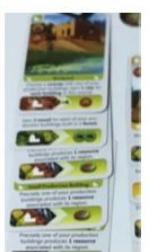
绿牌(生产建筑)
放小房子+触发所有绿牌效果(比如,根据小房子所在板块获得对应资源)

绿牌
获得弃牌张数的任意资源+解锁1小房子+补满5张手牌

黄牌 (辅助建筑,学校大学啥的)
放圆柱体 token+ 触发所有黄牌效果 (比如,每有一个板块上有两个以上你的建筑就获得分或者钱)

黄牌
补满5张手牌+解锁1圆柱体+再抓弃牌张数的牌(上限10)

棕牌(加工建筑)
放三角房子+触发所有棕牌
效果(?我一个没造不知道
效果有啥)
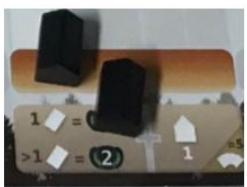
棕牌
弃1张得1分,弃多张牌得2分
+解锁1三角房子+补满5张手牌

红牌(军事建筑)
放军队单位(视为建筑)+触发所有红牌效果(比如,移动军队单位)

红牌解锁弃牌张数的任意建筑token + 补满5张手牌
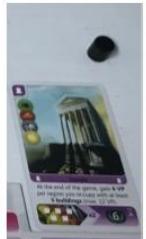
紫牌(神庙)分数+终局计分规则(比如,每有一个板块上有5个你的建筑就得6分)

紫牌(神庙)触发任何一种颜色的弃牌效果
DEUS_RULES_ENG_10_09_14_LD.md23.3 KB
Sébastien Dujardin
DEUS
Rules
As the leader of an ancient civilization, explore unknown lands in order to develop your empire.
Found new cities and construct buildings in order to exploit natural resources, establish trade routes. Set out to conquer barbarian villages or increase your scientific knowledge. Don't forget to maintain good standing with the Gods!
Pay tribute to them by making offerings and by building fabulous temples.
Overview and Goal ofthe Game
Each player begins a game of Deus with a hand of 5 Building cards. On your turn, you must choose from two actions: construct a building or make an offering to a god.
Constructing a building consists of playing a Building card, and placing the associated wooden piece in a region of the gameboard. You must place the building card in the column of the same color, and then you can benefit from the power of all the cards placed in this column, starting at the bottom. The powers of buildings allow you to gain victory points, resources, or money, make scientific advancements, or attack your neighbors. It is also possible to construct a temple, which provides victory points at the end of the game.
Making an offering to a god consists of discarding cards in order to receive aid from the god associated with one of these cards. Then you draw cards until you have five cards in your hand again.
Two things can end the game:
- All the barbarian villages have been attacked
- All the temples have been built
The player with the most victory points (VP) wins the game.
Contents
- 4 small player boards
96 building cards (16 civil buildings, 16 scientific buildings, 16 maritime buildings, 16 military units, 16 production buildings, 16 temples)
· 100 wooden Buildings (25 per player):
o 5 civil buildings
o 5 scientific buildings
o 5 maritime buildings
o 5 military units
o 5 production buildings
- 7 wooden Temples in a neutral color
- 7 two-sided Continent tiles
- Gold coins (63 ones, 12 fives, 9 tens)
- Victory Point tokens (24 ones, 9 threes, 9 fives, 17 tens)
- 80 resources: wood (20), stone (20), clay (20), wheat (20)
- 1 First Player card
Building Cards and Corresponding Wooden Pieces
Each card in the game represents a building. There are 6 different types of building, easily identifiable by the color and the symbol associated with the card. Each type of building also corresponds to a wooden Building in the player color of its owner (except Temples).
Note: For convenience, we will call all wooden pieces “buildings”, including the ships and meeples.


Maritime Building


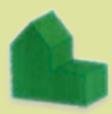
Production Building


Scientific Building


Military Units
Civil Building

Temple
The Continent tiles form the gameboard. Each tile is comprised of 2 sea regions, 1 barbarian village and 4 land regions. Each land region is associated with 1 resource, uniquely produced in that type of terrain (see Card Effects and Clarifications):
- Fields produce wheat.
- Forests produce wood.
- Swamps produce clay.
- Mountains produce stone.

- Form the gameboard from the continent tiles. The number of tiles and their relative positions varies depending on the number of players:

2 players : 4 tiles

3 players : 6 tiles

4 players : 7 tiles
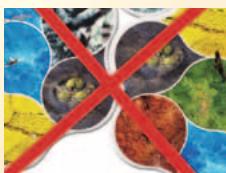
Orient the tiles any way you like. However, make sure that you never have 2 barbarian villages adjacent to one another.
Setup
- On each barbarian village, place as many VP as the number of regions adjacent to it.
Example :

Place 5 VP on this barbarian village because it is adjacent to 5 regions.
- Form a general supply, containing the following: - As many Temple pieces as there are Continent tiles (4 with 2 players, 6 with 3 players, 7 with 4 players). - 5 resources of each type (wheat, stone, clay, wood) per player (10 resources of each type with 2 players, 15 with 3 players, and 20 with 4 players).
- The victory points (VP).
- The gold pieces.
Note: Return any unused Temple pieces and Resource tokens to the box. During the game, players can no longer gain a resource that has run out. The VP and gold pieces, on the other hand, are unlimited. Players VP are hidden.
- Each player takes 1 player board and the Building pieces in their color. Place 2 pieces of each type on the corresponding column of your player board. Set the rest of the pieces beside your player board to form a personal supply.

-
Each player takes 5 gold coins, 4 resources (1 stone, 1 clay, 1 wheat, 1 wood), and 5 VP. The resources come from the general supply.
-
Thoroughly shuffle the 96 Building cards and deal 5 to each player before forming a draw pile with the remaining cards.
-
Choose a first player and give them the First Player card.
The game lasts a variable number of rounds. Each round, players take turns in clockwise order, starting with the First Player. On your turn, you must choose 1 of the following 2 actions:
A. Construct a building
B. Make an offering to the gods
A. Construct a building
In order to construct building, you must first play a Building card from your hand. Note that there are two different types of building: standard and temples.
Standard Buildings
In order to construct a standard building (civil buildings, scientific buildings, maritime buildings, military units, production buildings) from your hand, you must follow these steps:
-
Verify that you have at least one wooden piece of the same type on your player board. If you do not have a piece of this type, you cannot play this card.
-
Place the card above your player board. Your player board establishes 6 columns by color. Place the card at the top of the column of the same color, such that the effects of all cards in that column are visible.
-
Pay the construction cost indicated in the upper-left corner of the card. You can pay in resources and/or gold.
Important: When paying the construction cost (and only in that case) each resource can be replaced by 4 Gold (even if the player has this resource).
- Place the wooden Building corresponding to the card in a region on the gameboard. This piece must come from your player board. Placement of the piece must respect the following placement rules:
You must place your first Building in a region at the edge of the gameboard. The first regions occupied by each player must be separated by at least two empty regions, if possible.
Your subsequent Buildings can be constructed in either a region that you control, or an empty region adjacent to a region that you control. If you place a wooden Building in a region that you control, you must respect this fundamental rule: Each Building in a single region must be of a different type (for example, two civil buildings can never be placed in the same region).
You cannot construct a building in a region occupied by a barbarian village (even if there are no longer any VP on this village).
Maritime buildings (represented by ships) must be constructed in a sea region. The other buildings cannot be constructed in sea regions.
If you wish, you may place a Building in an empty region at the edge of the gameboard in exchange for 3 VP. This can be useful in certain situations; for example, if you are blocked in.
- Benefit from the effects of all the cards in the column where you just placed the card. You must activate the cards from bottom to top. Each card's effect is depicted both with icons and with text.
Example :
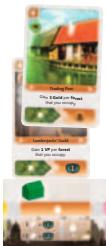
Madeline wishes to play a civil card. She can, because she has 1 wooden Building of this type on her player board. She places the card at the top of her column of civil cards (brown).

Madeline can choose between paying either 1 wood or 4 Gold.
Example :

Anna places her first production building in a mountain region. Madeline can place hers on any region at the edge of the gameboard that is more than 2 regions away from the region Anna chose.
Example :

After having placed her first production building in the mountain region, Anna can place her second building in either of the following two ways:
In the same region, as long as the new building is a
different type or on a empty adjacent region that is unocupied by a barbarian village.
Example :
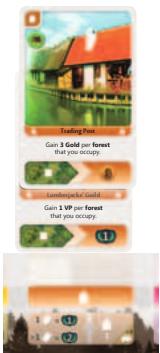
Madeline places her 2nd card in the brown column. After having placed the piece, she gets the effect from the bottom card (earn 1 VP), and then the effect from the top card (earn 3 Gold).
Temples
In order to construct a temple from your hand, you must follow these steps :
-
If you are building your first temple, place the card in the notch in the right end of your player board.
-
In order to construct your 2nd temple, you must have 1 card of each color on your Player Board. In order to construct your 3rd temple, you must have 2 cards of each color on your Player board, and so on.
-
Pay the construction cost indicated in the upper-left corner of the card, which is always 1 resource of each type. Because it is a construction cost, each resource could be replaced by 4 Gold. The constructed temple provides VP (12 VP maximum per temple) at the end of the game, according to its effect.
-
Place a wooden temple from the general supply in one of your regions (not in an empty region). As with the other types of building, you cannot have more than one temple in a city. The temple is recognized as a standard building for card effects that depend on the number of buildings in a region.
Note: If you build your temple in a region comprising only a military building (an army), you will not be able to move the army until you build another building in that city. You are not allowed to abandon a temple.
Important: Unlike the other buildings, it is still possible to play a Temple card if the temple supply is empty. In this case, you simply do not place a wooden temple on the gameboard.
Example :

Anna built her first temple. She places the card in the notch in the right end of her player board.
Example :
Anna built her second temple, which she was able to do because she has 1 card of each color (1 in each column) of her Player Board. She places the card in the second position of the Temple column.

Attack a Barbarian Village
It is possible to attack a barbarian village after having placed a building on the gameboard. This attack happens immediately (the round pauses until the attack is resolved) when both of the the following conditions are met: - Players occupy all the regions adjacent to the village.
- There is at least one army in those adjacent regions.
When this happens, the village is attacked by the player who has the most armies in regions adjacent to the barbarian village. The attacker simply wins the VP placed on the barbarian village. From now on, the region is no longer considered to be a barbarian village for card effects that depend on this. In the case of a tie, the tied player who has constructed more buildings in those regions wins the VP. If it is still a tie, the tied players share the VP, rounding down.

Example :
Madeline just placed a maritime building in the sea adjacent to the barbarian village. An attack occurs immediately because the two conditions are met. Anna wins the 3 VP placed on the Barbarian Village because she has the most military units around the barbarian village.
Important: If at the end of your action, you no longer have cards in your hand, you automatically draw 5 new ones. Whenever the Building card deck is empty, shuffle the discards to create a new deck.

Mars (red/military)
B. Make an offering to the gods
An offering allows you to discard cards in order to invoke one of the 6 gods, and to draw new cards to replenish your hand to 5 again. In order to make an offering, you must follow these steps:
-
Discard as many of the cards from your hand as you wish, and announce how many you are discarding (you can keep some of your cards, as long as you discard at least 1 card).
-
Place the cards face-up in the discard (the other players will know only what the topmost card is, not the others).
-
Benefit from the power of the god associated with the topmost card on the discard. The god's powers are depicted on your player board. The magnitude of the power is proportional to the number of cards that you discard. The gods also allow you to take wooden pieces from the general supply and place them on your player board.
-
Draw cards from the deck in order to replenish your hand to 5 cards. If you invoked Minerva (yellow/scientific), draw one more card per card you discarded in Step 3 above.
Important: It is never possible to have more than 10 cards in your hand. If you have the ability to draw beyond the 10th card, you must stop drawing when you have 10 cards in your hand.
Note : If you have more than 5 cards before starting this step you do not need to discard down to a hand of 5 cards, you will simply have more than 5 cards in your hand.
Example :
Anna makes an offering by discarding 3 cards. The top card is a Temple card. She uses Jupiter to invoke Ceres, and takes 3 resources of her choice. She also gains a wooden production building.
Neptune (blue/maritime)

Gain 2 gold per discarded card. Also gain 1 wooden maritime building.
Ceres (green/production)

Gain 1 resource of your choice per discarded card (You may choose resources that you do not produce). Also gain 1 wooden production building.
Minerva (yellow/scientific)

Gain 1 wooden scientific building. You can draw 1 additional card in Step 4 (see below) per discarded card.
Vesta (brown/civil)

Gain 1 VP if you have discarded 1 card; 2 VP (total) if you have discarded more than 1. Also gain 1 wooden civil building.

Gain 1 wooden building of your choice per discarded card. You do not have to take a military building.

Use the power of one of the 5 other gods. Jupiter acts as a “wild”. You can only invoke one god per offering.
End ofthe game
All the temples from the general supply have been constructed.
All the barbarian villages have been attacked.
When one of these conditions is met, finish the current round, so that all players get a equal number of turns. Then play a final round, during which each player can choose one final action.
Now each player tallies up their VP by adding:
VP won during the game.
Points awarded by their constructed temples (12 VP maximum per temple).
For each type of resource (wheat, wood, stone, clay) and gold, check to see which player has the most (it must be at least 1). That player receives 2 VP. If there's a tie, each tied player gets the 2 VP.

Card Effects and Clarifications

Blue Cards (Maritime)
Blue cards are associated with maritime buildings, which are the only wooden pieces playable on the sea regions. Trade allows you to sell resources for gold or VP. These cards also allow you to buy resources, or exchange them with the general supply.
Clarifications:
- You can never play 2 maritime buildings on the same sea region.

- It is possible that you cannot play a blue card because you have no access to the sea.
- It is possible that nobody can play a blue card because all sea regions are occupied.
- Sold resources are returned to the general supply.
- The resources purchased are taken from the general supply.

Green Cards (Production)
The production buildings produce the 4 types of resources that will be necessary for building construction and for trade.
Clarification:
- A building produces only the resource associated with the region in which it is built. The way it is produced is described by the card effect.

Draw 1 card per region with at least 2 buildings of your color.
Yellow Cards (Scientific)
Scientific cards allow you to neglect the gods and to no longer have to make an offering. Indeed, certain cards allow you to draw cards, and others allow you to gain wooden pieces from the general supply. Science also allows you to activate cards of other colors.

Clarifications:
- You can never have more than 10 cards in your hand.
- When you gain pieces, choose freely from among the 5 types of building (but not temples), and place the piece on the appropriate space of your player board.
Gain 3 Gold per mountain that you occupy.
Brown Cards (Civil)
Civil cards allow you to gain VP or money, depending on your development. Half of the cards reward you based on the size of your cities; the other half reward you based on the terrain type on which you have built.

Red Cards (Military)

Military cards allow you to attack your opponents by stealing their gold or VP. Military units are also the only buildings you can move, which you do by using the effects of certain cards. In addition, you will need military units to attack the barbarian villages.
Clarifications:
- To save space on the military cards, we used shorter terms: army means «military unit» and ship means «maritime building».
- Moving a military unit 1 region allows you to move the military unit into an adjacent region.
- A military unit can move through regions occupied by opponents, and through barbarian villages, as long as it doesn't end its move there.
- A military unit may enter and stop in a sea region if one of your maritime buildings is there. You can never enter a sea region occupied by an enemy maritime building.
- There can never be two military units in the same area at the end of a turn.
Alternative Start
Instead of starting with 2 buildings of each type, each of you secretly chooses a total of 10 buildings, which you place in the corresponding columns of your player board. Put the rest of the buildings in your personal supply, just as in the basic game. Experienced players can start the game with 8 or 9 buildings, instead of 10. Expert players can start with 6 or 7 buildings.
Alternative Gameboard Setups
You can modify the arrangement of the Continent tiles at the start of the game, inspired by the following examples or however you like. Just make sure that the number of tiles corresponds correctly to the number of players (4 tiles with 2 players, 6 with 3 players, and 7 with 4 players), and that there are never 2 barbarian villages adjacent to one another.

Building Wildcard
This variant is designed for players who wish to reduce the luck of the draw a little. Once per game, you can choose the construct a building action without having to consider the color of the Building card you are playing. You must play the card face-down, without showing it to the other players, and place it in the column of whichever color you wish. The construction cost is 1 gold if the card is the first card in the column, 2 gold if it is the second, 3 gold if it is the third, etc. This card grants you no effects, but it allows you to construct a building and to activate the effects of the other cards in its column. This card also counts as one of the cards necessary for the construction of a temple; however, you cannot use this card to construct the temple itself.
Designer: Sébastien Dujardin • Illustrations: Christine Deschamps, Misda, Ian Parovel & Paul Laffond Rulebook: Sébastien Dujardin ● Translation: Nathan Morse
Thanks: The designer/publisher thanks Madeline, Anaëlle, Etienne, Shadi, Patrick, Christian, François, Muriel, Nathan, Marcus, Emmanuel, and all those who have helped finalize this project. The designer particularly thanks Anaëlle for innumerable public gatherings.

From 2 to 4 players - ages 14 and up Playing time : 60 to 90 min.

Warning! Not suitable for children under 36 months. Contains small parts that could be swallowed or inhaled. Please keep this information for further reference. Not a children's toy. AGE 14+ Hobby gaming product.

2014-1/DEUS01/LFC

www.asmodee.com Distributed in North America by Asmodee Editions LLC. 20 Gateway Drive, Suite 400, Plattsburgh, NY 12901
原文为社区整理/出版社公开资料,版权归原作者,仅供个人学习查阅。