
道场Dojo Kun
一句话概览
道场 是一款已收录于村了吗规则库的桌游,支持 1–4 人,原名 Dojo Kun。
本页内容:一句话概览 · 游戏概述 · 1. 游戏组件 · 2. 游戏设置 · 3. 游戏流程 · 4. 行动详解 · 5. 骰子系统 · 6. 比武大赛 · 7. 赛季切换与游戏结束 · 8. 单人模式 · 9. 附录:武术家一览 · 10. 附录:特殊行动详表 · 常见问题
道场(四道場 KUN)规则速览
本页收录规则速览的前 11 节(篇幅所限省略了后 4 节),完整规则速览与卡牌可在村了吗查询。
游戏概述
在江户时代的日本,玩家扮演四大武学门派(虎、鹤、熊、蛇)的道场主人,通过扩建训练场、训练门下弟子、挑战冒险任务和参加武术大赛来积累声望。经历两个赛季(白莲花季、黑莲花季)的两次武术大赛后,拥有最多声望的玩家获胜。
核心机制: 工人放置(大师/武术家标记)、骰子战斗与蛇形结算链、季节性轮换面板、淘汰赛制比武大赛
1. 游戏组件
| 组件 | 数量 | 说明 |
|---|---|---|
| 道场玩家板 | 4块 | 每道场1块 |
| 道场扩展板 | 8块 | 每色2块(第3、4号扩展) |
| 武术家行动板 | 1块 | 显示武术家可执行的动作槽 |
| 大师行动板 | 1块 | 显示大师可执行的动作槽 |
| 武术大赛板 | 1块 | 上半部为黑莲花季,下半部为白莲花季 |
| 战斗板 | 1块 | 蛇形布局图,用于战斗结算 |
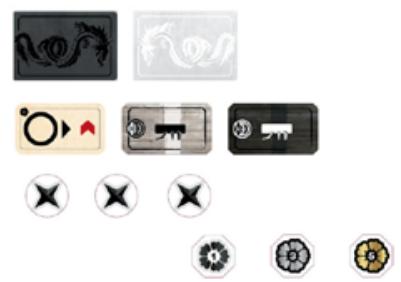
| 标记物 — 道场符号(大师) | 20个 | 代表大师(老师),每种颜色5个 |
| 标记物 — 数字1~4(武术家) | 20个 | 圆圈中印有数字,每种颜色5个 |
| 气(Ki)标记物 | 50个 | 临时精神能量 |
| 声望分数标记物(30/20/10) | 60个 | 计分用 |
| 经验等级标记物 | 108个 | 标注武术家实力 |
| 伤害标记物 | 10个 | 战斗中受创时放置 |
| 秘技标记物 | 8个 | 四种颜色,各2个 |
| 彩色骰子(红/蓝/灰/绿) | 各24个 | 对应虎/鹤/熊/蛇四个门派 |
| 预定板块 | 3块 | 一级、二级、三级 |
| 头骨道场标记物 | 7个 | 填充比赛空缺时使用 |
| 战士标记物(白色/黑色) | 2个 | 决定战斗双方阵营 |
| 回合指示物 | 1个 | 记录当前回合进度 |
| 初始玩家标记 | 1个 | 首回合先手 |
| 战斗移动标记 | 8个 | 标记投掷结果 |
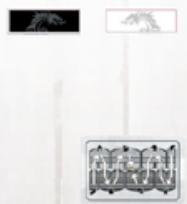
| 头骨道场武术家卡牌 | 7张 | 双面印刷(亮面=白莲花季,暗面=黑莲花季) |
| 第一赛季武术家卡牌 | 12张 | 编号1~16(含前辈牌) |
| 第二赛季武术家卡牌 | 12张 | 编号17~28 |
| 初始武术家(前辈)卡牌 | 4张 | MEDVED、CHEN Z.、TAKASHI、LI YUN DAI |
| 冒险任务卡牌 | 6张 | 每赛季3张 |
| 特殊行动卡牌 | 6张 | 每赛季3张 |
| 预测卡牌 | 8张 | 每道场2张 |
| 训练设施板块 | 18块 | 第一赛季9块、第二赛季9块 |
| 预置板块 | 3块 | 战斗板上预先放置 |
| 玩家帮助卡 | 4张 | 每道场1张 |
2. 游戏设置
2.1 标记物准备
将各色的道场符号贴纸(大师标记物)和1~4数字贴纸(武术家标记物)从贴纸上撕下。道场符号代表大师;数字标记代表武术家,其中「1」为初始武术家(前辈),所有玩家的起始角色。
最近被揍的玩家担任初始玩家并获得初始玩家标记。
2.2 公共区域设置
按以下顺序布置各区域:
A 武术家行动板:放置并翻开每叠冒险卡和特殊行动卡的第一张到采集区。阳大师槽放入4个秘技标记物(每种颜色各1个)。
B 战斗板:预置板块放置在指定位置。
C 大师行动板:根据玩家人数从第一赛季训练设施牌堆中揭示相应数量的设施牌放置到位;同时根据人数从第一赛季武术家卡牌堆中揭示相应数量的武术家牌放置到位。
D 武术大赛板:回合指示物放在第一格上。
2.3 人数调整
- 1~2人:只使用2个武术家槽和1个训练设施槽
- 3人:使用3个武术家槽和2个训练设施槽
- 4人:使用全部武术家槽和全部训练设施槽
2.4 玩家个人设置
每位玩家选择一种道场(虎/鹤/熊/蛇之一),获得对应颜色的组件:
- 1块道场玩家板
- 2块道场扩展板
- 1张玩家帮助卡
- 1张1号初始武术家卡牌
- 大师标记物
- 对应颜色的武术家标记物
- 2张对应颜色的预测卡牌
将大师标记物、1号武术家标记物和1号武术家卡牌按对应位置放在道场板上;其余组件放于玩家板旁边。
2.5 道场门派一览
| 道场 | 日文名 | 颜色 | 骰子色 | 灵感来源 |
|---|---|---|---|---|
| 虎道场 | TORA | 红 | 红色 | 空手道,集中攻击以最快方式击败对手 |
| 鹤道场 | KUREN | 蓝 | 蓝色 | 合气道,运用气功制造防御,寻找一击必杀机会 |
| 熊道场 | KUMA | 灰 | 灰色 | 柔道,提升抓握能力近身战斗,用最少能量获胜 |
| 蛇道场 | KOBURA | 绿 | 绿色 | 跆拳道和截拳道,强化腿速和敏捷,避开对方抓握造成毁灭打击 |
3. 游戏流程
游戏由两个赛季组成:白莲花季和黑莲花季。每个赛季包含 3个序幕回合 和 1个比武大赛回合。所有玩家逆时针依次在开幕阶段放置自己的标记物执行行动,之后进行比武大赛。完成两个赛季后游戏结束,比较声望总分定胜负。
3.1 序幕回合
从初始玩家开始,玩家们按照逆时针顺序放置自己的武术家标记物或大师标记物到道场板上可用的行动槽或村庄板上。放置后立即执行该槽对应的行动。当所有玩家都放置完标记物后,该回合结束。
标记物类型
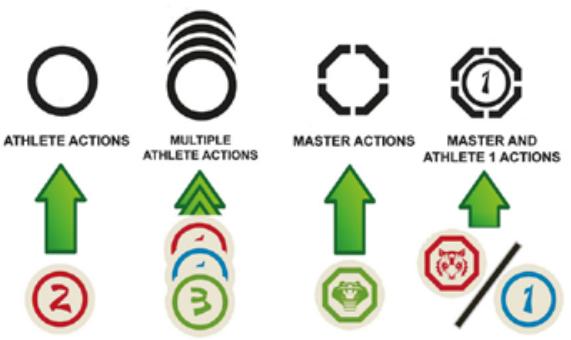
- 武术家标记物(圆形数字标记①②③④):只能放置在道场或村庄板的圆形活动槽中。每个标记物必须放在其对应的武术家卡牌上方。获得气或经验等级时也需放在对应卡牌上。
- 大师标记物(带道场符号的八角形标记):只能放置在八角形活动槽中("新的训练设施"行动除外)。
一个圆形槽位可被一个武术家标记物占据。多重圆形的槽位可被多个武术家标记物先后占据。注意:玩家不能选择和占领自己无法执行的行动槽。
丹(Dan)
所有经验等级的总和称为"丹",代表武术家达到的级别。某些武术家的未分配经验等级可以自由分配到任意颜色的学科。任何学科的等级上限为3级。
3.2 回合结束阶段
按以下顺序更新:
- 移除大师行动板上所有的武术家,并在空出的槽位替换为当前赛季的下一张武术家卡牌
- 移除大师行动板上所有的训练板块,替换为当前赛季的下一张训练板块
- 特殊行动卡和冒险卡:保留未选择的卡牌,整体向下移动一格,补充新的当前赛季卡牌至顶格;若已占满,则移走最旧的保留卡牌再移动
- 将所有武术家和大师标记物放回各自的起始位置
- 回合指示物向上移动一格
4. 行动详解
4.1 训练(武术家行动)
将一个武术家放置在道场上的训练行动槽中。通常奖励指定门派的 +1经验等级,并且该武术家可以从道场中任何免费的训练设施中获得额外效果。
重要限制:任何学科的最高等级为3级。
4.2 特殊行动(武术家行动)
收集多张特殊行动卡牌,将其放在武术家卡牌下方。使用时需支付气标记或失去某个学科1个经验等级(该学科至少须有1级)。具体细节参见附录5。
4.3 神秘瀑布(武术家行动)
分两种可选地点:
- 单个圆形:放置一个武术家可获得 2个气标记
- 多重圆形:放置一个武术家仅获得 1个气标记
4.4 成为初始玩家(武术家行动)
放置一个武术家在此处可获得初始玩家标记,并同时得到可用的最低等级的预置板块(一级 > 二级 > 三级)。预置板块在比武大赛的准备阶段提供显著优势。
重要:每个道场只能拥有一个预置板块。 如果玩家已经拥有预置板块并再次选择此行动,只能获得初始玩家标记,不再获得新板块。
4.5 帮助村民(武术家行动)
放置一个武术家在此处获得 1个声望点 + 1个气标记。此外,他还能像训练一样获得对应的训练设施收获(例如额外的经验等级或气)。
放置在多重圆形中的武术家仅获得 1个声望点(无额外气)。
4.6 秘技(武术家 → 阳大师行动)
将一个武术家放在此区域,支付对应的气标记来获取秘技标记。秘技标记直接放置在该武术家的卡牌上,每激活一次秘技会为其提供 1个额外的战斗骰子符号。
秘技分为四种颜色:
| 秘技 | 道场 | 费用 | 获得的战斗符号 |
|---|---|---|---|
| 虎秘技 | 虎(红) | 2个气 | 1个打击 |
| 鹤秘技 | 鹤(蓝) | 1个气 | 1个格挡 |
| 熊秘技 | 熊(灰) | 0个气 | 1个抓握 + 1个气 |
| 蛇秘技 | 蛇(绿) | 0个气 | 1个跳跃 |
限制:相同学科的等级达到3级时,不能再获得该色的秘技。秘技和相同学科可以同时存在且都被计算。
秘技在战斗中可以在投掷骰子之前将获得的额外符号加入本方的战斗结果中。
4.7 新的训练设施(大师行动)
放置大师在此行动槽中,获得1块新的训练设施板块并将其安置在道场上空缺的设施槽中。新训练设施不仅提供更好的训练选项,还在游戏结束时贡献正数或负数的声望点数。
执行条件:
- 只能用大师或资深武术家(1号武术家代替大师)来完成此行动
- 道场上必须有空的设施槽才可执行
4.8 扩展道场(大师行动)
放置大师在此处获取扩展板:
- 第一次:获得3号扩展板
- 第二次:获得4号扩展板
扩展板允许道场容纳更多训练设施或武术家。道场最多扩展2次(不能进行第三次)。每个扩展板在游戏结束时为玩家提供 1个声望点。
4.9 加快武术家训练(大师行动)
大师留在训练室监督训练,将道场上已完成训练的任意一个武术家放置到主游戏板上的一个可用行动槽中(即重新激活该武术家使其能执行另一个行动)。
执行条件:
- 所有武术家都已离开其起始位置后才能执行
- 每回合仅限1个武术家
- 玩家不能让已被训练过的武术家再进行训练
特殊情况:如果选择此行动时有一名玩家从冒险中获得了新武术家,则该新武术家优先放置到训练设施上,只有后续回合的新武术家才能通过这个行动释放。
5. 骰子系统
四个门派各有对应的颜色:虎=红、鹤=蓝、熊=灰、蛇=绿。每个门派使用一枚同色骰子参与战斗。
5.1 骰子符号及克制关系
| 符号 | 作用 | 克制 | 被克制 |
|---|---|---|---|
| 气(Ki) | 临时精神能量,用于激活特殊行动 | 不参战 | — |
| 跳跃 | 减少对手的抓握 | 抓握 | — |
| 抓握 | 减少对手的格挡 | 格挡 | 跳跃 |
| 格挡 | 减少对手的打击 | 打击 | 抓握 |
| 打击 | 战斗胜利所需(最多者获胜) | — | 格挡 |
蛇形布局:跳跃 → 对方抓握 → 我方格挡 → 对方打击。
5.2 秘技的战斗加成
秘技提供的战斗符号可在投掷骰子后加入本方结果中,相当于增加了一个额外的骰子面。战斗移动标记可以翻转倒置来表示7+等超出6面的数值。
6. 比武大赛
6.1 赛制概述
在比武大赛阶段,8位武术家进行一系列淘汰赛直至决出冠军。白莲花季使用大赛板的下半部分,黑莲花季使用上半部分。每位玩家指派2名武术家参赛。 如果没有足够的武术家,空缺由头骨道场武术家随机填补。
6.2 比赛配对
第一步:每位拥有预置板块的玩家将自己的一个武术家放在预置板块上(如有)。
第二步:所有玩家各自选择一个未预置的武术家,安排其先进入带有圆点标记的大赛槽位。若玩家没有足够的武术家(不足4个可安排的),从头骨道场牌堆随机抽取缺失的标记物凑齐。这4个武术家洗牌后随机分配到圆点槽位。
第三步:拥有预置板块的玩家按 从低级别到高优先级 的顺序将预置板块上的武术家依次放入对阵位——选择哪位武术家对抗此前已入场的对手。相同道场的武术家可以相互对战(见下文预测规则)。
第四步:预置板块全空后,剩余玩家随机将武术家放入剩余的大赛槽位。仍有空缺则随机填充头骨道场武术家。
6.3 战斗过程
准备阶段
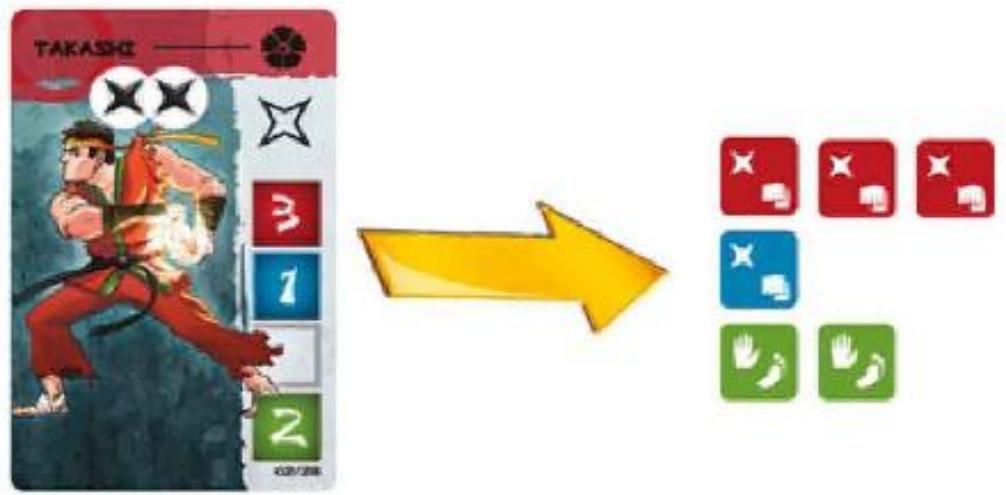
年长的玩家选择1个战士标记物(白或黑),分别放置在双方武术家卡牌上的专用槽内。对战双方各自拿取对应武术家 总经验等级数量的骰子(各种颜色按卡牌上印有的比例分配)。
预测阶段
不参加战斗的玩家根据对战双方的实力进行预测。选择不参与战斗的一位选手所属道场的预测卡牌,放在战斗板对应位置。预测正确则在战斗结束后获得 1个声望点;预测失败无任何损失。
例外:如果两位对手来自同一道场,不会发生实际战斗。控制这两位武术家的玩家将自行选择谁晋级。所有其他玩家自动获得1个声望点,视为猜对了胜者。
投掷与结算
重置所有战斗移动标记归零。每位玩家投掷自己的骰子,并用战斗移动标记在战斗板上标出投掷出的每种符号的数量,将秘技带来的额外符号一并加入。
战斗按照蛇形布局结算:
1. 双方更新投掷结果
2. 减少等同于对手跳跃值的抓握
3. 减少等同于对手抓握值的格挡
4. 减少等同于对手格挡值的打击
5. 拥有最多打击值的武术家获胜
平局处理: 若双方最终打击值相同,进行新一轮投掷直到分出胜负。每次平局双方各获得1个伤害标记。
6.4 伤害标记物
伤害表示临时削弱武术家的战斗力:
- 平局时双方各获得1个伤害标记
- 被"有害的攻击"特殊行动命中时获得1个伤害标记
- 伤害标记放置在武术家卡牌上某个至少为1级的学科旁,该学科等级暂时减1(不降为负值)
- 受影响后,该学科在下轮战斗中 少投1枚骰子
- 受伤学科等级在此期间 不能被提升
- 大赛结束后伤害标记方可移除
- 如果一个武术家因受伤导致所有对应骰子都没了,他将自动输掉比赛
- 极端罕见情况下双方都没有可用骰子时,两人同时退出比赛
6.5 头骨道场
头骨道场武术家在以下情况中充当对手:
- 当玩家不得不与头骨道场武术家对战时,声明预测后由其 左侧的玩家 为头骨武术家投掷骰子
- 头骨道场武术家 永远不会受到伤害标记影响
- 但在遭受"有害的攻击"时,依然要失去红色骰子投出的符号
- 两个头骨道场武术家交手时,号码较低者晋级(无预测阶段)
- 部分头骨道场武术家有特殊行动效果,符合条件时在投骰后可立即触发
6.6 大赛计分
所有战斗完成后,玩家根据武术家在比赛中达到的名次获得声望值(具体分数参见大赛板)。
7. 赛季切换与游戏结束
7.1 第一赛季结束后
- 预置板块放回
- 阳大师失去的秘技补齐(每种类型各恢复1个)
7.2 第二赛季开始
使用全新的卡牌和板块:新的武术家卡牌(17~28号)、新的训练设施(第10/12/14/16/18号等)、新的特殊行动卡牌和新的冒险卡牌。
7.3 游戏结束(第二赛季大赛后)
计算每位玩家的总分,累加以下来源的声望点:
| 来源 | 说明 |
|---|---|
| 冒险 | 完成任务获得的声望 |
| 预测 | 比武大赛中猜对胜者的声望 |
| 大赛名次 | 比赛到达的名次得分 |
| 训练设施 | 各设施板块末尾标注的VP值(正或负) |
| 武术家 | 每张武术家卡牌上的声望值 |
| 特殊行动 | 使用的特殊行动卡牌带来的声望 |
| 扩展板块 | 每块扩展板提供1个声望点 |
最高声望者获胜。 平局判定顺序:
1. 赢得更多战斗场次者胜
2. 若仍平局,拥有更高总等级(丹)数者胜
3. 依旧平局则共享胜利
8. 单人模式
单人游戏中,玩家需要让自己的总声望超过头骨道场才能获得胜利。
规则调整:
- 序幕阶段规则不变
- 玩家参赛的武术家不得超过2个
- 其余所有空缺均填入头骨道场武术家
- 头骨道场的总声望 = 两次比赛中所有头骨武术家的得分之和
- 两次大赛结束后,玩家声望超过头骨道场即可获胜
进阶难度(可选):
- 第一赛季:所有头骨武术家额外获得 +1格挡
- 第二赛季:所有头骨武术家额外获得 +1抓握 +1打击
等级评定(根据最终总声望):
| 声望范围 | 等级称号 |
|---|---|
| < 20 | 木头人 |
| 21~25 | 胶带 |
| 26~30 | 红带 |
| 31~35 | 黑带 |
| 36~40 | 前辈 |
| > 41 | 大师 |
9. 附录:武术家一览
9.1 前辈(初始武术家)
| 编号 | 姓名 | 声望 | 配置 | 特殊能力 |
|---|---|---|---|---|
| 1 | MEDVED | +1 | 1红 1灰 1气 | 无 |
| 2 | TAKASHI | +1 | 1红 1绿 1气 | 无 |
| 3 | CHEN Z. | +1 | 1蓝 1绿 1气 | 无 |
| 4 | LI YUN DAI | +1 | 1蓝 1灰 1气 | 无 |
9.2 第一季武术家
| 编号 | 姓名 | 声望 | 配置 | 特殊能力 |
|---|---|---|---|---|
| 5 | KING HOSHI | +1 | 1红 1绿 1气 | 击败1张土匪卡时获得+1等级 |
| 6 | OENG | +2 | 1蓝 4气 | 无 |
| 7 | T.J.BALLS | +2 | 1灰 1气 | 特殊行动:3气+1抓握+1格挡=1打击 |
| 8 | KAZAMA FAN | +2 | 1蓝 | 每当获得1个气时额外获得+1气 |
| 9 | FROST SAN | 0 | 1蓝 1灰 | 特殊行动:5气=2格挡 |
| 10 | SUN W.KONG | +1 | 1红 1蓝 1气 | 完成1张旅行卡时获得+1等级 |
| 11 | AZUKI | 0 | 1红 1灰 1绿 1气 | 无 |
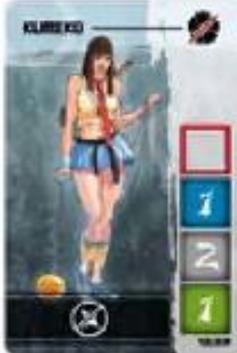
| 12 | KUMIKO | -1 | 1蓝 2灰 1绿 | 不能获得气 |
| 13 | THE KID | +1 | 1红 1绿 1气 | 执行阳大师时少消耗1气 |
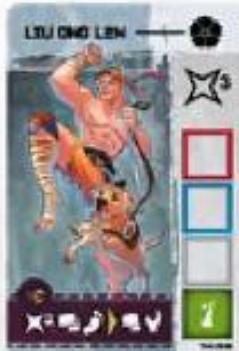
| 14 | LIU ONG LEN | +1 | 1绿 3气 | 特殊行动:2气+1跳跃+1打击=1抓握+1打击 |
| 15 | TYLER HANDSOME | +2 | 1红 1气 | 大赛中每次胜利获得1个声望点 |
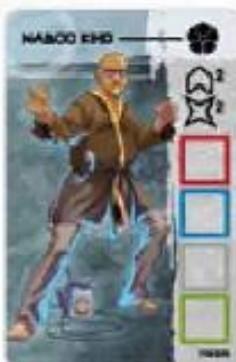
| 16 | NABOO KHO | +1 | 2等级 2气 | 可从不同门派自由选择2个经验等级(首次获得时) |
9.3 第二季武术家
| 编号 | 姓名 | 声望 | 配置 | 特殊能力 |
|---|---|---|---|---|
| 17 | LORD VEGAN | 0 | 1红 1蓝 2绿 | 可移除2气来获得+1等级(可多次触发) |
| 18 | YUMI | +1 | 1红 1灰 2绿 | 特殊行动:3气+2跳跃+1格挡=2打击 |
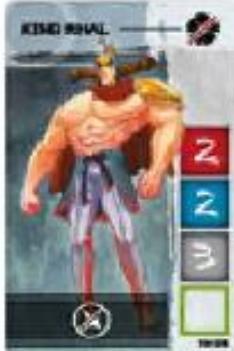
| 19 | KING RHAL | -1 | 2红 2蓝 3灰 | 不能获得气 |
| 20 | JIM CLAY VANDER | +2 | 1红 3绿 | 无 |
| 21 | PAO CHENG | +1 | 1红 1蓝 1灰 1绿 | 无 |
| 22 | FRED CASEY | +2 | 1蓝 2等级3气 | 无 |
| 23 | MARCELLUS BRODY | +1 | 2红 1蓝 2气 | 当他进行训练时获得1声望 |
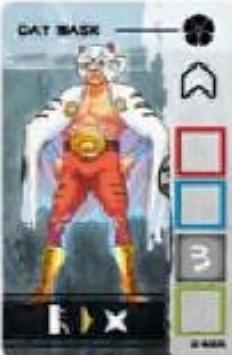
| 24 | CAT MASK | +1 | 3灰 1等级 | 当他进行训练时获得1气 |
| 25 | THE WIDOW | +1 | 1红 2蓝 1气 | 特殊行动:5气=1打击+1抓握 |
| 26 | ANGEL | +1 | 1红 1蓝 2绿 2气 | 无 |
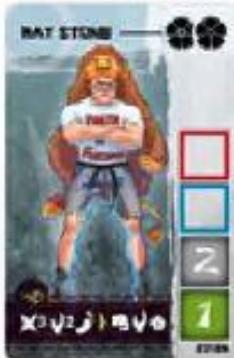
| 27 | RAY STONE | +2 | 2灰 1绿 | 特殊行动:3气+1跳跃+2抓握=1打击+1抓握+1声望 |
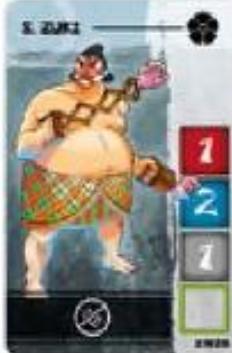
| 28 | S.ZUKI | +1 | 1红 2蓝 1灰 | 永远不会获得伤害标记物(无论平局还是特殊行动) |
10. 附录:特殊行动详表
| 名称 | 赛季 | 费用 | 要求符号 | 效果 |
|---|---|---|---|---|
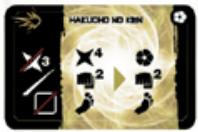
| 天鹅拳(HAKUCHO NO KEN) | 一 | 3气 / 或1等级 | 4气 2打击 1跳跃 | 获得+2/+4声望 |
| 龟波(HA DO ME HA KEN) | 二 | 4气 / 或1气+1等级 | 5气 1打击 1格挡 | 获得+3打击 |
| 百连拳(TONDE HYAKU KEN) | 二 | 4气 / 或1气+1等级 | 4气 1打击 1格挡 1跳跃 | 触发有害的攻击 +2打击 +1格挡 |
| 屈服(TEISHUTSU) | 二 | 3气 / 或1等级 | 4气 1打击 1格挡 1抓握 | 赢得平局 +1打击 +1格挡 +1抓握 |
| 超级屈服(KYODAI TEISHUTSU) | 二 | 4气 / 或1气+1等级 | 4气 1打击 2格挡 | 赢得所有平局(优于普通屈服) +1打击 +2格挡 |
特殊行动通用规则:
- 激活特殊行动需要集齐箭头左侧的所有符号(来自骰子投掷 + 武术家卡牌上的气标记 + 秘技提供的符号)
- 武术家卡牌上的气标记在战斗中被计算但不会被消耗
- 同一特殊行动不能被同一回合激活两次,但相同的骰子结果可以触发不同的特殊行动
- 不能用特殊行动产生的符号去激活另一个特殊行动
- 特殊行动卡牌通过特殊行动行动槽或冒险卡获得,放置在对应武术家卡牌下方
常见问题(FAQ)
以下 1 条问答中 0 条来自站内玩家的真实提问,其余 1 条为本站整理的常见疑问;答复内容保持原样。
道场支持几个人玩?
1–4 人。
去哪查完整规则
想核对具体规则细节、卡牌效果或某个回合的结算方式,可以在村了吗里选中这款游戏后直接提问。
同类桌游
- 卡坦岛德式
- 工业革命:伯明翰德式
- 勃艮第城堡:特别典藏版德式
- 方舟动物园德式
- 卡卡颂抽象
- 瘟疫危机传承:第一季美式
- 阿瑞迪亚:勇踏征途美式
- 重塑宇宙德式
- 幽港迷城美式
- 埃多拉的德鲁伊德式
规则原文(Markdown)
本站收录这款游戏的规则原文 2 个文件,此处内联渲染 2 个,可直接展开阅读或下载。
rules_zh_道场_1187.md46.1 KB

四道場 KUN
游戏组件
1个武术家活动板
1个大师活动板
1个武术大赛板
1个战斗板

4个对应道场的玩家板

8个道场扩展板:每种颜色2块

20个标记物(每种颜色5个)

4个初始武术家(前辈)卡牌
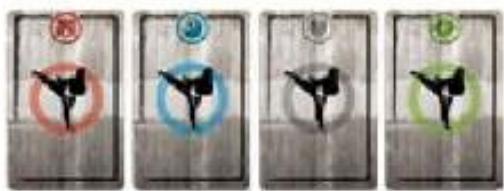
12张第一赛季武术家卡牌
12张第二赛季武术家卡牌
7个头骨道场武术家卡牌
6张冒险任务卡牌(每个赛季3张)
6张特殊行动卡牌(每个赛季3张)
规则书

8张预测卡牌(每个道场2张)
18块训练设施板块
概述及游戏目标
在道场游戏中,每位玩家扮演一名致力于发扬各自武功门派的武术大师,他们扩展训练场,挑战冒险任务和让门下弟子们参加武术大赛,在经历了两次武术大赛后拥有最多声望的玩家将获得游戏的胜利!
50个气“Ki”标记物

60个声望分数标记物(30-20-10)
108个经验等级标记物

10个伤害标记物

8个秘技标记物

24个4种颜色的骰子

3个预定板块
7个头骨道场标记物

2个战士标记物


1个回合指示物

1个初始玩家标记物

8个战斗移动标记
1条大师和武术家标记物贴纸
4张玩家帮助卡
还有这本手册


游戏准备
游戏开始前,将相关颜色的各种贴纸和木质标记物分开
道场符号的标记物代表着大师(老师)。
1-4数字的标记物代表着武术家。
1号标记物为初始武术家(前辈),所有玩家选择他开始游戏。①②③④
在游戏的开始阶段,由最近被揍的玩家来担任初始玩家并拿取初始玩家标记。
按照以下指定区域进行放置:
A 按照区域放置冒险卡和特殊行动卡,揭示每个牌组的第一张卡牌并放置在采集区(武术家行动板)
B 预约板块(战斗板块上)
C 阳大师槽中放置4个秘技标记物(每种1个) (武术家行动板)
D 按照游戏人数从第一赛季训练设施板块堆中揭示设施板块并放置(大师行动板)
E 按照游戏人数从第一赛季武术家卡牌堆中揭示武术家卡牌并放置(大师行动板)

F 回合标记物放置在游戏回合记录板的第一格上(武术大赛板)
1-4名玩家的设置
1-2名玩家:只使用2个武术家槽E和1个训练设施槽D
3名玩家:只使用3个武术家槽E和2个训练设施槽D
4名玩家:使用所有的武术家槽E和所有的训练设施槽D
每名玩家在4种道场中择其一并获得对应的组件:
1 个玩家板(道场)
2个道场扩展板
玩家帮助板
初始武术家卡牌(1号武术家)
大师标记物
对应的武术家标记物
M 2张对应颜色的预测卡牌
大师标记物,1号武术家标记物和卡牌放置在道场中对应位置上其余的组件放在玩家板旁边。
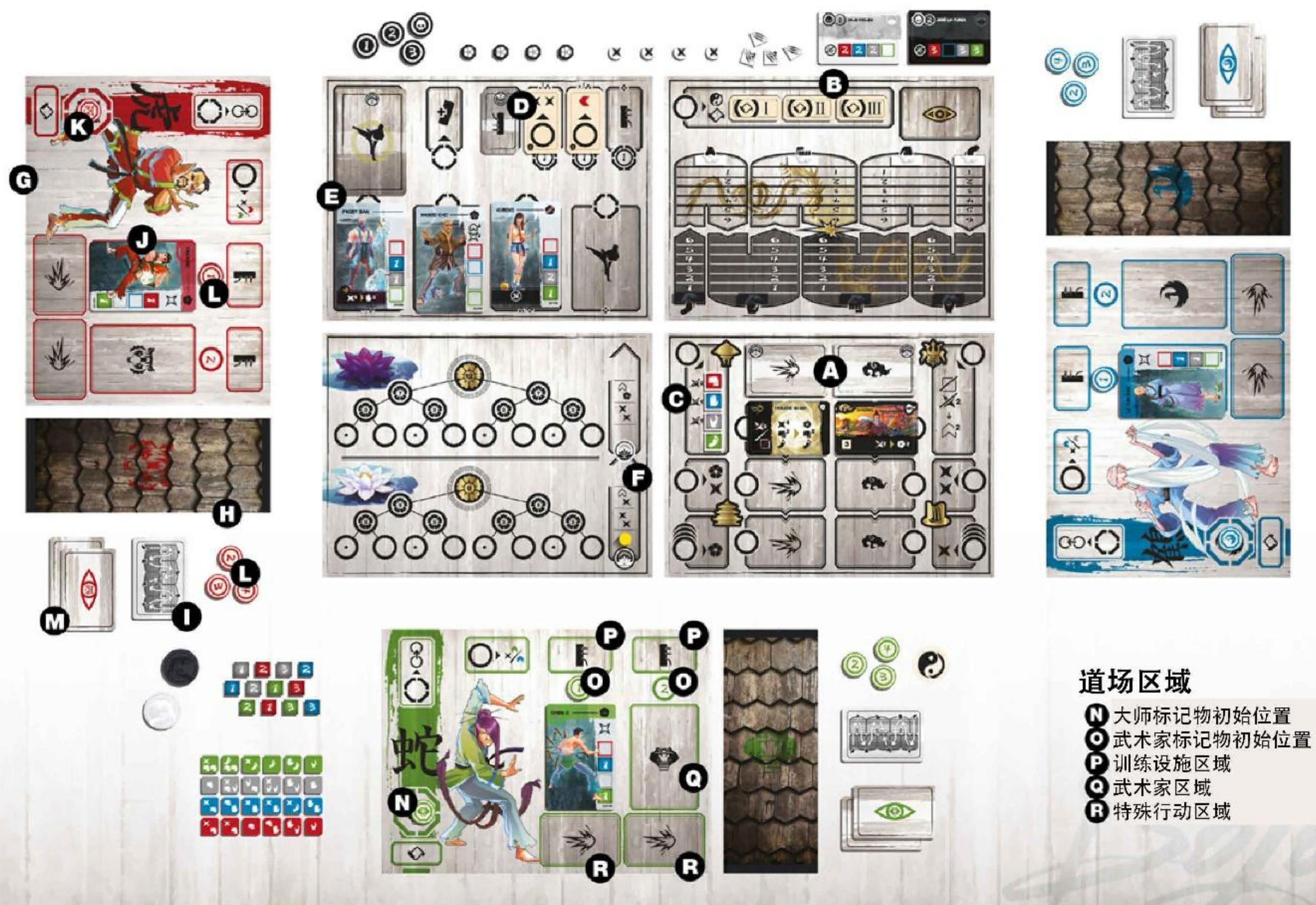
N 大师标记物初始位置
O 武术家标记物初始位置
P 训练设施区域
Q 武术家区域
R 特殊行动区域
游戏
游戏由两个赛季组成:白莲花季和黑莲花季。每个赛季分为4个回合:3个回合准备(序幕)和1回合举行比武大赛。
警告:如果你是第一次阅读此手册,我们建议先阅读第5页的战斗章节后再继续阅读这里,这个方法更容易理解在准备回合中的所有的选择项。
赛季 序幕
序幕包括3个回合,玩家们在这里将完成改良其道场的任务或者训练他们的武术家。
从第一个玩家开始,玩家们按照逆时针顺序放置他们的武术家或大师标记物到其道场中可放的位置上或者村庄中(武术家活动板和大师活动板);他们立刻执行相关的行动。当所有玩家放置完所有标记物后,这个回合结束。
这里介绍下2种标记物:大师(有对应道场符号的)标记物和武术家(圆圈中有数字的)标记物。游戏开始时,玩家只有1个武术家标记物,1号武术家(前辈-资深武术家)。每获得一个新武术家对应一个武术家标记物,标记物的数字对应道场中代表的区域。这个标记物被使用标志着对应武术家的行动。
武术家标记物只能放置在道场或村庄板上的圆圈活动槽中。
大师标记物只能放置在八角形活动槽中(“新的训练装备”除外,参考第3页)每个武术家标记物有对应的卡牌,当武术家标记物获得气"KI"标记或者经验等级时,它们必须放置在对应的卡牌上。
一个圆圈的活动槽可以被一个武术家标记物选择并占有。
多重圆圈的活动槽可以被多个武术家标记物选择并占有。
请注意:玩家不能选择和占领一个他/她不能执行的行动槽。
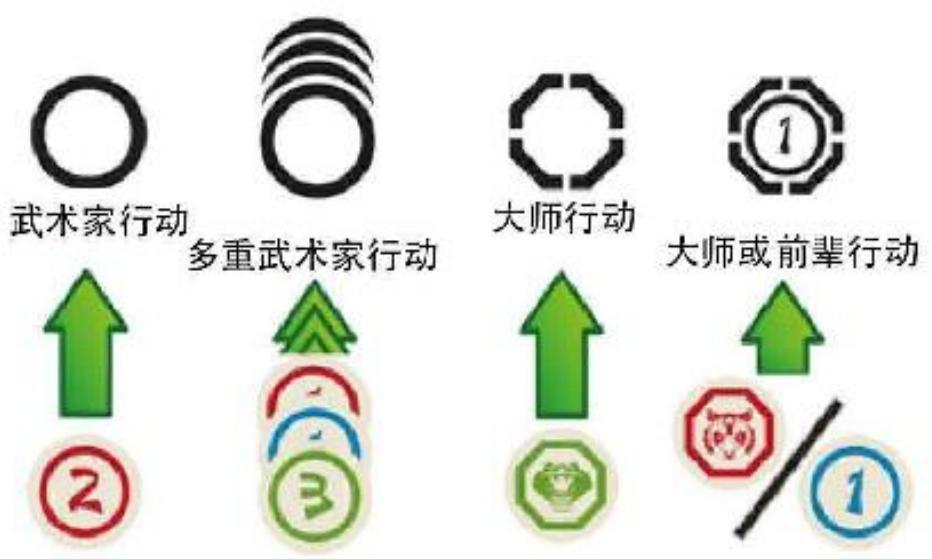
大师和经验等级
道场中有4个不同的门派/学科(虎、鹤、熊、蛇),每个门派/学科都有对应的颜色(红、蓝、灰、绿)并且1个相同颜色的骰子代表着这个门派/学科的战斗方式。



回合记录轨
这个轨道记录着当前回合。每回合都有一个奖励可分给所有在此回合中获得的武术家(请看第3页)。

武术家卡牌

SPECIAL ABILITIES 特殊能力
武术家卡牌的初始内容区显示这个武术家在登场时可获得的经验等级和气“KI”标记。
CARD NUMBER
卡牌编号
经验等级已经印刷在卡牌上,为每个气符号放置1个气“KI”标记在卡牌上。一些武术家拥有未分配的经验等级,你可以自由升级任意颜色的学科。所有经验等级的总和称之为“丹”Dan,并且代表着这个武术家所达到的级别。在卡牌的下方,标示着这个武术家的特殊能力()
举例说明:
埃里克获得Naboo-Kho,他可以从不同的门派/学科中选择2个经验等级,他选择1个灰色等级,1个蓝色等级并获得卡上对应的2个气“KI”标记,另外,当

前回合是第三回合,他还得到1个气标记和额外的经验等级,他选择增加1个蓝色等级。
Naboo-Kho现在是三个Dan级别的武术家了(1个灰色2个蓝色)。
武术家行动
一些被选择的行动需要武术家标记支付气标记,这样必须从对应的武术家卡牌上移除对应的标记。如果武术家没有足够的气来执行这个行动时,这个行动不能被选择。
 | 训练:一个武术家放置在你的道场的这个行动槽中,可以得到箭头右方对应的奖励。通常是增强指定门派的经验等级,一个武术家从道场中任何免费的训练设施中进行训练。重要:任何学科最高级别为3级。 | 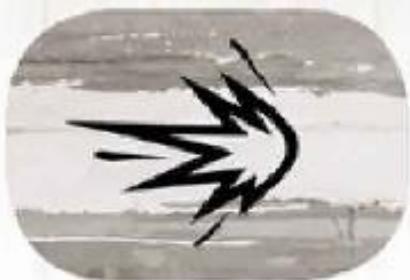 | 特殊行动:一个武术家可以收集多张特殊行动,将卡牌放置在武术家卡牌底下,使用特殊行动会支付气标记或失去1个学科的1个经验等级(你必须选择1个至少有1级的学科),具体细节请参考附录5-特殊行动。 |
 | 神秘瀑布:这里有2个可选地点:单个圆形中武术家可以得到2个气标记,在多圆形中只能得到1个气标记。 | 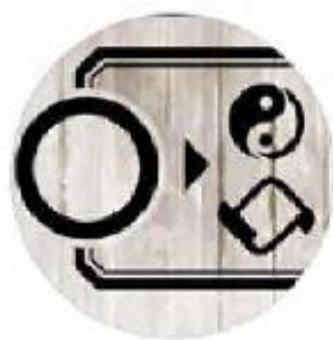 | 成为初始玩家:这个位置允许你放置1个武术家并得到初始玩家标记,同时会得到可用的最低等级的预定板块,预定板块在武术大赛的准备阶段中提供一个显著的优势(参考“比赛配对”章节中相关细节)重要:每个道场只能有一个预定板块,如果玩家已经有一个预定板块并选择此行动时,只能获得初始玩家标记。 |
 | 帮助村民:一个放置在这里的武术家可以得到1个声望点和1个气标记,他帮助村民的完成任务也会像训练一样得到收获。同样的,放置在多圆形中的武术家只能得到1个声望点数。 | 大师行动:1个大师的责任是领导道场和武术家们,成为武术比赛中最优秀的团队,因此他必须招募具有天赋的新武术家,改良和扩大道场的规模或者尽心尽力的培养他的武术家们,1号武术家(资深武术家)有时也将承担起大师的工作,他可以代替大师来进行“新的训练装备”的行动。 | |
| 阳大师:1个放置在此区域中的武术家支付对应数量的气标记可以得到那些仍然可用的秘技,把秘技标记放置在对应武术家的卡牌上 | |||
| 秘技标记提供1个额外的行动符号。在战斗中这个符号可以在投掷骰子之前加入到战斗板中他的这一边。 | |||
 | 虎秘技(红色)支付2个气标记得到1个击打符号鹤秘技(蓝色)支付1个气标记得到1个格挡符号熊秘技(灰色)得到1个气标记和得到1个抓握符号蛇秘技(绿色)支付0个气标记得到1个跳跃符号每个秘技在相同门派/学科等级为3时,不能被计算。因此允许秘技和相同学科同时被计算并达到3级。 |  | 新的训练设施:放置你的大师在这些行动槽中,可以得到1个新的训练设施并将其放置在你的道场中空缺的设施槽中。新训练设施不止提供更好的训练选择,还能在游戏结束时得到正数(负数)声望。这个行动只能从大师或资深武术家中择其一来完成。如果你的道场没有空设施槽,你不能选择这个行动。更多细节请参考附录3. |
 | |||
 | 阴大师:放置武术家标记物到此处时,武术家支付2个气标记和失去1个门派/学科(可选择)的经验等级后(但是一个学科不能没有经验)和武术家得到2个经验等级并分配到任意学科上,武术家可以升级同一学科的2级,也可以在2个不同学科中各升1级。 |  | 招募新的武术家:将大师标记物放置在此处,玩家将得到对应的武术家并将卡牌放置在道场中空的武术家槽中。拿取武术家标记物放置在道场中新武术家卡牌的上方。之后按照新武术家卡牌上初始内容的描述放置对应的奖励(气标记等)并获得本回合的奖励(大赛板上的标示)。像任何行动点一样,如果玩家的道场中没有足够的武术家空槽则不能选择并完成这个行动。(具体细节参考附录2-武术家列表)。 |
 | 冒险:每个冒险都有一个最低Dan等级的要求(Dan等级为武术家所有经验等级的总和),一个冒险同时要求移除气标记来获得卡牌奖励,一旦达成条件,移除冒险卡牌(具体内容请参考附录4-冒险)。 | ||

扩展道场:将大师标记物放置此处,玩家可以得到3号扩展板,第二次放置此处可以得到4号扩展板,这两个扩展板可让到场容纳更多的训练设施或武术家。道场不能进行三次扩展。每个道场扩展板在游戏结束时,为玩家提供1个声望点数。

加快武术家训练:大师可以决定留在训练室监督训练,加快武术家的能力的提升,把大师标记物放置此处,玩家可以将任何一个在道场中完成训练的武术家放置到主游戏板上一个可用的行动槽中。
注意:玩家不能让训练过的武术家再进行训练。
这个行动可以在如下条件下完成:
-在所有武术家离开他们的起始位置后。
-1次只能使用1个武术家
注意:如果选择这个行动时,一名玩家从冒险中得到1个武术家,这个新武术家首先被放置,只有之后的回合新武术家才能放置在训练设施上。
回合结束
在每回合结束时,按照如下循序进行更新:
-移除所有大师行动板上的武术家并在空缺槽中替换新的当前赛季的武术家卡牌。
-移除所有大师行动板上的训练板块并在空缺槽中替换新的当前赛季的训练板块。
-在特殊行动和冒险布局板上,保留未选择的卡牌并向下移动一格,再在原位置上补充新的当前赛季的冒险卡牌和特殊行动卡牌。如果布局板上满了,移除最早保留的卡牌再移动并替换。
-将武术家标记物和大师标记物放置在初始位置上。
-回合标记物向上移动一格。
比武大赛
比赛配对
在比武大赛阶段,8位武术家将完成一系列的淘汰赛,直到一位武术家胜出。白莲花赛季将使用大赛板的下半部分,黑莲花赛季将使用大赛板的上半部分。每位玩家可以指派2名武术家参加比赛。
在每个准备阶段,如果因为任何原因没有足够的武术家标记物参加比赛,这些空缺将由头骨道场的武术家来随机补满(详情参考头骨道场-第6页)。
在准备阶段的一开始,每位玩家可以选择将一个武术家标记物放置在预定板上(如果该玩家有预定板的话)。
举例说明
罗伯特有3个武术家,但是没有预定板,莫林有1个一级预定板但只有1个武术家所以她把这个武术家放在了这个一级预定板上,琼有2个武术家和一个二级预定板,他选择了1个武术家放在了这个预定板上。



罗伯特
莫林
琼
现在所有玩家选择1个没有预定的武术家标记物,并安排这个武术家首先进入圆圈,如果玩家没有4个武术家可以安排(包括他选择的那个),玩家将从头骨道场板块堆中随机抽取空缺的标记物。
这4个武术家将随机排序在4个大赛槽中圆心有点的位置上。
举例说明:
罗伯特给琼1个1号武术家,莫林没有更多的武术家给琼,穷选择他的2号武术家,为了凑齐4个武术家,琼随机抽取了两个头骨道场的武术家,现在琼洗混所有标记物,随机分配到圆心有点的位置上,参考下图。

现在,每位拥有预定的玩家可以将预定板上的武术家放置入场。按照从最低级别到高级别的预定板的顺序,先后将预定板上的武术家标记物依次进行放置。换句话说,玩家将选择哪位武术家与之前的被放置入场对手进行战斗。
比赛规则允许相同道场的武术家进行对战(参考预测段落-第5页)。一旦预定板上都已空出,剩下的玩家随机放置他们的武术家到剩余的大赛槽中。如果比赛槽依然有空缺,将随机填满头骨道场的标记物。
举例说明:
莫林有一级预定板,她选择1号武术家对战琼的2号武术家,现在轮到琼,他选择将其二级预定板上的1号武术家对抗头骨道场的2号武术家。现在所有预定板都空了,并且只剩下罗伯特的3号武术家需要放置,当前还有两个空槽,为了填满这两个空槽,他随机抽取1个头骨道场的武术家并随机放置在剩余的两个空槽中。
头两名对手大声宣布“鹤道场的Sun.W.Kong对战熊道场的Medved!谁将会胜出?”与此同时,罗伯特已经放置好他的预测卡牌来判断哪位武术家将胜出这局比赛。。。

战斗
准备阶段
年长的玩家选择1个战士标记物(白色或黑色),放置武术家卡牌上专用槽中另一玩家得到另一个战士标记物,同样如此操作。对战的玩家拿取其武术家对应经验等级的骰子。
举例说明
预测结果

没有参加战斗的玩家根据对战双方实力进行预测。
不涉及战斗的玩家选择一张与其认为能胜的武术家相同颜色的预测卡牌,放置在战斗板中对应的位置上。如果预测是正确的,战斗结束时,他们将获得1个声望点(如果预测失败,也不会有任何损失)。
如果两个对手均来自一个道场,将不会发生战斗,控制武术家的玩家将选择哪位选手晋级,所有其他玩家获得1个声望点,代表它们都猜对了胜出的选手。
战斗
重置所有在战斗板上的战斗移动标记归零。
每位玩家投掷他的骰子并用战斗移动标记来标记投掷出的符号,将从秘技中获得的额外符号加入其中。使用之前战士标记已分配的那一半(对应武术家卡牌上同颜色的部分),请注意:投掷结果有可能出现6个相同符号,将战斗移动标记翻转倒过来移动,现在就可以表示7+了。将战斗移动标记放置在适合的槽中,如此就可表示出需要表现的数值了。

骰子行动
气符号是临时的精神能量,只能用于增加气标记物的数量(为了激活特殊行动)
跳跃减少对手的抓握
抓握减少对手的格挡
格挡减少对手的打击
打击是战斗胜利必须的动作
(拥有最多打击数量的武术家获得战斗的胜利)

两位玩家更新投掷结果之后,战斗开始进行结算。
在战斗板上有一个蛇形布局图:在布局图的两端是跳跃(无论黑与白,取决于你的这一边),图标沿着箭头从我方延伸到对方的抓握在返回到我方的格挡,最后再回到对方的打击,打击在此进行计算。
结算战斗按照以下流程进行:
-减少等同于对手跳跃的抓握
-减少等同于对手抓握的格挡
-减少等同于对手格挡的打击
-其他玩家同样重复此顺序
-拥有最多打击的武术家获胜。
如果平局,玩家进行新的战斗回合,直到有人胜出。
由于战斗会产生伤害和疲劳度,因此每次平局双方都获得1个伤害标记。
注意:如果你是第一次阅读此手册,我们建议您继续从第二页“赛季-序幕”阅读。
伤害标记物


在战斗中,武术家在平局时受到一个伤害,或受到有害的攻击(Harmful Attack)参考附录5-特殊行动),伤害表示临时失去1个武术家能力。
伤害标记物减少武术家卡牌上1个学科的1个经验等级,并把它放置在对应经验的旁边,这代表在之后的战斗中,武术家将减少投掷1个对应的骰子。经验等级不能是负值,这个意思是说,伤害标记物必须放置在至少为1的经验等级旁边,并且被放置伤害标记的等级不会得到提升。
伤害标记物只有在大赛结束后才能被移除(也可以在武术家被击败后移除),如果一个武术家没有骰子可用,他也将自动输掉比赛,在极罕见的情况下,双方战士都没有骰子可用时,他们将不得不同时退出比赛
一旦1个武术家赢得一场战斗,他的标记物向上移动到晋级位置并且预测正确的玩家可以得到1个声望点数。

随机拿取需要的头骨道场武术家的统计表和能力(参考附录6)这些卡牌为双面印刷卡牌:亮面对应白莲花赛季,暗面对应黑莲花赛季,如果上面印有一个或多个行动符号,加入这些符号到武术家投掷骰子阶段中。
如果在比武大赛战备阶段没有足够的武术家参赛时,剩余空位将由头骨道场的武术家来填补.
一些特殊行动提供特殊效果:
头骨道场
如果1个玩家不得不与1个头骨武术家对战时,在声明预测后,由其左侧的玩家为头骨武术家投掷骰子。
头骨道场的武术家

永远不会得到伤害标记物,对抗有害的伤害(Harmful Attack)时,依然要失去红色骰子投出的符号(参考Harmful Attack)
如果2个来自头骨到场的武术家交锋时,号码低的武术家将晋级(这个时候没有预测阶段)。
一些武术家有特殊行动,如果是这样,检查这些行动是否可以触发并允许在投掷骰子后立即使用其效果。
特殊行动


执行1个特殊行动时,1个玩家必须得到箭头左侧的所有符号,这些行动符号和气可以从骰子结果和武术家卡牌上的气标记物以及秘技来获得,在这个情况中,武术家卡牌上的气标记物不会在战斗中被消耗。他会在每次投掷骰子后被自动计算。
如果特殊行动被激活,加入所有从箭头得到的符号到战斗板中。1个特殊行动不能被激活两次,但是相同的骰子结果可以激活不同的特殊行动,你不能用特殊行动产生的符号来激活另一个特殊行动。
有害的攻击:(HYAKUKEN,TONDE HYAKU KEN)在两个战士更新战斗板后,激活有害的攻击的玩家投掷1个红色骰子,对手移除1个红色骰子投掷出的符号并且增加1个伤害标记物到他的武术家卡牌上。
屈服:(TEISHUTSU,KYODAI TEISHUTSU)如果战斗结束后是平局,激活屈服特殊行动的玩家获胜,不需要分配伤害标记。
注意:当平局时,双方都激活特殊行动,KYODAI TEISHUTSU 将击败 TEISHUTSU 取得最终胜利。
战斗示例:
在黑莲花赛季的比赛中,准备阶段完成后,来自熊道场的Medved(莫林)和来自虎道场的Takashi(罗伯特)在战斗中相遇,莫林选择战斗板的白色一边。琼相信Medved会获胜,在预测阶段将白色预测卡放入了预测板中。现在莫林和罗伯特拿取对应颜色和数量的骰子进行投掷。


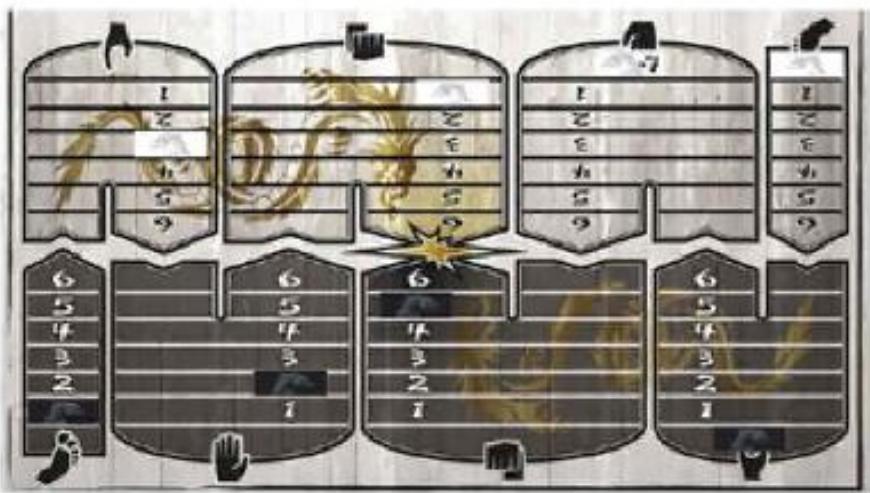


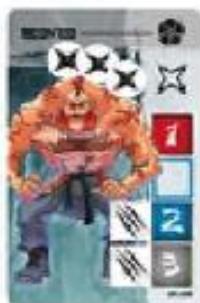
Medved有3个灰色,2个蓝色,1个红色,3个气标记物和特殊行动“KYODAI TEISHUTSU”。莫林投掷对应的6个骰子,根据结果她不能激活特殊行动,因为缺少1个气符号/标记物,她在战斗板上进行了标记。
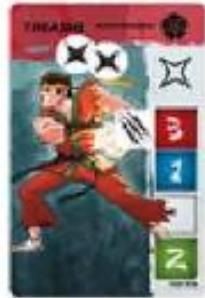
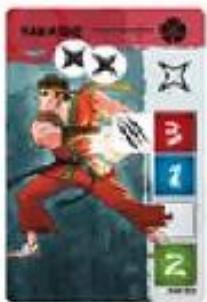
Takashi有3个红色,2个绿色,1个蓝色,2个气标记物和特殊行动“HYAKU KEN”和“TEISHUTSU”。
罗伯特投掷对应的6个骰子,根据结果,他看到要出发特殊行动“TEISHUTSU”激活了TEISHUTSU(Takashi的HYAKU KEN没有被激活,因为缺少1个格挡符号)还缺少1个抓握符号,但是他可以触发特殊行动“HYAKU KEN”,他在战斗板然后更新了战斗板。
上标注了结果后,开始计算“HYAKU KEN”的奖励:他增加了2个额外的打击符号。
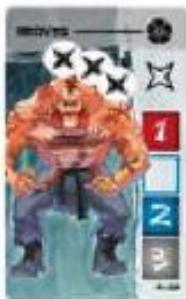
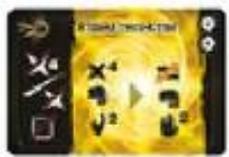
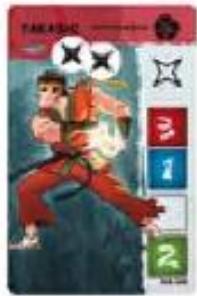

他投掷1个红色骰子并且移除对手对应的符号,这个例子中是1个打击,对手Medved将得到1个伤害标记物并因此在之后的比赛中失去了1个骰子,莫林将在当前回合结束时选择失去哪个骰子。
战斗结果:
Medved:Takashi的跳跃减少Medved的1个抓握,Medved的2个抓握使Takashi的格挡等于0,Medved没有打击到对手,因为一个投出的打击符号被对方的特殊行动给抵消了。
Takashi: Medved没有跳跃,Takashi没有抓握,Medved有7个格挡符号正好抵消掉对手的7个打击符号。
战斗结果为平局,0-0.


X
X
X
X
X
X
X
X
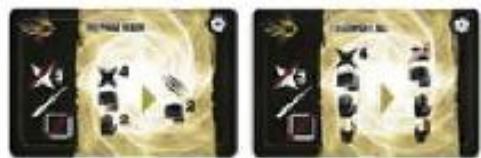
根据平局的结果,新的一局开始了,双方武术家得到疲劳带来的1个伤害标记物。这使得他们在之后的比赛中失去1个等级,Medved还有个伤害标记来自对手的特殊行动,玩家重新投掷骰子(按照被伤害标记影响后的数量和类型)并且双方都激活了1个特殊行动,Medved激活了KYODAI TEISHUTSU,Takashi


X X X X X X X

再次结算战斗结果为3-3,再次平局,特殊行动“TEISHUTSU”可以让Takashi赢得这场平局,但是这个特殊行动不能抵挡Medved的特殊行动“KYODAI TEISHU TSU”。


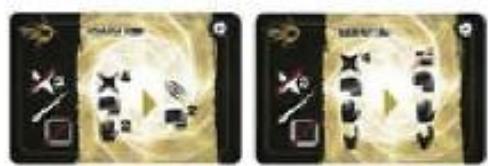
因此Medved取得了战斗的优势,但是伤害太重了,由于受到2个伤害标记的影响,实际上他将在之后的比赛中只能投掷2个骰子。同时,琼由于猜中了胜利者从而获得了1个声望分。
大赛结束
一旦所有战斗结算并且没有可进行的比赛后,比武大赛宣布结束,玩家基于其武术家所达到的位置获得声望值。
在第一赛季之后,放回预定板,重新填满阳大师丢失的秘技,每种类型又有1个。当第二赛季来开新的序幕时,你必须使用新的武术家卡牌,新的训练设施,新的特殊行动和新的冒险
游戏结束
在第二赛季大赛结束后,每位玩家计算各自的声望点数并相加:来自冒险,预测和大赛的声望点数来自训练设施的声望点数来自武术家提供的声望点数来自特殊行动的声望点数来自道场扩展板块的声望点数来自武术家的声望点数
获得最多声望点数的玩家为胜利者,如果平局,谁赢得了更多比赛场次为胜利者,如果依然平局,拥有最好等级总数的玩家为胜利者,如果还是平局,胜利将共同分享。
单人游戏模式
为了胜利,你的声望值必须多于头骨道场。
序幕阶段规则不变,在大赛阶段你参与比赛的武术家不能多于2个。其他所有空位均放置头骨道场的武术家。头骨道场将计算两次比赛中所有武术家的声望点数。两次大赛结束后,如果你的声望点数超过头骨道场你才能成为胜利者。为了增加难度,你还可以在第一赛季为头骨道场的武术家增加1个格挡符号,在第二赛季为头骨道场的武术家增加1个抓握符号和1个打击符号。
你可以对你的得分进行评价:
<20 = 木头人
21-25 = 胶带
26-30 = 红带
31-35 = 黑带
36-40 = 前辈
41 = 大师
附录1:大师
虎TORA- 虎道场大师

他的战斗方式灵感来自空手道
他训练方向是基于集中攻击以最快的方式来击败对手
KUREN-鹤道场大师
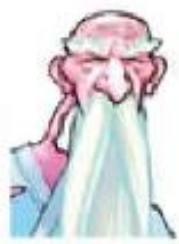
他的战斗方式灵感来自合气道
他训练方向是基于运用气功来创造防御来抵消凶猛的攻击,寻找机会一击必杀
熊 KUMA - 熊道场大师

他的战斗方式灵感来自柔道
他训练方向是基于提升抓握能力近距离战斗,从而打破对方的防御并用最少的能量赢得战斗
蛇 KOBURA - 蛇道场大师


他的战斗方式灵感来自跆拳道和截拳道他擅长的战斗方式是集中训练腿速和敏捷,避开敌人的抓握并且给敌人造成毁灭性的打击
前辈(1号武术家)
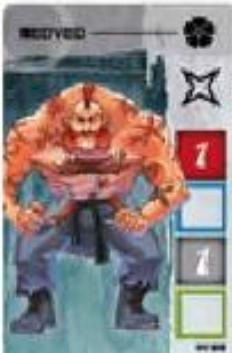
1 MEDVED
1声望
1红1灰1气
无特殊能力

3 CHEN Z.
1声望
1蓝1绿1气
无特殊能力
武术家 第一季

5 KING HOSHI
1声望
1红1绿1气
当击败1张土匪卡
获得1个等级

7 T.J.BALLS
2声望
1灰1气
特殊行动:
3气+1抓握+1格挡=1打击
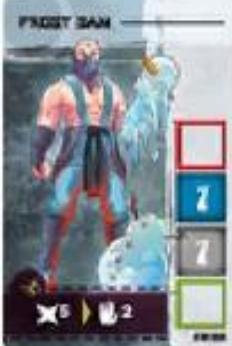
9 FROST SAN
0声望
1蓝1灰
特殊行动:
5气=2格挡

11 AZUKI
0声望
1红1灰1绿1气
无特殊能力

13 THE KID
1声望
1红1绿1气
当执行阳大师时
少计算1气


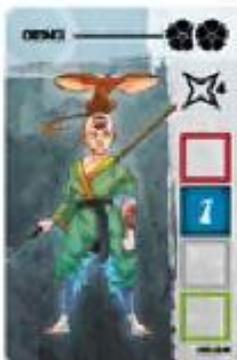
2 TAKASHI
1声望
1红1绿1气
无特殊能力

4 LI YUN DAI
1声望
1蓝1灰1气
无特殊能力

6 OENG
2声望
1蓝4气
无特殊能力
8 KAZAMA FAN
2声望
1蓝
当获得1气=+1气
10 SUN W.KONG
1声望
1红1蓝1气
当完成1张旅行卡
获得1等级
12 KUMIKO
-1声望
1蓝2灰1绿
不能获得气
14 LIU ONG LEN
1声望
1绿3气
2气+1跳跃+1打击=1抓握+1打击

15 TYLER HANDSOME
2声望
1红1气
大赛中每次胜利
获得1个声望点
16 NABOO KHO
1声望
2等级2气
武术家 第二季

17 LORD VEGAN
0声望
1红1蓝2绿
可以移除2气
获得+1等级(多次)
19 KING RHAL
-1声望
2红2蓝3灰
不能获得气

21 PAO CHENG
1声望
1红1蓝1灰1绿
无特殊能力


23 MARCELLUS BRODY
1声望
2红1蓝2气
当他训练时
获得1声望
25 THE WIDOW
1声望
1红2蓝1气
特殊行动:
5气=1打击+1抓握
27 RAY STONE
2声望
2灰1绿
特殊行动:
3气+1跳跃+2抓握=
1打击+1抓握+1声望


18 YUMI
1声望
1红1灰2绿
特殊行动:
3气+2跳跃+1格挡=2打击
20 JIM CLAY VANDER
2声望
1红3绿
无特殊能力

22 FRED CASEY
2声望
1蓝2等级3气
无特殊能力
24 CAT MASK
1声望
3灰1等级
当他训练时
获得1气

26 ANGEL
1声望
1红1蓝2绿2气
无特殊技能
28 S.ZUKI
1声望
1红2蓝1灰
他永远不会获得
伤害标记物
(无论是平局或特殊行动)
附录3:训练设施
道场起始训练设施

虎道场获得:+1红+1气或者1绿

训练设施 第一赛季
熊道场获得:+1灰+1气或者1红


训练设施.1
1声望
获得+1红
训练设施.3
1声望
获得+1灰
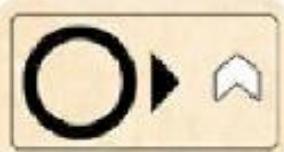
训练设施.5
0声望
获得+1等级
训练设施.7
1声望
获得-1气 $= +1$ 等级


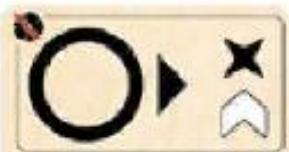

训练设施.9
1声望
获得+2气
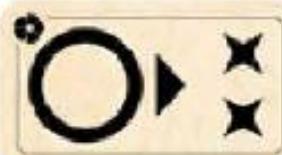
训练设施 第二赛季


训练设施.10
1声望
获得+1红+1气
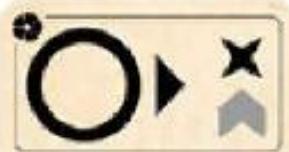
训练设施.12
1声望
获得+1灰+1气
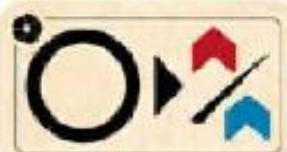
训练设施.14
1声望
获得+1红或+1蓝

训练设施.16
1声望
获得+1声望+1气


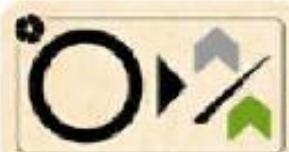
训练设施.18
1声望
获得+3气 鹤道场获得:+1蓝+1气或者1灰

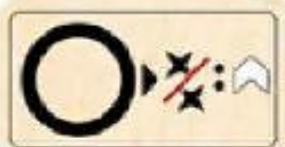
蛇道场获得:+1绿+1气或者1蓝
训练设施.2
1声望
获得+1蓝
训练设施.4
1声望
获得+1绿
训练设施.6
-1声望
获得+1等级+1气
训练设施.8
-2声望
获得+1等级+2气
训练设施.11
1声望
获得+1蓝+1气
训练设施.13
1声望
获得+1绿+1气
训练设施.15
1声望
获得+1灰或+1绿
训练设施.17
0声望
获得-2气=+1等级
(不能使用多次)
附录4:冒险
冒险 第一赛季


TABI
(旅行)
旅行卡
要求:2等级
费用:移除2气/4气...
奖励:+1声望/2声望...

SANZOKU
(盗匪)
盗匪卡
要求:3等级
费用:移除3气
奖励:+2声望...
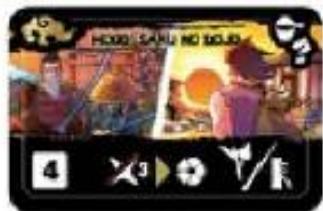
冒险 第二赛季
(保护猴子道场)
旅行卡/盗匪卡
要求:4等级
费用:移除3气
奖励:+1声望,
+1武术家/1新的训练设施

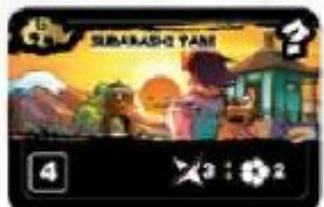
SUBARASHI TABI
(大旅行)
旅行卡
要求:4等级
费用:移除3气/6气...
奖励:+2声望/4声望...


TSUYOI SANZOKU
(大盗匪)
盗匪卡
要求:5等级
费用:移除3气
奖励:+3声望...
HOGO: KAMAKIRI NO DOJO
(保护螳螂道场)
旅行卡/盗匪卡
要求:6等级
费用:移除4气
奖励:+2声望,
+1武术家/1新的训练设施
特殊行动 第一赛季
附录5:特殊行动
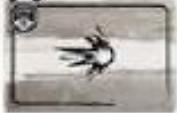

HAKUCHO NO KEN
(天鹅拳)
1声望
费用:-3气/-1等级
要求:4气2打击1跳跃
奖励:+2声望/4声望...
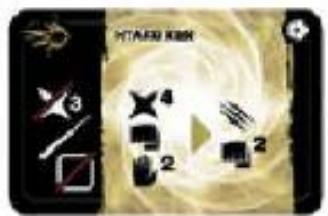
特殊行动 第二赛季
1声望
费用:-3气/-1等级
要求:4气1打击2格挡
奖励:有害的攻击+2打击


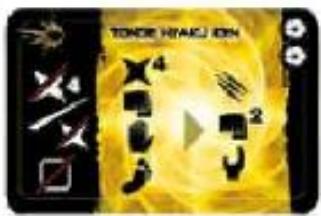
费用:-3气/-1等级
要求:4气1打击1格挡1抓握
奖励:赢得平局+1打击
+1格挡+1抓握

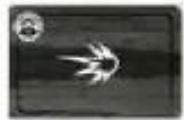
HA DO ME HA KEN (龟波)
费用:-4气/-1气,-1等级
要求:5气1打击1格挡
奖励:+3打击
TONDE HYAKU KEN
费用:-4气/-1气-1等级
要求:4气1打击1格挡1跳跃
奖励:有害的攻击+2打击
1格挡
KYODAI TEISHUTSU (超级屈服) 2声望
费用:-4气/-1气-1等级
要求:4气1打击2格挡
奖励:赢得所有平局
(优于屈服)
+1打击+2格挡
附录6:头骨道场武术家


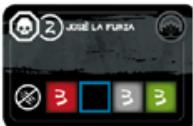
1- HAJI KYOJIN
第一赛季:2红2蓝2灰
第二赛季:2红2蓝2灰2绿+2格挡

2- JOSE' LA FURIA
第一赛季:2红2灰2绿
第二赛季:3红3灰3绿


3- HANNIBAL CARNIFEX
第一赛季:2红1蓝1绿+1打击
第二赛季:3红1蓝2绿+3打击
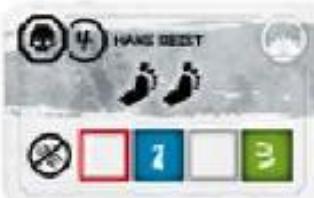
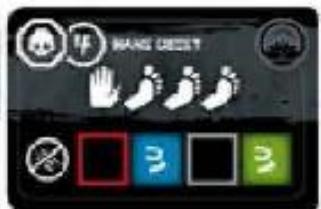
4- HANS GEIST
第一赛季:1蓝3绿+2跳跃
第二赛季:3蓝3绿+1格挡+3跳跃


6- LUCREZIA VELENO
第一赛季:2蓝+2打击+1抓握
第二赛季:2红3蓝+2打击+1格挡+1抓握

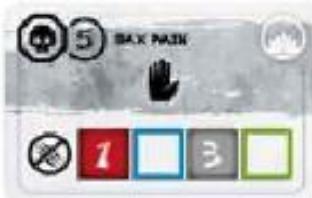
5- MAX PAIN
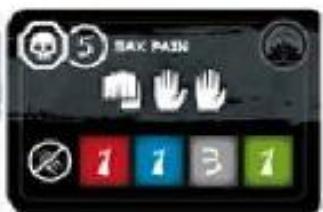
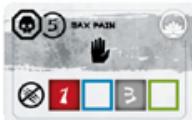
第一赛季:1红3灰+1格挡
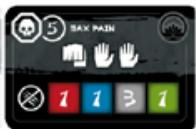
第二赛季:1红1蓝3灰1绿+1打击+2格挡
7- KHAMAL O'LIM
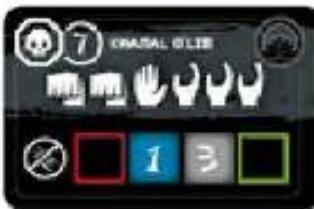
第一赛季:1蓝2灰+1打击+1格挡+1抓握
第二赛季:1蓝3灰+2打击+1格挡+3抓握
翻译:体力无限男
ADDITIONAL CONTENT AND EDITING: Maurizio Vergendo
GRAPHICS: Alessandro Rossi
PROOFREADING AND TRANSLATION: William Cavaglieri, Oliver Gehrmann, Ylenia Taddio, Olivier Picco
LAYOUT: Alessandro Rossi e Maurizio Vergendo
COVER ILLUSTRATION: Antonio De Luca
MANUAL AND CARD ILLUSTRATIONS: Simone Delladio
ART DIRECTION: Maurizio Vergendo
PROJECT MANAGER: Maurizio Vergendo
EXECUTIVE PRODUCERS: Maurizio Vergendo, Giovanni Intini, Riccardo Sandroni e Massimo Tolazzi
This game is dedicated to my Real Inner Strenght: Paola, Sebastiano and Gemma...
and also... to my first love: "Kenshiro".
A special thanks to IdeaG creators Paolo Mori and Walter Obert: without IdeaG I'd have been a worse author.
PLAYTESTING AND SUPPORT: Mattia Pellegrini Miani, Isabella Fattori, Giovanni Bernardis, Hjalmar Hach, Lorenzo Silva and his Horrible Gamers, Gianpiero Giacomini, Ivano D'Aronco and Lorenzo Cudicio.
PLAYTESTING: Andrea Bianchin, Massimo Bianchini, Davide Capraro, Michele Ciani, Emanuele Degano, Michele Del Pin, Walter Della Morra, Dennis Floriano, Gabriele Gregoroni, Alfonso Lendani, Emanuele Marussi, Mauro Mattiussi, Federico Matteazzi, Luca Mauro, Fabio Menis, Davide Miani, Alessandro Muzzatti, Alessandra Palombini, Mario Pascoli, Chiara Pezzi, Nicola Pirera, Giulia Pittioni, Diego Pittuello, Valentina Poti, Alex Rizzatto, Andrea Rosi, Massimo Salvador, Massimo Scaini, Lorenzo Sonzogni, Federica Tinelli, Francesco Tomiato, Alessio Venier, Andrea Vitali, Jacopo Vuga, Gabriele Zuttion, il Garzone, i Nauti, il Giocoliere of Udine, all testers from IdeaG, from Play, from Nova Ludica, from F.Lu.Sm, from Megamaster of Pordenone, from Arcana and all the guys from Quarta Dimensione of Udine
© 2015 YEMAIA S.R.L. All rights reserved. Unauthorized reproduction is prohibited for all content (rulebook, game sections and illustrations) without the author previous consent.
下载 MarkdownDOJO_KUN_rulebook_ENG_light_1.1.md49.5 KB
ROBERTO PESTRIN 园道場 KUN
RULEBOOK


010 园道場 KUN
Components
1 main board – Athlete's activities
1 main board – Master's activities
1 main board - Tournament
1 main board - Combat

4 player boards representing the four Dojos

8 expansion boards for the Dojos: 2 per colour
20 tokens (5 for each colour

4 Starting Athlete (Senpai) cards

12 Season 1 Athlete cards
12 Season 2 Athlete cards
7 Skull Dojo Athlete cards
8 Prediction mini-cards (2 per Dojo)
18 Training Equipment tiles
50 Spiritual Energy – Ki tokens
60 Prestige Points tokens (30-20-10)
3 Reservation tiles
7 Skull Dojo tokens
RULEBOOK
OVERVIEW AND GOAL OF THE GAME
In DOJO KUN each player represents a Sensei: a martial arts Master who will have to manage a gym by admitting new athletes, buying new training gear, searching for adventures and participating with his athletes in martial arts tournaments. The player who has the most Prestige points after two tournaments is the winner.
6 Special Move mini-cards (3 per season)
6 Adventure mini-cards (3 per season)
108 Experience Level tokens

10 Wound counters

8 Secret Technique tokens

24 dice Dojokun in 4 colours

2 Fighter tokens


1 turn counter

1 Starting Player token

8 Combat Moves tokens in 2 colours
1 Sheet with stickers for Master and Athlete tokens
4 Help mini-cards
This manual


PREPARING TO PLAY
Before starting the game, separate the wooden tokens by their 4 colours and apply the related stickers for the Master and Athlete tokens.
The token with the Dojo symbol represents the Master (Sensei).

The tokens with the numbers from 1 to 4 represent the Athletes.
The token nr. 1 (Athlete 1) is the starting athlete (Senpai – the senior athlete); all players start with it.
At the beginning of the game, assign the First Player counter to whoever was punched last.
Place in the designated areas:
the Adventures and Special Moves card decks; reveal the first card of each deck and put it in the acquisition zone (the main board – Athlete's activities)
③ the Reservation tiles (main board – Combat)
a Secret Technique token for each kind in the Master Yang slot (main board – Athlete's activities) ① the season 1 Training Equipment tiles, in a pile; place a number of revealed Equipment tiles accordingly with the number of players (main board – Master's activities)
the Athlete season 1 card deck; reveal cards in the acquisition zone accordingly with the number of players (main board – Master's activities)
the turn of play counter on the first spot of the game turn track (main board – Tournament)
SETUP FOR 1-4 PLAYERS
1-2 players: use only 2 athlete slots and 1 Training Equipment slot
3 players: use only 3 athlete slots and 2 Training Equipment slot
4 players: use all the athlete and training equipment slots
Each player chooses one of the 4 Dojos and receives the corresponding components:
1 player board (the Dojo)
2 expansion boards for the Dojo
The player help card
The starting athlete card (Athlete 1)
The Master token
The corresponding Athlete tokens
The 2 corresponding prediction mini-cards
The Master token, the Athlete 1 token and their cards are placed in their related areas while the rest of the components are kept next to the player board (the Dojo).

The Game
The game develops over 2 seasons: the White Lotus season and the Black Lotus season. Each season is divided into 4 turns: 3 to prepare (the prelude) and 1 turn where the Martial Arts Tournament takes place.
WARNING: If this is your first time you reading through the manual, we recommend first reading the Combat chapter at page 5 and then continuing here. This way it will be much easier to understand all the possible choices during the preparation turns.
THE SEASON
The prelude
The prelude consists of 3 turns, where the players will be busy with the challenging task of improving their Dojo and training their athletes.
Starting from the First Player, players take turns clockwise to place their Athlete(s) or Master tokens in the spaces available in their Dojo or in the village (the Athlete Activities and Master Activities boards); they resolve the related action immediately. The turn ends when all players have placed all their tokens.
There are 2 kinds of tokens: the Master (with the corresponding Dojo symbol) and the Athlete (a number into a circle). In the beginning the players will only have one Athlete token, their Athlete 1 (the Senpai, their senior athlete). Each new Athlete card acquired is connected to an Athlete token; this token has a number that corresponds to its area in the Dojo. This token will be used to indicate the movements and activities taken by the athlete. The Athlete tokens can be placed only on the circular activities slots in their Dojo or in the village central boards; the Master tokens can be placed only on the octagonal activities slots. (The only exception to this rule is the action "New Training Equipment" - see page 3). Each Athlete token has a corresponding card; every time an Athlete token gains Ki tokens or Experience Levels, these have to be placed on the related card.
The activities slots with a single circle can be chosen and occupied by only one athlete token. The activities slots with multiple overlapping circles can be chosen and occupied at any time by more than one athlete.
PLEASE NOTE: players can't choose an activity they can't (or won't) fulfill.
Turn Track
This track is a reminder for the current turn. Each turn has a bonus that is added to all the acquired athletes during that turn (see page 3).
Master and Experience Levels
In Dojo there are 4 different disciplines (Tiger, Crane, Bear and Cobra). Each Discipline has a corresponding colour (red, blue, grey and green) and a dice of the same colour that represents the combat style for that Discipline (see Appendix 1).




Athlete Cards

SPECIAL ABILITY
CARD NUMBER
The Athlete Card in the setup area shows the Experience Level and the starting amount of Ki (Spiritual Energy) of each athlete.
The Experience Levels are already printed on the card, while for any Ki (Spiritual Energy) listed put a Ki token on the card itself. Some Athletes have an unexpressed Experience Level they can reach: when you obtain one of these athletes, you can choose which Disciplines you want them to level up. The sum of an athlete's Experience Levels in all Disciplines is called Dan and indicates the total Experience level reached by this athlete. In the lower section there could be a special ability (like a Special Move knowns by the athlete).
Example:
Eric obtains the athlete Naboo-Kho (WW-KK); he can choose any 2 Experience levels from different Disciplines. He chooses 1 grey level, 1 blue level and the two Ki listed on the card.
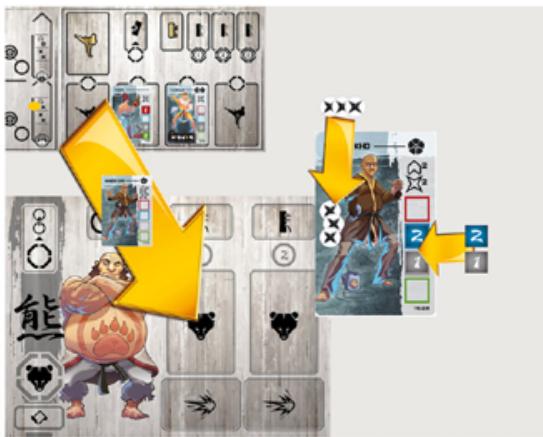
Additionally, since the Turn Counter is on the 3rd turn, he gains another Ki token and an extra level of his choice: he adds another blue level; Naboo-Kho is now level 2 in that Discipline.
Naboo-Kho is now a 3rd Dan (two blue levels plus a grey one).
ATHLETE'S actions
Some activities chosen with the Athlete token require the payment of Ki (Spiritual Energy) that have to be removed from the correspondingAthlete card. If the athlete doesn't have enough Ki to execute it, the action cannot be chosen.




Training: An Athlete placed on this action slot in your Dojo gains the benefit indicated after the arrow. Usually, the athlete improves his Experience level in one of the four Disciplines. An athlete can train with any free Training Equipment in his own Dojo.
IMPORTANT: the maximum Experience level
in any Discipline is 3.
Mystic Waterfalls: There are 2 positions available: on the single circle, the athlete gains 2 Ki tokens; in the common area he gains 1 Ki.
Helping the village: Here, an athlete placed on the circle gains 1 Prestige Point for his Dojo and 1 Ki; he helps the villagers with hard labour that is also useful as training. Otherwise, an athlete placed in the common area assists with less demanding tasks and only gains 1 Prestige Point for his Dojo.
Master YANG: By placing an Athlete token in this location and paying the required amount of Ki, the athlete gains a Secret Technique token from those still available. Put the token on the corresponding Athlete card.
The Secret Technique tokens give 1 extra Move symbol; it will be added, during combat, to his side of the Combat board before rolling the dice.
The Tiger (Red) Secret Technique costs 2 Ki and grants 1 Hit The Crane (Blue) Secret Technique costs 1 Ki and grants 1 Block. The Bear (Grey) Secret Technique grants 1 Ki and grants 1 Hold The Cobra (Green) Secret Technique costs 0 Ki and grants 1 Jump Each Secret Technique does not count towards the maximum limit of 3 levels in the same Discipline: therefore, it's possible to reach the 3rd Experience level in one Discipline and have the Secret Technique in the same Discipline at the same time.
Master YIN: After placing their token in this slot, the athlete pays 2 Ki and loses 1 Experience level in a Discipline of his choice (but it can't be a Discipline where he has no experience). Afterwards, the athlete gains 2 Experience levels of the player's choice from any of the Disciplines. The athlete can acquire 2 levels in the same Discipline, or 1 level in two separate Disciplines.
Adventures: Each adventure has as requirement a minimum Dan level (a Dan level is the total of an athlete's Experience levels). An adventure also requires to discard Ki tokens to obtain the card reward. Once resolved, discard the Adventure card. (For details, see Appendix 4 – Adventures.)
Special Moves: An athlete can collect various Special Moves, to be placed underneath his Athlete card. A Special Move may cost Ki and/or the loss of an Experience level in a Discipline (you must choose a Discipline with at least 1 level of Experience). For details, see Appendix 5 - Special Moves).

Becoming First Player: It's possible to place an athlete token and gain the First Player counter, plus take the Reservation tile with the lowest number available. The Reservation tile gives a significant edge when creating the tournament pairings (see the "Pairing Creation" chapter for details).
Important: Each Dojo can have only one Reservation tile. If a player already has a Reservation tile when he chooses this action, he will only receive the First Player counter.
MASTER (Sensei) actions:
A Master's duty is to lead his Dojo and his athletes, enabling their best for the season tournament. To do so he can admit new talented athletes, improve and enlarge his Dojo, or simply dedicate himself to the training of his athletes. The Athlete 1 (the senior athletes, i.e. the starting athlete of each player) can, thanks to their experience, in some cases be a substitute for their Master. Specifically, the Athlete 1 can be used instead of your Master to choose the action "New Training Equipment" and nothing else.
New Training Equipment: Place your Master on one of these action slots to gain a new Training Equipment and put it on an empty slot in your Dojo. The new Training Equipment not only offers a better training option for your athletes, but can give positive (or negative) Prestige Points at the end of the game.
This is the only action that can be chosen with either a Master or an Athlete 1 (the starting athlete) token.
This action can't be chosen if a Dojo doesn't have empty Training Equipment slots.
For more details see Appendix 3.
Admitting New Athletes: By placing the Master token here, the player will gain the related athlete card and place it in a free slot for athlete in his Dojo.
Take the athlete token related to the dojo slot taken by the new athlete and place it in the starting slot above the new athlete. Add any potential Ki listed on the card or extra bonus shown under the Turn of Play counter. The new athlete token can be used in the same turn.
Like any actions that can't be completed, a player can't choose this action if he has no empty slots in his Dojo. (For details see the Appendix 2 – athlete list).

Expand your Dojo: By placing the Master token here, a player gains the expansion board 3; the second time this is done, the expansion board 4. Both let the Dojo host more Training Equipment or athletes. A Dojo can't be expanded a third time. Each Dojo expansion grants one Prestige Point at the end of the game.

Accelerate your athletes' training: The Master can decide to stay in the gym and supervise training, accelerating their improvement. Game wise, by placing the Master here, it will be possible to reposition any athletes that trained with a Training Equipment in the Dojo on an available slot in the central boards. This can be done:
- One athlete token at a time, as with normal placement;
Note: if this action is chosen and one player gained an athlete through an Adventure (like “Hogo: saru no dojo” Appendix 4), the newly acquired athlete is placed first; only afterwards it will be possible to re-position the athletes that were placed on a Training Equipment. Notice that it's possible for the newly acquired athlete to be placed on a Training Equipment, and then reposition it.
End of turn
At the end of each turn do the following:
- Remove any Athlete cards that are on the Master activities board (the village) and fill all the empty slots with new Athlete cards from the reserve of the current season.
- Remove any Training Equipment tiles on the Master activities board (the village) and replace all empty slots with new Training Equipment tiles from the reserve of the curren season.
- On the Special Moves and Adventures layouts, move the remaining cards one space and place in the free spaces an Adventure card and a Special Technique card, taking them from their respective piles of the current season. If the layouts are full, remove the oldest card before shifting.
- Return the Athlete and Master tokens to their starting positions.
- Advance the Turn counter forward one position.
THE MARTIAL ARTS TOURNAMENT
Creating pairings
During the tournament, 8 athletes will compete in a series of elimination rounds until a winner is declared. The first season the White Lotus Tournament is used (the bottom half), while for the second season it's time for the upper half, the Black Lotus Tournament..
Each player can send 2 athletes of their choice to participate.
At each pairing step, if for any reason there aren't enough athlete tokens to fill the slots, these are replaced by randomly drawn Athlete token(s) from the dreadful Skull Dojo; each extra token will be placed like the others (see Skull Dojo – page 6).
At the beginning of the pairing phase, each player that possesses a Reservation tile chooses one of his athletes and puts the athlete token on it.
Example
Robert has 3 athletes but no Reservation tile. Maureen has the tile but only one athlete, so she puts her athlete token on it. John has two athletes and a Reservation tile and chooses to put his Athlete 1 token on it.


Robert

Maureen
John
Now all players choose an athlete token without Reservation, which are now managed by the player who is first in the round. If the player doesn't have 4 athletes to manage (including the one he chose), he randomly draws the missing tokens from the Skull Dojo pile. These 4 athletes are randomly sorted among the 4 tournament slots with a dot.
Example
Robert gives John, who's first in the round, his athlete 1 token while Maureen has no more athletes to give him. John chooses his athlete 2. To have the reguired 4 athletes to place he randomly draws two from the Skull Dojo. Now John mixes the tokens and randomly places them in the slots with a dot, as in the picture.

Now, each player with an Athlete on a Reservation tile places it in one of the slots available, starting from the player with the lowest Reservation tile value. In other words, the players choose who their athlete will fight.
It's possible to have 2 athletes from the same Dojo fight against each other (see the Prediction paragraph - page 5). Once the Reservation tiles are emptied, the remaining players randomly place their athletes on the remaining slots. If there are still empty slot(s), always fill with an athlete token from the Skull Dojo.
Example
Maureen, who has the Reservation tile 1, chooses to put her athlete 1 against John's athlete 2. It's now John's turn, and with his Reservation tile 2 he chooses to pair his athlete 1 against the athlete 2 from the Skull Dojo. Reservation tiles are now empty and there is only Robert's athlete 3 that still needs to be placed. Since there are still 2 empty slots, in order to fill them all an athlete 3 from the Skull Dojo is randomly drawn. These two athletes (athlete 3 from Robert and athlete 3 from the Skull Dojo) are randomly placed on the two free slots, completing the pairings.
The first two fighters are announced: "Sun. W. Kong from the Crane Dojo against Medved from the Bear Dojo! Who will win?!" In the meantime, Robert is already releasing his prediction on the outcome...

COMBAT
Preparation
The oldest player chooses one of the two Fighter tokens (either the white or the black one). He then places it on the dedicated slot on the Athlete card that is going to fight. The other player does the same with his token. The fighting players grab the dice which match the Experience levels reached by their athletes.
Example

Predictions

Players who don't participate in a combat release interviews, where they predict the match outcome.
Players who are not involved in the combat choose a Prediction card of the same colour as the Fighter token placed on the athlete card they expect to win. They then place it in the dedicated space on the board. If their prediction is correct, at the end of combat they gain 1 Prestige point
(nothing happens if they fail their prediction – they didn't bet anything).
If two athletes from the same Dojo are paired against each other, there is no combat; the player who controls them chooses who advances; all other players gain 1 Prestige Point, as if they had guessed the winner correctly.
The Fight
Reset all Move counters on the Combat board back to 0.
Each player rolls his dice and registers the symbols rolled, combined with any additional symbols from a Secret Technique, on the Combat board, using the half assigned previously with the Fighter token (so, with the same colour as the Fighting token placed on the Athlete card). Please note: It is possible to obtain more than 6 identical symbols; to show them on the Combat board, turn the Move counter upside down: it will now indicate 7+. Place it in the proper slot on the Combat board, so that they add up to the desired amount.

Ki is a temporary spiritual energy that can be added to Ki tokens in order to activate special moves
Jump reduce opponent's Holds
Hold reduce opponent's Blocks
Block reduce opponent's Hits
Hit is the action needed to win the fight
(the athlete with the higher number of hits at the end of the fight wins)

After both players have updated their rolled results on their side of the Combat board, the combat can be resolved.
On the board there is a “serpentine" layout: at both ends the layout starts with the Jumps (either black or white, depending from which side you play); it proceeds towards the opponent's half of the map, changing colour where the opponent's Holds are registered; the pattern then returns to the first player's Blocks and finally back to the opponent's half, where Hits are counted.
To resolve combat proceed as follows:
- reduce a player's Holds by as many spaces as the opponent's Jumps. Afterwards, reduce that player's Blocks equal to the number of Holds left. Finally, reduce the players' Hits by as many spaces as Blocks remain. Repeat the same procedure for the other player, again starting from the Jumps at the other end of the serpentine layout.
The winner is the athlete with the highest number of Hits.
In case of a draw, players proceed with a new round of combat, until a winner is declared.
Wounds and fatigue hurt the athletes, so after EACH draw both athletes get a Wound counter.
WARNING If this is the first time you have read this manual, we recommend continuing reading from “The Season – the prelude” on page 2 送
Wound counters
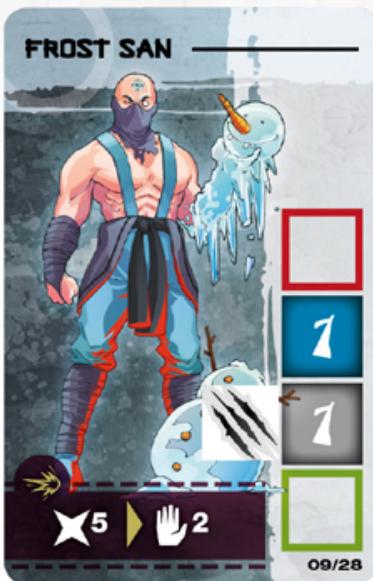

During combat, an athlete suffers a Wound counter after a dice roll that ends in a draw, or after being hit by a Harmful Attack (see appendix 5 – Special Moves). The wound corresponds to a temporary loss of his athletic abilities.
The Wound counter reduces by 1 their Experience level in a Discipline and it's placed next to an Experience level on the Athlete Card. It means that the athlete will have one less dice to roll for that Discipline in the following fights. Experience levels can't have a negative value, which means that the Wound Counter must be placed on a Discipline with a least one level and the counters placed can never be more than the levels obtained.
Wound counters are removed from the Athlete Card only at the end of the Tournament (you can remove them after an athlete is defeated too).
If an athlete is left without dice, he's too battered to continue and loses automatically. On the rare occasion that both athletes run out of dice, they will both have to drop from the tournament.
Once an athlete wins a fight, his token moves ahead in the tournament playoff and the players who have guessed the correct outcome gain 1 Prestige Point.
Skull Dojo

If during the Martial Arts Tournament pairing phase there aren't enough athletes from the players' Dojos, the empty slots are filled with the dreaded Skull Dojo athletes!
Randomly pick the necessary Skull Dojo athlete tokens and place them in the slots available.
For each token there is an athlete card that lists the athlete's stats and abilities (see appendix 6 – Skull Dojo Athletes). These cards are printed on both sides: one lighter side for the White Lotus season (the first tournament); and the other darker side for the second, the Black Lotus season. If one or more action symbols are printed on the card, add them to the athlete's dice rolls during combat.
If a player has to fight against a Skull Dojo athlete, it's the player on his left that will roll the dice for the Skull, after declaring his prediction
If two athletes from the Skull Dojo are paired against each other, the athlete with the lowest number will advance (in this case no Predictions are made).
The Skull Dojo athletes never receive Wound counters. Against Harmful Attacks they stil lose the Move symbol rolled with the red dice (see Harmful Attack).
Special Moves

Some athletes have Special Moves. If so, check if they were able to activate them and then apply their effect immediately after rolling their dice.
To execute a Special move a player has to obtain all the symbols to the left of the arrow. The Move symbols and Ki tokens can be obtained from

dice and from Ki and Secret Technique tokens on the athlete card. In this case the Ki tokens are not consumed during combat; they're just automatically counted after each dice roll.
If the Special Move is activated, add all the symbols pointed at by the arrow to the Combat Board. It is not possible to active a Special move twice, but it's possible to activate different ones with the same dice roll: You can't use symbols created by Special Moves to activate new ones.
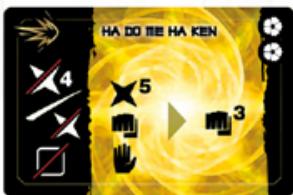
Some Special Moves provide special effects:

Harmful Attack: (HYAKU KEN, TONDE HYAKU KEN) After both athletes have updated the Combat Board, the player who activated a Harmful Attack rolls a red dice; the opponent removes from his side of the board the symbols rolled and adds a Wound counter to his Athlete Card.

Submission: (TEISHUTSU, KYODAI TEISHUTSU) If the fight ends in a draw, the athlete who activated the Submission wins the round. No Wound counters are assigned.
Note: When there is a draw and both these Special Moves are activated, the KYODAI TEISHUTSU wins against the TEISHUTSU.
Combat example:
It's the start of the Black Lotus tournament and, after pairings, Medved from the Bear Dojo (Maureen) and Takashi from the Tiger Dojo (Robert) have to fight against each other. Maureen chooses the white side of the Combat board.
John believes that Medved will win, therefore he places the Prediction minicard with the white side on the Prediction slot on the board. Now Maureen and Robert can pick up the coloured dice corresponding to their athletes Experience levels and roll them.
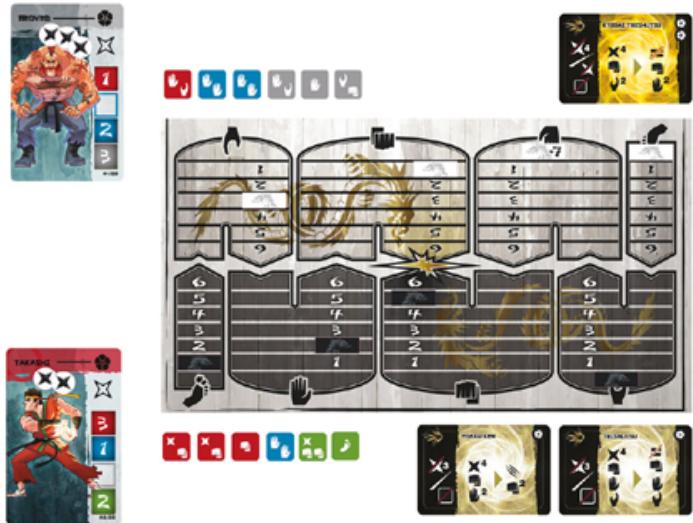
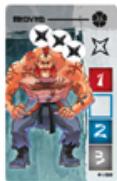
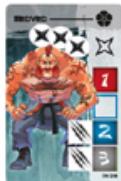
Medved has 3 grey levels, 2 blue, 1 red, 3 Ki tokens and the Special Move "KYODAI TEISHUTSU". Maureen rolls the corresponding 6 dice; looking at the symbols rolled, she can see that she didn't activate the Special Move, because of 1 Ki missing. She then registers the symbols rolled on the Combat board.
Takashi has 3 red levels, 2 green, 1 blue, 2 Ki tokens and the Special Moves "HYAKU KEN" and “TEISHUTSU”.
Robert rolls the corresponding 6 dice; looking at the symbols, he can see that he lacks 1 Hold symbol to activate the Special Move “TEISHUTSU"; but he can activate the "HYAKU KEN" Special Move. He registers the symbols rolled on the Combat Board; afterwards he modifies them thanks to the “HYAKU KEN" Special Move in the following way (see the red arrows): He adds 2 extra Hits symbol
4


He rolls a red dice and removes from the opponent's results the symbols rolled, in this case 1 Hit. The opposing athlete, Medved, will also get a Wound token which will cause him to lose a dice for the rest of the tournament; Maureen will choose which dice at the end of the current round. Combat resolves:
MEDVED: Takashi's Jump reduces by 1 Medved's Holds. Medved's two Holds left bring to 0 Takashi's blocks. Medved doesn't land any Hits because the one rolled Hit symbol is nullified by HYAKU KEN effect.
TAKASHI: Medved performed no Jumps, nor Takashi any holds; therefore Medved's 7 Blocks bring to 0 the 7 Hits from Takashi.
Combat resolves and it ends in a draw, 0 – 0 hits.

As the result is a draw, a new round of combat starts. Both athletes receive due to fatigue a Wound token that will make them lose 1 level for the rest of the tournament; Medved also receives another Wound token because of the negative effect of the Special Move "HYAKU KEN" from Takashi. Players reroll their dice (minus those removed by the Wound counters) and they both activate a Special Move. Medved activates KYODAI TEISHUTSU while Takashi activates TEISHUTSU (Takashi's HYAKU KEN isn't activated for the lack of only 1 Block); They then update the Combat board.
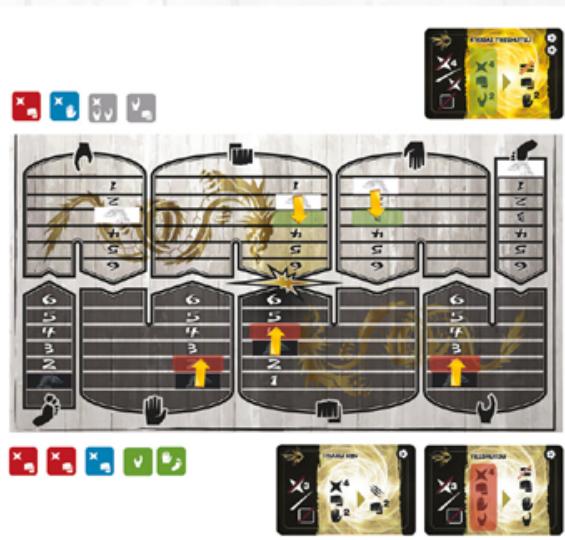

After resolving again combat, it ends 3 Hits to 3, another draw. The Special Move "TEISHUTSU" should let Takashi win in case of a draw. But it can't do anything against "KYODAI TEISHUTSU” from Medved, which also lets him win draws, but also specifically wins against the “TEISHUTSU” and does so without receiving another Wound counter.

Therefore Medved advances in the tournament, but hurt badly! In fact he will roll 2 dice less until the end of the tournament, due to the 2 Wound counters he suffered. Meanwhile, John gains 1 Prestige point for predicting the winner correctly
End of the Tournament
Once all combats are resolved and there are none playable left, the tournament ends and players gain Prestige points tokens based on the standings reached by their athletes.
At the end of the first tournament refill the missing Secret Technique in the Master YANG area, until you have again 1 per type and return the Reservation tiles.
The second season starts with a new prelude. Athlete cards, training equipment, special moves and adventures from the second season must be used.
At the end of the second tournament the game ends and the winner can be declared.
END OF THE GAME
At the end of the second tournament, each player counts their Prestige points, adding up: Prestige points from adventures, predictions and tournaments;
Prestige points given by their Training equipment;
Prestige points given by their athletes;
Prestige points from Special Moves;
Prestige points from Dojo expansions;
Prestige points from Athletes;
The player with the highest number of Prestige points is the winner. In case of a draw, the winner is the player who won the most tournaments; if it's still a draw, the player who has the athlete with the highest Dan level. If it's still a draw, the victory is shared.
SINGLE PLAYER MODE
To win, you need to score more Prestige points than the Skull Dojo.
Prelude proceeds normally. During the tournament you may have participate no more than 2 athletes while all other positions must be taken by Skull Dojo tokens. The Skull Dojo wil score Prestige points from all athletes in both tournaments. You win if you score more than the Skull Dojo. To make it more difficult, add to the Skull Dojo Athletes 1 block in the first season and 1 hold and 1 hit in the second season.
You can evaluate your performance by looking at your score:
<20 = wooden man
21-25 = canvas belt
26-30 = red belt
31-35 = black belt
36-40 = senpai
41 = sensei
Appendix 1: SENSEI LIST (MASTERS)
虎 TORA - Master of the Tiger Dojo.

His fighting style is inspired by Karate.
His training sessions are based on attacks focused on defeating the opponent in the quickest possible way.
鶴KUREN - Master of the Crane Dojo.
His fighting style is inspired by Aikido.
His training sessions are based on increasing Spiritual Energy (Ki) and creating a defense focused on negating all enemy critical hits, only to win with a single hit.
熊KUMA - Master of the Bear Dojo.

His fighting style is inspired by Judo.
His training sessions are based on improving holds via close combat, thereby removing the opponent's defenses and winning with minimum effort.
蛇 KOBURA - Sensei del Dojo del Cobra.


His fighting style is inspired by Taekwondo and Jeet Kune Do. He favours a combat style which focuses on leg speed and agility, increasing the chance of avoiding enemy holds and defeating the enemy with devastating kicks.
Appendix 2: ATHLETE LIST
legend: R=red, B=blue, G=grey, V=green, Lvl= potential experience level, K=Ki, PP=Prestige Point; on cards, “=” means activate once, ":” means multiple times
SENPAI (ATHLETE 1)

1 MEDVED 1PP 1R, 1G, 1K No special abilities
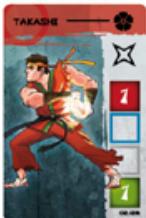
2 TAKASHI 1PP 1R, 1V, 1K No spécial abilities

3 CHEN Z.
1PP
1B, 1V, 1K
No spécial abilities
4 LI YUN DAI
1PP
1B, 1G, 1K
No special abilities

ATHLETES SEASON 1

5 KING HOSHI
1PP
1R, 1V, 1K
When he defeats a bandit
card, he gains 1 level
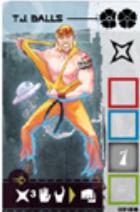
7 T.J.BALLS
2PP
1G,1K
Special Move:
3k+1hold+1block = 1hit

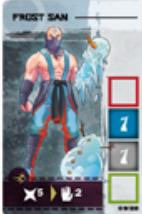
9 FROST SAN

OPP
1B, 1G
Special Move: 5K = 2block
11 AZUKI
OPP
1R, 1G, 1V, 1K
No special abilities 13 THE KID
1PP
1R, 1V, 1K
When he perform
the action Master YANG = discount of 1K.
6 OENG
2PP
1B,4K
No special abilities
8 KAZAMA FAN
2PP
1B
When he gains K = +1K
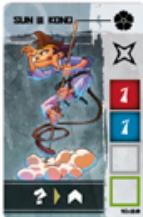


10 SUN W.KONG
1PP
1R, 1B, 1K
When he completes a Journey
card, he gains 1 level
12 KUMIKO -1PP 1B, 2G, 1V She can't gain K
14 LIU ONG LEN
1PP
1V,3K
Special Move:
2k+1jump+1hit = 1hold+1hit 15 TYLER HANDSOME 2PP
1R, 1K
For each victory he gets during a tournament, gain 1 Prestige Point
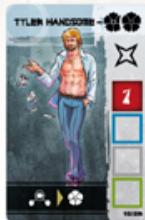

16 NAB00 KHO
1PP
2Lvl, 2K
ATHLETES SEASON 2


17 LORD VEGAN
OPP
1R, 1B, 2V
He can sacrifice 2K to
gain +1lvl (multiple
times)
19 KING RHAL -1PP 2R, 2B, 3G He can't gain K

21 PAO CHENG 1PP 1R, 1B, 1G, 1V, 1Lvl No special abilities
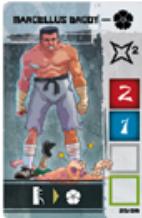
23 MARCELLUS BRODY
1PP
2R, 1B, 2K
When he trains, you gain
1PP
25 THE WIDOW
1PP
1R, 2B, 1K
Special Move:
5k = 1hit+1hold
27 RAY STONE
2PP
2G, 1V
Special Move:
3k+1jump+2hold =
1hit+1hold+1PP
18 YUMI
1PP
1R, 1G, 2V
Special Move:
3K+2jump+1block = 2hit


20 JIM CLAY VANDER 2PP 1R, 3V No special abilities

22 FRED CASEY 2PP 1B, 2Lvl, 3K No special abilities

24 CAT MASK 1PP 3G, 1Lvl When he trains, you gain 1K

26 ANGEL 1PP 1R, 1B, 2V, 2K No special abilities

28 S.ZUKI 1PP 1R, 2B, 1G
Appendix 3: TRAINING EQUIPMENT LIST
DOJO STARTING TRAINING EQUIP
He never gets Wound counters (neither from draws nor from Special Moves)

BEAR DOJO GIVES: +1G, +1K OR+1R

TRAINING EQUIP SEASON 1
TIGER DOJO GIVES: +1R, +1K OR +1V
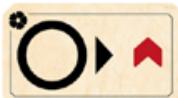


TRAINING EQUIP. 1 1PP GIVES: +1R

TRAINING EQUIP. 3
1PP
GIVES: +1G
TRAINING EQUIP. 5 OPP GIVES: +1LVL

TRAINING EQUIP SEASON 2
TRAINING EQUIP. 7 1PP GIVES: -1K = +1LVL
TRAINING EQUIP. 9
1PP
GIVES: +2K

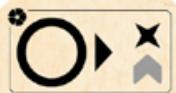


TRAINING EQUIP. 10 1PP GIVES: +1R, +1K
TRAINING EQUIP. 12 1PP GIVES: +1G, +1K
TRAINING EQUIP. 14 1PP GIVES: +1R OR +1B
TRAINING EQUIP. 16 1PP GIVES: +1PP, +1K
TRAINING EQUIP. 18
1PP
GIVES: +3K


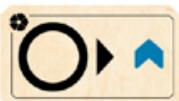


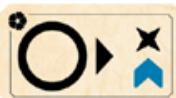


CRANEDOJO GIVES: +1B, +1K OR +1G
COBRA DOJO GIVES: +1V, +1K OR+1B
TRAINING EQUIP. 2
1PP
GIVES: +1B
TRAINING EQUIP. 4
1PP
GIVES: +1V
TRAINING EQUIP. 6 -1PP GIVES: +1LVL, +1K
TRAINING EQUIP. 8 -2PP GIVES: +1LVL, +2K
TRAINING EQUIP. 11 1PP GIVES: +1B, +1K
TRAINING EQUIP. 13 1PP GIVES: +1V, +1K
TRAINING EQUIP. 15 1PP
TRAINING EQUIP. 17 OPP
GIVES: -2K = +1LVL (can be used more than once: +4K = +2Lvl, etc.)
Appendix 4: ADVENTURES
ADVENTURES SEASON 1

(THE JOURNEY) Journey card Requirement: 2 DAN Cost: discard 2K / 4K, etc. Reward: +1PP/2PP, etc.

(THE BANDITS) Bandit card Requirement: 3 DAN Cost: discard 2K Reward: +2PP

ADVENTURES SEASON 2

HOGO: SARU NO DOJO (PROTECT THE MONKEY DOJO)
Jouuney/Band i cad Cost: discard 3 Ki Reward: 1PP, gain 1 athlete or 1 new traíning equipment from those available
SUBARASHI TABI (THE GREAT JOURNEY) Journey card Requirement: 4 DAN Cost: discard 3Ki / 6Ki, etc. Reward: +2PP/+4PP, etc.


(THE MIGHTY BANDITS) Bandit card Requirement: 5 DAN Cost: discard 3K Reward: +3PP
HOGO: KAMAKIRI NO DOJO (PROTECT THE MANTIS DOJO)
Journéy/Bandits card Requirement: 6 DAN Cost: discard 4K Reward: +2PP, gain 1 athlete or 1 new training equipment from those available
Appendix 6: SKULL DOJ0 ATHLETES
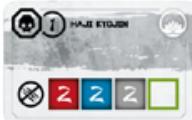
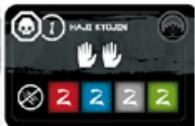
1- HAJI KYOJIN Season 1: 2R, 2B, 2G Season 2: 2R, 2B, 2G, 2V + 2hold
SPECIAL MOVES SEASON 1
Appendix 5: SPECIAL MOVES

cost: 3K or -1Lvl Requirement: 4K,1 hit,1 block,1 hold Bonus: wins draws+1 hit+1 block+1 hold


2- JOSE' LA FURIA Season 1: 2R, 2G, 2V Season 2: 3R, 3G, 3V
Cost: -3K or -1Lvl Requirement: 4K, 2 hit, 1 jump Bonus: +1PP +2 hit +1 jump
Cost: -3K or -1Lvl Requirement: 4K, 1 hit, 2 block Bonus: Harmful Áttack +2 hit
SPECIAL MOVES SEASON 2
TEISHUTSU


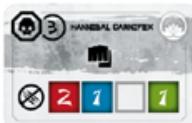
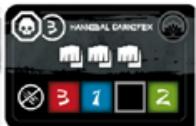

3- HANNIBAL CARNIFEX Season 1: 2R, 1B, 1V +1hit Season 2: 3R, 1B, 2V +3hit

4- HANS GEIST Season 1: 1B, 3V +2jump Season 2: 3B, 3V +1block +3jump

HA DO ME HA KEN
(ENERGIC TURTLE WAVE)
2PP
Cost: 4 K or -1K, -1Lvl
Requirement: 5K, 1 hit, 1 block
Bonus: +3 hit
KYODAI TEISHUTSU
cost: 4 K or -1K, -1Lvl
Requirement: 4 K, 1 hit, 1 block
1 jump
Bónus: Harmful Attack, 2 hit
1 hold

(GREAT SUBMISSION) 2PP

Cost: 4 K or -1K, -1Lvl Requirement: 4K, 1 hit, 2 hold Bonus: wins ALL draws (including against an opposing TEISHUTSU), 1 hit, 2 block


TONDE HYAKU KEN(ONE HUNDRED FLYING FISTS)2PP

5- MAX PAIN Season 1: 1R, 3G +1block Season 2: 1R, 1B, 3G, 1V +1hit +2block
6- LUCREZIA VELENO Season 1: 2B+2hit +1hold Season 2: 2R, 3B +2hit +1block +1hold
7- KHAMAL 0'LIM Season1: 1B, 2G +1hit +1block +1hold Season 2: 1B, 3G +2hit +1block +3hold
CREDITS
AUTHOR: Roberto Pestrin
ADDITIONAL CONTENT AND EDITING: Maurizio Vergendo
GRAPHICS: Alessandro Rossi
PROOFREADING AND TRANSLATION: William Cavaglieri, Oliver Gehrmann, Ylenia Taddio,
Olivier Picco
LAYOUT: Alessandro Rossi e Maurizio Vergendo
COVER ILLUSTRATION: Antonio De Luca
MANUAL AND CARD ILLUSTRATIONS: Simone Delladio
ART DIRECTION: Maurizio Vergendo
PROJECT MANAGER: Maurizio Vergendo
EXECUTIVE PRODUCERS: Maurizio Vergendo, Giovanni Intini, Riccardo Sandroni e Massimo Tolazzi A SPECIAL THANKS FROM THE AUTHOR:
This game is dedicated to my Real Inner Strenght: Paola, Sebastiano and Gemma...
and also... to my first love: "Kenshiro".
A special thanks to IdeaG creators Paolo Mori and Walter Obert: without IdeaG I'd have been a worse author.
PLAYTESTING AND SUPPORT: Mattia Pellegrini Miani, Isabella Fattori, Giovanni Bernardis, Hjalmar Hach, Lorenzo Silva and his Horrible Gamers, Gianpiero Giacomini, Ivano D'Aronco and Lorenzo Cudicio.
PLAYTESTING: Andrea Bianchin, Massimo Bianchini, Davide Capraro, Michele Ciani, Emanuele Degano, Michele Del Pin, Walter Della Morra, Dennis Floriano, Gabriele Gregoroni, Alfonso Lendani, Emanuele Marussi, Mauro Mattiussi, Federico Matteazzi, Luca Mauro, Fabio Menis, Davide Miani, Alessandro Muzzatti, Alessandra Palombini, Mario Pascoli Chiara Pezzi, Nicola Pirera, Giulia Pittioni, Diego Pittuello, Valentina Poti, Alex Rizzatto, Andrea Rosi, Massimo Salvador, Massimo Scaini, Lorenzo Sonzogni, Federica Tinelli, Francesco Tomiato, Alessio Venier, Andrea Vitali, Jacopo Vuga, Gabriele Zuttion, il Garzone, i Nauti, il Giocoliere of Udine, all testers from IdeaG, from Play, from Nova Ludica, from F.Lu.Sm, from Megamaster of Pordenone, from Arcana and all the guys from Quarta Dimensione of Udine
YEMAIA S.R.L.
Via Giulio e Corrado Venini, 42
20129 Milano (MI) – ITALY
©2015 YEMAIA S.R.L.All rights reserved. Unauthorized reproduction is prohibited for all content (rulebook, game sections and illustrations) without the author previous consent.
原文为社区整理/出版社公开资料,版权归原作者,仅供个人学习查阅。