
法老的宠信Favor Of The Pharaoh
一句话概览
法老的宠信 是一款已收录于村了吗规则库的桌游,支持 2–4 人,原名 Favor Of The Pharaoh。
本页内容:一句话概览 · 常见问题
这游戏怎么玩
- 本站已收录这款游戏的规则资料,可以在对话里直接提问规则细节。
常见问题(FAQ)
以下 1 条问答中 0 条来自站内玩家的真实提问,其余 1 条为本站整理的常见疑问;答复内容保持原样。
法老的宠信支持几个人玩?
2–4 人。
去哪查完整规则
想核对具体规则细节、卡牌效果或某个回合的结算方式,可以在村了吗里选中这款游戏后直接提问。
同类桌游
- 卡坦岛德式
- 工业革命:伯明翰德式
- 勃艮第城堡:特别典藏版德式
- 方舟动物园德式
- 卡卡颂抽象
- 瘟疫危机传承:第一季美式
- 阿瑞迪亚:勇踏征途美式
- 重塑宇宙德式
- 幽港迷城美式
- 埃多拉的德鲁伊德式
规则原文(Markdown)
本站收录这款游戏的规则原文 1 个文件,此处内联渲染 1 个,可直接展开阅读或下载。
FotP Online rules v20.md32.9 KB
FAVOR PHARAOH OFTHE
In Ancient Egypt, even a lowly serf could seek an audience with the Pharaoh.
2-4 players vie for the Pharaoh's favor by working their way up
Egyptian society, gathering influence (represented by dice
and powers) to gain entry to the next social level.
Once any player gains the Queen's
influence, a final contest occurs for the
Pharaoh's favor.
CONTENTS
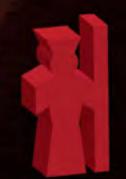
1 Pharaoh


1 Start Player tile
3 Start tiles
4 Pyramids
63 Populace tiles
36 Priesthood tiles

36 Artifact tiles
Seve a iKind
Six of a Kind
::Five of a Kind
Four of a Kind
Three of a Kind
3 +1 Die tokens 31 +1 Pip tokens 31 Reroll tokens
Pair
Three of a Kind & Two Pairs
Three Pairs
12345/23456
1234/2345/3456
40+
Fourofa kind 30+ .2
Threeoff Kind 25+
Two Pairs20+.
AllEven 10+ A
12 Standard dice
5 Double-sided Level bars
+ 000 x* X
6 Unique Custom dice

8 Immediate dice
FIRST GAME SETUP
7 Level Bar (A side)
One tile in each stack
Place the Pharaoh token on the Queen.
6 Level Bar (A side)
Two fewer tiles in each stack than the number of players (minimum 1 tile)
5 Level Bar (A side)
Twofewer tiles in each stack than the number of players (minimum 1 tile)
4 Level Bar (A side)
Onefewer tile in each stack than the number of players
3 Level Bar (A side)
Tiles equal to the number of players

HERDER

Herder tiles are equal to the number of players
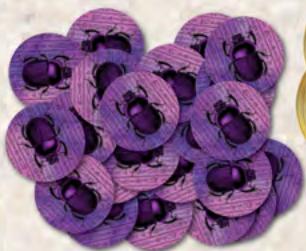
Place the Scarab tokens face down in a pile and the +1 Die tokens next to them.
FIRST GAME
Put the level bars A-side upon the table in ascending order. Below each strip, place the tiles as shown. Add extra copies of these tiles depending on the number of players, as shown to the left of those bars. Below the bottom row, place Herder tiles equal to the number of players. Put the unused tiles back in the box.
LATER GAMES
Roll a die (odd=A, even=B) for each bar to decide which side to use.
Always place the Queen tile under the 7-of-a-kind location, with the Pharaoh marker on top of it. For each other tile location, randomly select a tile to use from those of that type and level by rolling a die, using the number(s) in the upper left corner of the tiles. Place as many of those tiles as indicated on the level bars.
If you have an iOS or Android device, you can use the free random setup app available online from www.beziergames.com.
Place the dice where everyone can reach them (put away special dice that don't appear on any tiles).
PLAYER SETUP
After doing the setup steps on the previous page, give each player a Pyramid. Choose a first player randomly. Give that player the Start Player tile. Give a Start tile to each of the other players.

Clockwise from the first player, the 2nd player -- and, if present, the 3rd and 4th players -- draw 1, 2, or 3 tokens, respectively, and flip them face up.
GOAL
The goal is to win the Pharaoh's favor. Players begin as lowly petitioners with a bit of influence, represented by dice and tokens. As they rise in Egyptian society, they gain influence from more powerful contacts until someone secures the Queen's support.
The Pharaoh then holds court: a final "roll-off" among the players to win his favor by rolling the most matching dice with the highest value. The player who ends with the Pharaoh's favor wins!
PLAY
Play proceeds clockwise, starting with the first player. On a turn, a player rolls dice and uses tokens and powers to set aside a scoring combination and claim a tile.
A player begins by rolling 3 or more dice, based on his tiles. Initially, a player rolls 3 Standard (red) dice, as shown on his Start tile.
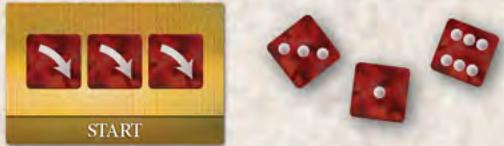

Dice rolled at the start of your turn.
Rolled dice are active. After each roll, a player must "lock" at least 1 active die by setting it aside in his pyramid before rerolling all his remaining active dice.

Active Immediate (white) dice must be locked after being rolled or entering play; they cannot be rerolled as remaining active dice.
Some tile powers bring more dice into play as active dice of a given value during a turn. Tokens and other tile powers adjust dice values or allow a player to reroll them. These may be used on dice, including newly brought in or Immediate (white) dice, before locking them.
Enough dice have been supplied for most games. If you ever run out of dice of a needed type, either borrow some from another game or roll some of the other dice types separately in place of the needed dice until you have set aside enough dice to continue normally.
Locked dice in a player's pyramid may not be adjusted, rerolled, or brought back into play.
Repeat this process of rerolling and locking one or more active dice (and possibly using tokens and tile powers) until all your active dice are locked and you don't wish to bring any more dice (using tile powers) into play.
Then, you may claim one tile whose requirements your locked dice satisfy, as shown on the level bars above tiles.
End your turn by removing all dice from your pyramid and straightening any used tiles (see below). The next player clockwise then begins a turn by rolling dice.
SCARAB TOKENS
Various tile powers allow a player to gain a Scarab token. Draw one randomly and place it face up in front of you. Each Scarab token may be used once per game and is then discarded to the box. If Scarab tokens ever run out, reshuffle the discarded tokens.
There are two kinds of tokens:

Use a reroll token to reroll one active die.

Use a +1 Pip token to add 1 to an active die showing a numeric value, adjusting the die to show its new face.
You may use multiple tokens in succession (for example, to add more than 1 to an active die) or at different times during a turn.
POWERS
Tiles come in three colors:
Yellow Populace tiles provide more dice, either to roll at the start of a turn or to bring into play as active dice of a given value during a turn.

Blue Priesthood tiles adjust the values of active dice in various ways.
Yellow and blue tiles may each be used once per turn. After using a yellow or blue tile, turn it sideways. Straighten them at the end of the turn.

Red Artifact tiles provide abilities that can be used once per game during your turn. After using a red tile, flip it face down.

Yellow tile powers that provide dice to roll must be used each turn.
All other tile powers are optional. Each power is resolved as it is used; a power may not "interrupt" another power.

Tiles that bring extra dice into play as active dice after a roll may not be used to add dice to those rolled to begin a turn.
Powers (and tokens) that add to dice or shift pips among several dice cannot increase their values beyond 6 (or to values they don't have). Thus, a power that adds exactly 2 pips to dice would have no effect on Standard (red) dice showing "5" faces or dice showing symbol-only faces. When shifting pips among dice, you must maintain their total.
Some powers modify rules. These modify only the indicated rules, not other rules.
CLAIMING TILES
Only one tile may be claimed each turn (unless some tile power modifies this). Players may not claim duplicates of tiles they previously claimed. Keep used red tiles (face down) to track this.

To claim a tile, your locked dice must satisfy the listed requirement on the level bar above it. You may split a group of dice showing the same number into pairs or sets as needed (a 4 of a kind is also 2 pairs).

Some requirements list a condition such as "All ≤ 2" or "All Even". This applies to all your locked dice (but not dice you didn't bring into play). When satisfying an "All" condition, you must have set aside at least the number of dice shown on that level bar. Ignore symbols on die faces when checking these conditions; dice with symbol faces do count towards the number oflocked dice needed on the level bar.
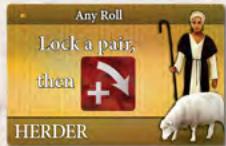
The Herder tile can be claimed by any set aside dice. Once you have a Herder, it is possible that you cannot claim a tile on a future turn, due to not meeting any tile's requirement. If this occurs, take 2 tokens instead.

Gain 1 token whenever you claim a blue tile; gain 2 tokens whenever you claim a red tile.

When claiming Royal Power, Treasure, Secret Passage, and Queen's Favor, gain two Scarab tokens from those tiles, and gain additional tokens if claiming additional Blue or Red tiles.
FINAL ROLL-OFF

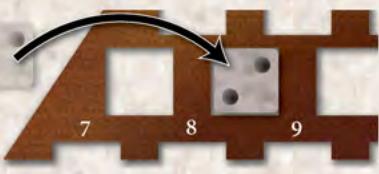
When the Queen is claimed, that player takes the Pharaoh and announces his roll to the other players (e.g. "Seven 6s" or "Eight 4s"), placing 1 die in the appropriate numbered slot beneath his pyramid. For example, if the player claimed the Queen with Eight 4's, he would place a die in the "8" slot with its "4" side showing (see above).

Any players who did not get a turn this round (the players to the right of the Start Player and left of the player claiming the Queen) gain 1 Die token.
The Pharaoh then holds court, a final "roll-off" among the players. Starting with the next player clockwise from the one who claimed the Queen, each player takes a turn and tries either to exceed the number of matching dice rolled by the player with the Pharaoh or to roll the same number of matching dice but with a higher value. No tiles are claimed during the Final Roll-Off.
For example, if the announced Pharaoh roll was "Seven 5s", a player would need to roll either eight or more matching dice of any value or "Seven 6s".
If a player succeeds, he announces his roll and takes the Pharaoh. Other players must then try to beat this roll. If he fails, he is out of the game. If a player doesn't have enough dice (given his dice and powers) to possibly beat the current Pharaoh roll, then skip that player's turn; he or she cannot win.
If the Pharaoh is taken by another player, then the player who has the Queen gets—after all other players have gone—a final turn to reclaim the Pharaoh by beating the last announced Pharaoh roll. Then, the player with the Pharaoh wins!
SAMPLE TURN


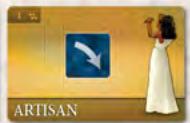
Clara has five tiles: Start Player, Guard, Soothsayer, Builder, and Artisan. She also has 1 reroll token that she obtained on a previous turn.

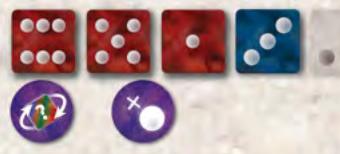
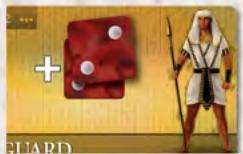
First Roll: Clara gains a +1 token from the Builder, then locks the Immediate 2 (as required) and chooses to leave the Standard 2 on the Guard.
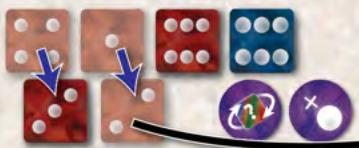

Second Roll: Clara uses the Soothsayer to move 1 pip from the Standard 4 to the Standard 1 and locks the resulting Standard 2.

Third Roll: Clara uses her +1 token to change the Standard 1 into a 2, and then uses her Artisan die to change the Standard 6 into a 2, and locks both Standard 2's.

Fourth Roll: Clara brings in and locks the Standard 2 from the Guard tile.
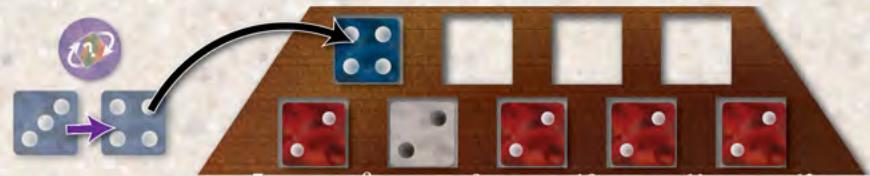
Fifth Roll: Since Clara has a 1/3 chance of rolling a 2 or a 1*, she chooses to use her reroll token to reroll the Artisan 3. It rolls a 4, which she must lock. Her result is 2-2-2-2-2-4.

With this dice result, Clara acquires a Yellow Overseer tile, which requires Five of a Kind to claim, and places it face up in her play area.


Seven of a Kind QUEEN
Seven dice must be equal.

Seven of a Kind QUEEN

Seven dice must be equal.
8-8
Six of a Kind
Six dice must be equal.
Six dice must be equal.
Six of a Kind
Five of a Kind
Five dice must be equal.
Five of a Kind
Five dice must be equal.

Four of a Kind

Four dice must be equal.
Four of a Kind
Four dice must be equal.
Three of a Kind
Three dice must be equal.
日
Three of a Kind
Three dice must be equal.
Three of a Kind & Two Pairs
Dice must include one set of three equal dice and two sets of two equal dice.
Four of a Kind & Three 1's
Dice must include one set of four equal dice and one set of three 1's.
Three Pairs
Dice must include three sets of two equal
123456
Your dice must show 1,2,3,4,5,6.
12345/23456
Dice must show either 1,2,3,4,5 or 2,3,4,5,6.
All Dice ≤ 2
All dice must be 1's or 2's.

1234/2345/3456
Dice must show either 1,2,3,4 or 2,3,4,5 or 3,4,5,6.

Dice must include three 6's and two 1's.
All Dice ≥ 5
All dice must be 5's or 6's.
Pair
LEVEL BARS
Two dice must be equal.
日
All Dice ≥ 4
All dice must be 4's, 5's, or 6's.

Three of a Kind & Four of a Kind

Dice must include one set of three equal dice and one set of four equal dice.
Five of a Kind

Dice must include one set of two equal dice and one set of five equal dice.
Four of a Kind

Dice must include one set of two equal dice and one set of four equal dice.
Threes of a kindsds

Two sets of three equal dice.
Three of a Kind
Dice must include one set of two equal dice and one set of three equal dice.
Two sets of two equal dice.
Pair of 6's & Pair of 1's
Dice must include two 1's and two 6's.
日
All Even

All dice must be 2's, 4's, or 6's.
日

All Odd
All dice must be 1's, 3's, or 5's.
40+
The sum of your dice must be 40+.
45+

The sum of your dice must be 45+.
复图

30+
The sum of your dice must be 30+.
35+
The sum of your dice must be 35+.

25+
The sum of your dice must be 25+.
All Different

All dice must have different values.

The sum of your dice must be 20+.
All dice must be different.
10+
The sum of your dice must be 10+.
15+
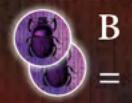
The sum of your dice must be 15+.

To claim: any roll (of at least 1 die).
Once per turn, after locking 2 or more matching dice on one roll, gain +1 Standard die to roll for the rest of this turn, starting with your next roll.
LEVEL 3 TILES

Roll +1 Standard die to start your turn.
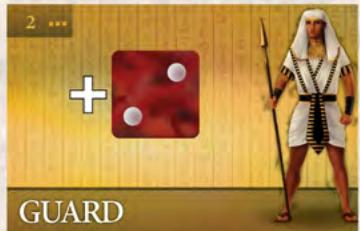
After any roll, may bring 1 Standard die into play as a “2”.
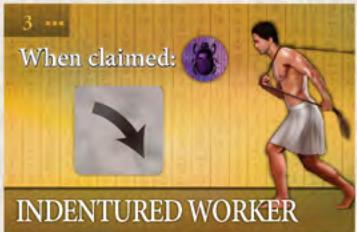
When claimed, gain 1 token. Roll +1 Immediate die to start your turn.
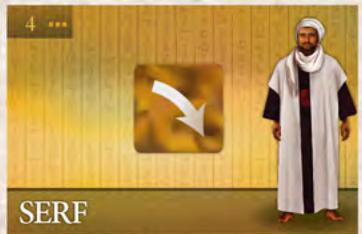
Roll +1 Serf die to start your turn. (See the Dice section for details.)

After a roll, may bring 1 Standard die into play as a "1".
LEVEL 3 CONT.
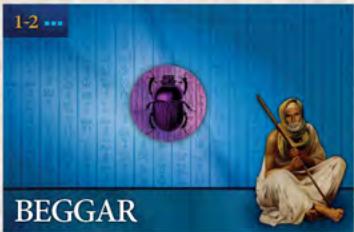
Each turn, gain 1 token before your first roll.

Add 1, 2, or 3 pips to an active die.

Move any number of pips between two active dice.
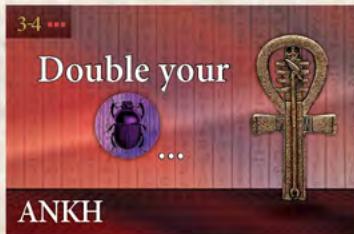
Gain tokens equal to the number of tokens you have.

After claiming this tile, immediately take another turn, rolling 1 Standard die fewer than normal to start it.

Gain 2 tokens immediately when used and +1 Standard die to roll for the rest of this turn, starting with your next roll.
LEVEL 4 TILES

Roll +1 Artisan die to start your turn. (See the Dice section for details.)
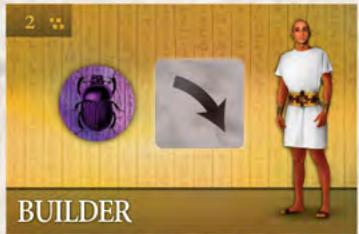
Each turn, gain 1 token before your first roll. Roll +1 Immediate die to start your turn.

Roll +1 Noble die to start your turn. (See the Dice section for details.)
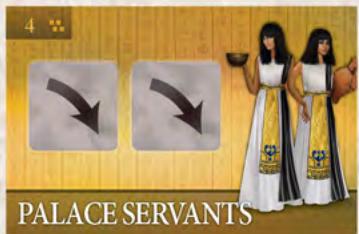
Roll +2 Immediate dice to start your turn.

After any roll, may bring 1 Standard die into play as a "3”.

Reroll 1+ active dice to gain 1 token.
After claiming this tile, immediately take another turn.
Roll +2 Standard dice to start your turn.
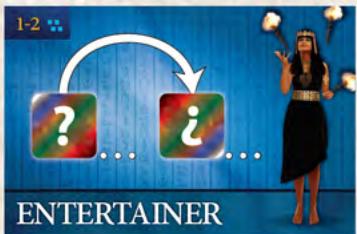
Flip any number of dice, including Custom dice, upside down.
Example: you could flip two “1s" and one "3" to become two "6s" and one “4".

Adjust 1 active die to match any locked die.
GOOD OMEN

PALACE KEY

After locking all rolled dice, gain +1 Standard die, adjust it to any face, and lock it.
LEVEL

After any roll, may bring 1 Standard die into play as a “5”.

Roll +1 Intrigue die to start your turn. (See the Dice section for details.)

After any roll, may bring 1 Standard die into play as a “4".

Roll +1 Voyage die to start your turn. (See the Dice section for details.)

Each turn, gain 1 token before your first roll. Roll +1 Standard die to start your turn.

Adjust any number of active Immediate dice to any face(s).
5 TILES

Adjust 1 active die to any other face.
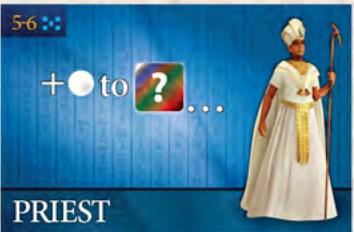
Add 1 pip to any number of active dice.

Play after your turn. Each other player rolls 2 fewer dice (of their choice) to start their next turn, unless it is during the final roll-off. Roll +1 Standard die to start your next turn.

BURIAL MASK
Gain 5 tokens.

Roll +3 Immediate dice to start your final roll-off turn.

After any roll, may bring 1 Standard die into play as a "6”.

Each turn, gain 1 token and put a Standard die on this tile with value 1. After each roll, you may bring this die into play. If not, increase its value by 1 and leave it on this tile until after your next roll.

Each turn, gain 2 tokens before your first roll. Roll +1 Standard die to start your turn.

After locking all rolled dice, gain +1 Standard die, adjust it to any face, and lock it.
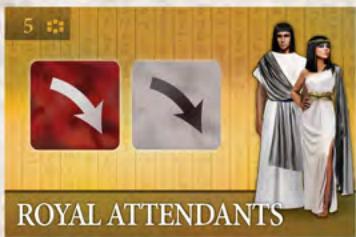
Roll +1 Standard die and +1 Immediate die to start your turn.
LEVEL 6 TILES
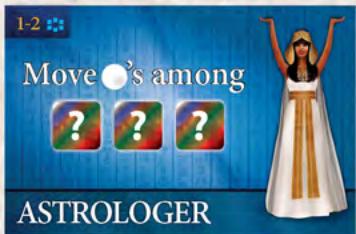
Move any number of pips among up to three active dice.

Add exactly 2 pips to any number of active dice.

Replace 1 active die with 2 Immediate dice, whose pips must sum to the number of pips of the die being replaced. These dice may be adjusted but must be locked before your next roll.

After your final roll-off turn, redo your final roll-off. Do not regain any tokens or Artifacts spent on your previous roll-off turn.

SECRET PASSAGE
Claim up to two level 3 tiles that you don't already have.
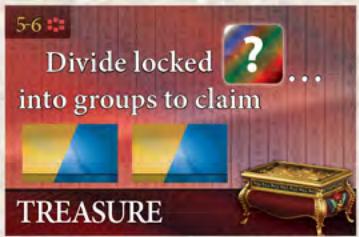
Use after claiming a tile (including possibly this one). Divide your locked dice into two groups. With each group, claim one yellow or blue tile that you don't already have.
LEVEL 7 TILES

When claimed, take the Pharaoh token. After any roll, may bring 1 Standard die of any value into play.

Roll +2 Standard dice to start your turn.

Roll +1 Decree die to start your turn. (See the Dice section for details.)

Roll +1 Standard die to start your turn and put a Standard die on this tile with value 1. After each roll, you may bring this die into play. If not, increase its value by 1 and leave it on this tile until after your next roll.

Add 1 or 2 pips to any number of active dice. You may add 1 pip to some dice and 2 pips to other dice.

Adjust any number of active custom and Immediate dice to any other face(s).
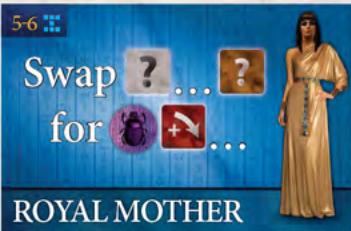
Replace any number of active Immediate dice and/or a Serf die with an equal number of tokens and Standard die to roll for the rest of this turn, starting with your next roll.
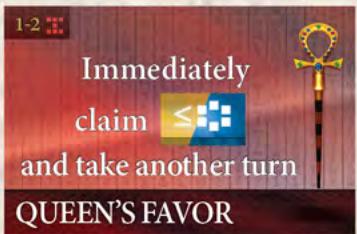
Play immediately. Claim any yellow or blue tile of level 6 or lower that you don't already have and then immediately take another turn.

Play immediately. Give +1 die token to any player who did not get a turn this round. You begin the final roll-off, rolling +2 Immediate dice. Players must beat seven 1s to claim the Pharaoh (and, once it has been claimed, players must beat the current high roll normally).

ROYAL POWER
Claim up to two blue tiles of level 6 or lower that you don't already have.
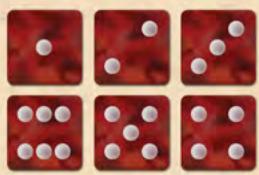

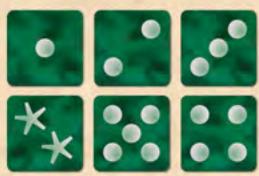
Standard



DICE

Immediate
Immediate dice must be locked after being rolled. They may be adjusted prior to being locked.
Serf
Noble
Artisan
If a is rolled, you may adjust one die (possibly the Artisan die) to any other face. This face is also a “1".
Intrigue
If a is rolled, you may adjust up to two dice (possibly including the Intrigue die) to any other face(s). If the face is showing when this die is locked, it has no value.
Voyage
If a is rolled, you may adjust one die (possibly the Voyage die) to any other face. If ais rolled, reroll any die (possibly the Voyage die). If a is rolled, the die has no value, but may be locked. If a is locked, gain 2 Standard dice to roll for the rest of this turn, starting with your next roll.
Decree
If ais rolled, you may adjust one die (possibly the Decree die) to any other face. If you lock the Decree die showing itsface, gain the use of another player's tile (that you do not have) for the rest of your rolls this turn. Take the tile (flip it face up if needed). Return it after your turn with its face as it was. A power whose effect takes place at turn start or after locking all dice cannot be used.

Any die.

Any die face.
SYMBOLS

Any number of active dice.

+2
A die rolled at the start of your turn.

A die that may be brought into play after any roll. It may then be adjusted, locked, or rerolled normally.

A die rolled for the rest of your turn, starting with your next roll.
Adjust a die to any other face. Any power on the new face takes effect.

Reroll a die.

Add 1 pip to a die showing a face with pip(s).
Playtesters
Many many people helped to playtest Favor of the Pharaoh. Special thanks should be given to: Carol Alspach, Dakota Alspach, Gage Alspach, Toni Alspach, Mark Beele, Scott Caputo, Bay Chang, Audrey Cueto, Barry Eynon, Randy Farmer, Shelley Ganschow, Doug Garrett, Carlos Hernandez, Jay Heyman, Trisha Huang, Wei-Hwa Huang, Joe Huber, Mark Jackson, Seth Jaffee, Kathy Keefe, Bruce Keeney, Dean Lizardo, Mary Prasad, Ravindra Prasad, Tiffany Ralph, Michael Randolph, Anthony Rubbo, Steve Samson, Ron Sapolsky, Greg Schloesser, Floyd Sherrod, Bryon Quick, Candy Weber, Ray Wisneski, Karen Woodmansee, Don Woods, Dale Yu, and Ryan Yu.
About the Designer
Tom Lehmann has been playing and designing games since he was a child. He prefers games with strategic options, interesting decisions, end game tension, and replayability. He strives to provide these in his own designs and hopes you enjoy this game.
About the Developer
Ted Alspach is the designer of several games including Suburbia, One Night Ultimate Werewolf, and Castles of Mad King Ludwig. He has developed other games including Ultimate Werewolf Inquisition.
About the Artists
Illustrations: Self-taught artist Nadica Boshkovska creates illustrations, book covers, and artwork for games. See more of her work at: theswanmaiden.deviantart.com.
Cover Art: Originally from Portland, Oregon, Ollin Timm works as a freelance artist in addition to his work as an architectural designer. He has long been interested in gaming and graphical presentation: Ollin was the building artist behind the original Suburbia buildings, and has illustrated the cover of Castles of Mad King Ludwig and Castles of Mad King Ludwig Secrets.
About Bezier Games, Inc.
Bezier Games is the publisher of great family strategy games, including Suburbia, Subdivision, Castles of Mad King Ludwig, One Night Ultimate Werewolf, Ultimate Werewolf, and many more.


原文为社区整理/出版社公开资料,版权归原作者,仅供个人学习查阅。