
基因花园Genotype
一句话概览
基因花园 是一款已收录于村了吗规则库的桌游,支持 1–5 人,原名 Genotype。
本页内容:一句话概览 · 游戏概述 · 1. 游戏组件 · 2. 游戏设置 · 3. 游戏总流程 · 4. 工作阶段 · 5. 工具卡 · 6. 植株育种阶段 · 7. 研究升级阶段 · 8. 轮次结束重置 · 9. 游戏结束与计分 · 10. 单人模式规则 · 常见问题
基因花园 规则速览
本页收录规则速览的前 11 节(篇幅所限省略了后 1 节),完整规则速览与卡牌可在村了吗查询。
游戏概述
在19世纪孟德尔的修道院花园中,玩家扮演研究豌豆遗传学的科学家,通过收集豌豆植株、验证基因性状、推动研究升级来构建自己的知识体系。核心流程分三轮行动——工作阶段放置标记执行行动、植株育种阶段掷骰选取培育后代、研究升级阶段购买永久性能力提升——共进行5轮。
核心机制: 行动点分配、骰子Draft(挑选)、资源管理、单人模式协作对抗
1. 游戏组件
| 组件 | 说明 |
|---|---|
| 游戏版图 | 含旁纳特方格区、4色骰子池区、价格算盘、植株展示区 |
| 玩家面板 | 每人1块,含花园地块槽位、骰子槽位 |
| 行动标记 | 每人3个(初始),铲子形状,按颜色区分 |
| 表现型研究标记 | 每人3个 |
| 后代骰子 | 共20颗,分4种颜色(红/黄/绿/蓝),每色5颗 |
| 亲本基因板块 | 每种颜色2个,双面 |
| 豌豆植株卡 | 含不同基因型性状,洗混成牌库 |
| 工具卡 | 一次性效果,洗混成牌库 |
| 助手卡 | 持续性能力,初始3张正面朝上 |
| 性状标记(叶子) | 无限供应,覆盖已验证性状 |
| 钱币 | 无限供应 |
| 算盘珠子 | 4颗,记录升级价格 |
| 回合记录指示物 | 1个 |
| 起始玩家标记 | 1个 |
| 自动卡牌(单人模式) | 9张,控制虚拟对手约翰修士的行动 |
| 新地块板块 / 骰子槽位 | 升级用配件 |
2. 游戏设置
2.1 版图与通用组件
- 将游戏版图置于中央。
- 每种颜色的5颗后代骰子和对应2个亲本基因板块放在版图左侧,与同色旁纳特方格相邻。
- 性状标记和钱币放在所有人方便拿取的区域(两种均为无限供应)。
2.2 轮次与起始
- 轮次记录指示物放在第1格。
- 4个旁纳特算盘珠子分别放在4种升级颜色的起始价格格上。
- 起始玩家标记给予最近完成过花园工作的玩家。
2.3 每名玩家设置
每位玩家获得:
- 1块对应颜色的玩家面板、3个行动标记、3个表现型研究标记。
- 从行动标记供应中额外拿取2个(作为研究升级补充)。
- 1元钱币。
- 从豌豆植株牌库抓取3张,其中1张放入玩家面板的花园槽位,1张留于手牌,1张弃置(放入牌库旁的弃牌堆)。
- 1张工具卡。
2.4 苗圃与工具棚
- 豌豆植株卡和工具卡分别洗混,正面朝下放置在各自的牌库位置。
- 根据玩家人数,从各牌库顶部翻开指定数量的卡牌面朝上展示:
| 玩家人数 | 1–2人 | 3人 | 4–5人 |
|---|---|---|---|
| 展示数量 | 3 | 4 | 5 |
2.5 研究升级区域
- 新地块板块、骰子槽位和助手卡放在版图的"研究升级"区域旁。
- 从助手牌库抓3张正面朝上作为初始选择。
3. 游戏总流程
游戏共进行 5轮。每轮依次经历三个阶段:
- 工作阶段 — 玩家轮流放置行动标记到行动区域并执行对应行动。
- 植株育种阶段 — 所有玩家共同投掷骰子,按顺序从骰子池中挑选骰子验证豌豆植株性状。
- 研究升级阶段 — 按逆序购买永久升级。
轮次结束后提升轮次指示物至下一格,重复上述流程。当第5轮植株育种阶段完成后,游戏结束并计分。
4. 工作阶段
每个工作阶段开始时,拥有起始玩家标记的玩家首先行动,之后顺时针轮流进行。每轮每个行动区域只能被一个行动标记占用一次。玩家们轮流放置1个可用行动标记到空闲的行动区域,随即执行该行动的全部效果。当某玩家的最后一个行动标记放完后,跳过其剩余轮次。
每名玩家初始拥有3个行动标记;可通过升级获取更多(上限5个)。
4.1 园艺
步骤:
- 抓取 — 从版图上正面展示的卡牌或对应牌库顶部拿取1张工具卡或豌豆植株卡。
- 收获 — 检查你所有已播种的豌豆植株卡:若一张卡上的全部性状都已被性状标记覆盖,将其视为已完成。拿取该植株卡正面朝下放置于你的最终计分区(随时可查看),同时将上面覆盖的性状标记放回供应堆。
- 播种 — 从手牌中选择1张豌豆植株卡,放置到你玩家面板上任意空闲的花园地块槽位中。此后该植株可在后续回合接受性状验证。
> 举例: 你当前有2张未完成植株。执行园艺时先抓了1张嫁接小刀;收获了一张5分的已满植株(移除其上叶子);然后将手牌中的一张6分植株播到新地块上。
4.2 设置亲本基因
此行动改变旁纳特方格的显示结果,从而影响植株育种阶段骰子的含义。
执行步骤:
- 不能翻面已有板块——你必须 添加一块新基因板块(任选一面)、移除一块现有板块、或 不做任何操作。
- 若对应行动区域旁有钱币,一并拿取。
4.3 第1转换
- 无任何即时效果。
- 在植株育种阶段中,你在选取同色骰子时享有 优先权(在其他正常选取顺序之前)。
- 若旁边有钱币则拿取。
4.4 第2转换
- 无任何即时效果。
- 在植株育种阶段中,你在第1转换玩家之后选取骰子。
- 此区域为 无限量,可以容纳多个标记。新标记放置在原有标记左侧。选取顺序为 从右到左。
- 若旁边有钱币则拿取。
4.5 设置表现型研究目标
执行步骤:
- 支付行动区域标注的费用(2或3元钱币)。
- 将1个表现型研究标记放到版图上任意未被占用的表现型研究目标格子上。每种骰子颜色下方有一排目标格子。
> 目的: 在游戏结束时,根据你完成的豌豆植株中匹配的性状类型获得额外分数。
4.6 财政管理
- 获得2元钱币。
- 注意有两个行动区域:其中一个标注"4+",仅在4–5人游戏中可用。
4.7 大学
支付行动区域上标注的费用(1或2元钱币),立即将你手牌中 1张豌豆植株卡 上的 任意1种性状 用性状标记覆盖(即提前验证,如同植株育种阶段拿到匹配骰子那样)。
4.8 苗圃
从正面展示的卡牌或牌库顶部抓取2张豌豆植株卡加入手牌。标注"4+"的区域仅用于4–5人游戏。正面临示的槽位在本轮内不会立即补充。
4.9 工具棚
从正面展示的卡牌或牌库顶部抓取1张工具卡加入手牌。标注"4+"的区域仅用于4–5人游戏。
5. 工具卡
工具卡提供一次性效果。它们不替代正常行动,可在满足条件时打出(通常在工作阶段的任意时刻)。部分工具卡箭头标注了使用时机——箭头左侧为条件,右侧为效果。
| 工具卡 | 效果 |
|---|---|
| 种子袋 | 抓取5张豌豆植株卡,保留2张,弃掉其余。 |
| 洒水漏斗 | 验证任何1种性状(任意植株上的任意性状均可)。必须获得此卡的同一回合立即打出。 |
| 论文 | 支付1元钱币设置一个表现型研究目标。不替代正常行动。 |
| 花盆 | 放置于玩家面板旁——视作1个临时新地块。立即从苗圃拿取1张豌豆植株卡放上。收获该卡时再拿1张补上,然后移除花盆。 |
| 嫁接小刀 | 当拿取1颗后代骰子时打出,额外再拿取1颗骰子(不使用骰子槽位,将卡放在板上代表已使用)。 |
| 钉耙 | 当拿取1颗后代骰子时打出,将该骰子当作该颜色任意性状验证(效果类似"突变")。 |
| 花粉刷 | 当验证1种性状时打出,同时验证你所有豌豆植株上相同基因型的每个样本。 |
| 手持透镜 | 在执行"设置亲本基因"行动时打出,获得2元钱币。 |
| 怀表 | 在执行"第1转换"行动时打出,获得2元钱币。 |
| 花园线 | 在执行"第2转换"行动时打出,获得2元钱币。 |
| 拨款 | 在购买1个研究升级时打出,费用减少2元(最低为0,但实际受其他效果限制后最低1元)。 |
> 组合示例: 先用钉耙将骰子FF的点数转化为Ff,然后打出花粉刷验证所有含Ff基因的性状。
6. 植株育种阶段
这是发现与验证豌豆植株性状的主要环节。所有玩家 共同 参与。
6.1 投掷与分类
- 所有玩家收集并投掷 20颗后代骰子(每种颜色5颗)。
- 按照骰子点数与旁纳特方格的对照关系,将骰子分别放入对应的骰子池区域:
- 点数 Ⅰ–Ⅳ 直接放入对应行×列的交叉区域。 - 出现 "突变"图标(⚡) 的骰子需要重新投掷:
- 重掷结果为 Ⅰ–Ⅳ → 放入对应骰子池区域。
- 重掷再次为 突变 → 放入"新生突变"槽位。 - 调整后的亲本基因可使某些组合不可能出现,而让另一些组合几乎必然出现。
> 旁纳特方格解释: 假设骰子点数为"Gg"(如G行g列),代表后代基因型Gg。你可以用它来验证植株上的Gg性状。同理,①号骰子代表GG,④号骰子代表gg。
6.2 骰子选取顺序
掷骰完成后,玩家按以下优先级轮流从骰子池中各选1颗骰子:
- 第1转换 — 在此区域有行动标记的玩家先选取自己颜色对应的骰子。
- 第2转换 — 以此区域标记顺序(从右到左)选取任意同色骰子。
- 正常轮替顺序 — 按顺时针轮流选取,直至每位玩家连续跳过为止。
选取规则:
- 选取时玩家必须有 可用的骰子槽位(在自己面板上)。
- 选取的骰子必须立即用于验证 1张豌豆植株上的1个匹配性状(用性状标记覆盖)。
- 随后将这颗骰子放入自己的 1个骰子槽位 中保存。
- 如果某玩家在轮到他选取时无法满足上述条件,则该玩家本轮跳过剩余过程。
6.3 新生突变骰子
放在"新生突变"槽位的骰子可以在选取时替代普通骰子,有以下两种用法:
- 变现 — 拿取该骰子,放置到自己1个骰子槽位中,获得1元钱币,然后验证该骰子颜色的1种匹配性状。
- 突变 — 同时拿取该突变骰子和另一颗 同色 骰子,一起放入自己的2个骰子槽位中。此时你可以验证该颜色骰子的 任意性状(不受旁纳特方格约束)。
> 策略提示: 突变骰子能帮你验证那些亲本基因暂时无法产生的性状组合,也能干扰对手的研究进度。
6.4 辅助手段获取额外骰子
- 嫁接小刀(工具卡):打出后可额外拿取1颗骰子(需有额外骰子槽位或使用此卡临时槽位)。
- 玛利亚修女(助手):每植株育种阶段限一次,拿取骰子时可直接获取该颜色的任意性状。
- 钉耙(工具卡)与 玛利亚修女 的能力类似于"百搭"突变——可将任意骰子用作该颜色任意性状,即使该性状不在当前亲本基因范围内。
7. 研究升级阶段
此阶段允许玩家花费钱币购买永久性改进。按 玩家回合的逆序 进行——起始玩家右侧的玩家首先选购,随后逆时针继续,直到所有玩家跳过。
每位玩家每次只能购买1个升级。若不想或不能购买则跳过,且本轮不再购。
7.1 价格系统
每个升级的当前价格由 价格算盘 上的珠子标示。每次有人购买该升级:
- 价格 +1(向高价方向移动一格)。
- 若已达最高价,保持原价不变。
- 所有玩家在同一个工作阶段内的购买行为完成后,每个升级的价格统一回落1格(若已在最低价则保持不变)。
> 举例: Michael花费2元雇佣了1个助手,该助手升级价格上涨为3元。他右手边的玩家接着轮到选购。本轮所有玩家购买结束后,所有升价过的升级回降1格。
7.2 升级类型
| 升级类型 | 效果 |
|---|---|
| 新地块 | 拿取1块新地块板块置于面板旁。花园中多1个槽位播种豌豆植株。 |
| 骰子槽位 | 拿取1个骰子槽位置于面板旁。植株育种阶段可多放1颗骰子。 |
| 行动标记 | 拿取1个更多与你颜色相同的行动标记。最多拥有5个。 |
| 雇佣助手 | 拿取1张正面朝上的可用助手卡。助手卡不会立即补满——直到本轮重置才刷新。 |
7.3 助手卡详解
助手提供持续性奖励,经常强化或奖赏其他行动。
使用方法标记:
- ■ 符号:每轮限用一次。使用后旋转卡片90度表示已用,本轮结束时恢复原位。
- → 符号:当箭头左侧条件满足时方可激活。
| 助手 | 效果 |
|---|---|
| 阿利皮乌斯修士 | 执行园艺行动时,额外抓取1张卡牌。 |
| 伊丽莎白修女 | 每工作阶段限一次:验证1种匹配你已放置的表现型研究标记的性状。 |
| 安娜修女 | 每工作阶段限一次:支付1元钱币,验证任意1种性状。 |
| 奥马利神父 | ■ 放置1个行动标记到此卡上——投掷每种颜色骰子各1颗,反复重掷出突变的骰子,直到所有骰子无突变为止。每颗骰子让你验证1个匹配的性状(如同在植株育种阶段中选取的那样,仅你能使用此能力)。 |
| 安顿神父 | 你在第2转换中的选取顺序中始终位列第一(无需额外放置行动标记)。第1转换之后,可选取1颗你的后代骰子,然后照常执行第2转换区域内所有行动标记的顺序。 |
| 弗兰兹修士 | 植株育种阶段中,你可支付1元钱购买2个额外骰子槽位(需在选取第1颗骰子前支付,一次性付费即可获得两个槽位使用权)。 |
| 玛利亚修女 | 每植株育种阶段限一次:拿取骰子时,验证该骰子颜色任意1种性状。 |
| 利奥波德修士 | 所有钱币花费减1元(最低1元)。 |
| 梅修女 | 验证1种性状时,同时验证你所有豌豆植株上相同表现型的每一个性状。 |
| 爱德华修士 | 拥有1个永久性的额外地块,自带1张豌豆植株并自动补充。雇佣时立即从苗圃拿1张植株放上去。收获它时,再以同样方式拿取1张新的。 |
8. 轮次结束重置
当一轮的三个阶段全部完成后:
- 轮次记录指示物前进1格。
- 起始玩家标记顺时针传递给下一位玩家。
- 每个升级的价格算盘向左移动1格(已到底价的保持不变)。
- 弃掉剩余的豌豆植株卡、工具卡和助手卡。补充对应的新卡牌——工具卡、豌豆植株卡和助手卡分别按人数规则补充。任一牌库耗尽时将弃牌堆洗匀作为新牌库。
- 在每个没有钱币的旁纳特方格旁补充1元钱币。
- 玩家回收各自所有的行动标记。
- 后代骰子全部收回并放回版图旁准备下一轮投掷。
- 不移除或修改 亲本基因板块,以及玩家面板上的豌豆植株、性状标记和研究升级。
9. 游戏结束与计分
第5轮的植株育种阶段结束后(所有玩家收获已完成的植株后),游戏进入结算。
9.1 计分来源
| 来源 | 计算方式 |
|---|---|
| 完成的豌豆植株卡 | 每张已完成植株卡角落标注的分数。 |
| 表现型研究目标 | 对版图上每个表现型研究标记,根据你完成的植株中匹配的性状实例数获得对应分数。 |
| 未完成的植株 | 未完成植株卡上每个性状标记价值1分。 |
| 未花费的钱币 | 每个未花费钱币价值1分。 |
9.2 平局处理
- 比较完成的豌豆植株卡数量——多者胜。
- 若仍持平,比较研究升级数量——多者胜。
10. 单人模式规则
玩家以科学家身份对抗虚拟对手——约翰修士(修道院管理员)。约翰的行动由 9张自动卡牌 控制。
10.1 设置
- 按2人游戏规则设置主版图和你的个人组件。
- 你始终是起始玩家。
- 约翰的配置:
- 一组3个行动标记、3个表现型研究标记、1元钱币。
- 2张豌豆植株卡垂直排列形成他的花园。
- 洗混9张自动卡牌作为他的牌库。
- 不需要玩家面板和起始工具卡。
- 简单/标准模式: 无起始助手。困难模式: 额外获得1张助手卡(见10.5)。
10.2 约翰的核心规则
- 约翰的豌豆植株卡在他花园中排成一列。新植株添加到最上方。
- 已完成的植株立即收获——移走并计分,其余卡牌向下滑动。
- 约翰的花园上限为4张植株卡。若已有4张后再获第5张,改为验证1种性状而非种植。
- 约翰需要验证性状时(任何游戏效果触发或被迫接收第5张植株),会验证他花园中 最底部那张植株上未被覆盖的最底部性状。
10.3 工作阶段——约翰的行动
约翰的工作阶段行动中:
- 从自动牌库抓2张卡——第1张是 行动卡(决定他要执行的行动),第2张是 支援卡(帮助他做具体选择)。
- 若抽到不合法的卡(如行动区域不可达、研究目标已被占等),重新抽取。
- 约翰的行动选择如下:
| 行动卡 | 约翰的操作 |
|---|---|
| 财政管理 | 获得2元钱币。 |
| 大学 | 执行最便宜的大学行动区域,支付费用验证1种性状(按约翰规则验证其花园最底部未覆盖性状)。 |
| 苗圃 | 添加1张豌豆植株到花园顶部,并弃掉第3张位置的植株。支援卡圆点指示拿取位置——从左往右第N张;若无则绕到左边;若全无可从牌库顶拿。拿取后弃掉其右边的下一张可用植株。 |
| 工具棚 | 弃掉1张工具卡 + 验证1种性状。 |
| 设置亲本基因 | 更换1块亲本基因板块并拿取对应钱币(如有)。支援卡字母指示哪个位置。 |
| 花朵颜色旁纳特方格 | 约翰固定放置到红色花朵旁纳特方格处。若有ff面板块则移除,否则添加ff面板块。 |
| 第1转换 | 选取对应支援卡字母的第1转换区域并拿取钱币(如有)。 |
| 设置研究目标 | 执行最便宜的区域,支付费用设置表现型研究目标(支援卡大写字母=显性目标如"F"→RR/Rr,小写=f→rr)。 |
| 园艺 | 为他每张助手验证1种性状,然后从牌库顶拿取1张豌豆植株卡。 |
| X图标 | 支援卡X视为取自行动卡的性状字母。 |
10.4 自动阶段
在所有玩家放置完行动标记后,约翰执行一次自动维护:
- 若有行动标记在第1转换区域,移到第2转换区域队尾。
- 为每张助手验证1种性状。
- 从牌库顶拿取1张豌豆植株卡放入花园顶部——每有1个"新地块"升级额外多拿1张。
- 标准/困难模式: 获得3元钱币。
- 将自动卡牌牌库重新洗混。
10.5 植株育种阶段(单人)
约翰不参与常规骰子槽位选取,而是使用自动卡牌判定:
- 约翰每有1个"研究转换"(基础3个+第2转换标记+每个骰子槽位升级),从自动牌库顶部抓1张卡,放在他花园最顶部有空位的植株卡右侧。
- 每张自动卡上有单箭头(→)或双箭头(⇒)指向特定基因型。对每个箭头所指的 未被覆盖性状:检查对应骰子是否在骰子池中。若至少有1颗,为该性状放置1个性状标记并移除该骰子。
- 此外,若自动卡还标有突变骰子颜色检查:对应新生突变槽位有骰子时,拿取1颗骰子验证花园最底部植株上最底部的 R/r类性状(RR、Rr或rr之一);无匹配则拿1元钱币。
约翰在一轮中可能完全不命中任何性状,也可能一口气验证3种之多。
10.6 研究升级阶段(单人)
- 约翰使用钱币购买升级:简单模式每轮买1个,标准/困难模式买2个。
- 抓自动卡——双箭头指向算盘列表中的升级位置。若能支付就购买并调整价格;不能支付则继续抓卡直到找到能购买的。
- 获得的升级效果:
- 新地块 → 每次自动阶段多拿1张植株卡。
- 骰子槽位 → 多1个研究转换(多抓1张自动卡)。
- 行动标记 → 每轮多1个行动标记。
- 助手 → 在自动阶段和园艺行动中均验证1种性状。雇佣时抽1张支援卡决定是谁。
10.7 轮次结束与游戏结束
- 遵循与多人游戏相同的轮次结束规则,但 不传递起始玩家标记(你始终是起始玩家)。
- 自动卡牌重新洗牌以供下个回合使用。
- 游戏结束计分方式与多人模式完全一致。若你的总分超过约翰修士,你赢得了这场实验!
10.8 困难模式额外助手
战胜标准模式后,可在游戏开始时给约翰配置以下特殊助手之一:
| 助手 | 效果 |
|---|---|
| 伊丽莎白修女 | 起始时抽1张支援卡放到某个表现型研究目标上。自动阶段验证花园中匹配任意研究目标的最底部性状。 |
| 奥马利神父 | 最后1个行动标记放在此卡上结算,验证花园最底部匹配性状。 |
| 弗兰兹修士 | 每植株育种阶段支付1元拿取2个额外研究转换。 |
| 玛利亚修女 | 放置自动卡时,若箭头指向不匹配的骰子性状,无论如何都验证。 |
| 利奥波德修士 | 费用减1元,每轮购买3个升级(只要付得起)。 |
| 梅修女 | 验证1种性状时同步验证所有相同基因型的性状。 |
常见问题(FAQ)
以下 1 条问答中 0 条来自站内玩家的真实提问,其余 1 条为本站整理的常见疑问;答复内容保持原样。
基因花园支持几个人玩?
1–5 人。
去哪查完整规则
想核对具体规则细节、卡牌效果或某个回合的结算方式,可以在村了吗里选中这款游戏后直接提问。
同类桌游
- 卡坦岛德式
- 工业革命:伯明翰德式
- 勃艮第城堡:特别典藏版德式
- 方舟动物园德式
- 卡卡颂抽象
- 瘟疫危机传承:第一季美式
- 阿瑞迪亚:勇踏征途美式
- 重塑宇宙德式
- 幽港迷城美式
- 埃多拉的德鲁伊德式
规则原文(Markdown)
本站收录这款游戏的规则原文 2 个文件,此处内联渲染 2 个,可直接展开阅读或下载。
rules_zh_基因花园_17067.md43.9 KB
翻译 & 排版:陈斌华


游戏版图
将游戏版图放在游戏区域中央。版图的主要区域由旁纳特方格、4种颜色骰子池区域,一个用于记录研究升级价格的算盘以及一个可用豌豆植株和工具卡展示区组成。

后代骰子和基因板块
将每种颜色的 5 颗后代骰子和 2 个亲本基因板块放在版图的左侧,与相同颜色的旁纳特方格相邻,有需要时可方便拿取。


钱币和性状标记
将钱币供应堆和性状标记()放在所有玩家方便拿取的区域(这些供应堆是无限数量的,如果用光了请找其他替代。)

游戏
起始钱币
将 4 个起始钱币放置版图上,在与 4 个旁纳特方格相邻的每个槽位各放置 1 个。
单人游戏模式
《基因型》可以让一名玩家与一个模拟的对手进行单人游戏。在学习了标准规则后,在第14页查看单人游戏规则。

旁纳特方格


设置

轮次记录
将轮次记录指示物放在第1格。






玩家面板和价格
给每名玩家发一块他们各自颜色的玩家面板和3个行动标记()以及3个表现型研究标记()。放置2个额外的行动标记作为每名玩家颜色及其研究升级。
每名玩家从供应堆拿取1元钱币,然后从对应的牌库抓取3张豌豆植株卡和1张工具卡。玩家必须将其中1张豌豆植株卡放在他们玩家面板上的花园槽位内,将其中1张豌豆植株卡保留在手牌,再弃掉最后1张(放在豌豆植株牌库旁的弃牌堆)。

算盘珠子
将 4 个算盘珠子放在每个升级的起始价格上(不同颜色的升级)


研究升级
将新的地块板块,骰子槽位以及助手卡放在版图的研究升级区域旁边。
抓取3张助手卡并正面朝上放置作为起始选项。


豌豆植株和工具卡
洗混豌豆植株卡和工具卡,将这些卡牌的牌库分别正面朝下放在苗圃和工具棚旁边。根据不同的玩家人数,从豌豆植株牌库抓取对应数量的卡牌正面朝上填充苗圃,并从工具牌库抓取对应数量的卡牌正面朝上填充工具棚。
| 玩家人数 | 1-2 | 3 | 4-5 |
| 卡牌数量 | 3 | 4 | 5 |

起始玩家标记
将起始玩家标记给予最近完成花园工作的玩家。你们现在准备开始游戏了!


基因型:一款关于孟德尔遗传学的游戏
支持 2-5 人进行游戏
游戏预览
格雷戈尔孟德尔是19世纪奥古斯丁的修士,他通过对豌豆植株的研究发现了现代遗传学。在《基因型:一款关于孟德尔遗传学游戏》中,玩家在孟德尔主持实验的修道院里扮演研究科学家的角色。
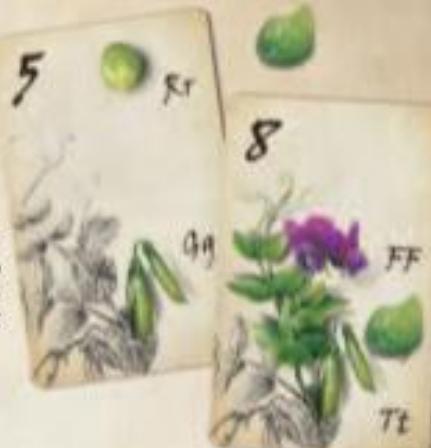
玩家可以通过收集豌豆植株卡牌上的特征来研究一整个花园的豌豆植株。每一对字母代表一个特定性状的基因型(一组基因)。玩家将通过自己的行动来验证豌豆植株的性状,用性状标记(叶子)覆盖性状。一旦一株植株的所有性状都被性状标记覆盖,它就被完全研究过了,玩家将获得角落里显示的分数。
《基因型》的游戏轮次分为3个主要阶段:工作阶段,植株育种阶段,研究升级阶段。
阶段1: 在工作阶段中, 玩家有机会执行那些准备他们的花园, 获取资金, 获得他们研究所需性状的行动。
阶段 2:植株育种阶段是玩家发现和验证豌豆植株性状的主要途径。玩家将轮流从代表植株可能的基因组合的后代骰子池中挑选骰子。骰子的点数是用旁纳特方格来解释的,旁纳特方格是展示亲本基因如何传递给后代的科学工具。
点数的骰子代表后代基因型 Gg,从第 G 行和第 g 列中可看出。这可以用于验证豌豆植株的 Gg 性状。
这可以用于验证豌豆植株的 Gg 性状。
(另一个骰子可以用同样的方式解释: $^{①}$ 代表 GG 性状, $^{④}$ 代表 gg 性状。
阶段 3:在研究升级阶段,玩家可以支付他们的钱币进行强大的升级,以优化他们未来的回合。
在工作阶段,玩家门轮流放置各自的1个可用行动标记(铲子)到游戏版图或他们玩家面板上的一个空置行动区域。然后玩家立即执行对应的行动(所有可能的行动都在下一页有详细描述)。一旦一个行动区域被一个行动标记覆盖,该区域在这轮就被占据并且无法被任何玩家选择(虽然有些行动拥有多个行动区域)。

拥有起始玩家标记的玩家将有机会首先放置1个行动标记并执行行动。然后按照顺时针方向,之后的玩家轮流进行回合放置1个行动标记并执行相应的行动直到所有玩家都放置了所有的可用行动标记为止。玩家们在游戏开始时拥有3个自己颜色的行动标记,但他们可以通过研究升级获得更多行动标记。
玩家可以执行的行动如下:
◇园艺
园艺行动是用来维护你的豌豆植株卡牌的。你把新的豌豆植株卡抓到手牌上,然后必须把它们从你的手牌移到你的玩家面板上的地块上来对它们进行研究并得分。这个行动用来把豌豆植株从你的手牌上放到游戏中,然后在卡牌上的所有性状都被性状标记覆盖之后移除它们。
当执行园艺行动时,每个行动按照以下3个步骤依次进行:
1 抓取 1 张工具卡或豌豆植株卡,可以从版图上正面朝上的卡牌或牌库中抓取。
2 收获所有性状均被性状标记(通常在植株育种阶段放置的)覆盖的任何豌豆植株卡。将性状标记放回供应堆并将完成的豌豆植株卡正面朝下放在你玩家面板旁用于游戏的最终计分。你可以随时查看完成的豌豆植株卡。
3 你可以从你手牌上播种新的豌豆植株卡,将它们放到你玩家面板的一个可用地块上。这些植株卡上面现在可以用于放置性状标记。

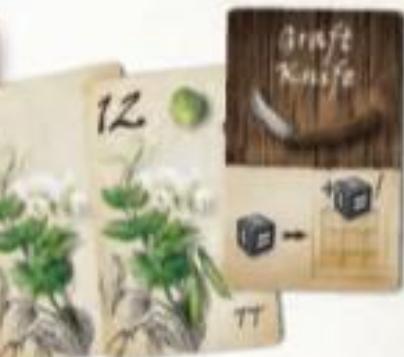
园艺举例:
Michael 已经完成了他的 1 个豌豆植株卡并用他手牌内的 2 张豌豆植株卡执行园艺行动。首先他从工具棚抓取了嫁接小刀工具卡。然后他收获了他已完成的 5 分豌豆植株卡,将其性状标记移除并放在一旁用于之后计分。(他的 9 分植株卡还需要 Rr 性状标记所以还不能被收获。)最后他决定播种 6 分的豌豆植株卡到他新的可用地块。他可以在未来的回合放置性状标记到这张豌豆植株卡上。
◇ 临时骰子槽位
设置亲本基因
执行设置亲本基因行动来放置或移除对应的亲本基因板块。亲本基因板块被放在版图上印着亲本基因的上面,改变旁纳特方格上显示的结果。
当执行这个行动时,玩家不能翻面板块:他必须放置1块基因板块(任何一面),或者移除1整块板块,或者可能会不做以上任何两种选项(让旁纳特方格维持原状)。
如果对应的旁纳特方格旁边有1元钱币,拿取该钱币。
→亲本基因板块在植株育种过程中 可能会改变后代的性状。
◇ 第1转换
第1转换行动没有任何即时效果,但会在植株育种阶段中最先从该颜色的后代骰子中选取。
如果在对应的旁纳特方格旁有钱币,则拿取该钱币。
◇ 第2转换
第 2 转换行动没有任何即时效果,但会在植株育种阶段中较早从该颜色的后代骰子中选取,排在第 1 位转换玩家后面。
第 2 转换区域可以容纳任意数量的行动标记,玩家将新添加的行动标记放在原有标记的左边,玩家将按照从右到左的顺序依次选取后代骰子。这是版图上唯一无限量的行动区域。
设置表现型研究目标
设置表现型研究目标来在游戏最终计分中获得额外分数。当执行此行动时,支付行动区域上标记的费用(2或3元钱币)。然后将你的1个表现型研究标记放到任何未被占据的表现型研究目标上,这些目标位于每种骰子颜色池区域的下方。
在游戏结束时,表现型研究目标将为每名在收获豌豆植株上每种匹配表现型的玩家奖励分数。注意左侧的目标是用于每种骰子颜色奖励2种不同的表现型,而右侧的目标则通过每种匹配的表现型来获得更多分数。
版图上的钱币
在每轮开始时,4个旁纳特方格旁边都有1元钱币。第一位放置行动标记在设置亲本基因玩家或者第一位为每种颜色的旁纳特方格转换区域的玩家将在执行该区域的行动外获得额外的对应钱币。

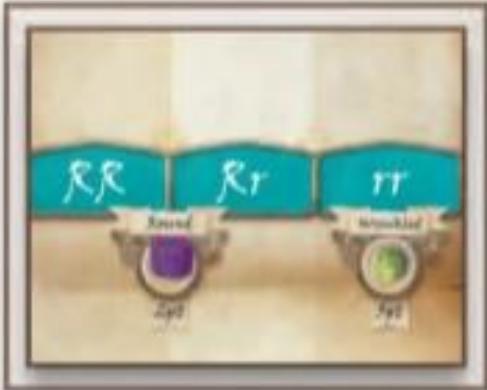
举例:2颗蓝色骰子表现型研究目标是属于种子形状的。在游戏最终计分中,Amy每张完成的含有RR或Rr性状(圆形种子)的豌豆植株卡将给她带来2分。右侧的目标则将给她每张完成的含有tt性状(皱巴巴的种子)的豌豆植株带来3分。

财政管理
执行财政管理行动来获得 2 元钱币。
注意这里有 2 个财政管理行动区域,但标记着 4+ 的区域只用于 4-5 人游戏。
大学
执行大学行动并支付标记在行动区域上的费用(1或2元钱币)来立即验证你的1张豌豆植株卡上的任何性状(用1个性状标记覆盖所选的性状)
苗圃和工具棚
执行苗圃行动来从正面朝上的可选卡牌或牌库中抓取 2 张豌豆植株卡。
执行工具棚行动来从正面朝上的可选卡牌或牌库中抓取1张工具卡。
标记 4+ 的区域只用于 4 或 5 人游戏。正面朝上的卡牌槽位不会立即补充直到本轮结束为止。
工具卡牌
工具卡牌提供一次性奖励。这些卡牌可以留在手牌直到打出为止,然后弃到工具弃牌堆。工具卡通常可以在你回合的工作阶段的任何时刻打出并且不会代替你的正常行动。含有→的工具卡可以在满足箭头左侧条件时打出。

种子袋:抓取5张豌豆植株卡,保留其中2张,弃掉剩下的卡牌。

洒水漏斗:验证任何性状。你必须在你获得这张卡牌时立即打出此牌。

论文:支付1元钱币来设置一个表现型研究目标。(这不视为你的正常行动。)
花盆:将花盆打出放到你的玩家面板旁。立即拿取1张豌豆植株卡(从苗圃内正面朝上的可选卡牌或牌库中选择)并将其放到花盆上。这将视为你花园内的一张豌豆植株卡直到其被收获为止,然后弃掉该花盆。
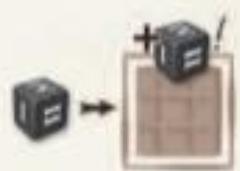


嫁接小刀:当拿取一颗后代骰子时打出此牌来立即拿取另一颗骰子,此时不使用骰子槽位(放在嫁接小刀上)。

钉耙:当拿取一颗后代骰子时打出此牌来验证该骰子颜色的任何性状。
花粉刷:当验证一种性状时打出此牌来验证你的豌豆植株上相同基因型每个样本。
手持透镜 / 怀表 / 花园线:当执行亲本基因 / 第 1 转换 / 第 2 转换行动时打出此牌来获得 2 元钱币。

拨款:当购买一个研究升级时打出此牌来将升级费用减少2元钱币。
2. 植株育种阶段
在植株育种阶段,玩家们掷骰然后选取(按回合顺序选取)后代骰子。由于每名玩家选择并拿取了1颗骰子,他必须将其放到他的1个可用骰子槽位上并验证他的1张豌豆植株卡上的对应的一种性状。玩家一直进行选取骰子直到他们用光了骰子槽位或骰子为止。
植株育种
这个阶段开始于植株育种。玩家们共同投掷20颗后代骰子并按骰子点数分类到对应的旁纳特方格:
对于骰子点数Ⅰ至Ⅳ,匹配旁纳特方格上对应的骰子面,注意基因字母代表的行和列,将骰子放在游戏版图上对应的骰子池区域。
将突变图标的骰子重新投掷一次。如果骰子点数是 I-IV,将其移到对应的骰子池区域。如果骰子又出现,将这些骰子放进对应的新生突变区域。

举例:Sara 收集并投掷 5 颗蓝色(种子形状)骰子,获得 II,II,IV,X 和 X 点数。她检查旁纳特方格并发现 II 代表 Rr,IV 代表 rr。她将这些骰子放到对应骰子池区域并重新投掷 2 颗 X 的骰子。
其中一颗重新投掷的骰子为I,然后将此骰子放到RR区域。另一颗骰子又是X,此时将该骰子放到新生突变区域。
改变亲本基因使一些组合变得不可能出现,而让另一些组合(基本上)保证出现。

选择后代骰子
在投掷并分类所有后代骰子后,玩家将轮流研究转换(回合)选取骰子来验证他们豌豆植株上的性状。在工作阶段较早保留选取的玩家率先行动,然后其他玩家轮流选取骰子,按照以下顺序进行:
在第1转换槽位有行动标记的玩家拿取1颗对应骰子颜色的后代骰子。
在第 2 转换槽位有行动标记的玩家拿取任意 1 颗骰子,按照该区域的顺序(从右到左)。
玩家继续按回合顺序拿取研究转换直到所有玩家都跳过为止。
在每名玩家转换中,他会从游戏版图拿取1颗骰子来验证他的1张豌豆植株卡的1个匹配的性状,用性状标记覆盖在上面。然后骰子必须放置他玩家面板上的1颗可用骰子槽位内。
为了拿取1颗骰子,玩家的玩家面板上必须有1个可用骰子槽位并且玩家必须使用该骰子(它不能被拿取而无任何效果)。如果玩家不能按他们的转换拿取1颗骰子,则他们跳过这个阶段剩余的过程。

举例:Sara 选择了 ①(种子形状)骰子并将其放到她玩家面板的一个可用骰子槽位内。然后她添加 1 个性状指示物到她豌豆植株卡,覆盖在 RR 性状上。
新生突变
放在新生突变槽位的骰子可以代替普通的一次研究转换选取,包括第1和第2转换。这类骰子可以按以下2种方式的其中一种来使用:
1 获得 1 元钱币并像正常规则那样放置骰子到 1 颗骰子槽位。
2 “突变”另一颗后代骰子:拿取骰子和另一颗相同颜色的骰子并将它们一起放进你的2个骰子槽位内。之后你可以验证该骰子颜色的任何性状。
注意突变骰子允许玩家验证没有剩余骰子的性状,或者那些不是当前亲本基因型的性状。

举例:Michael 正在验证 ff 性状,但亲本基因不可能创建这种后代基因型。Michael 拿取骰子来将⑪骰子视为 ff 性状。这 2 颗骰子都添加到 Michael 的可用骰子槽位。
突变骰子可以克服运气不佳的骰子或不利的亲本基因,但它也提供了一个机会挫败你对手的研究!
在研究升级阶段,玩家们有机会使用他们的钱币来购买永久性升级。在这个阶段中的顺序是按照玩家回合的倒序进行的:在起始玩家标记右边的玩家最先有机会购买升级,然后按照逆时针方向进行,直到所有玩家都跳过为止。
玩家可以购买的研究升级有4种类型:
◇ 新的地块
拿取一块新的地块板块并将其放到你玩家面板旁。你现在将可以在场上拥有一张额外的豌豆植株卡。
◇ 骰子槽位
拿取一个骰子槽位并将其放到你玩家面板旁。在植株育种阶段,你将可能选取一颗额外骰子。

行动标记
拿取你玩家颜色的一个额外行动标记。在工作阶段中,你将可能在接下来的轮次中执行一个额外的行动。一名玩家至多可以拥有5个行动标记。

雇佣助手
拿取一张可用的正面朝上助手卡并将其放到你玩家面板旁,获得其能力。(助手卡不会立即补充直到本轮结束。)

在每名玩家回合中,他可以通过支付等同于升级当前价格的钱币来购买1个研究升级。每个升级价格通过算盘标记记录,这些价格会在游戏过程中变动。每当玩家购买1个研究升级时,该价格增长1格(如果此时已是该升级的最高价格,则维持原价格)。所有价格在本轮结束时会降低1格。
玩家按逆时针方向进行购买,每次购买1个升级。如果玩家不能或绝对不购买升级,则他跳过,并且不能在本轮再购买升级。当所有玩家都跳过时,本轮结束。


举例:Michael 支付 2 元钱币雇佣 1 个助手。他拿取助手卡,将助手价格提升到 3 元。他右手边的玩家进行下一回合的购买。

助手
助手会提供强力的持续性奖励,经常加强或奖励其他行动。含有■的助手每轮只能使用一次:将卡牌旋转90度来代表该助手已被使用过,并在本轮结束时重置为竖直状态。含有→的助手代表当满足箭头左边条件时可以使用该助手。

阿利皮乌斯修士:当进行园艺时,抓取1张额外的牌。

伊丽莎白修女:每个工作阶段限一次,你可以验证匹配你所放置的1个表现型研究标记的性状。(举例,在放置了TT/Tt表现型研究标记后,Sara使用伊丽莎白修女来验证她的1张豌豆植株卡上的Tt性状。

安娜修女:每个工作阶段限一次,你可以支付1元钱币来验证一种性状。

奥马利神父:你可以将1个行动标记放在这个奥马利神父卡上来执行一种特殊行动。投掷每种颜色的骰子各1颗,然后将的骰子一直重投直到没有的骰子为止。检查每颗骰子对应的旁纳特方格的基因型。这里的每颗骰子都能让你验证你的豌豆植株匹配的性状,就像你在植株育种阶段中拿取的骰子那样。(只有你可以执行此行动)。

安顿神父:在植株育种阶段中,你通常被视为在第2转换区域最先行动的玩家(无需放置1个行动标记)。
在第 1 转换后,你可以选择你的 1 颗后代骰子,然后如常执行第 2 转换区域内的行动标记

弗兰兹修士:在植株育种阶段中,你拥有2个额外骰子槽位,然而,你必须支付1元钱来在本轮中使用它们。(在你拿取第1颗骰子之前支付费用,然后将骰子放到任意一个槽位。你只需为两个槽位支付一次并且必须在你使用它们的那一轮支付。)

玛利亚修女:每个植株育种阶段限一次,当拿取1颗骰子时,你颜色的任意性状。

利奥波德修士:你的所有钱币费用降低1元,最少为1元钱。

梅修女:每当你验证一种性状时,你可以验
证你豌豆植株上相同表现型的所有性状。

爱德华修士:这个助手扮演一个永久性额外地块含有它
自己的豌豆植株并且自动补充。当这个助手被雇佣时,立即拿取1张豌豆植株卡(从苗圃的正面朝上可选卡牌或从牌库顶部选择)并将其放到这个助手上。当收获这个豌豆植株时,以同样的方式拿取另一张豌豆植株卡。

4. 轮次结束重置
一旦这一轮的3个主要阶段完成,本轮结束。执行以下步骤:
提升轮次记录指示物一格。
将起始玩家标记顺时针传给下一位玩家。

将每个算盘标记向左移动 1 格(升级在最低价格则保持原状)。
弃掉剩余的豌豆植株卡,工具卡和助手卡。补充对应的工具卡和豌豆植株卡并抓取3张助手卡正面朝上放置。当任何牌库用光时,将弃牌堆的卡牌洗混作为新的牌库。
在每个没有钱币的旁纳特方格旁补充1元钱币。
玩家回收各自所有的行动标记并将后代骰子放回到游戏版图旁边。
不要移除或修改亲本基因板块或玩家的任何豌豆植株,性状标记,或研究升级。
玩家们开始下一轮的工作阶段。
游戏结束
游戏会在第 5 轮的植株育种阶段后结束。玩家们收获任何完成的豌豆植株卡,然后玩家从以下来源总结他们累积的分数:
完成的豌豆植株卡:玩家们统计他们完成的豌豆植株卡上印刷的分数。
表现型研究目标:对于每个在游戏版图上的表现型研究标记来说,放置该标记的玩家根据他们完成的每张豌豆植株卡匹配的性状实例获得指定的分数。
未完成的研究:玩家未完成的豌豆植株卡上的每个性状标记价值1分。
未花费的钱币:玩家每个未花费的钱币价值1分。
拥有最多分数的玩家获胜!如果出现2人或更多人的平局,则平局玩家中完成最多豌豆植株卡的玩家获胜。如果还是出现平局,则平局玩家中拥有最多研究升级的玩家获胜。
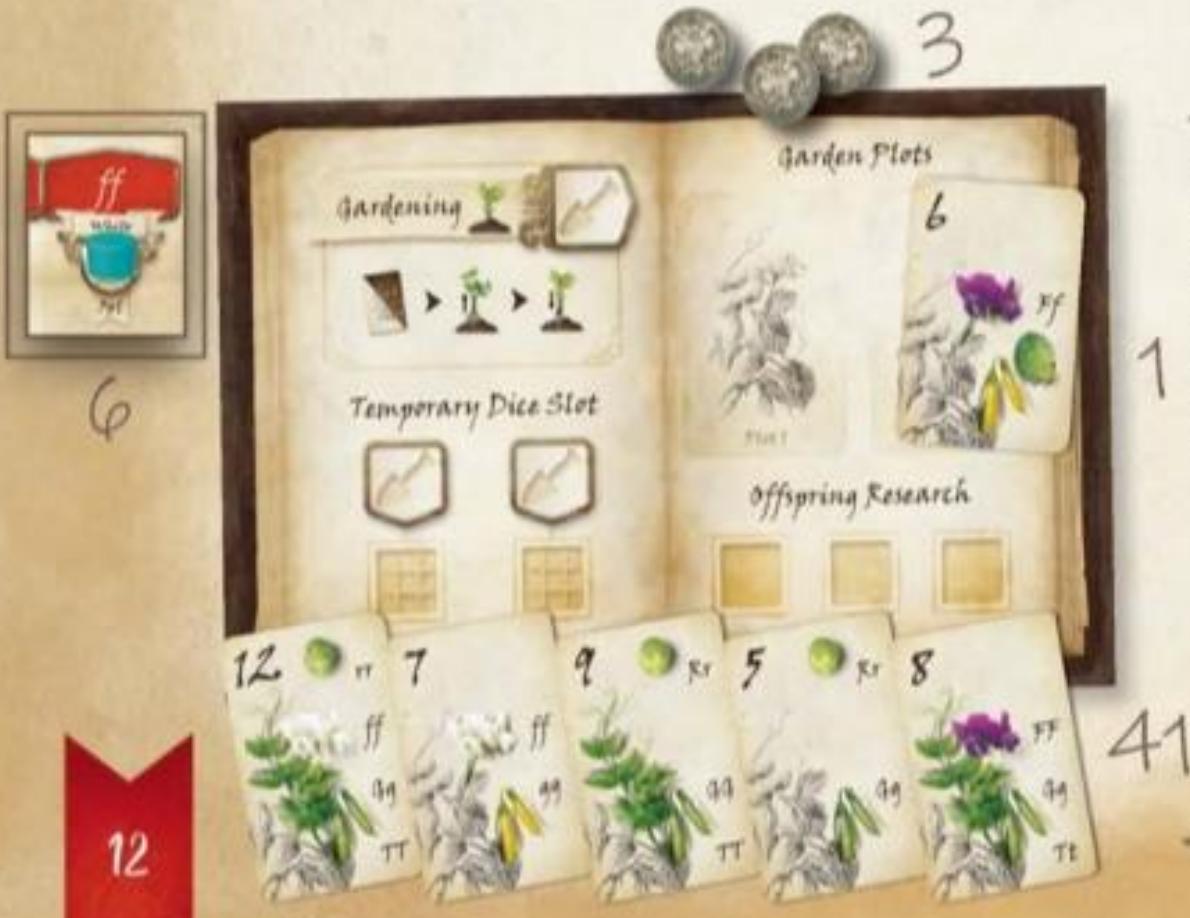
举例:在游戏结束时,Sara 完成了她最终的收获并进行游戏结束计分。她从完成的豌豆植株中获得 41 分,从 1 对完成的 ff 植株卡获得 6 点表现型研究分数,她未完成的植株上的性状标记价值 1 分,3 元钱币价值 3 分,最终分数是 51 分。
规则提醒和解释
在工作和植株育种阶段,如果可能的话,玩家必须进行其回合。
玩家不能在无法支付行动所需钱币时执行对应的行动,并且不能在放置其所有表现型研究标记后执行设置研究目标行动。
工具和豌豆植株卡没有手牌上限。玩家可以向对手隐藏这些卡牌信息。
工具卡和豌豆植株卡只能在每轮重置中补充,而不是在被拿取时补充。玩家可以从牌库抓取工具卡或豌豆植株卡来代替从正面朝上的可选牌中抓取。如果牌库被用光,将弃牌堆的牌洗回去作为新的牌库。
当雇佣一个助手时,3张可用的正面朝上助手可以被作为研究升级来拿取。
在玩家的回合中,玩家可以打出的工具卡没有数量限制,助手能力也没有使用方面的数量限制。
当抓取工具卡和助手卡时可以立即使用其能力,即使是在园艺行动中。举例,玩家可以在园艺行动中获得并立即使用种子袋来抓取新的豌豆植株来播种。
新生突变骰子可以突变其他同颜色的新生突变骰子,拿取这2颗骰子来验证该骰子颜色的任意性状。
研究升级和卡牌受限于提供的数量。如果所有可用升级和卡牌都被购买了,则它们无法再被使用。性状标记和钱币是无限量的。
工具卡和助手卡
如果玩家的起始手牌被派发了洒水漏斗卡,他必须立即打出此卡,验证他起始豌豆植株上的一个性状。
嫁接小刀可以在执行第 1 或第 2 转换时打出。如果在第 1 转换时打出,必须从相同颜色的骰子中拿取 1 颗额外骰子。
嫁接小刀额外获得1个临时骰子槽位。如果通过新生突变来拿取1对骰子,其中1颗骰子被放在嫁接小刀上,而另一颗骰子则放在1个正常骰子槽位上。
花粉刷可以与其他工具卡,助手能力和行动一起组合使用。举例,玩家可以通过钉耙卡将 FF 骰子点数转换成 Ff,然后打出花粉刷来验证多个 Ff 表现型。
钉耙卡和玛利亚修女的能力就像“百搭”新生突变骰子:任意1颗骰子可以被用于验证该骰子颜色的任意性状,即使该性状完全不属于当前亲本基因型。



《基因型》单人游戏规则
《基因型》可以与一位名为约翰修士(修道院的管理员)的虚拟对手进行单人游戏。约翰的行动由9张自动卡牌的牌库操控,这些卡牌决定了他的行动以及骰子和升级的选取。
为了设置单人游戏,按照2人游戏模式准备好主游戏版图并设置好你的玩家配件。你将在整局游戏中一直担任起始玩家。
给予约翰一组玩家颜色的3个行动标记,3表现型研究标记,1元钱币,并将2张植株卡垂直放置以形成他的花园。洗混9张自动牌库并将其正面朝下放置。约翰无需使用玩家面板和起始工具卡。你可以选择简单,标准或困难游戏模式进行游戏,这些模式会影响约翰如何使用他的资源来加速他的研究。困难模式中,约翰起始拥有一张助手卡(见第19页)。
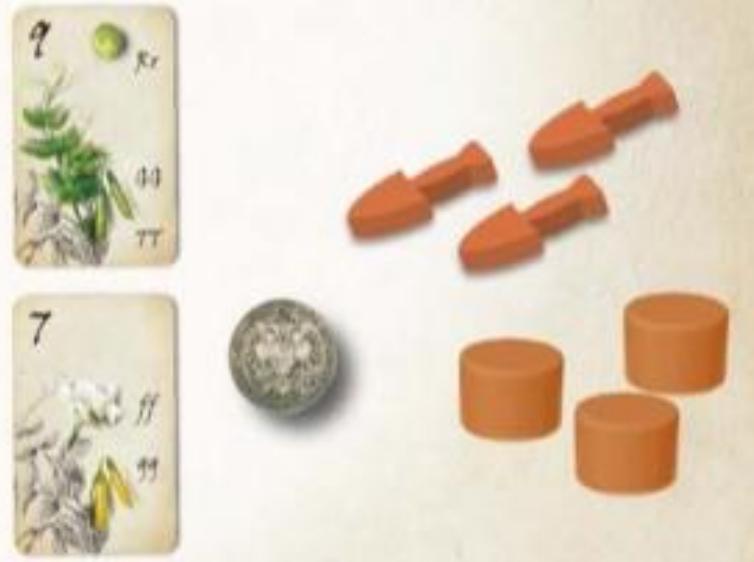
约翰主教的规则
约翰主教在各种时机下应用各种主教规则。
约翰的豌豆植株卡保留在其花园内,排成竖直的一列的卡牌。
新的豌豆植株卡通常添加到约翰花园的顶部。已完成的豌豆植株卡(所有性状都已验证)立即收获并放在一旁用于游戏结束计分(将剩余的卡牌向下滑动)
约翰的花园至多可以容纳 4 张豌豆植株卡。如果他已经拥有 4 张豌豆植株卡并再获得额外一张,则他改为验证性状。
当约翰想要验证一种性状(任何游戏效果或者在获得第5张豌豆植株卡时改为执行该行动),他会验证他花园最底部未被覆盖的性状。
已完成的植株立即被收获

新的植株被添加到顶部


在底部的新的性状被验证
工作阶段
行动卡
你将会一直作为起始玩家,并且你和约翰将在工作阶段中轮流进行回合,直到你们俩都像正常游戏那样用光了行动标记为止。
约翰在工作阶段中的回合,他会抓取2张自动卡牌。第1张是行动卡,这决定了他在本回合的行动。第2张是支援卡,这决定了该行动的决定。如果在任何一张卡牌上有不合法的行动或选择,重新抓取该卡(举例,如果约翰不能支付钱币来执行行动区域或者选取已被选取的研究目标时)。
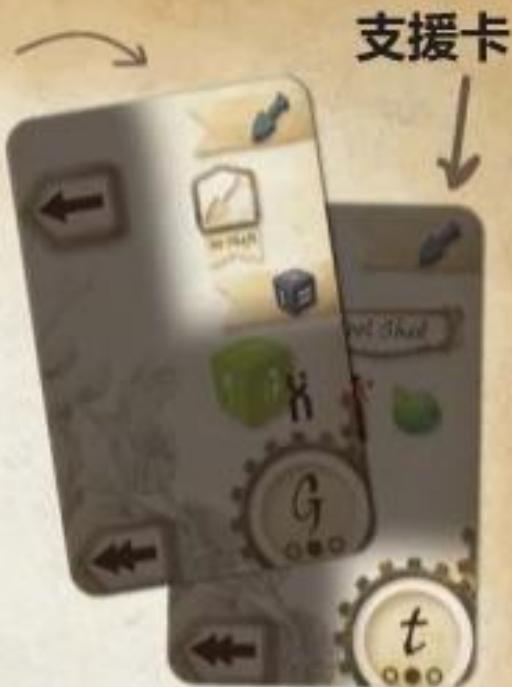
行动卡决定约翰的行动,而支援卡为约翰决定基因性状字母或卡牌的位置。
当约翰为他的回合抓取自动卡牌,行动卡将决定他将其行动标记放置的位置,其结果可能是以下其中一种:
财政管理:约翰获得2元钱币。
大学:约翰执行最便宜的可用区域并支付指定的钱币来验证一种性状(由于他的每次主教规则,他会验证他花园内最底部未被覆盖的性状)。
苗圃:约翰将添加1张豌豆植株卡到他的花园并从苗圃弃掉第二张豌豆植株卡。支援卡上的圆点代表他将拿取第3个槽位的卡牌。如果该卡牌无法拿取,他将拿取该槽位右侧的下一个可用植株卡(如果需要,绕到左边)。如果那里没有可用的植株卡,他将抓取豌豆植株牌库顶部的卡牌。在拿取了豌豆植株后,他将弃掉所拿取位置右边的下一张可用植株卡。
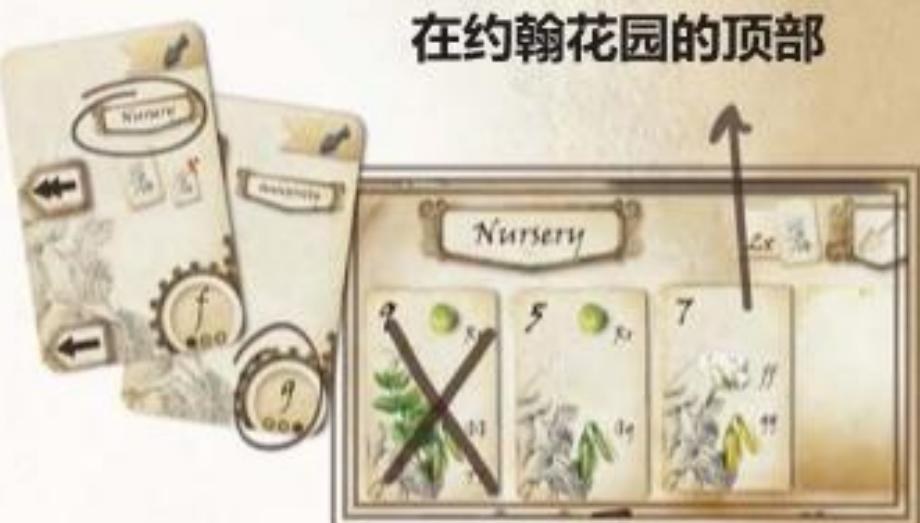
圆点代表约翰会拿取的卡牌,然后他弃掉下一张卡牌。
工具棚:约翰将弃掉1张工具卡和验证一种性状。支援卡上的圆点将指示需要弃掉哪一张卡牌。
设置亲本基因:约翰将更换亲本基因板块并拿取对应的钱币(如果有的话)。支援卡的基因性状字母将指示约翰执行哪一个行动。如果在对应槽位上已有一块基因板块(顶部或左边,根据卡牌的描述),他将移除该板块。如果这里没有放置基因板块,他将添加该板块,根据支援卡的描述放置对应面的板块。

约翰将放置他的行动标记到花朵颜色(红色)旁纳特方格旁边。如果左侧有一块基因板块,他将移除该板块。如果这里没有基因板块,他将添加“ff”面的板块到这里。这个选择是改变F/f板块并通过支援卡创造使用ff面的板块。
获取第 1 转换:约翰将获取匹配支援卡上的基因性状字母的第 1 转换区域,拿取对应的钱币(如果可能的话)。
设置研究目标:约翰执行最便宜区域的并支付指定的钱币来设置表现型研究目标,这由支援卡上的基因性状字母来指示。大写字母表示显性表型,小写字母表示隐性表型。举例,“F”对应于FF/Ff目标,而“f”对应于ff目标。
园艺:约翰执行园艺行动,通过为他的每个助手验证一种性状,然后从牌库顶获得一张豌豆植株卡。(将他的1个行动标记设置在行动卡区域,以便代表该行动标记已被使用过。)
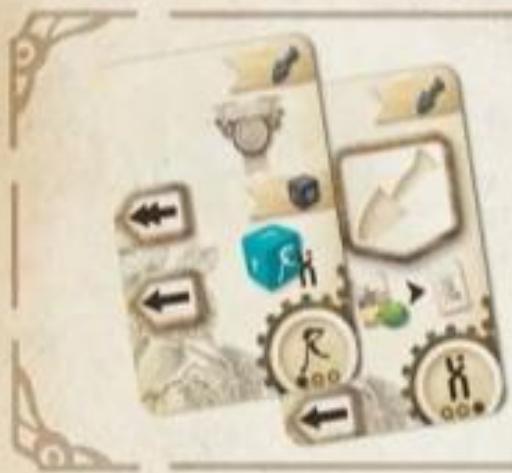
一张含有X图标的卡牌取代了基因性状的字母。如果这是一张支援卡,将X视为来自行动卡的基因性状字母。在这个例子中,约翰将设置RR/Rr表现型研究目标。
自动阶段
在所有行动标记都被放置后,约翰有一个特殊的自动阶段用于维护他的花园。
注意:约翰的研究升级和你的很不一样,执行以下操作:
- 如果约翰放置任何行动标记在第 1 转换区域上,将其移到第 2 转换区域的队伍后面。

- 约翰为他的每个助手验证一种性状。

- 约翰获得 1 豌豆植株卡(从牌库顶部拿取),将该卡放进他的花园内,然后他每有 1 个新地块作为研究升级就获得 1 个额外的豌豆植株卡。
藝藝
- 在标准模式或困难模式中,约翰获得3元钱币。
/3
- 最后,为植株育种阶段重新洗混自动牌库。
约翰在修道院的职责给了他一些额外的津贴,但他不能像其他科学家一样总是专注于研究。


植株育种阶段
在植株育种阶段中,约翰将与你竞争后代骰子来提升其研究。如常规那样投掷并分类后代骰子,然后按正常的转换顺序进行。
约翰不会因为骰子槽位而受限于他的选取。无论他拿取任何点数的骰子,他都改为从每个研究转换上抓取1张自动卡。他拥有一共3个研究转换,加上每个骰子槽位升级的1个额外转换。
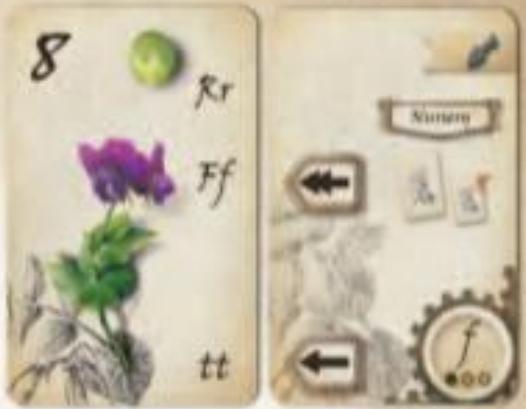

约翰每有1个研究转换,就从自动牌库抓取一张卡牌并将其放到他花园内最顶部的可用豌豆植株卡的右侧。自动卡描述了一个单箭头和一个双箭头,这可能符合豌豆植株的性状。对于每个箭头指向的1个未被覆盖的性状来说,检查是否有对应后代骰子在骰子池内。如果至少有1颗骰子,约翰就为每个箭头验证对应的性状并移除该骰子。(由于约翰不使用骰子槽位,被移除的骰子被放在一旁直到下一轮为止。)
此外,如果自动牌展示的区域含有一颗骰子,约翰将检查匹配骰子颜色的新生突变槽。如果至少有1颗可用骰子,他将拿取1颗骰子来为他花园里的特征验证最底部的性状(在任何豌豆植株上)。如果没有匹配的未覆盖基因型,则他拿取1元钱币。
约翰的效率可能会有所不同:他可能根本找不到匹配的,或者他可能会在一回合内最终验证3个性状!
举例:在约翰的第一个研究转换上,他抓取了一张自动卡,上面的箭头指向豌豆植株卡牌上的F和T基因型。这张豌豆植株卡上没有F基因型,但含有TT基因型。2个可用TT骰子被移除(因为双箭头),并且约翰验证了TT性状,用性状标记覆盖了它。
在他的第 2 研究转换上,他抓取了一张自动卡,上面的箭头指向了 FF 和 Gg 基因型,以及一个 R 新生突变。这里没有剩余的 FF 骰子,所以约翰无法验证该性状,但他移除了 1 颗 Gg 骰子并覆盖了该基因型。此外,他移除 1 颗 ⚡ 骰子来验证他花园内最底部的 RR,Rr 或 rr 基因型。(此时,在最顶部的植株上)。
约翰在他的研究转换中将一直抓取自动卡,将其放在最底部豌豆植株卡的旁边并拿取对应的骰子。如往常一样,他完成的豌豆植株卡会被立即收获。如果所有豌豆植株卡都已经搭配了一张自动卡,则弃掉所有自动卡并从顶部重新开始。
研究升级阶段
约翰使用他的钱币来购买研究升级。在每个升级阶段中,他将在简单模式中购买1个升级,或在标准和困难模式中购买2个升级,只要他能支付购买费用。
由于你始终是起始玩家,约翰将是第一个有机会购买研究升级的人。抓取自动卡并检查双箭头指向算盘上升级的列表位置。如果约翰有足够的钱币,他将购买对应的升级,支付钱币费用并相应地调整价格。如果他无法支付对应升级的费用,继续抓牌直到找到他能够购买的升级为止。
研究升级给予约翰以下奖励,这些奖励会以不同的方式影响他的游戏玩法:

新的地块:约翰在每个自动阶段中将获得1个额外的豌豆植株卡。
骰子槽位:约翰在植株育种阶段中将拿取1个额外的研究转换来抓取另一种自动卡。
行动标记:就像往常规则那样,约翰将有1个额外的行动标记来放置。
雇佣助手:约翰在自动阶段和他执行园艺行动的任何时刻都将验证一种性状。当雇佣助手时,抓取1张支援卡来决定他将雇佣哪一个助手。
如果约翰获得了一个新的地块,骰子槽位或助手,将其放在他的游戏区域旁(助手正面朝下放置)。约翰只会按照他的规则描述来使用这些升级。
轮次结束 & 游戏结束

遵循往常轮次结束的指示,除了起始玩家标记不用传递外。将自动卡重新洗牌以便用于下个工作阶段。
游戏结束计分与多人游戏一样。如果你拥有的分数最多,你已经超过了约翰修士!也许你应该在这里跑一圈庆祝一下!

困难模式助手
当你在标准模式中成功战胜约翰时,你可以进一步提高难度,通过在游戏开始时为约翰添加以下其中一个助手的特殊规则。如果他在游戏中雇佣了1个额外助手,将它们如常正面朝下放置。
伊丽莎白修女:在设置中,抓取一张自动卡作为支援卡并将其放到约翰的1个表现型研究标记到上面。在自动阶段,约翰将验证他花园中匹配任意1个他的研究目标的最底部性状。
奥马利神父:约翰在每个工作阶段中的最后一个行动标记将被放在奥马利神父卡牌上并如常结算,验证约翰花园内最底部匹配的性状。
弗兰兹修士:约翰在每个植株育种阶段支付1元钱并拿取2个额外研究转换。
玛利亚修女:当在植株育种阶段放置自动卡时,如果任何箭头指向一个不匹配的性状骰子,则不管怎样,约翰都验证了这些性状。
利奥波德修士:约翰的钱币费用降低1元(最低为1元钱)并且只要他能够支付足够的费用,他将在每一轮购买3个研究升级。
梅修女:每当约翰验证一种性状时,他还将验证豌豆植株中每一个匹配的基因型。
版权
设计师:
开发:
John J. Coveyou, Paul Salomon, and Ian Zang
画师:
John J. Coveyou, Paul Salomon, Steve Schlepphorst
Tomasz Bogusz (Game, Component, and Box Illustrations) and Amelia Sales (Assistant Portraits)
平面设计:
Sarah Lafser and Will Meadows
规则编写
和编辑:
Steve Schlepphorst, Sarah Lafser, John J. Coveyou, Daniel Dávalos, Andreas Boehm, Al Cann, David Haskins
游戏测试:
Swarnava Banerjee, Patrick Fitzgibbon, Anthony Burchett, Tyson Gajewski, Paul Brumleve, Shelly Spence, Daniel Dávalos, Ian Rosebrough, Hillary Rupert, Carli Watson, Mac Watson, Shelby Hemker, Monique Hemker, Sandy Hemker
工作阶段摘要
按照游戏顺序,玩家们放置1个行动标记到一个可用行动区域上并执行相应的行动。一直进行下去直到所有可用行动标记都被放置为止。
园艺:抓取1张工具卡或植株卡,收获完成的植株,从手牌播种植株。
亲本基因:添加或移除一个亲本基因板块,但你不能翻面这块板块。
植株育种阶段摘要
投掷后代骰子并根据旁纳特方格对应的性状对它们进行分类。
将骰子重新投掷一次,然后如常分类或将骰子放到新生突变槽位内。
从第 1 转换开始,之后是第 2 转换,然后是游戏顺序,玩家轮流选取 1 颗骰子来验证他的 1 张豌豆植株卡上的 1 个匹配的性状,将骰子放到他玩家面板上的 1 个可用骰子槽位内。骰子可以被作为第 2 颗骰子一起拿取来验证该骰子颜色的任何性状,或者获得 1 元钱。一直进行下去直到玩家们用光了骰子槽位或无法选取为止。
研究升级阶段摘要
按照玩家顺序的倒序 , 玩家们可以轮流支付钱币来购买研究升级 , 然后提升对应的升级 1 格( 只在第 1-4 轮 )

轮次结束重置
提升轮次记录指示物 1 格,传递起始玩家标记,然后降低每个算盘标记的价格 1 格。刷新植株卡,工具卡,助手卡以及放在旁纳特方格旁边的钱币。玩家回收他们各自的行动标记并返还后代骰子。
工具卡
种子袋:抓取5张豌豆植株卡,保留其中2张。洒水漏斗:验证任何1种性状。
论文:支付 1 元钱币来设置一个表现型研究目标。
花盆:立即拿取1张豌豆植株卡,成为1个新的临时新的地块直到收获。
嫁接小刀:当拿取一颗骰子时,立即拿取另一颗骰子。
助手
阿利皮乌斯:当执行园艺行动时,抓取1张额外的卡牌。
伊丽莎白:验证1种匹配你表现型研究标记的性状。
安娜:支付1元钱币来验证任意1种性状。
奥马利:放置1个行动标记来投掷每种颜色的
骰子各1颗,验证对应骰子的性状。
安顿:你在第2转换时通常都是领头羊。
钉耙:当拿取一颗骰子时,将其突变。
花粉刷:当验证一种性状时验证你的豌豆植株上相同基因型每个样本。
手持透镜 / 怀表 / 花园线:当执行此类行动时获得 2 元钱币。
拨款:当购买一个研究升级时,费用减少2元钱币。
弗兰兹修士:在植株育种阶段中支付1元钱来添加2个额外骰子槽位。
玛利亚:当拿取骰子时,突变该骰子。
利奥波德:你的钱币费用减低1元钱,最低为1元钱。
梅:当验证一种性状时,验证相同基因型的每个性状。
爱德华:当空置时拿取一张植株卡,成为永久性新的地块。
下载 MarkdownGenotype Rulebook BGG.md48.0 KB
Genotype Rulebook


Game Board
Place the Game Board in the center of the play area. The major areas of the Board feature Punnett Squares and Dice Pool Areas in 4 colors, an Abacus for tracking Research Upgrade prices, and a display of available Pea Plant and Tool Cards.
Offspring Dice and Gene Tiles
Place the 5 Offspring Dice and 2 Parent Gene Tiles of each color next to the Punnett Square of the same color until they are needed.


Coins and Trait Markers
Place the supply of Coins and Trait Markers ( in reach of all players. (The supply of these is unlimited; use a substitute if they run out.)

Starting Coins
Place 4 starting Coins on the Board, 1 on each spot next to the 4 Punnett Squares.
FOR SOLO PLAY:
Genotype can be played as a solo game against a simulated opponent. After learning
the standard game rules, see
p. 14 for the solo rules.


5Round Tracker Start the Round Tracker on 1.







Player Mats and Pieces
Give each player a Player Mat as well as 3 Action Markers )and 3 Phenotype Research Markers ( ) in their player color (9a). Place the 2 additional Action Markers for each player color with the Research Upgrades (9b)
Each player takes 1 Coin from the supply, then draws 3 Pea Plant Cards and 1 Tool Card from the corresponding decks (9c). Players must choose 1 of their Pea Plant Cards to place in a Garden Plot on their Player Mat, 1 to keep in their hand, and 1 to discard (next to the Pea Plant deck).


Abacus Markers
Place the 4 Abacus Price Markers on the starting prices for each Research Upgrade (shown as darker beads).


Research Upgrades
Place the New Plot Tiles, Dice Slots, and Assistant Cards next to the Research Upgrades area of the Board.
Draw 3 Assistant Cards face up as the starting options.


Pea Plant and Tool Cards
Shuffle the Pea Plant Cards and Tool Cards, then place these decks face down next to the Nursery and Tool Shed, respectively. Draw face-up Cards to fill the Nursery with Pea Plant Cards and the Tool Shed with Tool Cards, based on player count, as shown in the table below. (3 player setup depicted.)
| Players | |||
| 1-2 | 3 | 4-5 | |
| Cards | 3 | 4 | 5 |

First Player Marker
Give the First Player Marker to the Player who has most recently done any garden work. You're ready to begin!

Full Components list on p. 19.

Genotype: A Mendelian Genetics Game
For 2-5 Players
Gregor Mendel was a 19th Century Augustinian Friar, credited with the discovery of modern genetics through his work with pea plants. In Genotype: A Mendelian Genetics Game, players take the role of Research Scientists on the grounds of the monastery where Mendel conducted his experiments.
Players have a Garden of Pea Plants with different genetic Traits. The Traits are each shown as a pair of letters called a Genotype. The goal of the game is to Validate the Traits on your Plants by taking Dice that match the Traits. Validated Traits are covered with Trait Markers to track your research progress. When all the Traits on a Plant are covered, it has been completely researched, and will earn the Points shown in the corner.

A game of Genotype is played over 5 Rounds, made up of 3 main Phases: Validated the Working Phase, the Plant Breeding Phase, and the Research Upgrade Phase. it
Phase 1 In the Working Phase, players will place their Action Markers to take actions that will prepare their gardens, acquire funding, and secure access to the Traits they need for their research.


Phase 2The Plant Breeding Phase is the main way that players will find and Validate the Traits on their Pea Plants. Players will take turns picking from a pool of Offspring Dice that represent possible genetic combinations in the plants. The values of Dice are interpreted using Punnett Squares, scientific tools demonstrating how parent genes are passed to offspring.

The Die represents the Genotype Gq, taken from its row (G) and column (q) It may be used to Validate the Gq Trait on the Pea Plant. (By the same process, the Dice both mean GG, the is another Gg, and the Die is gg).

Phase 3 In the Research Upgrade Phase, players may spend their Coins on powerful Upgrades to optimize their future turns.
After 5 Rounds, players total up their Pea Plant research and unspent Coins. The player with the most Points wins!

In the Working Phase, players take turns placing 1 of their available Action Markers () on an empty Action Space on the Game Board or on their Player Mat. They then immediately take the corresponding action (all the possible actions are described on the next few pages). Once an Action Space is covered by an Action Marker, it is occupied for the Round and cannot be chosen again by any player, though there may be additional Action Spaces for the same action.

The player with the First Player Marker will have the first opportunity to place 1 Action Marker and take an action. In clockwise order, players will then continue taking turns placing 1 Action Marker and taking the corresponding action until every player has placed all of their available Action Markers. Players begin the game with 3 Action Markers in their player color, but may gain more through Research Upgrades.
The actions that players may take are as follows:
GARDENING
The Gardening action is used to manage your Pea Plant Cards. Throughout the game, you will draw new Pea Plants into your hand, and must Garden to move (Sow) them into the Plots on your Player Mat.
When taking the Gardening action, perform each of the following 3 steps, in order:

Draw 1 Pea Plant or Tool Card, either from the face-up options on the Board or from the deck.
Harvest any Pea Plant Cards that have Trait Markers covering all of their Traits. Return the Trait Markers to the supply and place the completed Pea Plant Cards face down next to your Player Mat for end game scoring. You may look at your completed Pea Plants at any time.
Player Mat. These Plant Cards are now available to have Trait Markers placed on them.


GARDENING EXAMPLE:
Marco has completed 1 of his Pea Plants and takes the Gardening action with 2 Pea Plants in hand. First he draws a Graft Knife Tool Card from the Tool
Shed. He then Harvests his completed 5-Point Pea Plant, removing its Trait Markers and setting it aside to score later. (His 9-Point Plant still needs a Rr Trait and cannot be Harvested yet.) Finally, he decides to Sow the 6-Point Pea Plant into his newly available Plot. He may place Trait Markers on this Pea Plant in future turns.

TEMPORARY DICE SLOT
Place an Action Marker to unlock a Temporary Dice Slot on your Player Mat for the current Round. This action has no immediate effect, but in the Plant Breeding Phase, you will be able to take an additional Offspring Die and place it on this Dice Slot.
SETTING PARENT GENES
Take 1 of the 4 Set Parent Genes actions to modify the corresponding Punnett Square using Parent Gene Tiles. These Tiles are placed on top of the Parent Genes printed on the Game Board and change the Offspring Dice outcomes.
When taking this action, you may choose to add 1 Gene Tile to the Board with either side face up, or to remove 1 Gene Tile that had previously been placed, or to leave the Parent Gene Tile as it is. You may not flip a Tile already on the Board to its other side.
If there was a Coin next to the corresponding Punnett Square, take it.

Parent Gene Tiles will change the likely Offspring Traits during Plant Breeding.
1ST SHIFT
The 1st Shift actions have no immediate effect, but grant the first pick among the Offspring Dice of the matching color during the Plant Breeding Phase.
If there was a Coin next to the corresponding Punnett Square, take it.
2ND SHIFT
The 2nd Shift action has no immediate effect, but grants 1 earlier pick during the Plant Breeding Phase (after the 1st Shift picks).
The 2nd Shift area may hold any number of Action Markers, adding new Action Markers to the left, and players will receive their early picks in the same order, right to left. This is the only unlimited Action Space on the Board.
SET PHENOTYPE RESEARCH GOAL
Set a Phenotype Research Goal to earn additional Points for specializing on particular Traits. To take this action, pay the cost shown on the Action Space (2 or 3 Coins), then place 1 of your Phenotype Research Markers on any 1 unoccupied Phenotype Research Goal ().
Each Phenotype Research Goal is located under the Dice Pool Area for 1 or 2 Genotypes. During end game scoring, the player who claimed each Goal will earn additional Points as shown for each of their completed Pea Plants containing the Genotype(s) shown above the Goal.
COINS ON THE BOARD
The 4 Punnett Squares will each have 1 Coin next to them at the beginning of each Round. The first player to place an Action Marker at either the Set Parent Genes or 1st Shift Space for the Punnett Square of each color will gain the corresponding Coin in addition to taking the action on that Space.
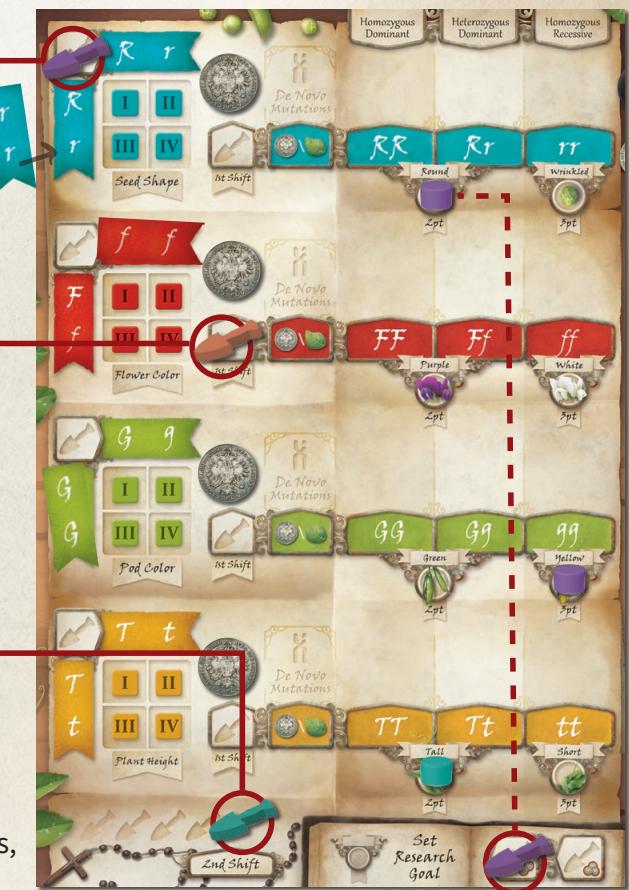

EXAMPLE: These 2 Phenotype Research Goals pertain to Seed Shape (the blue Dice). During end game scoring, Brandy will earn 2 Points for each of her completed Pea Plants with an RR or Rr Trait (Round Seeds). The Goal on the right would earn 3 Points for each completed Pea Plant with an rr Trait (Wrinkled Seeds).

TREASURY
Take the Treasury action to gain 2 Coins.
UNIVERSITY
Take the University action and pay the cost shown on the Action Space (1 or 2 Coins) to immediately Validate any 1 Trait on 1 of your Pea Plant Cards.
ACTION SPACE DIFFERENCES
Some actions have more than 1 Action Space that perform the same action but differ in cost or availability.

Some actions have Spaces with different costs and are cheaper for the first player to take that action each Round.
4+ Some Action Spaces are only available in games with 4 or 5 players.
NURSERY AND TOOL SHED
Take the Nursery action to draw 2 Pea Plant Cards from the face-up options or from the deck, in any combination. These Plants will go to your hand and can only be placed onto your Player Mat with the Gardening action.
Take the Tool Shed action to draw 1 Tool Card from the face-up options or from the deck.
TOOL CARDS
Tool Cards provide one-time benefits. They are kept in your hand until played, then are discarded to the Tool discard pile. Tool Cards may normally be played at any time during your turn in the Working Phase, and do not replace your normal action. Tool Cards withmay be played whenever the condition to the left of the arrow is met (in any Phase).

Seed Bag - Draw 5 Pea Plant Cards from the deck, keep 2, and discard the rest.
Watering Funnel - Validate
any 1 Trait. You must play this Card immediately when you receive it.

Dissertation - Pay 1 Coin to Set a Phenotype Research Goal.

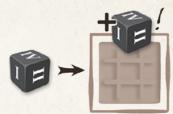
Flower Pot - Play Flower Pot next to your Player Mat. Immediately take 1 Pea Plant Card (from the face-up options in the Nursery or from the deck) and place it on the Flower Pot. Flower Pot is treated as a Plot in your Garden until the Plant is Harvested, then Flower Pot is discarded.
Graft Knife - Play when taking an Offspring Die to immediately take another Die, which does not use a Dice Slot (place it on Graft Knife).

Rake - Play when taking an Offspring Die to Validate any 1 Trait of that Dice color instead of using the Die normally.

Pollen Brush - Play when Validating a Trait to Validate every copy of the same Genotype on your Pea Plants.


Hand Lens, Pocket Watch,
Garden Line - Play when taking the Parent Gene, 1st Shift, or 2nd Shift action (respectively) to gain 2 Coins.
Grant - Play when purchasing a Research Upgrade to discount the cost by 2 Coins.
2. Plant Breeding Phase
In the Plant Breeding Phase, players roll and then draft (take turns picking) the Offspring Dice, 1 at a time. As each player chooses and takes a Die, they must place it on 1 of their available Dice Slots to Validate a corresponding Trait on 1 of their Pea Plants. Players continue making selections until they run out of Dice Slots or usable Dice.
PLANT BREEDING
The Phase begins with Plant Breeding. The players collectively roll the 20 Offspring Dice and sort the results according to the Punnett Square matching the color of each Die:
For Dice results of I-IV, locate the matching Die face on its Punnett Square, note the Gene letters shown in its row and column, and place the Die onto the Dice Pool Area with this pair of letters on the Game Board.
A Die showing the mutationXsymbol is re-rolled exactly once. If it now shows I-IV, move it to the appropriate Dice Pool Area. If it re-rolled again, place it in the De Novo Mutations Area for its Dice color.

EXAMPLE: Alina gathers and rolls the 5 blue (Seed Shape) Dice, getting II, II, IV, X, and X . She checks the Punnett Square to find that II represents Rr and IV represents rr. She places these Dice in their corresponding Dice Pool Areas and re-rolls the pair of X.
One of the re-rolled Dice shows a I and is placed in the RR Area. The other Die shows X again, and is placed in the De Novo Mutation Area.
Changing the Parent Genes has made some combinations impossible and others (basically) guaranteed.


SELECTING OFFSPRING DICE
After rolling and sorting all the Offspring Dice, players will alternate Research Shifts (turns) picking Dice to Validate the Traits on their Pea Plants. Players who reserved earlier picks in the Working Phase will go first, then all players will continue picking Dice as follows:
First, any players with Action Markers on 1st Shift Spots take 1 Offspring Die of that Dice color.
Next, any players with Action Markers in the 2nd Shift area select any 1 Die, in order (from right to left).
Finally, players continue to take Research Shifts in turn order, starting with the player with the First Player Marker until all players have passed. Some plauers mau reserve, earlier Shifts h Some players may reserve earlier Shifts, but
most Dice are picked in normal turn order.
During each player's Shift, they take 1 Die from the Game Board in order to Validate 1 matching Trait on 1 of their Pea Plants, covering it with a Trait Marker. The Die must then be placed in an available Dice Slot on their Player Mat.
In order to take a Die, a player must have an available Dice Slot on their Player Mat and must use the Die (it cannot be taken for no effect). If a player cannot take a Die on their Shift, they pass for the remainder of the Phase.

EXAMPLE: Alina
chooses theI Die (RR on the Punnett Square) and places it in the available Dice Slot on her Player Mat. She then adds a Trait Marker to her Pea Plant Card, covering the RR Trait.
DE NOVO MUTATIONS
Dice in the De Novo Mutations Slots can be chosen instead of a normal Research Shift pick, including during a 1st or 2nd Shift. They are used in one of 2 ways:
1 Gain 1 Coin and place the X Die in a Dice Slot like normal.
2 “Mutate" another Offspring Die: Take the X Die and another Die of the same Dice color and place them in 2 of your Dice Slots. You may then Validate any Trait of that Dice color.
Note that Mutating Dice allows players to Validate Traits for which there are no remaining Dice, or even Traits that would have been impossible with the current Parent Genotypes.
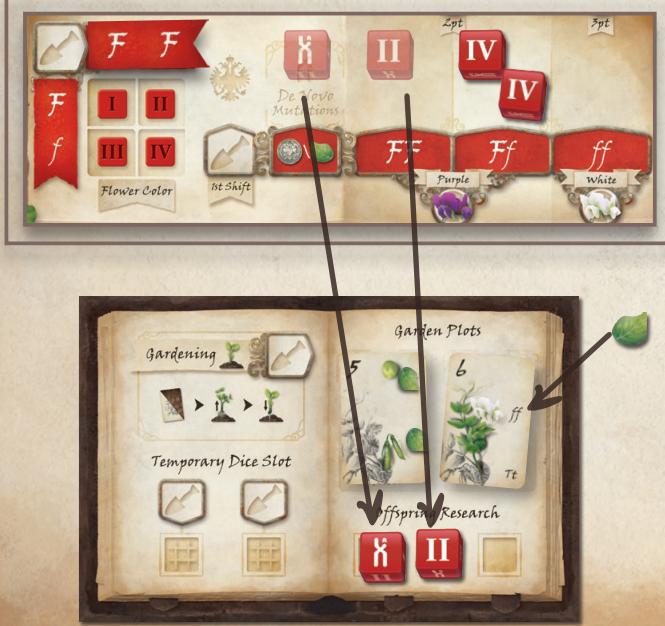
EXAMPLE: Marco is looking to Validate the ff Trait, but the Parent Genes have made this offspring Genotype impossible. Marco takes theXDie in order to count the Die as an ff Trait. Both Dice are added to Marco's available Dice Slots.
Mutating Dice can overcome unlucky rolls or unfavorable Parent Genes, but it also provides a chance to frustrate your opponents'Research!
In the Research Upgrade Phase, players have opportunities to use Coins they have acquired to purchase 1 or more permanent Upgrades. Turns are taken in the reverse player order in this Phase: the player to the right of the First Player Marker has the first chance to buy an Upgrade, then play proceeds counter clockwise until all players have passed.
There are 4 types of Research Upgrades that players can purchase:
NEW PLOT
Take a New Plot Tile and place it next to your Player Mat. You will now be able to have an extra Pea Plant Card in play.
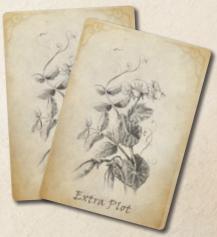
DICE SLOT
Take a Dice Slot and place it next to your Player Mat. In the Plant Breeding Phase, you will now be able to draft an additional Die.

ACTION MARKER
Take an additional Action Marker of your player color. In the Working Phase, you will now be able to take an additional action in subsequent Rounds. Players may have a maximum of 5 Action Markers.

HIRE ASSISTANT
Take 1 of the available face-up Assistant Cards and place it next to your Player Mat, gaining its ability. (Assistant Cards are not refilled until the end of the Round.)

On each players turn, they may purchase 1 Research Upgrade by paying Coins equal to the current price of that Upgrade. Each Upgrade price is tracked by an Abacus Marker, and the prices change over the course of the game. Each time a player buys a Research Upgrade, its price increases by 1 (if already at the highest price for that Upgrade, it stays the same). All prices will decrease by 1 at the end of the Round.
Players proceed counter clockwise, purchasing 1 upgrade at a time. If a player cannot or decides not to buy an Upgrade, they pass, and may no longer purchase Upgrades this Round. When all players have passed, the Round is over.
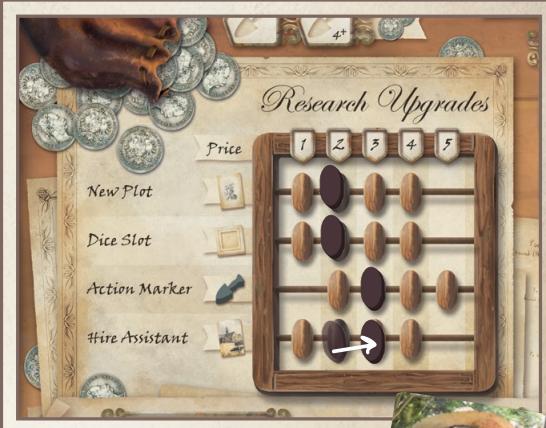

EXAMPLE: Brandy spends 2 Coins to Hire an Assistant. She takes an Assistant Card, and increases the Hire Assistant price to 3. The player to her right gets the next turn.


THE ASSISTANTS
Assistants provide powerful ongoing benefits, often enhancing or rewarding other actions. Using an Assistant does not replace your normal action. Assistants showing may be used once per Round: turn the Card sideways to indicate that the Assistant has been used, and reset it at the End of the Round. Assistants showing may be used when the condition to the left of the arrow is met.

Brother Alipius - When Gardening, draw an extra Card (face-up or from the deck).
Sister Elisabeth - Once per Working Phase you may Validate a Trait that matches 1 of the
Phenotype Research Markers you have placed. EXAMPLE: Earlier in the game, Alina set the TT/Tt Phenotype Research Goal. During this Working Phase, she uses Sister Elisabeth to Validate a Tt on 1 of her Pea Plants.

Sister Anna - Once per Working Phase you may pay 1 Coin to Validate a Trait.

Father Omari - You may
place an Action Marker on Father Omari's Card as your turn during
the Working Phase to take a special action. Roll 1 Die of each color, and re-roll any X results until they are not X. Check the Genotype of each Die result on its corresponding Punnett Square. For each Die, you may Validate 1 matching Trait among your Pea Plants as though you had taken the Die during the Plant Breeding Phase, then return the Dice. (Only you may take this action.)

Father Anton - In the Plant Breeding Phase, you are considered to always be first in the 2nd Shift area (without

placing an Action Marker). After 1st Shifts, you may select 1 of the Offspring Dice, then proceed through the Action Markers in the 2nd Shift area as normal.

Brother Franz- You have 2 additional Dice Slots during the Plant Breeding Phase, however, you must pay 1 Coin
in order to use them for the Round. (Pay before you take the first Die that would be placed on either Slot. You only pay once for both Slots and must pay in any Round that you use them.)

Sister Maria - Once per Plant Breeding Phase, when taking a
Die, you may Validate any Trait of that Dice color instead of using the Die normally.

Brother Leopold - Your Coin costs are all reduced by 1, to a minimum of 1 Coin.

Sister May -
Whenever you Validate a Trait, you may
Validate every copy of the same Genotype on your Pea Plants.

Brother Eduard - This
Assistant acts as a permanent Extra Plot with its own Pea Plant that automatically refills.
When the Assistant is Hired, immediately take 1 Pea Plant Card (from the face-up options in the Nursery or from the top of the deck) and place it on the Assistant. When the Pea Plant is Harvested, take another Pea Plant in the same way.

4. End of Round Reset
Once the main 3 Phases have been completed, the Round is over. Perform the following steps:
Advance the Round Tracker.
The First Player Marker passes clockwise.
Move each Abacus Marker to the left by 1 (Upgrades at the lowest price stay the same).
Discard the remaining Pea Plant Cards, Tool Cards, and Assistants. Refill Tool and Pea Plant Cards based on player count (see p. 3) and refill 3 face-up Assistants. When any of these decks have run out, reshuffle the discard pile to continue drawing.
Refill 1 Coin next to each Punnett Square that doesn't already have a Coin.
Players recover all their Action Markers and return Offspring Dice to the side of the Game Board.
Do not remove or modify Parent Gene Tiles or any of the players' Phenotype Research Markers Pea Plants, Trait Markers, or Research Upgrades.
Players then proceed to the Working Phase of the next Round.
End of the Game
The game ends after the Plant Breeding Phase of Round 5. Each player may Harvest any completed Pea Plant Cards, then players tally up the Points they have accumulated from the following sources:
Completed Pea Plant Cards - Players score the Points printed on their completed Pea Plants.
Phenotype Research Goals - For each Phenotype Research Marker on the Game Board, the player who placed it scores the indicated Points for each instance of the matching Trait(s) among their completed Pea Plants.
Incomplete Research - Players score 1 Point per Trait Marker on their incomplete Pea Plants.
Unspent Coins - Players score 1 Point for each unspent Coin.
The player with the most Points wins! If there is a tie between 2 or more players, the player with the most completed Pea Plants wins. If there is still a tie, then the victory is shared.

EXAMPLE: At the end of the game, Alina completes her final Harvest and proceeds to end game scoring. She has 41 Points from completed Pea Plants, 6 Phenotype Research Points from her pair of completed ff Plants, 1 Point for the Trait Marker on her incomplete Plant, and 3 Points from Coins, for a Final Score of 51.
Rules Reminders and Clarifications
In the Working and Plant Breeding Phases, players must take a turn if they are able.
Players may not take an action that requires Coins if they cannot afford it, and they may not take the Set Research Goal action after placing all of their Phenotype Research Markers.
There is no hand limit for Tool or Pea Plant Cards. Cards may be kept secret.
Tool Cards and Pea Plant Cards are only refilled during the End of the Round Reset, not when taken. Players may draw Tool Cards or Pea Plant Cards from the deck instead of the face-up options. If a Card deck is ever empty, shuffle the discard pile as needed.
When Hiring an Assistant, only 1 of the 3 available face-up Assistants may be selected.
There is no limit to the number of Tool Cards that may be played or Assistant abilities that may be used during a player's turn.
Tool Card and Assistant abilities may be used immediately when drawn, even during Gardening. For example, a player might acquire and immediately use a Seed Bag during Gardening to draw new Pea Plants to Sow.
De Novo Mutation Dice may Mutate other De Novo Mutation Dice of the same color, taking both Dice to Validate any Trait of that Dice color.
Research Upgrades are limited to the provided quantities. If all of the available copies have been purchased, they are no longer available. Trait Markers and Coins are unlimited.
TOOL CARDS AND ASSISTANTS
If a player is dealt the Watering Funnel in their starting hand, they must play it during their first turn.
Graft Knife may be played when taking a 1st or 2nd Shift. If played during a 1st Shift, the additional Die must be taken from the Dice of the same color as the 1st Shift pick.
Graft Knife grants 1 additional temporary Dice Slot. If it is used to take a pair of Dice using a De Novo Mutation, 1 of the Dice is placed on the Grant Knife and the other on a normal Dice Slot.
Pollen Brush may be used in combination with other Tool Cards, Assistant abilities, and actions. For example, a player may change an FF Die to Ff using a Rake Card, then play Pollen Brush to Validate multiple Ff Genotypes.
The Rake Card and Sister Maria's ability function like a "wild" De Novo Mutation Die: any 1 Die may be used to Validate any Trait for that Dice color, even Traits that would have been impossible with the current Parent Genotypes.




Genotype Solo Rules
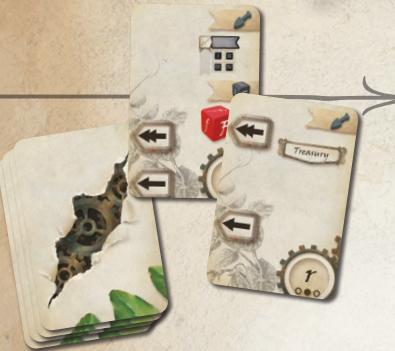
Genotype can be played as a solo game against a simulated opponent named Brother Johann, an administrator at the monastery. Johann's actions are controlled by a deck of 9 Automa Cards that determine his actions, Dice picks, and Upgrades. Three double-sided Reference Cards outline the solo rules.
To set up a solo game, prepare the main Game Board and your player setup for a normal 2-player game.
You will have the First Player Marker for the entire game.
Give Johann 3 Action Markers, the 3 Phenotype Research Markers of his player color, 1 Coin, and 2 Pea Plant Cards placed vertically to form his Garden. Shuffle the 9 Card Automa deck and place it face down. Johann does not need a Player Mat or starting Tool Card. You may choose to play an Easy, Standard, or Hard game, which will affect how Johann uses his resources to accelerate his research. For a Hard Game, Johann begins with an Assistant (see p. 19).

Johann's Cardinal Rules
Johann has 4 Cardinal Rules that apply at all times.
Johann's Pea Plant Cards are kept in his Garden, arranged in a vertical column of Cards.
When he receives a new Pea Plant Card, it is P always added to the top of Johann's Garden. Iml Completed Pea Plant Cards (with all Traits Hc Validated) are immediately Harvested and set aside for end game scoring (slide the remaining Cards down).
completed Plantis Immediately Harvested

New Plant Addedto the Top

Johann's Garden holds a maximum of 4 Pea Plant Cards. If he already has 4 Pea Plants and would gain another, he Validates a Trait instead.
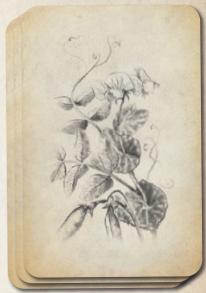
When Johann would Validate a Trait (for any game effect or instead of gaining a 5th Pea Plant), he Validates the bottom-most uncovered Trait in his Garden.

New Traits are Validated atthe Bottom
Working Phase
Action Card
You will always be the Starting Player, and you and Johann will alternate turns in the Working Phase, until you both run out of Action Markers, like normal.
For Johann's turn in the Working Phase, draw 2 Automa Cards. The first is the Action Card, which will determine his action for the turn. The second card is the Support Card, which is used to make any decisions for that action based on the Gene Trait letter or pips shown on the bottom right (explained below). If there is an invalid action or choice on either Card, redraw that Card (for example, if Johann cannot afford to pay Coins to take an Action Space or would choose a Phenotype Research Goal that is taken).

The Action Card determines Johann's action and the Support Card makes Joann's decisions reguiring a Gene Trait letter or Card position.
When Johann draws Automa Cards for his turn, the Action Card will indicate where to place his Action Marker, resulting in one of the following actions:
Treasury - Johann takes 2 Coins.
University - Johann takes the cheapest available Space and pays the indicated Coin(s) to Validate a Trait (as per his Cardinal Rules, he Validates the bottom-most uncovered Trait in his Garden).
Nursery - Johann will add 1 Pea Plant Card to his Garden and discard a second Pea Plant Card from the Nursery. The pips on the Support Card will show which Card to take from the 3 slots. If that Card is not available, he will take the next available Plant Card to the right (wrapping around to the left if needed). If there are no Plant Cards available, he will draw the top Card of the Pea Plant deck. After taking a Pea Plant, he will discard the next available Plant to the right of the one taken.
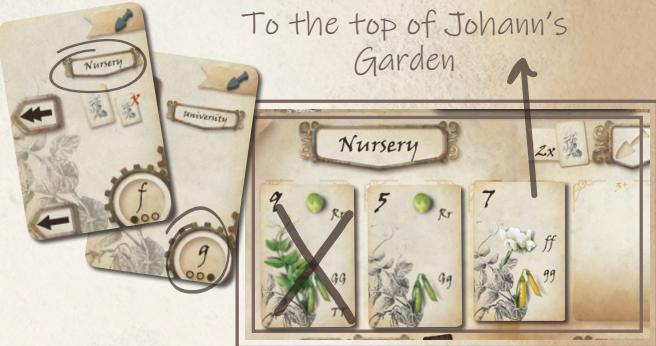
Tool Shed - Johann will discard 1 Tool Card from the Tool Shed and Validate a Trait. As with the Nursery action, the pips on the Support Card will show which Card to discard.
EXAMPLE: Johann draws the Nursery Action Card. The Support Card pips indicate which Plant Card Johann takes, then he discards the next Card to the right.
Set Parent Genes - Johann will change a Parent Gene Tile and take the corresponding Coin (if available). The Support Card Gene Trait letter will indicate which Action Space Johann takes. If there is already a Gene Tile on the corresponding spot (Top or Left, according to the Card), he will remove it. If there is not a Gene Tile in place, he will add it, on the side shown by the Support Card.

EXAMPLE: Johann draws the Left Parent Gene Action Card and the f Support Card. He will place his Action Marker next to the Flower Color (f) Punnett Square. If there is a Gene Tile on the Left spot, he will remove it. If there is not a Gene Tile there, he will add it on the "f f' side.
Claim 1st Shift - Johann will claim the 1st Shift Space matching the Gene Trait letter on the Support Card, taking the corresponding Coin (if available).
Set Research Goal - Johann takes the cheapest available Space and pays the indicated Coins to set a Phenotype Research Goal, indicated by the Gene Trait letter on the Support Card. A capital letter indicates the Dominant Phenotype and a lower-case letter indicates the Recessive Phenotype. For example, "F" corresponds to the FF/Ff Goal, and "f' corresponds to the ff Goal.
Gardening - Johann takes a Gardening action by Validating 1 Trait for each Assistant he has, then gaining a Pea Plant Card from the top of the deck. (Set 1 of his Action Markers on the Action Card Space to indicate that the Action Marker has been used.)

One Card has the symbol instead of a Gene Trait Letter. If this is the Support Card, treatXas the Gene Trait letter from the Action Card. In this example, Johann would set an RR/Rr Phenotype Research Goal.

Automa Phase

After all Action Markers have been placed, Johann has a special Automa Phase for maintaining his Garden. Note: Johann's Research Upgrades behave very differently than yours. Do the following:
1 If Johann had placed any Action Markers on 1st Shift Spaces, move them to the 2nd Shift area, in the back of the line.

2 Johann Validates 1 Trait for each of his Assistants.
3 Johann gains 1 Pea Plant Card (from the top of the deck), then gains 1 additional Pea Plant Card for each New Plot he has acquired as a Research Upgrade. All new Pea Plants are added to his Garden. As usual, if his Garden is full, he Validates Traits instead.

4 In a Standard or Hard difficulty game, Johann gains 3 Coins.

5 Finally, reshuffle the Automa Cards for the Plant Breeding Phase.
Johann's responsibilities at the monastery grant some extra perks, but he can't always focus on research like the other scientists.

In the Plant Breeding Phase, Johann will compete with you for Offspring Dice to advance his research. Roll and sort the Offspring Dice like normal, then proceed in the regular Shift order.
Johann does not use Dice Slots to limit his picks. Instead, he draws 1 Automa Card on each Research Shift, regardless of the number of Dice he takes. He takes a total of 3 Research Shifts, plus 1 additional Shift for each Dice Slot Upgrade.

For each of Johann's Research Shifts, draw a Card from the Automa deck and place it to the right of the top-most Pea Plant in his Garden that has not been paired with an Automa Card. The Automa Card shows a single arrow and a double arrow, which may line up to Traits on the Pea Plant. For each arrow pointing to an uncovered Trait, check whether any corresponding Offspring Dice are in the Dice Pool. If at least 1 is found, Johann Validates the appropriate Trait and removes 1 Die for a single arrow and 2 Dice (if available) for a double arrow. Johann doesn't use Dice Slots, so the removed Dice are set aside until the next Round.
Additionally, if the Automa Card shows a section with a Dice, Johann will check the De Novo Mutation Slot of the matching Dice color. If at least 1 Die is available, he will take 1 to Validate the bottom-most Trait for that characteristic in his Garden (check the bottom-most Plant first, proceeding up until a match is found). If there are no matching uncovered Genotypes, he takes a Coin.
Johann's effectiveness may vary: he may find no matches at all, or he may end up Validating 3 Traits on one turn!

EXAMPLE: On Johann's first Research Shift, he draws an Automa Card with arrows pointing to the F and T Traits on this Pea Plant Card. There is no F Genotype on this Pea Plant, but it does have a TT Genotype. Two available TT Dice are removed (for the double arrow), and Johann Validates the TT Trait, covering it with a Trait Marker.
On his second Research Shift, he draws an Automa Card pointing to the FF and Gq Genotypes, as well as an R De Novo Mutation. There are no remaining FF Dice, so Johann can't Validate that Trait, but he does remove a Gq Die and cover that Genotype. Additionally, he removes 1 of the8Dice to Validate the bottom-most RR, Rr, or rr Genotype in his Garden (in this case, on the top Plant).
Johann will continue drawing an Automa Card during his Research Shifts, placing it with the nextlowest Pea Plant Card and taking the corresponding Dice. As usual, his completed Pea Plants are immediately Harvested. If every Pea Plant has been paired with an Automa Card, discard all the Automa Cards and start back at the top.
Research Upgrade Phase
Johann may use his Coins to buy Research, if he can afford them. In each Upgrade Phase, he will take 1 turn to buy 1 Upgrade in an Easy Game or 2 turns to buy 2 total Upgrades in a Standard or Hard Game.
Since you are the Starting Player, Johann will have the first chance to buy a Research Upgrade. Draw an Automa Card and check the position of the double arrow against the list of Upgrades on the Abacus. If Johann has enough Coins, he will purchase the corresponding upgrade, paying the Coin cost and adjusting the price appropriately. If he can't afford that particular Upgrade, continue drawing until he finds an Upgrade he can buy.
The Research Upgrades grant Johann the following bonuses, some of which differ from their normal uses:

New Plot - Johann will receive an extra Pea Plant Card during each Automa Phase.
Dice Slot - Johann will take an extra Research Shift to draw another Automa Card during the Plant Breeding Phase.
Action Marker - Like normal, Johann will have an extra Action Marker to place.
Hire Assistant - Johann will Validate a Trait during the Automa Phase and any time he takes the Gardening action. When hiring an Assistant, draw a Support Card to decide which Assistant to hire.
If Johann acquires a New Plot, Dice Slot, or Assistant, place it next to his play area (Assistants are placed face down). Johann only uses Upgrades as described above; their normal rules are ignored.
Ending the Round and the Game

Follow the normal End of the Round instructions, except that you keep the First Player Marker.
Reshuffle the Automa Cards for the next Working Phase.
End game scoring is the same as in the multiplayer game. If you have the most Points, you win! Perhaps you have a future in running the monastery instead of Johann..

 Designers John J. Coveyou, Paul Salomon, lan Zang Development John J. Coveyou, Paul Salomon, Steve Schlepphorst Artists Tomasz Bogusz (Art and Graphic Design), Amelia Sales (Assistant Portraits) Graphic Designers Sarah Lafser, Will Meadows Rulebook Writing Steve Schlepphorst, Sarah Lafser, John J. Coveyou, |
Hard Mode Assistants
To play on the Hard difficulty, give Johann 1 of the following Assistants from the beginning of the game, with special rules. If he hires additional Assistants during the game, place them face down as normal.
Sister Elisabeth - During setup, draw a Support Card to place one of Johann's Phenotype Research Markers. In the Automa Phase, Johann will Validate the bottom-most Trait in his Garden matching any 1 of his Research Goals.
Father Omari - Johann's last Action Marker in each Working Phase will be placed on Father Omari's Card and resolved as normal, Validating the bottom-most matching Traits in Johann's Garden.
Brother Franz- Johann pays 1 Coin in each Plant Breeding Phase and takes 2 additional Shifts.
Sister Maria - When placing Automa Cards in the Plant Breeding Phase, if any arrows point to a Genotype with no matching Trait Dice, Johann Validates those Traits anyway, without removing any Dice.
Brother Leopold - Johann's Coin costs are reduced by 1 (to a minimum of 1) and he will purchase 3 Research Upgrades each Round, if he can afford them.
Sister May - Whenever Johann Validates a Trait, he will also Validate every matching Genotype among his Pea Plants.
Components
1 Game Board • 20 Offspring Dice • 8 Parent Gene Tiles • 1 Round Tracker • 1 First Player Marker 34 Trait Markers • 20 Coins • 5 New Plot Tiles • 8 Dice Slot Tiles • 4 Abacus Markers 1 Rulebook • 1 Science Behind Booklet

1. WORKING PHASE SUMMARY
In player order, players place 1 Action Marker on an available Action Space and take the corresponding action. Continue until all available Action Markers have been placed.
GARDENING: Draw 1 Tool or Plant, Harvest completed Plants, Sow Plants from hand.
PARENT GENES: Add or remove a Parent Gene Tile, but you may not flip a Tile on the Board.

2. PLANT BREEDING PHASE SUMMARY
Roll the Offspring Dice and sort them by Trait according to the corresponding Punnett Square.
X are rerolled once, then sorted normally or placed in the De Novo Mutations Area.
Beginning with 1st Shift, 2nd Shift, and then player order, players take turns selecting 1 Die to Validate the matching Trait on 1 of their Pea Plants, placing the Die in an available Dice Slot on their Player Mat. Å Dice may be taken with a second Die to Validate any Trait for that Dice color, or may be taken to gain 1 Coin. Continue until players run out of Dice Slots or valid picks.
3. RESEARCH UPGRADE PHASE SUMMARY
In reverse player order, players may spend Coins to purchase Research Upgrades, then increase the price by 1, until all players have passed. (Rounds 1-4 only.)

4. END OF ROUND RESET
Advance the Round Tracker, pass the First Player Marker, and reduce Abacus Marker prices.
Refresh Plant and Tool Cards, Assistants, and the Coins next to the Punnett Squares.
Players recover their Action Markers and return Offspring Dice.
TOOL CARDS
Seed Bag - Draw 5 Plant Cards, keep 2
Watering Funnel - Immediately Validate 1 Trait Dissertation - Pay 1 Coin to Set a Phenotype Research Goal
Flower Pot - Take a Plant Card; Flower Pot becomes a temporary Plot until Harvested
Graft Knife - When taking a Die, take another (no Dice Slot required)
ASSISTANTS
Alipius - When Gardening, draw an additional Card
Elisabeth - Validate a Trait matching your
Phenotype Research Marker

Anna - Pay 1 Coin to Validate any Trait

Omari - Place an Action Marker to roll 1 of each
Dice color, Validating the Traits
Anton - You always lead the 2nd Shifts
Rake - When taking a Die, Mutate it
Pollen Brush - When Validating a Trait, Validate every copy of the same Genotype
Hand Lens / Pocket Watch / Garden Line - When taking the action, gain 2 Coins
Grant - When purchasing an Upgrade, discount 2 Coins
Franz - Pay 1 Coin in Plant Breeding for 2 Dice Slots
Maria - When taking a Die, Mutate it

Leopold - Your Coin costs are reduced by 1, to a minimum of 1
May - When Validating a Trait, Validate every copy of the same Genotype
Eduard - Take a Plant Card when empty; becomes a permanent New Plot
下载 Markdown原文为社区整理/出版社公开资料,版权归原作者,仅供个人学习查阅。