
IKIIki
一句话概览
IKI 是一款已收录于村了吗规则库的桌游,支持 2–4 人,原名 Iki。
本页内容:一句话概览 · 游戏概述 · 1. 游戏组件 · 2. 游戏设置 · 3. 游戏流程 · 4. 第一阶段:生活之道 · 5. 第二阶段:行动阶段(A → B) · 6. 职业卡牌详解 · 7. 建筑卡牌与普请场 · 8. 各大商店功能 · 9. 指示物说明与终局换算 · 10. 每月流程与轮次结束 · 11. 结算(3、6、9、12月末) · 12. 火灾阶段(5、8、11月末) · 13. 最后一个月(正月) · 14. 终局计分 · 15. 2人和3人变体规则 · 关键规则与常见问题 · 常见问题
IKI 规则速览
以下规则速览由本站整理,与官方规则书表述不同,仅供快速上手参考。
游戏概述
IKI(粋)以江户时代日本桥町人文化为背景,玩家扮演木匠、榻榻米师傅、食贩等各类职人,通过雇用职业卡牌、移动老板沿街交易、建造建筑来积累"IKI"——江户人理想生活风格的评分。每轮分为"生活之道"阶段和"行动"阶段,经历春夏秋冬四季轮回直至正月结算,IKI最高者获胜。
核心机制: 工人放置、轨道移动、资源交换、长屋组合计分、季节轮转
1. 游戏组件
| 组件 | 数量 / 说明 |
|---|---|
| 游戏版图 | 1块 |
| 职业卡牌 | 56张:起始4张、春季13张、夏季13张、秋季13张、冬季13张 |
| 建筑卡牌 | 6张 |
| 亲方(老板)米宝 | 4个 |
| 子分(町人)米宝 | 16个 |
| 标示圆盘 | 12个(用于IKI计分轨和打火能力轨) |
| 月份圆盘 | 1个 |
| 八角柱·木材 | 15个 |
| 六角柱·米袋 | 24个 |
| 钱币指示物 | 50个(1文32枚、4文18枚) |
| 小判指示物(椭圆金币) | 8个 |
| 草鞋指示物 | 20个 |
| 鱼指示物 | 8个(春·沙丁鱼×2、夏·鱼×2、秋·海鲈×2、冬·鲷鱼×2,面额朝上) |
| 烟管指示物 | 4个 |
| 烟草袋指示物 | 4个 |
| 火灾板块 | 4个 |
| 规则书 | 1本 |
2. 游戏设置
2.1 起始玩家与颜色
每个玩家自行选定代表色。最具职人气质的玩家担任起始玩家,游戏按顺时针方向进行。从第2个月起,打火能力最高的玩家先开始。
2.2 IKI计分轨
每位玩家的标示圆盘放置在IKI计分轨的"0"格。
2.3 卡牌与板块摆放
- 分类洗切: 将四个季节的职业卡牌分别洗匀,面朝下依季节各成一叠摆放。移除起始4张之外的所有卡牌备用。
- 建筑卡牌: 6张建筑卡牌面朝上放在版图旁。
- 火灾板块: 洗匀后堆叠面朝下放在版图旁。
- 春卡展示: 从春季卡堆中翻出4张面朝上放在版图旁作为初始可选池。
2.4 月历与生活之道轨
- 将黑色月份圆盘放在月历的"1月"位置。
- 将每位玩家的圆柱指示物放在生活之道轨的指定位置(初始位置由后续规则决定)。
- 生活之道轨最左边的格子仅在4人游戏时使用。
2.5 打火能力轨
- 每位玩家的标示圆盘放在打火能力轨的"0"格。
- 堆叠顺序: 起始玩家放最上方,之后按顺时针方向自上而下依次叠放。此轨道同时显示玩家在第1阶段的行动顺序。
- 游戏中获得打火能力时立即向右移动一格;若多人同点数,后获得者优先叠在上方。已在最顶端(10点以上)的玩家只需放上即可。
2.6 起始位置
- 每位玩家将自己的老板米宝放在版图中央的起点位置。
- 指示物区:烟管和烟草袋依颜色从上到下排列(灰→亮黄→橘→紫)。两条春季鱼指示物放在鱼市场。
- 剩余的硬币、草鞋、小判、米袋、木材全部放在版图旁的奉行所(银行)。
2.7 起始资源
每位玩家获得:
- 自己颜色的町人米宝 ×4
- 草鞋指示物 ×1
- 米袋 ×1
- 4文钱 ×1、1文钱 ×4
2.8 起始卡牌选择
盐小贩、水煮蛋小贩、棉花小贩、眼镜小贩为起始4张职业卡牌。
- 座位顺序倒数第一位的玩家任选其中1张,然后选择版图上任意长屋的最外侧房间放置该卡牌,并将自己的町人米宝放在卡牌左下角。
- 接着倒数第二位、第三位玩家依次执行同样动作。最后一名玩家(即起始玩家)拿走最后一张。
- 若人数少于4人,将多余的起始卡牌移除出游戏。
2.9 大街与长屋
- 大街有8个格子,每个格子对应一间商店及其后方长屋的两个房间(共16个职业卡牌位)。
- 围绕大街还有4间独立的长屋房间(可住町人)。
- 四条边的角落各有1个角间房(共4个),进驻角间需额外+2文钱。
3. 游戏流程
游戏共13轮:12个月加最后的正月(新年)。根据阴历,1-3月为春、4-6月为夏、7-9月为秋、10-12月为冬。每轮包含两个阶段,所有玩家完成后结束一轮。
- 第3、6、9、12个月结束后进行季节结算。
- 第5、8、11个月结束后触发火災阶段。
4. 第一阶段:生活之道
本阶段同时决定第二阶段的行动顺序和行动距离。
- 1月: 由起始玩家开始顺时针轮流。
- 第2月起: 由打火能力最高的玩家开始,相同则圆盘在上者优先。
- 按顺序每位玩家从生活之道轨中选择一个格子,放置自己的圆柱指示物(一次只能放一个,不可重复占据)。
- 所选格子的数字 = 第二阶段B行动的移动距离。
特殊效果: 选择最左边格子的玩家:
- 不能执行A行动(雇人或收入)
- B行动中先于所有人移动
- 移动时可自由选择1至4格(仍可用草鞋追加)
2/3人游戏: 最右侧格子不可使用。
5. 第二阶段:行动阶段(A → B)
行动顺序按生活之道轨从左到右进行(最左侧优先)。每位玩家依次完成A行动和B行动后,下一位玩家行动。
A. 雇用或收入(二选一)
雇用: 选一张面朝上的职业卡牌,支付其左上角的费用给银行,随即获得卡牌上已有的钱(若有)。将卡牌放入长屋的空置格,并在卡牌左下角放置一个町人米宝。角间入驻需额外+2文钱。若町人用尽或长屋已满,无法雇用。
> 注意:雇用时必须先拿走卡牌上的钱再付费用,不能只付差额。
收入: 直接从奉行所领取4文钱。
B. 移动并交易
移动: 沿大街逆时针移动老板米宝。基础移动步数等于第1阶段选择的数值,每支付1个草鞋指示物可额外多移1格(无上限)。老板米宝可以与其他老板位于同一格。当老板再次经过起点时(走完一整圈),你在板上所有已雇用的职业卡牌成长一格。
> 特殊卡牌"牛车"的效果一回合仅限使用一次,且可与草鞋叠加。
交易: 老板到达目的地后,你可以与该格的商店以及商店后方长屋中的任意一张职业卡牌进行交易(顺序自定,也可以只交易一方或不交易)。
- 与职业卡牌交易后,该卡牌成长一格。但与自己拥有的卡牌交易不触发成长。
- 一间商店后方长屋有两张卡,只能选其中之一交易。
- 玩家之间不得直接交换资源,一切必须通过银行执行。
- 除两替屋外,每家商店每位玩家每轮只能触发一次效果。
6. 职业卡牌详解
6.1 卡牌构成
每张职业卡牌包含以下信息:
- 汉字职业名(如"浮世绘师")
- 雇佣费用(左上角数字)
- 技能图标(卷轴标记,分三色)
- 薪水区域(三格成长曲线,结算时按当前町人所在位置获取对应报酬)
- 打火能力值(若卡片带有此标识,雇用后立即提升你的打火能力)
6.2 技能类型
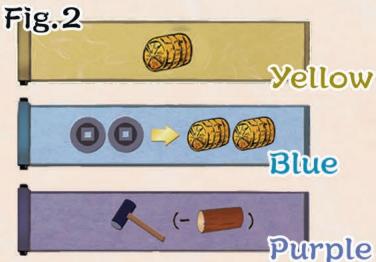
| 卷轴颜色 | 含义 |
|---|---|
| 黄色 | 免费从银行获取资源或获得打火能力 |
| 青色 | 与银行交换资源 |
| 紫色 | 特殊效果(详见下方编号列表) |
6.3 成长系统
职业卡牌有三段成长空间。町人米宝停留在哪个格子就享受哪格的薪水。三种成长方式:
- 被他人使用技能: 其他玩家与你卡牌上的技能交易后,该卡牌成长一格。自己与自己交易不触发成长。
- 走过一圈起点: 老板经过起点时,你在板上所有已雇用卡牌同时成长一格。
- 花钱购买成长: 某些技能的付费选项可将任意一张卡牌推一格。
当卡牌成长到最右边一格时强制退休——卡牌归入持有者手牌。退休卡不再产生薪水而是发动"退休时效果",且在结算时无需支付米袋。
6.4 五种职业类型
卡牌边框颜色决定类型:
| 类型 | 边框颜色 |
|---|---|
| 上职人 | 红色 |
| 职人 | 棕色 |
| 商店 | 黄绿色 |
| 小贩 | 奶油色 |
| 特殊 | 紫色 |
结算时的"长屋人情奖励"会根据这些类型计算得分(见下文)。
6.5 特殊技能一览
| 编号 | 效果 |
|---|---|
| ① | 消耗1点IKI换取5文钱(IKI为0时不可用) |
| ② | 支付2文钱使任意一张职业卡牌成长一格 |
| ③ | 获得4点IKI,但所有其他玩家各从奉行所领取2文钱 |
| ④ | 使用普请场建筑一次,可减少一根所需木材费用 |
| ⑤ | 交换版图上任意两张卡牌的位置(无视拥有者) |
| ⑥ | 下次雇用此卡牌时费用减1文(每轮限一次) |
| ⑦ | 火灾发生时拯救己方一张职业卡(全游戏仅一次,旋转90度标记用过;不适用于建筑卡) |
| ⑧ | 老板移动时额外+1格(每轮限一次,可与草鞋叠加) |
| ⑨ | 游戏结束时组合收集计分中,此卡可当作任意一种职业类型 |
6.6 退休金卡
部分没有薪水的职业卡设有灰色框,表示它们在正常结算时不产生物资回报,但退休时发动替代能力。退休卡牌计入最终"职业组合收集"的分类计数。
7. 建筑卡牌与普请场
7.1 建筑费用与分值
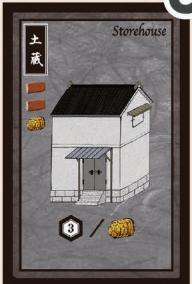
建筑卡牌下方标有建材费用(金槌图示=木材用量)。插图下方的数值为游戏结束时获得的IKI分数。例如商家:"持有草鞋数量 ×3 的点数为IKI"。
7.2 建筑方式
通过普请场(建筑工地)执行建筑:
1. 支付1文钱。
2. 选择"买一个米袋"或"建筑"(不可兼得)。
3. 建筑时花费所需数量的木材和小判。
4. 建筑卡放入长屋空置格,并放置一个町人米宝在卡上。
5. 角间建筑须+2文钱。
6. 若无足够町人则无法建造。
7. 已放置的町人直到游戏结束都不会收回(除非因火灾被救回)。
> 另外,拥有技能④的卡牌可在普请场建筑时减少一根木材费用。
7.3 建筑与结算
建筑卡在终局时按其标注点数直接计分。
8. 各大商店功能
| 商店名称 | 功能 |
|---|---|
| 草鞋屋 | 花费2文购买2双草鞋 |
| 米屋 | 花费3文买2个米袋;或将米袋/草鞋换为4文钱(每店每轮限一次) |
| 质屋(当铺) | 以抵押方式换取资金 |
| 火见橹(瞭望楼) | 打火能力提升1点 |
| 鱼河岸(鱼市场) | 购买当季鱼指示物(每次限购1个) |
| 烟管屋 | 一次回合最多买各1个烟管和烟草袋,各取最上面那个 |
| 普请场(工地) | 花1文换1米袋或建筑;6文换1小判(每回合最多2枚,需12文) |
| 两替屋(兑换商) | 货币兑换(唯一不受每回合限一次的商店) |
9. 指示物说明与终局换算
| 指示物 | 用途 |
|---|---|
| 1文 / 4文钱 | 交易与支付的通用货币 |
| 小判 | 建筑材料;终局值3点IKI |
| 草鞋 | 老板移动时增加步数 |
| 鱼 | 每季2个,含价格信息;终局按季节种类计分 |
| 米袋 | 结算时支付给雇用中的町人(粮食费) |
| 木材 | 建筑材料;终局值1点IKI |
| 烟管 | 购买时提升打火能力,数量等于图标数 |
| 烟草袋 | 终局时按标注转化为IKI;持有至少1根烟管则双倍 |
10. 每月流程与轮次结束
10.1 每轮结束步骤
- 将所有老板米宝行动完毕后,把圆柱放回第1阶段所选位置。
- 处理未雇用卡牌: 每个未在长屋里的已公开季节卡牌上放1文钱(已有1文再加1文,上限2文/卡)。
- 翻牌补牌: 翻开4张当前季节的新卡面朝上展示。
- 换季清理: 如果下个月属于不同季节,移除剩余的所有未雇用卡牌(含上面的钱),清空可用卡池,再从新季节翻出4张。
- 将月份圆盘推进到下一个月。
10.2 鱼指示物替换
季节变换时(3、6、9、12月末),将下个季节对应的2条鱼指示物放到鱼市场上,替换掉前季的。
11. 结算(3、6、9、12月末)
按以下顺序执行:
11.1 薪水
从板上和你手中的所有职业卡牌收取薪水。薪水随当前成长阶段而定,退休卡按最大值发放。
11.2 长屋人情奖励
版图上有5组群参与计分:
- 大街将每张边长长屋切成2组(共4组)
- 4个角间合并为1组
计分公式: (同一群组内同一类型的卡牌数量)×(你自己在此组的町人数)。每种类型只有1张不计分。
示例:某群组内有3张小贩卡,红玩家放2个町人 → 3×2=6点IKI;紫玩家放1个町人 → 3×1=3点IKI。
11.3 支付粮食
支付相当于你板上已雇用卡牌数量的米袋数。退休卡免付。若无法足额支付,町人逃走——移除等量的卡牌(玩家自选)。
12. 火灾阶段(5、8、11月末)
12.1 确定领头
本轮打火能力最高的玩家担任灭火领队(同分则圆盘在上者优先)。
12.2 抽牌起火
领队从火灾板块堆翻1张,板块标示着火起点房间。板块随即洗回堆中。
12.3 判断能否扑灭
着火房间内如果有任一玩家的町人居住,检查该玩家的打火能力是否≥火灾强度:
- 达标: 火势扑灭,火灾阶段结束。
- 不达标: 该房间的所有职业卡和建筑卡移出游戏,町人退回。
12.4 延烧
若未扑灭,火向版图中心方向的隔壁房间蔓延。每延烧一次,火灾强度减1。重复检查上述条件。当火势蔓延到整个长屋仍未扑灭时,火灾阶段自然结束。
13. 最后一个月(正月)
正月流程特殊:
- 所有玩家直接从B行动开始(跳过A行动,也不选生活之道轨)。
- 图板上剩余鱼指示物保留原位。
- 由打火能力最高者率先依次行动。
- 老板可自由移动到任意格子(不再受第1阶段限制)。
- 移动到格子后可选择与商店和/或长屋中的一张职业卡交易。
- 即使通过起点也不触发成长。
- 末位玩家完成后,游戏立刻结束。
14. 终局计分
正月的B行动全部完成即游戏结束。累计以下项目:
| 项目 | 计分方式 |
|---|---|
| 职业组合收集奖励 | 板上+手中退休卡的类型数:1种=1、2种=4、3种=9、4种=16、5种=25 |
| 鱼 | 集齐的季节种类数:1种=3、2种=6、3种=10、4种=15;加上夏季初的冬季鱼本身的附加分 |
| 烟草袋 | 标注数值;有≥1烟管则翻倍 |
| 建筑卡 | 卡牌标注的固定IKI点数 |
| 小判 | 每枚=3点 |
| 木材 | 每根=1点 |
| 钱 | 每5文=1点 |
注:米袋和草鞋无终局价值。
平手打破: 首先比较谁有更高层次的消防动员力,若仍平手则比较打火能力轨更高位置者胜。
15. 2人和3人变体规则
3人游戏
- 生活之道轨只启用4格,不使用最右侧格子。
- 其余按4人规则执行。
2人游戏
除3人规则的轨位限制外:
- 不使用4个角间。
- 每轮两人全部行动完毕后,一人从剩余朝上的职业卡中选1张放入空长屋格(上不附钱)。若无可放的空位则跳过。
- 中立卡不归任何人所有,无需放町人。
- 双方老板均可与中立卡交易;一旦与中立卡交易完毕,该卡立即移出游戏。
- 若发生波及中立卡的火灾也立即移出。
- 中立卡计入"长屋人情奖励"分组计算。
- 奇数月由起始玩家放置,偶数月由对手放置。
关键规则与常见问题
易错规则
- 每轮必定执行A+B: 除正月直接从B开始外,每个玩家每轮都要做完两个阶段才轮到下一位。
- 雇用必须先拿钱: 卡面上有钱的卡牌,雇用时必须先将钱拿到手,再用钱的一部分支付雇佣费。
- 自己和自己交易不成长: 只有与其他玩家的卡牌交易或被他人技能触发才会成长。
- 走过一圈才成长: 老板经过起点时,板上己方所有卡同时成长。正月不触发。
- 生活之道最左边格子的代价: 不能执行A行动(无法雇人或领钱),但可以最先移动且可任意控制1~4步。
- 每家商店每轮限一次: 除两替屋外,每位玩家对同一家店的同名技能每轮只能用一次。
- 火灾扑救只看町人所在房间的业主: 不是看整张长屋,而是逐房间检查着火处是否有某个玩家的町人,并以该玩家的打火能力判定。
- 火灾延烧递减: 每往中间推一个房间,火灾强度减1。
- 退休卡不计粮食: 结算时只需为板上仍在雇用的卡牌付米袋。
- 卡面最多堆2文钱: 每月底对未雇用卡加1文,满2文停止。
- 建筑町人不回收: 建筑卡的町人终生归属该建筑,只有火灾时才可能撤离。
- 技能⑦仅限己方卡牌: 不能用它来保护建筑卡。
- 2人游戏中立卡交易即消失: 任何老板跟中立卡完成交易后,该卡立刻移出游戏。
常见问题
-
Q:打火能力可以同时超过10吗?
A:是的。当玩家已在最顶端时,新获得的点火能力只需将圆盘往上叠放。 -
Q:鱼指示物的价格和终局加分如何区分?
A:每条鱼指示物正面印有购买价格,背面(或边缘标注)有额外的终局IKI加分,两者独立计算。 -
Q:生活之道轨的格子能跳过吗?
A:不能。按顺序每人必须选一格放置,不可pass。 -
Q:2/3人游戏的生活之道最左边能不能用?
A:都不行。2/3人游戏都只用中间4格。 -
Q:长屋人情奖励里,跨长屋的同类型卡算同一组吗?
A:不算。每组仅限大街分割出的两个半区长屋或4个角间合计的范围。 -
Q:换季时留在场上的未雇用卡牌怎么处理?
A:同季节继续留场上加钱;换季则全部移除(连同钱一起清掉)。 -
Q:终局计分时钱是全部加起来再除以5,还是逐一换算?
A:汇总所有剩余1文钱总数后每5文=1点IKI。
常见问题(FAQ)
以下 1 条问答来自站内玩家的真实提问,答复由本站依据规则资料作答;答复内容保持原样,仅对提问做了去口语化的轻微整理。
IKI 一个回合可以做什么?
在《IKI》里,一个回合就是一个“月”(游戏共13轮:12个月+新年正月)。一轮由两个阶段组成,玩家在一轮里能做的事如下:
第一阶段:生活之道阶段
- 所有玩家各自从“生活之道轨”的5个格子里选1格,放上自己的圆柱;2、3人游戏时最左边那一格不能用。
- 该数字决定你在第二阶段的行动顺序和老板米宝的移动距离。
- 一格只能放一个人。
- 特例:选最左边一格的玩家,第二阶段不能执行A行动;但在B行动移动时可以任意选1~4格(还能用草鞋追加移动),且是第一个移动的。
第二阶段:行动阶段(按生活之道轨从左到右依次行动)
轮到你时,先做A,再做B。
A. 二选一:雇用职业卡牌 或 收入
- 雇用:雇用一张面朝上的职业卡牌并付钱给银行;同时可以获得卡牌上的钱。不能只拿走钱然后弃掉卡牌。雇到的卡牌放进空的长屋并放上自己的町人米宝;放进角间要额外+2文。町人全部用完,或长屋没有空间时,不能雇用。
- 收入:从奉行所(银行)拿4文钱。
B. 移动老板米宝,然后进行交易
- 移动:按你在第一阶段选的格数,逆时针移动老板米宝(大街共8个方格,起点在方格之外)。可以支付草鞋来增加移动格数,一次移动使用的草鞋数量没有上限;特殊卡牌“牛车”的能力一轮只能用一次。老板米宝可以停在有别的老板米宝的格子上。当你走完一圈、再次经过起点时,你雇用的全部职业卡都会成长一格。
- 交易:移动后,可以和所在格的商店、以及该商店后方长屋中的一张职业卡牌交易,两者的先后顺序自己决定;只和其中一方交易、或者都不交易也可以。一间店后方的长屋有2张职业卡牌,只能和其中一方交易。可以和其他任何玩家拥有的职业卡牌交易。交易后,该职业卡牌会成长一格;但如果和自己拥有的职业卡牌交易,它不会成长。
当所有玩家都完成老板米宝行动后,该轮就结束了(随后按月份触发火灾或结算)。
本内容仅供参考,如有冲突以说明书和身边大佬为准。
去哪查完整规则
想核对具体规则细节、卡牌效果或某个回合的结算方式,可以在村了吗里选中这款游戏后直接提问。
同类桌游
- 卡坦岛德式
- 工业革命:伯明翰德式
- 勃艮第城堡:特别典藏版德式
- 方舟动物园德式
- 卡卡颂抽象
- 瘟疫危机传承:第一季美式
- 阿瑞迪亚:勇踏征途美式
- 重塑宇宙德式
- 幽港迷城美式
- 埃多拉的德鲁伊德式
规则原文(Markdown)
本站收录这款游戏的规则原文 3 个文件,此处内联渲染 3 个,可直接展开阅读或下载。
rules_zh_IKI_3792.md25.5 KB
IKI
A game of Edo Artisans
江戶職人物語
內容物
遊戲圖版1個
卡牌 62張
職業卡牌 56張起始的4張、春季13張、夏季13張、秋季13張、冬季13張
建築卡牌 6張
木製配件
老闆(親方)米寶 4個
町人(子分)米寶 16個
標示圓盤12個
月份圓盤1個
八角柱:木材15個
六角柱:米袋 24個
紙板指示物
錢幣指示物 50個1文錢幣32個、4文錢幣18個橢圆型金幣(小判)指示物8個
草鞋指示物 20個
魚指示物 8個2個春季、2個夏季、2個秋季、2個冬季
煙管指示物 4個
煙草袋指示物 4個
火災版塊 4個
規則書1本
故事背景及總覽
IKI:關於江戶職人的遊戲,是個日本江戶時代(1603-1868)町人文化主題的策略型桌上遊戲。設定中的日本橋是江戶時代當時最熱門的商貿區主要大街上佔有各式各樣的商店,如米商和煙草店,吸引了繁忙的客人。新鮮的漁獲成堆的被補上船,到處發出買賣漁獲的宏亮聲音。在街道的後方有著工匠和小販,住在被稱為長屋(ながや)的房子裡。他們用特有的商貿技巧來支撐江戶這城市。
據說江戶擁有700-800種不同的職業。在本遊戲中用卡牌來代表木工和塌塌米師傅、食物小販和食物商店、藝妓和歌舞伎演員,以及其他各色各樣的職業。
遊戲版圖建立在熙代勝覽(きだいしょうらん),一幅年代久遠珍貴畫軸。向下俯瞰,我們鳥瞰著江戶這美麗的城市,綿延長達12公尺。藉由精細的手藝繪製1600個城民穿梭在90間店中購物,這個年代的生氣蓬勃正是其不減的魅力。
遊戲目標
遊戲的目的是通過一整年的考驗,目標成為能最佳捕捉江戶精神的人。
玩家將服務各式各樣的商店和工匠來換取金錢和食物。
有最多IKI的人就是獲勝的玩家,在古老的哲學中,IKI被認為是江戶人心中理想的生活方式。能夠了解人性的險惡,變成優雅且引人注目。這些都是一個貨真價實IKI大師的要件。(在平手的情況下,有最多消防動員力的是贏家。如果還是平手,打火能力指示物在較高位置的是贏家。)
非常感謝三谷一馬先生,著名的江戶文化研究者和日本畫藝術家,提供了IKI:一個江戶職人的遊戲概念。
設置
起始玩家
最有職人氣質的玩家來當起始玩家。順時鐘方向進行遊戲。從2月開始,遊戲將由最多消防動員力的玩家開始。每個玩家自行決定他們的顏色。
IKI計分軌
每個玩家的圓盤指示物放置在0的地方。
卡牌和版塊
所有卡牌由牌背的標示來分類。有春夏秋、冬卡牌、起始的4張卡牌以及總共六種的建築卡牌。4張起始卡牌稍後會解說。分洗4個季節的卡牌後每疊牌面朝下依季節來擺放。6張建築物卡牌面朝上放在圖版旁邊。洗火災版塊並堆成一堆面朝下放在圖版旁邊。最後,從春卡牌堆中翻出4張卡牌面朝上放在版圖旁邊。


月曆
放置黑色圓盤指示物在月曆的一月。一輪就是一個月。遊戲由13輪所組成,12個月子加上新年。根據陰曆,1、2、3月是春,4、5、6月是夏,7、8、9是秋,10、11、12月是冬。
在5、8、11月的結束會發生火災。
在季節變換的月份(3、6、9、12月)結束後會進行結算。
4張起始卡牌
鹽小販、水煮蛋小販、棉花小販和眼鏡小販是起始職業。
首先由順位最後的玩家從其中選擇一張卡牌,該玩家接著選擇版圖上任何長屋的最外側房屋擺放該張卡牌。該玩家擺放他/她的町人米寶到版圖上該卡片的左下角。
接著,倒數第二位玩家,然後倒數第三位玩家執行相同動作。最後一個玩家會是起始玩家。如果玩加人數少於4個人,從遊戲中移除剩下的卡牌。


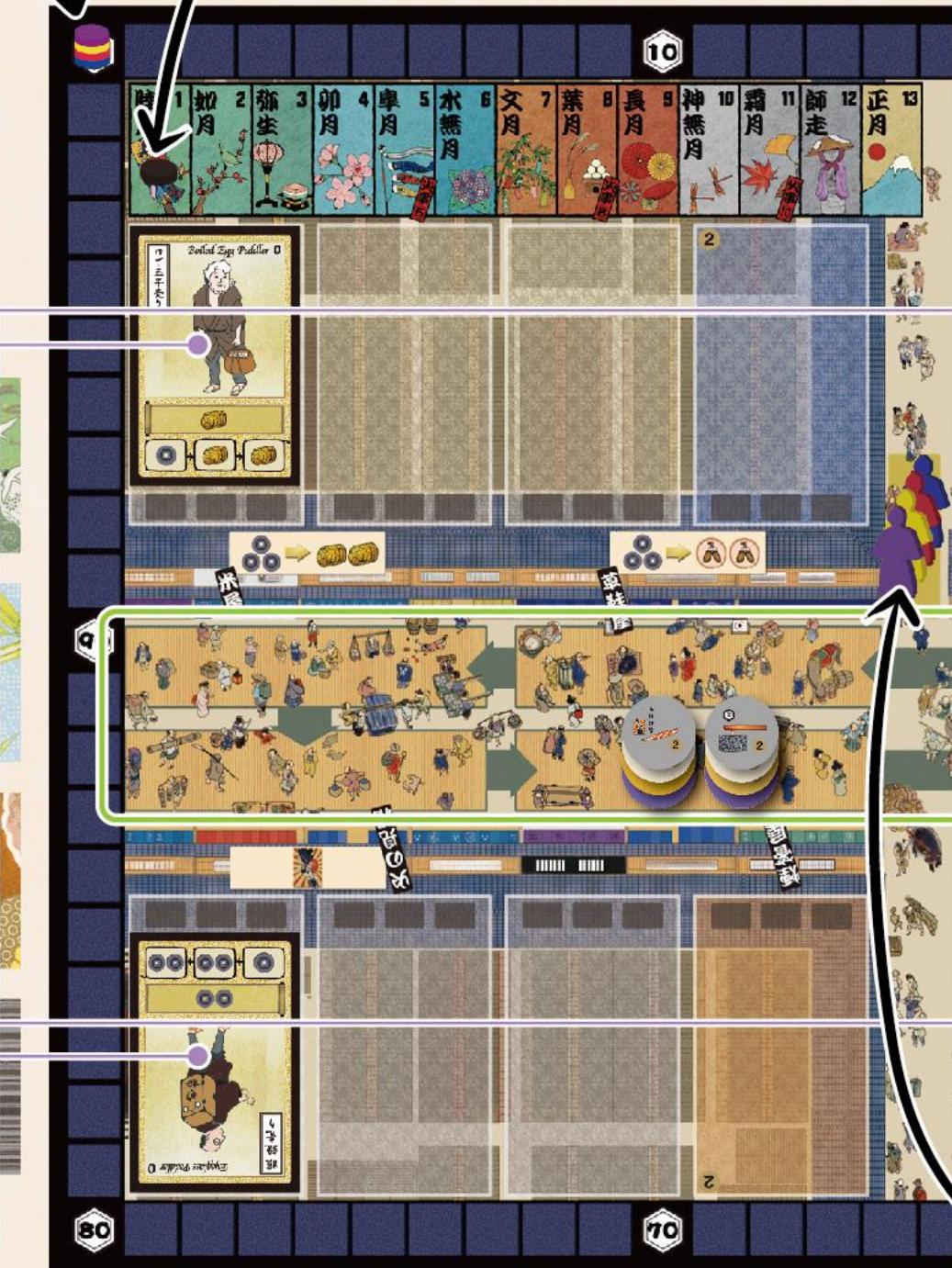
打火能力軌
把每個玩家的標示圓盤放在0格上。接下來堆疊順序至關重要。起始玩家在頂端,玩家順時鐘由上而下堆疊。打火能力軌,除了顯示打火能力,同時顯示玩家在第一階段的順序。
在遊戲中,當你獲得打火能力時,馬上向右移動標示一格。如果多於一個玩家獲得相同的點數,獲得同點數較晚的玩家會把圓盤上在頂端。若有玩家已經在10點時獲得打火能力,只要把圓盤放上頂端。


起點
放置每個玩家的老闆米寶在圖板中央的起始位置。火災版塊

生活之道軌
每個玩家的圓柱指示物放在指定位置。生活之道軌,是用來決定第二階段的順序和移動數量。最左邊的格子只有4人遊戲時才會使用。
起始資源
自己顏色的町人4個,草鞋指示物1個,米袋1個,一個4文錢和4個一文錢。

大街
大街上總共有8個方塊。老闆米寶從起點開始沿著方塊逆時鐘移動。老闆米寶和前方的商店交易然後和住在後方長屋的町人做生意。
放置指示物
將每個指示物面朝上放置在指定的位置。煙草店依顏色順序堆疊起每個煙管和煙草袋。從頂端開始為灰色、亮黃色、橘色和紫色。放置兩條春魚指示物在魚市場。
在大街上商店
每個方格對應一間商店。商店總共有8間,每個提供不同的行動(稍後會解說)。
長屋(ながや)
大街的周圍有4間長屋。一間長屋有4戶所構成,可以住4個町人。一間長屋的4戶形成1群組。(他們會影響結算)。然而,顏色不相同的角間4戶形成新的1個群組,只是要進駐角間戶需要+2文錢。
剩下的硬幣草鞋小判、米袋木材都放置在圖版旁邊當做奉行所(銀行)。

内容物説明
職業卡牌說明

·漢字的職業名
·英文的職業名,雇用的費用
·技能:這個職業的特殊技能
·薪水:結算的時候,卡片的所有人獲得的薪水
·成長度(會寫在版上)
·打火能力(如果你雇用擁有這個圖示的卡牌,你的打火能力將會提高1點或2點)
當雇用職業卡時,你會支付寫在卡牌上的成本給銀行並置放此卡牌到長屋中的空屋裡。如果你沒有足夠的町人米寶或是長屋已經滿了,你不能雇用此卡牌。將町人米寶放在卡牌的左下角。町人米寶所在的位置表示目前的成長度。
職業卡牌可以有3階段的成長。成長後,結算時獲得的薪水會有變化。
(例外情況,某些卡牌退休後會有發動功能來取代薪水)
每一次成長,町人米寶就往右移一格在在最右邊一格還要成長時,這張職業卡牌就必須引退。將引退的職業卡牌面朝上加入該玩家手牌。退休的卡牌在結算時會獲得最右邊方格顯示的薪水,你不需要支付任何米袋給退休的卡牌。
有三種方式可以讓職業卡牌成長。
第一個是,其他玩家使用你卡牌的技能,該職業卡牌會成長一次。自己使用自己雇用的職業卡牌,是不會成長的。
第二個是,當你的老闆米寶走完大街一圈時。通過起點的時候,圖版上你的職業卡牌全部都會成長。
第三個是,當你付錢使用某些卡牌的能力時,你可以讓任意一張職業卡牌成長。
職業卡牌有五種類(上職人、職人、商店、小販、特殊)的分別(圖1)。
卡牌用邊框的顏色來分種類。(上職人=紅色、職人=棕色、商店=黃綠、小販=奶油色、特殊=紫色)卡牌的種類與結算時長屋獎勵有關。
遊戲結束時,玩家手牌上退休的職業卡牌的種類數會獲得對應獎勵。

技能和薪水
技能:該職業固有的技能,用圖示記載在卷軸上(圖2)。卷軸的顏色因類別有所不同。
和職業卡牌進行交易的玩家會獲得其技能。
黃色:免費獲得某些東西。會從銀行取得資源或是獲得打火能力。
青色:交換某些東西。和銀行交換。
紫色:特殊效果。

薪水:薪水是職業卡牌的所有者在結算階段會獲得的東西。此外,部分卡牌沒有薪水。
他們會在退休時發動能力。這類卡牌會用一個灰色框表示。
特殊職業卡牌說明

特殊技能
1:1點IKI換5文錢。IKI是0的情況下不能使用。
2:支付2文錢讓任意職業卡牌成長一格。
3:獲得4點IKI。但同時其他玩家全部從奉行所拿到2文錢。
4:建造一個建築。可以減少支付一根建築用到的木材。
5:交換圖板上任意兩張卡牌的地點。(不管擁有者是誰)
退休時
6:雇用時減價1文錢。1輪只能使用一次。
7:火災時,可以幫助自己的一張職業卡牌。遊戲中只能使用一次,旋轉此卡牌90度來表示此卡牌被使用過。不能用來幫助建築卡牌。
8:老闆米寶的移動時可以+1格。1輪只能使用一次。可以和草鞋並用。
9:遊戲結束時,職業卡牌的組合收集獎勵計算的時候,可以當做任何種類的職業來使用。
建築卡牌說明

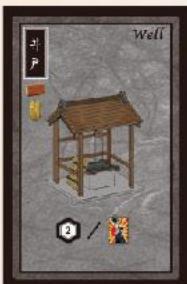
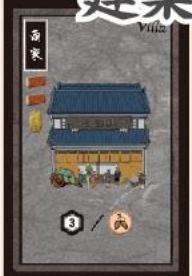
名稱底下的圖示是這個建築的建材費用。插圖底下記載的是遊戲結束時可以獲得的IKI點數。
範例(圖3)商家:遊戲結束時獲得持有的草鞋數量x3的IKI點數。
金槌的圖示,位在卡牌技能或是普請場(建築工地),表示可以蓋建築物的機會。蓋建築物時,建築卡牌和職業卡牌一樣置放在長屋中空的空間裡。建築在角間必須支付2文錢。同時放置一個你的町人米寶在卡牌上。沒有足夠町人米寶的情況下不能蓋建築物。町人米寶除了火災而失去建築物的情況外,直到遊戲結束時才會返回。
指示物的說明
錢幣:1文錢、4文錢基於江戶時代實際上使用的錢幣的習慣,本遊戲使用的錢為1文錢和4文錢。
小判(橢圓型金幣):小判做為建材使用。在遊戲結束時值3點IKI。
草鞋:老闆米寶移動時使用。草鞋可以用來增加移動的次數。
魚:每個季節2個魚指示物。上面標有價格。春季=沙丁魚、夏季=鰹魚、秋季=海鱸、冬季=鯛魚。
米袋:結算時用來支付圖版上已經雇用的町人。
木材:木材當做建材使用。在遊戲結束時值1點IKI。
煙管:共4個。上面有煙管圖示和價格。購買時煙管圖示的數量等於打火能力增加的數量。
煙草袋:共4個。上面標有價格和IKI點數。遊戲結束時會變成IKI點數。若持有至少一個煙管指示物,獲得的IKI點數為雙倍。

1文錢

4文錢


小判
草鞋
魚(春)


魚(夏)

米袋
魚(冬)
魚(秋)


木材

煙管
煙草袋
商店說明
*注意:本遊戲中,玩家之間不能直接交易資源。資源的取得、交換、使用全部都需要經過奉行所(銀行)來執行*除了兩替屋之外,每回執行都只能執行一次。

草鞋屋(草鞋店)

用2文購買兩雙草鞋。

米屋(米店)
用3文購買兩個米袋。
米袋或是草鞋換成4文錢。每回執行只能執行一次。
質屋(當鋪)


火見櫓(火望樓)
打火能力上升1點。打火能力標示向右移動一格。若遇到其他玩家的標示,就疊在他的上面。

魚河岸(魚市場)
用來購買魚。每次只能購買1個指示物。夏季的初鰹和冬季的鯛魚價格較高,但是可以獲得較多的
煙管屋(煙斗店)

用來購買煙管和煙草。1個回合只能購買每個種類各1個。而且只能買最上面那個指示物。1個回合可以購買煙管和煙草袋各1個。
IKI點數。江戶人流傳"典當禔袍來換好吃的初鰹"[註1]這樣的說法,能吃當季食物是非常IKI的事情。
普請場(建築工地)
支付1文錢,購買一個米袋或是進行建築。你不能兩者都執行。
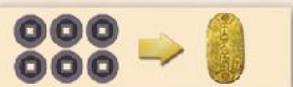
6文錢兑換成小判。此處一回最多可以購買兩枚小判,兩枚小判要12文錢。
兩替屋(兌換商)
商店和長屋的關係
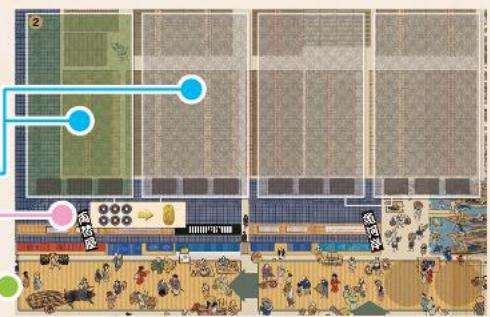
一個商店的後方長屋住著兩個町人。
因此,一個大街上的方塊對應著一間商店和兩個町人。
遊戲進行
一輪由兩個階段組成。第一階段是生活之道階段,而第二階段是行動階段。當所有玩家完成第一階段後進入第二階段。
第一階段:決定生活之道的階段
生活之道階段,同時決定在行動階段的行動順序和移動距離(圖4)。
1月時從起始玩家開始順時鐘依序進行。2月開始,打火能力最大的玩家為起始玩家,用打火能力來決定順位。打火能力相同的情況下,圓盤在上方的玩家優先。
依照順位,從生活之道軌的5格中選出一個放置自己顏色的圓柱。(2、3人遊戲時最左邊一格不能使用)數字表示第二階段的順位和行動距離。一格只能放置一位玩家的標示。
*選擇最左邊一格的玩家,不能執行第二階段的A行動。在第二階段B行動移動時可以任意選擇移動1\~4格(還可以用草鞋追加移動),且移動順序是第一個。

第二階段:行動階段(A→B)
順序是從生活之道軌的左到右。圓柱放在生活之道軌的最左邊的玩家先行動。僱用或是收入兩個行動選一個,然後繼續由該玩家移動老闆米寶。老闆米寶移動完成後,圓柱放在生活之道軌最左邊的第二個玩家接著行動。
A.雇用職業卡牌或是收入
選擇雇用或是收入的行動
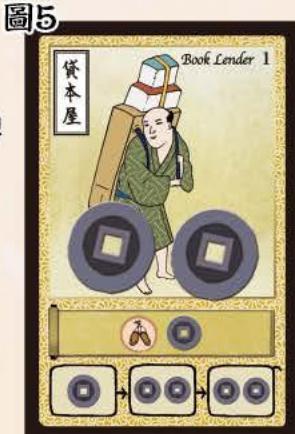
●雇用:你可以僱用一個面朝上的職業卡牌,然後付錢給銀行。你同時可以獲得你雇用卡牌上的錢幣。你不能拿走錢幣後棄掉卡牌。
範例(圖5):廣重決定要雇用"貸本屋(租書店)”。已經有2文錢在卡牌上。廣重1文錢也沒有但是廣重會先獲得2文錢,其中1文錢再用來僱用"貸本屋(租書店)。
購入的卡牌放置在空的長屋裡,並放上自己的町人米寶。要置入長屋的角間必須+2文錢。
町人全部用完或是長屋沒有空間的情況下,無法進行雇用。
●收入:從奉行所拿取4文錢。
B. 移動老板米寶並進行交易
●移動:在移動你的老闆米寶後進行商業交易。大街上共有8個方格,老闆米寶以逆時鐘移動。起點在方格之外。依你在第一階段選的方格數量來逆時鐘移動你的老闆米寶。同時,支付草鞋指示物,可以增加與支付的草鞋數量相同的移動隔數。一次移動所使用的草鞋數量沒有上限。特殊卡牌(牛車)的能力一輪只能使用一次。老闆米寶可以站在同一格中。當自己的老闆米寶走了一圈(再次通過起點時),你所雇用的全部職業卡都成長一格。
●交易:老闆米寶移動後,可以和該方格中的商店以及長屋中的一張職業卡牌交易。自行決定和商店交易及和職業卡牌交易的順序。然而,只和其中一方交易或是都不交易也是可以的。
一間店後方的長屋住有2張職業卡牌,只能和其中一方進行交易。可以和任何玩家擁有的職業卡牌進行交易。進行交
易後,因為經驗的累積,該職業卡牌會成長一格。但是,和自己所擁有的職業卡牌交易的情況下,該職業卡牌不會成長。
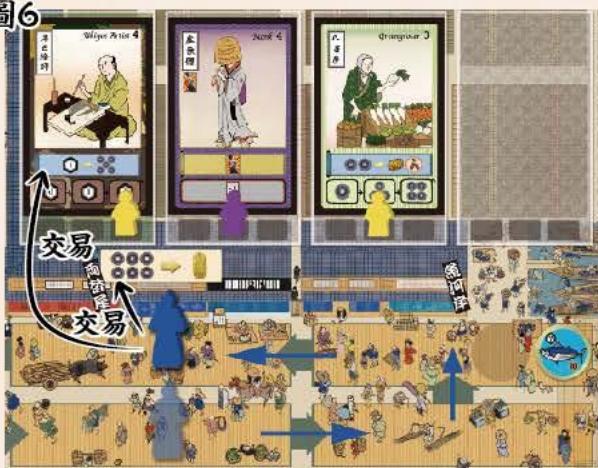
範例(圖6):寫樂在第一階段選擇了第3格,A的行動領取了4文錢。和手上的3文錢加起來總共有7文錢了。移動了3格後,他使用一個草鞋指示物,因此移動他的老闆米寶4格,用1點IKI和浮世繪師交易5文錢,之後再和兩替屋(兑換商)進行交易·將12文錢全部換成2個小判。
一輪的結束
為了表示行動結束,在老闆米寶和交易結束後將自己的圓柱標示放回一開始的地方。所有玩家的老闆米寶行動完成後,該輪就結束了。5、8、11月的遊戲輪結束後火災會發生。3、6、9、12月的遊戲輪結束後就是結算。當季節變換時,下個季節的2個魚指示物替換原先魚指示物。接著依照下方的指示處理未被雇用的職業卡牌。
在遊戲輪結束後,未被雇用的職業卡牌留在原地。放1文錢在這些卡牌上面。如果上面已經有1文錢了,再放1文錢上去(1張卡牌上最多只會有2文錢)。面朝上翻開4張該季節的職業卡牌來為下一輪做準備。如果,下一輪是不同的季節,移除所有留下的卡牌(包含上面的錢幣),清空雇用區域。從下個季節的卡牌中翻出4張面朝上放置。
最後,將月曆標示往下一個月推進。
關於結算
3、6、9、12月的遊戲輪結束後會進行結算。依下列順序處理結算。
●薪水:你會獲得版圖上及你手上的所有職業卡牌上的薪水,該薪水對應其成長度。薪水會是IKI點數、錢或是資源。退休職人會給予最大值(最右邊)的薪水。
●長屋的人情獎勵:長屋被大街切開的4個群組和角間的4戶構成一個群組,總共有5個群組。(圖7)
(同一個群組的同一種類職業卡牌數量)×(群組內自己的町人數量)為你獲得的IK|點數,計算每個群組即為你的總和。但是,同一種類的職業卡牌數如果只有一張的情況下,不會有任何獎勵。
範例(圖8):這群組內的小販(奶油色的邊框)共有三張。紅色的玩家有3×2=6點,紫色的玩家獲得3X1=3點的獎勵點數。上職人(紅色的邊框)只有一張因此無法獲得獎勵點數。


●支付食糧:最後,支付等同於圖板上你的職業卡牌數量的米袋。退休的職業卡牌不用支付米袋。無法支付的情況下,町人即會逃走。從遊戲中圖板上移除等同於欠的食糧數量的職業卡牌。要移除哪張職業卡牌是玩家的自由。
關於火災階段
有這麼一說"火事と喧嘩わ江戸の花"(火災和打火是江戶之花),江戶時常發生火災。以建築工人為中心組成城市的打火隊來進行救火。
5、8、11月的3個階段結束後,進行火災階段。火災的強度標示在版圖上5(5月)/8(8月)/10(11月),此時,打火能力最高的(有相同點數的情況下,是圓盤在上的)玩家為打火的領隊。
打火的領隊會從面朝下的火災板塊堆抽一張。板塊上標示長屋中的火災起點。火災板塊放回板塊堆中並重新洗過。
該戶有哪個玩家的町人居住的話,該玩家的打火能力等於或大於火災強度,這樣火災就撲滅了(火災階段結束)。
相反的,如果該玩家的打火能力不足,職業和建築卡牌會被移除遊戲而町人米寶會回到該玩家手上。火沒有被撲滅的情況下,火災會在同一個長屋內往圖板中央方向延燒至隔壁房間。每當火災延燒,火災強度就會減1。火災延燒至整個長屋後,火災階段就結束了。

範例(圖9):8月,強度8的火災從長屋的最左邊開始。黃色玩家、紫色玩家的打火能力都是5。因為火災強度強過打火能力,古裝小販和冷水小販被移出遊戲。因為到雕刻師的房間時火災強度減到5,黃色玩家撲滅了火災。
關於最後一輪(正月)
最後一輪,遊戲流程有些不同。每個玩家都從第2階段的B行動開始。圖板上剩下的魚就保留在原處。
由打火能力最高的玩家依序開始。老闆米寶可以任意移動到任何一個方格上。選擇和商店進行交易以及和商店後方長屋的其中一個町人進行交易。
在最後一輪,即便你的老闆米寶通過了起點你的町人也不會因此成長。當最後一個玩家完成行動,遊戲結束。計算最後的IKI點數。
遊戲結束和最終結算
正月遊戲輪結束後遊戲結束。遊戲結束時計算最後的IKI點數。將以下的IKI點數加入計算。
●職業卡牌的組合收集獎勵
對應版圖上和自己手上退休的職業卡牌的種類數,獲得獎勵點數(1種類:1點/2種類:4點/3種類:9點/4種類:16點/5種類:25點)。
●指示物
魚:魚指示物對應季節數來增加點數(1種類:3點/2種類:6點/3種類:10點/4種類:15點)。加上夏季的初鰹和冬季的鯛魚指示物上的額外IKI點數。
煙草袋:煙草袋指示物的IKI點數,在你有一個煙管指示物的時候會是雙倍點數。若沒有煙管就如同指示物上標示。
範例(圖10):右邊的煙草袋一般情況下遊戲結束時獲得3點IKI和5點IKI點數。
如果擁有煙管指示物,會獲得雙倍點數(6點和10點)。
●建築物卡牌
加總建築物卡牌的IKI點數。

●資源
剩下的資源如下轉換成IKI点数(小判→3點、木材→1点、錢→每5文錢1点)。米袋和草鞋沒有点数。
關於2和3人遊戲
2、3人遊戲的情況下,生活之道軌只會有4格可以選。不使用最右邊的格子。
2人遊戲規則
2人遊戲的情況下,不使用4個角間。
每個月結束時(兩個人的行動都結束時),一個玩家從剩下的面朝上的職業卡牌中選擇一張,放置到空的長屋中。如果該張卡片上放有錢,把錢退回到奉行所。如果沒有空的長屋則跳過這個行動。
該職業卡牌為中立卡牌不屬於任何玩家。不用放上町人米寶。你的老闆米寶可以一般的跟中立的職業卡牌進行交易。只要此卡牌交易過,立即移出遊戲。若發生火災,立即移出遊戲。計算長屋獎勵時,包含中立職業卡牌。
奇數月結束時為起始玩家,偶數月結束時由另一方來執行這個行動。
*IKI(いき):作者表示IKI的日文是"粋"代表江戶人的生活哲學和人生思考。
設計:Koota Yamada
美術:Dommiy
英文翻譯:Kazuki Ito, Bruce Yee
中文翻譯:阿鬼
中文排版、校對:邱老虎
規則排版和外盒設計:TANSAN&Co.
特別感謝:Joe Huber, Lorna, Sakashin, Yukicha, Hokaccho, Egu, Phoenix Kwan,
Kamui, Yokko, and members of imagine GAMES
© UTSUROI, ALL rights reserved
下载 MarkdownEnglish final rule for BGG.md29.6 KB
IKI
A game of Edo Artisans

Components
Game board
Cards
56 occupation cards
6 construction cards
Wooden Pieces
4 Oyakata (Boss) meeples
16 Kobun (Townspeople) meeples
4 cylinders
13 marker discs
15 octagons: lumber
24 hexagons: rice bales
Punchboard Pieces
50 money tokens (32 One-Mon coins,
18 Four-Mon coins)
8 oval gold coin (Koban) tokens
20 sandal tokens
8 fish tokens (2 Spring, 2 Summer,
2 Autumn, 2 Winter)
4 pipe tokens
4 tobacco pouch tokens
4 fire tiles
Rule Book
Background and Overview
IKI : A Game of EDO Artisans is a strategy board game themed by the trade culture of Edo Period Japan. The setting of Nihonbashi was, at the time, Edo's most populated area of trade.
The main street held a variety of shops, such as rice dealers and tobacco shops, drawing in a bustle of customers. Fresh fish were caught on boat by the dozen, and sold in high spirit voices bustling through the air. At the back of the street were craftsmen and peddlers, living in the houses called Nagaya. They would support the city of Edo with their unique skill of trade.
It is said that Edo held 700-800 different kinds of professions. Within this game are cards featuring carpenters and tatami makers, food peddlers and food shops, geishas and kabuki actors, and other odd occupations.
The game board is based off of the Kidai Shoran, a precious picture scroll of the age. Looking down, we see a bird's-eye view of the beautiful city of Edo, stretching a full width of 12 meters. With the delicately crafted illustrations of the 1600 townspeople shopping through the 90 shops, the liveliness of this era is nothing short of captivating.
Goal of the Game
The purpose of the game is to survive through the course of a full year, aiming to be the top in capturing the Edo spirit. Players will take the services of a wide variety of shops and craftsmen in order to make money and food. The one who wins is the one who has the most IKl, an ancient philosophy, believed to be the ideal way of life among people in Edo. Knowing the subtleties of human nature, being refined and attractive. These are all elements of a true IKI master. (In the case of a tie, the one who has most firefighter power is the winner. If it is still a tie, the one whose firefighter marker is higher is the winner.)
A great thanks is given to Mr. Mitani Kazuma known as a researcher of Edo culture and Japanese painting artist for providing the concept of IKI: A Game of EDO Artisans.

Starting Player
The person who has the best craftsmanship will be the starting player. Move clockwise. From February, the game will start from the player with the most firefighter power. Each player will decide their color.
IKI point Track
Place each player's disc marker to 0.
Cards and Tiles
All cards are divided into types, depending on the back label. There will be the Spring, Summer, Autumn, and Winter cards, the 4 starting cards, and in addition, a total of 6 construction cards. The 4 starting cards will later be explained. Shuffle the 4 season cards and make each stack face down, placing them in order of season. Place the 6 construction cards face up on the side of the board. Shuffle the fire tiles and make a stack face down, placing them on the side of the board.
Lastly, place four cards from the spring stack face up on the side of the board.

4 Starting Cards
The salt peddler, boiled egg peddler, cotton peddler, and eyeglass peddler are the starting occupations. First, the player with the last order chooses one from the four cards. The player then chooses one of the outer houses in any nagaya as shown on the board, and places the card there. The player places his/her townspeople meeple under the lower left of the card on the board.
Next, the player with the second to last order, then third to last order, do the same thing. The last one will be the starting player. If the players are less than four people, exclude the rest of cards from the game.
Calendar
Place the black disc marker on January of the calendar. A single round is a single month. The game is composed of 13 rounds, 12 months plus the New Year. In accordance to the lunar calendar, Spring is Jan-March, Summer is April-June, Autumn is July-Sept, and Winter is Oct-Dec. At the ends of May, August, and November, a fire will occur. At the end of a season (March, June, September, December), a closing will occur.


Construction Cards


Firefighter Track
Place each player's disc marker to 0. From there, the pile order will be of importance. The starting player being top, pile the disc clockwise from above. In the Firefighter Track, the player's order at Phase 1 is shown, as well as their firefighter power. During the game, when you gain one firefighter power, move the marker to the right one space immediately. If more than one player gets the same amount of points, the player who gets the same points later will place the disc on top. If one player who has already 10 points gets a fighfighter power, just put the disc on top.

Starting Point Place each player's Oyakata-meeple on the starting point at the center of the board.
The Way of Life Track
Place each player's cylinder marker on the designated spot. In the Way of Life Track, you'll decide the order and number of movements in Phase 2. For two or three player games, only squares 1-4 on the Way of Life Track should be used.
Starting Pieces
You will start with 4 Kobun meeples of your color, 1 sandal token, 1 rice bale, 1 four mon coin, and 4 one mon coins.

Main Street
There are 8 squares on the main street. The Oyakata meeple starts from the starting point and moves counterclockwise along the squares. The Oyakata meeple makes deals at the shops in the front and does business with the townspeople living in the nagaya in the back.
Placing a Token
You will place each token face up on the designated spot. At the tobacco shop, pile the pipes and tobacco pouches each in the order of color. From the top, grey, light yellow, orange, and purple. At the fish market, place two spring fish tokens.
Shops at the Main Street
There is one shop per square. There are eight shops in total, each offering a different action (later to be explained).
Nagaya (row house)
There are four nagaya bounded each by the main street. One nagaya is composed of four houses, housing four townspeople. Four houses in one nagaya form one group. (This affects the closing time.) Furthermore, two houses standing side by side correspond to one shop. Four houses at each corner with a different color form a new one group. To move in a corner house, you require two mon coins.
Place the rest of Coins, sandals, rice bales, koban, ánd lumber next to the board for the magistrate's office (bank).

Components Explanation
Explanation of Occupation Cards
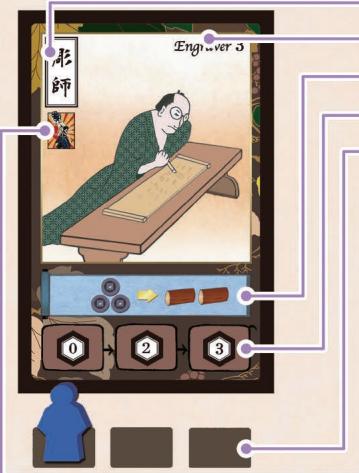
• Occupation name with kanjì
• Occupation name with English, Cost to hire
• Skills: Unique skills of occupations
Salary: Salary that the card holder will get at the closing.
• Degree of Growth (Written on the board)
• Firefighter Power (If you hire the card with this mark, you will increase your firefighter power by one or two.)
When hiring an occupation card, you will pay the cost written on the card to the bank and place the card on an empty house in the nagaya. If you don't have enough townspeople meeple or the nagaya is full, you cannot hire the card. You will place the townspeople meeple under the lower left of the card. The location of the townspeople meeple indicates the current degree of growth.
The occupation card can level up to three different degrees. However, some occupation cards start from the second or third level. Once grown, the salary you'll receive at the closing will change. (There is an exception that some cards have an ability that has effect after retiring instead of having salary.)
Move your townspeople meeple one square to the right in each time it levels up. When the meeple in the rightmost square has a chance to level up, it must retire. Place your retired occupation cards face up in the player's hand. The retired cards will get the salary shown in the rightmost square at the closing time. You don't need to pay any rice bale for the retired cards.
There are three ways to make the occupation card level up.
First, when other players use your card's ability, the card will grow by one degree. The card would not level up even if you use the ability of your own card.
Second, when your Oyakata meeple goes around the main street. When your Oyakata meeple passes its starting point, all of occupation cards you hire on the board will grow by one degree immediately.
Third, when you pay money to some of the card's abilities, you may make one occupation card level up.
Occupation cards are divided into five types (Fig.1: Master Craftsmen, Artisans, Shop Sellers, Street Merchants, Specials)
Cards are categorized by the color of its frame. (Master Craftsmen=Red, Artisans=Brown, Shop Sellers=Lime Green, Street Merchants=Cream, Specials=Purple)
Types of the cards affect the nagaya bonus at closing. At the end of the game, players receive bonus points depending on the number of types that you have in your hand.

Skills and Special Salary
Skills: Unique skills of each occupation are written as an icon on the makimono. The role will change depending on the color of the makimono.(Fig.2) The player who made a deal with the occupation card, will get its skill.
Yellow: Able to get something for free. You will get resources from the bank or get firefighter power.
Blue: Able to get effects by trading. You will trade with the bank.
Purple: Special effects.
Salary: Salary is something that the owner of the occupation cards will get at closing time. Some cards don't have salaries and don't qualify, though they hold abilities that have effect after retirement. Those cards are shown with a grey frame. They also level up three times until they retire.
Exceptional Occupation Cards
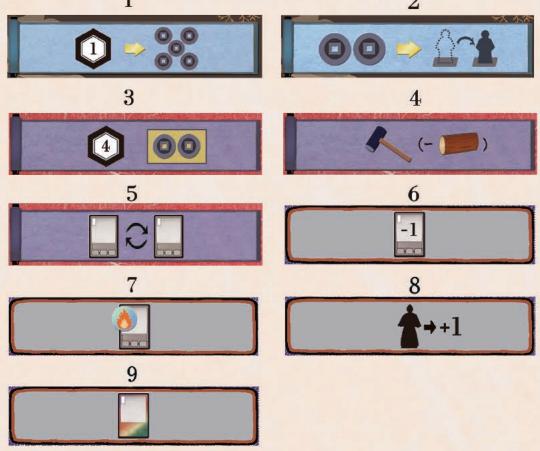
Special skills need to be described
1: Trade 1 IKl point for 5mon. You can not use this skill when your IKI point is 0.
2: Paying 2 mon can make one of your occupation cards level up by one degree.
3: You get 4 IKl points, but other players get 2 mon from the bank at the same time.
4: You can build a construction card (You dont have to pay 1 lumber piece.)
5: You can change positions of any two cards (regardless of who owns) on the board.
Effects after retirement
6: When hiring, you can get 1 mon discount.
7: This card can save one occupation card when it is burnt by fire. You can use this card only once during the game. Rotate the card 90 degrees to show this card has already used.
8: When moving, your Oyakata meeple can go one more square. It is optional move. 9: At the set collection bonus of occupation cards, this card can be counted as any other type of occupation.
Explanation of Construction Cards

The icon shown under the name is the building cost. Written under the illustration is the amount of IKI points received at the end of the game.
Ex(Fig.3): Merchant House: Get 3 points per one sandal token that you own when the game ends.
The hammer icon, located in card abilities or the construction site, indicates a chance to build. When you build something, you must place the building card on the empty nagaya like an occupation card. You need to pay two mon coins for building in the corner houses. Place one of your townspeople meeples on the card. If you don't have any townspeople meeples, you cannot build anything. Townspeople meeples on the construction cards will not come back until the end of the game, with the exception of losing the building by fire.
Explanation of Tokens
Money: Based on the tradition of Edo period, this game used mon by sets of one and four as money.
Koban (oval gold coin) Tokens: Used as a building material. Worth three IKI points at the end of the game.
Sandal Tokens: Used to move the Oyakata meeple. Oyakata meeple can move depending on the number of sandal tokens.
Fish: Two fish tokens per season. The cost is shown. Spring=Noodle Fish, Summer=Bonito, Autumn=Sea Bass, Winter=Sea Bream.
Rice Bale: Used to pay for hired townspeople on the board during closing time.
Lumber: Used as a building material. Worth one IKI point at the end of the game.
Pipe: The pipe icon and cost are shown. If bought, the firefighter power will increase by the number of the pipe icons.

1mon

4mon

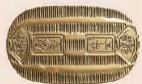

Koban
Sandals
Fish(Spring)


Fish(Summer)
Rice Bale
Fish(Autumn)
Fish(Winter)


Lumber

Pipe
Tobacco Pouch
Tobacco Pouches: The cost and IKl point are shown. They will become IKl points at the end of the game. If you have at least one pipe token, the IKI points you receive will be doubled.
Shops Explanation
*Attention: In this game, there is no direct trade of resources between players. Receiving, trading, and using resources are all done with the magistrate's office (Bugyo-sho), which works as a bank.
*Except exchange shop, only once each.

Sandal Shop
You may buy two pairs of sandals for two mon.

Rice Shop
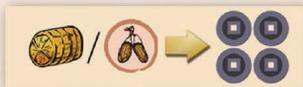
You may buy two bales of rice for three mon.

Fire Tower
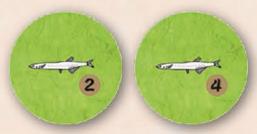
You will increase your firefighter power by one. Move your firefighter marker to the right by one. If there is a marker of another player, place your maker on the top of them.

Tobacco Shop
You may buy pipes and tobacco pouches. You may only buy one card for each type per turn. Furthermore, you may only buy the top of the tokens. You may buy one pipe token and one tobacco pouch at the same turn.


Relationship Between Shops and Nagayas
Two townspeople live in the nagaya at the back of a shop. That means one square of the main street corresponds to one shop and two townspeople.
Pawnshop
You may change your rice bale or sandals to four mons. You may do so only once each.
Fish Market
You may buy fish. You may only buy one fish token at once. The first bonito of the summer and the winter sea bream are expensive but they have lot of IKI points. As Edo's saying goes “The Edokko will go any length for the first bonito of the season," it had been very IKI to eat food in season in Edo.
Construction Site
You may buy one bale of rice or construct by paying one mon. You can not do both.
Exchange Shop
You may exchange your six mon with one koban. You may exchange them up to two kobans. Two kobans are equal to twelve mons.

Game Procedures
One round is composed of two phases. The first phase is the Way of Life phase, while the second is the action phase. You may move on to the second phase once all players finish with the first.
Phase1: The Way of Life Phase
In the Way of Life phase, you will decide the order of players in the action phase and moving distance at the same time. (Fig.4)
In January, the order is from the starting player clockwise. From February, it will go chronologically from the player with most firefighter power.
If more than two players have the same firefighter power, the player who has the disc higher will play first.
From the starting player, players will place cylinders with their colors on one of the five options on the Way of Life track. (When the players are less than four, do not use the leftmost square.) The number indicates the order in the second phase and the moving distance. Only one player can place the cylinder on one square. The next player place the cylinder on one of the left options.
*The player who chooses the leftmost square must skip the Action A, that is, no income, no hiring. He/She can move up any squares (1 thru 4) in the moving action. (Sandal tokens may be added.) The order of the player must be the first at Phase 2.

Phase2: Action Phase (A→B)
The order is from the left to the right on the Way of Life track. The player who places the cylinder on the leftmost of the track plays first. Choose one of two actions, Hiring or Income, and move the player's Oyakata meeple continuously. After moving the Oyakata meeple, the player who places the cylinder marker the second leftmost of the track starts playing.
A. Hiring or Income
Choose either Hiring or Income
Hiring: You may hire one of the face up occupation cards, and pay the cost to the bank. You may also get the coins on the card you hire. You cannot only get the coins and abandon the card.
Ex.(Fig.5): In March. Hiroshige decides to hire a book lender. There are already two mon coins on the card.
Hiroshige does not have any mon at that point, but he gets two mon and uses one to hire the book lender.
Place the card you bought to the empty house immediately, as well as your townspeople meeple. You need two extra mon to place the card on the corner houses of nagaya.

Income: Receive four mons from bank.
B. Moving the Oyakata Meeple and Making a Deal
Moving : Make a business deal after moving your Oyakata-meeple. There are 8 squares in the main street and the Oyakata meeple should move counterclockwise. The starting point is located in the outer square. Move your Oyakata meeple by the number of squares you chose in Phase 1. At this point, if you use your sandal tokens, you may add the number of squares to move your meeple. There is no limit to the sandal tokens you may use in one movement. You may use the ability of the ox-cart once in one round. You may use the ox cart and sandal token together. It is OK for more than one Oyakata meeple to reside in a single square of the main street. All of your hiring occupation cards will grow by one degree after your Oyakata meeple circulates back to the starting point.
Deal : After moving your Oyakata meeple, you may make a deal with the shop in the square and one of the occupation cards living in the nagaya. The order of making a deal with a shop and an occupation card is optional. You may make a deal with only one or just pass all together.
Two occupation cards live behind one shop, but you may make a deal with only one of them. You may make a deal with other player's occupation card as well. Once making a deal, the occupation card will level up one degree since the card gets experience. If you make a deal with your occupation card, it will not grow.
Ex.(Fig6): Sharaku chooses Square 3 in the first phase and get four mon in action A. Adding the three mon he initially had, he now has a total of seven mon. Using one of his sandal tokens, he moves his meeple by four squares. He makes a deal with the Ukiyoe artist living behind the exchange shop, receiving five mons by losing 1 IKI point. He makes a deal with the exchange shop, trading his twelve mon for two kobans.

End of Rounds
In order to show you completed your action, place your cylinder marker to the first place after finishing action B. Once all players finish their moving their Oyakata meeples, the round ends. Fires occur at the ends of May, August, and November. Closing occurs at the round end of March. June, September, and December. Exchange the fish tokens to the next season's two tokens at the change of season. Treat the occupations cards that aren't hired in the instructions below.
At the end of a round, occupation cards that aren't hired stay in place. Place one mon to each of those cards. If there is already one mon on the card, place another. (The maximum of two mons may be placed on one card.) Place the 4 new cards of the season face up for the next round. However, if the next round is a different season, exclude all cards, including the coins from the game to clear the hiring pool. Turn four cards of the next season face up.
Finally, move the calendar maker to the next month.
About Closing Time
Closing time occurs after the round end of March, June, September, and December. Follow the process below.
Salary: You will get you a total of salary depending on your occupation card's current degrees of growth. Salary can be IKl points, money, and resources. You can get the maximum salary( the rightmost) from the retired artisans.
Humanity Nagaya Bonus: Nagaya is composed of a total of five groups: Four groups bounded by the main street and one group of four corner houses.(Fig.7) You will multiply the number of same color occupations in one group of nagaya by the number of your meeple in the group to calculate the IKI points of each group and find your total. Note that a single card from any type of occupations does not qualify for any bonus points.
Ex.(Fig.8): There are three peddlers (with cream border) in this nagaya group, one owned by purple, two owned by red. Red player gets 3x2=6 points, while purple player gets 3x1=3 points. There is only one master craftsman (with red border) in this group, so it is not counted.
Fig.7.

Fig.8

Payment for Food : Lastly, pay the rice bale depending on the number of your occupation card on the board. You don't need to pay for the retired occupation cards. If you can't pay rice for the cards or those artisans would run away. Exclude the occupation cards by the same number of the shortfall of rice. You may choose which card to exclude.
Fire Phase
As saying “Fights and fires are Edo's flowers,” fire occurs frequently in Edo, and the town's firefighters are organized around construction workers.
After the end of the phases of May, August, and November, there is a fire phase. The power of the fire is as written on the board, 5 for May, 8 for August, and 10 for November. The player who has the most firefighter power at that point will be the leading firefighter.
The leading firefighter will pick a fire tile from face down pile. The nagaya written on the tile will be on fire. The fire tile is going back to the face down pile, and the pile should be shuffled again
When a player's townspeople lives in a house, the fire will be put out if the player's firefighter power is equal or greater than the power of the fire (End of Fire Phase). If the player's firefighter power is less, the occupation and building card would be excluded from the game and the townspeople meeple would come back to the player's hand.
Fig.9
If the fire isn't put out, the fire will spread to the next house in the same nagaya towards the center of the board. As the fire spreads, power will decrease by one. Once the fire reaches to the whole nagaya, the Fire Phase ends.

Ex.(Fig.9): In August, the fire occurs in the leftmost nagaya with the power of eight. Both yellow and purple player have the firefighter power of 5. Since the fire's power is stronger than the firefighter's power, their occupation cards, old clothes seller and cold water seller, are excluded from the game. When the fire reaches where an engraver resides, the fire power decreases to the power of 5. The yellow player can put out the fire and save the engraver.

The Final Round (New Years)
The final round of the game is different from the others. The order of the final action is from the highest firefighter power to the least. Players should skip phase 1 and action A of Phase 2. You may move your Oyakata meeple to any square and make a optional business deal with the shop and one townspeople in the nagaya back of the shop. Even if your Oyakata meeple passes the starting point, your townspeople do not grow in this final round.
Once all players finish their turns, the game is the end. Move to the final calculation of IKI points.
End of Game and Final Closing
When a New Years round ends, the game ends. Calculate the final IKI points. Add a total of IKI points below.
Set Collection Bonus of Occupation Cards
Get IKl points depending on the number of occupation card types that you have in your hand (on the board and retirement.) (1 type: 1 points , 2 types: 4 points , 3 types: 9 points , 4 types: 16 points , 5 types: 25 points)
Tokens
Fish Bonus : Check to see how many different seasons you have fish from. Get IKl points depending on the number of seasons. (1 season: 3 points, 2 seasons: 6 points , 3 seasons: 10 points , 4 seasons: 15 points)
You can get extra IKl points for one of the summer bonito and one of the winter sea bream. IKl points are described on the tokens.
Tobacco pouches
IKI points for the tobacco pouch would double if you have at least one pipe. If you don't have a pipe, the points are as it is described.
Ex.(Fig.10): The tobacco pouch in the right image is usually 3 IKI points and 4 points, but since holding the pipe token, the points would be doubled to 6 IKI points and 8 points.
Construction Card

Add the IKI points of the Construction cards.
Resources:
Convert the remaining resources to IKl points as the following. (Koban=3 points, Lumber=1 point, Mon (money): Every Five mon=1 point) No points for rice bales and sandals.
For Two to Three Players
If there are two to three players, there are only four options of the Way of the Life track. The leftmost option is not used.
Two Player Game Rules
In a two player game of IKl, the 4 corner houses are not used. You are not allowed to place any card in the 4 corner houses.
At the end of each round (when both players end Action B), one player takes one card from the remaining hiring pool and places it on an empty house that he/she likes. Since this card does not belong to either player, no kobun meeple is put on it. If there are any one-mon coins on this card, return them to the bank. If there is no empty house on the board, just skip this action.
Your oyakata meeple can deal with this neutral card as usual. Once the card is used, it must be removed from the game instead of leveling up.
When a fire occurs on the card, it should also be removed. The neutral cards are included in calculation of the Nagaya bonus.
At the end of odd-numbered months, the starting player performs this action, while on even-numbered months, the other player does.
*These cards, Cloth Dyer, Ear Cleaner, Dumpling Peddler, Bird Catcher, Makie-shi, Samurai, Charcoal Peddler, and Croupier, are the additional cards derived from stretch goals of our Kickstarter campaign. You may use all or some of them in the game play. As for your first game, we recommend not to use them.
Designer : Koota Yamada
Illustrator: Dommiy
English translation : Kazuki Ito, Bruce Yee Rule Layout & Box Design : TANSAN&Co. Strategic Planner : NAKAGAWA Kozi,Ph.D.
Special Thanks : Lorna, Joe Huber, Peer Sylvester, Phoenix Kwan, Dave Watson, Shayna McCartney, Laura Lynn Walsh, Derek Baver, Nathan Hunley, Jose Manuel Lopez Cepero, Sakashin, Yukicha, Hokaccho, Egu, Kamui, Yokoazu, Jijiciao, and members of imagine GAMES
下载 Markdown简繁检索对照.md860 B
178478_177478_iki — 简体/繁体检索对照
本游戏的规则书是繁体中文原文。用户用简体提问时,把关键词按下面这张表转成繁体再去 grep 原文,命中率最高。
回答时用简体或繁体都可以,但引用的原文保持繁体。
简体 → 繁体 对照(按该游戏原文出现频率排序,共 21 字)
| 简体 | 繁体 | 原文出现次数 |
|---|---|---|
| 个 | 個 | 109 |
| 职 | 職 | 65 |
| 时 | 時 | 62 |
| 点 | 點 | 57 |
| 业 | 業 | 56 |
| 钱 | 錢 | 50 |
| 动 | 動 | 50 |
| 游 | 遊 | 49 |
| 戏 | 戲 | 49 |
| 数 | 數 | 47 |
| 长 | 長 | 46 |
| 会 | 會 | 46 |
| 结 | 結 | 44 |
| 后 | 後 | 43 |
| 图 | 圖 | 36 |
| 宝 | 寶 | 34 |
| 张 | 張 | 31 |
| 获 | 獲 | 29 |
| 灾 | 災 | 28 |
| 阶 | 階 | 28 |
| 来 | 來 | 27 |
原文为社区整理/出版社公开资料,版权归原作者,仅供个人学习查阅。