
兰开斯特Lancaster
一句话概览
兰开斯特 是一款已收录于村了吗规则库的桌游,支持 2–5 人,原名 Lancaster。
本页内容:一句话概览 · 游戏概述 · 1. 游戏组件 · 2. 游戏设置 · 3. 游戏流程 · 4. 阶段一:摆放骑士 · 5. 阶段二:议会 · 6. 阶段三:奖励结算 · 7. 回合之间 · 8. 游戏结束与最终计分 · 9. 2人游戏规则 · 关键规则与常见问题 · 常见问题
兰开斯特 规则速览
以下规则速览由本站整理,与官方规则书表述不同,仅供快速上手参考。
游戏概述
1413年,英格兰国王亨利五世胸怀统一英格兰、征服法兰西的野心。玩家扮演觊觎权力的贵族家族首领,通过在英格兰城镇安插骑士、经营自家城堡、参与法国的战争以及在议会推动有利法律,争夺国王最倚重的朝臣地位。游戏共进行5个回合,最终获得最多力量分(VP)的玩家获胜。
核心机制: 秘密放置、棋盘搭建、立法博弈、即时与延迟收益
1. 游戏组件
| 组件 | 数量 / 说明 |
|---|---|
| 游戏版图 | 1块(含城镇行、城堡区、工会面板、战争区) |
| 玩家版图 | 4块(依人数选用) |
| 英雄帷幔 | 4块(仅4人以上模式使用) |
| 骑士指示物 | 各色若干(分力量1\~4四种规格) |
| 护卫指示物 | 通用供应 |
| 金币指示物 | 通用供应 |
| 贵族指示物 | 通用供应(用于工会面板与各类奖励) |
| 投票标志物 | 两种:赞成(批准)/ 反对(否决) |
| 投票标记 | 通用供应,可用金币购买 |
| 扩展标志物 | 用于城堡扩张计分 |
| 起始玩家标记 | 1个 |
| 城镇指示物 | 9枚(A\~I,对应Surrey\~其他城镇) |
| 战争卡 | 若干(每张含法兰克力量值和若干骑士空格,部分带"骑士的恩惠"暗面) |
| 法律牌 | 若干(每条附带特定奖励效果) |
2. 游戏设置
2.1 版图设置
- 将游戏版图置于中央。
- 城镇行: 在每个城镇放置2枚贵族指示物。
- 工会面板: 将其置于版图旁。
- 将战争卡洗匀,面朝下置于战争区;翻开一定数量的战争卡面朝上排列为上、下两排。
- 将所有法律牌洗匀,置于议会区旁备用。
2.2 玩家个人设置
每位玩家选择一种颜色并获得:
- 1块玩家版图
- 全部同色骑士(力量1\~4各若干个)置于版图下方或帷幔后
- 起始金币(依版本而定)
- 1枚起始玩家标记(随机决定)
2.3 确定起始玩家
随机决定一名起始玩家,给予起始玩家标记。此后每一回合由起始玩家开始,顺时针轮流行动。
3. 游戏流程
游戏共进行 5个回合。每回合包含 三个阶段:
- 摆放骑士
- 议会
- 奖励结算
三个回合依次推进,5个回合结束后进入最终计分。
4. 阶段一:摆放骑士
当前行动玩家从其帷幔后(无帷幔时从版图下方)选择一个自己的骑士,放置在版图的三种区域之一:城镇、城堡 或 战争。随后其余玩家依次执行相同操作。若某玩家在某一阶段已无骑士可放置,则该阶段跳过该玩家。
骑士与护卫必须 同时放置,不允许先放置骑士后续再增派护卫。
4.1 城镇
- 骑士可放置在任何空白的城镇格,或已有其他玩家骑士的城镇格。
- 无论目标格是否为空,自身骑士的力量值必须达到或超过该格的最低力量要求。
- 玩家可在骑士旁放置任意数量的 护卫,每名护卫使骑士力量 +1。护卫不计入最低力量要求的判定。
- 驱逐规则: 若目标格已被另一玩家的骑士占据,当前玩家的骑士(含护卫加成)力量值严格大于占领者力量值时,可将占领者驱逐回其玩家处,随行的护卫放回公共供应。
- 玩家 不可驱逐自己 的骑士。
4.2 城堡
- 玩家将自己的骑士放置于 己方城堡 内空白的骑士格中。
- 每格仅容纳1名骑士。
4.3 战争
- 战争卡上有 3个骑士空格。每张战争卡标注有"法兰克力量值"。
- 玩家可选择一张战争卡,将骑士放置在空白格的最上方(形成堆叠)。
- 每场战争中每个玩家只能占据其中一个格子。
- 已经参与某场战争的玩家可以在后续回合中将新的骑士 堆叠 在自己原有骑士之上,以累积力量。
- 战争中 不能使用护卫。
- 如果没有任何玩家在本场战争中部署骑士,英国自动判负,战争卡向下移动一排。
骑士的恩惠
- 当一名玩家放置 第六个 骑士(即首次触发条件)时,可获得一项 骑士的恩惠 奖励。
- 从公开展示的恩惠指示物中选择一项执行,之后翻面(不再可用本回合)。
5. 阶段二:议会
所有骑士放置完毕后,进入议会阶段。从法律牌堆顶依次翻开 3张法律牌 置于从左到右的三个法律位。玩家依次对每条法律进行投票。
5.1 投票程序
- 所有玩家 同时秘密决定 对本条法律投赞成票或反对票,将自己相应的投票标志物面朝下握于手中。
- 玩家可动用 投票标记 来影响结果。每名玩家每次投票可使用若干标记,但须从起始玩家开始按顺序逐个宣布:每位玩家可花费 1枚金币购买1个投票标记,自行决定购买数量。
- 全部玩家亮出投票标志物与投票标记。
5.2 计票与结果
- 每张 投票标志物 = 1票,每张 投票标记 = 1票。
- 赞成票总数 vs 反对票总数,多数方获胜。打平时法律通过。
- 用完的投票标记立即放回公共堆。
投票结果:
- 通过: 移走最左侧(最旧)的法律牌 → 剩余法律整体左移一格 → 从牌堆抽取一张新法律放入最右侧空位。
- 否决: 被否决的法律直接移出游戏 → 其余法律保持不变 → 直接从牌堆抽取一张新法律放入最右侧空位。
依次对三条法律完成投票后,剩余的三条法律从左至右依次产生效力。
5.3 法律奖励示例(摘自源文件)
以下为部分法律条文的实际效果,具体条款取决于当期翻开的法律牌:
- 拥有最多金币的玩家升级一名雇佣骑士(平局时全体平局者均获此奖励)。
- 每有骑士卷入2场战争→获得1枚扩展标志物放于城堡。
- 在至少2场战争中部署过骑士→从公共堆获得1护卫+1投票标记+1金币。
- 未部署力量3骑士的玩家可从公共堆换出一名力量4的骑士(视供应量而定)。
- 骑士占领2个不同城镇→获得3力量分。
- 雇佣护卫最多的玩家招募1名新的力量1骑士(平局时全体平局者均获)。
- 每雇佣1名力量2骑士→从公共堆获得1护卫。
- 在每场战争中均部署过至少1名骑士→获得3力量分。
- 未部署力量2骑士的玩家升级1名骑士。
- 城堡每有3枚扩展标志物→获得5力量分。
- 雇佣了全部3名力量1骑士→获得5力量分。
- 在3个以上城市均部署过骑士→获得8力量分。
- 工会面板每有3名贵族→可从储备区招募1名新骑士。
- 雇佣全部4种力量等级的骑士→获得6力量分。
- 花费1金币购买1力量分(按顺序自由购买)。
- 花费1护卫购买1力量分(按顺序自由购买)。
6. 阶段三:奖励结算
按以下顺序依次结算城镇、城堡、战争。
6.1 城镇
9个城镇按 A→I 的顺序逐一结算:
轮到的玩家从当前城镇选择以下三项之一:
- 拿走1枚 贵族指示物
- 拿走该城镇展示的其他奖励
- 支付 3枚金币 拿走贵族指示物 + 其他展示奖励
拿取奖励后,玩家将骑士从板上收回帷幕。若有护卫随行,护卫放回公共堆。
Surrey(I号城镇,特殊)
- 除了正常奖励外,放置在该城镇的玩家额外决定起始玩家归属(可为任意玩家,含自己)。
- 若Surrey无人驻军,当前起始玩家保留标记。
6.2 城堡
从起始玩家开始顺时针依次结算。每回合玩家可选择结算己方城堡中的一名骑士及其扩张效果:
- 骑士结算: 根据场上骑士和已获得的扩张标志物领取奖励。
- 扩展标志物: 留存在城堡内,计入最终计分。
- 结算完毕后将骑士收回帷幕,扩展标志物留在城堡不取回。
工会面板
每回合结束时(第5回合除外),每位玩家根据 工会面板上的贵族数量(含自身计数为1)获得相应数量的 投票标记。
6.3 战争
按顺序逐张结算战争卡(下排的优先于上排):
步骤一:判定胜负
- 计算战场上所有参战骑士的 总力量值(不含护卫)。
- 若 ≥ 战争卡的 法兰克力量值 → 英国获胜。
- 若 < 法兰克力量值 → 法兰西获胜。
步骤二:评定名次与分配力量分
根据每位参战玩家的 骑士总力量值 排列名次。力量值相同时,后参战者名次更高(即占用更低的格子位置)。
情形A:英国获胜
- 名次1、2、3分别获得对应的三档力量分。
- 若无人在名次2或3(例如只有1人参战),对应档位分数无人获得。
- 战争卡移除,玩家回收骑士。
情形B:法兰西首次获胜
- 无人获得最高档分数(1档空缺)。
- 名次1获得第2档分数,名次2获得第3档分数。
- 所有骑士 保留原位。战争卡沿箭头移至第二排,即将进行 第二次战斗。
法兰西第二次获胜
- 力量分按首战相同规则发放(仍无1档)。
- 所有参战骑士被 俘虏。
- 玩家可以按既定顺序花费 每名骑士1枚金币/每力量等级 赎回骑士——赎回成功则收回帷幕;未赎回者放入储备区。
- 战争卡从游戏中移除。
英国第二次获胜
- 与首战相同的规则分配力量分,战争卡移除。
7. 回合之间
每回合结束后(战争与议会全部结算完毕):
- 战争: 展示2张新战争卡置入上排空位;将所有翻面的"骑士的恩惠"指示物翻正面向上。
- 议会: 从法律牌堆顶翻开3张新法律放入三个法律位。
8. 游戏结束与最终计分
5个回合全部完成后,执行最终计分。按以下条目累加力量分:
8.1 骑士风格
- 计算己方全部在场骑士的力量总和。
- 第一名获得 8 VP,第二名获得 4 VP。
- 平局先比较各自骑士身上的护卫数量;若仍持平则将12 VP(第一名的份)或4 VP(第二名的份)按平局人数 平均分配,零头舍去。
- 储备区内的骑士不计入此项。
8.2 城堡扩张
- 拥有最多扩展标志物的玩家获得 8 VP,亚军 4 VP。
- 平局时比较 金币数量。同样遵循平分零头舍去规则。
8.3 贵族积分
- 工会面板上有贵族的玩家,按贵族数量获得对应力量分:
| 贵族数量 | 1 | 2 | 3 | 4 | 5 | 6 | 7 | 8 | 9 |
|---|---|---|---|---|---|---|---|---|---|
| 力量分 | 0 | 1 | 3 | 6 | 10 | 15 | 21 | 28 | 36 |
8.4 战争贡献奖
- 在每场战争中均部署过至少1名骑士 → 获得额外力量分(视法律奖励确定)。
8.5 城市部署奖
- 每在3个及以上城市部署过骑士 → 获得8 VP。
力量分最高的玩家获胜。平局时分享胜利。
9. 2人游戏规则
两人游戏使用四人游戏规则为基础做如下修改:
9.1 设置
- 不使用英雄帷幔,将其收进盒中。
- 两名玩家的金币和护卫相互可见。
- 每人在城镇格放置2枚贵族指示物。
- 每位玩家选择 盟友颜色,并获得:
- 2块盟友面板(1正面"城堡" / 1反面"家庭")
- 7枚盟友骑士(1名力量2的骑士放于家庭中,其余6枚预留)
9.2 摆放骑士
- 玩家每回合可放置自己的骑士或盟友的骑士。
- 盟友骑士可出现在任何城镇、战争或盟友自身的城堡。
- 城镇: 盟友骑士不可附加护卫。玩家不能驱逐自己的骑士或盟友的骑士。
- 城堡: 不得将己方骑士放入盟友城堡(反之亦然)。
- 战争: 己方与盟友的骑士可投入同一张战争卡但不可占据同一空格。
盟友触发骑士的恩惠
- 金币 / 护卫奖励:作废。
- 升级奖励:升级盟友骑士一级。
- 贵族指示物:任一人选择一个从游戏中移除。
9.3 议会
- 盟友无权投票。
- 盟友骑士不被视为"自有骑士"。盟友不从任何法律中获得奖励。
9.4 奖励结算
- 城镇: 盟友可用的奖励限于:(1) 1名新的力量1骑士 (2) 升级盟友骑士 (3) 移除贵族指示物(从游戏中永久移除)。其他一切奖励作废。
- 若盟友占据Surrey,由结盟玩家决定起始玩家归属。
- 盟友城堡:新生骑士与升级不可追加护卫。
- 战争: 盟友算作战力的一部分,按各自力量独立排名。盟友骑士被俘不可赎回,放入预留区。
9.5 终局计分
- 结算时 不考虑盟友。
- 骑士风格与最多扩展标志物两项仅排名第一的玩家获得8 VP。
关键规则与常见问题
易错规则
- 骑士与护卫同时放置: 不允许先发骑士、后续再加护卫。
- 驱逐需严格超越: 骑士自身或骑士+护卫之和必须 > 目标格占领者,非"大于等于"。
- 不可驱逐自己: 即使力量足够也不可行。
- 战争中不用护卫: 仅有骑士的力量值有效。
- 军队堆叠仅限战争: 城堡与城镇中不可堆叠骑士。
- 议会投票打平=通过: 多数方赢,打平不算失败。
- 法律通过≠最旧的直接扔掉: 通过时最旧牌移除、其余左移一位、新牌补入最右侧。
- 法律否决则最旧的保留: 被否牌移出、其余不动、新牌补入最右侧。
- 每次只能投票一条法律: 三轮分别对三条法律依次投票。
- 工会上限在第5回合停止: 第5回合(即最后一回合)不再获得投票标记。
- 骑士风格不含储备区骑士: 仅在板上的骑士才计入力量总和。
- 平局平分零头舍去: 均分后不足整数的部分舍弃。
- 法兰西首胜无第1档: 第1档分数无人可得,名次1降为第2档。
- 无名参战英国必败: 若一场战争无骑士参与,英国输掉,卡移下排。
- Surrey奖励独立: 除常规奖励外额外指定起始玩家。
- 骑士的恩惠一生仅一次: 首次触发即可,使用后翻面不能再选。
- 盟友在2人游戏中不计分: 终局完全不考虑盟友。
常见问题
-
Q:什么时候可以使用投票标记?
A:每次投票前,按起始玩家顺序依次宣布购买数量,每人花1金币买1标记。 -
Q:法律通过后第三条怎么处理?
A:移除最左侧旧牌→剩余左移→新牌放最右侧。否决则旧牌不动。 -
Q:法兰西两次都赢了怎么办?
A:第二次发分规则与首战一样(无第1档),所有参战骑士被俘,可花金币赎回。 -
Q:骑士的恩惠怎么获得?
A:放置第6个骑士时触发。一旦使用后翻面,本回合不可再选择。 -
Q:战争名次并列如何判定?
A:力量值相等时,后加入战争的玩家名次更高(因为占了更低位的空格)。 -
Q:工会贵族如何计分?
A:按表中对应表格:1个=0 VP、2个=1 VP、3个=3 VP、4个=6 VP……最大9个=36 VP。 -
Q:谁来决定Surrey之后的起始玩家?
A:在Surrey安置了骑士的玩家(阶段一最后的行动者)。
常见问题(FAQ)
以下 1 条问答中 0 条来自站内玩家的真实提问,其余 1 条为本站整理的常见疑问;答复内容保持原样。
兰开斯特支持几个人玩?
2–5 人。
去哪查完整规则
想核对具体规则细节、卡牌效果或某个回合的结算方式,可以在村了吗里选中这款游戏后直接提问。
同类桌游
- 卡坦岛德式
- 工业革命:伯明翰德式
- 勃艮第城堡:特别典藏版德式
- 方舟动物园德式
- 卡卡颂抽象
- 瘟疫危机传承:第一季美式
- 阿瑞迪亚:勇踏征途美式
- 重塑宇宙德式
- 幽港迷城美式
- 埃多拉的德鲁伊德式
规则原文(Markdown)
本站收录这款游戏的规则原文 2 个文件,此处内联渲染 2 个,可直接展开阅读或下载。
rules_zh_兰开斯特_775.md19.9 KB
Matthias Cramer的游戏2~5名玩家12岁以上
Lancaster
1413年-新英格兰皇帝兰开斯特的亨利五世,追求雄心勃勃的计划:统一英格兰并征服法兰西!
每个玩家是有抱负的贵族家族的领导者。在他们的时代谁将成为年轻皇帝的真正支持者并且因此成为最强力的领主?

游戏目的
玩家想要从简单出发到变成领主成为国王最有力的盟友。他们能通过开发自己的骑士风格或者聪明的从不同英格兰城镇招募自己独立的骑士在自己城堡发展并征战法兰西。在议会,他们尝试将法律推向对自己最有利的一边。游戏最后拥有最多力量分的玩家是胜者。
游戏顺序
随机决定一个起始玩家,给他起始玩家标记。
玩家顺时针方向行动。
这个游戏进行5个回合。每个回合包含3个阶段:
1: 摆放骑士
2: 议会
3: 奖励
阶段1:摆放骑士
当前玩家从他的帷幕后面拿出他自己的一个骑士并将其放在其实空格内。然后其余玩家也照着这么做,直到所有的玩家将他们所有的骑士放完。如果玩家帷幕后没有更多的骑士,他们的回合被忽略掉。如果只有一个玩家的帷幕后面有骑士,他可以陆续地摆放他自己的骑士。
有3个地方能摆放骑士:
- 城镇
- 城堡
- 战争
城镇
在城镇里,一个骑士可以被放在一个空格或者已经占据的地方。无论何种情况,骑士自身必须符合或者超过最低力量要求。
此外,玩家可以按照他们的意愿在骑士旁放置足够多的护卫。
每一个护卫增加一点力量值,当然不能计算在最低力量要求值里。
当空格被另外一个玩家的骑士占领的情况下,如果当前玩家骑士或者当前玩家骑士和他护卫加起来的力量值超过前一位占领者的力量值,则可以驱逐他。
一个玩家绝对不能驱逐自己的骑士。
被驱逐的骑士放回拥有他的玩家的帷幕并在以后的回合内被再次放置;随同的护卫放回公共堆。

请记住:2人游戏有特殊规则,见第7页。
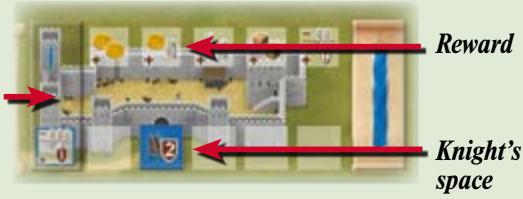
城镇里的骑士位置
战争里的骑士位置
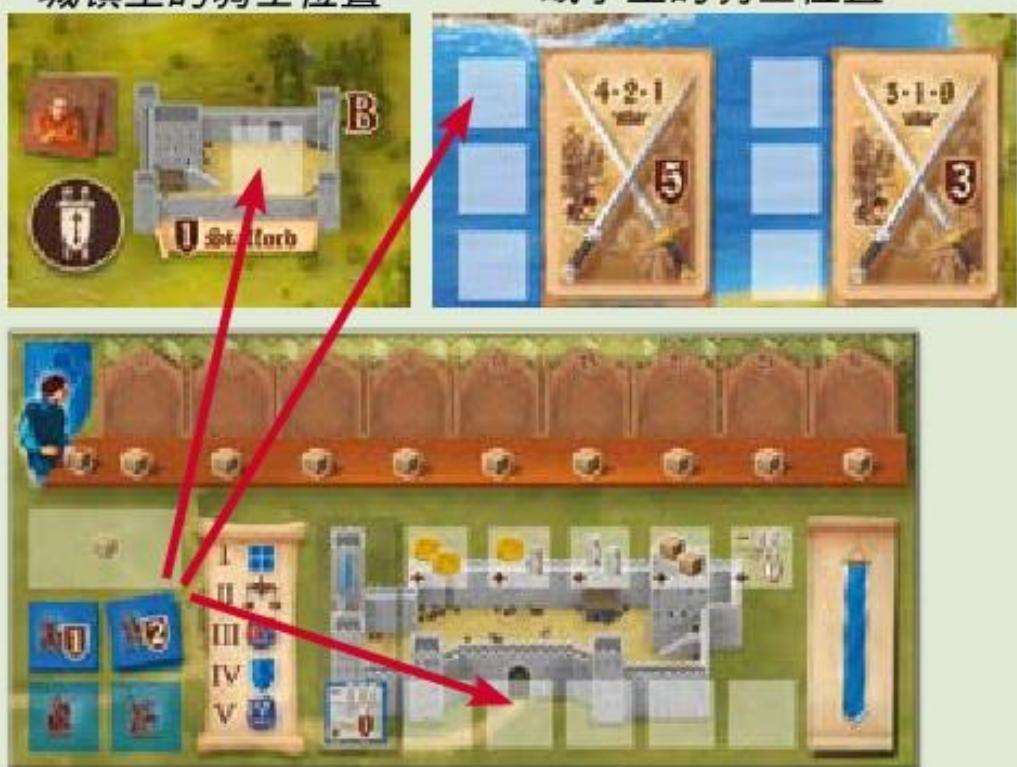
城堡里的骑士位置
请注意:骑士为玩家获得各种不同种类的奖励,包括立刻获得的以及之后的阶段3里获得的。

例子:空白骑士领地
蓝色在Stafford放置了一个力量2的骑士
请注意:一个骑士和他的护卫必须同时放置,随后的增援是不允许的。

例子:占领的骑士领地
蓝色骑士(2)被带着2个护卫的黄色骑士(1)驱逐(3:2)蓝色把他的骑士拿回帷幕
城堡
玩家将他的骑士放在他们自己城堡里的空白的骑士空格。每个空格只能放置1个骑士。
战争
一个玩家可以参与他愿意参与的足够多的战争。
玩家选择一个战争并将他的骑士放在空白骑士空格最上方。每个玩家只能占领每个单独战争中三个空格之一。
一个已经参与了战争的玩家可以通过堆叠他的骑士增强它的力量值。
即刻奖励:
最先的第六个骑士会为他的玩家获得“骑士的恩惠”。玩家从公开展示的一个恩惠指示物并获得所对应的奖励。接下来,反转这个指示物;它不能在这个回合再次被选择。
请看一下详细描述奖励的额外表格。
阶段2:议会
在最后一个骑士被放置之后,英国议会将采集民意。玩家必须在3条新法律里投票,一个接着一个。它们从法律空格开始,从左往右。
投票程序
所有玩家同时秘密投票。他们决定支持或者反对该法律并且将合适的投票标志物面朝下放在他们自己面前。
接下来,所有玩家可以通过使用他们想要使用的投票标记来秘密地影响最后的决定。
当所有玩家已经将投票标记放在手中之后,他们同时将投票标记放在桌子上并翻开他们的投票标志物。
投票结果
玩家统计投票总数赞成或者反对法律。
每个投票标志物和每个投票标记记做一票
大的一方获胜。打平的情况下,法律被通过。
将所有使用过的投票标记放回公共堆。
扩展指示物
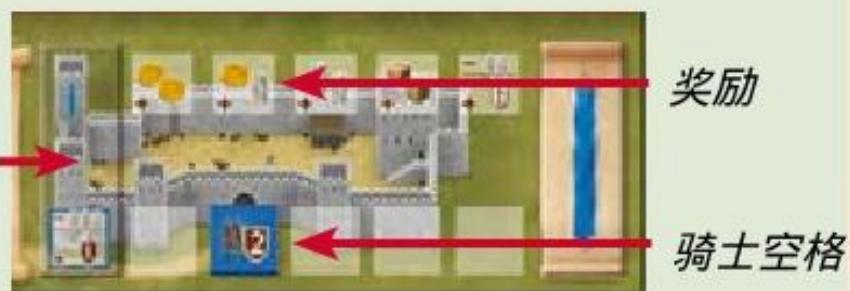
每个战争卡上面有3个骑士可以放的空格。

例子:
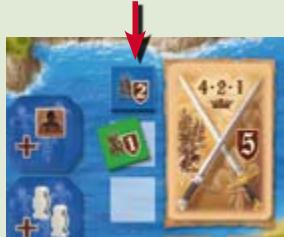
绿色玩家放置了一个力量1的骑士。他必须把它放置在蓝色骑士下面的空格上。然后,他选择一个恩惠标志物并立刻获得奖励,在这个例子中是一个贵族标志物。
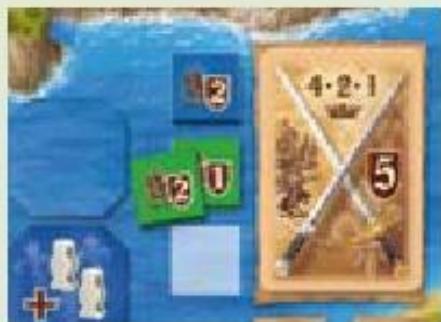
如果绿色玩家想在稍后增强它的骑士,他堆叠他新的骑士在他已经存在的骑士上。蓝色和绿色都不能再将骑士放在下方的空格上。
请记住:骑士只能在战争的时候互相叠加起来。战争中不能使用护卫。


投标标志物:是,我批准新法律。

投标标志物:不,我否决新法律。
新法律被通过
从显示的议会移除最早的法律(左上,沿着箭头)。
然后将其余的法律从左到右移动一格并且将新的法律放置在最右边的空格上。
新法律被否决
从游戏移除被否决的法律并留下最早的法律不进行任何改变。
使用同样的步骤投票第二和第三条新法律。
玩家仍旧持有投票标志物直到完成所有三个投票程序之后,把投票标志物放回公共堆。
3条适用法律的实施
当所有的投票完成之后,总是有3条适用的法律。他们从左到右依次生效,玩家获得相应的奖励。
阶段3:奖励
城镇、城堡和战争按照如下顺序结算。
城镇
所有9个城镇从A到I的顺序产生它们的奖励。轮到的玩家必须选择以下三项中的一项:
- 从那个城市拿走一个贵族指示物
- 从那个城市拿走其他展示的奖励
- 付3个金币拿走贵族指示物和其他展示的奖励
玩家收集完奖励之后,拿走他们的骑士放回帷幕。如果骑士有护卫支持,将护卫放回公共堆。
Surrey (I) 比较特别:决定起始玩家
在Surrey,玩家除了拿取奖励外额外地决定起始玩家。他们能决定任意玩家,包括自己。
如果Surrey没有骑士,当前的起始玩家保留起始玩家标记。

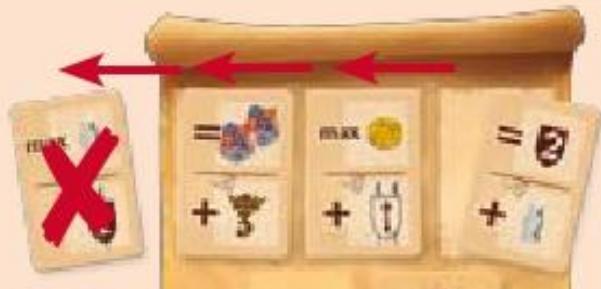
投票结果3:3.这足以让新法律被通过。最早的法律,左上,从游戏移除。新法律放在最右边的空格上。
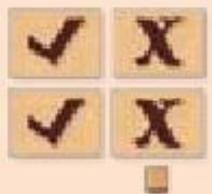

投票结果2:3.新法律被否绝并被从游戏中移除。

奖励前提
奖励
请看第8页的详细法律列表。
请看额外的详细奖励综述列表。
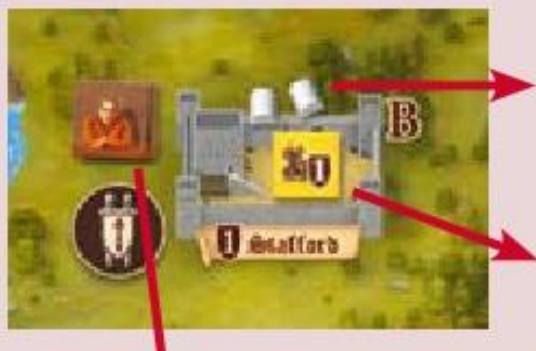
护卫回到公共堆
骑士回到对应的帷幕
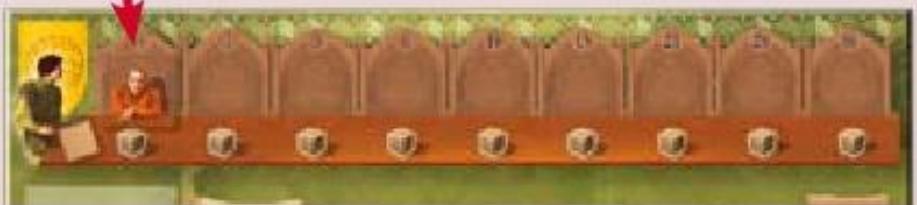
例子:黄色结算Stafford,为了获得2个奖励花费3个金币。
- 他将贵族指示物放在他工会的第一个空座位处。
2.他升级一个不是他储备中的骑士的力量一级

例子:红色结算Surrey并且分配起始玩家标记。作为他的奖励,获得2个护卫和2个金币。
城堡
首先,起始玩家结算他完成的城堡,依次顺时钟方向进行。
每个玩家因为以下原因得到展示的奖励
- 放在城堡的骑士
- 工会面板
玩家按照他们喜好来决定结算他们骑士以及扩张的结算顺序。
结算完骑士之后,玩家将骑士拿回帷幕,结算完的扩展标志物留在城堡里。
然后,玩家结算他们的工会面板。每一个现有的贵族,包括自己,使玩家获得1个投票标记。投票标记放在每个玩家城堡里并且让所有玩家可见。玩家在游戏的第5回合和最后回合不获得投票标记。
战争
最后,在法国的战争一个个被结算并且玩家获得力量分。
结算一个战争分为2个步骤:
-
战争的胜者:英国或者法国
统计所有参与这次战争的骑士的力量。
如果最终混合的力量等于或者超过法国的力量,英国获胜。
如果最终混合的力量小于法国的力量,法国获胜。 -
每个玩家的贡献 根据每个参与此次战争的玩家的骑士总力量值来决定排名。如果出现打平的情况,晚参与战争的玩家名次更高,即,三个骑士位置最低的那个玩家。
分配力量分:
- 英国赢得战争:三档力量分拿来奖励玩家。
最高位置的玩家获得最高分,第二高位置的玩家获得下一档分数,最低位置玩家获得最低的分数。移除战争卡并且玩家拿回他们的骑士到帷幕。

例子:
蓝色结算他城堡里的一个骑士和一个扩张标志物:他为他的骑士雇佣了2个护卫。他通过他的扩张标志物雇佣了一个新的力量1的骑士,不过必须返回3个护卫到公共堆。

例子:蓝色结算工会面板,获得5个投票标记:4个来自贵族,1个来自城堡的领主(他自己)。
请注意:贵族标志物最后算分的时候价值额外的力量分。
请注意:如果有任何战争卡在下排它们将先被结算,随着上排的战争卡。
名次1、2&3的力量分


蓝色:2力量骑士
绿色:1力量骑士
红色:2力量骑士
例子1:
红色在前,因为他晚参与战争。
红色获得4力量分,蓝色2力量分,绿色1力量分。
请注意:如果没有玩家位于名次2或3,没有人获得对应的力量分。
- 法国赢得战争:即使法国赢得战争,玩家获得力量分。
- 法国赢得战争,即使法国赢得战争,玩家获得力量分。没有玩家获得最高分;第一位置玩家获得第二档分,第二位置玩家获得第三档分。所有骑士保留在他们的位置上。
这个战争苟延残喘并且将会有第二次战斗。
沿着箭头向下移动战争卡和关联骑士,不改变骑士的顺序。
- 英国赢得第二次战争:
和第一次战斗一样的规则结算。
- 法国赢得第二次战争:
再次,力量分像第一次战斗一样被奖励,不过卷入战争的骑士被抓获。玩家可以通过支付每个力量等级1金币来赎回他们的骑士;按照给定的玩家顺序执行。如果玩家为他的骑士支付,其实可以回到他们的帷幕里,否则他们被放在相应游戏版图的储备区里。从游戏中移除战争卡。
准备下一个游戏回合:
当结算完所有的战争准备游戏的下一个回合。
战争:
展示2张新的战争卡并且见它们放在上排。所有面朝下的“骑士的恩惠”都翻面朝上。
游戏结束和最终得分
最终算分发生在游戏第五回合之后。
力量分按照如下获得:
- 8力量分 给予最高力量总和的玩家因为他的骑士风格。亚军获得4点力量分。平手的话护卫多的玩家获得力量分。
·8力量分给予城堡里有最多扩张标志物的玩家。
亚军获得4点力量分。平手的话钱多的玩家获得力量分。
- 力量分 给予所有工会里有至少1位贵族标记物的所有玩家。
游戏结束了。最高力量分的玩家获胜。平手的玩家分享胜利。
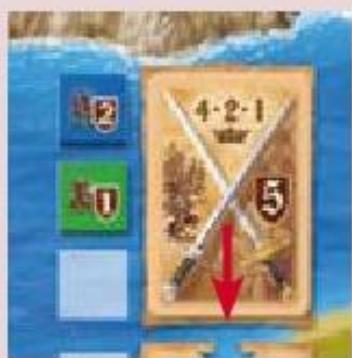
蓝色:2力量骑士
绿色:1力量骑士
例子2:
法国赢得战争(3:5)。没有玩家获得力量分4. 参与的玩家名次如下:
名词1:蓝色,总力量2=力量分2
名词2:绿色,总力量1=力量分1
所有骑士继续参与战争并且第二次战争持续。
请注意:如果没有骑士被部署到战争,这场战争英国失败并且卡牌被移动到下排。
议会:
从摸牌堆展示顶部3张新法律,一张接着一张,并将它们放在3个新法律的空格内,从左到右。
请注意:在储备区的骑士不算骑士风格。
要点:如果第一名位置在比较了护卫的数量后仍然平手,按照平手的玩家数量均分12点力量分。
如果1 个玩家获得第一名并且多个玩家在第二名打平,根据平手玩家的数量均分4力量分。
任何不能均分的分数被舍弃。
| 贵族 | 1 | 2 | 3 | 4 | 5 | 6 | 7 | 8 | 9 |
| 力量分 | 0 | 1 | 3 | 6 | 10 | 15 | 21 | 28 | 36 |
2人游戏规则
使用4人规则并作如下修改:
双方均有一个盟友。盟友有一个自己的不能被扩张的小城堡。每个玩家为他的盟友下决定并放置盟友的骑士。
盟友不能获得力量分,投票标志物,金币,或者护卫。
相关的其他特殊奖励将在下面解释。玩家不能为他们盟友的骑士使用他们的金币和护卫。
设置
屏风放到盒子里,它们不被使用。玩家的金币和护卫是对手可见的。在每个城镇放2个贵族指示物。
每个玩家选择盟友的颜色并且额外得到:
- 2块盟友面板(1X正面“城堡”/1X反面“庭”)
- 7个他们盟友的骑士。在庭放置一个力量2的骑士,剩下的6个其实放到预留区。
例子:蓝色选择黄色为他的盟友:
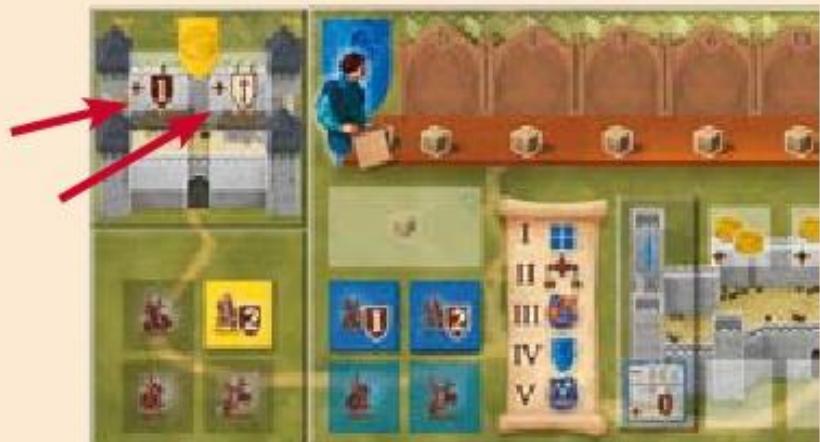
盟友的城堡
- 力量1的新骑士
- 升级1个骑士
盟友的庭:
游戏进程
阶段1:放置骑士
当前玩家放置一个他自己的骑士或者一个他盟友的骑士。
玩家可以部署他盟友的骑士到任何城镇,战争或者盟友自己的城堡。
城镇 : 盟友的骑士不能被护卫协助。玩家不能驱逐任何自己或者盟友的骑士。
城堡 : 玩家不能把自己的骑士放到盟友的城堡,反之亦然。
战争 : 玩家可以将自己的骑士和盟友的骑士投入到同一张战争卡上,但是不能共享同一个骑士空格。
如果盟友获得骑士的恩惠,奖励按照如下处理:
- 金币/护卫:奖励被废除。
- 升级 : 升级盟友骑士一级。
- 贵族指示物:任何玩家选择的贵族指示物从游戏中移除。
阶段2:议会
盟友不允许投票。关于法律,盟友骑士不被认为是玩家自己的骑士。盟友不从法律里获得任何奖励。
阶段3:奖励
城镇:盟友可以使用以下奖励:
- 他们自己力量1的新骑士
- 升级他们自己的骑士
- 贵族标志物-从游戏中移除
- 法国通道
其它任意奖励被废弃。
特殊Surrey:如果盟友被放在Surrey,盟友结盟的玩家决定起始玩家。
盟友的城堡:新的骑士和升级不能增加护卫。
战争 : 当统计每个玩家的贡献的时候,盟友算作玩家自己的。根据他们的力量,每个玩家和盟友有自己的排位。没收盟友的力量值。一个盟友被抓走的骑士不能被赎回,放在预留区内。
2人游戏结束
最后算分的时候盟友不考虑。当计算骑士风格和最多扩张标志物时只有第一位获得8力量分
法律总结
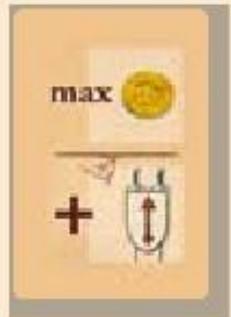
拥有最多金币的玩家能升级一个他雇佣的骑士。平手的情况下,所有平手玩家被授予奖励。

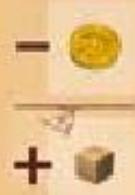
玩家能用一个金币购买一个投票标记。按照玩家顺序从起始玩家开始,每个玩家决定要买多少投票标记。
每有所属骑士卷入2场战争的玩家可以拿一个扩展标记并放到他们的城堡里。
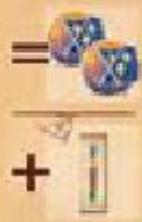
每2场战争都至少部署1个骑士的玩家都从公共堆获得1个护卫,1个投票标记,1个金币。
没有部署力量3骑士的玩家如果可能的话可以从公共堆交换力量4的骑士。
每有所属骑士占领了2个城镇的玩家获得3力量分。


雇佣最多护卫的玩家从他们自己的供应堆招募一个新的力量1的骑士。平手情况下,所有平手玩家被授予奖励。



玩家可以花费1护卫1金币获得3点力量分。按照玩家顺序从起始玩家开始,每个玩家决定要花多少护卫金币。

玩家雇佣的每一个力量2的骑士可以从公共堆获得一个护卫。
每个战争部署至少1个自己骑士的玩家获得3力量分。


没有部署力量2骑士的玩家可以升级他的一个骑士。
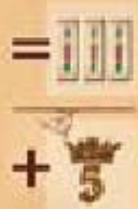
城堡每有3个扩展标志物的玩家获得5力量分。
当前雇佣了所有他3个力量1骑士的玩家获得5力量分。


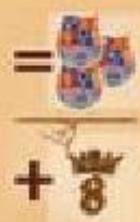
每3个城市部署至少一个骑士的玩家获得8力量分。
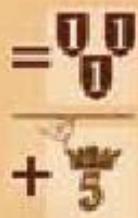

工会表格里每有3个贵族可以从储备区雇佣1个新的骑士。

玩家可以花费1个金币买1力量分。按照玩家顺序从起始玩家开始,每个玩家决定要买多少力量分。
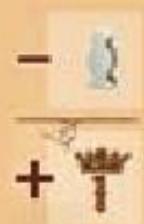

玩家可以花费1个护卫买1力量分。按照玩家顺序从起始玩家开始,每个玩家决定要花多少护卫。

当前雇佣所有四种力量的骑士的玩家获得6力量分。
下载 MarkdownLancaster Spielregel EN_Ansicht.md23.4 KB
A game by Matthias Cramer for 2 - 5 players aged 12 years and up
Lancaster
In the year of 1413 - the new King of England, Henry V of Lancaster, pursues ambitious plans: the unification of England and the conquest of the French Crown! Each player is the leader of their own aspiring noble family. Who will become a true supporter of the young King and thus the most powerful Lord of their time?

Object of the game
The players want to proceed from simply being a Lord to the most powerful ally of the king. They may achieve this by developing their own knighthood as well as by clever deployment of individual knights in the counties of England, at their own castle and to conflicts with
France. In parliament, they try to push laws from which they will benefit themselves most. The player with the most power points at the end of the game is the winner.
Sequence of play
Randomly determine a start player, give them the start player marker. The players take their turns in clockwise direction.
The game is played over five game rounds. Each round consists of 3 Phases:
1: Place knights
2: Parliament
3: Rewards
Phase 1: Place knights
The active player takes one of their own knights from their court and places him on a knight’s space. Then, the next player does likewise, etc., until the players have placed all their knights. If a player has no more knights at their court, their turn is skipped. If only one player remains with knights at their court, they place them successively one after another.
There are possible 3 locations for placing knights:
• County
• Castle
• Conflict
County
In counties, a knight can be placed on an empty or an occupied space. In both cases, the knight himself must match or exceed the demanded minimum strength.
Additionally, the player may place as many squires as they wish along with their knight.
Each squire adds 1 strength point, which does not count against the demanded minimum strength.
In case the space is occupied by another player’s knight, that knight can be expelled if the strength of the active player’s knight or the combined strength of the knight and his squires exceeds the former occupant’s strength. A player can never expel their own knight.
The expelled knight goes back to the court of his owner and is placed again on the board in turn order; put any accompanying squires back to the general supply.

Please note: There are special rules for a 2-player-game, please see page 7.
Knight’s space in County
Knight’s spaces in Conflict

Knight’s spaces in Castle
Please note: The knights gain various kinds of rewards for their players, either immediately or later during phase 3.

Example: Empty knight’s space Blue places a knight with strength 2 at Stafford.
Please note: A knight and his squires must be placed at the same time, later reinforcements are not allowed.

Example: Occupied knight’s space
The blue knight (2) is expelled by Yellow’s knight with strength 1, supported by two squires (3:2). Blue takes his knight back to his court.
Castle
The player places their knight on an empty knight’s space in their own castle. Each space can hold only one knight.
Conflict
A player may engage in as many conflicts as they wish. The player selects a conflict and places their knight on the topmost empty knight’s space. Each player may occupy only one of the three spaces of each single conflict.
A player already engaged in a certain conflict may reinforce their strength by stacking their knights.
Immediate reward:
The first 6 knights earn the “king’s favor” for their players. The player selects one favor tile from the open display and receives the shown reward. Next, reverse the tile; it cannot be selected during this round again.
Please see the extra sheet for a detailed summary of rewards.
Phase 2: Parliament
After the last knight has been placed, the English Parliament is gathering. The players must vote on the 3 new laws, one after the other. They begin with the law of space 1, bottom row left.
Voting procedure
All players vote simultaneously and secretly. They decide for or against the law and place the appropriate voting tile face down in front of themselves.
Next, all players may enforce their decision secretly by using as many voting markers as they like.
After all players have taken their enforcements in their hand, they simultaneously put the markers on the table and reveal their voting tiles.
Voting result
The players now tally all votes for and against the law.
Each voting tile and each voting marker counts as 1 vote.
The majority wins. In case of a draw, the law is approved.
Put all used voting markers back to the general supply.
Extension tile
There are spaces for 3 knights on each conflict card.
Example:
Green places a knight with strength 1. He must place him on the empty space below the blue knight. Then, he chooses a favor tile and receives the reward immediately, a nobleman tile in this case.
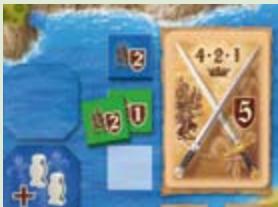
If Green wants to reinforce his knight later, he stacks the new knight on top of his existing one. Neither blue nor green knights may be placed on the lowest space.
Please note: Knights may be stacked upon each other only at a conflict. No squires are used in a conflict


Voting tile: Yes, I approve the new law.

Voting tile: No, I reject the new law.
The new law is approved
Remove the former law (top left, upper row) from the Parliament display. Then, slide both other laws one position from left to right and place the new law on the empty space to the right.
The new law is rejected
Remove the rejected law from the game and leave the former laws unchanged.
Use the same procedure for voting on the 2nd and 3rd new law.
Players still holding voting markers after the completion of all three votes return them to the general supply.
Implementation of the 3 applicable laws
After all voting has been done, there are always three applicable laws. They are applied from left to right and the players gain rewards.
Phase 3: Rewards
Counties, castles and conflicts are evaluated in this order.
Counties
All 9 counties yield their rewards from A to I, in this order. The concerned player always must choose one of three options:
• Take one nobleman tile from that county.
• Take the other shown reward of that county.
• Pay 3 gold (into the general supply) and take both – first the nobleman tile, then the other reward shown.
After the player has collected their reward, they take their knight back to their court. If the knight was supported by squires, put them back to the general supply.
Special in Surrey (I): Determine the start player
In Surrey, the player additionally determines the start player, besides collecting their reward. They may determine any player, including themselves. The start player takes the start player marker (or retains it) and the new (or former) player order is effective immediately. If no knight was placed in Surrey, the current start player retains the marker.

The voting result is 3:3. That is sufficient for the new law to be approved. The former law, top left, is removed from the game. The new law is placed on the rightmost space.


The voting result is 2:3. The new law is rejected and removed from the game.
Precondition for a reward
The reward
Please see page 8 for a detailed summary of laws.
Please see extra sheet for a detailed summary of rewards.

Squires go back to the general supply.
The knight goes back to his court.

Example: Yellow scores Stafford and pays 3 gold in order to receive both rewards.
-
She places the nobleman tile on the first empty seat at her company at table.
-
She upgrades one of her knights, who is not part of her reserve, by one level of strength.

Example: Red scores Surrey and assigns the new start player. As his reward, he chooses 2 squires and 2 gold.
Castles
First, the start player scores their complete castle, followed by the other players in clockwise direction.
Each player receives the shown rewards for
• Knights placed in their castle
• Existing extensions
• Company at table
The player decides about the order to evaluate their knights and extensions any way they like.
After scoring a knight, the player takes the knight back to their court, scored extension tiles remain at the castle.
Next, the player scores their company at table. For each present nobleman, including themselves, the player receives 1 voting marker. Voting markers are placed on the player’s castle tableau visible for all players. The players do not receive voting markers in the fifth, final game round.
Conflicts
Finally, the conflicts in France are resolved one after the other and the players gain power points.
Resolving a conflict is done in 2 steps:
1. Winner of conflict: England or France
Add the strength of all knights involved in this conflict. If their combined strength is equal to or exceeds the strength of France, the winner is England. If their combined strength is less than the strength of France, the winner is France.
- Each player’s contribution: Determine a player ranking by totaling the strength of each player’s knights involved in this conflict. In case of a draw, that player who entered the conflict later ranks higher, i. e. the player whose knights are at a lower position of the 3 knight’s spaces.
Assigning power points:
• England wins the conflict: The three power point scores are awarded to the players. The highest-ranking player receives the highest score, the second highestranking player receives the next score and the lowest ranking player receives the lowest score. Remove the conflict card and the players take their knights back to their courts.

Example:
Blue scores a knight and an extension tile in his castle: He recruits two squires for his knight.
He recruits a new knight with strength 1 because of his extension tile, but must return 3 squires to the general supply.

Example: Blue scores the company of table, which earns him 5 voting markers: 4 for the nobleman tiles, 1 for the Lord of the Castle (himself).
Please note: The nobleman tiles are worth additional power points during final scoring.
Please note: If there are any conflict cards in the lower row these should be scored first, followed by the conflict cards in the upper row.
Conflict card
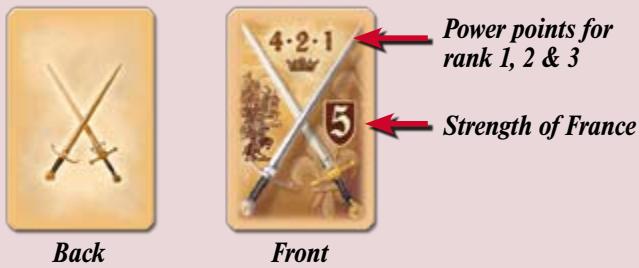

Blue: Knight with strength 2 Green: Knight with strength 1 Red: Knight with strength 2
Example 1:
The winner of this conflict is England (5:5).
The raking of the involved players is as follows:
Rank 1: Red, total strength 2 Red ranks first, because he
Rank 2: Blue, total strength 2 entered the conflict later.
Rank 3: Green, total strength 1
Red gains 4 power points, Blue gains 2 and Green gains 1 power point.
Please note: If no player occupies rank 2 or 3, nobody gains the corresponding power points.
• France wins the conflict: Even if France wins the conflict, the players score power points. The highest score is not awarded; the second score is awarded for rank 1 and the lowest score for rank 2. All knights remain on their spaces.
This conflict lingers on and there will be a second battle. Move the conflict card and the associated knights down to the lower row, without changing the order of the knights.
• England wins the second battle: The same rules apply as for the first battle.
• France wins the second battle:
Again, power points are awarded as for the first battle, but the involved knights are being captured. The players may ransom their knights by paying 1 gold per strength level; this is done in given player order. If a player pays for their knights, they return home to their court, otherwise they are placed on the corresponding reserve area of the game board. Remove the conflict card from the game.
Blue: Knight with strength 2
Green: Knight with strength 1
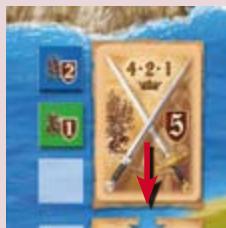
Example 2:
The winner of this conflict is France (3:5). No player gains 4 power points. The raking of the involved players is as follows:
Rank 1: Blue, total strength 2 = 2 power points
Rank 2: Green, total strength 1 = 1 power point
All knights continue their engagement in this conflict and a second battle will follow.
Please note: If no knights were deployed to a conflict, this conflict is lost for England and the card is moved down to the lower row.
Preparing the next game round:
Prepare the next game round after scoring of all conflicts is complete.
Conflict:
Reveal two new conflict cards and place them in the upper row. All face down tiles “king’s favor” are flipped face open.
End of the game and final scoring
A final scoring takes place after the fifth game round. Power points are awarded as follows:
• 8 power points for the player with the highest strength total of their knighthood. The runner-up gains 4 power points. In case of a draw the player with more squires wins the power points.
• 8 power points for the player with the most extension tiles in their castle. The runner-up gains 4 power points. In case of a draw the player with more gold wins the power points.
• Power points are awarded to all players with more than 1 nobleman tile attending their company of table.
The game ends now. The player with the most power points is the winner of the game.
In case of a draw, the concerned players share the victory.
Parliament:
Reveal 3 new laws from the top of the draw pile, one after the other, and place them on the 3 spaces for new laws, from left to right.
Please note: Knights in the reserve area do not belong to the knighthood.
Hint: If a there is still a draw for the first position after considering the number of squires, divide the 12 power points (8 + 4) by the number of tied players and award them accordingly.
If 1 player holds the first position and several players tie for second position, divide the 4 power points by the number of tied players and award them accordingly. Any indivisible points are lost.
| Noblemen | 1 | 2 | 3 | 4 | 5 | 6 | 7 | 8 | 9 |
| Power points | 0 | 1 | 3 | 6 | 10 | 15 | 21 | 28 | 36 |
Rules for a 2-player-game
Use the rules for 4 players, with following amendments:
Both players have an ally. The allies have a small castle of their own, which cannot be extended. Each player takes the decisions for their ally and places their knights.
They do not receive power points, voting markers, gold, or squires. Special rules concerning other rewards are explained below. The players may not use their gold or their squires for their ally’s knights.
Setup
Leave the screens in the box, they are not used. A player’s gold and squires are visible for their opponent. Place 2 nobleman tiles in each county.
Each player selects the color of their ally and receives additionally:
• 2 ally boards (1 x front “castle”/ 1 x back court)
• 7 knights of their ally. Place 1 knight with strength 2 at the court, the 6 remaining knights go to the reserve.
Example: Blue has selected Yellow as his ally.
The ally’s castle:
• A new knight with strength 1
• Upgrade of a knight’s level
The ally’s court:

Spielablauf
Phase 1: Place knights
The active player places either one of their own knights or one of their ally’s knight.
The players may deploy their ally’s knights to all counties, all conflicts and to the ally’s own castle.
County: The ally’s knights cannot be supported by squires. A player may not expel any knights of their own or of their ally.
Castle: A player may not place their own knights in the castle of their ally and vice versa.
Conflict: A player may place their own knights and those of their ally on the same conflict card, but they may not share the same knight’s space.
If an ally gains the king’s favor, the reward is handled as follows:
• Gold/squires: The reward is obsolete.
• Upgrade: Upgrade the level of one ally’s knight by 1.
• Nobleman tile: Any nobleman tile of the player’s choice is removed from the game.
Phase 2: Parliament
Allies are not allowed to vote. Regarding the laws, the ally’s knights are not considered the player’s own knights. Allies do not receive any rewards from laws.
Phase 3: Rewards
County: An ally may make use of the following rewards:
• A new knight with strength 1 for themselves
• Upgrade one of their own knights
• Nobleman tile – remove from the game
• Passage to France
Any other rewards are obsolete.
Special Surrey: If an ally is placed in Surrey, the allied player determines the start player.
The ally’s castle: No squires must be expended for new knights and upgrades.
Conflict: When checking the contribution of each player, the allies are considered players of their own. According to their strength, each player and ally has their own rank. Forfeit any power points for an ally. An ally’s captured knights cannot be ransomed, place them in the reserve.
End of the game for 2 players
The allies are not considered during the final scoring. Only the 8 power points for the first position are awarded when evaluating the strength of the knighthood and the amount of extensions.


The player owning the most gold may upgrade one of their own deployed knights. In case of a tie, all tied players are granted this reward.


Players may buy 1 voting marker for 1 gold each. In player order and beginning with the start player, each player decides how many voting markers they want to buy.
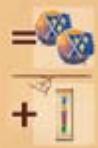
Players may take 1 extension tile and place it at their castle for every 2 conflicts they are involved in with their own knights.

Players receive 1 squire, 1 voting marker, and 1 gold from the general supply for every 2 conflicts to which they have deployed at least 1 of their own knights.
All players who have deployed their knight with strength 3 may swap him against their knight with strength 4, if still available from the reserve.


Players gain 3 power points for each conflict to which they have deployed at least 1 of their own knights.
Players recruit 1 squire from the general supply for each of their own deployed knights with strength 2.
The player employing the most squires recruits a new knight with strength 1 from the reserve for their own supply. In case of a tie, all tied players are granted this reward.

Players may expend 1 squire and 1 gold for 3 power points each. In player order, beginning with the start player, each player decides how many gold/ squires they want to expend.


All players gain 3 power points for every 2 counties occupied by their own knight.

Players who currently have deployed all their 3 knights with strength 1 gain 5 power points.
Players who have no deployed knight with strength 2 may upgrade 1 of their knights.

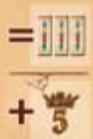

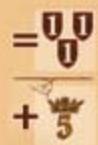
Players gain 5 power points for every 3 extension tiles in their castle.

Players may buy 1 power point for 1 gold each. In player order and beginning with the start player, each player decides how many power points they want to buy.

Players gain 8 power points for every 3 counties in which they have deployed at least 1 of their own knights.


Players recruit 1 new knight from the reserve to their court for every 3 nobleman tiles at their company at table.


Players may expend 1 squire for 1 power point each. In player order, beginning with the start player, each player decides how many squires they want to expend.

Players who currently have deployed knights of all four strength levels gain 6 power points.
下载 Markdown原文为社区整理/出版社公开资料,版权归原作者,仅供个人学习查阅。