
Legacy: The Testament of Duke de CrecyLegacy The Testament Of Duke De Crecy
一句话概览
Legacy: The Testament of Duke de Crecy 是一款已收录于村了吗规则库的桌游,支持 1–4 人,原名 Legacy The Testament Of Duke De Crecy。
本页内容:一句话概览 · 常见问题
这游戏怎么玩
- 本站已收录这款游戏的规则资料,可以在对话里直接提问规则细节。
常见问题(FAQ)
以下 1 条问答中 0 条来自站内玩家的真实提问,其余 1 条为本站整理的常见疑问;答复内容保持原样。
Legacy: The Testament of Duke de Crecy支持几个人玩?
1–4 人。
去哪查完整规则
想核对具体规则细节、卡牌效果或某个回合的结算方式,可以在村了吗里选中这款游戏后直接提问。
同类桌游
- 卡坦岛德式
- 工业革命:伯明翰德式
- 勃艮第城堡:特别典藏版德式
- 方舟动物园德式
- 卡卡颂抽象
- 瘟疫危机传承:第一季美式
- 阿瑞迪亚:勇踏征途美式
- 重塑宇宙德式
- 幽港迷城美式
- 埃多拉的德鲁伊德式
规则原文(Markdown)
本站收录这款游戏的规则原文 1 个文件,此处内联渲染 1 个,可直接展开阅读或下载。
legacy_light.md76.9 KB
Michiel J. E. Hendriks
THE TESTAMENT OF DUKE DE CRECY
GOAL
The objective of the game is to gain wealth and influence by arranging strategic marriages, creating offspring, acquiring titles, building mansions and contributing to the community. The game will last for three generations. At the end of the game, the winner is the player whose family has gained the most Honor points.
It is 1729 in pre-revolution France. You are a wealthy, well-educated aristocrat, but now you see that history is about to change its course and you know that in order to stay strong, your family must prepare well. You will need to find new allies, absorb smaller families, and use their potency to strengthen your bloodline.
Legacy: The Testament of Duke de Crecy enables you to build a powerful dynasty in 18th century France. Over three generations, you-a resourceful patriarch or matriarch-will attempt to create a lasting legacy by establishing a house with ties to many different wealthy and powerful families from France, Great Britain, Russia, Spain, and other countries.
SKIP THE TEXT THE TUTORIAL!
You can skip over the riles with

1 MAIN BOARD
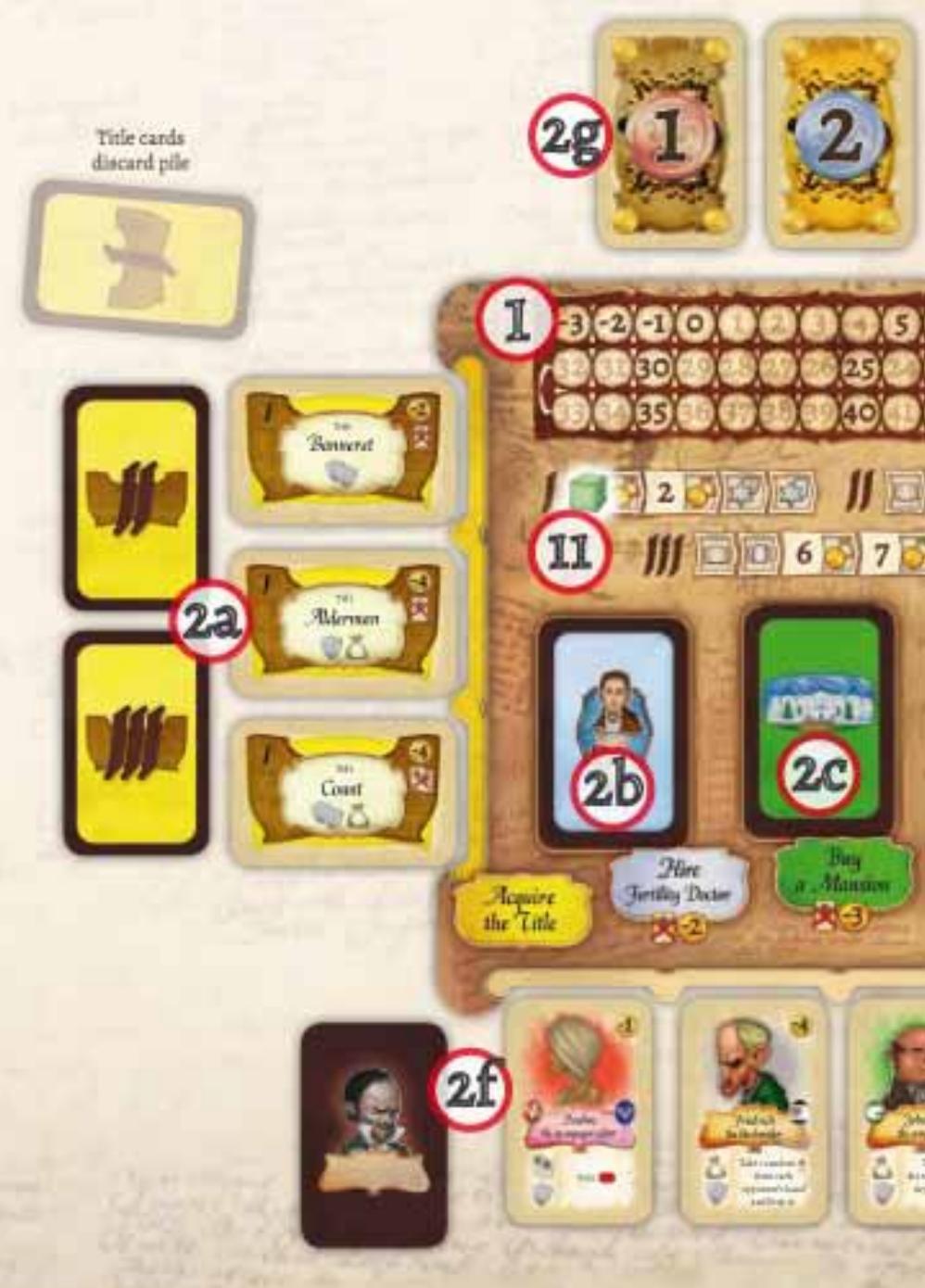
The main board consists of action spaces where players will place their pawns during the game to engage in various activities.
The Honor track shows how many points each player has. At the end of the game, this track will indicate the winner.
The Generation track shows the number of rounds there are in each Generation. It also reminds you of effects that occur at the start of each Generation, end of round, or end of a Generation.
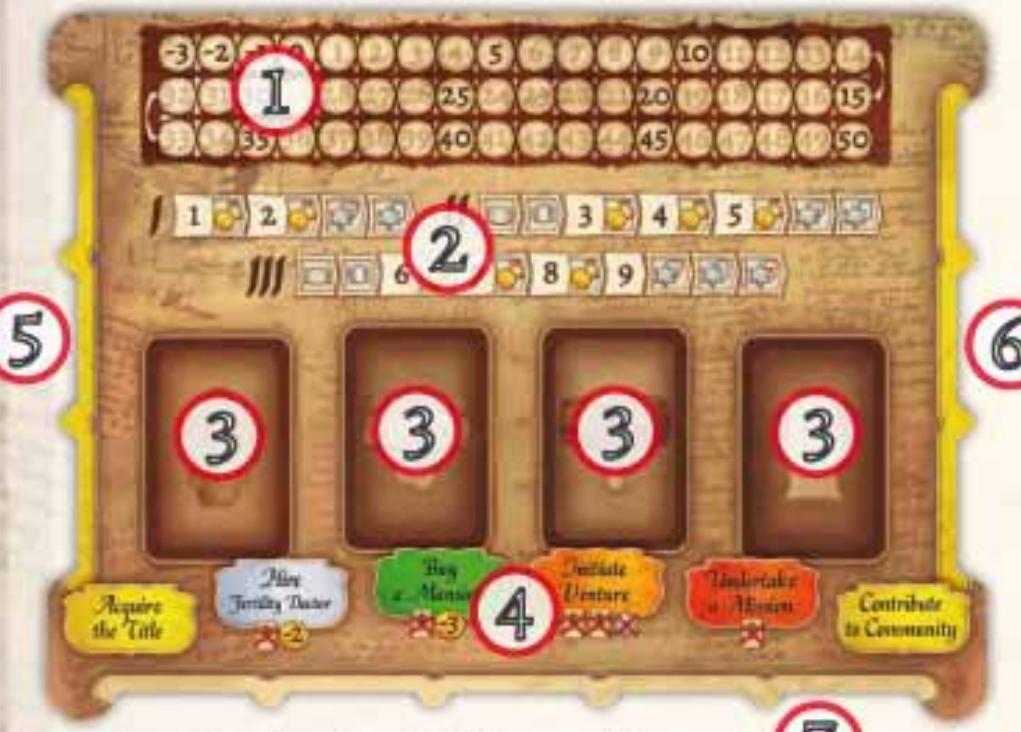
1 - Honar track, a - Generation track, 3 -Card spaces, 4 - Action spaces, 5-Title card spares, 6 -Contribution card spaces, 7 - Friend card spaces
4 HEAD OF THE FAMILY CARDS
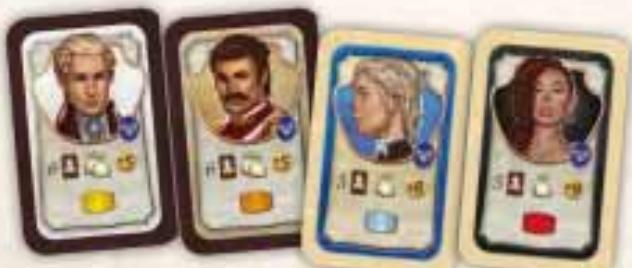
Head of the Family cards are two-sided (a patriarch on one side and a matriarch on the other). Each player is dealt a Head of Family card at the beginning of the game to start their family with this card, representing the player at the start of their journey.
Each card is different and gives the player different starting benefits.
75 FRIEND CARDS

Players will use Friend cards to perform the Marry/Arrange Marriage action. These Friends then become part of the family and will give that family Income, additional Friend cards, Prestige, or other special effects.
Friends are represented by both men and women. The gender of Friend card is distinguished by the color of the shield on the card: pink for female; beige for male. This is important for the Marry/Arrange Marriage action. Each Friend also has a name and a short description (flavor text).
When marrying a Friend you will either have to pay the cost of the wedding (mainly for male Friends) or you will receive a dowry (mainly for female Friends).

Each Friend card also has icons representing the Friend's nationality and, in most cases, occupation. These are important for the special effects of certain Friend cards, as well as for certain other game effects (Patron/Mission cards).


1 - Wedding cost / dowry a-Occupation 3-Nationality 4- Name and flavor text -Income/Friend cards given by the Friend 6-Prestige given by the Friend 7-Special effect
Friend cards can also be used to pay the costs of certain actions.
Friend cards held by the player in his hand are called the player's hand. Theicon represents the Friend cards to be drawn from the face-up cards
The icon represents the Friend cards to be discarded from the player's hand.
The icon represents the Friend cards to be drawn from the top of the Friend deck.
COMPONENTS OVERVIEW
88 CHILD CARDS

Child cards represent the children that will be born to the couples in your family. They consist of Daughter (39), Son (39) and Complication cards (10).
Some children may have a special effect that awards a player certain benefits either when the child is born or when it grows up.
Child-side
Adult-side
Special effect
Daughter
Son

Child cards are represented by the icon.
24 GOLD CARDS


There are 1 Gold cards of value 1,6 Gold cards of value 2, 7 Gold cards ofvalue 5. Gold cards represent the money used in the game. Gold is represented by theicon.

9 TITLE CARDS

For each Generation there are 3 different Title cards. Each card has its own cost and gives various benefits.
1-Generation 3-Ti me 4-Bet fits

9 CONTRIBUTION CARDS
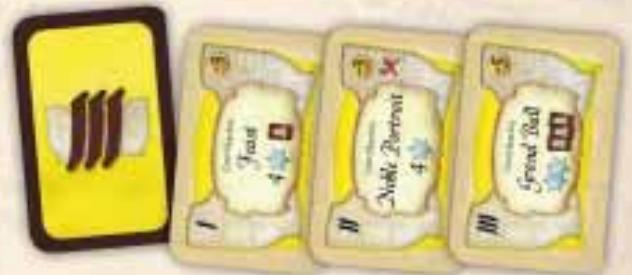
For each Generation there are 3 different Contribution cards. Each card has its own cost and provides various benefits.
1-Generation 3 - Contribution name

COMPONENTS OVERVIEW
6 PATRON CARDS

Each Patron card gives the player a main goal to achieve by the end of the game and some minor goals (scoring options) that the player can unlock at the end of the game by obtaining Mission cards during Generation III.
15 MISSION CARDS

7 MANSION CARDS
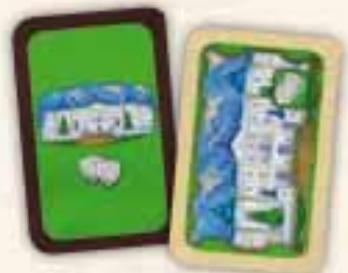
Mission cards present players with a challenge to fulfill in order to gain Honor points and other benefits upon its completion.
Mansion cards increase a family's
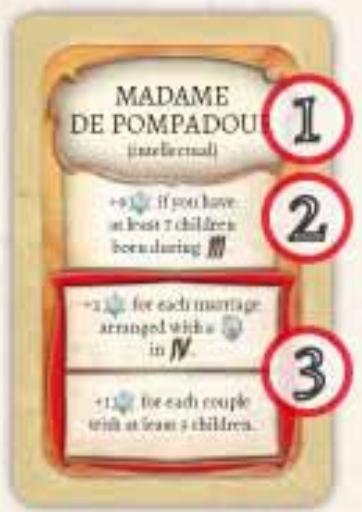
1 - Patron name and flavor text that ean be unlocked
Patron cards are represented by the icon.
7 VENTURE CARDS
15 HINT CARDS

Venture cards increase a family's Income ().

Hint cards are used only in (for more details, see page 20).
1 ROUND MARKER


1 STARTING PLAYER CARD

12 PLAYER MARKERS

(3 markers in each of the Player colors)
These markers are used to mark the players' Income () and Prestige () on the Player board, and Honor points () on the Main boa
DID YOU KNOW THAT. WHERE ENGLISH TODAY IS THE INTERNATIONAL LANGUAGE, IN ISTH CENTURY FRENCH WAS THE TINGUA FRANCA: REPLACING LATIN AS THE COMMON LANGUAGE SPOKEN AMÓNG LEARNED PEOF
Turkish
4 PLAYER BOARDS
The Player boards have action spaces where players will place their pawns during the game to engage in various activities.
Each Player board also has a personal Income and Prestige track. Income () gives the player Gold () at the end of each round Prestige () gives the player Honor points () at the end of each Generation.
Prestige and Income are unlimited - players may have more or less than the tracks indicate.
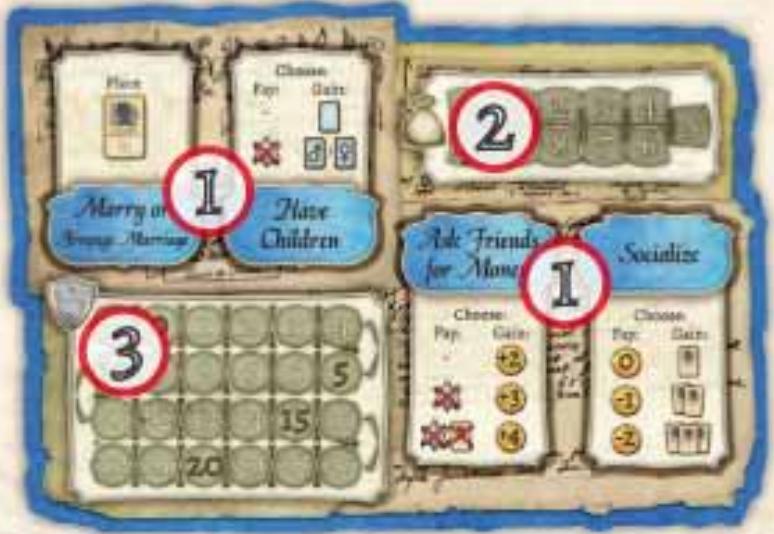
1 - Action spaces, a -Ineome track, 3 - Prestige track
23 PAWNS

Player's pawna

Additional action pawns
Throughout the game you will find a number of icons in common use.
There are 8 Player pawns (2 pawns in each of 4 player colors): Players will use them to select an action on the main board and on their player boards.
There are 15 Additional Action pawns (3 pawns in each of the 5 action colors): Additional Action pawns can only be used to perform actions from the main board.
Each Additional Action pawn only allows a player to take an action of the corresponding color on the main board: green () - Buy a Mansion, orange () -Initiate Venture, red () - Undertake a Mission, sky-blue ( - Hire Fertility Doctor, yellow ()-Acquire the Title or Contribute to Community.
The number of Additional Action pawns is limited. They cannot be gained if none of the respective color remain.
COMPONENTS OVERVIEW
Note: On the back of the Player boards you will find the same board with slightly different action names. Use this only for the single player variant: The Testament (for more details, see page 20).
ICONS IN THE GAME

Increase Income by 1


Decrease Income by 1
Gold received (from the bank)

Increase Prestige by 1


Gold to pay (to the bank)
Increase Honor points by 1
Friend card to draw from the face-up cards on the board

Friend card to draw from the top of the Friend deck

Additional Action pawn
Decrease Prestige by1


Decrease Honor points by t


Friend card to discard from the player's hand
NATIONALITIES

American



British
Dutch


Italian
French
Artist


Polish
Prussian


Russian
Aristocrat
Spanish


Scientist


Craftsman

Diplomat
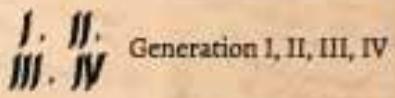
gen. Generation
Note: The colors of the pawns and actions also correspond to the color of the occupation icon on the Friend cards, but this is only relevant for the single player variant: The Testament (for more details, see page 2o).
SETUP
The following rules refer to a game for 2-4 players. Rules for the single player game can be found on page 2o.
-
Place the main board in the middle of the table.
-
Sort the cards according to their type and place the following cards in the appropriate fields on or beside the main board:
a. Title cards
Separate the Title cards for each Generation. Place the Title cards for Generation I face up beside the main board next to the Acquire the Title action space. Cards for Generation II and Generation III should be set aside face down near the main board.
b. Child cards
Remove 9 Son and 9 Daughter cards from the deck. These cards will be a reserve, to use if the Child deck run out during Generation III.
Shuffle the rest of the Child cards and place them face down on the appropriate space on the main board (the Hire Fertility Doctor action space).
Note: When you place the entire Child deck on the main board it can block the view of the Hire Fertility Doctor action space for some players. It is recommended that you place only a few cards on the main board and replenish the deck when it runs out.
c. Mansion cards & Venture cards
Determine the nurber of Mansion cards and Venture cards according to the table below. Place the appropriate number of cards in the corresponding spaces on the main board.
| Number of players | Number of Mansion/ Venture cards in play |
| 2 | 3 |
| 3 | 5 |
| 4 | 7 |
d. Mission cards
Shuffle the Mission cards and place them face down in the appropriate space on the main board.
e. Contribution cards
Separate the Contribution cards for each Generation. Place the Contribution cards for Generation I face up beside the main board next to the Contribute to Community action space. Generation II and Generation III cards should be set aside face down near the main board.
£. Friend cards
Shuffle the Friend cards and place them face down next to the board. Then draw the top s Friend cards and place them face up in the spaces below the main board.
g. Gold cards
Separate the Gold eards by their value and place them face up near the board, creating the bank.
- Shuffle the Patron cards and deal each player one card. Each player may look at the card they are given and then place it face down in front of themselves.
Return the remaining Patron cards to the box, without revealing them.
- Shuffle all Head of the Family cards and deal each player one card.
Ifthere are fewer than 4 players, return the remaining cards to the box.
- Each player takes the following pieces in the color of their Head of the Family card, and places the pieces in front of themselves: a Player board, two Player pawns and three Player markers.
If there are less than 4 players, return the remaining player pieces to the box.
- Each player chooses to start the game as either a man or a woman by placing the Head of the Family card with the appropriate side face up in front of himself.
These characters represent the player as the head of the family and, depending on the gender, determine the player's starting conditions (Income, Gold, Prestige, ete.).
Note: It is good to place the Head of the Family card in such a way that there will be room below it for 3 more rows of cards that will create your family tree (for more details, see next page).

SETUP

- According to the Head of the Family card, each player:
a. Marks the starting Income on his player board, using one of his markers.
b. Receives the depicted amount of Gold from the bank.
c. Receives the depicted number of Friend cards (his starting hand) from the facedown deck.
d. Receives the depicted Additional Action pawn.
Note: If a player does not like his starting hand, he may shuffle his Friend cards back into the deck and draw a new starting hand. This is known as taking a mulligan. Ifa player does so, he has to keep his second hand as his starting hand.
-
All remaining Additional Action pawns are placed near the main board in easy reach of the players, creating the general supply.
-
Each player takes one of his markers and places it on the "o" space of the Prestige track on the Player board and his final marker on the "o" space of the Honor track on the main board.
-
Randomly choose a starting Player, who receives the Starting Player card.
Note: The Starting player card is passed clockwise to the next player at the beginning of each round.
II. Place the Round marker on the first space of the Generation track.
Now you're ready to begin the game!

THE FAMILY TREE
During the game players place Friend and Child cards in their playing areas and thereby form their family tree. Each time you marry off one of the Sons or Daughters in your family, you will place the Friend card next to him/her as his/her spouse and create a couple. Each time a couple have children, you place a Child card below them. Just remember to leave some space for the future spouses of the children. At the beginning ofthe next Generation, the children will grow up: They can now be married and have children of their own, and so on.
The family tree starts with the Head of the Family who becomes - with his/her later spouse - Generation L. During the rounds in Generation I your actions will only affect your family members of Generation I (and their children in the case of an Arrange
Marriage action). At the beginning of Generation Il all children will grow up, becoming family members of Generation IL. During Generation II rounds your actions will only affect the family members from Generation II (and their children), and so on.
In order to easily identify the family members of each Generation, the cards are placed in rows – first row of cards is Generation I, second row is Generation II, etc. Although the game only lasts for three Generations, each player will have four rows of cards - the last one are the children born during Generation III - the future Generation IV which is only relevant for some scoring options on the Patron cards.
MAKING HISTORY
egacy: Testament of Duke de Crecy is played over three generations comprising a total of nine rounds. During these rounds your family will do its best to grow in size, wealth and fame, striving to establish a lasting legacy. But there are others who desire to become wealthier, more powerful, indeed, more famous than you. Can you become the most famous family in France?
GENERATION I: MATRIARCH/ PATRIARCH
You are the matriarch or patriarch of a fairly famous family, but you have great ambitions for your kin. You dream of establishing a family of great renown, but you understand this will take time. Getting off to a good start is essential, and what better way than to marry into wealth and fame?
GENERATION II: THE CHILDREN
You are in full control of your family, and your destiny beckons you. You are no longer the young man or woman you once were, and now your dreams must be realized by your children. They must, nay, they will do their share in establishing the family's fame and fortune.
GENERATION III THE GRANDCHILDREN
Finally, with your family's legacy already shaping up, time has come to reap the fruits of all this hard work. You can sit back in the director's chair and lead this family into the collective memories of the nation. Your grandchildren now, steeped in nobility, will take over and complete your lifelong dream. But will it be enough? Will your family go down in history as the family that ruled the 1sth century? Only time will tell.
The game is played over 9 rounds divided into 3 Generations, after which the game ends and players score points for their Patron cards.
Generations consist of three main parts: start, playing rounds, end.
GENERATION START
AT THE BEGINNING OF THE GENERATION II & III:
- Each player gets one random Additional Action

Take 5 Additional Action pawns, each of a different color. Beginning with the first player and proceeding in player order, each player is given one random
Additional Action pawn. The remaining pawns are returned to the general supply
-Children grow up
Beginning with the first player and proceeding in player order, each player rotates their Child cards 18o° to the adult side in any order to indicate that the child has grown up.
Note: For the purpose of the special effects triggered by some cards, a player chooses the order in which the arranged marriages are carried out
All arranged marriages are now carried out, and the players should follow steps 3-6 of the Marry action (for more details, see page 12).
Example: Generation Il starts and all the chidren bor in Generation I grow up, so each player turns their cards adult-side up. A player has 3 children and 2 of them have arranged marriages -one with Ann and one with Evgenia. The player has only 4 Friend cards in his hand but wants to get the Honor points given by Ann for having at least 6 Friend cards, so he decides to carry out the marriage with Evgenia first the first player rotates the Friend card to complete the marriage and, therefore, takes 2 face-up Friend cards into his hand, increases his Prestige by 1, and gains a yeliow Additional Action pawn and draws a Child card for the couple. Now the player has 6 Friend cards in his hand and proceeds to carry out the marriage with Ann. He takes 1 Friend card and recelves 2 Honor points as he now has more than 6 Friend cards in his hand. The player then draws a Child card for the couple.
- Any Title and Contribution cards remaining from the previous Generation are removed and replaced with new ones from the current Generation
Example: At the beginning of Generation Il discard all remaining Title cards from Generation I and put three Generation Il Title cards in their place.
-Discard the Complication cards from the previous Generation (if any players had any).
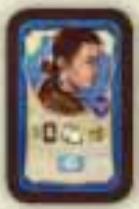


GENERATIONS AND ROUND ORDER
PLAYING ROUNDS
Each Generation consists of a different number of rounds:
Generation I-2 rounds
Generation II - 3 rounds
Generation III -4 rounds
Each round consists of player turns in which players place one pawn per turn to take an action. Players may end up taking different numbers of actions during a round.
AT THE BEGINNING OF THE ROUND:
-
Move the Round marker one space further on the Generation track on the main board (in the first round place the Round marker in the "Round 1" space).
-
Pass the Starting Player card clockwise to the next player (skip this part in the ist round).
ACTION PHASE
This is the main phase of each round. Players perform their actions according to the following rules:
- The player with the Starting Player card takes one of his pawns and places it on any action space on his Player board or an unoccupied action space on the main board.
Only one pawn may be placed per action phase turn.

Actions on the player board can only be selected using a Player pawn, while an action on the main board may be taken using (in any order) either a Player pawn or an Additional Action pawn of the color corresponding to the action space.
Action spaces on the Player board may hold multiple pawns (and therefore may trigger the action multiple times).
Possible actions that can be taken on the Player board are:

Each action space on the main board can only be used by one pawn per round. In other words, a pawn can never be placed on an action that is already occupied on the main board.
Possible actions on the main board:
Acquire the Title
H lire Fertility Doctor a Mansion
Initiate Venture
Undertake a Mission
Contribute to Community
- After placing a pawn, the player pays the action cost (if required) and immediately carries out that action. The player must carry out the action; he cannot place a pawn and ignore the action.
Actions can only affect the current Generation, with the exception of the Marry or Arange Marriage action, which may affect the current generation (Marry) or the next generation (Arrange Marriage).

Example: A player chooses the Buy a Mansion action by placing a pawn in the respective action space. That action can no longer be taken again by any player (including the player who already took the action) during this round.
- Play passes clockwise to the next player. In clockwise order, players take turns placing their pawns until all pawns have been placed or players no longer can or wish to place their pawns.
Note: As long as a player has not placed all their Player pawns, he has to take his turn. Only the Additional Action pawns can be saved for later rounds (and only for that Generation).
Example: In the third round, a player has used one Player pawn, and still has one unused Player pawn, as wel as one unused Additional Action pawn (that can only be used for the Buy a Mansion action), The player can't use the Additional Action pawn, bocause the Buy a Mansion action has already been selected by ancther pleyer, so he has to use this last Player pawn during his next (and last) tum. There are still two more rounds in the current Generation, so he can keep the Addilional Action pawn lor later use.
DID YOU KNOW THAT..
MADAME DE POMPADOUR ROSE UP IN SOCIETY FROM A COMMONER TO BECOME THE ROYAL MISTRESS? SHE WAS A TRENESETI AN INTELLICTUAL AND HAD GRIAT INTLUENCL OVEL THE KING'S POLITICAL DECISIONS. BOTH FOREIGN AND DOMESTIC
NUMBER OF ACTIONS TAKEN IN ONE ROUND
Each round players are able to conduct z actions as each player has 2 Player pawns. At the beginning of each Generation as well as during the game, however, players can obtain Additional Action pawns that allow players to take more actions.
Note: Each Additional Action pawn allows a player to take only a specific kind of action, consistent with its color (for more details, see page s).
Each Additional Action pawn is one-use only and is returned to the general supply at the end of the round during which the player used it.
An Additional Action pawn does not have to be used during the round it was obtained -it can be saved for later use. However, it must be used before the Generation during which it was earned ends; otherwise, it is returned to the general supply.
Example: A player starts the round with the two Player pawns. On his first turn of the round, he uses one Player pawn to Marry one of his female family members to Pierre and therefore gains an Additional Action pawn that can only be used for the Undertake a Mission action. Now he can take 2 actions, one of which must be of a specific kind (Undertake a Mission), or he can take only 1 action with the remaining Player pawn and keep the Additional Action pawn for later use in any of the upcoming rounds of the current Generation.
INCOME & CLEANUP PHASE
At the end of the round (after all players have completed all their actions):

- Each player receives an amount of Gold equal to his current Income indicated on his player board (except for Round 9, after which you get no Income).
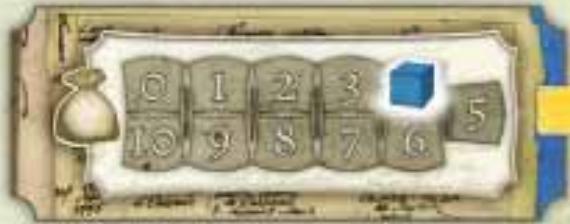
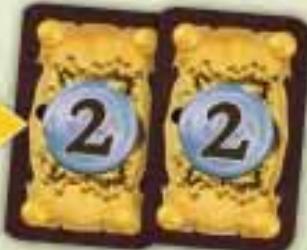
Example: A player with an indicated Income of 4 gets Gold cards with a total value of 4 at the end of the round.
-
Players retrieve their pawns from both the Main board and their Player board.
-
All Additional Action pawns are removed from the Main board and returned to the general supp
GENERATION END
After the last round in the Generation:

- Each player receives Honor points equal to their current Prestige indicated on their player board.


Example: After the last round of Generation Il, a player's Prestige track indicates that his current Prestige is 6. He then moves his marker 6 spaces ahead on the Honor track.
Note: It is possible to lose Honor points if that is what the Prestige track indicates.

- Each player receives Honor points equal to the number ofchikdren that were born in their family during the current Generation. Each child is worth 1 Honor point. It does not matter if the child has a marriage arranged or not.
Example: At the end of Generation Il a player has two couples in the current Generation. One has two children, the ather one has three children. The player advances his marker five spaces on the Honor track.
Note: If you have no children born in the current Generation, your family is extinct and you lose the game at once.
- Return all Additional Action pawns to the general supply.

ACTIONS ON PLAYER BOARDS
Remember: Actions on the player board can be taken multiple times in one round.
MARRY ORARRANGE MARRIAGE
current generation to one of your friends. These friends are your connections with the famous and wealthy members of high society, such as a Spanish prince or a member of the royal court. Other friends may not be so famous or wealthy, but they are powerful nevertheless, such as that manipulative Prussian blackmailer. All decisions have their consequences, but what are the costs? Choose wisely!
Cost: Variable, see below

a) Marry
This action allows you to place a Friend card from your hand next to one of your adult family members in the current Generation, so that they create a couple.
-
Place a Friend card from your hand beside one of your single family members (of the opposite gender).
-
Pay for the wedding or receive the dowry.

-
Adjust Income (on your Player board's Income track) or choose cards from the face-up Friend cards (from below the board).
-
Adjust Prestige (on your player board's Prestige track).
-
Resolve the special effect.
-
Draw the top card from the Child deck and place it below the couple (child-side up, adult-side down) or resolve the Complication card.


Example: A player Marries one of the Sons in his family with Gertrude. He places her card beside the Son who marries her, takes 1 Gold for the dowry, takes 1 face-up Friend card, increases Prestige by 1 and checks if he has another Prussian in his family. He also has Friedrich in his family, so he gains additional 3 Gold. He draws a Child card for the couple. It's a Daughter, and he places her under the couple.
Remember: Unless explicitly stated otherwise, all special effects are resolved once, immediately when the Friend becomes a member of your family.
b) Arrange Marriage
This action allows you to place a Friend card from your hand upside down next to one of the children in your family that does not already have an arranged marriage so they automatically get married at the beginning of the next Generation.
- Place a Friend card from your hand upside down beside one of your family's children (of the opposite gender).
Note: Placing the Friend card upside down will remind you that the marriage has not yet been completed but will be carried out when the child grows up (for more details see page 9).
Remember: Friends in arranged marriages are also considered part of your family for any purpose.

2. Pay for the wedding or receive a dowry.
- At the beginning of the next Generation all children grow up, and all arranged marriages are carried out. Only then follow steps 3-6 of the Marry action (adjust Income/choose Friends, adjust Prestige, resolve special effects, draw a Child card).
Note: During Generation III the purpose of arranged marriages is only to fulfill goals on the Patron card.
COMPLICATIONS AT BIRTH
Besides Sons and Daughters, the Child deck also contains Complication cards. If you draw one, you have to choose one of the following
- Lose the child (your action is over and no child is born - don't place a Child card below the couple

- Lose the mother (discard the mother and draw cards from the Child deck until you draw a Child, which you then place beneath the father). For remarrying rules see page 17.
Whomever you choose to lose, keep the Complication card and place it next to your family members from the current Generation. Any subsequent Complication cards that you draw in the current Generation will not affect you - discard them and draw cards from the Child deck until you draw a Child.
Note: The Head of the Family cannot die due to a Complication - in such a situation you must lose the child.
ACTIONS ON PLAYER BOARDS
HAVE CHILDREN
more children. Children are the lifeblood of a healthy lineage, so rejoice in plenty. But consider carefully whether you want a girl or a boy. If you don't care, don't worry, but should you have the perfect sonin-law lined up, or the ideal candidate to boost your finances, then you might just care enough to bring in François Chopart, a famous urologist, who might be able to help you. Doctors are beginning to understand that fertility is not witchcraft but science; however, there is still a lot of trial and error. Some doctors even believe

that they can ensure the gender of the child by cutting off one of the testicles. If the rumor gets out that you took part in this, your good name will be defamed.
Cost: Variable, see below
This action allows you to draw a Child card for one of your family's married couples in the current Generation.
- Select the couple for whom you want to take the Have Children action.
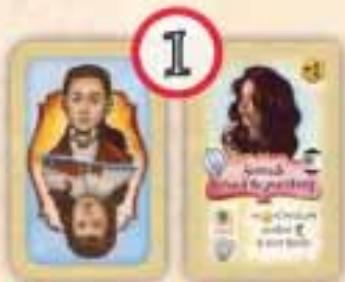
Note: You can only choose a couple that has fewer than three children, unless explicitly stated otherwise.
2. Choose one of the following:
- Draw the top card from the Child deck.
- Decrease your score on the Honor track by 1 Honor point to draw cards from the Child deck until you draw a Child of the desired gender or a Complication card (for more details, see page 1z). Shuffle the rejected Child cards back into the deck.

Note: If you decide to draw cards until you find a Child of the desired gender but you draw a Complication card, you have to resolve the Complication before continuing. Only if you decide to lose the mother can you continue to draw for the desired child.
- Place the Child card below the couple (child-side up, adult-side down) or resolve the Complication.
Remember: Unless explicitly stated otherwise, each couple cannot have more than 3 children.
ASK FRIENDS FOR MONEY
veryone knows that friends help each other, and this, of course, is true for your family too. So when attending a meeting of the Encyclopédistes, over a cup of coffee, you gently suggest that you could use a little financial 'help'. But watch out you don't ask for too much! I am sure your friends will still help you, but they might end up talking behind your back, and you know how this affects your name. Ask for more and you might even end up losing some friends – no one wants to be connected to a beggar, however noble your lineage!
Cost: Variable, see below
This action allows you to gain some Gold
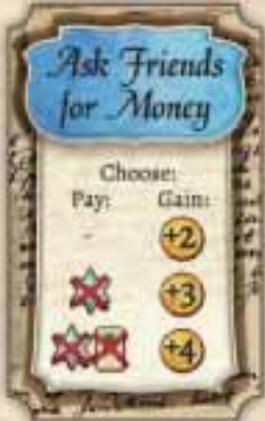
- Select the amount of Gold you would like to receive and pay the cost (if required):
- Pay nothing to receive 2 Gold ().
- Lose 1 Honor point () to receive 3 Gold ().
- Lose 1 Honor point () and discard : Friend card () from your hand to receive 4 Gold (
- Take the Gold from the bank.
SOCIALIZE
H Le Procope, the meeting place of intellectuals, should ensure you establish some new connections with an influential family. But if you want more, you are going to have to show off, Perhaps a dinner organized to discuss Voltaire's latest work will win you more friends, but it will cost you too. Oh, if you want the pick of the town, you will have to go all out and make a splendid appearance, with footmen and carriages decorated with gold, at every ball.
Cost: Variable, see below
This action allows you to gain Friend cards.
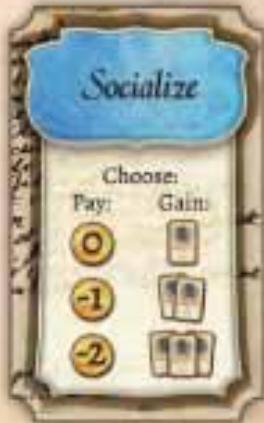
- Select the number of cards you wish to take from the face-up Friend cards below the main board and pay the cost (if required):
- Pay nothing to take 1 Friend card ().
- Pay 1 Gold () to take 2 Friend cards ().
- Pay 2 Gold () to take 3 Friend cards ().
- Take the cards and add them to your hand.
Note: You can never leave a single face-up Friend card. Any time you take Friend cards and only one card remains, you must draw the final card (at no cost). Afterwards draw a whole new set of face-up Friend cards.
Example: There are 3 face-up Friend cards available. A player sakes the Soclalize action and chooses to pay one Gold to take two cards. Since one Friend card would remain, the player has to take this card for free. Afterwards a new set of face-up Friend cards is displayed.
ACTIONS ON THE MAIN BOARD
Remember: Each action space on the main board can only be used by one pawn per round.
ACQUIRE THE TITLE
H if you are interested in acquiring a title or two for your family, as we cannot all be so lucky to have a title fall into our laps like that Baron de Montesquieu. Of course, your pockets will have to be deep as well, if you would like the king to confer on your family special privileges, but the investment is ever so worth it. The jealousy of those friends who pretend to snub your practices only demonstrates how influential you have become.
Cost: Variable, always depicted on the Title card.
This action allows you to gain various immediate benefits.
-
Select the Title card you wish to buy and pay the cost.
-
Receive all the benefits from the Title (Income, Prestige, Friend cards).
-
Take the card and place it next to one of your adult family members (or a couple).

Note: Any family member (or couple) cannot have more than one Title. A Title of a single family member becomes the Title of the couple, should the Title-bearer get married.
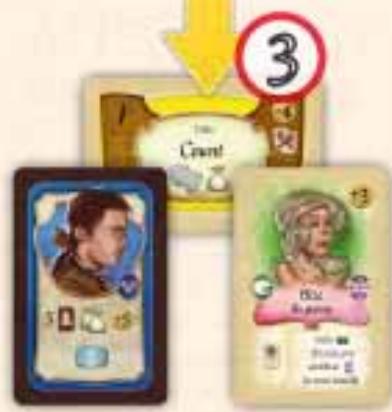
Example: A player wants to acquire the Count Title card on his tur in a round of Generation I. He selects the Acquire the Title action (which had not been taken yet), pays 4 Gold and discards 2 Friend cards from his hand, places the Title card next to his Head of the Family card and receives the benefits: +2 Prestige and +1 Income. No player (including the player who just used the Acquire the Title action) can take this action again this round. Since only adults (or couples) can get Titles and they are limited to one Title at most, the player cannot buy more Titles during this Generation.
There will be a new set of 3 Title cards available each generation. Each card has a different cost and gives different benefits. They are not replenished when they have all been taken.
HIRE FERTILITY DOCTOR
A legitimate heir to your name? Fear not, the court's very own Madame du Coudray will help out! At least one child or your money back! Sure people will look down on you for this if word gets out (and it always does, doesn't it?), but it was not like you were infertile, right? No, this couple will bear children at least twice in the coming years. And all that for a mere pittance... for a noble family like yours.
This action allows you to draw 2 Child cards for one of your family's married couples from the current Generation.
Cost: Pay 2 Gold and discard 1 Friend card from your hand
- Select the couple for whom you want to take the Have Children action.

Note: You can only choose a couple that can have at least two more children.
- Draw the top two cards from the Child deck.

- Place the Child cards below the couple (child-side up, adult-side down) or resolve the Complication (for more details, see page 12).

Note: Draw one card at a time in case you encounter a Complication, and remember that you can only be affected by one Complication per Generation (for more details, see page 12), so if you draw two of them, ignore the second one and keep drawing cards from the Child deek until you get a Child.

Example: A player selects a couple that has one Child card. He pays 2 Gold and discards 1 Friend card from his hand. He draws the first Child card – it's a Son, so he places the card below the selected couple with its child-side up The second card turns out to be a Complication – he chooses to lose the child, so he ends up with two children but he keeps the Complication card. Any time during the current Generation when he encounters another Complication card for any couple, he ignores it and draws until he gets a Child card.
DID YOU KNOW THAT...
GIVING BIRTH TO A ROYAL HEIR WAS A SPECTATOR SPORT TO ENSURE THEINFANT WASN'T SUBSTITUTED? MARIE ANTOINETTE'S FIRST LAYING NEARLYLED TO HER DEATH. FOR WHEN THE OBSTETRUICIAN CALLED OUT "THE QUEENIS GOING TO GIVE BIRTHT. PEOPLE POURED INTO THE CHAMBER IN A RUSHWITH ONIY TWO TAFESTRY SCREENS SURROUNDING THE BED PREVENPEOPLE FROM BEING THIROWN DOWN ONTO HER TWO CHIMNEY-SWEEPEVEN CLIMBED ONTO THE FURNITURE FOR A BETTER SIGHT OF THE QUEEN!
ACTIONS ON THE MAIN BOARD
BUY A MANSION
nce you have a mansion you wouldn't know how to do withour. In fact, you're already trying to gain the services of the most fashionable architect for your next mansion. For a true noble family, it is a bare necessity -where else to show off
those paintings, sculptures, silverware, and dishes, or hold your lavish parties? Sure some
struggling nobles will begrudge you your fame and wealth, but really, do you even care?
This action allows you to increase your Prestige.
Cost: Pay 3 Gold and discard 1 Friend card from hand
- Take a card from the Mansion deck and place it next to one of your single adult family members (or a couple).
2. Increase your Prestige by 2.
Note: As with Titles, any family member (or a couple) cannot have more than one Mansion.
The number of Mansion cards is limited and depends on the number of players (see the Setup section on page 6).

INITIATE VENTURE
ancestors have lived for centuries. However, it no longer pays the bills. You are struggling to get by, what with the grand parties you give and the art you commission. A smart investment into a mine or forge like the Forge of Clavières, could solve all your problems. Just beware not to get trapped by the lure of easy gold or people will doubt your claim to nobility.
This action allows you to increase your Income.
Cost: Lose 1 Prestige and discard 2 Friend cards from hand
-
Take a card from the Venture deck and place it next to one of your single adult family members (or a couple).
-
Increase your Income by 1.
Note: As with Titles and Mansions, any family member (or a couple) cannot have more than one Venture.
The number of Venture cards limited and depends on the numb of players (see the Setup section on

UNDERTAKE A MISSION
responsibility. In your lifetime, you will embark on many adventures, devise conspiracies and engage in a political struggle with one mission only - to uphold and advance the noble name of your family. And while the job is not as romantic as it is made out to be - that sense of accomplishment after you've completed a mission is worth it every single time.
This action allows you to draw Mission cards (during Generations I and II) or activate an endgame scoring option on your Patron card (during Generation III).
Cost: Discard i Friend card from hand.
a) During Generation I and II: Draw the top 2 cards from the Mission deck and choose one to keep, discarding the other. Place the card face up next to your player board.

Mission cards offer a challenge to fulfill and reward you with Honor points and other benefits for their completion. Missions have to be completed during the game rather than at the end of it (to receive Honor points and to profit from other benefits). You can complete a Mission at any time during your turn but before the final round ends.

b) During Generation III:
Draw the top card from the Mission deck and place it face down under your Patron card.
Do not read the card – Mission cards gained in Generation III are only to allow you to activate a chosen minor goal (scoring option) on your Patron card at the end of the game. One face down Mission card allows you to score one minor goal of your choice. Each minor goal may be activated only once.
Note: You cannot decide to use an unfulfilled Mission card gained during Generation I or II to activate a scoring option from the Patron card at the end of the game.

ACTIONS ON THIE MAIN BOARD GAME END
CONTRIBUTE TO COMMUNITY
he awe you experience in the presence of the Chateau de Versailles is something that has truly inspired you. To contribute to the community around you, for everyone to see the extent of your success, to think that now you are able to give whereas other nobles only take, is unimaginably satisfying. When you are standing in the city, marveling at the splendor that you have created, you sigh in contentment- your family will be a lasting legacy indeed.
This action allows you to gain various benefits.
Cost: Variable, always depicted on the Contribution card.
-
Select the Contribution card you wish to buy and pay the cost.
-
Receive all the benefits from the Contribution (Honor, Prestige, Friend cards)
-
Take the card and place it next to one of your single adult family members (or a couple).
Note: As with Titles, Mansions and Ventures, any family member (or a couple) cannot have more than one Contribution.

Example: During a round of Generation II, a player chooses the Contribute to Cammunity
action (which has not been taken yet) and selects the Court Ballet. He pays 2 Gold and decreases Income by 1, places the card next to one of his couples in Generation Il and receives the benefits: +1 Honor point, +2 Prestige. No player (including the player who just used the Contnbute to Community action) can take this action again this round. Since Contribution cards are limited to one Contribution for one family member (or a couple), this particular couple cannot have any more Contributions.
Each Generation there will be a new set of 3 Contribution cards available. Each card has a different cost and gives different benefits. They are not replenished when they are all taken.

DID YOU KNOW THAT..
FINAL SCORING
The game finishes at the end of Generation III Now the final scoring occurs.
Each player reveals their Patron card and scores points for: -Their main goal.
- Any minor goals of their choice that they can activate.
Remember: In order to score any of the minor goals on your Patron card you must have gained a Mission card during Generation IIl. Each such face down Mission card allows you to score one minor goal of your choice.

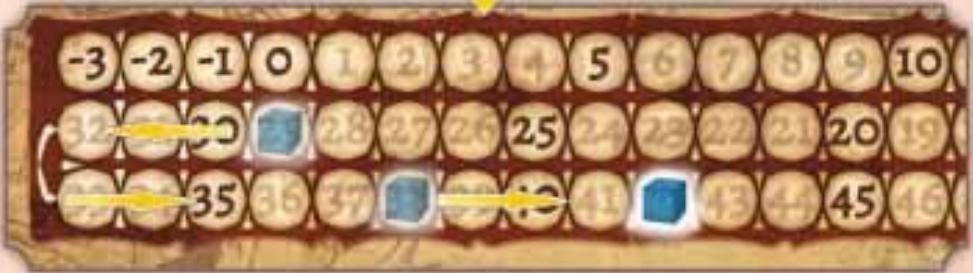
Example: A player has the Patron card called John Law. His Income is 8, so he receives 9 Honor points and since he also has gained one Mission card during Generation Ill, he can score one of the minor goals on the John Law card as well. He only has one marrlage arranged with a Craftsran for Generation IV But he sees that he has 14 Gold, so he chooses to score for his wealth and gets 4 Honor points.
THE WINNER
The player with the most Honor points is the winner. In case of a tie, the tied player with the most Friend cards in his hand wins. If players are still tied, then the winner is the tied player with higher Prestige. If there is still a tie, then the tied players share the victory.
THERE WERE THREE MAIN WAYS TO OBTAIN A TITEE IN FRANCE? ONE COULD DO SO THROUGH BIRTH, USUALLY. BUT NOT ALWAYS FROM THE FATHER, THRDUCH OFFICE MAINLY POSITIONS IN GOVERNMENT OR MILITARY. OR BY'TETTERS'. MEANING A ROYAL GRANT
Note: Some of the rules listed in this section have already been stated previously, but are presented here once more for the purpose of gathering all the golden rules in one place.
CARDS IN GENERAL
Ifthe çard efet contradicts the text of this rulebook, the rules on the card take
There is no maximum number of cards players may have in their hand.
Each type of card is discarded to its own discard pile.
A family member (or couple) cannot have more than one Title, Mansion, Venture, or Contribution card, but they can have any combination of these
Patron cards and Friend cards in a player's hand are kept secret from other players. Everything else is public knowledge.
FRIEND CARDS
Each time (no matter why) you are to take any Friend card from the face-up cards, you may always take the Friend card of your choice.
You can never leave a single face-up Friend card. Any time (no matter why) you take Friend cards and only one card remains, you have to take this card for free. Afterwards draw a whole new set of face-up Friend cards.
Replenishing: Face-up Friend cards are not replenished until they are all taken. Then Friend cards are drawn from the top of the face-down Friend deck and a new set of face-up Friend cards is exposed.
Note: If there are not enough face-up Friend cards to complete an action (e.g. the player pays to take 3 cards with the Socialize action, but there are only 2), the player takes as many as possible, then the Friend cards are replenished and the action is continued.
Ifthe Friend deck runs out at any time, reshuffle the discard pile and use this as the new deck
Unless stated otherwise, all special effects are resolved immediately when the Friend becomes a member of your family and are one-time effects only.
ACTIONS IN GENERAL
Allactions only apply to the current Generation (or its children in case of the Arrange Marriage action)
Each action on the main board can only be used by one pawn per round.
Actions on the Player board can be taken multiple times per round.
DID YOU KNOW THAT..
MARRYING AND HAVING CHILDREN
You can only marry people of the opposite gender.
Only couples can have children.
Unless stated otherwise, any couple cannot have more than 3 children.
REMARRYING
Ifa mother is discarded because of a Complication at Birth, an original family member can remarry, but a Friend cannot.
If an original family member loses his wife and wants to remarry, his current children will count towards the couple's child limit.
Example: If he has one child, he can only have two additional children after remarrying, because he already has a child from his former
HONOR, INCOME, PRESTIGE
Prestige and Income are unlimited - players can have more or less than the tracks indicate (you will need to track this for yourself).
Losing and gaining Honor points: Players can lose and gain unlimited Honor points (despite the track only showing values from -3 up to so)
GOLD
Unless stated otherwise, you always pay Gold to the bank and gain it from the
IT WAS VERY POPULAR TO APTDINT FOREIGNERS TO HIGH STATE POSITIONS. ONE EXAMPLE IS BRITISH BIORN JOHN PAUL JONES WHO DURLINDG HUE TIME IN FRANCE EFILENDED BENIAMIN FRANKLIN RESUUTING IN HIM JOINING THE AMERICAN CAUSE HEIS NOW KNOWN AS FATHER OF THE UNITED STATES NAVY THIS DIDN'T FRIVENT HIM FRDM BECDMING A REAR ADMIRAL FORCTHE IMFLIUAL BUISSIAN NAVY IN LATEAYEARS THDUGH

CARDS IN DETAIL
Here you can find some more details and clarifications about various cards effects.
FRIEND CARDS SPECIAL EFFECTS
Unless explicitly stated otherwise, all Friend special effects are resolved one-time only when the marriage is completed, immediately after you adjust Income/take Friend cards and adjust Prestige given by the Friend.
THIS gen.
The "This gen." tag means that the special effect is active throughout the current Generation.
ARRANGED MARRIAGES
Friends in arranged marriages are also considered part of your family for certain other game effects (Friend/ Patron/Mission cards) even though the marriage will not be completed until the beginning of the next Generation.
COMMENTS FOR SPECIFIC FRIEND CARDS:
ALEKSANDR
+1and +1 if you have other
famil

You have to meet the given condition to gain both benefits.
ARIANNE
Marry/Arrange Marriage with her without using an action.
This special effect may be used before she becomes a member of your family.

You don't have to use a pawn to use this card for the Marry/Arrange Marr action, doing so still uses up your turn.
BERNADETTE
Draw 2 instead of 1.
When she gets married and you draw a Child card for the couple, draw z cards (instead of 1) and keep/resolve both.
CARLOS

Gainand +1if you have another in your family.
You have to meet the given condition to gain both benefits.

CLAIRE
This gen.: Each time you Socialize, take1more.
This effect takes precedence over the rule giving you the last face-up Friend card for free, so when you Socialize,

first take the cards that you paid for, then take 1 more provided by Claire's ability and only then check if there's a single card left to take.
Example: There are two face-up Friend cards. You decide to Socialize and take only one, so you get the other one because of Claire's ability. Afterwards you reveal a new set of face-up Friend cards.
ERICH
This gen.: Buy a Mansion costs less if you have another in your family.
action of that type you take during the current Generation.

EUSTACHY
Each time you draw a for him, draw 2, keep one of your choice, and discard the other.

In the case of the Hire Fertility Doctor action you draw 4 cards and choose 1 from the first two and i from the next two, so you still gain 2 cards.
FEHMI
Discard allfrom the board, draw a new set and take1

Fehmi gives you a standard benefit of i Friend card after you marry her plus another
one from the new set of face-up Friend cards. If it happens that you have to draw a new set anyway after you take the first card, you still discard these cards and draw another 5 from which you choose.
GEORGE
Draw 1 Mission card and put it under your Patron card.
No matter what the current Generation is, draw the top card from the Mission deck and place it face down under

your Patron card. At game end this card will allow you to score one of the minor goals on your Patron card.
HANS HEINRICH
Ask Friends for Money without using an action if you have anotherin your family.
If you have another Craftsman in your family, than you can immediately

take the Ask Friends for Money action. You don't have to use a pawn but still have to pay any cost, if required.
ISABELLA
Discard any number of from your hand and draw the same number of
You may choose to discard none.

JAN
Gainand +1if you have anotherin
内容过长,此处只内联前一部分;完整内容请下载或到规则页阅读。
下载 Markdown原文为社区整理/出版社公开资料,版权归原作者,仅供个人学习查阅。