
希腊之主Lords Of Hellas
一句话概览
希腊之主 是一款已收录于村了吗规则库的桌游,支持 1–4 人,原名 Lords Of Hellas。
本页内容:一句话概览 · 常见问题
这游戏怎么玩
- 本站已收录这款游戏的规则资料,可以在对话里直接提问规则细节。
常见问题(FAQ)
以下 1 条问答中 0 条来自站内玩家的真实提问,其余 1 条为本站整理的常见疑问;答复内容保持原样。
希腊之主支持几个人玩?
1–4 人。
去哪查完整规则
想核对具体规则细节、卡牌效果或某个回合的结算方式,可以在村了吗里选中这款游戏后直接提问。
同类桌游
- 卡坦岛德式
- 工业革命:伯明翰德式
- 勃艮第城堡:特别典藏版德式
- 方舟动物园德式
- 卡卡颂抽象
- 瘟疫危机传承:第一季美式
- 阿瑞迪亚:勇踏征途美式
- 重塑宇宙德式
- 幽港迷城美式
- 埃多拉的德鲁伊德式
规则原文(Markdown)
本站收录这款游戏的规则原文 1 个文件,此处内联渲染 1 个,可直接展开阅读或下载。
LOH_rulebook-ENG.md58.9 KB

LEARN GAME FROM VIDEO! WWW.LORDSOFHELLAS.COM/LEARN

GAME MANUAL
o make this manual as easy as possible to use during the game, we have coded it in a few different ways. Before reading, please take a look, so learning the rules will be a seamless experience!
COMPONENTS COLOR CODING
Lords of Hellas is a very deep game with more than one aspect to it. To make it easier, we sorted these aspects into 3 different areas and connected game components (cards, tokens, trays) to colors. Eachcolor represent different aspect of the game:
Blue - everything connected with Hoplites and Combat between them. Represents the territory control aspect of the game. It is also the color of Athena and the Leadership Attribute connected with her.
Red - everything connected with Monsters and Hunting them. Represents the adventure/monster hunting aspect of the game. It is also the color of Zeus and the Strength Attribute connected with him.
Yellow – everything connected with movement and control over Regions. Represents the movement of Heroes and troops. It is also the color of Hermes and the Speed Attribute connected with him.
Green – everything connected with solo game version of the game (see more at Solo Manual – Persian invasion).

This is the symbol that marks cards that are used in solo mode from following decks: Artifacts, Blessings and Combat Cards. It is also present on the back of Used Action Tokens. Ignore those symbol in competitive mode.
GAME TERMS AND SYMBOLS
Reading through the instructions and game components you will see words that are in bold- this means that this word is a Game Term listed in the glossary on the back of the manual.
Game Terms always have a mechanical meaning, and whenever you are confused about them, you can very easily find an explanation on the back of this manual and find all the places that they are used.
Some Game Terms have symbols connected with them. They are an intuitive representation of a certain Game Term that is used on components.
We hope that you have a lot of fun with Lords of Hellas. While at first it might seem like a lot to take in, we are certain that after two games you will feel like a true Greek hero!
CREDITS:
Game author: Adam Kwapiński
Game developer: Marcin Świerkot
Illustrations: Patryk Jędraszek, Ewa Labak
Graphic design: Andrzej Półtoranos, Adrian Radziun, Michał Oracz
3D models: Jędrzej Chomicki, Jakub Ziółkowski, Piotr Gacek, Mateusz
Modzelewski
Test and development: Paweł Samborski, Michał Siekierski Proof Reading: Dan Morley, Anthony Crooks
Special Thanks: To all Kickstarter backers who helped us make this game a reality, all testers that spent a lot of time on this title, Adrian Komarski and Michał Oracz for creative input on every step of the game.
Contents
VICTORY CONDITIONS
GAME PREPARATION MAP
HEROES AND ARMIES PICKING HEROES AND STARTING THE GAME
COURSE OF THE GAME REGULAR ACTIONS Using Artifacts Priests Hero Movement Hoplite Movement
SPECIAL ACTIONS Recruit March Build Temple Prepare Usurp Hunt Build Monument
MONSTER PHASE
EVENT PHASE
MONSTERS MONSTER BOARD
HUNT HUNT REWARDS
BATTLE
QUESTS
ARTIFACTS
BLESSING CARDS
TWO-PLAYER MODE
GAME TERMS GLOSSARY
cient Greece collapsed, and Hellas was mired in chaos and ruin. This period became a time that no chronicle would document. Amid disarray and death, a handful of chosen ones sought to restore law and order by assuming control over the fallen land. History would remember them as heroes, but the lure of power soon stoked their ambitions. Between the chosen ones, a great war began and its victor would become the sole ruler.
Drawn to the war, mysterious and technologically advanced beings arrived in this world. They offered their support to the heroes, arming them with advanced weaponry of terrible power, and the Greeks soon came to worship them as gods.
Can you survive in this hostile land ravaged by monsters and unending strife? Are you ready to fight and become Lord of Hellas?
In Lords of Hellas you lead a hero to battle. With armies at their command, they must fight rival heroes and slay fearsome monsters as they try to please the new gods.
GAME COMPONENTS
MAIN BOARD

4 HERO BOARDS


4 COLORED PLASTIC RINGS
1 PERSIAN INVASION TRAY

4 ARMY BOARDS


MONSTER ATTACK DECK(18 CARDS)


EVENTS DECK(14 MONSTER CARDS, 9 QUEST CARDS)
7 MONSTER TRAYS

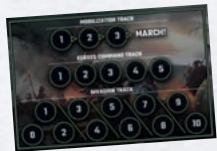

BLESSING CARDS (12 ATHENA CARDS, 12 ZEUS CARDS, 12 HERMES CARDS)
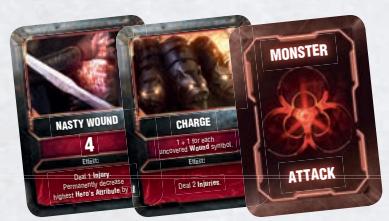
COMBAT CARDS DECK (30 CARDS)
TEMPLE CARDS(5 CARDS)
CARDS
ARTIFACT DECK
(10 NEUTRAL ARTIFACTS CARDS, 7 MONSTER REWARD ARTIFACT CARDS, 3 GOD'S ARTIFACT CARDS)
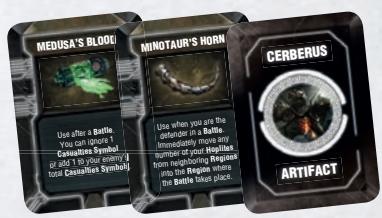
HELP CARDS(4 CARDS)

MONUMENT ACTIVATION CARD (1 CARD)


4 HEROES (HERACLES, PERSEUS, ACHILLES, HELEN)

60 HOPLITES (15 PER PLAYER),
16 PRIESTS (4 PER PLAYER)

3 FIVE-PIECE MONUMENTS (ZEUS, ATHENA, HERMES)


TOKENS AND MARKERS
60 CONTROL TOKENS(15 PER PLAYER)
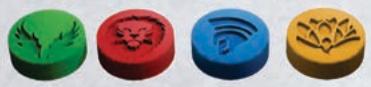
24 USED ACTION TOKENS(6 PER PLAYER)

12 ATTRIBUTE TOKENS (3 PER PLAYER)

5 LOCAL GLORY TOKENS (1 PER LAND COLOR)
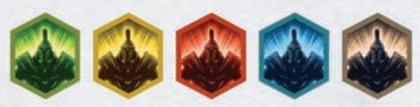
9 QUEST TOKENS

15 MONSTER WOUND TOKENS

8 TEMPLE TOKENS(WITH PLASTIC STANDS)

1 ORACLE OF DELPHI TOKEN (WITH PLASTIC STAND)

VICTORY CONDITIONS
In Lords of Hellas, you decide how to play your game. Those who enjoy leading armies and outmaneuvering their opponents can win through conquest. But if being the greatest strategos doesn't appeal to you, you can also focus on quests and slaying mythical beasts, which brings you glory and powerful artifacts. There's also something for the builders - erecting enough temples or completing and defending one of three enormous monuments will let you become a paragon of the gods.
The game ends immediately when a player meets one of the following victory conditions:
1. WARLORD OF HELLAS
Control of 2 Lands (a Land is an area encompassing all the Regions of a single color).

In a 3 Player Game, controlling blue Land does not counts toward this victory condition.

In a 2 Player game, you need to control 3 Lands.

3. MONSTER SLAYER

2. FAVORED OF THE GODS
Control of 5 Regions with Temples.
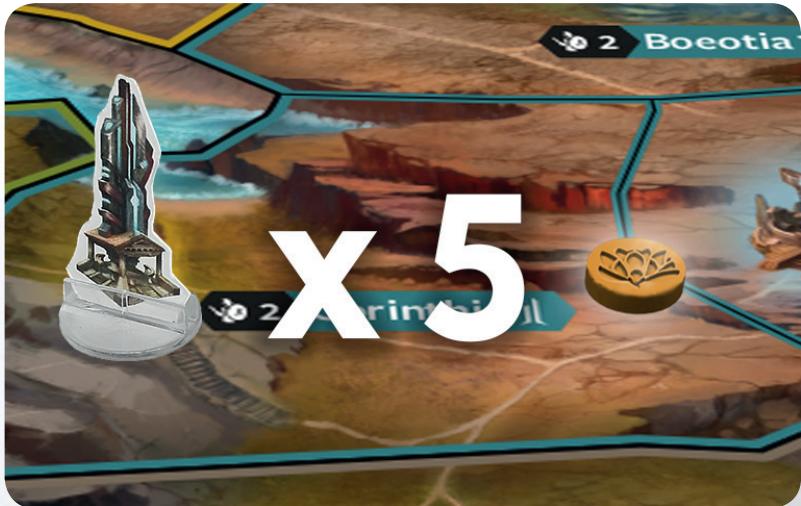
4. KING OF KINGS
A fourth victory condition will be activated once any Monument is fully built.
Whoever controls a Region with a fully built Monument after 3 Turns wins.

In a 2 Player game, ignore this victory condition.
Control of the Region with a fully built Monument 3 turns after the Monument was fully built. A player who builds the final part of a Monument takes the Monument Activation Card and places 3 of his Used Action Tokens on it. From this point, whenever he/she uses a Special Action, he/ she takes if from the Monument Activation Card. Once the last token is taken, the player who controls the Region with the first fully built Monument wins. Keep in mind that all of the other victory conditions are still in play, so you may win in any of the other ways!


GAME PREPARATION
Setting out on a journey usually involves some careful preparations. It is no different in Lords of Hellas. Complete the setup below before you immerse yourself in the Dark Age of Greece. What awaits you there? Legendary quests. The secrets of mythology. Tough choices. A horde of intimidating monsters, requiring different weapons and tactics. We hope that even after many games, you will still discover something new.

SET UP THE MAIN BOARD

PLACE MONUMENT FOUNDATIONS
Place the first level of each assigned Monument in its appropriate Region and put its relevant God's Artifact Card underneath. The level of the Monument determines the unlocked God Powers. When a player sends Priests to pray at the Monument, the player uses a Power corresponding to the Monument's current level. Once the Region with the Monument is conquered, the controlling player gains control of the Artifact Card under it.

SHUFFLE DECKS
Shuffle the Events Deck (Monster and Quest Cards), Monster Attack Deck, and Combat Deck, then place each of them in their appropriate place on the board.

PREPARE ARTIFACTS
Set aside the Artifact Cards assigned to their respective Monsters. Shuffle the remaining Neutral Artifact Cards and place the deck in its appropriate place on the board.

PREPARE BLESSING DECK
Shuffle the Blessing Cards from the gods whose Monuments are present in the game into one deck then place these Blessing Cards on the map. (The Core Box has Zeus, Athena, and Hermes, but future expansions will introduce more gods.)

EXAMPLE:

1 card - Quest Put Quest card on Quest Slot and place appropriate Quest Token in Chalkidiki
PLACE OTHER COMPONENTS
PREPARE STARTING EVENTS
Place the Monster Die, Monster Wound Markers, Glory Tokens, Quest Tokens, and Monster Miniatures, Monument Parts, Monument Cards and Monster Trays next to the main board.
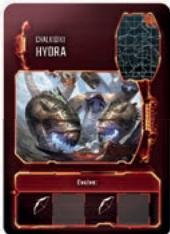
2 card – Monster Put Hydra model in Chalkidiki and add Hydra Monster Tray next to the Map
Draw 7 cards from the Events Deck and resolve them in the following order:
Choose one random Temple Card and put it in its place on the board. Place Temples and Oracles of Delphi stands on this Temple Card. (Place only the first 6 Temples for 3- and 2-player games).
a) Place Quest Cards in the Quest Slots and place the Quest Token for each drawn Quest in its appropriate Region. Once the third Quest Card has been placed on the slot, ignore subsequent Quest Cards drawn in the Preparation Phase (these still count toward the 7 cards drawn).
b) After drawing a Monster Card, place its corresponding miniature in the Region indicated by the card, and place the Monster Tray (along with the Artifact assigned to it) next to the main board. If the drawn Monster Card shows a Monster which is already on the board, ignore this card and draw another card instead.

PLACE TEMPLES

c) Shuffle all the Event Cards used in Preparation Phase back into the Events Deck (not including Quests on the Quest Tray).

3 card - Monster Put Cerberus model in Epirus and add Cerberus Monster Tray next to the Map

4 card - Quest Put Quest card on next Quest Slot and place appropriate Quest Token in Arcadia
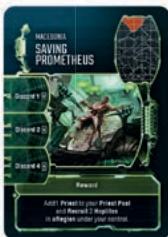
5 card - Quest Put Quest card on next Quest Slot and place appropriate Quest Token in Macedonia

6 card - Quest No more Quest Slots available. Ignore this card (without drawing another in its place)


7 card – Monster Hydra is already on the Map. Ignore this card, but draw a next one in its place.
8 card - Monster Put Minotaur model in Boeotia and add Minotaur Monster Tray next to the Map


MAP
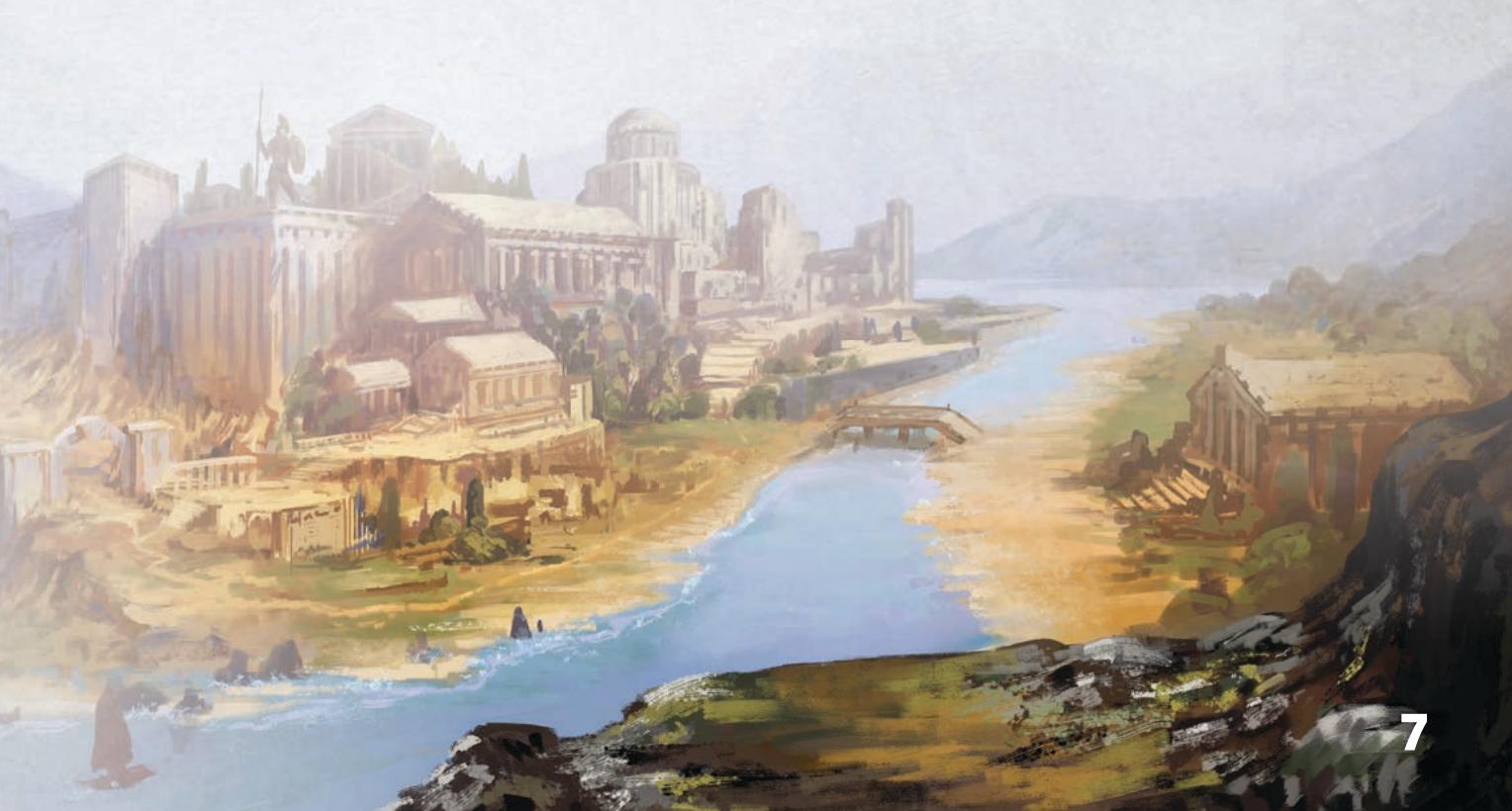
The entire Peloponnese peninsula is open for your Hero to explore. You can wander through the green fields of Aetolia and the mountains of Macedonia. You can lose yourself in the sacred groves of Phocis and visit the sprawling palaces of Crete and vast mausoleums of Epyrus. Every step of the way, you will meet monsters, quests, artifacts and other heroes, who may or may not be friendly.
What follows is an explanation of everything that is found on the map.

REGION

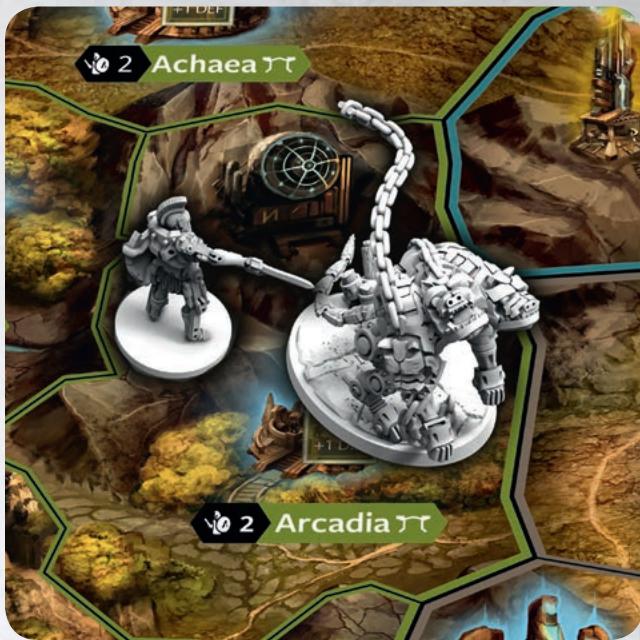
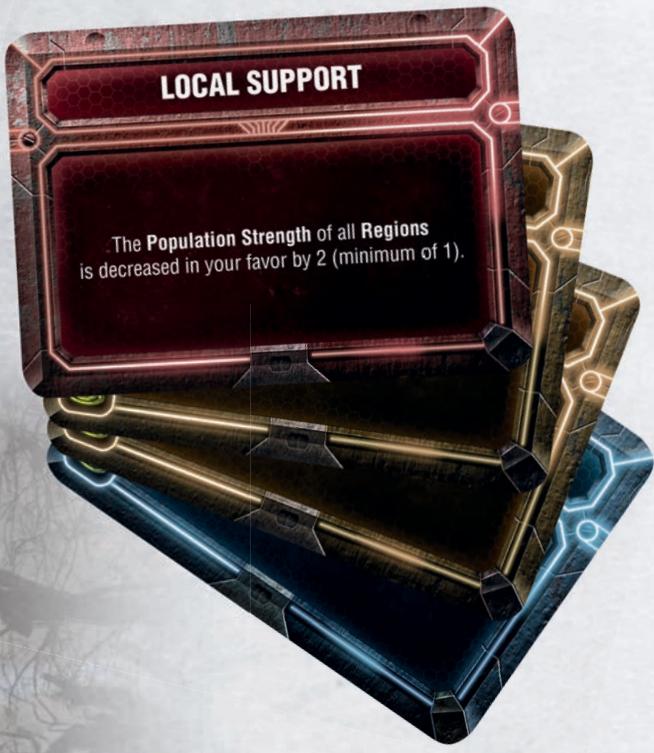
A Region is the smallest named area on the map, and is marked with a Population Strength that determines the number of Hoplites the player needs to take control of the Region.
Use Control Tokens to mark which player controls a Region.

LAND
A terrain unit which consists of 3 or 4 Regions of the same color.


CITY/SPARTA/☆
In some Regions you will find Cities. They let you Fortify your units (to acquire +1 Army Strength in Battle) and acquire 2 Hoplites during "Recruit" Special Action.
Sparta is a special City placed in Laconia. It grants you a +2 bonus for Fortification (instead of 1), and 4 Hoplites during "Recruit" Special Action (instead of 2).

SHRINE / ORACLE OF DELPHI
Some Regions have Shrines. They mark where Temples can be built. The Oracle of Delphi can only be built in Phocis.

QUESTS AND QUEST SLOTS
During setup and the Event Phase, new Quests can appear in different Regions. A player's Hero will be able to complete them to gain Glory Tokens and specific rewards.
MONSTERS
During setup and the Event Phase, Monsters will also appear in different Regions. The presence of Monsters can be dangerous for your armies and your Hero.

On the other hand, hunting Monsters with your Hero can grant you powerful Artifacts or Priests, and killing Monsters will also reward you with a Glory Token in the local Land.

TEMPLE CARD
A Temple Card will define which Temples will trigger Blessing Draft. A Temple Card also defines special reward for building the Oracle of Delphi
SEA TRAILS
Sea Trails mark the connections between Regions by sea. Regions connected with Sea Trails act as if these Regions are adjacent to each other.
MONUMENTS
In some Regions there are Monuments to the Gods. By controlling those Regions, your Hero will come into possession of it's God's Artifact.
There is also one free place for a Monument. This place is not used in the Core Box. However, it will be used in future expansions of Lords of Hellas.

HEROES AND ARMIES
Your choice of hero can greatly affect the style of your game as there are several strong abilities and bonuses to pick from. Some simply make you better at one particular task like the commanding talents of Achilles that make his armies more dangerous. Others open up entire new strategies, like the exceptional mobility of the monster hunter Perseus, who is able to quickly cross the entire map, or the control skill of beautiful Helen, who can stop entire legions in their tracks.
There are four Heroes and Armies to choose from in the Core Box: Helen, Achilles, Heracles and Perseus. Heroes are asymmetric (they have a different Starting Bonus and Special Ability).

Starting Bonus: special perk that should be added when placing the Hero on the board.

Special Ability: passive skill of a Hero which works whenever certain conditions are met.
Armies are identical rules-wise and they only differ aesthetically Players combine their Hero and Army Boards into one.
Heroes can be developed in different directions based on player choices during the game. A player can raise Attributes, gather Blessings and Artifacts.
Every Hero is characterized by three Attributes:

LEADERSHIP
Leadership determines the number of Hoplites a player can move each turn during the Hoplite Movement Regular Action.

2STRENGTH
Strength determines how many Combat Cards a player draws at the beginning of a Hunt.
Speed determines the number of Regions a Hero can traverse during the Hero Movement Regular Action.
Attributes are also useful for completing Quests. Once raised, an Attribute cannot be lowered except as a result of special instructions (e.g. Monster Attacks).
Each player also has identical Priest Pools and Special Actions on their board.

PRIEST POOL
When a player receives a Priest he/she places him in their Priest Pool. Only Priests that have been placed in the Priest Pool are counted as player property (e.g. for a Quest).

SPECIAL ACTIONS
These instruct what Special Actions a player can perform during their turn. After choosing an action, the player puts a Used Action Token on it which stays there until any player performs the "Build Monument" Special Action. These actions will remain locked while a Used Action Token remains on them.

PICKING HEROES AND STARTING THE GAME
The game immediately throws you into the heat of a conflict that shook all of Hellas. The Dark Age is here: strange new gods descended from the sky, and with them came even stranger beasts. Heroes rose up in different corners of the land, each with his or her own plans, allies and enemies. Before you dive into it, though, you need to complete some final steps.
The following is a break-down of steps to be taken when starting the game. Note: selecting and placing a Hero on the Map is a very important decision!
-
Every player draws a Combat Card from the top of the deck. Combat Cards are kept secret, but the number of cards in a player's hand is not.
-
Every player takes a Help Tray (with God Powers described).
-
Decide upon a starting player.
-
The starting player chooses a Hero, takes his/her corresponding Hero Board, then chooses an Armies Board, and takes all components of that color (Hoplites, Priest, Control Tokens, and colored ring). The player places the plastic colored ring on his/her Hero's base, takes 6 Used Action Tokens, then takes 3 Attribute Tokens and places them on Leadership, Strength and Speed Attribute at value 1. Resolve the chosen Hero's starting bonus.
-
The starting player places the miniature of his/her chosen Hero, along with 2 Hoplites, in one Region. If the Population Strength in that Region is 2 or less, the player places his/her Control Token there. This completes the first player's setup.
-
Moving counter-clockwise, the next player chooses one of the remaining Heroes and armies and places them on the board following the same process as above. This player cannot place their Hero and Hoplites in a Region which already contains another Hero.
The last player to choose and place his/her Hero on the board will begin the game. Player Turns proceed clockwise.


COURSE OF THE GAME
When you start your game, you'll quickly notice how many things are happening on the map at the same time. There will be marching armies, questing heroes, wandering beasts. To make matters even more interesting, the rules of the game make it impossible to reuse the same special action over and over again, so you have to stay flexible and learn to wield many tools. Pick your paths carefully and make every turn count!
Players take turns in clockwise order. Players use their Regular Actions and then end their Turns with a Special Action.
The player to their left (clockwise) then takes his/her Turn.
REGULAR ACTIONS
A player can use any number of Artifacts they possess during their turn and move their units (Hoplites, Hero, Priests).
Regular Actions may be performed in any order, but a player can perform a given Regular Action only once. (e.g. 2 Artifacts can be used at once, but a player cannot use one Artifact, move Hoplites, and then use another Artifact).
USING ARTIFACTS
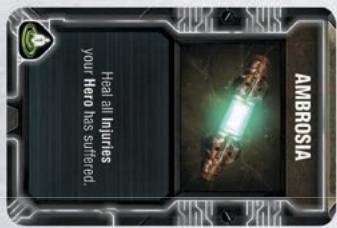
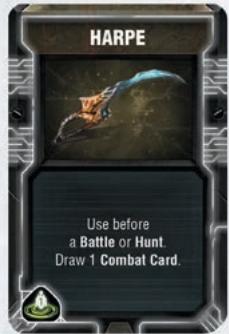
Players may use any number of Artifacts in their possession (if they are charged). After being used once, Artifacts must be charged. This happens whenever any player plays "Build Monument" Special Action.
USED ARTIFACTS:

CHARGED ARTIFACT:
PRIESTS
Players can send a Priest from their Priest Pool (Note: players start without any Priests) to any chosen Monument. After placing the Priest, a player should immediately raise related Hero Attribute by 1 and use the Monument Power corresponding to its stated level. The Hero Attribute increase is permanent.
All Monument Powers are listed on the Help Tray.
A Priest can take any free spot on the Monument and remains there until any of the players performs “Build Monument" Special Action. If there are no free spots, a player cannot place a Priest to that Monument.
Players can send only 1 Priest total in their turn.

HERO MOVEMENT
A player can move their Hero through as many Regions as indicated by his/her Speed Attribute or over 1 Quest Step (if his/her Hero is on a Quest).
Heroes can move and stop in any Region without regard to the presence of Hoplites, other players' Heroes or Monsters.
If a Hero ends their movement in a Region with a Quest Token in it, he/she can immediately move to the Quest Step assigned to that Quest if they meet the requirements described by its Quest Card (see Quests). After entering a Quest, a player can move only 1 Quest Step, even if his/her Speed Attribute is higher.
Heroes cannot make any actions in Regions they are passing through during movement. They can do it only before or after whole movement.


HOPLITE MOVEMENT
Players can move a maximum number of Hoplites to a neighboring Region equal to the level of their Leadership Attribute.
You can move Hoplites from a Region to any other neighboring Region.
No Hoplite can move twice (you cannot move a single Hoplite by 2 or more Regions).
● A player can, during their move, Fortify a Hoplite in each Region they control which contains a City or Sparta. Treat that City as another Region for movement, but they normally take part in Battle. Fortified Hoplites receive a bonus of +1/+2 to Army Strength if they fight in the Region (+1 for a City / +2 for Sparta). Moving Hoplites out of a City/Sparta into the Region with that City/Sparta is treated as movement. Fortified Hoplites always die last.
● Moving Hoplites into a Region with enemy Hoplites results in a Battle (see Battle).
Moving Hoplites into a Region controlled by an enemy, but without Hoplites, results in taking control over that Region. This is not a Battle. You can take over this Region without meeting Population Strength (you can take control over this Region with even 1 Hoplite).
A player should first make all moves with Hoplites and then fight any following Battles (if they occur). The attacking player decides on the order of Battles.
If any special rule enables a player to move his/her Hoplites by more than by 1 Region, the player can travel only through Neutral Regions or those under his/her control. The player can end the movement in a Region controlled by an enemy. During that movement, the player does not take control over Regions he/she is moving through.

SPECIAL ACTIONS
Following the completion of their Regular Actions, a player must perform one of the available Special Actions.
Mark a used Special Action with a Used Action Token. That action remains unavailable until the token is removed from it.
RECRUIT
A player can Recruit up to 2 Hoplites in every Region he/she controls with a City in it (or up to 4 Hoplites in Sparta).
If there is room in the City/Sparta, one of the recruited Hoplites may be Recruited already Fortified in City/Sparta.

The maximum number of Hoplites available is 15 per player. When a player has no Hoplites left, he/she cannot put more Hoplites on the Map in any way. A player cannot remove Hoplites from the Map to put them in a different place (e.g. as the result of a Recruit action).
MARCH
A player can move any number of their Hoplites from one Region to a single neighboring Region. Fortified Hoplites cannot be relocated with this action.

You can move Hoplites who were previously moved in a Regular Action or as a result of abilities or Monuments.
In other regards, apply rules from Hoplite Movement Regular Action.
BUILD TEMPLE
A player may build a Temple in a Region they control with a Shrine. The player places a Temple stand on the Shrine slot and adds one Priest to his/her Priest Pool.
If a player builds the Oracle of Delphi he/she receive the additional rewards listed on the Temple Card.
If, under the Temple slot, there is red frame with "Draft" keyword, start a Blessing Draft (see Blessing Draft).

Each player can control a maximum of 4 Priests. If a player has 4 Priests in their Priest Pool or at Monuments, they cannot receive additional Priests.
PREPARE
A player can choose any two from these available options (a single option can also be chosen twice):
Heal a single Injury of your Hero (see Hunt).
Draw a Combat Card.
Recruit one Hoplite in the Region in which your Hero is present. A player cannot perform this action if his/her Hero is outside the Map, e.g. on a Quest, or when they are in a Region also occupied by another player's Hoplites. However, you can do so in an empty Region controlled by an enemy and thus take control of it.
USURP
If a player possesses a Glory Token which matches the color of the Region where his/hers Hero is located, then the player can instantly take control over that Region and can Recruit 1 Hoplite in it (which may be Recruited already Fortified in a City/Sparta).
All enemy Hoplites must withdraw from the Region, but suffer no losses (see more about withdraw in Battle).

Using Usurp does not cause a player to lose the Glory Token!
HUNT
A player can begin hunting a Monster present in the same Region as their Hero (see Hunt).
BUILD MONUMENT
A player can Build a level of a Monument. The player chooses the Monument he/she wants to Build and then adds the appropriate element to it.
All Priests are removed from all Monuments and go to their controlling player's resources (they are not returned to the Priest Pool).
The player using this Special Action (and only that player) receives as many Priests as the number of Temples he/she controls (the Oracle of Delphi counts as a Temple).
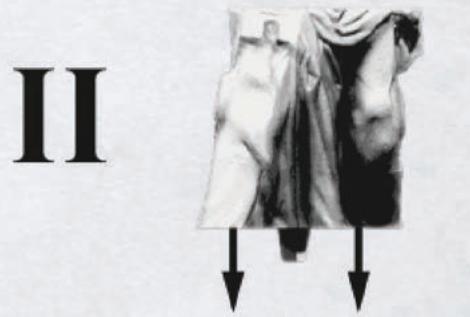
Building Monuments marks the end of a round.
All players remove their Used Action Tokens and charge their Artifacts.
Proceed with the Monster Phase and Event Phase.
"Build Monument" can be used by a player even if other Special Actions have not yet been used.
If the 5th level of a Monument is built, trigger a Monument Activation Card (see victory conditions).
MONSTER PHASE
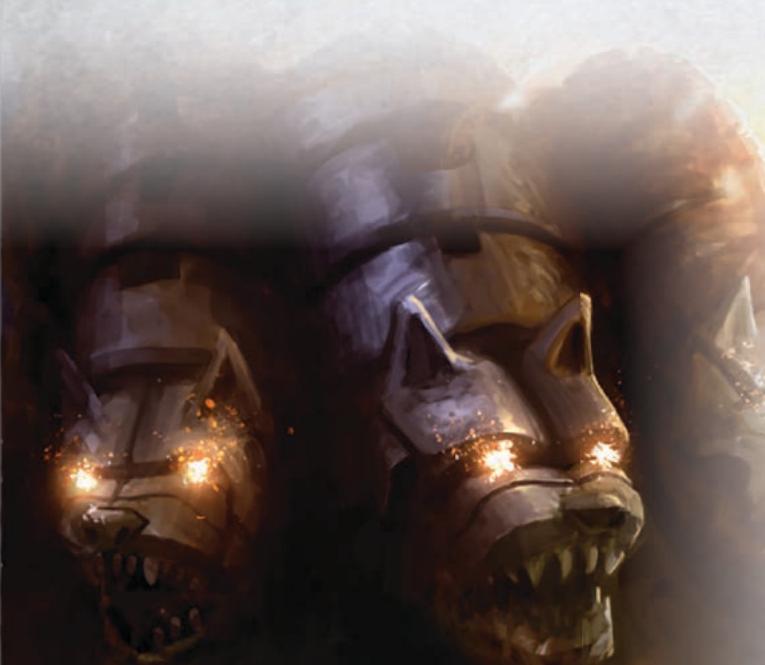
The player who performed the "Build Monument" Special Action rolls the Monster Die for every Monster on the Map (in the order of his/her choosing). The Monster Die offers 4 outcomes:
Nothing: Nothing happens. Move on to the next Monster.
Action Th Monste perfors a Region Attack as described on its Monster Tray.
Move: The player who performed the “Build Monument" Special Action must move the Monster to adjacent Region of his/her choosing.
Move or Action: The player who performed the “Build Monument" Special Action decides whether the Monster performs an Action or Moves (to a Region of his/her choosing).
If there is any additional decision required (i.e. Chimera Regional Attack) active player decides.
After the Monster Phase, proceed to the Event Phase.

EVENT PHASE
Player who performed "Build Monument" SpecialAction draws the top card from the Events Deck and immediately resolves it.
There are two types of cards in the Events Deck:
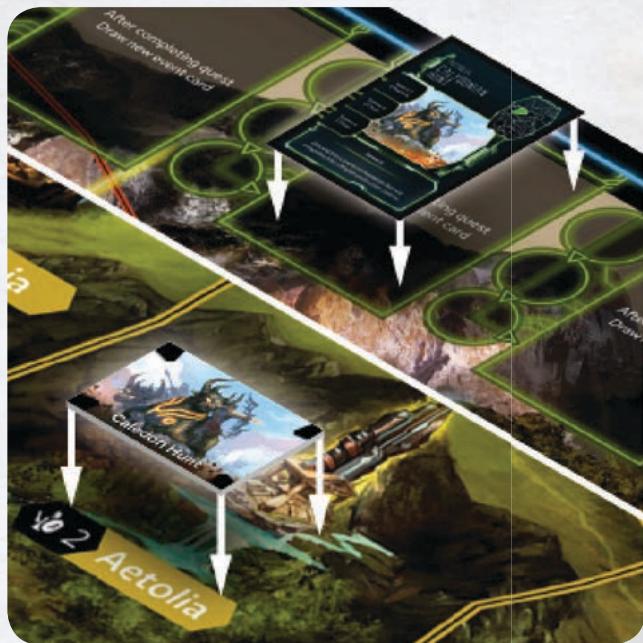
A] Quest: A new Quest appears! If there is space on the Quest Track, place the appropriate Quest Token in the Region indicated on the card and place the Quest Event Card in the free slot on the Quest Track.
If there are already 3 Quests on the Quest Track, place this card on the discard pile without any effect.
B] Monster: the effect of the card depends if the Monster is already on the Map or slain:
If the Monster is already on the Map, he Evolves - place the card next to its Monster Tray. The Evolve effect lasts until the end of the game (or until the Monster is slain).
If the Monster is not on the Map, place its miniature in the Region indicated on the card that has been drawn. Place its Monster Tray and the Artifact assigned to it next to the Map.
If the Monster has been slain, discard this card without effect, and draw another.
After the Event Phase, the next player begins his/her Player Turn.


MONSTERS
A game about ancient Greece simply couldn't have worked without icons such as Hydra, Medusa, Cyclops or Cerberus. These are not the creatures you know from myths, though. With strange technology and alien energy augmenting their bodies in various ways, they can only be defeated by heroes wielding comparable power. If that wasn't enough, monster movements and actions are semi-random, turning them into an unpredictable force of terror.
Monsters appear on the Map as the result of Events. They are characterized by being able to withstand from 4 to 7 Wounds of various types (the number of wounds denotes Monster power), their Special Attack, starting place on the Map, and Monster Region Attack during the Events Phase.
They can Evolve (if they are already present on the board and their Event Card is drawn again) and thus increase their number of Wounds Monster can withstand or gain additional rules that makes hunting them harder.
MONSTER BOARD

WOUND SYMBOLS
Determine which Combat Cards a Hero must employ to kill a given Monster. Some Wound symbols will have the symbol of a Priest () or Artifact (o) on them - they grant additional rewards, even after an unsuccessful Hunt (see Hunt).
INFLICTING WOUNDS
To inflict a Wound to a Monster, the player must discard a Combat Card with the Wound symbol corresponding to the one on the Monster Tray. The player then puts a Wound marker in the appropriate place on the Monster Tray.
Some cards enable any Wound marker to be placed on a Monster (for example, by discarding 2 maces a player can deal any type of Wound).

SPECIAL ATTACK


Determines which attack the Monster performs after drawing the 'Special Attack' Monster Card.
REGION ATTACK
Describes what happens when an Action result is rolled using the Monster Die. There might also be a passive ability that works in a Region the Monster is in.
EVOLVE CARD
Describes how to Evolve a Monster – either by increasing number of Wounds or gaining additional passive abilities.
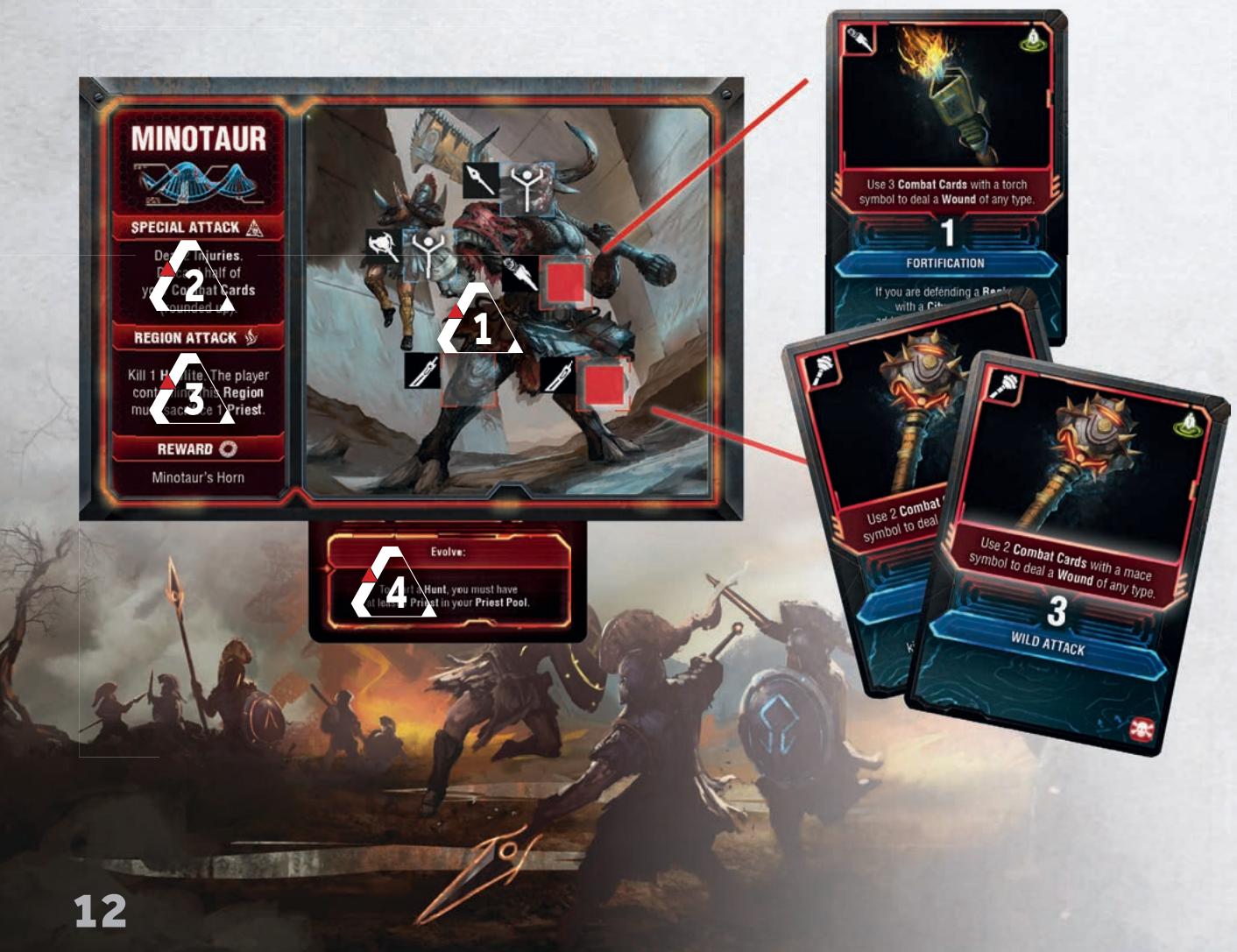
To have any chance of defeating such hulking monstrosities, you'll have to bring a proper selection of weapons, artifacts, and a lot of skill. Even then, finishing off a monster might take several turns, so be wary of opportunistic heroes who could jump in at the last moment to steal your glory. And watch out for devastating specialattacks or passive abilities that many of the beasts have.
To begin a Hunt, a Hero must be placed in the same Region as the Monster he wants to attack. Combat begins when a player uses the "Hunt" Special Action. The player chooses one of the Monsters located in the same Region as his/her Hero (sometimes more than 1 Monster may be present) and then draws as many Combat Cards as the level of their Hero's Strength Attribute. The Hunting of a Monster proceeds through the following stages:
1. HERO ATTACKS MONSTER
The player must inflict at least one Wound on the Monster. If the Hero fails to do that, Hunt ends immediately.
Players can inflict multiple Wounds at the same time, and even slay the Monster on the first turn if he/she has the appropriate Combat Cards.
2. MONSTER ATTACKS HERO
The person to the left of the player fighting the Monster draws two cards from the Monster Attack Deck and chooses one of them. The hunter can:
a) Defend
Play any number of Combat Cards with a total value equal to or higher than the Strength of the Monster's Attack to defend himself/herself from the attack. Next, draw 2 Combat Cards.
b) Not Defend
Resolve Monster Attack Card effects (receive Injuries, end Hunt etc.), and draw 1 Combat Card.
Then the Hunt sequence is repeated until Hunt ends.
The Hunt ends:
a) Successfully
a Monster receives a final Wound. a) Unsuccessfully
is unable to inflict any Wounds on the Monster during the player's attack stage.
a card was played during the Monster's attack which causes an end of the Hunt, and the player failed to defend himself/herself from the attack.
a Hero receives a fourth Injury.
After unsuccessful Hunt Hero receives additional Injury (if possible).

INJURIES
While fighting Monsters, a Hero may be injured. In order to mark an Injury on a Hero, flip a chosen Attribute Token – this Attribute has a value of 1 until the Hero heals this Injury. A Hero can receive three Injuries during Hunt (each one aimed at one of their Attributes). If the Hero receives a fourth Injury, Hunt ends. Injuries may be healed by performing a "Prepare" Special Action or using Artifacts (e.g., Ambrosia).

HUNT REWARDS
Hunts can be very profitable - even unsuccessful ones!
Whenever you unsuccessfully end a Hunt, you still get to pick one reward from Wounds that you have inflicted with an Artifact or Priest symbol on them.
However, if a Hunt against a Monster is successful, and you manage to deal the last Wound, the player:
receives a Glory Token in the color of the Region in which the Hunt took place. If the token belongs to another player, it is taken over.


chooses 1 reward from an Artifact linked to this Monster or Priest/Neutral Artifacts from Wounds the player inflicted (only during this Hunt).
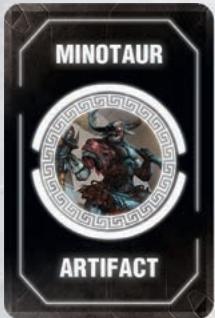

places the Monster miniature near his/her Hero Board – once he/she has 3 Monster miniatures, he/she wins the game.
If a player deals a Wound to a Monster without Hunting it (with a Blessing or Artifact) – he/she does not receive any rewards. However, if he/she slays the Monster this way (by dealing the last Wound), he/she receives a Glory Token and this Monster is placed next to his/her Hero Board and counts toward victory condition.
BATTLE
War rages throughout Greece. Bronze swords and spears break on muscled breastplates. Heavy phalanxes maneuver under a rain of arrows. Chariots plow through the ranks of footmen. To represent this, we've chosen a set of simple but deep rules. You will need plenty of skill to outmaneuver enemy leaders on the map. Keep in mind that no victory (or defeat) is ever certain. If gods smile upon you, even a smaller force can put up a fight as fierce as the one of the legendary 300 Spartans at Thermopylae.
If Hoplite movement – whether originating from a Regular Action or any other way – results in the Hoplites of two players meeting in the same Region, a Battle ensues. If Hoplite movement causes the start of more than one Battle, the active player decides in which order the Battles are fought. All Hoplites in a Region take part in the Battle.
Battles are fought following this sequence:

PLAYING COMBAT CARDS
The defending player can play one Combat Card from his/her hand. If he/she does that, then he/she resolves that card's effect and adds its Strength to his/her Army Strength.
If he/she passes, then he/she cannot play more Combat Cards during the current Battle.
The attacking player can play one Combat Card in the same way.
If he/she passes, he/she also cannot play any more cards.
The sequence is repeated until both players pass.
CASUALTY SYMBOLS
Playing some of the most powerful cards will cause a player to kill his/her own troops after the Battle. They have red Casualty Symbols marking how many Hoplites need to be killed. A player cannot play Combat Cards with total number of Casualty Symbols exceeding the number of his/her Hoplites in a Battle!
COMBAT CARD LIMIT
No player can hold more than 4 Combat Cards in hand during the game. A player may draw additional cards, but must then immediately discard cards so that they hold no more than 4 (this limit does not apply during a Hunt). However, once a Hunt is over, the player must immediately reduce the number of Combat Cards he/she holds to four.

COMPARING ARMY STRENGTH
Players compare Army Strengths. Every Hoplite is worth 1 Army Strength point. Add the value of Combat Cards played to this and any bonuses resulting from Fortification of the defenders, Blessings, Artifacts, or special skills of the Hero.
The player with the highest Army Strength wins. If any players have equal Army Strength, the defending player wins.

3CASUALTIES AND WITHDRAW
Players (losers and winners alike) kill as many Hoplites among those who participated in the Battle as there were Casualties Symbols on the Combat Cards they played.
REMEMBER! The losses from Combat Cards result from the Combat Cards YOU played and not those your opponent played.
The loser of the Battle kills an additional Hoplite and has to withdraw his/her remaining Hoplites to a neighboring Region of his/her choosing.
However, he/she cannot withdraw to a Region controlled by another player or a Region in which another player's Hoplites are present. If a player is unable to withdraw his/her units, all of them are killed.
If the attacker loses the Battle, he/she must withdraw to the Region from which he/she attacked.
Hoplites that are Fortified are always killed last in any event.

CONTROL
The winner of the Battle takes control from the owner of the Region in which the Battle was fought.
PYRRHIC VICTORY
If the attacker sustains losses to the extent that he/she has no Hoplites remaining in the Region, even though he/she won the Battle, he/she cannot take control of the Region.

much Combat Card adds to Army Strength during battle or defense value during Hunt.

Combat Card Rule
Special rules that
apply during using card in Battle.

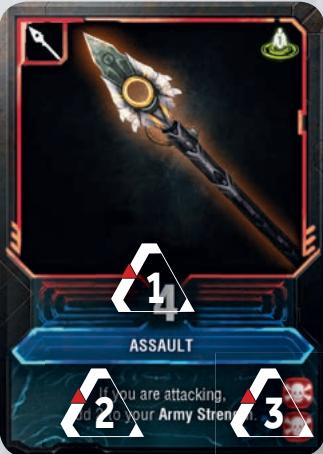
Casualties Symbol
Determines how much your own Hoplites you need to kill after the Battle for playing
given card. You kill 1 Hoplite per 1 symbol.

QUESTS
Just like monster hunts, quests are longer affairs that may take several turns to complete if you fail to prepare properly. The rewards, however, make them well worth your time. For example, a successful mission immediately brings you a glory token, that can be used to usurp power in nearby regions. Then, there are specific rewards, such as artifacts, additional troops or rare singleuse abilities that you may use later to turn the tide of the game.
QUEST CARD


Quest Steps: The requirements a Hero must meet to be placed at certain step when beginning a Quest. They mark progression of the Quest - it is finished, once a Hero gets to the third Quest Step.

Reward: The effect to be resolved by a player when his/her Hero is placed on the third Quest Step.
Quest Region: The Region in which to place a Quest Token when its card is drawn from the Events Deck.


STARTING QUESTS
To start a Quest, a player must finish his/her Hero Movement in a Region with a Quest Token and meet the requirements for starting the Quest from any Step.

During a player's next Turn, instead of a Hero Movement, the player can move the Hero along the Quest Steps by one position (Hero Speed has no effect here). Remember that as soon as a player places the Hero on the Quest Card, that player no longer needs to meet the requirements of subsequent Quest Steps.
Even if you are already on Quest enemy player can start the Quest from higher Step and finish the quest before you.
FINISHING QUESTS
When a player moves a Hero to the final Step of a Quest Track, the Quest is completed (so, if a player meets the requirements of the third Quest Step, the player can finish the Quest immediately).
A player places his/her Hero on the Map in the Region containing the Quest Token. The Hero cannot move this turn.
Receive a reward for completing the Quest (written on the Quest Card).
Receive a Glory Token in the color of the Region where the player undertook the Quest.
Remove the Quest Token from the Map.
Once a player enters on a Quest, he/she cannot abandon it!
ARTIFACTS
Artifacts let a player use a special skill, the effect of which is described on the Artifact Card. After being used, the Artifact cannot be used again until it is charged during the "Build Monument" Special Action used by any player. Once a player obtains an Artifact, he/she has it for the rest of the game. Artifacts are visible to other players.
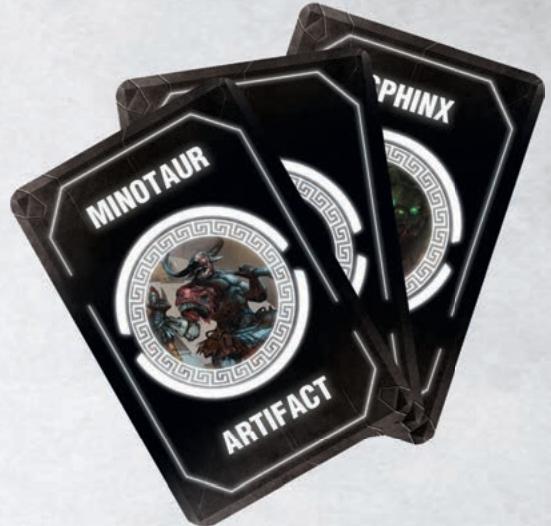
A special type of Artifact is a God's Artifacts. These Artifacts can be obtained by controlling a Region with a Monument. God's Artifacts work just like normal Artifacts, but with one difference - once any other player takes control over a Region with a Monument for a given Artifact, that player immediately takes God's Artifacts associated with this Region from previous owner. This Artifact is charged for the new controller.

BLESSING CARDS
Building a Temple for which on the Temple Card is a "Draft" keyword and red frame triggers a draft of Blessing Cards. Blessing Cards are special enhancements in the form of passive bonuses for your Hero and Army.

The player who built the Temple which triggered the Blessing Draft draws an amount of Blessing Cards equal to the numbers of players +1, picks one, and passes the rest of the cards to the player to the right (counter-clockwise). Continue this process until all players have drawn a card from the draft then discard the unused card.
Blessings Cards are permanent and visible to other players.

When the game is played by two players, the following elements change:
Two of the victory conditions:
Warlord of Hellas: You need to take control of not two but three Lands.
King of Kings: Ignore this victory condition.
"Build Monument" Special Action:
Before using the "Build Monument" Special Action, a player can choose one of the Special Actions already used (with a Used Action Token on them) and use it before "Build Monument" Special Action.
If all Monuments are built this way, you can still use "Build Monument" Special Action normally, excluding adding next level of Monu-
GAMETERMS GLOSSARY
MAP
REGION - Smallest terrain unit. Each has a certain Population Strength. p. 7 (Region)
NEUTRAL REGION - Region that is not controlled by any player. p. 7 (Region)
LAND - Terrain unit. Composed of few Regions of the same color. p. 7 (Land)
CITY - Present in some Regions. Enables you to Recruit 2 Hoplites and Fortify your Hoplites.
SPARTA - City. Enables you to Recruit 4 Hoplites and Fortify your Hoplites with additional bonus. (same as City)
TEMPLE - Can be built on Regions with Shrines. Provides players with Priests.
p. 7 (Shrine / Oracle of Delphi) )
DELPHI - Temple. Gives an additional special bonus when built. (Same as Temple)
p. 7 (Shrine / Oracle of Delphi) )
SHRINE - A place present in some Regions showing where a Temple can be built.
ARMY - All Hoplites in a single Region.
p. 10 (March), p. 13 (Battle)
HOPLITE - Base Army unit with Army Strength 1 and Movement 1. p. 9 (Hoplite Movement), p. 13 (Battle)
MONUMENT - Send Priests here to use Monument Powers. Can be expanded with the Build Monument action.
p. 6 (place monument foundation), p. 9 (Priests)
MONSTER - Creature represented by a miniature. Can move through Regions and perform Region Atacks. Heroes can Hunt them. p. 11 (Monster Phase), p. 12 (Monsters, Hunt)
MONSTER TRAY - Tray with details about Monster Special Attacks, Region Attacks, Wounds and Rewards.
HERO - Represented by a miniature and Hero Tray. Can Hunt for Monsters, complete Quests, Usurp territory and assist Hoplites in Battle.
p. 8 (Heroes and Armies)
CONTROL TOKEN - Marks control over a Region. p. 7 (Region)
CONTROLLED REGION - Region containing a player's Control Token. p. 7 (Region)
POPULATION STRENGTH - Value defining how many Hoplites you need to move into a Neutral Region to control it. (Same as hoplite) p. 7 (Region)
QUEST TOKEN - Marks a Region in which there is a certain Quest. p. 7 (Quest Token) p. 14 (Quests)
QUEST SLOT - Place on the map to put a Quest Card. p. 7 (Quest Token) p. 14 (Quests)
QUEST STEP - Place to put your Hero to signify his progress on a Quest. p. 7 (Quest Token) p. 14 (Quests)
SEA TRAIL - Connection between two Regions that enables travel between them as if they were adjacent.
p. 7 (Sea Trail)
EVENTS AND DECKS
EVENTS DECK - Deck used in the Event Phase. Composed out of Quests Cards and Monster Cards.
QUEST CARD - Card with rules and rewards for a quest. Placed on a Quest Slot and connected to a Quest Token on the map.
p. 6 (Prepare starting events), p. 7 (Quest Token) p. 14 (Quests)
MONSTER CARDS - Card that either summons a Monster in a certain Region or makes it Evolve if already on the map.
p. 6 (Perpare starting events), p. 11 (event phase), p. 11 (Monster Phase), p. 12 (Monsters, Hunt)
TEMPLE CARDS - Card where unbuilt Temples are placed. They define additional bonus from building Oracle of Delphi and places for Blessing draft.
p. 6 (Place Temples), p. 14 (Blessing Draft)
MONSTER ATTACK DECK - All attacks that a Monster uses against a Hero during a Hunt.
COMBAT CARD - All attack cards that a Hero can play during Battle or a Hunt.
p. 13 (Battle)
ARTIFACT CARD - Special item that a Hero can possess. They are charged during "Build Monument" Special Action.
p. 9 (Using Artifacts), p. 14 (Artifacts)
MONSTER ARTIFACT - Artifact linked to a Monster. Can be only obtained after a succesful Hunt. (same as Artifact Card)
p. 9 (Using Artifacts), p. 12 (Hunt Rewards), p. 14 (Artifacts)
GODS ARTIFACT - Artifact that can be obtained by controlling a Region with a Monument. (same as Artifact Card)
p. 6 (place monument foundations), p. 9 (Using Artifacts), p. 14 (Artifacts) NEUTRAL ARTIFACTS C - Artifacts that are not connected with Monsters or Gods and can be collected through various means. (same as Artifact Card)
p. 9 (Using Artifacts), p. 12 (Hunt Rewards), p. 14 (Artifacts) MONSTER DIE - Die that determines what each Monster on the map does during the Monster Phase.
p. 10 Monster Phase)
GLORY TOKEN - Token that Heroes collect after killing a Monster/ completing a Quest. Enables you to use Usurp action in a Region with your Hero.
p. 10 (Usurp), p. 12 (Hunt Rewards), p. 14 (Quests)
COMBAT AND HUNT
WOUND - Place on the Monster Tray that shows which Combat Card symbol is needed deal a wound to the Monster.
p. 12 (Monsters, Hunt)
BATTLE- Combat between Hoplites of 2 players in the same Region. p. 13 (Battle)
INJURY - Wound that a Hero takes. Affects a single Attribute. p. 12 (Hunt)
COMBAT CARD'S STRENGTH - Value of a Combat Card used in Battle and Hunt.
FORTIFIED HOPLITE - Hoplite in a City/Sparta. Receives +1/+2 bonus to Army Strength.
p. 7 (City / Sparta), p. 11 (Hunt)
KILLING HOPLITIES - Taking Hoplites off the map from the result of Battles, Monster Region Attacks, etc.
p. 13 (Battle)
ARMY STRENGTH - Strength of Hoplites taking part in a Battle in
cluding all bonuses from Combat Cards etc. p. 13 (Battle)
CASUALTIES SYMBOL - Symbols on some Combat Cards defining how many Hoplites to sacrifice after Battle.
HUNT REWARD - Reward that player recives after Hunt (even unsucessful) p. 12 (Hunt Rewards)
TURN AND ACTIONS
EVENTS PHASE - Comes after the "Build Monument" Special Action.
In this phase you draw an Event Card and play it out.
p. 10 (Event Phase)
MONSTER PHASE - Comes after the "Build Monument" Special Action. The player who played this action rolls the Monster Die for every Monster on the map.
p. 10 (Monster Phase)
PLAYER TURN - All Regular Actions played by single player. Ends with playing Special Action.
p. 9 (Course of the game)
ACTION - Move Hoplites, send Priests to Monuments, move Heroes, use Artifacts.
p. 9 (Regular Action)
HOPLITE MOVEMENT - Move as many Hoplites as the Leadership attribute value of your Hero.
p. 9 (Hoplite movement)
HERO MOVEMENT - Move your Hero an amount of Regions equal to (or less than) the Speed attribute of your Hero.
p. 9 (Hero movement)
PRAYER - Send a Priest from your Priest Pool to a chosen Monument to receive a Monument Power.
p. 9 (Priest)
SPECIAL ACTION - Action that is played at the end of of a Player Turn.
After played, it is then marked with Used Action Token.
p. 10 (Special Action)
USED ACTION TOKEN - Marks a Special Action as ussed. Players cannot use again Special Actions with these tokens.
p. 10 (Special Action, Build Monument)
"HUNT" SPECIAL ACTION - if your Hero is in the same Region as a Monster, you can try to kill it.
p. 10 (Hunt), p. 12 (Hunt)
"RECRUIT" SPECIAL ACTION - Recruit 2 Hoplites in each Region containing a City you control (4 for Sparta).
p. 10 (Recruit)
"USURP"SPECIAL ACTION - can be used if you have a Glory Token of the same color as the Region your Hero is in. Take control of the Region and Recruit 1 Hoplite in it.
10 (Usurp)
"BUILD TEMPLE"SPECIAL ACTION - build a Temple in a Region you control containing a Shrine. Add 1 Priest to your Priest Pool
p. 7 (Shrine / Oracle of Delphi), p. 10 (Build Temple)
"MARCH"SPECIAL ACTION - move your Army, or part of it, from one Region to a neighboring one.
p. 9 (Hoplite movement), p. 10 (March)
"PREPARE" SPECIAL ACTION - choose any 2 from the following options: Draw a Combat Card, Recruit a Hoplite in the same Region as your Hero, Heal one Injury on your Hero.
p. 10 (Prepare)
“BUILD MONUMENT" SPECIAL ACTION - choose a Monument and build next level. All players remove Priests from all monuments, remove all Used Action Tokens. You collect Priests from Temples under your control, then go to the Monster Phase and Event Phase.
p. 10 (Build Monument)
LEADERSHIP- Hero Attribute which defines how many Hoplites you can move each turn as a Regular Action.
p. 8 (Leadership)
STRENGTH - Hero Attribute which defines how many Combat Cards you draw at the start of a Hunt.
p. 8 (Strength)
SPEED- Hero Attribute which defines how many Regions you can travel each round with your Hero Movement Action.
p. 8 (Speed)
PRIEST AND MONUMENTS
PRIEST POOL - Amount of Priests you posses (max 4 in the pool). p. 8 (Priest pool)
PRIEST - Miniatures you can use for Prayer to get Monument Power. p. 8 (Priest pool), p. 9 (Priest)
SACRIFICING A PRIEST - Removing your Priest from a Priest Pool. p. 8 (Priest pool), p. 9 (Priest)
MONUMENT POWER - Bonus from placing a Priest under the Monument listed on Monuments Tray. Resolves immediately.
p. 9 (Priest), p. 10 (Build monument)
BLESSING CARDS - Passive bonus card collected from Blessing Draft. p. 14 (Blessing cards)
BLESSING DRAFT - Special ph
内容过长,此处只内联前一部分;完整内容请下载或到规则页阅读。
下载 Markdown原文为社区整理/出版社公开资料,版权归原作者,仅供个人学习查阅。