
喵咪行动:太空远征Mlem Space Agency
一句话概览
喵咪行动:太空远征 是一款已收录于村了吗规则库的桌游,支持 2–5 人,原名 Mlem Space Agency。
本页内容:一句话概览 · 常见问题
这游戏怎么玩
- 本站已收录这款游戏的规则资料,可以在对话里直接提问规则细节。
常见问题(FAQ)
以下 1 条问答中 0 条来自站内玩家的真实提问,其余 1 条为本站整理的常见疑问;答复内容保持原样。
喵咪行动:太空远征支持几个人玩?
2–5 人。
去哪查完整规则
想核对具体规则细节、卡牌效果或某个回合的结算方式,可以在村了吗里选中这款游戏后直接提问。
同类桌游
- 卡坦岛德式
- 工业革命:伯明翰德式
- 勃艮第城堡:特别典藏版德式
- 方舟动物园德式
- 卡卡颂抽象
- 瘟疫危机传承:第一季美式
- 阿瑞迪亚:勇踏征途美式
- 重塑宇宙德式
- 幽港迷城美式
- 埃多拉的德鲁伊德式
规则原文(Markdown)
本站收录这款游戏的规则原文 1 个文件,此处内联渲染 1 个,可直接展开阅读或下载。
MLEM_Space Agency_rules_ENG_www.md27.9 KB
MLEM SPACE AGENCY

You don't have to read
this rulebook. Watch
a video explaining
the rules.
RULEBOOK
IN THE YEAR 2O75, SOON AFTER THEY TOOK CONTROL OF THE WORLD, CATS SET THEIR SIGHTS ON A NEW FRONTIER – SPACE! FELINE SPECIALISTS NOW COMPETE FOR COSMIC DOMINANCE. IT'S A FIERCE RACE, FILLED
WITH CATNIP-FUELED SHENANIGANS AND ROCKETS THAT GO BOOM!
WHO WILL EMERGE VICTORIOUS IN THIS EPIC RACE, SEIZE THE INFINITE TREASURES
OF THE MILKY WAY IN THEIR PAWS, AND BECOME THE TRUE COSMIC CONQUERORS?

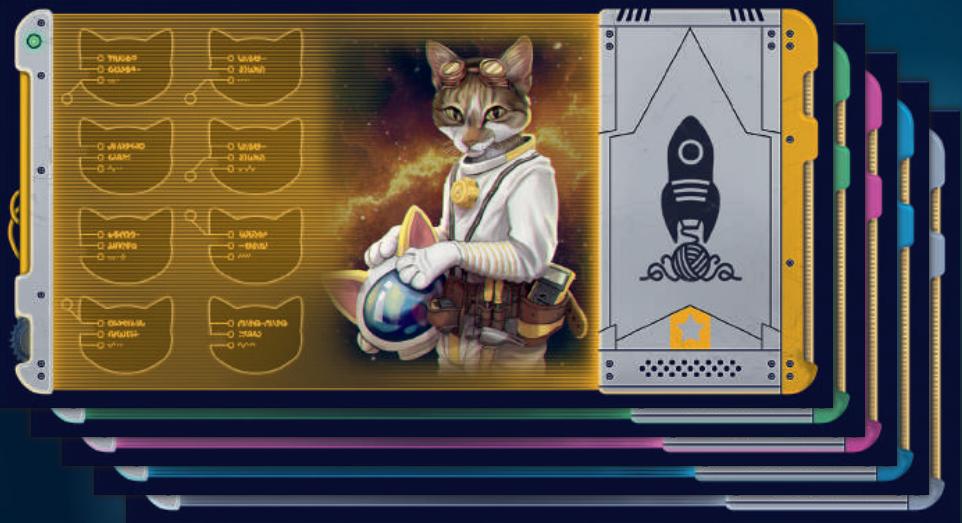
5 player boards (in 5 colors)
EXPLORATION VARIANT:
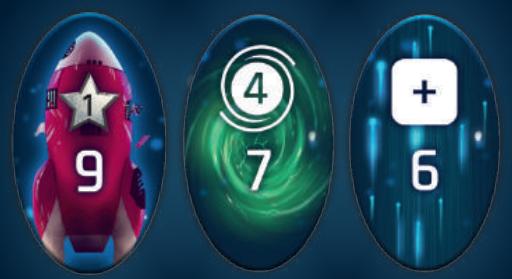
20 exploration tokens
UFO VARIANT:
食☆
:15/:7/:11/12

20 secret mission tokens
5 UFO tokens
1 cosmic failure token
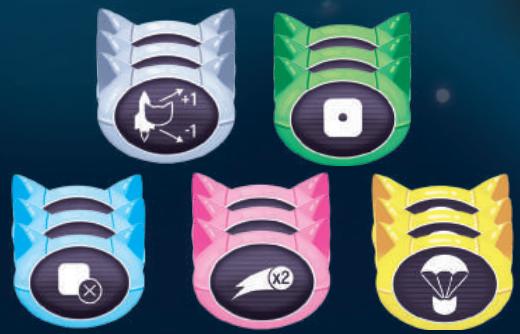
40 astronaut tokens (in 5 colors)
SECRET MISSIONS VARIANT:
14 expedition tokens
00
1 UFO marker


Whoever most recently cleaned the litter box starts the space expedition. The starting player puts the rocket board, rocket marker and all the dice in front of them.
Each player takes a player board and astronaut tokens of a chosen color. Place the tokens on the board in any order.
Leave all the other components in the box.
ATTENTION! Exploration, secret mission, UFO, and expedition tokens, as well as the UFo marker, are used in variants for advanced play. We recommend that you don't use them in your first game.
GOAL OF THE GAME
You are the leaders of one of the five Cat Aeronautics and Space Agency centers.
Your goal is to send your astronauts to planets, moons, and the farthest reaches of the newly discovered galaxy. The game consists of a number of consecutive space explorations, during which you will choose one of your astronaut-specialists to send to space. But do so carefully, because each of them has a special ability that you can use to your advantage. The farther you manage to go, the more points you'll get. But be careful! The rocket with your astronauts might crash, and your plans will fail. The game ends when one of you places all of your astronauts in space, or if the rocket crashes 11 times. The winner of the game is the player whose astronauts gained the most points.
3.2. 1... Blast of!

COSMICEXPEDITION
One cosmic expedition consists of the takeoff phase and a few consecutive travel and landing phases. The cosmic expedition ends when all the astronauts disembark the rocket or the rocket crashes.
After finishing a cosmic expedition, the player that started it gives the rocket board to the player to their left - this player will start the next cosmic expedition.
Takeoff phase
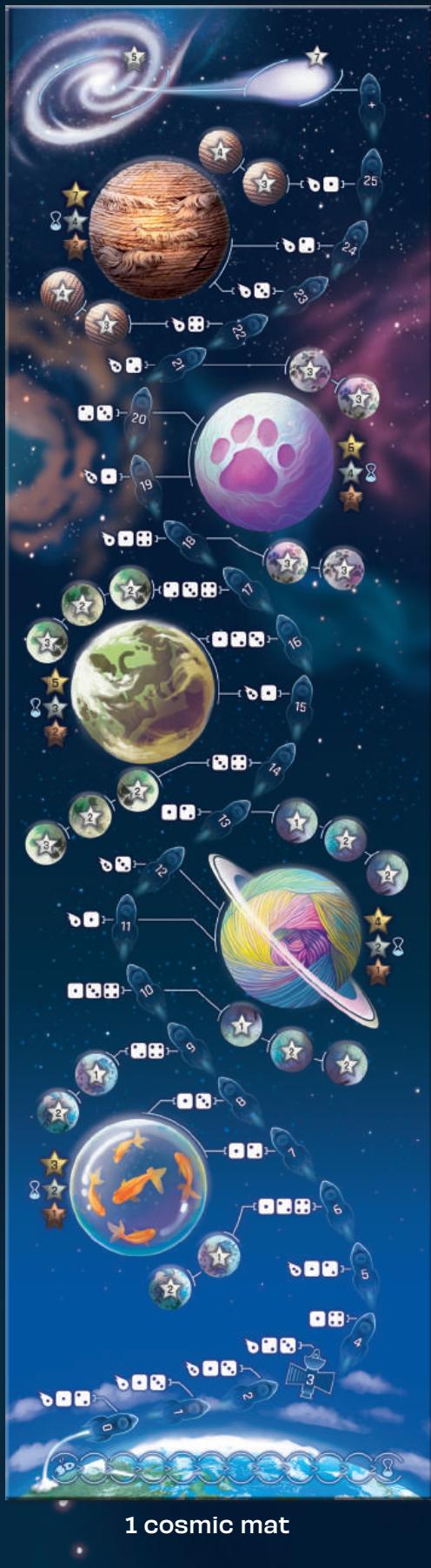
The player starting the expedition places the rocket marker on the 0 space of the cosmic mat.
Then they choose one of their astronauts and place them on the first space of the rocket board.

space for the astronaut starting the expedition
Next, in clockwise order, the remaining players each choose one of their available astronauts and place them on the next available spot on the rocket board. The player starting the expedition becomes the commander of the expedition until their astronaut disembarks the rocket or until the rocket crashes.
ATTENTION! Each astronaut has a unique function. Their descriptions can be found later in the rulebook (see p. 12).
Travel phase
The travel phase consists of the following stages:
Stage 1.
The commander of the expedition rolls all the available dice (6 dice in the first travel phase). Then you group them according to the rolled results (a single die can be a group).
Example
4 groups of dice after rolling 6 dice.


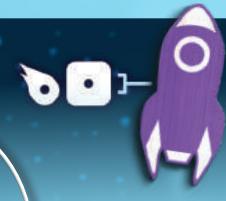
Take note of the dice at the rocket marker's current location. Dice that don't correspond to those values cannot be used during the rest of this travel phase.
Example

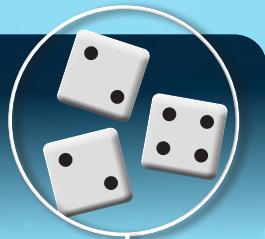
Results that the commander may use for travel.
Results that the commander cannot use for travel.
Stage 2.
From the remaining dice (those matching the symbols next to the rocket marker's current location) the commander chooses a group or groups of dice to use for this travel. If the commander chooses a group with multiple dice, they must use all of the dice in that group.
The rocket will then move an amount of spaces equal to the sum of the values of the dice chosen.
ATTENTION! The value of the afterburner face is determined by the rocket marker's current location.


move 1 space

move 2 spaces

move 3 spaces
Example

The commander decides to use both dice groups for travel. The afterburner dice currently have a value of 1, so the rocket will move 3 spaces (1 ×+ 2 ×). Alternatively, the commander could also choose only one of the groups and move fewer spaces.

Stage 3.
After moving the rocket marker, the commander discards the used dice - put them on the cosmic mat as a reminder. Those dice may not be used again until the end of this expedition.
ATTENTION! The afterburner symbol is an exception! Dice with the afterburner symbol d are never discarded, unlike other dice. They will be available during the next travel phase.
ATTENTION! If the commander ends the discard stage with zero dice remaining, they take one from the cosmic mat. The commander must always have at least 1 die.
That ends the travel phase. If the rocket hasn't crashed, move to the landing phase.
Crashing the rocket
After rolling the dice, if none of the results match the symbols next to the rocket marker's current location, the rocket crashes. The commander moves the cosmic failure token to the next space on the cosmic failure track.
All players take their astronauts still available on the rocket board and place them back on their player boards.
Example
In order to travel, the player used 2 dice with the d result and 1 with the symbol. Because the dice with the result are never discarded, they discard only the die with the result.

These dice will be available for the commander in the next travel phase.

This die cannot be used again during this expedition.
ATTENTION! As an exception, any astronaut with a parachute can still disembark on the current space with the rocket marker (see p. 12).
After the rocket crashes, the current cosmic expedition ends. The player that began the expedition gives the rocket board to the player on their left to start the next expedition.
Example
None of the results on the dice match the values and symbols visible next to rocket marker's location. The rocket crashes. The commander advances the cosmic failure token on the cosmic failure track.
Landing phase
The landing phase happens after each travel phase that didn't end with the rocket crashing. The commander of the expedition, and then all the other players (according to their placement on the rocket board, from top to bottom) decide if their astronaut should continue the expedition and stay in the rocket, or if they should disembark. There are no moons or planets on spaces from 0 to 5 where the astronauts could disembark - if the rocket marker is on one of those spaces, skip the landing phase.

Disembarking on the moons
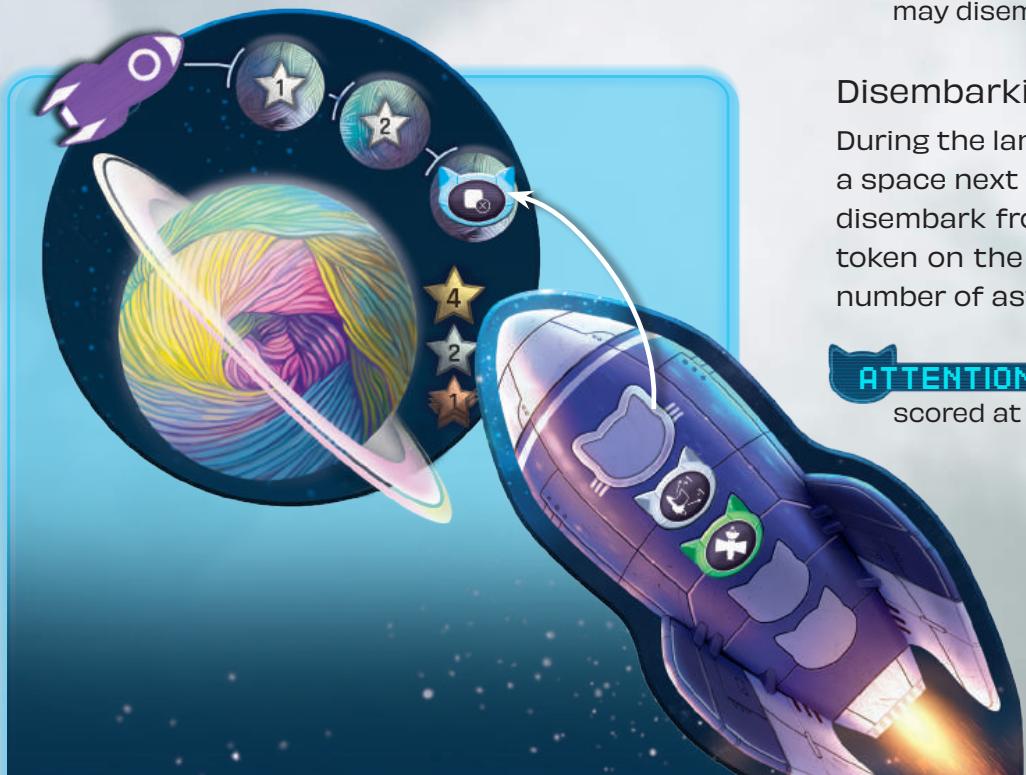
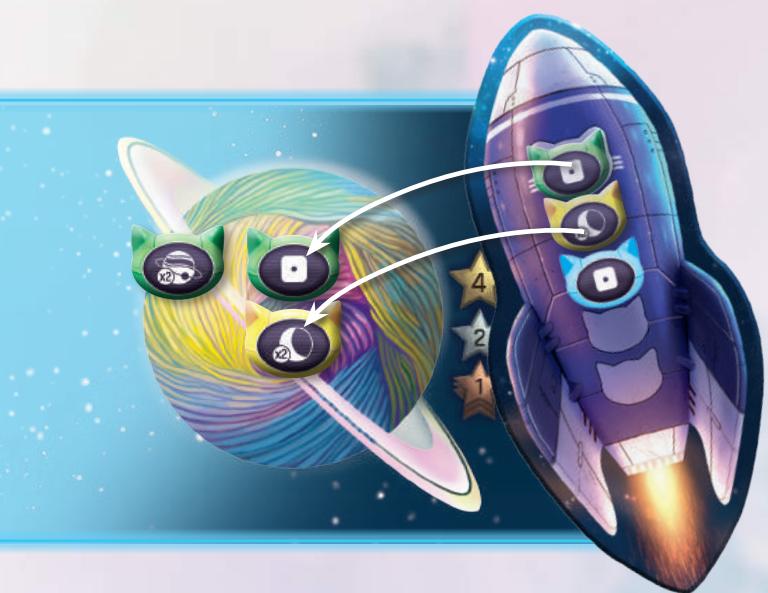
During the landing phase, if the rocket marker is on a space next to a moon, any player who decides to disembark from the rocket places their astronaut token on the unoccupied moon furthest from the rocket marker (with the most points). The player controlling this astronaut immediately receives the amount of points shown on the given moon.
ATTENTION! There can only be 1 astronaut per moon. If all of the moons next to the rocket marker's location are taken, none of the astronauts may disembark.
Disembarking on the planets
During the landing phase, if the rocket marker is on a space next to a planet, any player who decides to disembark from the rocket places their astronaut token on the given planet. There is no limit to the number of astronauts on a planet.
ATTENTION! Points for occupying a planet are scored at the end of the game.
There is no limit to the number of astronauts on a planet. Place the astronauts from top to bottom to indicate the order when the astronauts disembarked onto the planet.
In the following landing phases:
If an astronaut lands on a planet that already has an astronaut of the same color, place the new one next to the old one (forming a row of astronauts in that color).
• if this is the first astronaut of a given color on the planet, place them on the bottom, creating a new row.
Disembarking in deep space
If the rocket marker reaches deep space (the last space on the cosmic mat), all astronauts must leave the rocket. The commander's astronaut is placed on the comet and immediately receives 7 points, all the other players place their astronauts on the galaxy and receive 5 points each.
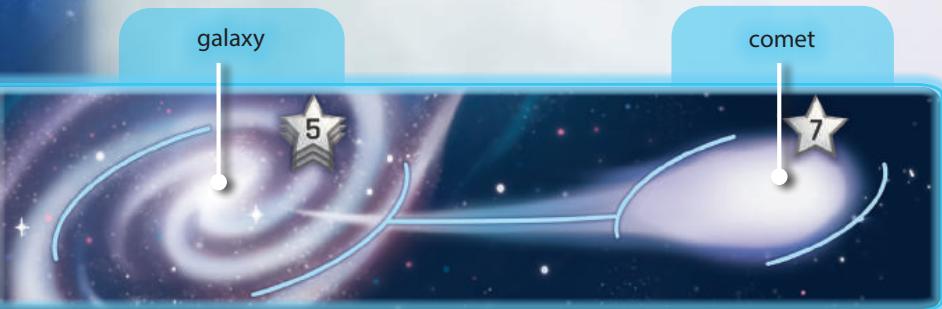
There is no limit to the number of astronauts on the galaxy or the comet.
Change of commandership
If the commander disembarks the rocket, the next player on the rocket immediately becomes the new commander. The new commander receives the unused dice and from now on they will perform the rolls and choose the results to be used in the travel phase. The rocket board remains in front of the original commander so as to not disrupt the player turn order.
Ending the cosmic expedition
The cosmic expedition ends when all astronauts disembark the rocket or the rocket crashes.
Goals
The first player to fulfill a goal token's conditions during the landing phase receives the goal token. After a player takes a goal token, no one else can take that token. At the end of the game, each goal token is worth 5 points.

First player to place 4 astronauts on 4 different planets.

First player to place 3 astronauts On 1 planet.


First player to place 4 astronauts on 4 moons.
First player to place 2 astronauts in deep space (it doesn't matter if it's the comet or galaxy).


END OF GAME
The game ends in one of two ways:
• after 11 failures, when the cosmic failure token reaches the last space on the track,
• when any player has placed all of their 8 astronauts on the cosmic mat. In this situation, finish the current cosmic expedition.
Counting points
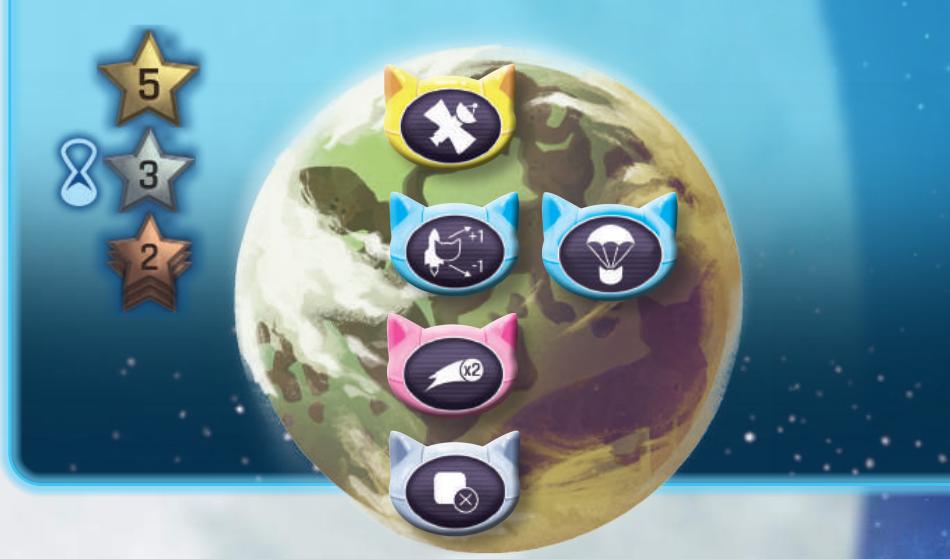
Consider points for each planet, starting with the one closest to the start of the track. Each planet has point values that will be awarded to players with the most astronauts.
Points for the player with the most astronauts on the planet.
The hourglass symbol is there to remind you to score those points at the end of the game.
Points for the player with the second highest amount of astronauts on the planet.
Points for all the other players with at least 1 astronaut on the planet.
If two or more players are tied, the player who disembarked on the planet first receives the higher amount of points. So at most one player gains the first place points, then at most one other player gains the second place points, then all other players with an astronaut there each gain the third place points.
Example
The blue player placed the most astronauts on the planet. They receive 5 points for being first. All the other players only have 1 astronaut each on the planet, but the yellow player was there first. The yellow player receives the 3 points. The 2 other players with astronauts on this planet get 2 points each.

Each player sums their points (for disembarking on planets and moons and deep space, and for fulfilling goals). The winner of the game is the player with the most points. In case of a tie, players share the victory.
FUNCTIONS OFTHE ASTRONAUTS
Each player has an identical set of 8 astronauts with the following functions:

If this astronaut is placed on the rocket board, the rocket marker starts the expedition from the space marked with a satellite (3rd space).

If this astronaut disembarks in deep space, the player doubles the points scored (thus gaining 14 or 10).
ATTENTION! If there are two or more such astronauts in the rocket, the rocket still starts from the spot marked with the satellite.


During the landing phase, this astronaut may disembark the rocket as if the marker was one space higher (+1) or one space lower (-1) from its current position.

ATTENTION! If the astronaut moves from space 25 to deep space, the player immediately receives only 5 points.

If the rocket crashes at a location with a planet or unoccupied moon, this astronaut may still disembark there.
ATTENTION!If there is no space available on the current position, or the player decides not to disembark, the astronaut returns to the player.

If this astronaut disembarks on a moon, the player doubles the points scored for this moon.

The player doubles the points scored for the planet with this astronaut.
When this astronaut disembarks the rocket, the current commander must discard one die (as if they used it during travel). Remember that the last die always stays next to the rocket and the commander.
As long as this astronaut is in the rocket, during the travel phase the commander may use this astronaut as a die with value 1, in addition to whatever the rolled dice are. The commander may use this astronaut's ability only once during an expedition. If there are more such astronauts in the rocket, the commander may choose which one to use (they may use more than 1 during 1 travel phase). Flip the astronaut token face down after using the ability.
ATTENTION! In order to use this ability, the rocket must be on a spot with the dice symbol with one dot.
ATTENTION! If none of the values of the rolled dice matches the symbols next to the rocket marker's current location, but this location allows moving with 1, then the commander can use this astronaut to move as usual, instead of crashing.
ADVANCED GAME VARIANTS
Once you've played the base game, you may decide to add any of the following variants to make your next games more interesting. Variants may be added independently, in any combination.
UFO
During setup, after the steps described on pages 4-5, additionally shuffle all expedition tokens and create a face-down pile. Then place the UFO marker on the last space on the cosmic mat (marked with the “+” symbol). Place the UFO tokens in a pile, next to the mat, from the highest to the lowest value (the top token should have value 5).

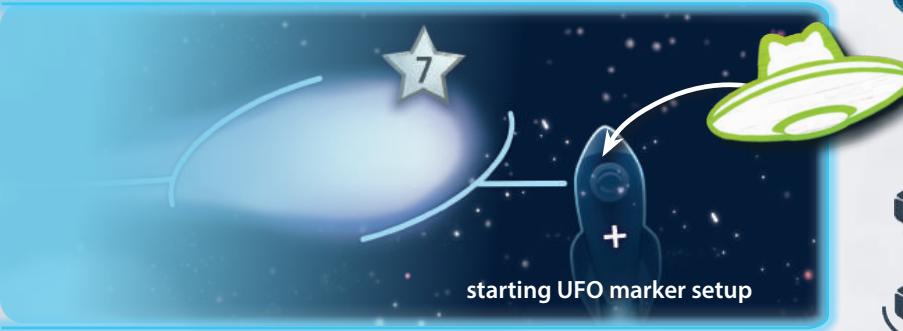
At the beginning of each expedition, the commander reveals the top expedition token and places it next to the rocket board. Each expedition token includes the following:
• uFo movement: Move the UFO marker from O to 3 spaces towards the start of the track. After each expedition, the UFO marker will be closer to the start of the track.
· Number of dice: The commander begins the expedition with 4, 5 or 6 dice. Unused dice are discarded.
• Additional ability: There are 3 types of additional abilities that the commander may use during the expedition.
Additional dice: Additional dice on the expedition token may be used regardless of the dice rolled. When the commander uses this additional ability, they must use all the dice shown on the token that match the dice next to the rocket marker's current location.

ATTENTION! If none of the values of the rolled dice matches the symbols next to the rocket marker's current location and the commander uses the additional dice to travel, the rocket doesn't crash.

Keep the dice: The dice used during this travel phase are not discarded.
Reroll: The commander may reroll all the available dice once. The commander must use the new results.
The additional ability may be used only once. Discard the expedition token back into the box after using the ability. If the commandership changes and the expedition token hasn't been used yet, the new commander may still use it.

contnst w t te l lf th rock same space as the UFO marker, the commander receives the top token from the UFO token pile (if there are any left). The commander keeps the token
in front of them (face down). The token will score additional points at the end of the game (the points are added to the end scoring result).
Explorations
During setup, after the steps described on pages 4–5, additionally shuffle all exploration tokens and create a face-down pile. Then reveal 5 exploration tokens and place them on the corresponding spaces of the cosmic mat.

When the rocket ends its travel phase on a space with one of the exploration tokens, the token is immediately activated.
ATTENTION! Remove the token after activating it, then draw and place a new exploration token so there are always five exploration tokens on the cosmic mat. When the pile of exploration tokens runs out, do not add more tokens.
Types of exploration tokens:
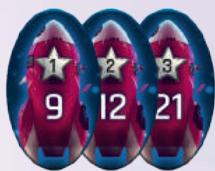

1, 2 or 3 points: The commander receives the token and places it, face down, on their player board. The point value on this token is added to the player's final score at the end of the game.
Regain a die: The commander regains 1 discarded die. During activation of this token, if the commander has all of the 6 dice available, discard this token without using its effect. Discard this token to the box after using the effect.
ATTENTION! Remember that the commander first discards used dice and only then resolves the exploration token's effect.

Space-time tunnel: The rocket commander immediately moves the rocket marker 4 spaces forward. The travel phase immediately ends afterwards. After the rocket moves, if it is now at a location with an exploration token, activate it.
Secret missions
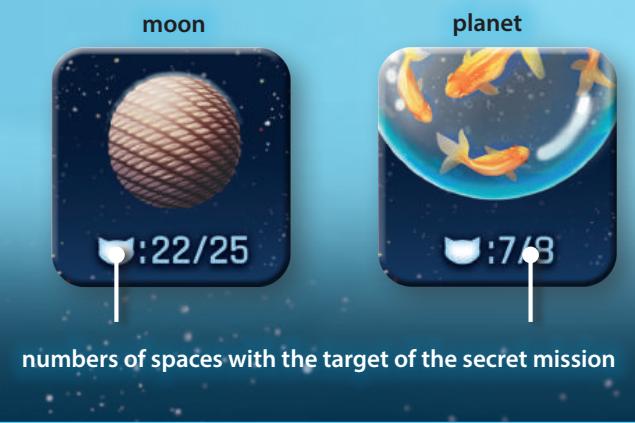
During setup, after the steps described on pages 4–5, additionally shuffle all secret mission tokens and deal 4 tokens to each player. Each player chooses 3 tokens that they want to keep, returning the other token to the box. The tokens are kept secret. In order to fulfill a secret mission, a player must place an astronaut on the moon or planet indicated on the given secret mission token. The numbers on the tokens indicate spaces with the target of the secret mission.
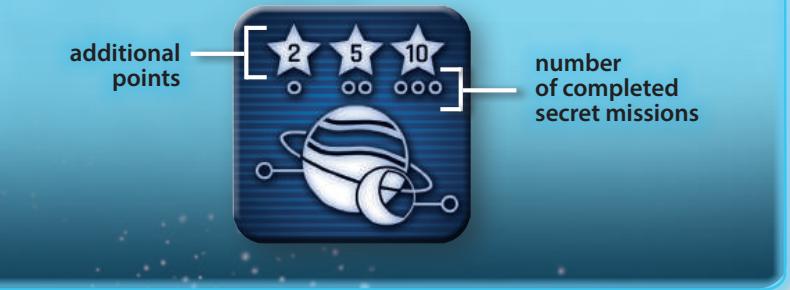
Players gain more points (2, 5, or 10) for completing one or more secret missions. Points scored for completed secret missions are added to the player's final point score at the end of the game.
Example secret mission tokens
Points for completed secret missions
Credits
Game designer: Reiner Knizia
Illustrations: Joanna Rzepecka
Graphic design: Joanna Rzepecka, Bartłomiej Kordowski
Game development: Andrzej Olejarczyk, Michał Szewczyk, Przemek Wojtkowiak

Rulebook: Studio Rebel
Project coordination: Sławomir Gacal
Translation and editing: Bryan Gerding, Tabletop Polish, Russ Williams
Layout: Ka Leszczyńska, Artur Mikucki
From the designer:
I would like to thank all the testers that helped to make this game. I'd especially like to thank: Sebastian Bleasdale, Rudi Gebhardt, Florian Gratzer, Florian lonescu, Margret Klinkhammer, Dorette Peters, Bert Scholz, Vroni Sigl, Andreas Stamer, Dominik Volland, Peter Wimmer and Philipp Winter.
Rebel Studio would also like to thank the tester's group Roboty Planszowe: Arkadiusz Dymalski, Jakub Prażmowski, Jeremi Prażmowski, Jędrzej Modrzyński, Jarosław Piersiała, Michał Długaj, Bartosz Wyrwał.
© Dr Reiner Knizia, 2023. All rights reserved.

studio@rebel.pl www.rebelstudio.eu
r'ebel
Rebel Sp. z o.o.
ul. Budowlanych 64c
80-298 Gdańsk, Polska
www.wydawnictworebel.pl
wydawnictwo@rebel.pl
MLEM SPACE AGENCY
ICONEXPLANATION
Functions of the astronauts

If this astronaut is placed on the rocket board, the rocket marker starts the expedition from the space marked with a satellite (3rd space).

During the landing phase, this astronaut may disembark the rocket as if the marker was one space higher (+1) or one space lower (-1) from its current position.

If the rocket crashes at a location with a planet or unoccupied moon, this astronaut may still disembark there.

If this astronaut disembarks on a moon, the player doubles the points scored for this moon.

The player doubles the points scored for the planet with this astronaut.

If this astronaut disembarks in deep space, the player doubles the points scored (thus gaining 14 or 10).

When this astronaut disembarks the rocket, the current commander must discard one die (as if they used it during travel). Remember that the last die always stays next to the rocket and the commander.

As long as this astronaut is in the rocket, during the travel phase the commander may use this astronaut as a die with value 1, in addition to whatever the rolled dice are. The commander may use this astronaut's ability only once during an expedition. If there are more such astronauts in the rocket, the commander may choose which one to use (they may use more than 1 during 1 travel phase). Flip the astronaut token face down after using the ability.
Goals

First player
to place
4 astronauts on 4 different planets.

First player to place 4 astronauts on 4 moons.


First player to place 3 astronauts on 1 planet.
First player to place 2 astronauts in deep space (it doesn't matter if it's the comet or galaxy).
UFO - expedition tokens
Additional dice: Additional dice on the expedition token may be used regardless of the dice rolled. When the commander uses this additional ability, they must use all the dice shown on the token corresponding with the dice next to the rocket marker's current location.

Keep the dice: The dice used during this travel phase are not discarded.

Reroll: The commander may reroll all the available dice once. The commander must use the new results.
Exploration tokens

1, 2 or 3 points: The commander receives the token and places it, face down, on their player board. The point value on this token is added to the player's final score at the end of the game.

Regain a die: The commander regains 1 discarded die. During activation of this token, if the commander has all of the 6 dice available, discard this token without using its effect. Discard this token to the box after using the effect.

Space-time tunnel: The rocket commander immediately moves the rocket marker 4 spaces forward. The travel phase immediately ends afterwards. After the rocket moves, if it is now at a location with an exploration token, activate it.
下载 Markdown原文为社区整理/出版社公开资料,版权归原作者,仅供个人学习查阅。