
娜迦王Naga Raja
一句话概览
娜迦王 是一款已收录于村了吗规则库的桌游,支持 2 人,原名 Naga Raja。
本页内容:一句话概览 · 常见问题
这游戏怎么玩
- 本站已收录这款游戏的规则资料,可以在对话里直接提问规则细节。
常见问题(FAQ)
以下 1 条问答中 0 条来自站内玩家的真实提问,其余 1 条为本站整理的常见疑问;答复内容保持原样。
娜迦王支持几个人玩?
2 人。
去哪查完整规则
想核对具体规则细节、卡牌效果或某个回合的结算方式,可以在村了吗里选中这款游戏后直接提问。
同类桌游
- 卡坦岛德式
- 工业革命:伯明翰德式
- 勃艮第城堡:特别典藏版德式
- 方舟动物园德式
- 卡卡颂抽象
- 瘟疫危机传承:第一季美式
- 阿瑞迪亚:勇踏征途美式
- 重塑宇宙德式
- 幽港迷城美式
- 埃多拉的德鲁伊德式
规则原文(Markdown)
本站收录这款游戏的规则原文 1 个文件,此处内联渲染 1 个,可直接展开阅读或下载。
2019 01 15 Nagaraja Rules English LR.md17.4 KB

BRUNO CATHALA &THEO RIVIERE VINCENT DUTRAIT
Twin temples devoted to two long-forgotten divinities - Ananta and Garuda - have been discovered in India.
Arcane relics stashed in hiding places around the temples are rumored to be the source of their divine powers. Legend has it that Ananta was protected by the Naga, snake-like guardians who hid treasures in their scaly eggs. Garuda, a mythical giant eagle, is their natural enemy. As an intrepid archaeologist, you are obsessed with the idea of adding these relics to your collection...
You set off at once for one of the temples. Just as you enter the temple grounds in search of its treasures, your arch-rival, another renowned collector, is arriving at the other temple. The battle to be first begins...
To reach the secret hiding places and discover Ananta's relics before your rival, you must make your way through a maze of constantly-changing paths...
The first to succeed will command their fabulous power... unless the three cursed relics of Garuda are revealed, in which case, the unfortunate finder will be damned for all eternity!
GAME CONCEPT
In Nagaraja, each player moves around their own temple, which has spaces for room tiles in its center, and 9 hiding places containing sacred and cursed relics around its perimeter. These relics are worth victory points and are placed randomly, facedown, around the temples.


3 cursed relics (each worth 6 victory points)
6 sacred relics (each worth 3 to 5 victory points)
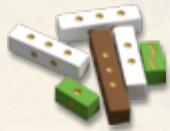
Fate sticks
Each round, a new room tile becomes available and the players compete to win it by throwing fate sticks. The player with the most fate points showing on their sticks wins the room tile and places it in their temple.
Each player attempts to create paths leading to their relics, enabling them to flip them face-up and score victory points. The first player to score 25 victory points wins the game. However, a player automatically loses the game if they reveal all three cursed relics.
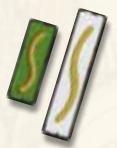
Nagas

In this game, you can never take anything for granted! During a round, players may use the Nagas shown on their fate sticks to play cards with effects that let them take charge of their destiny...
Cards

PRESENTATION AND SETUP

Pick a temple (either gray or yellow) and place it in front of you with the three blue entrances facing you.
Take the 9 relics of the matching color and randomly place them face-down around your temple (except on the entrances).
Collect a player aid.
Shuffle the 17 room tiles and form a face-down draw pile.
Place the trap next to the room tiles.
Shuffle the 12 amulets and form a face-down draw pile.
Lay out the 36 fate sticks between the two players.
Shuffle the 48 cards and form a face-down draw pile.


Determine who will be the first player for the first round. Each player throws 2 brown fate sticks. The player with the most fate points showing on their sticks becomes the guide and collects the scroll. In the event of a tie, throw the sticks again until there is a winner.
Deal 5 cards to each player.
Reveal the top room tile in the pile. This is the tile that players will compete to win in the first round. If the tile contains a special location, place an amulet face-down on it.
You are now ready to delve into your temples in search of ancient relics!
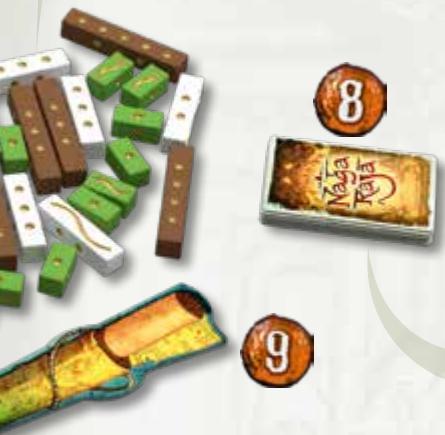
There are 3 types of fate stick, all of which are four-sided. The player aid shows the composition of the sides on each type of stick. Two symbols may appear on fate sticks:
Eachcounts one fate point towards the fate points total that determines which player wins the current room tile.
Eachis a Naga, which can be used to activate the effect of a card still in your hand.

Bigger sticks have more fate points but fewer Nagas.
Conversely, smaller sticks have more Nagas and fewer fate points.
Choose which sticks to throw wisely, depending on the desired result:
If you want to win the room tile, you will tend to throw more brown sticks (with more fate points).
If you are hoping to activate the effects on certain cards, you will choose more green sticks (with more Nagas).
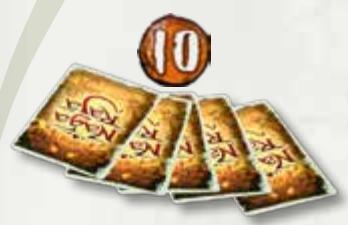
The 48 cards can all be used in two different ways. How cards are used depends on when they are played during a round:
At the start of the round, you can select a card (either alone or with other cards that have the same symbol) in order to throw the fate sticks shown at the top of the card.
During a round, you can use a Naga to activate a card still in your hand, in order to apply the effect shown at the bottom of the card. By activating effects, the players can influence various game elements: room tiles, cards, fate sticks and relics.
You can never use both functions of a card at once! Before choosing whether to use a card to select sticks or activate an effect, you should consider four points:

O TYPE AND NUMBER OF STICKS TO THROW
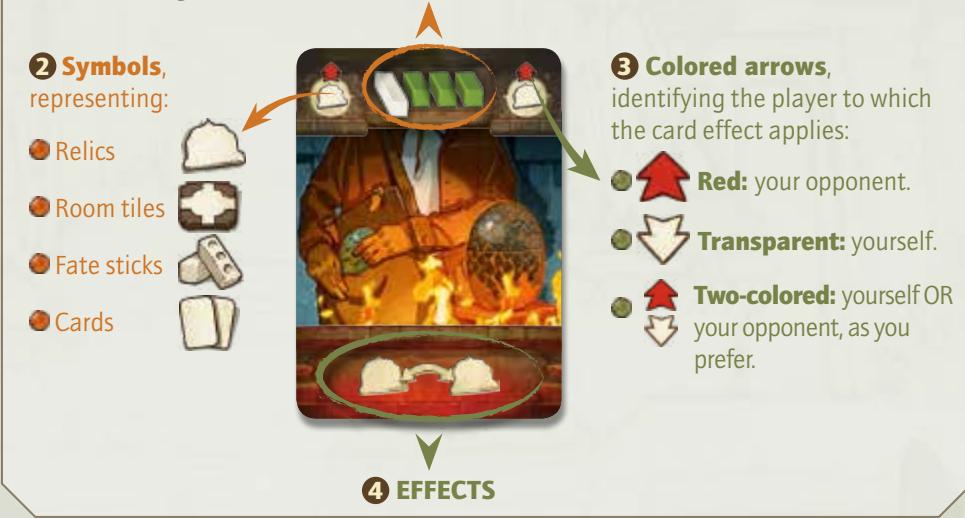
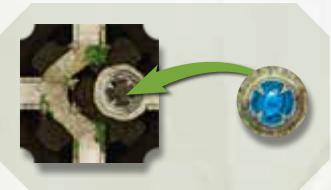
Example: You can choose how to use the above card:
- SELECT it, in order to throw 3 green sticks and 1 white stick.
- ACTIVATE it, in order to swap the positions of 2 relics around the opponent's temple. In both cases, the card is discarded at the end of the round.
Note: The symbols at the top of the card indicate the game elements to which the effect applies.

GAMEPLAY
1 The game is played in a series of rounds. It ends immediately when any of the “end of game” conditions are fulfilled (see page 5). Each round, a room tile becomes available and the players compete to win it by playing cards and throwing fate sticks. Each round is played in 4 steps.

STEP 1: CALL OF FATE
The players use cards to choose which fate sticks to throw.
The guide consults their hand, selects any number of cards showing the same symbol11SE1O1(regardless of the color of the arrows around the symbol) and places them face-down on the table. Their opponent then does the same. Each player must select at least one card.
The cards are then revealed simultaneously. Each player collects the fate sticks shown on the card(s) that they played, and the two players then throw their sticks at the same time. Note: If a thrown stick does not show a clear result, throw it again.
Example: Elodie (the guide) begins by selecting 1 card from her hand. Then her opponent, Marion, selects 2 cards of the same type. They reveal their cards simultaneously. Elodie's card lets her throw 3 white sticks. Marion's cards let her throw 3 brown, 1 white and 1 green stick. They throw their sticks at the same time, with the following result: 5 fate points and 1 Naga for Elodie, 11 fate points and 1 Naga for Marion.


STEP 2: CONFRONTATION
The players use Nagas to activate the effects of cards still in their hand. Then determine who wins the current room tile.
Some sticks have sides showing a Naga Beginning with the guide, the players may, one after the other, use a Naga, When you use a Naga, discard the stick showing a Naga symbol and activate the effect of a card still in your hand. Place the activated card face up in front of you and apply its effect. The other player may then use a Naga. Play continues in this way until both players have passed consecutively, ending the Confrontation. Note: players are not allowed to inspect the discard pile!
The player with the most fate points wins the current room tile. In the event of a tie, the guide wins the tile. All cards played during steps 1 and 2 are discarded. Note: If only one player has Nagas, they may use them consecutively. If neither player has any Nagas, skip this step and calculate the fate points total immediately.
Example: Elodie (the guide) begins by using a Naga to activate a card in her hand. Her card forces Marion to discard 2 brown sticks. Marion chooses not to use her Naga. At the end of the confrontation, Elodie has a total of 5 fate points, compared with 4 for Marion. Elodie wins the current room tile and the cards played during the round are discarded.


STEP 3: EXPLORATION
When you place a room tile in your temple, the aim is to score victory points by creating paths that lead to your relics.
The player who won the room tile must place it in their temple (orienting it however they choose):
ElTHER touching one of the three entrances.

OR orthogonally adjacent to any other room tile already placed.
As soon as your room tiles form a path connecting any of your temple entrances to:
Example: Possible locations for a new room tile.
An amulet: collect it, peek at it and place it in front of you. You may look at and play the amulet at any time during the game.
A relic: immediately flip it face-up (in the same location), and score the number of victory points shown on it. If at any time during the game, the path between the relic and the entrance is broken, flip the relic face-down again. Face-down relics do not score victory points.
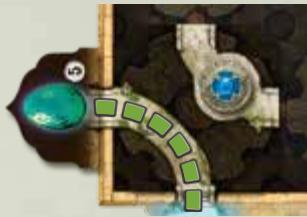
Example: Elodie has won a room tile and must now place it in her temple. Depending how she positions it, the available paths will not lead to the same locations. She considers two options:
食
1) The path links an entrance to the leftmost relic, enabling it to be revealed. There is no path leading to the amulet, which remains concealed.

2) The path extends from an entrance to the amulet, enabling Elodie to collect it. No path leads to the relic, which therefore stays hidden.
She decides to collect the amulet, peeks at it, notes that it will score her 2 victory points and places it face-down in front of her.

STEP 4: NEW DEAL
Choose the new guide and deal new cards.
The player who did not win the previous room tile becomes the new guide. The guide takes the scroll, draws 3 cards and selects 2 of them to add to their hand. They then give the remaining card to their opponent, who adds it to their hand. Note: If there are no cards left in the draw pile, shuffle the discard pile to form a new face-down draw pile.
The new guide then reveals the top room tile to begin a new round.
Example: Marion - who did not win the room tile - becomes the new guide for the next round and takes the scroll. She draws 3 cards, keeps 2 and gives the remaining card to Elodie. She then flips a new room tile to begin the new round.

END OF THE GAME
Visible relics and collected amulets score the victory points shown on them. Add them together to determine your victory points total. The game ends immediately when:
One of the players reveals their third cursed relic. That player immediately loses the game, regardless of their victory points total.

One of the players reaches a total score of at least 25 points (without revealing all 3 of his cursed relics). That player immediately wins the game.

One of the players places the ninth room tile in their temple without triggering the aforementioned instant win/loss conditions. In this case, the player with the highest victory points total wins the game.
In the event of a tie, the winner is the player who placed their ninth tile.

AMULET AND CARD EFFECTS

AMULET EFFECTS

Amulets score the number of victory points shown on them. Keep them face-down until the end of the game.

Reveal and discard the amulet. Draw a card.

CARD EFFECTS
Note: The arrows at the top of the card indicate the player to which the effect applies (see page 3).
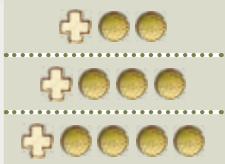
Add the number of fate points shown on the card to the total obtained from your sticks.

Choose two sticks that your opponent has just thrown. They must throw those sticks again.


Discard one or two (as indicated on the card) of the sticks just thrown by your opponent. You choose which sticks to discard. They will no longer count towards your opponent's fate points total.


Choose one or two (as indicated on the card) hidden relics around your temple or your opponent's temple (as indicated by the color of the arrows at the top of the card). Peek at them and then put them back, face-down, in the same positions. (The two relics do not have to be in the same temple).

Swap the positions of two (visible or hidden) relics around your temple or your opponent's temple (as indicated by the color of the arrows at the top of the card). The swapped relics must both be in the same temple. Depending on the available paths, a hidden relic may become visible, and vice versa.

Reveal and discard the amulet to cancel the effect of a card that your opponent has just activated using a Naga. The targeted card and its Naga are lost.
You cannot use an Amulet of Undoing to cancel the effect of another amulet.
The game contains three amulets of each type.

Pivot a room tile in your own temple or your opponent's temple (as indicated by the color of the arrows at the top of the card) to any orientation (but do not move it to another location).
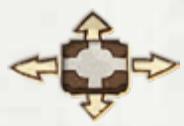
Move one of your room tiles to an empty space in your temple (but do not pivot it). This tile is not subject to the usual tile placement rules.

Swap the positions of two room tiles in your temple or your opponent's temple (as indicated by the color of the arrows at the top of the card). The swapped tiles must both be in the same temple. Do not pivot them.

Place the trap on an empty space in your opponent's temple. If the trap is already in your own temple, move it to your opponent's temple. It is not possible to place a room tile over the trap.
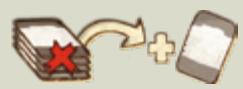
Choose any card in the discard pile and add it to your hand. You do not have to show this card to your opponent.


Draw two cards and add them to your hand.
Randomly pick a card from your opponent's hand and discard it.
下载 Markdown原文为社区整理/出版社公开资料,版权归原作者,仅供个人学习查阅。