
妙笔神猜Pictomania
一句话概览
妙笔神猜 是一款已收录于村了吗规则库的桌游,支持 3–6 人,原名 Pictomania。
本页内容:一句话概览 · 常见问题
这游戏怎么玩
- 本站已收录这款游戏的规则资料,可以在对话里直接提问规则细节。
常见问题(FAQ)
以下 1 条问答中 0 条来自站内玩家的真实提问,其余 1 条为本站整理的常见疑问;答复内容保持原样。
妙笔神猜支持几个人玩?
3–6 人。
去哪查完整规则
想核对具体规则细节、卡牌效果或某个回合的结算方式,可以在村了吗里选中这款游戏后直接提问。
同类桌游
- 卡坦岛德式
- 工业革命:伯明翰德式
- 勃艮第城堡:特别典藏版德式
- 方舟动物园德式
- 卡卡颂抽象
- 瘟疫危机传承:第一季美式
- 阿瑞迪亚:勇踏征途美式
- 重塑宇宙德式
- 幽港迷城美式
- 埃多拉的德鲁伊德式
规则原文(Markdown)
本站收录这款游戏的规则原文 1 个文件,此处内联渲染 1 个,可直接展开阅读或下载。
Pictomania - RULES.md22.5 KB


A CLEVER GAME FOR 3-6 FICTOMANIACS, AGED 9 AND UP, BY VLAADA CHVĀTIL
OBJECT OF THE GAME
In Pictomania, you are each secretly dealt a clue, which you have to draw. You also try and guess what your fellow players are drawing – all at the same time! You secretly make guesses with your guess cards. Each correct guess earns you points. The faster you complete your dràwing and make your guesses, the more bonus points you can score. Whoever has the most points after 5 rounds wins the game.
COMPONENTS

6 sketch boards
6 dry-erase markers


6 small erasers
42 guess cards (7 each in 6 player colours)

30 scoring tokens (5 each in 6 player colours)
5 bonus point tokens (black)


2 card racks
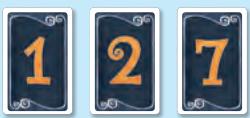
6 symbol cards (black)
Before your first game, stick these onto the designated spots on the card racks in any order.
7 number cards (black)
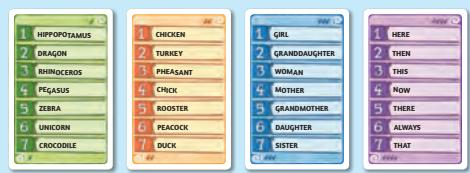
99 clue cards
(double-sided), divided into 4 difficulty levels


QUICK START RULES

Hello, my name is Picto! You want to start
playing right away, without having to read the entire rulebook? Then just read my outlined
comments and skip the paragraphs in between.
If any questions come up during your first game, you can always refer to the full rules text for clarification. I would, however, recommend reading the entire rulebook before playing your second game of Pictomania.
Note: If you prefer to learn Pictomania not via the quick start rules, please read the entire rulebook, i.e. Picto's comments as well as all the text in between.

GAME SETUP
Each player chooses a colour and takes the sketch board 7 guess cards and a number of scoring tokens depending on the number of players, all in their colour:
• 3 players: **

• 4 players:

• 5 players:

• 6 players:

Each player also takes 1 dry-erase marker and 1 eraser. Place both card racks on the table so that every player can easily read the cards put onto them. Separate the clue cards by colour into 4 decks and place them on the table next to the number cards and the symbol cards. Depending on the number of players, place bonus point tokens in the centre of the table where everyone can reach them:
• 3 players:
*
• 4 players:

• 5 players:

• 6 players:

If there are fewer than 6 players, return all remaining sketch boards, tokens, cards etc. to the game box. You will not use them during this game.
HOW TO FLAY THE GAME
Each game of Pictomania consists of 5 rounds. Each round is made up of the following 3 phases:

Setup

Draw and guess

Score
SETUP


Separately shuffle the number cards and symbol cards and deal 1 of each type face-down to each player. Each player keeps his two cards face-down in front of himself and may not look at them yet! As a group, choose the difficulty level for this round. For the first round of your first game, we recommend the green cards, as they are the easiest. Take the top 6 clue cards from the deck of the chosen difficulty level and place them in the card racks.
Randomly determine which side of each card you want to use. Only the front of the card is relevant for this round; ignore the reverse sides. Each card lists 7 clues. The clues can be anything from single words to phrases, titles etc.
For each following round, you are free to choose the same difficulty level or a different one. The difficulty levels are colour-coded:
| Green | Easy | |
| " | Orange | Slightly tricky |
| W | Blue | Difficult |
| W | Purple | Very difficult |
DRAW AND GUESS
Drawing
Players should take a moment to read through all the clue cards to familiarise themselves with them. Important: Do not discuss the clues at this point!

One player gives a start signal. Now, each player secretly looks at the number card and symbol card he was dealt. The two cards tell you which clue you are supposed to draw. Place the two cards ace-down on the table above your sketch board. They form the basis of vour guess pile. 'Then all players start to draw their clue. You may not write, alk or in any other way try to communicate which clue you are drawing. or detailed drawing rules, see the last page of this rulebook.
To be more specific: Your symbol card indicates the clue card, and your number card indicates the particular clue on that card you are supposed to draw. For example: You have the symbol and the number 5. This means you are supposed to draw the 5th clue on the clue card indicated by the symbol on the card rack.
Clues on the same card are always somewhat similar to each other. So it is always a good idea to read through all the clues on your clue card. In order for other players to guess your clue correctly, you should take care to distinguish it as clear as possible from the other clues on the same card.
Guessing

While you are drawing your own clue, you will also be trying to guess everyone else's clues. To make a guess at someone else's clue, place your guess card with the corresponding number face-down onto that player's guess pile.
The guess cards only show numbers from 1 to 7. That is because correct guesses are determined only by the number of the clue, not by the symbol. For example: You think that Christine is drawing clue 3 (bicycle). Put your guess card with the number 3 face-down on top of Christine's guess pile.
Note: If Christine is actually drawing spectacles (3), your guess still counts as correct because both clues happen to share the same number.
Always put your guess card on top of the topmost card of each guess pile. The two bottommost cards in each guess pile are the symbol card and number card of that particular player. The first player to make a guess at that player's clue puts his guess card face-down on top of these two cards. The second guesser then puts his guess card on top of the first guesser's card, etc.
You are free to make guesses at other players’ clues even if you have not finished your own drawing. If you think you will take longer in drawing a particular clue, it is often a good idea to interrupt your drawing and concentrate on making guesses for a while, then continue drawing.

You can put no more than 1 guess card on each other player's guess pile. Once you put a guess card onto a guess pile, you are not allowed to take it back or exchange it for another.
For example: Shortly after making your guess at Christine's clue (3 – bicycle), you start to think that she is actually drawing clue 7 (motorcycle). You cannot correct your guess and put your number 7 guess card onto her guess pile. To make matters worse, you are now missing your number 3 guess card, which you later realise you need to guess Dave's clue3.
Finishing play

Each player is free to decide when to stop drawing and guessing. If you decide to stop, you may grab the bonus point token with the most stars from the centre of the table and place it in front of you. This is called finishing play. Once you have finished play, you can no longer make guesses or change your drawing in any way.
Players who have not finished play may still make guesses at your clue, even after you have finished play. If you want, you can finish play without having made a guess at every player's clue. The sooner you finish play, the better your chances to grab a valuable bonus point token.

Whoever takes the last bonus point token says "stop". The last player immediately has to stop drawing and guessing. He does not get a bonus point token. The following phase is the scoring phase.
You do not have to take a bonus point token if you don't want to. If one player decides not to take a bonus point token, the round still ends with a player grabbing the last bonus point token. If, however, 2 or more players decide not to take a bonus point token for fear of negative points (see Score below), one or more bonus point tokens will remain in the centre of the table. In this case, the round ends when all players without a bonus point token agree to end the round.

SCORE
Awarding scoring tokens
You now award points for other players' guesses at your clue. It does not matter who starts awarding his points, as long as you do it one player after the other.
To award points, flip over your entire guess pile without changing the order of the cards!
Once you have flipped your pile, the top two cards are your symbol card and your number card. Underneath these are your fellow players' guess cards in the order they were put onto your guess pile.

Show your symbol card and number card to the other players, and check whether you have actually drawn the right clue.
If you have obviously drawn the wrong clue (and only then!), your drawing is scored as if nobody had made a guess at your clue! Return all guess cards to the respective players. You award no scoring tokens, and your bonus point token does not earn you any points, but it could still lose you points (see Scoring bonus point tokens below). Use this rule only if you really have obviously drawn the wrong clue!

Next, check each guess made at your clue one by one in the order they were made (from first to last guess card in your guess pile).
Correct: If the number on a guess card matches the number on your black number card, the guess is correct. Give the player who made the guess back his guess card along with the most valuable scoring token you still have.
Incorrect: If the number on a guess card does not match the number on your black number card, the guess is incorrect. In this case, you do not award a scoring token. You do not return the guess card to the player. Instead, you place it in the centre of the table.
Repeat this process until all players have resolved their guess pile.
In this way, each player checks all guess cards in his guess pile and awards scoring tokens. The irst player who made a correct guess at your clue gets your most valuable scoring token; the second player gets your second most valuable scoring token etc. After you have completely resolved your guess pile, you have as many of your scoring tokens left as there were players who did not guess your clue correctly or at all. This means that you will still have all your scoring tokens if nobody guessed your clue correctly.
Adding up points

Positive points: All scoring tokens other players have awarded you for guessing their clue correctly are worth positive points. You get 1 point for each star.
Negative points: The scoring tokens of your colour that you did not award are worth negative points. You lose 1 point for each star.
So, if another player guesses your clue correctly, that's good for both of you. He gets points for your scoring token, and you don't lose points for it. If you guess other players’ clues faster than the others and get them right, you get the more valuable scoring tokens, which means more points for you.
Scoring bonus point tokens
Count the guess cards of each player in the centre of the table (remember: they were put there if that player made an incorrect guess). The player who made the most incorrect guesses is the black sheep for this round. If the black sheep has taken a bonus point token, that player loses 1 point for each star on that token. If two or more players are tied for the most incorrect guesses, there is no black sheep this round.
If you are not the black sheep: You get 1 point for each star on your bonus point token if at least 1 player has guessed your clue correctly. If nobody has guessed your clue correctly, you neither get nor lose points for your bonus point token.
The sooner you finish play, the better your chances at grabbing a more valuable bonus point token. However, the token only earns you points if at least 1 player has guessed your clue correctly. If you make too many incorrect guesses, you might end up the black sheep and the bonus point token will lose you points. So sometimes it may be better not to take a bonus point token at all.
Calculate your total score for this round (+ other player's scoring tokens, – your own scoring tokens, +/– bonus point token) and write it in one of the boxes along the edge of your sketch board.
END OF THE ROUND

Use your eraser to clear your sketch board, but be careful not to erase your scores. If this was not the 5th round, set up the next round exactly like the last one.
In more detail:
• Place your bonus point token and all other players’ scoring tokens in the centre of the table.
• Take all scoring tokens and guess cards of your colour from the centre of the table.
• Collect all black symbol and number cards into two piles as before. Dont forget the cards that were not used in the current round.
• Return the 6 clue cards from the last round to the game box.
• Then you start the next round like the last one with phase 1: Setup.
END OF THE GAME

After 5 rounds the game is over. Add up your scores from the 5 rounds and write the final score in the middle of your sketch board. Whoever has the biggest final score wins the game. In case of a tie, players share the victory.
THE DO'S AND DONTS OF DRAWING
To avoid arguments among players, follow these rules for what you can and cannot do during the game. The most important rule is that you cannot use any letters or numbers. Most players will ind the other rules either obvious, or they only apply to special cases. Pictomania is about having fun. Whenever there is an argument, try to agree as a group on how strict you want to be with the Do's and Don’ts.
DO'S
Erasing
During a round, you can erase parts of your drawing, or all of it, if you want to change something. But you are not allowed to“animate” your drawing. The other players are supposed to guess the clue from a stationary drawing, without any activity.
Context of the clue
You may draw the context of your clue. If, for example, your clue is tennis ball, you are allowed to draw a racket and a tennis player.
Arrows
You may highlight certain parts of your drawing with arrows. In the example above, you may draw a racket and a ball and then an arrow pointing to the ball. You may also use arrows to indicate a sequence or a direction. You could, for example, draw an arrow pointing from a baby to an old man if your clue is Ageing. (However, you may not number a sequence like this, as numbers are never allowed.)
Crossing out
You may cross parts of your drawing out, like a fir, in order to highlight an oak next to it.
Symbols
You may draw mathematical symbols and other icons as long as they are important for your clue and do not reveal anything about the position of the clue on the card. For example, you may draw a cross on a hospital or a speech bubble (without text). You may draw symbols like € or \$ that are derived from letters, but no letters or abbreviations containing letters, like cm for centimetres.
Compound words
You may draw the parts of a compound word separately, like drawing a door and next to it a bell for the clue doorbell.
Drawing nothing
You may choose to draw nothing at all if you just cannot think of anything. In this case, you do not take a bonus point token, but you can make guesses at other players’ clues. Apart from that, the same rules apply as if you had drawn the wrong clue.
MISCELLANEOUS
Pictomania is not a trivia game. Every player should understand all the clues on the clue cards. Some clues might be easy for some groups but very difficult for other groups. When choosing clue cards, we recommend you follow these rules:
After placing the 6 clue cards onto the racks, but before looking at your symbol and number cards, have all players read through the clue cards for 5-10 seconds. If a player sees a clue he does not know or understand, he may replace the card with another one from the same deck. Unless all players agree otherwise, each player may only replace 1 card per game in this way. You should not abuse this rule to get rid of clues that are difficult to draw. You might enjoy the look on your fellow players’ faces when they have to draw that clue!
DON'TS
If you do any of the following things, your drawing will be scored as if nobody had made a guess at it. Return all guess cards to the respective players. You award no scoring tokens, and your bonus point token does not earn you any points, but it could still lose you points. Regardless, you can still earn points by guessing other players’ clues correctly.
Letters, numbers, characters
You may not use any numbers or letters/characters of any alphabet (Roman, Greek, Japanese, Morse, etc.). You may, however, use scribbles to symbolise text (e. g., if your clue is “book”, and the text on the pages is part of your drawing).
Comments
No comments on your clue (“I can't draw animals.") or on your drawing (“This was supposed to look more rounded.") are allowed, neither are hints (“You all have this in your home.").
Sounds and gestures
You may not make any sounds (humming, grunting etc.) or gestures that may indicate or help others guess your clue.
Placeholders
You are not supposed to draw the word(s) on the clue card, but the idea behind it. You may not use underscores or similar placeholders for letters or parts of a word. Players should be able to guess your clue regardless of the language they speak.
Referencing the clue card
Your drawing may not contain any references to the position of the clue on the card nor to the position of the card on the rack. Nor are you allowed to draw the symbols on the card racks.
Referencing the players' surroundings
Your drawing may not reference objects or people in the room, like drawing an arrow that points at another player or at a glass on the table. The other players are supposed to guess the clue independently of the surroundings of the game group.
A different clue
You may not draw a clue from another clue card.
VARIANT
For an easier game, such as with young children, we recommend using only the green cards. An even easier way to play Pictomania is using only 1 card for all players. If you do this:
• use only 1 card rack, no matter which one;
• only deal out number cards, no symbol cards;
• place only 1 clue card on the rack;
• each player draws a clue from that card.
All other rules stay the same.
CREDIT'S
Game Design: Vlaada Chvátil, Art: Andreas Resch Graphic-Design: Andreas Resch, Filip Murmak, Hans-Georg Schneider
Rules: Thygra Spiele
English Translation: Stephan Rothschuh
© 2014 Pegasus Spiele GmbH, Germany,
www.pegasus.de, under licence from
Czech Games Edition. All rights reserved.
Thanks to: Petr Murmak, dilli, Paul Grogan, Tomáš, Vytick, Alenka, Hanička, Brno Brettspielclub, Paluba Brettspielclub, Bedna Club und Stefan Malz. Playtesters: Vít Vodička, Petr Šabata, Zuzka Šabatová, David Korejtko, Hanka Korejtková, Juraj Sulík, Marián Gablovský, Falco, Ondra Mysliveček, Glee, Radim Křivánek, Monika Křivánková, Filip Murmak, František Horálek, Miloš Procházka.

Pegasus Spiele
Stronghold Games LLC Mailing address: 17 Sunflower Road, Somerset, NJ 08873 Please visit our website at: www.StrongholdGames.com And email us with questions at: info@StrongholdGames.com
原文为社区整理/出版社公开资料,版权归原作者,仅供个人学习查阅。