
我的行星Planet
一句话概览
我的行星 是一款已收录于村了吗规则库的桌游,支持 2–4 人,原名 Planet。
本页内容:一句话概览 · 常见问题
这游戏怎么玩
- 本站已收录这款游戏的规则资料,可以在对话里直接提问规则细节。
常见问题(FAQ)
以下 1 条问答中 0 条来自站内玩家的真实提问,其余 1 条为本站整理的常见疑问;答复内容保持原样。
我的行星支持几个人玩?
2–4 人。
去哪查完整规则
想核对具体规则细节、卡牌效果或某个回合的结算方式,可以在村了吗里选中这款游戏后直接提问。
同类桌游
- 卡坦岛德式
- 工业革命:伯明翰德式
- 勃艮第城堡:特别典藏版德式
- 方舟动物园德式
- 卡卡颂抽象
- 瘟疫危机传承:第一季美式
- 阿瑞迪亚:勇踏征途美式
- 重塑宇宙德式
- 幽港迷城美式
- 埃多拉的德鲁伊德式
规则原文(Markdown)
本站收录这款游戏的规则原文 1 个文件,此处内联渲染 1 个,可直接展开阅读或下载。
PLANET_Rules_USUK.md15.4 KB
米 PLANET
Author: Urtis Šulinskas Illustrator: Sabrina Miramon
2 to 4 players – 8 and up – 30 Minutes
GAME COMPONENTS
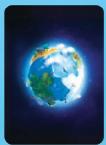
* 4 Planet cores
* 50 Continent tiles
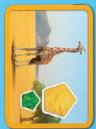
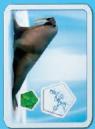
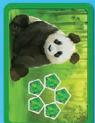
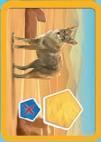
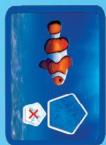
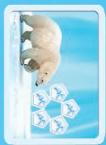
* 45 Animal cards
* 5 "Natural Habitat" objective cards
INTRODUCTION
* I First Player token
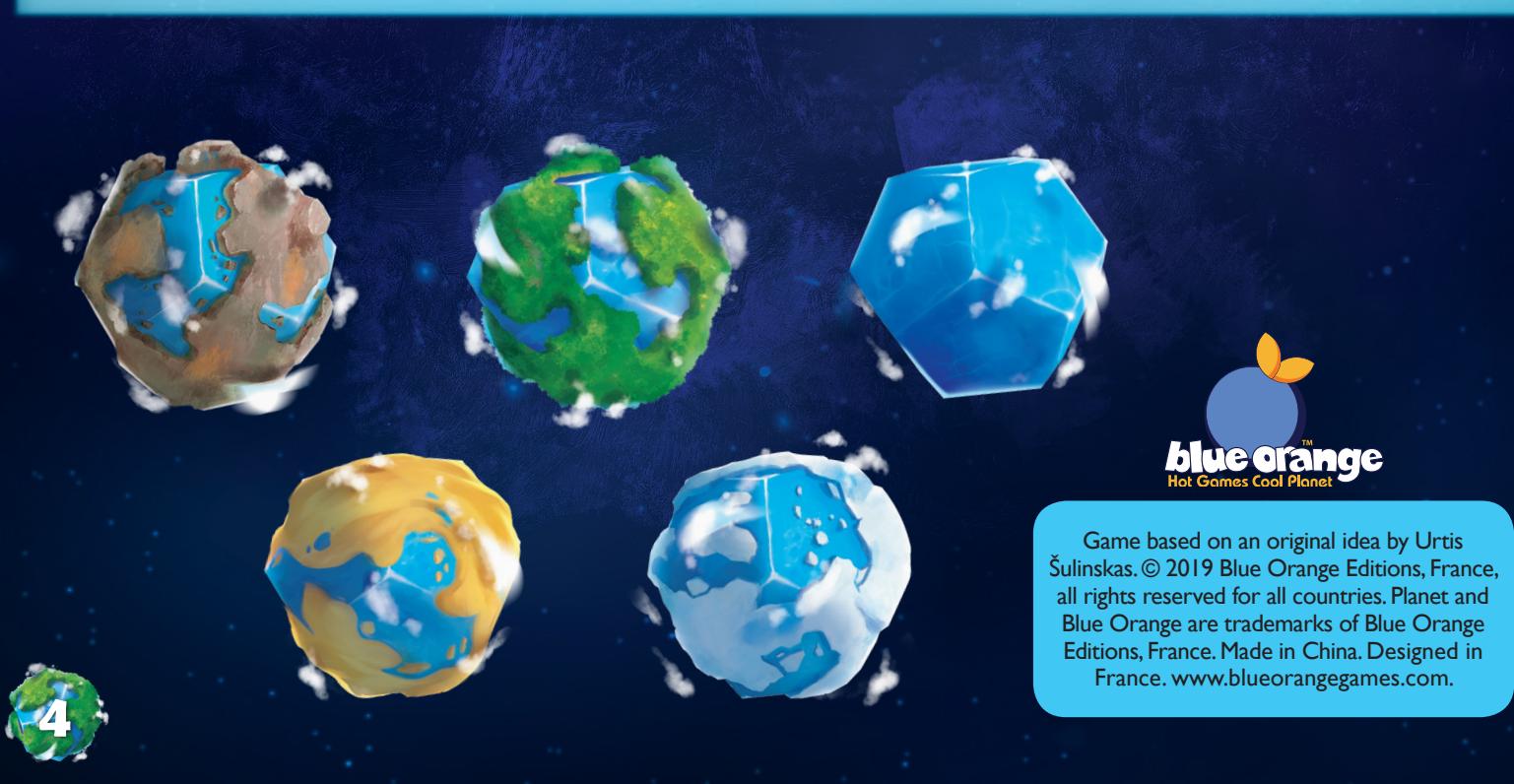
A world is taking shape in the palm of your hands. Spread your mountain ranges and your deserts, expand your forests, oceans and glaciers. Strategically position your continents to form hospitable environments for animal life to develop and try to create the most populated Planet!
OBJECT OF THE GAME
Throughout the 12 turns that make up the game, strategically position your continent tiles on your Planet's core to form hospitable environments for animal life to flourish. Win points by completing "Natural Habitat" objectives and by populating your Planet with the most animals possible.
The winner is the player with the highest points total at the end of the game.

SET-UP
The protective film covering the circular metal plates on the planets may be removed before playing.
① Every player starts with an empty Planet core (without any Continent tiles on its surface).
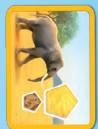
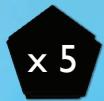
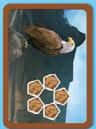
② Shuffle and place all the Continent tiles in a line of 10 piles, each containing 5 tiles, in the centre of the table, face down. © Shuffle all Animal Cards. Randomly draw 20 cards. Place the 20 cards face up, following the layout shown in the diagram below. Be careful, it is very important that the cards are set out in rows with the piles of tiles arranged exactly as shown

Ist turn

2nd turn

3rd turn


4th turn

5th turn


6th turn


7th turn

8th turn


9th turn
10th turn
1 Ith turn

12th turn
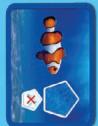


Positioning the cards below the tiles makes it easier to keep track of each turn.

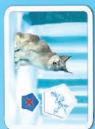
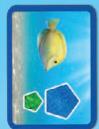
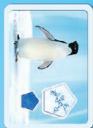


Each player receives a“Natural Habitat” objective card and secretly takes note of it before placing it face down in front of them.
⑤ The youngest player takes the First Player token and the game begins.
Note: For a first game experience, see“Variation I: Beginner Game”.
TURNS
Every turn is made up of two parts: 1. ADDING CONTINENTS
2.THE ORIGIN OF LIFE (from the 3rd turn onwards)

1. Adding continents

* Take the first pile of 5 Continent tiles and spread these out across the centre of the table, face up.
* The first player chooses one tile from these 5 and adds this to a free space on their Planet's core.The other players then take turns doing the same, moving in a clockwise direction.

Once every player has selected a tile, place all the remaining tiles face down in the I Ith spot in the Continent row. Once this pile has 5 tiles, place the remaining tiles from your rounds in the 12th spot.When this pile has 5 tiles, any additionnal tiles are discarded and placed in the box.





Example: in a game with 4 players, after the first turn, the one remaining tile is positioned at the end of the row of piles of Continent tiles.

Remaining tile.


Tiles selected by the players.
Note:At any time during the game, players can take a look at other players' planets.
"Natural Habitat" objective cards:
Each “Natural Habitat” objective card can bring you points, at the end of the game, for the total Areas of this “Natural Habitat” present on your Planet.

For example: you would need 1 1, 12 or 13 Areas of the Glacier Natural Habitat at the end of the game, in order to score 2 points.①

2. The origin of life
From the third turn onwards, life starts to emerge on the Planets. All players check if their Planet meets the conditions required to host the Animal cards which can be won with each turn.
3 types of requirements for welcoming animals onto a Planet exist:
What is an Area and what is a Region?

This is a Region: I isolated Area or several connected

This is an Area: single triangle.


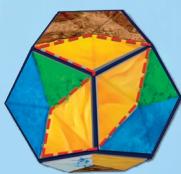
Having the most of one kind of Region: Count the number of disctinct Regions of the same Natural Habitat across your Planet.
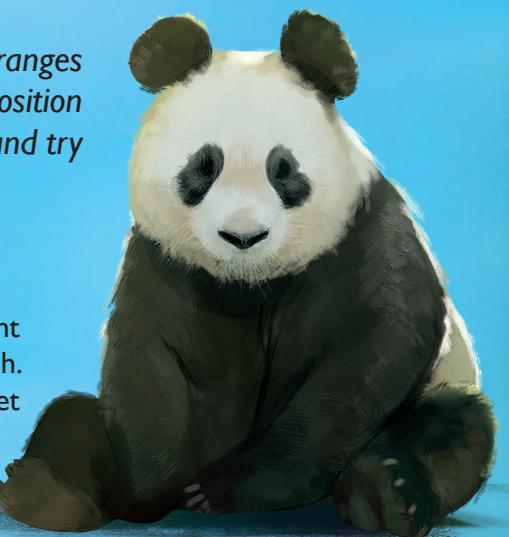
Example: having the most forests to host a Panda.


* Having the biggest Region of one kind which touches a specified Habitat: Count the number of Areas of the same type of Natural Habitat which create the biggest Region.The Region needs to be touching at least one Area of another type of Natural Habitat. Example: in order to host the Elephant, you would need to have the largest desert Region which touches a mountain Area.
* Having the biggest Region which is not in contact with a specified Habitat: Count the number of Areas of the same type of Natural Habitat which create the biggest Region.This Region CANNOT be in contact with the specified Natural Habitat. Example: to host the reindeer, you would need to have the largest glacier Region which DOES NOT touch a desert Area.
In the case of a draw:
If there is a draw, the animal is not given to any player and the card is placed at the bottom of the column for the next turn. It is then possible for players to win it later.
If one or several animals don't find a Planet which is habitable for them during the last turn, apply the following rule: * If the card's requirement is:“having the most of one kind of Region", put this card back in the box, no player will win it.①
* For the 2 other requirements: players in a draw look at their Planet to see if one of them meets the requirement a second time elsewhere.The player who meets this requirement wins the card.②
* If there is still a draw, they check to see if one of them meets the requirement a 3rd time elsewhere on their Planet.
In the event of there still being a draw, no one wins the card and it goes back in the box.
Example: Matthew ① and Celine ② are competing to house the fox on their Planet. On the last turn, they both had a forest spanning 9 Areas and touching a glacier. However, Celine's Planet also contains a second 5-Areas forest which touches a glacier, whereas Matthew doesn't have another. In this case, Céline wins the card.

The player who possesses the most habitable Planet for the animal takes the card and keeps it in front of them.
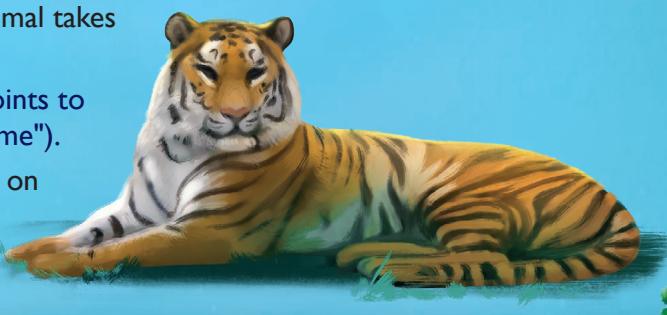
Note: At the end of the game, the animal cards bring I or 2 points to the player who has kept them. (For scoring, see "End of the Game").
The player who had the First Player token gives it to the player on their left.
The turn ends and a new turn begins.
EnD OF THe GAME
The game ends after the I2th turn (when the player's Planets are fully covered) and after the last Animal cards have been won. ① Each player reveals their objective card and checks whether or not they have met their objectives, winning points if they have succeeded.
Each player then scores I point per Animal card whose Natural Habitat is the same as on their objective card, and 2 points per Animal card whose Natural Habitat is not the same as that on their objective card (see color codes on the edge of the Animal cards).
Note: Players score points with animals regardless if they have met the minimum “Areas" requirement on their Natural Habitat objective card.
The player with the most points wins the game.
In case of a draw, players with the most Animals cards win the game. If there is still a tie, each player remaining in the tie wins.
VARIATIONS
Variation I - Beginner Game
For your first game, or for younger players, simply play without the "Natural Habitat" objective cards. Each animal earns I point.
Variation 2 - mystery Animals
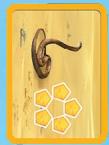
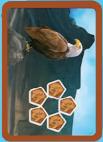
During set up, position the 20 Animal cards in 2 lines of 10 cards in the center of the table. One of the lines is placed face down and the other face up.

Ist turn

2ⁿd turn
3rd turn
4th turn

5th turn
6th turn
7th turn

8th turn

9th turn


10th turn
1 1th turn
12th turn



Revealed: Ith turn


2nd turn

3rd turn

etc.




After each turn, the next mystery Animal card is revealed.This allows players to discover mystery Animals 3 turns ahead.
原文为社区整理/出版社公开资料,版权归原作者,仅供个人学习查阅。