
阡陌交通:拼图版Railroad Tiles
一句话概览
阡陌交通:拼图版 是一款已收录于村了吗规则库的桌游,支持 1–4 人,原名 Railroad Tiles。
本页内容:一句话概览 · 常见问题
这游戏怎么玩
- 本站已收录这款游戏的规则资料,可以在对话里直接提问规则细节。
常见问题(FAQ)
以下 1 条问答中 0 条来自站内玩家的真实提问,其余 1 条为本站整理的常见疑问;答复内容保持原样。
阡陌交通:拼图版支持几个人玩?
1–4 人。
去哪查完整规则
想核对具体规则细节、卡牌效果或某个回合的结算方式,可以在村了吗里选中这款游戏后直接提问。
同类桌游
- 卡坦岛德式
- 工业革命:伯明翰德式
- 勃艮第城堡:特别典藏版德式
- 方舟动物园德式
- 卡卡颂抽象
- 瘟疫危机传承:第一季美式
- 阿瑞迪亚:勇踏征途美式
- 重塑宇宙德式
- 幽港迷城美式
- 埃多拉的德鲁伊德式
规则原文(Markdown)
本站收录这款游戏的规则原文 1 个文件,此处内联渲染 1 个,可直接展开阅读或下载。
RRT_CoreBox-Rulebook_v30.md27.1 KB
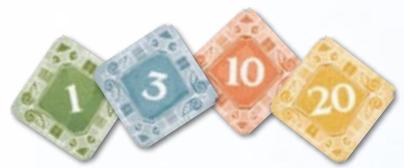
64 PRESTIGE TOKENS(20x1,20x3,16x10,8x20)
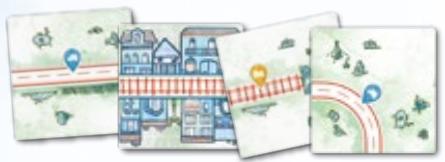
106 ROUTE TILES
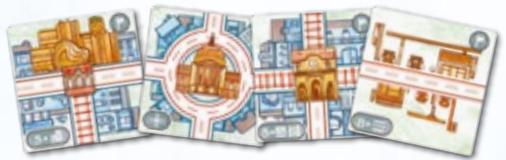
28 OBJECTIVE TILES
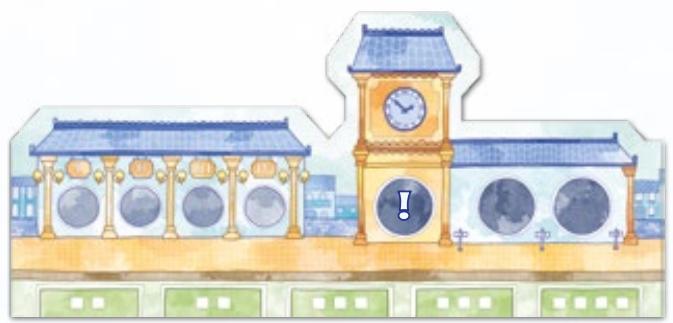
1 STATION BOARD

18 TRAIN PAWNS
18 CAR PAWNS

7 PLACEMENT TOKENS

18 TRAVELER PAWNS

10 STAR PAWNS

2-PLAYER TOKEN

1 BAG

GAME SETUP
(3-player example)
Shuffle all the Route tiles inside the cloth bag.
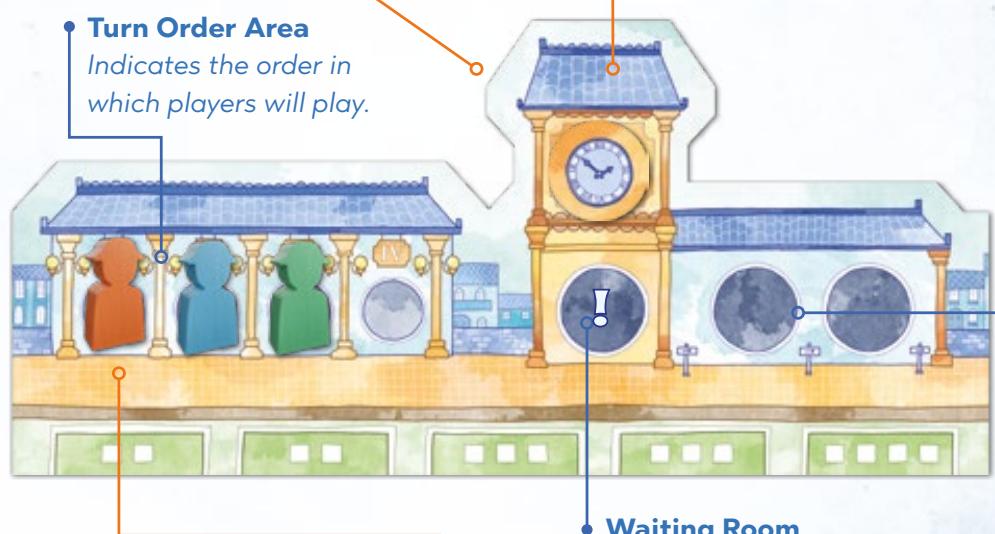
Place the Station board in the middle of the table.
3
Shuffle all the Placement tokens face down. Then, create a face down pile and place it on the Clock space of the tower.

Create a pool of Car, Train, and Traveler pawns in reach of all players.


Create a pool of Prestige tokens in reach of all players.
Waiting Room The space below the Clock.

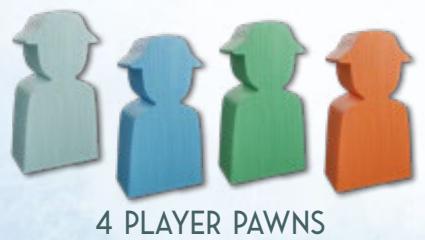
Determine the starting turn order by randomly placing the Player pawns in the Turn Order Area, starting with the leftmost space.
STARTING TILES
Reveal and set aside as many Route tiles from the cloth bag as players in the game. The revealed tiles must have different path ■ configurations; if two tiles have exactly identical paths (e.g., double highway curve, or railroad T-junction), return one to the bag and draw another tile. The starting tiles will be selected at the start of the Tile Selection phase in the first round (see page 5).

Active Area
The blue zone with 2 spaces beside the Waiting Room.


Each player takes
1 Star pawn and places
it in their reserve.
Place the remaining
Star pawns in a
common pool, in reach
of all players.


If you are playing a 3- or 4-player game, the 2-player token is I not used; return it to the box. It's used only in 2-player games.

10.
If this is your first game, return the Objective tiles to the box. Otherwise, check the rules on page 10 for more details on how to play with Objectives.
GAME OVERVIEW
A game of Railroad Tiles™ unfolds over 8 rounds. Your objective is to construct the most efficient network of highways and railroads. Strategically connect your paths to ensure seamless travel for trains,
cars, and travelers, while also forming
groups of town tiles to create cities.

GAME ROUND
A game round consists of 4 phases played in this order:

ROUND SETUP
Update the Placement tokens and reveal Route tiles to create a drafting pool.

TILE SELECTION
Choose a set of tiles from the drafting pool and place them in your player area.

PAWN PLACEMENT
Populate your player area
with Cars, Trains, and Traveler pawns.

END OF THE ROUND Determine the player order for the next round.
ROUND SETUP
Reveal Route tiles from the cloth bag until you fill all the columns below the Station board. Each column must contain as many tiles as the number of square icons shown at the top of that column.
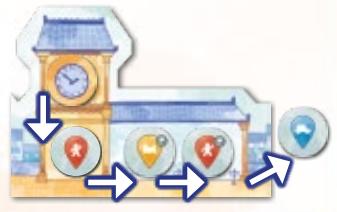
Then, reveal the topmost Placement token from the Clock pile and place it in the Waiting Room, the space immediately below the Clock. If the Waiting Room is already occupied by another token, move the obstructing token to the right into the left space in the Active Area. If that is occupied as well, keep
pushing the tokens to the right. When all spaces are occupied and a new token is revealed, the last token in the line is pushed outside of the board and removed from the game (see example to the right).
STARTING TILES
Only at the start of the first round, before selecting tiles as described on page 5, the players, in reverse Turn Order, select 1 Starting tile each and place it in front of them (see Setup, on page 3).

In the second round, another token is placed in the Waiting Room, pushing the previous token to the Active Area.
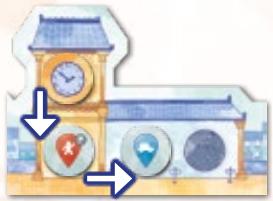
In the third round, a new token is revealed and it pushes all others: Waiting Room > Active Area > Active Area.

In the fourth round, all tokens are pushed ahead, and the last token in the line is removed from the game.
2)-TILE SELECTION
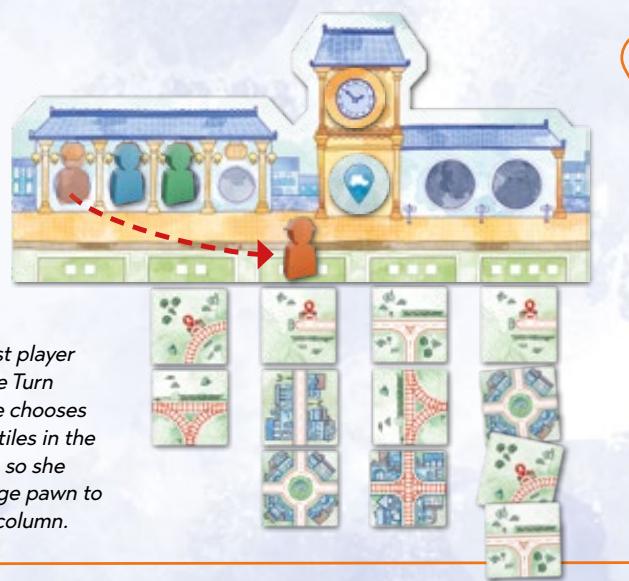
Following the turn order (defined by the order of the pawns in the Turn Order Area), on your turn you must choose a column of Route tiles, move your pawn to the top of the chosen column, and take all the Route tiles in that column. If any Star pawns are on your chosen column, you take them as well (see page 8).
You must then immediately place the Route tiles in your player area, one by one, in any order. To place your Route tiles, you need to follow these placement rules:

A Each tite you plae must b least one pre-placed tile. Tiles CAN be flipped (they are mirrored) or rotated as desired to better fit them to your plans.
B Co sides must be connected to Railroad sides, Highway sides to Highway sides, and Empty sides to Empty sides. You can't connect Railroads to Highways, and you can't connect either to an Empty side.


You must place all the tiles you picked this round. If you cannot connect a tile IN ANY WAY, however, you must discard it.

Just twice in the whole game, you can decide to reject a tile before placing it. This is useful if you believe the tile is causing more harm than good. Keep it in front of you to keep track of your rejected tiles.
1ST ROUND EXAMPLE

Diane is the first player according to the Turn Order Area. She chooses to collect the 3 tiles in the second column, so she moves her orange pawn to the top of that column.

Now Diane must connect the tiles in any way she prefers, as long as she follows the connection rules.
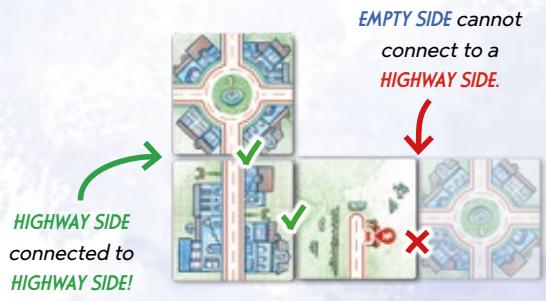
EMPTY SIDE
connected to EMPTY
SIDE!
2ND ROUND EXAMPLE
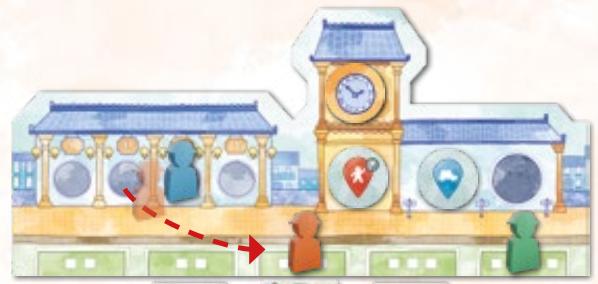

In the next round, Diane is the second player according to the Turn Order Area. She chooses to collect the 3 tiles in the second column.


Now Diane must connect the new tiles to the previous ones:

3 )-PAWN PLACEMENT
After all players have placed their tiles, check the Placement tokens in the Active Area. For each Placement token in the Active Area, each player may take 1 pawn of the corresponding type from the general pool and place it on any tile they have with a matching empty Pinpoint (you are not limited to the tiles you picked this round). If you do not have any matching Pinpoint available, you cannot benefit from the Placement token.

Placement tokens indicate the type of pawn (TRAIN, CAR, or TRAVELER) that you can place in the current round.

This Placement token gives you a choice between 2 types (TRAIN or CAR).

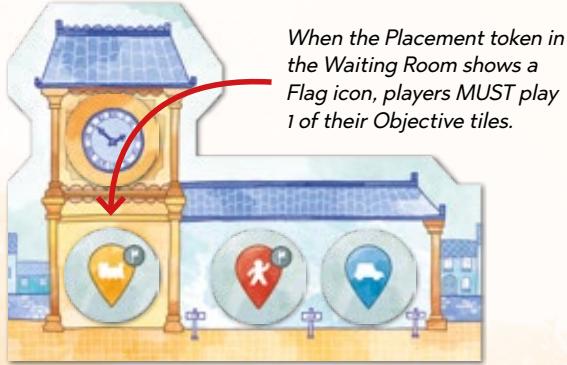
Some tokens also show a Flag Icon. Ignore this additional symbol if you are not playing with Objectives (see page 10).
When placing a pawn, you IMMEDIATELY SCORE PRESTIGE POINTS as described below:


CAR PLACEMENT
Score 1 point + 1 point for each other Car that is connected to this pawn's Pinpoint only through Highways, up to a maximum of 5 Prestige points.

TRAIN PLACEMENT
Score 1 point + 1 point for each other Train that is connected to this pawn's Pinpoint only through Railroads, up to a maximum of 5 Prestige points.

TRAVELER PLACEMENT
Score 1 point + 1 point for each other Traveler that is connected to this pawn's Pinpoint through Highways and/or Railroads (freely switching only at Stations), up to a maximum of 5 Prestige points.
Each connected pawn of the same type beyond the 5th is still worth 5 Prestige points.
Stations and/or other pawns do not interrupt a connection.
STATIONS
An unbroken path of either 1 or more Highway or
Railroad segments spanning over 1 or more tiles is
referred to as a “network”.

A Station allows you to link Highway networks to Railroad networks so Travelers can switch between them. They do not interrupt networks when scoring for pawn placements.


It is now the 3rd round and there are 2 Placement tokens in the Active Area: Traveler and Car.
Diane places a Traveler pawn on a tile she just placed this round. Since there are no other Traveler pawns on that network, she scores 1 Prestige point.


Diane can also place a Car pawn. She has a previously placed tile with a Car Pinpoint available, so she decides to fill that space. There is already another Car pawn in the same Highway network, so the newly placed Car pawn scores 1 + 1 = 2 Prestige points.

END OF THE ROUND
When all players are done placing pawns on their tiles, the round is over.
Add 1 Star pawn to the column of tiles that was not chosen by any player. It will serve as an extra incentive for the next round: whoever chooses that column will also collect all the Star pawns in that column and add them to their reserve.
STAR PAWN
For each Placement token in the Active Area, during the Pawn Placement phase, you can discard 1 Star pawn from your reserve to place 1 pawn of your choice (Car, Train, or Traveler) instead of the one indicated by the token itself.
Each unused Star pawn in your reserve is worth 1 point at the end of the game.

2-PLAYER RULE
In 2-player games, 2 columns will be left instead of 1. Before placing the Star pawn, flip the 2-player token like coin: the result indicates which of the 2 remaining columns will be discarded, left or right. Discard those tiles back to the game box. 1
Then, starting from the leftmost Player pawn in the drafting area at the bottom of the Station board, put each Player pawn in the leftmost available space in the Turn Order Area, thus preserving their current order. In other words, the player who took more tiles will play last in the next round.
END OF THE ROUND EXAMPLE


At the End of the Round, the 1st column on the board wasn't taken, so the Star pawn is added to it.


The Player pawns on the tile columns follow this order: Andrew, Diane, and Jane, so the same order is maintained and moved to the Turn Order Area.
END OF THE GAME H
The last round begins when the last Placement token moves away from the Waiting Room, revealing the icon. At the end of that round, the final score is calculated. The player with the most points wins!
END OF GAME SCORING
In addition to the points you scored for each pawn you placed during the game, you score additional points based on the City presence in your map and on the structure of your territory as follows:
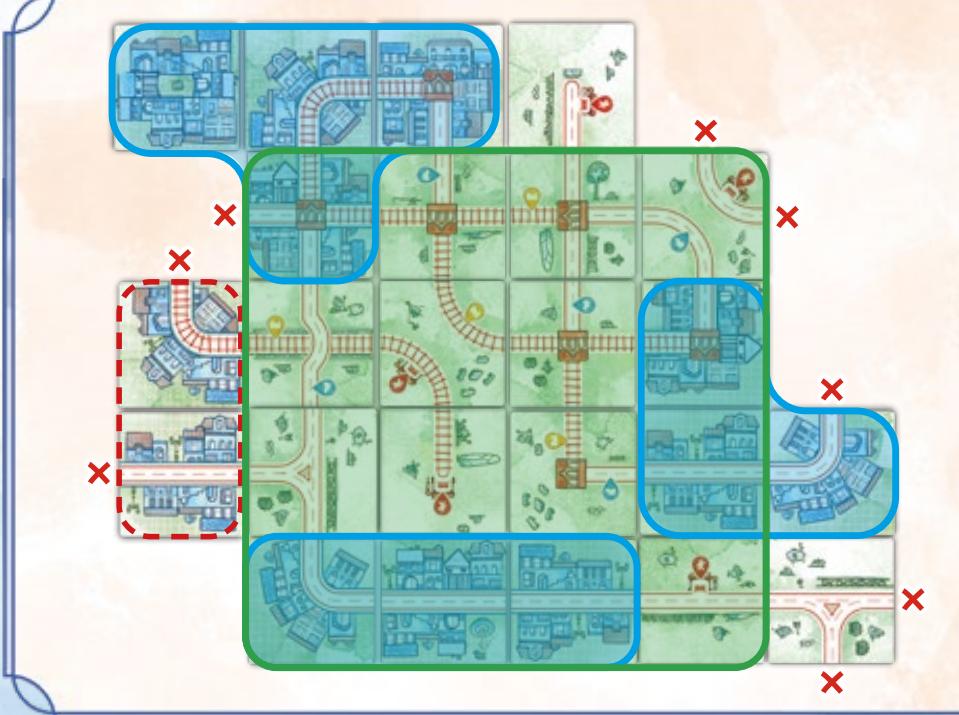
CITIES - For each group of 3 or more orthogonally adjacent Town tiles, you score 5 points; you don't get any additional points for Cities larger than 3.
BIGGEST RECTANGLE - Find the biggest rectangle of tiles without holes in your territory. You score 1 Prestige point for each tile that is part of that rectangle (squares count as rectangles).

OPENING PENALTIES – Each end of a path that does not connect with any other path is called an Opening. You are allowed up to 5 Openings, but you lose 1 Prestige point for each Opening exceeding the 5th.
In case of a tie, the player in the leftmost column is the winner.
STAR PAWNS - Each unused Star pawn in your reserve is worth 1 point at the end of the game.
END OF THE GAME EXAMPLE
In this example, Jane has 3 groups with 3 or more Town tiles, forming 3 Cities, so she gains 3 x 5 = 15 Prestige points. Then, she adds up her biggest rectangle, a 4 x 4 square, for 16 Prestige points.
Then, she counts up her Openings for a total of 8, so she loses 3 points (-1 point for each Opening exceeding the 5th).

PLAYING WITH OBJECTIVES
Once you’ve played a few games and you are familiar with the core rules, we suggest adding Objective tiles to your games: they grant additional points when you fulfill specific placement conditions.
Each set includes 4 identical tiles; each player receives 1 tile from each Objective set in play.
For a game featuring Objectives, you'll play with 3 sets at once.
DURING SETUP

Choose or randomly determine 3 sets of Objective tiles to play with.

Give 1 tile from each set in play to each player.
Keep these tiles in front of you.
DURING TILE SELECTION
If the Placement token in the Waiting Room shows a Flag icon, you must place 1 of your Objective tiles (if you have any available) in addition to this round's Route tiles. You can freely choose which Objective tile to play. Placing Objective tiles follows the same placement rules as regular Route tiles. If you cannot place any Objective tile when instructed to, you must discard 1 of your unplayed Objective tiles to the game box.
DURING END GAME SCORING
You earn 5 Prestige points for each Objective for which you have fulfilled the scoring conditions.
SCORING CONDITIONS

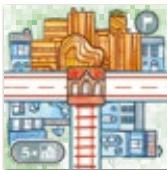
CITY HALL
The City Hall must have at least 2 adjacent tiles in each of the four orthogonal directions (up, down, left, right).
METROPOLIS
The Metropolis must be part of a City made of at least 5 Town tiles.

CENTRAL STATION
The Central Station must be connected to at least 5 Stations only counting Railroad paths.

STADIUM
The Stadium must have at least 3 Traveler pawns in the tiles that surround it.

AIRPORT
The Airport must be placed in the same row or column as at least 1 Town tile that is part of a City.
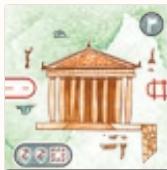
TEMPLE
The Temple must not have any Car nor Train Pinpoints on the tiles that surround it.

GAS STATION
The Gas Station must be part of a continuous path with at least 8 connected Highway segments; in case of looping paths, the same Highway segment cannot be counted more than once.
SOLO MODE
HOW TO PLAY
Follow the standard game rules with the following exceptions:

During setup, you don't have to draft a starting tile.

You will use 3 columns: one with 2 tiles, one with 3 tiles, and one with 4 tiles.

If you choose the 2-tile column, you also gain a Star pawn. You can add a Star pawn to that column as a reminder.

If you choose the 3-tile column, you also gain a Prestige point. You can add a Prestige point to that column as a reminder.

After selecting your tiles, discard all remaining tiles in the other columns. You don't have to place a Star pawn on any column.
CHALLENGES
The solo mode of Railroad Tiles includes 15 challenges, each with 1 specific mission or limitation and 3 scoring thresholds.


At the beginning of a solo game, choose a challenge. You will be able to achieve only the chosen challenge during this game.
If you break the limitation or fail to complete the mission, you score 0 points.
If you meet or exceed a specific scoring threshold, mark the thresholds you have achieved.
| CHALLENGE MISSION 1★ 2★3★ | ||||
| MEGALOPOLIS | Create a City made of at least 10 Town tiles. | 30 | 40 | 50 |
| ROUTE 66 | Create a continuous Highway path with a length of at least 14. | 40 | 50 | 60 |
| TRANS EUROPE EXPRESS | Create a continuous Railroad path with a length of at least 14. | 40 | 50 | 60 |
| PERFECTION | End the game with 3 Openings or less. | 40 | 50 | 60 |
| FLAT EARTH | Place your tiles so that the height of your play area does not exceed 3 tiles. | 40 | 50 | 60 |
| VOLCANO | Leave a 2 x 2 empty area completely surrounded with tiles in the middle of your play area. | 30 | 40 | 50 |
| HOLES | Leave 3 empty 1-tile areas completely surrounded by tiles in the middle of your play area. | 30 | 40 | 50 |
| DISTANT FRIENDS | Have at least 2 connected Travelers at a distance of 12 or more tiles from each other, withno other Travelers between them. | 40 | 50 | 60 |
| STATION MAYHEM | Create a network that connects at least 10 Stations. | 40 | 50 | 60 |
| CAR HEAVEN | Create a Highway network that connects at least 8 Cars. | 40 | 50 | 60 |
| TRAIN PARADISE | Create a Railroad network that connects at least 8 Trains. | 40 | 50 | 60 |
| 4 CITIES | Create at least 4 Cities. | 40 | 50 | 60 |
| STRICT RULING | Do not place more than 1 pawn of the same type in each row of your play area. | 35 | 45 | 55 |
| TRAFFIC CONTROL | No network in your play area contains more than 2 pawns of the same type connected to each other. | 30 | 40 | 50 |
| LAZY TRAVELERS | When you place a Traveler pawn, you get points only for Travelers connected to it viathe same type of path (Highway or Railroad). | 40 | 50 | 60 |
GAME SUMMARY
A game of Railroad Tiles™ unfolds over 8 rounds.
GAME ROUND
A game round consists of 4 phases:

ROUND SETUP
Reveal the topmost Placement token, place it in the Waiting Area below the pile, pushing any Placement tokens to the right if needed. Reveal Route tiles to create a drafting pool according to the quantity indicated for each column.

TILE SELECTION
Following the turn order: Choose a column of Route tiles, move your pawn to the top of it, take all the Route tiles and Star pawns in that column, and immediately place them in your play area. Each tile you place must be connected to at least 1 pre-placed tile. Tiles can be freely flipped or rotated. You must connect similar sides to similar sides: each side of the tile must match the side of any tile it touches.

PAWN PLACEMENT
For each Placement token in the Active Area, each player may place 1 matching pawn on any tile with an empty matching Pinpoint (you are not limited to tiles placed in the current round). Each pawn placed scores you Prestige points immediately, according to its rules (up to a maximum of 5 points).

END OF THE ROUND
Place 1 Star pawn on the only column that wasn't chosen by any player (in a 2-player game, flip the 2-player token like a coin to discard the extra column). Move the Player pawns to the Turn Order Area, preserving their current left-right order.
END OF THE GAMEH
CITY POINTS
For each group of 3 or more orthogonally adjacent Town tiles, you score 5 Prestige points.
BIGGEST RECTANGLE POINTS Find your biggest rectangle of tiles without holes and score 1 Prestige point for each tile.
OPENING PENALTIES You are allowed up to 5 Openings, but you lose 1 Prestige point for each Opening exceeding the 5th.
STAR PAWNS
For each unused Star pawn in your reserve you score 1 point.
CREDITS
GAME DESIGN AND DEVELOPMENT: Hjalmar Hach, Lorenzo Silva
ARTWORK: Marta Tranquilli, Francesco De Benedittis
GRAPHIC DESIGN: Annachiara Rossi, Nicolò Sala, Fabio Frencl
RULEBOOK: Renato Sasdelli, Lorenzo Silva, Alessandro Pra', William Niebling
PROJECT MANAGER: Lorenzo Silva, Renato Sasdelli
ADDITIONAL DEVELOPMENT: Carola Corti
HORRIBLE GUILD TEAM: Davide Amici, Federico Corbetta Caci, Ylenia D'Abundo,
Federico Dossi, Andrea Lugli, Giulia Monte, Camilla Muschio, Laura Severino
If you have any issues with this product, please contact us at: horribleguild.com/cc

HORRIBLEGUILD.COM
原文为社区整理/出版社公开资料,版权归原作者,仅供个人学习查阅。