
过江龙River Dragons
一句话概览
过江龙 是一款已收录于村了吗规则库的桌游,支持 2–6 人,原名 River Dragons。
本页内容:一句话概览 · 游戏概述 · 1. 游戏组件 · 2. 游戏设置 · 3. 游戏流程 · 4. 到达终点 · 游戏结束 · 5. 行动详解 · 6. 龙卡(River Dragon) · 7. 关键规则与常见问题 · 常见问题
过江龙 规则速览
以下规则速览由本站整理,与官方规则书表述不同,仅供快速上手参考。
游戏概述
每年,湄公河三角洲上最勇敢的年轻人用木板和石块搭建桥梁,渡过河流抵达对岸村庄,争夺国王授予的金龙奖赏。玩家在各自起始村庄出发,通过精心规划行动顺序、合理放置石头与木板建造跨河通道,抢先到达目的村庄者获胜。
核心机制: 手牌管理、同步行动规划、空间布局、目标追逐
1. 游戏组件
| 组件 | 数量 / 说明 |
|---|---|
| 游戏面板 | 1块(正面有27个小岛,反面无小岛——进阶规则使用) |
| 行动卡牌 | 78张,6色各13张 |
| 勇士模型 | 6个(3女3男,红/蓝/绿/黄/黑/粉各一) |
| 木板 | 36块,6色各6种型号(有编号标记) |
| 起始玩家卡 | 1张 |
| 石头 | 27块 |
2. 游戏设置
2.1 面板设置
将游戏面板放置于桌面中央,印有27个小岛的一面朝上。
将所有石头放在面板旁边堆成公共储藏堆,方便所有玩家取用。
2.2 村庄 / 颜色选择
为每位玩家分配一种颜色,对应一块起始村庄。若玩家人数不足6人,部分颜色/村庄不参与本局,从游戏中移除。
每块村庄下方的提示文字标注了该村庄适合的玩家人数范围。
各玩家使用的颜色与移除的龙卡对照如下:
| 玩家人数 | 使用的颜色 | 移除的龙卡颜色 |
|---|---|---|
| 2人 | 粉色、黑色 | 红色、绿色、蓝色、黄色 |
| 3人 | 蓝色、红色、粉色 | 绿色、黄色、黑色 |
| 4人 | 蓝色、绿色、红色、黄色 | 黑色、粉色 |
| 5人 | 除黑色外的所有颜色 | 黑色 |
| 6人 | 所有颜色 | 无 |
2.3 玩家配备
每位玩家完成以下准备:
- 在自己对应的起始村庄上放置一个己方颜色的勇士模型。
- 将自己拥有的 6块同色不同型号的木板 排列在面前作为个人储藏堆。
- 获得 13张与自身颜色对应的行动卡牌 作为手牌。
- 移除所有不属于自己的龙卡(即上表中"移除的龙卡颜色"所列卡牌),保留在游戏盒中不参与本局。
2.4 起始玩家确定
最年轻的玩家获得起始玩家卡,放置于自己身前。起始玩家标识每回合结束后顺时针传递给下一位玩家。
3. 游戏流程
一局游戏由若干回合构成,每个回合分为两个阶段:
3.1 计划阶段
每名玩家从手牌中挑选 5张 行动卡牌,由自己决定执行顺序,从左至右依次面朝下放置在身前。一旦放置完毕,不可换牌或改变顺序。
当所有玩家都放好5张牌后,进入行动阶段。
3.2 行动阶段
所有玩家同时翻开自己的第一张卡牌(最左侧),从当前起始玩家开始,按顺时针方向依次执行该卡牌所示行动。全部玩家完成第一张的行动后,一同翻开第二张卡牌,重复上述过程。依次进行直至所有玩家均完成全部5张卡牌的行动。
> 注意: 玩家的行动可能被龙卡效果取消(详见第6节)。
3.3 回合结束
- 将起始玩家卡顺时针传递给左手边的玩家。
- 所有玩家将本回合使用过的行动卡牌收回手牌(下回合可再次使用这些牌)。
- 进入新的回合,回到计划阶段重新出牌。
4. 到达终点 · 游戏结束
当任意一名玩家的勇士到达其目的村庄时,游戏立即结束——即使当前回合或当前行动轮尚未完成。
到达终点的玩家即为赢家。
5. 行动详解
5.1 放置一块石头
在27个小岛中的其中一个岛上放置1块石头。
限制条件:
- 石头只能放在小岛范围内(不能放到岛屿之外的水域)。
- 每座小岛最多只能放置1块石头。
- 允许将石头放置在起始村庄的位置上。
- 若石头储藏堆已用完而某玩家仍尝试执行此行动,则该行动无法执行。
> 进阶规则:将面板翻转为无反面(无小岛面),石头改为随机放置于水中位置,其余规则不变。
5.2 放置两块石头
在27个小岛中选择两个不同的小岛,分别各放置1块石头。适用与"放置一块石头"完全相同的限制条件。
5.3 放置一块木板
在两块石头之间或一块石头与一个村庄之间放置1块木板。
木板长度判定:
- 玩家必须预估两块支撑点之间的距离,从个人储藏堆中选出一块他认为合适的木板。
- 放置前不得试放——直接选定后一次性放下。
- 木板可以比实际距离长,超出部分不影响放置。
- 如果木板太短无法平稳架设(即两端未同时落在支撑点上),则这块木板不能被放置在该处,玩家需将其放回储藏堆改选另一块或移动到别处。
- 若整局中都找不到合适的位置放置这块木板,则这块木板被永久移出游戏。
支撑规则:
- 一块木板上不能再叠加放置另一块木板——除非中间有一块石头能同时为两块木板提供支撑。
- 一个石头最多支撑3块木板;一个村庄也最多支撑3块木板。
5.4 放置两块木板
同时执行两次"放置一块木板"行动,适用相同规则。每次选择的木板必须来自个人储藏堆。
5.5 移除一块木板或者一块石头
从游戏面板上选择以下操作之一执行:
- 移走一块木板: 选择任意颜色、任意型号的1块木板,将其放回自己的木板储藏堆(后续回合可继续使用)。
- 移走一块石头: 选择面板上的1块石头,将其放回公共石头储藏堆。
禁止事项:
- 不可移走上面站有勇士的木板。
- 不可移走已被木板占据的石头(石头上有木板时不可单独拆除石头)。
- 玩家的个人储藏堆中不允许存在两块编号相同的木板(同一型号最多保留1块)。
- 玩家的个人储藏堆中不允许出现超过两种不同颜色的木板。
若没有任何可用的木板或石头可供移除,该行动取消。
5.6 一次移动
将自己的勇士向相邻的一个空地移动一格:
- 可移动到未被任何勇士占据的相邻木板或村庄。
- 勇士可以向任意方向移动,不受木板颜色限制。
- 勇士不能移动到已被其他勇士占据的木板上。
- 村庄容纳勇士无数量限制。
若勇士所有相邻格子均无路可走(无空地可选),则勇士掉入水中,返回自己的起始村庄。
5.7 两次移动
将自己的勇士向相邻方向连续移动两格,依次经过两块木板或一块木板和一个村庄。
- 规则同上,只是连续移动两步。
- 允许走回头路(例如沿原路线折返最终落回出发点木板)。
- 第二步落脚点同样必须是未被其他勇士占据的木板或任意村庄。
5.8 跳过另一个勇士
将自己的勇士越过旁边另一名玩家的勇士,落到再外侧的一块空木板上。效果等同于两次移动。
执行条件:
- 旁边必须有另一名玩家的勇士可供跳过。
- 落脚处必须是一个空的木板或任意村庄。
失败后果:
- 如果没有其他勇士在旁边可以跳过,或者落脚点被占无处可落,则跳跃失败——勇士掉入水中,返回自己的起始村庄。
6. 龙卡(River Dragon)
龙卡是一种特殊行动牌,用于干扰对手。
6.1 生效方式
- 龙卡可以取消与龙卡颜色相同且位于同一顺序位置的其他玩家之行动。
- 举例:粉色玩家在己方序列第4位打出一张粉色龙卡,则其他玩家中也在第4位出牌的粉色玩家,其第4个行动将被取消。
6.2 使用限制
- 每回合每名玩家最多打出一张龙卡(也可以选择不打)。
- 龙卡不能取消另一张龙卡的效果——即使多张龙卡在同一位置生效,各自的效果全部触发互不抵消。
6.3 龙卡颜色可用性
少于6人游戏时,已参与龙卡的颜色才存在于你的手牌中。其余颜色的龙卡已在设置阶段被移除(详见第2.3节"玩家配备")。
7. 关键规则与常见问题
易错规则
- 行动一旦摆放不可更改。 计划阶段5张卡牌面朝下放置后,绝对不能调整顺序或替换。
- 龙卡只能取消同色同位置的行动,不能互相取消。 多个龙卡在同一个位置会同时生效。
- 木板不够长就不能放那块,但可以换别的。 只有选定的那根板子有问题时才需要放回重选,其他已经放稳的不受影响。
- 一个石头/村庄最多支撑3块木板。 超过即违反规则,木板不能被这样架设。
- 所有方向都不通时勇士落水回村。 不是跳过本回合而是真的掉进水里,回到起始村庄重新开始。
- 龙卡不能跳到已经被其他勇士占据的木板作为落脚点。 跳跃失败直接落水回村。
- 每回合用过的牌收回手牌,下次继续可用。 不是消耗品,是一张牌反复打。
- 放置木板时不能试放验证长度,选定后一次性放下。 如果太短就必须放弃这根板子另选。
常见问题
Q:我可以把木板的一端悬空吗?只要另一端落在石头上就行吗?
A:不可以。木板的每一端都必须落在石头或村庄之上,两端均未着地则视为"太短"不能放置。
Q:如果我的一回合五个行动都做完了还有手牌怎么办?
A:五张就是上限。多余的牌留到下一回合再用。
Q:游戏什么时候真正结束?
A:只要有任意玩家的勇士踏入了目的村庄,游戏即刻结束,不等待当前回合走完。
Q:龙卡可以在计划阶段就藏起来吗?
A:是的,所有5张牌(含龙卡)都在计划阶段同时面朝下放置,其他玩家直到行动阶段翻开才知道你用了什么。
Q:木板永久移出游戏后还能拿回来吗?
A:不能。因无法找到合适位置而被永久移除的木板不再参与后续游戏。
常见问题(FAQ)
以下 1 条问答中 0 条来自站内玩家的真实提问,其余 1 条为本站整理的常见疑问;答复内容保持原样。
过江龙支持几个人玩?
2–6 人。
去哪查完整规则
想核对具体规则细节、卡牌效果或某个回合的结算方式,可以在村了吗里选中这款游戏后直接提问。
同类桌游
- 卡坦岛德式
- 工业革命:伯明翰德式
- 勃艮第城堡:特别典藏版德式
- 方舟动物园德式
- 卡卡颂抽象
- 瘟疫危机传承:第一季美式
- 阿瑞迪亚:勇踏征途美式
- 重塑宇宙德式
- 幽港迷城美式
- 埃多拉的德鲁伊德式
规则原文(Markdown)
本站收录这款游戏的规则原文 2 个文件,此处内联渲染 2 个,可直接展开阅读或下载。
rules_zh_过江龙_1986.md10.0 KB
目的村庄
游戏设计者为Roberto Fraga, Piero为游戏提供了插图适合8岁以上的玩家。
游戏时间为15到45分钟。
适合2到6人玩。
Roberto Fraga
每年,在湄公河的三角洲上,最勇敢的一群年轻人都会参加一场非常著名的比赛。在比赛中,他们要用木板和石头建造桥梁,以便渡过河流到达对岸的村庄。为了能够顺利到达彼岸,这些年轻人需要非常谨慎地计划自己的行动,避开对手的阴谋以及湄公河之龙的干扰。最先到达目的地的勇士将会获得国王亲自奖赏的金龙。
游戏配件
一块游戏面板
78张行动卡牌(每种颜色13张)
6个勇士模型:3女3男,有不同颜色
36个编号的木板,6种颜色和6种型号
1张起始玩家牌
27块石头
游戏目标
离开你的村庄,堆砌石块,建造桥梁,跨过大污到达目的地。
游戏准备
- 将游戏面板①放置在桌子中央,印有小岛的一面上。
- 将石块②堆放在面板旁边形成储藏堆,所有玩家都以轻松地拿到石块。
- 选择一种颜色,对应一个起始村庄。如果玩家人数少6位,那么有些颜色/村庄将不会用到。村庄下面的帮助文字显示了该村庄对应的游戏人数。

村庄/玩家颜色(提示可能的行动)
最年轻的玩家获得起始玩家手牌③并将其放置在身前。起始玩家在每轮都会改变,按顺时针顺序传递
玩家配备
- 在起始村庄放置一个相应颜色的勇士④.
- 在玩家面前放置6个不同尺寸的相应颜色的木板⑤形成储藏堆。
- 每位玩家获得13应颜色的行动卡牌⑥作为手牌,移除其它颜色的龙卡。
概要
| 玩家人数 | 使用的颜色 | 从游戏中移除的卡牌 |
| 2 | 粉色和黑色 | 红色,绿色,蓝色,黄色龙卡 |
| 3 | 蓝色,红色和粉色 | 绿色,黄色和黑色龙卡 |
| 4 | 蓝色,绿色,红色和黄色 | 黑色和粉色龙卡 |
| 5 | 黑色以外的其它颜色 | 黑色 |
| 6 | 所有颜色 | -------- |

游戏顺序
每局游戏由几个回合构成,每个回合按一下方式进行:
一. 计划阶段:
每名玩家从手牌中选出5张行动卡牌,由自己决定的顺序从左到右依次面朝下放置于身前。这些卡牌代表着玩家本回合将要执行的行动。需要注意的是,一旦将牌放置好后,不可以换牌或者改变卡牌顺序。
二. 行动阶段:
当所有玩家均将5张卡牌放置好后,一起翻开第一张卡牌,从起始玩家开始,按顺时针顺序执行相应的行动。当所有玩家的第一个行动都完成后,玩家们一起翻开第二张卡牌并按顺序执行行动。重复上述过程直到每个玩家均完成了自己的五个行动。
提醒:玩家的行动可能会被龙卡的效果取消(请参照本规则的另一面“龙卡”)。
当所有行动完成后回合结束:
-
起始玩家将起始玩家卡交给其左手边的玩家。
-
玩家将所有在本回合使用过的行动卡牌拿回手牌中(即下一回合仍可以使用这些行动卡牌)。
- 进入新的回合,从计划阶段开始,重复上述过程。
游戏结束
当其中一个勇士到达其目的村庄时,无论本回合或者本行动轮是否完成,游戏都将结束。
跳过另一个勇士
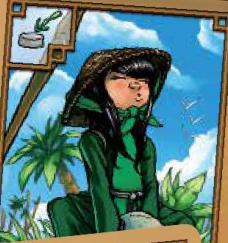
放置一块石头
玩家必须在27个小岛中的某一小岛上放置一块石头。
放置两块石头
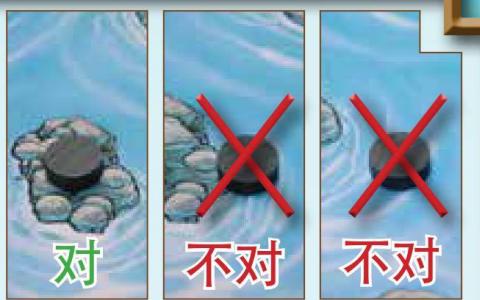
玩家必须在27个小岛中的两个小岛上分别放置一块石头。
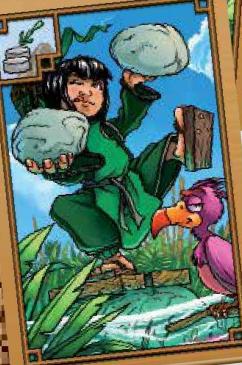
放置两块石头
- 石头不能被放置在小岛范围以外。
- 每座小岛只能放置一块石头。
- 可以在村庄放置一块石头。
进阶规则
- 一旦石头被放置好,它将不可以被移动或者从游戏面板上移除,除非通过行动“移除一块石头或一块木板”。
- 如果石头储藏堆被用完了,而某个玩家需要从中获取石头,那么这位玩家就不能实现此行动。
将面板翻转到没有小岛的另一面。此时石头不再被放置于小岛上,而是被随机地放置于水中。其它部分游戏规则不变。

放置一块木板
玩家必须在两块石头或者一块石头和一个村庄之上放置一块木板。
放置两块木板
玩家必须按相同的规则放置两块木板。
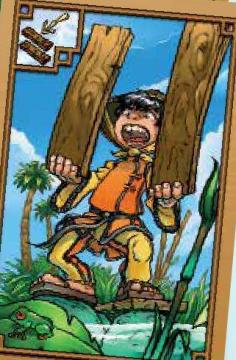
放置两块木板
玩家必须估测两块石头间的距离,并从他的木板储藏堆中选择了一块他认为合适的木板去放置。他在放置前不能尝试放这块木板,以便决定它的长度是否合适。
- 如果木板太长了, 这并不是问题, 因为木板的长度可以超过石头间的距离。
- 但是如果木板不能被平稳放置(太短了),玩家只能将它放到其它地方。
· 如果玩家不能找出合适的地方来放置这块木板,这块木板将被永远移除游戏!
- 禁止: 为了放置木板而移动石头。

重要!一块木板上不能放置另一块木板,除非有一块石头能够给两块木板提供支撑。
重要!一个石头最多只能支撑3块木板。同样的规则,一个村庄最多支撑3块木板。
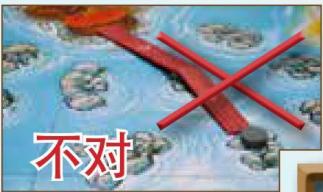
移除一块木板或者一块石头
玩家将从以下选项中选择:

1 从游戏面板上移除一块任意颜色和型号的木板, 将其放回自己的木板储存堆中。他可以在以后的行动中使用这块木板。
2 从面板上移除一块石头并将其放置于公共的石块储存堆中。
以下行为是被禁止的:· 移除一块有勇士站着的木块。
移除一块木板或者一块石头
- 在一个储藏堆中存有两个相同型号的木板(有相同的编号标记)。
- 在一个储藏堆中存有多于两种不同的颜色的木板。
- 移除一个已经被一块或多块木板占据的石头。
如果没有木板或者石头可以被移除,该行动将被取消。
一次移动
玩家将自己的勇士移动到相邻的可被选择的(没有被其它勇士占据的)木板或村庄(参见例1)。

两次移动
T玩家将自己的勇士走两步,依次在两块木板或者一块木板和一个村庄上移动(参见例2)。
- 勇士可以按任意方向移动到任意颜色的相邻木板上。
- 勇士不能移动至已被其它勇士占据的木板。但是,村庄里容纳的勇士无数量限制。
- 如果向任何方向都没法移动,勇士将落入水中并返回他的起始村庄。
- 在二次移动中,允许勇士做U形移动并最终回到原来出发的木板上。
跳过另一个勇士

玩家使他的勇士跳过另一个勇士到达一个可被选择的木板。
- 跳跃的效果相当于两次移动(参见例3)。
- 想要实现这个行动,勇士需要能够落到一个村庄或者一个未被占据的木板。
- 如果跳跃行动不能执行(没有勇士在可选择的木板上,或者没有地方着陆),这个勇士将掉入水中并返回他的起始村庄(参见例4)。

例1:绿色勇士需要被移动到一个空置的木板上。在这个例子里,他可以移动到其左边的绿色木板上,也可以移动到他右边的绿色木板上。但他不可以移动到已经被黄色勇士占据的粉色木板上。

例2:绿色勇士需要做两步移动(两块木板的距离)。在这个例子里,所有相邻的木板都被其它勇士所占据,他只能到达红色村庄或者回到他现在所占据的木板。
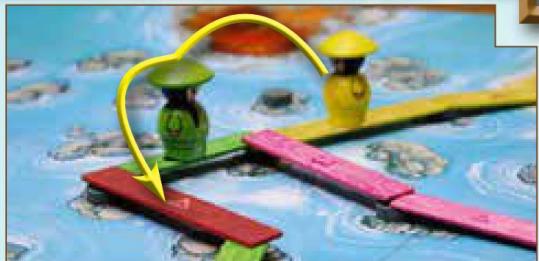
例3:黄色勇士必须跳过另一个勇士。在这个例子里,他只能跳过绿色勇士并着陆于灰色木板上,因为在他周围没有其他勇士。
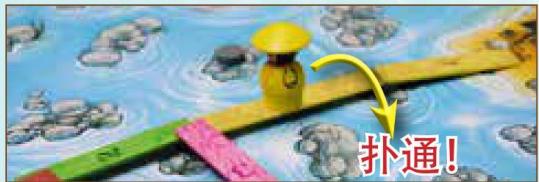
例4:黄色勇士周围没有其他勇士可供跳跃。跳跃失败,他将落入水中并回到他的起始村庄。

过江龙
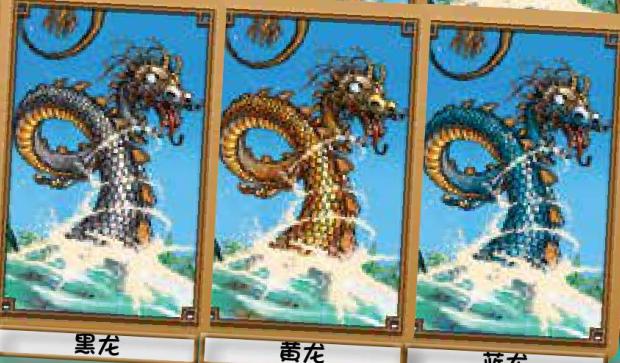
在行动回合,龙卡可以取消与该龙卡顺序位置相同,并且与该龙卡颜色相同玩家的行动。
- 每名玩家每回合不可以放置多于一张龙卡。当然也可以选择一张都不使用。
- 一张龙卡不能取消另一张龙卡的效果。如果多名玩家在同一位置使用龙卡,所有的效果都将发生。
提醒
在少于6名玩家时,每名玩家都将从自己的手牌中移除颜色不存在的龙卡。
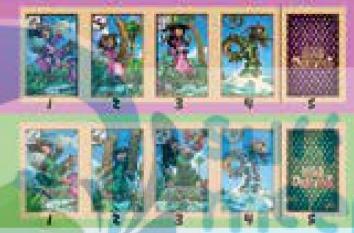
例4:粉色玩家放置了一张绿色的龙卡在第4个位置,绿色玩家放置了一张蓝色龙卡在第4个位置。绿色龙卡并不能取消蓝色龙卡的效果。蓝色玩家的第4个行动将被取消。
River Dragons Rules EN.md10.5 KB

For ages 8 and up.
In the Mekong delta, every year, the bravest young people face each other in a famous contest. Building bridges with planks and stones, they have to cross the river to reach the village on the opposite bank. To arrive there, they have to program their actions cautiously, avoid their opponents'maneuvers and the unexpected interventions of the Mekong's dragons. The frst arriving to his destination will receive a golden dragon from the king himself!
From 15 to 45 minutes. For 2 to 6 players. We suggest playing several games with only 2, 3 or 4 players before trying to play with 5 or 6.
CONTENTS
1 bards (13 of each color)
78 action cards (13 of each color)
6 pawns: 3 girls and 3 boys,
in different colors
36 numbered planks in 6 sizes
and 6 different colors
1 first player card
27 stones
GOAL OF THE GAME
Leave your village, place stones, build bridges and cross the board to reach your destination village. The player starting at the blue village needs to go to the yellow village. The one starting at the red village needs to go to the green one, and the one starting at the pink village needs to go to the black one (and vice versa for all colours).
SETUP
• Place the board ① in the table center, on the side where the islands are visible.
• Place the stones ② in the reserves in the corners of the board so that they are accessible to all players.
• Pick a color corresponding to one of the starting villages. If there are fewer than 6 players, not all the colors/villages are used.
The frieze below summarizes the actions to be carried out:

The youngest player takes the first player card and places it in front of him.
The first player will change at every turn, proceeding clockwise.
Player's equipment
• 1 pawn placed on his starting village.
• 6 planks ⑤ of the same color and of different sizes placed in front of him to create a reserve.
• 13 Action cards in his hand from which he removes all the Dragon cards of the absent colors.
| Players | Colors played | Cards removed of the game |
| 2 | Pink and black | Red, green, blue and yellow dragons |
| 3 | Blue, red and pink | Green, yellow and black dragons |
| 4 | Blue, green, red and yellow | Black and pink dragons |
| 5 | All the colors except pink | Pink dragon |
| 6 | All the colors |

GAME CyCLE
A game is composed of several turns. A turn takes place the following way:
1. Programming phase:
Each player chooses 5 Action cards from those he has in hand. He places them face down in front of him in the order he wants to play them, starting on the left. Those cards represent the 5 actions the player will have during this turn. Careful, once placed they CANNOT be exchanged nor moved.
2. Action/Resolution phase:
When all the players have 5 cards in front of them, they all reveal their first card at the same time. In turn they perform the action, one after the other, proceeding clockwise, always starting with the first player.
Once all the first actions are completed, the players reveal their 2nd cards and perform those actions. Repeat the same process for all 5 cards.
Warning : A player can have one of his actions canceled by a Dragon card (check back page of the rules “Dragon cards”).
The turn ends once all the actions have been resolved:
-
The first player gives the first player card to his left neighbor.
-
The players take back into their hands all the Action cards they used during the turn (the same cards can be used during the next turn).
-
A new turn begins, starting with the Programming phase, and so on.
END OF THE GAME
The game instantly ends when a pawn reaches his destination village even if the turn and the actions are not finished.
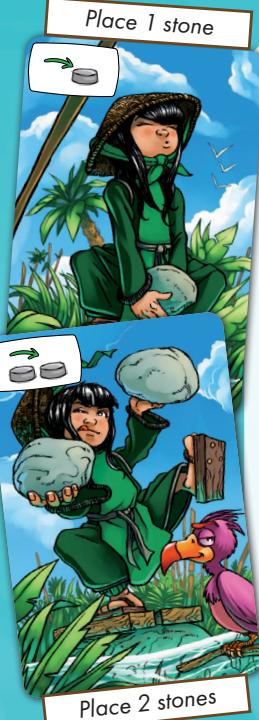
PLACE 1 STONE
The player MUST place 1 stone on one of the 27 islands.
PLACE 2 STONES
The player MUST place 2 stones, each on one of the 27 islands.

• A stone cannot be placed beyond an island's limits.
• Each island can only receive one stone.
Flip the board to the side
• It is impossible to place a stone on a village.
• Once a stone is placed it cannot be moved or removed from the board, except through the action “Remove 1 stone or 1 plank“.
• If there are no stones left in the stone reserve when a player needs to take one, the action is lost.
Where the islands disappeared. Instead of placing the stones on the islands you have to place them directly in the water. For the rest of the game, keep the usual rules.
PLACE 1 PLANK
The player MUST place 1 plank supported by two stones, or a village and one stone. PLACE 2 PLANKS

The player MUST place 2 planks following the same instructions.
The player MUST evaluate the distance between two stones, or a stone and a village, then choose a plank from his reserve. Once a plank is chosen it cannot be changed, even if it turns out to be a poor choice!
• If the plank is too long, it is not a problem, a plank can go over the stone's limits.
• But if the plank cannot be placed in a stable way (too short), the player MUST place it somewhere else.
• If the player cannot find an appropriate place for a plank, the plank is removed for the rest of the game!
• Two planks can not cross each other.
• It is forbidden to move a stone in order to place a plank.
• Important! A plank cannot rest on another plank except where a stone or a village can support both of them.

• Important! A stone can only support 3 planks maximum. Following the same rule, a village can only support 3 planks maximum.
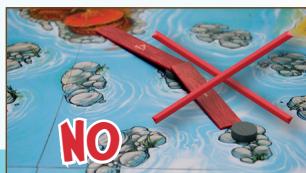
REMOVE 1 PLANK or 1 STONE
The player MUST choose between:
• Removing a plank of any color and size from the board and putting it in his planks' reserve. He will be able to use it later on.

• Removing a stone from the board and putting it back in the common stone reserve.
It is forbidden:
• to remove a plank occupied by a pawn.
• to have two planks of same size in the individual reserve (with the same number).
• to have more than 2 different colors of planks in the individual reserve.
• to remove a stone already used by one or more planks.
If no planks and no stones can be removed, the action is lost.
1 MOVEMENT
The player MUST move his pawn onto an available (not occupied by another pawn) adjacent plank or village (check example 1).
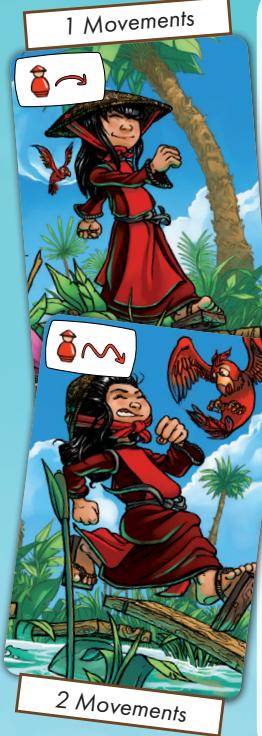
2 MOVEMENTS
The player MUST move his pawn two planks or one plank and a village (check example 2).
• A pawn can be moved in any direction and on any plank no matter the color.
• A pawn cannot go onto a plank occupied by another pawn, but a village can welcome an unlimited number of pawns.
• If no moves are possible in any directions, the pawn falls into the river and goes back to his starting village.
• In the case of 2 MOVEMENTS, it is possible to make a U-turn and finish the movement on the starting plank.
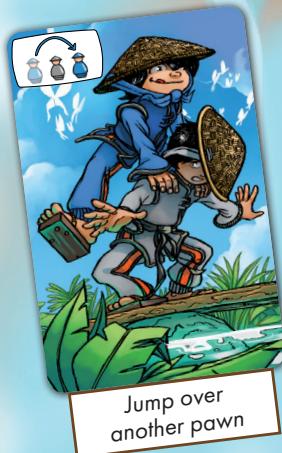
JUMP OVER ANOTHER PAWN
The player MUST make his pawn jump over a pawn standing in an adjacent plank.
• The result of the jump is equivalent to a 2 MOVEMENTS action (check example 3).
• For that action to be possible, the pawn must be able to land on a village or an unoccupied plank.
• If no jump is possible (no pawn on an adjacent plank, no space to land), the pawn jumps for nothing, falls in the river and goes back to his starting village (check example 4).
THE RIVER DRAGONS
During the resolution phase, a dragon card cancels the action of the card placed in the same position for the player having the same color as the dragon on that card.

Example 2: The green pawn must move two planks. Here, all the planks around are occupied by other pawns, he can only reach the red village or come back on the plank he is already standing on.


Example 1: The green pawn must move on a free adjacent plank. Here, he can go on the green plank on his left or on the red plank on his right. He cannot go on the pink plank already occupied by the yellow pawn.
Example 3: The yellow pawn must jump over another pawn. Here, it can only jump over the green pawn and land on the red plank because there is no other pawn next to him.

Reminder: In a setting with less than 6 players, each player removes the dragons of the absent colors from his hand.

Example 5: The pink player placed a green dragon in 4th position, the green player placed a blue dragon in 4th position. The green dragon does not cancel the blue dragon. The blue player won't be able to play his 4th action.
Example 4: There is no pawn the yellow one can jump over. He misses his jump, falls in the river and goes back to his starting village.
A Dragon card does not cancel the effect of another Dragon card. If several players used a Dragon card in the same position, all the effects apply (check example 5).
A player cannot play more than one Dragon card each turn. He also can decide to use none.

原文为社区整理/出版社公开资料,版权归原作者,仅供个人学习查阅。