
金之川River Of Gold
一句话概览
金之川 是一款已收录于村了吗规则库的桌游,支持 2–4 人,原名 River Of Gold。
本页内容:一句话概览 · 游戏概述 · 1. 游戏组件 · 2. 游戏设置 · 3. 游戏流程 · 4. 神圣恩宠系统 · 5. 行动详解 · 6. 专精系统 · 7. 自由交易 · 8. 建筑板块说明 · 9. 天皇来访 · 10. 游戏结束 · 11. 最终计分 · 12. 2人游戏特殊规则 · 13. 游戏胜利 · 14. 氏族赞助者迷你扩展 · 15. 关键规则与常见问题 · 常见问题
金之川 规则速览
以下规则速览由本站整理,与官方规则书表述不同,仅供快速上手参考。
游戏概述
在麓雁大陆上,传说有一条黄金河能带来无尽的繁荣。玩家扮演巨蟹、仙鹤、螳螂或毒蝎氏族中的显赫商人,沿河建造贸易帝国、泛舟黄金河、扩大在贵族庄园中的影响力,竞争获得最多的胜利点数。核心机制: 骰子放置、区域影响、商船航行调度、客户订单满足、资源管理与转换
1. 游戏组件
| 组件 | 数量/说明 |
|---|---|
| 游戏版图 | 1块(含黄金河河道、6个地区河岸格、起始建筑位) |
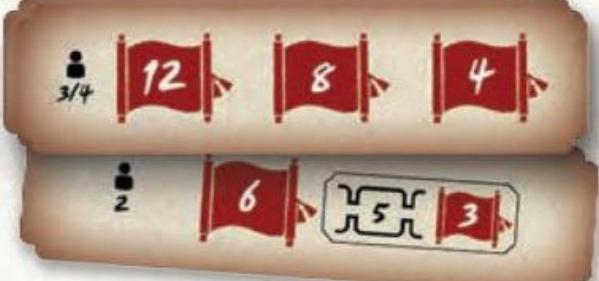
| 地区得分板块 | 6个(双面:2人面 / 3~4人面) |
| 专精卡牌 | 6张(双面:2~3人面 / 4人面) |
| 建筑行板块 | 49个(时代1 ×24、时代2 ×16) |
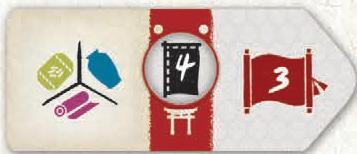
| 起始建筑板块 | 6个 |
| 公家市集建筑板块 | 3个 |
| 金钱标记 | 95个(面值1和5混合) |
| 贸易商品标记 | 75个(丝绸 ×25、大米 ×25、瓷器 ×25) |
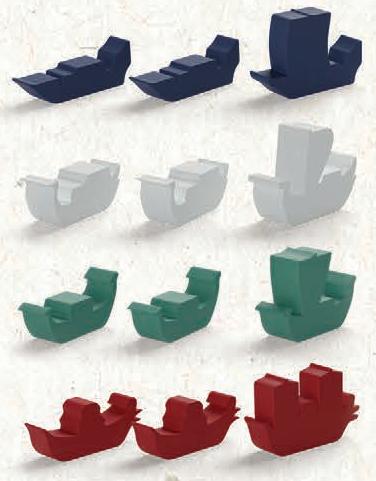
| 普通商船 | 8艘(每色2艘) |
| 皇家商船 | 4艘(每色1艘) |
| 氏族标志 | 88个(每色22个) |
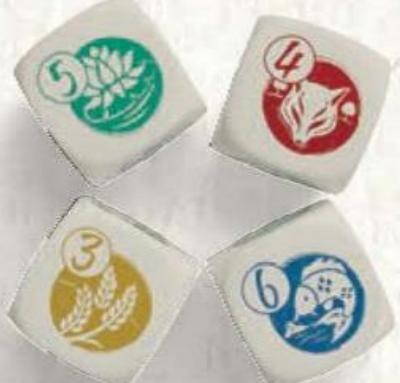
| 特制骰子 | 4枚(每色1枚) |
| 得分标志 | 4个(每色1个) |
| 月亮标志 | 4个(代表神圣恩宠上限) |
| 太阳标志 | 4个(代表当前神圣恩宠数) |
| 客户卡牌 | 30张 |
| 氏族版图 | 4块(每族1块,用于放置完成客户与记录) |
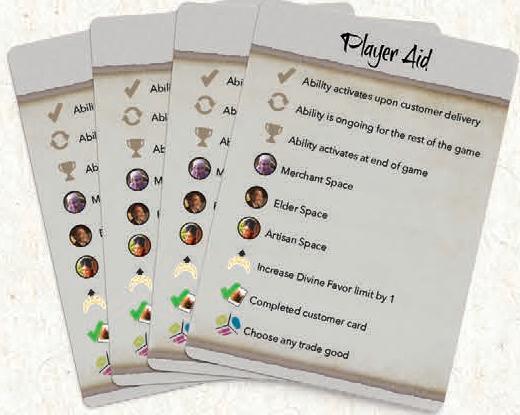
| 玩家帮助卡牌 | 4张(每色1张) |
| 建筑版图 | 1块(放置建筑行用) |
2. 游戏设置
2.1 版图与区域
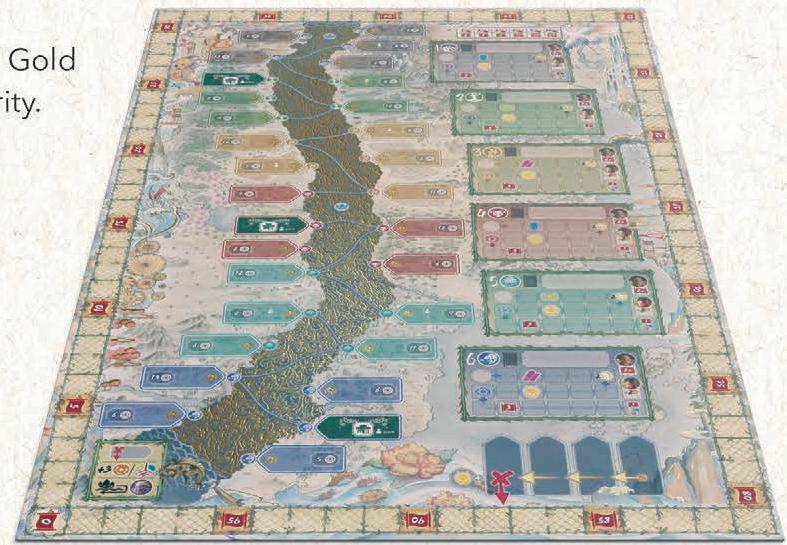
将版图放于桌面中央。在6个地区的影响记录条上各随机放置1个地区得分板块。根据玩家人数翻到对应面(2人 / 3~4人)。
2.2 专精卡牌
将6张专精卡牌洗匀,抽取3张正面朝上置于版图旁。根据玩家人数翻到对应面(2~3人背面朝下半张;4人全部翻开)。剩余卡牌放回盒中。
2.3 供应准备
混洗客户牌库,正面朝下置于版图旁。将金钱和三种贸易商品标记置于附近供取用。
2.4 起始建筑
A. 随机将3个公家市集板块放在版图上标有"公家市集"的3个格子上。
B. 混洗6个起始建筑板块。根据玩家人数放置:
| 玩家人数 | 起始建筑 |
|---|---|
| 4人 | 无起始建筑 |
| 3人 | 3个起始建筑 |
| 2人 | 6个起始建筑 |
随机选择对应数量的起始板块放在标有该玩家数的河岸格上,未使用的放回盒中。
2.5 建筑行
A. 将建筑版图置于主版图旁。
B. 分别洗匀时代1和时代2板块堆,按下方表格从各自的堆顶抽出对应数量放置在建筑版图上的时代区槽位中,未使用的放回盒中。
C. 从时代1堆顶抽4个板块填满建筑行槽位。
| 玩家人数 | 时代1板块数 | 时代2板块数 |
|---|---|---|
| 4人 | 16 | 13 |
| 3人 | 14 | 11 |
| 2人 | 12 | 9 |
2.6 玩家设置
- 随机决定起始玩家。
- 每位玩家选择一块氏族版图,领取以下配件:2个普通商船、1个月亮标志、1个皇家商船、1个太阳标志、22个氏族标志、1个特制骰子、1个得分标志、1张玩家帮助卡牌。
- 将得分标志放在得分记录条的"0"位;将1个氏族标志放在所有6个地区影响记录条的起始格上。
- 普通商船放置:每位玩家将自己的1个普通商船放在顶部河流起始格和中部河流起始格上。然后分别掷骰,依点数将两艘商船各自沿河向下移动相应格数。
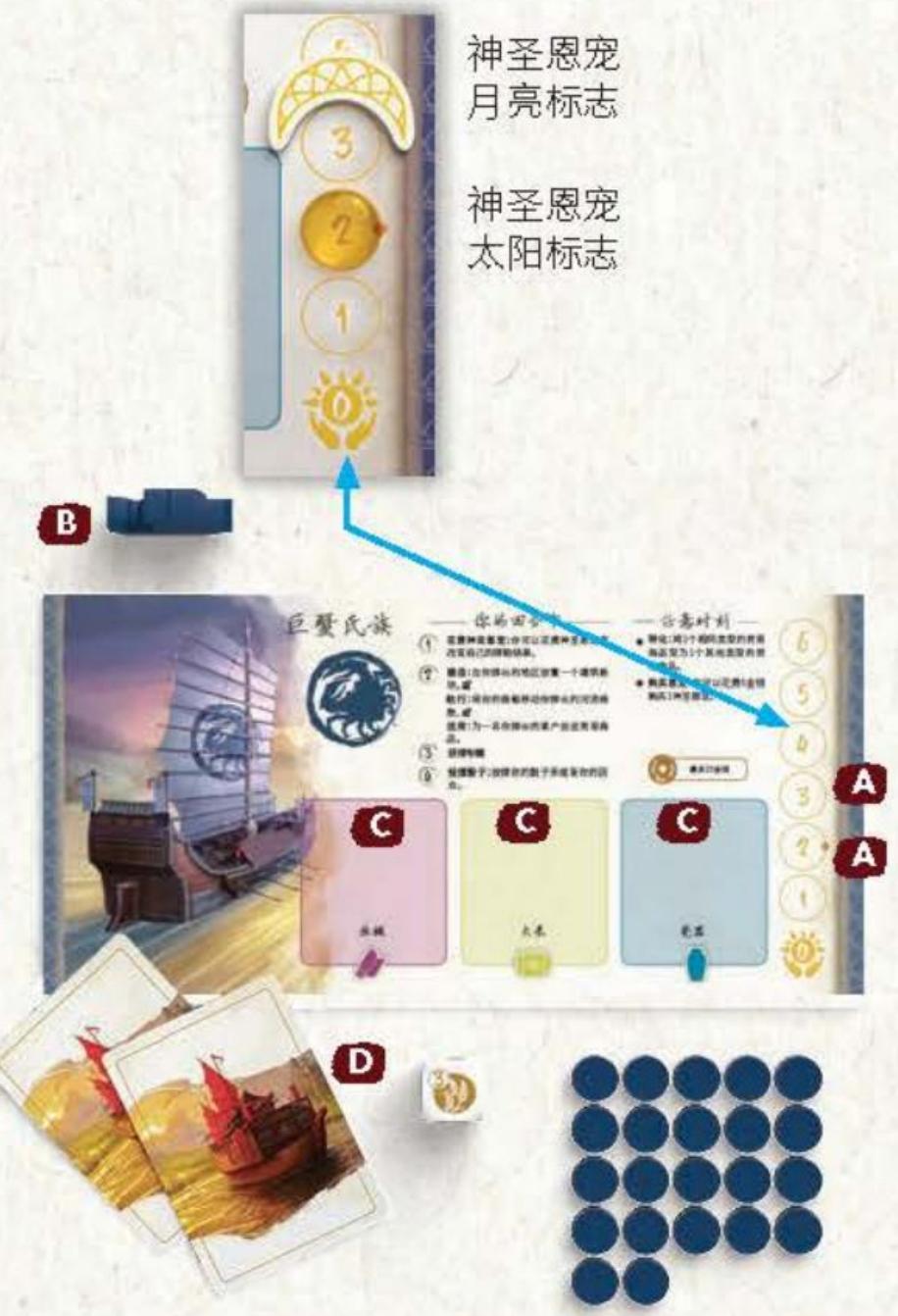
- 神圣恩宠初始设定:将太阳标志放在"2"位,月亮标志放在"3"与"4"之间(表示上限为3)。
- 将皇家商船置于氏族版图旁。
- 每种贸易商品各取1个,放置于氏族版图对应格子内。
- 抽取2张客户卡牌入起手牌(手牌可随时查看)。
- 依位置顺序获初始金钱(从起始玩家起顺时针):第1位7 → 第2位8 → 第3位9 → 第4位10。
- 每位玩家投掷第一次骰子——此结果将在自己首个回合直接使用。
3. 游戏流程
游戏以轮流方式进行。每位玩家的回合包含以下步骤,严格按序执行:
3.1 花费神圣恩宠
你可以花费任意数量的神圣恩宠来修改本次使用的骰子结果。每花费1个神圣恩宠可将骰子结果加减1点。增减时若超过范围则自动回绕:加到6以上变回1,减到1以下变为6。
注意:只有你正在使用的这个骰子的结果能被修改,不是所有骰子。
3.2 进行一个行动
从以下三种行动中任选其一执行:建造建筑、商船航行、为客户送货。详见下文。
3.3 获得专精
检查是否有满足的专精条件。每满足一项(或超出),就将1个氏族标志放在该项数值最高且尚未被获得的奖励格上,并立即获得该格标注的胜利点数。每种专精每局只能获得一次,但同一回合中可同时获得多个不同的专精。
3.4 投掷骰子并结束回合
投掷你的特制骰子,结果为下一轮做准备。下一位玩家开始回合。
4. 神圣恩宠系统
神圣恩宠代表神明的意志,可用来改变命运。
获取: 每当通过行动或效果获得神圣恩宠时,将太阳标志沿记录条推进一格。
上限: 月亮标志表示你同时能持有的最大数量。太阳标志永远不能超过月亮标志的位置——如果你已满上限却再次获得恩宠,多出的部分直接流失。通过某些客户能力可以增加上限:将月亮标志向前移至下一格。
交换: 你可随时用5个金钱兑换1个神圣恩宠(见第10节)。
5. 行动详解
5.1 建造建筑
选择一个匹配你骰子上图标/数字的地区中的空河岸格。如果该地区已无空格则不能建造。
按顺序执行:
- 支付费用: 弃掉该河岸格上印刷的金钱数量。若你不足则不能建造。
- 选取建筑: 从建筑行中任选一个板块,放置于所选格上。若选中建筑行最末端的板块,立即获得1个神圣恩宠。
- 放置标记并获得影响: 将1个氏族标志放在该建筑板块的建造增益标记处。在所选地区获得板块上所示的影响值,将你的标志沿该地区的影響记录条推进相同格数。收集经过及停留格中所有的奖励(贸易商品、金钱、神圣恩宠或胜利点数)。
- 如果你在到达记录条末尾时获得了影响,则这些额外影响全部丢失。
- 即使有其他玩家的标志在记录条上,你仍然可以获得记录条奖励。
- 到达公家之花不给予任何奖励。 - 补充建筑行: 将建筑行剩余的板块向后推,从对应时代的板块堆顶拿取1个新板块放到建筑行的第一个空位上。
- 当时代1板块堆最后一次被用完时,触发天皇来访(见第9节)。此后所有补充均来自时代2。
- 当时代2板块堆最后一次被用完时,当前玩家获得5分,随后启动游戏结束流程。
> 注:建造不需要商船靠近河岸格——你在大陆各处都有商人手下,陆上也可建造。
建筑类型与拥有者奖励
共四种建筑类型,各有独特访客与拥有者奖励:
| 建筑类型 | 访客奖励(商船抵达时) | 拥有者奖励(你拥有该建筑) |
|---|---|---|
| 港口 | 金钱 | 每有1个港口得1金钱 |
| 神社 | 胜利点数 | 每有1个神社得1金钱 |
| 庄园 | 影响 | 每有1个庄园得1金钱 |
| 市集 | 贸易商品 | 每有1个市集得1金钱,另每为客户送货得1金钱 |
> 起始建筑(包括公家市集)不被任何玩家拥有,不提供拥有者奖励。
资源上限
- 金钱总量不超过25个。
- 每种贸易商品不超过6个。
- 若将要获得的资源超出上限,多余部分直接流失。
5.2 商船航行
-
选择你的1个商船(普通商船或皇家商船),将其沿河向下移动骰子显示的河流格数。
- 移动时只计算河道上的金色格子。
- 如果移动超出地图范围,将商船放回顶部河流起始格继续移动,直到用完全部移动数(称为"完成旅途")。 -
移动结束后,商船所在的河流格会与4个河岸格相邻。收集这些河岸格上的访客奖励(建筑板块箭头端标注)。空河岸格的访客奖励为1金钱。
-
商船接触的4个河岸格上,所有建筑的拥有者(无论属于谁)同时收集该建筑的拥有者奖励(建筑板块平直端标注)。起始建筑不提供拥有者奖励。如果某个奖励是"影响",则计入该建筑所在地区的影響记录条。
-
如果你的商船到达了河流尽头并完成了旅途:
- 额外获得3金钱或1个任意贸易商品。
- 弃掉建筑行最后一个板块,如常补充新板块。此时可能触发天皇来访或游戏结束(同建造行动的补充规则)。
5.3 为客户送货
- 从手牌中选择1张客户卡牌,其标注的地区数字必须与你的骰子结果匹配。若没有匹配的客户则不能送货。
- 弃掉客户卡上标注的贸易商品订单。若种类或数量不足则不能送货。
- 将该客户卡正面朝上放置于你的氏族版图旁,获得所有标注的奖励。若含持续能力则该效果一直生效至游戏结束。
- 从客户牌库顶抽取2张新卡入你的手牌。然后从手牌中任意弃掉1张卡(面朝上放入弃牌堆)。若牌库为空则洗混弃牌堆形成新的牌库。
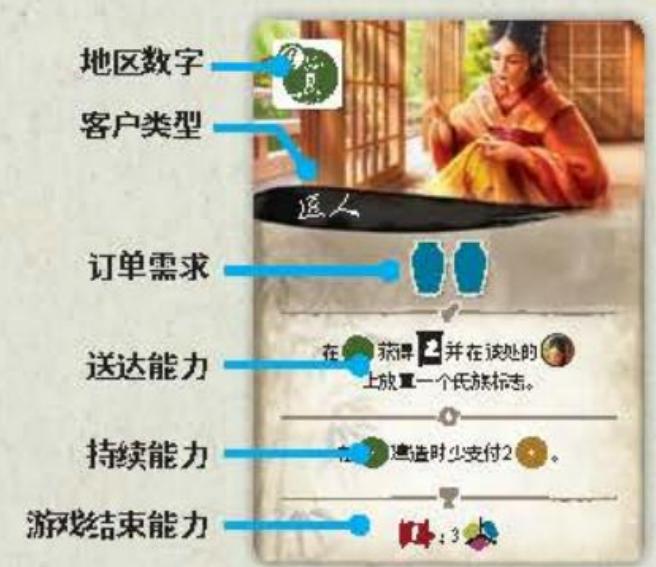
客户类型一览
| 客户类型 | 完成时效果 | 持续能力 | 游戏结束时结算 |
|---|---|---|---|
| 僧侣 | 月亮标志前移1格(神圣恩宠上限+1);获得2个神圣恩宠(替代常规影响) | 可在任意已有1个标志的建筑上放置第2个标志。若是你自己的建筑:商船来访时获得双倍拥有者奖励。若是对手的建筑:你也能获得其拥有者奖励。 | 无 |
| 商人 | 若为首次送达商人:在河流末尾商人格放置1个氏族标志作为提醒 | 每次商船完成旅途时额外获得1次效果(除常规的3金钱/任意贸易商品外)。具体效果每张卡不同。 | 每剩5个金钱(向下取整)得1分。每名商人单独计算。 |
| 贵族 | 若为首次送达贵族:选1个普通商船替换为你的皇家商船 | 你的皇家商船获得该贵族专属的独特能力,每次移动皇家商船时可激活。 | 每有1个某种类型的建筑得1分。多贵族叠加所有能力。 |
| 匠人 | 在匠人地区(地区4的子区域)匠人格放置1个氏族标志 | 在该地区建造时永久少花费2金钱 | 每剩3个贸易商品(向下取整)得1分。每名匠人单独计算。 |
| 长者 | 在长者地区(地区3的子区域)长者格放置1个氏族标志 | 无持续能力,无完成时增益 | 你占据长者格的地区,在游戏结束时该地区的最终计分翻倍。仅作用于地区得分板块分数,不计入影响记录条上的3分格。 |
> 在计算建筑拥有者奖励、专精达成和其他效果时,建筑上只要有任一玩家的标志就视为"该玩家也是拥有者"。同一建筑最多容纳2个标志。
6. 专精系统
专精是竞争性的成就目标,为在不同领域取得进展的玩家提供奖励。
获得方式: 在步骤3中,检查你是否满足某项专精的条件。满足后,将1个氏族标志放在该项评分最高的未被占用的奖励格上,并立即获得该格的分數。
- 每种专精每局只能获得一次。
- 同一回合可满足多个专精条件并全部获得。
- 先达成的玩家获得高分奖励,后达成的玩家获得低分。
目前已知的专精示例:
| 专精名称 | 条件 | 首名奖励 | 后续奖励 |
|---|---|---|---|
| 空之专精 | 在所有6个地区中都拥有至少1点影响 | 7分 | 5分 |
7. 自由交易
在任何时机都可以进行以下两种交换:
- 贸易商品互转: 用2个相同类型的贸易商品交换1个其他任意类型的贸易商品。可多次进行。
- 金钱换恩宠: 用5个金钱兑换1个神圣恩宠。
8. 建筑板块说明
- 建筑板块两面完全相同,沿河摆放时方向一致。
- 建筑行的板块按固定顺序消耗:从最前端开始逐个取用。
- 建筑行共4个槽位,始终保持填满(除非牌堆耗尽)。
- 时代1和时代2的区分只在补充时有效——放在板上后无法区分。
9. 天皇来访
当最后一个时代1板块被移到建筑行上之后触发。
如同每位玩家各有一艘商船航行了遍全图,所有玩家同时获得自己拥有的每一座建筑的拥有者奖励。每位玩家依次结算完毕后,下一位继续游戏。
自此之后,所有补充到建筑行的新板块都来自时代2。
10. 游戏结束
当最后一个时代2板块被移到建筑行之上时,游戏结束流程启动:
- 当前玩家立刻获得5分。
- 每位其他玩家各获得1个额外回合。
- 最后一名玩家结束回合后进入最终计分。
> 特别提醒:若有玩家在长者格上放置了氏族标志,其在该地区的影响排名分数翻倍(详见最终计分)。
11. 最终计分
按以下顺序结算:
11.1 地区影响
对每个地区:
- 比较6个地区影响记录条上各位玩家的最终位置。
- 获得地区得分板块上对应排名的分数——第一名、第二名以及(部分地区的)第三名。
- 在该地区完全没有影响的玩家不得分。
- 若出现并列(包括多名玩家都到了记录条末尾),将该位置的分数相加后平均分配给并列玩家(向下取整)。
- 若某玩家在长者格上有标志,其在长者地区的所得翻倍。此项仅在最终地区计分时生效一次,不影响记录条过程中的3分格奖励。
11.2 客户基础分
每位玩家根据其已完成客户卡的数量获得基础胜利点数(具体分值见单张客户卡的结算说明)。
11.3 客户特殊增益
为商人、贵族和匠人送货的玩家,分别获得这些客户类型标注的游戏结束分数:
- 商人: 每剩5个金钱(向下取整)得1分,每名商人单独计算。
- 贵族: 每拥有指定数量的建筑得1分。
- 匠人: 每剩3个贸易商品(向下取整)得1分,每名匠人单独计算。
12. 2人游戏特殊规则
2人游戏中,每个地区得分板块的第二名分值仅在以下条件成立时有效:
第二名玩家的影响力标记必须在第一名玩家5格以内。 若差距超过5格,第二名分值作废。
13. 游戏胜利
总分最高的玩家获胜。若出现至少两人平局:
- 比较平局者之间的剩余神圣恩宠数量——持有较多者胜。
- 若仍平局,共享胜利。
14. 氏族赞助者迷你扩展
当熟悉标准版后,可以加入《氏族赞助者》扩展,获得更强力的个人能力。
14.1 扩展组件
- 8个氏族赞助者卡牌(每族2个)。
- 部分卡牌附带独立规则说明。
14.2 赞助者设置
- 完成标准游戏设置后,从4个氏族中各随机选1张赞助者卡牌,正面朝上置於版图旁。另一张放回盒中。
- 随机确定起始玩家。从最后一名玩家起逆时针依次选择可用的赞助者,领取对应的氏族版图与配件。未选中的放回盒中。
14.3 另一种设置模式
每位玩家随机分配氏族,然后各自从自己的2个赞助者中挑选1个使用。
> 赞助者带来的增益示例:在你建造时,每有一个河流格与你的建筑相邻,即可获得分数。
15. 关键规则与常见问题
易错规则
- 每次行动必选其一: 不能同时执行两个行动。
- 神圣恩宠修改会回绕: 加超6→回到1;减至1以下→变为6。
- 建造无需商船邻近: 商船不在河岸也可以建造。
- 建筑行末端有特殊奖励: 拿到最后一格即获1个神圣恩宠。
- 完成旅途≠建造: 两者都会消耗建筑行板块,触发的追加事件(天皇来访/游戏结束)相同。
- 商船移动只走金色河格: 非金色的河岸格不计入移动距离。
- 客户卡必须骰面匹配: 你只能递交与骰子数字/图标相符地区的客户。
- 长者无持续能力: 与其他客户不同,长者不赋予完成时或持续增益,只在最终计分中翻倍对应地区分数。
- 建筑最多2个标志: 已有2个标志的建筑不能再放。
- 记录条满格再获得影响全部丢: 到达末端后额外推进无效。
- 公家之花无奖励: 到达公家市集对应的花朵格不给任何收益。
- 天皇来访是全局事件: 所有玩家同时获得建筑拥有者奖励,不只是当前玩家。
- 影响奖励会被跳过但仍可获得: 推进时越过其他玩家的标志不影响你拿走经过和停留处的奖励。
- 资源超限只丢超出部分: 金钱上限25、单项贸易商品上限6,超额才损失。
- 客户完成时不增加手牌上限: 抽2弃1保持手牌稳定。
常见问题
-
Q:骰子可以修改到几?
A:最小为1,最大为6。加减超过范围会回绕。 -
Q:同一个行动可以做几次吗?
A:不可以。每回合只做一个行动。想重复做就要等下一个回合。 -
Q:商船可以在地图上往返吗?
A:不可以。商船只能沿河向下移动。超出地图则回到起点继续(完成旅途)。 -
Q:如何增加神圣恩宠上限?
A:通过送达僧侣客户来获得,月亮标志前推一格即为上限+1。 -
Q:天皇来访期间能否建造?
A:天皇来访是一个发生在补充建筑行之前的全局事件。事件结束后当前玩家继续自己的回合,仍可正常建造或其他行动。 -
Q:游戏什么时候正式结束?
A:最后一个时代2板块进入建筑行时触发。当前玩家得5分,其余人各加1回合,所有人结束后才算真正结束。 -
Q:2人游戏第二名怎么计分?
A:需你的影响标记在第一名5格以内才能获得第二名的分数,否则该分值作废。 -
Q:可以同时满足多个专精吗?
A:可以。同一回合中只要满足条件就可以获得多个专精。 -
Q:公家市集和普通市集有什么不同?
A:公家市集是起始建筑之一,不被任何玩家拥有,因此不提供拥有者奖励。但它仍算作市集——与市集交互的客户效果也适用于它。 -
Q:河流尽头的商人NPC什么时候出现?
A:仅在有人送达商人客户卡时才激活。商人卡的数量决定了有多少商人NPC留在河中。 -
Q:影响记录条上有"3分格"是什么意思?
A:影响记录条沿途分布着多种奖励格,其中有些标注为3分。这是推进过程中即时获得的分数,与最终地区计分的翻倍无关。
常见问题(FAQ)
以下 1 条问答中 0 条来自站内玩家的真实提问,其余 1 条为本站整理的常见疑问;答复内容保持原样。
金之川支持几个人玩?
2–4 人。
去哪查完整规则
想核对具体规则细节、卡牌效果或某个回合的结算方式,可以在村了吗里选中这款游戏后直接提问。
同类桌游
- 卡坦岛德式
- 工业革命:伯明翰德式
- 勃艮第城堡:特别典藏版德式
- 方舟动物园德式
- 卡卡颂抽象
- 瘟疫危机传承:第一季美式
- 阿瑞迪亚:勇踏征途美式
- 重塑宇宙德式
- 幽港迷城美式
- 埃多拉的德鲁伊德式
规则原文(Markdown)
本站收录这款游戏的规则原文 2 个文件,此处内联渲染 2 个,可直接展开阅读或下载。
rules_zh_金之川_41378.md36.0 KB
River of Gold 金之川

游戏设计:Keith Piggott

游戏配件

在麓雁大陆上有一条黄金河,传说它能带来无尽的繁荣。富庶的商人们沿着波光粼粼的黄金河,在各个港口之间游历,历经艰辛,建立起庞大的贸易帝国。你将作为声名赫赫的巨蟹、仙鹤、螳螂或毒蝎氏族中的一名显赫的商人,踏上一次传奇之旅。与其他商人激烈竞争,扩大你在贵族们宏伟庄园中的影响,建立起你自己的贸易之路。
你能克服万难,为自己的氏族带来空前的财富吗?
4个特制骰子 (每位玩家1个)
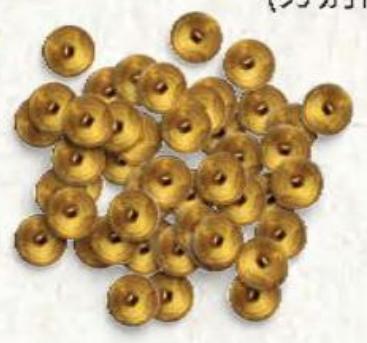
95个金钱
(分别价值1和5)

8个普通商船 (每位玩家2个)
4个皇家商船 (每位玩家1个)
巨蟹氏族
1块游戏版图
仙鹤氏族
螳螂氏族
毒蝎氏族


25个丝绸
75个贸易商品标记

25个大米

25个瓷器
6个地区得分板块
3/4 11 7 3
3/4 12 8 4
88个氏族标志 (每位玩家22个)
4个得分标志 (每位玩家1个)

4个神圣恩宠
月亮标志
(每位玩家1个)

4个神圣恩宠
太阳标志
(每位玩家1个)

安侯贵德是帝国最残大富有的商人来族的求主,但在极端大陆的贸易路上海历时,他总是喜欢穿着平尾的财临。
拥有3个相同类型的建筑。
6张专精卡牌

1块建筑版图

30张客户卡牌
4张玩家帮助卡牌

螳螂民族
虽然螳螂民族是一个较小的武士民族,但它的实力不容小觑,螳螂民族的风暴越队由被洗脱者和来自护纸城的船长们组成。
4块氏族版图

毒癌氏族遗传的收件,他们使其方法和不合格的交易,还有略略和略来查找并到特殊美中可能存在存在的奇迹。在压强的边缘之内就是波非动态的波音之域。这些藏藏大陆上最大的贸易中心,任何从这座城市送出的东西都进不过毒癌的项目。我们还要要从甲对一秤置。
“我将成为梵帝之急。”
万事都有适当的方法。


49个建筑板块
24个时代1板块(带有1个点)

6个起始板块
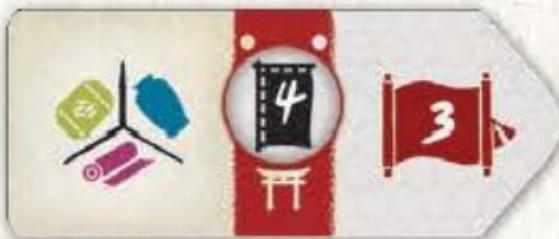
16个时代2板块(带有2个点)

3个公家市集板块
注意: 建筑板块的两面完全相同, 以便沿河摆放时方向一致。
民族赞助者迷你扩展
8个氏族赞助者(每个氏族2个)(有关规则请见第13页)。
在你建造时,每有一个河流格与建造相邻,得分
在影响记录条上推进时,你会跳过其他玩家的标志。收集你经过或到达的所有资源。
地图详解

游戏设置
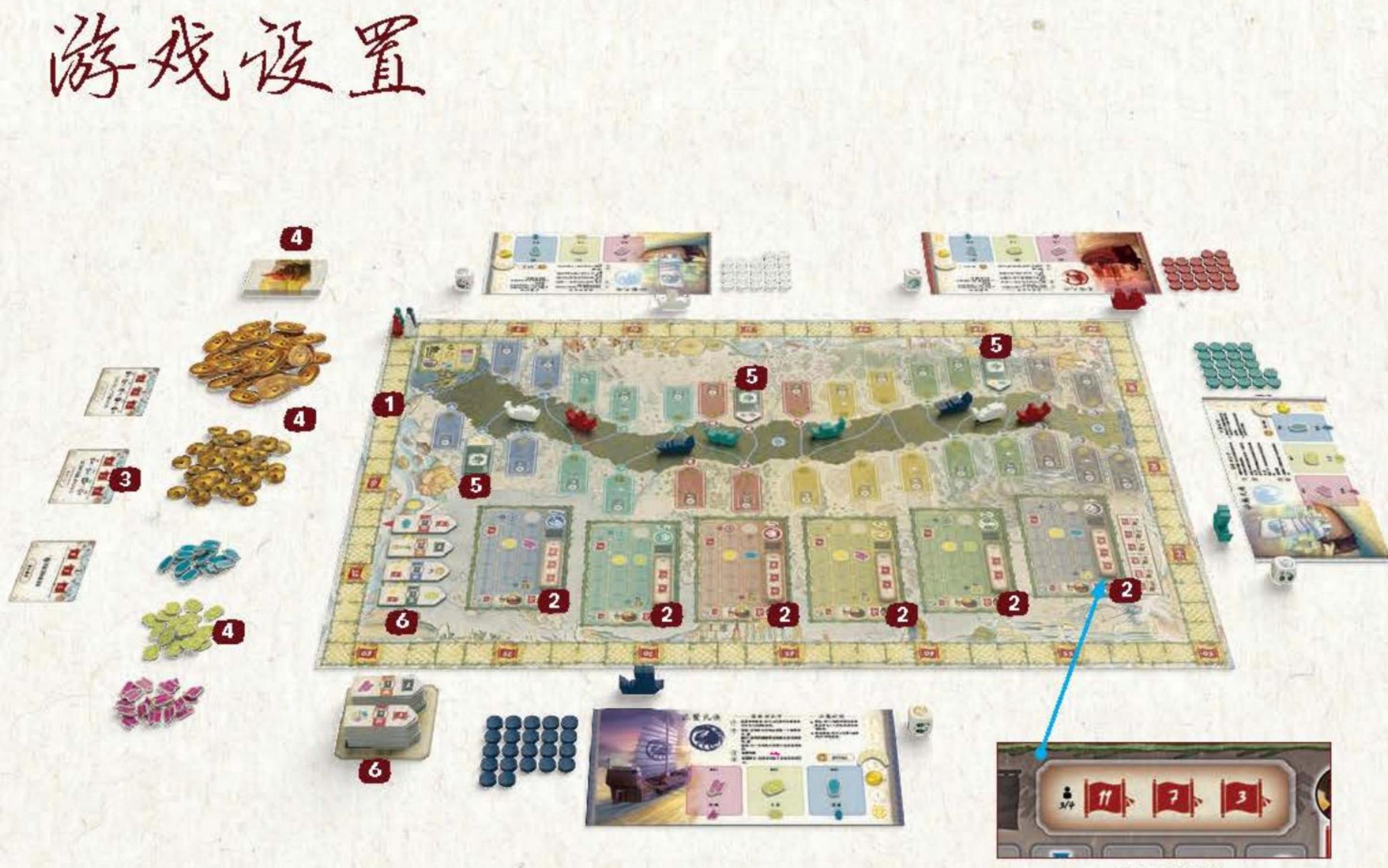
1 游戏版图: 将版图放置在桌面中央。
2 地区板块: 在6个地区影响记录条上各随机放置1个地区得分板块。根据你们的玩家人数, 将所有板块翻至对应面: 2 或 3/4。
3 专精卡牌: 混洗6张专精卡牌, 并抽取3张, 正面朝上放到版图旁。根据你们的玩家人数, 将所有卡牌翻至对应面: $\frac{3}{2}$ 或 $\frac{3}{4}$ 。将剩余卡牌放回游戏盒。
4 供应堆: 混洗客户牌库, 并将其正面朝下放到版图旁所有玩家都能拿到的位置。将金钱和贸易商品标记(丝绸、大米和瓷器)放在附近。
5 起始建筑:
A. 随机将3个公家市集建筑板块放在版图上的3个公家市集格上。
B. 混洗6个起始建筑板块。随机将1个起始板块放在每个标有你们玩家人数的河岸格上。将所有未使用的起始板块放回游戏盒。3人游戏时,使用3个起始建筑。2人游戏时,使用6个起始建筑。4人游戏时,不使用起始建筑。
6 建筑行:
A. 将建筑版图放在主版图旁。
B. 混洗时代1建筑板块, 将对应你们玩家人数的板块(见下表)堆放在建筑行旁的建筑版图上的时代1位置中。然后, 混洗时代2板块, 并将对应你们玩家人数的板块堆放在建筑版图上的时代2位置中。将所有未使用的板块放回游戏盒。
C. 从时代1板块堆顶抽取4个板块,填满建筑行。
| 玩家人数 | 起始板块 | 时代1板块 | 时代2板块 |
| 4位玩家 | 3个公家市集 | 16 | 13 |
| 3位玩家 | 3个公家市集+3 | 14 | 11 |
| 2位玩家 | 3个公家市集+6 | 12 | 9 |
玩家设置
1 随机决定起始玩家。
2 拿取游戏配件:每位玩家选择一块氏族版图并拿取以下配件:
- 2个对应氏族的普通商船
● 1个神圣恩宠月亮标志
- 1个对应氏族的皇家商船
- 1个神圣恩宠太阳标志
- 22个对应氏族标志
- 1个特制骰子
- 1个对应氏族得分标志
- 1张玩家帮助卡牌
3 放置标志:每位玩家将自己的得分标志放在得分记录条的0上,并将1个氏族标志放在所有6个地区影响记录条的起始格上。

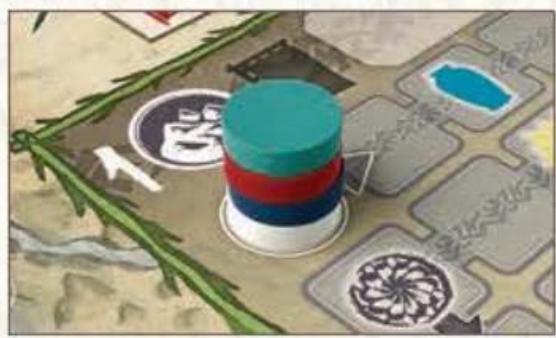
4 放置并移动普通商船
A. 每位玩家将自己的1个普通商船放置在顶部和中部河流起始格上。
B. 然后, 每位玩家投掷自己的骰子, 并将自己的商船从顶部河流起始格沿河向下移动骰子上掷出的河流格数量。每位玩家再为自己位于中部河流起始格上的商船重复此步骤。

示例: 在游戏设置期间, 巨蟹玩家为自己顶部河流的商船掷出了3, 并将这艘商船向下移动了3格。然后, 该玩家为自己的中部商船掷骰。
5 获得起始神圣恩宠、贸易商品、客户和金钱:
A. 每位玩家将其太阳标志放在自己的神圣恩宠记录条的2上, 将其月亮标志放在3和4之间(表示玩家最多可以拥有3个神圣恩宠)。
B. 每位玩家将自己的皇家商船放在其氏族版图旁。
C. 每位玩家从供应堆拿取每种贸易商品各1个, 将它们放在自己的氏族版图中对应的格子上。
D. 每位玩家抽取2张客户卡牌,保留在手中。玩家可以随时查看自己的手牌。
E. 每位玩家根据自己在回合顺序中的位置,拿取对应数量的金钱(从起始玩家开始,按顺时针方向):
第1位玩家:7 🏠 第2位玩家:8 🏠
第3位玩家:9 🏠 第4位玩家:10 🏠
6 第一次掷骰:每位玩家投掷自己的骰子,得到的结果将在其第一个回合中使用。
你已经准备好开始游戏了!
神圣恩宠
月亮标志
神圣恩宠
太阳标志
游戏概览
在《金之川》中,你们将通过建造贸易帝国、泛舟黄金河和增加在贵族中的影响来竞争获得最多的胜利点数。每个回合中,你可以沿河建造、移动1个自己的商船并收集贸易商品,或为一名客户送货。

在你的回合中, 按顺序进行以下4个步骤。每个步骤都在下文中有详细解释。

1 花费神圣恩宠

进行一个行动:
- 建造建筑(第7-8页)
- 商船航行(第9页)
- 为客户送货(第10-11页)

获得专精(第10页)

投掷你的骰子并结束回合
花贵神圣恩宠
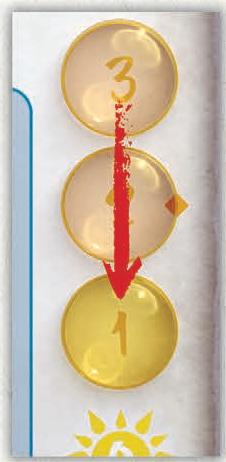
你可以选择花费神圣恩宠, 来改变你的骰子的结果, 每花费一个神圣恩宠, 可以改变1点。如果你将你的骰子增加到了6以上, 则它会“回到”1。类似的, 如果你将你的骰子减少到了1以下, 则它会变为6。


示例: 巨蟹氏族掷出了2。该玩家花费了1个神圣恩宠来将这个结果变为1, 然后又花费了1个神圣恩宠, 让结果回到6。
神圣恩宠
神圣恩宠代表了神明们的意志,你可以使用它来改变自己的命运。你的神圣恩宠记录条上的太阳标志表明了你现在受到多少青睐。每当你获得时,将你的太阳标志在记录条上推进。
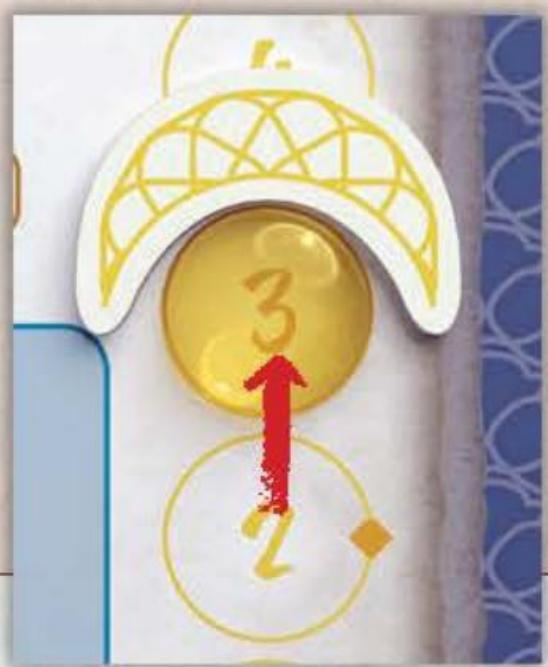
你的月亮标志表明了你同一时间可以拥有的最大恩宠数量。你的太阳标志永远不能移动越过你的月亮标志。如果你的太阳标志已经到达了你的月亮标志,则你此时获得的所有额外恩宠都会直接失去。每当你增加自己的神圣恩宠上限时,将你的月亮标志移动到记录条上的下一个格子上,以表示你的上限已增加。
建筑类型
(颜色和图标)
进行一个行动:
进行以下行动之一: 建造建筑、商船航行, 或为客户送货。每种行动都将在下文中详细解释。
建造建筑
当你选择本行动时,按以下进行:
1 选择一个匹配你骰子上图标/数字的地区中的一个空河岸格。如果该地区中没有空的格子剩余,则你本回合不可以选择进行建造。
2 弃掉空河岸格上印刷的金钱费用。如果你没有足够的金钱,则你本回合不可以选择进行建造。
3 从建筑行中任选一个建筑板块, 将其放在所选的格子上。如果你选择了建筑行结束板块, 立刻获得1个神圣恩宠。
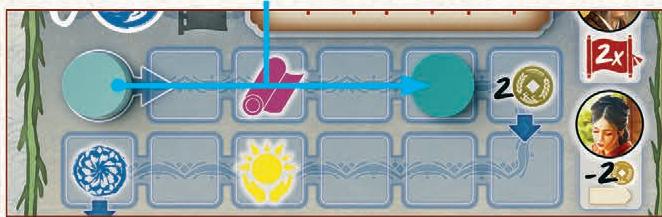
4 将你的1个氏族标志放在建筑的建造增益上, 并在所选地区的影响记录条上获得所示数量的影响, 将你的标志沿记录条推进, 并获得你在记录条上经过及到达的格中所有的奖励。如果你在到达记录条末尾时获得影响, 则这些影响都会失去。

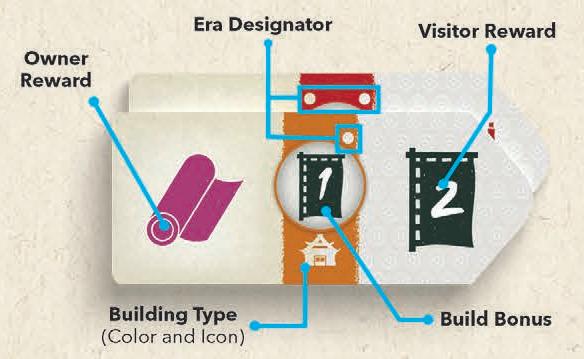
建筑板块

注意:你不需要拥有接触河岸格的商船才能进行建造。在整个麓雁大陆上都有你的商人手下,无论你的商船在哪,他们都可以在陆地上为你进行建造!

5 将建筑行中剩余的板块向后推进,从建筑版图上拿取一个新板块,加到建筑行的第一格上。当时代1板块堆中的最后一个板块被移到建筑行上之后,触发天皇来访(见第12页)。从现在开始,当你需要填满建筑行时,使用时代2板块。当时代2板块堆中的最后一个板块被移到建筑行上之后,当前玩家触发游戏结束的开始(见第12页)。
建筑类型
共有4种类型的建筑: 港口、神社、庄园和市集。与市集有互动的客户能力也与公家市集互动。

港口
港口的访客
奖励为金钱
神社
神社的访客奖励
为胜利点数

庄园
庄园的访客
奖励为影响

市集
市集的访客奖励
为贸易商品
建造示例

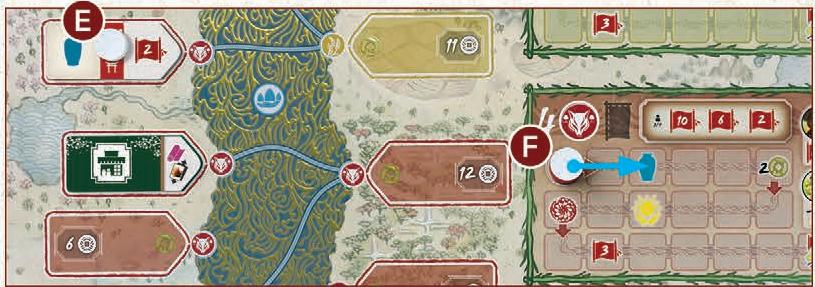
示例: 仙鹤氏族掷出了4A, 决定在地区4建造。其选择了一个空格B, 印刷费用为9金钱C。
建造示例(续)
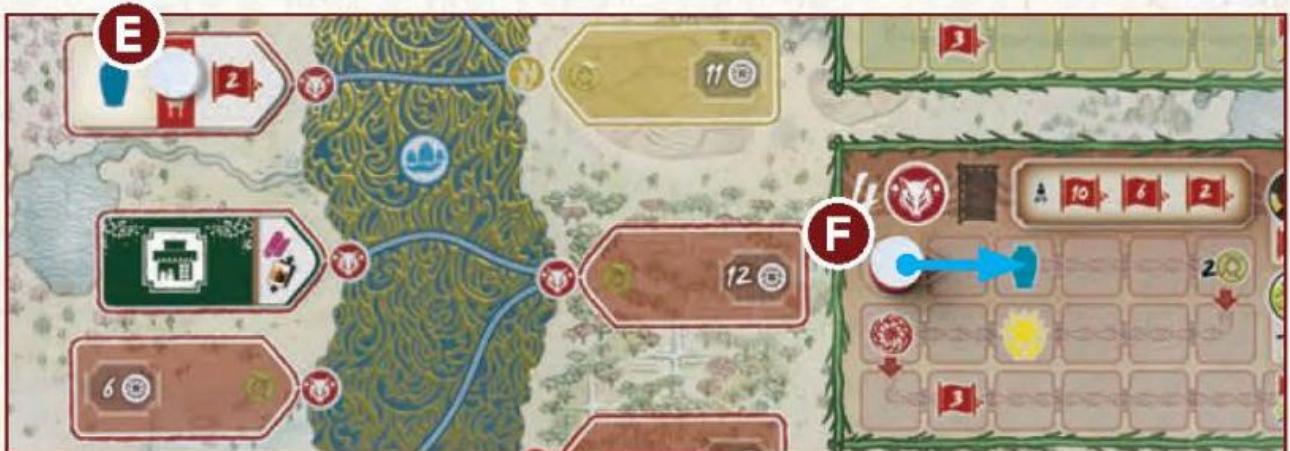
玩家接下来将自己的氏族标志E 放在了建筑板块上, 在地区4获得了2影响。这使其标志F 在地区影响记录条上移动到了瓷器格, 因此该玩家从供应堆中收集一个瓷器贸易商品。
影响记录条奖励

获得1个所示的贸易商品

获得2金钱
(钱币)

获得1神圣恩宠

得到3分
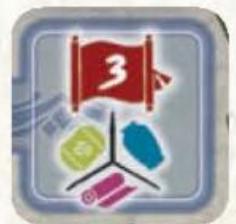
得到3分并获得任意1个贸易商品
- 如果其他玩家的标志在记录条上,你依旧可以获得记录条奖励。
- 到达公家之花不会给予玩家奖励。(公家之花和某一张特定的专精卡牌有关。)如果你在到达记录条末尾时获得影响,则这些影响都会失去。
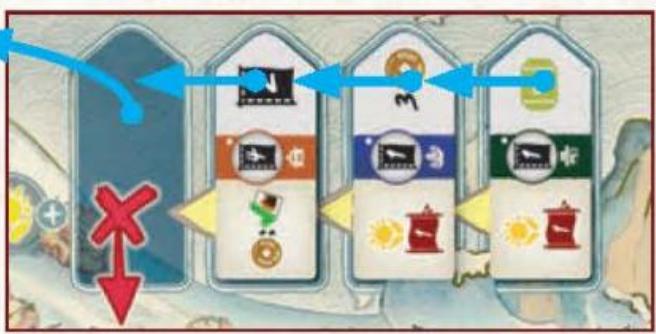
玩家弃掉9金钱,选择了建筑行中的神社D放置在此处。

接下来, 建筑板块向后移动, 填满建筑行上的空格,并增添一个新的建筑板块到可用的格子上。

时代1 时代2
资源上限:
一位玩家不能拥有超过25个金钱, 也不能拥有超过6个某1种贸易商品。如果玩家将要获得超出上限的资源, 则失去多出的资源。

商船航行
如果你选择本行动,按以下进行:
1 选择你的1个商船,并将其沿河向下移动你骰子上显示的河流格数。
2 在你的商船移动结束后, 其停留的河流格将与4个河岸格相邻, 收集这些格子上的访客奖励(显示在建筑板块的箭头端)。空河岸格的访客奖励为1金钱。
3 你的商船接触的4个河岸格上所有建筑的拥有者(如果你在此处拥有建筑, 则也包括你自己)现在收集这些建筑的拥有者奖励(建筑板块平直端显示的资源)。起始建筑(包括公家市集)不被任何玩家拥有, 所以它们不会带来拥有者奖励。如果一个建筑的访客或拥有者奖励为影响, 则其总是影响该建筑位于的地区。
4 如果你的商船到达了河流的尽头, 完成了旅途, 获得额外的3金钱或者任意1个贸易商品, 并弃掉建筑行末尾的建筑板块。将剩余的板块向后推进, 并如常补充新板块到第一格上。当时代1板块堆中的最后一个板块被移到建筑行上之后, 触发天皇来访(见第12页)。下次你需要从建筑行拿取板块时, 使用时代2板块。当时代2板块堆中的最后一个板块被移到建筑行上之后, 当前玩家触发游戏结束的开始(见第12页)。
注意:河流末尾的商人格仅在有玩家完成了商人客户卡牌时使用。(见第11页。)
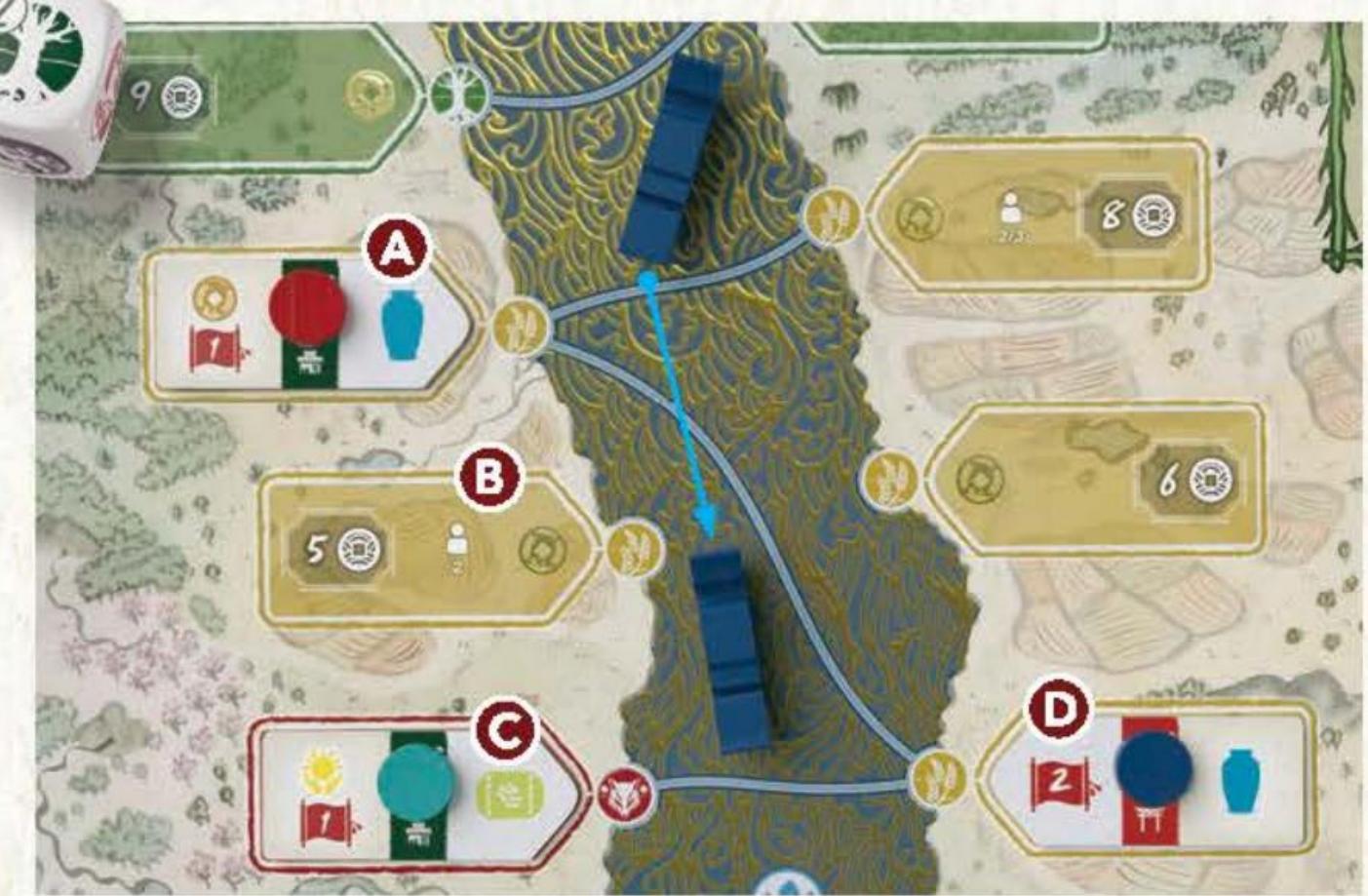
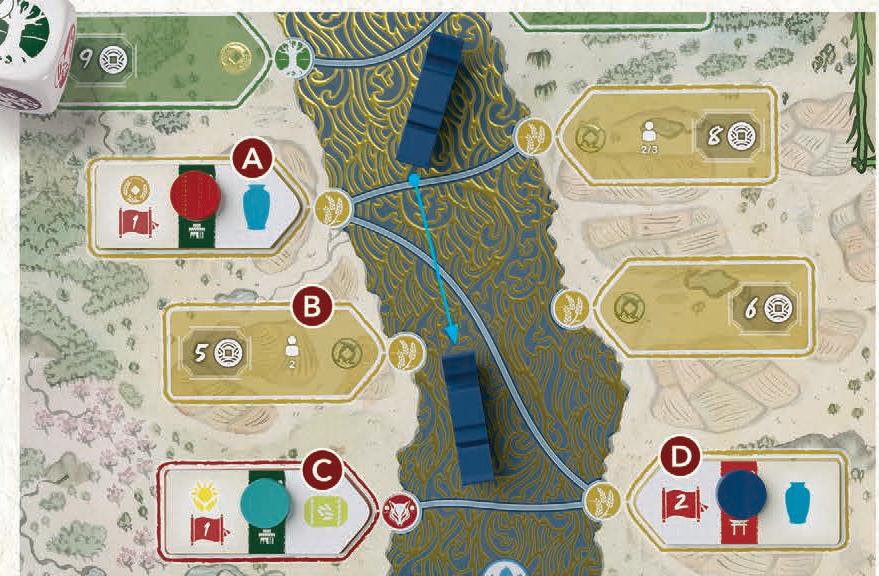
示例: 巨蟹玩家掷出了2并决定进行移动, 于是其选择了一个商船并将其沿河向下移动了2格。商船停留的格子接触了4个河岸格。第一个建筑A 给予访客玩家一个瓷器。拥有者为毒蝎, 获得1个金钱和1胜利点数。第二格B 上没有建筑, 但还是给予访客玩家1金钱。第三格有建筑C, 给予访客玩家1个大米, 拥有该建筑的螳螂玩家获得1神圣恩宠和1胜利点数。最后一个建筑D 给予访客玩家2胜利点数, 巨蟹玩家拥有该建筑, 于是获得一个瓷器。
完成你的旅途
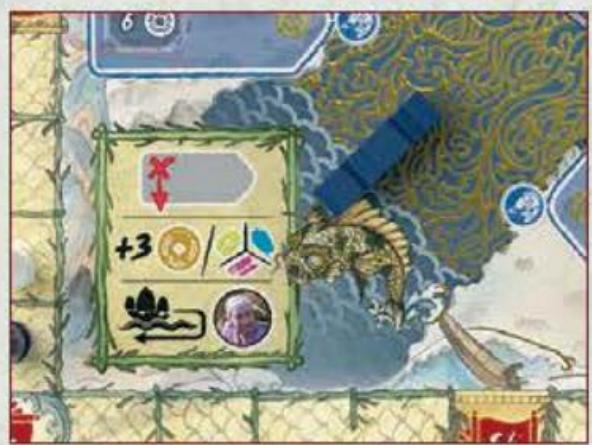
如果你的商船移动超出了地图,则将商船放回顶部河流起始格,然后继续将商船沿河向下移动,直到你用完了所有的移动数。这被称作完成你的旅途,由此图标表示:

注意:你的商船移动时,只计算河流上的金色格子。

为客户送货
(详见第11页)
如果你选择本行动,按以下进行:
1 从你的手牌中选择1张客户卡牌, 其地区数字需要和你骰子上的图标/数字匹配。
2 弃掉等于该客户订单需求的贸易商品。如果你没有足够数量或对应类型的贸易商品,则你本回合不可以选择为客户送货。
3 将客户正面朝上放在你的氏族版图旁,并获得所有客户奖励。如果该客户有持续能力,则这个能力在游戏剩余的时间内都生效。
4 从客户牌库抽取2张卡牌,然后从你的手牌中正面朝上弃掉任意1张客户卡牌。如果该牌库中没有卡牌,重新混洗弃牌堆,形成新的牌库。

专精是竞争性的目标,会为氏族在不同领域的进展提供奖励。在此步骤期间,你每满足(或超出)专精要求的条件,就获得该专精。
要获得专精, 将你的1个氏族标志放在卡牌底部数值最高且未被获得的奖励上, 并立刻获得此处的分数。
每种专精每场游戏中只能获得一次,但你可以在同一回合中获得多个不同的专精。
空之专精
在所有6个地区中都拥有至少1。

示例:仙鹤氏族最先在所有6个地区都有了至少1点影响,所以其在此处放置了一个氏族标志并得7分。下一位获得本专精的玩家将得5分。

在你的回合结束时,投掷你的骰子,为你的下一个回合作准备。
客户卡牌
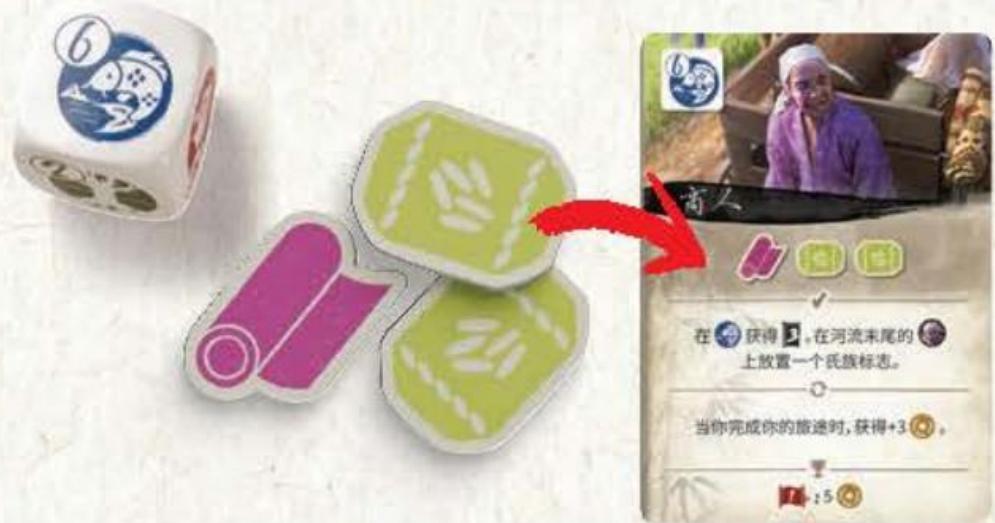
示例:仙鹤氏族手中有一个地区6的商人,其订单为1个丝绸和2个大米。该玩家的掷骰结果为6,于是其决定花费所需的商品进行送货,将该商人放在了其氏族版图旁。仙鹤玩家在地区6获得3点影响,并将其氏族标志放在了河流末尾的商人能力图标上。从现在开始,每当仙鹤氏族的商船完成旅途时,仙鹤玩家都会在自己所选的河流末尾增益(3个金钱或1个贸易商品)之外额外获得3个金钱;在游戏结束时,仙鹤玩家每有5个金钱剩余,还会得1分。在仙鹤玩家的回合结束前,其抽取2张新的客户卡牌,然后从手牌中正面朝上弃掉1张卡牌到弃牌堆。
随时
你可以随时交换资源。你可以多次进行以下交换:
- 用2个相同类型的贸易商品交换任意1个其他类型的贸易商品。
- 用5个金钱交换1神圣恩宠。

客户能力

僧侣

完成时: 将你的月亮标志向前推进1格, 增加你的神圣恩宠上限。

持续: 将第二个氏族标志放在任意地区中的一个建筑上(你自己的建筑或对手的建筑, 遵循卡牌上的指示)。
如果是你自己的建筑, 当有商船来访时, 你获得双倍拥有者奖励。
如果是对手的建筑, 当有商船来访时, 你也会获得其拥有者奖励。

在计算拥有者奖励、专精和其他效果时, 所有在建筑上有标志的玩家都视为建筑的拥有者。你不能在已经有2个标志的建筑上再放置标志。你在建筑上放置第二个标志不会获得任何影响。和其他客户类型不同, 当你为僧侣送货时, 其不会给予你任何影响, 但是会改为给予你2神圣恩宠。

示例:仙鹤氏族在螳螂氏族的建筑上放置了一个标志。每当有商船来访时,仙鹤和螳螂都会获得拥有者奖励。
商人

完成时:如果这是你在游戏中送货的第一个商人,在河流末尾的商人格上放置一个氏族标志。这将作为在完成旅途时激活的商人能力的提醒。(商人格上可以有任意数量玩家的氏族标志。)

持续: 每当你有商船到达河流末尾, 完成旅途时, 本商人的独特能力激活。这是获得3金钱或1个任意贸易商品之外的额外能力(见第9页)。


游戏结束:你每剩下5个金钱(向下取整),获得1分。
如果你为多个商人送货, 当你到达河流末尾时, 激活所有这些商人的能力。你只需要在河流末尾放置1个氏族标志作为提醒。每名商人的游戏结束增益都单独计算。例如, 如果你有12金钱和2名商人, 则每名商人都得2分, 总计4分。
示例: 当巨蟹氏族到达河流末尾时, 其激活自己所有的商人。

贵族

完成时: 如果这是你在游戏中送货的第一个贵族, 选择你的1个普通商船并用你的皇家商船替换它。

持续:你的皇家商船获得本贵族的独特能力。

游戏结束:你每有1个所示的建筑,得1分。

如果你为多个贵族送货,你的皇家商船获得所有这些贵族的能力。
匠人

完成时: 将一个氏族标志放在匠人地区的匠人格上。

持续: 在游戏剩余时间里, 你在该地区建造将少花费2金钱。

游戏结束:你的氏族版图上每剩下3个贸易商品,获得1分(向下取整)。
每名匠人的游戏结束增益都单独计算。例如,如果你有7个贸易商品和2名匠人,则每名匠人都得2分,总计4分。

长者

完成时: 将一个氏族标志放在长者地区的长者格上。
游戏结束: 游戏结束时, 本客户地区的影响记录条奖励的胜利点数翻倍。在计分地区影响时, 这仅计分一次。

和其他种类的客户不同,长者没有送达增益或持续能力。长者的增益只会翻倍游戏结束地区计分,不会翻倍记录条上的3分格。

示例:每当螳螂氏族的皇家商船移动时,其激活自己所有的贵族。
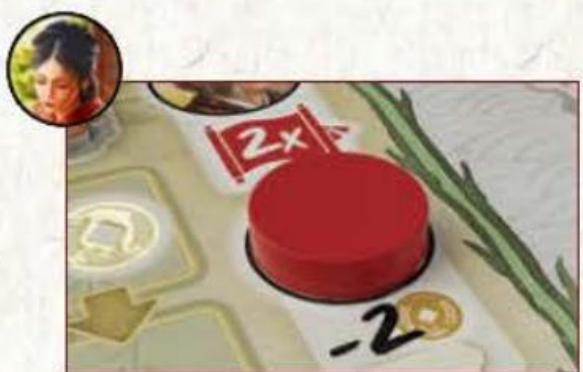
示例:从现在开始,毒蝎氏族在地区3建造将少支付2金钱。

示例: 游戏结束时, 巨蟹氏族从地区4得分板块的得分翻倍。
天皇来访
在时代1结束时,天皇出访黄金河,视察他繁荣的帝国,并抽查途径地的商品货物。
就像有玩家的商船航行到了每个建筑一般,所有玩家获得所有自己拥有的建筑的拥有者奖励。在所有玩家都收集了自己的奖励之后,下一位玩家继续游戏。从现在开始,所有增添到建筑行的建筑都将来自时代2。
游戏结束
当时代2板块堆中的最后一个建筑板块被移到建筑行上之后,触发游戏结束的开始。当前玩家得分5,每位其他玩家得到1个额外回合,然后游戏结束。进入最终计分,决定游戏赢家。

别忘了:如果有玩家在一个地区中因为客户送货在长者格上有一个氏族标志,其在计分此处的影响排名时得分翻倍!
最终计分

在最后一位玩家完成自己的回合后,每位玩家按以下结算游戏结束得分。
1 地区影响: 在每个地区的影响第一、第二以及(某些地区)第三的玩家, 获得该地区计分板块上对应的分数。在地区中没有影响的玩家无法得分。如果出现平局(包括有多位玩家到达记录条末尾的情况), 将平局位置的分数相加, 再在平局玩家之间平分(向下取整)。
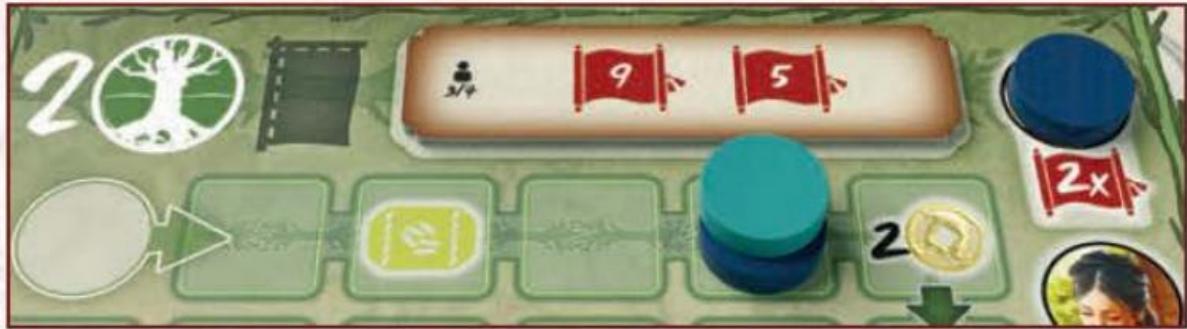
示例: 在地区2中, 巨蟹和螳螂都有最多的影响, 所以他们各得7分(9+5=14, 再除以2)。巨蟹已占据了长者格, 使其得分翻倍为14分。
2 客户:每位玩家都为其送货的客户的总数得分:

3 客户增益:为商人、贵族和匠人送货的玩家得到这些客户的游戏结束胜利点数。
2人游戏地区板块
当以2位玩家进行游戏时,每个地区计分板块上的第二个数值仅在第二名玩家位于第一名玩家5格内时才会提供奖励。
游戏胜利
分数最多的玩家获得游戏胜利!如果有至少2个氏族总分相同,则平局玩家中剩余神圣恩宠最多的玩家获胜。如果仍出现平局,则平局玩家共享胜利。

民族赞助者
迷保护展
当你熟悉了《金之川》的标准版之后,你可以加入《氏族赞助者》扩展,把水搅浑!与你氏族中的传奇专家联手,在旅途中获得强大的新能力,建造贸易帝国。
赞助者设置

当你开始玩家设置时(在游戏设置之后),从4个氏族中各随机选择1张赞助者卡牌,将它们正面朝上放在游戏版图旁。将每个氏族的另一位赞助者放回游戏盒。
随机选择起始玩家。从最后一名玩家开始,按逆时针顺序,每位玩家选择一位可用的赞助者,并拿取对应氏族的版图和游戏配件。将所有未选择的赞助者放回游戏盒。
另一种游戏设置
每位玩家随机获得氏族,然后各自选择使用自己2名赞助者之一。

游戏设计:Keith Piggott
版图插画: Francesca Baerald
游戏盒插画:Joshua Cairo
游戏内插画: Sheila Amajida, Asep Ariyanto, Francesca Baerald, Mauro Dal Bo, Carlos Palma Cruchaga, Nele Diel, Derek Edgell, Kevin Goeke, Lin Hsiang, Amelie Hutt, Agri Karuniawan, Drazenka Kimpel, Alayna Lemmer, Diego Gisbert Llorens, Joyce Maureira, Chris Ostrowski, Borja Pindado, Polar Engine, Andrew Sonea, Le Vuong
平面设计: Jay Hernishin, David Ardila, Katherine Boils, Tony Mastrangeli, Samuel Shimota
中文翻译: Ray Li
中文校对: Joyce, Thomas Mei
创意指导: Brianna Woodward
游戏生产:Guadalupe Gonzalez
游戏开发: Brianna Woodward, Bryan Bornmueller, Jeff Fraser
技术写作及游戏指引设计: Steven Kimball
编辑: Dan Varrette
Office Dog团队: Brianna Woodward, Bryan Bornmueller, Guadalupe Gonzalez, Jay Hernishin, Luke Peterschmidt, Toby the Office Dog
要探索更多《五轮传奇》相关产品、消息和新闻,并发现更多麓雁大陆的广袤世界,请访问:
www.LegendoftheFiveRings.com 特别感谢: Bill Altig, Justin Anger, Michael Blomberg, Andy Christensen, Teresa Dery, Halley Feil, Emily Frenchik, Daniel Hadlock, Steve Horvath, Seth Jaffee, Austin Litzler, Michael Mindes, Brian Mulcahy, Katrina Ostrander, Sean Ryan, Alex Schlee, Joe DeSimone, Anne Spradley, Jacinda Wilson, Andy Van Zandt
游戏测试组织: Nick Schoichet
游戏测试: Steven Auker, Michael Becker, Anthony Cario, Ian Cross, Cami Decker, Tyrell Decker, Kevin Ellenburg, Carl Feibusch, Joshua Ferrise, Thomas Gallecier, Game Makers Guild of Nashville, Henry Geddes, Chisholm Gentry, Andy Harper, Lillie Hollingsworth, Trevor Ryan Kelton, Steve Kimball, Jordan Martin, Robert Martz, David McClatchey, Mike & Wendy McGowan, Matt Monasch, Matt Morely, Jonathan Mullins, Mike Mullins, Ivy Ngo, Trevor Olson, Laura Peters, Bill Phillips, Cassie Piggott, Joevan Salmon-Johnson, Sebastian Rapp, Matt Saddoris, Breyana Scales, Karin Schleicher, Rosco Schock, Christopher Talbot, Tony Thomas, Toronto Board Game Design Crew, Twin Cities Design Days Playtesters, Yun Whitman, Travis Williams, Carl Willis, Preston Wing, Jacob Yanovsky, Gideon Yeomans, Jorge Zhang


图标汇总

地区1:世界之脊

地区2:筱绵森林

地区3:众盟平原


地区4:妖狐密林
地区5: 上部沼泽


地区6:地动渔湾
建筑类型:神社



建筑类型:庄园
建筑类型: 市集
建筑类型: 港口

你每拥有1个神社,获得1金钱

你每拥有1个庄园,获得1金钱你每拥有1个港口,获得1金钱



你每拥有1个市集,获得1金钱每为一名客户送货,获得1金钱


起始商船格
弃掉行末板块

贸易商品:丝绸


贸易商品:大米
贸易商品:瓷器

选择任意贸易商品抽取并弃掉 1张客户卡牌


已完成的客户卡牌

神圣恩宠上限+1

神圣恩宠

影响

1金钱

胜利点数卷轴

你拥有的建筑

对手拥有的建筑

必须位于第一名玩家5格以内

完成你的旅途
(移动到河流顶部
并使用你剩余的移动)


将你的1个普通商船升级为皇家商船皇家商船


普通商船

匠人能力提醒
商人能力提醒
长者能力提醒

达成“朝堂专精”专精卡牌的公家之花
选择行末板块时获得1神圣恩宠

在为客户送货时激活的能力

在游戏剩余时间内生效的能力

在游戏结束时激活的能力

River of Gold Rulebook_English.md37.4 KB
River f Gold

Components
In the realm of Rokugan, the fabled River of Gold stands as a testament to boundless prosperity. Along its shimmering currents, affluent merchants sail from one port to another, painstakingly crafting vast trade empires. As an esteemed merchant of the illustrious Crab, Crane, Mantis, or Scorpion Clan, you embark on a remarkable journey, forging your own trade route while fiercely competing for influence within the grand estates of the nobility. Will you defy the odds and usher in unprecedented fortune to your clan?
1 Game Board

4 Custom Dice (1 per player)
75 Trade Goods Tokens

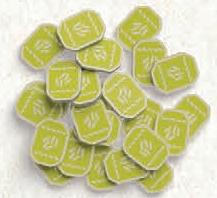
25 Rice

25 Porcelain
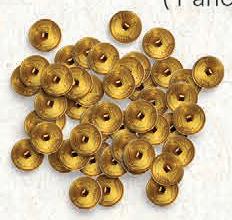
95 Koku (1 and 5 values)

8 Standard Ships (2 per player)
4 Royal Ships (1 per player)
Crab Clan
6 Region Scoring Tiles
元卜3
Crane Clan

Mantis Clan
Scorpion Clan
88 Clan Markers (22 per player)
4 Score Markers (1 per player)

4 Divine Favor Moon Markers (1 per player)

4 Divine Favor Sun Markers (1 per player)

4 Clan Boards
6 Mastery Cards

1 Building Board
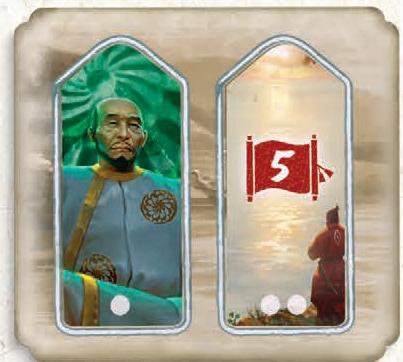
30 Customer Cards
4 Player Aid Cards

Mantis Clan The Seom a allance of castolls and shipe


"I will be your villain, Hantei."
Scorpion Clan
"We are the Wall."
Cuning and degerous the Scoiplon Clan uses legal and less than legal tade alongside brbery andblackmail
to uncuver and wipeout potential baitors
lo t Empirv. lside the clars borders is the infarnous City of Lies, the largest
tasding cereerin all of Rolugan Noehing trawvels through that city without the Scorplon knowing about it andtaking their out

Crane Clan The Crane Cia seace between Rokugan's samurai clars and spreac att and culture throughout the land. Iis master Kakita amana use only tho finast mnaterials, which the clan can affoid thanks to its imrwurable wealh. The DaidejI Trading Couneilserves the Crane by controllig the flow of goode along the cost, and their neteorks estend along every river in the Empire.

49 Building Tiles

24 Era 1 Tiles (1 dot)
6 Starting Tiles
16 Era 2 Tiles (2 dots)

3 Imperial Market Tiles
Note: Building tiles are identical on both sides for consistent orientation along the river.
Clan Patrons Mini Expansion
8 Clan Patrons (2 per clan) (See p. 13 for rules.)


When you build, score for each river space touching the building.
Yasuki Taka favors simple peasant's garb as he travels the trade routes of Rokugan despite being the head of one of the most powerful and wealthy merchant families in the Empire.
When advancing on an influence track, you jump over other players' markers. Collect all resources that you pass or reach.
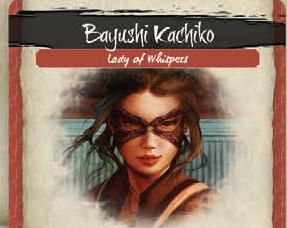
Every secret that passes through a gossip's lips eventually makes its way to her ear through her web of spies, and Bayushi Kachiko uses that knowledge like a knife.
Map Features

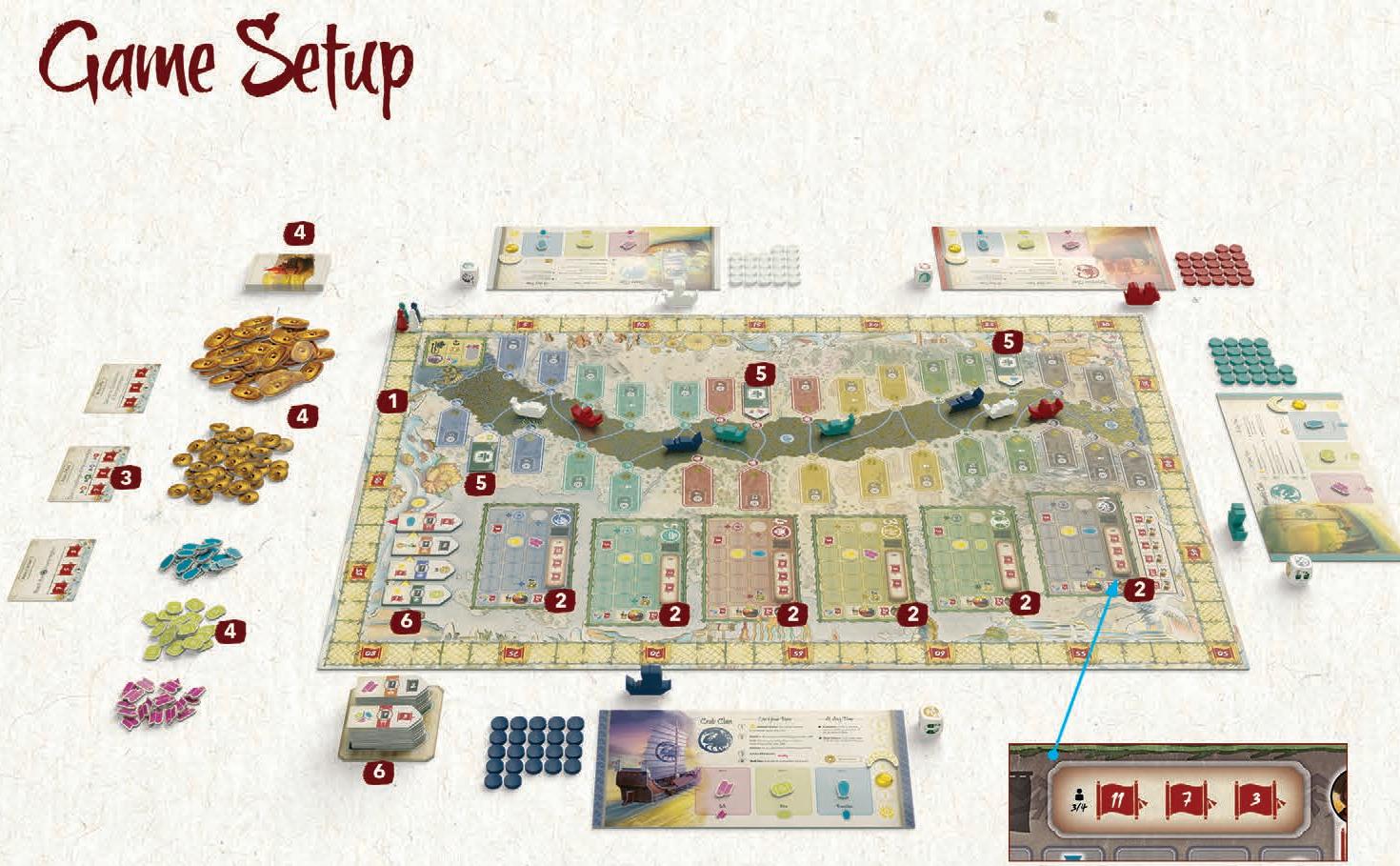
Close-up view of region tile placement
1Game Board: Place the board in the center of the table.
②Region Tiles: Place 1 random region scoring tile on each of the 6 region influence tracks. Flip each tile to the correct side for your player count: 3/4
3 Mastery Cards: Shuffle the 6 mastery cards and deal 3 faceup next to the board. Flip each card to the correct side for your player count: or Return the rest to the game box. 7 3/4
4Supply: Shuffle the customer deck and place it facedown next to the board where everyone can reach. Pile the Koku and trade goods tokens (silk, rice, and porcelain) nearby.
Starting Buildings:
A. Randomly place the 3 Imperial Markets building tiles on the 3 Imperial Market spaces on the board.
B. Shuffle the 6 starting building tiles. Place 1 random starting tile on each shore space markéd with your player count. Return all unused starting tiles to the game box. For 3 players, use 3 starting buildings. For 2 players, use 6 starting buildings. For 4 players, use 0 starting buildings.
6 Building Row:
A. Place the building board near the main board.
B. Shuffle the Era 1 building tiles and stack the correct number for your player count (see facing table) on the Era 1 spot of the building board near the building row. Next, shuffle and stack the correct number of Era 2 tiles for your player count on the Era 2 spot of the the building board. Return all unused tiles to the game box.
C. Draw the top 4 tiles from the Era 1 stack to fill the building row.
| # of Players | Starting tiles | Era 1Tiles | Era 2Tiles |
| 4 Players | 3 Imperial Markets | 16 | 13 |
| 3 Players | 3 Imperial Markets + 3 | 14 | 11 |
| 2 Players | 3 Imperial Markets + 6 | 12 | 9 |
Player Setup
1Randomly determine the player who goes first.
Get Components: Each player chooses a clan board and takes the following components:
2 matching clan standard ships
1 divine favor moon marker
1 matching clan royal ship
1 divine favor sun marker
22 matching clan markers
1 custom die
1 matching clan score marker
1 player aid card
Scan this code to watch our learn-to-play video!

Place Markers: Each player places their score marker on 0 on the score track and 1 clan marker at the start of each of the 6 region influence tracks.

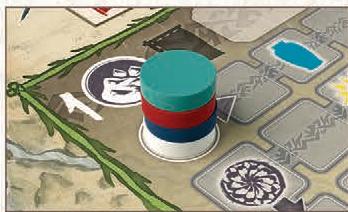
④Place and Move Standard Ships:
A. Each player places 1 of their standard ships on the top and middle river starting spaces
Then each player rolls their die and moves their ship from the top river starting spacedownriver by the number of river spaces marked on the die. Each player repeats this step for their ship in the middle river starting space
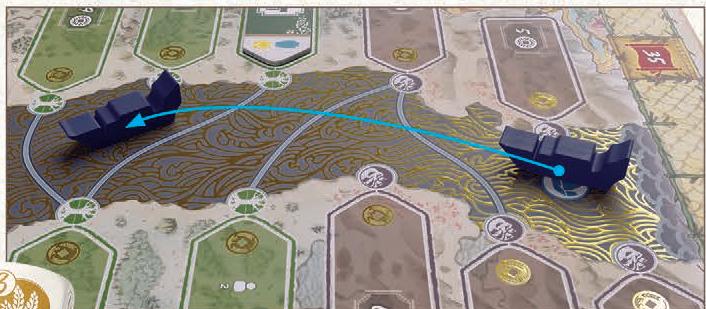

Example: During setup, the Crab player rolls a 3 for their ship at the start of the river and moves that ship forward 3 spaces. Next, they roll for their middle ship.
Get starting divine favor, trade goods, customers, and Koku:
A. Each player places their sun marker on 2 of their divine favor track and their moon marker between 3 and 4 (showing they can have a maximum of 3 divine favor).
B. Each player places their royal ship near their clan board.
Divine Favor Moon Marker
C. Each player takes 1 of each trade good from the supply and places them on the appropriate spaces of their clan board.

Divine Favor Sun Marker
D. Each player draws 2 customer cards to keep in their hand. They may look at them at any time.
E. Each player takes a number of Koku based on their position in turn order (clockwise from the first player):
1st: 702nd: 80 3rd: 904th: 100
6First Roll: Each player rolls their die to get the result they will use on their first turn.



Game Overview
In River of Gold, you will compete to earn the most victory points through building your trade empire, sailing the river, and growing your influence with the nobility. Each turn, you will either build along the river, move 1 of your ships and collect trade goods, or deliver to a customer.
Your turn
On your turn, follow these 4 steps in order.
Each step is detailed in its own section below.
1 Spend Divine Favor
② Take an Action:
Build a Building (p. 7-8)
Sail a Ship (p. 9)
Deliver to a Customer (pp. 10,11)
Claim Masteries (p. 10)
4Roll Your Die and End Your Turn
Spend Divine Favor
You may choose to spend divine favor to change the face on your die by 1 for each divine favor spent. If you increase your die above 6, it “wraps around" to a 1. Likewise, if you decrease it below 1, it changes to a 6.

Example: Crab Clan rolls a 2. They spend 1 divine favor to make it a 1 and another divine favor to have it wrap around to a 6.
Divine Favor
Divine favor represents the will of the gods, and you can spend it to alter your fate. The sun marker on your divine favor track shows how much favor you currently have. Whenever you gain , advance your sun marker on the track.
Your moon markershows the maximum amount of favor you can store at a time. Your sun marker can never move above your moon marker. If your sun marker has reached your moon marker, any additional favor you gain is lost. Whenever you increase your divine favor limit, advance your moon marker above the next space on your track to show that your limit has increased.

take an Action:
Take 1 of the following actions: build a building, sail a ship, or deliver to a customer. Each is described below.
Build a Building
When you choose this action, do the following:
Choose an empty shore space anywhere in the region that matches the icon/number on your die. If there are no empty spaces left in that region, you may not choose to build this turn.
Discard the Koku cost printed on the empty shore space. If you do not have enough Koku, you may not choose to build this turn.
Choose any building tile from the building row and place it on the chosen space. If you choose the row's end tile, immediately gain 1 divine favor.
Building tiles
Note: You do not need to have a ship touching the shore space you build in. You have merchants throughout Rokugan who can build on land for you, no matter where your ships are!
Place 1 of your clan markers on the building's build bonus and
gain that much influence on the chosen region's influence track, moving your piece along its path and gaining any reward you reach or pass along the track. Any influence you gain after reaching the end of the track is lost.

+4 Influence
Slide the remaining tiles in the building row down and add a new tile in the first space from the building board. When the last tile from the Era 1 stack is moved to the building row, the Emperor's Visit is triggered at the end of the active player's turn (see p. 12). From now on, when you need to refill the building row, use Era 2 tiles. When the last tile from the Era 2 stack is moved to the building row, the active player triggers the start of the game end at the end of their turn (see p. 12).
Building types
There are 4 types of buildings: ports, shrines,manors, and marketsCustomer abilities that interact with Markets also interact with Imperial Markets.

Ports Visitor rewards for ports are Koku

Shrines Visitor rewards for shrines are victory points

Manors Visitor rewards for manors are influence

Markets Visitor rewards for markets are trade goods
BUILDING EXAMPLE

Example: Crane Clan rolls a 4 and decides to build in region 4. They choose an empty space B that has a printed cost of 9 Koku
BUILDING EXAMPLE CONTINUED
The player then places their clan marker on the building tile, gaining 2 influence in region 4. This moves their markerto the porcelain space on the region influence track, so the player collects a porcelain trade good from the supply.
INFLUENCE TRACK REWARDS

Gain 1 of the indicated trade good

Gain 2 Koku (coins)

Gain 1 divine favor

Score 3 points

Score 3 points and gain any 1 trade good
You still gain a track reward if another player's marker is on it.

Reaching the imperial flower does not give a player a reward. (The imperial flower is associated with a specific mastery card.) Any influence you gain after reaching the end of the track is lost.

The player discards 9 Koku and chooses a shrine from the building row to place there.

The building tiles are then shifted over to fill the empty space on the building row, and a new building tile is added to the available space.

Era 1 Era 2
Maximum Resources: A player may not have more than 25 Koku or more than 6 of any 1 trade good. If a player would gain more than these limits, the extras are lost.

Sail a Ship
If you choose this action, do the following:
1Choose 1 of your ships and move it downriver by the number of river spaces shown on your die.
②Collect the visitor rewards (shown on pointed end of the building tile) from each of the 4 shore spaces adjacent to the river space where your ship ends its movement. Empty shore spaces have a visitor reward of 1 Koku.
The owners of any buildings in the 4 shore spaces your ship is touching (including you if you own any of them) now collect the owner rewards (the resources shown at the flat end of the building tile) from those buildings. Starting buildings (including the Imperial Markets) are not owned by any player, so they never grant owner rewards. If a building grants influenceto a visitor or an owner, it is always in the region the building resides in.
If your ship completed its journey by reaching the end of the river, gain an additional 3 Koku or 1 of any trade good and discard the building tile at the end of the building row. Slide the remaining tiles down and add a new tile in the first space as normal. When the last tile from the Era 1 stack is moved to the building row, the Emperor's Visit is triggered at the end of the active player's turn (see p. 12). The next time you need a tile for the building row, use the Era 2 tiles. When the last tile from the Era 2 stack is moved to the building row, the active player triggers the start of the game end at the end of their turn (see p. 12).
Note: The merchant space at the river's end is only used once a player has completed a merchant customer card. (See p. 11.)
Completing Your Journey

Example: The Crab player rolls a 2 and decides to move, so they choose a ship and move it 2 spaces downriver. The space the ship lands on touches 4 shore spaces. The first building A gives the visiting player a porcelain. The owner, Scorpion, then receives 1 Koku and 1 victory point. The second space B doesn't have a building but still gives the visiting player 1 Koku. The third space has a building C that gives the visiting player 1 rice, and the Mantis player who owns the building gets 1 divine favor and 1 victory point. The last building gives the visiting player 2 victory points, and because the Crab player owns the building, they also get a porcelain.
If you move your ship off the map, put the ship back on the top river starting space, then continue moving the ship downriver until you have used all your movement. This is called completing your journey, indicated by this icon:

Note: Count only the gold spaces on the river when moving your ship.

Deliver to a Customer mor ..1
If you choose this action, do the following:
Choose 1 customer card from your hand whose region number matches the icon/number on your die.
Discard trade goods equal to that customer's order request. If you do not have enough/the right kind of trade goods, you may not choose to deliver to a customer this turn.
Place the customer faceup near your clan board and gain any customer rewards. If the customer has an ongoing ability, it is active for the rest of the game.
Draw 2 cards from the customer deck and then discard any 1 customer card from your hand faceup. If there are no cards in that deck, reshuffle the discard pile to make a new deck.
Customer Cards


Example: Crane Clan has a merchant in their hand from region 6 whose order is 1 silk and 2 rice. Their die shows a 6, so they decide to spend the desired goods to make a delivery, placing the merchant near their clan board. The Crane player gains 3 influence in region 6 and places their clan marker on the merchant ability icon at the end-of-river. From now on, whenever a Crane Clan ship completes its journey, it gains 3 Koku in addition to its chosen end of river bonus (3 Koku or 1 trade good), and at the end of the game, the Crane player will score 1 point per 5 Koku they have left. Before ending their turn, the Crane player draws 2 new customer cards and then discards 1 card from their hand to the faceup discard pile.
Claim Masteries
Masteries are competitive goals that reward clans for making progress in different areas. During this step, you claim each mastery that you meet (or exceed) the requirements for.
To claim a mastery, place 1 of your clan markers on the highest unclaimed value reward at the bottom of the card and immediately score the points there.
You can claim each mastery only once per game, but you can claim multiple different masteries in the same turn.

Example: Crane Clan is the first to have at least 1 influence in all 6 regions, so they place a clan marker here and score 7 points. The next player to claim this mastery will score 5 points.
Roll Your Die
Af Any time
You can exchange resources at any time. You can perform the following trades multiple times:
Exchange 2 of the same trade good for 1 of any other trade good.
Exchange 5 Koku to gain 1 divine favor.


Customer Abilities

Monks
Delivery Ability: When completed, Increase your divine favor limit by advancing your moon marker 1 space.
Ongoing: Place a second clan marker on a building in any region (your own building or an opponent's building, as indicated on the card).
If it is your own building, you gain double owner rewards when a ship visits it.
If it is an opponent's building, you also gain its owner reward when a ship visits it.
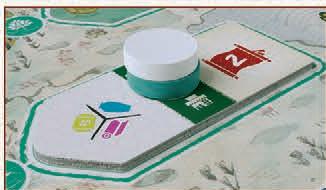
Example: Crane Clan has placed a marker on Mantis Clan's building. Whenever a ship visits, both Crane and Mantis gain the owner reward.
All players with markers on a building are considered owners of the building for owner rewards, masteries, and other effects. You may never place a marker on a building that already has 2 markers. You do not gain any influence for placing a second marker on a building. Unlike other customer types, monks do not grant any influence but instead give you 2 divine favor when you deliver to one.

Merchants
Delivery Ability: When completed, gain 3 Influence in that Merchant's region. If this is the first merchant you have delivered to this game, place a clan marker on the merchant space at the end of the river. This will serve as a reminder for any merchant abilities that will activate when completing a journey. (Any number of players may have a clan marker on the merchant space.)
Ongoing: This merchant's unique ability activates whenever either of your ships completes its journey by reaching the end of the river. This is in addition to gaining 3 Koku or 1 of any trade good (see p. 9).
Endgame: Score 1 point for every 5 leftover Koku you have (rounded down).

Example: When Crab Clan reaches the end of the river, they activate all their merchants.
If you deliver to multiple merchants, you activate all of their abilities when you reach the end of the river. You need only 1 clan marker at the end of the river as a reminder. Each merchant scores their endgame bonus separately. For example, if you have 12 Koku and 2 merchants, each of them scores 2 points for 4 points total.

Nobles
Delivery Ability: When completed, if this is the first noble you have delivered to this game, choose 1 of your standard ships and replace it with your royal ship. Then, gain 2 Influence in that Noble's region.

Ongoing: Your royal ship gains this noble's unique ability.
Endgame: Score 1 point per building you own of the indicated type.
If you deliver to multiple nobles, your royal ship gains all of their abilities.
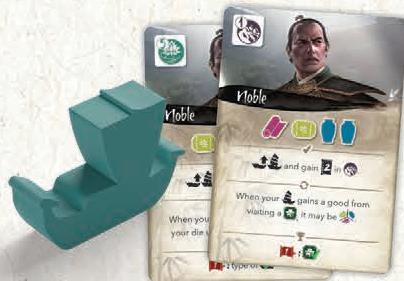

Example: Whenever Mantis Clan moves their royal ship, they activate all their nobles.
Artisans
Delivery Ability: When completed, gain 2 Influence in that Artisan's region.
Then, place a clan marker on the artisan space in the artisan's region.
Ongoing: For the rest of the game, it costs you 2 fewer Koku to build in that region.
Endgame: Score 1 point for every 3 leftover trade goods on your clan board (rounded down).

Each artisan scores their endgame bonus separately. For example, if you have 7 trade goods and 2 artisans, each of them scores 2 points for 4 points total.

Elders
Delivery Ability: When completed, place a clan marker on the elder space in the elder's region.
Endgame: Score double the endgame victory points awarded by the influence track in this customer's region. This gets scored only once when scoring regional influence.
Unlike other customer types, elders do not have delivery bonuses or grant ongoing abilities. The elder bonus doubles only endgame region scoring, not the 3-point spaces on the track.
Example: From now on, Scorpion Clan pays 2 fewer Koku to build in region 3.

Example: At game end, Crab Clan will score double from the region 4 scoring tile.
the Emperor's Visit
At the end of Era 1, the Emperor tours the River of Gold to assess the prosperity of his empire, inspecting and sampling the wares in each place he stops.
All players gain the owner rewards for all the buildings they own as though a player has sailed a ship to each building. After all players have collected their rewards, continue gameplay with the next player. All buildings added to the building row from now on will be from Era 2.

Game End
When the last tile from the Era 2 stack is moved to the building row, the active player triggers the start of the game end at the end of their turn. The active player scores 5, and each other player gets 1 additional turn. Then the game is over. Move to final scoring to see who wins.
Final Scoring
Don't Forget: If a player has à clan marker on the elder space from delivering to a customer in a region, they double any points they score for their position there!

After the last player finishes their turn, each player scores the following endgame points:
Regional Influence: Award the point values on each region's scoring tile to the players who are 1st, 2nd, and (in some regions) 3rd in influence in that region. Players with no influence in a region cannot score points. If there is ever a tie (including if multiple players have reached the end of a track), add up the points for the tied positions and split them evenly between the tied players (rounded down).
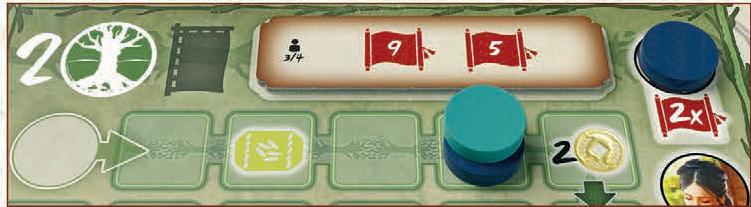
Example: In region 2, Crab and Mantis are tied for the most influence, so they each score 7 points (9 + 5 = 14, divided by 2). Crab has claimed the elder space, which doubles their score to 14 points.
2 Customers: Each player scores points for the total number of customers they have delivered to:
Number of Customers Score
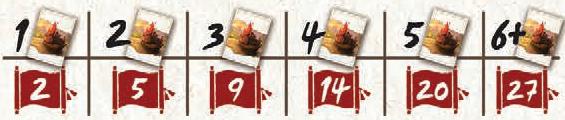
3 Customer Bonuses: Players who have delivered to merchants, nobles, and artisans score those customers' endgame victory points.
2-Player Regional tiles
When playing with 2 players, the second point value on each region's scoring tile is awarded only if the 2nd-place player is within 5 spaces of the 1st-place player.
Winning
The player with the most points wins! If 2 or more clans tie for total points, the tied player with the most leftover divine favor wins. If there is still a tie, the victory is shared.

Clan Patrons
Mini-Expansion
Once you're familiar with the standard version of River of Gold, you can mix things up by adding in the clan patrons expansion! Form a partnership with a legendary luminary from your clan that will grant you powerful new abilities in your quest to build a trade empire.
Patrons Setup

When you begin player setup (after game setup) randomly select 1 patron card from each of the 4 clans and place them faceup near the game board. Return each clan's other patron to the game box.
Randomly choose a first player. Starting with the last player and going in reverse turn order, each player selects 1 of the available patrons and takes the board and components fortheir clan. Return any unselected patrons to the game box.
ALTERNATIVE SETUP
Each player is dealt a random clan and then chooses which of their 2 patrons to use.

Design: Keith Piggott
Board Illustration: Francesca Baerald
Box Illustration: Joshua Cairos
Interior Illustration: Sheila Amajida, Asep Ariyanto, Francesca Baerald, Mauro Dal Bo, Carlos Palma Cruchaga, Nele Diel, Derek Edgell, Kevin Goeke, Lin Hsiang, Amelie Hutt, Agri Karuniawan, Drazenka Kimpel, Alayna Lemmer, Diego Gisbert Llorens, Joyce Maureira, Chris Ostrowski Borja Pindado, Polar Engine, Andrew Sonea, Le Vuong
Graphic Design: Jay Hernishin, David Ardila, Katherine Boils, Tony Mastrangeli, Samuel Shimota
Creative Direction: Brianna Woodward
Production: Guadalupe Gonzalez
Development: Brianna Woodward, Bryan Bornmueller, Jeff Fraser
Technical Writing and Instructional Design: Steven Kimball Copy Editing: Dan Varrette
Office Dog Team: Brianna Woodward, Bryan Bornmueller, Guadalupe Gonzalez, Jay Hernishin, Luke Peterschmidt, Toby the Office Dog
To explore products, lore, and news about the Legend of the Five Rings and discover more about the expansive world of Rokugan, visit:
www.LegendoftheFiveRings.com
Special Thanks: Bill Altig, Justin Anger, Michael Blomberg, Andy Christensen, Teresa Dery, Halley Feil, Emily Frenchik, Daniel Hadlock, Steve Horvath, Seth Jaffee, Austin Litzler, Michael Mindes, Brian Mulcahy, Katrina Ostrander, Sean Ryan, Alex Schlee, Joe DeSimone, Anne Spradley, Jacinda Wilson, Andy Van Zandt
Playtesting Organizer: Nick Schoichet
Playtesters: Steven Auker, Michael Becker, Anthony Cario, lan Cross, Cami Decker, Tyrell Decker, Kevin Ellenburg, Carl Feibusch, Joshua Ferrise, Thomas Gallecier, Game Makers Guild of Nashville, Henry Geddes, Chisholm Gentry, Andy Harper, Lillie Hollingsworth, Trevor Ryan Kelton, Steve Kimball, Jordan Martin, Robert Martz, David McClatchey, Mike & Wendy McGowan, Matt Monasch, Matt Morely, Jonathan Mullins, Mike Mullins, Ivy Ngo, Trevor Olson, Laura Peters, Bill Phillips, Cassie Piggott, Joevan Salmon-Johnson, Sebastian Rapp, Matt Saddoris, Breyana Scales, Karin Schleicher, Rosco Schock, Christopher Talbot, Tony Thomas, Toronto Board Game Design Crew, Twin Cities Design Days Playtesters, Yun Whitman, Travis Williams, Carl Willis, Preston Wing, Jacob Yanovsky, Gideon Yeomans, Jorge Zhang

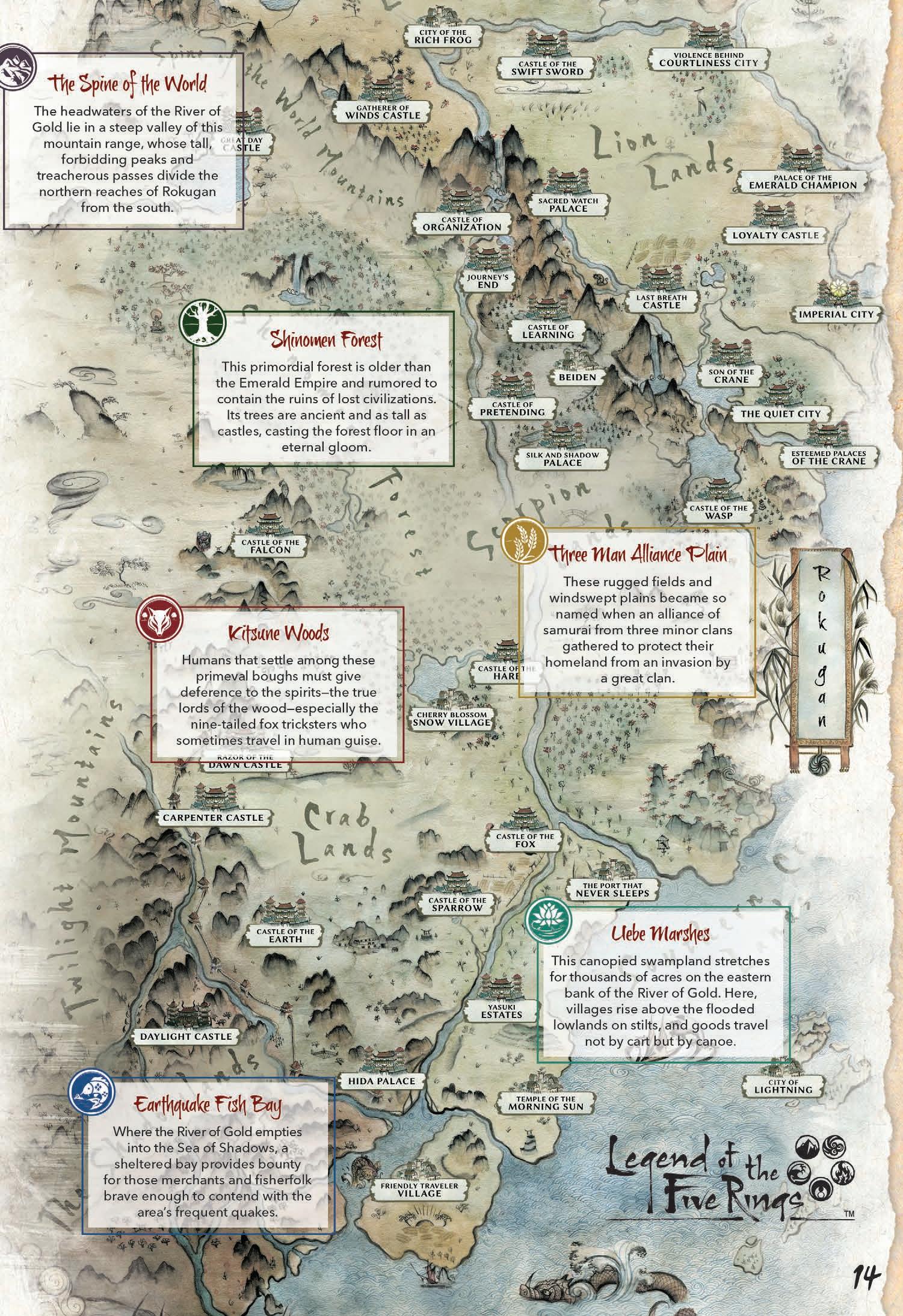
Icon Glossary


Region 1: Spine of the World
Region 2: Shinomen Forest

Region 3: Three Man Alliance Plain

Region 4: Kitsune Woods

Region 5: Uebe Marshes


Region 6: Earthquake Fish Bay
Building Type: Shrine

Building Type: Manor


Building Type: Port
Building Type: Market

Gain 1 Koku Per Shrine You Own

Gain 1 Koku Per Manor You Own

Gain 1 Koku Per Port You Own


Gain 1 Koku Per Customer Delivered To
Gain 1 Koku Per Market You Own


Starting Ship Space

Trade Good: Silk

Discard the End Row Tile
Trade Good: Rice
Trade Good: Porcelain

Choose Any Trade Good

Draw and Discard 1 Customer Card

Completed Customer Card

Increase Divine Favor Limit by 1

Divine Favor

Influence

1 Koku

Victory Point Scroll

Building You Own

Building Owned by an Opponent

Must Be Within 5 Spaces of the Player in 1st Place

Complete Your Journey (Move to the Top of the River and Use Your Remaining Movement)


Royal Ship
Upgrade 1 of Your Standard Ships to a Royal Ship

Standard Ship

Merchant Ability Reminder

Artisan Ability Reminder

Elder Ability Reminder

Gain a Divine Favor When Choosing the End Row Tile

The Imperial Flower for Achieving the Mastery of the Courts Mastery Card

Ability Activates Upon Customer Delivery

Ability is Ongoing for the Rest of the Game

Ability Activates at the End of the Game

原文为社区整理/出版社公开资料,版权归原作者,仅供个人学习查阅。