
Schotten Totten 2Schotten Totten 2
一句话概览
Schotten Totten 2 是一款已收录于村了吗规则库的桌游,支持 2 人,原名 Schotten Totten 2。
本页内容:一句话概览 · 常见问题
这游戏怎么玩
- 本站已收录这款游戏的规则资料,可以在对话里直接提问规则细节。
常见问题(FAQ)
以下 1 条问答中 0 条来自站内玩家的真实提问,其余 1 条为本站整理的常见疑问;答复内容保持原样。
Schotten Totten 2支持几个人玩?
2 人。
去哪查完整规则
想核对具体规则细节、卡牌效果或某个回合的结算方式,可以在村了吗里选中这款游戏后直接提问。
同类桌游
- 卡坦岛德式
- 工业革命:伯明翰德式
- 勃艮第城堡:特别典藏版德式
- 方舟动物园德式
- 卡卡颂抽象
- 瘟疫危机传承:第一季美式
- 阿瑞迪亚:勇踏征途美式
- 重塑宇宙德式
- 幽港迷城美式
- 埃多拉的德鲁伊德式
规则原文(Markdown)
本站收录这款游戏的规则原文 1 个文件,此处内联渲染 1 个,可直接展开阅读或下载。
Schotten-Totten-2_rulebook_EN_Light.md17.5 KB
SCHOTTENTOTTENZ


he day started out so calm. A log on the fire, haggis on the plates, then... BLAM! A muffled bang made the entire castle shake and knocked
over your glass of single malt! Unacceptable! As usual, your neighbor has decided it's time for you to move out! Look at him down there, persistently attacking your wall. Seems like it's time to add a little oil to your relationship. The boiling variety seems appropriate!

Overvien and Goal of the Game

Each turn, send one of your troops to the frontlines to create the strongest formations possible!
Depending on your side, defend or assault the Castle as best you can! The smallest breach in the Wall can be fatal. If the Attacker
successfully damages
4 different pieces of the
Wall or 1 piece twice, they
win the game.'The Defender
wins if they successfully
defend the Castle until the
deck is empty, forcing the
Attacker to retreat.

Elements of the Game
60 Siege cards
Siege cards represent fighters who will attack or defend the Castle. Each Siege card comes in one of 5 different colors and has a strength ranging from 0 to 11 (0 being the weakest).
11 Tactic cards (see variant p.14)
Tactic cards represent allies of your clan who will lend you a hand and reinforce your winning strategy. Each Tactic card has a special ability represented by a black symbol. They are played instead of a Siege card on your turn.
7 Wall tiles
Wall tiles represent the Castle under siege and are placed in a row. Each one shows a part of the Wall in good repair on one side and damaged on the other. At the bottom of each tile is the combination and number of cards needed to win the battle for this tile.
3 Oil Cauldron tokens
Oil Cauldron tokens belong to the player defending the Castle. Each allows the player to remove 1 card played by the Attacker from a Wall tile.


Undamaged

Damaged


2 Player Aids
Player Aids remind players of the combinations needed for each Wall tile.
2 Figures
The Figures (the Cook and Chicken standees) help you remember who is the Attacker and who is the Defender.
Setup
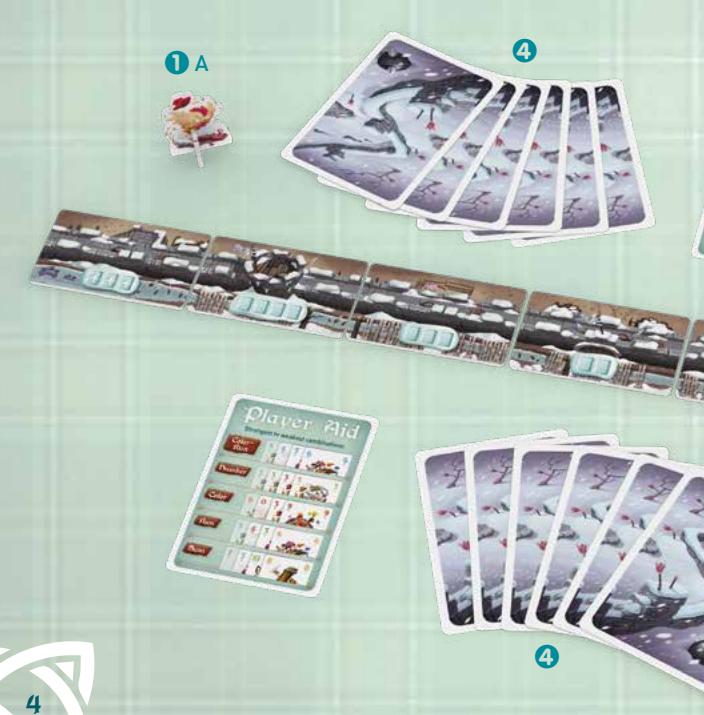
0 Sit across from each other and choose one player to be the Attacker (who takes the Cook standee B to indicate their role). The other player is the Defender and takes the 3 Oil Cauldron tokens (and the Chicken standee A).
② Place the 7 Wall tiles side-by-side with the Undamaged side up to make the Castle, in the order shown in the illustration. Orient it so the Attacker faces the outside of the Castle — the side showing the required card combinations.
Shuffle all of the Siege cards and make a face-down deck.
Each player draws 6 Siege cards to make their hand, which they keep secret from their opponent.

Gameplay
The Attacker takes the first turn. On your turn, play through these phases in order:
0 Take a Preparation Action (optional)
② Play 1 Card
Draw 1 Card
Declare Control (Attacker only—optional)
0 Take a Preparation Action (optional)
Retreat (Attacker only)
At the beginning of your turn, you can Retreat from the Wall tile(s) of your choice.
To do so, discard all of the cards from your side of the Castle played on the tiles you want to Retreat from.
Then proceed to Play 1 Card.
Throw an Oil Cauldron (Defender only)
At the beginning of your turn, you can throw an Oil Cauldron over the Wall.
To do so, discard the Attacker's card (Siege card or Tactic card) that is closest to the Wall tile of your choice, then return 1 Oil Cauldron token to the box. You can only
throw 1 Oil Cauldron token per turn, up to a maximum of 3 times per game.
Then proceed to Play 1 Card.


② Play 1 Card
Choose a card from your hand and place it in front of a Wall tile, following these restrictions:
• The number of cards on your side of the Wall tile cannot exceed the number required by the tile. There is no strength requirement when playing a card. You can play any card in front of any tile as long as the maximum number of cards is respected.
• If this is the first card you are playing on a tile, place it right next to the tile. Åny addtional cards will be stacked on top of the previously played card, shifted slightly so that the strength and color of all cards are still visible.
Never change the order of the cards you've played; this could affect which cards are discarded by Oil Cauldrons.
CHICKEN VERSUS CHEF
If you play a 0 on a Wall tile that already has an 11 of the same color played on the other side of the tile, discard both cards (the 0 and 11 of the same color). Similarly, discard both cards when playing an 11 opposite a 0 of the same color. The card requirement must never be exceeded, even before discarding cards.
⑤ Draw 1 Card
Fill your hand by drawing the top card from the deck. After you have drawn (and possibly declared control see the next page) your turn ends and your opponent begins their turn.
If you go to draw a card and the deck is empty, proceed to the End of the Game.
Declare Control (Attacker only—optional)
At any time during their turn, the Attacker can declare control of any Wall tile(s) where they have a complete formation. A formation is complete as soon as there are as many cards as rectangles drawn on the tile.
To declare control, the Attacker must prove that it is impossible for the Defender to complete a formation stronger than theirs. Two things can happen when the Attacker attempts to declare control:
There is a complete formation on both sides of the Wall tile:
Compare each formation as outlined on the following page to see which one is stronger.
The Defender does not have a complete formation but the Attacker does:
The Attacker must show, referencing only the cards already played and discarded during the game (and therefore known by both players), that their formation cannot be beaten, no matter which cards the Defender may play. The Attacker does not have to consider the 0 cards, 11 cards, or Cauldrons, which can all eliminate other cards.

Example: the Attacker can declare control.
COMPARING FORMATIONS
The requirements shown on a tile indicate which types of formations are evaluated when the Attacker declares control of this tile. If a formation does not match the required type, only the Sum of the cards'strengths in that formation is considered.
For details, see “Types of Formations" on the following pages.

All types of formations are considered.
444 838 8838
Only“Sum" formations are considered.


Only“Same Strength" and “Sum" formations are considered.


Only“Color"and“Sum"formations are considered. A“Color Run"formation is treated like a“Sum”here.

Only“Run"and“Sum"formations are considered. A “Color Run"formation is treated like a“Sum” here.
The stronger formation type controls the tile. If both formations are of the same type, the one with the higher sum has control. If the sums are also equal, the formation that was completed first has control.

Exception:
With this tile, the formation with the lower sum (-) will have control.
Note: Keep in mind that a stronger formation type that IS NOT considered will never take control over a weaker type of formation that IS considered (For example, if only “Color"and “Sum” are considered, then a “Same Strength” formation does not beat a “Color" formation).
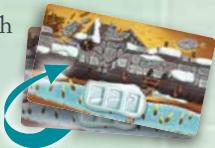
If the Attacker successfully declares control of a Wall tile, fip the tile over to show its Damaged side. If it is already on its Damaged side, or if you flip over a 4th tile, proceed to the End of the Game.
Then, discard all of the cards played on both sides of the Wall tile: new formations can now be played there. (If the Attacker did not successfully declare control, nothing happens.)
DISCARDING CARDS
When discarding cards (whatever the cause may be), place them face up to the side so that both players can see them. Sort them by color so you can easily see which cards have already been discarded.
Types of Formations
Described below are the types of formations you can play on Wall tiles, from strongest to weakest.
Color-Run
Same Strength

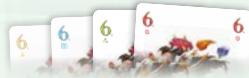
Cards with the same strength.
Color
Cards of the same color.
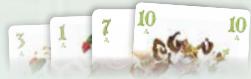
Run
Card with consecutive strengths in any colors. They can be played in any order.
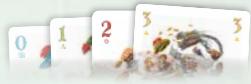
Sum
Any combination of cards.

Examples

The Attacker has played the strongest possible formation on the gate: two cards of the same color with consecutive strengths, with the maximum sum of 21.The Defender could match this formation, but they would still lose the tie since their formation would be completed after the Attacker's. The Attacker declares control here.
The Wall tile with the gate has been damaged. The Attacker has created a new formation. Although they played 4 cards with consecutive strengths, this formation type is not taken into consideration here, since the damaged gate requires the lower sum of strengths.The Attacker has a total of 6 while the Defender has 5. As long as two 0 cards are still currently available, control cannot be declared here.
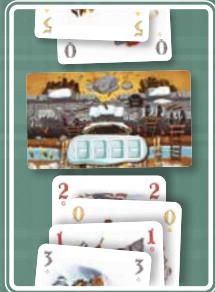

The Attacker has played three cards of the same color. With a low total of only 14, they give the Defender a false sense of security: the Defender attempts to build a “Same Color” formation with a higher total. Just before the Defender can complete such a formation, the Attacker now retreats and discards the cards they played.The Defender is now stuck with their cards.
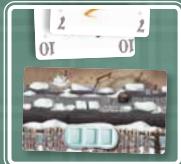
...leaving the Defender at the mercy of any formation stronger than three cards of the same color.
After the Attacker adds two 1º to this Wall, the Defender is afraid of them adding a third 1, which would allow the Attacker to declare control. The Defender decides to use an Oil Cauldron to discard the Attacker's first 1. Since there is only a single 1 on the opposing side, the immediate danger has been quelled.To declare control, it may be more prudent for

the Attacker to retreat again to have more chances to put a new formation in place, even though it will take a few turns.
WEnd of the Game
The Attacker wins the game if they declare control of a Damaged Wall tile, or if they damage a 4th Wall tile.
When a player ends their turn by drawing a Siege card but the deck is empty, the game ends immediately. The Defender wins the game.'The Defender can also win the game if they cannot play any Siege cards because all formations on their side of the Wall are complete.
Revenge?
To reveal the true winner, we recommend playing two games back to back, exchanging roles. If the same player wins each time, they are the undisputed champion.
If both players win a game, refer to the following to determine the player whose victory is more impressive:
• If both players win as the Attacker, the player who won with more cards left in the deck is the ultimate winner.
• If both players win as the Defender, the player with more Wall tiles in good repair plus unused Oiǐ Cauldron tokens is the ultimate winner.
In case of a tie, play a rematch to determine the winner!

Cactical Variant
For this variant, play with the normal rules but make the following changes:
Setup
Shuffle all of the Tactic cards to make a deck, then place it next to the Siege deck. Each player begins with 7 Siege cards instead of the normal 6.
Gameplay
When you draw up to 7 cards, you choose which deck to draw from. If the Tactic card deck is empty, you cannot draw from it any more, but the game continues.
Tactic Cards
You can have as many cards of either type in your hand, up to 7 in total. When you play a card from your hand, you can choose whether to play a Siege or Tactic card.
You can only play one Tactic card more than your opponent.
Example
Your opponent has played a single Tactic card during the game. You have played two, which is one more than your opponent. You cannot play another Tactic card until they play their second Tactic card.

Each Tactic card has a special ability:

ELITE TROOPS
These cards are played like Siege cards.
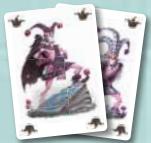
Joker (x2): This card is wild and takes the color and strength of your choice when the Attacker declares control.
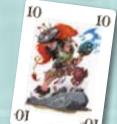
-S Spy: 'This card has a value of 10. It takes the color of your choice when the Attacker declares control.
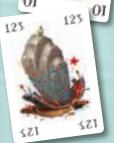
Shield: 'This card is wild and takes the color and strength of your choice (either 1, 2, or 3) when the Attacker declares control.

ACTIONS
These cards are discarded immediately after they are played. Keep them on your side of the table to track the number of Tactic cards played.
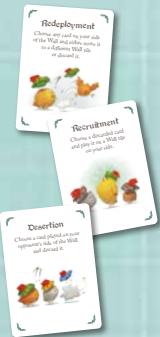
Redeployment: Choose any card on your side of the Wall and either move it to a different Wall tile on your side or discard it.
Recruitment: Choose a discarded card and play it on your side of a Wall tile.
Desertion: Choose a card played on your opponent's side of the Wall and discard it.

Treason: Choose a card played on your opponent's side of the Wall and play it on your side.

Explosion: Discard all cards on both sides of a Wall tile of your choice.
Support: Choose two discarded cards and shuffle them into the deck. You cannot play Support if there are no cards or only one card in the discard.
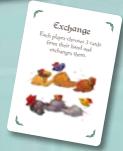
Exchange: Each player chooses three cards from their hand and exchanges them with each other.

CRÉDITS
Designer: Reiner Knizia
Illustrations: Djib
Project Manager: Ludovic Papaïs
Line Manager: Ludovic Papaïs
Graphic Design: Lenaïg Bourgoin
Rules Editor: Xavier Taverne
Translation: Danni Loe
English Revision: William Niebling Stephen Vargo and Stephan Brissaud © 2020 Dr. Reiner Knizia.
All rights reserved
FOLLOW US ON
©2020 - 2021 IELLO. IELLO, Schotten Totten 2 and their logos are trademarks of IELLO USA LLC under permission from IELLO.
Contact for North America: IELLO USA LLC, 81 David Love PI. Suite 107, Santa Barbara, CA 931 17 USA. Phone +1 (702) 818-1789. info@iellogames.com-www.iellousa.com
Contact for Europe: IELLO 9 avenue des Érables, lot 341 54180 HEILLECOURT France
www.iello.com
Jeu en anglais. Importé au Canada par IELLO USA Corp.

原文为社区整理/出版社公开资料,版权归原作者,仅供个人学习查阅。