
暗影行动:阿姆斯特丹Shadows Amsterdam
一句话概览
暗影行动:阿姆斯特丹 是一款已收录于村了吗规则库的桌游,支持 2–8 人,原名 Shadows Amsterdam。
本页内容:一句话概览 · 游戏概述 · 1. 游戏组件 · 2. 游戏设置 · 3. 游戏目标 · 4. 游戏流程 · 5. 信息卡沟通原则 · 6. 回合结束与重置 · 7. 二人 / 三人游戏合作模式 · 关键规则与常见问题 · 常见问题
暗影行动:阿姆斯特丹 规则速览
以下规则速览由本站整理,与官方规则书表述不同,仅供快速上手参考。
游戏概述
腐败的阿姆斯特丹已成罪恶之都——匿名客户委托侦探寻找三件关键证据。两队玩家在不对称的角色下展开即时竞争:情报员通过图片信息卡引导团队移动,侦探们解读线索并操控标记走向目标地点,同时躲避警察追捕。率先集齐三件不同证据并将它们交给客户的队伍赢得一局;先赢两局者获得整场胜利。
核心机制: 即时多人、非对称角色、图像沟通、手牌管理、区域控制
1. 游戏组件
| 组件 | 数量 / 说明 |
|---|---|
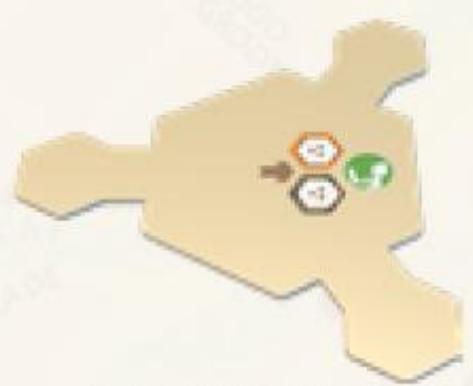
| 地区板块 | 7块(双面设计:6块随机拼接 + 1块起始板块) |
| 障碍板块 | 3块(构成中心区域,不可穿越) |
| 信息卡 | 84张 |
| 地图卡 | 40张(黑/橙各20张,每队一套) |
| 屏风 | 2个(白色、橙色,情报员用来自卫遮挡地图卡) |
| 侦探标记物 | 2个(黑、橙各1,每队起始放于起始板块) |
| 证据标记物(含基座) | 6个(黑、橙各3,每队最多放置3个) |
| 跟踪标示物 | 2个(黑、橙各1,情报员用于追踪己方侦探在地图卡上的位置) |
| 警察轨迹 | 2条(每条记录1支队伍遭遇警察的次数) |
| 警察标记物 | 5个(共享供应) |
| 规则书 | 1本 |
2. 游戏设置
2.1 队伍与座位
- 玩家将玩家分成两个队(建议双方人尽量均等)。
- 每队选 一名情报员,其余队员为 侦探。
- 情报员坐在桌子末端;同队的侦探坐在一起,彼此面对面,面向对方队伍。
2.2 游戏板搭建
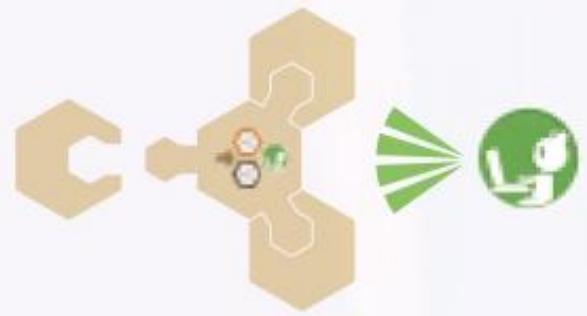
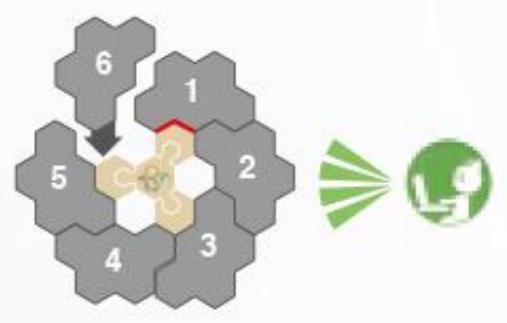
- 将 起始板块 与 3个障碍板块 拼接,组成中央核心区。确保 3 个障碍板块中的 2 个面朝情报员方向。
- 将 6 个地区板块 随机 拼接到外围空位,与障碍板块邻接。此为 标准版图。熟悉后可选用高级版图变体。
2.3 初始部署
- 每队领取对应颜色的 3 个证据标记物 和 1 条警察轨迹,剩余的 5 个警察标记物放一旁作为公用供应。
- 所有信息卡洗匀,面朝下放至两名情报员之间。
- 从牌堆中取 4 张信息卡面朝上分别放置在起始板块上及周边三个空位。
- 再从牌堆中取 10 张信息卡面朝上置于每位情报员面前(可用信息区)。
- 每位情报员取出各自颜色的屏风置于身前。
2.4 地图卡配对
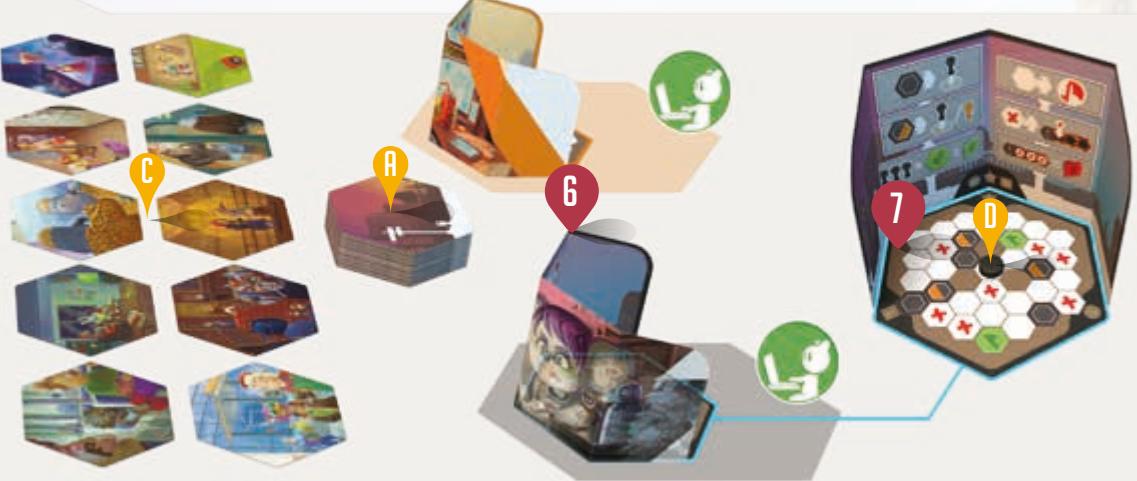
每位情报员取出同色全部 20 张地图卡作为个人牌堆:
- 一名情报员随机选一张图,展示其编号给对方情报员;对方从己方同色牌堆中找出编号相同的卡。
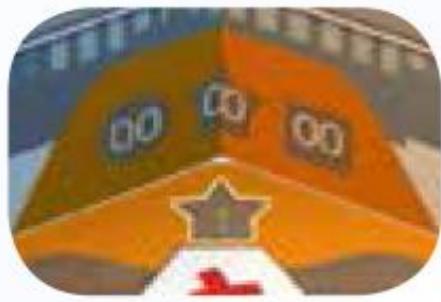
- 双方各自将地图卡藏于屏风后,并在开始前确认三点一致:颜色匹配、编号相同、朝向符号一致(● / ★ / ■)。
- 之后情报员不得翻看地图卡细节。
- 新手建议使用编号 1~6 的地图卡降低难度。
- 双方确认后,各将对应颜色的 跟踪标示物 置於自己的地图卡中心。
> 跟踪标示物仅供情报员追踪,可不用。
- 两支队伍的 侦探标记物 同时放置到起始板块上。
3. 游戏目标
- 单局胜利条件: 一队通过移动侦探标记物找到 三种不同的证据,并将证据送到对应的 客户位置,即赢得该回合胜利。
- 整场胜利条件: 首个赢下两局的队伍直接获胜。
- 失败条件: 当一队在单回合中获得第 三个 警察标记时,对手自动赢得该局。
地图上存在两类证据点:
| 证据类型 | 说明 |
|---|---|
| 独有证据 | 仅出现在其中一支队伍的地图上,仅对应队伍能收集 |
| 一般证据 | 同时出现在两张地图上,先到先得——一方收集后另一方不能再获取 |
每张地图上各有 11 个警察位置和 2 个客户位置(两张地图中只有 1 个客户位于同一格)。
4. 游戏流程
双方情报员倒数三秒后同时翻开地图卡并开始游戏。两支队伍完全并行,无需等待对方。每轮按以下步骤循环执行,直到该局结束:
步骤 ① — 收集信息
情报员使用自己的地图卡,为队伍选择距离当前位置 一格或两格 的目标地点,然后递交信息卡:
- 递 1 张卡 → 侦探移动到相邻(一格)位置。 从可用的 10 张信息卡中选 1 张交予队伍。
- 递 2 张卡 → 侦探正好移动到距当前位置两格的位置。 必须同时抽取两张并同时交予队伍——不允许依次拿取。
> 信息卡一旦发出就立即从备用堆补充,保持情报员始终有 10 张可选。若两名情报员协商一致,可将全部 10 张替换成新的 10 张,然后重新回到此步骤。
步骤 ② — 移动
侦探讨论收到的信息卡内容,确定目标地点后直接将侦探标记物移动到棋盘对应格。遵守两条移动限制:
- 收到 1 张卡时必须恰好移动 1 格;收到 2 张卡时必须恰好移动 2 格。
- 不可穿越障碍板块。
> 所有格子均为可通行目的地——包括已有证据标记或对方侦探所在的格子。"穿过"某格(非终点)不触发任何效果。
步骤 ③ — 结算
- 情报员可在地图卡上移动跟踪标示物以反映当前所在。
- 向队伍宣告该格的效果(详见下表)。
地点效果一览
| 地点类型 | 效果 |
|---|---|
| 证据 | 放置 1 个己方颜色的证据标记在此格。如果此处已有证据标记或己方已放置满 3 个不同证据,则无效果。 |
| 客户 | 仅在已收集齐 3 个不同证据时有效——到达后立即赢得此局。否则无效果。 |
| 警察 | "被发现!" 在该队的警察轨迹上放置 1 个警察标记。若这是第 3 个警察标记,此局 立即判负。 |
| 中立 | 无效果。 |
> - 已结束过的警察格若再次被作为移动终点会 再次结算。
> - 移动中途"经过"但不驻留的警察格不会触发。
> - 无人效应时情报员不得说话、不得做出表情暗示,直接进入下一轮步骤①。
> - 信息卡用完时重洗废弃堆继续发牌。
> - 若两队在同一回合到达同一格,由 先到达 的队伍先执行结算。
5. 信息卡沟通原则
情报员是唯一能看到地图卡的人——掌握证据、警察、客户的全部信息。侦探只能依赖信息卡的画面解读指令。
- 情报员每次递交 1 张或 2 张 信息卡,卡牌上的插图提供路线指引。
- 同一张卡上的多个元素可能同时指向同一个目标地点,也可意外指向其他地点。
- 交流守则: 情报员不得语言提示、手势指示或面部表情泄露额外信息,仅能靠卡牌传达。
- 注意:信息卡的画面可能同时与多个地点吻合,选择时需预判队伍的可能误读。
6. 回合结束与重置
一局在以下任一情形下立刻结束:
- 一队达成三证送达客户 → 该队胜。
- 一队遭遇第三个警察标记 → 对手胜。
新的一局开始时:
- 玩家可选择交换角色(侦探换情报员、反之亦然)。
- 两名情报员从各自的牌堆中重新抽取一对新地图卡(遵循 §2.4 配对规则)。
- 将所有信息卡洗牌重新分发。
- 证据标记物和警察标记物收回供应堆。
- 侦探标记复位至起始板块。
7. 二人 / 三人游戏合作模式
二人或三人版本改为合作玩法,全队共同挑战时间。
调整项
- 所有玩家加入同一队,共用一种颜色。
- 地图卡上的 所有证据点均可收集(无独有/一般之分)。
- 情报员可随时更换 10 张信息卡。
计时对抗
游戏前下载官方 App 或设定计时器,选择难度等级:
| 难度 | 时限 |
|---|---|
| 佣兵 | 15 分钟 |
| 新手 | 8 分钟 |
| 特工 | 5 分钟 |
| 大师 | 3 分钟 |
在规定时间内完成三证交付即胜;若收集齐 3 个警察标记或时限耗尽则判负。全队需在不输两局的前提下赢下两局才能赢得完整对战。
关键规则与常见问题
易错规则
- 实时并行: 双队同时行动,无需轮流等待。
- 信息卡数决定步数: 1 张→移 1 格;2 张→移 2 格。不能随意更改。
- 两张卡须同时递交: 抽卡和递交必须同步,不可先后拿取。
- 障碍板块不可穿越: 路径中无法跨过。
- 警察效果仅终点触发: 途经不触发,唯有落脚才结算。
- 警察格可反复触发: 若停在已结算过的警察格,再次中招。
- 第三警判负: 一个队伍累积三个警察标记物,整局即刻判定失败。
- 通用证据先到先得: 一旦被任一队收集,另一方再无法获取该格。
- 情报员零表情约束: 无效果格时严禁言语或表情透露结果。
- 信息卡保持 10 张冗余: 发出后即补牌,永远不缺牌。
- 双方地图卡须配准: 开局前必须确认编号 + 朝符号完全一致。
- 同时到达的裁决顺序: 先到先结算。
常见问题
Q:情报员可以在行动中给队友额外解释吗?
A:不行。禁止语言、手势、表情,仅能通过信息卡画面引导。
Q:收到 2 张卡可以只走一格吗?
A:不可以。2 张卡强制移动恰好 2 格。
Q:障碍物怎么摆放?
A:起始板块加 3 个障碍板块居中,其中 2 个的背面(无障碍面)朝向情报员方向。
Q:两人 / 三人局如何分配情报员?
A:任选一人担任情报员,其余均为侦探。也可以轮换身份。
Q:如果已凑齐 3 证但还没到客户格,能继续走吗?
A:可以。继续移动直至抵达客户格才算正式获胜。
Q:地图上两个客户的格,两队在两种地图上都存在吗?
A:每张图有两个客户格,其中只有一个在双方图上重合——另一格仅在一方的地图上出现。
常见问题(FAQ)
以下 1 条问答中 0 条来自站内玩家的真实提问,其余 1 条为本站整理的常见疑问;答复内容保持原样。
暗影行动:阿姆斯特丹支持几个人玩?
2–8 人。
去哪查完整规则
想核对具体规则细节、卡牌效果或某个回合的结算方式,可以在村了吗里选中这款游戏后直接提问。
同类桌游
- 卡坦岛德式
- 工业革命:伯明翰德式
- 勃艮第城堡:特别典藏版德式
- 方舟动物园德式
- 卡卡颂抽象
- 瘟疫危机传承:第一季美式
- 阿瑞迪亚:勇踏征途美式
- 重塑宇宙德式
- 幽港迷城美式
- 埃多拉的德鲁伊德式
规则原文(Markdown)
本站收录这款游戏的规则原文 2 个文件,此处内联渲染 2 个,可直接展开阅读或下载。
rules_zh_暗影行动阿姆斯特丹_6569.md21.9 KB

SHADOWS
AMSTERDAM
中文规则翻译:体力无限男

现在的阿姆斯特丹,已经变成了罪恶之都,连警察也无济于事。一个匿名的客户给你的侦探所打电话要求进行调查。你的对手也在处理这个案件,因此,你没有更多的时间了。
你的情报员通过发送图片来引导你的侦探穿越城市。每个图像包含地点的情报…只有那些能理解的人才能明白。但是你需要比对手更快地解码消息,同时避免警方的追查!探索城市以找到三件证据,并在其他团队之前将这些证据交付给客户,这样才能收到报酬——并赢得游戏!警察不想让你插手,因此你要尽量避开他们!如果他们发现了你,就会把你送进监狱,这会使你的对手轻松地获得游戏的胜利。
阿姆斯特丹的阴影是一款即时竞争的侦探游戏,两个团队同时使用包含情报信息的图片来与各自的团队进行交流。玩家的角色是不对称的:每个情报员试图引导他们的团队在游戏板上穿梭,并让侦查员们尽量理解他们提供的线索来快速的赢得胜利。
特别鸣谢
正如他所说的,这是一种魔法。
这是一个美丽的故事。如果不是Valentin强迫我完成这个游戏并把它展示给别人,那么这个超棒的想法就会稍纵即逝。ReGIS拥有一个给我惊喜和让我感动的团队,他们决定去创造这个游戏。感谢Libellud Team真诚的友谊和正能量。有你们真是太好了。
感谢 l'Étable des Jeux, 在第一时间给予的帮助。
感谢我在游戏界的所有朋友。你真是太棒了。
感谢 Anaïs,第一个游戏测试者。
感谢 Charlie 和 Rose,我的小宝贝。
感谢我的家人,我的兄弟 Klimo, Timo, 和 Cam。感谢 Marie。
这是一种魔法。。。

Mathieu Aubert
© Libellud
Shadows - Amsterdam is a trademark of Libellud and the Libellud logo is a registered trademark of Libellud.

鸣谢
设计师:Mathieu Aubert
出版总监:Régis Bonness ée
项目经理:Valentin Gaudicheau
游戏开发:Alexandre Garcia, Lucas Forlacroix, Nicolas Sato
Art Director and Cover: Jérémy Couturier
Artwork: M81 Studio and Libellud
游戏排版:Thomas Dutertre
设计团队:Clément Dautremay, Mélanie André
游戏编辑:Léa Moinet, Valentin Gaudicheau
市场运营:Mathieu Aubert
公关运营:Léa Moinet, Paul Neveur
产品管理:Alexandra Soporan
管理执行:Amélie Rouillet, Pascale Belot
阿姆斯特丹阴影 App
电子校对:Armelle & Nicolas (Epikurieu)
游戏翻译:Antoine Prono
英文校对: Kate Unrau
游戏测试:Adrien Baudet, Alban Mazars-Simon, Alessandra Pedinotti, Alexia Laurenne, Alexis Chapeau, Alice Peyrard, Anthonin Michelet, Anthony Carles, Anthony Rousseau, Arthur Decamp, Association Mipeul, Benoit Dabadie, Brice Chardin, Charles Triboulot, Chiara Cracco, Christian Rwagasore, Christophe Dufaux, Elsa Grolleau, Emmanuel Biré, Eva Guillemin, Florentin Herve, Hélène Bertin, Hélène Grisoni, Jérôme Bar, Julie Vignaud, Kelly Lemarchand, Kévin Guyon, Laura Raynaud, Louise Cornu, Louise Pourias, Marie Leo, Mathieu Dargenton, Mathieu Lanvin, Mathilde Darniche, Mathilde Jarry, Matthieu Fenot, Maud Boileux, Nicolas Bourgoin, Olivier Noc, Pascal Dubech, Patrick-Louis Cassoux, Paul Chasserieau, Paul Ferret, Pierre Laporte, Pierre Voye, Quentin Faure, Raphaël Palerme, Raphaël Robert-Bouchard, Rosa Mallo, Roxanne Gouhier, Sarah Pierdon, Stéphane Sarrazin, Stico, Suzon Martineau, Thibault Morin, Virginie Auffroy-Guignard, Virginie Ventana
游戏组件

84 张信息卡


1 本规则书

7个地区(双面)
1个起始板块

3个障碍板块

2个屏风
(1个白色&1个橙色)

2个侦探标示物
(1个黑色&1个橙色)


6个包括基座的证据标示物 (3个黑色 & 3个橙色)
40 张地图卡
(20个黑色 & 20橙色)

2个跟踪标示物
(1个黑色&1个橙色)
2个警察轨迹

5个警察标记物
游戏设置

玩家们分成两各团队(如果可能,双方的玩家人数尽量相同)。
每个团队的一名玩家为 情报员 📄 ; 其他玩家为 侦探 🏱 。情报员坐在桌子的末端。每个团队的侦探坐在同一边,与对方团队面对面。

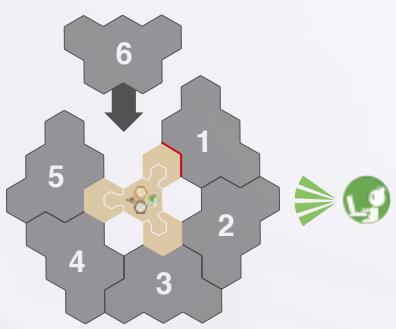
将起始板块与3个障碍板块拼接组成游戏板的中心区域。像右侧图示那样,确保3个障碍板块中的2个板块面对着情报员。

将6个地区板块随机拼接到中心区域障碍板块的四周。根据右侧图示将地区板块与障碍板块相邻来拼接游戏板。(参考步骤1)。这是游戏的标准设置。

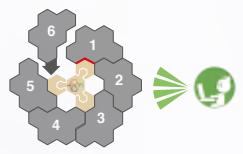
一旦你熟悉了游戏,你可以根据下侧图示进行游戏的高级设置。

每个团队获得3个对应团队颜色的证据标记物和1个警察轨迹。将5个警察标记物放到游戏板旁边。


将所有的信息卡面朝下组成牌堆放到两个情报员之间。

从牌堆中拿取4张卡牌面朝上放到起始板块上以及围绕障碍板块的三个空位上。
然后再从牌堆中拿取10张信息卡面朝上放置到情报员的前面:这些事可用的信息卡。

每个情报员拿取各自团队颜色的屏风并放置到各自的面前。

每个情报员拿取各自颜色的所有地图卡牌组成一个牌堆。一个情报员从他的牌堆中随机选择一张地图卡并给对手展示卡牌上的数字。另一个情报员从他的团队牌堆中拿取相同数字的地图卡。
然后每个情报员将各自的地图卡隐藏到各自的屏风后面。在开始游戏之前,情报员必须确保以下条件:
- 各自地图卡的颜色要对应其团队的颜色;
- 这两张地图卡具有相同的数字;
- 这两张地图卡面向屏风具有相同的符号(● ★ ■ );

现在,情报员不允许查看他们的地图卡的细节。他们只需按照上面的方式放置它们。
在你的前几场游戏中,使用1到6的地图卡,对于新手侦探来说更容易进行游戏。

每个情报员将各自颜色的跟踪标示物放置到各自地图卡的中心位置中。
提示:
情报员可以使用跟踪标示物来跟踪他们的侦探。尽管如此,如果你愿意,你不必使用跟踪标示物。

侦探们将两个侦探标记物放置到起始板块上。

游戏目标
第一个赢得两轮游戏的团队赢得游戏的胜利。
为了赢得一轮游戏,每个团队必须通过移动游戏板上他们的侦探标记物来找到三个不同的证据,然后把证据交给客户。第一个完成这些任务的团队获得一轮游戏的胜利。游戏时及时性的,因此要抓紧时间!
避免将你的标记物移动到警察位置上:如果你三次都移动到警察位置时,这轮游戏你将失败。
为了与团队保持沟通,每个情报员都有地点位置信息(地图卡)并尝试着使用信息卡来引导他们的侦探。

你的任务是使用信息卡来引导你的队友去游戏板上不同的位置(参考第8页的“通过图像进行沟通”)。避免为你的团队提供任何额外的线索。你不能说话,不能打手势,并且不能做出任何姿势!因为你可以看到地图卡,你是团队中唯一一个知道哪里可以找到线索,哪里有警察,以及客户在哪里的人。

你的任务是移动你团队的侦探标记物到游戏板上不同位置中。通过分析你们团队的情报员所提供的信息卡来与他们进行交流。


地图卡
地图卡代表游戏板。每个团队都有一套相同的地图卡。地图卡必须成对进行游戏(相同数字,每个颜色各一张)。一些元素的每张卡牌上特有的,其他的元素在两张卡牌上是相同的。
在开始游戏之前,确保调查员们选择相同的地图卡(相同数字,不同颜色)并且放置的方向相同(面对屏风的符号相同 ● ★ ■ )。

证据:团队必须通过移动到这些位置收集证据。不管它们的类型,每个团队必须找到三种不同的证据:


独有证据:这种类型的证据会出现在两张地图卡的其中一张中,因此,只有其中一个团队可以收集它。
一般证据:这种类型的证据会同时出现在两张地图卡上,并且可以被任一个团队收集,因此一旦一个团队收集了这个证据,另一个团队就不能再收集了!
客户:一旦一个团队收集了三个不同的证据,他们必须前往这种位置中来赢得游戏轮。游戏中的每张地图卡上有两个客户地点:两卡牌上只有一个客户是在相同位置中的。

中立: 没有效果。

警察:侦探应该尽量避免移动到这些位置中。每张地图卡都有十一个警察地点,其中六个地点是两张地图卡所共有的。
00 00 00
使用 数字 来匹配地图卡。使用 符号 来匹配地图卡的朝向。
通过图像进行沟通
在阿姆斯特丹的阴影中,调查员必须只能通过信息卡上的图像与他们的团队进行沟通。调查员将1张或2张信息卡交给他们的团队;这些卡牌提供让团队移动到一个地点的线索。每个图像都有不同的解释。调查员应该尝试着尽可能的使用它们来引导团队去正确位置。
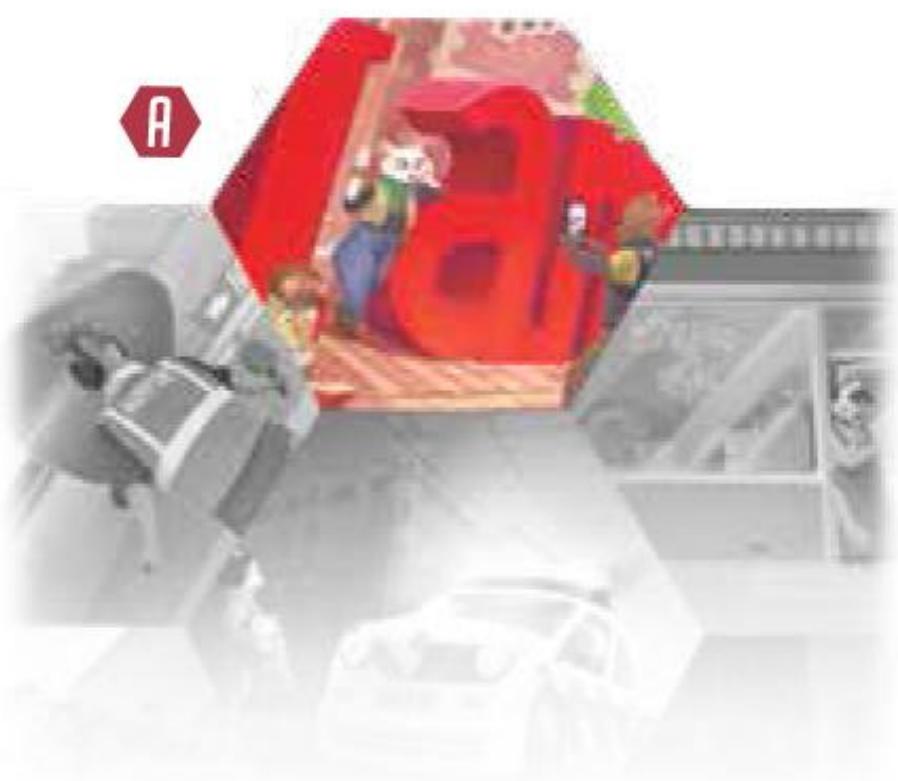
作为一个调查员,查理希望他的团队进入 A 位置。
他选择信息卡 B ,因为卡牌上有两个线索:相机和爱心。在 A 位置中的角色正在让情侣拍照。他同样选择了一张 C 卡牌,因为卡牌上有非常明显的线索:红色,字母,以及洗手间的符号。这个线索代表 A 位置。童颜的,这XXX符号是阿姆斯特丹的徽章并且在 A 位置的红色字母上有一个线索来组成城市的名称。他的侦探会理解吗?还有待观察…

B

C
- 注意团队可能会去的其他位置!信息卡也可能与另一个你没有注意到的地点完美的匹配。
- 你可能认为你的信息非常清晰,但是要注意:经常倾听团队的意见,并试着理解他们的想法。
- 你只能使用信息卡来沟通,如果需要,尝试着调出框架来寻找创造性的方法来使用信息卡。你也可以根据情况或激发出一种理念。
进行一轮游戏
当每个人都准备好的时候,情报员倒数三秒开始游戏。从这一刻起,他们可以详细地查看他们的地图卡。回合开始后游戏将同时进行。每个团队按顺序执行这些步骤,重复这些步骤直到回合完成:

- 收集信息

调查员将1张或2张信息卡交给他们的团队。

- 移动

侦探们 讨论信息卡并移动到游戏板上的新地点。

- 结算

调查员结算这个新地点的效果。
这三个步骤必须重复执行,直到本轮完成。

游戏实时进行!两个团队同时游戏。同时采取行动,团队不需要等待对手行动。

1. 收集信息
每个调查员使用地图卡为团队选择一个举例团队当前位置的一步或两步目标地点。如果团队获得1张信息卡,团队的侦探只能移动到任意相邻的地点中。如果团队获得2张信息卡,侦探们将移动到距离两步的位置。
- 相邻的位置: 调查员从可用的10张信息卡中选择1张卡牌交给他们的团队。
- 距离两步的位置: 调查员从可用的10张信息卡中选择2张卡牌交给他们的团队。两张卡牌必须同时拿取并立即交给团队。调查员不能拿取一张在拿取另一张卡牌: 两张卡牌必须同时选择。
信息卡只能用于指引侦探到目标位置。
一旦将信息卡交给团队,立刻从牌堆中补充新的信息卡。调查员总是有10张可选择的信息卡。
如果双方的调查员同意,他们可以将10张卡牌替换成10张新的卡牌。然后一起返回到游戏的第一步,收集信息。
提示:
- 移动两个位置允许你避开警察....但是这样做会带来更大的风险。
- 不要忘记调查员在同时进行游戏。信息卡先到先得!
移动两格


2. 移动
侦探们查看获得的信息卡上的内容并研究可能的目标地点。当他们达成一致,他们将直接移动他们的侦探标记物到选择的目标地点。在移动时要遵循以下两个规则:
- 如果你获得1张信息卡,你必须移动到相邻的地点;如果你获得2张信息卡。你必须移动正好两个地点;
- 你不能移动穿越障碍板块(参考下侧的图示)。
所有地点都是可以访问的,甚至包括证据标记物或对手的侦探标记物。
移动到一个相邻的地点


3. 结算
一旦侦探移动结束,调查员可以移动他们的地图卡上的跟踪标记物到对应的位置中。
一轮的例子
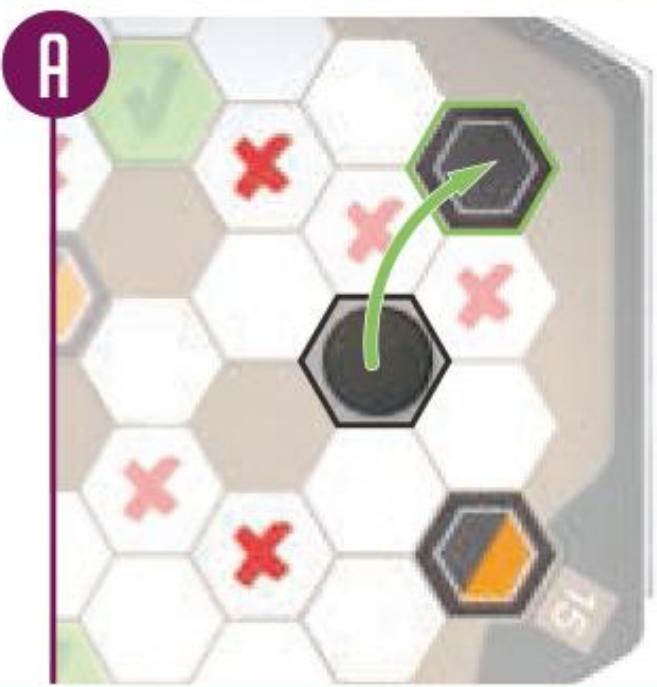
A 查理想要他的团队移动到证据地点。他需要交给团队2张信息卡,因为证据地点距离团队侦探两格。这样也可以避开警察。
B 他的侦探研究可能的目标地点(绿色标记)然后移动到他们选择的位置并找到了证据!
C 他们将一个证据标记物放置到这个地点并继续游戏,因为他们还需要找到另外两个证据。

然后调查员检查地图卡并宣布目标位置中的效果,除了无事发生。根据以下的每种地点的效果进行结算:
证据:“恭喜,你找到了一个证据!”将团队颜色的一个证据标记物放置到这个位置中。如果一个团队移动到一个已经拥有证据的地点,这将无事发生。如果团队已经放置了三个不同的证据并且没有证据标记物可放时,同样无事发生。
客户: 如果一个团队已经收集了三个不同的证据并且到达客户的地点中, 这个团队立刻赢得本轮的胜利。否则, 无事发生。
警察:“你被发现了!”将一个警察标记物放置到团队的警察轨迹上。如果这是团队的第三个警察标记物,团队在这轮游戏中立即失败。关于警察位置的注意事项:
- 如果一个团队结束移动时处于之前结算过的一个警察位置中,这个警察位置会再次被结算!
- 移动穿过一个警察位置不会触发效果。警察位置只有在作为目标位置时被结算(即,团队的侦探标记物移动到的位置)。
中立位置: 无事发生。
当 无事发生时,调查员不能说话并且不能有任何表情。立即进行步骤1,收集信息。

调查员不允许让他的团队知道他们是否按计划行动。
当结算完所有事情,将信息卡放到一旁并且回到步骤1,按照顺序重复三个步骤直到本轮完成。
如果信息卡耗尽,重洗一旁的信息卡并组成新的牌堆。
如果两个团队同时到达同一地点,先到达这个地点的团队进行步骤3的结算。

一轮结束
当以下情况发生时,本轮立即结束:
- 当一个团队收集了三个证据并到达了客户位置时,这个团队获得本轮的胜利。
- 当一个团队获得了他们的第三个警察标记物时,对手团队获得本轮的胜利。

当一个团队获得两轮胜利,他们赢得整场游戏的胜利。否则,新的一轮开始,当新的一轮开始时:
- 玩家们可以交换角色(例如,一个侦探可以变成调查员, 反之即可)。
- 调查员为新的一轮选择新的地图卡。
- 重洗所有信息卡并放置到桌面上 (参考第4页中游戏设置的步骤5)。
- 将证据标记物和警察标记物放回到各自的供应堆中。
二人游戏和三人游戏
阿姆斯特丹的阴影的二人游戏或三人游戏是一个与时间竞赛的合作模式。在进行游戏时,使用相同的规则进行游戏设置并做以下的调整:
- 所有玩家属于同一团队(因此你们只用一种颜色);
- 地图卡上的所有证据位置都可以访问;
- 调查员可以在任何时候替换10张信息卡。
你们将与时间竞争,在游戏开始前,下载官方的APP或设置一个计时器。选择一个难度等级,并进行以下设置:

| 佣兵 | 新手 | 特工 | 大师 |
| 15分钟 | 8分钟 | 5分钟 | 3分钟 |
如果团队在规定时间内收集三个不同的证据并到达客户地点,团队赢得本轮的胜利,如果团队收集三个警察标记物或时间耗尽,团队输掉本轮的游戏。

为了赢得游戏的胜利,团队必须在输掉两轮游戏之前赢得两轮游戏。
阿姆斯特丹-阴影的官方APP提供以及配乐。从
www.libellud-digital.com/shadows.html 下载或者用手机扫描右侧二维码。

SH_RULES_EN_BD.md23.1 KB

SHADOWS
AMSTERDAM
RULES

Amsterdam, present day. A crime has been committed, but the police investigation is going nowhere. An anonymous client has called your detective agency to investigate. However, your rivals are on the case as well, so there's no time to waste.
Your Intelligence Officer will guide your Detectives through the city, by sending pictures to communicate. Each image contains location intel ... for those who can understand. But you need to decode the messages faster than your rivals while avoiding the police! Explore the city to find three pieces of evidence, and deliver them to your client before the other team in order to receive payment — and win the game!
The police don't want you on the case, so you'd best stay out of their way! If they spot you sniffing around, they'll put you behind bars, giving your rivals an easy victory.
Shadows - Amsterdam is a real-time simultaneous competition between detective agencies, using pictures that contain intel to communicate within your own team. Player roles are asymmetrical: each Intelligence Officer tries to guide their own team around the board, and the Detectives try to understand their Intelligence Officer's clues in a fast-paced race to victory.
SPECIAL THANKS
It's a kind of magic, as he said.
This is the story of a beautiful story. A fleeting idea that could have been lost if Valentin had not pressed me to complete it and show it to others. A team that liked it, to my surprise, and Régis, who decided to go for it and create the game.
Thanks to the Libellud Team for your precious friendship and your energy. It is so nice to have you.
Thanks to l’Étable des Jeux, the first link in the chronological chain.
Thanks to all my buddies in the gaming universe. You're so fantastic.
Thanks to Anaïs, the first playtester.
Thanks to Charlie and Rose, my little loves.
Thanks to my family, to my brothers Klimo, Timo, and Cam.
Thanks to Marie.
It's a kind of magi...

Mathieu Aubert
© Libellud
Shadows - Amsterdam is a trademark of Libellud and the Libellud logo is a registered trademark of Libellud.
CREDITS
Design: Mathieu Aubert
Publishing Director: Régis Bonnessée
Project Lead: Valentin Gaudicheau
Development : Alexandre Garcia, Lucas Forlacroix, Nicolas Sato
Art Director and Cover: Jérémy Couturier
Artwork: M81 Studio and Libellud
Layout: Thomas Dutertre
Design Team: Clément Dautremay, Mélanie André
Editing: Léa Moinet, Valentin Gaudicheau
Marketing: Mathieu Aubert
Communication: Léa Moinet, Paul Neveur
Production Manager: Alexandra Soporan
Administration: Amélie Roullet, Pascale Belot
Shadows - Amsterdam App by Libellud Digital
Proofreading: Armelle & Nicolas (Epikurieu)
Translation: Antoine Prono
English Proofreading: Kate Unrau
Playtesting: Adrien Baudet, Alban Mazars-Simon, Alessandra Pedinotti, Alexia Laurenne, Alexis Chapeau, Alice Peyrard, Anthonin Michelet, Anthony Carles, Anthony Rousseau, Arthur Decamp, Association Mipeul, Benoit Dabadie, Brice Chardin, Charles Triboulot, Chiara Cracco, Christian Rwagasore, Christophe Dufaux, Elsa Grolleau, Emmanuel Biré, Eva Guillemin, Florentin Herve, Hélène Bertin, Hélène Grisoni, Jérôme Bar, Julie Vignaud, Kelly Lemarchand, Kévin Guyon, Laura Raynaud, Louise Cornu, Louise Pourias, Marie Leo, Mathieu Dargenton, Mathieu Lanvin, Mathilde Darniche, Mathilde Jarry, Matthieu Fenot, Maud Boileux, Nicolas Bourgoin, Olivier Noc, Pascal Dubech, Patrick-Louis Cassoux, Paul Chasserieau, Paul Ferret, Pierre Laporte, Pierre Voye, Quentin Faure, Raphaël Palerme, Raphaël Robert-Bouchard, Rosa Mallo, Roxanne Gouhier, Sarah Pierdon, Stéphane Sarrazin, Stico, Suzon Martineau, Thibault Morin, Virginie Auffroy-Guignard, Virginie Ventana.
COMPONENTS

84 Intel Cards


1 Rulebook
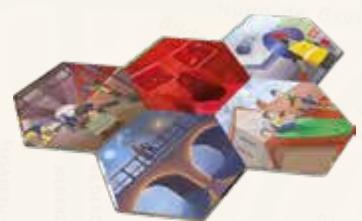
7 Districts (double-sided)

1 Starting Tile

3 Obstacle Tiles
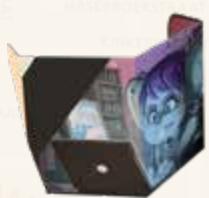

2 Screens (1 black & 1 orange)

2 Detective Figures (1 black & 1 orange)


6 Evidence Tokens (3 black & 3 orange) plus Bases
40 Map Cards (20 black & 20 orange)


2 Police Tracks

5 Police Tokens
2 Tracking Markers (1 black & 1 orange)
GAME SETUP

Divide players into two teams (both teams should have the same number of players if possible). One player on each team is the Intelligence Officer ; the others are Detectives . Intelligence Officers sit next to each other at one end of the table. Detectives from each team sit on the same side of the table together, facing the opposite team.

Assemble the Starting Tile and the 3 Obstacle Tiles to form the center of the board. Make sure that 2 of the 3 Obstacle Tiles are facing the Intelligence Officers, as shown in this illustration.

Randomly assemble 6 of the Districts around the Obstacle Tiles to form the board. Use the Obstacle Tiles to assemble the board. Place a District directly next to an Obstacle Tile (see step 1). Starting from this District, place the other Districts on the table as shown in this illustration. This is the standard setup.

Once you are familiar with the game, feel free to use the alternative setup shown in the illustration below.

Give each team 3 Evidence Tokens in their color and 1 Police Track. Place the 5 Police Tokens next to the board.
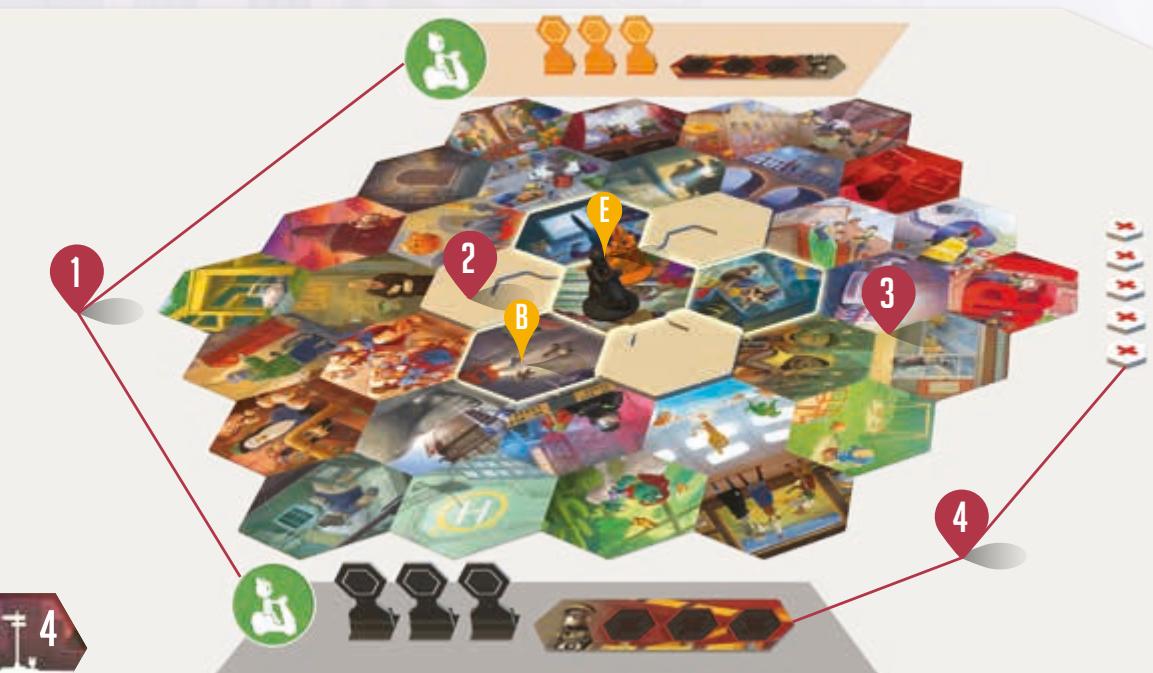


Place all the Intel Cards face down in a pile between the Intelligence Officers.

Take the first 4 cards from the pile and place them face up on the Starting Tile and the three empty spots around the Obstacle Tiles.

Take the next 10 Intel Cards from the pile and place them face up in front of the Intelligence Officers: these are the available Intel Cards.

Each Intelligence Officer takes the Screen in their team's color and place it in front of themself.

Each Intelligence Officer takes all Map Cards in their own color and forms a pile. One Intelligence Officer randomly chooses a Map Card from their pile and shows its number to their opponent. The other Intelligence Officer takes the Map Card with the same number from their team's pile.
Each Intelligence Officer then places the Map Card behind their own Screen. Before playing, Intelligence Officers must make sure that:
- their Map Card is of the proper color (their team's color);
- the two Map Cards have the same number;

- the two Maps Cards are oriented with the same symbol () facing the Screen;

For now, Intelligence Officers are not allowed to look at their Map Cards in detail. They simply place them as instructed above.


For your first few games, use Map Cards numbered from 1 to $6 ;$ they are easier to play with for novice Detectives.

Each Intelligence Officer places a Tracking Marker of their own color on the central space of their Map Card.
Hints:
The Intelligence Officers can use the Tracking Marker to track their Detectives. However, if you prefer, you can play without the markers.

Detectives place the two Detective Figures on the Starting Tile.
GAME OBJECTIVE
The first team to win two rounds wins the game.
To win a round, a team must find three different pieces of Evidence by moving their Detective Figure on the board, then deliver them to the Client. The first team to do so wins the round. The game plays in real time, so there is no time to waste!
Avoid moving your figure onto the Police spaces: if you do so three times, you lose the round to the other team.
To communicate with their team, each Intelligence Officer has geographic intel (Map Cards) and tries to guide their own Detectives with Intel Cards.

Your role is to use the Intel Cards at your disposal to guide your teammates to different spaces on the board (see “Communicating with Pictures” on p. 8). Avoid giving your team any extra clues. You must not speak, gesture, or adopt any postures! Because you can see the Map Card, you are the only one on your team who knows where to find the Evidence, the Police, and the Client.

Your role is to move your team's Detective Figure to different spaces of the board. Communicate with the other Detectives on your team to analyze and interpret the Intel Cards you get from your Intelligence Officer.

The Map Cards represent the board. Each team has an identical set of Map Cards. Map Cards work in pairs and must be played together (same number, one card of each color). Some elements are unique to each card; others are common to both cards.
Before playing, the Intelligence Officers make sure that they select a pair of matching Map Cards (same number, different colors) and that they have the same orientation (matching symbols facing their Screens).

Evidence: Teams must collect Evidence by moving to these spaces. Each team must find three different pieces of Evidence, regardless of their type:


Unique Evidence: This type of Evidence appears on one of the two Map Cards. As a result, only one of the two teams can collect it.
Common Evidence: This type of Evidence appears on both Map Cards and can be collected by either team. However, once a team has found it, the other can no longer collect it!
The Client: Once a team has collected three different pieces of Evidence, they must go to one of these spaces to win the round. There are two Client spaces on each Map Card: only one of them is common to both cards.

Neutral Space: No effect.

The Police: Detectives should avoid these spaces as much as possible. Each Map Card features eleven Police spaces, and six of them are common to both Map Cards.

Use Numbers to pair Map Cards. Use Symbols to match Map Cards in one of three different orientations.
COMMUNICATING WITH PICTURES
In Shadows - Amsterdam, Intelligence Officers must communicate with their team only through pictures (Intel Cards). The Intelligence Officer gives 1 or 2 Intel Cards to their own team; these cards are a clue to the location the team should move to. Each picture can be read in different ways. The Intelligence Officer should try to use these possibilities to direct their team in where to move.


B

C
As an Intelligence Officer, Charlie wants his team to move to space .
He chooses Intel Card B because it features two clues: the camera and love. The characters on spaceare taking a picture and could be a couple. He also chooses Intel Card because it features strong clues: the color red, letters, and the man and woman on the toilet symbol. These clues are represented on space. Also, the XXX symbol is Amsterdam's coat of arms and possibly a clue to the red letters on space, which form the city name. Will his Detectives understand? That remains to be seen...
Hints:
- Watch out for other spaces your team might go! An Intel Card may also be a perfect match for another space that you did not notice.
- You may think that your message is crystal clear, but be careful: always listen to your team and try to understand how they think.
- You have only the Intel Cards for communication. If necessary, try to think outside the box and find creative ways to use the Intel Cards. You might also think about concepts or situations.
PLAYING A ROUND
When everyone is ready, the Intelligence Officers count to three and begin the round. From this moment, they may look at their Map Card in detail. The round begins, and play is simultaneous. Each team follows these steps in order, repeating them until the round is complete:

1. GATHER INTEL
-
MOVE
-
RESOLVE


The Intelligence Officer gives 1 or 2 Intel Cards to their team.
The Detectives discuss the Intel Cards and move to a new space on the board.
The Intelligence Officer resolves the effects of that space.
These three steps must be repeated until the round is completed.
The game plays in real time! Both teams play at the same time. Actions are taken simultaneously, and teams do not need to wait for their opponents to play.

1. GATHER INTEL
Each Intelligence Officer uses the Map Card to choose a target space for their team one or two spaces away from their current location. If the team receives 1 Intel Card, they move their Detective Figure to any adjacent space. If they receive 2 Intel Cards, they move exactly two spaces.
- Adjacent space: the Intelligence Officer chooses 1 Intel Card from the available 10 and gives it to their team.
- Two spaces away: the Intelligence Officer chooses 2 Intel Cards from the available 10. Both cards must be taken at the same time and immediately given to the team. The Intelligence Officer must not take one card, then another card: both cards must be selected simultaneously.

Intel Cards are used to guide the Detectives only to the target space.
As soon as Intel Cards are given to a team, they are replaced with new Intel Cards from the pile. Intelligence Officers always have 10 cards available to choose from.
If both Intelligence Officers agree, they may replace all 10 Intel Cards with 10 new cards.
Then, together, they resume gameplay from step 1, Gather Intel.
Hints:
- Moving two spaces may allow you to avoid the Police... but with it comes a greater risk of making a mistake.
- Don't forget that Intelligence Officers play at the same time. Intel Cards are first come, first served!

Move two spaces
2. MOVE
▼Detectives look at the Intel Card(s) they received and study the possible target spaces. When they agree, they move their figure directly onto the target space they have chosen. Keep in mind two rules when moving:
- If you receive 1 Intel Card, you must move to an adjacent space; if you receive 2 Intel Cards, you must move exactly two spaces;
- You cannot move through Obstacle Tiles (see diagram below).

All spaces are always accessible, even if they contain an Evidence Token or your opponent's Detective Figure.

Move to an adjacent space


3. RESOLVE
▼Once the Detective Figure has been moved, the Intelligence Officer may move their Tracking Marker to the matching space on the Map Card.
EXAMPLE OF A ROUND
Charlie wants his team to move to the Evidence Space. He needs to give 2 Intel Cards, as the Evidence is two spaces away. This also allows him to avoid the Police.
His Detectives study the possible target spaces (marked in green) and then they move their figure onto the chosen space and find the Evidence!
They place one Evidence Token on that space, but they keep playing because they still need to find the two other pieces of evidence.

Then the Intelligence Officer checks the Map Card and announces what's in the target space, unless nothing happens. Here are the effects of landing on each type of space:
Evidence: "Congratulations, you found one piece of Evidence!"Place one Evidence Token of the team's color on the target space.
If a team moves to a space where Evidence has already been found, then nothing happens. If the team already has three different pieces of Evidence and is out of Evidence Tokens, then nothing happens.
Client: If a team has collected three different pieces of Evidence when they arrive on the Client space, then that team wins the round. Otherwise, nothing happens.
xPolice: "You've been spotted!" Place one Police Token on the team's Police Track. If this is the team's third token, then they immediately lose the round to the opposing team. Note about Police spaces:
- If a team ends their move on a Police space that they resolved previously, that Police space is resolved again!
- Moving through a Police space does not trigger it. Police spaces are resolved only if they are the target space (i.e., the space the team's Detective figure is moved to).
Neutral Space: Nothing happens.
When nothing happens, the Intelligence Officer says nothing and keeps a poker face. Immediately go back to step 1, Gather Intel.
Intelligence Officers are not allowed to let their teams know whether they moved according to plan or not.
When everything is resolved, the Intel Cards are set aside and the team goes back to step 1, repeating the three steps in order until the round is complete.
If you run out of Intel Cards, shuffle the Intel Cards that were set aside to form a new pile.
If both teams arrive on the same space at almost the same time, step 3 is resolved first by the team that arrived first on that space.

END OF THE ROUND
The round immediately ends when:
- one of the teams moves to the Client space after having collected three pieces of Evidence. That team wins the round.
- one of the teams receives their third Police Token. The opposing team wins the round.

When a team has won two rounds, they win the game. Otherwise, a new round begins. When starting a new round:
- teams may switch roles (i.e., a Detective may become the Intelligence Officer, and vice versa)
- Intelligence Officers choose new matching Map Cards for the round.
- all Intel Cards are shuffled and placed on the table (see step 5 of the Setup on p. 4).
- Evidence and Police Tokens are returned to their reserve.
2 AND 3 PLAYER MODE
The Shadows - Amsterdam mode for 2 or 3 players is a cooperative race against time. To play, set up the game as explained and use the same rules with following adjustments:
- all players are on the same team (so you play with only one color) ;
- all evidence spaces on the Map Card are accessible; - Intelligence Officer may replace the 10 Intel Cards whenever they want.
You play in a race against time. Before starting the game, download the official app or set a timer. Choose a difficulty level, and use the following settings:
| RECRUIT | NOVICE | AGENT | MASTER |
| 15 min | 8 min | 5 min | 3 min |
The team wins a round if they collect three different pieces of Evidence and deliver the Evidence to the Client. The team loses if they receive three Police tokens or if they run out of time.
To win the game, the team must win two rounds before they lose two rounds.
The official Shadows - Amsterdam App offers a timer and a soundtrack. Download it from www.libellud-digital.com/ shadows.htmlor scan this QR Code with your phone.



原文为社区整理/出版社公开资料,版权归原作者,仅供个人学习查阅。