
手机帝国Smartphone Inc
一句话概览
手机帝国 是一款已收录于村了吗规则库的桌游,支持 1–5 人,原名 Smartphone Inc。
本页内容:一句话概览 · 游戏概述 · 1. 游戏组件 · 2. 游戏设置 · 3. 游戏流程 · 4. 阶段详解 · 5. 回合结束与下轮准备 · 6. 游戏结束与胜负判定 · 7. 科技详解 · 8. 零售商详解 · 9. 先后规则(Priority Rule) · 10. 关键规则与常见问题 · 附录:勘误修正 · 常见问题
手机帝国 规则速览
以下规则速览由本站整理,与官方规则书表述不同,仅供快速上手参考。
游戏概述
在一场模拟数码经济商战的游戏中,玩家将扮演新兴智能手机公司的董事,通过制定价格、组织生产、研发科技、开拓市场和销售产品,将自己的企业扩张为全球最显赫的公司。一局游戏共进行五轮,每轮八个阶段,在阶段表指引下逐步运营企业。
核心机制: 双平板重叠规划、秘密行动规划、先后顺序出价系统、六条科技研发线
1. 游戏组件
| 组件 | 数量 / 说明 |
|---|---|
| 平板(规划用) | 10 块(每位玩家 2 块),分 ◆◇ 两种符号仅用于设置区分 |
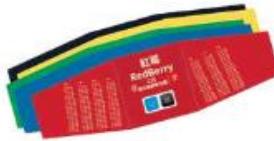
| 玩家屏风 | 5 张(每位玩家 1 张),印有起始分数乘数表和起始位置 |
| 起始改良板块 | 5 块(每位玩家 1 块),背面印颜色和公司名称 |
| 整理盒 | 5 个(每位玩家 1 个),分隔已生产货物、未生产货物、进度棋子和办公室棋子 |
| 进度棋子 | 60 颗(每位玩家 12 颗),无限制补充 |
| 办公室棋子 | 90 颗(每位玩家 18 颗),取代游戏版图上的进度棋子 |
| 货物棋子 | 100 颗(每位玩家 20 颗),象征待售智能电话 |
| 游戏版图 | 1 块,显示全球市场分布和六大科技研发进度 |
| 游戏轮指示物 | 1 枚,标记当前进行到第几轮 |
| 阶段指示物 | 1 枚,标记当前进行到哪一阶段 |
| 计分版 | 1 块,记录每家公司的累计得分 |
| 专利板块 | 6 块,对应六项科技,首位研发者取得 |
| 科技板块 | 6 块,每项科技一块,双面设计增加变数 |
| 改良板块 | 27 块,用于升级平板或面朝下生产货物 |
| 货物板块 | 20 块,每轮若无可用的改良行动则自动获得 1 块 |
| 零售商板块 | 2–7 块(视玩家人数),少于 5 人游戏时使用 |
| 说明书 | 1 本 |
可选配件(1–4 人游戏加入):史蒂夫棋子 ×1、史蒂夫说明书 ×1、史蒂夫平板 ×1
2. 游戏设置
2.1 版图布置
- 将游戏版图置于桌面中央
- 阶段指示物放到阶段表第一格,游戏轮指示物放到第 1 号位置
- 计分版放到游戏版图旁
- 定价区: 所有玩家的定价起点均为 5,棋子放在该位置
- 专利区: 6 块专利板块放到游戏版图上对应位置
- 科技区: 6 块科技板块放到对应的专利旁
- 改良区: 洗匀全部改良板块,随机翻面 5 块放入改良区
- 货物供应: 全部货物板块面朝下放到游戏版图旁作为通用供应
2.2 科技板块设置
每次游戏前由玩家共同决定(或随机决定)每块科技板块使用哪一面(正反面对应不同奖励)。新手开局建议全部使用正面。
2.3 零售商板块设置(仅 2–4 人游戏)
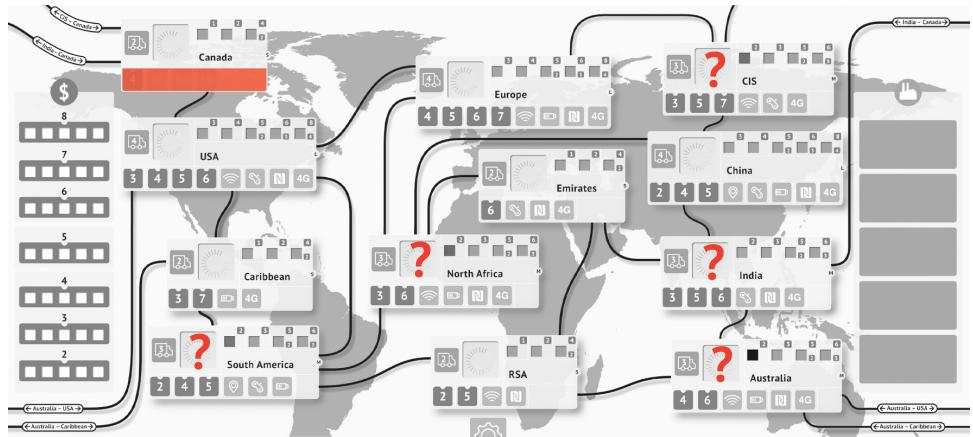
零售商板块会遮挡游戏版图上某些地点,使得玩家之间产生更多竞争。根据当地大小分为 S(小)、M(中)、L(大)三种,需与标注相应字母的地点对接。
| 玩家人数 | 放置位置 |
|---|---|
| 2 人 | 中国、加拿大、加勒比海,及任意没有玩家办公室的中原地带各 1 块 M |
| 3 人 | 欧洲、南非,及任意没有玩家的中原地带各 1 块 M |
| 4 人 | 加拿大及任意一个没有玩家的中原地带各 1 块 M |
| 5 人 | 不使用任何零售商板块 |
2.4 玩家个人设置
每位玩家选择一种颜色后拿取该颜色对应的全套配件:
- 12 颗进度棋子、18 颗办公室棋子、20 颗货物棋子
- 1 个整理盒,将棋子分别放入正确分隔
- 2 块平板,其中 1 块正面向上、1 块反面向上
- 1 张屏风
- 1 块起始改良板块
按照屏风背面的指示,每位玩家必须完成以下操作:
- 把自己 1 颗办公室棋子放到起始地点办公室位置最左侧的那一格
- 把自己 1 颗货物棋子,按屏风背面的颜色放到计分版相应的分数格子上
- 拿取自己颜色的起始改良板块
按照计分版上的顺序(左至右分别为绿、蓝、黑、黄、红),把自己 1 颗货物棋子放到定价区上 5 的位置。
3. 游戏流程
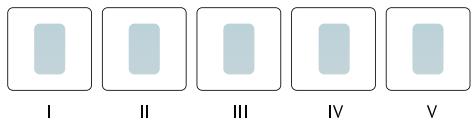
一局游戏进行 5 轮,每轮分为 8 个阶段,从左至右逐一执行:
| 阶段 | 名称 | 要务 |
|---|---|---|
| 阶段一 | 规划 | 同时秘密确定本轮的行动组合 |
| 阶段二 | 调整定价 | 决定本轮卖出货物的价格 |
| 阶段三 | 生产 | 根据可用图标和被遮住的格子生产货物 |
| 阶段四 | 改良生产 | 使用改良板块升级平板或面朝下使用 |
| 阶段五 | 研发科技 | 花费进度棋子推进科技研发进度 |
| 阶段六 | 物流 | 花费进度棋子拓展新市场 |
| 阶段七 | 卖出货物 | 将已生产的货物卖给买家 |
| 阶段八 | 得分 | 根据卖出货物的数量和雄霸情况获得分数 |
4. 阶段详解
4.1 阶段一:规划
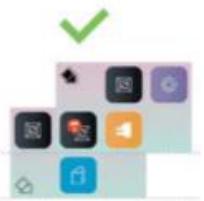
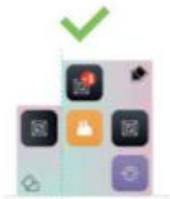
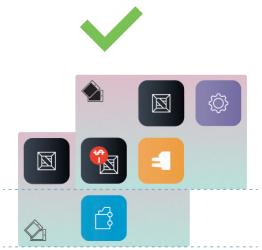
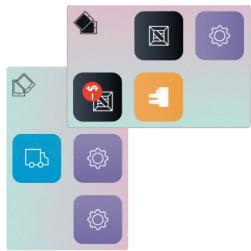
所有玩家同时在屏风后秘密决定本回合要执行的行动。将两块平板叠放在一起(一部分叠在另一块上面),可以自由决定哪一面朝上,但必须遵守以下规则:
摆放规则:
- 两块平板必须平行或成直角
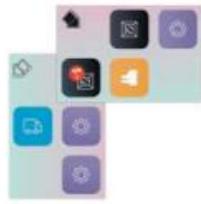
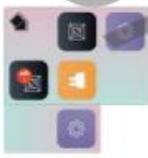
- 上面的平板必须遮住下面的 1–4 格(不可完全覆盖,也不可并排)
- 改良板块也可在规划阶段放到平板上(见下方"改良生产"一节)
解读结果:
- 所有可见的图标格子 → 可用行动
- 被遮住的格子 → 不可用行动
- 没有图标的空格 → 空置格子
示例中有 5 个可用行动和 4 格被遮住。
4.2 阶段二:调整定价
本阶段决定本轮卖出货物的定价。在定价表上调整自己的棋子。
- 每轮开始时,所有玩家的定价都是 5。
-¥图标 → 定价下降 1 格+¥图标 → 定价上升 1 格- 每个图标只生效一次(即使有多个相同的图标出现,也只取其中一个效果)
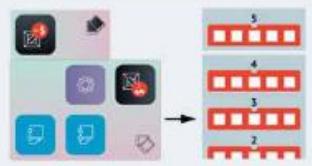
示例: 若规划结果显示有两个可用的降价图标,定价变为 3。
> 提示: 定价在本轮后续阶段中决定了行动顺序(详见"先后规则")。
4.3 阶段三:生产
玩家根据以下两种方式生产货物:
| 来源 | 产量 |
|---|---|
| 可用的生产图标(■) | 每个图标 = 1 颗 |
| 被上面平板遮住的格子 | 每格 = 1 颗 |
把生产出的货物放到自己整理盒的 已生产货物区。
特定科技(如全球定位系统、锂离子电池)、零售商、改良板块(面朝下使用)和货物板块也会额外生产。
4.4 阶段四:改良生产
根据先后规则轮流执行。先从定价最低的玩家开始,依次进行;若定价相同,则由较低分的玩家先行动。 这就是"先后规则"。阶段四、五、六、七开始时均应检查所有玩家的定价。
改良板块的使用方法
当平板上有可用的改良图标(📄)时,玩家可轮流执行以下两种操作之一:
方法一:升级平板
遵守以下规则将改良板块放到平板上:
- 改良板块必须面朝上放置
- 必须恰好遮住平板 2 格,不得超出平板边界
- 被改良板块遮住的图标视为不可用(不会因此在阶段三额外生产)
- 改良板块可以遮住另一块改良板块的 1 格,但不能完全遮住它
- 也可以用平板反过来遮住改良板块的若干格甚至整块
方法二:面朝下使用
不将改良板块放到平板上,改为面朝下放在自己前面。每块面朝下的改良板块会在阶段三生产 1 颗货物。
注意: 货物板块两面都有图标,因此不能放到平板上。
4.5 阶段五:研发科技
本阶段按先后规则轮流行动。
获取进度棋子: 阶段开始时,你每拥有 1 个可用的图标(📄),就获得 1 颗进度棋子。
研发步骤(按先后顺序依次进行):
- 将手中持有的进度棋子放置到自己想要研发的科技旁的格子中
- 可以多颗分配到同一科技或多项科技
- 未使用的进度棋子必须在自己回合结束后放弃,放回整理盒
完成科技的条件:
- 当某项科技旁累积了规定数量的进度棋子时,该玩家立即研发成功
- 取回该科技旁 全部 自己的进度棋子,放回整理盒
- 在该科技板块旁放置自己 1 颗办公室棋子(竖起拇指标记)
- 立即获得该科技的奖励(永久性和一次性效果均有)
专利争夺机制:
- 第一位研发成功的玩家获得该科技的 专利板块 及其分數
- 一旦有人取得专利,其他玩家研发同一科技所需的进度棋子数 减少 1
- 代价:无法获得该专利的分數
- 若有多个玩家同时达到了完成条件,则按当前先后顺序依次完成。先完成的先结算奖励;其后的人因成本减 1 而可能刚好满足条件,也要在自己的回合才即时完成。
示例: 假设有红色玩家和绿色玩家都在研发游戏机科技。绿色玩家首先达到所需数量并完成研发,获得专利。轮到红色玩家回合时,因成本减 1,他立刻也完成该科技(但不获得专利)。
4.6 阶段六:物流(扩展市场)
本阶段按先后规则轮流行动,目的是将办公室棋子(📄)扩展到新的市场地点。
获取物流点数: 阶段开始时,每拥有 1 个可用的 📄 图标,就获得 1 颗物流点数。
拓展步骤:
- 将手中的物流点数放置到自己想开拓的地点旁的格子中
- 只可在 已有自己办公室棋子 的相邻地点放置(版图上有连线连接的地点即为相邻)
- 未使用的物流点数必须在自己回合结束后放弃,放回整理盒
完成拓展的条件:
当某地点旁累积了规定数量的物流点数时:
- 取回该地点旁全部自己的物流点数,放回整理盒
- 拿取 1 颗办公室棋子,放到该地点最左侧的空格
拓展限制:
- 总是将新棋子放到最左侧的空格
- 若该地点已满(无空格),任何人都不能再在那里放置
- 一个地点只能容纳每位玩家 1 颗办公室棋子(除非科技或零售商另有说明)
- 地点越大,放置的成本越贵,但也越开放给更多玩家进入
4.7 阶段七:卖出货物
本阶段按先后规则轮流卖出已生产的货物。
卖出条件(须全部满足):
- 该地点有你的办公室棋子
- 该地点没有零售商板块阻挡
- 有符合购买条件的买家
买家规则:
- 红色方块:标有数字的买家,不会支付高于此数字的定价购买。你的定价 ≤ 这个数字才可卖出
- 紫色方块:不标数字的特殊买家,愿意支付任何价格,但只向 已研发指定科技 的玩家购买。方格内的图标显示所需科技
- 每个买家具格子只会购买 1 颗货物
重要——从左到右填满:
必须从左边开始依次卖给买家,不可以跳过左边的空格去卖右边的买家(哪怕是更高价或更容易触发的买家)。
卖不掉的货物:本阶段结束后,所有卖不掉的货物全部放弃,放回整理盒的未生产货物区。
> 提示: 若你错过了原本可以卖出的机会(其他玩家也没有提醒你),则视为你失去了在那裡卖出的机会。设计师强烈建议其他玩家不要帮忙提醒。
4.8 阶段八:得分
所有玩家在此阶段同时得分,不按顺序。
得分项目一:卖出货物的分数
计算自己在游戏版图上拥有的办公室棋子数量(即在该地点卖出的货物总数),乘以当前定价。
示例:在一个地点有 3 颗货物且定价为 5 → 得 15 分
使用屏风后的乘数表可以快速得知结果。
得分项目二:雄霸地点的分数
在某地点卖出最多货物(即办公室棋子最多)的玩家雄霸了该市场:
- 查看该地点最右侧格子右上角的数字 → 获得相应分数
- 若最右侧格子写着"第二名"分数,则在卖出第二多的玩家间比较(同样按最左侧原则)
- 若销量打平,则看谁的最左侧办公室棋子排在更靠左的位置
- 即使有办公室棋子但没卖出任何货物,也不会获得雄霸得分
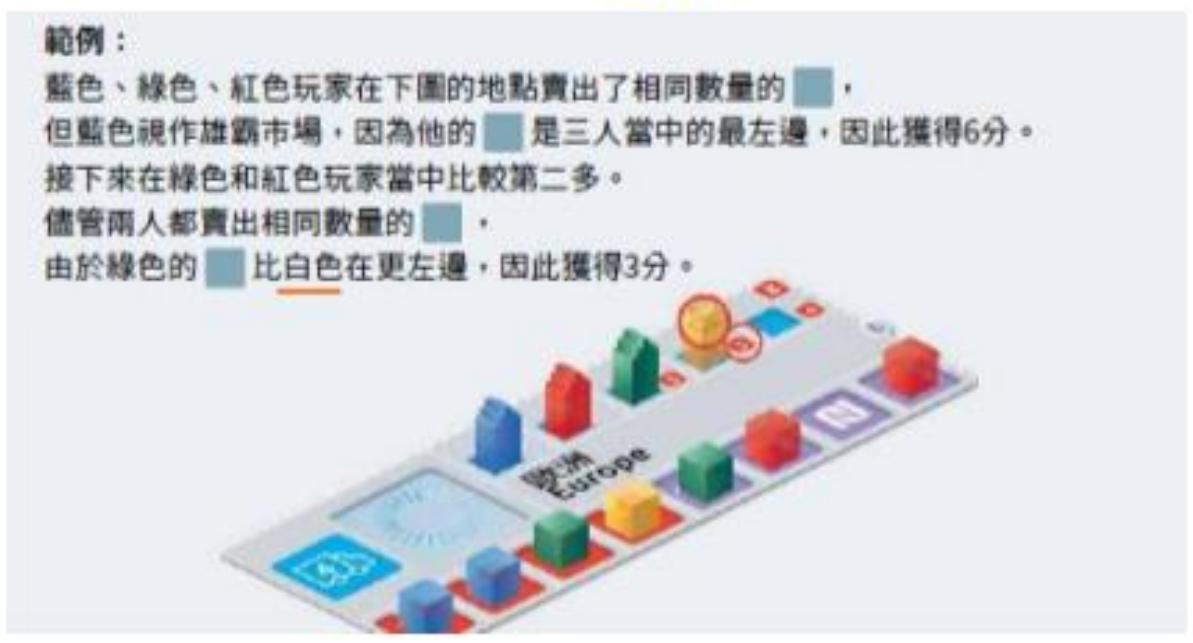
示例: 蓝色玩家在该地点卖出最多,雄霸市场 → 获得 4 分。蓝色、绿色、红色三人同量 → 蓝色因最左获得 6 分,其后再比绿色和红色的左右位置定第二名。
在计分版上记录所有玩家的得分。
5. 回合结束与下轮准备
阶段八完成后,按以下步骤准备下一轮:
- 所有玩家收走游戏版图上自己的办公室棋子,放回整理盒的 未生产货物区(不是已生产货物区)
- 改良区里剩下的改良板块全部收回游戏盒,从板块库抽取 5 块新的面朝上放入改良区
- 把所有玩家的定价返回 5
- 把游戏轮指示物前进一格
- 开始下一轮的阶段一
6. 游戏结束与胜负判定
五轮全部结束后(第五轮阶段八之后),游戏结束。计算总分:
总分 = 游戏期间得分 + 专利得分 + 零售商得分
总分最高者获胜。
平手处理:
- 首先比较研发科技的数量(多的获胜)
- 若再平手,比较拥有专利的数量(多的获胜)
- 若仍平手,共享胜利
7. 科技详解
六项科技各有独特的双面奖励。以下是各项科技的标准(正面)奖励描述:
7.1 全球定位系统(GPS)
- 永久效果: 从此以后,每轮阶段三中,你每个可用的生产图标(■)产出 2 颗而非 1 颗
- 一次性效果: 研发成功后立即生产 5 颗货物,放到已生产货物区
7.2 无线区域网络(WiFi)
- 永久效果: 每轮阶段六物流阶段,你可以将一个额外的办公室棋子放在任何一个已有 1 颗你棋子的地点(放置第二颗)
- 此效果不允许任何玩家在某个地点放置第三颗
- 也不允许在零售商放置第二颗
- 永久效果: 可以储存阶段七卖不掉的所有货物
7.3 游戏机(Gaming Console)
- 永久效果: 研发任何科技所需的进度棋子减少 1
- 一次性效果: 在任一你没有的小型企业地点放置 1 颗办公室棋子。若该地是零售商,照常获得其奖励
7.4 锂离子电池(Li-ion Battery)
- 永久效果: 从此以后,每轮阶段六物流阶段,每个可用的图标(⚡)同时也视作 📄 图标
- 换言之,阶段六计算物流点数时,把 ⚡ 和 📄 图标总数一起计入
- 永久效果: 每研发了 2 个科技便生产 1 颗货物(研发后立即生效,之后每轮阶段三也获得)
7.5 近距离通讯(NFC)
- 永久效果: 阶段七卖出货物时,你可以在每个 没有 你办公室棋子的地点卖出 1 颗货物
- 但仍须遵守卖出的所有其他规则(买家价格上限、科技要求等)
7.6 第四代移动通信(4G)
- 一次性效果: 研发成功后立即把你的定价上升 1 格
- 永久效果: 从此以后,每轮阶段二都会获得此奖励(持续上涨)
- 永久效果: 阶段一放置改良板块时,每块可以伸出平板 1 格(不必严格贴合边界)
> 科技奖励规则: 玩家研发出任何科技都必须尽可能使用其奖励。有些奖励只生效一次(一次性),有些则永久生效。每个奖励均在特定阶段生效——如有红色圆点,表示研发后立即获得,之后每轮在指定阶段重复触发。若方格内没有数字,代表该奖励仅限获得一次。
8. 零售商详解
8.1 基本规则
零售商板块出现在 少于 5 人游戏 的设置中。它们不允许玩家在所在地点正常卖出货物,但仍然可以执行物流在该地点放置办公室棋子。
- 办公室棋子不是放在版图的空格里,而是放在零售商板块上的蓝色方格内
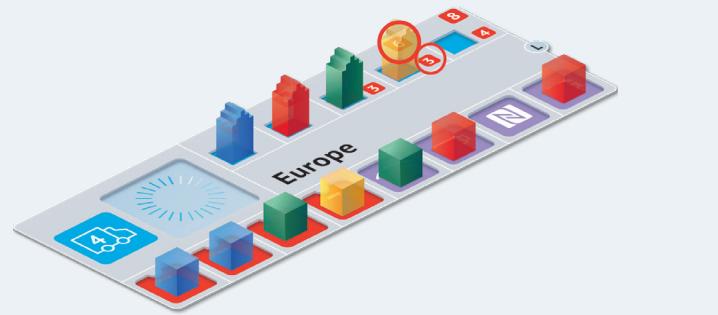
- 蓝色方格旁红色方格的数字即为该棋子在游戏结束时获得的分数
- 总是从左到右放置,越早放置得分越高
- 在同一零售商,同一玩家不可放置超过 1 颗棋子
8.2 零售商奖励
玩家在零售商放置棋子后,会立即获得其附带的一次性奖励。可以选择是否使用。
常见奖励类型:
| 奖励内容 | 说明 |
|---|---|
| 立即生产货物 | 拿取指定数量的货物,放到已生产货物区 |
| 加速科技研发 | 拿取指定数量的进度棋子,放到自选科技上加速研发 |
| 调整定价 | 立即将定价上升或下降 1 格 |
| 额外放置棋子 | 在已有棋子的地点放置第二颗 |
| 移动棋子 | 将 1 颗棋子从一个地点移到另一个地点 |
| 无奖励 | 部分零售商没有附带奖励 |
9. 先后规则(Priority Rule)
从阶段四开始生效。决定各阶段的行动顺序:
- 定价低者优先(定价越低越早行动)
- 若定价相同,则由较低总分的玩家先行动
- 若总分也相同,则由起始分数(计分版最高行的有色格子)较低的先行动
> 提示: 有时候玩家在阶段二之后改变了定价,因此每一阶段开始时都应该先检查所有玩家的定价再确定顺序。
10. 关键规则与常见问题
易错规则
- 平板必须重叠: 两块平板必须一部分叠在另一块上,遮住 1–4 格。不可完全覆盖或并排
- 规划不可更改: 阶段一结束后,任何人不得更改平板布局,即使发现重大错误也不行
- 被遮住的格子照样计产: 阶段三里,被遮住的格子算入产量,但其上的图标视为不可用
- 利润最大化卖出: 阶段七必须从左到右填满买家,不可跳过左边去买右边
- 专利后别人成本减 1: 第一个研发出某科技的玩家拿专利,其他人研发同一科技少花 1 颗
- 科技奖励须尽量使用: 研发的科技奖励必须尽可能使用
- 改良板块面朝下 = 生产货物: 不放到平板上的改良板块面朝下放,阶段三生产 1 颗
- 货物板块不能放平板上: 因为它两面都有图标,所以不能作为改良板块使用
- 零售商不让卖货但能拓市场: 有零售商的地点不能卖出货物,但仍可派办公室过去
- 阶段五同时完成→按先后顺序结算: 多个玩家同时达到科技完成条件时,按当前先后顺序依次完成
常见问题
- Q:我可以把改良板块完全被平板遮住吗?
A:可以。规则只要求放置改良板块后两格都在平板范围内,没有禁止在上面再放一块平板。虽然这没有任何实际用处,但规则不禁止。
- Q:阶段三生产的货物多于需要,我可以自愿放弃吗?
A:不可以。你必须按规则生产全部你能生产的货物。
- Q:我的进度棋子不够用完怎么办?
A:未使用的进度棋子必须在自己回合结束后放弃,放回整理盒。
- Q:两个玩家的价格和分数都一样,怎么排序?
A:先看他们之中起始分数(计分版上最高那行的有色格子)较低的先行动。
- Q:可以在阶段四使用多个改良板块吗?
A:每个回合只能使用一次改良行动(根据你有几个可用的 📄 图标)。若有多个图标,可以轮流行多次。
- Q:平板电脑上的 ◆ / ◇ 标志有什么用?
A:仅在设置时区分两种平板(上下叠放时用),游戏期间不需要理会。
- Q:如果因为科技效果导致某个地方变得可以放第三颗棋子,会影响现有规则吗?
A:科技允许的情况下可以放置第二颗,但绝不允许任何人在同一地点放置第三颗(除非有特殊例外说明)。
附录:勘误修正
根据作者 Ivan Lashin 在 BGG 发布的修正规则:
-
中文说明书第 14 页关于研发科技的段落应修正为:"其他因成本减少而有足够进度棋子的玩家们,依照当前的回合顺序,研发出该科技。"
-
中文说明书第 20 页关于零售商加速研发的段落应修正为:"若你因此奖励累积到足以研发科技的数量,则立即研发出该科技。接着其他因成本减少而有足够的玩家们,依照当前的回合顺序,研发出该科技。"
-
地点顺序补充遗漏:联合酋长国(Emirates)应在独立国家联合体(CIS)之后列出。正确顺序为:澳洲、加拿大、加勒比海、中国、独立国家联合体、联合酋长国、欧洲、印度、北非、南非、南美、美国。
常见问题(FAQ)
以下 1 条问答中 0 条来自站内玩家的真实提问,其余 1 条为本站整理的常见疑问;答复内容保持原样。
手机帝国支持几个人玩?
1–5 人。
去哪查完整规则
想核对具体规则细节、卡牌效果或某个回合的结算方式,可以在村了吗里选中这款游戏后直接提问。
同类桌游
- 卡坦岛德式
- 工业革命:伯明翰德式
- 勃艮第城堡:特别典藏版德式
- 方舟动物园德式
- 卡卡颂抽象
- 瘟疫危机传承:第一季美式
- 阿瑞迪亚:勇踏征途美式
- 重塑宇宙德式
- 幽港迷城美式
- 埃多拉的德鲁伊德式
规则原文(Markdown)
本站收录这款游戏的规则原文 3 个文件,此处内联渲染 3 个,可直接展开阅读或下载。
rules_zh_手机帝国_9228.md38.3 KB
智能電話革命
恭喜!你是一家新興公司的新任執行董事,已經準備好大展拳腳,著眼點就是引領著世界潮流的「智能電話」!現在你們要嘗試在數碼經濟裏面分一杯羹。為了把自己的公司擴展成全球最顯赫的企業,無論是為商品定價、加強生產效率、研發新科技、生產貨物、以至處理物流和銷售,都需要你運用一切從商的智慧。對了,別忘了留意競爭者的動向:他們跟你一樣也想擴充生意,而且你們是此消彼長的競爭對手!
在手機帝國,你的目標是創立最大最富有的智能電話公司。一局遊戲會游玩五輪,每輪分為八個階段,在遊戲版圖的階段表有所紀錄,指引你們一步步營運自己的企業。

本遊戲的關鍵所在是規劃平板,用來訂立每輪的業務要怎樣運作。玩家可以把平板疊在別的平板上,下達不同的商業決定。明智規劃是業務蒸蒸日上的不二法門!
遊戲目標
你們的宗旨是賺最多錢,而這遊戲中金錢便是勝利分。
有三種得分方法:
賣出貨物
雄霸世界上不同地點的市場——方法是在某地點比對手賣出更多貨物註冊專利——方法是最快研發出科技
若少於5位玩家,在零售商所在地點設立辦公室也可得分(詳見第20頁)。
遊戲配件:玩家配件
遊戲配件: 共用配件

10塊 平板 ——每位玩家2塊每位玩家拿取一套2塊規劃平板。
這些平板代表每家公司的可用的行動,包括研究和開發部門、生產部門等。
玩家使用平板以取捨每輪要執行什麼行動,這個步驟稱為「規劃」。
5張 玩家屏風 ——每位玩家1張
用來防止對手的「商業間諜」竄探你的內部情報。
每塊屏風寫上了該玩家的起始位置,還有乘數表幫助玩家計算得分。
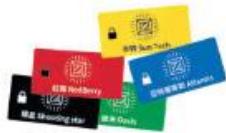
5塊 起始改良板塊 —— 每位玩家1塊
改良板塊賦予玩家更多規劃的選擇,
每塊的背面都印有顏色和公司名稱。
遊戲開始時,
每位玩家根據自己的公司拿取相應的起始改良板塊。

5盒 整理盒 ——每位玩家1盒
整理盒方便玩家儲存自己的遊戲配件。
裏面分隔開未生產的貨物、進度棋子、和辦公室棋子。
還有一格稱為可用貨物區,
存放所有已經生產但未賣出的貨物。
60顆 進度棋子 ——每位玩家12顆
進度棋子用來標示玩家達成某些目標的進度。
玩家在特定位置放置進度棋子,直到累積了指定數量。
注意:進度棋子的供應並無限制。若你用光了,請自行找物件替代。

90顆 辦公室棋子——每位玩家18顆
辦公室棋子標示玩家已經達成的目標,取代遊戲版圖上玩家的進度棋子。

100顆 貨物棋子——每位玩家20顆
貨物棋子象徵裝滿貨櫃待售的智能電話。
1塊遊戲版圖

遊戲版圖顯示數碼行業的全球形勢分佈,玩家的行動會改變它,並即時在地圖反映。
2枚 遊戲輪及階段指示物

遊戲輪指示物和階段指示物表示當前在第幾輪和什麼階段。
1塊 計分版

用來記錄每家公司的業績。
6塊 專利板塊
整局遊戲中首先研發某個科技的玩家取得該科技的專利,在遊戲結束時得分。
6塊 科技板塊
研發到某科技的玩家會獲得它的獎勵。每塊科技有兩面,為遊戲帶來更多變化。遊戲開始前,玩家們決定(或隨機決定)每個科技要用哪一面。


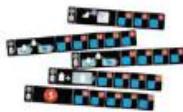
27塊 改良板塊
改良板塊用來升級玩家平板,或生產更多貨物。
20塊 貨物板塊
每塊貨物板塊每輪會生產1顆貨物。每輪若玩家沒有可用的的改良行動,便會自動獲得1塊貨物板塊。
7塊 零售商板塊
少於5人遊戲才會使用零售商板塊,
用來遮住遊戲版圖上某些地點,
使得玩家之間更多競爭。
根據地點有三種大小,零售商板塊也有三種。
遊戲說明書
你正在閱讀的。
史蒂夫的配件
史蒂夫是虛擬人工智能,可以在1-4人遊戲加入史蒂夫,作為你們的競爭者。
1顆 史蒂夫棋子
史蒂夫使用這棋子籌謀下一步。
1本 史蒂夫說明書
闡述史蒂夫怎樣行動。
1塊 史蒂夫平板
史蒂夫每輪用這平板計劃行動。
順帶一提,它的平板比你們的好。
把遊戲版圖放到桌子中央。
把階段指示物放到階段表第一格。
把遊戲輪指示物放到1號位置。
把計分版放到遊戲版圖旁。
遊戲設置
把全部貨物板塊面朝下放到遊戲版圖旁。
把專利板塊放到遊戲版圖上相應位置。
洗勻全部改良板塊,隨機翻開5塊,放到遊戲版圖上改良區。
若少於5位玩家,便需要把一些零售商板塊遮住指定地點(詳見第9頁)。
餘下的疊好組成板塊庫,放到遊戲版圖旁。
把科技板塊放到對應的專利旁。
若你們是首次遊玩,
我們建議全部科技都使用正面。
之後的遊戲便可隨機或自由選擇。

玩家設置
每位玩家選擇1種玩家顏色,拿取該顏色全部相應的配件:
12顆 進度棋子
18顆 辦公室棋子
20顆 貨物棋子
每位玩家拿取1盒整理盒,把棋子分别放進正確位置。
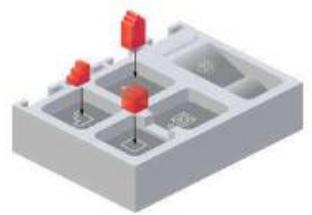
每位玩家拿取2塊平板,確保其中1塊以朝上,另一塊則以朝上。

每位玩家拿取自己顏色的屏風。
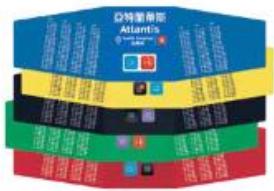
按照屏風上的指示,玩家必須:

把自己1顆辦公室棋子放到自己起始地點辦公室位置最左那一格。
把自己1顆貨物棋子,按屏風背面的顏色放到計分版相應的分數格子上。
拿取自己顏色的起始改良板塊。
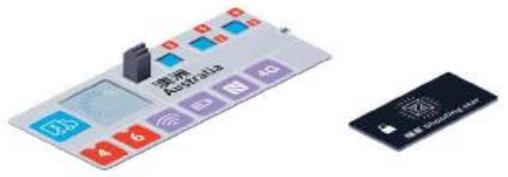
每位玩家依照計分版上的順序(左至右分別是綠、藍、黑、黃、紅),把自己1顆貨物棋子放到定價區上5的位置。

2-4人遊戲的零售商設置
為了維持玩家之間需要競爭市場,會在某些地點放置零售商板塊,例如 4 8 10 40
每塊零售商板塊可以放置的地點都不同,
這視乎各地點的大小(分為 S 小、 M 中、 L ]大三種),地點上與零售商板塊上各有標示。
範例:北非是中型地點(右方有個「M」字),因此你們可以在那裏放置1塊「M」的零售商板塊。

按號碼分開3種零售商板塊,分別洗勻並按以下指示在指定地點放置1塊:
2人遊戲請在中國、加拿大、加勒比海、及任何沒有玩家辦公室棋子的中型地點各放置1塊。

3人遊戲請在歐洲、南非、及任何沒有玩家的中型地點各放置1塊。

4人遊戲請在加拿大及其中一個沒有玩家的中型地點各放置1塊。

5人遊戲不會使用任何零售商板塊;把全部沒有用到零售商板塊的放回遊戲盒。
零售商詳解請見第20頁。
進行遊戲
一局遊戲會遊玩五輪,
在遊戲版圖最上面的遊戲輪紀錄表紀錄:
每輪有八個階段,在遊戲版圖上的階段表各有一個圖示:

每輪會由左至右逐個階段執行。
完成最後一個階段之後,該輪完結,然後進行下一輪的階段一。

階段一:規劃
所有玩家同時使用自己的平板,在屏風後秘密決定本輪要執行什麼行動。必須把其中一塊的一部分疊在另一塊上面,可以自由選擇要以哪一面朝上,但必須遵守以下規則:
1.兩塊平板必須平行或成直角:

有圖示格子 →
2.上面的平板必须遮住下面的1-4格:
每塊平板在每面各有6格,有些有圖示,有些則是空格。

以下是一些符合規則的平板放置方法,各遮住不同數量的格子。無論是空格還是有圖示的都可以遮住:


遮住1格
遮住2格
遮住3格
遮住4格
遊玩提示:規劃時要考慮什麼呢?我們會在闡述規則時講到。現在你們只需要知道這個決定對之後的行動非常重要,會影響本輪接下來的全部階段!
玩家還可使用改良板塊以升級自己的平板(詳見第12頁)。
玩家要以屏風遮住自己的規劃,不讓其他玩家看見,直到全部玩家都完成規劃。然後所有人一起拿起自己的屏風,公開自己的規劃。
記得: 所有可見的圖示都是可用行動,而被遮住的圖示則是不可用行動。沒有圖示的格子稱為空置格子。
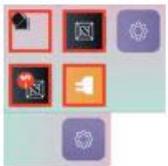
本例有5個可用行動和4格被遮住的格子。

階段二:調整定價
玩家會在本階段決定自己本輪賣出貨物的定價(■)。在定價表調整自己的棋子以作紀錄。


每輪開始時,所有玩家的定價都是5。
以下行動會升降定價:
每個 -\$ 圖示會把自己的定價下降1格。
每個 +\$ 圖示會把自己的定價上升1格。
範例:
右圖規劃的定價是3,
因為有兩個可用的 -\$ 圖示,
各把定價下降1格。
提示:本遊戲的定價至關重要!從階段四起(改良生產,詳見第12頁),定價便是本輪中玩家的行動順序,定價越低越早行動,足以影響勝負!

階段三:生產
玩家會在本階段生產貨物(□),在之後的階段賣出。
玩家有若干方法生產 □:
每個可用的圖示會生產1顆。
每格被平板遮住的格子會生產1顆。
範例:
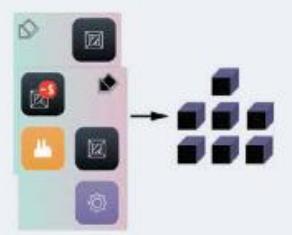
右圖規劃會生產7顆 ■,因為上面的平板遮住4格,
而且有3個可用的 ■ 圖示。
把生產了的 ■ 放到自己整理盒的已生產貨物區。

除了上述方法,特定科技(詳見第18頁)、零售商(詳見第20頁)、改良板塊和貨物板塊(詳見第12頁)都會生產。

階段四:改良生產
經階段二調整後的定價,從階段四開始顯出功用:定價最低的玩家先行動,然後按低至高的順序;若定價遇平手,則他們當中最低分的玩家先行動。這稱為「先後規則」。有時候玩家會在階段二之後改變定價,因此在每階段開始時,都應該檢查所有玩家的定價。
從第一位玩家開始,根據自己的平板裏有無可用的 📄 圖示,每位玩家輪流執行以下相應的行動:

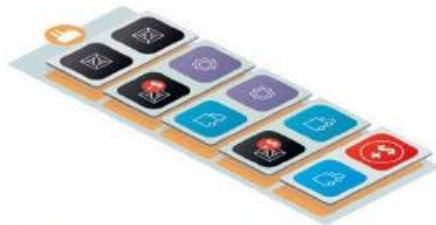
使用改良板塊
遊戲開始時每位玩家都會拿到1塊改良板塊,從第一輪的階段一便可以使用。
有以下兩個使用方法:

把改良板塊升級平板。
遵守以下規則,可把改良板塊放到平板上:
i. 改良板塊必須面朝上放到平板上。

ii. 改良板塊必須遮住平板的2格,不可伸出平板的邊界外(例外:研發了4G科技的玩家可以忽略本規則的一部分)。
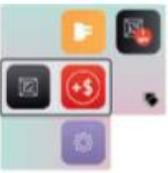

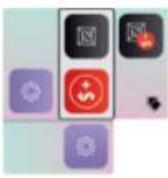
放置改良板塊範例

被改良板塊遮住的圖示視作不可用,但不會因此在階段三生產額外的
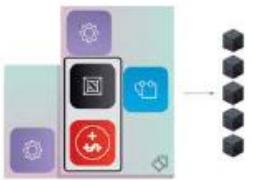
改良板塊可以遮住另一塊改良板塊的1格,但不得完全遮住另一塊。
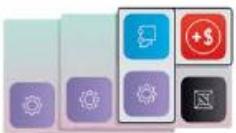
可以用平板遮住改良板塊的若干格甚至整塊。

玩家也可不把改良版塊放到平板上,改為面朝下使用它,放在自己前面。每塊面朝下的改良板塊會在階段三生產1顆。
改良板塊背面的提示這面不可放到平板上。
貨物板塊()亦不可放到平板上,所以它們兩面都有圖示。
每塊會在階段三生產1顆。

階段五:研發科技
玩家在本階段會按照先後規則輪流行動(詳見第12頁)。
科技可以用來促進銷售並給予獎勵。遊戲版圖下方會記錄所有科技的研發進度。


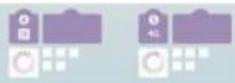
使用進度棋子()記錄研發進度。
本階段開始時,你每擁有1個可用的圖示,便會獲得1顆。
根據先後規則,玩家會輪流花費自己擁有的,
用來研發新科技。玩家沒必要全數花費獲得的,
但注意沒花費的必須在自己回合結束後放棄掉,放回整理盒。
科技板塊列明研發該科技所需的數量。

玩家把自己的放到想要研發的科技旁的格子。如有多顆,可把它們自由分配到不同的科技。
當任何玩家累積到研發某科技所需數量的,便研發出該科技。
他取回該科技旁全部自己的,放回整理盒,然後在該科技板塊旁放置自己1顆(👍)
從此他便會獲得該科技的獎勵(詳見第18頁)。
每個方格都是一位買家
範例:假設下面是你的規劃:
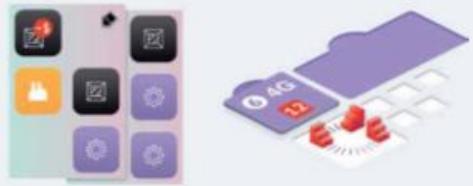
由於共有3個可用的 📄 圖示,因此你獲得3顆 📄。
你想研發4G科技,成本是 📄。
你開始研發它,在那裏放置3顆。
如要完成科技,你還需要在以後的遊戲輪在那裏多放置3顆。
遊戲結束時,玩家會因自己的專利得分(板塊上寫有分數,例如6分)。
研發此科技並取得專利的成本此符號表示設置遊戲時,應該把這專利板塊放到哪裏遊戲結束時得分

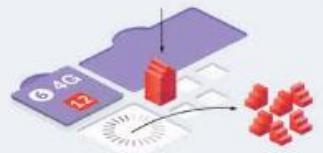
若下一輪你仍然有研發行動,可以在那裏增加,或改變方針,著手研發別的科技。
但注意,想取得專利的話,
你的研發成本會比其他玩家貴1顆。
一旦有玩家取得專利,所有其它玩家研發該科技所需,便會減1。當然,代價是不能獲得專利!
由於多位玩家可同時研發相同科技,
當任何玩家取得專利後,
即使其它玩家因為成本減少而有足夠的,
也要待自己的回合才可研發出該科技。

紅色玩家和綠色玩家都在研發遊戲機科技。

綠色玩家放置最後1顆所需的。
科技獎勵
玩家研發出任何科技都會獲得其獎勵,在科技板塊有描述,
通常都是在特定階段生效的額外效果,或者加強你的可用行動(科技詳解請見第18頁)。
專利
第一位研發某科技的玩家會獲得其專利。把自己的放置在該科技後,便會獲得其專利板塊,放到自己前面。

綠色玩家首先研發出該科技,獲得其專利板塊,並取回該地點全部自己的,並放置1顆自己的。

輪到紅色玩家的回合時,她也立即研發出該科技(由於成本減1),但不會獲得專利!

階段六:物流
玩家在本階段會按照先後規則輪流行動(詳見第12頁)。
遊戲開始時,每位玩家都只會在1個地點有1顆。為了開拓市場,你們必須擴展到別的地點。這時候便需要物流幫忙。
擴展到別的地點需要
你每擁有1個可用的 📄 圖示,便會獲得1顆 📄。
根據先後規則,玩家會輪流花費自己擁有的,用來擴展市場。玩家把自己的放到想要開拓的地點旁的格子。只可在自己有的相鄰地點放置(遊戲版圖上有線連接的地點視作相鄰)。
範例:
域多只在北非有,因此他只可在歐洲、中國、聯合酋長國、和南美洲放置
沒有花費的,必須在自己的回合結束後放棄掉,放回整理盒。
當任何玩家累積到開拓市場所需數量的,便取回該地點旁自己的全部,放回整理盒,然後拿取整理盒裏1顆,放到該地點最左邊的格子。
聯合酋長國
Emirates
總是把新的放到最左邊的空格。
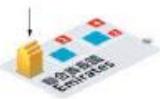
若沒有空格,任何玩家都不能再在那裏放置。
一個地點只能容納每位玩家1顆(除非因科技或零售商有別的規則)。
地點越大,放置 ⚠ 的成本越貴,但也會開放給更多玩家進入。

階段七:賣出貨物
玩家在本階段會按照先後規則(詳見第12頁)輪流賣出自己生產了的整理盒已生產貨物區內)。
該地點符合以下全部三個規矩才可賣出。
有你的。
沒有零售商。
有符合條件的買家可以購買。

玩家把自己的貨物放到買家格子,即是賣出。不過買家購買亦是有限制的,詳細規則如下述:

紅色方格裏有數字,表示此買家買貨的最高定價。他不會支付高於此數字的定價購買。不過,要是玩家定價低於此數字,此買家非常樂意購買。簡言之,玩家的定價大於此數字便不能賣出,等於或小於才可以。
紫色方格沒有數字,表示此買家願意支付任何價錢購買(不會高於玩家的定價),但只會向已經研發指定科技的玩家購買。方格裏的圖示顯示了所需科技。每個買家格子只會購買1顆。
所有賣不掉的全部都會放棄掉,放回整理盒裏未生產貨物區。
重要:
賣出貨物時,必須從左到右填滿買家方格,如果可以向左邊的買家賣出(例如紅色買家),不可跳過空格以賣給右邊的買家(例如紫色買家,或更高價的紅色買家)。
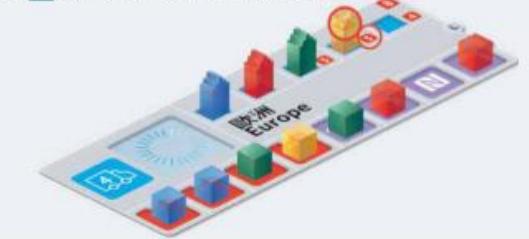
範例:假設你生產了4顆,只在下圖這個地點有市場;階段二你把的定價設定為3;你研發了遊戲機和4G科技。最終你在這地點只能賣出3顆,因為最後一位買家要求你研發了近距離通訊科技,而你沒有。你有1顆賣不掉,在本回合結束時放棄掉。

提示: 若你看漏了原本可以賣出的 ■(其他玩家也沒有幫助你發現),那麼視作你失去了在那裏賣出 ■的機會。
你可以嘗試跟其他玩家商量,看看是否允許你在回合外補賣。
不過遊戲設計師強烈建議其他玩家不要理會!

階段八:得分
玩家會在本階段根據賣出的 ■ 和雄霸的地點得分。玩家可以不按順序,同時得分。
賣出貨物
每位玩家查看自己在遊戲版圖上有多少顆,把數量乘以當前定價(查看定價表),便是你的得分。屏風後的乘數表可以幫助你們快速得知結果。

雄霸地點
玩家雄霸市場可以額外得分。在某地點賣出最多的玩家雄霸了該市場,獲得相應的分數——該地點最右邊放置了的方格所顯示的。
即使玩家在某地點有,若他沒有賣出,也不會獲得雄霸地點的額外得分。
範例:
藍色玩家在這地點賣出了最多,因此雄霸了此市場。最右邊有的格子右上角寫著4分,因此藍色玩家獲得4分。母須理會該辦公室的顏色。

若最右邊有 ⚠ 的格子寫著第二名的分數,
表示在該地點賣出第二多貨物的玩家便會獲得此分數。

一賣出第二多貨物的得分
若賣出最多/第二多 ■ 的數量遇平手,他們當中 ■ 在最左邊的玩家勝出。
範例:
藍色、綠色、紅色玩家在下圖的地點賣出了相同數量的,但藍色視作雄霸市場,因為他的是三人當中的最左邊,因此獲得6分。接下來在綠色和紅色玩家當中比較第二多。儘管兩人都賣出相同數量的,由於綠色的比白色在更左邊,因此獲得3分。
在計分版記錄所有玩家的得分。
設置下一輪
所有玩家拿走遊戲版圖上自己的全部,放回整理盒未生產貨物區(不是已生產貨物區)。
把改良區裏全部剩下的改良板塊放回遊戲盒。從板塊庫抽取5塊新的改良版塊,面朝上放到改良區。
把所有玩家的定價返回5。


把遊戲輪指示物前進一格。
然後開始下一輪的階段一。
遊戲結束和勝出遊戲
一局遊戲會進行五輪,第五輪階段八後,遊戲即告結束。所有玩家計算自己的總分:

遊戲期間得分

加上專利得分

加上零售商得分
最高分的玩家勝出!
若最高分遇平手,他們當中研發了最多科技的玩家勝出。若再遇平手,他們當中擁有最多專利的玩家勝出。若再遇平手,則他們共享勝利。
科技
玩家研發出科技之後會立即獲得獎勵。
玩家必須盡可能地使用科技獎勵。
有些獎勵只生效一次,有些則是永久生效。
每個獎勵都在特定階段生效,詳情請參照每個科技的規則。

科技圖示詳解

有色數字方格標示該獎勵在什麼階段生效。

若沒有數字,表示該獎勵不需在特定階段生效——詳見後述的科技詳解。

若有一個紅點,表示玩家會在研發完之後立即獲得該獎勵,
而且以後每輪都會在特定階段獲得獎勵。
但若方格裏沒有數字,代表玩家只會獲得該獎勵一次(研發完之後立即獲得)。
科技詳解
全球定位系統

從此你每個可用的會在階段三生產2顆而非1顆。
這是永久獎勵。

立即生產5顆。
把這些放到整理盒裏已生產貨物區。
這是一次獎勵。
無線區域網絡

每輪的階段六,你可在任何一個已經有1顆你的地點,放置第二顆。這方法不允許任何玩家在任何地點放置第三顆,也不可在零售商放置第二顆。這是永久獎勵。
你可儲存在階段七賣不掉的所有。
這是永久獎勵。
遊戲機
從此你研發科技所需減少1。
這是永久獎勵。
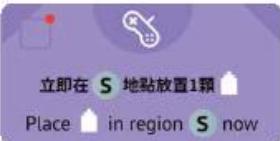
在任一你沒有的小型地點放置1顆你的。若那是零售商,如常獲得其獎勵。
這是一次獎勵。
鋰離子電池

從此你每個可用的 📁 同時也視作 📁 圖示。
換言之,在階段六,請點算你擁有的 📁 和 📁 總數。
這是永久獎勵。
你每研發了2個科技便會生產1顆。
立即獲得此獎勵,而且每輪的階段三也會獲得此獎勵。
這是永久獎勵。
近距離通訊

4G


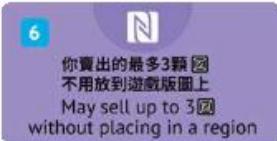
階段六輪到你時,可把0-3顆以你的定價賣出,但不要把它們放到遊戲版圈上任何地點。
立即按屏風後的乘數表得分,
然後把那些放回你整理盒的未生產貨物區。
這是永久獎勵。
立即把你的定價上升1格。
而且從此每輪的階段二也會獲得此獎勵。
這是永久獎勵。
你在階段一放置改良板塊時,每塊的其中一格都可以伸出平板。
這是永久獎勵。
階段七你賣出時,
可在每個你沒有的地點賣出1顆,
不過必須遵守賣出的所有其他規則(詳見第15頁)。
這是永久獎勵。

零售商
零售商不允許玩家在其所在地點賣出,不過玩家依然可執行物流來在那些地點放置(放置了足夠的便可)。
並非放在遊戲版圖的空格裏,而是零售商板塊的藍色方格。

藍色方格旁紅色方格的數字便是玩家在那裏放置 📄 後,在遊戲結束會獲得的分數。總是從左到右放置 📄,所以越早放置的玩家得分越高。
此外,玩家在零售商放置 🧠 後,會立即獲得該零售商的獎勵。
所有零售商獎勵都是一次的。玩家可選擇不使用此獎勵。有些零售商沒有獎勵。
記得:同一玩家不可在任何零售商放置多於1顆。
零售商獎勵

立即生產指定數量的,把它們放到你整理盒裏已生產貨物區。

拿取自己指定數量的,放到任何你選擇的科技上,加快你研發科技的進度。若你獲得2顆[,可選擇用來研發1-2個科技。即使你以此獎勵積累到足以研發科技的數量,也必須待階段五自己的回合時(遵守先後規則),才可研發科技,放置。

立即把你的定價上升或下降1格。

你可在任何一個已經有1顆的地點,放置第二顆。
這方法不允許任何玩家在一個地點放置第三顆、
不允許在沒有自己的位置放置、
不可在零售商放置第二顆。

把你的1顆從一個地點移動到另一個地點。你可以移動其他零售商板塊的。要是這個行動導致地點或零售商騰出空位,便把那裏剩下的全部左移來填補。你不會因這個移動獲得任何零售商獎勵。
設置遊戲時可否隨機放置零售商板塊?不可,否則會破壞遊戲平衡。
平板上的標誌(◆ / ◇)代表什麼?
他們只用於遊戲設置時分辨兩種平板,遊戲期間不用理會。
階段一之後,我能否改變板塊規劃?
不可。遊戲設計師不允許玩家更動你的板塊規劃,即使你聲稱自己犯了重大錯誤亦然。
若兩位玩家的價格和分數都一樣,怎樣分辨行動次序?
他們當中起始分數(計分版上最高那行的有色格子)較低的先行動。
常見問題
我可否使改良板塊被平板完全遮住?
可以。規則只要求你放置改良板塊後,兩格都在平板上,沒有不允許你在其上再放置另一塊平板遮住它。儘管這完全沒有用處,但規則不禁止這樣做。
我可否把1塊平板完全遮住另一塊,或把它們並排?
不可。
必須把1塊平板遮住另一塊的1-4格,
而上述兩種放置都不符合此規則!
我在階段三生產的 □ 多於我需要,我可否自願放棄生產某些 □ ?不可,你必須按規則生產全部你可以生產的 □。
工作人員
編輯:Max Vereschagin
美術:Aleksandr Kiselev
總監:Mikhail Pakhomov
美術監督:Viktor Zaburdaev
宣傳:Darina Orlova, Natal'ja Nabojshhikova, Ekaterina Shlekker
生產監督:Sergey Morozov
英文版翻譯:Runa LLC
英文版校對:William Niebling
中文版翻譯:陳浩仁
中文版校對:馬健鈞
中文版監修:何仲焜
中文版美術:周願峰
設計師鳴謝
感謝Herman Tikhomirov給出宣傳的高見;
感謝Andrei Stolyarov注入動力開始製作這遊戲;
感謝Yuri Zhuravlev和Nikolai Pegasov從"The Guilds of Laar"激發靈感。
我還想感謝整個Guild of Board Game Developers (GRaNl) 所有付出與宣傳。

特別鳴謝:
Andrei Kolupaev, Konstantin Domashev, Konstantin Malygin, Yuri Yamschikov, Valery Kruzhalov, Ilya Stepanov, Yulia Ilyinskaya, Natalia Telezhkina, Yan Yegorov, Nikolai Zolotarev, Valentina Aristarkhova, Aleksandr Eremin, Andrei Kalinin, Igor Ganzha, Vasily Redinsky, Nadezhda Penkrat, Victoria Drobotova, Andrei Aganov, Anastasia Yushina, Vitaly Terekhov, Dmitry Krylov, Vasily Vereschagin.
鳴謝"Astronauts with Hammers"
Aleksandr Tkachev, Bogdan Khokhlov, Pavel Eltsin, Oleg Meleshin, Aleksandr Chapurin, Artur Katarzhanov, Yulia Tkachenko, Anton Prinov, Anton Kravchenko, Anna Kravchenko, Roman Gaffarov, Aleksandr Aleksnanin, Loerglil Meflizh, Delli Arieri.


COSMO DRØME GAMES栢龍玩具有限公司
Broadway Toys Limited
http://www.broadwaygames.com.hk
domestic@longshore.com.hk
Tel: +852 23631998
© 2019 版權屬栢龍玩具有限公司,保留一切權利。

COSMO DRÔME GAMES
smartphone Inc.
Once the Patent has been taken, the cost of that Technology is 1 less, allowing other players to acquire that Technology more easily. But, only the first player to research it can get the Patent!
Since two or more players can research the same Technology at the same time, if one player takes the Patent—which makes the Technology cheaper—the other players can complete it at once (if they now have enough). They must still wait for their turn to complete the research, though!
一旦有玩家取得專利,所有其它玩家研發該科技所需便會減1。當然,代價是不能獲得專利!由於多位玩家可同時研發相同科技,當任何玩家取得專利後,即使其它玩家因為成本減少而有足夠的,也要待自己的回合才可研發出該科技。
《手機帝國》勘誤
1)
遊戲作者 Ivan Lashin 於 BGG 發佈關於「研發科技」的修正規則

Ivan Lashin Designer @myerto - Jun 28
Hi mathue
We have some problems with this in first print, as it turns out me and project manager of the game played a little bit differently, but at the end he agrees with me.
You get the benefit of technology as soon as you have enough progress markers on it - wich with scenarios can be in many phases. In case of multiple people getting benefit - do corresponding actions in turn order.
3 © Tip
Reply Quote
因此,中文說明書第14頁以下段落框內文字應修正為:
其他因成本減少而有足夠的[進度棋子]的玩家们,便依照當前的回合順序,研發出該科技。
及 第 20 頁以下段落框內文字應修正為:
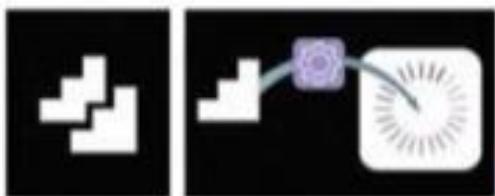
拿取自己指定數量的,放到任何你選擇的科技上,加快你研發科技的進度。若你獲得2顆[,可選擇用來研發1-2個科技。即使你以此獎勵積累到足以研發科技的數量,也必須待階段五自己的回合時(遵守先後規則),才可研發科技,放置。
若你因此獎勵累積到足以研發科技的數量,則立即研發出該科技。接著,其他因成本減少而有足夠的[進度棋子]的玩家們,依照當前的回合順序,研發出該科技。
&
英文說明書 Page 14 以下附底線的文字應修正為:
In case of multiple players getting benefit – complete the research in current turn order.
及英文說明書Page20以下附底線的文字應修正為:

Take the number of 📄 shown of your color and place them in the research space for any Technology of your choice. If you get 2 📄, they may be divided between two Technologies. If this gives you enough 📄 to complete your research in a Technology, you must still wait until your turn in Phase 5 (according to the Priority Rule) before you can place your 📄 there.
complete it at once. In case of multiple players getting benefit – complete the research in current turn order.
2)
中文說明書 第17頁
以下附底線的文字應修正為:黃色中文史蒂夫說明書 第三及第四頁
獨立國家聯合體(CIS)後,遺漏了 聯合酋長國(Emirates)
地點的英文字母順序:
澳洲(Australia)、加拿大(Canada)、加勒比海(Caribbean)、
中國(China)、獨立國家聯合體(CIS)、歐洲(Europe)、印度(India)、
北非(North Africa)、南非(RSA)、南美(South America)、美國(USA)
完整的正確順序應為:
澳洲(Australia)、加拿大(Canada)、加勒比海(Caribbean)、中國(China)、獨立國家聯合體(CIS)、聯合酋長國(Emirates)、歐洲(Europe)、印度(India)、北非(North Africa)、南非(RSA)、南美(South America)、美國(USA)
下载 Markdownsmartphone rules eng 2019 (4).md39.9 KB
smartphone'n.

smartphone'nc.
The Smartphone Revolution
Congratulations! You are the new CEO of an exciting new startup ready to pounce on the brand-new technology they are already calling “smartphones!” This is your chance to be a top disrupter in the digital economy. If you’re going to make your company the biggest in the world, you’re going to need all your business savvy as you set prices for your products, streamline your production, develop new technologies, manufacture goods, and handle logistics and sales. Oh, and keep an eye on your competitors: they’re trying to grow, too, and they’ll do it at your expense!
In smartphoneInc., your goal is to create the largest (and richest) smartphone company. The game is played over 5 rounds, and each round is split into 8 phases, indicated on the game board in the Phase Track, which will help guide you through the process of running your business.
The main feature of the game is the planning Pads, which you will use to direct your business operations each round. They are designed so you can overlap one over the other, closing off some possibilities while opening up others. Good planning is the key to good business!
Goal of the Game
Your goal is to earn as much money as possible. To make it simple, we will refer to money in the game as “Victory Points” (VP for short). There are three ways to earn VP:
• Sell Goods.
• Control market regions around the world—by selling more Goods in those regions than the other players.
• Register Patents—by being the first player to fully research new Technologies.
If there are less than 5 players, you can also obtain VP from Retailers occupying market regions on the game board (see page 20).
Game Components: Player Pieces
PADS 10 pcs — two per player
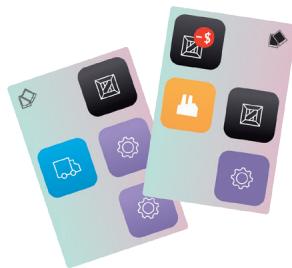
Each player has a set of two planning Pads. The Pads represent their company’s resources: research and development departments, production shops, etc. Using their Pads, the players determine what they are going to do in the current round—what they will focus on or sacrifice. The way the Pads are arranged is called a “decision.”
SCREENS 5 pcs — one per player
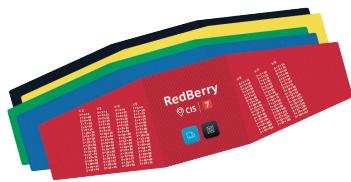
The screens protect against “industrial espionage” by hiding a player’s decisions from prying eyes.
Each screen shows the starting position for one player.
It also has a handy multiplication table to help add up VP.

STARTING IMPROVEMENTS 5 pcs — one per player
Improvements give players additional options when planning. Each player receives 1 Improvement at the beginning of the game. The Improvement received is displayed on the player’s screen and marked by the player’s color and company name.
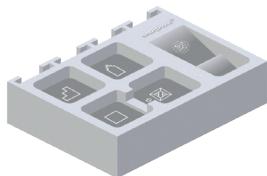
ORGANIZERS 5 pcs — one per player
The organizer is designed for the players’ convenience. It helps them keep their components safe and in one place, with sections for unbuilt goods, progress markers, and office markers. The fourth section is the “Available Goods” section, where all Goods produced are placed until they are sold.

PROGRESS MARKERS 60 pcs — twelve per player
Progress markers are used to indicate progress towards reaching some goal. Players accumulate these in specified places until they have collected the required quantity.
Note: Progress is unlimited! In the unlikely event that you run out of Progress markers and need more, use any suitable substitute.

OFFICE MARKERS 90 pcs — eighteen per player
Office markers indicate when goals have been reached.
They replace the Progress markers gathered at a location.

GOODS MARKERS 100 pcs — twenty per player
Goods markers symbolize cargo containers with smartphones for sale.
Game Components: Shared Pieces
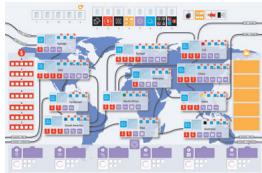
GAME BOARD 1 pc
The game board shows a digital world map where players can observe how their decisions turn into reality in real time.

ROUND AND PHASE MARKERS 2 pcs
Round and Phase markers indicate the current round and the active phase during the game.
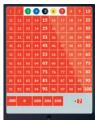
VP SCOREBOARD 1 pc
Used to mark the companies’ success.

PATENTS 6 pcs
Patents go to the first player to fully research a new Technology. They award extra VP at the end of the game.

TECHNOLOGIES 6 pcs
Technologies grant bonuses to players who have researched them. Technology cards have two sides, which adds diversity to the game. At the beginning of the game, the players choose which side of each card to use.

IMPROVEMENTS 27 pcs
Improvements can be used to upgrade Pads or produce additional goods.

GOODS TOKENS 20 pcs
Goods tokens produce 1 unit of Goods each round. Players get these automatically each time they do not use the Production Improvements on their pads.

RETAILERS 7 pcs
Retailers are used only if there are less than 5 players in the game. They block regions on the board, stimulating the players to be more competitive. There are three types of Retailers in various sizes.
RULEBOOK 1 pc
You are holding it now.
Steve’s Components
Steve is an “artificial intelligence” that you can choose to add to the game as an additional competitor. You can use Steve in games with 1 to 4 players.
1 STEVE’S MARKER 1 pc Steve uses this marker to plan his next move.
2 STEVE’S RULEBOOK 1 pc Instructions on how to execute Steve’s programming.
3 STEVE’S PAD 1 pc Using this Pad, Steve programs his decisions for each round. His Pad is better than yours, by the way.

Place the game board in the center of the table.
Place the Phase marker on the first square of the Phase Track.
Place the Round marker on the “I.”
Place the VP Scoreboard near the board.
Preparing for the Game
If there are less than 5 players, you’ll need to cover some regions with Retailers. See page 9 for details.
Place the Patents on the matching spaces. Use the Technology symbols on the board as a guide.
Place all goods tokens in a pile face down near the board.
Shuffle the Improvements and place 5 of them face-up on the Improvement Block.
Place the rest in a pile face down near the board.
Place the Technologies next to the matching Patents. If this is the first time you are playing the game, we recommend playing with the Technologies face up. Next time, you can place them randomly (face up or face down) or select the Technologies you want to use for the game together with the other players.
Back
Player Preparation
Each player chooses the color they want to play. Hand out all the markers and pieces of their selected color to each player. These include:

12 Progress markers
18 Office markers
20 Goods markers

Hand each player an organizer. Place the markers into the corresponding sections.
Give two Pads to each of the players: one Pad must have this symbol , and the other—this symbol .

Each player takes the screen of their color.
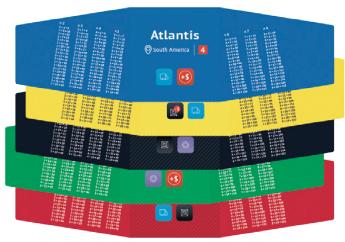
Following the symbols on their screens, the players must:

- Place an Office marker on the first Office space in their home regions.

Each player places a Goods marker on the board in the Price Block, on the “5” space. These Goods markers must be placed in the same order as on the VP Scoreboard (left to right: green, blue, black, yellow, red).

Placement of Retailers for 2– to 4-Player Games
To keep the game competitive, Retailers are placed on some of the market regions. For example: 4 4G
Each Retailer matches certain regions on the board. They come in three sizes, just like the regions: S small, M medium, and L large. The symbols on the regions and Retailers match the sizes.
For example, North Africa is a medium-size region. Have you noticed the letter “M?” It means you can place a Retailer with the same letter (“M”) on it.

Shuffle the Retailers and place them with a random side up on the regions shown below:
For 2 players: Use Retailers to cover China, Canada, and the Caribbean, as well as all medium-sized regions not occupied by the players’ Office markers — .

For 3 players: Use Retailers to cover Europe and the RSA, as well as all medium-sized regions not occupied by a player’s .

For 4 players: Use Retailers to cover Canada and the 1 medium-sized region not occupied by аn .
For 5 players: Do not use Retailers. Return all unused Retailers to the box.
For a detailed explanation of Retailers, see page 20.
Gameplay
The game consists of 5 rounds, which are shown on the Round Track at the top of the game board:
Each round has 8 phases. The phases are indicated by symbols in the Phase Track on the game board:

The phases are played in order, from left to right on the Phase Track. When the last phase is complete, the round ends and the next round can begin.

Phase 1. Planning
Using their two Pads, all players simultaneously make their decisions for the current round in secret, behind their screens. A decision is made by placing one Pad on top of the other. Each player may arrange their Pads however they like, with either side up, as long as they observe the following rules:
- The Pads must be parallel or perpendicular to each other:


2. One Pad must cover 1 to 4 cells on the other Pad:
Each Pad has 6 cells on each side. Some cells have symbols, while others are empty.

Have a look at some possible Pad arrangement options below, each with some cells covered. Covered cells may have symbols or not:

1 cell covered
2 cells covered

3 cells covered
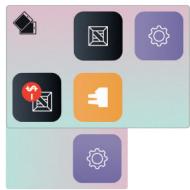
4 cells covered
Playing Hint: What do you need to consider when making decisions? We will talk about that while explaining the rules. For now, it is important to know that your decisions will affect all future phases in the current round!
Players may also use their Improvements to modify their Pads (see p. 12).
The players keep their decisions secret behind their screens until all players are finished planning. Then, all players set their screens aside and show their decisions to everybody.
Please remember: All visible symbols on your Pads are “active,” and any covered symbols are “inactive.” Cells without symbols are called “open.”
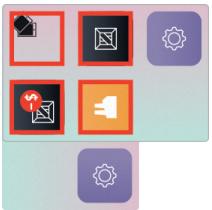
Here we have 5 active symbols and 4 covered cells

Phase 2. Set Prices
In this phase, the players determine the prices they will sell their Goods for this round ( ) .
Prices are recorded on the Price Block on the board.

At the beginning of each round, all prices are set at 5. All active price symbols on the Pads adjust these values:
• Each symbol reduces that company’s price by 1.
• Each symbol increases that company’s price by 1.
For example, with this Pad arrangement, the price for Goods is 3 because we have 2 active symbols reducing the price by 1 point each.

Playing Hint: Price is of the utmost importance in the game: Starting in Phase 4 (Improve Production, p. 12), price determines the order in which players take turns, which can be critical to winning the game!
Phase 3. Production
In this phase, the players produce Goods ( ) to sell into the markets later in the round.
A player can produce in several ways:
-
Each active symbol on their Pads produces 1
-
Each covered cell on their Pads also produces 1

Produced are placed in the Available Goods section of the player’s organizer.

In addition to the methods above, can also be produced by using Technologies that have been researched (see p. 18), from Retailers (see p. 20), and through Improvements and Goods tokens (see p. 12).


Starting with Phase 4, the prices set by players in Phase 2 becomes important: The player with the lowest price is the first to play during this phase, followed by the next lowest price, and so on. If several players share the same price, the first one to play is the one with the lowest VP on the Scoreboard. This is called the “Priority Rule.” Note that it is possible that a player’s set price will change during the round, so the Priority should be checked at the beginning of each phase.
Starting with the first player and going in Priority order, each player in turn takes one of the two actions below, depending on whether the symbol on their Pad is active or not:
1 If the symbol is active, the player takes 1 Improvement of their choice from the Improvement Block.


2 If the symbol is not active, the player takes a Goods token instead ( ) The player can use their new Improvement or starting in the next round.


Each player starts the game with 1 Improvement, which they can use beginning with Round 1. Once acquired, Improvements can be used every round in Phase 1. Each Improvement can be used in two ways:
1 An Improvement can be used to modify the player’s Pads. They can place the Improvement on their Pads any way they like, as long as they follow these rules:
- The Improvement must be placed face up on the pad.

Front

Back
- The Improvement must cover 2 cells of the Pad. It cannot extend beyond the edge of the Pad (Exception: a player who has researched 4G technology may partially ignore this rule).
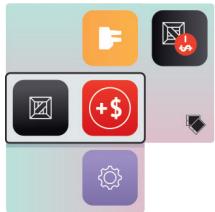
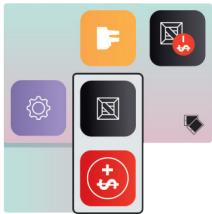

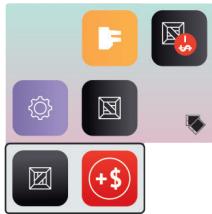
Improvement placement examples
Any cells covered by an Improvement are inactive. But, when are produced in Phase 3, cells covered by Improvements do not produce additional
Improvements can overlap each other, but one Improvement cannot fully cover another one.
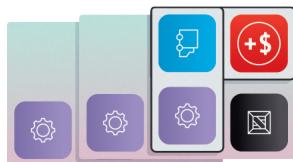
Any or all of an Improvement can be covered by the other Pad.
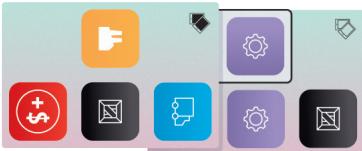
2 Or, the player can place the Improvement face down in front of them. Each facedown Improvement produces 1 in Phase 3.
The symbol on the back of each Improvement is a reminder that it cannot be placed face down on a pad.
Goods tokens ( ) can never be placed on a Pad at all, which is indicated by the symbol on both sides of the token. Each produces 1 during Phase 3.

Phase 5. Research Technology
During this phase, the players take turns following the Priority Rule (p. 12).
Technologies can boost sales or provide special helpful bonuses. Research into new Technologies is tracked at the bottom of the game board.

• Progress markers ( ) are used to track research.
• At the beginning of this phase, each player receives 1 for each active symbol on their Pads.
Following the Priority Rule, the players take turns spending all of the they received to research new Technologies. Players may choose not to spend some but unused disappear at the end of their turn.

• The number of required to successfully research a Technology is shown on the Technology card.

• Players place in the space near the Technology they are going to research. Each player can distribute among the various Technologies as they wish, if they have multiple .
Once a player has accumulated a number of equal to the Technology cost in the matching space, they have successfully researched that Technology. They take back all of their from that space and place an Office marker ( ) of their color near that Technology card. From now on, they may use the benefits of that Technology (see page 18).
For example, let’s say you made the following decision on your Pads:

Since a total of 3 symbols are active, you receive 3 . You want to study 4G Technology, which costs
To complete the research, you’ll need to earn 3 more in addition to what you have. So, you decide to start researching the Technology and place your 3 in the space next to 4G Technology, planning to research it more next round.

The cost of this Technology until it is researched and the Patent is acquired
If you did research in the next round, you could add the you gained to the space next to that Technology, or change your mind and begin researching something else.
Effects of Technology
Each Technology a player successfully researches provides the bonus indicated on the Technology card, often additional effects in certain phases or enhancements to the effect of symbols on their Pads. For complete descriptions of all Technologies, see page 18.
Patents
Only the first player to complete the research into a new Technology can claim the Patent for that Technology. After placing their on the Technology, they take the Patent from the board and place it in front of them.
Patents are an additional source of VP, awarding the VP shown on the Patent tile at the end of the game (for example, VP).

This icon shows which Technology this Patent is placed on at the start of the game VP that the Patent awards at the end of the game
However, until the Patent has been claimed, the required to research that Technology is increased by 1.
Once the Patent has been taken, the cost of that Technology is 1 less, allowing other players to acquire that Technology more easily. But, only the first player to research it can get the Patent!
Since two or more players can research the same Technology at the same time, if one player takes the Patent—which makes the Technology cheaper—the other players can complete it at once (if they now have enough ). They must still wait for their turn to complete the research, though!
1
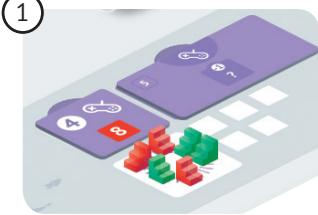
2
Red and green are both researching Gamepad Technology

Green places the last he needs
3
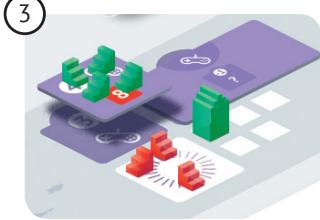
Green takes the Patent, since he is the first to research the Technology. He takes his back and places his
4

Red, on her turn, immediately gets the Technology since it is 1 cheaper. But she doesn’t get the Patent!
In this phase, players take turns in accordance with the Priority Rule (p. 12).
At the beginning of the game, each player only has an in one region, but they need to expand to other regions to increase their sales. This is where Logistics comes to help.
• In order to expand into another region, a player needs
• For each active symbol on their Pads, the player receives 1
Following the Priority Rule, starting with the first player and so on, each player places all of the they received, distributing them to regions they want to expand into by placing them in the space for those regions. A player can only place in a region connected to one where they already have an . Regions are connected if they have a line linking them together on the game board.
For example, Victor only has an in North Africa. This means that he can expand into Europe, China, Emirates, and South America. During his turn, he can place only in those regions.
• Any not used by a player on their turn disappear back to their supply.
• Once the number of equals the cost for the region, the player places their in that region, removing their there back to their supply.

A new always goes into the empty space furthest to the left.
If there are no empty spaces, no player can add an to that region.
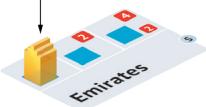
Each player can only have one in each region (unless a Technology or Retailer allows them to add another one).
The bigger the region, the more difficult it is to put an there, but it also opens up more opportunities for the player.

Phase 7. Selling Goods
Following the Priority Rule (p. 12), each player sells their produced (in the Available Goods section of their organizer).
can be sold only if all 3 of the following conditions are met:
• The player has an in the region.
• There are no Retailers in the region.
• There are available Buyers in the region who are ready to buy their

Each square is a Buyer
In order to sell a , the player must place it on a Buyer. But not every Buyer is ready to buy all , so let us take a closer look at what kinds of Buyers there are:

A Buyer in a red square will not pay more then the price shown on their square. But, if a player offers a lower price, this Buyer will buy their at their asking price. In other words, the price shown on the Buyer indicates their willingness to pay, but they will be happy to pay less.
? A purple Buyer (without a price) is ready to pay any price for (but still no higher then the price set), but only if the player has the Technology required by the Buyer. The required Technology is shown on the Buyer’s square.
Only one can be sold to each Buyer. Any that cannot be sold are lost (returned to the section of the player’s organizer with the cube symbol).
Important: The are always placed on the willing Buyers in a region from left to right. You cannot place on purple Buyers while ignoring red Buyers, if the price of your is right for them.
For example, let’s say you produced 4 and you are present in only one region. In Phase 2, you set the price of your at 3. You have the Gamepad and 4G Technologies. As a result, you can only sell 3 in this region, since the last buyer demands NFC Technology, which you don’t have. You cannot sell 1 of your and it disappears at the end of this phase.

Playing Hint: If you missed a place where you could have sold (and the other players did not help you see it), then it is assumed that you failed to sell those . You can try negotiating with the other players to get their permission to sell out of turn. The game developers, however, strongly recommend that the other players not yield to your persuasion!

Phase 8. Receive VP
In this phase, all players receive VP for the they sold and for controlling regions.
The order in which players are awarded VP is not important.
Goods Sold
Each player counts the number of they have on the game board and multiplies that amount by their price (shown in the Price Block). To help out, there is a multiplication table on the back of the player screens.

Controlling Regions
A player can earn additional VP if they dominate the market in a region. The player who sold the most in a region controls it (and gets the VP). The number of VP received is shown above the furthest to the right in that region.
VP are not awarded to a player for regions where they did not sell any , even if they have an there.
For example, the blue player controls this region since he sold more than the yellow player. The blue player gets 2 VP, since that is the number shown above the rightmost , despite the fact that this Office does not belong to the blue player.

If the furthest to the right has a value for second place, then a second-place winner for control of that region is determined by the same method as described above.

If the number of sold by 2 or more players is equal, then VP are awarded to the player whose is located further to the left.
As an example, let us consider the following situation: The blue player is in first place. Although the blue player sold the same number of as the green and red players, the blue player’s is located the furthest to the left. So, the blue player receives 6 VP for control of the region. The second place for control is given to the green player (3 VP), since when compared to the red player (who sold the same number of ), the green player’s are located further to the left.
Record all VP received on the VP Scoreboard.
Preparation for the Next Round

All players take all of their off the game board and return them in their organizers (not in the Available Goods section).
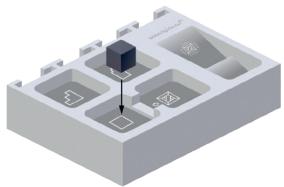
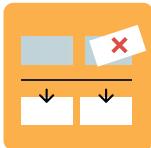
Remove any Improvements still on the game board and put them back in the box. Add 5 new Improvements from the pile to the Improvement Block, face up.

in the Price Block to the starting value of 5.
Reset the

Move the Round marker to the next round.
Start the new round with Phase 1.
End of the Game and Determining the Winner
The game lasts exactly 5 rounds and ends right after Phase 8 of the fifth round. Each player adds up their total VP for the game:

Count the VP received during the game.

Add VP for any Patents they collected.

3 Add any VP they earned from Retailers.
The player with the most VP wins the game!
In case of a draw, the contender with the most Technologies wins. If that is a draw as well, the tied player with the greatest number of Patents wins. If you managed to get a draw here too, then all the tied players share the victory.
Technologies
When a player finishes researching a Technology, they receive an immediate bonus.
A player must use all Technology bonuses if they can.
Some Technologies give a one-time bonus, and some a permanent bonus. Each Technology takes effect during certain phases, as indicated on the Technology itself.

Explanations for the Symbols on the Technologies

A colored symbol with a number indicates the phase when the bonus is activated.
If there is no number, then there is no specific phase in which the bonus could be activated—see a more detailed description of those bonuses below.

If there is a red notification dot, it means that the player receives the bonus immediately, as soon as the Technology is fully researched, and possibly every round during the specified phase. If there is no phase number, the player only receives the bonus once (when they gain the Technology).
More About Technologies
GPS

From now on, the symbol on your Pad gives you 2 instead of 1 during Phase 3.
This is a permanent bonus.

Produce 5 immediately.
Put these in the Available Goods section of your organizer.
This is a one-time bonus.
WI-FI

During Phase 6 each round, you may add 1 to any region where you already have an . You cannot place a third in this way. You cannot place a second on a Retailer.
This is a permanent bonus.

Any that you failed to sell during Phase 7 are kept for the next round instead of being lost. This is a permanent bonus.
GAMEPAD


For the rest of the game, the number of you need to research new Technologies is reduced by 1.
This is a permanent bonus.
Place 1 in any small region where you do not have an . If there is a Retailer in that region, you get the Retailer’s bonus as normal.

LI-ION
This is a one-time bonus.
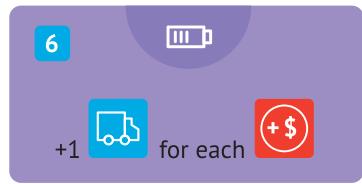
From now on, the symbol on your Pads and Improvements is also treated as a symbol. In other words, in Phase 6, count your symbols along with your symbols.
This is a permanent bonus.
Immediately produce 1 for every 2 Technologies you have. Also, during Phase 3 each round, produce 1 for every 2 Technologies you have.
This is a permanent bonus.
NFC

On your turn during Phase 6, you may sell from 0 to 3 you have produced at the price you set for the round. Do not place these in any region. Instead, score your VP on the VP Scoreboard immediately and return the to your supply.
This is a permanent bonus.
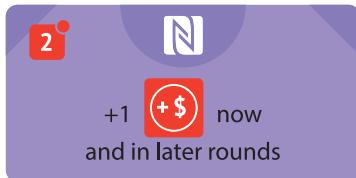
Immediately increase your price by 1. Also, during Phase 2 each round, increase your price by 1.
This is a permanent bonus.
4G

When you place Improvements on your Pads in Phase 1, they can extend beyond the edge of your Pads.
This is a permanent bonus.

During phase 7, you may sell 1 that you have produced in each region where you do not have an . You must place these on Buyers that you would be allowed to sell to following the rules for selling on page 15.
This is a permanent bonus.

Retailers
Retailers prevent the players from selling in their region. But, using Logistics, players can still put an in that region (once they have enough there). The is not placed on a normal space in that region, but on the blue spaces on the Retailer instead.

The number in the red square next to the blue space is the number of VP a player will receive at the end of the game if their is placed there. are always placed from left to right, so the first player to place their will receive more VP than all subsequent players.
As soon as a player places their on the Retailer, they receive the bonus shown. This is a one-time bonus. The player can choose not to use the bonus. Note that there are some Retailers in the game without bonuses.
Please remember: There cannot be two of the same color on the same Retailer.
Retailers’ Bonuses
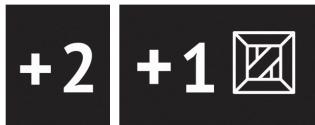
Produce the number of shown of your color. Place these in the Available Goods section of your organizer.
Take the number of shown of your color and place them in the research space for any Technology of your choice. If you get 2 , they may be divided between two Technologies. If this gives you enough to complete your research in a Technology, you must still wait until your turn in Phase 5 (according to the Priority Rule) before you can place your there.

Increase or decrease the price of your on the Price Block by 1.
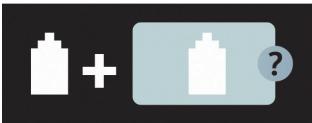
Place a second in any region where you already have 1 . You cannot place a third or put one where you have no . Thus, you cannot place this on a Retailer.

Move 1 of your color from one region to another. You may move an between other Retailers. If, as a result of this move, there is now an empty place in a region or on a Retailer, then move all other there to the left to fill the gap. You do not receive any Retailer’s bonus from this move.
Frequently Asked Questions
Can the Retailers be placed randomly at the beginning of the game? No. This will upset the game balance.
What do the symbols ( / ) on the player Pads mean?
They are only needed for you to be able to easily tell the two types of player Pads apart at the beginning of the game. During the game, these symbols are not used.
Can I change the position of my Pads during the round after Phase 1?
No. The game creators do not allow you to change the positions of your Pads, even if you claim to have made a critical mistake.
What do we do if the players still remain equal under the Priority Rule?
If two or more players are equal on price and VP, the tie is broken by looking at their starting position on the VP Scoreboard (the colored spaces in the top row): The player who started with the least VP gets to go first.
Can I put an Improvement under my Pads so that it disappears from sight?
Yes, you can. Both cells of your Improvement must be on one or both of your Pads. The Improvement could be placed with its two cells on one Pad and then completely covered with the second Pad. It does not make much sense, but it is not against the rules.
Can I place my Pads so one is completely covered by the other, or just place them next to each other during Phase 1?
No. One Pad must cover 1 to 4 cells of the other Pad. If you did that, you would not be able to observe this rule!
I produced more in Phase 3 than I need. Can I suspend the production of a certain amount of to reduce this amount? No. You must produce exactly the number of you are able to.
Development Team:
Project Editor: Max Vereschagin Artist: Aleksandr Kiselev General Director: Mikhail Pakhomov Art Director: Viktor Zaburdaev Promotion: Darina Orlova, Nataliya Naboyshchikova, Katerina Schlecker Production Director: Sergey Morozov Translation: Runa LLC Proofreader: William Niebling
Author’s Acknowledgments:
Herman Tikhomirov for great advice on the game promotion. Andrei Stolyarov
for motivation to start making the game. Yuri Zhuravlev and Nikolai Pegasov for inspiration from the “The Golden Sails”. I also thank the entire Guild of Board Game Developers (GRaNI) for their contribution and promotion.

Special thanks for help in the development and work on the project:
Andrei Kolupaev, Konstantin Domashev, Konstantin Malygin, Yuri Yamschikov, Valery Kruzhalov, Ilya Stepanov, Yulia Ilyinskaya, Natalia Telezhkina, Yan Yegorov,
Nikolai Zolotarev, Valentina Aristarkhova, Aleksandr Eremin, Andrei Kalinin, Igor Ganzha,
Vasily Redinsky, Nadezhda Penkrat, Victoria Drobotova, Andrei Aganov, Anastasia Yushina, Vitaly Terekhov, Dmitry Krylov, Vasily Vereschagin.
Our thanks to the “Astronauts with Hammers:”
Aleksandr Tkachev, Bogdan Khokhlov, Pavel Eltsin, Oleg Meleshin, Aleksandr Chapurin, Artur Katarzhanov, Yulia Tkachenko, Anton Prinov, Anton Kravchenko, Anna Kravchenko, Roman Gaffarov, Aleksandr Aleksnanin, Loerglil Meflizh, Delli Arieri.

COSMO DROME GAMES


简繁检索对照.md1.6 KB
247684_246684_smartphone-inc — 简体/繁体检索对照
本游戏的规则书是繁体中文原文。用户用简体提问时,把关键词按下面这张表转成繁体再去 grep 原文,命中率最高。
回答时用简体或繁体都可以,但引用的原文保持繁体。
简体 → 繁体 对照(按该游戏原文出现频率排序,共 60 字)
| 简体 | 繁体 | 原文出现次数 |
|---|---|---|
| 块 | 塊 | 109 |
| 游 | 遊 | 83 |
| 戏 | 戲 | 80 |
| 会 | 會 | 70 |
| 阶 | 階 | 63 |
| 发 | 發 | 57 |
| 颗 | 顆 | 56 |
| 点 | 點 | 55 |
| 个 | 個 | 45 |
| 图 | 圖 | 44 |
| 后 | 後 | 44 |
| 轮 | 輪 | 43 |
| 产 | 產 | 41 |
| 奖 | 獎 | 41 |
| 励 | 勵 | 41 |
| 数 | 數 | 39 |
| 规 | 規 | 39 |
| 货 | 貨 | 38 |
| 价 | 價 | 37 |
| 卖 | 賣 | 36 |
| 这 | 這 | 34 |
| 该 | 該 | 34 |
| 获 | 獲 | 34 |
| 动 | 動 | 31 |
| 时 | 時 | 30 |
| 则 | 則 | 30 |
| 们 | 們 | 28 |
| 为 | 為 | 26 |
| 专 | 專 | 23 |
| 进 | 進 | 23 |
| 没 | 沒 | 23 |
| 买 | 買 | 23 |
| 详 | 詳 | 22 |
| 里 | 裏 | 21 |
| 开 | 開 | 21 |
| 见 | 見 | 20 |
| 于 | 於 | 19 |
| 页 | 頁 | 18 |
| 划 | 劃 | 17 |
| 设 | 設 | 17 |
| 当 | 當 | 17 |
| 须 | 須 | 17 |
| 国 | 國 | 16 |
| 来 | 來 | 16 |
| 应 | 應 | 16 |
| 从 | 從 | 15 |
| 区 | 區 | 14 |
| 计 | 計 | 12 |
| 结 | 結 | 12 |
| 机 | 機 | 11 |
| 边 | 邊 | 11 |
| 标 | 標 | 10 |
| 场 | 場 | 10 |
| 风 | 風 | 10 |
| 两 | 兩 | 10 |
| 红 | 紅 | 10 |
| 别 | 別 | 9 |
| 胜 | 勝 | 9 |
| 办 | 辦 | 9 |
| 选 | 選 | 9 |
原文为社区整理/出版社公开资料,版权归原作者,仅供个人学习查阅。