
SpiresSpires End
一句话概览
Spires 是一款已收录于村了吗规则库的桌游,支持 1–4 人,原名 Spires End。
本页内容:一句话概览 · 常见问题
这游戏怎么玩
- 本站已收录这款游戏的规则资料,可以在对话里直接提问规则细节。
常见问题(FAQ)
以下 1 条问答中 0 条来自站内玩家的真实提问,其余 1 条为本站整理的常见疑问;答复内容保持原样。
Spires支持几个人玩?
1–4 人。
去哪查完整规则
想核对具体规则细节、卡牌效果或某个回合的结算方式,可以在村了吗里选中这款游戏后直接提问。
同类桌游
- 卡坦岛德式
- 工业革命:伯明翰德式
- 勃艮第城堡:特别典藏版德式
- 方舟动物园德式
- 卡卡颂抽象
- 瘟疫危机传承:第一季美式
- 阿瑞迪亚:勇踏征途美式
- 重塑宇宙德式
- 幽港迷城美式
- 埃多拉的德鲁伊德式
规则原文(Markdown)
本站收录这款游戏的规则原文 1 个文件,此处内联渲染 1 个,可直接展开阅读或下载。
Spires_Rulebook_1-9-17.md18.8 KB
Spires T.C. PETTY III
RUL∈BOOK
Components
Spires Deck: 86x Spires Cards
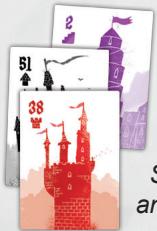

Scroll Cards, and Wild Cards
3x Markets
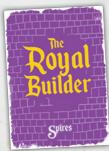
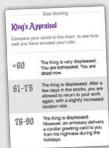
Royal Builder Solo Scoring

12x Player Cards
4x Reference Cards


First Player Marker

Card Anatomy


Card Ualue
Each suit has 12 values.

Spire Suit
Each Spire Suit has distinct artwork, suit icon, and color.

Player Numbers
Some cards are removed in 2 or 3 player games.
D Symbol
The player with the majority of a Symbol (or tied for majority) gets a Victory Point bonus at the end of the game.

Symbol Corner
Cards with a Symbol also have a corner strip pattern for easy identification in hand.
Player Cards
Market Number
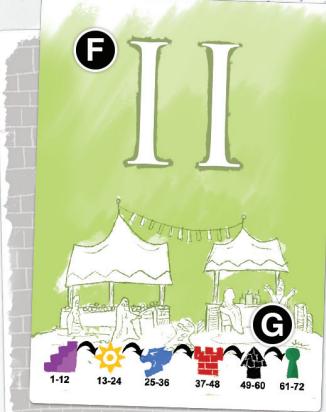
Each player has a player card corresponding to each Market.
Suit Rankings
Indicating each Spire Suit's value range, ranking order, and undercutting suit (used in Undercut Advanced Play).
ScrollCards
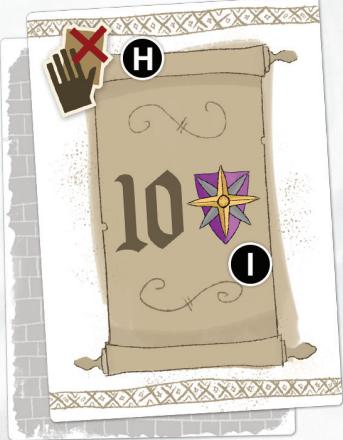
No Hand Icon
Cards with this icon cannot be added to a player's hand.
O Scroll Ability
A Scroll card's special ability will be pictured here.
See the Card Index on page 14 for helpful card explanations
Game Overview
In Spires, players are builders honoring the royal family's decree to adorn the kingdom with beautiful spires. The only caveat, don't build any towers taller than the royal palace!
As players aim to fill their tableaus with spires of each type, they must be careful not to finish the game with more than three of any one suit. Spires exceeding three cards will become a penalty to a player's final score.
Compete in markets, earn valuable symbols, force players to take cards they don't want, and more!
How to Win
When all cards from the deck have been drawn and won, the player with the most Victory Points between spires built and icon bonuses, becomes the Royal Builder!
In the case of a tie, the player with the least negative points wins.
Setup
- A number of Markets, depending on the number of players, are placed in the center of play.
1 player: See Solo Mode on page 16
2 players: Markets I and II
3-4 players: Markets I, II, and III
-
Each player is given the player cards of a single color and a reference card. (In a 2-player game, return the Market III player card to the box.)
-
Randomly determine a first player, and give them the wooden royal palace first player marker.
-
Gather the Spires and Scroll cards to form the Spires Deck, but first remove some cards depending on the number of players:
2 players: Remove all cards marked with 3 or 4
3 players: Remove all cards marked with 4
4 players: Play with all cards

Used in 3-4 player games
Only used in 4 player games
-
The first player shuffles the Spires deck and deals one card faceup below each of the Markets.
-
The first player deals five cards facedown to each player to form their starting hand.*
-
Finally, the first player deals one faceup card to each player's tableau to begin their first spire.*
* If the card dealt is a Scroll card, see the Important Note! on page 5.
Example 3-player setup


Deck and discard area


Player tableau with starting card


Important Note!
During setup, if a player is dealt a Scroll card, they should discard that card and be dealt a new card. Repeat this until players' hands and tableaus contain only non-Scroll cards. Then shuffle all cards before beginning.
Building Spires
During play, players will create Spires, which are columns of like-suited cards.
A player will never have more than six Spires (one of each suit). When a player adds a card to a Spire, they must add it to a Spire of the same suit. When a card is won during a competition and the player doesn't yet have a Spire of that suit in their tableau, they form a new Spire with that card.
Spires should be splayed vertically in such a way as to clearly display the card number, suit, and any symbols.
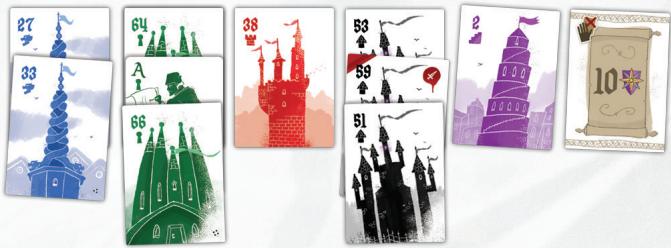
In the example above, the player has Spires started in five of the six colors. If they wanted to add a red card to their tableau, it would not start a new stack, but be added to the existing red Spire. If they wanted to add a yellow card to their tableau, they would start a new Spire, since there isn't a yellow one already.
In addition, the player displays the 10 VP Scroll Card in their tableau. These do not form a Spire and should be visible to all players.
Turn Sequence
Each turn consists of four consecutive phases:
-
Plan
-
Compete
-
Refill Markets
-
Draw
Plan
Players secretly choose a Market in which to compete.
Each player chooses a player card from their hand corresponding to a Market and places it facedown. Once all players have chosen a card, move to the next phase.
Compete
Players reveal their chosen Markets and compete (or don't) for the card(s) there.
Each player simultaneously reveals their chosen card.
If a player chooses a Market that no other player chooses, they do not compete for the card(s) there. They take the face-up card(s) below the Market and add it to the appropriate Spire in their tableau. This ends their turn.
Note: If a player does not compete in a Market this phase, they will not draw a card during the Draw phase.
If multiple players choose the same Market, those players must compete for the card(s) there. If multiple competitions must occur, they are resolved in numerical order from Market I to Market III.
Market competitions can be tense affairs. All players at the same Market choose a single Spires card from their hand and place it facedown. Once all players involved have chosen, cards are flipped faceup and the result of the competition is determined.

This player chose a Market no one else chose, so they will not compete for the card and get it immediately.
B The other two players both chose Market Il, so there will be a competition for the card there.
Resolving a Competition
Competitions are resolved in the following order:
The highest card that shares the same suit as the card below the Market wins.

If no cards of the same suit are played by those involved, then highest card number wins.
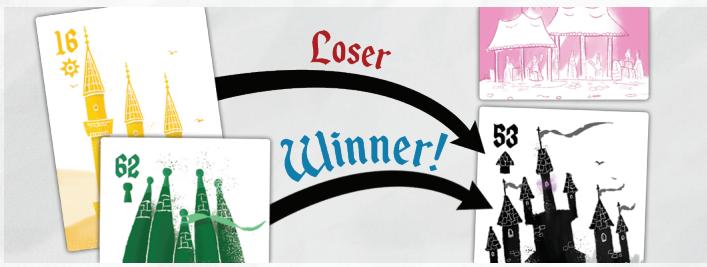
If the only card(s) below the Market does not have a suit (Wild Cards or Scroll Cards), highest card number wins.

Winning a Competition
The winning player gains the card(s) below the Market AND all cards played by players during the competition. These cards are placed appropriately into the player's tableau (see Building Spires, page 6). When placing cards into Spires in a player's tableau, the player may choose in what order they are placed.

In the example above, the winning player receives the Scroll Card they competed for, as well as the green card they played and the yellow card their opponent played. These cards are then placed in that player's tableau.
Refill Markets
The Markets refill for the next turn.
After all competitions have been resolved, reveal cards from the Spires deck, placing them below any empty Markets (in order from I to Ill). Any cards that were not claimed remain in play below the same Market.
If the deck runs out during this step, refill as many Markets as you can from I to III (see Game End, page 12).
Draw
Players who competed add new cards to their hand.
All players retrieve their player card picked during the Plan phase. Then, starting with the player to the left of the first player and continuing clockwise, any players that have less than 5 Spires cards in their hand, will draw to 5 cards.
The order of players is important, as the deck may run out during this step, leaving some players with fewer cards than others for the final turn or two.

If, during this phase, a player draws a Scroll Card, it does not go into their hand. Instead, the Scroll card is added below a Market of the player's choosing. In this way, there is no limit to the number of cards below a Market. Then, that player draws a new card per normal. This is done in player order.
Game End
The game end is triggered when the Spires deck runs out and all cards have been won from all Markets.
When the Spires deck runs out of cards...
This might cause some Markets to be empty. If so, those Markets are removed from play and cannot be chosen during the Plan phase.
This might cause some players to not be able to draw during the Draw phase. Continue play as normal, but skip the Refill Markets and Draw phases.
Cards Remaining in Hand
When all cards have been won from all Markets, all players must then discard one card to the central discard pile. Then, they must add all remaining cards from their hand to their own tableaus.
Scoring
Each player scores in the following fashion...
5 points per card in each of your Spires with 3 or less total cards.
-1 point per card in each of your Spires with 4 or more total cards.
Points per Scroll Cards you have collected.
Bonus Points for Symbols (see Bonus Symbols, page 13).
Bonus Symbols
Certain cards in the game are marked with symbols of Crowns, Swords, and Quills. Each player adds up the number of symbols that they have collected in their Spires in each respective category. The player with the most symbols of each type, is awarded a point bonus. In the case of a tie, all tied players receive this full bonus.



Quills: 10 points. (6 symbols total)
Crowns: 15 points. (8 symbols total)
Swords: 20 points. (12 symbols total)
Once all points are totaled, the player with the most points is granted the title of Royal Builder and wins the game! In the case of a tie, the player with the least negative points wins.

This player scored 45 points for Spires with three or less cards. -4 points for the blue Spire with four cards. 10 points for the Scroll Card. And 20 points for being tied for most Crowns.
Card Index
Architect Cards

During competitions, if an Architect card matches the suit of the card in the Market, it always counts as the highest card of its suit.
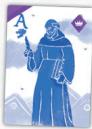
If an Architect card does not match the suit of the card in the Market, it counts as a zero. If multiple off-suit Architects are played, use the suit rankings on the bottom of the player cards to determine the winner between them.
Architect cards in a player's tableau are placed in their suit's Spire per normal (plus they have a Crown).
Wild Cards (73 and 74)

These cards have no suit and are therefore won by the highest card regardless of suit (like Scroll cards). When placed into a tableau, they must be placed in the Spire in that tableau with the most cards. If there is a tie for the most cards, the player may choose which Spire the card joins. Wild cards are always placed last after all other cards.
When played to a competition, the 73 and 74 cards are the two highest numbers in the game, but do not have a suit. Therefore they will lose to any card played on-suit.
Scroll Cards
Scroll cards are never allowed to be in a player's hand. If drawn, they are attached to a Market (see Draw, page 11).

Scroll cards with a number and shield icon award Victory Points at the end of the game.
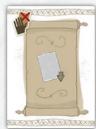
Scroll cards featuring a card and arrow allow the player to discard 1-2 cards (depending on the Scroll) from their tableau.
Solo Markets
These Market cards are only used in Solo Mode and have special abilities that can be used once per game.

Look at the top card of the deck. Either keep it or place it on the bottom of the deck.
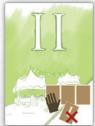
Do not compete this turn. Instead, take a card from a Market and discard the rest.
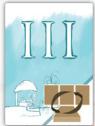
Return all of the cards in the Markets. Reshuffle the deck and refill the Markets.
Undercut Advanced Play
Once players have become familiar with the game, this simple Advanced rule can be added to take trick-taking to the next level. Playing with undercutting uses the suit rankings on the bottom of the player cards.

When resolving a competition, if a player plays a card on-suit, it is now beaten by a card from the suit one step weaker. The graphic above displays an arrow to indicate that the suit directly to the left of the card played on-suit trumps it and wins. The lowest Spire suit (purple) cannot be undercut. Also, only a card played on-suit can be undercut.
If no card is played that shares a suit with the card in the Market, the highest value card wins, per the normal rules.
In the example below, the shared suit is black and one player plays a black card, another a red card, and another a blue card. In this case, the red card undercuts black and is the winner. The blue card does not trump the red because you can only trump the shared suit

Solo Mode
The King is displeased with the lackluster results that competition among builders has afforded. Just like before, he has tasked you, and only you, with beautifying the city with exotic buildings of all types. But of course, if your gorgeous spires rise too high (4 or more cards of a type), the king will be very displeased.
The solo mode for Spires uses the same scoring system and competition rules as in the multiplayer game. However, in this version you will be playing strategically against an Al player. The game ends when the card deck is empty and no more cards remain in the Markets. Try to score the most points!
Setup
Use Markets I, Il, and III on their solo sides. Setup the card deck by removing any cards with 4 in the lower-right corner (same as 3-player setup). Shuffle and deal out one card below each Solo Market. Then, draw five cards for your starting hand and draw & place one card face-up in front of you as your first tower. Keep a scoring reminder card nearby.
Place all remaining cards, including the player cards, back into the box.
Gameplay
Unlike multiplayer, each turn of solo Spires will always result in a Competition. You will not need a set of player cards, as you will simply choose a Market to Compete in and play a card from your hand. After a Competition is resolved, all remaining cards below Markets are discarded.
Sequence of Play
Choose a card from your hand and place it beneath a Market. This is the card that you are attempting to add (or not add) to your tableau.
Draw and reveal the top card of the deck. Resolve a Compeition between the card you played and the card drawn from the top of the deck.
If you win the Competition, take the card(s) beneath the Market, the card you played, and the card drawn from the deck; and place them into your tableau immediately.
If you lose the Compeition, discard all cards played there.
Once the Competition is resolved, discard all remaining cards below the Markets. Deal a new card to each Market, and then draw a new card.
End Game and Scoring
It is likely that on the final turn, there will be no more cards to draw to resolve a competition. For this turn there will be no competition. Choose one card from the Market of your choice and add it to a Spire. Then, discard one card from your hand and add the remaining cards from your hand to your tableau.
Tally your score in the exact same way as a multiplayer game. When scoring symbols, compare the amount of symbols in your buildings with the amount in the discard pile. If you have a number equal to or greater than the amount in the discard pile, score the bonus for that symbol. Compare your score with the chart on the solo scoring card to see how well you've done.

The End
Designer: T.C. Petty III Artist: Bryan Fischer Producer: Bryan Fischer
Copyright 2017 Nevermore Games LLC www.NevermoreGames.com

Thank you to all of our incredible backers, playtesters, Unpub, friends, and family. Without you, this game wouldn't exist.
下载 Markdown原文为社区整理/出版社公开资料,版权归原作者,仅供个人学习查阅。