
斯特拉斯堡Strasbourg
一句话概览
斯特拉斯堡 是一款已收录于村了吗规则库的桌游,支持 3–5 人,原名 Strasbourg。
本页内容:一句话概览 · 游戏概述 · 1. 游戏组件 · 2. 游戏设置 · 3. 游戏流程 · 4. 行动详解(A–I 步) · 5. 特权使用 · 6. 终局计分 · 关键规则与常见问题 · 常见问题
斯特拉斯堡 规则速览
以下规则速览由本站整理,与官方规则书表述不同,仅供快速上手参考。
游戏概述
在中世纪法国的政治中心斯特拉斯堡,玩家扮演显赫贵族家族的首领,通过经营人脉关系、建立行会影响力、建造公共建筑来争取教会与贵族的声望。游戏共进行 5 轮,每轮依次经过计划阶段、行动阶段与议会阶段——在有限的影响牌中做出分配决策,争夺议会席位上的关键行动权,最终以声望最高者获胜。
核心机制: 手牌管理、秘密分配、非对称行动权、区域控制
1. 游戏组件
| 组件 | 数量 / 说明 |
|---|---|
| 版图 | 1 块(含贵族议会区、教会议会区、商人行会区、公共货物库及 7 处建筑位) |
| 回合卡 | 5 张(标注 A–I 各步效果,部分步出现两次以覆盖 9 步) |
| 货物板块 | 30 个(供商人行动中出售获取钱币) |
| 建筑板块 | 5 个(行动 I 时放置于板上不同建筑位置) |
| 礼拜堂标记 | 5 个(白色,用于 H 步建造礼拜堂) |
| 特权标记 | 10 个(可在后续轮次消费以略过行动) |
| 紫色标记 | 2 个(回合标记、起始玩家标记) |
| 声望(VP)标记 | 5 个(放于计分轨道起点 0) |
| 家族成员 | 75 枚(每种颜色 15 枚) |
| 钱币 | 40 枚 |
| 屏风 | 5 个(用于遮拦自己的牌堆) |
| 摘要牌 | 每人 1 张 |
| 任务牌 | 若干(洗匀后发牌,每人可筛选留取) |
| 影响力牌 | 每人 24 张(按色号 1–6 各 4 张),组成 24 张牌堆 |
2. 游戏设置
2.1 版图与回合卡准备
- 将版图置于桌中央。
- 打乱 5 张回合卡,面朝上随机放入版图左侧对应的空格位。
- 将回合标记放在最左侧回合卡上方标有 "A" 的步骤处。
- 将 5 个建筑板块面朝上随机放置在 5 张回合卡下方的建筑槽内。
- 所有玩家的 VP 标记统一放在计分轨道的 0 点。
2.2 玩家个人准备
- 每位玩家选择一种颜色,获得:
- 15 枚对应颜色的家族成员
- 24 张对应颜色的影响力牌
- 1 张摘要牌
- 5 枚钱币
- 1 个屏风
- 将自己的 24 张影响力牌洗匀,面朝下形成独立的摸牌堆。
2.3 任务牌筛选
- 将所有任务牌洗匀,向每人发放 5 张。
- 按起始玩家顺时针方向,每位玩家逐一选择留下 1–5 张任务牌,其余全部移出本局游戏。
2.4 确定起始玩家
- 随机选出起始玩家,授予起始玩家紫色标记。
- 起始玩家放置 1 枚家族成员到版图的贵族议会位置。
- 起始玩家左手边的玩家放置 1 枚家族成员到版图的教会议会位置。
3. 游戏流程
游戏共进行 5 轮,每轮分为三个阶段:
- 计划阶段
- 行动阶段
- 议会阶段
3.1 计划阶段
第一步:抽取影响力牌
从起始玩家开始,按顺时针顺序,每位玩家执行以下操作:
- 从自己的影响力牌堆顶翻抽 1 张牌,查看内容。
- 决定是否继续再抽 1 张,直至决定不再抽为止。
- 可以任意次数地继续抽取,直到主动放弃。
> 注意: 全回合只有 24 张影响力牌可供抽取,它们将在 5 轮中持续消耗,务必合理分配抽取数量。
第二步:分堆
从起始玩家开始,按顺时针顺序,每位玩家执行:
- 将自己刚才抽取的所有影响力牌分成 任意数量的牌堆(至少 1 堆)。
- 将各堆牌面朝下扣在自己面前的区域(可使用屏风遮挡),让其他玩家能看清每堆的牌数。
- 玩家可以随时查看自己牌的张数,但不得改变牌堆内的牌面内容。
所有玩家完成分堆后,计划阶段结束,进入行动阶段。
3.2 行动阶段
行动阶段根据回合标记当前指向的 A–I 步骤效果,逐步推进。前 7 步(A–G)的流程结构一致,区别仅在于最终产生的行动效果不同。
行动步骤通用流程
对当前 A–G 中的每一步,按以下方式展开:
- 逐个出牌: 从起始玩家开始,按顺时针方向,每位玩家依次公开决定:
- 翻开面前的一堆牌,或
- 直接放弃本步(不翻任何牌,不出手)。 - 计算总数排名: 比较所有玩家本轮翻开牌的数量总和,从高到低排出 5 名。若总数相同,则距起始玩家更近的玩家排名靠前。
- 按排名执行行动: 根据本步的效果定义,各排名玩家获得相应权限(见第 4 节详细说明)。
- 更新起始玩家: 行动结束后,本次排名最高的玩家立即成为下一行动的起始玩家。
- 补偿回收: 因排名过低而未能获得有效行动的玩家,可以从自己剩余的牌堆中选择 1 张牌放回自己的影响牌堆底部;该步其他已翻开的影响牌全部移出游戏。
行动 I(造建筑物)
行动 I 的流程略有不同:由占据贵族议会席位的玩家单方面执行建造操作,无需与其他玩家比较出牌大小。详见第 4 节。
3.3 议会阶段
每轮行动阶段全部完成后,触发议会阶段:
- 议会 VP 结算: 统计每位玩家在议会位置(贵族 + 教会 + 行会)拥有的家族成员总数,按数量给予相应的 VP 奖励(具体数值依版图显示)。
- 特权标记分配: 议会中家族成员最多的玩家获得 1 枚特权标记;若有多人并列最多,则多人共同瓜分。
4. 行动详解(A–I 步)
步 A — 贵族与教会影响力
| 排名 | 效果 |
|---|---|
| 第 1 名 | 放置 1 枚家族成员到贵族议会位置 |
| 第 2 名 | 放置 1 枚家族成员到教会议会位置 |
| 第 3–5 名 | 无效果 |
步 B / D / F — 行会影响力
此三步共享同一套分级行动表:
- ① 支付图上所示费用,放置 1 枚家族成员到该行会的议会位置。
- ② 从公共货物库拿取 1 个该行会对应的货物板块。
- ③ 支付图上所示费用,将 1 枚家族成员放置在相应的行会位置上。
| 排名 | 可用行动 |
|---|---|
| 第 1 名 | 可以执行 ① + ② + ③(三项全部执行) |
| 第 2 名 | 可以执行 ② + ③(两项全部执行) |
| 第 3 名 | 只能执行 ② 或 ③ 其中一项 |
| 第 4–5 名 | 无效果 |
> 第 1 名须同时完成①②③,不可只选其一;第 3 名只可二选一。
步 C / E / G — 商人影响力
| 排名 | 效果 |
|---|---|
| 第 1 名 | 可出售手中持有的部分或全部货物板块,获得板块上标示的钱币。<br>在步 G 时,还可额外放置 1 枚家族成员到商人议会位置。 |
| 第 2–5 名 | 无效果 |
步 H — 建造礼拜堂
- 条件: 只有在教会议会位置有家族成员的玩家方可执行。
- 效果: 将 1 枚白色礼拜堂标记放置到版图上的白色圆点处。
- 每名玩家最多建 1 座礼拜堂(受限于 5 枚礼拜堂标记和每人 15 枚家族成员)。
步 I — 建造建筑物
- 条件: 只有在贵族议会位置有家族成员的玩家方可执行。
- 效果: 将该轮回合卡下方的建筑板块放置到版图空闲的建筑位置之一(共 7 个建筑位)。
- 每张回合卡下方仅有 1 个建筑板块,5 轮共 5 个建筑板块。
5. 特权使用
- 特权标记可以在后续轮次中使用。
- 使用方法:在计划阶段的「决定翻开哪堆牌」环节,当轮到某玩家做决定时,他可以花费 1 枚特权标记选择略过一次本步的行动决定。
- 等他之后重新轮到自己的决定权时再做选择(相当于延后决定)。
- 一轮中可以使用多个特权标记。
- 特权标记也可在议会阶段结束后保留至终局计分。
6. 终局计分
5 轮全部完成后,按以下顺序结算分数:
| 计分项目 | 分值 |
|---|---|
| 版图上每个家族成员 | +1 VP |
| 每座礼拜堂周围相邻(四方向)的家族成员 | +1 VP / 枚 |
| 每座建筑物四边相邻的家族成员 | +建筑物所示 VP / 枚 |
| 每张已完成的任务牌 | +任务牌所示 VP |
| 每张未完成的任务牌 | -3 VP |
| 每张未使用的特权标记 | +1 VP |
胜负判定
- VP 最高者获胜。
- 平手时:版图上的家族成员总数多者胜出。
- 再次平手:共同获胜。
关键规则与常见问题
易错规则
- 影响力牌全局共用:每轮的 24 张牌必须支撑整局 5 轮——每轮都要有人去摸牌,不能提前耗尽。
- 排名优先看距离:翻开牌总数相同时,离起始玩家更近的一方排名更高。
- 起始玩家即时轮换:每步行动结束后,该步排名第一的玩家立刻成为下一步的起始玩家(A→B→C…I 连续轮换)。
- 低排名才有补偿:排名过低没拿到行动的玩家才能补回 1 张牌;高排名的玩家不能拿补偿。
- A 步只管贵族+教会:A 步第 1 名放贵族、第 2 名放教会,没有第 3 名效果。
- B/D/F 步的分级权限不可降级:第 1 名必须三项全做(①+②+③),第 3 名只能三选一。
- H 步仅限占教会者:即使某人在 H 步排名高,只要不在教会议会有族人也不能建造礼拜堂。
- I 步仅需贵族议会位置族人执行:不在行会比较流程内,由贵族议会位置有家族成员的玩家直接操作。
- 特权可随时花多枚:一轮内可以用多枚特权来多次跳过决定。
- 任务牌不完成扣 3 VP:筛选任务时要认真评估能否在 5 轮内完成。
常见问题
-
Q:计划阶段摸牌是轮流还是同步?
A:从起始玩家起,按顺时针逐个进行——玩家 A 决定停/继续后,再到玩家 B。 -
Q:牌堆分成几堆有没有限制?
A:每堆至少 1 张,总共可分成 1–N 堆(N ≤ 抽取的总张数),完全由玩家自行决定。 -
Q:行动阶段放弃的人会怎样?
A:放弃意味着不翻牌参与排名;如果最终因排名低没能拿到行动,可以补回 1 张牌。 -
Q:行会行动的"议会位置"是什么?
A:版图上为各行会设置的专属家族成员放置区,与贵族议会、教会议会同属议会体系,贡献议会 VP。 -
Q:货物板块卖了还能再拿吗?
A:商人行动出售的是玩家手中的货物板块换取钱币。行会行动中,第 2/3 名可从公共库取走新的货物板块。 -
Q:5 座礼拜堂怎么放置?
A:每座放在版图白色圆点位置,每座会影响四周相邻的家族成员得分。 -
Q:建筑物放置时如何选择位置?
A:由拥有贵族议会席位的玩家一次性将该回合卡下的建筑板放到 7 个空位中的任意一个——选择策略很重要,因为建筑物的加成范围取决于放置位置。
|- Q:摘要牌有什么用?
A:摘要牌为玩家提供信息参考,但不产生直接的行动效果。
常见问题(FAQ)
以下 1 条问答中 0 条来自站内玩家的真实提问,其余 1 条为本站整理的常见疑问;答复内容保持原样。
斯特拉斯堡支持几个人玩?
3–5 人。
去哪查完整规则
想核对具体规则细节、卡牌效果或某个回合的结算方式,可以在村了吗里选中这款游戏后直接提问。
同类桌游
- 卡坦岛德式
- 工业革命:伯明翰德式
- 勃艮第城堡:特别典藏版德式
- 方舟动物园德式
- 卡卡颂抽象
- 瘟疫危机传承:第一季美式
- 阿瑞迪亚:勇踏征途美式
- 重塑宇宙德式
- 幽港迷城美式
- 埃多拉的德鲁伊德式
规则原文(Markdown)
本站收录这款游戏的规则原文 2 个文件,此处内联渲染 2 个,可直接展开阅读或下载。
rules_zh_斯特拉斯堡_3251.md5.3 KB
配件:
√ 1块版图
√ 5张回合卡
√ 30个货物板块
√ 5个建筑板块
√ 5个礼拜堂标记
√ 10个特权标记
√ 2个紫色标记(回合和起始玩家)
√ 5个声望标记(VP条)
√ 75个家族成员(每种颜色15个)
√ 40个钱币
√ 5个屏风
√ 游戏卡牌:摘要牌、任务牌、影响力牌(每种颜色1-6各4张)
√ 规则书以及卡牌说明
准备:
版图放在桌子中央,洗混5张回合卡后,面向上随机放在版图左侧相应的地位置。回合标记放在最左侧回合卡最上方的“A”处。把5个建筑板块面向上随机放在5张回合卡下方相应的位置。玩家的声望(VP)标记放在声望轨道0点。
每位玩家选取一种颜色,得到15个家族成员,24张影响力牌,1张摘要牌,5元钱,和1个屏风。影响力牌洗匀后,面向下形成牌堆。
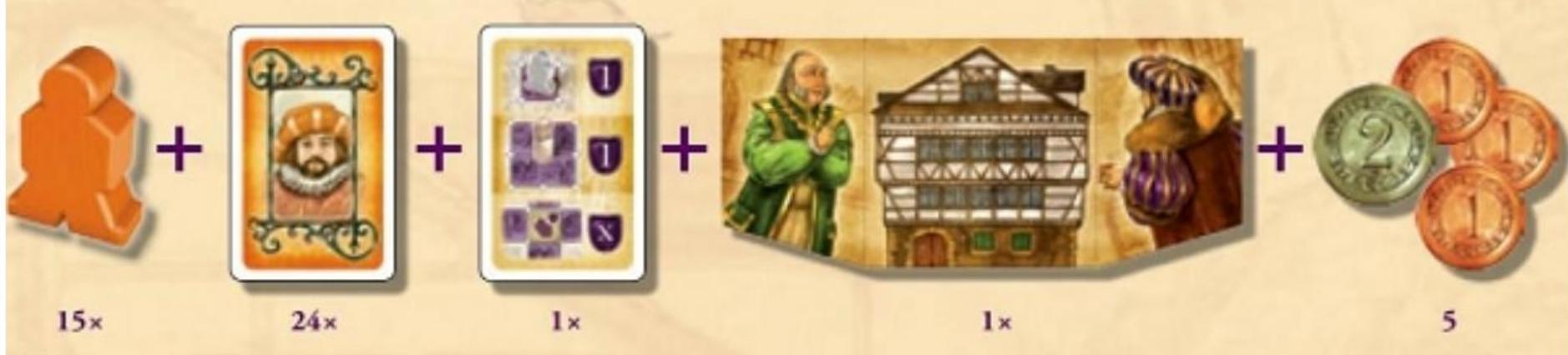
随机选取一个起始玩家,得到起始玩家标记,并把一个家族成员放在版图贵族的议会位置。起始玩家左手边的玩家放一个家族成员在教会的议会位置。
洗匀任务牌后每人发5张,每位玩家可以选择留下1-5张。其余移出游戏。

流程:
游戏进行 5 轮,每轮分三个阶段:计划阶段、行动阶段、议会阶段(Council Phase)。
计划阶段:
1. 决定在本轮使用多少张影响力牌
从起始玩家开始,按顺时针次序,每位玩家抽取影响力牌堆顶的一张牌,察看后决定是否继续摸牌,直到放弃为止。
一轮中可以摸任意多张牌,但注意必需注意合理分配,牌堆的 24 张牌将维持 5 轮游戏。
2. 决定将抽取影响力牌分成几堆
从起始玩家开始,按顺时针次序,每位玩家把刚才抽取的牌,分成任意数量的几堆,每堆牌至少要有1张牌。把几堆牌面向下放在自己面前,让所有玩家可以看清每堆的张数。
玩家可以在任意时间察看自己的牌堆,但不能改变牌堆的内容。
所有玩家完成后,计划阶段结束。
行动阶段:
行动阶段将根据回合标记在版图上 A-I 的位置,分 9 步完成。
前 7 步 A-I 流程类似,它们只是产生的效果不同。从起始玩家开始,每个人轮流决定翻开自己面前的一堆牌或者放弃。当所有玩家决定后,比较翻开牌总数的大小排名。如果总数相等,则距离起始玩家更近的获有优势。根据排名,玩家确定自己的行动(见下文)。随后,排名最高的玩家立即成为起始玩家。行动结束后,因排名低而没有获得行动的玩家,可以选择自己牌堆的 1 张牌,放回自己摸牌堆底部作为补偿,其他翻开的影响牌移出游戏。
行动说明:
A——对贵族和教会的影响力:
排名最高的玩家,放一个家族成员在贵族的议会位置;
排名第二的玩家,放一个家族成员在教会的议会位置;
其余排名无效。
B/D/F——对行会的影响力:
排名最高的玩家,可以执行以下全部三个行动;
排名第二的玩家,可以执行以下②、③两个行动;
排名第二的玩家,可以执行以下②或③中的一个行动。
①: 支付费用, 放一个家族成员到该行会的议会位置;
②:从公共库拿一个该行会货物板块;
③: 支付版图上显示的费用, 放一个家族成员在相应行会位置上。
C/E/G——对商人的影响力:
只有排名最高的玩家可以出售手里的部分或全部货物板块,并获得板块上标示的钱。在行动 G 时,排名最高的玩家还可以放一个家族成员到商人的议会位置。
H——建造礼拜堂:
占据议会教会席位的玩家,可以放一个白色礼拜堂到版图上白色的圆点处。
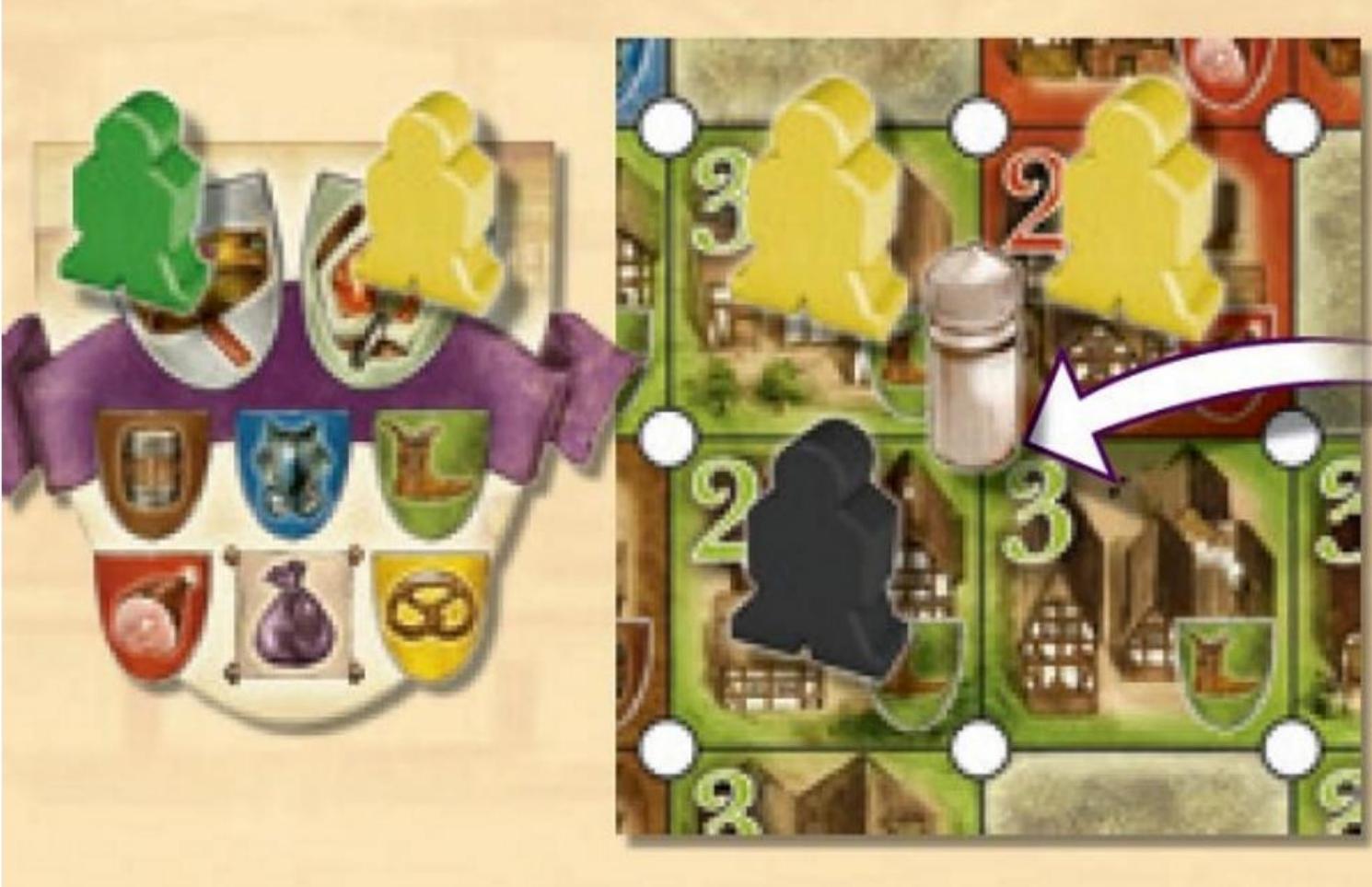
I——造建筑物:
占据议会贵族席位的玩家,可以将当前轮次行动卡下方的建筑物放到版图上空的建筑位置之一(共7个)。

议会阶段:
根据版图议会中家族成员的数量,玩家得到相应的声望(VP)。同时,家族成员最多的玩家,得到1个特权标记。如果平手则多人共同获得。

特权标记可以在后面的轮次使用。在选择翻开影响力牌时,玩家可以选择用一个特权来略过一次。等到其他所有玩家决定后,你再作出决定。一轮中可以使用多个特权。
结束计分:
5 轮游戏后,版图上每个家族成员得到 1VP。
每个礼拜堂四周的家族成员得到 1VP。
每个建筑物四边相邻的家族成员,得到建筑物显示的 VP。
每个未使用的特权,得到 1VP。
每张完成的任务牌,得到相应的 VP。每张未完成的任务牌,扣除 3VP。
VP 最高的玩家获胜。平手时,版图上家族成员多的玩家胜出。再平手则共同获胜。
下载 Markdownrules_en_strasbourg_91873.md17.5 KB
来源类型:纯文本规则(非 PDF 源,早期抓取/转换产物)
说明:原文未改动,仅调整存放位置与文件名;非 PDF 扫描件,无对应原书 PDF
Strasbourg Rulebook | RulesPalRulesPalChatRulebookStrasbourgStrasbourg Rulebook Table of Contents Table of Contents Game Concept
Game Materials
The Council
Set Up
Gameplay
1) Planning Phase
2) Action Phase General Remarks on Influence (Steps A-G)
A — Influence the Nobility & Church
B, D, F — Influence a Guild
C, E, G — Influence Merchants
H — Build Chapel
I — Build Edifice
3) Council Phase Privilege
Ending the Game
Credits
Game Concept
Strasbourg in the 15th century. The city's fortunes are powerfully influenced by the craft guilds who occasionally even occupy the majority of seats on the city council.
You take on the roles of the city's ambitious families. Your goal is to get your own family members admitted to the guilds. Only the clever use of Influence Points will make it possible for them to be accepted as an Apprentice, Journeyman, or even a Master—provided that you have the money for the appropriate entrance fees on hand. But never underestimate the power of the Nobility and the Church!
Game Materials
1 Board
5 Screens
5 Summary Cards
30 Goods Tiles (6 of each of the 5 guild colors)
5 Edifices
1 Round Marker
1 Starting Player Marker
5 Chapels
5 Round Cards
1 Summary Sheet
120 Influence Cards (in the 5 player colors, 4 per color with values 1-6)
25 Task Cards
10 Privileges
40 Coins
75 Family Members (15 of each of the 5 player colors)
5 Prestige Markers (in the 5 player colors)
The Council
On the top half of the Board you'll find the Council of the city. On the Council, there are 8 Seats which your family members may occupy. The Nobility and the Church each are entitled to one seat on the council (top row). 5 Seats belong to the 5 Guilds: the Smiths, the Vintners, the Shoemakers, the Butchers, and the Bakers (represented by their respective Guild Coats of Arms). The eighth Seat is for the Merchants (represented by the Money Bag).
Whenever in the course of the game, a player places a Family Member on one of the Council Seats, return the Family Member who had previously occupied the Seat back to the appropriate player.
Set Up
Place the board in the middle of the players. Shuffle the 5 Round Cards, and place them in a random order face up on the five spaces on the left side of board. Place the Round Marker on Space A of the leftmost Round Card. Then shuffle the 5 Edifices and place them also in a random order face up on the 5 spaces provided on the bottom of the Round Cards.
Each player chooses a Player Color and takes the 15 Family Members and 24 Influence Cards of that color. Shuffle your Influence Cards and place them face down as a deck in front of you. In addition, each player receives 1 Summary Card, 1 Screen, and Coins of a total value of 5, which you place behind your Screen. The leftover Coins, as well as all the Goods, Privileges, and Chapels are placed in a common pool.
Place the Prestige Marker of your color on the starting space of the Prestige Path. Whenever you receive Prestige Points during the course of the game, you move your Prestige Marker a corresponding number of spaces farther.
Whoever was most recently in Strasbourg (or a random player) is the Starting Player. He takes the Starting Player Marker and places 1 of his Family Members in the Nobility's Seat of the Council. The player to his left places 1 of his Family Members in the Church's Seat of the Council. (The rest of the Council Seats remain unoccupied at first.)
Shuffle all the Task Cards and deal them face down until each player has 5 Task Cards. Look at your 5 cards and decide how many and which of them you want to keep and how many you want to discard. You must keep at least 1 Task Card and may keep up to 5 Task Cards. Place the cards you keep behind your Screen. You may keep the number of cards you have secret as well. Place cards you want to discard back in the box. Tasks you fulfill bring Prestige Points at the end of the game; unfulfilled tasks lose you Points.
Tip: Family Members, Coins, Goods, and Privileges are in theory unlimited in availability. Should the very rare case arise that the included game materials are insufficient, please add coins, dice, gummi bears, or other suitable tokens.
Gameplay
A game proceeds over 5 Rounds. Each Round is divided into 3 Phases which follow one after the other:
Planning Phase
Action Phase
Council Phase
1) Planning Phase
For a brisk game, we recommend that all players resolve the Planning Phase simultaneously. If, however, going in order is important to you, begin with the Starting Player and have the other players follow in clockwise order.
The Planning Phase has 2 Steps. In the first Step, you decide the number of Influence Cards you play this Round. Draw the top Influence Card from your deck and look at it. Now decide card-by-card if you want to draw another card from the deck or if you wish to stop. You may not put drawn cards back into the deck. You may draw as many cards as you like from the deck, but remember that the deck must last for all 5 Rounds!
In the second Step of this Phase you have to divide up the cards you have drawn into several Influence Stacks. You may choose freely how many Stacks you build and how many cards are in each Stack. Stacks may consist of only 1 card. Put all your Influence Stacks face down in front of you, slightly fanned so that every player can see how many cards each Stack contains.
As soon as all players are done, the Planning Phase ends. From now on, you may inspect your Stacks any time, but you may no longer change the compositions of the Stacks.
Example: Nicole first draws a 5, then a 2, and then another 2. She chooses not to stop and draws a 3. She wants more, so she draws a 6. After a brief consideration, Nicole decides to stop. She has 5 Influence Cards in her hand.
Then Nicole divides her cards into 4 Stacks: the 3 and one 2 she puts together in one Stack, and the other 3 cards she puts down alone as their own Stacks in front of her. She could also have built a three-card and a two-card Stack, or a five-card Stack, or five one-card Stacks, etc.
2) Action Phase
The Action Phase consists of 9 Steps which are depicted on the Round Cards with the spaces A through I.
A Influence the Nobility & Church
B Influence a Guild
C Influence Merchants
D Influence a Guild
E Influence Merchants
F Influence a Guild
G Influence Merchants
H Build Chapel
I Build Edifice
The Round Marker indicates which Step is currently active. At the beginning of this Phase is Step A. As soon as you resolve one Step, move the Round Marker one space down, and conduct the next Step. When you have finished Step I, put the Round Marker on Step A of the next Round and end the Action Phase. Below, the Steps are explained more precisely.
General Remarks on Influence (Steps A-G)
The first 7 Steps A-G all proceed identically. They only differ from each other in their effects.
The Starting Player begins. He has the choice to either turn over one of his Influence Stacks or to pass. He may freely choose which of the Stacks he cares to turn over. Then the other players follow in like fashion in clockwise order. After each player has had one turn, determine your order of precedence based on the sums of the Influence Points that you have turned over.
Whoever has turned over the most Influence Points occupies 1st Place, the player with the second-most Influence Points 2nd Place, and so forth. In the case of a tie, the player sitting closer to the Starting Player (in player order) gets precedence. The Starting Player wins all ties in which he is involved. Anyone who has passed, goes out empty-handed and may take no action in the current Step.
The player in 1st Place immediately becomes the new Starting Player and takes the Starting Player Marker. (If all the players pass, the Starting Player remains the same.) Depending on the Step, 1, 2, or 3 players may now take one or more Actions.
After these Actions, place the Influence Cards turned over back in the box.
Exception: If someone who turned over an Influence Stack is not eligible to take an Action, he may take exactly 1 Card from that Stack and place it at the bottom of his Deck. The rest of the cards go back in the box.
Any Influence Stack not brought into play by the end of the round is put in the box unused.
Example: In a four-player game, in Step B, the players can influence the Vintners' Guild. Nicole (orange) is the Starting Player. She turns over a Stack with one card with the value 5. Nicole is therefore employing 5 Influence Points in this Step. To her left sits Peter (black) who turns over a Stack of 2 cards with a combined value of 3. Sandra (yellow) follows; she first considers passing but then decides to turn over a Stack worth 5 Points. Finally, it is Thomas's turn (green), and he turns over a 6.
The order of precedence is determined: with 6 points, Thomas is in 1st Place. With 5 Points each, Nicole and Sandra are even, but Nicole is better situated as the Starting Player and takes 2nd Place. Sandra lands in 3rd Place and Peter in 4th Place. Thomas takes the Starting Player Marker. In Step C, he must first decide how many Influence Points he is employing.
Thereafter, Thomas, Nicole, and Sandra conduct their Actions. (For which, see the following examples.) Peter sits the Step out, placing his 2 at the bottom of his Deck and the 1 in the box.
A — Influence the Nobility & Church
The player in 1st Place places 1 Family Member on the Nobility's Seat of the Council. The player in 2nd Place places 1 Family Member on the Church's Seat of the Council. The players in 3rd and lower Place sit out.
B, D, F — Influence a Guild
The player in 1st Place may place a Master in the appropriate Guild, the player in 2nd Place a Journeyman, and the player in 3rd Place an Apprentice. All the remaining players sit out.
Exception: In a three-player game the Journeyman is omitted! That is, the player in 2nd Place may place an Apprentice, and the 3rd Place player sits out.
Master
As a Master, you may perform 3 different actions:
Place 1 Family Member on the Council Seat of the corresponding Guild.
Take 1 Goods Tile of the corresponding Guild from the pool and place it behind your screen.
Place 1 Family Member on an empty space of the corresponding Guild in the City. Pay the Price indicated on the space in the form of Coins. If you do not have sufficient Coins, you cannot perform this action. This action is voluntary; you may forgo it.
Example: Thomas occupies 1st Place and may install a Master in the Vintners' Guild. He places 1 Member of his family on the Council Seat of the Vintners' Guild. Then he takes 1 Goods Tile with a cask out of the pool. Finally, he places 1 Family Member on a Vintners' Guild space in the City, paying 4 Coins in order to do so.
Journeyman
As a Journeyman, you may perform 2 different actions:
Take 1 Goods Tile of the corresponding Guild from the pool and place it behind your screen.
Place 1 Family Member on an empty space of the corresponding Guild in the City. Pay the Price indicated on the space in the form of Coins. If you do not have sufficient Coins, you cannot perform this action. This action is voluntary; you may forgo it.
Example: Nicole is in 2nd Place and may install a Journeyman. She takes one Goods Tile with a cask out of the pool and places 1 Family Member on a different field than Thomas, paying 3 or 4 Coins to do so, depending on which space she chooses.
Apprentice
As an Apprentice, you may perform 1 action, choosing one of these two options:
Either take 1 Goods Tile of the corresponding Guild from the pool and place it behind your screen.
Or place 1 Family Member on an empty space of the corresponding Guild in the City. Pay the Price indicated on the space in the form of Coins. If you do not have sufficient Coins, you cannot perform this action.
Example: Sandra is in 3rd Place and may install an Apprentice. She decides not to place 1 Family Member in the City, deciding to take a Goods Tile instead.
C, E, G — Influence Merchants
The player in 1st Place may sell as many Goods in his possession to the Merchants as he cares to. To do so, he places the Goods back in the pool and receives in return the value printed on them in Coins from the pool. All other players sit out.
Note: In Step G (not in C or E!) the player in 1st Place additionally places 1 Family Member on the Merchants' Council Seat.
Example: Later in the game, Nicole has accumulated a few Goods behind her Screen: 1 Weapon, 1 Cask, and 1 Shoe. She succeeds in playing the most Influence Points with the Merchants. She places all 3 Goods back in the pool and takes 12 Coins in total for them.
H — Build Chapel
The player whose Family Member currently occupies the Church's Seat on the Council takes 1 Chapel from the pool and places it on any open white, round space of his choice in the City.
Example: One of Sandra's Family Members occupies the Church's Seat, therefore Sandra may build a Chapel in this Round. She places the Chapel so that it is directly next to two of her Family Members.
I — Build Edifice
The player whose Family Member currently occupies the Nobility's Seat on the Council takes this round's Edifice and places it on an open building space of his choice. The building spaces are the 7 empty spaces in the City.
Example: One of Thomas's Family Members occupies the Nobility's Seat (see at left), so Thomas may build an Edifice this Round—an Inn. He places the Inn so that two of his Family Members are standing directly next to it.
3) Council Phase
Each player receives Prestige Points equal to the number of his Family Members on the Council. In addition, the player who has the most Family Members on the Council receives 1 Privilege and places it behind his Screen. In the case of a tie, all the tied players receive 1 Privilege each.
Example: At the end of the first Round, Thomas and Nicole each receive 2 Prestige Points, Peter and Sandra 1 each. Two Seats are still unoccupied because these guilds only take Masters in later Rounds. Additionally Thomas and Nicole each receive 1 Privilege.
Privilege
Privileges may be employed in later Rounds. During one of the Steps from A to G in the Action Phase, you may give up 1 Privilege instead of deciding whether to turn over an Influence Stack or to pass. You sit out your turn without passing, and after all the other players have decided, you receive an additional turn. In a given Phase, as many Privileges may be played as you like.
Example: In a later Round, Thomas is the Starting Player when the Smiths' Guild may be influenced. Thomas gives up 1 Privilege and waits. Next is Nicole's turn, and she also gives up 1 Privilege so that she may go after Thomas. Peter goes first, turning over an Influence Stack, and Sandra passes. It is Thomas's turn again, and he gives up another Privilege. Nicole has to go next, as she is out of Privileges and must now decide how many Influence Points to play before Thomas.
Ending the Game
The game ends after the 5th Round. Now you receive Prestige Points for a variety of things:
Each of your Family Members in the City gives you 1 Prestige Point.
Each Chapel brings you 1 Prestige point for each of your Family Members in the directly adjacent spaces.
Each Edifice gives you Prestige Points equal to the number given on it for each of your Family Members who are on a space directly bordering the Edifice vertically or horizontally.
For every unplayed Privilege, you receive 1 Prestige Point.
For each fulfilled Task Card at the end of the game, you receive as many Prestige Points as are given on it. These points may be received at most once per card, even if you have fulfilled the Task more than once.
For each unfulfilled Task Card at the end of the game, you lose 3 Prestige Points.
You cannot fulfill Task Cards during the game, but only at the end of the game. You will find an exact description of all the Task Cards on the included Summary Sheet.
The player with the most Prestige Points wins the game. In the case of a tie, the player with more Family Members in the City wins. If this is also tied, there is more than one winner.
Example: Peter (black) receives 2 Prestige Points for his 2 Family Members. The Chapel gives him 1 more Point. He receives 4 Points for the Inn.
Sandra (yellow) also receives 2 Points for her Family Members. The Chapel yields her 2 further Points because both her Family Members are right next to it.
Thomas (green) gets 3 Points for his 3 Family Members. The Inn brings him 8 Points because he has Family Members on 2 of the directly adjacent spaces. The Fountain brings him 3 further Points.
Nicole (orange) receives 1 Point for her Family Member. The Inn brings her no points, because her Family Member borders it only diagonally.
Credits
Game Designer: Stefan Feld Illustration: Alexander Jung (www.alexander-jung-illustration.de) Graphic Design: Alexander Jung, Hans-Georg Schneider Translation: Bill Walsh Realization: Thygra Board Game Agency (www.thygra.com)
Copyright © 2011 Pegasus Spiele GmbH, Strassheimer Str. 2, 61169 Friedberg, Germany. All rights reserved. www.pegasus.de
The publisher and author would like to thank Frieder Benzing, Willi Brodt, Susanne Feld, Jonathan Feld, Benjamin Fleck, Thomas Koslowski, Denis Leonhard, Roland Lurk, Michael Schmitt, Christoph Toussaint, Roland Wilke, Andreas Zimmermann, and the Offenburger-Spiele-Freunde.
下载 Markdown原文为社区整理/出版社公开资料,版权归原作者,仅供个人学习查阅。