
The Fox ExperimentThe Fox Experiment
一句话概览
The Fox Experiment 是一款已收录于村了吗规则库的桌游,支持 1–4 人,原名 The Fox Experiment。
本页内容:一句话概览 · 常见问题
这游戏怎么玩
- 本站已收录这款游戏的规则资料,可以在对话里直接提问规则细节。
常见问题(FAQ)
以下 1 条问答中 0 条来自站内玩家的真实提问,其余 1 条为本站整理的常见疑问;答复内容保持原样。
The Fox Experiment支持几个人玩?
1–4 人。
去哪查完整规则
想核对具体规则细节、卡牌效果或某个回合的结算方式,可以在村了吗里选中这款游戏后直接提问。
同类桌游
- 卡坦岛德式
- 工业革命:伯明翰德式
- 勃艮第城堡:特别典藏版德式
- 方舟动物园德式
- 卡卡颂抽象
- 瘟疫危机传承:第一季美式
- 阿瑞迪亚:勇踏征途美式
- 重塑宇宙德式
- 幽港迷城美式
- 埃多拉的德鲁伊德式
规则原文(Markdown)
本站收录这款游戏的规则原文 1 个文件,此处内联渲染 1 个,可直接展开阅读或下载。
PANFOXCORE-The_Fox_Experiment-Rulebook-1st_Printing-small (2).md77.1 KB
The Fox Julsbar Experiment
Introduction
Components
In 1958, Dmitri Belyaev and Lyudmila Trut started a risky experiment on animal domestication. From a large group of Russian silver foxes, they selected the ones that showed the most interest in humans. In each generation, they selected only the friendliest pups to become parents - hoping to recreate the process that originally led to the domestication of dogs thousands of years ago.
At the time the geneticists started their fox experiment, the Soviet Union had officially rejected Mendelian genetics, instead promoting the pseudoscientific theories of Trofim Lysenko. Thousands of scientists who refused to go along with Lysenko's theories were fired. Some, including Belyaev's older brother Nikolai, were executed as enemies of the state.
The experiment made stunning progress. Even though the foxes were chosen only for their friendliness, they soon started to display many of the physical traits that we associate with domesticated animals – like spots, floppy ears, and curly tails. The Belyaev-Trut fox experiment made major contributions to our understanding of how these traits are expressed, and continues to this day.
In The Fox Experiment, you'll breed your own domesticated foxes over the course of the game. Each round represents one breeding generation, in which each player will select a pair of fox parents and roll dice to make their pups, who may then become parents in the next generation. The right foxes will help you finish studies and please your patrons to score points and win the game!
*The back of the main board requires the 5-6 player expansion sold separately.

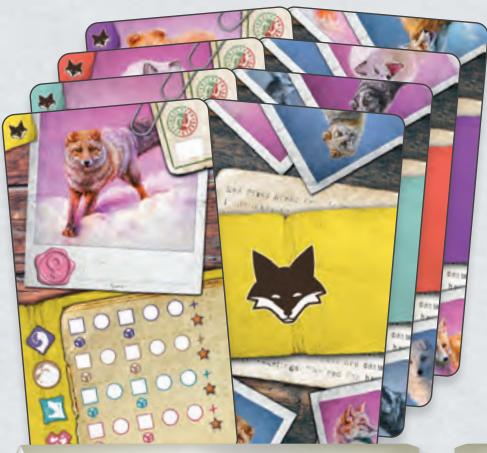
48 Blank fox cards (12 per player color)
36 Parent fox cards (male & female)

Turn order tokens


4 Reference cards

Score card
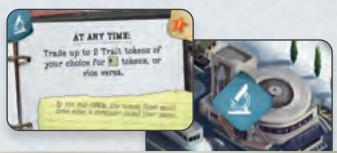
Supply, Trait, Point& Friendly tokens


6 Patron cards
30 Science cards
24 Study cards


40 Fox meeples & 4 Gear tokens (10 fox meeples & 1 gear token per player color)
Contents
Components .02
Setup .04
Overview .. ..08
Phase 1: Selection ..08
Phase 2: Breding.... ...10
Phase 3: Research .. ..13
Phase 4: Administration ..16
Next Generation . ...19
Game End & Scoring... ..22
2-Player Mode... 24
Solo Mode ..28
Notes & Credits .33
Appendices ..34
Science cards ..34
Patrons ..... .35
Turn Summary ..36

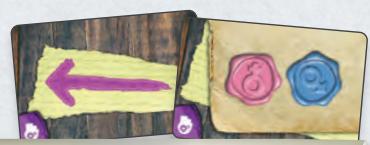
6 A.I. selection cards


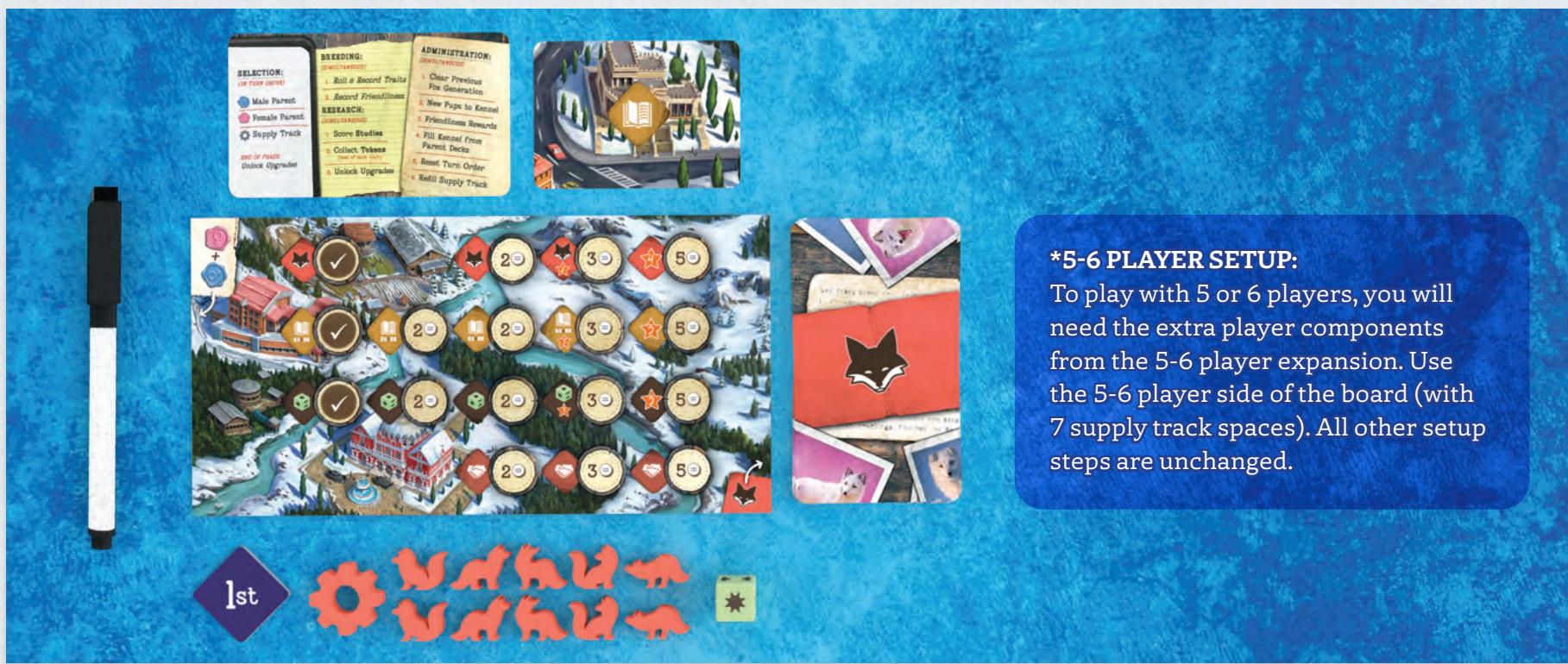
Setup BOARD & KENNEL SETUP

Game Board: Place the board in the center of the table, with the 1-4 player side faceup (with 5 spaces on the supply track). Use the other side of the board if you are playing with the 5-6 player expansion.
Science Cards: Shuffle the Science deck and place it facedown in the marked space on the board.

Study Cards: Shuffle the Study deck and place it facedown in the marked space on the board.

Supply Tiles: Mix up the octagonal Supply tiles and stack them facedown on the space with a gear icon at the top of the board (the red space on the left is for discards). Then deal faceup tiles in the following locations:
Supply Track: Leave the first space to the right of the stack empty (it has a red to indicate that it does not get a tile). Then fill each following space down the row with 1 faceup Supply tile, until you have filled the space marked with your player count. For example, in a 3-player game, you will place tiles on the second, third, and fourth spaces.
Patron Spaces: Place 1 faceup Supply tile on each of the 4 patron spaces down the left side of the board.
Patron Cards: Shuffle the deck of Patron cards and draw 4 Patron cards. Place the first 2 with side A faceup to the left of board, next to the top 2 patron spaces. Place the next 2 with side B faceup next to the bottom 2 patron spaces.

Fox Kennel:
Separately shuffle the decks of female parents and male parents.


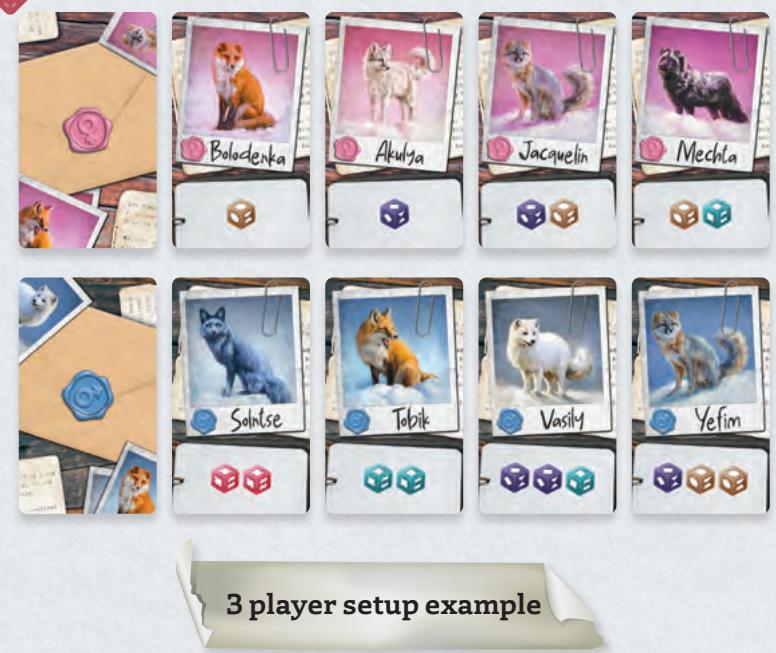
Make sure you have enough space, then deal out a faceup row of male parents and a faceup row of femaleparents. Each row should have 1 more card than the number of players. For example, in a 3-player game, there should be 4 males and 4 females.
Place the decks at the end of each row. Leave room for a discard pile for each row.
7 Public Components: Pile the following components near the board, where all players can reach them. You may want to split these into separate piles.
Trait dice
Friendly dice
Trait tokens
Friendly tokens
Point tokens
8 Scorecard: Set aside the dry-erase scorecard. It will not be used until scoring at the end of the game.

PLAYER SETUP
Player Components: Each player chooses a color and takes the following components:
Their player mat
1 player color gear token
10 player color fox meeples
12 player color blank fox cards
1 green friendly die
1 dry-erase marker
1 player aid card
2 Player Foxes: Each player shuffles their blank foxes and places them in a facedown pile on the right side of their player mat.
3 Starting Turn Order: Give the "1st" turn order token to the player who has the friendliest pet (or choose randomly). Going clockwise around the table from the 1st player, give each player the next-numbered turn token. Return any leftover tokens to the box.
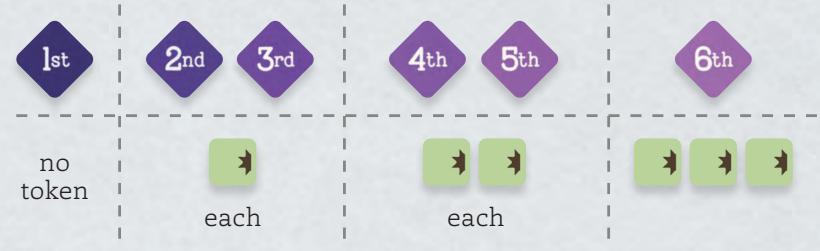
Starting Friendly Tokens: Players receive starting friendly tokens based on their position in turn order.
5 Starting Studies: If this is your first game, deal 1 study card to each player. Otherwise, deal each player 3 study cards. Each player chooses 1 to keep, then returns the other 2 to the bottom of the deck. Place your study card faceup near your player mat.
2 PLAYER & SOLO SETUP:
For a 2-player game, set up the board and kennel as if you were playing with 4 players. For a solo game, set up the board and kennel for 3 players. Additional setup and special rules for 2-player and solo games are on p. 24 and p. 28.
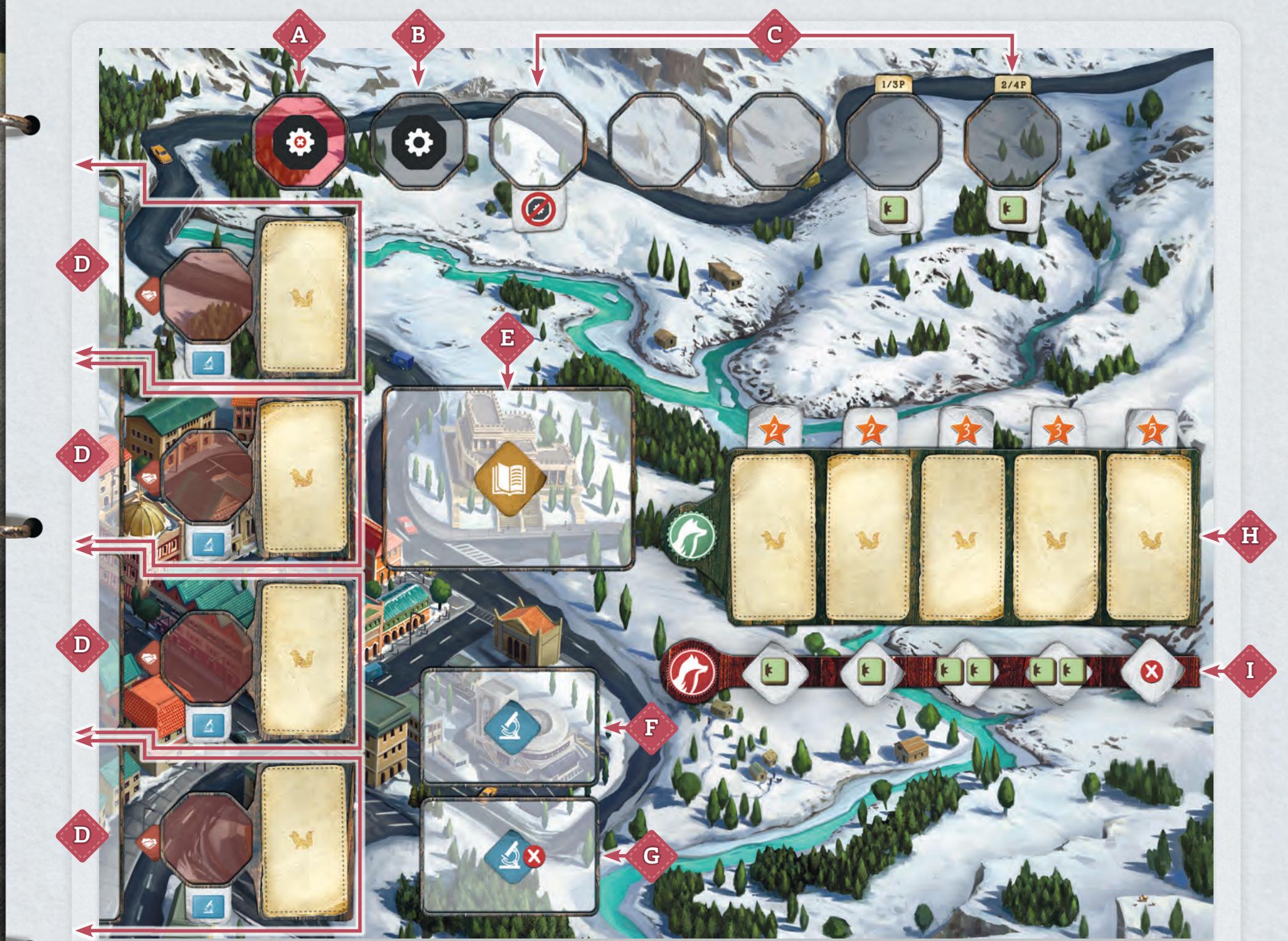

SUPPLY TILE DISCARD PILE
SUPPLY TILE STACK
SUPPLY TRACK
1/3 players - 4 spaces.
2/4 players - 5 spaces.
5 players - 6 spaces on back.*
6 players - 7 spaces on back.*


PATRON SPACES
Available patrons accessed via upgrades. Scores at the end of game.
STUDY DECK
SCIENCE DECK

FRIENDLINESS REWARD TRACK & ROUND COUNTER
Player fox meeples on the track at the end of the game score points above.

RED REWARD TRACK
Reward for players who did not place a fox meeple on the friendliness reward track above that round.
Overview
The goal of the game is to score the most points by the end of the 5th round (generation). You'll do this by breeding the friendliest foxes, completing the most studies, and attracting patrons.
Each round has 4 phases:

Selection Phase: Players take turns choosing parent foxes and supplies.
2 Breeding Phase: Players roll dice to make new fox pups, trying to complete trait symbols. Each different symbol on the dice represents one of the traits that foxes developed during the experiment:

Tails: Foxes' tails curled up, and some started wagging their tails in reaction to humans.

Ears: Foxes' ears stayed floppy longer after birth.

Barking: Foxes started to bark and whimper in reaction to humans.

Spots: Foxes started getting spots, often in the middle of their foreheads.
3 Research Phase: Players use the completed trait symbols on their new pups to:
Complete studies to score points; and
Gain trait tokens that can be combined to unlock upgrades.
Administration Phase: Pups are judged for their overall friendliness (number of completed trait symbols), and then are made available as parents in the next generation.
FIRST GAME TIP: The Breeding and Research phases are normally simultaneous. During your first round, you may want to take turns doing each step to be sure that everyone understands the rules.
Phase I: Selection
Each year, scientists chose the foxes they would breed from the previous year's pups. They selected only based on personality: the friendliest 10 percent of foxes became parents for the next generation.
During the Selection phase, players take turns in order, according to their turn order tokens. Turn order is clockwise in the first round, but may not be in future rounds.
Each player will take a total of 3 turns during each Selection phase. Each time you take a turn, you will select oNE of the following items:
A female fox parent (); OR
A male fox parent (); OR

A supply track position ()
You must select one of each item over the course of your 3 turns, but you may select items in the order of your choice. For example, one player might select turn order then parents, and another might do the opposite.
After everyone is finished selecting items, all players have an opportunity to unlock upgrades before moving on to the Breeding phase (see p. 10 and p. 19).
SELECTING FOX PARENTS
To select a male or female parent, take the desired fox card from the kennel and place it to the left of your player mat. Do not draw a new fox to replace the fox you selected (the kennel will refresh at the end of the round).
DRAWING A RANDOM FOX: If you do not like any of the foxes on offer, you may instead draw a random fox from the deck of male or female parents. All foxes in the parent decks have between 1 and 3 random trait dice (2 dice is most common). All traits are equally represented in each deck.

TIP: When selecting parents, foxes that give more dice are generally better for you. You especially want parents with dice that match the traits on your study card(s)!
SELECTING A SUPPLY TRACK POSITION
Claiming a position on the supply track provides you with immediate supplies and determines your place in turn order for the next round. When you claim a space on the track:
Immediately collect all supplies shown on that space from the public piles (including ALL icons shown on the supply tile AND any printed on the board underneath). Place the supplies you gain in a personal stash near your player board.
2 Discard the supply tile (place it faceup in the discard pile to the left of the stack).

3 Place your gear token on the space the tile occupied.
4 Keep your current turn order token for now (the token that says "1st," "2nd," etc). These will be redistributed during the Administration phase (see Reset Turn Order on p. 18).
SUPPLIES


Draw 1 science card from the top of the deck. You may look at it and keep it secret until you decide to use it. Science cards provide one-time-use bonus actions. See p. 34 for more details on each card.

Take 1 friendly token from the public pile. Friendly tokens can be spent when breeding fox pups to finish additional trait symbols (p. 11). Note: Supply tiles never give you dice, only tokens.
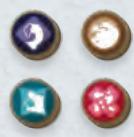
Take 1 trait token of the type shown from the public pile. Trait tokens can be spent to unlock upgrades on your player mat at the end of the Selection phase or the Research phase, so that you can make more pups, work on more studies, roll more dice, and score more patrons (p. 35).

TIP: Early game, ifyou don't know what supplies you want, try to collect trait tokens that match the dice on your parents. This may help you unlock an upgrade later!
Take 1 trait token of your choice from the public pile.
END OF SELECTION PHASE: UNLOCK UPGRADES
At the end of the Selection phase, after each player has taken 3 turns, players may simultaneously decide whether to spend sets of matching trait tokens to unlock upgrades on their player mats.
Upgrades can be unlocked at the end of the Selection phase AnD at the end of the Research phase. This is explained in more detail in the section on the Research phase (p. 13).
TIP: You won't have any full sets of matching tokens at the end of the Selection phase in the first round, but in future rounds unlocking upgrades before you start breeding can be very important!

Red places their geartoken on the 3rd space on the supply track. They gain the supplies shown, and discard the tile from that space.
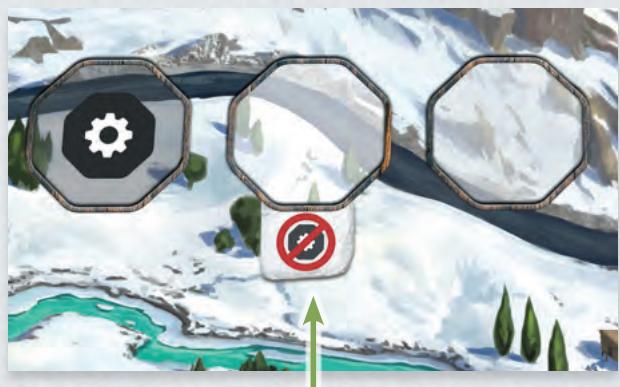
FIRST SUPPLY SPACE: The first space on the supply track does Not have a supply tile. Taking this space grants you no supplies, but guarantees that you will be 1st in turn order next round.
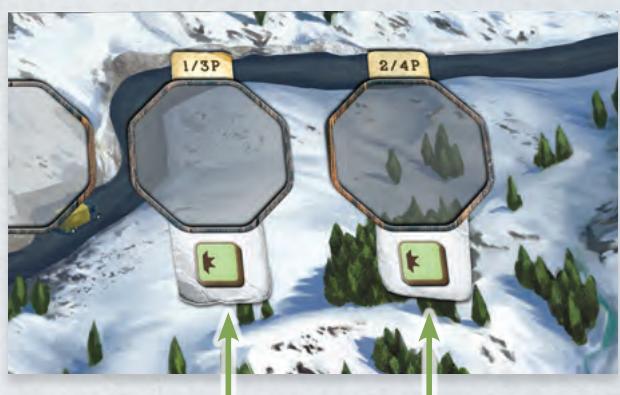
EXTRA SUPPLY ICONS: Positions further right on the supply track have extra supplies printed below the tile. When you claim a position, you gain both the icons printed on the supply tile AND any printed below it.
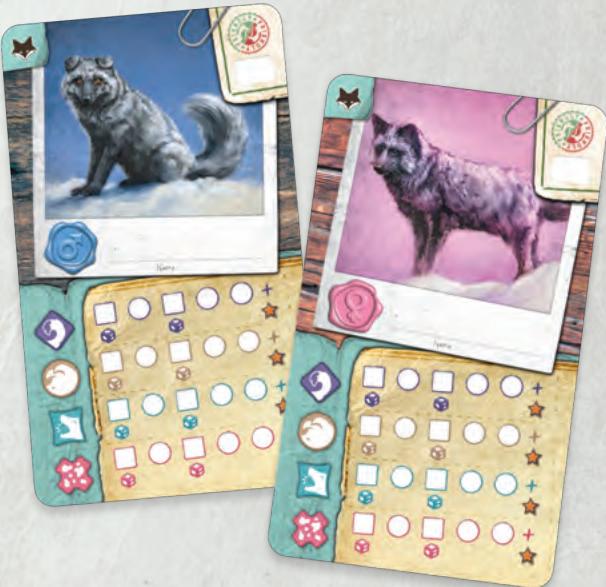
All blank pups in your deck are the same, except that half are maleand half are female

This player gathers:
From their father fox (Julsbar ): 1 ear die and 1 spotdie.

From their mother fox (Vera ): 1 barkdie and 2 spotdice.
From their player mat: 1 friendlydie.
PLAYER FOXES: Beginning in the second round, the kennel will include foxes that were made by players. Player-made foxes provide 1 trait die per marked square with a die icon underneath it (see example on p. 19).
Phase 2: Breeding
The friendly foxes started showing new traits like spots much more frequently than you would expect from random mutations. The scientists hypothesised – and later showed through DNA analysis – that wild foxes had the genes for these traits all along. The difference was that friendly foxes had much lower levels of stress-related hormones and higher levels of serotonin. These hormonal changes and gene expression caused many of the changes the scientists were seeing.
During the Breeding phase, all players simultaneously roll dice to make pups from the parents they selected. To make each of your fox pups, follow the steps listed below (detailed in the following sections). You do not have to wait for other players to complete a step to move on to the next one.

Draw a Blank Pup


Gather Dice
Roll Traits
BREEDING MULTIPLE PUPS: Some upgrades you can unlock allow you to make multiple pups each round. See Making Multiple Pups on p. 19 for details.

Record Traits

Record Friendliness

Name Pup
TIP: Don't forget your friendly dice. They are very helpful!



DRAW A BLANK PUP
Reveal the top card from your blank fox deck and place it to the right of your player board (don't mix it up with your parents, which are placed on the left).

GATHER DICE
Next, gather together the following dice from the public pile:
Friendly Dice: If you have not already, gather friendlydice so you have the number you have unlocked on your player mat. You start the game with 1 die unlocked, and can unlock more through upgrades.
Parent Dice: Gather ALL trait dice shown on BoTH parent foxes you selected.

ROLL TRAITS
Roll all the dice you gathered and sort them by trait. Arrange them to complete as many trait symbols as you can.

These dice can be arranged to make 1 complete tail symbol and 3 complete barksymbols.
A die showing 2 half-symbols does not have a completed symbol by itself. You must match each half-symbol to another die to complete a symbol.

Friendly Dice and Tokens:
As the experiment progressed, friendlier foxes developed more physical domestic traits. Friendlydice and tokens are wild, helping you complete symbols of any trait.


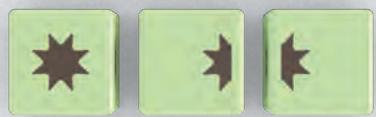
Friendly dice are wild and can be matched with any other trait dice to complete symbols. This counts as 1 earsymbol.
A friendly die with 2 half-symbols can be matched to 2 different trait dice. This counts as 1 tailand 2 spot symbols.
When you make a complete symbol using ONLY friendly dice (or tokens), it counts as 1 symbol of any trait of your choice.

If you have any friendlytokens in your personal stash, you can spend them exactly as if they were friendly dice with half-symbols on them, except that you must discard each token you use after you finish breeding your pup. You can spend any number of friendly tokens on a single pup. You can even spend 2 tokens together as 1 complete symbol of any trait. The dice and tokens shown here count as 1 spot and 2 of any trait(s).
NOTE: Round trait tokens are the rewards you get for having trait symbols on your pups. They are not used to influence your roll results in any way (see Collect Trait Tokens on p. 14)


The Red player rolled 1 complete tail symbol, so they mark 1 space on the tail track. A half symbol is never recorded.
Red made 3 complete barksymbols, so they mark 3 spaces on the barktrack.
At future points in the game, this will mean:
In the Research Phase: Zelda has 1 marked circle, on her barktrack. This means Red will collect 1 barktoken (unless they have another fox with a better bark track).
In the Breeding Phase of the NEXT generation: Zelda has 3 marked squares. This means that if someone selects Zeldaas their female parent, she will contribute 3 dice to their roll (1 taildie and 2 bark dice).

Yellow completed 7 spot symbols. They fill in the 5 spotspaces on their card, then take 2 point tokens and write a 2 to the side.

RECORD TRAITS
Once you have finished arranging your dice, record the results on your blank fox card. For each complete symbol, mark 1 space on the corresponding trait track, going from left to right.
Mark each square with an X. When the pup becomes a parent in the next generation, whoever selects it will gain 1 trait die for each marked square.
Mark each circle with a dot. In the Research phase, you will gain trait tokens based on your best row of marked circles for each trait (see Collect Trait Tokens on p. 14). Do not gain these tokens yet.
Do not record any incomplete half-symbols.
MORE THAN 5 OF A TRAIT: Each trait track has only 5 spaces. If you manage to make more than 5 symbols of a single trait type (such that you fill up the track), you gain 1 point token for each extra symbol you were not able to mark. You also write down the number of point tokens you collected to the right of the track (this will be included in the pup's friendliness total; see below).
5RECORD FRIENDLINESS
After you have marked your pup's traits, count the total number of trait symbols your pup has (on all 4 tracks) and write this number in the box in the top right of the card. This is your pup's total friendliness score. The fox with the highest score will win an award for being friendliest during the Administration phase.
If you filled a trait track and earned point tokens, include the number at the end of the track in your friendliness total.

After filling in your pup's traits and friendliness, you may give it any name you like.

Yellow's pup Lulu has a total of 7 marked spaces (3 earsand 4 barks ). This gives her a friendliness score of7.
Phase 3: Research
Throughout the life of the Belyaev-Trut experiment, researchers have conducted studies to understand the biochemistry and genes involved in domestication. Their ground-breaking work has earned them a great deal of prestige.
During the Research phase, all players simultaneously take the following steps in order (detailed in the following sections). You do not have to wait for other players to complete a step to move on to the next one.

Score Studies

Collect Trait Tokens

Unlock Upgrades

SCORE STUDIES
Completing studies with your pups is an important way to gain points. Each study card is divided into 3 levels (shown as columns) which can be completed over the course of the game. At the end of the game, you will add up the points printed at the bottom of the highest completed level on each of your studies.
In order to complete a study level, you must assign onE of your pups to the study that meets the following requirements:
Each study level shows a minimum number of marked spaces on 2 or more specific trait tracks. In order to complete a study level, your pup must have at least the marked spaces shown. It may have more marked spaces (on any tracks) and still complete the study level.
The pup must be sufficient to complete the level on its own. You cannot add together multiple pups to complete a study level, or use trait tokens.
Each pup you make can only complete 1level of1 study. You cannot complete multiple levels of a study card with a single pup, and you cannot assign a single pup to multiple study cards.
Each study's levels must be completed in order, left to right. You cannot "skip ahead" if your pup qualifies for a level you haven't reached yet.
Once you have completed a study level, you can't complete it again. You can only complete the next level of the study, if there is one. Once you've completed the third level of a study, it is finished and can't be completed again.
NOTE: Do not take any point tokens when you complete study levels.
The fox meepletracks your points, which will be scored at the end of the game.

JoJohas 1 ear space and 2 bark spaces marked, which is just enough to complete LEvEL1 of Red's study. Red places a meeple on LEvEL1 to show they've completed it.

Although Yellow's pup Pearlqualifies for LEVEL3 of their study, Yellow has only completed LEVEL1 so far. This means Pearl can only complete LEvEL2. Yellow must hope to make another good pup next round to get to LEvEL3.

The Red player gains 1 tail token and 2 eartokens.

Unlocked starting abilities
Unlockable upgrades


SCORE STUDIES CONTINUED
When you complete the first level of a study, place one of your fox meeples on top of the first column to show you've completed it. When you complete the next level of that study, you move the fox meeple there up to cover the next level. Once you complete the third level of a study, you've finished it and reached the maximum points it will score (10 points).
COLLECT TRAIT TOKENS
After you finish breeding and scoring studies, you collect trait tokens that you can spend to unlock upgrades.
If you bred 1 pup, go through each of its 4 trait tracks and collect 1 trait token of the matching type for each marked circle.
IMPORTANT: If you made multiple pups, you do NoT get trait tokens from every trait on every pup. See Making Multiple Pups on p. 19.
UNLOCK UPGRADES
Upgrades on your player mat can be unlocked at the end of the Selection phase (p. 8) and at the end of the Research phase (now). Unlocking upgrades follows the same rules in both phases.
Your available upgrades are divided into 4 tracks on your player mat.
You must unlock upgrades from *left to right* on each track.
The circle on the right side of each upgrade shows the cost to unlock it, which is always a number of matching trait tokens. The diamond shows the benefit that you unlock. (See p. 15 for a list of available upgrades.)
Each upgrade can be unlocked with trait tokens of any type, as long as they all match (for example, an upgrade that costs "2" can be unlocked with 2 tail tokens, 2 ear tokens, 2 barktokens, oR 2 spottokens). When you spend tokens to unlock an upgrade, place 1 of the tokens you spent on the upgrade circle, covering up the cost, to show that you have unlocked it. Return the rest of the tokens you spent to the public piles.
You must have a *full set* of matching tokens to unlock an upgrade; you cannot partially unlock one. Whenever you unlock upgrades (either at the end of the Selection or Research phase), you may unlock any number of spaces, across any combination of tracks.
TIP: Unlocking more pups can be powerful! It will help you complete more studies each round, and improves your chances for getting trait tokens. It can also improve the parents on offer in the kennel – the more pups you make, the more foxes there will be to select from next round!
THE 4 UPGRADE TRACKS:

As the fox population got friendlier, they began having larger litters with more pups.
The experiment led to many published studies over the decades.

Friendlier foxes underwent biochemical changes that led to the other domestic traits.
The scientists' success helped them attract patronage and support from both inside and outside the Soviet Union.
More Pups:
Each pup upgrade you unlock lets you breed 1 additional pup each round. See p. 19 for detailed rules on breeding and scoring multiple pups.
You can breed up to 3 pups each round if you have unlocked all of your pup upgrades.
Studies:
When you unlock a study upgrade, immediately draw 3 new studies and choose 1 to keep. Return the rest to the bottom of the deck. You can acquire up to 4 studies each game (including the one you started with).
TIP: The study track is the only way to gain new studies. You always want to be working on at least one study, so don't neglect this track!
Friendly Dice:
Each friendly die upgrade you unlock lets you roll 1 more friendly die each time you make a pup. When you unlock a new friendly die, take a friendly die from the public pile and add it to your stash (as a reminder to roll it each time you make a pup).
You can roll a total of 4 friendly dice for each pup if you have unlocked all of your dice upgrades.
Patrons:
When you unlock a patron upgrade, you gain some supplies immediately, and unlock an end-of-game scoring bonus (see Patrons on p. 35).
Choose 1 of the 4 patrons and place 1 of your fox meeples on the space next to them.
Immediately gain the supplies on their supply tile, plus 1 science card (shown below the tile).
At the end of the game, you will score points as described on the patron card.

Points:
When you unlock an upgrade space with a star next to it, you will score points at the end of the game. Do not take point tokens immediately; you will simply add up these points in final scoring (see p. 22).
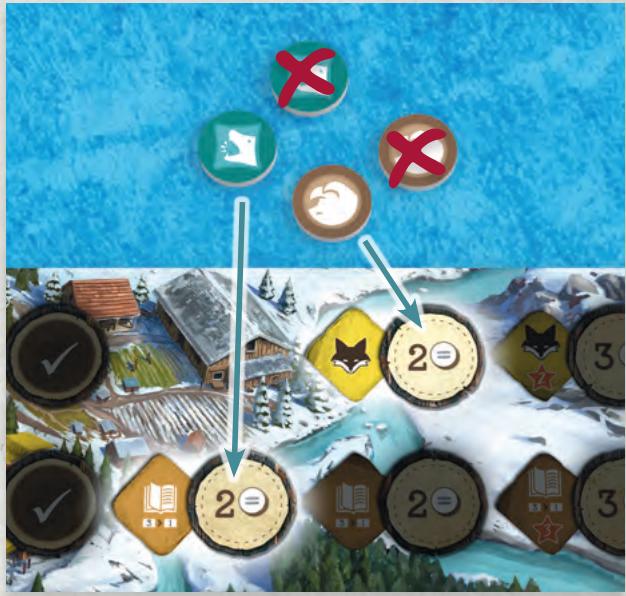
At the end of the Research phase, Yellow has 2 ear tokens and 2 barktokens. They decide they want to spend them on upgrades that will let them breed more pups and work on more studies.
Yellow first spends their 2 eartokens on a pup upgrade, placing 1 eartoken on the upgrade and discarding the other. They then spend their 2 barktokens on a study upgrade, placing 1 barktoken on the upgrade and discarding the other. The study upgrade allows them to immediately draw 3 new studies and choose 1 to keep, so they do this now. The pup upgrade will not come into play until their next Breeding phase.
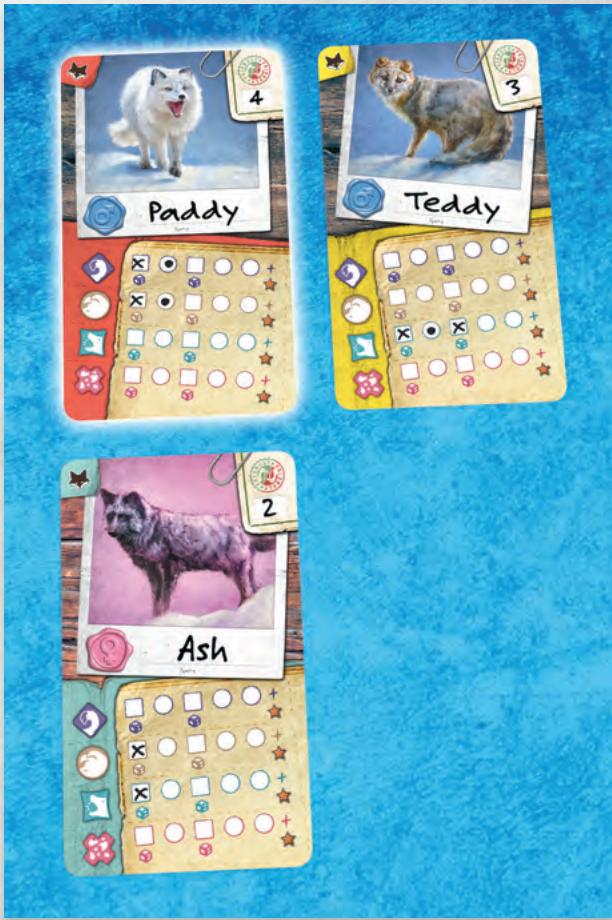

At the end of Round 1, Red has made the friendliest fox (Paddy with a score of 4). Red places their fox meeple on the track and Yellow and Blue each get 1 friendlytoken from the red reward track below.
Phase 4: Administration
During the Administration phase, players take the following steps in order (detailed in the sections below).


Clear Previous Generation

Move New Pups to Kennel
Give Friendliness Awards

Fill Kennel from Decks

Reset Turn Order

Refill Supply Track

CLEAR PREVIOUS GENERATION
At the end of the Research phase, players discard all foxes from the previous generation and return all trait dice they rolled to the public piles.
Unselected Foxes: All foxes remaining in the kennel are discarded (both male and female ).

Parent Foxes: Each player discards Botí foxes they used as parents during the Breeding phase.
Trait Dice: Each player returns all trait dice they rolled to the public piles (but does NoT return unlocked friendly dice; these can be kept near their mat for the following round).
DISCARDING FOXES: Whenever a fox from one of the parent decks (that does Not have a player color background) is discarded, place it faceup in a discard pile near the appropriate deck (male or female ). Whenever a fox that was made by a player is discarded, it is returned to its owner to be placed in a private discard pile near their blank foxes. (If space is limited, you may erase and put them on the bottom of your deck.)

MOVE NEW PUPS TO KENNEL
All players place all new pups they made this round in the kennel, in the appropriate rows (male or female ). The order that pups are placed in each row does not matter.
3 GIVE FRIENDLINESS REWARDS
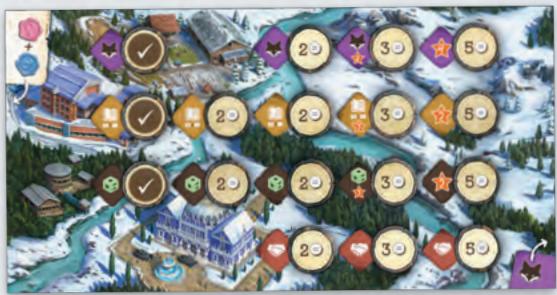
Find the single fox (male or female ) that has the highest friendliness score (written in the top right corner of each fox card) of all the pups made this round. The player who made the friendliest fox places one of their fox meeples on the next empty space on the friendliness rewards track(going left to right). This indicates that they will score the points printed above the space at the end of the game (they do not take any point tokens immediately).
The friendliest fox can be either male or female . Do not evaluate male and female foxes separately.
If 2 or more foxes are tied for friendliest, every player who made one of the tied foxes places a meepleon the track, sharing the next empty space. All tied players earn full points at the end of the game.
If a single player has 2 or more foxes that are tied for friendliest, that player still only places 1 fox meeple .
Once the friendliest fox has been awarded, all players who did not place a fox meeple receive the number of friendlytokens shown on the red reward track below the space where the winner placed their fox meeple
TIP: The friendliness rewards trackalso serves as a round counter for the game. The number of spaces with no fox meeplesshows the number of rounds left in the game (including the current one).
FILL KENNEL FROM DECKS
Each row in the kennel should have a minimum of 1 more fox than the number of players.
If a row does not have enough foxes, fll it up to the minimum by drawing foxes from the appropriate parent deck.
If a row has at least the minimum number of foxes, do not add any new foxes from the deck.
NOTE: Remember that leftover foxes from the previous Selection phase must ALL be discarded. At the beginning of this step, the only foxes in the kennel should be the ones players made this round.
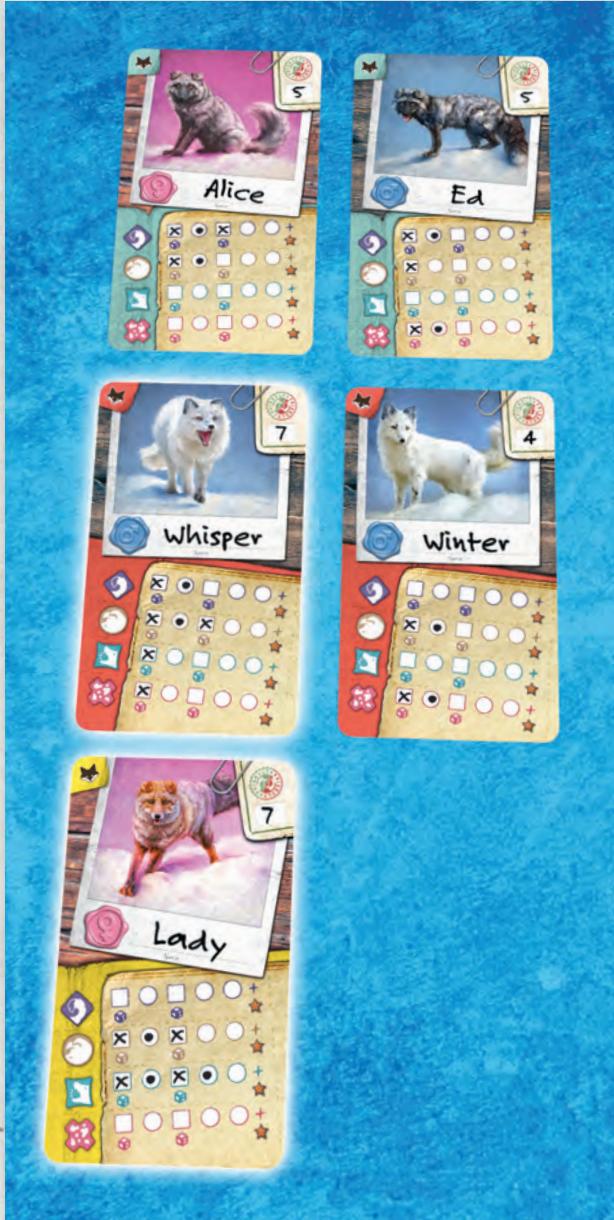

In Round 2, Red and Yellow tie for the friendliest fox with a score of 7, so they both place their fox meepleson the same space. Only Blue receives a friendlytoken as consolation.
FOXLIMIT: In the unlikely event that there are more than 8 foxes in one row of the kennel, you must discard foxes until there are 8 or fewer. Start by discarding the fox(es) with the lowest friendliness score from the row with too many (if there is a tie, discard ALL foxes with the lowest score). Repeat this until there are fewer than 8.
If a large number of foxes are tied, it is possible to end up with fewer than the minimum number of foxes for your player count; if this happens, add wild foxes from the deck until you are at the minimum number.


RESET TURN ORDER
Next, players redistribute their turn order tokens to match the player order on the supply track. Follow these steps:.
Discard any unclaimed supply tiles left on the supply track.
Each player returns the turn order token they have had since the beginning of the round, placing it above the gear token that is in that position on the track. For example, ifyou have the “2nd” token from this round, place your token above the 2nd gear on the track.
Each player takes back their geartoken AND their new turn order token above it. Your new token indicates your position in turn order for the next Selection phase.
REFILL SUPPLY TRACK
Once all players have taken back their gear tokens, deal new faceup supply tiles from the stack. As during setup, leave the first space on the supply track empty, then fill each space with a tile until you reach the space with your player count.
If the stack of supply tiles is ever empty, shuffle the discards to create a new pile.

During the Selection phase, Yellow chose space 1, Purple chose space 3, and Red chose space 4. At the end of the round, they discard the supply tile on space 2 and put their turn order tokens back in the middle, above the appropriate gears Yellow then takes their gear and the "1st" token, Purple takes their gearand "2nd," and Red takes their gearand "3rd."
The Next Generations
Once players have finished the Administration phase, they begin the next Selection phase, starting with the player who has the "1st" turn order token and going in the new turn order. A few things will be different after the first generation:
Player-made foxes will be in the kennel.
Some players may have unlocked the ability to make multiple pups.
The following sections explain both of these changes in more detail.
SELECTION PHASE
From the 2nd round onward, the kennel will contain foxes that were made by other players in the previous round. When a player selects a parent, they may choose ANY of the faceup foxes in the respective row of the kennel. You might or might not get the pup you made last round back as a parent.
Foxes that were made by players give 1 trait die for each marked square on the card (with a die icon printed underneath). Marked circles do not give any dice. The parent's friendliness also has no impact on breeding.
MAKING MULTIPLE PUPS
Unlocking pup upgrades on your player mat allows you to make multiple pups each round. This section covers how to breed, score, and collect tokens from multiple pups.
BREEDING MULTIPLE PUPS:
When you breed more than one pup, follow all steps to roll and record your first pup, then draw a new blank fox card and repeat all the steps for your second pup (and then third, if you have unlocked 2 pup upgrades).
You must fully complete breeding each pup before starting on the next pup. If you use friendlytokens or science cards when making a pup, you must discard them before rolling the next pup. Only move on to the Research phase once you have made all pups you're going to make.
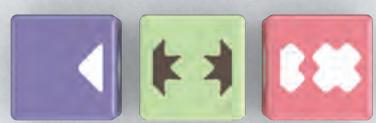
TIP: For each pup you make, you roll the same parent dice AND friendly dice (unless you used a science card to roll additional dice). This means you can re-use the dice you gathered for your first pup when making each subsequent pup.

When selected as a mother, Lady contributes 2 eardice and 2 barkdice.

Red has unlocked 1 pup upgrade, so they can now breed 2 pups. They draw their first pup, roll and record traits, and name him Smudge . They spend 1 friendlytoken and must discard it before rolling their 2nd pup.

Red then draws a 2nd pup and re-rolls all their dice. This time, they decide to use a science card to roll 1 extra bark die.
SCORING STUDIES FOR MULTIPLE PUPS
During the Research phase, each pup you made may complete 1 level of1 study. You may assign your pups to studies in any order, and you may assign them to different studies (if you have also unlocked a study upgrade) or to multiple levels of the same study.
COLLECTING TOKENS FROM MULTIPLE PUPS
If you rolled multiple pups, you do not gain trait tokens from every marked circle on every pup you made. Instead, You gain trait tokens for each trait from only the fox that best expresses that trait.
To do this, first find the fox that has the most marked circles on the tailtrack (the first row). Collect 1 tail token for each marked circle on that fox's tail track (ignore any marked tailon your other pups). Next, find the fox that has the most marked circles on the eartrack (second row), and collect 1 eartoken for each marked circle on that track. Repeat this until you've gone through all 4 traits.
If 2 of your foxes are TIED for the most marked circles of a trait, it doesn't matter which one you choose to gain tokens from (but you still only get tokens from one of them).
PENALTY FOR BREEDING SIBLINGS (OPTIONAL RULE)
This rule can be easy for new players to forget, so we recommend only using it with experienced players.
Breeding foxes that are too closely related can cause genetic problems for their offspring. If players agree before playing to represent this in the game, then any time a player breeds 2 parents that have the same player color (they came from the same player's parents in the previous round), they receive a penalty. After they collect trait tokens in the Research phase, they must immediately discard 2 tokens of their choice that they gained (before unlocking upgrades).
NOTE: Foxes that were dealt from the parent decks do not have a player color, so they may be bred together with no penalty.
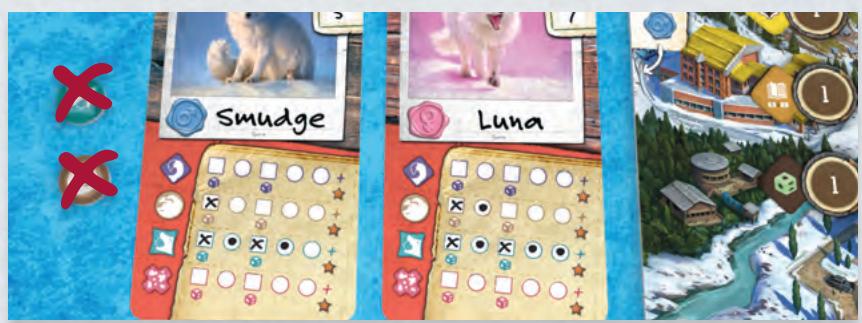
If Yellow selects Red's 2 foxes Smudge and Lunaand breeds them together, they must discard 2 trait tokens.

Red made 2 foxes this round. Smudge has enough traits to qualify forLEvEL 2 of Red's study, and Lunahas enough to qualify for LEvEL 3 – so Red can complete both this round!

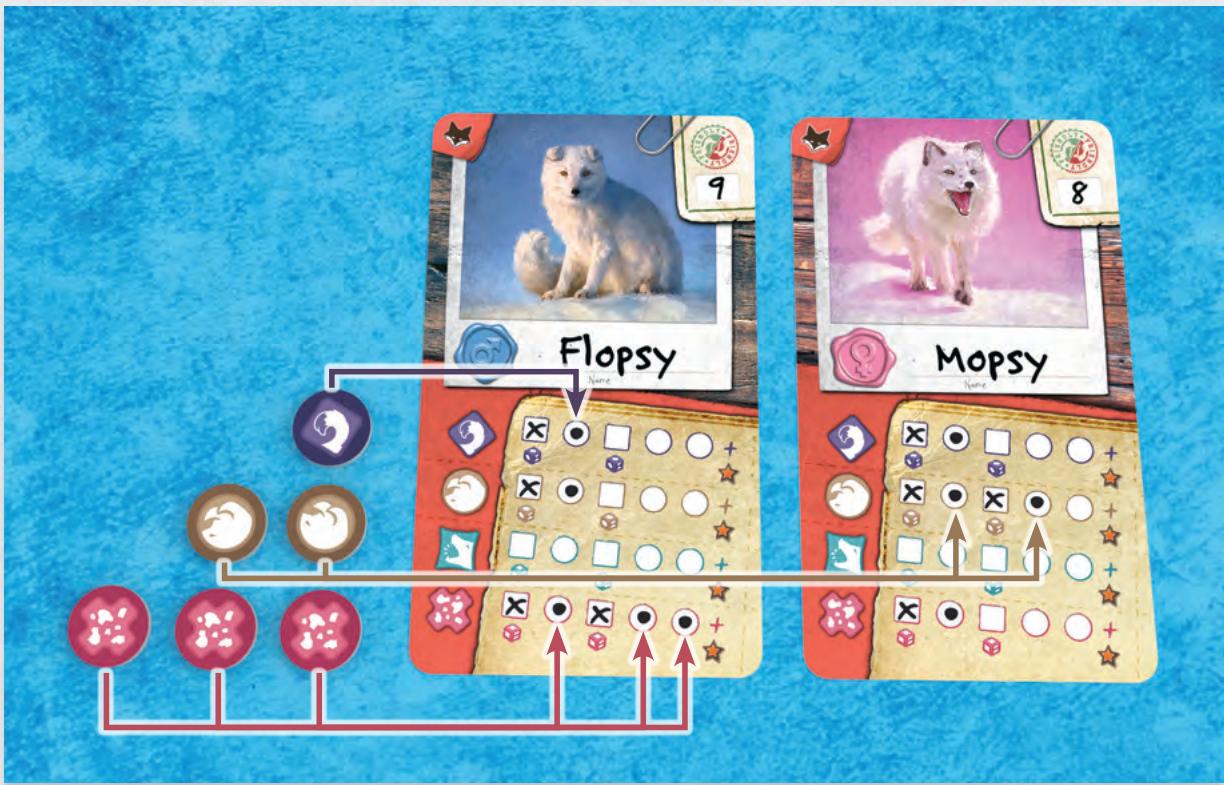
In a later round, Red makes 2 pups, Flopsyand Mopsy .After scoring studies, Red must go through each of the 4 different traits and determine whether they get tokens from Flopsy oR Mopsy.
They gain the following:
1 tailtoken (from either Flopsy or Mopsy)
2 ear tokens (from Mopsy)
3 bark tokens (from Flopsy)
Game End \$ Scoring
After players earn friendliness rewards at the end of the 5th round (and the friendliness rewards track has fox meeples on all 5 spaces), the game ends.
Use the scorecard and a dry erase marker to tally players' final scores. Players score points as follows:

Studies: Score the points printed at the bottom of the highest level you've completed on each of your studies.
Patrons: Score the points as described on each patron where you have a fox meeple (see Patrons p. 35).
Upgrades: Score the points printed on each upgrade you've unlocked.
Friendliness: Score the points printed above each space on the friendliness rewards track where you have a fox meeple.
Supplies: Score points for your point tokens and leftover supplies in your personal stash:
1 pt per point token
1 pt per science card
1 pt per 2 trait/friendly tokens (added together)
WINNING
The player with the most points wins. In the case of a tie, the player closest to the beginning of the supply track wins.


Red Player

4 studies (10 + 10 + 2 + 2 pts) 24

2 sets of 4 on player mat (2 x 4 pts) 14
2 full columns on player mat (2 x 3 pts)

More Pups track (2 pts) 13


* Studies track (3 + 5 pts)
Friendly Dice track (3 pts)
Rounds 1,2,5 (2 + 2 + 5 pts)9


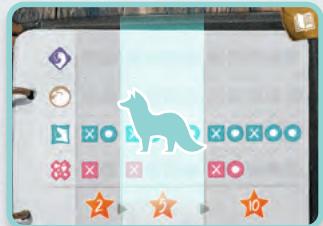
3 science cards (3 pts)

Total

4 trait/friendly tokens (2 pts) 2

Blue Player


3 studies (10 + 10 + 5 pts) 25

4 spot tokens on player mat: (4 x 1 pt) 12
4 sets of 2 matching vertical tokens on player mat: (4 x 2 pts)
* Studies track (3 + 5 pts)
Friendly Dice track (3 + 5 pts)

Rounds 2, 3, 4 (2 + 3 + 3 pts)


Total
* 2 point tokens (2 pts)
3 trait/friendly tokens (1 pt) 1


With this card, the A.I. would select 1 supply track position and one female fox.
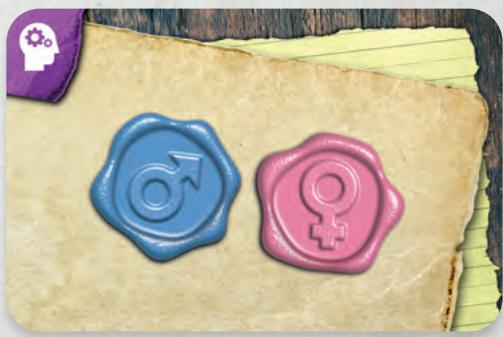

With this card, the A.I. would select one male and one female fox.
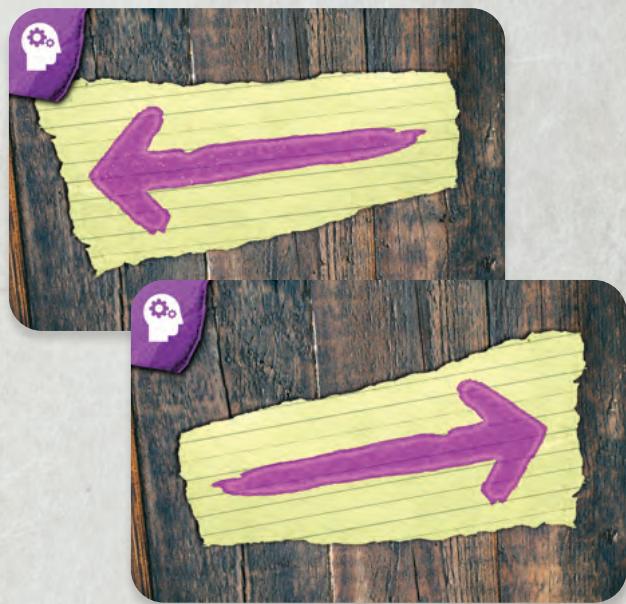
Card backs of the A.I. selection deck feature an arrow to the left or right. These are used when the A.I. is tied when selecting foxes from the kennel.
2-Player Mode
When playing 2-player, you will use a simple automated opponent to make the Selection phase more interesting. It competes against you for foxes and supplies, and adds improved foxes to the kennel, but it does not score points.
EXTRA COMPONENTS
6 A.I. selection cards
12 A.I. study cards


A.I. Selection Cards
SETUP
Set up the board and kennel as if you are playing a 4-player game (draw rows of 5 male and 5 female foxes, and add 4 supply tiles to spaces 2-5 on the supply track)
Assign an unused player color to the A.I. and set it up as follows.
The A.I. does not use a player mat; this can be left in the box.

Shuffle the A.I.'s selection deck and place it within reach of the players.
2 Shuffle the A.I.'s study deck and place it near the selection deck. Reveal the top study and place it faceup next to the deck.
3 Place the A.I.'s gear token and 5 of its fox meeplesnear its selection deck. Return its remaining fox meeplesto the box.

Give the A.I. the "3rd" turn order token.
PHASE 1: SELECTION
During each Selection phase, the A.I. will take 3 turns, in turn order, as if it were a third player. However, each time it takes a turn, it selects 2 items instead of just one. Over the course of the round, the A.I. will select a total of 2 of each item (2 male foxes, 2 female foxes, and 2 positions on the supply track).
At the start of the A.I.'s turn, flip over the top card on the A.I. selection deck. The A.I.
selects the 2 items shown on the card, once each.
3rd A.I. Turn: On its third turn, it is possible that one of the icons on the selection card will be something that the A.I. has already selected twice. If that happens, the A.I. uses this card to select the item it still needs, then flips a 2nd card to find the final item it needs.
SELECTING FOXES
To select foxes, the A.I. uses its study card. Each A.I. study card has 1 trait marked as the A.I.'s #1 priority, and a second trait marked as the A.I.'s #2 priority.
The A.I. always chooses:
The fox with the most dice of its study card's #1 preference.
If tied;
2 The fox with the most dice of its study card's #2 preference. If tied;
The first fox indicated by the arrow showing on the top of the A.I. selection deck. For an arrow pointing left , start from the right hand side and pick the tied first fox that you come to.
When the A.I. selects a fox, do NoT remove it from the kennel. Instead, place one of its fox meepleson the bottom half of the card (lying down to cover the trait dice). Players may not select foxes the A.I. has claimed.

NOTE: The A.I.'s study cards have other information that is used in solo mode only. You can ignore this in a 2-player game.
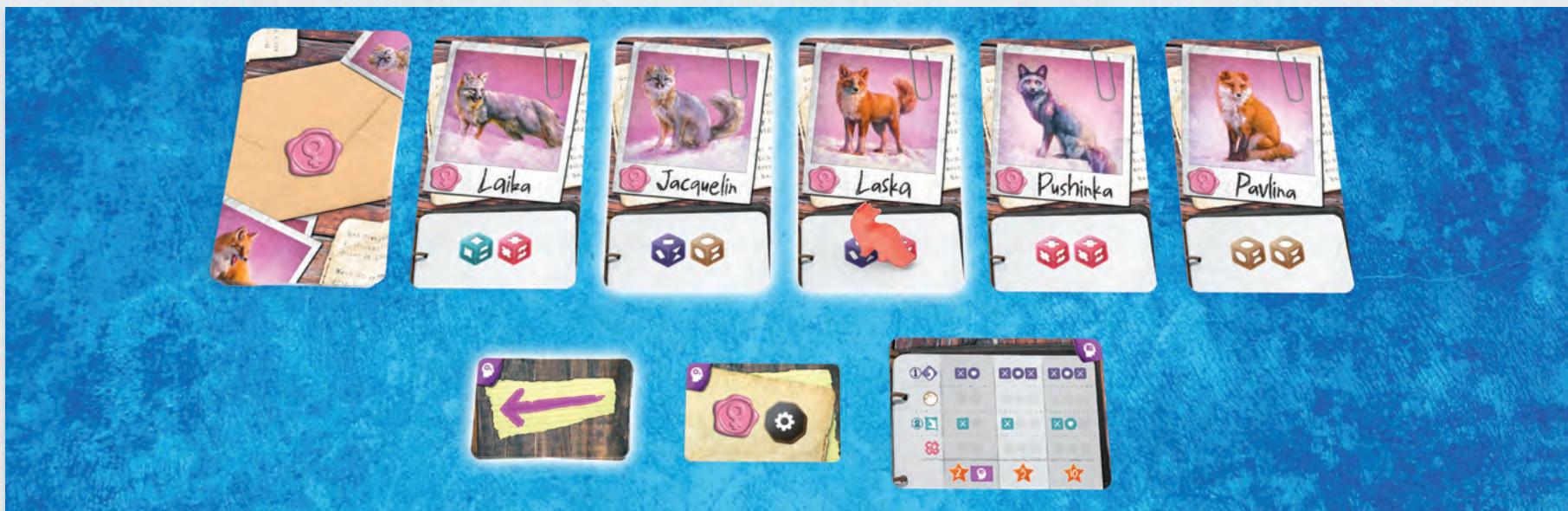
The A.I. is selecting a mother. It first checks which fox has the most taildice. Jacquelin and Laska are tied, so it checks which has the most barkdice. Neither has any bark dice, so the A.I. checks the top of the selection deck and claims the rightmost tied card (Laska).
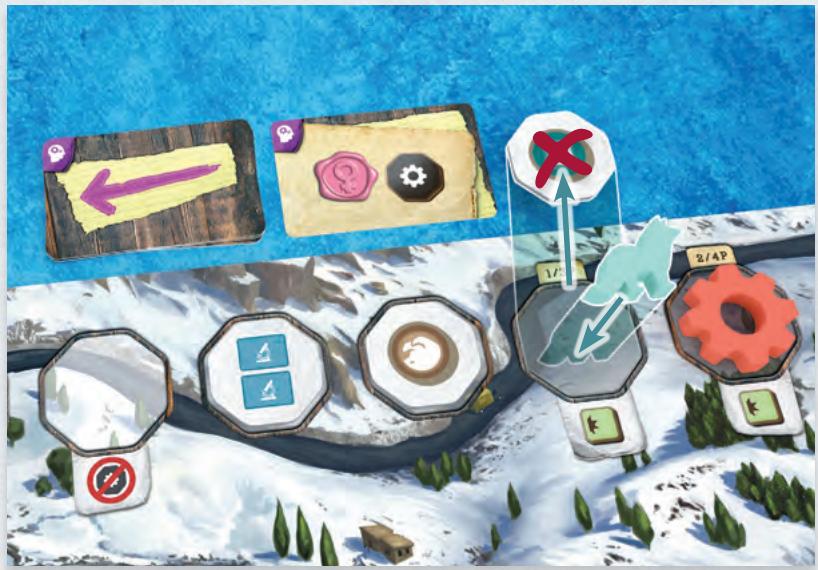
Following the example above, the A.I. claims its first supply track position. The arrow on the selection deck shows that it should start from the right and pick the first open position on the supply track. Position 4 on the track has been claimed by the Red player, so the A.I. places its blue fox meeple on position 3. It discards the supply tile without taking any supplies.

On the A.I.'s next turn, the arrow on the deck shows that it should select the leftmost open position. It places its blue gear on position 1.
CLAIMING A SUPPLY TRACK POSITION

When a gear icon appears, the A.I. claims the rightmost or leftmost available space on the supply track, based on the arrow showing on the top of its selection deck (the back of the top card).
The A.I. does not collect any supplies from the supply track.
It instead blocks players from choosing certain spaces.
The first time the A.I. selects a supply track position each Selection phase, discard the supply tile and replace it with the A.I's fox meeple. This does not determine its turn order; it only blocks this position.
The second time the A.I. selects a supply track position each Selection phase, discard the supply tile and replace it with the A.I.'s geartoken. This determines its turn order in the next round and blocks this position.
PHASE 2: BREEDING
After the players have made their foxes, the A.I. simulates breeding new pups by adding extra trait dice to the foxes it selected and leaving them in the kennel to be selected next round.
Go through each of the 4 foxes the A.I. selected and add dice as follows:
If it is a fox from the deck, take 1 die of each of the A.I.'s 2 priority traits from the public pile and place them on the fox card, next to its printed dice.
If it is a player fox, mark the next empty sQuARE (die space) on each of the 2 trait tracks that match the A.I.'s priority traits. If needed, you may skip over a circle to do so. If both squares on a track are already marked, do not mark any additional spaces.
Each fox (either from the deck or a player) can have a maximum of 2 dice of each trait. If a fox already has 2 dice matching one of the A.I.'s priority traits (either printed/placed on the fox card or marked on its trait track), the fox does not get another die of that trait.
Do not remove the fox meeplesfrom the A.I's foxes (this will be done during Administration).
During the next Selection phase, both players and A.I. treat any extra dice placed on a fox as if they were printed on the card.
PHASE 3: RESEARCH
If any player completes the 3rd level of a study card during this phase, place the A.I.'s study card on the bottom of the deck and reveal a new one to replace it. This changes the A.I.'s priorities going forward.
The A.I. does not participate in any other Research phase activities.
PHASE 4: ADMINISTRATION
Follow the normal Administration steps, with these exceptions:
Clear Previous Generation: When clearing foxes from the kennel, do not clear any fox cards that have fox meeples on them. Instead shift them to the left end of the row.
Friendliness Rewards: The A.I. does not participate in friendliness rewards (ignore friendliness scores on foxes that have A.I. meeples).
After giving friendliness rewards, remove the A.I.'s meeples from all foxes and return them to its stash.
Reset Turn Order: When resetting turn order, the A.I. gets a turn order token based on where its gear token is. Return both its gear token and its fox meeple to the A.I.'s stash.
END GAME & SCORING
Score as normal. The A.I. does not score any points.


Pushok
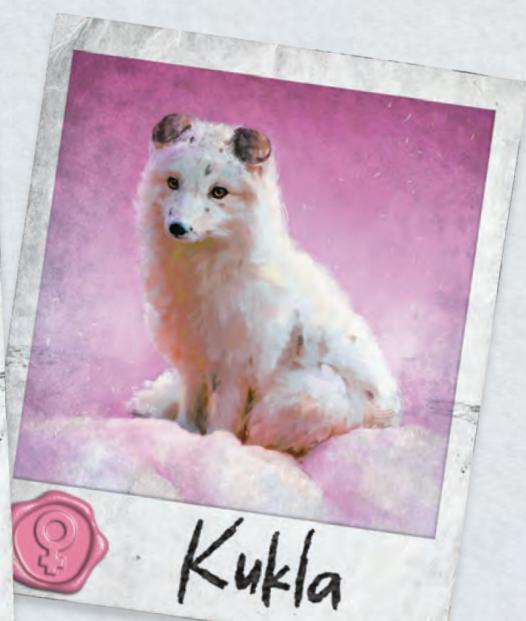

The A.I.'s priorities are ears and spots
Joey : Mark Joey's 2nd earsquare to add 1 eardie. Since both spotsquares are marked, do not add another spotdie.
Pushok : Place 1 ear die and 1 spot die from the public pile on this card.
Rachel : Rachel already has 2 eardice and 2 spotsquares marked, so do not add anything.
Kukla : Kukla was selected by the A.I. in the previous round, so she already has 2 ear and 2 spotdice (counting both her printed and placed dice). Do not add anything.

FOX MEEPLES:
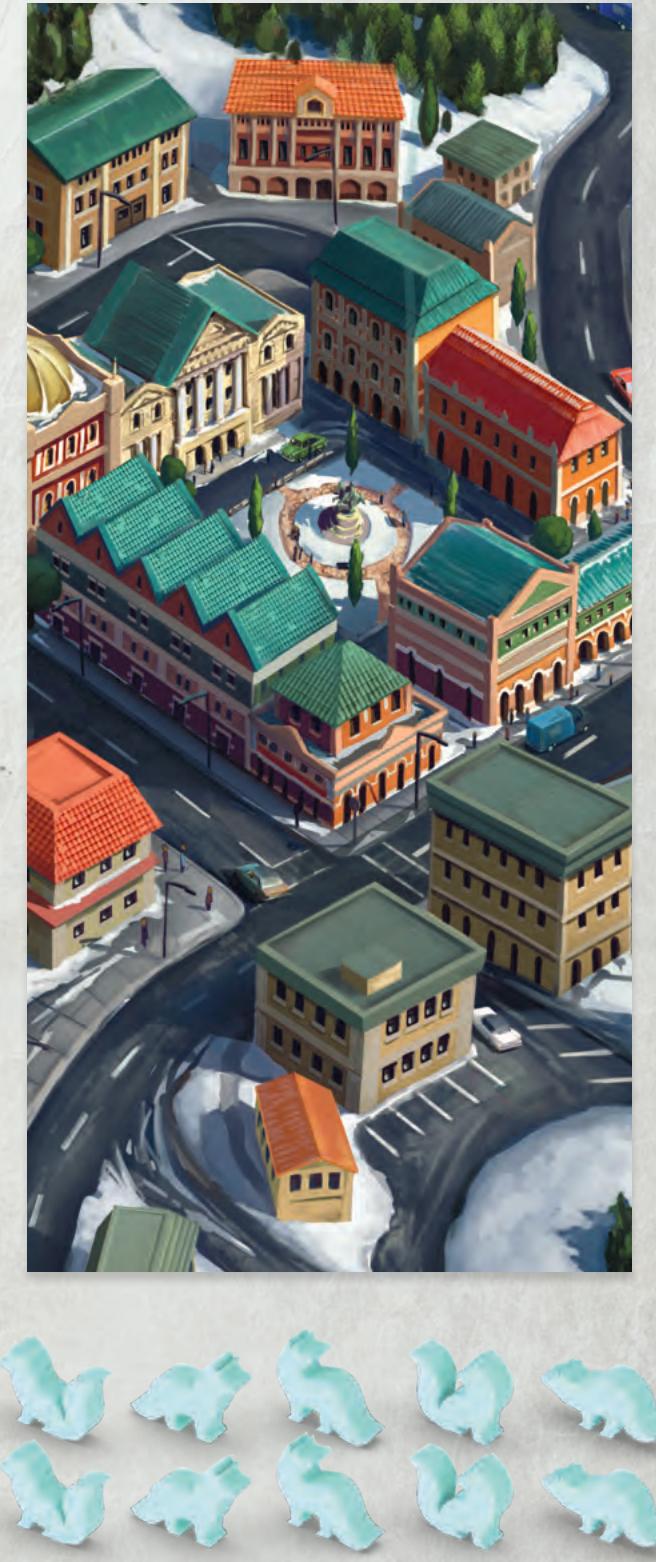
Each player has 10 fox meeples in five different shapes. Sometimes this symbol is used to represent a fox meeple on the board. You can use any fox shape and it does not need to match.
Solo Mode
When playing solo, you will compete against a simple automated opponent. It competes against you for foxes and supplies, marks its own fox cards, AnD scores points based on its study cards. You must beat the A.I.'s score to win!
EXTRA COMPONENTS
6 A.I. selection cards
12 A.I. study cards

SETUP
Set up the board and kennel as if you are playing a 3-player game (draw rows of 4 male and 4 female foxes, and add 3 supply tiles to spaces 2-4 on the supply track).
Assign an unused player color to the A.I. and set it up as follows.
The A.I. does not use a player mat; this can be left in the box.

Shuffle the A.I.'s selection deck and place it within reach.
Shuffle the A.I.'s study deck and place it near the selection deck.
Reveal the top study and place it faceup next to the deck.

3Place 1
内容过长,此处只内联前一部分;完整内容请下载或到规则页阅读。
下载 Markdown原文为社区整理/出版社公开资料,版权归原作者,仅供个人学习查阅。