
横跨大西洋Transatlantic
一句话概览
横跨大西洋 是一款已收录于村了吗规则库的桌游,支持 2–4 人,原名 Transatlantic。
本页内容:一句话概览 · 游戏概述 · 1. 游戏组件 · 2. 游戏设置 · 3. 海洋区域与船市 · 4. 运输 · 5. 行动牌详解 · 6. SCOTIA 号 · 7. 游戏过程中的计分 · 8. 最终计分 · 9. 变体规则 · 10. 关键规则与常见问题 · 游戏结束 · 常见问题
横跨大西洋 规则速览
以下规则速览由本站整理,与官方规则书表述不同,仅供快速上手参考。
游戏概述
19 世纪跨大西洋航运的黄金时代,玩家扮演海运巨头,通过购买蒸汽船、铺设航线、建设交易所来扩张海上帝国,在船运竞争中获得最多胜利点数者获胜。
核心机制: 手牌管理、船队调度、区域控制、资源管理(煤炭)
1. 游戏组件
| 组件 | 数量 / 说明 |
|---|---|
| 海洋区域板 | 5 块(正反面:北大西洋/纽约;或美国港口) |
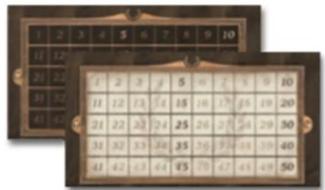
| 计分表 | 1 块 |
| 船市板块 | 1 个(由 3 块拼接) |
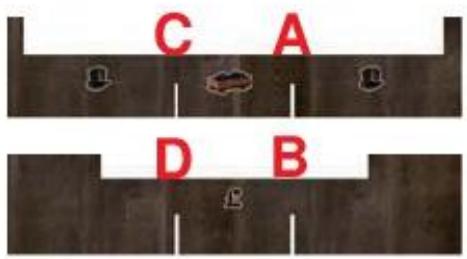
| 盒子插件 | 4 个(可组装为游戏盒分隔) |
| 玩家面板 | 4 块(对应 2–4 人) |
| 船长标记 | 每色 10 个 |
| 交易所标记 | 每色 7 个 |
| 经理标记 | 4 个 |
| 金钱纸币 | 80 张(£10 / £20 / £50 / £100) |
| 帆船 | 4 张 |
| 蒸汽船 | 45 张 |
| 总部建筑 | 5 张 |
| 中立船——Scotia 号 | 1 张 |
| 行动牌 | 54 张 |
| 扩展牌 | 22 张(A/B 两套) |
| 起始玩家牌 | 1 张 |
| 分数标记 | 8 个 |
| 最终计分一览卡 | 2 张 |
| 蓝丝带标记 | 12 个 |
| 煤堆标记 | 16 个 |
| 货物标记 | 13 个 |
| 信件标记 | 12 个 |
| 乘客标记 | 13 个 |
| 合同标记 | 32 个(面值 1、3) |
| 煤炭方块 | 40 个 |
2. 游戏设置
2.1 区域板设置
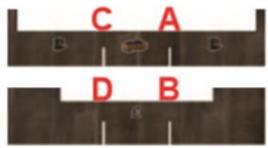
除 North Atlantic(北大西洋)区域外,再增设与玩家人数等量的其他区域(见区域板标注的 A/B 标识),或使用版图反面的美国港口(New York)进行游戏。所有区域放置就位。
2.2 船市板块设置
将船市的 3 部分板块拼接在一起,放置在区域板块上方。
2.3 扩展牌设置(如使用)
翻开 22 张扩展牌,按背面字母分为 A/B 两堆,A 堆放在 B 堆之上。翻开最上方 5 张作为展示牌,扩展牌堆及展示牌置于船市上方。
2.4 计分表与银行
计分表放在区域板块附近。银行提供现金、煤炭方块以及 5 种不同标记(货物、信件、乘客、煤堆、合同),供应无限。
2.5 玩家个人设置
每位玩家获得:
- 1 块玩家面板
- 10 个船长标记
- 7 个交易所标记
- 1 个经理标记
- 2 个分数标记
- 现金 £150
- 7 张本色的玩家牌(总裁变体中额外获得 7 张总裁牌)
2.6 船与总部初始化
- Scotia 号中立船放置于 North Atlantic 区域。
- 每位玩家随机获得 1 张帆船。帆船年代最久远的玩家成为起始玩家,领取起始玩家牌。依次按顺时针方向,每位玩家将帆船部署在最左侧有 3 个空位的区域顶部,并放上自己的船长标记。部署完毕后每个区域各有 1 艘船。
- 码头船设置(根据玩家人数从编号 0–9 的牌堆中抽取):
- 2 人游戏:从 0–9 各抽 2 张 = 18 张
- 3 人游戏:从 0–9 各抽 1 张 = 9 张
- 4 人游戏:不抽取,码头为空
抽出的船按旗帜颜色分类后放置于计分表下方的公共码头区。 - 总部牌(编号 10)放入船牌堆底部,接着依编号 9→1 的顺序向上叠放,1 号堆在最顶。
- 从船牌堆抽取 6 张牌从左到右填满船市。
2.7 开局购船阶段
游戏开始前,从末位玩家开始逆时针顺序,每位玩家从船市各购买一艘蒸汽船并完成部署(补满船市但不进入码头)。然后起始玩家打出第一张行动牌,游戏正式开始。
3. 海洋区域与船市
3.1 购买船只
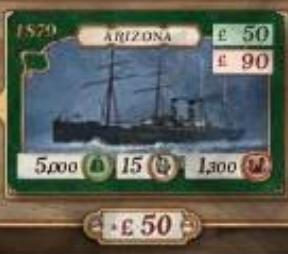
从船市买船时,总费用 = 船卡牌右上角红色售价 + 当前所在格位的额外费用,支付给银行。
补满流程(每次购船后):
1. 最左侧的船移入计分表旁的码头区。
2. 其余船向左移动填补空位。
3. 从牌堆中抽出等量新船填入右侧剩余空位。
3.2 部署船只
打出相应行动卡后,可将新船部署到某个海洋区域的最上部空位。
部署规则:
- 新船按建造年代排序,总是置于老船上方。进场船只有在区域内是"年代最新"时才可进入该区域。
- 例外情况:若没有其他区域的最上部能容纳进场船,则该船可根据建造年代插到其他区域中间的空位(前提是该区域还有空位)。
- 进场导致某区域满员时,最老的船被推出;拥有者可立刻将其重新部署到其他可用区域。无法重新部署则报废。
报废处理:
1. 该船最后运输一次(获得收入 + 交易所分数)。
2. 按"船的计分"方式计分。
3. 移出游戏,不进入码头。
特殊情况:
- 新购船若无法进入任何区域,则留待最终计分轮计分。
- 在新北大西洋(或 New York)区域,如果新进场的船是航速最快的,获得方玩家拿取 1 个蓝丝带标记放在自己玩家板上。
3.3 购买总部
总部以与普通船只相同的方式通过船坞行动购买,但需额外支付所在船市格的附加费。
限制:
- 可一次购买 1 艘船 + 1 个总部,或只购买 1 个总部。
- 不可一次购买 2 个总部。
- 仅购买总部时,没有船进入码头,船市照常补满。
- 购买后将总部牌放于玩家板旁,上面放 1 个船长作为标记。
4. 运输
标记有锚形符号的行动牌(运输、区域、蓝丝带、全球、货物、旅行)均可触发运输。
标准运输步骤:
1. 每艘参与运输的蒸汽船失去 1 个煤炭方块。无煤炭的蒸汽船不能运输(帆船无需煤炭)。
2. 船拥有者从银行获得收入的绿色数字所示金额。
3. 若该玩家在该区域有交易所,每个交易所为该运输船带来 1 分。
> 例外计费方式: 货物和旅行行动牌的收入计算不同于标准运输(详见第 5 节)。
5. 行动牌详解
每个回合,玩家从手牌中选择 1 张行动牌执行(隐藏的牌堆面朝下,最近打出的牌面朝上,所有玩家可见)。
5.1 船坞 — Purchase
效果: 从船市购买 1–2 艘蒸汽船。
1. 每艘新购船配备 1 个船长、装载 1 个起始煤炭方块。
2. 必须立即部署其中 1 艘到海域;另一艘放在自己面前等待区。
扩展版船坞牌: 同普通船坞,可选择其中 1 艘多装 1 个起始煤炭方块。
5.2 运输 — Transport
效果: 让 2 艘自己的船运输。
- 先检查是否有空闲位,如有可选择部署 1 艘新船再运输。
- 每艘参与运输的蒸汽船消耗 1 个煤炭,获得各自收入(绿色数字)。
- 若你在该区域建有交易所,每个交易所每船加 1 分。
扩展版运输牌: 最多可使用 3 艘船运输。
5.3 区域 — Region
效果: 选择 1 个海洋区域,该区域内所有蒸汽船(含其他玩家的船)均运输。
- 你额外收取其他玩家中最老旧的一艘正在运输船的收入作为奖励。
- 各船原主也同时获得各自收入。
- 交易得分规则同上。
5.4 货物 — Cargo
效果: 用 1 艘船运输,根据该船吨位获取收入,最高可达 £300。
- 额外获得 1 分。
- 此收入不按绿色数字,而是按吨位单独计算。
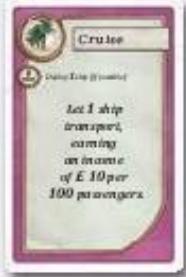
5.5 旅行 — Voyage
效果: 用 1 艘船运输,获得每 100 名乘客 £10 的收入。
- 额外获得 1 分。
- 按该船乘客容量整百计算。
5.6 全球 — Globe
效果: 部署 1 艘船(如有空位),然后在以下两项中择一执行:
- a) 用不同区域各 1 艘船进行运输(每区域 1 艘)。
- b) 用不同旗帜各 1 艘蒸汽船进行运输(每旗 1 艘)。
5.7 船队 — Fleet
效果: 计分行动。每面不同旗帜的蒸汽船可得 2 分。
- 尚未部署、存放在等待区的船同样计入。
5.8 贸易 — Trade
效果: 每个交易所为你带来 £50 收入。
5.9 蓝丝带 — Blue Ribbon
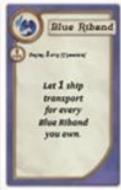
效果: 部署 1 艘船(如有空位),然后根据玩家板上蓝丝带的数量,使用同等数量的船进行运输。
5.10 煤炭 — Coal
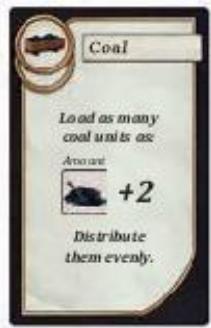
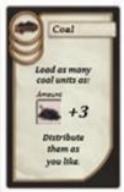
效果: 为自己的蒸汽船补充煤炭。所获煤炭数 = 玩家板上煤堆标记数 + 2。
- 煤炭必须平均分配在已部署的蒸汽船上:优先装满无煤的船,然后再给已有 1 个煤块的船添加(可以同一艘船)。
- 每艘蒸汽船最多携带 3 个煤炭方块。
- 帆船不需要煤炭。
扩展版煤炭牌: 所获煤炭数 = 煤堆数 + 3,且可任意分配到各船(每船上限仍为 3 个)。
5.11 投资 — Invest
玩家从以下 3 个选项中任选 1 项执行:
| 选项 | 花费 | 效果 |
|---|---|---|
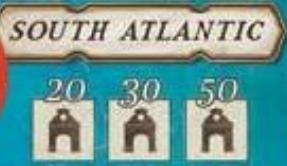
| ① 建交易所 | £20–50(视位置) | 在有自己船的區域建立 1 个交易所,并拿取 1 个标记(煤堆/货物/信件/乘客)放至玩家板 |
| ② 买煤堆 | £50 | 获得 1 个煤堆标记,外加 2 个煤炭方块分配到 2 艘不同船上 |
| ③ 直接拿标记 | £50 | 任取煤堆/货物/信件/乘客中的一项放至玩家板 |
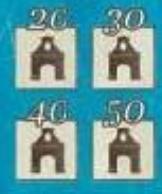
> 限制: 每个建筑点只能建 1 个交易所;每个区域每位玩家不能超过 2 个交易所。North Atlantic/New York 有 4 个建筑点,其他区域各 3 个。
扩展版投资牌: 花费 £100,拿取 2 个不同的标记。此外可免费建 1 个交易所,或者若拿取的标记中有煤堆,给 2 艘不同船各装 1 个煤炭。
5.12 代理 — Agency
你可以复制其他玩家出牌堆最上面一张行动牌的行动,当作自己打出了那张牌。
- 不可复制已经是一张"代理"牌的行动。
5.13 经理 — Manager
- 把手里所有打出的行动牌拿回手牌(至少 4 张,含这张经理牌本身)。
- 回收数量 ≥ 6 张:获得 1 个标记(煤堆/货物/信件/乘客)放至玩家板。回收最大数量 8 张:获得 2 个不同标记。
- 从开放行动区选一张行动牌,立即打出并执行。
- 更新开放行动区:移除最左侧 1 张,其余左移 3 张,补充 2 张新牌保持 5 张展示(重复牌直接弃掉;牌堆用完则洗牌重开)。
5.14 总裁 — Chairman(总裁变体专用)
与经理类似,但有重要区别:
1. 收回手牌(至少 5 张,含总裁牌本身)。
2. 每 3 个合同可购买 1 个标记(煤堆/货物/信件/乘客),可多次购买但不能重复。剩余合同以每张 £20 卖给银行。
3.–4. 同经理(选执行开放区牌 + 更新开放区)。
6. SCOTIA 号
Scotia 是一艘中立船,初始位于 North Atlantic 区域,总是携带煤炭。
经理标记用法: 玩家可以使用 1 个经理标记,从开放行动区免费拷贝 1 张行动牌执行(不从手中出牌)。使用后经理标记移出游戏。开放行动区不变,所有牌保留原位。
7. 游戏过程中的计分
7.1 报废船计分
当某船被推出区域且无法重新部署时:
1. 报废前最后一次运输(获得收入 + 交易所得分)。
2. 按"船的计分"(第 8 节)结算该船价值。
3. 移出游戏,不进码头。
7.2 交易所得分
每艘参与运输的船,如果你在所属区域建有交易所,每个交易所为每船加 1 分。
7.3 船队行动得分
见 5.7 节。
8. 最终计分
船市最后一张蒸汽船被购买后的本轮结束后,再进行 1 轮,随后进入最终计分。
8.1 船和总部计分
按旗帜颜色对照计分表读取分值:
| 旗帜颜色 | 单船分值 | 码头加分 |
|---|---|---|
| 蓝色 | 7 分 | +2 分 |
| 黑色 | 3 分 | +3 分 |
| 红色 | 5 分 | +1 分 |
- 计算公式:
某颜色船数 × (基础分值 + 码头同色加分)。 - 总部按旗帜颜色同等计分。
- 码头中的船适用于所有玩家(不论归属)。
8.2 现金计分
每 £100 现金 → 1 分。
8.3 玩家板标记计分
从玩家板完整行(不含第零行)获取分数:
| 行数 | 完成得分 | 未完成每项 |
|---|---|---|
| 第 1 行 | 5 分 | 1 分/项 |
| 第 2 行 | 10 分 | 2 分/项 |
| 第 3 行 | 15 分 | 3 分/项 |
| 第 4 行 | 20 分 | 4 分/项 |
不完整行中最高那行也算分,按上述"未完成每项"系数乘以当前个数。
> 溢出标记: 即使某列已满仍可收集更多蓝丝带或其他标记,放置在玩家板下方。最终计分时这些溢出标记可使对应旗帜的船额外 +1 分/标记。
8.4 平局判定
分数最高者获胜。平局时,手持最新型船(编号最小)的玩家胜出。
9. 变体规则
两种变体可分别使用或同时叠加。
9.1 船市变体
使用船市板块反面。购船不再支付额外费用,但只有船市前 3 格的船能获得起始煤炭,后 3 格无起始煤炭。
9.2 总裁变体
- 经理行动牌替换为总裁行动牌(见 5.14 节)。
- 引入合同作为新元素:仅在新船进场时获得合同。判断方法:比较该船的三项特征(吨位、航速、乘客容量)与当前区域内所有船的最大值——每有一项是该区域最大的,获得 1 个合同。
- 被推离区域的船不能在另一区域获得合同。
10. 关键规则与常见问题
易错规则
- 每回合只打 1 张牌: 一个玩家的回合 = 打出 1 张行动牌 + 执行其行动。不是一次多张。
- 手牌始终隐藏: 打出的牌面朝上留在弃牌堆(最上一张所有人可见),未打出手牌始终保持私密。
- 经理是回合结束操作: 打出经理牌才回收全部已打出的手牌,不是随时可收。
- 经理牌不可被代理: 如果对手打出的代理牌目标是最上面的行动牌,而那张恰好是经理,则不可复制。
- 煤炭均分而非随意分配: 普通煤炭牌必须平均分配(先填空船再填有 1 块船),仅扩展版煤炭牌允许自由分配。
- 每船煤炭上限 3 块: 无论怎么补给,蒸汽船最多携带 3 个煤炭方块。
- 区域牌影响所有船: 打出区域行动牌时,该区域所有船(含其他玩家的)都要运输扣煤。
- 报废船不入码头: 报废船经一次最终运输后直接移出游戏。
- 商船不计入船队得分: 帆船不参与船队行动计分(船队计分针对蒸汽船)。
- 总裁需 3 合同换 1 标记: 不足 3 个合同时无法兑换;多余合同可按 £20/张卖给银行。
- 总部不计入码头船: 购买总部不会有任何船进入码头。
常见问题
-
Q:船市的附加费用是怎么算的?
A:船牌右上角红色售价 + 当前所在格位标注的额外费用。 -
Q:部署船时区域满了怎么办?
A:最老船被推出,尝试重新部署;仍无处可去则报废(最后一次运输→计分→移出游戏)。 -
Q:蓝丝带怎么获得?
A:在新北大西洋(或 New York)区域进场时,如果你是航速最快的船,获得 1 个蓝丝带。 -
Q:投资三个选项可以同时选吗?
A:不可以。每回合 1 张投资牌只执行 3 选 1。 -
Q:码头的船计分属于谁?
A:公共码头中的船按旗帜分值,为所有玩家计分,不管船只归属。 -
Q:总裁变体和经理变体能混着用吗?
A:不能。全剧只用其中一种:要么全员经理,要么全员总裁+合同。 -
Q:游戏何时真正结束?
A:船市最后一张蒸汽船被购买的那一轮结束后,再多进行 1 轮,随后即终局计分。 -
Q:帆船什么时候参与计分?
A:帆船不消耗煤炭、不产生收入,但在最终计分时与其他船一样,按旗帜颜色计分。
游戏结束
船市最后一张蒸汽船被购买,本回合完成后,再来一轮——之后即告终结,进入最终计分阶段。
分数最高者获胜。
常见问题(FAQ)
以下 1 条问答中 0 条来自站内玩家的真实提问,其余 1 条为本站整理的常见疑问;答复内容保持原样。
横跨大西洋支持几个人玩?
2–4 人。
去哪查完整规则
想核对具体规则细节、卡牌效果或某个回合的结算方式,可以在村了吗里选中这款游戏后直接提问。
同类桌游
- 卡坦岛德式
- 工业革命:伯明翰德式
- 勃艮第城堡:特别典藏版德式
- 方舟动物园德式
- 卡卡颂抽象
- 瘟疫危机传承:第一季美式
- 阿瑞迪亚:勇踏征途美式
- 重塑宇宙德式
- 幽港迷城美式
- 埃多拉的德鲁伊德式
规则原文(Markdown)
本站收录这款游戏的规则原文 2 个文件,此处内联渲染 2 个,可直接展开阅读或下载。
rules_zh_横跨大西洋_1182.md28.5 KB
5个海洋区域板
横越大西洋
游戏配件

5个玩家板,可供2-4人游戏

1个计分表
1个船市(3个组件)



4个盒子插件,可以组装在一起

每位玩家10个船长

每位玩家7个交易所
40个煤炭方块
110张卡牌


54张行动牌
32张玩家牌每人8张

4个经理

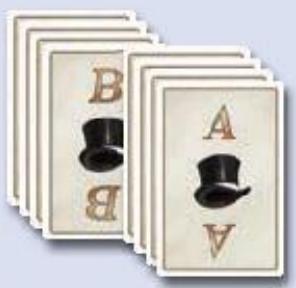
22张扩展牌
(A和B)

1张起始玩家牌
8个分数标记
2个最终计分一览卡

67个标记

12个蓝丝带
16个
煤堆
13个货物

32个合同,价值为1和3
12个信件


13个乘客

55张船和建筑(反面分别为0-10)
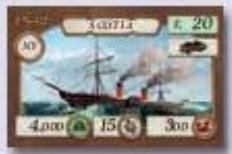
Scotia号

80张纸币(10, 20, 50和100千磅)
4张帆船

45张蒸汽船
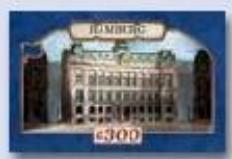
5张总部

1份游戏规则书,1份快速介绍,1本手册“蒸汽船时代”
开始
初始设置详见游戏盒内单页。
每位玩家随机得到1张帆船,帆船年代最久远的玩家成为起始玩家,拿取起始玩家牌。游戏按顺时针进行。
游戏开始前,从末位玩家开始按逆时针顺序,每位玩家从船市购买一艘蒸汽船并完成部署。
玩家隐藏好自己的行动牌,不要曝露给其他玩家。
游戏概览
游戏流程
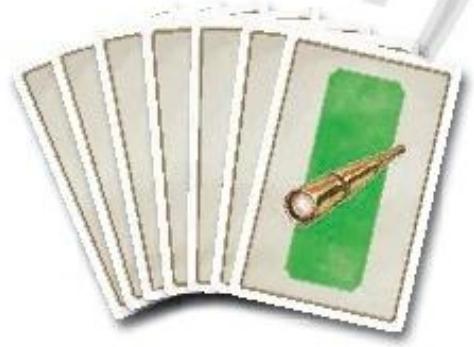
一个玩家的回合包含打出一张行动牌和执行相应行动,打出的牌堆在玩家面前,最近打出的一张牌始终放在牌堆的最上面,其他玩家都可以看到这张牌。当打出经理行动牌时,玩家把打出的牌堆收回手中。游戏过程中,玩家可以获得额外的牌。
玩家从船市买船,将船部署在海洋区域板上。船是最重要的现金来源,尤其是在运输的时候。通过和玩家表上的标记以及港口中立船的组合,船也是最重要的分数来源。游戏过程中会获得分数,譬如当旧船报废时。同样,最终计分时也会获得分数。运输的时候,通过交易所和船的组合同样可以获得分数。
结束
船市里最后一张蒸汽船被购买后,游戏即将结束。本轮结束后,再进行一轮,游戏结束。
淘金小店:多多慧益智桌游馆
淘金小店:多多慧益智桌游馆
船

船市
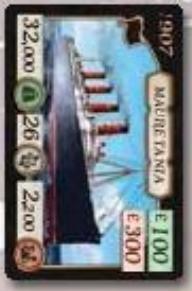
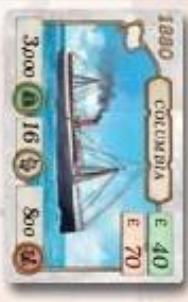
在船市买船时,费用支付给银行。购买的总费用为船卡牌右上角的红色售价加上船市上目前位置的额外费用。最后船市重新上架:最左侧的船移入码头,剩下的船分别移至最左侧的空位,从牌堆里拿取相应数量的卡牌将剩余的空位补满。

例:一位玩家购买NUBIAN号(白色旗帜)花费40镑、购买HAMMONIA号(蓝色旗帜)花费70镑外加30镑额外费用等于100镑。他向银行一共支付140镑,拿走两艘船。此时,船市重新上架:DEVONIA号(红色旗帜)处于最左侧位置,因此将它移至计分表旁的码头。剩下的3艘船向左侧移动,从牌堆里抽取3张新的船牌放入右侧剩余的空位。
部署船只
打出相应的行动卡,玩家可以在一个海洋区域的最上部位置将他的船进场。
新船(根据建造年代)总是放在老船的上方,进场船只有是区域里年代最新的船,才可以进入该区域。也有例外,进场船可以根据建造年代部署在其他船之间,如果该区域仍然有空位,并且在没有其他区域的最上部位置可以进入的情况下。
进场船进入某个区域,所有老船向下移动一个位置。如果一个区域不能容纳更多的船,那么最老的船将被推出该区域,如果有可能立刻重新部署该船(根据上面的规则,由船的拥有者决定)。如果无法重新部署,该船将被报废。这种情况下,该船将会最后运输一次(见“运输”,船的拥有者获得运输收入、从交易所得到分数)。最后,报废的船按照通常方式计分(见“船的计分”)。报废的船移出游戏,不会进入码头。
特殊情况:新购买的船,如果无法进入剩余的海洋区域,那么将会在最终计分轮中计分。在North Atlantic区域(或者 New York区域),如果新进场的船是航速最快的船,他将获得蓝丝带,玩家拿取蓝丝带标记放在自己的玩家板上。
例:绿色玩家部署UMBRIA号,导致GERMANIC号被推出该区域。在这个例子中,GERMANIC号不能进入其他区域

的最上部位置,但由于 South Atlantic 区域仍有空位,该船可以进入此区域的中间。绿色玩家获得1个蓝丝带。

运输
行动牌运输、区域、蓝丝带、全球、货物和旅行(标记有锚状物的行动牌)可以让船进行运输,玩家因而可以获得收入。运输按以下步骤执行:
-
每个蒸汽船失去1个煤炭方块,没有煤炭的蒸汽船不能进行运输,帆船不需要煤炭。
-
每当运输的时候, 船的拥有者从银行获得收入 (绿色数字) (注意: 打出货物行动牌和旅行行动牌时, 收入的计算方法不同)。
-
如果玩家在区域内有交易所,每个交易所可以为每艘运输船带来1分。
淘金小店:多多慧益智桌游馆
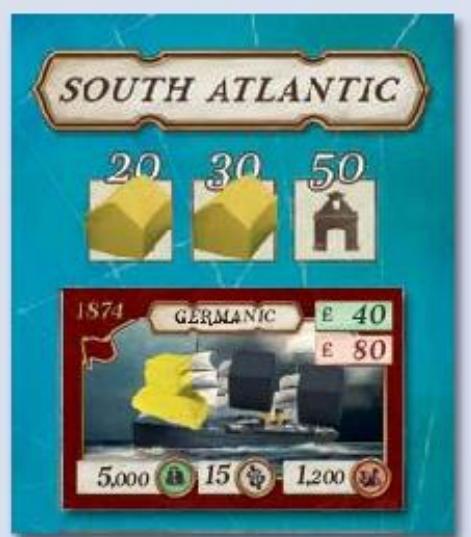
例:
黄色玩家在 South Atlantic 区域拥有 2 个交易所。打出运输行动
牌,GERMANIC号即可进行运输。
从GERMANIC号把一个煤炭方块拿走,获得40镑收入。
另外,黄色玩家获得2分,因为他在该区域有2个交易所。
行动牌

Purchase up to 2 steamships
Deploy 1 of them at sea.
船坞
-
玩家可以从船市购买1或2艘船。每艘船配备一个船长、装备1个起始煤炭方块。
-
玩家必须立刻部署两艘船中的1艘,另一艘放在自己面前靠近玩家板的地方。
Let 2 of your own ships transport

船坞(扩展牌)
运输
-
运输,最多使用2艘船。
-
部署一艘船,如果可以的话。
同普通船坞牌,并可选择所购船中的一艘,多装载1个起始煤炭方块。
Region


- 部署一艘船,如果可以的话。
Choose 1 region.
All ships in that
region transport.
Take the income
of the oldest
transporting ship of
another player as
your extra bonus.
Cargo
区域

- 玩家选择一个区域,所有的船进行运输(包括其他玩家的船)。作为奖励,他从银行收取其他玩家中最老式运输船的收入。其他玩家也同时获得收入。(例1)

货物
-
部署一艘船,如果可以的话。
-
玩家用1艘船进行运输,并根据该船的吨位,获得最多300镑收入。(例 2)
Let 1 ship transport, earning an income of £10 per 100 passengers.
旅行
-
部署一艘船,如果可以的话。
-
玩家用1艘船进行运输,并获得每100名乘客10镑的收入。(例3)
运输(扩展牌)
Let 3 of your own ships transport.

同普通运输牌,但玩家最多可使用3艘船来进行运输。
例 1:
黄色玩家打出区域行动牌,他从GERMANIC号获得40镑收入,再加上CITY OF NEW YORK号的70镑作为奖励。因为ABYSSINIA号没有煤炭,所以这是其他玩家中最老式的船。黄色玩家总共获得110镑,红色玩家获得70镑。然后,黄色和红色玩家各得1分,因为他们同时在此区域各有1个交易所。

例2:
红色玩家打出货物行动牌,因为CITY OF NEW YORK号的吨位为11,000t,所以他可以获得150镑,并得到1分。

例3:
红色玩家打出旅行行动牌,因为CITY OF NEW YORK号乘客容量为1700,所以他获得170镑,并得到1分。

注意: 所有运输的蒸汽船都失去1个煤炭方块
行动牌
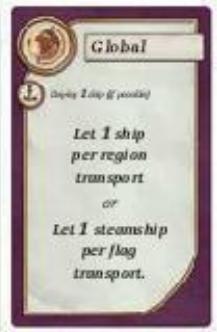
全球
-
部署一艘船,如果可以的话。
-
玩家从以下两个选项中选择一项执行:
a) 每个不同区域使用1艘船进行运输;
b) 每种不同的旗帜使用1艘蒸汽船进行运输。(例1)


船队
玩家得分,每艘不同旗帜的蒸汽船可得2分(例2)。已经购买但尚在等待部署的船同样包含在内。
贸易
每个交易所为玩家带来50镑收入。(例3).
蓝丝带
-
部署一艘船,如果可以的话。
-
玩家根据玩家板上蓝丝带的数量,可使用同样数量的船进行运输。(例 4)
煤炭
在自己的蒸汽船上装备煤炭,所装煤炭的数量等于玩家板上煤堆的数量加2。煤炭必须平均分配在已部署的船上,首先装备没有煤炭的船,然后装备有1个煤炭方块的船(可能是同一艘船)。。。。(例5)
每艘蒸汽船最多可携带3个煤炭方块,帆船不需煤炭。
煤炭(扩展牌)
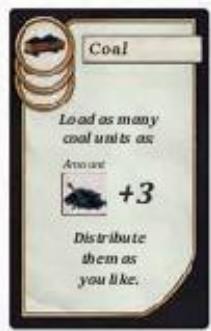
同普通煤炭牌,装备煤炭的数量为玩家板上煤堆的数量加3,玩家可以任意分配煤炭,但每艘蒸汽船最多可携带3个煤炭方块(例6)

代理
玩家可以拷贝其他玩家出牌堆最上面一张牌的行动,可当作自己打出了那张牌。其他玩家出牌堆最上面一张牌如果是代理,则不可被拷贝。
例 1:
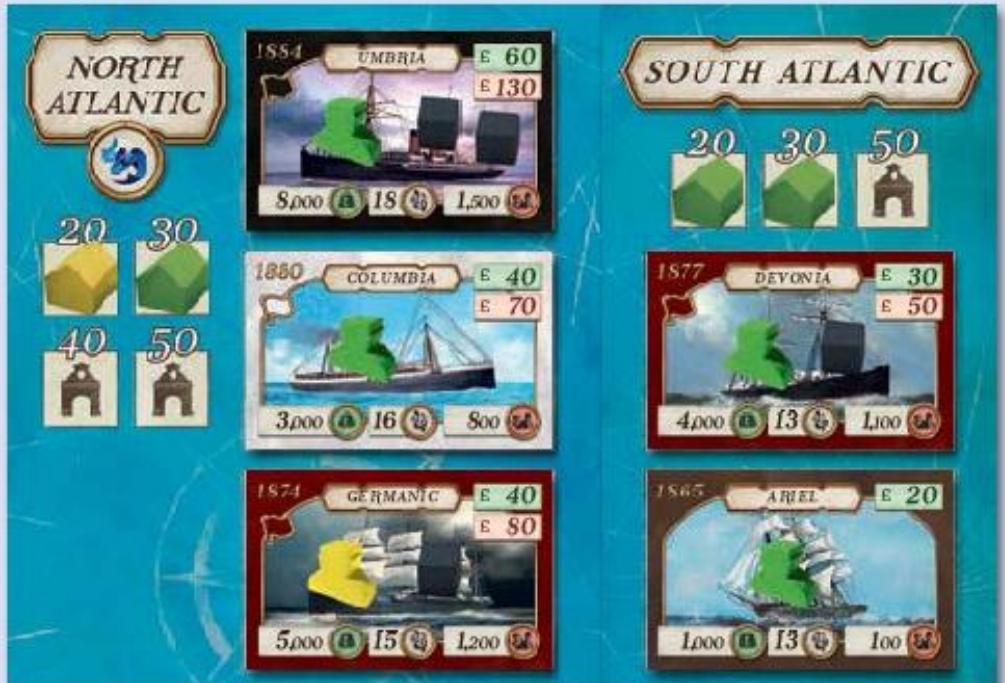
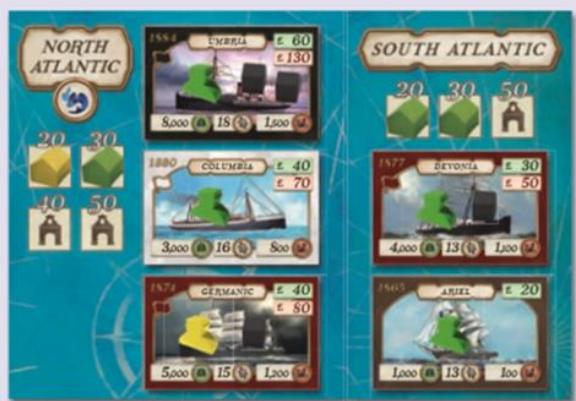
绿色玩家打出全球行动牌,由于COLUMBIA号上没有煤炭,而ARIEL号没有旗帜,无论哪种选择(不同区域或者不同旗帜),都只有2艘船可以运输。绿色玩家选择不同区域,这样就可以用ARIEL号进行运输,因而DEVONIA号上的煤炭就可以保留。绿色玩家获得80镑收入,并得到3分,UMBRIA号失去1个煤炭。
例 2:
绿色玩家打出船队行动牌,得到6分。
例 3:
绿色玩家打出贸易行动牌,因为他有3个交易所,所以得到150镑。
例4:
绿色玩家打出蓝丝带行动牌,他的玩家板上有3个蓝丝带,因而他可以最多使用3艘船进行运输。由于COLUMBIA号上没有煤炭,他使用UMBRIA号、DEVONIA号和ARIEL号进行运输。他获得110镑收入,并得到5分。UMBRIA号和DEVONIA号各失去一个煤炭。
例5:
绿色玩家打出行动牌煤炭,他的玩家板上仅有1个煤堆,所以他可以装备1+2=3个煤炭,煤炭平均分配在他的蒸汽船上。首先在COLUMBIA号上装备1个煤炭,然后在COLUMBIA号和DEVONIA号上各装备1个煤炭。
例 6:
绿色玩家打出行动牌煤炭(扩展牌),他可以任意分配1+3=4个煤炭方块到他的蒸汽船上。他在UMBRIA号上装备1个煤炭,在COLUMBIA号上装备了3个煤炭。


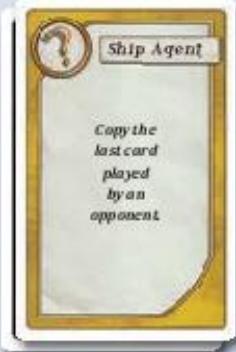
例: 这些是其他3位玩家打出的最后一张行动牌, 第4位玩家打出了行动牌代理, 他此时可以选择使用行动船坞, 或者旅行, 第3位玩家打出的代理不可以被拷贝。
淘金小店:多多慧益智桌游馆
行动牌

投资
玩家有3个选择:
-
可以在有自己船的区域花费20-50镑(根据所处位置)建造1个交易所。此外,拿取一个标记,货物、信件或乘客,放在玩家板的相应位置。注意:海洋区域里的每个建筑点只能建筑1个交易所,每个区域里每位玩家不能建造超过2个交易所。North Atlantic区域(或者 New York区域)有4个建筑点,其他区域仅有3个建筑点。
-
可以花费50镑购买1个煤堆,拿取煤堆标记放在玩家板的相应位置。此外,拿取2个煤炭方块放在2个不同的船上。
-
可以花费50镑,拿取货物、信件或乘客中的任一标记放置于玩家板的相应位置。

黄色玩家打出行动牌投资,他在South Atlantic区域拥有一艘船,所以他选择在该区域建造1个交易所,花费20镑。此外,他选择了一个货物标记放在他的玩家板上。

投资(扩展牌)
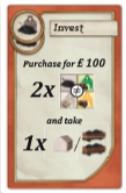
玩家花费100镑,从供应堆拿取2个不同的标记(煤堆、货物、信件或乘客),放在玩家板相应位置。此外,他可以免费建造1个交易所,或者如果他拿取的标记中有煤堆,他可以给2艘不同的船各装备1个煤炭方块。
黄色玩家打出行动牌投资(扩展牌),他花费100镑,拿取1个煤堆和1个货物。然后,他可以建造1个交易所,或者给2艘不同的船各装备1个煤炭方块。
经理
-
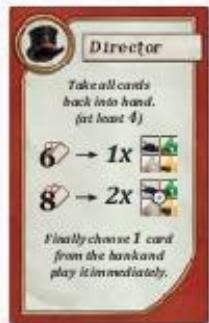
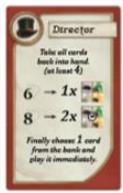
玩家把所有打出的行动牌拿回手中。注意:他必须拿回至少4张行动牌,包括这张经理牌,否则他不能执行这个行动。
-
如果拿回至少6张牌,他可以得到煤堆、货物、信件、乘客中的1个,将相应标记放在玩家板上。如果拿回了最大数量8张牌,他可以得到两个不同的标记(不包含蓝丝带)。
-
玩家从开放行动区中选择一张行动牌,立刻打出并执行相应行动。
-
重新布置开放行动区:移除最左侧行动牌放在一边,剩下的3张牌向左移动,然后补充2张新的行动牌。开放行动区总有5张不同的行动牌,重复的行动牌立刻放入弃牌堆。如果行动牌堆的牌用完了,将弃牌堆洗牌后重新使用。
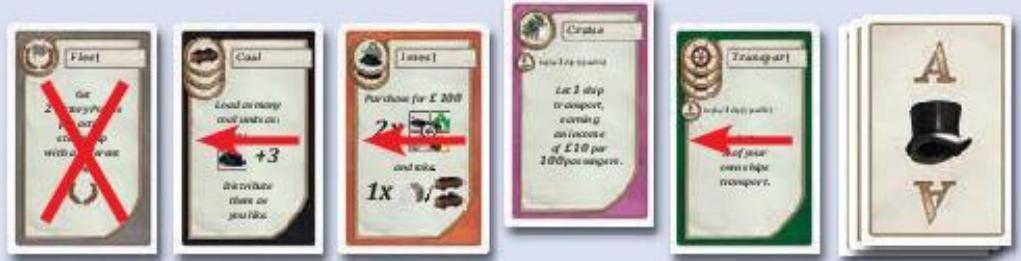
一个玩家决定拿取行动牌旅行,然后立刻打出执行。此后,重新布置开放行动区,第一张船队被移走进入右侧弃牌堆,剩下的3张牌向左移动,然后补充2张新的行动牌。

SCOTIA
SCOTIA号是一艘中立船,起始位于North Atlantic(或者New York),该船总是携带煤炭。
经理标记
玩家可使用经理标记从开放行动区中拷贝一张行动牌执行行动,而不用从手中打出一张牌。经理标记在使用一次后,移出游戏。

开放行动区不发生变化,所有行动牌仍保留在原位置。
其他规则
玩家板
总部
即便玩家板上的某个标记列已经放满了,更多的蓝丝带或者其他标记仍可获得,这些标记可以放在玩家板的下方。最终计分时可令相应旗帜的船额外获得1分。
船市最后一张蒸汽船进场后会出现建筑牌——总部,最终计分时,总部和船一样按照旗帜的颜色进行计分。总部的购买和船相同,也要使用船坞行动牌,并且要支付卡牌所在船市位置的额外费用。此外,还应遵守如下规则:
-
一位玩家可以购买1艘船和1个总部,或者只购买1个总部,不可以一次购买2个总部。注意:如果只购买1个总部,没有船会进入码头(总部永远不会进入码头)。船市将会尽可能长的恢复正常。
-
购买总部后,将总部牌放在玩家板旁边,在其上放置一个船长作为标记。
淘金小店:多多慧益智桌游馆
淘金小店:多多慧益智桌游馆
船的计分
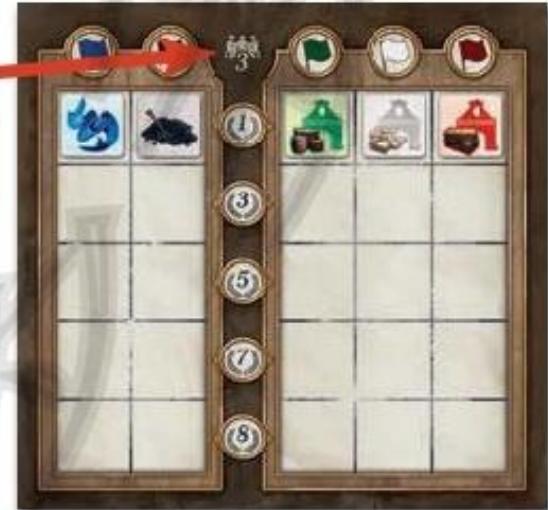
船的计分是游戏中产生分数的主要方式。根据玩家板的情况,某种旗帜的船(和总部)可以获得分数,如右图所示,该玩家每艘蓝色旗帜的船可以获得7分,每艘黑色旗帜的船可以获得3分,每艘绿色旗帜的船可以获得5分。
公共码头里的某种颜色旗帜的船会为玩家带来额外的分数。如右图所示,每艘蓝色的船额外获得2分,每艘黑色的船额外获得3分,每艘绿色的船额外获得1分。码头得分适用于每位玩家。
最终计分
玩家整理收集好各自的船,包括海洋区域里的船和尚未部署的船,以及总部,按上节描述的方式进行计分(见“船的计分”)。
每100镑现金计1分。
玩家可从玩家板上完整的一行标记(不包括印在玩家板上的第零行标记)中获得分数。第一行5分,第二行10分,第三行15分,第四行20分。另外,不完整标记中的最顶部这行也可以获得分数:如果它是第一行,得1分;如果是第二行,
得2分;以此类推。如右图玩家板所示,该玩家一共可得21分。
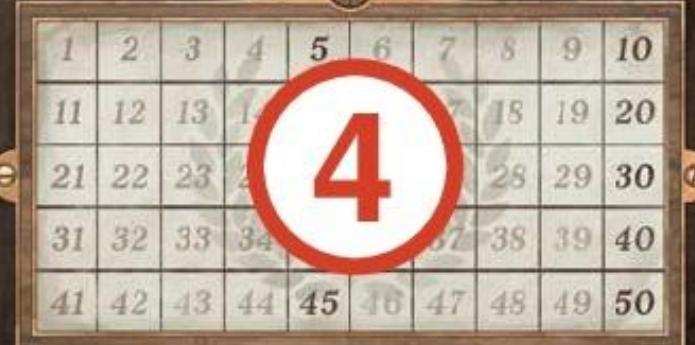
计分时用一个船长在计分表上跑分。当达到50分时,在计分表上放置一个相应的分数标记。分数最高的玩家即为游戏的获胜者。如果出现平局,最新型船的拥有者赢得游戏。

计分

码头
游戏中用1个船长在计分表上跑分,分数来源有三种方式:

- 如果一艘船被推出了某个区域,并且无法再部署在其他区域,那么这艘船会被报废并立刻计分(见“船的计分”),计分后,这艘船将会被移出游戏,而不是进入码头!
游戏过程中的计分
-
当使用某区域里的船进行运输时,玩家在该区域还同时拥有交易所(见“运输”)。
-
使用船队行动。
最终计分的例子
右侧图示中包括了玩家板和公共码头,玩家剩余290镑现金,并拥有下图的6艘船及总部。

船和总部的计分:
黑色: $2x(9 + 3) = 24$
绿色: $3 \times (10 + 1) = 33$
红色: $1 \times (7 + 5) = 12$
现金:290镑计2分
玩家板:
第1行完成得5分
第2行未完成,每个标记得2分


码头
玩家板上所有标记得分为 $5 + 4 \times 2 = 13$ 分
玩家总计得分为 $24 + 33 + 12 + 2 + 13 = 84$ 分
有两种变体规则,可分别单独使用,也可以同时使用。
船市变体规则
这里将用到船市板块的反面,买船时不需要再支付额外费用。但是只有前3格位置的船可以获得起始煤炭,后3格位置的船没有起始煤炭。
变体规则
总裁变体规则
经理行动牌将会替换为总裁行动牌,此外,合同将作为一个新元素加入到游戏中。仅在新船进场时可以获得合同:如果船的3个特征中(吨位、航速、乘客容量),每有一个特征是该区域里最大的,就可以获得1个合同(例)。被推出区域的船不能在其它区域获得合同。
绿色玩家部署了GERMANIC号,由于拥有最大吨位以及最大乘客容量,他获得2个合同。最高航速的平局不足以获得合同!
总裁


-
玩家把所有打出的行动牌拿回手中。注意:他必须拿回至少5张行动牌,包括这张总裁牌,否则他不能执行这个行动。
-
每有3个合同,玩家可以购买1个煤堆、货物、邮件或乘客,将购买的标记放在玩家板上。如果玩家有足够的合同,他可以购买多个标记(不包括蓝丝带),但必须不重复。剩余的合同以每个20镑的价格卖给银行。
-
和4. 同经理行动。
码头
横越大西洋 - 游戏设置
淘宝小店:多多慧益智桌游馆
1. 区域
除了North Atlantic区域外,再增加和参加游戏的玩家人数相同数量的其它区域(此处显示的是3位玩家)。另外,也可以使用版图反面的美国港口进行游戏。
2. 船市
3. 扩展牌
把船市的3部分板块拼接在一起,放置在区域板块的上方。
根据牌背面的字母(A或B),将扩展牌分成两堆,然后A牌堆放在B牌堆的上面。翻开最上方的5张牌作为展示牌,扩展牌堆及展示牌放置于船市上方。
4. 计分表
5. 银行
计分表放在区域板块附近。
银行提供现金、煤炭方块以及5种不同的标记(在总裁变体中还包括合同标记)。银行中的资源都是无限的。















6. 玩家配件

每位玩家起始获得1个玩家板(根据板面上的提示人数),10个船长,7个交易所,1个经理标记,2个分数标记,7张自己颜色的玩家牌(总裁牌仅在总裁变体中使用),和现金150镑。

7. 船和总部
所有的船和总部根据牌背面的数字(0—10)进行分类。
7a) 将SCOTIA放在North Atlantic区域。
7b) 每位玩家随机获得一张帆船。帆船年代最久远的玩家成为起始玩家,并拿取起始玩家牌。接下来起始玩家将他的船部署在最左侧有3个空位的区域里,并在船上放上自己的船长。然后其他玩家按顺序依次部署他们的船只。如果设置无误的话,现在每个区域都有1艘船。
7c) 在3人游戏中,从1—9号牌堆中各随机抽取1张牌,将这9张牌按旗帜的颜色进行分类,然后放置在计分表下方的码头里。在2人游戏中,从每个牌堆中抽2张牌,码头里有18张船。在4人游戏中,不用抽取船放置于码头。
7d) 所有的船形成牌堆面朝下放置于船市旁边,总部(10号)放在最底部,接下来9号牌堆到1号牌堆依次向上放,最终1号牌堆放在整个牌堆的最顶部。
7e) 从船只牌堆抽取6张牌,由左向右填满船市。
8. 蒸汽船
开始游戏前,每位玩家从船市购买一艘蒸汽船,每次购买后船市都会重新补充满,但不会有船进入码头。每位玩家将他的蒸汽船(和船长以及煤炭方块)部署于拥有他左侧玩家帆船的区域。最后,起始玩家开始游戏,打出第一张行动牌。
下载 MarkdownTransAtlantic rules 2020.md25.7 KB

5 Sea Regions
TRANSATLANTIC
GAME MATERIAL

1 Ship Market (3 pieces)
5 Player Boards for 2-4 players

1 Victory Point Chart
4 box inserts to be put together




108 wooden pieces (of which 68 are in player colors: red, green, yellow, and blue)

10 Captains per player

7 Houses per player
4 Directors
40 Coal Cubes


8 Victory Point Markers
2 Final Scoring Overview tokens
32 Starting Cards 8 per player

22 Extension Cards (A and B)
6 special Cards
67 Markers

12 Blue Ribands


16 Coal Bunker
13 Freight

12 Mail 13 Passengers


1 Start Player Card
32 Contracts with values 1 and 3:


50 Ships
Scotia
4 Clippers

45 Steam Ships

80 Banknotes (10, 20, 50 and 100 thousand Pounds)
5 Headquarters

1 Game Rules, 1 Quick Intro, 1 Booklet “Age of Steam Ships“
This is a new variant of TRANSATLANTIC from the designer. It has fewer moving parts and simpler rules than before. You can play it with the existing game material. All VPS are scored at the end of the game. You won’t need the VP Chart during the game, which gives you more space on the table.
To make the endgame more interesting, the role of the Trade Houses has changed. Even if purchased in the last round, a Trade House could make a remarkable difference in your score.
1. START
Remove both FLEET cards from the game (Extension cards A and B). The Victory Point Chart can be put aside until the end of the game.
The basic setup is described in detail on a separate page. It varies with the number of players:
- 4 players: play with all 5 sea regions; the docks start with no steamships.
- 3 players: play with 4 sea regions; the docks start with 9 steamships (1 per stack 1-9).
- 2 players: play with 3 sea regions; the docks start with 18 steamships (2 per stack 1-9).
Each player receives 1 random clipper as well as 1 random steamship from stack 1 that has an income of £ 30 (on green background, years 1870-1873). Each player starts with £ 100 start money. The owner of the oldest clipper becomes the start player and takes the Start Player card. The neutral ship SCOTIA starts in NAT (or NY) and all other regions begin with 1 clipper marked with a captain of the player’s color (no captain for SCOTIA).
Place your initial random steamship in your personal supply, from where you can deploy it later.
2. GAME FLOW
2.1 The flow of action cards
Keep your hand of action cards hidden. Take turns in clockwise order by playing your action cards one-by-one and executing the related action/s. Played cards are stacked in front of you so that the last card played is always visible to others. When playing your Director card, return your stack of played cards to your hand (including the Director card), choose 1 new Extension Card, and immediately play it in front of you and execute the related action/s.
2.2 The flow of ships
In the course of the game, you will purchase more and more ships from the Ship Market. Your new ships enter the sea regions generally at the top and thereby pushing any ships below them down one space. Older ships are eventually pushed out of their sea regions and return to their player’s supply. Ships in a player’s personal supply will score Victory Points (VPs) at the end of the game in the same manner as any steamships that are still active.
In addition, whenever ships are purchased (1 or 2 at a time), the ship remaining in the leftmost position leaves the market and enters the docks. Ships in the docks are sorted by their five different flags and remain there until the end of the game. This is important because each ship in the docks will provide VPs for all ships and headquarters of the same flag color each player owns at the end of the game.
The neutral ship SCOTIA and the initial clippers leave the game after being pushed out of their region.
Clippers do not have a flag and therefore don’t have any scoring potential anyway.
How steamships move and score

3. GAME END
The end of the game is triggered after any player purchases the last steamship from the ship market. Headquarters still remain on offer. The current round is completed and then the final round is played. The game ends with the final scoring round to determine the winner (see 9. Scoring VPs).
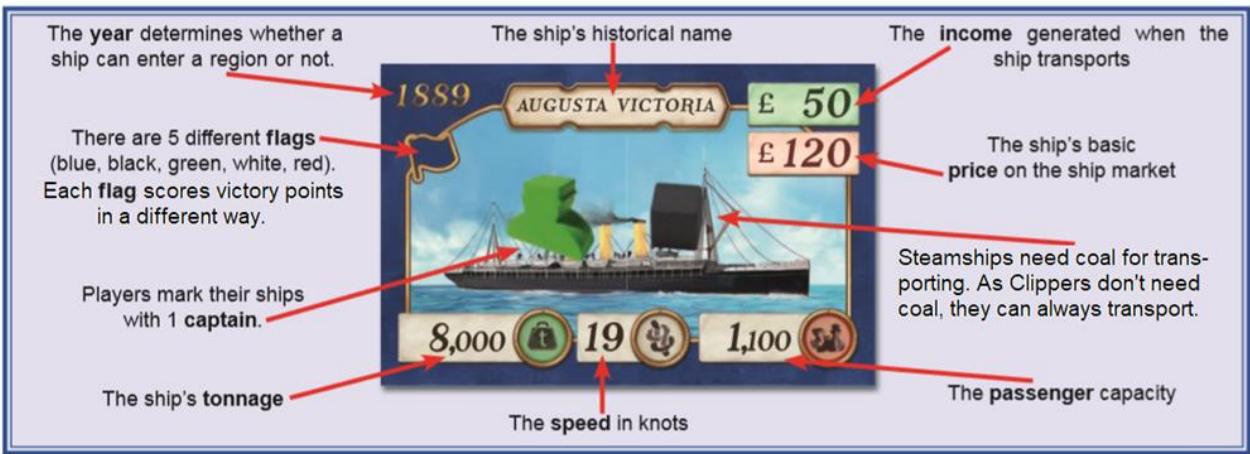
4. THE SHIP MARKET
When purchasing (1 or 2) ships from the ship market the cost is paid to the bank. A ship’s total cost consists of the basic price depicted on the ship itself (on red background), plus the additional cost depicted under its current position on the ship market. Finally, the market is refreshed: The steamship now in the leftmost position leaves the market and enters the docks, all remaining ships move left, and the (2 or 3) empty positions to the right are refilled from the current stack.
If you play with the flipside of the ship market, there are no additional costs to be paid. Instead, only ships that are purchased from the first 3 positions on the market start with their initial coal unit.

Example A player purchases the NUBLAN (white flag) for £40 and the HAMMONIA (blue flag) for £70 + £30 = £100. He pays a total of £140 to the bank and takes both ships. Now the ship market is restored: The DEVONLA (red flag) is in the leftmost position and therefore is placed inside the docks. The remaining 3 ships move left, and the empty positions are refilled with 3 new ships from the ship's stack
5. DEPLOYING SHIPS
5.1 When to deploy a ship
When you purchase 1 ship you deploy it immediately. Purchasing two ships at once, you deploy only 1 of them immediately. Take the other ship into your personal supply, from where you can deploy it on a later turn. This later deployment is made by playing a corresponding action card (each marked by a little anchor). With these cards you can deploy one ship from your personal supply into a sea region of your choice. To indicate that a ship from your personal supply is still eligible to enter a region on a later turn, you may mark it with a captain. Ships clearly too old to enter any region are ineligible and lose any captain they may have.
5.2 How to deploy a ship
A ship’s position inside any region is determined by its age: Newer ships (by year of construction) are always placed above older ships, so that the newest ship is always placed on top with the older ships below in order of age newest to oldest. In general, you can only enter

a region if your ship will be the newest ship in that region. The North Atlantic (or New York) is the only exception from this general rule: you may deploy a new ship in second position as the $2 ^ { \mathsf { n d } }$ newest ship inside that region. When a new ship enters a region, all older ships move down one position to accommodate it. If a region doesn’t have enough spaces, the oldest ship will be pushed out and returns to the ship’s owner personal supply. From there it may be deployed again on a later turn, but only if it is still new enough to qualify for the chosen region.
A new ship always enters a region with a captain and 1 unit of coal. The coal is added regardless of whether the ship enters a region for the first time or if it is redeployed after being pushed out of another region previously. Exceptions: a) If you play with the flipside of the ship market AND purchase a ship form one of the 3 rightmost positions AND enter a region with it immediately, that ship has no initial coal. b) If you play Shipyard as an extension card (A/B), one of the ships may enter a region with 2 coal units.
5.3 Winning a Blue Riband
If you deploy a ship in the North Atlantic region (or New York) which creates a new speed record in that region (the highest knots value; a tie in knots is not enough), you instantly win a Blue Riband and place a respective marker on your player board. This is the only way you can gain these Blue Riband markers and therefore should not be neglected if you want to complete rows on your player board (see 9.3 Scoring complete rows on the Player Board).
To win the first Blue Riband in the game, you must beat the SCOTIA that is already there.
6. TRANSPORTING WITH SHIPS
The action cards TRANSPORT, REGION, BLUE RIBAND, GLOBAL, CARGO, and CRUISE (= cards marked with a small anchor) allow ships to transport and thus collect income. This is done as follows:
a. Each transporting steamship loses 1 coal unit. Steamships without coal cannot transport. Clippers never need coal and therefore are always able to transport.
b. When transporting, the owner collects the ship’s income (on green background) from the bank (Important: the income is calculated in a different way when playing CARGO or CRUISE).
7. ACTION CARDS

SHIPYARD
-
You may purchase 1 or 2 ships from the ship market. Equip each ship with a captain of your color and load 1 unit of coal.
-
You must deploy 1 of the newly purchased ships immediately (see 5. Deploying Ships). Take the other ship into your personal supply from where you can deploy it on a later turn.
-
You must deploy 1 ship from your personal supply if possible (see 5. Deploying Ships).
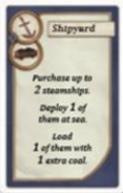

Like the usual SHIPYARD card, but load 1 of the newly purchased ships with 1 additional unit of coal.
TRANSPORT
- You can transport with up to 2 of your own ships (see 6. Transporting with Ships).

Like the base TRANSPORT card. but you can transport with up to 3 of your own ships.

-
You must deploy 1 ship from your personal supply if possible (see 5. Deploying Ships)
-
Choose a region where all ships transport (including other player's ships and the SCOTIA). As a bonus, collect the income of the oldest transporting foreign ship (opponent's or SCOTIA) from the bank. Although this foreign ship generates double income for 2 different players, it loses only 1 coal unit. All other players collect their income as well. (example 1)

-
You must deploy 1 ship from your personal supply if possible (see 5. Deploying Ships)
-
Transport with 1 of your ships and collect an income of up to £300, depending on the ship's tonnage. (example 2)
-
You must deploy 1 ship from your personal supply if possible (see 5. Deploying Ships)
-
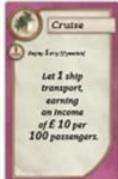
Transport with 1 of your ships and collect an income of £10 per 100 passenger capacity. (example 3)
Example 1:
Yellow plays REGION and receives income of £ 40 from the GERMANIC plus a bonus of £ 70 from the CITY OF NEW YORK. This is the oldest transporting foreign ship because the ABYSSINIA has no coal. In total Yellow collects £ 110, and Red collects £ 70.
Example 2:
Red plays CARGO. Since the CITY OF NEW YORK has a tonnage of 11,000t, Red collects £ 150.
Example 3:
Red plays CRUISE. Since the CITY OF NEW YORK has a passenger capacity of 1,700, Red collects £ 170.

Important: All transporting steamships lose 1 coal each!

Copy the action from a card which was last played by another player. The action is executed as if you had played that card yourself. Ship Àgents from other players cannot be copied.



-
You must deploy 1 ship from your personal supply if possible (see 5. Deploying Ships).
-
You may either
a) Transport with 1 of your ships per region possible.
b) Or transport with 1 of your ships per different flag possible. (example 1)
Collect £ 50 per own Trade House.
(example 2).
-
You must deploy 1 ship from your personal supply if possible (see 5. Deploying Ships).
-
You may transport with as many of your ships as the number of Blue Ribands on your player board. (example 3)
Load own steamships with coal. Load as many coal units as the number of Coal Bunkers on your Player Board plus 2. The coal has to be distributed evenly on your active steamships in the regions. First, load steamships without coal, then steamships with 1 coal (which may be the same ships) etc. (example 4)
Steamships can carry up to 3 coal units each.
Clippers (Sailing Ships) do not need coal.
Like the base COAL card, but the amount is the number of coal bunkers plus 3. Also you may distribute the coal as you wish. The maximum of 3 coal units per ship still applies. (example 5)
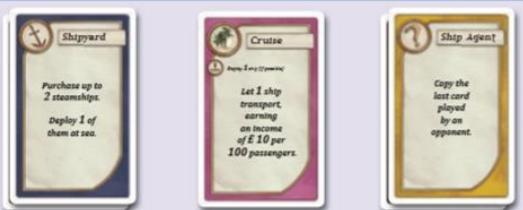
Example: These are the last action cards played by the other 3 players. The 4th player plays SHIP AGENT. He may now choose either to use the action SHIPYARD or the action CRUISE. The SHIP AGENT of the 3rd player cannot be copied.
Example 1:
Green plays GLOBAL. Since the COLUMBLA carries no coal, and the ARIEL has no flag, in either case (region or flag option) only 2 ships can transport. Green chooses the region option in order to transport with the ARIEL and thus preserve the coal on the DEVONIA. Green collects £ 80 and the UMBRIA loses 1 coal.
Example 2:
Green plays COMMERCE and collects £ 150 for her 3 Trade Houses.
Example 3:
Green plays BLUE RIBAND. The 3 Blue Ribands on her player board enable her to transport with up to 3 ships. Since the COLUMBLA carries no coal, Green transports with the UMBRIA, DEVONIA, and ARIEL and collects £ 110. UMBRIA and DEVONIA lose 1 coal each.
Example 4:
Green plays COAL. She only has the coal bunker printed on the player board and therefore may distribute 1 + 2 = 3 coal units evenly on her steamships. First, the COLUMBLA must load 1 coal, and then both the COLUMBLA and DEVONLA load one more coal unit each.
Example 5:
Green plays COAL – (A/B Deck). She may distribute 1 + 3 = 4 coal units on her steamships as she wishes. She loads the UMBRIA with 1 coal unit and the COLUMBIA with 3 coal units.


INVEST
You have 2 options:
a. Build a Trade House in a region of your choice and pay £20 - £50 (depending on which space is open). After that one of your ships inside that region may transport (see 6. Transporting with ships). In addition, take 1 marker (either for freight, mail, or passengers) and add it to the corresponding column on your player board. Important: Each building site in a region can only hold 1 Trade House. The North Atlantic (or New York) has room for 4 houses, but all other regions only have room for 3. If it is not possible for you to build a Trade House anymore because all spaces are occupied, you may instead pay £50, take only the marker, and then add it to the corresponding column on your player board.
b. Take a Coal Bunker from the supply without payment and add it to the second column on your player board. In addition, take 2 coal units and distribute them onto 2 different ships, if possible
INVEST (A/B Deck)
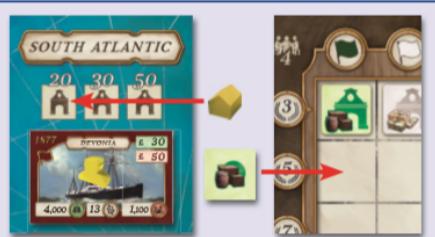
Yellow plays INVEST and builds a Trade House in the Šouth Atlantic for £ 20. In addition he chooses a marker for freight for his player board His ship cannot transport because it has no coal.
Pay £ 100, take 2 different markers from the supply (coal, freight, mail, or passengers) and add them to the corresponding columns on your player board. Plus, without further payment, you may either a) place 1 Trade House on a free space in a region of your choice (if you have a ship there it may as well transport if possible), or,
b) if a Coal Bunker was taken, distribute 2 coal units onto 2 different steamships (if you own only 1 active steamship, it receives 2 coal)
Yellow plays INVEST – EXTENSION CARD. He pays £ 100 to the bank, takes 1 Coal Bunker plus 1 marker for freight, and either builds a Trade House in à region where maybe 1 ship can transport, or loads 2 ships with 1 additional coal unit each.
DIRECTOR
-
Take all your cards back into your hand. Important: You must take back at least 4 cards including the DIRECTOR himself Otherwise you cannot take this action.
-
If you take back at least 6 cards, you receive 1 marker of your choice for your player board:
Either 1 coal bunker or 1 marker for freight, mail, or passengers, With a minimum of 8 cards taken back. you receive 2 different markers of your choice (but never a Blue Riband)
-
Choose 1 new action card from the open display, play that card immediately (place it on the table). and execute the related action.
-
The open display is refreshed: The leftmost card is removed to the discard pile, the remaining 3 cards shift left, and 2 new cards are revealed. Also, there must always be 5 different cards in the display: duplicate cards go to the discard pile immediately if revealed. If the original deck is empty, shuffle the discard pile to create a new deck.

A player decides to take CRUISE and plays that card immediately. After that, the display is restored: FLEET leaves the supply and is put onto the separate stack to the right, the remaining 3 cards move left, and 2 new cards are displayed.

8. ADDITIONAL RULES
SCOTIA
The SCOTIA is a neutral ship that starts in the North Atlantic (or New York). She always carries coal for transport.
Director Tokens
A player may discard their personal Director Token from the game to copy a card in the open display instead of playing a card from their hand. (One time use) The open display does not change; all cards remain in their position.

Player Board
If a column is full, more Blue Ribands or other markers can still be acquired. Place them beneath the player board and count them as one additional VP for their flag
Headquarters
These appear on the ship market after the last steamships. They will count as ordinary ships in the final scoring round (depending on their flag). They are purchased the same as a ship with SHIPYARD and have the usual additional costs as shown on the ship market.
Additionally, the following rules apply:
-
A player may purchase 1 ship plus 1 headquarters, or only 1 headquarters or 2 headquarters at once. Important: If only headquarters are purchased, no ship enters the docks. Headquarters never enter the docks. The ship market is refreshed in the usual manner as long as possible.
-
A purchased headguarters enters the personal supply (the same as with a ship that was not able to enter a Region).
9. SCORING VICTORY POINTS (VPs)
All VPs are tallied with a captain on the Victory Point Chart: For each 50 VPs scored, players should place the respective VP marker by the chart. The winner of the game is the player with the most VPs. In case of a tie, the tied player who owns the ship with the newest launch date wins.
9.1 Scoring Trade Houses
Your Trade Houses will score in combination with your captains at sea at the end of the game. Trade houses in regions where there are no captains of the same player, or captains in regions where there are no trade houses of the same player are ignored in the count. Count the number of your houses in regions where you have at least 1 captain. Then count the number of captains in regions where you have at least 1 house. Finally multiply both numbers; the result are your VPs from Trade Houses.
9.2 Scoring Flags
Scoring flags is the main way to generate Victory Points (VPs). VPs are gained for ships (and headquarters) using the score from the last filled row in the column on the personal player board matching the ship's flag.
As illustrated here, a player receives 7 VPs per ship with a blue flag, 3 VPs per ship with a black flag, and 5 VPs per ship with a green flag.
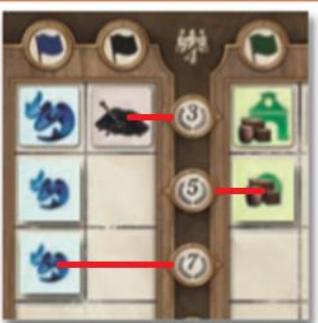
Additional VPs are gained with the help of ships with a matching flag inside the public docks. As shown here, each blue ship receives 2 VPs extra, each black ship 3 VPs extra, and each green ship receives 1 VP extra. The dock's VPs are the same for every player.

9.3 Scoring complete rows on the Player Board
You receive VPs for each complete row of markers you have acquired on your player board (This does not include the printed markers). Each row gives 5 VPs.
The player board as illustrated would score a total of 10 VPs (5+5).
9.4 Scoring cash money
You receive 1 VP for each £ 100 cash left on hand.
Example: £ 290 cash will score you 2 VPs.

Example for a final scoring round
Both the personal player board and the public docks are shown to the right. The player has £ 290 cash and owns the following 6 ships and headquarters:

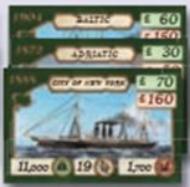


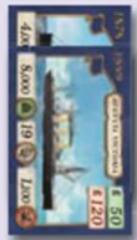
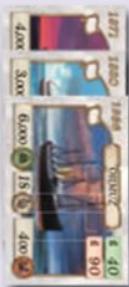
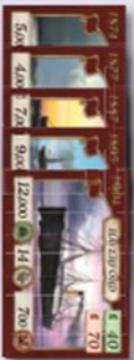
Flag's score:
black: 2 x (9+3) = 24
green: 3 x (10+1) = 33
red: 1 x (7+5) = 12
Cash: 2 VPs for £290.
Player Board:


The first row is complete and scores 5 VPs.
Trade Houses:
The player has built 2 Trade Houses in 2 regions where he has a total of 3 active ships.
Trade House's score: 2 (houses) x 3 (captains) = 6 VPs.
In total, the player scores 24 + 33 + 12 + 2 + 5 + 6 = 82 VPs.
Enjoy!
Mac Gerdts
PS: This version would not exist without Ralph H. Anderson, who not only helped me edit these rules, but also play tested them with huge success. Thank you, Ralph!
下载 Markdown原文为社区整理/出版社公开资料,版权归原作者,仅供个人学习查阅。