
帝国曙光(第三版)Twilight Imperium: Third Edition
一句话概览
帝国曙光(第三版) 是一款已收录于村了吗规则库的桌游,支持 3–6 人,原名 Twilight Imperium: Third Edition。
本页内容:一句话概览 · 游戏概述 · 游戏组件 · 游戏设置 · 规则详解 · 关键规则提醒 · 常见问题
帝国曙光(第三版)(Twilight Imperium: Third Edition)规则速览
以下规则速览由本站整理,与官方规则书表述不同,仅供快速上手参考。
游戏概述
AG A M EB YC H R I S T I A NT.P E T ERS E N
👥 人数: 3-6人 | 📊 BGG排名: #152
游戏组件
- Six frames of highly detailed plastic components in six colors. Each frame contains the following:
- 5 Dreadnoughts
- 4 Carriers
- 8 Cruisers
- 8 Destroyers
- 2 War Suns
- 12 Ground Forces
- 10 Fighters
- 6 Planetary Defense Systems (PDS)
- 3 Space Docks
- 144 Technology Cards (24 each in six decks separated by color)
- 51 Planet Cards
- 103 Action Cards
- 60 Political Cards
- 30 Objective Cards (Secret and Public)
游戏设置
- Six frames of highly detailed plastic components in six colors. Each frame contains the following:
- 144 Technology Cards (24 each in six decks separated by color)
- 51 Planet Cards
- 103 Action Cards
- 60 Political Cards
- 30 Objective Cards (Secret and Public)
- 20 Trade Cards (2 each for 10 races)
- 10 Race Sheets
- 30 Leader Counters
- 8 Cardboard Strategy Cards
规则详解
Rules Of Play
AG A M EB YC H R I S T I A NT.P E T ERS E N
Tolkien, for endless inspiration and the courage to dream of new worlds
To George Lucas, for he once understood the star in our mind's eye
To Frank Herbert, for bringing intrigue and spice to the stars
To Gene Roddenberry, for his continuing mission
Welcome
Welcome to a galaxy of epic conquest, interstellar trade, and political intrigue.
TWILIGHT IMPERIUM is an exciting board game in which 3-6 players seek to build a galactic empire by the cunning use of strategy, diplomacy, and resource management.
But the road to the Imperial Throne is long and the galaxy holds many dangers.
Do you have what it takes to lead your race out of the troubled Twilight Age?
游戏目标
To win a game of TWILIGHT IMPERIUM ("TI"), players seek to accumulate a total of 10 victory points by achieving objectives and carefully choosing helpful strategies.
The game ends when one player gains his 10th victory point or immediately after any other game-ending condition applies (see later).
地图
Before every game of TI, players will create a unique game board by connecting the provided hexagon map pieces.
Each individual piece is called a "system." The systems of TI each represent an area of space, its planets, and/or other elements of interest.
Systems that contain an interior yellow outline are Home Systems from which the great races hail.
The Plastic Game Units
The detailed plastic pieces of TI (collectively called 'units") represent the military personnel, shipyards, defense systems, and spaceships that players will command.
Units not employed on the game board are kept in a player's reinforcement area.
卡牌
Representing the multitude of planets in TI, Planet Cards are used by players to indicate ownership over each individual planet and are "exhausted" (turned face down) when their owner "spends" the planets' resources or influence.
卡牌
At the beginning of the game, each player receives an identical Technology Deck (separated by color) consisting of 24 technology advances.
Throughout the game, when a player purchases (or otherwise acquires) a technology, the corresponding Technology Card is taken from his deck and placed face-up before him.
行动
The Action Cards of TI provide players with a variety of helpful events, maneuvers, bonuses, and other advantages.
Players receive Action Cards throughout the game by a variety of activities.
卡牌
Often the representatives of the great races must meet in the hallowed halls of the Galactic Council on Mecatol Rex to debate, deliberate, and enact policy for the custodial imperial charter.
When a player executes the primary ability of the Political Strategy Card during the Action Phase (see later), he must draw and resolve the top card of the Political Deck.
交易
Each race has two Trade Contract cards which they can use to form trade agreements with other players.
Each Trade Card has a numerical trade value which varies from race to race.
卡牌
Each of the eight cardboard Strategy Cards represents a powerful short-term strategy.
During the Strategy Phase of each game round, each player will select one Strategy Card and must later use its primary ability.
Each Strategy Card also enables an important secondary ability that other players may execute after the primary ability is resolved.
The Bonus Counters
After all players have selected a Strategy Card during the Strategy Phase, there will (in a six-player game) be two Strategy Cards remaining in the common play area.
Before the Strategy Phase ends, the two remaining Strategy Cards both receive a Bonus Counter that is placed on top of the Strategy Card itself.
关键规则提醒
(详细规则请参阅原始说明书)
常见问题(FAQ)
以下 1 条问答中 0 条来自站内玩家的真实提问,其余 1 条为本站整理的常见疑问;答复内容保持原样。
帝国曙光(第三版)支持几个人玩?
3–6 人。
去哪查完整规则
想核对具体规则细节、卡牌效果或某个回合的结算方式,可以在村了吗里选中这款游戏后直接提问。
同类桌游
规则原文(Markdown)
本站收录这款游戏的规则原文 5 个文件,此处内联渲染 3 个,可直接展开阅读或下载。
ti3rules.md178.4 KB
TWILIGHT IMPERIUM
RULES OF PLAY
AG A M EB YC H R I S T I A NT.P E T ERS E N
To J.R.R. Tolkien, for endless inspiration and the courage to dream of new worlds
To George Lucas, for he once understood the star in our mind's eye
To Frank Herbert, for bringing intrigue and spice to the stars
To Gene Roddenberry, for his continuing mission
To Isaac Asimov, for showing us to look in, so that we may look out
To Dad, for the quest of knowledge, and for the games
To Gretchen, for her love
To Lars, forever
-CTP
My name is Mahthom Iq Seerva.
I am the Winnaran keeper of the Custodian Chronicle, and I write this from the ancient Tower of Annals in old Mecatol City. Since inheriting the duties of the chronicle from my father, I have enjoyed the view of our city from my wide windows; enjoyed the old buildings, ancient towers, and bright lights that proudly stretch into the remote distance. Yet, like the shadow at my feet, I can never escape or forget the lethal finite borders of my city. I cannot cast aside the fact that less than a hundred leagues from this tower, our city shields rise to protect us from the poisonous dust that is the Sea of Desolation. The terrible wasteland that covers our planet.
My people, the Winnarans, have kept this city safe for more than three thousand years. Ever since the time of the great scourge, we have been the custodians of the imperial throne, the imperial records, and the galactic council here on Mecatol Rex. We have indeed been faithful to the promise that we made to the last emperor.
My hands tremble as I write this. Events are now unfolding which I believe to be the harbinger of great change. I foresee that, in my lifetime, our custodianship will come to an end. This is why I have contacted you. I will here seek to give you a brief, but true, summary of the recent history of our galaxy. I give this to you, because I know that you will spread this knowledge far and wide. As we enter the dangerous years before us, I fear that the galaxy shall have a great need of the past.
It is told that the Lazax emperors arose from the ashes of the Mahact kings. Little is known of their early ascension, but it is impossible to deny that the Lazax must have been a profoundly intelligent, benevolent, and wise people. After their prehistoric rise to power, we know that they chose the central planet of Mecatol Rex as their home world. The year that the Lazax first arrived on Mecatol Rex is recorded in the Imperial Chronicle as "first" and marks the beginning of my account.
For untold ages, the Lazax ruled the known galaxy. As new races came into contact with the empire, they would be allowed to join the Galactic Council that represented the needs and voices of the empires people. The great races: Xxcha, Hacan, Letnev, Hylar, Sol, and N'orr were all represented in the council during the last time of the Lazax empire.
Yet, as the years passed, discoveries of new races and planetary systems began to slow. Little by little the mood of the empire changed as technological and intellectual growth began to diminish. In their need for advancement, the great races began instead to look to the power of the Lazax and the resources of their neighbors. Greed and ambition slowly grew in the hearts of statesmen and councilors. The spirit of the empire turned suspicious and fearful. It is during this time that the first conflicts between the great races are recorded in the Imperial Chronicle. The Galactic Council became a seedbed of intrigue, ushering in an era of spies and assassins. First in secret, and later in public, the great races began at this time to build their military capabilities. Many started territorial expansions that extended beyond their original charter. Border strife and resource disputes began to proliferate, gnawing at the very foundations of the empire. This was a time of growing darkness that is now known as the Age of Dusk.
Throughout most of this age, the Lazax held authority without question. Except for a few minor and unsuccessful rebellions, few dared to openly challenge the emperors. Yet, blinded by assurance of eternal rule, the Lazax did not perceive the threat of ambition that grew around them. As years passed, tensions between the great races grew deeper, and so did their hunger for power. In the end, they held only one thing in common: They hated the Lazax, hated the imperial rule, and hated the benevolent arrogance of the emperors.
A small affair near the Quann wormhole was the spark that set the galaxy aflame.
In protest over imperial trade oversight, the Baron of Letnev had begun a blockade of trade traffic through the Quann wormhole. As this had been far from the first trouble with the Letnev, an unconcerned Lazax emperor sought to solve the conflict peacefully in the Galactic Council.
Then, without warning, the blockading Letnev ships were attacked and annihilated by a Sol task force acting without imperial mandate. Losing valuable trade-income, the Sol federation had lost patience, and had acted in its own interest.
Angered, the emperor attempted to consolidate his control by issuing the Maandu edict, which would place all warships under direct imperial supervision. The Maandu edict would be the stone that shattered a brittle empire. After this proclamation, the Letnev, Sol, and Jol-Nar civilizations announced their immediate withdrawal from the council, drawing the galaxy into civil war.
The Quann conflict marks the beginning of the Age of Twilight.
As race fought race, as a thousand territorial disputes erupted over a few years, the Lazax desperately sought to assert their authority. Holding together a crumbling empire, Lazax fleets fought across the galaxy. The final days of the Lazax began in the seventy-third year of the war. Without warning, an alliance of Sol, N'orr, and Hacan attacked Mecatol Rex itself.
Of all the planets in the galaxy, no planet was more war-torn than Mecatol Rex. Over the course of only a few years, the planet's ecology was ravaged by bombardments, its population decimated, and its green fields blasted into a toxic wasteland. The last Lazax emperor and his entire family were executed during an early Sol incursion and no successor was named.
After the death of the last emperor, all semblance of Lazax control collapsed. The Lazax people became hunted across the galaxy in the vengeful wave of murder that is known as the great scourge. Lasting only twenty years, the scourge resulted in the complete annihilation of the Lazax race. Until now, no Lazax had been seen in the known galaxy for more than 3000 years.
The Twilight Wars continued for centuries. Yet no race was powerful enough to seize the throne and risk the fate of the Lazax. Slowly the strength of the great civilizations failed as their economies crumbled and whole technologies were lost from the strain of long war.
The Twilight Wars died in a slow whisper. The time that followed, now known as the Dark Years, was a period of economic, cultural, and intellectual collapse. The great races had by then retreated into their own small, safe areas of space.
With time, the Dark Years did come to an end, and a calm but uncertain period of rebuilding began. As I write this, the great races have regained elements of their former strength. In my city, the Galactic Council is growing in influence once more, while the great races are embarking on the colonization of neighboring systems, abandoned during the Dark Years.
The signs of great change are everywhere. I taste it in the air I breathe. This year, as if walking out of ancient prophecy, the Lazax returned from the darkness of history in a foreboding cybernetic form. To me, their coming is like the first wind of a terrible storm. I feel as if the galaxy is waking. As if an ancient beast stirs from slumber in a dark cave.
The day will soon come when a new empire will rise. For the sake of all, may the new emperor not only have the power to seize the throne, but the strength to conquer the peace.
If not, I fear that a sea of desolation will drown us all.
Welcome
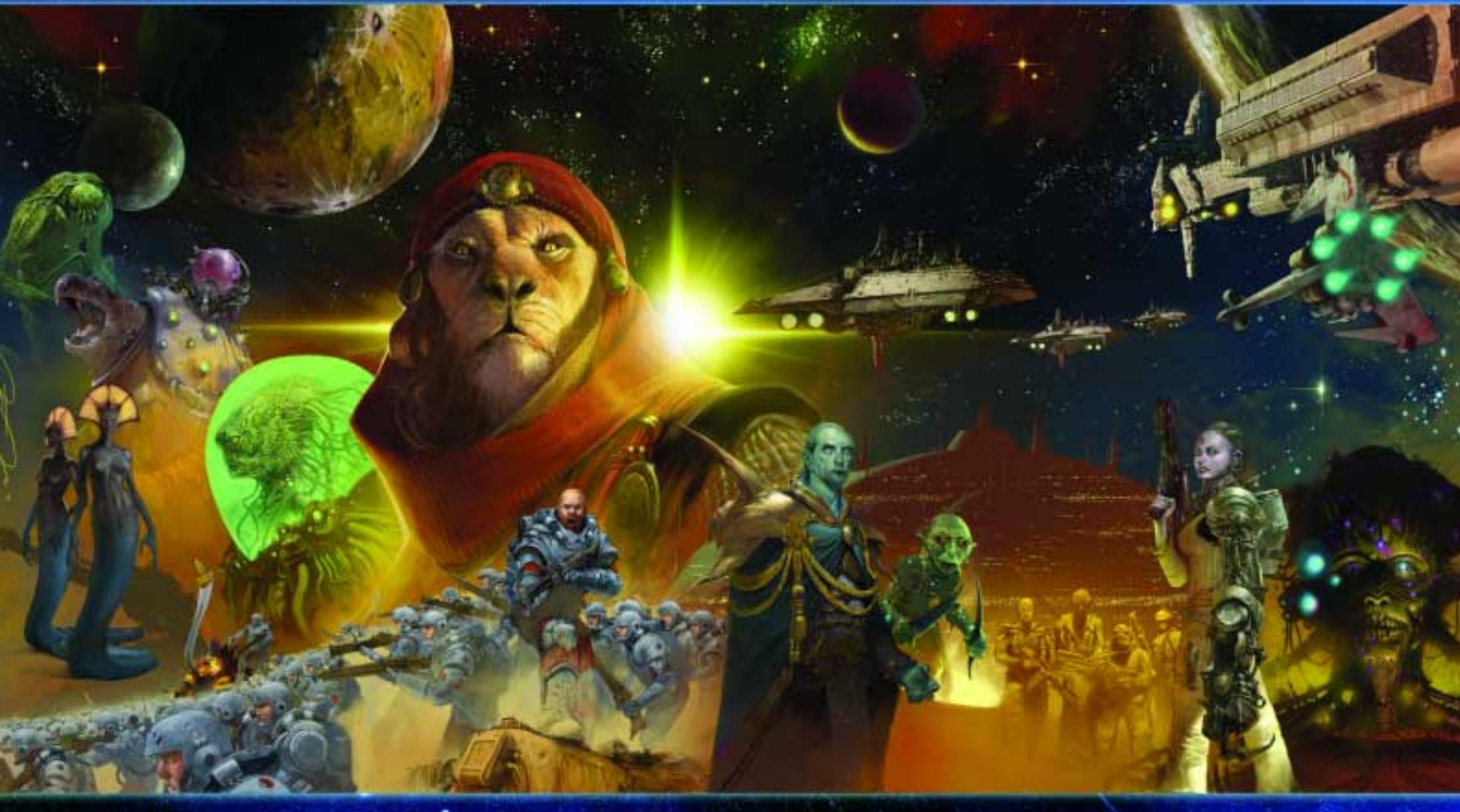
Welcome to a galaxy of epic conquest, interstellar trade, and political intrigue. TWILIGHT IMPERIUM is an exciting board game in which 3-6 players seek to build a galactic empire by the cunning use of strategy, diplomacy, and resource management. By taking on the role of a great interstellar race, players will seek the ultimate goal: to claim the Imperial Throne on Mecatol Rex and lead the galaxy to a new age of glory.
But the road to the Imperial Throne is long and the galaxy holds many dangers. Do you have what it takes to lead your race out of the troubled Twilight Age? Do you have the determination to move your race forward using a balance of diplomacy, careful planning, and the use of force? Are you ready to direct the scientific development, military might, and economic growth for an entire interstellar civilization?
If so, your time has come!
The Object of the Game
To win a game of TWILIGHT IMPERIUM ("TI"), players seek to accumulate a total of 10 victory points by achieving objectives and carefully choosing helpful strategies. The game ends when one player gains his 10th victory point or immediately after any other game-ending condition applies (see later).
Game Contents and Preparation
Enclosed in your TI box, you will find the following components.
• Six frames of highly detailed plastic components in six colors. Each frame contains the following:
- 5 Dreadnoughts
- 4 Carriers
- 8 Cruisers
- 8 Destroyers
- 2 War Suns
- 12 Ground Forces
- 10 Fighters
- 6 Planetary Defense Systems (PDS)
- 3 Space Docks
• 144 Technology Cards (24 each in six decks separated by color)
• 51 Planet Cards
• 103 Action Cards
• 60 Political Cards
• 30 Objective Cards (Secret and Public)
• 20 Trade Cards (2 each for 10 races)
• 10 Race Sheets
• 30 Leader Counters
• 8 Cardboard Strategy Cards
• 160 Command Counters (16 each for 10 races)
• 150 Control Markers (15 each for 10 races)
• 8 Bonus Counters
• 40 Trade Goods Counters
• 23 Fighter Supplement Counters
• 23 Ground Force Supplement Counters
• 1 Speaker Token
• 1 Victory Point Track
• 43 Hexagonal Board Tiles
• This rules booklet
• 4 10-sided dice (note that in TI, the "0" result represents the number "10")
• 44 Domain Counters
Before you play your first game of TWILIGHT IMPERIUM, carefully detach the plastic components from their frames and separate all cards into individual deck types. Carefully punch out the cardboard pieces so that they do not tear. Be sure to keep all components out of the reach of small children and animals.
Component Overview
We will here summarize the various components of TI, so that you may recognize them while reading these rules.
The Map Hexes
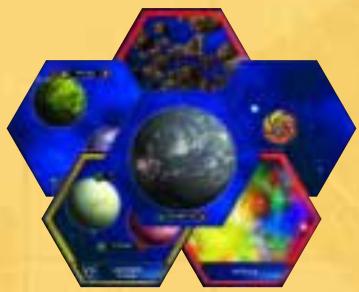
Before every game of TI, players will create a unique game board by connecting the provided hexagon map pieces. Each individual piece is called a "system." The systems of TI each represent an area of space, its planets, and/or other elements of interest. Systems that contain an interior yellow outline are Home Systems from which the great races hail. Systems containing an interior red outline are Special Systems (such as Asteroid Fields) governed by special rules.
The Plastic Game Units
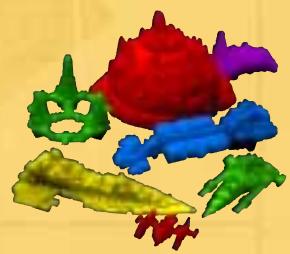
The detailed plastic pieces of TI (collectively called 'units") represent the military personnel, shipyards, defense systems, and spaceships that players will command. Units not employed on the game board are kept in a player's reinforcement area.

The Planet Cards
Representing the multitude of planets in TI, Planet Cards are used by players to indicate ownership over each individual planet and are "exhausted" (turned face down) when their owner "spends" the planets' resources or influence.

The Technology Cards
At the beginning of the game, each player receives an identical Technology Deck (separated by color) consisting of 24 technology advances. Throughout the game, when a player purchases (or otherwise acquires) a technology, the corresponding Technology Card is taken from his deck and placed face-up before him.

The Action Cards
The Action Cards of TI provide players with a variety of helpful events, maneuvers, bonuses, and other advantages. Players receive Action Cards throughout the game by a variety of activities.
The Political Cards
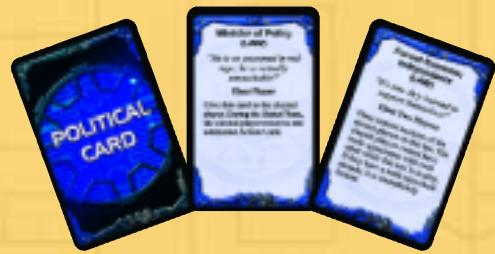
Often the representatives of the great races must meet in the hallowed halls of the Galactic Council on Mecatol Rex to debate, deliberate, and enact policy for the custodial imperial charter. When a player executes the primary ability of the Political Strategy Card during the Action Phase (see later), he must draw and resolve the top card of the Political Deck. Each Political Card contains an agenda that all players must vote upon. The effects of an agenda can range from a minor formality, to a major change in the very structure of the game.
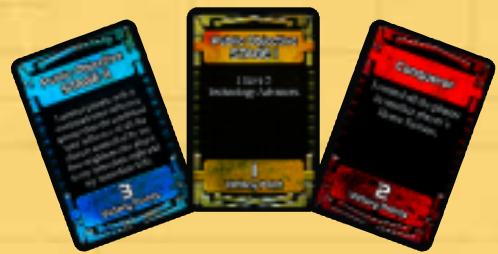
The Objective Cards (Public and Secret) In order to win TI, players need to accumulate 10 victory points. The primary way for players to receive such is by qualifying for the requirements of an Objective Card. The victory points provided by Public Objective Cards are attainable by all players, whereas those from Secret Objective Cards are individual to each player.

The Trade Cards
Each race has two Trade Contract cards which they can use to form trade agreements with other players. Each Trade Card has a numerical trade value which varies from race to race.

The Strategy Cards
Each of the eight cardboard Strategy Cards represents a powerful short-term strategy. During the Strategy Phase of each game round, each player will select one Strategy Card and must later use its primary ability. Each Strategy Card also enables an important secondary ability that other players may execute after the primary ability is resolved.
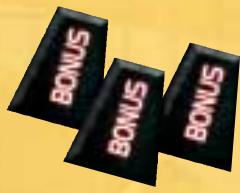
The Bonus Counters
After all players have selected a Strategy Card during the Strategy Phase, there will (in a six-player game) be two Strategy Cards remaining in the common play area. Before the Strategy Phase ends, the two remaining Strategy Cards both receive a Bonus Counter that is placed on top of the Strategy Card itself. A player that later selects such a Strategy Card will be able to use the Bonus Counter to receive an additional Command Counter or Trade Good.

Command Counters
The Command Counter in TI is the abstract but integral resource representing the domestic mandate, budget, organization, logistics, and preparedness of your race. When a player receives a Command Counter from his reinforcements, he must place it in either the Fleet Supply area, Strategy Allocation area, or Command Pool area on his Race Sheet. In order to execute tactical actions (such as moving, building, or initiating combat on the board), take advantage of the secondary abilities of Strategy Cards, or manage his fleets, a player must wisely allocate and spend Command Counters.

The Control Markers
At the beginning of the game, each player is provided with a generous number of flag-shaped Control Markers, each bearing the insignia of that player's race. The Control Markers are used to represent a race wherever appropriate, such as on the Victory Point Track, on successfully achieved Objective Cards, and (most often) to indicate ownership of planets.

The Trade Good Counters
These counters represent the wealth and rewards of interstellar commerce. They are primarily obtained by active trade agreements while the Trade Strategy Card is being executed. A player's Trade Goods can be used as a direct substitute for either resources or influence, and are frequently used as currency among players to pay for bribes or other considerations.


The Victory Point Track
The Victory Point Track is used to indicate each player's accumulation of victory points. Note that the main side of the Victory Point Track has spaces numbered from 0 to 10, whereas the reverse side is numbered 0 to 14. The reverse side is be used with the optional rule “The Long War" found on page 32.

The Speaker (First Player) Token This token is claimed each round by the player who selects the Initiative Strategy Card during the Strategy Phase. The player who controls the Speaker Token always chooses the first Strategy Card during the next Strategy Phase.

Ground Force and Fighter Unit Supplement Tokens
The Ground Force and the Fighter units are the only units in the game that players may purchase unlimited quantities of. All other unit types are limited to the figures provided with the game. The Fighter and Ground Force supplement tokens represent the extra Fighter and Ground Force units that players may add to their forces.

The Race Sheets
Enclosed in your game, you will find 10 large cardboard sheets, each representing one of the great races of the TI universe. After selecting a race to play, each player receives the corresponding Race Sheet, which provides each player with specific information for his race as well as helpful game information tables. The Race Sheet is also used for keeping track of a player's active Command Counters and Trade Goods.
Number of Players
These rules are written assuming that you will be playing TI with 6 players. TI plays just as well with fewer players, and rules for playing with 3-5 players are provided on page 31 of this rules set.
Game Setup
Before you start playing, follow the steps below:

Separate the 10 Home Systems from the other hexagonal gameboard pieces. Randomize the Home Systems face down and allow every player to draw one at random. This process determines which race a player will control throughout the game. All players then take the Race Sheet, Control Markers, Trade Cards, and Command Counters corresponding to their race.

Each player selects one of the six available colors and takes the plastic units and Technology Deck corresponding to that color.

Find an area of the table that is convenient for all players to reach. Designate this space the "common play area." Then shuffle the Action Card deck and the Political Card deck and place them separately in the common play area. Also place the Fighter and Ground Force Supplement Counters in the common play area.

Each player takes the individual Planet Cards corresponding to the planets of his Home System and places these face up in his play area. Place the remaining Planet Cards, representing the neutral planets at the start of the game, in the common play area.

Place all the Trade Goods Counters in a single pile (the "Trade Supply") in the common play area.

Now place the 8 Strategy Cards side-byside in numerical order with their "active" side up, prominently in the common play area.

Create the Objective Deck, by following the directions in the "Preparing the Objective Cards" sidebar. Do not forget to place the unused Secret and Public Objective Cards back in the box, while allowing no players to look at them.

Now place the Victory Point Track in the common play area and place one Control Marker for each player in the space marked "0."

Players must now create the game board (or “galaxy"). Please read and carry out the instructions for doing so in the "Setting up the Galaxy" sidebar on page 8 before proceeding.

REINFORCEMENTS
Every player maintains a "reinforcement"area consisting of his unused plastic units and Command Counters. Whenever a player builds a unit, it is taken from his available reinforcements and thereafter placed on the board. (An exception to this is the Fighter and Ground Force Supplement counter, see later). Whenever a player receives a new Command Counter, it is taken from his available reinforcements and placed in one of the three appropriate boxes on his Race Sheet (Command Pool, Fleet Supply, or Strategy Allocation).

After the galaxy has been created, all players place their "setup units" (as indicated by their Race Sheets) on their Home Systems. If a Home System contains several planets, any Space Dock, Ground Forces, and PDS may be placed among them according to the player's wishes. All players then find and place their "Starting Technology" cards face up in their respective play areas.

All players now take their starting Command Counters from their reinforcements, placing them on their Race Sheets as follows: 2 Command Counters in the Strategy Allocation area, 3 Command Counters in the Command Pool area, and 3 Command Counters in the Fleet Supply area (with the "Fleet" side up).
You are now ready to start the game.
The Game Round
After you have finished setting up the game, players will begin playing the game by starting with the Strategy Phase of the first game round.
TWILIGHT IMPERIUM is played over a consecutive number of game rounds with each round consisting of the following phases:
1) The Strategy Phase
2) The Action Phase
3) The Status Phase
After every Status Phase, if no player has yet declared victory, simply begin another game round starting with another Strategy Phase, etc. In this way the game continues, repeating the three phases above, until a player has achieved 10 victory points or until another game-ending condition is met.
Victory points are generally claimed during the Status Phase as players fulfill the requirements printed on the Public and Secret Objective Cards. In order to meet these various objectives, players must seek to expand their empires, forge alliances with other races, negotiate for the best outcome during the Galactic Council, and choose the optimal Strategy Cards during the Strategy Phase.
Preparing the Objective Cards
Before the game begins, the Secret Objective Cards must be distributed and the Public Objective Deck properly prepared.
First separate all the Objective Cards into the three different types: Secret Objectives, Public "Stage I" Objectives, and Public "Stage II" Objectives. Then proceed to the following:
1) Shuffle the 10 Secret Objective Cards and deal a random card face down to every player. All players should read their Secret Objective Card and then place the card face down in their play area. A player is never allowed, for whatever reason, to show an opponent his Secret Objective Card. Place the remaining Secret Objective Cards back in the box, allowing no player to look at them.
2) Now take the 10 Stage II Public Objective Cards and remove the "Game Over" card. Shuffle the remaining 9 Stage II cards and draw 3 random cards (at all times keeping them hidden from all players). After drawing the 3 random cards, take the "Game Over" card and shuffle it with the 3 randomly chosen cards. You
should now have 4 randomized Stage II Public Objective Cards, one of which is the "Game Over" card. Place these 4 cards face down in a stack in the common play area. Place the remaining Stage II cards back in the box, allowing no player to look at them.
3) Then shuffle the 10 Stage I Public Objective Cards and draw 6 random cards. Place the 6 cards on top of the 4 Stage II cards, now forming a single deck of 10 Public Objective Cards in the common play area. This deck always consists of 6 random "Stage I" cards on top of 4 random "Stage II" cards (one of which is the "Game Over" card). This deck is the "Public Objective Deck."
NOTE: It is important that the unused Objective Cards (Secret, Public Stage I & II) are placed back in the box so they remain hidden from players both before and during the game. Otherwise, experienced players would be able to deduce which objectives are in play before they are revealed.
THE STRATEGY PHASE
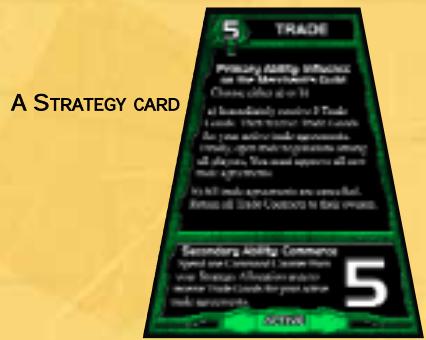
During every Strategy Phase, each player must choose one available Strategy Card from the common play area (The chosen Strategy Card grants its player a special ability during the upcoming Action Phase.) At the beginning of every Strategy Phase, there are 8 possible Strategy Cards (or "strategies") that players may choose from. These are: Warfare, Political, Trade, Initiative, Imperial, Logistics, Diplomacy, or Technology.
Not only does the Strategy Card provide an important ability, but it also determines the order of play (as indicated by its number; see the the sidebar on page 11 for more information on the order of play).
At the beginning of every Strategy Phase, the player who controls the Speaker Token (the "Speaker") may choose the first Strategy Card from the common play area. When selecting a Strategy Card, a player simply chooses and takes an available Strategy Card from the common play area and places it before him (with the "active" side facing up). That card is now no longer available for selection by the other players. After the Speaker has picked his Strategy Card, the other players, in clockwise order from the Speaker, each select one of the remaining Strategy Cards. In this way
Mecatol Rex
Home System
Ring l
Ring 2
Ring 3
TI uses a unique game board consisting of multiple hexagon pieces (“systems") that are brought together in a unique combination at the beginning of every game. Before a game of TI begins, players build the galaxy by following these steps:
1) After all players have drawn their Home Systems, find the Mecatol Rex system and place it in the middle of the table. Then randomly determine one player to be “first player.“ Give the “Speaker“ Token to the first player. He then shuffles the remaining 32 systems, randomly removes two systems (by placing them back in the box without looking at them), and deals five systems, face down, to every player. Players may look at their dealt systems but should not show them to the other players.
2) The first player now selects one of the sides of Mecatol Rex, and drags his Home System about two feet towards himself in a straight line away from the chosen side (see diagram). Then the player to his left does the same, etc., until all players have chosen a side and placed their Home Systems on the table (note that the sixth player must chose the last remaining side of Mecatol Rex). Players should now shift their seating around the table to best accommodate their Home System placement.
3) Then players, in clockwise order, starting with the first player, begin creating the galaxy by placing, one at a time, a single system face up adjacent to the Mecatol Rex system. After the first ring around Mecatol is completed, players continue to place systems in the second ring until that is completed, and then finally proceed to the third ring. When all the systems are placed, the galaxy is finally created.
The following rules apply to placing systems:
• A system cannot be placed in the second ring before the first ring surrounding Mecatol Rex has been completed. Likewise, a tile cannot be placed in the third ring before the second ring is completed (see diagram).
• As soon as the correct placement for your Home System becomes available, connect your Home System to the galaxy at its fixed spot (which is exactly 3 systems out from the chosen side of Mecatol Rex, see diagram). Connecting your Home System is automatic and does not cost you a placement“turn. 27
• You may not place a Special System (with an inner red border) adjacent to another Special System, unless you have no other option.
• The order of placement switches counterclockwise after all players have placed a round of tiles and yet again clockwise after that, etc. This in effect will make the player who placed the last system, place the first system in the next round (thus actually placing two systems in a row). Example of turn order: P1, P2, P3, P4, P5, P6, P6, P5, P4, P3, P2, P1, P1, P2...
• If you placed a system that did not contain a planet during your last placement, you must, if able, place a system that does contain a planet during your next placement. If you are unable to do so, you must reveal your remaining systems to the other players to prove this. Then place one of your available systems.
When creating the board, the actual shape of the galaxy and the position of Home Systems will differ depending on the number of players. If you are playing a game with less than six players, please consult the optional rules on page 31 of this rules booklet.
every player will pick an available Strategy Card before the Action Phase begins. Note that being farther clockwise from the Speaker gives a player an increasingly limited choice of Strategy Cards (i.e., the player to the immediate right of the Speaker will only have three cards to choose from)
After all players have selected a Strategy Card, there will be two cards remaining in the common play area. The Speaker places a Bonus Counter on the two remaining unchosen Strategy Cards.

A BONUS COUNTER
In this way, should a Strategy Card not be picked for several consecutive rounds, multiple Bonus Counters will accumulate on it. The presence of Bonus Counters makes a Strategy Card more attractive in subsequent rounds. When a player selects a Strategy Card that contains one or more Bonus Counters, that player may immediately exchange each Bonus Counter for either a Trade Good or a Command Counter (either of which is immediately placed on the player's Race Sheet).
After all players have chosen their Strategy Cards and the Bonus Counters have been placed on the remaining cards, the Strategy Phase ends and the game proceeds to the Action Phase.
Note that the last player to claim the Speaker Token will keep the Speaker Token until another player selects the Initiative card during a future Strategy Phase.
THE ACTION PHASE

The Action Phase forms the heart of TI. It is during the Action Phase that players will execute the special abilities of their Strategy Cards, produce new units at their Space Docks, conquer new planets, and move their fleets into battle. The Action Phase is resolved over a number of player turns in which each player may take a single action. Each player turn is taken in the order of play (see sidebar on the next page), with players one after the other taking one action to complete their turn. After the last player in the order of play has taken his turn, play returns once more to the first player in the order of play who may take an action, followed by the second player, and so on. In this way, players keep taking one action at a time, following the order of play, until all players have passed and the Action Phase ends.
A player that is currently in the process of taking his turn (i.e., action) is called the active player.
The Player Action
When it is a player's turn to take an action, he must
execute one of the following:
1) Strategic Action
2) Tactical Action
3) Transfer Action
4) Pass
These actions are described in detail throughout the yellow sections below.
The Strategic Action
A player must, at some point during the Action Phase, execute a Strategic Action (except for the player holding the Initiative Strategy Card, who has no Strategic Action). When a player chooses to take his Strategic Action, he first reads and then resolves the Primary Ability as printed on his Strategy Card.
After the active player has finished resolving the Primary Ability, the other players, in clockwise order from the active player, may each spend one Command Counter from their Strategy Allocation area on their Race sheet to execute the Secondary Ability of the current Strategy Card.

Special Exception: Players do not have to spend a Command Counter from their Strategy Allocation area when executing the Secondary Ability of the Logistics Strategy Card.
The active player may never execute the Secondary Ability of his own Strategy Card.
After all players have completed (or passed on) the Secondary Ability, the active player's Strategy Card is flipped over onto its "Inactive" side and the player action is over.
A player may only take one Strategic Action per round. Likewise, a player may only execute any given Secondary Ability once (but a player may, if he has a sufficient number of Command Counters in his Strategy Allocation area, participate in the Secondary Ability of several Strategy Cards).
The initiative number on each Strategy Card only determines the order of play. Players may execute their Strategic Action at a time of their choosing, regardless of its initiative number. It is likely, for example, that the player holding the Trade Strategy will take his Strategic Action before the player holding the Logistics Strategy, even if the Logistics Strategy has a lower initiative number.
Details for each s pecific Strategy Card can be found on pages 36-38.
The Tactical Action
The Tactical Action is the primary function for engagement on the game board. It is during a Tactical Actions that you will move your fleets on the board, engage in space battles, transport your Ground Forces to new planets, build new units, etc.
The process of taking a Tactical Action always follows the "Activation Sequence" below:
THE ACTIVATION SEQUENCE
1) Activate a system
2) Move ships into the system
3) PDS fire
4) Space Battle
5) Planetary Landings
6) Invasion Combat
7) Produce Units
Except for the first step (the activation itself), each individual step of the Activation Sequence is only resolved if the condition for its resolution applies or is initiated by the active player. A player, for example, may activate a system to produce new units there during step 7, but does not necessarily have to move any ships into the system during step 2. Or, a player may activate a system and move ships into the system, but if the system contains no enemy ships, there is no Space Battle during step 4, etc.
On the other hand, step 2 through 7 cannot be executed unless preceded by the initial activation. If a player has no Command Counters left in his Command Pool, he cannot take a Tactical action, and therefore not move ships, fight battles, produce units, etc.
"Friendly" and "Enemy"
When the cards and rules of TI refer to a "friendly"unit or planet, it refers to a unit or planet belonging to you (i.e., a single player). Although you may have an alliance or be personally friendly with another player, for the purposes of TI rules, only your own units and planets are "friendly.“
When the rules refer to an "enemy" planet or unit, it refers to any unit or planet not controlled by you (i.e., controlled by any other player). Even though you may have an alliance with another player, and even though you may consider the other players your personal friends, for the purposes of TI rules, the units and planets of other players are considered "enemy."
THE ACTIVATION SEQUENCE IN DETAIL
Below, each step in the Activation Sequence is described in detail. Rules for how to resolve Space Battles and Invasion Combat can be found on pages 15 through 18 .
1) ACTIVATE A SYSTEM
Take an available Command Counter from your Command Pool and use it to activate a system by placing the Command Counter directly on a system (place the counter face up so that your race's insignia is showing).
You cannot activate a system if one of your Command Counters has already been placed in the system (by a prior activation or by other means). You can, however, activate a system that contains one (or more) Command Counters belonging to other races (you may ignore their presence).
A system that contains a player's Command Counter is considered to have been activated by that player.
In summary: When the TI rules and cards refer to an "activated" system, this means a system that contains a Command Counter of the player in question. As a general rule, for purposes of activation and movement, a player can ignore the presence of Command Counters on the board belonging to other players. This means, for example, that every race can activate a specific system. In such a case, that system would contain a Command Counter from each race and would be considered “activated" by all players.
Although the Command Counters on the board belonging to other players do not limit where you may activate a system, it can be helpful to study which systems an opponent has activated, since those systems cannot be activated again by that player this round, nor can his ships in his activated systems move.
2) MOVE SHIPS INTO SYSTEM
After you have activated a system, you may move friendly ships (within movement range) into the activated system. Only movement into the activated system is allowed.
The rules for moving ships during a Tactical Action are as follows:
• Every ship (except for Fighter units, which move with Carriers or War Suns) has a movement value found on the unit table located on every player's Race
Sheet. A movement of "1" indicates that a ship can move from its current system into an adjacent system. A movement of 2 indicates that the ship may move up to two systems from its current system, etc.
• A Carrier/War Sun may pick up Ground Force and PDS units at any stage during the movement step (before, during, and even in the activated system itself). Ground Force and PDS units aboard a Carrier, however, cannot be "dropped off" by the Carrier until the Planetary Landing step of the Activation Sequence. If the last Ground Force unit on a planet is picked up by a Carrier, the owner of the planet must place a Control Marker on the planet to indicate that he controls it.
• A ship is never allowed to move through a system occupied by enemy ships (except Fighters). The only way to enter a system that contains enemy ships is to activate that system itself.
ORDER OF PLAY
Each Strategy Card has an Initiative Number printed near its top. This number represents what place in the order of play its owner will be. Thus, the player who has the Initiative Strategy card is always first, followed by the player who controls the Diplomacy Strategy card, etc.
The order of play, as dictated by the Strategy Cards, is as follows:
1Initiative Strategy
2Diplomacy Strategy
3Political Strategy
4Logistics Strategy
5 Trade Strategy
6Warfare Strategy
7Technology Strategy
8Imperial Strategy
When the turn order advances to an unchosen Strategy Card in the common play area, simply skip it and proceed to the next number. If, for example, no player picked the Initiative Strategy card during the Strategy Phase, the first player in the turn order would be the player who selected the Diplomacy Strategy.H • A ship may not move if it is located in a system that already has been activated by the active player (i.e., contains a friendly Command Counter placed prior to the current activation). It therefore follows that once a ship has moved into an activated system, the very Command Counter used for the activation will prevent the ship from moving again during the same round. Ships are allowed to move through systems containing friendly Command Counters.

Certain effects by Strategy or Action Cards can remove Command Counters from the board, allowing systems to be activated again by the same player (and allowing any friendly units in such a system to move again, etc).
In summary: Only ships that can actually enter the activated system may move. Ships that are out of movement range, that need to pass through a system containing enemy units, or are in a system already activated, may not move. Remember, any ship moving must always end its movement in the system that was just activated. See the detailed graphical example of a Tactical activation and movement on page 13.
3) PDS FIRE
After the active player has finished moving his ships into the activated system, enemy PDS in range may fire at the active player's fleet. For every "hit," the activating player must remove a casualty from the fleet (note that Dreadnoughts and War Suns can take one "Damage" before they are destroyed, see page 30).
After enemy PDS units have fired, any PDS in range owned by the active player may then fire at enemy ships in the activated system. For more details on PDS units, see page 29.
Definition of a Fleet
For the purposes of the TI rules and cards, a fleet is defined as all spaceships (Fighters, Cruisers, Carriers, Dreadnoughts, Destroyers, and War Sun units) controlled by one player in one system at any given time.
4) SPACE BATTLES
First determine whether a Space Battle will occur in the activated system.
If the active player has moved one or more ships into a system that contains ships controlled by an opponent (even a Fighter) a Space Battle must be initiated between the two players. A Space Battle will continue until only one player has ships remaining in the system.
If a Space Battle is initiated, the active player is the attacker, and the player whose ships were in the system before activation is the defender.
For complete rules of how to resolve a Space Battle, please see the “Space Battles” section on page 15.
5) PLANETARY LANDINGS
After any Space Battles are completed, the active player may now commence Planetary

Landings by landing Ground Force and PDS units from his Carriers onto planets in the activated system.
If a system contains multiple
planets, the active player may
split any landing forces between
them in any way he sees fit, but may not change his mind once the Invasion Combat step begins.
There are three types of Planetary Landings.
Friendly Landing: A
player lands units on a planet already under his control. Simply add the new units to the ones already there, if any.
Neutral Landing: A player lands units on a neutral planet (i.e., a planet controlled by no other player). After landing at least one Ground Force unit on the neutral planet, the active player takes the corresponding Planet Card from the Planet Deck and places it exhausted in his play area.
Note that only a Ground Force unit can take over a planet. If a PDS unit lands alone on a neutral or enemy planet, it is immediately destroyed.
Hostile Landing (also called an "Invasion"): A player lands units on a planet containing one or more of an enemy player’s Ground Force units. This will result in an Invasion Combat during the Invasion Combat step.
If a player lands units on a planet that is controlled by an opponent, but does not contain any enemy Ground Forces, the planet falls without resistance. The invader simply removes the opponent's Control Marker and takes the corresponding Planet Card from the opponent, placing it exhausted into his play area.
6) INVASION COMBAT
After planetary landings, should any planet contain Ground Forces of two different players, that planet must now engage in Invasion Combat. If a system has several planets engaged in Invasion Combat, the battles are resolved one-at-a-time in the order decided by the active player.
Landing PDS units with an Invasion
The invading player is allowed to land PDS units with his Ground Forces during the Planetary Landings step. Such PDS units do not participate in Invasion Combat, nor can they be taken as a combat casualty. If the last invading Ground Force unit is destroyed during Invasion Combat, all invading PDS are immediately destroyed with no further effect.
Details for how to resolve Invasion Combat are found in the “Invasion Combat" section on page 17.
6) PRODUCE UNITS
As the final step of a Tactical Action, the active player may produce new units at one or more friendly Space Docks in the activated system.
During this step, it is also possible for the active player to produce a new Space Dock unit on an eligible planet in the activated system (provided that the planet has been under the player’s control for the entire round).
See more information on how to produce units under the Space Dock on page 26.
Concluding a Tactical Action
After resolving the steps of the Activation Sequence (Activate a system, Movement, PDS fire, Space Battles, Planetary Landings, Invasion Combat, and Production), the Tactical Action is over and the opportunity to take an action proceeds to the next player in the order of play.
The Transfer Action
The Transfer Action is a simple reorganization of units that cannot be effectively handled by the Tactical Action. The Transfer Action simultaneously activates two adjacent systems that only contain units belonging to the active player and allows units in either system to simultaneously move between the two systems. In addition to this movement, the active player may also produce units in one of the two systems if a Space Dock is present in either.
The process of taking a Transfer Action always follows the steps of the Transfer Sequence:
THE TRANSFER SEQUENCE
1) Activate two systems
2) Movement between systems
3) PDS Fire
4) Planetary Landings
5) Production (in one system)
Below, each step of the Transfer Sequence is described in detail:
1) ACTIVATE TWO SYSTEMS
After announcing a Transfer Action, the active player takes one Command Counter from his Command Pool and activates a system by placing the Command Counter upon it. Then the active player takes a Command Counter from his reinforcements and activates another system adjacent to the one just activated. Both activated systems must contain at least one unit controlled by the active player and must contain absolutely no enemy units (including Ground Forces and PDS).
REMINDER: When "activating a system" the active player places a Command Counter physically on the system itself (with his race insignia facing up). It is never possible for a player to activate a system that is already activated (i.e., already contains one of his Command Counters).
Example of Activation and Movement
In the example above, the N’orr player has just initiated a Tactical Action during the Action Phase. As the first step, he takes a Command Counter from his Command Pool and places it on the system occupied by the Xxcha fleet and planet.
After activating the system, he proceeds to the second step in the Activation Sequence. As the N’orr player may now move ships into the activated system, his movement options are as follows:
The Dreadnought has a movement rate of 1. Since the activated system is 2 spaces away, it is too far preventing the Dreadnought from moving into the activated system.
2 Although these two Cruisers are in two different systems, they each have a movement rate of“2," which allows them to reach the activated system. The two Cruisers may move into the activated system. The top Cruiser will move through a system that contains another N’orr Command Counter, which is perfectly legal.
3 This fleet of one Destroyer, one Carrier and four Fighters are all within movement range, and may all move into the activated system. If he wishes, the N’orr player may split the fleet and only move some of the ships (although the Fighters should stay with the Carrier).
4 These two Destroyers are within movement range of he activated system, but their system was already activated earlier by the N’orr player. This prevents them from moving to the activated system.
5 This N’orr Cruiser is within movement range to reach the activated system, but it cannot move through the Supernova or through the system containing two Xxcha Destroyers. This prevents the Cruiser from moving to the activated system.
After moving units into the activated system (being careful not to exceed his Fleet Supply) the N’orr player will engage in Space Battle against the Xxcha fleet there.
2) MOVEMENT
The active player may now move friendly ships between the two activated systems. As during a Tactical Action, Fighters, PDS, and Ground Force units must be transported by Carrier/War Sun.
3) PDS FIRE
After the active player has finished moving, enemy PDS in range may fire at the active player's fleets in the activated systems. PDS units that are in range of both activated systems may fire at only one of the systems, not both.
4) PLANETARY LANDINGS
During this step, any Ground Force and PDS units onboard Carriers in the activated systems may land on friendly planets in their system. Note that during a Transfer Action you may only land forces on friendly systems, not neutral planets or planets containing an enemy Control Marker.
5) PRODUCTION
The active player may now produce units at his Space Docks in one of the activated systems (but not both).
Passing
If a player does not wish to take any additional actions, he may choose to pass. A player is only allowed to pass if he has already taken his Strategic Action (except for the player who controls the Initiative Strategy, who has no Strategic Action). All players must therefore, at some point during the Action Phase, take their Strategic Action (and thereby allow other players to execute the Secondary Ability of their Strategy Card).
After a player has passed, he is no longer allowed to take any additional actions this round. When it normally would have been his turn in the order of play, simply skip him, and proceed to the next player.
Exception: A player who has passed, is allowed to execute the Secondary Ability of Strategy Cards that are resolved later during the phase.
Example: After taking several actions, including his Strategic Action, the Xxcha player decides to pass. After doing so, the game goes on for several additional cycles until the Letnev player decides to take his Strategic Action. After the Letnev has resolved the Primary Ability of the Strategy Card, the other players, including the Xxcha, are allowed to execute its Secondary Ability.
END OF THE ACTION PHASE
The Action Phase continues, repeating the order of play, until all players have passed. This could potentially result in a remaining player taking several consecutive actions, while all other players, having passed, must wait for him to finish his actions.
Once all players have passed, the game proceeds to the Status Phase.
THE STATUS PHASE
The Status Phase, when compared to either the Strategy or Action Phase, is a straightforward experience. It is during the Status Phase that many of the game functions are "reset," such as players refreshing Planet Cards, discarding Command Counters from the board, etc. It is also during the Status Phase that players may gain victory points by meeting the requirements of a Public and/or Secret Objective Card.
To resolve the Status Phase, follow the Status Sequence below:
The Status Sequence
1) Qualify for Public/Secret Objective Cards
2) Repair Damaged Ships
3) Remove Command Counters
4) Refresh Planet Cards
5) Receive 1 Action Card and 2 Command Counters
6) Redistribute Command Areas
7) Return Strategy Cards
The Status Sequence steps are described here in detail:
1) QUALIFY FOR PUBLIC/SECRET OBJECTIVES In the order of play, each player may announce that he has met the requirements of one face-up Public Objective Card and/or his Secret Objective Card.
After a player announces that he has met the objectives of a face up Public Objective Card, he must prove to his opponents that his claim is valid. After
The "Imperium Rex" Objective Card
While the Primary Ability of the Imperial Strategy card is resolved, it is possible that the "Imperium Rex"objective card is drawn from the Objective Deck. When this card is drawn, the game ends immediately and a winner is declared The winner is the player who has the most victory points (the active player does not receive the 2 victory points). If there is a tie, then the greater number of resolved Objective Cards breaks the tie; if there is still a tie, then the greater number of planets, then unused Command Counters, and then the total number of Command Counters on a player's Race Sheet. If still tied, then the game ends in a draw between the tying players.
doing so, the player places one of his Control Markers on the claimed Objective Card (indicating that he has claimed that objective), and then advances his Control Marker on the Victory Point Track the appropriate number of spaces.
Once a player has received Victory Points for a specific Objective Card, he may not qualify for that Objective Card again.
In addition, if a player has met the requirements of his Secret Objective Card, he may now reveal the card, prove that its objectives are met, and then claim its victory points.
Important Exception: A player may never qualify for a Public or Secret Objective Card if he does not control all the planets in his Home System.
Winning the Game
When a player advances his Control Marker to the 10th step of the Victory Point Track, he has gained the power needed to claim the Imperial Throne on Mecatol Rex. The Winnaran Custodians will step aside for their new emperor, who must lead the galaxy to a new age of prosperity and peace.
As players, one at a time, qualify for Objective Cards by following the order of play, one player will always reach 10 victory points first. That player is the winner of the game, even if other players would also have achieved 10 or more victory points later in the order of play.
It is also possible for a player to win the game during this step if he is the first to meet the requirements of either the “Supremacy” or “Domination" card (provided that either card is face up in the common play area).
2) REPAIR DAMAGED SHIPS
All damaged Dreadnought and War Sun units are returned to their normal upright position on the game board. They are no longer considered to be damaged.
3) REMOVE COMMAND COUNTERS
Each player now removes all his Command Counters from the game board, placing them in his reinforcements pile.
4) REFRESH PLANET CARDS
Each player refreshes his exhausted Planet Cards by turning them face up.
5) PLAYERS RECEIVE 1 ACTION CARD AND 2 COMMAND COUNTERS
Each player now receives one Action Card from the Action Card deck and two Command Counters from his reinforcements (placing each Command Counter in either of the three appropriate areas of his Race Sheet).
6) REDISTRIBUTE COMMAND AREAS
Each player (in order of play, if necessary) may now redistribute the Command Counters between the Strategy Allocation, Command Pool, and Fleet Supply areas on his Race Sheet. If a player reduces the number of Command Counters in his Fleet Supply, remember to check that all of his fleets on the board are in compliance with his new fleet size limit.
7) RETURN STRATEGY CARDS
Each player now returns his Strategy Card to the common play area. Here the eight Strategy Cards will be ready for the beginning of the next game round.
END OF A ROUND
After the Status Phase has been completed (and provided no winner has yet emerged), the game round is over and another game round begins with a new Strategy Phase. In this way, the game is played over a series of game rounds until a winner has been determined.
Space Battles
If the active system contains ships belonging to the active player and ships belonging to an opponent, a Space Battle must be fought.
A Space Battle is fought over a consecutive number of combat rounds until only ships of one player remain (or the ships of both players have been simultaneously destroyed).
Before Combat
Before the actual Space Battle begins, resolve any pre-combat actions such as Destroyer Anti-Fighter Barrage and then Sabotage Runs (the Sabotage Run is an optional rule found on page 35).
Destroyer Anti-Fighter Barrage
Before the first round of Space Battle, roll two dice for each Destroyer unit in the battle. For every result equal to or higher than the Destroyer's combat value (all combat values can be found on the unit table on every player's Race Sheet), the opponent must take one Fighter unit as an immediate casualty. Such eliminated Fighter units are removed immediately and placed back among a player's reinforcements; they do not receive return fire and will not participate in the upcoming Space Battle.
A fleet containing no Fighter units is unaffected by pre-combat Destroyer fire.
The Battle Round
After finishing any "before combat" actions, continue to the actual combat. A Space Battle always follows the Space Battle Sequence:
The Space Battle Sequence
1) Announce withdrawals/retreats
2) Roll combat dice
3) Remove casualties
4) Execute withdrawals/retreats
After step 4, if both players still have ships remaining in the system, repeat the Space Battle Sequence until only one player has ships remaining, or all ships in the system have been destroyed.
Below, each step of the Space Battle Sequence is described in detail:
1. ANNOUNCE RETREATS/WITHDRAWALS
The attacker first has the option to announce his withdrawal from battle. If the attacker chooses not to declare a withdrawal, then the defender may declare a

retreat. Note that if the attacker does decide to withdraw, the defender may not declare a retreat.
Any actual withdrawals/retreats occur at the last step of the combat phase. This means that all Space Battles will have at least one round of combat.
2. ROLL COMBAT DICE
During this step, both players simultaneously roll one combat d
内容过长,此处只内联前一部分;完整内容请下载或到规则页阅读。
下载 Markdowntwilight-imperium-third-edition-shattered-empire-rulebook-english.md73.9 KB
Twilight Imperium: Third Edition – Shattered Empire
At the end of empire, a faint wind rustled through Salai’s robes. It was a calm,
warm evening, and the bruised purple outline of the setting sun was still visible
on the horizon. An evening made for calm contemplation and peace.
Instead it was neither.
For most of his adult years, Salai had come to this balcony to breathe the clean
air and admire the lights of Mecatol City. Yet tonight, the lights were scattered
and few, the usual bustling traffic was scarce, and the air was tainted with the
acrid scent of burning and foreboding. Salai glanced to the west, where distant
columns of dark smoke still rose, obscuring the western stars.
“Your Highness?”
Salai did not turn to greet the owner of the voice. It belonged to High Councilor
Verus Da Ishnu. The councillor knew his emperor’s displeasure at being inter
rupted on his evening balcony stroll, yet for months Verus had interrupted him
regardless. Salai gently shook his head and sighed. He could hardly blame his
old friend. These were difficult times.
“The fire continues.” The emperor gestured towards the plumes of smoke in the
west. “It has been burning for months. Please tell me that we are making prog
ress?”
Verus emerged from the doorway and approached his emperor. “They have con
tained the spread of the fire, but the work goes on. The Hall of Cartography was
vast, and our resources are now limited.…”
“The continuing call for reservists has drained our public sectors.” Salai shook
his head. “Is that not what we tell the citizens?”
It was a question that Verus Da Ishnu knew better than to answer. Verus felt a
twang of the gnawing fear that had been growing within him since the Hall of
Cartography was destroyed. The nagging fear of the impossible.
“And Ibna?” Salai Sa Corian, the last Lazax emperor, turned to his advisor.
“There is still no word of Ibna Vel Syd.” Verus didn’t understand or appreciate
the emperor’s empathy for the renegade junior councilor. Even before his trea
son, Ibna’s presence had become destructive in court. His nervous outcries, bor
dering on panic, had been far from useful in procuring any long-term solution
to the crisis.
“And his ships?” Salai glanced towards the stars, resuming his slow walk along
the balcony. Verus followed.
“Still unaccounted for, I’m afraid. Our navy…”
“Yes, I know,” Salai sighed, “It is stretched thin.” His eyes seemed to glaze over
as he studied the distant suns that shone in the Mecatol night sky. “Ah, Ibna.
Where have you gone?” Salai lowed his eyes to look at his old friend. “I envy
him, Verus.”
“This traitor?” Verus could barely contain his frustration. “Rats flee a sinking
ship, my Lord, not a captain!” As he spoke, he immediately regretted his words.
The acidic fear within him twitched again.
The emperor’s lips curled in stark amusement. “Is our ship sinking, Verus?”
“Of course not, my lord! I certainly did not…”
“What I mean, Verus, is that I envy the freedom of the rat.”
Verus paused. “Not words I would use at your dinner speech, my Lord.”
The emperor burst into friendly laughter, his spirit raised for the moment. “No, I
better not.” The emperor took his friend’s arm as they walked. “I am glad to
employ so esteemed a councilor. Especially when he saves me from rhetorical
folly involving vermin.”
Verus smiled back, it was good to see Salai jest; it did not happen often.
They continued their walk in a rare moment of silence. The emperor’s smile
soon faded. “I stand with the ship, Verus. Sinking or not. I stand with the ship!”
“Of course, my Lord. And we stand with you.”
The emperor nodded. “Well, Verus. Will you please tell me why you interrupted
my evening walk this time?”
Verus led the emperor into the throne room. On a normal night, the room would
be bustling with councilors, ambassadors, military officers, and representatives
from every corner of the galaxy. Court staff would be busy filling cups and pro
viding light meals to a crowd buzzing with intrigue and ploys of power.
Instead, tonight the room was dimly lit, strangely hot, and only the inner circle
of Salai’s councilors was present.
And the visitor.
The stranger stood taller than even the Lazax. Entirely cased in a gold-bronze
metal, only its glowing eyes could be seen burning beneath an expressionless
golden mask. Salai could feel the strange heat emanating from the creature, a
pulsing, living heat, unlike any that Salai had known in the past.
The creature, somewhat clumsily in its heavy armor, bowed gently. Its eyes, flick
ering with a living fire, dimmed in respect.
A servant brought Salai his translation device on a golden tray. Salai placed the
device over his ear. “Who are you?” Salai’s voice was kind.
“I am Feramon Azh.” The voice of the stranger was like that of coals grinding
in a furnace. “I am of the Gashlai people from distant Muaat.”
Salai spread his arms in the traditional welcome. “Be well received here on
Mecatol. Even in these troubled times, the empire is glad for your arrival and
your presence!”
“We ask for your help,” the Gashlai began. “We are a people enslaved.” The
creature inched forward towards the emperor, its fiery eyes pleading.
The emperor listened to the tale of the Gashlai and their mistreatment by the Jol
Nar. As the creature finished its tale, Salai moved towards it, reaching to touch
its armor, but as he felt the boiling heat of the metal, he slowly returned his
hand to his side.
“We are at war against the Hylar. We have no control over their actions,” the
emperor said. Across the room, councilors nodded their silent agreement.
The disappointment in the eyes of the Gashlai was evident. “But you are emper
or! You are strong!” he continued. “You can free Muaat, and the Gashlai will
help you in your war!”
A Lazax admiral came to whisper something in the emperor’s ear, but Salai
waved him away. “Our forces are hard pressed, Feramon. Despite my compas
sion for your plight, we cannot spare even a single ship.”
“But you must help us!” The Gashlai inched forward again. “The hope of my
people rests with my mission here. You cannot fail them!”
“I am sorry, my friend.” The Lazax emperor was powerless. It seemed the whole
galaxy was pleading for help, while truly it was the empire that needed help from
the galaxy. This audience was over.
The eyes of the Gashlai dimmed again in disappointment, but he did not step
back. “Wait!” There was a hint of tension in his voice, a taste of desperation.
The creature touched a small control at his side, and with a hiss of hot air a
small door opened in his chest armor. The palace guards sprung to the emper
or’s side.
Slowly the Gashlai brought out an engineering drafting device from the com
partment. “If you save the Gashlai, we will give you this.”
Salai took the device and glanced at the Hylar schematics. The emperor gestured
for the admiral to come forth once more. Their eyes grew in surprise as they
realized what the schematic meant.
“The Hylar are building this monstrosity?” Salai asked. The Gashlai blinked
and nodded. “My people have been slaving to build this vessel for years,” the
creature sadly announced.
The emperor glanced at the admiral, who looked longingly at the schematic and
the powerful weapon it promised.
The emperor was about to speak again when the door to the throne room sprang
open with a clamor. Led by the High Commander of the Lazax forces, a group of
naval and diplomatic personnel burst into the room. Their faces were grave, and
hints of perspiration beaded on their foreheads. Wary of the alien in the center
of the room, the High Commander approached Verus, whispering news in the
councilor’s ear.
“Yes?” Salai inquired. Something was wrong.
“My lord,” Verus began. “The Hacan and the N’orr…their entire diplomatic
contingents have secretly departed. Their districts are empty.”
“But why?” Salai demanded. But as he looked into the face of the High
Commander, he knew. “We are betrayed?”
The high commander only lowered his eyes, deep embarrassment in his face.
Salai moved calmly to the great western window. As he approached the glass,
the first bomb fell, splitting the night in yellow and orange. Hard shadows
flared across the room. In the night skies above, Salai could see the emerging
outlines of the Sol fleet. Like a vast swarm of black birds, the vessels soon
shrouded the stars.
Salai turned to the people in the room. They looked longingly at him, as if some
secret legacy of the imperial blood would spring forth and vanquish the enemy.
Instead they saw only tears.
Salai moved calmly to the Gashlai, who was clearly shaken over the sudden
events. “Go home, friend Feramon. I hope that you and your people find a safe
way out of the destruction in the years ahead. If you survive this night, tell your
people that they must carve their own destiny.”
The last emperor returned the engineering device to the creature. Placing his
hand emphatically on its metallic arm, Salai ignored the instant blistering of his
skin. “This knowledge is too late for us. Keep it. It may yet benefit your people!”
The Gashlai quickly retreated, the room palpably cooling at his departure.
Another explosion shook the city and the imperial tower trembled. The emperor
tore the imperial chain from his neck, precious metals and gemstones spilling on
to the floor. “This twilight imperium is no more. Save your families.”
The others in the room came alive with a sudden panic, most rushing blindly to
the doors. “Remember the peace of the emperors!” Salai shouted after them.
As the echo of his words rang through the room, a sharp sound rang through
the low rumble of bombardament. The High Commander, having discharged
his service pistol on himself, instantly collapsed. His blood slowly saaking into
the imperial rugs. Salai hardly noticed.
Verus came to his emperor’s side for the last time. Together the two stood in the
trembling tower, silently witnessing a bloom of fires grow in their city like a gar
den of destruction.
The next wave of bombardments destroyed the imperial palace and everyone
therein.
Page 4
Welcome
Welcome back to the TWILIGHT IMPERIUM uni
verse. In the SHATTERED EMPIRE expansion, the
galaxy is larger and more dangerous – and the glory
of conquering it is greater than ever before. Now four
new races enter the struggle for the Imperial Throne,
and up to eight civilizations can vie for control of the
galaxy. There are new planets to conquer and new
spatial anomalies to contend with, but there are also
new technologies – including new race-specific tech
nologies – to aid each civilization. New Political
Cards and Actions Cards revitalize the game, and
players can also choose to use new variant Strategy
Cards, Public Objectives, and many new optional
rules.
War rages across dozens of planets, and only one race
will emerge to control the empire. Will you submit, or
lead the galaxy into a new age?
Expansion Overview
In this expansion you will find a number of additions
to the Twilight Imperium Universe as well as a num
ber of new optional rules and variants. The first sec
tion of the rulebook details the new additions (which
include new races, more systems, and many new
cards and counters) while the second section details
many new optional rules that may be added as play
ers see fit.
Components
Your copy of SHATTERED EMPIRE should contain
the following components:
• 28 New System Tiles
• 2 New Sets of Plastic Units (2 sets of 5
Dreadnoughts, 4 Carriers, 8 Cruisers, 8
Destroyers, 2 War Suns, 12 Ground Forces,
10 Fighters, 6 Planetary Defense Systems,
and 3 Space Docks each)
• 4 New Race Sheets
• 64 Command Counters (16 for each of the
four new races)
• 88 Control Markers (14 for each of the four
new races, plus 2 additional markers for
each of the 10 original races)
• 12 Leader Counters (3 for each of the four
new races)
• 8 New Variant Strategy Cards
• 1 Variant Imperial Strategy Card
• 8 New Trade Contracts Cards
• 28 New Objective Cards
• 40 New Action Cards
• 32 New Political Cards
• 98 Technology Cards (including 2 new
Technology decks in grey and orange)
• 14 Race-Specific Technologies Cards
• 28 New Planet Cards
• 16 Facility Cards (8 Colonies and 8
Refineries)
• 8 Unit Reference Cards
• 12 Shock Troop Tokens
• 12 Space Mine Tokens
• 2 Mecatol Custodian Tokens
• 8 Artifact Tokens
• 1 High Alert token
• 22 Domain Counters
• 12 Fighter Supplement Tokens (in 3s)
• 12 Ground Force Tokens (in 3s)
• 12 Trade Goods
• 3 Wormhole Tokens
The Shattered Empire Icon
All the cards in this expansion are marked with the
SHATTERED EMPIRE symbol on their fronts, to
allow you to easily separate them from your base
TWILIGHT IMPERIUM game.
REPLACEMENT CArDS
Several replacement cards for the Twilight
Imperium 3rd Edition base game are included
in this expansion. Some of these cards have
been revised to correct errata, while others have
been revised to work better with this expansion.
To use the replacement cards, simply remove
the original cards from their appropriate decks
and replace them with the new versions. The
replacement cards are:
TECHNOLOGY CArDS
6 Advanced Fighters (1 in each color)
6 Micro Technology (1 in each color)
6 Assault Cannon (1 in each color)
ACTION CArDS
4 Direct Hit Cards
1 Ruinous Tariff Card
POLITICAL CArDS
1 Open the Trade Routes Card
The Shattered Empire Symbol
Component
Descriptions
Below are brief descriptions of each component.
New Systems
There are 28 new system tiles in SHATTERED
EMPIRE, including Ion Storms (a new type of Special
System). Hope’s End, the imperial training ground, is
also among the new systems.
One of the new systems is the Wormhole Nexus,
which is easily distinguished by its non-hexagonal
shape. Use of this system is optional, and when this
rulebook refer to “systems,” the Wormhole Nexus
should be excluded unless stated otherwise.
New Race Sheets
Four never-before-seen races join the struggle to con
trol the galaxy.
Additional Control Markers, Command Counters,
Leaders, and Trade Contracts have been provided for
each of four new races. These function exactly the
same as in the base game.
New Plastic Game Units
Two new colors of plastic pieces representing military
personnel, defense systems, and spaceships have been
provided. These pieces allow players to play Twilight
Imperium with up to eight players.
New Strategy Cards and the Variant
Imperial Strategy Card
SHATTERED EMPIRE features a new set of eight
variant Strategy Cards, with a white background, that
favor different strategies than the original set. In addi
tion, there is a High Alert token for use with the new
Warfare II Strategy Card. For full details on the new
Strategy Cards, see pages 14-17.
The variant Imperial Strategy Card, with a black
background, may optionally be used with the original
set of Strategy Cards. Details on this card can be
found on page 18.
New Technology Cards
Four brand-new technologies are included for each
player, as well, as well as two complete decks of
Technology cards in grey and orange.
Race-Specific Technologies
Each of the 14 races now has one Race-Specific
Technology. These optional Technology cards may
only be acquired by the appropriate race (see page 9).
New Action & Political Cards
Additional Political and Action cards provide players
with a wider variety of Galactic Council Agendas and
game events. To use these cards, shuffle them into
their appropriate decks.
New Objective Cards
The new sets of Stage I and Stage II Public Objectives
can optionally be used instead of the original
Objective deck. These cards tend to focus more on
military conflict than the original set. See page 7 for
details.
Also provided are 3 new Secret Objectives, to be
mixed in with the original set.
Finally, Special Objectives have been included for
use with two new optional rules: Artifacts (detailed
on pages 9-10) and the Voice of the Council option
(detailed on page 11).
New Planet Cards
These cards correspond to the planets in the new
systems.
Facility Cards
These cards represent refineries and colonies that
players may build on a planet to increase the planet’s
resources or influence value. See page 11 for details.
Unit Reference Cards
The unit reference cards provide players with an
image of each unit type and its game stats.
Shock Troop Tokens
Shock Troops represent battle-hardened, veteran
Ground Forces. These special Ground Forces are
much more powerful and have special rules governing
them (found on page 10).
The High Alert Token
Page 5
Space Mine Tokens
With the new Space Mines option, Cruisers have the
ability to deploy space mines. Ships moving into a
system that contains space mines could be destroyed
before combat. Space mines are described in detail on
page 10.
Mecatol Rex Custodian Tokens
These tokens represent guardians of Mecatol Rex.
Their optional use is described on page 11.
Artifact Tokens and Objective Cards
These tokens represent four ancient relics of power
that are hidden somewhere through out the galaxy.
Each artifact also has a corresponding Special
Objective card worth 1 Victory Point to its controller.
For more information on Artifacts, see page 9.
Wormhole Tokens
Special Wormhole tokens have been included for use
in optional map setups that are available at Fantasy
Flight’s website, www.fantasyflightgames.com.
Ground Force and Fighter Unit
Supplement Tokens
These tokens function the same as in the base game
except that each token counts as three of the corre
sponding unit. Players may need to make change
when using these new tokens.
Domain Counters
The new Domain Counters are used with the Distant
Suns option to accommodate the larger galaxy and
provide a wider variety of affects. See pages 11 and
20 for more information on the new Domain tokens.
Trade Goods
These additional Trade Goods expand the limited
Trade Goods pool, allowing players to accumulate
more of them.
New Additions
SHATTERED EMPIRE includes five major additions
designed to enrich your Twilight Imperium gaming
experience. The following pages detail these addi
tions, which include new races, new tiles, and a wide
range of new cards.
New Races
This expansion includes four races that are new to the
Twilight Imperium universe: the Brotherhood of Yin,
the Clan of Saar, the Embers of Muaat, and the
Winnu. When playing this expansion, these races’
Home Systems should be included in the random
draw to determine which race each player will control
throughout the game.
The following core components are provided for each
new race:
• 1 Race Reference Sheet
• 1 Home System Tile
• 16 Command Counters
• 15 Control Markers
• 2 Trade Contracts
• 3 Leaders
The Winnaran Yellow Technology
Specialty
The Winnaran home world is unique in that it is the
only planet with a yellow (general) technology spe
cialty. This yellow technology specialty works exactly
like the red, green, and blue technology specialties
except that the yellow technology specialty does not
count for the purpose of fulfilling objectives.
Saar Space Docks
As described on their race sheet, the Clan of Saar’s
Space Docks have a base movement of 1. The follow
ing rules also pertain to Saar Space Docks:
• Saar Space Docks may only be built in a system
containing a planet that you have controlled for the
entire game round.
• Saar Space Docks are not ships and therefore do not
count towards Fleet Supply and do not participate in
Space Battles.
• Saar Space Docks are never blockaded; they are
simply destroyed if present with enemy ships.
• Ground Forces and PDS units built in systems con
taining Saar Space Docks may be placed on any plan
et you control in the system, or they may go on a
Carrier. If you do not have a planet or Carrier in the
system to place Ground Force or PDS units on, you
may not build them.
New System Tiles
This expansion includes 28 new system tiles. In this
mix there are 2 Ion Storm tiles, a new type of Special
System. In addition, many of the new Regular
Systems feature a Refresh ability and/or Trade
Stations. These new elements are detailed below.
Ion Storms
The Ion Storm is a new type of Special System (with
a red border) governed by the following rules:
• Ships may never move through an Ion Storm (how
ever, ships can move into an Ion Storm via normal
activation).
• PDS Cannons may never be fired at ships inside an
Ion Storm.
• Fighters do not roll any dice during combat inside an
Ion Storm. However, Fighters may still be taken as
casualties.
Refresh Abilities
Some regular systems have Refresh abilities that may
be used during the Status Phase. A Refresh ability is
indicated on the hex by an icon to the right of the
Page 6
planet name and is detailed in the text of the corre
sponding planet card.
During the Status Phase, immediately after refreshing
planet cards, you may exhaust one or more planets
with the Refresh ability to gain the special abilities
listed on their planet cards. When you exhaust a plan
et to gain its ability, you do not gain its resources.
Refresh abilities may provide 2 Trade Goods, 2 Shock
Troops, 2 Ground Forces, or 2 Fighters. If the Refresh
ability provides units, the units must be placed on the
planet that was exhausted to produce them. If you are
not playing with the Shock Troops option (see page
10), then Refresh abilities that provide Shock Troops
provide Ground Forces instead.
Example: The Muaat player controls Hope’s End.
After refreshing it during the Status Phase, he decides
to immediately exhaust it to gain 2 Shock Troops. He
must immediately place them on Hope’s End.
Trade Stations
Two regular systems contain Trade Stations (Tsion
and Sumerian). Trade Stations have a white name box
and a space for a Control Marker. Trade stations fol
low the rules below:
• No Distant Suns Domain tokens are placed on Trade
Stations.
• Trade Stations have a special Refresh ability that
gives the controller 2 Trade Goods if exhausted during
the Status Phase. See Refresh abilities (above).
• Trade Stations may never be invaded. Instead, when
ever a player has ships in a system in which no other
player’s ships are present, he immediately places his
Control Marker on the station (and gains the corre
sponding planet card in its exhausted state). The
Control Marker stays on the station until another play
er becomes the only player with ships in the system
(at which point the other player places his Control
Marker on the system and gains the corresponding
planet card in its exhausted state). Control Markers
may also be removed from Trade Stations by certain
abilities and cards.
• Capturing a Trade Station from an opponent does
not break a trade agreement with that opponent.
• Ground Forces, Space Docks, and PDSs may not be
placed on Trade Stations.
• Aside from the above exceptions, Trade Stations are
still considered planets (with planet cards) for the sake
of abilities and other cards that target planets. For
example, a player can target a Trade Station with
Peaceful Annexation (a power on the new Diplomacy
Strategy Card in this expansion) or the Local Unrest
Action Card. (Note, however, that using an ability
such as Peaceful Annexation – which gives you con
trol of a planet – on a Trade Station in which another
player is the only player with ships in the system is
pointless, since that player will immediately regain
control of the station.)
Example: The Sol player activates a system contain
ing a Trade Station. He moves a Destroyer into the
system. Since he is now the only player with a ship in
the system, he places his Control Marker on the Trade
Station and gains the corresponding planet card.
Later that turn, the Muaat player activates the system
and moves in with a War Sun. After a crushing victo
ry, he is now the sole occupant of the system, so he
immediately gains control of the Trade Station. He
removes the Sol flag, places his own Control Marker,
and then gains the corresponding planet card.
Other New Systems
Among the new tiles there are also many regular tiles,
4 new Home Systems for the new races, and 1
Wormhole Nexus tile, a new, unique system that is
only used when playing with the Wormhole Nexus
option detailed on page 10.
Game Setup with the New Systems
Due to the addition of many new systems, players will
need to remove more random systems before setting
up the galaxy than specified in the original rulebook.
The first player should place these systems back in the
box during setup without looking at them.
Remove the following systems instead of the systems
specified on page 31 of the original rulebook:
3 Players: Remove 7 empty systems, 6 Special
Systems, and 18 Regular Systems (with planets).
4 Players: Remove 4 empty systems, 5 Special
Systems, and 14 Regular Systems (with planets).
5 Players: Remove 4 empty systems, 5 Special
Systems, 14 Regular Systems (with planets), and 1
random system.
6 Players: Remove 4 empty systems, 5 Special
Systems, 14 Regular Systems (with planets), and 2
random systems.
LArGEr-GALAXY GAMES
With five or six players, players may wish to set up an
additional outer ring. To do this, fewer tiles are
removed during setup.
5 Players: Deal out every tile, so that each player has
11 tiles. Then create the galaxy as normal. (Unlike the
standard 5-player setup described on page 32 of the
original rules, no random system is placed adjacent to
Mecatol Rex.)
6 Players: Remove 1 random hex and then deal out
the rest, so that each player will have 9 tiles.
Then create the galaxy as described on page 8 of the
original rulebook. However, in step 3 of “Creating the
Galaxy,” continue placing systems until there are 4,
rather than just 3, rings around Mecatol Rex.
New Action, Political,
and Secret Objective Cards
This expansion includes 40 new Action Cards, 32 new
Political Cards, and 3 new Secret Objective Cards.
These cards are intended to give players more variety
and choices while playing Twilight Imperium. To use
them, simply mix the new cards into the appropriate
decks and shuffle well.
Page 7
Hope’s End’s Refresh ability allows its
controller to gain 2 Shock Troops.
New Technology Cards
SHATTERED EMPIRE includes 7 new Technology
Cards per color. After mixing these new cards in with
the appropriately colored decks, and removing the old
versions of replacement cards as described on page 4,
each deck should have 1 copy of each technology. A
technology tree that includes the 4 new technologies
can be found on pages 18-19.
This expansion also includes two full sets of
Technology Cards, with grey and orange backs, for
the 7- and 8-player game. These decks do not require
any modifications.
The 7- and 8-Player Games
Included in this expansion, you will find 2 new colors
of plastic, matching Technology decks,
Control Markers, and Command Counters, and
enough systems to play a 7- or 8-player game. When
playing the 7- or 8-player game, make the following
rules changes to setup.
Then, the first player shuffles the remaining 55 sys
tems. He removes 2 (for a 7-player game) or 3 more
random systems (for an 8-player game), placing them
back in the box without looking at them. The first
player then places 4 random hexes in a position of his
choice facedown adjacent to Mecatol Rex. He deals
the remaining tiles to the players. Each player will
then have 7 systems if playing with 7 players, or 6
systems if playing with 8.
Players now create the galaxy as normal, with the
final board constellation and Home System placement
matching the illustration found on the “Galaxy Setup
for 7 and 8 Players” diagram. Once setup is complete,
turn the 4 facedown tiles around Mecatol Rex faceup.
Due to the nature of the 7-player board, the players in
positions 1 and 2 receive 4 Trade Goods and the play
er in position 3 receives 6 Trade Goods before the
game begins.
STrATEGY CArDS IN THE 7- AND 8-PLAYEr
GAMES
The 7- and 8-player games use the same rules for
choosing Strategy Cards as the standard 6-player
game.
However, all Strategy Cards will be selected in the
8-player game. The 8-player game is therefore some
what similar to the 4-player game, and the Action
Cards “Strategic Flexibility” and “Strategic Shift”
should be removed before starting an 8-player game
(as per the rulebook errata for 4-player games on
page 13).
Galaxy Setup for 7 and 8 Players
Page 8
New Optional Rules
and Variants
Just like the base TWILIGHT IMPERIUM 3rd
EDITION game, SHATTERED EMPIRE includes a
multitude of optional rules. From variant Strategy
Cards to space mines and Shock Troops, there is
something for every TI fan. Players should agree upon
beforehand which of these options they wish to use.
Option 1: The Variant Imperial
Strategy Card
Shattered Empire includes a variant Imperial Strategy
Card for use with the base game, titled “Imperial II.”
To play with the variant ISC, simply use the new
Imperial II Strategy Card in place of the original
Imperial Strategy Card. In addition, to play with the
Imperial II card you must also use the “Age of
Empire” variant described on page 33 of the original
rulebook.
Note that this variant Imperial Strategy Card is only
intended as an optional replacement for the original
Imperial Strategy Card. It is not part of the new set of
8 Strategy Cards discussed in Option 2, below.
Option 2: The Variant Strategy
Cards
This expansion includes 8 new Strategy Cards, distin
guished by a white background (whereas the original
Strategy Cards and the variant Imperial II Strategy
Card have a black background). Players may decide to
play with these 8 Strategy Cards instead of the origi
nal 8. While most of these cards serve the same pur
pose as the originals, many function quite differently
and favor slightly different play styles. When playing
with the variant Strategy Cards, make the following
changes during setup:
• Each player receives 2 Political Cards at the
start of the game. Players will have a hand of Political
Cards in addition to their hand of Action Cards
throughout the game. These cards will be played when
using the new Assembly Strategy Card, as explained
on page 15.
• When building the Objective deck (step 7 of setup),
add one extra Stage II Objective to the Stage II deck.
• After building the Objective deck, reveal the top
card and place it faceup in the common play area.
Certain Strategy Cards in this expansion have the
same name as previous Strategy Cards but are fol
lowed by the Roman numeral II. These cards are
affected by all abilities and cards that would affect
their counterpart with the same name.
Finally, as explained on page 16, we recommend that
players play to 1 fewer Victory Point when playing
with the new Bureaucracy Strategy Card.
See pages 14-17 for full details on the new Strategy
Cards.
Note: If at any time any player draws an Action Card
or a Political Card that refers to a Strategy Card not
being used in the current game, discard it and draw a
new card.
Optional Strategy Card Replacement
Players using the original set of Strategy Cards may
wish to optionally replace any of the original cards
with its new counterpart of the same name. For exam
ple, a player may wish to play with the original set of
Strategy Cards but choose to replace Technology with
the new Technology II Card and Imperial with the
new Imperial II card.
Players may also wish to try playing with the new
cards, and replacing some of the new cards with their
original counterparts. In either case, if you wish to
mix Strategy Cards, you should only swap out cards
of the same name.
Option 3: Variant Objectives
This expansion includes two new variant Objective
decks. These new Objective decks focus more on war
fare and encourage more conflict than the original
Objective decks. Players who wish to use these objec
tives should use both new decks instead of the Stage I
and Stage II cards provided with the original game.
The Special Objective Cards included with this expan
sion are separate from the new Public Objective
decks. The Special Objective Cards are used only
when playing with the Artifacts (see page 9) or Voice
of the Council (see page 11) options.
Option 4: Race-Specific
Technologies
Players who want more diverse abilities for the races
may enjoy this option. Each race has one Race-
Specific Technology Card that may be purchased
instead of a regular Technology Card. Whenever you
are entitled to purchase a Technology, you may pur
chase your race-specific Technology instead. The cost
of a Race-Specific Technology is whatever you would
pay for a regular Technology at the time plus the cost
on the race-specific Technology card.
Example: The Sardakk N’orr player is executing the
primary ability of the Technology Strategy Card. He
chooses his Race-Specific Technology, “Berserker
Genome,” which has a cost of 5. He must spend 5
resources to acquire “Berserker Genome.” If the
Sardakk N’orr player were executing the secondary
ability of the Technology Strategy Card, he would
have to pay 13 resources for “Berserker Genome.”
The Race-Specific Technology Cards have no pre-
requisites. Race-Specific Technologies do not have a
technology color and therefore their costs may not be
reduced using technology specialties or the “Research
Grant” Political Card. These cards are treated as nor
mal technologies in all other respects.
Option 5: Artifacts
This expansion includes 8 Artifact tokens, with 4 cor
responding Special Objective Cards. When playing
with the Artifacts option, include the 4 Special
Objective cards that have pictures of artifacts on their
fronts.
As described on the 4 “artifact” Special Objective
cards, artifacts are worth 1 Victory Point to the player
that controls the planet that the artifact is on. Artifacts
may never be moved or destroyed.
Four of the Artifact tokens represent actual artifacts,
while the other 4 are are “dummy” tokens.
Setting up Artifacts
At the start of the game, immediately after setting up
the map (step 9 of setup), each player (starting with the
Speaker) chooses one planet. Players may not choose
Mecatol Rex, a Home System, any system that is adja
cent to a Home System, or a planet in a system that
contains a planet that’s already been chosen. Then,
place one random Artifact token facedown on each
planet chosen.
Playing with Artifacts
When a player gains control of a planet that contains a
facedown Artifact token, the Artifact is immediately
turned faceup. If the token is indeed an Artifact (the
token is colored) then the player immediately claims
the corresponding Special Objective Card (placing it
in front of him) and gains 1 Victory Point. If the play
Green Precursor
Fossil Artifact
“Dummy”
Artifact
If there is no colored symbol on the front side of
an artifact token, it is a “dummy” token, meaning
there is no artifact present on the planet.
Back of
Artifact Token
Page 9
er loses control of the planet with the Artifact (and
therefore no longer meets the condition on the Special
Objective), then he immediately loses the Objective
Card and 1 Victory Point.
Once an artifact is revealed, it will remain faceup for
the rest of the game. Revealed “dummy” tokens may
be discarded when revealed.
If a player takes control of a planet that has a faceup
artifact on it, he immediately claims the correspond
ing Special Objective Card (taking it from another
player if necessary) and gains 1 Victory Point.
Example: The Sol player gains control of Hope’s End.
He flips over the Artifact token there, and it shows the
red artifact (Lazax Armory). He immediately claims
the matching Special Objective and places it in front
of him. He then scores 1 Victory Point on the Victory
Point Track. Later that turn, the Muaat player gains
control of the planet containing the artifact. He takes
the Special Objective away from the Sol player. The
Sol player then loses 1 Victory Point and the Muaat
player gains 1 Victory Point.
Option 6: Shock Troops
As the Twilight Wars progressed and warriors proved
themselves in battle, a new classification of Ground
Forces known as Shock Troops arose. Shock Troops
are elite, experienced troopers that make very formi
dable opponents. The rules for Shock Troops are as
follows:
Acquiring Shock Troops
• If a Ground Force rolls a 10 in battle, it becomes a
Shock Troop at the end of the combat round, after
casualties are removed. Replace the Ground Force
with a Shock Troop token. If no Shock Troop tokens
are available, the Ground Force remains a Ground
Force.
Using Shock Troops
• Shock Troops have a Battle value of 5 (a significant
increase over the 8 of standard Ground Forces).
• After a successful invasion, if at least one Shock
Troop unit has survived the battle (along with at least
one Ground Force unit, see below), the invading play
er may capture enemy Space Dock and PDS units on
the planet. (Normally such units would be destroyed
after a successful invasion.) Immediately, at no cost,
replace the enemy units with the same units of the
invading player.
Shock Troop Restrictions
• Shock Troops must always be taken as casualties
before any other Ground Forces during Invasion
Combat. This excludes any other time that a Ground
Force would be taken as casualty (bombardment and
PDS Fire, for example).
• Shock Troops must always be present with at least
one friendly, plastic Ground Force. If a Shock Trooper
is ever left alone, it becomes a regular Ground Force
and the Shock Troop token is replaced by a plastic
Ground Force unit of the owner’s color. Shock Troops
that are on a ship are considered to be present with all
friendly Ground Forces in that fleet.
Example: Player 1 has 2 Ground Forces in battle. He
rolls a 9 and a 10. He therefore deals 2 casualties and
one of his Ground Forces becomes a Shock Troop. His
opponent deals him 1 casualty. After casualties are
removed, Player 1’s remaining Ground Force would
have become a Shock Troop, but now it is no longer
present with a plastic Ground Force unit, so it
remains a normal Ground Force.
Shock Troops are treated as Ground Forces for all
cards and abilities. Note that there are other ways to
acquire Shock Troops (such as from Hope’s End or
certain Action Cards).
Option 7: Space Mines
Later in the war, it became clear that PDS cannons
were not enough to defend the core systems. Space
mines – homing explosives that lock on to capital
ships’ registration signals and attempt to detonate
enemy targets – were developed to supplement other
defenses.
Deploying Space Mines
During the Production step of an activation in a sys
tem containing a friendly Cruiser, the active player
may spend 2 resources in order to produce 1 space
mine in the system. No player may produce space
mines if no tokens are available. He places a space
mine token in the system with his Control Marker on
it. Players may never produce more than one space
mine during a single activation.
Example: The Muaat player activates his Home
System and moves an adjacent Cruiser into it. During
the Production Step of the activation, he produces a
space mine from his Cruiser and places his Control
Marker on it.
Triggering Space Mines
After the PDS Fire step of an activation in which a
player moves ships into a system containing an oppo
nent’s space mines, he must roll 1 die individually for
each non-Fighter ship entering the system (the active
player must announce before each roll which ship he
is rolling for). For each roll of 9 or 10, the ship is
immediately hit. After all ships have been rolled for,
remove one space mine token from the system and
resume the action.
A player only rolls for space mines once, even if there
is more than one space mine present. If there are mul
tiple space mines, the active player may decide which
space mine to remove after rolling.
Important: Players only have to roll for space mines
if they end their movement in a system containing
them. Players may move through a system containing
space mines without any effect.
Example: The Saar player decides to move 1
Dreadnought, 1 Carrier, and 2 Fighters into a system
containing an opponent’s space mines. He rolls 1 die
for the Dreadnought (the result is a 10) and 1 die for
the Carrier (the result is a 9). The Carrier is then
destroyed and the Dreadnought is damaged. Although
he did not have to roll for the Fighters, they are now
destroyed because they are not supported (by a
Carrier, a Space Dock, or the Advanced Fighters
technology).
Option 8: The Wormhole Nexus
The Wormhole Nexus tile represents a unique system
outside the known galaxy. This tile is placed off the
board, and a player may travel to it by using either an
Alpha or a Beta Wormhole. Players always have a
choice as to whether they want to travel to the
Wormhole Nexus or another end of a matching
Wormhole whenever they use a Wormhole.
The Wormhole Nexus is treated like any other system,
but is considered adjacent to every system that con
tains an Alpha or Beta Wormhole.
Note: The Wormhole Nexus need not be controlled to
fulfill the “Keeper of Gates” Special Objective (but it
can be easier to fulfill this objective if playing with
the Wormhole Nexus).
Page 10
Option 9: Facilities
Players who prefer games with more abundant
resources may wish to use this option. This expansion
includes 16 Facility Cards: 8 colonies and 8 refineries.
These facilities may be built on any planet outside of
a player’s Home System at the cost of 1 resource.
Facilities add 1 additional resource or influence to the
planet they are built on.
Colonies increase the influence value of a planet by
1, while refineries increase the resource value of a
planet by 1.
Building Facilities
A player may build facilities during the Produce Units
step of a Tactical Action. Facilities are built following
the same rules as Space Docks, and may only be built
on a planet that you have controlled for the entire
game round. A player may not build a facility if an
opponent has ships in the system or if there are no
more Facility Cards of the chosen type remaining.
Facilities may not be built on Trade Stations.
Important: Building a facility on a planet exhausts
that planet, if it is not exhausted already. You may
exhaust a planet to build a facility on that planet, but
you do not receive the extra influence or resource that
game round.
Once built, place the Facility Card under the planet
card, with the bottom edge sticking out to indicate
that it will provide an additional influence (colony) or
resource (refinery) in future game rounds.
You never exhaust Facility Cards. Instead, when you
exhaust a planet with a facility, the planet is treated as
if the relevant number on the planet card (influence
for colonies or resources for refineries) were one
higher.
Each planet may have no more than one facility on it
at a given time. If a player successfully invades a
planet that contains an opponent’s facility, the facility
is immediately destroyed.
Exception: A facility may be captured by agents or
Shock Troops as if it were a Space Dock.
Option 10: Tactical Retreats
With this option, add the following rule regarding
retreats:
“When announcing a retreat, the defender may use a
Command Counter from his Strategy Allocation area
to activate an adjacent, unactivated system that does
not contain enemy units. At the end of the combat
round, he must retreat to this system. Players may also
still attempt normal retreats. ”
Option 11: New Distant Suns
Domain Counters
This expansion includes more Domain counters that
you can use when playing with larger galaxies or to
add spice to the universe. The new counters are
detailed on the back of this rulebook.
Option 12: Territorial Distant Suns
This option keeps all the excitement of Distant Suns
while reducing the risk of early expansion. Follow
these instructions instead of setting up the Domain
counters as normal:
1. Make a pile that includes all of the following
Domain counters. This is known as the “low-risk”
pile:
• Peaceful Annexation
• (2-Quality) Natural Wealth
• Native Intelligence
• (1-Strength) Hostile Locals
• Biohazard
• Hostage Situation
• (1-Strength) Fighter Ambush
• Settlers
2. Place all the other Domain counters in a separate
pile.
3. Randomly place counters from the “low-risk” pile
onto all planets in the outer ring as well as any planets
adjacent to Home World systems.
4. Mix all of the remaining Domain counters together
and randomly distribute them among the remaining
planets.
Option 13: Custodians of
Mecatol Rex
Using this option, a single Ground Force can no lon
ger invade Mecatol Rex on a whim. Now the
Winnaran custodians will protect the capital with
strength and fortitude.
When using this variant, place both of the Mecatol
Rex Custodian tokens on Mecatol Rex during setup.
The Mecatol Rex Custodians have 2 Ground Forces
and 3 Fighters that will protect the planet from invad
ing players.
A player attempting to invade Mecatol Rex must first
fight the Fighter Ambush token present and then
defeat the Hostile Locals with his Ground Forces. The
specific rules for encountering these tokens are the
same as their Domain token counterparts and can be
found on the back of this rulebook.
Once these tokens are defeated, they are removed
from the game. If playing Distant Suns with this
option, do not place a Domain token on Mecatol Rex.
Option 14: Voice of the Council
Players who wish to add to the usefulness of influence
and Political Cards may wish to use the included
Voice of the Council Special Objective Card. This
Special Objective works as follows.
Before activating the primary ability of the Political
Strategy Card or the Assembly Strategy Card, the
active player may call for a vote to determine who
becomes Voice of the Council. All players then vote
for any player (as if they were voting on an agenda).
The player that receives the most votes (ties being
broken by the Speaker) gains control of the Voice of
the Council Objective (placing it in front of him). He
immediately gains 1 Victory Point, and the previous
owner of the Objective loses 1 Victory Point.
Example: The Sol player uses the Assembly Strategy
Card and decides to call a vote for Voice of the
Council. The Sol player wins the vote and gains the
card (immediately gaining 1 Victory Point). On the
following turn, the Muaat player wins a vote for Voice
of the Council. The Sol player loses 1 Victory Point
and the Muaat player gains 1 Victory Point.
Page 11
Facilities
Facility Card
Exhausted
Planet with
Facility
Planet with
Facility
Example of Simulating Early Turns
1. The Embers of Muaat player is currently the
Speaker. After setting up the map, the Muaat
player claims a system that is adjacent to his
Home System, placing one of his Command
Counters on it.
2. After the other players each claim a system
adjacent to their Home System, the Muaat play
er claims a second system. This time he chooses
a system adjacent to the system he claimed in
step 1.
3. During regular setup, the Muaat player
received his normal starting units, pictured here.
4. After all players have claimed 2 systems, the
Muaat player receives 7 resources (4 from his
Home System plus 3) with which to build addi
tional units. He builds 2 Fighters, 1 Cruiser, 1
Carrier, and 2 Ground Forces.
5. After everyone has built units, the Muaat
player places his units (his normal starting units
as well as the additional units he just built). He
may place them in his Home System and/or the
2 systems he’s claimed. He chooses to spread
his units among all 3 systems. Note that he
must place a Space Dock in his Home System,
and keep his Ground Forces, Fighters, and
PDSs (that are outside his Home System) with
ships that can transport them. Note also that in
this particular example, the Muaat player also
places a Control Marker on the Tsion Trade
Station, because he is the only one with ships in
the system.
6. Finally, the Muaat player receives the planet
cards for the planets he controls and removes his
2 Command Counters from the map.
Page 12
Option 15: Simulated Early Turns
This option is for players who wish to speed up the
early game. Using this option, players can quickly
decide where they wish to expand early in the game.
To use this option, perform the following procedure
immediately after regular setup:
1. CLAIM TErrITOrY
After setup, starting with the Speaker and proceeding
clockwise, each player places a Command Counter
from his reinforcements onto a system adjacent to his
Home System. After each player has placed a
Command Counter, each player, in the same order,
may place a second Command Counter. Players may
place the second Command Counter adjacent to their
Home System or adjacent to the system in which the
placed their first Command Counter.
2. BUILD UNITS AND BUY TECHNOLOGY
Starting with the Speaker and proceeding clockwise,
each player receives resources equal to the total
resources of his Home System plus 3. These may be
used to purchase additional starting units and/or 1
Technology advance. Each player may purchase one
Technology advance for 4 resources. This cost may
not be reduced, the player must have the necessary
pre-requisites, and players may not purchase Race-
Specific Technologies. All unused resources are lost.
3. PLACE UNITS
Starting with the Speaker and proceeding clockwise,
each player places his starting units in his Home
System and/or any systems in which he has placed a
Command Counter. Two important restrictions are
that:
1) A player must place a Space Dock on one of his
Home System planets, and
2) A player is free to place Ground Forces and PDSs
on planets in his Home System. However, all Fighters,
Ground Forces, and PDSs that are placed outside a
player’s Home System must be placed with ships that
are capable of carrying all the Fighters, Ground
Forces, and PDSs in the system. Ships capable of car
rying these systems include Carriers, War Suns, and
ships with Stasis Capsules.
Example: During the simulated early turns, a player
wants to place 1 Carrier with 3 Fighters in a non-
Home System, along with 4 Ground Forces on a plan
et in the same system. This not legal because the
Carrier would not be capable of carrying all the
Fighters and all the Ground Forces in the system.
4. RECEIVE PLANETS
Each player claims the planet cards for each planet
with one of his Ground Forces on it. Each player then
removes his Command Counters from the board and
places them back in his reinforcements.
5. REVEAL ObJECTIVE
Reveal the top card from the Public Objective deck
and place it in the common play area.
6. AbbrEVIATED FIrST STATUS PHASE
Each player receives 1 Action card and refreshes his
planets. Then play proceeds to the first Strategy Phase
as normal.
Notes: Players may not use any special abilities or
technologies during this procedure (treat the “Special
Abilities” area of the race sheets as if they were blank).
Players that start with Trade Goods may use them when
purchasing additional starting units.
Errata
Below are the errata for the base TWILIGHT
IMPERIUM 3rd EDITION board game.
Cards
Political Card: Ancient Artifact
The use of planetary unit should be replaced with the
words planetary force. A planetary force is defined as
the combined number of Ground Force and Shock
Troop units on the planet in question. In this way, the
Ground Forces on an affected planet receive a com
bined roll of three dice, whereas the old wording
would indicate that every Ground Force unit would
receive three rolls against it. PDS and Space Docks
are not affected by these rolls.
Also, on this card, when players roll a result of 6-10,
the two Tech cards that are awarded to each player are
taken one after the other, so that the first tech may be
a prerequisite for the second.
If playing with the “Leaders” option, Leaders are
destroyed on a result of 1-5 and are included in the def
inition of planetary force.
Race Sheets
PDS Cost
The accurate cost of acquiring a PDS unit is 2 (as
written in the rules, but incorrectly stated on the origi
nal player sheets).
The Xxcha Ability
The correct wording of the first Xxcha Kingdom spe
cial ability is: “When executing the Secondary Ability
of the Diplomacy Strategy, you may execute the
Primary Ability instead.”
Rulebook
The 4-Player Game
The Action Cards Strategic Flexibility and Strategic
Shift should be removed before starting a 4-player
game.
The Age of Empire Option
When playing with the “Age of Empire” game option,
players may not qualify for Stage II objectives during
the first three rounds of play.
Combat Rolls
The term “combat roll” is inclusive. It covers any
instance in which you roll a die and compare the
result to a unit’s combat value to determine whether
or not an enemy casualty has been inflicted. Note that
this specifically excludes other dice rolls, such as
those for sabotage runs against War Suns.
• The Sardakk N’Orr special ability text should read:
“You receive +1 on your combat rolls.”
• The Jol-Nar special ability text should read: “You
receive -1 on your combat rolls.…”
Effects that add to or modify results during “Space
Combat” should be interpreted as during “Space
Battles.” Effects that take place during “Space
Battles” or “Invasion Combat” specifically make ref
erence only to variables within the Space Battle
Sequence and the Invasion Combat Sequence. Thus,
if an ability grants you +1 to your dice during Space
battles, this bonus is only applied during step 2 of the
Space Battles Sequence (“roll combat dice”), and does
not affect any other rolls, including pre-combat
effects, PDS, bombardment, etc.
The Distant Suns Option
Razing should occur at the start of the Planetary
Landing segment, not during the Invasion Combat
segment.
Elimination
A player who controls no planets and has no units on
the board is eliminated from the game. He cannot play
Action Cards or choose Strategy Cards. After a player
has been eliminated, the other players continue the
game normally, with no changes to the number of
Strategy Cards taken, etc.
Retreats
When retreating, the retreating player must retreat into
a previously activated system that contains no
enemy ships (but it can contain enemy planets with
Ground Forces, PDS, and Space Docks).
Turn Order in 3- and 4-Player Games
To determine order of play in a 3- or 4-player game
(in which players have 2 Strategy Cards) use only the
best (lowest) initiative value of the two cards to deter
mine order of play.
Page 13
Page 14
Variant Strategy
Card Summary
1. THE LEADErSHIP STrATEGY
The Leadership Strategy provides two important stra
tegic advantages. First, it allows the player to go first
during the round, which can be crucial.
Second, the Leadership Strategy Card provides the
active player with 3 Command Counters, which are
always vitally important. This Strategy Card also
allows the active player to use the card’s secondary
ability (which is normally prohibited). This can poten
tially allow a player to receive 6 Command Counters
(3 for free and he may purchase up to 3 more).
The secondary ability of the Leadership Strategy is the
most common way for other players to accumulate
more Command Counters. It is cheaper than the
Logistics Strategy, but players are limited in how
many counters they can purchase.
IMPORTANT SPECIAL RULE FOR
LEADERSHIP STRATEGY: Unlike most other
Strategy Cards, players do not need to spend a
Command Counter from their Strategy Allocation
pool in order to execute this secondary Ability.
2. THE DIPLOMACY II STrATEGY
Option “a” of the primary ability allows the active
player to choose one system and place one Command
Counter from each other player’s reinforcements in
the system. This will make it impossible for players to
activate the system during their turns. If any player
does not have any Command Counters left in his rein
forcements, that player must choose a Command
Counter from any area of his race card and place it in
the system.
Option “b” allows the active player to immediately
use the secondary ability without paying any influence
or Command Counters.
Regardless of which option the active player chooses,
the other players may then use the secondary ability of
this card. This ability allows players to spend a
Command Counter and 3 influence in order to claim
one empty planet (one without any Ground Forces,
Leaders, PDSs, or Space Docks on it) adjacent to a
system they control, even if another player controls
the target planet. Once a player executes this ability,
he or she immediately places a Control Marker on the
planet and claims the corresponding planet card
(which the player receives in its exhausted state).
Important: A player may not annex a planet that
another player annexed this turn, and no player may
annex Mecatol Rex.
The Xxcha and Diplomacy II: When the Xxcha play
er uses his special ability to execute the primary ability
of the Diplomacy II card, he must spend a Command
Counter from his Strategy Allocation area. (If he
chooses option “b” of the primary ability, the only net
benefit is that he does not need to pay influence.)
3. THE ASSEMbLY STrATEGY
The primary ability of this card provides 1 Political
Card and 2 Action Cards. More importantly, it allows
a player to either control what agendas will be voted
on or gain the valuable Speaker token. The active
player must decide either to a) immediately become
Speaker, then choose another player to play a
Political Card from his or her hand or b) choose any
player besides himself to become Speaker, then the
active player plays a Political Card from his own
hand. See the sidebar for more information.
Important: When a player uses option “b,” he may
not choose himself or the current Speaker to gain the
Speaker token. Option “a” may not be chosen if the
player is already the Speaker.
The secondary ability of the Assembly Strategy Card
allows each other player to spend a Command
Counter in order to refresh any number of planet
cards (even including a Home System), so long as the
combined total of all these planets’ influence and
resource values is 6 or less.
Example: The Yssaril player is executing the
Assembly Strategy secondary ability. He decides to
refresh the planet cards for Arretze (2 resources, 0
influence), Dal Bootha (0 resources, 2 influence, and
Gral (1 resource, 1 influence).
The Xxcha and the Assembly: The Xxcha player
can use his special ability (spending a Command
Counter from his Strategy Allocation area) to cancel a
Political Card after it is read aloud by the chosen
player. The chosen player then draws the top card of
the Political Deck, reads it aloud, and resolves it.
Page 15
POLITICAL CArDS AND THE
ASSEMbLY STrATEGY CArD
When using the new Assembly Strategy Card,
Political Cards function in a slightly different
manner than in the original game.
Playing Political Cards
Each player starts the game with a hand of 2
Political Cards. These are only played when the
Assembly Strategy Card specifies they be
played. The Political Cards work in the follow
ing manner.
1) Depending upon which option of the
Assembly card is chosen, one player will have
to play the Political Card of his choice from his
hand. If the player does not have any Political
Cards in his hand, he draws a the top card of
the Political Deck and plays it.
2) The player that has played the Political Card
reads it out loud and the agenda is resolved as
normal (page 23 in the original rules).
Each player’s hand of Political Cards is limited
to 5. If a player ever has more than 5 Political
Cards in his hand, he must immediately discard
down to 5.
Spending Political Cards as Trade
Goods
A player may, at any time, discard a Political
Card from his or her hand instead of spending a
Trade Good.
4. THE PrODUCTION STrATEGY
The Production Strategy Card allows the active player
to produce units at one or more of his or her Space
Docks without activating the system. In addition, the
p
内容过长,此处只内联前一部分;完整内容请下载或到规则页阅读。
下载 Markdowntwilight-imperium-third-edition-shattered-empire-rulebook-english.md73.9 KB
Twilight Imperium: Third Edition
At the end of empire, a faint wind rustled through Salai’s robes. It was a calm,
warm evening, and the bruised purple outline of the setting sun was still visible
on the horizon. An evening made for calm contemplation and peace.
Instead it was neither.
For most of his adult years, Salai had come to this balcony to breathe the clean
air and admire the lights of Mecatol City. Yet tonight, the lights were scattered
and few, the usual bustling traffic was scarce, and the air was tainted with the
acrid scent of burning and foreboding. Salai glanced to the west, where distant
columns of dark smoke still rose, obscuring the western stars.
“Your Highness?”
Salai did not turn to greet the owner of the voice. It belonged to High Councilor
Verus Da Ishnu. The councillor knew his emperor’s displeasure at being inter
rupted on his evening balcony stroll, yet for months Verus had interrupted him
regardless. Salai gently shook his head and sighed. He could hardly blame his
old friend. These were difficult times.
“The fire continues.” The emperor gestured towards the plumes of smoke in the
west. “It has been burning for months. Please tell me that we are making prog
ress?”
Verus emerged from the doorway and approached his emperor. “They have con
tained the spread of the fire, but the work goes on. The Hall of Cartography was
vast, and our resources are now limited.…”
“The continuing call for reservists has drained our public sectors.” Salai shook
his head. “Is that not what we tell the citizens?”
It was a question that Verus Da Ishnu knew better than to answer. Verus felt a
twang of the gnawing fear that had been growing within him since the Hall of
Cartography was destroyed. The nagging fear of the impossible.
“And Ibna?” Salai Sa Corian, the last Lazax emperor, turned to his advisor.
“There is still no word of Ibna Vel Syd.” Verus didn’t understand or appreciate
the emperor’s empathy for the renegade junior councilor. Even before his trea
son, Ibna’s presence had become destructive in court. His nervous outcries, bor
dering on panic, had been far from useful in procuring any long-term solution
to the crisis.
“And his ships?” Salai glanced towards the stars, resuming his slow walk along
the balcony. Verus followed.
“Still unaccounted for, I’m afraid. Our navy…”
“Yes, I know,” Salai sighed, “It is stretched thin.” His eyes seemed to glaze over
as he studied the distant suns that shone in the Mecatol night sky. “Ah, Ibna.
Where have you gone?” Salai lowed his eyes to look at his old friend. “I envy
him, Verus.”
“This traitor?” Verus could barely contain his frustration. “Rats flee a sinking
ship, my Lord, not a captain!” As he spoke, he immediately regretted his words.
The acidic fear within him twitched again.
The emperor’s lips curled in stark amusement. “Is our ship sinking, Verus?”
“Of course not, my lord! I certainly did not…”
“What I mean, Verus, is that I envy the freedom of the rat.”
Verus paused. “Not words I would use at your dinner speech, my Lord.”
The emperor burst into friendly laughter, his spirit raised for the moment. “No, I
better not.” The emperor took his friend’s arm as they walked. “I am glad to
employ so esteemed a councilor. Especially when he saves me from rhetorical
folly involving vermin.”
Verus smiled back, it was good to see Salai jest; it did not happen often.
They continued their walk in a rare moment of silence. The emperor’s smile
soon faded. “I stand with the ship, Verus. Sinking or not. I stand with the ship!”
“Of course, my Lord. And we stand with you.”
The emperor nodded. “Well, Verus. Will you please tell me why you interrupted
my evening walk this time?”
Verus led the emperor into the throne room. On a normal night, the room would
be bustling with councilors, ambassadors, military officers, and representatives
from every corner of the galaxy. Court staff would be busy filling cups and pro
viding light meals to a crowd buzzing with intrigue and ploys of power.
Instead, tonight the room was dimly lit, strangely hot, and only the inner circle
of Salai’s councilors was present.
And the visitor.
The stranger stood taller than even the Lazax. Entirely cased in a gold-bronze
metal, only its glowing eyes could be seen burning beneath an expressionless
golden mask. Salai could feel the strange heat emanating from the creature, a
pulsing, living heat, unlike any that Salai had known in the past.
The creature, somewhat clumsily in its heavy armor, bowed gently. Its eyes, flick
ering with a living fire, dimmed in respect.
A servant brought Salai his translation device on a golden tray. Salai placed the
device over his ear. “Who are you?” Salai’s voice was kind.
“I am Feramon Azh.” The voice of the stranger was like that of coals grinding
in a furnace. “I am of the Gashlai people from distant Muaat.”
Salai spread his arms in the traditional welcome. “Be well received here on
Mecatol. Even in these troubled times, the empire is glad for your arrival and
your presence!”
“We ask for your help,” the Gashlai began. “We are a people enslaved.” The
creature inched forward towards the emperor, its fiery eyes pleading.
The emperor listened to the tale of the Gashlai and their mistreatment by the Jol
Nar. As the creature finished its tale, Salai moved towards it, reaching to touch
its armor, but as he felt the boiling heat of the metal, he slowly returned his
hand to his side.
“We are at war against the Hylar. We have no control over their actions,” the
emperor said. Across the room, councilors nodded their silent agreement.
The disappointment in the eyes of the Gashlai was evident. “But you are emper
or! You are strong!” he continued. “You can free Muaat, and the Gashlai will
help you in your war!”
A Lazax admiral came to whisper something in the emperor’s ear, but Salai
waved him away. “Our forces are hard pressed, Feramon. Despite my compas
sion for your plight, we cannot spare even a single ship.”
“But you must help us!” The Gashlai inched forward again. “The hope of my
people rests with my mission here. You cannot fail them!”
“I am sorry, my friend.” The Lazax emperor was powerless. It seemed the whole
galaxy was pleading for help, while truly it was the empire that needed help from
the galaxy. This audience was over.
The eyes of the Gashlai dimmed again in disappointment, but he did not step
back. “Wait!” There was a hint of tension in his voice, a taste of desperation.
The creature touched a small control at his side, and with a hiss of hot air a
small door opened in his chest armor. The palace guards sprung to the emper
or’s side.
Slowly the Gashlai brought out an engineering drafting device from the com
partment. “If you save the Gashlai, we will give you this.”
Salai took the device and glanced at the Hylar schematics. The emperor gestured
for the admiral to come forth once more. Their eyes grew in surprise as they
realized what the schematic meant.
“The Hylar are building this monstrosity?” Salai asked. The Gashlai blinked
and nodded. “My people have been slaving to build this vessel for years,” the
creature sadly announced.
The emperor glanced at the admiral, who looked longingly at the schematic and
the powerful weapon it promised.
The emperor was about to speak again when the door to the throne room sprang
open with a clamor. Led by the High Commander of the Lazax forces, a group of
naval and diplomatic personnel burst into the room. Their faces were grave, and
hints of perspiration beaded on their foreheads. Wary of the alien in the center
of the room, the High Commander approached Verus, whispering news in the
councilor’s ear.
“Yes?” Salai inquired. Something was wrong.
“My lord,” Verus began. “The Hacan and the N’orr…their entire diplomatic
contingents have secretly departed. Their districts are empty.”
“But why?” Salai demanded. But as he looked into the face of the High
Commander, he knew. “We are betrayed?”
The high commander only lowered his eyes, deep embarrassment in his face.
Salai moved calmly to the great western window. As he approached the glass,
the first bomb fell, splitting the night in yellow and orange. Hard shadows
flared across the room. In the night skies above, Salai could see the emerging
outlines of the Sol fleet. Like a vast swarm of black birds, the vessels soon
shrouded the stars.
Salai turned to the people in the room. They looked longingly at him, as if some
secret legacy of the imperial blood would spring forth and vanquish the enemy.
Instead they saw only tears.
Salai moved calmly to the Gashlai, who was clearly shaken over the sudden
events. “Go home, friend Feramon. I hope that you and your people find a safe
way out of the destruction in the years ahead. If you survive this night, tell your
people that they must carve their own destiny.”
The last emperor returned the engineering device to the creature. Placing his
hand emphatically on its metallic arm, Salai ignored the instant blistering of his
skin. “This knowledge is too late for us. Keep it. It may yet benefit your people!”
The Gashlai quickly retreated, the room palpably cooling at his departure.
Another explosion shook the city and the imperial tower trembled. The emperor
tore the imperial chain from his neck, precious metals and gemstones spilling on
to the floor. “This twilight imperium is no more. Save your families.”
The others in the room came alive with a sudden panic, most rushing blindly to
the doors. “Remember the peace of the emperors!” Salai shouted after them.
As the echo of his words rang through the room, a sharp sound rang through
the low rumble of bombardament. The High Commander, having discharged
his service pistol on himself, instantly collapsed. His blood slowly saaking into
the imperial rugs. Salai hardly noticed.
Verus came to his emperor’s side for the last time. Together the two stood in the
trembling tower, silently witnessing a bloom of fires grow in their city like a gar
den of destruction.
The next wave of bombardments destroyed the imperial palace and everyone
therein.
Page 4
Welcome
Welcome back to the TWILIGHT IMPERIUM uni
verse. In the SHATTERED EMPIRE expansion, the
galaxy is larger and more dangerous – and the glory
of conquering it is greater than ever before. Now four
new races enter the struggle for the Imperial Throne,
and up to eight civilizations can vie for control of the
galaxy. There are new planets to conquer and new
spatial anomalies to contend with, but there are also
new technologies – including new race-specific tech
nologies – to aid each civilization. New Political
Cards and Actions Cards revitalize the game, and
players can also choose to use new variant Strategy
Cards, Public Objectives, and many new optional
rules.
War rages across dozens of planets, and only one race
will emerge to control the empire. Will you submit, or
lead the galaxy into a new age?
Expansion Overview
In this expansion you will find a number of additions
to the Twilight Imperium Universe as well as a num
ber of new optional rules and variants. The first sec
tion of the rulebook details the new additions (which
include new races, more systems, and many new
cards and counters) while the second section details
many new optional rules that may be added as play
ers see fit.
Components
Your copy of SHATTERED EMPIRE should contain
the following components:
• 28 New System Tiles
• 2 New Sets of Plastic Units (2 sets of 5
Dreadnoughts, 4 Carriers, 8 Cruisers, 8
Destroyers, 2 War Suns, 12 Ground Forces,
10 Fighters, 6 Planetary Defense Systems,
and 3 Space Docks each)
• 4 New Race Sheets
• 64 Command Counters (16 for each of the
four new races)
• 88 Control Markers (14 for each of the four
new races, plus 2 additional markers for
each of the 10 original races)
• 12 Leader Counters (3 for each of the four
new races)
• 8 New Variant Strategy Cards
• 1 Variant Imperial Strategy Card
• 8 New Trade Contracts Cards
• 28 New Objective Cards
• 40 New Action Cards
• 32 New Political Cards
• 98 Technology Cards (including 2 new
Technology decks in grey and orange)
• 14 Race-Specific Technologies Cards
• 28 New Planet Cards
• 16 Facility Cards (8 Colonies and 8
Refineries)
• 8 Unit Reference Cards
• 12 Shock Troop Tokens
• 12 Space Mine Tokens
• 2 Mecatol Custodian Tokens
• 8 Artifact Tokens
• 1 High Alert token
• 22 Domain Counters
• 12 Fighter Supplement Tokens (in 3s)
• 12 Ground Force Tokens (in 3s)
• 12 Trade Goods
• 3 Wormhole Tokens
The Shattered Empire Icon
All the cards in this expansion are marked with the
SHATTERED EMPIRE symbol on their fronts, to
allow you to easily separate them from your base
TWILIGHT IMPERIUM game.
REPLACEMENT CArDS
Several replacement cards for the Twilight
Imperium 3rd Edition base game are included
in this expansion. Some of these cards have
been revised to correct errata, while others have
been revised to work better with this expansion.
To use the replacement cards, simply remove
the original cards from their appropriate decks
and replace them with the new versions. The
replacement cards are:
TECHNOLOGY CArDS
6 Advanced Fighters (1 in each color)
6 Micro Technology (1 in each color)
6 Assault Cannon (1 in each color)
ACTION CArDS
4 Direct Hit Cards
1 Ruinous Tariff Card
POLITICAL CArDS
1 Open the Trade Routes Card
The Shattered Empire Symbol
Component
Descriptions
Below are brief descriptions of each component.
New Systems
There are 28 new system tiles in SHATTERED
EMPIRE, including Ion Storms (a new type of Special
System). Hope’s End, the imperial training ground, is
also among the new systems.
One of the new systems is the Wormhole Nexus,
which is easily distinguished by its non-hexagonal
shape. Use of this system is optional, and when this
rulebook refer to “systems,” the Wormhole Nexus
should be excluded unless stated otherwise.
New Race Sheets
Four never-before-seen races join the struggle to con
trol the galaxy.
Additional Control Markers, Command Counters,
Leaders, and Trade Contracts have been provided for
each of four new races. These function exactly the
same as in the base game.
New Plastic Game Units
Two new colors of plastic pieces representing military
personnel, defense systems, and spaceships have been
provided. These pieces allow players to play Twilight
Imperium with up to eight players.
New Strategy Cards and the Variant
Imperial Strategy Card
SHATTERED EMPIRE features a new set of eight
variant Strategy Cards, with a white background, that
favor different strategies than the original set. In addi
tion, there is a High Alert token for use with the new
Warfare II Strategy Card. For full details on the new
Strategy Cards, see pages 14-17.
The variant Imperial Strategy Card, with a black
background, may optionally be used with the original
set of Strategy Cards. Details on this card can be
found on page 18.
New Technology Cards
Four brand-new technologies are included for each
player, as well, as well as two complete decks of
Technology cards in grey and orange.
Race-Specific Technologies
Each of the 14 races now has one Race-Specific
Technology. These optional Technology cards may
only be acquired by the appropriate race (see page 9).
New Action & Political Cards
Additional Political and Action cards provide players
with a wider variety of Galactic Council Agendas and
game events. To use these cards, shuffle them into
their appropriate decks.
New Objective Cards
The new sets of Stage I and Stage II Public Objectives
can optionally be used instead of the original
Objective deck. These cards tend to focus more on
military conflict than the original set. See page 7 for
details.
Also provided are 3 new Secret Objectives, to be
mixed in with the original set.
Finally, Special Objectives have been included for
use with two new optional rules: Artifacts (detailed
on pages 9-10) and the Voice of the Council option
(detailed on page 11).
New Planet Cards
These cards correspond to the planets in the new
systems.
Facility Cards
These cards represent refineries and colonies that
players may build on a planet to increase the planet’s
resources or influence value. See page 11 for details.
Unit Reference Cards
The unit reference cards provide players with an
image of each unit type and its game stats.
Shock Troop Tokens
Shock Troops represent battle-hardened, veteran
Ground Forces. These special Ground Forces are
much more powerful and have special rules governing
them (found on page 10).
The High Alert Token
Page 5
Space Mine Tokens
With the new Space Mines option, Cruisers have the
ability to deploy space mines. Ships moving into a
system that contains space mines could be destroyed
before combat. Space mines are described in detail on
page 10.
Mecatol Rex Custodian Tokens
These tokens represent guardians of Mecatol Rex.
Their optional use is described on page 11.
Artifact Tokens and Objective Cards
These tokens represent four ancient relics of power
that are hidden somewhere through out the galaxy.
Each artifact also has a corresponding Special
Objective card worth 1 Victory Point to its controller.
For more information on Artifacts, see page 9.
Wormhole Tokens
Special Wormhole tokens have been included for use
in optional map setups that are available at Fantasy
Flight’s website, www.fantasyflightgames.com.
Ground Force and Fighter Unit
Supplement Tokens
These tokens function the same as in the base game
except that each token counts as three of the corre
sponding unit. Players may need to make change
when using these new tokens.
Domain Counters
The new Domain Counters are used with the Distant
Suns option to accommodate the larger galaxy and
provide a wider variety of affects. See pages 11 and
20 for more information on the new Domain tokens.
Trade Goods
These additional Trade Goods expand the limited
Trade Goods pool, allowing players to accumulate
more of them.
New Additions
SHATTERED EMPIRE includes five major additions
designed to enrich your Twilight Imperium gaming
experience. The following pages detail these addi
tions, which include new races, new tiles, and a wide
range of new cards.
New Races
This expansion includes four races that are new to the
Twilight Imperium universe: the Brotherhood of Yin,
the Clan of Saar, the Embers of Muaat, and the
Winnu. When playing this expansion, these races’
Home Systems should be included in the random
draw to determine which race each player will control
throughout the game.
The following core components are provided for each
new race:
• 1 Race Reference Sheet
• 1 Home System Tile
• 16 Command Counters
• 15 Control Markers
• 2 Trade Contracts
• 3 Leaders
The Winnaran Yellow Technology
Specialty
The Winnaran home world is unique in that it is the
only planet with a yellow (general) technology spe
cialty. This yellow technology specialty works exactly
like the red, green, and blue technology specialties
except that the yellow technology specialty does not
count for the purpose of fulfilling objectives.
Saar Space Docks
As described on their race sheet, the Clan of Saar’s
Space Docks have a base movement of 1. The follow
ing rules also pertain to Saar Space Docks:
• Saar Space Docks may only be built in a system
containing a planet that you have controlled for the
entire game round.
• Saar Space Docks are not ships and therefore do not
count towards Fleet Supply and do not participate in
Space Battles.
• Saar Space Docks are never blockaded; they are
simply destroyed if present with enemy ships.
• Ground Forces and PDS units built in systems con
taining Saar Space Docks may be placed on any plan
et you control in the system, or they may go on a
Carrier. If you do not have a planet or Carrier in the
system to place Ground Force or PDS units on, you
may not build them.
New System Tiles
This expansion includes 28 new system tiles. In this
mix there are 2 Ion Storm tiles, a new type of Special
System. In addition, many of the new Regular
Systems feature a Refresh ability and/or Trade
Stations. These new elements are detailed below.
Ion Storms
The Ion Storm is a new type of Special System (with
a red border) governed by the following rules:
• Ships may never move through an Ion Storm (how
ever, ships can move into an Ion Storm via normal
activation).
• PDS Cannons may never be fired at ships inside an
Ion Storm.
• Fighters do not roll any dice during combat inside an
Ion Storm. However, Fighters may still be taken as
casualties.
Refresh Abilities
Some regular systems have Refresh abilities that may
be used during the Status Phase. A Refresh ability is
indicated on the hex by an icon to the right of the
Page 6
planet name and is detailed in the text of the corre
sponding planet card.
During the Status Phase, immediately after refreshing
planet cards, you may exhaust one or more planets
with the Refresh ability to gain the special abilities
listed on their planet cards. When you exhaust a plan
et to gain its ability, you do not gain its resources.
Refresh abilities may provide 2 Trade Goods, 2 Shock
Troops, 2 Ground Forces, or 2 Fighters. If the Refresh
ability provides units, the units must be placed on the
planet that was exhausted to produce them. If you are
not playing with the Shock Troops option (see page
10), then Refresh abilities that provide Shock Troops
provide Ground Forces instead.
Example: The Muaat player controls Hope’s End.
After refreshing it during the Status Phase, he decides
to immediately exhaust it to gain 2 Shock Troops. He
must immediately place them on Hope’s End.
Trade Stations
Two regular systems contain Trade Stations (Tsion
and Sumerian). Trade Stations have a white name box
and a space for a Control Marker. Trade stations fol
low the rules below:
• No Distant Suns Domain tokens are placed on Trade
Stations.
• Trade Stations have a special Refresh ability that
gives the controller 2 Trade Goods if exhausted during
the Status Phase. See Refresh abilities (above).
• Trade Stations may never be invaded. Instead, when
ever a player has ships in a system in which no other
player’s ships are present, he immediately places his
Control Marker on the station (and gains the corre
sponding planet card in its exhausted state). The
Control Marker stays on the station until another play
er becomes the only player with ships in the system
(at which point the other player places his Control
Marker on the system and gains the corresponding
planet card in its exhausted state). Control Markers
may also be removed from Trade Stations by certain
abilities and cards.
• Capturing a Trade Station from an opponent does
not break a trade agreement with that opponent.
• Ground Forces, Space Docks, and PDSs may not be
placed on Trade Stations.
• Aside from the above exceptions, Trade Stations are
still considered planets (with planet cards) for the sake
of abilities and other cards that target planets. For
example, a player can target a Trade Station with
Peaceful Annexation (a power on the new Diplomacy
Strategy Card in this expansion) or the Local Unrest
Action Card. (Note, however, that using an ability
such as Peaceful Annexation – which gives you con
trol of a planet – on a Trade Station in which another
player is the only player with ships in the system is
pointless, since that player will immediately regain
control of the station.)
Example: The Sol player activates a system contain
ing a Trade Station. He moves a Destroyer into the
system. Since he is now the only player with a ship in
the system, he places his Control Marker on the Trade
Station and gains the corresponding planet card.
Later that turn, the Muaat player activates the system
and moves in with a War Sun. After a crushing victo
ry, he is now the sole occupant of the system, so he
immediately gains control of the Trade Station. He
removes the Sol flag, places his own Control Marker,
and then gains the corresponding planet card.
Other New Systems
Among the new tiles there are also many regular tiles,
4 new Home Systems for the new races, and 1
Wormhole Nexus tile, a new, unique system that is
only used when playing with the Wormhole Nexus
option detailed on page 10.
Game Setup with the New Systems
Due to the addition of many new systems, players will
need to remove more random systems before setting
up the galaxy than specified in the original rulebook.
The first player should place these systems back in the
box during setup without looking at them.
Remove the following systems instead of the systems
specified on page 31 of the original rulebook:
3 Players: Remove 7 empty systems, 6 Special
Systems, and 18 Regular Systems (with planets).
4 Players: Remove 4 empty systems, 5 Special
Systems, and 14 Regular Systems (with planets).
5 Players: Remove 4 empty systems, 5 Special
Systems, 14 Regular Systems (with planets), and 1
random system.
6 Players: Remove 4 empty systems, 5 Special
Systems, 14 Regular Systems (with planets), and 2
random systems.
LArGEr-GALAXY GAMES
With five or six players, players may wish to set up an
additional outer ring. To do this, fewer tiles are
removed during setup.
5 Players: Deal out every tile, so that each player has
11 tiles. Then create the galaxy as normal. (Unlike the
standard 5-player setup described on page 32 of the
original rules, no random system is placed adjacent to
Mecatol Rex.)
6 Players: Remove 1 random hex and then deal out
the rest, so that each player will have 9 tiles.
Then create the galaxy as described on page 8 of the
original rulebook. However, in step 3 of “Creating the
Galaxy,” continue placing systems until there are 4,
rather than just 3, rings around Mecatol Rex.
New Action, Political,
and Secret Objective Cards
This expansion includes 40 new Action Cards, 32 new
Political Cards, and 3 new Secret Objective Cards.
These cards are intended to give players more variety
and choices while playing Twilight Imperium. To use
them, simply mix the new cards into the appropriate
decks and shuffle well.
Page 7
Hope’s End’s Refresh ability allows its
controller to gain 2 Shock Troops.
New Technology Cards
SHATTERED EMPIRE includes 7 new Technology
Cards per color. After mixing these new cards in with
the appropriately colored decks, and removing the old
versions of replacement cards as described on page 4,
each deck should have 1 copy of each technology. A
technology tree that includes the 4 new technologies
can be found on pages 18-19.
This expansion also includes two full sets of
Technology Cards, with grey and orange backs, for
the 7- and 8-player game. These decks do not require
any modifications.
The 7- and 8-Player Games
Included in this expansion, you will find 2 new colors
of plastic, matching Technology decks,
Control Markers, and Command Counters, and
enough systems to play a 7- or 8-player game. When
playing the 7- or 8-player game, make the following
rules changes to setup.
Then, the first player shuffles the remaining 55 sys
tems. He removes 2 (for a 7-player game) or 3 more
random systems (for an 8-player game), placing them
back in the box without looking at them. The first
player then places 4 random hexes in a position of his
choice facedown adjacent to Mecatol Rex. He deals
the remaining tiles to the players. Each player will
then have 7 systems if playing with 7 players, or 6
systems if playing with 8.
Players now create the galaxy as normal, with the
final board constellation and Home System placement
matching the illustration found on the “Galaxy Setup
for 7 and 8 Players” diagram. Once setup is complete,
turn the 4 facedown tiles around Mecatol Rex faceup.
Due to the nature of the 7-player board, the players in
positions 1 and 2 receive 4 Trade Goods and the play
er in position 3 receives 6 Trade Goods before the
game begins.
STrATEGY CArDS IN THE 7- AND 8-PLAYEr
GAMES
The 7- and 8-player games use the same rules for
choosing Strategy Cards as the standard 6-player
game.
However, all Strategy Cards will be selected in the
8-player game. The 8-player game is therefore some
what similar to the 4-player game, and the Action
Cards “Strategic Flexibility” and “Strategic Shift”
should be removed before starting an 8-player game
(as per the rulebook errata for 4-player games on
page 13).
Galaxy Setup for 7 and 8 Players
Page 8
New Optional Rules
and Variants
Just like the base TWILIGHT IMPERIUM 3rd
EDITION game, SHATTERED EMPIRE includes a
multitude of optional rules. From variant Strategy
Cards to space mines and Shock Troops, there is
something for every TI fan. Players should agree upon
beforehand which of these options they wish to use.
Option 1: The Variant Imperial
Strategy Card
Shattered Empire includes a variant Imperial Strategy
Card for use with the base game, titled “Imperial II.”
To play with the variant ISC, simply use the new
Imperial II Strategy Card in place of the original
Imperial Strategy Card. In addition, to play with the
Imperial II card you must also use the “Age of
Empire” variant described on page 33 of the original
rulebook.
Note that this variant Imperial Strategy Card is only
intended as an optional replacement for the original
Imperial Strategy Card. It is not part of the new set of
8 Strategy Cards discussed in Option 2, below.
Option 2: The Variant Strategy
Cards
This expansion includes 8 new Strategy Cards, distin
guished by a white background (whereas the original
Strategy Cards and the variant Imperial II Strategy
Card have a black background). Players may decide to
play with these 8 Strategy Cards instead of the origi
nal 8. While most of these cards serve the same pur
pose as the originals, many function quite differently
and favor slightly different play styles. When playing
with the variant Strategy Cards, make the following
changes during setup:
• Each player receives 2 Political Cards at the
start of the game. Players will have a hand of Political
Cards in addition to their hand of Action Cards
throughout the game. These cards will be played when
using the new Assembly Strategy Card, as explained
on page 15.
• When building the Objective deck (step 7 of setup),
add one extra Stage II Objective to the Stage II deck.
• After building the Objective deck, reveal the top
card and place it faceup in the common play area.
Certain Strategy Cards in this expansion have the
same name as previous Strategy Cards but are fol
lowed by the Roman numeral II. These cards are
affected by all abilities and cards that would affect
their counterpart with the same name.
Finally, as explained on page 16, we recommend that
players play to 1 fewer Victory Point when playing
with the new Bureaucracy Strategy Card.
See pages 14-17 for full details on the new Strategy
Cards.
Note: If at any time any player draws an Action Card
or a Political Card that refers to a Strategy Card not
being used in the current game, discard it and draw a
new card.
Optional Strategy Card Replacement
Players using the original set of Strategy Cards may
wish to optionally replace any of the original cards
with its new counterpart of the same name. For exam
ple, a player may wish to play with the original set of
Strategy Cards but choose to replace Technology with
the new Technology II Card and Imperial with the
new Imperial II card.
Players may also wish to try playing with the new
cards, and replacing some of the new cards with their
original counterparts. In either case, if you wish to
mix Strategy Cards, you should only swap out cards
of the same name.
Option 3: Variant Objectives
This expansion includes two new variant Objective
decks. These new Objective decks focus more on war
fare and encourage more conflict than the original
Objective decks. Players who wish to use these objec
tives should use both new decks instead of the Stage I
and Stage II cards provided with the original game.
The Special Objective Cards included with this expan
sion are separate from the new Public Objective
decks. The Special Objective Cards are used only
when playing with the Artifacts (see page 9) or Voice
of the Council (see page 11) options.
Option 4: Race-Specific
Technologies
Players who want more diverse abilities for the races
may enjoy this option. Each race has one Race-
Specific Technology Card that may be purchased
instead of a regular Technology Card. Whenever you
are entitled to purchase a Technology, you may pur
chase your race-specific Technology instead. The cost
of a Race-Specific Technology is whatever you would
pay for a regular Technology at the time plus the cost
on the race-specific Technology card.
Example: The Sardakk N’orr player is executing the
primary ability of the Technology Strategy Card. He
chooses his Race-Specific Technology, “Berserker
Genome,” which has a cost of 5. He must spend 5
resources to acquire “Berserker Genome.” If the
Sardakk N’orr player were executing the secondary
ability of the Technology Strategy Card, he would
have to pay 13 resources for “Berserker Genome.”
The Race-Specific Technology Cards have no pre-
requisites. Race-Specific Technologies do not have a
technology color and therefore their costs may not be
reduced using technology specialties or the “Research
Grant” Political Card. These cards are treated as nor
mal technologies in all other respects.
Option 5: Artifacts
This expansion includes 8 Artifact tokens, with 4 cor
responding Special Objective Cards. When playing
with the Artifacts option, include the 4 Special
Objective cards that have pictures of artifacts on their
fronts.
As described on the 4 “artifact” Special Objective
cards, artifacts are worth 1 Victory Point to the player
that controls the planet that the artifact is on. Artifacts
may never be moved or destroyed.
Four of the Artifact tokens represent actual artifacts,
while the other 4 are are “dummy” tokens.
Setting up Artifacts
At the start of the game, immediately after setting up
the map (step 9 of setup), each player (starting with the
Speaker) chooses one planet. Players may not choose
Mecatol Rex, a Home System, any system that is adja
cent to a Home System, or a planet in a system that
contains a planet that’s already been chosen. Then,
place one random Artifact token facedown on each
planet chosen.
Playing with Artifacts
When a player gains control of a planet that contains a
facedown Artifact token, the Artifact is immediately
turned faceup. If the token is indeed an Artifact (the
token is colored) then the player immediately claims
the corresponding Special Objective Card (placing it
in front of him) and gains 1 Victory Point. If the play
Green Precursor
Fossil Artifact
“Dummy”
Artifact
If there is no colored symbol on the front side of
an artifact token, it is a “dummy” token, meaning
there is no artifact present on the planet.
Back of
Artifact Token
Page 9
er loses control of the planet with the Artifact (and
therefore no longer meets the condition on the Special
Objective), then he immediately loses the Objective
Card and 1 Victory Point.
Once an artifact is revealed, it will remain faceup for
the rest of the game. Revealed “dummy” tokens may
be discarded when revealed.
If a player takes control of a planet that has a faceup
artifact on it, he immediately claims the correspond
ing Special Objective Card (taking it from another
player if necessary) and gains 1 Victory Point.
Example: The Sol player gains control of Hope’s End.
He flips over the Artifact token there, and it shows the
red artifact (Lazax Armory). He immediately claims
the matching Special Objective and places it in front
of him. He then scores 1 Victory Point on the Victory
Point Track. Later that turn, the Muaat player gains
control of the planet containing the artifact. He takes
the Special Objective away from the Sol player. The
Sol player then loses 1 Victory Point and the Muaat
player gains 1 Victory Point.
Option 6: Shock Troops
As the Twilight Wars progressed and warriors proved
themselves in battle, a new classification of Ground
Forces known as Shock Troops arose. Shock Troops
are elite, experienced troopers that make very formi
dable opponents. The rules for Shock Troops are as
follows:
Acquiring Shock Troops
• If a Ground Force rolls a 10 in battle, it becomes a
Shock Troop at the end of the combat round, after
casualties are removed. Replace the Ground Force
with a Shock Troop token. If no Shock Troop tokens
are available, the Ground Force remains a Ground
Force.
Using Shock Troops
• Shock Troops have a Battle value of 5 (a significant
increase over the 8 of standard Ground Forces).
• After a successful invasion, if at least one Shock
Troop unit has survived the battle (along with at least
one Ground Force unit, see below), the invading play
er may capture enemy Space Dock and PDS units on
the planet. (Normally such units would be destroyed
after a successful invasion.) Immediately, at no cost,
replace the enemy units with the same units of the
invading player.
Shock Troop Restrictions
• Shock Troops must always be taken as casualties
before any other Ground Forces during Invasion
Combat. This excludes any other time that a Ground
Force would be taken as casualty (bombardment and
PDS Fire, for example).
• Shock Troops must always be present with at least
one friendly, plastic Ground Force. If a Shock Trooper
is ever left alone, it becomes a regular Ground Force
and the Shock Troop token is replaced by a plastic
Ground Force unit of the owner’s color. Shock Troops
that are on a ship are considered to be present with all
friendly Ground Forces in that fleet.
Example: Player 1 has 2 Ground Forces in battle. He
rolls a 9 and a 10. He therefore deals 2 casualties and
one of his Ground Forces becomes a Shock Troop. His
opponent deals him 1 casualty. After casualties are
removed, Player 1’s remaining Ground Force would
have become a Shock Troop, but now it is no longer
present with a plastic Ground Force unit, so it
remains a normal Ground Force.
Shock Troops are treated as Ground Forces for all
cards and abilities. Note that there are other ways to
acquire Shock Troops (such as from Hope’s End or
certain Action Cards).
Option 7: Space Mines
Later in the war, it became clear that PDS cannons
were not enough to defend the core systems. Space
mines – homing explosives that lock on to capital
ships’ registration signals and attempt to detonate
enemy targets – were developed to supplement other
defenses.
Deploying Space Mines
During the Production step of an activation in a sys
tem containing a friendly Cruiser, the active player
may spend 2 resources in order to produce 1 space
mine in the system. No player may produce space
mines if no tokens are available. He places a space
mine token in the system with his Control Marker on
it. Players may never produce more than one space
mine during a single activation.
Example: The Muaat player activates his Home
System and moves an adjacent Cruiser into it. During
the Production Step of the activation, he produces a
space mine from his Cruiser and places his Control
Marker on it.
Triggering Space Mines
After the PDS Fire step of an activation in which a
player moves ships into a system containing an oppo
nent’s space mines, he must roll 1 die individually for
each non-Fighter ship entering the system (the active
player must announce before each roll which ship he
is rolling for). For each roll of 9 or 10, the ship is
immediately hit. After all ships have been rolled for,
remove one space mine token from the system and
resume the action.
A player only rolls for space mines once, even if there
is more than one space mine present. If there are mul
tiple space mines, the active player may decide which
space mine to remove after rolling.
Important: Players only have to roll for space mines
if they end their movement in a system containing
them. Players may move through a system containing
space mines without any effect.
Example: The Saar player decides to move 1
Dreadnought, 1 Carrier, and 2 Fighters into a system
containing an opponent’s space mines. He rolls 1 die
for the Dreadnought (the result is a 10) and 1 die for
the Carrier (the result is a 9). The Carrier is then
destroyed and the Dreadnought is damaged. Although
he did not have to roll for the Fighters, they are now
destroyed because they are not supported (by a
Carrier, a Space Dock, or the Advanced Fighters
technology).
Option 8: The Wormhole Nexus
The Wormhole Nexus tile represents a unique system
outside the known galaxy. This tile is placed off the
board, and a player may travel to it by using either an
Alpha or a Beta Wormhole. Players always have a
choice as to whether they want to travel to the
Wormhole Nexus or another end of a matching
Wormhole whenever they use a Wormhole.
The Wormhole Nexus is treated like any other system,
but is considered adjacent to every system that con
tains an Alpha or Beta Wormhole.
Note: The Wormhole Nexus need not be controlled to
fulfill the “Keeper of Gates” Special Objective (but it
can be easier to fulfill this objective if playing with
the Wormhole Nexus).
Page 10
Option 9: Facilities
Players who prefer games with more abundant
resources may wish to use this option. This expansion
includes 16 Facility Cards: 8 colonies and 8 refineries.
These facilities may be built on any planet outside of
a player’s Home System at the cost of 1 resource.
Facilities add 1 additional resource or influence to the
planet they are built on.
Colonies increase the influence value of a planet by
1, while refineries increase the resource value of a
planet by 1.
Building Facilities
A player may build facilities during the Produce Units
step of a Tactical Action. Facilities are built following
the same rules as Space Docks, and may only be built
on a planet that you have controlled for the entire
game round. A player may not build a facility if an
opponent has ships in the system or if there are no
more Facility Cards of the chosen type remaining.
Facilities may not be built on Trade Stations.
Important: Building a facility on a planet exhausts
that planet, if it is not exhausted already. You may
exhaust a planet to build a facility on that planet, but
you do not receive the extra influence or resource that
game round.
Once built, place the Facility Card under the planet
card, with the bottom edge sticking out to indicate
that it will provide an additional influence (colony) or
resource (refinery) in future game rounds.
You never exhaust Facility Cards. Instead, when you
exhaust a planet with a facility, the planet is treated as
if the relevant number on the planet card (influence
for colonies or resources for refineries) were one
higher.
Each planet may have no more than one facility on it
at a given time. If a player successfully invades a
planet that contains an opponent’s facility, the facility
is immediately destroyed.
Exception: A facility may be captured by agents or
Shock Troops as if it were a Space Dock.
Option 10: Tactical Retreats
With this option, add the following rule regarding
retreats:
“When announcing a retreat, the defender may use a
Command Counter from his Strategy Allocation area
to activate an adjacent, unactivated system that does
not contain enemy units. At the end of the combat
round, he must retreat to this system. Players may also
still attempt normal retreats. ”
Option 11: New Distant Suns
Domain Counters
This expansion includes more Domain counters that
you can use when playing with larger galaxies or to
add spice to the universe. The new counters are
detailed on the back of this rulebook.
Option 12: Territorial Distant Suns
This option keeps all the excitement of Distant Suns
while reducing the risk of early expansion. Follow
these instructions instead of setting up the Domain
counters as normal:
1. Make a pile that includes all of the following
Domain counters. This is known as the “low-risk”
pile:
• Peaceful Annexation
• (2-Quality) Natural Wealth
• Native Intelligence
• (1-Strength) Hostile Locals
• Biohazard
• Hostage Situation
• (1-Strength) Fighter Ambush
• Settlers
2. Place all the other Domain counters in a separate
pile.
3. Randomly place counters from the “low-risk” pile
onto all planets in the outer ring as well as any planets
adjacent to Home World systems.
4. Mix all of the remaining Domain counters together
and randomly distribute them among the remaining
planets.
Option 13: Custodians of
Mecatol Rex
Using this option, a single Ground Force can no lon
ger invade Mecatol Rex on a whim. Now the
Winnaran custodians will protect the capital with
strength and fortitude.
When using this variant, place both of the Mecatol
Rex Custodian tokens on Mecatol Rex during setup.
The Mecatol Rex Custodians have 2 Ground Forces
and 3 Fighters that will protect the planet from invad
ing players.
A player attempting to invade Mecatol Rex must first
fight the Fighter Ambush token present and then
defeat the Hostile Locals with his Ground Forces. The
specific rules for encountering these tokens are the
same as their Domain token counterparts and can be
found on the back of this rulebook.
Once these tokens are defeated, they are removed
from the game. If playing Distant Suns with this
option, do not place a Domain token on Mecatol Rex.
Option 14: Voice of the Council
Players who wish to add to the usefulness of influence
and Political Cards may wish to use the included
Voice of the Council Special Objective Card. This
Special Objective works as follows.
Before activating the primary ability of the Political
Strategy Card or the Assembly Strategy Card, the
active player may call for a vote to determine who
becomes Voice of the Council. All players then vote
for any player (as if they were voting on an agenda).
The player that receives the most votes (ties being
broken by the Speaker) gains control of the Voice of
the Council Objective (placing it in front of him). He
immediately gains 1 Victory Point, and the previous
owner of the Objective loses 1 Victory Point.
Example: The Sol player uses the Assembly Strategy
Card and decides to call a vote for Voice of the
Council. The Sol player wins the vote and gains the
card (immediately gaining 1 Victory Point). On the
following turn, the Muaat player wins a vote for Voice
of the Council. The Sol player loses 1 Victory Point
and the Muaat player gains 1 Victory Point.
Page 11
Facilities
Facility Card
Exhausted
Planet with
Facility
Planet with
Facility
Example of Simulating Early Turns
1. The Embers of Muaat player is currently the
Speaker. After setting up the map, the Muaat
player claims a system that is adjacent to his
Home System, placing one of his Command
Counters on it.
2. After the other players each claim a system
adjacent to their Home System, the Muaat play
er claims a second system. This time he chooses
a system adjacent to the system he claimed in
step 1.
3. During regular setup, the Muaat player
received his normal starting units, pictured here.
4. After all players have claimed 2 systems, the
Muaat player receives 7 resources (4 from his
Home System plus 3) with which to build addi
tional units. He builds 2 Fighters, 1 Cruiser, 1
Carrier, and 2 Ground Forces.
5. After everyone has built units, the Muaat
player places his units (his normal starting units
as well as the additional units he just built). He
may place them in his Home System and/or the
2 systems he’s claimed. He chooses to spread
his units among all 3 systems. Note that he
must place a Space Dock in his Home System,
and keep his Ground Forces, Fighters, and
PDSs (that are outside his Home System) with
ships that can transport them. Note also that in
this particular example, the Muaat player also
places a Control Marker on the Tsion Trade
Station, because he is the only one with ships in
the system.
6. Finally, the Muaat player receives the planet
cards for the planets he controls and removes his
2 Command Counters from the map.
Page 12
Option 15: Simulated Early Turns
This option is for players who wish to speed up the
early game. Using this option, players can quickly
decide where they wish to expand early in the game.
To use this option, perform the following procedure
immediately after regular setup:
1. CLAIM TErrITOrY
After setup, starting with the Speaker and proceeding
clockwise, each player places a Command Counter
from his reinforcements onto a system adjacent to his
Home System. After each player has placed a
Command Counter, each player, in the same order,
may place a second Command Counter. Players may
place the second Command Counter adjacent to their
Home System or adjacent to the system in which the
placed their first Command Counter.
2. BUILD UNITS AND BUY TECHNOLOGY
Starting with the Speaker and proceeding clockwise,
each player receives resources equal to the total
resources of his Home System plus 3. These may be
used to purchase additional starting units and/or 1
Technology advance. Each player may purchase one
Technology advance for 4 resources. This cost may
not be reduced, the player must have the necessary
pre-requisites, and players may not purchase Race-
Specific Technologies. All unused resources are lost.
3. PLACE UNITS
Starting with the Speaker and proceeding clockwise,
each player places his starting units in his Home
System and/or any systems in which he has placed a
Command Counter. Two important restrictions are
that:
1) A player must place a Space Dock on one of his
Home System planets, and
2) A player is free to place Ground Forces and PDSs
on planets in his Home System. However, all Fighters,
Ground Forces, and PDSs that are placed outside a
player’s Home System must be placed with ships that
are capable of carrying all the Fighters, Ground
Forces, and PDSs in the system. Ships capable of car
rying these systems include Carriers, War Suns, and
ships with Stasis Capsules.
Example: During the simulated early turns, a player
wants to place 1 Carrier with 3 Fighters in a non-
Home System, along with 4 Ground Forces on a plan
et in the same system. This not legal because the
Carrier would not be capable of carrying all the
Fighters and all the Ground Forces in the system.
4. RECEIVE PLANETS
Each player claims the planet cards for each planet
with one of his Ground Forces on it. Each player then
removes his Command Counters from the board and
places them back in his reinforcements.
5. REVEAL ObJECTIVE
Reveal the top card from the Public Objective deck
and place it in the common play area.
6. AbbrEVIATED FIrST STATUS PHASE
Each player receives 1 Action card and refreshes his
planets. Then play proceeds to the first Strategy Phase
as normal.
Notes: Players may not use any special abilities or
technologies during this procedure (treat the “Special
Abilities” area of the race sheets as if they were blank).
Players that start with Trade Goods may use them when
purchasing additional starting units.
Errata
Below are the errata for the base TWILIGHT
IMPERIUM 3rd EDITION board game.
Cards
Political Card: Ancient Artifact
The use of planetary unit should be replaced with the
words planetary force. A planetary force is defined as
the combined number of Ground Force and Shock
Troop units on the planet in question. In this way, the
Ground Forces on an affected planet receive a com
bined roll of three dice, whereas the old wording
would indicate that every Ground Force unit would
receive three rolls against it. PDS and Space Docks
are not affected by these rolls.
Also, on this card, when players roll a result of 6-10,
the two Tech cards that are awarded to each player are
taken one after the other, so that the first tech may be
a prerequisite for the second.
If playing with the “Leaders” option, Leaders are
destroyed on a result of 1-5 and are included in the def
inition of planetary force.
Race Sheets
PDS Cost
The accurate cost of acquiring a PDS unit is 2 (as
written in the rules, but incorrectly stated on the origi
nal player sheets).
The Xxcha Ability
The correct wording of the first Xxcha Kingdom spe
cial ability is: “When executing the Secondary Ability
of the Diplomacy Strategy, you may execute the
Primary Ability instead.”
Rulebook
The 4-Player Game
The Action Cards Strategic Flexibility and Strategic
Shift should be removed before starting a 4-player
game.
The Age of Empire Option
When playing with the “Age of Empire” game option,
players may not qualify for Stage II objectives during
the first three rounds of play.
Combat Rolls
The term “combat roll” is inclusive. It covers any
instance in which you roll a die and compare the
result to a unit’s combat value to determine whether
or not an enemy casualty has been inflicted. Note that
this specifically excludes other dice rolls, such as
those for sabotage runs against War Suns.
• The Sardakk N’Orr special ability text should read:
“You receive +1 on your combat rolls.”
• The Jol-Nar special ability text should read: “You
receive -1 on your combat rolls.…”
Effects that add to or modify results during “Space
Combat” should be interpreted as during “Space
Battles.” Effects that take place during “Space
Battles” or “Invasion Combat” specifically make ref
erence only to variables within the Space Battle
Sequence and the Invasion Combat Sequence. Thus,
if an ability grants you +1 to your dice during Space
battles, this bonus is only applied during step 2 of the
Space Battles Sequence (“roll combat dice”), and does
not affect any other rolls, including pre-combat
effects, PDS, bombardment, etc.
The Distant Suns Option
Razing should occur at the start of the Planetary
Landing segment, not during the Invasion Combat
segment.
Elimination
A player who controls no planets and has no units on
the board is eliminated from the game. He cannot play
Action Cards or choose Strategy Cards. After a player
has been eliminated, the other players continue the
game normally, with no changes to the number of
Strategy Cards taken, etc.
Retreats
When retreating, the retreating player must retreat into
a previously activated system that contains no
enemy ships (but it can contain enemy planets with
Ground Forces, PDS, and Space Docks).
Turn Order in 3- and 4-Player Games
To determine order of play in a 3- or 4-player game
(in which players have 2 Strategy Cards) use only the
best (lowest) initiative value of the two cards to deter
mine order of play.
Page 13
Page 14
Variant Strategy
Card Summary
1. THE LEADErSHIP STrATEGY
The Leadership Strategy provides two important stra
tegic advantages. First, it allows the player to go first
during the round, which can be crucial.
Second, the Leadership Strategy Card provides the
active player with 3 Command Counters, which are
always vitally important. This Strategy Card also
allows the active player to use the card’s secondary
ability (which is normally prohibited). This can poten
tially allow a player to receive 6 Command Counters
(3 for free and he may purchase up to 3 more).
The secondary ability of the Leadership Strategy is the
most common way for other players to accumulate
more Command Counters. It is cheaper than the
Logistics Strategy, but players are limited in how
many counters they can purchase.
IMPORTANT SPECIAL RULE FOR
LEADERSHIP STRATEGY: Unlike most other
Strategy Cards, players do not need to spend a
Command Counter from their Strategy Allocation
pool in order to execute this secondary Ability.
2. THE DIPLOMACY II STrATEGY
Option “a” of the primary ability allows the active
player to choose one system and place one Command
Counter from each other player’s reinforcements in
the system. This will make it impossible for players to
activate the system during their turns. If any player
does not have any Command Counters left in his rein
forcements, that player must choose a Command
Counter from any area of his race card and place it in
the system.
Option “b” allows the active player to immediately
use the secondary ability without paying any influence
or Command Counters.
Regardless of which option the active player chooses,
the other players may then use the secondary ability of
this card. This ability allows players to spend a
Command Counter and 3 influence in order to claim
one empty planet (one without any Ground Forces,
Leaders, PDSs, or Space Docks on it) adjacent to a
system they control, even if another player controls
the target planet. Once a player executes this ability,
he or she immediately places a Control Marker on the
planet and claims the corresponding planet card
(which the player receives in its exhausted state).
Important: A player may not annex a planet that
another player annexed this turn, and no player may
annex Mecatol Rex.
The Xxcha and Diplomacy II: When the Xxcha play
er uses his special ability to execute the primary ability
of the Diplomacy II card, he must spend a Command
Counter from his Strategy Allocation area. (If he
chooses option “b” of the primary ability, the only net
benefit is that he does not need to pay influence.)
3. THE ASSEMbLY STrATEGY
The primary ability of this card provides 1 Political
Card and 2 Action Cards. More importantly, it allows
a player to either control what agendas will be voted
on or gain the valuable Speaker token. The active
player must decide either to a) immediately become
Speaker, then choose another player to play a
Political Card from his or her hand or b) choose any
player besides himself to become Speaker, then the
active player plays a Political Card from his own
hand. See the sidebar for more information.
Important: When a player uses option “b,” he may
not choose himself or the current Speaker to gain the
Speaker token. Option “a” may not be chosen if the
player is already the Speaker.
The secondary ability of the Assembly Strategy Card
allows each other player to spend a Command
Counter in order to refresh any number of planet
cards (even including a Home System), so long as the
combined total of all these planets’ influence and
resource values is 6 or less.
Example: The Yssaril player is executing the
Assembly Strategy secondary ability. He decides to
refresh the planet cards for Arretze (2 resources, 0
influence), Dal Bootha (0 resources, 2 influence, and
Gral (1 resource, 1 influence).
The Xxcha and the Assembly: The Xxcha player
can use his special ability (spending a Command
Counter from his Strategy Allocation area) to cancel a
Political Card after it is read aloud by the chosen
player. The chosen player then draws the top card of
the Political Deck, reads it aloud, and resolves it.
Page 15
POLITICAL CArDS AND THE
ASSEMbLY STrATEGY CArD
When using the new Assembly Strategy Card,
Political Cards function in a slightly different
manner than in the original game.
Playing Political Cards
Each player starts the game with a hand of 2
Political Cards. These are only played when the
Assembly Strategy Card specifies they be
played. The Political Cards work in the follow
ing manner.
1) Depending upon which option of the
Assembly card is chosen, one player will have
to play the Political Card of his choice from his
hand. If the player does not have any Political
Cards in his hand, he draws a the top card of
the Political Deck and plays it.
2) The player that has played the Political Card
reads it out loud and the agenda is resolved as
normal (page 23 in the original rules).
Each player’s hand of Political Cards is limited
to 5. If a player ever has more than 5 Political
Cards in his hand, he must immediately discard
down to 5.
Spending Political Cards as Trade
Goods
A player may, at any time, discard a Political
Card from his or her hand instead of spending a
Trade Good.
4. THE PrODUCTION STrATEGY
The Production Strategy Card allows the active player
to produce units at one or more of his or her Space
Docks without activating the system. In addition, the
player receives two
内容过长,此处只内联前一部分;完整内容请下载或到规则页阅读。
下载 Markdown原文为社区整理/出版社公开资料,版权归原作者,仅供个人学习查阅。