
总督Viceroy
一句话概览
总督 是一款已收录于村了吗规则库的桌游,支持 1–4 人,原名 Viceroy。
本页内容:一句话概览 · 游戏概述 · 1. 游戏组件 · 2. 游戏设置 · 3. 游戏流程 / 回合结构 · 4. 竞标阶段 · 5. 发展准备阶段 · 6. 奖励类型详解 · 7. 游戏结束与计分 · 8. 配件限制与冲突解决 · 9. 单人游戏与虚拟对手变体 · 关键规则与常见问题 · 常见问题
总督规则速览
以下规则速览由本站整理,与官方规则书表述不同,仅供快速上手参考;其中 1 节为节选,完整内容可在村了吗查询。
游戏概述
玩家扮演被指派到奇幻世界拉尔(Laar)的总督,通过征召从漫游者到王子的各类盟友、颁布律法,为争夺拉尔的控制权而战。随着游戏进展,每位玩家藉由发展各自国家的武力与魔力建立属于自己的权力金字塔,扩增权威,并获取珍贵宝石来持续扩展疆土。玩家要使自己的卡牌获得的分数最大化——一般来说就是把它们放在权力金字塔中较高的阶层。游戏刚好进行12轮,结束时拥有最多权力分数的玩家成为全拉尔的统治者,即胜利者。游戏适合12岁以上、1-4人游玩。
核心机制: 秘密同时出价竞标、卡牌拼接与金字塔构筑、以宝石为货币的支付系统、指示物组合计分。
1. 游戏组件
| 组件 | 数量/说明 |
|---|---|
| 角色卡牌 | 64张 |
| 律法卡牌 | 24张 |
| 竞标卡牌 | 4张 |
| 宝石 | 64颗(蓝、红、绿、黄四色,每色16颗) |
| 魔法/科学指示物 | 33个(双面) |
| 攻击/防御指示物 | 17个(双面) |
| 权力分数指示物 | 54个不同面值:8个价值2、3、10、12分;4个价值4、5、7、8、15分;2个价值6分 |
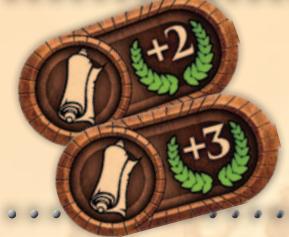
| 魔法用奖励指示物 | 24个(20个双面 +2/+3 数值,4个 +5 数值) |
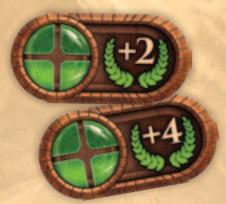
| 色环用奖励指示物 | 12个(蓝、红、绿、黄各颜色有 2个 +2 与 1个 +4 数值) |
| 玩家档板 | 4个 |
| 规则说明书 | 1本 |
2. 游戏设置
2.1 桌面中央与牌库
- 把4张竞标卡排成一排放在桌面中央,排列顺序不重要,但所有箭头应指向同一方向。
- 将魔法/科学、攻击/防御、权力分数和奖励指示物各自堆放于桌面中央。
- 洗混角色卡并发给每位玩家4张:每位玩家选择其中一张面朝上放在自己面前,并获得该卡牌第一层的奖励,这张牌即为金字塔中的第一张卡;接着每位玩家再选择另一张角色卡加入自己的手牌,另外两张放回牌库。
- 随机把角色卡牌库分为两叠:48张卡牌的大牌库,以及剩下所有卡牌组成的小牌库。大牌库面朝下放在竞标卡旁,小牌库面朝下放在竞标卡的另一边。
- 从大牌库翻开4张卡面朝上放在竞标卡旁箭头底部那一侧。第一张翻开的放在最左侧的竞标卡旁,第二张放在第一张旁边,依此类推。
- 洗混律法院牌库,发给每位玩家3张卡牌;律法院牌库面朝下放在小牌库旁边。玩家把律法卡加入手牌,不展示给对手看。
2.2 宝石存放区
- 设置一个宝石存放区:2人游戏时32颗(每色各8颗);3人游戏时48颗(每色各12颗);4人游戏时使用全部64颗。每位玩家会使用各种颜色宝石4颗。把存放区放在桌面中央,未使用到的宝石放回游戏盒中。
- 每位玩家拿取每种颜色宝石各2颗(共8颗)放到自己的档板后面,并随机退还2颗宝石到存放区。因此游戏开始时每位玩家档板后面应有6颗宝石。
- 游戏过程中,玩家把宝石保留在档板后面,没有玩家会知道对手档板后面藏了什么宝石。
2.3 玩家起始配置
每位玩家拿取1个档板,档板后按上述规则放好6颗起始宝石;面前已有1张面朝上的角色卡(金字塔第一层),手牌中另有1张选定的角色卡与3张律法卡。
2.4 权力金字塔
- 玩家在游戏中打出的所有卡牌都面朝上放入自己的金字塔,金字塔不藏在档板后面,所有玩家都看得见,且所有卡牌应并排放置。
- 最底下的一排卡牌称为第一层,接着的那排称为第二层,以此类推到第五层。下一层每张卡牌都需要放在上一层两张卡牌之间,使三张卡牌的色环区块形成一个圆环(圆环不一定要是单色)。
- 游戏开始时,你的权力金字塔只有一张卡牌在第一层。当你打出第一张卡牌时,可以放在该牌的左边或右边;下打出的牌可放在已打出卡牌的左边或右边,也可以「架」在两张第一层卡牌上形成第二层。
- 游戏进行中,你不能移动或移除已经是金字塔一部份的卡牌,除非有律法卡的条文准许你这么做。
- 金字塔不能超过第五层,底部的长度则没有限制。
- 即使卡牌放在不同层,也被视为相邻。一张卡牌最多会相邻六张卡牌。
- 有些律法卡会指示你把一张卡牌放在其他卡牌底下。这不被视为打出一张牌:你不需要替放在一张卡牌底下的牌支付任何费用,你也不会得到此牌的奖励。
- 在每一列最外侧的卡牌,如果它上面没有任何上一层的卡牌、底下也没有卡牌塞着,则视为自由卡牌。
3. 游戏流程 / 回合结构
游戏会刚好进行12轮,直到大牌库没有卡牌。每一轮分为两个阶段,在每个阶段中所有玩家同时行动:
- 竞标阶段: 每位玩家会竞标到一张角色卡。
- 发展准备阶段: 每位玩家可以从各自手牌中最多打出3张卡牌。
只有当竞标阶段结束后,从大牌库翻出的正好是最后4张角色卡时,下一轮才会是游戏中的最后一轮。
4. 竞标阶段
4.1 出价流程
- 玩家竞标桌面中央面朝上的角色卡。每张角色卡都会相邻某个颜色的竞标卡;为了获得该角色卡,玩家需要使用与对应竞标卡相同颜色的一颗宝石来出价。
- 每位玩家决定想要获得哪一张待标的角色卡,接着从档板后面拿取一颗对应颜色的宝石握在手中。所有玩家同时执行,然后同时打开手中的宝石。
- 如果某个颜色只有被一位玩家选中,该玩家获得对应的角色卡牌,并把出价用掉的宝石放回存放区,其竞标阶段结束。
- 如果有两位以上的玩家选择同样颜色,他们不会得到任何卡牌,并且都得把出价用掉的宝石放回存放区。这些玩家可以参加第二回竞标。例外:如果两位玩家选择的颜色对应两张卡牌,他们之间可以协议谁要拿哪张牌。
- 玩家可以拒绝参与竞标:不用拿出宝石出价,但仍然要伸出握住的手,如同其他竞标者。当所有人都决定好出价后,该玩家打开空着的手并宣告要跳过竞标,不会获得任何卡牌,也不再参与本阶段中后续的竞标。
4.2 多回竞标
- 第一回竞标完成后,所有没有获得卡牌且未跳过的玩家继续进行第二回竞标。如果第二回竞标结束仍有人既没有跳过也没有拿到卡牌,就开始第三回、也是最后一回的竞标。任何在第三回竞标结束后没有获得卡牌的玩家都被当做跳过竞标。
- 每一轮不会超过三回竞标,每一回竞标每位玩家只会获得一张卡牌。
- 竞标阶段结束的条件:每位玩家都获得卡牌或是跳过。
竞标阶段注意事项:
- 玩家如果档板后没有对应颜色的宝石,不能竞标需要该颜色宝石的卡牌。
- 玩家在竞标阶段不使用任何宝石来出价就不能获得卡牌(例外:攻击指示物)。
- 所有用来出价的宝石都会回到存放区,即便出价的玩家没有凭借这颗宝石获得任何卡牌。
- 若玩家获得一张卡牌或者跳过,就再也不能参与本阶段的竞标。
- 若没有角色卡对应在某颜色的竞标卡旁,玩家不能使用该颜色的宝石进行出价。
- 在竞标阶段获得的卡牌会加入得标玩家的手牌,并被视为未打出的卡牌,玩家可以在发展准备阶段打出这些卡牌。
- 只要所有玩家同意,他们可以在竞标前协议谁使用什么颜色,然而这些协议并不具强制力。玩家不能交易宝石、指示物和卡牌,或是向对手展示自己档板后面有什么东西,除非律法卡的条文要他们这么做。
4.3 双卡位与阶段收尾
- 从第二轮开始,很有可能会有两张角色卡放在同一张竞标卡旁边(一张在箭头底部,另一张在箭头尖端)。若只有一位玩家竞标该颜色,他可以从两张卡牌中选择想要的一张(但不能两张都选)。若有两位玩家竞标该颜色,他们之间可以决定谁拿哪张牌;如果双方都要同一张牌,两人都不会获得卡牌,然后继续参与下一回竞标。
- 若三或四位玩家竞标的颜色对应两张角色卡,没有玩家可以拿到卡牌,接着开始下一回的竞标。
- 当每位玩家都获得卡牌或跳过后,竞标阶段结束:所有位于竞标卡箭头尖端的角色卡弃掉;所有位于竞标卡箭头底部的角色卡沿箭头移到竞标卡的另一侧;再从大牌库翻开4张新的角色卡,如同设置时一样放在箭头底部。
4.4 跳过竞标的补偿
- 一位玩家有两种情况会被认为跳过:竞标时拒绝用一颗宝石出价、打开空着的手(任何一回竞标都可能发生);或在三回竞标结束时无法获得任何一张角色卡牌。
- 跳过后,玩家从存放区拿取3颗他们想要的宝石。玩家金字塔中每个科学指示物,也让他可以额外拿取1颗宝石。拿到的宝石放在档板后面。
- 若多位玩家同时跳过,他们依数字递增的顺序拿取宝石,从自己金字塔中拥有数字最小卡牌的玩家开始,接着是拥有次小数字卡牌的玩家,以此类推。每位玩家依序拿取所有他应拿取的宝石。
注意: 若存放区没有剩下某个颜色的宝石,玩家不能拿取该色宝石;若存放区宝石不足,玩家有多少拿多少;若存放区完全没有宝石,玩家什么也拿不到。一个玩家不能在同一阶段中跳过两次。
5. 发展准备阶段
这个阶段包含三次打牌的回合。
5.1 打牌回合
- 一个回合开始时,每位玩家选择一张卡牌来打出,或是面朝下放在桌上。若玩家不想打牌,他可以:1. 跳过,或 2. 弃掉一张卡牌并从存放区拿取2颗他想要的宝石。选择跳过的玩家在这个阶段的剩余回合中不能再打牌,跳过这个阶段不会获得任何宝石。
- 要打牌的玩家各自选择想打出的牌,接着同时打开,并依数列递增顺序打牌,从所选卡牌中数字最小的玩家开始打。每位玩家依序把自己的卡牌放置进金字塔,并结算其效果。
- 一旦所有玩家都获得他们打出卡牌的奖励后,就开始下一回合的打牌。
- 发展准备阶段的三回合结束,或是所有玩家都跳过之后,下一轮从竞标阶段开始。
5.2 打出角色卡的费用
- 为打出一张角色卡,玩家选择自己金字塔中的一个空位,并支付打出此卡牌的费用,依照他们想放的阶层位置来支付。
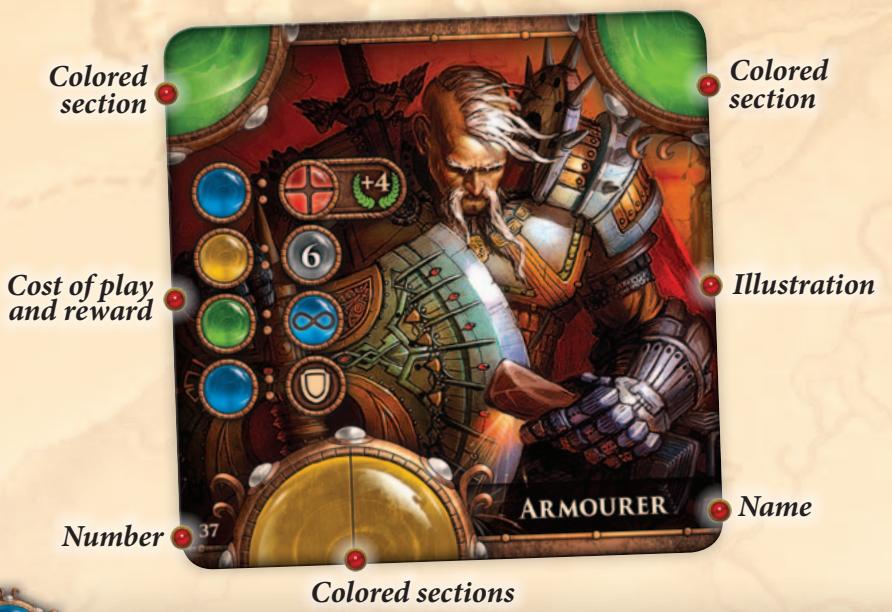
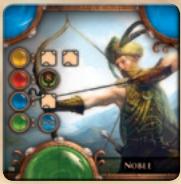
- 在每张角色卡的左半部有四横排,对应金字塔的四层(最底排对应第一层、下一排对应第二层、再下一排对应第三层、最上排对应第四层)。每排冒号前面有个宝石符号,表示打出该卡牌到对应阶层的费用。
- 你需支付的不仅是你打牌那一层的费用,还要支付其下每一层的费用。当支付打出卡牌的费用时,玩家从档板后面拿出需要的宝石并退还到存放区。
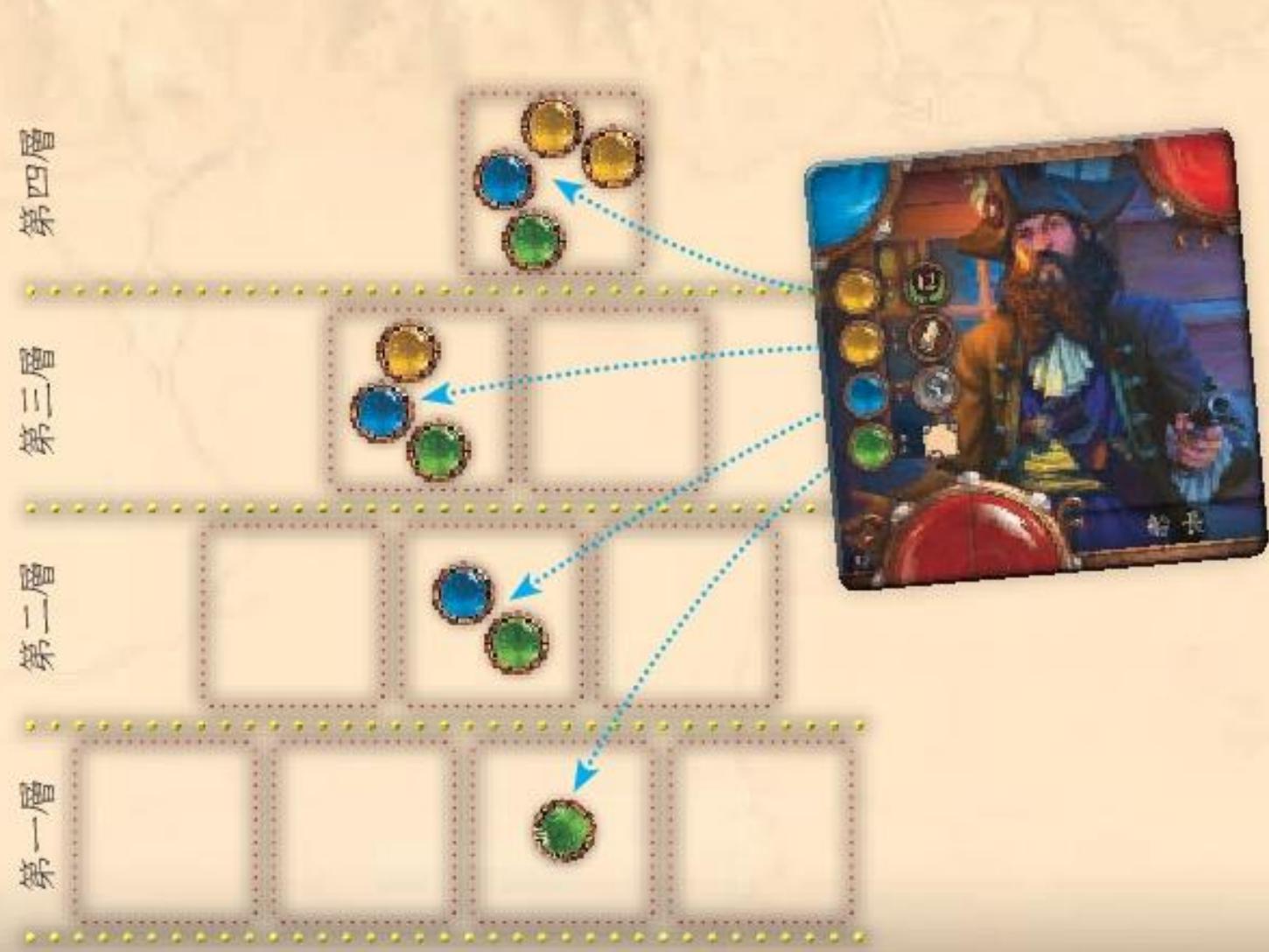
- 示例(船长卡):放在第一层付1颗绿色宝石;放在第二层付1颗绿色+1颗蓝色宝石;放在第三层付1颗绿色+1颗蓝色+1颗黄色宝石;放在第四层付1颗绿色+1颗蓝色+2颗黄色宝石。
- 第五层: 要在第五层打出角色卡,需支付该牌打在第四层所需的费用,同时额外支付卡牌最上排标示的宝石。例如船长放在第五层要支付1颗绿色、1颗蓝色和3颗黄色宝石。
- 在竞标阶段为获得卡牌所花掉的宝石,与打出卡牌所花掉的宝石毫无关联,它们是不同的支出。
5.3 打出律法卡
打出一张律法卡不用支付费用,而且可以放在玩家金字塔中除第五层以外的任何空位。打出律法卡后立即结算其效果。依据律法卡的内容,效果可以是一次性的、持续性的或游戏结束时触发的。任何情况下,律法卡都会留在玩家的金字塔中。
5.4 相邻与单色圆环
- 打在第一层的卡牌要放在该层其他卡牌的左边或右边。
- 打在第二层(或更高层)的卡牌要放在上一层两张牌中间,才能把三张卡牌的色环区块形成一个圆环(圆环不一定要是单色)。
- 如果在你的金字塔打出卡牌后造成了单色圆环,你立刻从存放区得到1颗同颜色的宝石(如果存放区还有的话)。
5.5 打出卡牌的奖励
- 打出一张卡牌后,你立刻获得该卡牌的奖励。与支付费用相同,奖励依据你把该牌放在金字塔的哪个阶层;但与费用不同,你得不到前面阶层的奖励,只有你放置卡牌那一层的奖励。
- 示例(船长卡):放在第一层,从律法卡牌库或小牌库抽1张牌;放在第二层,获得5颗宝石;放在第三层,获得1个魔法指示物;放在第四层,获得12分的权力分数。
- 若把角色卡放在第五层,你要么获得该卡牌前三排标示的奖励,要么放一个15分的权力分数到该卡牌上。例如船长放在第五层,你可以选择「抽1张牌+拿5颗宝石+放1个魔法指示物到卡牌上」,或者放一个15分的权力分数到该卡牌上。
6. 奖励类型详解
| 奖励 | 结算方式 |
|---|---|
| 宝石 | 从存放区拿取指定数量的宝石(自选颜色),放在档板后面。存量不足时有多少拿多少;完全耗尽则拿不到 |
| 权力分数 | 把与指定分数相同的权力分数指示物放到此卡牌上,游戏结束时加入总分;若存放区没有所需面值的指示物,可用多个较低分指示物代替,但该组合仍只算作一个权力分数指示物 |
| 来自小牌库或律法牌库的卡牌 | 从律法牌库或小牌库抽取指定数量的卡牌(自行选择)。抽两张时可全从同一牌库抽,也可两库各抽一张;加入手牌,可在发展准备阶段打出 |
| 科学 | 放置科学指示物到此牌上(有的卡牌在第四层给予2个科学指示物)。科学指示物让拥有者在跳过时多拿宝石,例如金字塔中有4个科学指示物,跳过时可拿3+4=7颗宝石;最终计分时这些指示物也可能给分 |
| 魔法 | 放置魔法指示物到此牌上(有的卡牌在第四层给予2个魔法指示物)。游戏中魔法指示物没有任何用途,但最终计分时可以给大量分数 |
| 防御 | 放置防御指示物到此牌上。游戏中防御指示物没有任何用途,但最终计分时能给分,并可抵消敌人的攻击 |
| 攻击 | 拿取攻击指示物并放在档板后面。档板后有一个攻击指示物时,可在竞标阶段用它(握在拳中)取代一般的出价,从而在竞标阶段开始时先于其他玩家立即拿取任意一张要的卡牌;使用后该指示物放回存放区,且不能再参与本轮接下来的任何竞标。若你已拿走某颜色的最后一张卡牌,所有其他竞标此颜色的玩家失去出价且该竞标回合拿不到任何东西。若多位玩家在竞标时使用攻击指示物,金字塔中有最小数字卡牌的玩家第一个获得卡牌。游戏结束时,你剩下未使用的攻击指示物会夺取对手的分数 |
| 奖励指示物(魔法或色环用) | 放置指定指示物到此牌上(注意指示物上的符号与数值各有不同)。奖励指示物在游戏中没有任何功能,但最终计分时可提供分数 |
| 无限宝石 | 从存放区拿取指定颜色的宝石放到此牌上;存放区没有该色时,可从自己档板后面拿一颗,若档板后也没有则不能放。拥有任何颜色的无限宝石后,每回合在打牌需要花费宝石时可以宣告使用它一次,减少该颜色1颗宝石的支出(例如支付1黄2蓝且拥有蓝色无限宝石,可只付1蓝1黄)。有多颗无限宝石时可在每次支付中任意使用,但每颗每回合只能用一次。宝石保留在金字塔中,之后回合仍可依同样规则使用 |
7. 游戏结束与计分
竞标阶段结束后,如果从大牌库翻出的是最后4张角色卡,则下一轮是游戏的最后一轮。最后一轮结束后决定赢家。
- 玩家移掉自己的档板,并弃掉手上所有未打出的律法卡和角色卡。
- 圆环上色: 玩家可用剩下的宝石替三张卡牌连接的圆环区域「上色」——放置一颗想要的宝石在色环区域以改变该区域颜色。每个圆环有四个部分:两个在下层卡牌的上方角落,另外两个在上层卡牌的底部。上色可以使多色圆环变成单色圆环,但此时不会再获得该颜色的宝石,因为打出一张卡牌时并没有形成单色圆环。
- 上色完成后,依以下顺序合计权力分数:
| 顺序 | 计分项 | 计分方式 |
|---|---|---|
| 1 | 单色圆环 | 金字塔中每个单色圆环给予等于组成该圆环的上层卡牌所在阶层的权力分数,再加上来自同色奖励指示物的额外分数。例如第一层与第二层之间有一个绿色圆环(基本分2分),而你有一个「每个绿色圆环+4分」的奖励指示物,该圆环给你 2+4=6 分 |
| 2 | 无限宝石 | 金字塔中每颗无限宝石给予等于该宝石所在阶层的权力分数,加上来自同色奖励指示物的额外分数。例如第三层有一颗黄色无限宝石(基本分3分),加上黄色圆环+4的奖励指示物,该宝石给你 3+4=7 分 |
| 3 | 律法卡 | 每张在游戏结束时能提供权力分数的律法卡都会标示给多少分以及为什么给分;律法卡只有成为金字塔一部份才会给分 |
| 4 | 权力分数指示物 | 金字塔中每个权力分数指示物给予等于其面额的分数 |
| 5 | 魔法 | 金字塔中每个魔法指示物给予等同于金字塔中所有魔法奖励指示物总和的奖励。例如有3个魔法指示物、一个魔法+5奖励指示物和一个魔法+2奖励指示物,每个魔法指示物给你 5+2=7 分,总共21分。要获得魔法分数,玩家必须同时拥有魔法指示物和魔法奖励指示物,只拥有其中一方则不得分 |
| 6 | 完整组合 | 金字塔中每三个指示物的组合(一个防御、一个魔法、一个科学)获得12分。同一个指示物不能被算入多组。例如有2个防御指示物、5个魔法指示物和3个科学指示物,可组成2组,得24分 |
| 7 | 攻击指示物惩罚 | 统计对手在游戏结束时还有多少未使用的攻击指示物,每个使玩家失去4分;玩家的每个防御指示物抵消一个敌人的攻击指示物。例如一位对手剩2个攻击指示物、另一位剩3个,你失去 4×(2+3)=20 分;若你有2个防御指示物,则失去 4×(2+3−2)=12 分 |
最终计分后拥有最多权力分数的玩家就是游戏赢家。
8. 配件限制与冲突解决
8.1 配件限制
- 卡牌永远不会回到牌库。如果一张牌因某些原因被弃掉,它不会再回到这场游戏中。若某个牌库用完,玩家无法再从该牌库抽牌。
- 宝石的数量有严格限制,并依玩家人数不同。如果存放区没有剩下某一种颜色的宝石,在有人花掉一颗并归还到存放区之前,玩家都拿不到该颜色的宝石。游戏中不能增加宝石到存放区,也不能用任何记账方式得到它们。
- 其他所有指示物都有充足的量,但在非常罕见的情况下可能不够,此时玩家可用硬币或其他替代物代替。
- 一位玩家手上可以有任意数量的卡牌,档板后面可以有任意数量的宝石;一座金字塔可以有任意数量的卡牌,但只能有五层。
8.2 解决冲突
- 玩家在总督中大部分的行动都是同时执行。但有时需要决定行动的执行顺序(例如存放区只剩下少数宝石、而多位玩家要拿取时),此时依他们卡牌的数字从小到大排序依次执行。
- 第一位行动的是金字塔中拥有数字最小卡牌的玩家(在所有涉及此冲突的玩家中),他完整完成有争议的行动,接着是金字塔中卡牌数字第二小的玩家,以此类推。
- 尤其,若多位玩家在竞标阶段使用攻击指示物,就必须用这个方式决定:金字塔中卡牌数字最小的玩家第一个从竞标中挑选卡牌。
- 在一回竞标中当多位玩家使用同颜色宝石,是唯一不能依卡牌数字顺序解决的冲突;此时这些玩家依规则进行额外的竞标。
9. 单人游戏与虚拟对手变体
9.1 单人变体
- 单人游戏时你对抗一个只在竞标阶段行动的虚拟对手。按正常规则设置游戏(每个颜色各4颗宝石放在存放区,然后拿取你的起始宝石和卡牌),每一轮如常进行竞标阶段和发展准备阶段。
- 竞标阶段在你决定自己的出价后,在不查看的情况下从盒中拿取一颗未使用的宝石,这就是虚拟对手的出价。如果与你的相同,把你的出价放回存放区、对手的放回盒中,然后以相同规则进行新的一回竞标。
- 如果你的虚拟对手选择了不同的卡牌,你如常获得对应你出价的卡牌,而对手应该获得的卡牌则弃掉(如果对手可以在两张牌中选一张,永远弃掉箭头底部的那张)。
- 如果你的虚拟对手选择的颜色没有对应任何角色牌,那么在你拿取自己的卡牌后,从剩下的待标卡牌中选一张弃掉。永远把虚拟对手的出价放回盒中,并确定这些宝石不会出现在存放区。
- 单人游戏你不会输。每场游戏结束后计算你的得分,并尝试超越你的最高分。
9.2 加入虚拟对手的多人变体
- 进行两人或三人游戏时,你也可以依上述规则加入一位虚拟对手。若你愿意,甚至可以和两位或三位虚拟对手进行游戏,只要玩家总数不超过四人。在这种情况下,就从盒中抽出两或三颗宝石作为出价。
- 如果两位虚拟对手出了同一个颜色,而该颜色只对应一张角色卡,这张卡不会被弃掉,但虚拟对手会参与下一回竞标(如果有的话)。
- 如果两位虚拟对手出了同一个颜色,而该颜色对应两张牌,两张牌都弃掉,虚拟对手们不再参与本轮的竞标;然而如果任一玩家也挑选了同颜色,那些牌不会被弃掉,接着开始下一回竞标。
- 如果一位玩家和虚拟对手竞标同一个颜色,而该颜色对应两张卡牌,玩家可选择一项:都进行下一回竞标(因此卡牌都不会被弃掉),或是拿取对应箭头尖端的那张卡牌(并弃掉箭头底部的那张)。
- 每一回竞标至少要有一位玩家参与;若所有玩家在前面的竞标中已拿到卡牌或跳过,就不举行下一回竞标。
关键规则与常见问题
易错规则
- 每轮固定12轮: 游戏在第12轮结束,而不是随牌库耗尽随意结束;只有竞标阶段后从大牌库翻出最后4张角色卡,才预告下一轮为最后一轮。
- 同时亮价: 所有玩家同时打开手中的宝石,出价用掉的宝石一律回存放区,即使没拿到卡牌也如此。
- 同色相撞即空手: 两位以上玩家选同一颜色时都不得卡牌,该轮该颜色作废;若颜色对应两张卡牌,两位玩家可协议分牌。
- 每轮最多三回竞标: 第三回结束后仍未获得卡牌者视为跳过。
- 跳过有补偿: 跳过竞标可从存放区拿3颗自选宝石,金字塔中每个科学指示物再多拿1颗。
- 费用要层层支付: 打出角色卡时,除目标阶层的费用外,还要支付其下每一层的费用。
- 奖励只拿一层: 打出卡牌的奖励只有放置那一层的,不含前面阶层的。
- 第五层有两种拿法: 打第五层角色卡时,要么拿该牌前三排的奖励,要么在卡上放一个15分权力分数。
- 律法卡免费且不能放第五层: 打出律法卡不付费用,可放在第五层以外的任何空位,打出后立即结算效果,并永久留在金字塔中。
- 单色圆环即时奖励: 打出卡牌后若形成单色圆环,立刻从存放区拿1颗同色宝石(存放区还有的话);结束时上色形成的单色圆环不会给宝石。
- 卡牌不可移动: 已进入金字塔的卡牌不能移动或移除,除非律法卡条文准许。
- 金字塔只有五层:
……(完整内容可在村了吗查询)
常见问题(FAQ)
以下 1 条问答中 0 条来自站内玩家的真实提问,其余 1 条为本站整理的常见疑问;答复内容保持原样。
总督支持几个人玩?
1–4 人。
去哪查完整规则
想核对具体规则细节、卡牌效果或某个回合的结算方式,可以在村了吗里选中这款游戏后直接提问。
同类桌游
- 卡坦岛德式
- 工业革命:伯明翰德式
- 勃艮第城堡:特别典藏版德式
- 方舟动物园德式
- 卡卡颂抽象
- 瘟疫危机传承:第一季美式
- 阿瑞迪亚:勇踏征途美式
- 重塑宇宙德式
- 幽港迷城美式
- 埃多拉的德鲁伊德式
规则原文(Markdown)
本站收录这款游戏的规则原文 3 个文件,此处内联渲染 3 个,可直接展开阅读或下载。
rules_zh_总督_3998.md37.6 KB
遊戲總覽
數百年後,當蒼邇(Laar)的歷史學者試圖閱覽和改寫當今事件的編年史時,他們極有可能無法理解單一行動如何成就一場好局。因為只有王者的行動會被忠實地被及時保存下來。他們正是被視為主角的神聖帝王、勢如破竹的領導者、鋒利敏銳的元首。所有臣屬及平民等這些勞動者,那些名字失落在時間的迷霧裡的人,都為他們奉獻。總督,這便會是我們的成就和名聲。
能夠冀望我們身後留存下來的回憶只有我們的國家—她的壽命、公民的繁榮、鄰國的妒意。你必須要施展你所有的才能在拉邇的編年史上替你的帝國多贏得一年或兩年。吾友,你是否準備好接受這份挑戰?你是否在權術這遊戲上夠熟練了,或者你會在嘗試中習得其規則?
我敢打賭,你將會找到充足的理由來詛咒你決定引起權力注意的那天。
但現在已遲了。你已確實受到指派,因此這事關榮譽。你必須要向每個人證明,無論是什麼無法理解的情況,你都是眾望所託的人。學習權衡、未雨綢繆、並預測對手動向,並且不吝於從前人的經驗中學習。永不原諒無理者一此時此刻,你就是權威。準備好,總督,一切才剛開始。誰知道,或許你終能夠在蒞邇的歷史上留名...
總督是一款12歲以上,玩家人數為1-4人的桌上遊戲。玩家們徵召各種盟友,從漫遊者到王子,並執行各種律法為了奇幻世界蒞邇的控制權而戰。隨著遊戲進展,每位玩家藉由發展各自國家的武力和魔力來建立自己權力的金字塔,擴增他們自己的權威,並獲取他們所需要的珍貴寶石來持續擴展他們的疆土。遊戲結束時擁有最多權力分數的玩家成為全蒞邇的統治者一以及勝利者!
角色卡牌
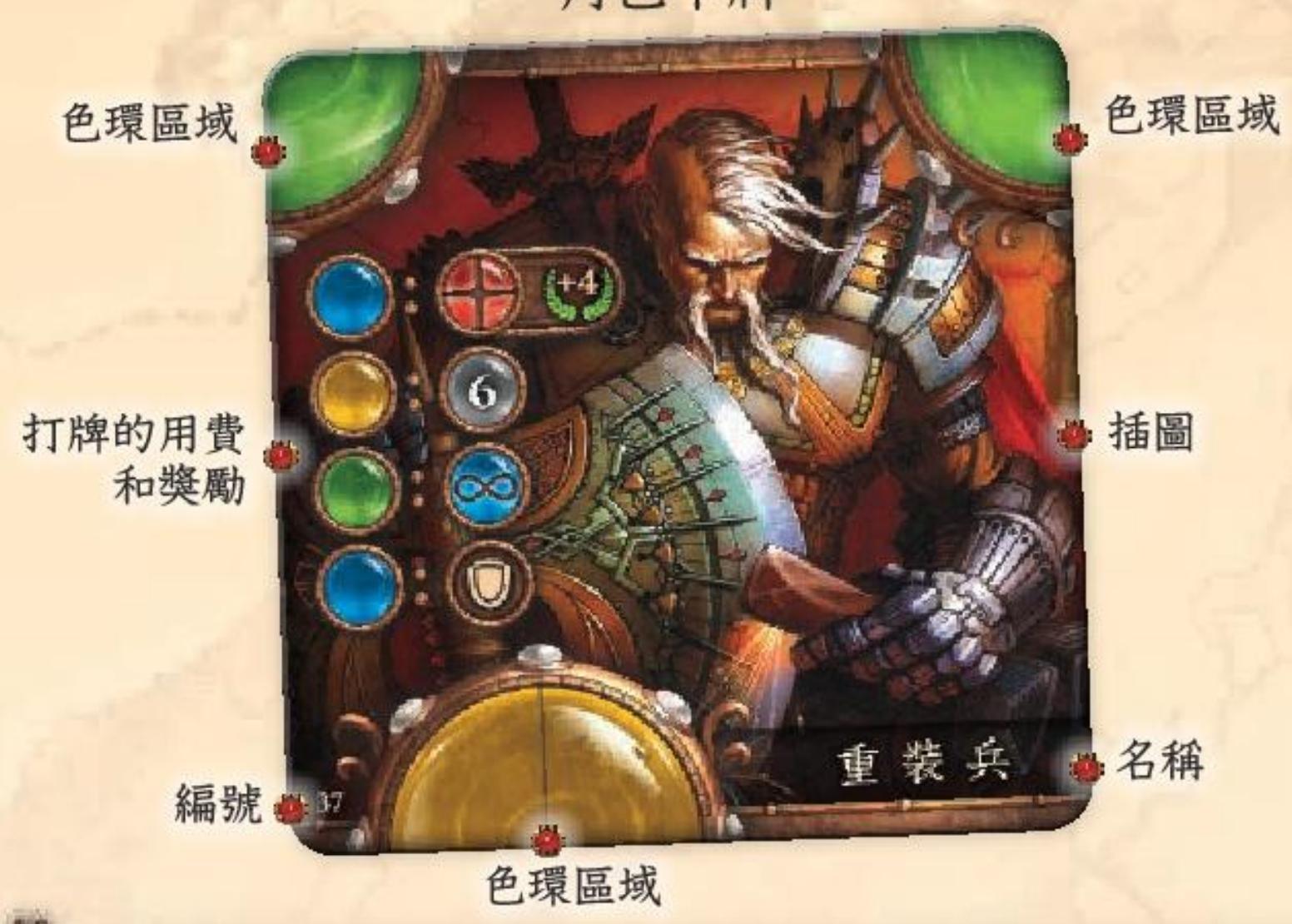
64張角色卡牌
遊戲配件
• 24張律法卡牌
• 4張競標卡牌
64顆寶石
(共有藍色、紅色、綠色和黃色;每種顏色各16顆)
• 33個雙面魔法/科學指示物
- 17個雙面攻擊/防禦指示物
- 54個不同面值的權力分數指示物
(8個價值2、3、10和12分的指示物;4個價值4、5、7、8和15分的指示物;2個價值6分的指示物)
- 24個魔法用的獎勵指示物
(20個雙面+2/+3數值的指示物,4個+5數值的指示物)
- 12個色環用的獎勵指示物
(共有藍色、紅色、綠色和黃色;每種顏色有2個+2數值及1個+4數值)
• 4個玩家檔板
- 此本說明書
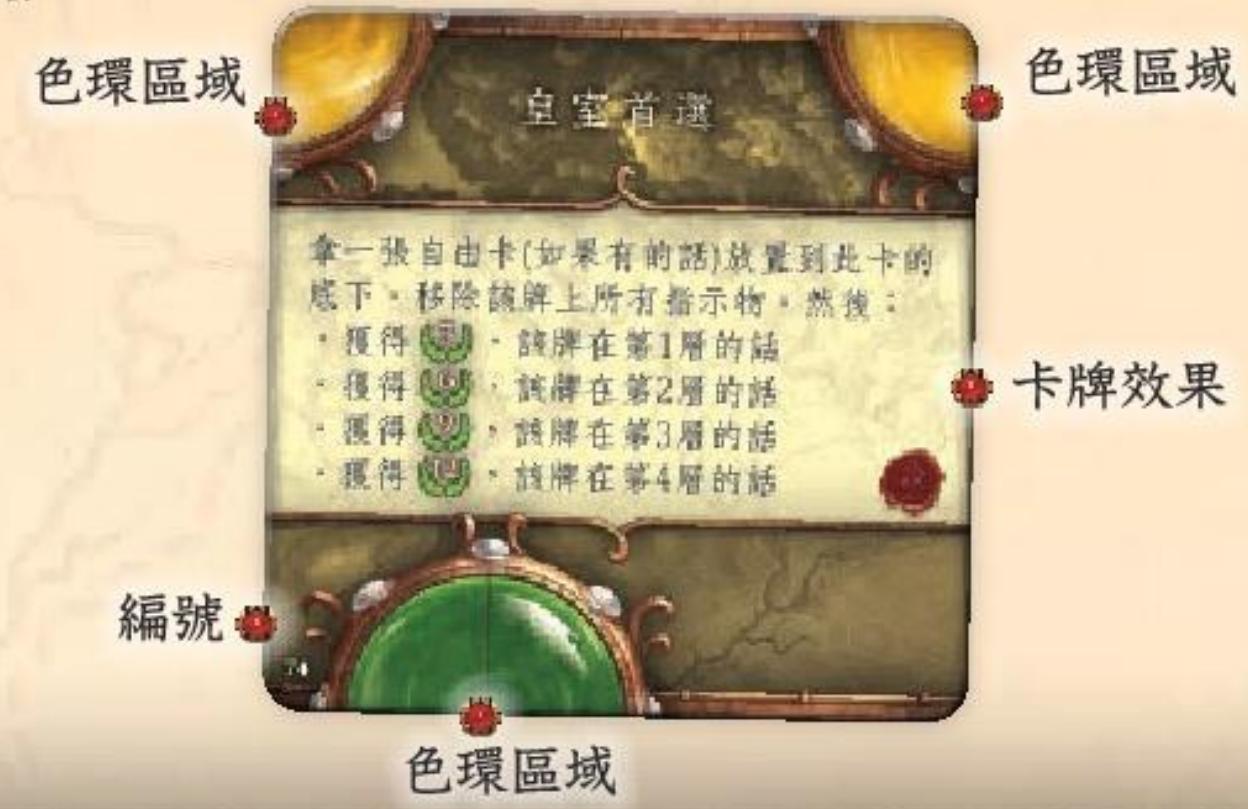
律法卡
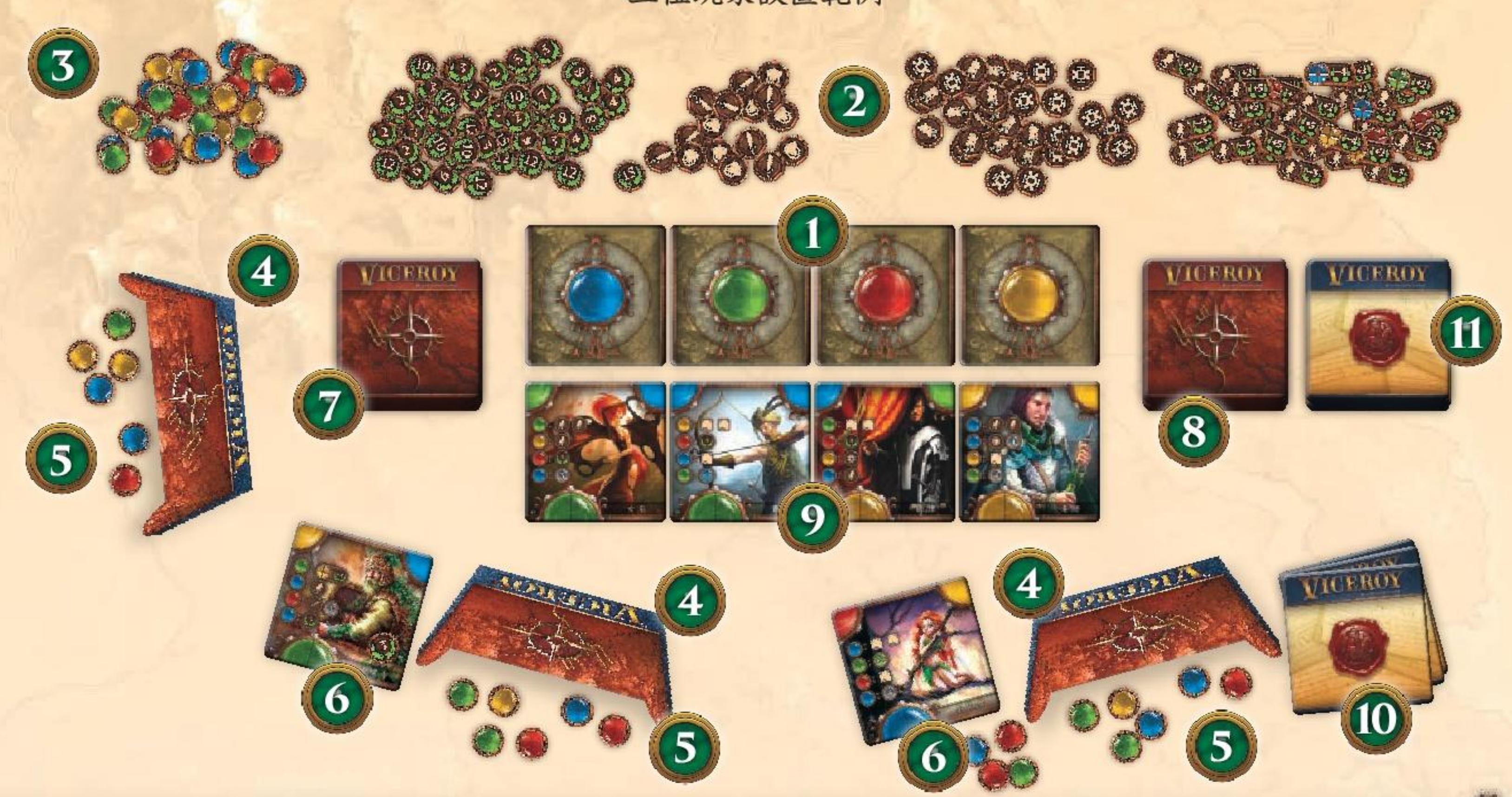
把四張競標卡排成一排放在桌面中央。排列的順序不重要,但是所有箭頭應該都指向同一方向①。
將魔法/科學、攻擊/防禦、權力分數和獎勵指示物各自堆放在桌面中央 2。
設置一個寶石存放區。存放區在兩人遊戲時會有32顆寶石(每種顏色各8顆);在三人遊戲時有48顆寶石(每種顏色各12顆),在四人遊戲時為全部64顆寶石。換句話說,每位玩家會使用各種顏色寶石4顆。將寶石存放區放在桌面中央 ③ 並把未使用到的寶石放回遊戲盒中。
每位玩家拿取一個檔板 4。遊戲過程中,玩家把他們的寶石保留在檔板後面。沒有玩家會知道對手檔板後面藏了什麼寶石。
每位玩家拿取每種顏色寶石各2顆(共8顆),放到他們的檔板後面並隨機退還2顆寶石到存放區。
因此在遊戲開始時應該有6顆寶石 5 在每位玩家的檔板後面。
混洗角色卡並發給每位玩家4張。每位玩家選擇其中一張牌,面朝上放在自己面前並獲得該卡牌上第一層的獎勵⑥。此卡牌為玩家金字塔中的第一張卡。接著玩家選擇另一張角色卡加入自己的手牌中。其他兩張牌則放回牌庫。隨機把角色卡牌庫分為兩疊:48張卡牌的大牌庫以及剩下的所有卡牌組成的小牌庫。將大牌庫面朝下放在競標卡的旁邊⑦。小牌庫面朝下放在競標卡的另一邊⑧。
從大牌庫翻開4張卡然後面朝上放在競標卡的旁邊,箭頭底部的那側 9。第一張翻開的卡牌放在最左側的競標卡旁,第二張就放在第一張旁邊,以此類推。
混洗律法院牌庫然後從中發給每位玩家三張卡牌 10。把律法院庫面朝下放到小牌庫旁邊 11。玩家將律法卡加入自己的手牌中不要展示給對手看。
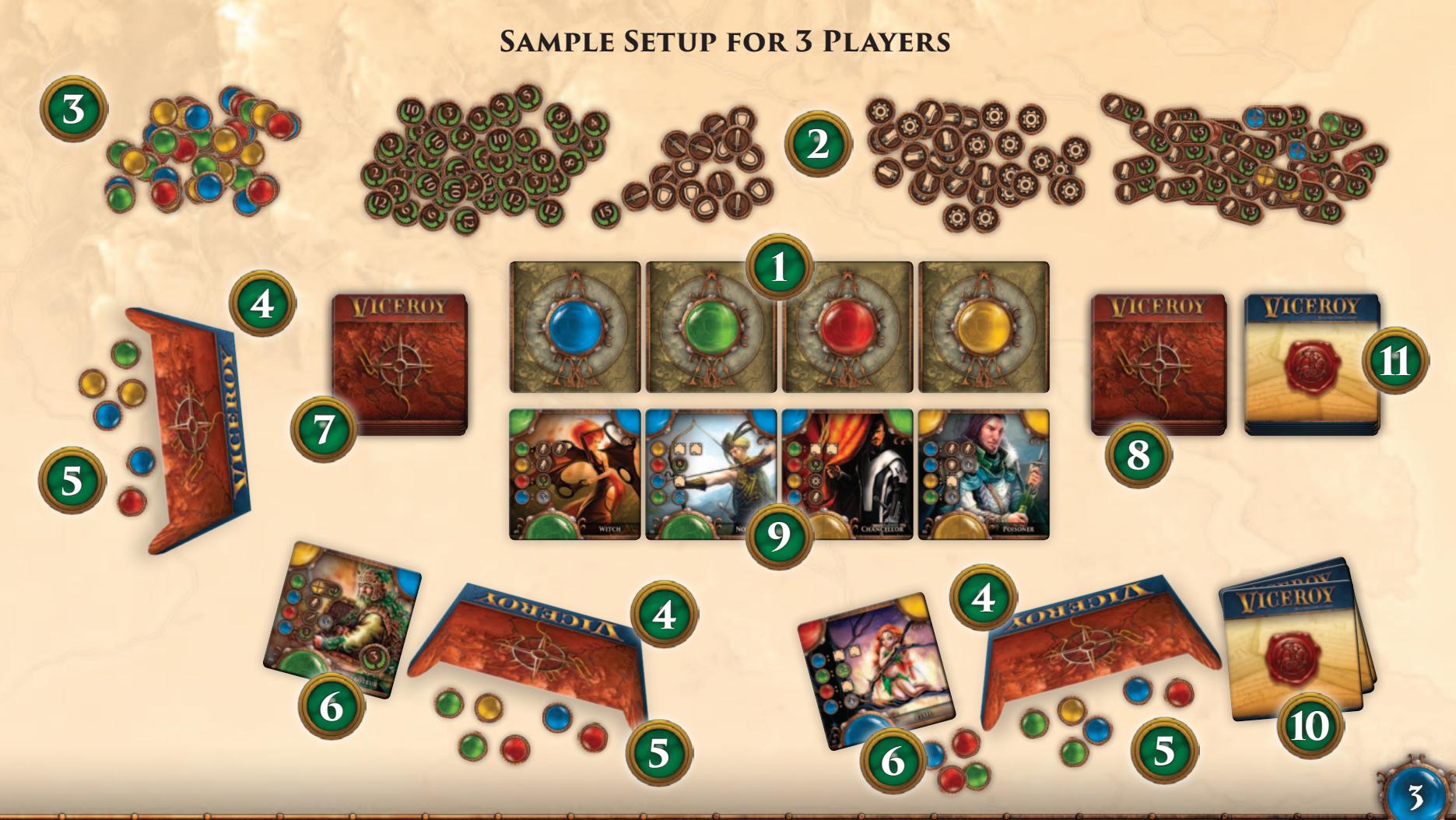
三位玩家設置範例


進行遊戲
你在總督中的目標是在遊戲結束時獲取最多的權力分數。你應該試著使你的卡牌獲得最多分數——一般來說,就是把他們放在你權力金字塔中較高的階層。

遊戲會剛好進行12輪,直到大牌庫沒有卡牌。每個回合分為兩個階段。在每個階段,所有玩家會同時行動。
I. 競標階段。每位玩家會競標到一張角色卡。
II. 發展階段。每位玩家可以從各自手中最多打出3張卡牌。
玩家在遊戲中所打出的所有卡牌都面朝上放入自己的金字塔中。玩家的金字塔不會藏在檔板後面:所有玩家都看得見。金字塔中的所有卡牌都應該併排放置。最底下的一排卡牌稱為第一層,接著的那排稱為第二層,以此類推到第五層。下一層每張卡牌都需要放在上一層的兩張卡牌間,如此一來三張卡牌的色環區塊會形成一個圓環(圓環不一定要是單色)。
遊戲開始時,你的權力金字塔只有一張卡牌在第一層。當你打出你的第一張卡牌時,你可以放在該牌的左邊或右邊。你打出的下一張可放在這些你已經打出的卡牌左邊或右邊或者可以將卡牌"架"在兩張第一層的卡牌上來形成金字塔的第二層。
第三層第一層
遊戲進行中,你不能夠移動或是移除已經是金字塔中一部份的卡牌,除非有律法卡的條文准許你這麼做。
金字塔不能超過第五層,底部的長度則沒有限制。
即使卡牌放在不同層都被視為相鄰。一張卡牌最多會相鄰六張卡牌。
有些律法卡會指示你將一張卡牌放在其他卡牌底下。這不被視為打出一張牌。你不需要替放在一張卡牌底下的卡牌支付任何費用而你也不會得到此牌的獎勵。
在每一列最外側的卡牌如果沒有任何上一層的卡牌在此牌上面也沒有卡牌放在這張卡牌底下則視為自由卡牌。
自由卡牌

此卡牌與
其他4張卡牌相鄰


塞在底下的卡牌
I. 競標階段
在這個階段,玩家競標桌面中央面朝上的角色卡。每張角色卡都會相鄰某個顏色的競標卡。為了獲得角色卡,玩家需要使用對應競標卡相同顏色的一顆寶石來出價。
範例:船長卡放在黃色的競標卡旁邊。
為了獲得船長卡,你需要用一顆黃色寶石來出價。



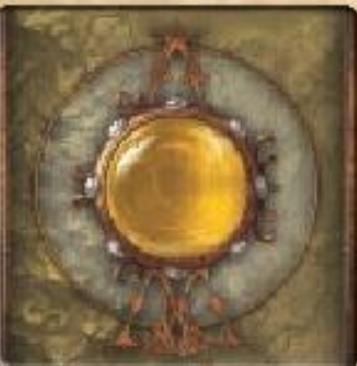



每位玩家決定想要獲得哪一張待標的角色卡,接著從他們檔板後面拿取一顆對應顏色的寶石並且握在手中。所有玩家同時執行這件事情。然後玩家們同時打開他們的手中的寶石。
如果某個顏色只有被一位玩家選中,該玩家獲得對應的角色卡牌並把出價用掉的寶石放回存放區。該玩家的競標階段結束。
如果有兩個以上的玩家選擇同樣顏色,他們不會得到任何卡牌並且都得把出價用掉的寶石放回存放區。這些玩家可以參加第二回的競標。例外:如果兩位玩家選擇的顏色有兩張卡牌,他們之間可以協議誰要拿哪張牌(見後續說明)。
玩家可以拒絕參與競標。如果他決定跳過競標,該玩家不用拿出一顆寶石出價,但是他仍然要伸出握住的手如同其他競標者。當所有人都決定好出價後,該玩家打開空著的手並宣告他要跳過競標(見後續說明)。他們不會獲得任何卡牌並不再參與這個階段中後續的競標。
當第一回的競標完成後,所有沒有獲得卡牌且未跳過的玩家繼續進行第二回競標。如果,再第二回的競標結束,仍然有玩家沒有跳過也沒有拿到卡牌,就開始第三回也是最後一回合的競標。任何沒有在第三回競標結束後獲得卡牌的玩家都被當做跳過競標。
請注意:
玩家如果檔板後沒有對應顏色的寶石不能競標需要對應寶石的卡牌。
玩家在競標階段不使用任何寶石來出價就不能獲得卡牌(例外:攻擊指示物,見後續說明)。
- 所有用來出價的寶石都會回到存放區,即便競標的玩家沒有用這寶石獲得任何卡牌。
玩家在每次競標回合時都只會獲得一張卡牌
若玩家獲得一張卡牌或是跳過,他們就再也不能參與本階段的競標。
每一輪不會有超過三回的競標。
若沒有角色卡對應在某顏色的競標卡旁,玩家不能使用該顏色的寶石進行出價。
在競標階段獲得的卡牌會加入得標玩家的手牌並被視為未打出的卡牌。玩家可以在發展階段打出這些卡牌(將卡牌加入各自的金字塔來獲得獎勵)。
只要所有玩家同意,他們可以在競標前協議誰會使用什麼顏色。然而,這些協議並不是強制的。玩家不能交易寶石、指示物和卡牌或是向對手展示他們檔板後面有什麼東西,除非律法卡的條文要他們這麼做。
從第二輪開始,很有可能會有兩張角色卡放在同一張競標卡旁邊(一張卡在箭頭底部,另一張在箭頭尖端)。若只有一位玩家競標該顏色,他可以從兩張卡牌中選擇他想要的(但不能兩張都選)。若有兩位玩家競標該顏色,他們之間可以決定誰要拿哪張牌。如果發生此情況,他們獲得他們要的卡牌並不再參與本輪接下來的任何競標。然而,若雙方玩家都要同一張牌,他們都不會獲得卡牌,然後他們繼續參與下一回競標。
最後,若三或四位玩家競標的顏色有兩張角色卡牌,沒有玩家可以拿到卡牌,接著開始下一回的競標。


當每位玩家都獲得卡牌或是跳過(第三回競標後,任何沒有獲得卡牌的玩家自動視為跳過),競標階段結束。所有位在競標卡箭頭尖端的角色卡牌棄掉。所有位在競標卡箭頭底部的角色卡牌會沿著箭頭放到競標卡牌的另一側。
從大牌庫翻開四張新的角色卡牌並如同設置時一樣放在箭頭底部。
若從牌庫翻開了最後四張角色卡牌,這表示下一輪會是遊戲中的最後一輪。

移除所有在箭頭尖端的卡牌。

棄牌堆

從箭頭的底部移動卡牌到尖端。
大牌庫

從大牌庫放四張卡排到箭頭的底部。
若有一位玩家跳過
一位玩家有兩種情況會被認為跳過:
競標時,他們拒絕用一顆寶石出價,他們打開空著的手(這會發生在任何一回的競標);
在三回競標結束時,無法獲得任何一張角色卡牌的玩家。
跳過後,玩家從存放區拿取三顆他們想要的寶石。每個在他們金字塔中的科學指示物也讓他們可以拿取一顆額外的寶石。(見後續說明)。玩家把拿到的寶石放在他們的檔板後面。
若多位玩家同時跳過,他們依數字遞增順序拿取寶石,從各自金字塔中擁有數字最小的卡牌的玩家開始。接著是下一位擁有次小數字的玩家,以此類推。每個玩家依序拿取所有他應該拿取的指示物。
請注意:
若存放區沒有剩下某個顏色的寶石,玩家不能拿取該色的寶石。
若存放區沒有足夠的寶石,玩家有多少就拿多少。
若存放區沒有寶石,玩家什麼也拿不到。
一個玩家不能在同一階段中跳過兩次。

II. 發展階段
這個階段包含三次打牌的回合。
一個回合的開始,每個玩家選擇一張卡牌來打出或是面朝下放桌上。若一個玩家不想要打牌,他可以:1. 跳過或是 2. 棄掉一張卡牌並從存放區拿取兩顆他們想要的寶石。選擇跳過的玩家這個階段的剩下回合不能再打牌。玩家跳過這個階段是不會獲得任何寶石的。
要打牌的玩家各自選擇想要打的牌。接著他們同時打開他們選的牌並依數列遞增順序打牌,從選擇的卡牌中數字最小的玩家開始打牌。每位玩家依序放置他們的卡牌進入他們的金字塔並結算其效果。
為了打出一張角色卡,玩家選擇他們金字塔中的一個空位並支付打出此張卡牌的費用,依照他們想放的階層位置來支付。在每張角色卡的左半部有四橫排對應金字塔的四層(最底排對應第一層、下一排對應第二層、再下一排對應第三層然後最上排對應第四層)。每排冒號前面有個寶石符號表示打出該卡牌到對應階層的費用。注意,你需要支付的不只是你打牌那層的費用,還要支付其下的每一層。
打出一張律法卡不用支付費用,而且可以放在玩家金字塔中第五層以外的任何空位。打出一張律法卡後,立刻結算其效果。依據律法卡的內容,效果可以是一次性的、持續性的或是遊戲結束時觸發的。任何情況下,律法卡都會留在玩家的金字塔中。
範例:若你把船長放在金字塔的第一層,你要支付一顆綠色寶石(標示在這張卡牌的最底那排)。若你把同張牌放在第二層,你應該要支付一顆綠色寶石(底排)和一顆藍色寶石(從底排算來第二排)。把船長放在第三層要花掉你一顆綠色、一顆藍色和一顆黃色寶石。而在第四層要花費一顆綠色、一顆藍色和兩顆黃色寶石。
第四層
所有打出的卡牌遵守以下規則:
打在第一層的卡牌要在該層的其他卡牌的左邊或是右邊。
打在第二層(或更高層)的卡牌要放在上一層兩張牌的中間,如此才能把三張卡牌的色環區塊形成一個圓環(圓環不一定要是單色)。
如果,在你的金字塔打出卡牌後,你造成單色圓環,你立刻從存放區得到一顆同顏色的寶石(如果存放區還有的話)。
要在第五層打出角色卡,你需要支付該牌打在第四層所需要的費用,同時額外支付卡牌最上排標示的寶石。例如,如果你把船長放在第五層,你要支付一顆綠色、一顆藍色和三顆黃色寶石。
在競標階段為了獲得卡牌所花費的寶石和你要打出卡牌所花費的寶石沒有關係。他們是不同的支出且兩者毫無關聯。
當支付打出卡牌的費用時,玩家從他們的檔板後面拿出需要的寶石並退還到存放區。
當你打出一張卡牌後,立刻獲得該卡牌的獎勵。獎勵部分,與支付卡牌的費用相同,根據你把該牌放在金字塔的哪個階層。然而不同於卡牌費用,你得不到前面階層的獎勵,就只有你放置卡牌的那層。
範例:若你把船長放在你金字塔的第一層,你從律法卡牌庫或小牌庫抽一張牌(如同此卡牌最底排標示)。若你把同張卡牌放在第二層,你獲得五顆寶石(從底排算來第二排)。在第三層,船長給你一個魔法指示物,而在第四層,12分的權力分數。
若你把角色放在第五層,你獲得該卡牌前三排標示的獎勵或者放一個15分的權利分數到該卡牌上。
範例:若你把船長放在第五層,你要不就選擇抽一張牌、拿五顆寶石和放一個魔法指示物到卡牌上,要不就放一個15分的權力分數到卡牌上。
一旦所有玩家都獲得他們打出卡牌的獎勵後,就開始下一回合的發展階段。
發展階段的三個回合結束後或是所有玩家都跳過後,下一輪從競標階段開始。
獎勵

寶石
玩家從存放區拿取指定數量的寶石(選擇他們要的顏色)。若存放區的寶石不足夠,玩家有多少拿多少。若存放區完全耗盡,玩家就拿不到寶石。玩家把拿到的寶石放在他們的檔板後面。

權力分數
玩家把與指定分數相同的權力分數指示物放到此卡牌上。遊戲結束時,這些分數將會加到玩家的總分上。在極不可能情況下要是存放區沒有需要的分數指示物,你可以用多個分數較低的指示物來代替,但請記住這個組合仍只會被當做一個權力分數指示物。

來自小牌庫或是律法牌庫的卡牌
玩家從律法牌庫或是小牌庫抽取指定數量的卡牌(自行選擇)。若玩家要抽兩張卡牌,他們可以都從相同的牌庫抽牌或是兩個牌庫各抽一張。玩家把這些牌加入自己手牌。玩家可以在發展階段從它的手牌中打出這些卡牌(無論是律法或是角色)。
科學
玩家放置科學指示物到此牌上(有的卡牌在第四層給予2個科學指示物)。記住科學和魔法是同一個指示物的兩面,所以在此情況下把指示物的科學那面朝上。科學指示物讓他擁有者在他們跳過時可以拿取額外的寶石。
例如,若一位玩家在他金字塔中有4個科學指示物,當他跳過時他可以拿取 $3 + 4 = 7$ 顆寶石。此外,在最終記分時這些指示物可以給予分數。

魔法
玩家放置魔法指示物到此牌上(有的卡牌在第四層給予2個魔法指示物)。記住科學和魔法是同一個指示物的兩面,所以在此情況下把指示物的魔法那面朝上。在遊戲中魔法指示物沒有任何用途,但是在最終記分時他們可以給予大量分數。

防禦
玩家放置防禦指示物到此牌上。記住攻擊和防禦是在同一個指示物的兩面,所以在此情況下把指示物的防禦那面朝上。在遊戲中防禦指示物沒有任何用途,但在最終記分時他們可以給予分數和防守敵人的攻擊。

攻擊
玩家拿取攻擊指示物並放在他們的檔板後面。儘管攻擊和防禦是在同一個指示物的兩面,既然防禦指示物只能位在金字塔中,當這指示物在檔板後面時哪面朝上就沒有差別回合(個人回合)。若你的檔板後面有一個攻擊指示物,你可以在競標階段使用它,把一個握在拳頭中來取代一般的出價。如此一來,你在競標階段開始時,先於其他玩家立即拿取任何一張你要的卡牌。一旦使用後,該攻擊指示物放回存放區。你不能再參與本輪接下來的任何競標(你已經獲得一張卡牌了)。
若你已經拿走對應該一個顏色的最後一張卡牌,所有其他競標此顏色的玩家失去他們的出價且在這個競標回合拿不到任何東西。若多個玩家在競標時使用攻擊指示物,金字塔中有最小數字卡牌的玩家第一個獲得卡牌。在遊戲結束時,你所擁有任何剩下的攻擊指示物會奪取你對手的分數。

獎勵指示物(魔法或是色環用)
玩家放置指定指示物到此牌上(注意獎勵指示物上符號和數值各有不同)。獎勵指示物在遊戲中沒有任何功能,但是他們在最終記分時可以提供分數。

無限寶石
玩家從存放區拿取指定顏色的寶石放到此牌上。如果存放區沒有該顏色的寶石,他們可以從自己的檔板後面拿一個出來。如果他們檔板後面也沒有對應的寶石,就不能放寶石。
若你有任何顏色的無限寶石,每回合當你再在發展階段需要花費寶石時,你可以宣告使用它一次。在這情況下,你會減少一顆該顏色的寶石的支出。
例如,你要支付一顆黃色和兩顆藍色寶石且你有藍色無限寶石,你可以宣告使用它並只支付一顆藍色和一顆黃色寶石。如果你有多顆無限寶石,你可以在每個支付情況下任意使用它們,然而每顆無限寶石每個回合只能使用一次。
該寶石會保留在你的金字塔中並且可以依同樣規則在之後的回合使用。
遊戲結束及計分
如果在競標階段結束後從大牌庫發出的是最後四張角色卡,下一輪將會是遊戲的最後一輪。這最後一輪結束,玩家得以決定贏家。
首先,玩家移掉他們的檔板並棄掉手上所有未打出的律法卡和角色卡。接著可以用他們剩下的寶石替三張卡牌連接的圓環區域"上色"。玩家放置一顆他們想要"上色"的寶石在色環區域,來改變該區域的顏色。注意每個圓環都有四個部分:兩個在下層卡牌的上方角落,而另外兩個在上層卡牌的底部。藉由替色環區域"上色",玩家可以使多色的圓環變成單色圓環(然而,在此情況下他們不會再獲得該顏色的寶石,因為打出一張卡牌時並沒有形成單色圓環)。
一旦玩家替他們想要的(和他們可以的)所有區域"上完色",他們依照以下順序合計他們的勝利點數:
- 單色圓環的分數
- 無限寶石的分數
- 律法卡的分數
- 權力分數指示物的分數
- 魔法的分數
- 完整組合的分數
- 攻擊指示物的分數
1. 單色圓環的分數
每個在金字塔中的單色圓環,讓玩家可以獲得等於組成這圓環的上層卡牌所在階層的權力分數。此外,某些獎勵指示物會給予所有特定顏色的圓環額外的分數。例如,如果你在第一層和第二層中間有一個綠色圓環(基本分數為2分)和一個每個綠色圓環會給你+4分的獎勵指示物,這個圓環會給你2+4=6分。

2. 無限寶石的分數
每顆在金字塔中的無限寶石,讓玩家可以獲得等於這寶石所在階層的權力分數。此外,某些獎勵指示物會給予所有特定顏色的無限寶石額外的分數。例如,如果你在第三層有一顆黃色無限寶石(基本分數為3分)和一個每個黃色圓環會給你+4分的獎勵指示物,這個寶石會給你3+4=7分。

3. 律法卡的分數
每張在遊戲結束時能提供權力分數的律法卡都會標示到底給多少和為什麼獲得分數。律法卡只有成為金字塔的一部份才會給予分數。
從你的檔板後面拿取8顆寶石到此卡上。
遊戲結束:每個在此卡牌上的每顆寶石
讓你獲得
4. 權力分數指示物的分數
每個在玩家金字塔的權力分數指示物給予他們等同其面額的分數。

5. 魔法的分數
每個在玩家金字塔的魔法指示物給予該玩家等同於他們金字塔中所有魔法的獎勵指示物總和獎勵。例如,若你的金字塔有3個魔法指示物,一個魔法 + 5 的獎勵指示物和一個魔法 + 2 的獎勵指示物,每個魔法指示物讓你獲得 $5 + 2 = 7$ 分,總共21分。要獲得魔法的分數,一位玩家在他們的金字塔必須要同時有魔法指示物和魔法的獎勵指示物。一位玩家如果只有單一方指示物,他們不會獲得魔法的分數。

6. 完整組合的分數
每組在玩家金字塔的三個指示物(防禦、魔法和科學)組合獲得12分權力分數。每個組合必須包括一個防禦指示物、一個魔法指示物和一個科學指示物。同一個指示物不能被算入多組當中。例如,如果你的金字塔有2個防禦指示物、5個魔法指示物和3個科學指示物,2組讓你獲得24分。

7. 攻擊指示物的懲罰分數
玩家統計他們的對手在遊戲結束時還有多少未使用的攻擊指示物。每個這樣的指示物讓玩家失去4分。然而,玩家的每個防禦指示物會抵消一個敵人的攻擊指示物。例如,如果你的一位對手剩下2個攻擊指示物而另一位有3個攻擊指示物,你失去 $4 \times (2 + 3) = 20$ 分。若在相同情況下,你有2個防禦指示物,你會失去 $4 \times (2 + 3 - 2) = 12$ 分。

最終計分後擁有最多權力分數的玩家就是遊戲的贏家。

新手提示
- 遊戲前期不要追求權力分數!先建立一個好的資源基礎非常重要。你應該花費幾輪來嘗試獲得:無限寶石、科學指示物、一般的寶石 - 依上述的順序獲得。
跟著遊戲的感覺走。最簡單可以獲得分數的方式是獲得權力分數和魔法指示物。只有這些較為複雜的選項(刁鑽的律法卡、單色獎勵、第五層金字塔)自然出現時再來考慮他們。
你不應該在遊戲中使用攻擊指示物,除非你真的需要某一張卡牌。如果你的對手沒有足夠的防禦指示物,攻擊指示物通常在遊戲結束記分時有會更有效益。
- 嘗試統計你的對手們獲得的攻擊指示物。這將會協助避免你花太多錢在防禦上。
在遊戲的中期你應該專心取得高分。留意當你已經存夠資源並且準備來取得分數的時機是很重要的。計算你將會因為你的行動獲得多少分數很簡單。如果你可以獲得10分或是更多-將是一個好的行動!
- 遊戲初期你可以嘗試盡可能打出多點律法卡。有些律法卡對遊戲的前期確實很棒。然而,請注意大部份的律法卡對遊戲後期或是金字塔較高層最有效。

配件限制
卡牌永遠不會回到牌庫。如果一張牌被某些原因棄掉,它將不會再回到這場遊戲中。若一個牌庫用完,玩家無法再從該牌庫抽牌。
寶石的數量也有嚴格的限制並依照玩家人數不同。如果存放區沒有某一個顏色的寶石剩下,直到有人花掉一顆並歸還到存放區之前玩家都無法拿到該顏色的寶石。遊戲中你不能增加寶石到存放區或是用任何記帳的方式得到他們。
遊戲中所有其他的指示物都有充足的量,但在非常罕見的情況下它可能會不夠。在這情況下,玩家們可以用硬幣或是其他替代方式來代替它們。
一位玩家手上可以有任意數量的卡牌和有任意數量的寶石在檔板後面。一座金字塔可以有任意數量的卡牌,但只能有五層。

解決衝突
玩家在總督中大部分的行動都是同時執行。然而,有時候會發生需要決定行動執行的順序(例如,當存放區只剩下少數寶石,且多位玩家要拿取的時候)。在此情況下,玩家們需要依他們卡牌的數字來依序執行,從最低到最高。
第一位行動的是他金字塔中有數字最小的卡牌的玩家(所有牽涉到此衝突的玩家中)。他們整個完成有爭議的行動,接著由下一個金字塔中卡片數字第二小的
玩家,以此類推。尤其,若有多位玩家在競標階段使用攻擊指示物,就必要使用這個方式。在此情況下,卡牌中有最小數字的玩家成為第一個從競標中挑選卡牌的人。
在一回競標中當多位玩家使用同顏色寶石時是唯一不能依照卡牌上的數字順序來解決的衝突。若發生,這些玩家會依照規則所示進行額外的競標。


單人變體
如果你想要自己進行總督的話,你可以對抗只會在競標階段行動的虛擬對手。根據正常的規則設置遊戲(把每個顏色各4顆寶石放在存放區然後拿取你的起始寶石和卡牌)。每一輪如常進行競標和發展階段。
競標階段在你決定你的出價後,在不查看的情況下從盒中拿取一顆未使用的寶石。這將會是你虛擬對手的出價。如果和你的相同,把你的出價放回存放區而你對手的則放回盒中然後以相同的規則接著進行一回新的競標。如果你的虛擬對手選擇一張不同的卡牌,你如常獲得對應你出價的卡牌,而你的對手應該要獲得的卡牌則棄掉(如果你的對手可以兩張牌選一張,它們永遠棄掉箭頭底部的卡牌)。
如果你的虛擬對手選擇一個沒有對應到任何角色牌的顏色,在你拿取你的卡牌後從剩下的待標卡牌中選一張棄掉。永遠把你虛擬對手的出價放回盒中並確定這些寶石不會出現在存放區。如果你自行進行遊戲,你不會輸。每場遊戲結束後計算你的得分並嘗試超越你的最高分。

變體規則
當進行兩人或三人遊戲時,你也可以在遊戲中根據上一段的規則加入一位虛擬對手。若你喜歡,你甚至可以和兩位或三位“虛擬對手”進行遊戲,只要玩家總數不會超過四人。在這個情況下,就從盒中抽出兩或三顆寶石。
請注意:
如果兩位 "虛擬對手" 出同一個顏色,而該顏色只對應一張角色卡,這張卡牌不會被棄掉,但 "虛擬對手" 參與下一回競標(如果有的話)。

如果兩位 "虛擬對手" 出同一個顏色,而該顏色對應兩張牌,兩張牌都棄掉,然後 "虛擬對手們" 就不再參與本輪的競標。然而,如果任一玩家也挑選了同顏色,那些牌則不會被棄掉接著開始下一回的競標。
如果一位玩家和“虛擬對手”競標同一個顏色,而該顏色對應兩張卡牌,玩家要選擇一項:他們可以都進行下一回的競標(因此卡牌都不會被棄掉)或是拿取對應箭頭尖端的那張卡牌(棄掉箭頭底部的卡牌)。
- 每一回競標至少要有一位玩家參與。若所有玩家在前面的競標拿到卡牌或是跳過了,就不舉行下一回的競標。

致謝
出版商: Hobby World LLC
遊戲設計: Yuri Zhuravlev
封面美術: Ilya Komarov
卡牌美術: Yulia Alekseeva, alexius, Aleksey Balandin, Dmitry Burmak,
Nikolay Dihtyarenko, Stepan Gilev, Pavel Guzenko, Roman Gunyavy, Dmitry Hrapovitskiy, Anna Ignatieva, Elena Kazey, Ilya Komarov, Roman Kuzmin, Anton Kvasovarov, Leopard Snow, Andrey Maksimov, Ekaterina Maksimovich, Ksenia Mamaeva, Georgy Markov,
Mireha, Andrey Mironishin, Perchikk, Dmitry Prosvirnin, Pavel Romanov, Igor Savchenko, Pavel Spitsyn, Ruslan Svobodin, Topotoon Pun, uildrim, Anton Zemskov, Alexey Zhizhitsa
圖像設計: Sergey Dulin
製作人: Mikhail Akulov and Ivan Popov
統籌: Vladimir Sergeev
編輯: Petr Tyulenev
排版: Daria Smirnova and Ivan Suhovey
出版聯絡:Nikolay Pegasov
翻譯:阿鬼
校稿、中文排版:邱老虎

關於此出版品的任何問題請來信至我們的電子郵件信箱mr.dexker@gmail.com,或是請以"Game publication"的標題來信至international@hobbyworld.ru詢問與我們出版的遊戲相關的任何問題。
特別感謝 Ilya Karpinskiy.
遊戲測試: Andrey Kolupaev, Aleksey Paltsev, Svyatoslav Rogov, Konstantin Mazanyuk, Aleksey Osipov, Alexander Peshkov, Mikhail Kazakov, Ekaterina Pluzhnikova, Elena Karpova, Anastasia Karpova, Yuri Tapilin, Vadim Larkin, Vladislav Choporov, Vladislav Popkov, Natalya Telezhkina, Vadim Kruglov and others.
來自作者的話:我要感謝每一位支持我事業和給我靈感的人。尤其要感謝Tom Lehmann的銀河競逐啟發了第一版的總督,感謝我母親所有的耐心和指導,以及感謝上天贈與的生命、創造力和喜樂。

在未先獲得著作權同意的情況下,禁止任何遊戲規則、配件或插圖的複製或出版。

© 2016 DEXKER CO., LTD.
All right reserved.

Published under exclusive Chinese
Edition license from Hobby World.
© 2014 Hobby World LLC.
All right reserved.
www.dexker.com
international.hobbyworld.ru


計分摘要

單色圓環

在你金字塔裡的每個單色圓環,
讓你獲得等於形成圓環上層卡牌
所在階層的權力分數,
加上來自同色獎勵指示物的額外分數。

無限寶石
在你金字塔裡的每顆無限寶石,
讓你獲得等於這顆寶石所在階層的權力分數,
加上來自同色獎勵指示物的額外分數。
律法卡
拿一张自由卡(如果有的話)就置到此卡的底下。移除該牌上所有指示物。然後:
·獲得 ⑤,該牌在第1層的話
·獲得 ⑥,該牌在第2層的話
·獲得 ⑦,該牌在第3層的話
·獲得 ⑧,該牌在第4層的話
你根據在你金字塔中的律法卡的條文描述來獲得權力分數。
權力分數指示物
在你金字塔中的每個權力分數指示物,給予你等於於其面額的分數。

魔法指示物
在你金字塔中的每個魔法指示物,
給予你等於在你金字塔中,
所有魔法獎勵指示物的總和獎勵。

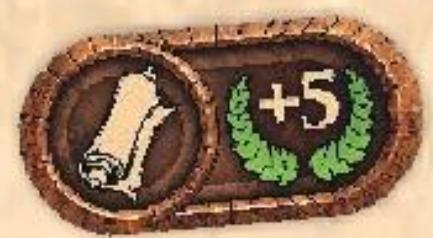
完整組合
在你金字塔中的每三個指示物組合
(防禦、魔法和科學各一個),
讓你獲得12分權力分數

攻擊指示物
你對手的每個攻擊指示物使你失去4分權力分數。
在你金字塔中的每個防禦指示物
抵銷一個敵人的攻擊指示物。


viceroy_rules_eng_10.md41.1 KB
BUILD YOUR PYRAMID OF POWER!
RULEBOOK
Hundreds of years from now, when historians of Laar will attempt to read and rewrite the chronicles of today's events, they will most likely not be able to figure out all the individual moves made as part of the Great Game. Only the actions of the kings will be faithfully preserved in time. They are the ones that will be attributed the leading roles of divine emperor, unstoppable leader, incisive sovereign. All the labors of their subjects and subordinates, whose names will have been lost in the fog of time, will be attributed to them. These will be our achievements and our names, Viceroy.
The only memory we can hope to leave behind us is our nation – its longevity, the prosperity of its citizens, the envy of our neighbors. You will have to employ all of your talents to win your empire another year or two in the annals of Laar. Are your prepared for this challenge, my friend? Have you mastered the game of politics, or will you learn its rules as you play?
I am willing to wager that you will ind ample reason to curse the day you decided to attract the attention of the powers that be.
But now it is too late. Your appointment is confirmed, and it has become a matter of honor. You must prove to everyone that, no matter how incomprehensible the situation, you are the one to bank on. Learn to balance, plan ahead, and anticipate your opponents' moves, and do not disdain to learn from the experience of your predecessors. Never forgive disrespect – from now on, you are the state. Be ready, Viceroy, everything is just beginning. Who knows, perhaps your name could make its way into the history of Laar after all...
Viceroy is a board game for 1–4 players aged 12 and up. As they struggle for control over the fantasy world of Laar, players recruit a variety of allies, from a wanderer to a prince, and enact various laws. As the game progresses, each player builds their own pyramid of power by developing their state's military and magical might, increasing their own authority, and gaining the precious gemstones they need to continue expanding their nation. The player who has the most power points at the end of the game becomes the ruler of all Laar—and the winner!
Character Card
COMPONENTS
60 character cards
20 law cards
4 auction cards
• 64 gemstones
(16 in each of the following colors: blue, red, green, and yellow)
•33 double-sided magic/science tokens
17 double-sided attack/defense tokens
•54 power point tokens of different values (8 tokens worth 2, 3, 10, and 12 points; 4 tokens worth 4, 5, 7, 8, and 15 points; 2 tokens worth 6 points)
• 24 bonus tokens for magic
(20 double-sided tokens with the values +2/+3, 4 tokens with the value +5)
• 12 bonus tokens for circles
(2 with the value +2 and 1 with the value +4, in each of the following colors: blue, red, green, and yellow)
• 4 players' screens
• This rulebook
Law Card

Place four auction cards in the middle of the table to form a long line. The order of the cards in this line does not matter, but all arrows should face the same direction ①.
Place the magic/science, attack/defense, power point, and bonus tokens in separate piles in the middle of the table ②
Set up the gemstone reserve. The reserve should contain 32 gemstones (8 of each color) in a two-player game; 48 gemstones (12 of each color) in a three-player game; and all 64 gemstones in a four-player game. In other words, use 4 gemstones of each color per player. Place the gemstone reserve in the middle of the table ③ and return the unused gemstones to the game box.
Each player takes a screen 4. During the game, the players keep their gemstones behind their screens. None of the players should know which gemstones are hidden behind their opponents' screens.
Each player takes 2 gemstones of each color (8 in total), places them behind their screen and returns 2 random gemstones to the reserve. There should therefore be 6 gemstones ⑤ behind each player's screen when the game begins.
Shuffle the character cards and deal each player 2 cards. Each player selects one of the cards, places it face-up in front of him and receives the reward shown in the selected card's lower row . This card is the first card in the player's pyramid. The second character card is added to the player's hand.
Randomly divide the deck of character cards into two stacks: the large deck of 48 cards and the small deck of all remaining cards. Place the large deck face-down next to the auction cards 7. Place the small deck face-down on the other side of the auction cards 8
Reveal four cards from the large deck and place them face-up next to the auction cards, at the bases of the arrows . The first revealed card is placed next to the leftmost auction card, the second next to the following one, and so on.
Shuffle the law deck and deal each player three cards from it 10. Place the law deck face-down next to the small deck . The players add their law cards to their hands and do not show them to their opponents.
Your goal in Viceroy is to get the most power points by the end of the game. You should try to get the most out of your cards – usually, by playing them at higher levels of your power pyramid.
The game continues for exactly 12 turns, until no cards are left in the large deck. Each turn is divided into two phases. During each phase, all players act at the same time.
I. Auction Phase. Each player can receive one auctioned character card.
II. Development Phase. Each player can play up to 3 cards from their hand.
All cards played during the game by a player are placed face-up in their pyramid. The player's pyramids are not hidden behind the screens: they are always visible to all players. All cards in the pyramid should be placed side by side. 'The bottom row of cards is called the first level, the next one is called the second level, and so on up to the fifth level. Each card of the next level has to rest on two cards of the previous level in such a way that the colored sections of all three cards form a circle (the circle does not have to be of a single color).
At the beginning of the game, your power pyramid contains only one card on the rst level. When you play your rst card, you can place it to the right or to the left of this card. The next card you play can go either to the right or to the left of those you have already played, or it can form the second level of the pyramid by “standing” on two rst-level cards.

This card is adjacent to 4 otħer cards
During the game, you cannot move or remove cards that are already part of the pyramid, unless the text of a law card permits you to do so. The pyramid cannot have more than five levels, although the length of its base is unlimited.
Cards are considered to be adjacent even if they are placed on different levels. A card can be adjacent to up to six other cards.
Some of the law cards may instruct you to put a card underneath another card. This is not considered as playing a card. You do not have to pay any cost for a card that goes underneath another card and you do not get a reward for this card either.
The outermost card in a row is considered a free card if there are no higher-level cards resting on this card and no cards put underneath this card.
Free cards





.…...Card placed underneath

I. AUCTION PHASE
During this phase, the players bid on the character cards lying face-up in the middle of the table. Each of these cards is next to an auction card of a certain color. In order to receive a character card, a player has to bid a gemstone of the same color as the corresponding auction card.
ExAmPLE: the Captain card is next to the yellow auction card.
To obtain the Captain, you have to bid a yellow gemstone.
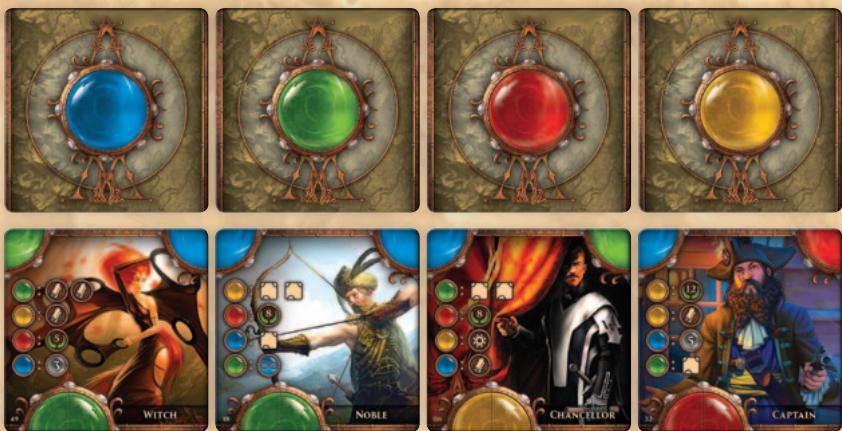
Each player decides which of the auctioned character cards they would like to receive, then takes one gemstone of the corresponding color from behind their screen and holds it in their fist. All players do this on their own at the same time. Then the players simultaneously reveal their bids.
If a certain color has been selected by only one player, that player receives the corresponding character card and returns the bidden gemstone to the reserve. The auction phase ends for this player.
If two or more players have chosen the same color, they all return the bidden gemstones to the reserve without receiving any cards. These players can participate in the second auction. Exception: if two players choose a color that corresponds to two cards, they can agree among themselves who will receive which card (see further).
A player can refuse to participate in the auction. If he decides to skip the auction, the player does not bid a gemstone, although they still hold out their hand as though they had. When all bids have been made, such player opens their empty hand and declares that they are passing (see further). They do not receive any cards and do not participate in any further auctions during this phase.
Once the first auction is complete, all players who received no cards and did not pass continue to the second auction. If, at the end of the second auction, there are still players who have neither passed not taken a card, the third and final auction begins. Any players who have not received a card by the end of the third auction are considered to have passed.
PLEASE NOTE:
A player cannot bid on a card if there are no gemstones of corresponding color behind their screen.
A player cannot receive a card during an auction without bidding any gemstones (exception: attack tokens, see further).
All bidden gemstones are returned to the reserve even if their owners were unable to receive any cards with them.
A player can only receive one card at the auction per turn.
If a player receives a card or passes, they cannot participate in any more auctions during the current turn.
There can be no more than three auctions per turn.
A player cannot bid a gemstone of a certain color if there are no character cards next to the auction card of this color.
Cards received during the auction are added to corresponding players hands and are not considered to have been played yet. The players can play these cards (by adding them to their pyramids and getting a reward) during the development phase.
As long as all players agree, they can decide who will play which color before the auction. However, these agreements are not compulsory. Players cannot trade gemstones, tokens and cards or show their opponents what they have behind their screen, unless the text of a law card tells them to do so.
From the second turn onwards, it is possible that two character cards are lying next to the same auction card (one card at the base of the arrow, the other one at the tip). If only one player bids on this color, they can receive whichever of the two cards they choose (but not both). If two players bid on this color, they can decide amongst themselves who will take which card. If this happens, they receive their cards and do not participate in any further auctions this turn. However, if both players claim the same card, neither of them receives a card, and they continue to the next auction. Finally, if three or four players bid on a color with two character cards, none of them takes a card and next auction begins.

When each player has either received a card or passed (after the third auction, anyone who has not received a card automatically passes), the auction phase ends. All character cards located at the tips of the arrows on the auction cards are discarded. All cards located at the bases of those arrows are placed on the other side of the auction cards along the arrows. Four new character cards are revealed from the large deck and placed at the bases of the arrows as during setup.
If the last four character cards are revealed from the deck, this means that the next turn will be the last one in the game.


Discard pile
Discard all cards at the tips of the arrows.

Move the cards from the bases of the arrows to the tips.
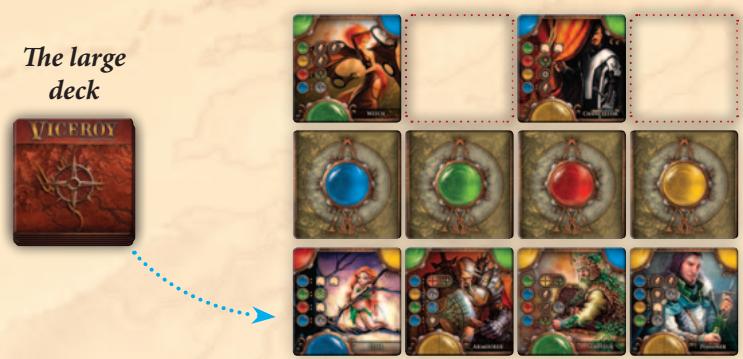
Place four cards from the deck at the bases of the arrows.
IF A PLAYER PASSES
A player is considered to have passed in two cases:
during the auction, they refuse to bid a gemstone, opening their hand to reveal that it is empty (this can happen during any auction);
at the conclusion of three auctions, the player has not been able to receive a character card.
Immediately after passing, the player takes three gemstones of their choosing from the reserve. They can also take an extra gemstone for every science token in their pyramid (see further). The player places taken gemstones behind their screen.
If several players pass at the same time, they take gemstones in increasing numerical order, beginning with the player who has the card with the lowest number in their pyramid, then whoever has the next lowest number, and so on. Each player in order takes all tokens they should take.
PLEASE NOTE:
If there are no gemstones of a certain color left in the reserve, the player cannot take gemstones of that color.
If there are not enough gemstones in the reserve, the player takes as many as they can.
If there are no gemstones in the reserve, the player takes nothing.
A player cannot pass twice in the same turn.

II. DEVELOPMENT PHASE
This phase consists of three rounds of playing cards.
In the beginning of a round, each player chooses a card to play and lays it on a table face down. If a player does not want to play a card, he passes. A player who passed, can not play cards in the remaining rounds of this phase. Players do not get any gemstones for passing in this phase.
Players who want to play a card select them independently. Then they simultaneously reveal their chosen cards and play them in increasing numerical order, beginning with the player who selected the card with the lowest number. Each player in order places their card in their pyramid and resolves its effect.
To play a character card, the player chooses an available space in their pyramid and pays the cost of playing this card, which depends on the level where they want to place it. In the left part of every character card there are four horizontal rows corresponding to the four levels of the pyramid (bottom row is for the first level, the next one is for the second level, the next one is for the third level, and top row is for the fourth level). Preceding the colon in each row there is a gemstone symbol indicating the cost of playing the card into the given level. Note that you have to pay cost not just for the level on which you play the card, but also for all previous levels.
Playing a law card costs nothing, and it can be placed in any available space in the player's pyramid except for the fifth level. Immediately after a law card is played, its effect is resolved. Depending on the law card, its effect can be one-shot, continuous or triggered at the end of the game. In any case, the law card remains in the player's pyramid.
ExAmPLE: if you play the Captain on the first level of the pyramid, you have to pay one green gemstone (depicted in the bottom row of the card). If you play the same card on the second level, you should pay one green gemstone (the bottom row) and one blue gemstone (the second row from the bottom). Playing the Captain on the third level will cost you one green, one blue, and one yellow gemstone, and the fourth level will cost one green, one blue, and two yellow gemstones.


All cards are played according to the following rules:
A card played on the first level is placed either to the left or to the right of other cards on that level.
A card played on the second level (or higher) has to rest on two cards of the previous level in such a way that the colored sections of all three cards form a circle (the circle does not have to be of a single color).
If, after playing a card in your pyramid, you form a single-color circle, you immediately take a gemstone of the same color from the reserve (if there are any left).
To play a character card on the fifth level, you need to pay the cost required to play it on the fourth level, as well the extra gemstone shown in the top row on the card. For example, if you play the Captain on the fifth level, you pay one green, one blue, and three yellow gemstones.
The gemstones spent for recieving cards during the auction phase have no relation to the gemstones you have to spend to play the cards. These are different expenses and have nothing to do with each other.
When paying to play a card, the player takes the necessary gemstones from behind their screen and returns them to the reserve.
After you play a card, you get a reward for it immediately. The reward, as well as the cost of playing the card, depends on the level of your pyramid in which you play it. However, unlike payment, you get no reward for the previous levels, just for the level where you have placed the card.
ExAmPLE: if you play the Captain on the rst level of your pyramid, you take one card from the law deck or the small deck (as shown in the bottom row on the card). If you play the same card on the second level, you get five gemstones (the second row from the bottom). On the third level, the Captain gives you a magic token, and on the fourth, 12 power points.
If you play a character on the fifth level, you either get the rewards indicated in the first three rows of the card or put a 15 power points token on the card.
ExAmPLE: if you play the Captain on the ifth level, you choose either to draw one card, take 5 gemstones and put a magic token on the card, or to put a 15 points token on the card.
Once all players have received their rewards for the cards they played, the next round of development phase starts.
After three rounds of development phase or after all players have passed, the next turn begins with the Auction Phase.
REWARDS

GEMSTONES
The player takes the indicated number of gemstones (in the colors of their choosing) from the reserve. If there are not enough gemstones in the reserve, the player takes as many as they can. If the reserve is completely exhausted, the player takes no gemstones. The player places taken gemstones behind their screen.

POWER POINTS
The player places the power point token of the indicated value on this card. At the end of the game, these points will be added to the player's total score. In the unlikely event that there is no token of the necessary value in the reserve, you can replace it with several tokens of lesser value, but keep in mind that this combination will still count as one power point token.

CARDS FROM THE SMALL DECK OR THE LAW DECK
The player draws the indicated number of cards from the law deck or the small deck (he chooses). If the player is supposed to draw two cards, they can draw both from the same deck or one from each deck. The player adds these cards to their hand. The player can play cards from his hand (whether laws of characters) during the development phase.

SCIENCE
The player places a science token on this card (some cards give 2 science tokens on the fourth level). Keep in mind that science and magic are two sides of the same token, and in this case the token is placed with science side up. Science tokens allow their owner to take additional gemstones if they pass. For example, if a player has 4 science tokens in their pyramid, they can take 3 + 4 = 7 gemstones if they pass. In addition, these tokens can give points during the final scoring.

MAGIC
The player places a magic token on this card (some cards give 2 magic tokens on the fourth level). Keep in mind that science and magic are two sides of the same token, and in this case the token is placed with magic side up. Magic tokens have no use during the game, but they can give a lot of points during the final scoring.

DEFENSE
The player places a defense token on this card. Keep in mind that attack and defense are two sides of the same token, and in this case the tokenis placed with defense side up. Defense tokens have no use during the game, but they can give points and defend against enemy attacks during the final scoring.

ATTACK
The player takes an attack token and puts it behind their screen. Despite the fact that attack and defense are two sides of the same token, it makes no difference which side is up while the token is behind a screen, since defense tokens can only be located in the pyramid. If you have an attack token behind your screen, you can use it during the auction phase instead of the regular bid by holding one in your fist. In this case, you immediately take any one card at the beginning of the Auction Phase, before any other players. Once used, the attack token is returned to the reserve. You do not participate in any further auctions this turn (since you have already received a card). If you have taken the last card corresponding to a color, all other players who bid on this color lose their bid and get nothing in this auction round. If several players used attack tokens at the auction, the first player to get a card is the one who has the card with the lowest number in their pyramid. At the end of the game, any leftover attack tokens in your possession take points away from your opponents.

BONUS TOKEN (FOR MAGIC OR CIRCLES)
The player places the indicated token on this card (keep in mind that bonus tokens have various values as well as symbols). Bonus tokens have no use during the game, but they can give points during the final score.

INFINITE GEMSTONE
The player takes a gemstone of the indicated color from the reserve and places it on this card. If there are no gemstones of this color in the reserve, they can take one from behind their own screen. If they have no gemstones of the appropriate color there, either, they do not place a gemstone. If you have an infinite gemstone of any color, once per turn you can declare that you are using it when you need to spend gems during the development phase. In this case, you reduce the current payment by one gemstone of this color. For example, if you need to spend one yellow and two blue gemstones and you have blue infinite gemstone, you can declare that you are using it and spend only one blue and one yellow gemstones. If you have several infinite gemstones, you can use any of them during each expenditure, although each infinite gemstone may only be used once per turn. The gemstone remains on the card in your pyramid and can be used in future turns according to the same rules.
If the last four character cards are dealt from the large deck at the end of the auction phase, the next turn will be the last one in the game. This final turn is played to the end, whereupon the players determine the winner.
First, the players remove their screens and discard all unplayed law and character cards from their hands. They can then use their remaining gemstones to “paint" sections of the circles formed where three cards touch. To change the color of a section, the player places on it a gemstone of whatever color they wish to "paint" that section. Keep in mind that every circle has four sections: two along the top corners of the lower cards, and two along the bottom side of the top card. By “painting" sections, a player can make circles comprised of various colors into single-color circles (however, in this case they do not take a gemstone of that color, since the single-color circle was not formed as the result of playing a card).
Once a player has "painted" all sections they wanted (and were able) to paint, they tally their victory points in this order:
-
Points for single-color circles
-
Points for infinite gemstones
-
Points for law cards
-
Points for power point tokens
-
Points for magic
-
Points for completed sets
-
Penalty points for attack tokens
1. POINTS FOR SINGLE-COLOR CIRCLES
For every single-color circle in their pyramid, a player receives power points equal to the level where the top card forming this circle rests. In addition, certain bonus tokens give extra points for every circle of a specific color. For example, if you have a green circle between first and second levels (with base value of 2 points) and a bonus token that gives you +4 points for a green circle, this circle gives you 2 + 4 = 6 points.

2. POINTS FOR INFINITE GEMSTONES
For every infinite gemstone in their pyramid, a player receives power points equal to the level where this gemstone is located. In addition, bonus tokens for circles give extra points for every ininite gemstone of its color. For example, if you have a yellow infinite gemstone on the third level (with base value of 3 points) and a bonus token that gives you +4 points for a yellow circle, this gemstone gives you 3 + 4 = 7 points.

3. POINTS FOR LAW CARDS
The text of every law card that provides power points at the end of the game indicates exactly how many points it provides and for what. Law cards give points only if they are part of the pyramid.
Place up to 8 gemstones from behind your screen on this card.
End of game: gain for each gemstone on this card.
4. POINTS FOR POWER POINT TOKENS
Every power point token in a player's pyramid gives them the equivalent of its value in points.

5. POINTS FOR MAGIC
Every magic token in a player's pyramid gives this player the number of points equal to the total bonus for all bonus tokens for magic in their pyramid. For example, if your pyramid contains 3 magic tokens, one bonus token that gives +5 points for magic, and one bonus token that gives +2 points for magic, you gain 5 + 2 = 7 points for each magic token, for a total of 21 points. To gain points for magic, a player must have both magic tokens and bonus tokens for magic in their pyramid. If they only have tokens of a single kind, a player gains no points for magic.

6. POINTS FOR COMPLETED SETS
A player gains 12 power points for every set of three tokens (defense, magic, and science) in their pyramid. Each set must include one defense token, one magic token, and one science token. The same token cannot be included in multiple sets. For example, if your pyramid contains 2 defense tokens, 5 magic tokens, and 3 science tokens, you get 24 points for 2 sets.

7. PENALTY POINTS FOR ATTACK TOKENS
The player counts how many unused attack tokens their opponents still have at the end of the game. The player loses 4 power points for each such token. However, every defense token a player has neutralizes one enemy attack token. For example, if one of your opponents has 2 attack tokens remaining and another has 3 attack tokens, you lose 4 × (2 + 3) = 20 points. If, in the same situation, you had 2 defense tokens, you would lose 4 × (2 + 3 − 2) = 12 points.

The player who has the most power points after the final scoring is the winner of the game.

BEGINNER TIPS
• Do not go for power points in the early game! It is important to create a good resource base first. You should spend a few turns to try to get: infinite gemstones, science tokens, regular gemstones – in that priority order.
• Go with the flow of the game. The easiest way to get points is by getting power and magic tokens. Consider more complicated options (tricky law cards, single-color bonuses, 5th pyramid level) only if they come around by themselves.
• You should not use attack tokens during the game, unless you really need a certain card. Attack tokens are usually much more beneficial at the end of the game scoring, if your opponents do not have enough defense tokens.
• Try to keep track of attack tokens that your opponents get. This will help you to avoid overspending for defense.
You should concentrate on getting as many points as possible during the second part of the game. It is important to notice the moment when you have gathered enough resources and are ready to score points. It is easy to calculate how many points you will earn with your move. If you can get 10 points or more – it is a good move!
• You may be tempted to play as many law cards as possible at the beginning of the game. Some of the law cards are indeed great for the early game. However, please note that most of the law cards are best for the late game or higher pyramid levels.

COMPONENT LIMITATIONS
The cards are never returned to the decks. If a card is discarded for some reason, it is never returned to the current game. If a deck runs out, none of the players can take cards from it.
The number of gemstones is also strictly limited and depends on the number of players. If there are no gemstones of a certain color left in the reserve, the players cannot take any gemstones of that color until someone spends one and returns it to the reserve. You cannot add gemstones during the game or use any placeholders for them.

All other tokens are included in the game in sufficient quantities, but in very rare circumstances it can turn out that there are not enough. In this case, the players can use coins or other placeholders to stand for them.
A player can have any number of cards in hand and any number of gemstones behind their screen. A pyramid can contain any number of cards, but it can only have five levels.

RESOLVING CONFLICTS
Most of the actions players take in Viceroy are performed simultaneously. However, sometimes it will happen that the order in which the actions are to be taken needs to be determined (for example, when only a few gemstones are left in the reserve, and several players are claiming them). In this case, the players have to act in the order of the numbers on their cards, from the lowest to the highest.
The first player to act is the one who has the card with the lowest number in their pyramid (among all players involved in the dispute). They complete the entire action in question, followed by the player whose lowest card in the pyramid is the next lowest one etc. Particularly, this method becomes necessary if several players use attack tokens during the auction phase. In this case, the player who has the card with the lowest number becomes the first one to pick a card from the auction.
The only dispute that cannot be resolved in accordance with the order numbers on the cards is when several players play the same color during an auction. When this happens, these players hold an additional auction as described in the rules.


Solo RULeS

If you want to play Viceroy by yourself, you can play against a virtual opponent who acts only during the auction phase. Set the game up according to the usual rules (place 4 gemstones of each color in the reserve and take your initial gemstones and cards). Each turn consists of the auction and development phases as usual. After you make your bid during the auction, take one of the unused gemstones out of the box without looking at it. This will be your virtual opponent's bid. If it is the same as yours, place your bid into the reserve and your opponent's in the box and move on to a new auction following the same rules. If your virtual opponent chose a different card, you receive a card that matches your bid as usual, and the card your opponent is supposed to receive is discarded (if your opponent can choose one of two cards, they always discard the card at the base of the arrow). If your virtual opponent chooses a color that does not match any of the character cards, discard a card of your choosing from those left at auction after you receive your card. Always return all your virtual opponent's bids to the box and make sure these gemstones do not end up in the reserve.
If you play by yourself, you cannot lose. Calculate your points after every game and try to beat your high score.

RULES VARIANT
When playing with two or three players, you can also add a virtual opponent to the game according to the rules outlined in the preceding section. If you like, you can even play with two or three "virtual opponents", as long as the total number of players does not exceed four. In this case, just take two or three gemstones out of the box.
PLEASE NOTE:
•If two “virtual opponents" bid the same color, and that color matches only one character card, this card is not discarded, but the “virtual opponents" participate in the next auction (if there is one).

• If two “virtual opponents" bid the same color, and that color matches two cards, both cards are discarded, and the "virtual opponents" stop participating in the auction this turn. However, if the same color is picked by one of the players, the cards are not discarded and the next auction begins.
• If a player and a virtual opponent bid the same color, and that color matches two cards, the player has a choice: they can either proceed to the next auction (whereby the cards are not discarded) or take the card at the tip of the corresponding arrow (the card at the base of the arrow is discarded).
• At least one player has to participate in every auction. If all players took cards or passed during the previous auctions, no next auction is held.

CREDITS
Publisher: Hobby World LLC
Game Designer: Yuri Zhuravlev
Cover Art: Ilya Komarov
Card Art: Yulia Alekseeva, alexius, Aleksey Balandin, Dmitry Burmak, Nikolay Dihtyarenko, Stepan Gilev, Pavel Guzenko, Roman Gunyavy, Dmitry Hrapovitskiy, Anna Ignatieva, Elena Kazey, Ilya Komarov, Roman Kuzmin, Anton Kvasovarov, Leopard Snow, Andrey Maksimov, Ekaterina Maksimovich, Ksenia Mamaeva, Georgy Markov, Mireha, Andrey Mironishin, Perchikk, Dmitry Prosvirnin, Pavel Romanov, Igor Savchenko, Pavel Spitsyn, Ruslan Svobodin, TopotoonPun, uildrim, Anton Zemskov, Alexey Zhizhitsa
Graphic Design: Sergey Dulin
Producers: Mikhail Akulov and Ivan Popov
Manager: Vladimir Sergeev
Editor: Petr Tyulenev
Layout: Ivan Sukhovey, Daria Smirnova
Email us at international@hobbyworld.ru with the subject “Game publication" to ask any questions about the publication of our games. Special thanks to Ilya Karpinskiy.
Playtesters: Andrey Kolupaev, Aleksey Paltsev, Svyatoslav Rogov, Konstantin Mazanyuk, Aleksey Osipov, Alexander Peshkov, Mikhail Kazakov, Ekaterina Pluzhnikova, Elena Karpova, Anastasia Karpova, Yuri Tapilin, Vadim Larkin, Vladislav Choporov, Vladislav Popkov, Natalya Telezhkina, Vadim Kruglov and others.

FroM THE AUTHoR: I wish to thank everyone who supported my undertakings and inspired me. Special thanks to Tom Lehmann whose Race for the Galaxy has inspired the first version of the Viceroy, to my mother for all her patience and directions, and to the Greater Force for the gift of life, creativeness and joy.

Any copying or publication of the game's rules, components or illustration without prior permission of the copyright proprietor is prohibited.

© 2014 Hobby World LLC. All right reserved. international.hobbyworld.ru


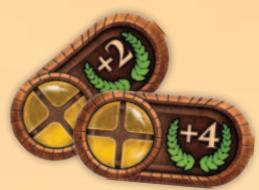



SCORING SUMMARY


SINGLE-COLOR CIRCLES
For each single-color circle in your pyramid you gain power points equal to the level of the top card forming the circle plus extra points from bonus tokens of the same color.
INFINITE GEMSTONES
For each infinite gemstone in your pyramid you gain power points equal to the level where this gemstone is located plus extra points from bonus tokens of the same color.
LAW CARDS
Put 1 free card from your pyramid underneath this card. Move all tokens (if any) from free card onto this card. At the end of the game: • gain ® if this card is on 1ª level; • gain ® if this card is on 2ª level; • gain if this card is on 3 level; • gain if this card is on 4th level.
You gain power points according to the text of law cards in your pyramid.
POWER POINT TOKENS
Every power point token in your pyramid gives you points equal to its value.

MAGIC TOKENS
Every magic token in your pyramid gives you the number of points equal to the total bonus of all bonus tokens for magic in your pyramid.


COMPLETED SETS
You gain 12 power points for every set of three tokens (one of each defense, magic, and science) in your pyramid.

ATTACK TOKENS
You lose 4 power points for each attack token your opponents have. Every defense token in your pyramid neutralizes one enemy attack token.


简繁检索对照.md1.6 KB
158526_157526_viceroy — 简体/繁体检索对照
本游戏的规则书是繁体中文原文。用户用简体提问时,把关键词按下面这张表转成繁体再去 grep 原文,命中率最高。
回答时用简体或繁体都可以,但引用的原文保持繁体。
简体 → 繁体 对照(按该游戏原文出现频率排序,共 59 字)
| 简体 | 繁体 | 原文出现次数 |
|---|---|---|
| 个 | 個 | 121 |
| 宝 | 寶 | 107 |
| 数 | 數 | 104 |
| 张 | 張 | 86 |
| 标 | 標 | 86 |
| 们 | 們 | 83 |
| 竞 | 競 | 77 |
| 层 | 層 | 67 |
| 会 | 會 | 65 |
| 后 | 後 | 61 |
| 获 | 獲 | 58 |
| 游 | 遊 | 56 |
| 戏 | 戲 | 55 |
| 颗 | 顆 | 54 |
| 时 | 時 | 48 |
| 这 | 這 | 48 |
| 对 | 對 | 48 |
| 该 | 該 | 45 |
| 颜 | 顏 | 44 |
| 阶 | 階 | 42 |
| 权 | 權 | 40 |
| 两 | 兩 | 39 |
| 来 | 來 | 38 |
| 从 | 從 | 36 |
| 区 | 區 | 36 |
| 并 | 並 | 32 |
| 奖 | 獎 | 31 |
| 励 | 勵 | 31 |
| 环 | 環 | 31 |
| 为 | 為 | 30 |
| 应 | 應 | 30 |
| 库 | 庫 | 30 |
| 没 | 沒 | 29 |
| 击 | 擊 | 28 |
| 无 | 無 | 25 |
| 过 | 過 | 24 |
| 选 | 選 | 24 |
| 圆 | 圓 | 24 |
| 结 | 結 | 22 |
| 给 | 給 | 22 |
| 开 | 開 | 21 |
| 档 | 檔 | 21 |
| 学 | 學 | 20 |
| 价 | 價 | 20 |
| 单 | 單 | 19 |
| 况 | 況 | 19 |
| 发 | 發 | 19 |
| 御 | 禦 | 19 |
| 当 | 當 | 18 |
| 则 | 則 | 16 |
| 进 | 進 | 16 |
| 择 | 擇 | 16 |
| 动 | 動 | 15 |
| 将 | 將 | 15 |
| 头 | 頭 | 15 |
| 总 | 總 | 14 |
| 组 | 組 | 14 |
| 轮 | 輪 | 14 |
| 费 | 費 | 14 |
原文为社区整理/出版社公开资料,版权归原作者,仅供个人学习查阅。