
童贞女王Virgin Queen
一句话概览
童贞女王 是一款已收录于村了吗规则库的桌游,支持 2–6 人,原名 Virgin Queen。
本页内容:一句话概览 · 游戏概述 · 游戏组件 · 规则详解 · 关键规则提醒 · 常见问题
童贞女王(Virgin Queen)规则速览
以下规则速览由本站整理,与官方规则书表述不同,仅供快速上手参考。
游戏概述
- INTRODUCTION... 2. GAME MAP .......
📊 BGG排名: #164
游戏组件
- INTRODUCTION...
- GAME MAP .......
- POWERS AND RULERS.. 5
- POWER CARDS......
- MILITARY UNITS .........
- CARDS AND TREASURES ... . 8
- SEQUENCE OF PLAY.... . 10
- CARD DRAW PHASE......... 11
- DIPLOMACY.......... 1
- SPRING DEPLOYMENT... . 14
- THE ACTION PHASE ... . 15
- CONTROL AND UNREST... . 16
- Movement ....... ... 17
- Field Battle...... . 19
- Siege.......... .. 20
规则详解
游戏介绍
Virgin Queen is a game for two to six players based on the military, political and religious conflicts within Europe during the reigns of Elizabeth I of England and Philip II of Spain.
Each player controls one or more major powers that dominated Europe at the time.
2. Game Map
The game is played on a 22” x 34” map that depicts the areas of the world critical to European rulers in the late 16th Century.
The main playing area represents Europe and is referred to as the “Europe Map” in these rules.
The political and religious status of each space is updated throughout play using control markers.
2.1 Space
- Key: A key is a fortified space represented by a square. Keys are the most influential and wealthy spaces; control of a key gives a power victory points and cards. Keys with a doublesquare border are capitals. The Spanish power has two capitals (Madrid and Milan). The Holy Roman starts with their capital at Vienna but it switches to Prague mid-game. The Protestant power has no fixed capital (but may create a capital in France and one in the Netherlands when undertaking a Rebellion action in one of those areas). The other three powers each have a single capital (Istanbul, London, Paris).
- Fortress: A fortress is a fortified space represented by a circle with eight points. Fortresses are walled towns with little economic value. They never grant a power additional victory points or cards. However, a fortress’s strong defenses force a power to besiege the space to gain political control. Players may construct a fortress on an unfortified space during the game (and Spain may construct them in World Map settlements).
2.2 Political Control
The political control of each space is tracked throughout the game.
By default, each space is under the political control of its home power.
As political control changes, control markers are placed on top of the space to indicate that the political control has changed to a non-home power.
Controlled Space
- Home spaces that have not fallen to another power.
- Independent (gray) spaces seized by the power.
- Home spaces of other powers seized by the power.
- Home spaces of allied minor powers.
Control Terminology
Friendly: The term “friendly” refers to any game element (space, unit, stack, formation) that is controlled by the active power or an ally of that power.
Enemy: The term “enemy” refers to any game element that is controlled by a power that is currently in a state of war with the active power.
2.3 Religious Influence
The dominant Christian denomination (Catholic or Protestant) of many spaces on the Europe Map may change during play.
Religious Struggle Areas: The background of the game map is color-coded to depict the four regions where religious influence may change during play.
Spaces surrounded by this color-coding are considered to be inside these regions.
The four religious struggle areas are:
标记
Control markers are used to denote a space’s political control and religious influence.
The flag and border color of the marker indicates the political control of the space.
The interior color of the marker indicates the religious influence.
标记
- Every key on the map must contain a square control marker. Exceptions: independent keys not currently under major power control and keys of minor powers when they are neither allied to a major power nor captured.
- Every square control marker must be either on the map or on the appropriate power card.
标记
Hexagonal markers are used to show the status of fortresses and unfortified spaces.
These markers are kept out of play until needed to update the political or religious status of a space.
They are never placed on power cards.
There is no limit to the number of spaces a power can control with hexagonal control
markers; if a power uses all its markers, improvise with unused markers from other powers.
Split Home Spaces
19 spaces are color-coded with two home space colors: one on the top and one on the bottom.
These spaces serve as home spaces for two different powers.
The space is initially under control of the power shown on the bottom of the space (and that power controls the space if no control marker is present).
Pass
A connection shown with a dashed line is a pass.
There are 4 passes across the Pyrenees between Spain and France, 6 passes in the Alps near northern Italy, and 7 passes in the Balkans.
Formations of land units moving over a pass expend 2 command points (CP) instead of the usual cost of 1 CP for moving over a normal connection.
关键规则提醒
(详细规则请参阅原始说明书)
常见问题(FAQ)
以下 1 条问答中 0 条来自站内玩家的真实提问,其余 1 条为本站整理的常见疑问;答复内容保持原样。
童贞女王支持几个人玩?
2–6 人。
去哪查完整规则
想核对具体规则细节、卡牌效果或某个回合的结算方式,可以在村了吗里选中这款游戏后直接提问。
同类桌游
规则原文(Markdown)
本站收录这款游戏的规则原文 1 个文件,此处内联渲染 1 个,可直接展开阅读或下载。
VQ_Rules_Final_Lo-Res.md241.1 KB
RULE BOOK

GMT Games, LLC • P.O. Box 1308, Hanford, CA 93232-1308 www.GMTGames.com
Table of Contents
- INTRODUCTION...
- GAME MAP .......
2.1 Space
2.2 Political Control
2.3 Religious Influence.
2.4 Control Markers .
2.5 Europe Map Elements . 4
2.6 World Map Elements. 5 - POWERS AND RULERS.. 5
3.1 Player.. 5
3.2 Power...
3.3 Ruler .. 6 - POWER CARDS......
- MILITARY UNITS .........
5.1 Leaders ......
5.2 Sea Captains .
5.3 Land Units.
5.4 Naval Units. . 8 - CARDS AND TREASURES ... . 8
6.1 Card Types. . 8
6.2 The Deck .. . 9
6.3 Treasures. 10 - SEQUENCE OF PLAY.... . 10
- CARD DRAW PHASE......... 11
8.1 Add New Personages.. 11
8.2 Add Fortresses and Jesuits. 11
8.3 Add New Cards to Deck/Deal Cards. 11
8.4 Refresh Treasures/Check for New World Riches. 1 - DIPLOMACY.......... 1
9.1 Negotiations . 11
9.2 Alliances .. 13
9.3 Ransom of Leaders. 13
9.4 Declarations of War. 13
9.5 War between England and Spain. 14 - SPRING DEPLOYMENT... . 14
- THE ACTION PHASE ... . 15
11.1 Actions. 16 - CONTROL AND UNREST... . 16
12.1 Line of Communication 16
12.2 Unfortified Space. . 16
12.3 Fortified Space. . 17
12.4 Unrest .. . 17
12.5 Displacement.. . 17 - Movement ....... ... 17
13.1 Land Movement Procedure . . 17
13.2 Interception.. . 18
13.3 Avoid Battle. . 18
13.4 Withdrawing into Fortifications 19 - Field Battle...... . 19
14.1 Retreat . . 20 - Siege.......... .. 20
15.1 Assault . 20
15.2 Relief Forces 21
15.3 Breaking a Siege.. . 21 - NAVAL AFFAIRS..... .. 21
16.1 Naval Movement. . 21
16.2 Naval Combat.. . 23
16.3 Naval Transport. . 23
16.4 Piracy on the Europe Map. 24
16.5 Piracy on the World Map. . 24
16.6 Circumnavigation .... . 25
16.7 Antwerp and Rotterdam .. 25 - CONSTRUCTION........ .... 26
17.1 Force Pools. . 26
17.2 Land Units. . 26
17.3 Naval Units. . 26
17.4 Expeditions. . 26
17.5 Fortresses.. . 27 - RELIGIOUS STRUGGLES . .. 27
18.1 Basic Principles . 27
18.2 Preaching Sermons. . 27
18.3 Suppress Heresy . . 27
18.4 Rebellions. . 27
18.5 Religious Procedures. . 28 - ESPIONAGE ......... .. 30
19.1 Gain Intelligence . 30
19.2 Plant Operative. . 30
19.3 Assassination .. . 31
19.4 English Catholic Rebellion. . 31 - WINTER .......... .. 31
20.1 Spread Morisco Unrest.. . 31
20.2 Discard Unused Treasures. . 31
20.3 Loaned Naval Unit Markers . 31
20.4 Returning Home . . 32
20.5 Major Power Alliance Markers . 33
20.6 Replacements . . 33
20.7 Piracy Markers/Treasures. 33
20.8 Espionage Reset . 33
20.9 Diplomacy Reset 33
20.10 Catholic League Formation. . 33 - MARRIAGE... . 34
21.1 Resolving Marriages . 34
21.2 Virgin Queen VP . 34
21.3 Aging . . 34
21.4 Death of Betrothed Royal.. . 34 - PATRONAGE.... . 35
22.1 Artists . 35
22.2 Scientists. . 35 - MAJOR POWERS............. .... 36
23.1 Ottoman.. . 36
23.2 Spain...... . 36
23.3 England. . 37
23.4 France . . 38
23.5 Holy Roman . 38
23.6 Protestant. . 38
23.7 Foreign War Cards. . 48 - MINOR POWERS/INDEPENDENTS.. .. 39
24.1 Inactive Minor Powers . 39
24.2 Activation . . 39
24.3 Active Minor Powers. . 39
24.4 Deactivation . 40
24.5 Diplomatic Influence . 40
24.6 Resolving Diplomatic Status.. . 41
24.7 Independent Keys and Fortresses . 41 - VICTORY .......... ... 41
25.1 Automatic Victories. . 41
25.2 Victory Points . . 41
25.3 Victory Determination Phase. . 42

Tirgin Queen
1. INTRODUCTION
Virgin Queen is a game for two to six players based on the military, political and religious conflicts within Europe during the reigns of Elizabeth I of England and Philip II of Spain. Each player controls one or more major powers that dominated Europe at the time. The major powers represented are the Ottoman Empire (shortened in these rules to “Ottoman”), Spain, England, France, the Holy Roman Empire (shortened to “Holy Roman”) and the Protestant (representing both Huguenot and Dutch factions).
2. GAME MAP
The game is played on a 22” x 34” map that depicts the areas of the world critical to European rulers in the late 16th Century. The main playing area represents Europe and is referred to as the “Europe Map” in these rules. Cities and towns that played an important role in the history of Europe during this period are represented on the Europe map as square, circular, and eight-pointed symbols called “spaces.” A network of lines called “connections” link these spaces. A space connected to another by one of these lines is an “adjacent” space. Some of the spaces are also ports (a circular symbol with an anchor inside). Ports allow access to a series of areas called “sea zones” (blue regions with dotted blue boundaries).
On the left and bottom of the map is the peripheral play area called the “World Map.” Significant colonial port towns are depicted on the World Map with triangular symbols called “settlements.” Although no land connections exist between settlements, each settlement is considered to be connected to the “ocean zone” that it borders. Units may never move directly from the World Map to the Europe Map (or vice versa.)
The political and religious status of each space is updated throughout play using control markers. Detailed information about control markers and Europe and World map elements is provided in this section of the rulebook.
2.1 Space
All spaces on the Europe Map are either fortified or unfortified.
Fortified Space: A fortified space represents a walled city (or town). A power must successfully besiege a fortified space to gain political control of that city. Up to four friendly land units may remain within a fortified space to defend that city against an enemy siege. Fortified spaces also serve as winter quarters. There are two different types of fortified spaces:
• Key: A key is a fortified space represented by a square. Keys are the most influential and wealthy spaces; control of a key gives a power victory points and cards. Keys with a doublesquare border are capitals. The Spanish power has two capitals (Madrid and Milan). The Holy Roman starts with their capital at Vienna but it switches to Prague mid-game. The Protestant power has no fixed capital (but may create a capital in France and one in the Netherlands when undertaking a Rebellion action in one of those areas). The other three powers each have a single capital (Istanbul, London, Paris).
• Fortress: A fortress is a fortified space represented by a circle with eight points. Fortresses are walled towns with little economic value. They never grant a power additional victory points or cards. However, a fortress’s strong defenses force a power to besiege the space to gain political control. Players may construct a fortress on an unfortified space during the game (and Spain may construct them in World Map settlements).
Unfortified Space: A circle represents an unfortified space. These spaces represent cities (or towns) that could be controlled without a siege. Forces from two powers that are at war must fight a field battle if they ever simultaneously occupy the same unfortified space.
Home Space: Spaces with a gray fill color are independent and are not aligned with any of the powers represented in the game. All other spaces are a home space for a specific power, as indicated in the table below. This power is referred to as the “home power” for that space.

2.2 Political Control
The political control of each space is tracked throughout the game. By default, each space is under the political control of its home power. As political control changes, control markers are placed on top of the space to indicate that the political control has changed to a non-home power. These control markers are color-coded by power and also include a flag used by that power during the 16th century.
Controlled Space
A space that is controlled by a major or minor power is a controlled space. Controlled spaces for a power include:
• Home spaces that have not fallen to another power.
• Independent (gray) spaces seized by the power.
• Home spaces of other powers seized by the power.
• Home spaces of allied minor powers.
Control Terminology
Friendly: The term “friendly” refers to any game element (space, unit, stack, formation) that is controlled by the active power or an ally of that power.
Enemy: The term “enemy” refers to any game element that is controlled by a power that is currently in a state of war with the active power.
Independent: The term “independent” refers to any game element that is not controlled by a major or minor power. Independent game elements are never considered to be either friendly or enemy for the purposes of any rules of play.
EXAMPLES: Independent units cannot intercept moving forces since only enemy formations may attempt intercepts. Adjacent independent units do not prohibit unoccupied, unfortified spaces from being controlled, an action that is restricted by the presence of adjacent enemy units.
2.3 Religious Influence
The dominant Christian denomination (Catholic or Protestant) of many spaces on the Europe Map may change during play.
Religious Struggle Areas: The background of the game map is color-coded to depict the four regions where religious influence may change during play. Spaces surrounded by this color-coding are considered to be inside these regions. The four religious struggle areas are:
| Netherlands France England | Religious Struggle Area Area Color | |
| orange dark blue | ||
| red light blue | ||
Use these areas to delineate eligible spaces for any rules or cards that specify an event takes place “in the Netherlands,” “in France,” “in England” or “in Scotland.”
Catholic Space: Catholic spaces are shown by either the absence of a control marker over a solid-colored space or by a control marker on its solid-colored side. Solid-colored spaces outside the four religious struggle areas are Catholic for the purposes of conversion attempts in adjacent spaces (18.5).
Protestant Space: Protestant spaces represent cities where the new reformed beliefs are dominant. Protestant spaces are shown by either the absence of a control marker over a space with a colored border and white center or by a control marker with a colored border and white center. Spaces with a colored border and white center outside the four religious struggle areas are Protestant for the purposes of conversion attempts in adjacent spaces (18.5).
2.4 Control Markers
Control markers are used to denote a space’s political control and religious influence. The flag and border color of the marker indicates the political control of the space. The interior color of the marker indicates the religious influence. One side of the control marker is a solid color that represents Catholic religious influence while the flip side of the control marker has a colored border with a white interior that represents Protestant religious influence. There are two shapes for control markers: a square marker for keys and a hexagonal marker for all other spaces. (Note that Huguenot control markers are light gray, a slight difference from their white home spaces; this color change is necessary so you can tell the two sides of their control markers apart).
Square Markers

Square control markers are used to show the status of keys. These markers are transferred between the power cards (Section 4) and the map when a key is captured or lost. Note these two rules:
-
Every key on the map must contain a square control marker. Exceptions: independent keys not currently under major power control and keys of minor powers when they are neither allied to a major power nor captured.
-
Every square control marker must be either on the map or on the appropriate power card.
Following these two rules ensures that the power cards are always kept up to date with the proper information about card draws and victory points.
Hexagonal Markers

Hexagonal markers are used to show the status of fortresses and unfortified spaces. These markers are kept out of play until needed to update the political or religious status of a space. They are never placed on power cards. There is no limit to the number of spaces a power can control with hexagonal control
markers; if a power uses all its markers, improvise with unused markers from other powers.
2.5 Europe Map Elements
Split Home Spaces
19 spaces are color-coded with two home space colors: one on the top and one on the bottom. These spaces serve as home spaces for two different powers. The space is initially under control of the power shown on the bottom of the space (and that power controls the space if no control marker is present). Thus the 7 split home spaces that are orange on top and yellow on the bottom are initially controlled by Spain, but can serve as a Dutch home space if the Protestant player later gains political control of that location. The 12 split home spaces that are white on top and blue on the bottom are initially controlled by France but can serve as a Huguenot home space as well.
Pass
A connection shown with a dashed line is a pass. There are 4 passes across the Pyrenees between Spain and France, 6 passes in the Alps near northern Italy, and 7 passes in the Balkans. Formations of land units moving over a pass expend 2 command points (CP) instead of the usual cost of 1 CP for moving over a normal connection.
Passes also:
• block spring deployment of land units,
• prevent interception by an enemy formation that is adjacent across a pass, and
• inhibit land units’ ability to control adjacent spaces and remove unrest in adjacent spaces.
Units may retreat or avoid battle over a pass.
Inland Waterways

Two connections on the Europe Map are neither normal connections nor passes. These are the “inland waterway” connections between Brielle and Rotterdam and between Flushing and Antwerp, each shown with a squiggly blue line. Only a power that controls the normal port in these connections (Flushing or Brielle) may use this path for movement, intercept,
avoiding battle, line of communication or computing the nearest space. However these spaces are always assumed to be connected for the purposes of Conversion attempts (18.0). See 16.7 for more details on the special status of Antwerp and Rotterdam.
Sea Zones
The Europe map contains 13 sea zones, divided into two groups. 8 sea zones are Mediterranean sea zones and are labeled with blue text:
Barbary Coast Gulf of Lyon Tyrrhenian Sea Ionian Sea Adriatic Sea Aegean Sea North African Coast Eastern Mediterranean
Galleons are less effective at intercepting or avoiding battle in Mediterranean sea zones.
The other 5 sea zones (labeled with black text) are Atlantic sea zones: Irish Sea North Sea English Channel Bay of Biscay Atlantic Ocean
Galleys and corsairs are less effective when fighting in Atlantic sea zones; galleons must be constructed in a port bordering an Atlantic sea zone.
Boundaries between sea zones are shown by a line of blue dots. Only naval leaders and naval units may occupy sea zones; land units must always end every action in a space.
Port
Most (but not all) of the spaces near the coast act as ports, which provide access to one or more sea zones. One-zone ports possess a single anchor symbol. Two-zone ports have two anchors next to them, one anchor within each of the two sea zones that may be accessed from that space.
The following sea zones are not connected:
• Ionian Sea/Tyrrhenian Sea (two-zone port: Messina)
• Barbary Coast/Atlantic Ocean (two-zone port: Gibraltar)
However, if the two-zone port between these zones (Messina or Gibraltar) is controlled by your power, naval units may move into this port from one zone during one Naval Move action and then back out to either zone during a later Naval Move action.
2.6 World Map Elements
Ocean Zones: The 10 darkest blue zones on the map are the principal feature of the World Map and are called “Ocean Zones.” The water around the Americas is divided into eight of the Ocean Zones; the other two are across the map and represent the Indian Ocean and South Pacific. Expeditions led by sea captains (available to the Ottoman, English, French, Holy Roman and Protestant powers) and Spanish patrols are the only units that may ever occupy ocean zones.

Trade Winds: Boundaries between ocean zones are shown by a line of white dots. Five of these boundaries are overlaid with a light blue arrow that shows the direction of the trade winds in that portion of the oceans. Expeditions traveling in the op-
posite direction from the arrow must survive a roll on the Navigation Table to complete that move.

Hazardous Passages: Some pairs of ocean zones are connected by travel over particularly dangerous areas of the world for 16th Century navigators (and a number of these connections are between areas that are not physically adjacent on the Virgin Queen map). Expeditions may move across one of these hazardous passages, but they must survive a Navigation roll regardless of the direction of travel.
3. POWERS AND RULERS
This section defines players, powers, and rulers and gives high-level information about these game concepts.
3.1 Player
A player is a human participant in the Virgin Queen game. Virgin Queen can be played with any number of players from two to six. Regardless of the number of players, all six major powers play roles in the game. In games with less than 6 players the Ottoman and Holy Roman powers move between an inactive state and an active state (where they are controlled by a specific player for a limited amount of time).
3.2 Power
A power is a nation or city-state present in the game. The Huguenot and Dutch rebels in France and the Netherlands respectively are merged into a single Protestant power. There are 11 powers: 6 major and 5 minor. If the text of a rule or card says “power” without specifying “major” or “minor,” the rule pertains to a major power.
Major Power
The major powers are England, France, the Holy Roman, the Ottoman, the Protestants, and Spain. Each major power has a “power card” (Section 4) that tracks its status with respect to allowable actions, card draws, victory points, and current ruler. Many game functions are conducted one power at a time in the following order (known as “Impulse Order”):
- Ottoman
- Spain
- England
- France
- Holy Roman
- Protestant
Activated Major Power
In games with less than six players, the diplomatic status of the Ottoman and Holy Roman power is evaluated during play. The player whose power wins this evaluation gains control over that power until the time that their diplomatic status is once again assessed. There are a few special restrictions (and benefits) on players controlling such an “Activated Major Power,” making them slightly different to play than a standard major power. See the section “Games with 2 to 5 Players” in the Scenario Book for details.
Minor Power
The minor powers are Ireland, the Papacy, Portugal, Scotland and Venice. The allegiance of these states can change during play.
3.3 Ruler
The ruler of each major power plays an important role during the game, whether monarch (Spain, England, France, Holy Roman), sultan (Ottoman), or pool of army commanders (Protestant). The initial ruler for each power is printed on the right side of their power card. The rulers of three major powers (Ottoman, France, Holy Roman) change during play as the result of Mandatory Event cards (Section 6.1). Subsequent rulers enter play when one of these Mandatory Events is resolved. These cards are placed over the ruler printed on the power card so that the new ruler’s attributes are visible to all players. Philip II (Spain), Elizabeth I (England), Henry III (France), and Rudolf II (Holy Roman) are the last leader for these powers and are never replaced through a Mandatory Event. However, these four rulers may be killed through a Marriage result (21.1) or Assassination (19.3; Elizabeth and Henry only). In such a case, that power’s ruler attributes are specified by the rules in Section 23 covering the death of that ruler.
Attributes
All rulers possess two attributes: administrative rating and card bonus, as described below.
Administrative Rating: The administrative (or “admin”) rating of a ruler evaluates that ruler’s ability to conserve national resources so they can be applied in times of need. An administrative rating is always given in terms of the number of cards that ruler can save from one turn to the next.
Card Bonus: The card bonus of a ruler evaluates whether or not a ruler was exceptionally resourceful in mobilizing support for his endeavors. A card bonus is usually given in terms of the number of extra cards a power is dealt when led by this ruler. The one exception is Suleiman’s card bonus that:
a) allows the Ottoman player to retain both his Home cards in his hand for that turn, and
b) gives the Ottoman the Selim II card at the start of Turn 2 if the card is still in the deck.
Additional Ruler Functions
Henry III of France and each member of the pool of Protestant army leaders also affect the game as army leaders. See Section 5.1. This additional army leader function is entirely separate from these personages’ role as ruler of a major power.
4. POWER CARDS
The status of each major power is tracked on a power card. Each of the 6 power cards contains the following sections:

• List of Actions (upper-left): A list of each possible action that this power can undertake during the Action Phase (Section 11), including the actions’ CP cost. The list of possible actions differs by power. The background color of each item in the list denotes the type of that action.
• Initial Ruler Card (upper-right): Attributes of the initial ruler for this power, as described in Section 3.3.
• Bonus VP Box (lower-right): This is a holding area for markers that show the player has been awarded Victory Points for one of more of the results included in the Bonus VP list in Section 25.
The power card also contains customized information in the lower left. Although the format of this section differs for each power, this section always shows how to determine the number of card draws for that power (before card bonuses are added) and the number of base VP (before special and bonus VP are added). For some powers this area also includes one or more special power-specific tracks or boxes, described in more detail in Sections 10, 20.6, 21.1 and 23.
5. MILITARY UNITS
There are four types of military units: leaders, sea captains, land units, and naval units. This section shows an example of each military unit and explains the importance of any numeric values on the counter. The pieces provided are an absolute limit. No more may be created for any purpose; the number provided is indicative of the overall manpower and financial resources of each power during this period. Military units use the same color as the home spaces for each power (Exceptions: Huguenot military units are light gray to match their control markers; Independent military units are brown, unlike their gray spaces on the map).
5.1 Leaders
Leaders are placed in plastic stands so players can quickly determine their current location on the map. (Flat leader counters are also provided for those who prefer this alternative.) The numeric information contained on the leader counter differs slightly for army and naval leaders. Naval leaders have a blue background for their counters that distinguishes them from army leaders.
Army Leader
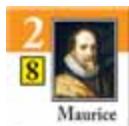
Battle Rating: The top number on army leaders is their battle rating. Higher battle ratings increase the chance of successfully intercepting or avoiding battle, and add extra dice during assault and field battle.
Command Rating: The bottom number (always appearing in a yellow box) is the leader’s command rating. This number indicates the number of land units the leader can control at one time.
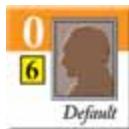
Default Leaders: Army Leaders may be removed from play by the Untimely Death event, assassination (19.3), or by the “Husband murdered” marriage result (21.1). If one of these results causes the last leader of a power to be removed from play, place the square
counter for this leader on its back (Default Leader) side and place it on the Turn Track. This unnamed leader will enter play in a future turn if that power has no newly arriving leader. For the purpose of this rule, captured leaders are “in play,” while leaders that do not enter until a future turn are “out of play.” Huguenot leaders are considered to be from a separate power than the Dutch leaders.
Formations
A formation is a group of land units in a single space that functions as a combined entity for the purposes of movement, field battle, intercept, and assault. One or more army leaders may also be included in the formation. The maximum number of land units in a formation is dependent on the Command Rating of any leaders present:
| Leaders Present | Maximum Formation Size |
| none | 4 |
| Command Rating of leader | |
| 2 or more | Sum of highest two command ratings |
Army leaders are never counted when determining the size of a formation. Formations may not include units from two different major powers. They may include units of a major power and a minor power which is actively allied to that major power.
FORMATION EXAMPLE: The Holy Roman leaders Schwendi (command rating 8) and Zrinyi (command rating 6) are stacked in Vienna with 6 regulars and 8 mercenaries. The Holy Roman spends 1 CP to move a formation to Pressburg. If the Holy Roman includes neither leader with the formation, just 4 land units may move. If the Holy Roman includes only 1 leader, the number of regulars and mercenaries must be equal to or less than the command rating of that leader. The Holy Roman player would have to move both leaders from the space in order to move all 14 land units from Vienna.
Naval Leader

Battle Rating: The top number on naval leaders is their battle rating. Higher battle ratings increase the chance of successfully intercepting or avoiding battle, and add extra dice during naval combat.
Piracy Rating: The Ottoman naval leaders Dragut and Uluch Ali possess a second numeric value. This number (after the “P”) is their piracy rating, indicating the number of extra dice the leader provides when present in a sea zone where the Ottoman is initiating piracy.
5.2 Sea Captains

Sea captains are historical explorers and pirates that sail across the World Map to attempt piracy, establish colonies, and attempt to circumnavigate the globe. They are added to the New World map
with the Build Expedition action (17.4). Sea captains from England (only) are also allowed to instead serve as naval leaders on the Europe map. Sea captains are always depicted with a two-sided flat counter. The front of the counter (the “Full Strength” side) is much the same as a naval leader with the sea captain’s battle rating as the large number in the top left and a piracy rating in the middle of the left side of the counter. The sea captains de Sores and le Clerc are available to either the French or Protestant player: whoever first builds an expedition with one of these counters has exclusive use of that captain until he returns to Europe (when he once again becomes available to the first player that recruits him).
Navigation Rating: Sea captains possess a third numeric value listed after their piracy rating. This number (after the “N”) is their navigation rating, a die roll modifier used to help them survive treacherous voyages on the World Map.
Damaged: The back of a sea captain counter is the “Damaged” side. Sea captains are flipped to this side if they take losses while undergoing a Navigation roll or while initiating piracy. The text on the damaged side briefly describes that captain’s special bonus. (See the Scenario Book for a complete explanation). This bonus is available to that captain at all times, whether or not he is damaged or at full strength.
5.3 Land Units
There are three types of land units, all represented with circular pieces. Land unit pieces come in different “denominations” (1, 2, 4, and 6) to facilitate stacking. Not all denominations are available for every power. Players may free up small denomination units at any time by replacing several pieces (all of the same type and all in the same space) with a stronger piece of equal total strength. If, after freeing up small denomination units wherever possible across the board, a power still has an insufficient number of small denomination units to properly “make change” to satisfy a Combat or Event card result, that power loses additional units from the space where the combat or event is occurring until a number is reached that can be represented with the available counters.

The four denominations of Spanish regulars
Regulars: Regulars have a multi-colored unit symbol and a solid stripe across the bottom of the counter in their power’s color. The numeric value on the counter shows the number of regulars represented by this game piece. All powers, both major and minor, have regulars.

Mercenaries: Mercenaries have a solid black unit symbol. The background is a pale version of their power’s color. The numeric value on the counter shows the number of mercenaries represented by this game piece. All major powers except the Ottoman receive mercenaries. Mercenary units can be found on the reverse side of regulars for these powers. Mercenaries are cheaper to construct than regulars, but may desert a player at a key moment.

Cavalry: Only the Ottoman player possesses cavalry units. The numeric value on the counter shows the number of cavalry units represented. Cavalry units can be found on the reverse side of Ottoman regulars. Cavalry aid in intercept and avoid battle
attempts, but are ineffective during siege operations.
5.4 Naval Units
Rectangular pieces are used to represent naval units. Each naval unit always represents a single group of naval vessels. There are no denominations of naval units. The numeric value on the counter shows the number of dice it rolls in naval combat and the number of enemy hits required to eliminate it. The color around the number shows which power owns the unit. As shown in the table below, seven powers receive naval units. Four of these powers support two different types of naval units; the type of a unit in play is depicted by which side of the counter is face up. Powers with two-sided units should carefully consider the unique properties of each of the four types of naval units when deciding which units to construct. Restrictions on naval unit construction are found in 17.3.
| Power | Num Units Front Side | Back Side | |
| Ottoman | 9 | Galley | Corsair |
| Spain | 7 | Galley | Galleon |
| England | 6 | Galleon | Race-built Galleon Galleon |
| France | 4 | Galley | |
| Holy Roman | 1 | Galley | |
| Dutch | 2 Galleon | ||
| Huguenot | 2 | Galleon | |
| Papacy | 1 | Galley | |
| Portugal | 2 | Galleon | |
| Venice | 4 | Galley |

Galley: Galleys are less effective when fighting in Atlantic sea zones. They are shown as a low-sided vessel with white sails.

vessel with black sails.
Corsair: Corsairs are the only naval unit that may initiate piracy in Europe without being at war with the target power. They are less effective when fighting in Atlantic sea zones. They are shown as a low-sided


Galleon: Galleons fight equally well across the map but are penalized trying to intercept or avoid battle in Mediterranean sea zones. They are shown as a high-sided vessel with white sails.
Race-built Galleon: Race-built galleons are equivalent to galleons except that they take less damage when fighting in Atlantic sea zones. They are shown as a lower profile galleon.

Patrol: Patrols can be constructed by Spain in an ocean zone. They help protect World Map settlements from piracy.
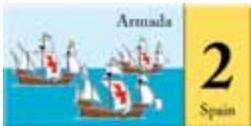
Spanish Armada: One special naval unit, the “Spanish Armada” is available only to Spain. See Section 23.2.
6. CARDS AND TREASURES
The game play in Virgin Queen is driven by a single deck of 112 cards supplemented by a pool of 30 treasure counters. This section explains each of the different types of cards, and how to manage adding and removing cards from the deck. It also describes management of the treasures, which are treated as a specialized form of card with limited uses.
6.1 Card Types
There are five types of cards in the game, as described below. With the exception of Mandatory Event cards, every card may be played as either an event, or as command points (CP). CP may be used to take actions (Section 11), or to declare war (Section 9.4). (When playing a Mandatory Event, the event takes effect first, then the active power receives 2 CP to spend on actions.) If a player uses a card as an event, he or she follows the instructions printed on the card. Some cards have alternate sets of instructions separated by the word “OR” in capital letters. These cards give the player an option of playing them different ways. When playing a card with multiple sets of instructions, only the conditions and effects in the portion of the card chosen by the player apply.
Home Cards
Each power has one or two Home cards available for play each turn. The exact number varies based on power and game turn as per the rules for adding new cards to play (6.2). With the exception of the Ottoman player while Suleiman is the Ottoman ruler, all powers must secretly discard down to just one Home Card during the Spring Deployment Phase at the start of each turn. Once used, Home Cards are placed on the appropriate power card (not in the discard pile) to show that they are not available until cards are dealt at the start of the next turn. Home Cards can never be taken from a power’s hand when a random draw is required (either by Event card play, diplomatic agreement, espionage or piracy) or when a specific card is chosen (Event card play or espionage). If a power is forced to reveal his hand he must also show any Home Cards that he is holding.
Mandatory Event Cards
Cards with the name of the card in red and the word “Mandatory” printed on them are Mandatory Event cards. Mandatory Events must be played during the Action Phase of the turn in which they are drawn. When played, the event is always resolved first, then the playing power receives 2 command points to spend on actions. Mandatory Events may never be held from one turn to the next. A player may not pass during his impulse in the Action Phase if a Mandatory Event card is still in his hand. Mandatory Events may either be removed from play after they occur or remain in the deck from turn to turn; check the text on each card carefully after play.
Response Cards
Cards with the name of the card in blue and the word “Response” printed on them are Response cards. Response cards are playable as an event in the Action Phase during any player’s impulse (including your own). Play of a Response card interrupts a player’s impulse, a battle, or an Event card play. Players should allow a reasonable amount of time for play of a Response card by another player after each action, event, naval combat, or assault. Response cards can also be played for CP during a player’s impulse if a player does not wish to use the card’s special ability to interrupt another player.
Combat Cards
Cards with the name of the card in black and the word “Combat” printed on them are Combat cards. Combat cards are playable as an event only during a field battle, assault, or naval combat in which the card owner’s units are participating. The Combat card is played just before that battle is resolved. Combat cards can also be played for CP during a player’s impulse if a player does not wish to use the card’s special ability to be played during combat.
Event Cards
All other cards in the deck are Event cards. The name of these cards appears in black, like Combat cards. These cards are played as events during the owning player’s impulse in the Action Phase. They may also be played for CP during a player’s impulse if a player does not wish to use the card’s event. Two events (Gouvernante de France, Union of Arras) have game effects that last until the end of the current game turn. A marker is provided in the counter mix for each of these events. When one of these two cards is played as an event, place the appropriate marker on the current turn of the Turn Track to remind players that this event is in effect. One Event card has a special use as an event that can only be played during the Negotiation Segment of the Diplomacy Phase (Louise of Lorraine). Refer to that card for specifics on its use.
Home Card
Mandatory Card
Combat Card

6.2 The Deck
The cards available to each power each turn consist of their Home card(s) and a variable number of cards dealt to that power from a single deck of shared cards. The deck is reshuffled each turn, after any new cards for that turn have been added, and before cards are dealt to each power.
Adding Cards
The upper-right hand corner of 39 cards contains a turn number or the phrase “When Catholic League Forms.” None of these cards are used on Turn 1. Instead, add them to play at the start of the Card Draw Phase of the turn specified on the card (or the turn after the Catholic League has formed). Home cards added on a specific turn are given directly to the appropriate power; all other cards entering play are added to the deck (before new hands are dealt).
Dealing Cards
Each power is dealt the number of cards indicated in the lower left section of their power card. The number of cards is determined by the number of square control markers on the board. The last uncovered square in the “Cards and VP Per Key” section shows the number of cards dealt to that power. Squares on a power card can also be covered by Unrest markers (Section 12.4), further reducing the power’s card deal. If all spaces are covered, that power still receives 1 base card.
After computing the cards from square control markers, add one extra card if this power receives a card bonus from their ruler. Then add and subtract cards from this power’s total as indicated by any +1 or –1 Card markers accumulated by this power. Once the card total has been updated, remove all +1/–1 Card markers except those from foreign wars still in progress or from the construction of the Suez Canal.
These newly dealt cards are combined with the power’s Home card(s) and any unused cards from the previous turn to form the power’s “hand” for the upcoming turn.
Discard Pile & Cards Out of Play
After a card is played, it is either removed from the game or placed in a single discard pile shared by all players:
Out of Play: Cards are removed from the game if they are played as an event and the text “Remove from deck if played as event” appears on the card or if the text “Remove from deck after [some condition]” appears and that condition has been satisfied.
Discard Pile: Cards are always placed in the discard pile if they lack the text “Remove from deck...” Event cards with this text are also placed in the discard pile if they are played for CP, rather than as an event, or if the condition listed after “Remove from deck…” is not met. One of the cards in the game (The Virgin Queen) can be exchanged for a card selected from those currently in the discard pile. There are a few restrictions on these retrievals from the discard pile:
• Mandatory Events may never be retrieved from the discard pile, and
• A power may never retrieve a card from the discard pile that this same power played as an Event, Response or Combat card earlier in the turn. (This second restriction also applies to retrieval of Grand Tour and Holy League from the discard pile by the Gouvernante de France and Papal Bull events).
All cards in the discard pile are reincorporated back into the deck during the Card Draw Phase at the start of each turn. These cards are combined with (a) the cards that were not dealt during the previous turn, and (b) the new cards entering play to form the deck for the upcoming turn.
6.3 Treasures

Treasure counters represent riches entering Europe from World Map possessions. At the start of the game place all treasures in a pool with the word “Treasure” face up so the value of each treasure is
hidden from view. Treasures are drawn from this pile as needed by rolls for colonies and by the rules below for placing Spanish and Portuguese treasures at the start of the turn. As treasures are spent during play, set them aside with their values revealed to form a discard pile of treasures expended that turn. These counters are mixed back into the treasure pool as part of the final step of the Card Draw Phase.
Spanish and Portuguese Treasures
After returning discards to the pool of treasures, Spain draws random treasures from this pool to fill in the Spanish and Portuguese treasure rows (located over North Africa near the bottom of the map). Always fill 4 of the boxes with treasures for Spain; fill the 5th box if Spain controls the Philippines settlement. These Spanish treasures may be viewed by the Spanish player at any time. They will return to the Spanish hand during the Winter Phase if the Spanish can fend off World Map piracy attempts (16.5). Then deal treasures as needed to fill the 3 boxes on the row for Portugal. Portuguese treasures cannot be viewed by any player until they are captured by piracy or returned to the power controlling Lisbon (20.7).
Receiving Treasures
Treasures enter the Spain player’s hand when returned to Europe by the Treasure Fleet Mandatory Event or during the Winter Phase. Treasures enter the hands of the other five powers by successful colony rolls and when expeditions return home with captured loot. Once in a hand, treasures may only be viewed by the controlling player. They are expended during an impulse in much the same manner that cards are played as command points. See Section 11 for a complete description of how to “play” treasures. They may also be used to pay for declarations of war (9.4).
Mixed Hand of Cards and Treasures
Events, ransom, Europe Map piracy hits, and espionage results force a player to have a “card” drawn out of his hand at random. If a player has a hand that consists of both cards and treasures, the random draw could be either a card or treasure, even though the text always refers to drawing a “card.” Whether the random choice is a card or treasure depends on the number of each of these two types of items in the target power’s hand:
• If the target has more cards than treasures, draw randomly from the cards (ignoring the treasures)
• If the target has more treasures than cards, or an equal number, draw randomly from the treasures (ignoring the cards).
7. SEQUENCE OF PLAY
The game is played in seven or less turns. Each turn covers a period of five or six years. Each turn consists of eight phases. The fourth phase, the Action Phase, is the most time-consuming phase, for it includes a variable number of rounds where each major power plays one card. Each such card play is called an “impulse.” Players use the final phase, the Victory Determination Phase, to decide if a winner can be declared (or if another turn is required).
A summary of the sequence of play can be found below:
Phase Section
1 Card Draw Phase
Add new personages. . 8.1
Add fortresses and Jesuits . 8.2
Add new cards to deck .... . 6.2
Shuffle deck and deal cards . 6.2
Return discarded treasures to pool; deal new
treasures; check for New World riches . . 6.3
2 Diplomacy Phase
Negotiation Segment .. 9.1
Hold negotiations and announce deals
Ransom Segment .. 9.3
Pay ransom (1 card draw) to regain captured army leader
War Segment. . 9.4
Pay to declare new wars
3 Spring Deployment Phase .... ...... 10
Each power places arriving leaders, chooses a Home card,
and moves one formation of land units from one capital to a
friendly space
Additional spring moves for specific powers:
- Spain places treasure fleet escorts
- England allocates sea captains to Europe
- Holy Roman religious preference (Turn 1)
4 Action Phase............ .... 11
Powers take impulses in this order until all powers pass
consecutively: Ottoman, Spain, England, France,
Holy Roman, Protestant.
A Military or Religious victory may end the game.
5 Winter Phase
Spread Morisco unrest. . 20.1
Discard unused treasures. . 20.2
Remove loaned naval unit markers . 20.3
Leaders and units return to fortified spaces,
possibly suffering attrition
End Major Power alliance . . 20.5
Add 1 regular to each controlled capital
(Holy Roman has additional options) . 20.6
Remove piracy markers; return Spanish/Portuguese
treasures. .20.7
Espionage reset.. . 20.8
Diplomacy reset . 20.9
Check for Catholic League formation . 20.10
6 Marriage Resolution Phase
Resolve marriages . . 21.1
Award Virgin Queen VP . 21.2
Age royals . 21.3
7 Patronage Phase
Evaluate artists . . 22.1
Evaluate scientists . 22.2
8 Victory Determination Phase... ...... 25.3
Grant VP awards for control of Paris and Central Europe
Check for winner. If none, advance turn marker and start a new turn.
8. CARD DRAW PHASE
The first phase is the Card Draw Phase. On each turn, players use this phase to add new personages (leaders, sea captains, royals, artists, and scientists); add fortresses and Jesuits (Spain only); add new cards to the deck; deal cards and award treasures from colonies.
8.1 Add New Personages
If this is Turn 2 or later, new historical personages enter play. These new units are army or naval leaders, sea captains, royals, artists, and scientists. Refer to the Turn Track to find the total number of personages of each type that should be entering play that turn.
Leaders

Refer to the Scenario Book to find which leaders enter play during that turn’s Card Draw Phase. Uluch Ali enters at this time as a replacement for Dragut if he was killed by the Dragut Falls! event on the previous turn. Default leaders replacing army leaders
eliminated during the previous turn also enter play at this time, though only if that power does not have a newly arriving army leader. Naval leaders eliminated from play are also brought back at this time. Place the counter for an arriving leader on the appropriate power card; it will be added to the map during the Spring Deployment Phase this turn (Exception: Protestant army leaders have the option to remain on the power card until a rebellion occurs). A power can never have a default leader in play at the same time as a standard army leader. If a default leader for a power is either in play or on the Turn Track when a standard army leader arrives, remove that default leader from the game.
EXCEPTION: The Duke of Guise enters during the Winter Phase if the Catholic League is formed (20.10). He is the only leader that does not arrive in the Card Draw Phase.
Other Personages
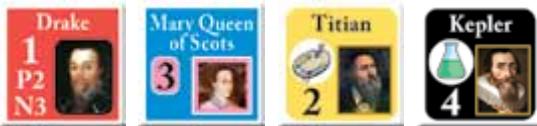
Other historical personages arriving during the Card Draw Phase are placed on the proper area for their type of unit:
Sea Captains Force pool of available builds for their power Royals Royal Weddings Chart Artists Patronage Chart (Artists Currently Available) Scientists Patronage Chart (Scientists Currently Available)
The turn of entry for royals, artists, and scientists is shown on the backside of their counter. The turn of entry for sea captains is listed in the Scenario Book.
Naval Units

Naval units eliminated in a previous turn are also returned to each power’s pool of units available to be constructed.
8.2 Add Fortresses and Jesuits

During the Card Draw Phase, Spain places Fortress and Jesuit markers on his power card to limit the number of such items he may add to play in the upcoming turn. Add markers to the power card until Spain reaches the following totals:
Fortresses: 1 (unless Spain has the Coastal Fortification science bonus, then 2).
Jesuits: 1 (unless the English College, Douai event has been played, then 2).
Note that Spain will place fewer markers on his power card if unused markers remain from the previous turn.
8.3 Add New Cards to Deck/Deal Cards
If this is Turn 2 or later, new cards may be added to the deck. The deck is then shuffled and cards are dealt to each power as described in Section 6.2.
8.4 Refresh Treasures/Check for New World Riches
Refresh the pool of treasures and draw treasures for Spain and Portugal as described in Section 6.3 Next, powers with colonies on the World Map may receive treasures. The power owning a colony rolls two dice for each and consults the appropriate column of the Colony Table. Add 1 to the roll if this power possesses the Plantation science bonus. The results on that table are explained below:
Eliminated: Colony eliminated (though it may reenter the game with another Build Expedition action). If one or more sea captains are wintered here, immediately move their expedition(s) to the adjacent ocean zone.
NE: No effect. Keep this colony for another turn.
Treasure: Draw a treasure from the pool immediately and keep this colony for another turn.
Treasure plus Virginia Dare VP: Draw a treasure from the pool immediately, keep this colony for another turn, and award 1 Virginia Dare bonus VP to this power.
9. DIPLOMACY
The second phase of each turn is the Diplomacy Phase.
9.1 Negotiations
The first segment of the Diplomacy Phase allows players to conduct secret negotiations away from the game board with one or more opponents. Several such discussions can occur during the Negotiation Segment of a single turn. This portion of the turn is the only time players may make deals in private; all other discussions must take place in the presence of all players. Players are free to discuss general strategic considerations during negotiations. Cards or treasures in your hand may be revealed to other players if desired. They may also make a limited set of agreements that alter the position of units, leaders, cards or markers in play. Such a change is considered to be a “change in the current game state.” The only agreements allowed that change the game state are:
• Two powers may agree to end a war they are fighting. End the war by removing the “At War” marker from the appropriate box on the Diplomatic Status Display. Exception: Once they have gone to war, Spain and England may never agree to peace.
• Two powers may form an alliance for exactly one turn (Section 9.2), but not if they are currently at war and are not agreeing to end that war (see above).
• A power entering an alliance may loan naval units and naval leaders to the other power in that same alliance for one turn (Section 9.2).
• A captured army leader may be returned. Place that army leader in his capital if possible. If not, place him in a friendly home key.
• A power may yield political control of spaces it controls to another major power. Any units occupying these spaces are displaced (12.5). However this granting of a space can only occur if one of the following conditions is true:
(a) the space is being given back to its Home power,
(b) the space is in France and is being exchanged between France and the Protestant (either direction), or (c) the space is in the Netherlands and is being exchanged between Spain and the Protestant (either direction).
• A power may agree to give another power up to two random card draws from their hand. Such a card must always be chosen at random; players cannot exchange specific cards. Two players may not give each other card draws in the same turn; such an exchange can only occur in one direction on a given turn. (Remember that Home cards are ignored when drawing randomly from a player’s hand.)
• A power may agree to give another power up to two randomly drawn treasures from their hand (using the same rules as for drawing cards in the previous bullet).
• All powers except the Ottoman may agree to give another power up to four mercenaries. All powers except the Ottoman and Holy Roman may receive mercenaries in such a deal. Two players may not give each other mercenaries in the same turn; such an exchange can only occur in one direction on a given turn. The power granting mercenaries removes the specified number of mercenaries from any single space or combination of spaces. If the Holy Roman player is granting mercenaries, he may also remove mercenaries from the Mercenaries for Hire Track on his power card. The power receiving the mercenaries then takes the equivalent number of mercenaries from his force pool and adds them to his capital (or distributes them as desired between his capitals). Each capital receiving mercenaries must be currently on the map, free of unrest, and controlled by the receiving power. Mercenaries for Hire not granted during negotiations are lost; the Holy Roman player should drop the marker to the “0” space on the track on his Power Card at the end of the Negotiation Segment.
• Two powers may agree to marry a male Royal and a female Royal (Section 21). Stack the royal cards for these two royals near the Royal Wedding table. They are considered “betrothed” until their marriage is evaluated during the Marriage Resolution Phase near the end of the turn. (Exception: If Mary Queen of Scots is the female Royal, resolve the wedding immediately). A power may also announce that a male and female royal both under control of his power are going to marry, though this is less advantageous than a marriage to a royal from another power.
Restrictions:
o Royals from two different powers may not agree to marry if those two powers are currently at war and are not agreeing to end that war (the powers may go to war later in the turn; if so, the marriage is not cancelled).
o Two Royals from the same family (indicated by the “V” for Valois on some French Royals or the “H” for Hapsburg on all Spanish Royals) may never agree to marry.
o Mary Queen of Scots may not be part of a marriage agreement if captured in England.
o No army leader may be part of an agreement if currently captured (though they may be captured during the turn without affecting the marriage).
Players should agree to a time limit for the Negotiation Segment before discussions begin. Suggested limits are:
• 10 minutes in face-to-face play
• 48 hours in email play
When this time limit is reached (or discussions have ended), each power (in Impulse Order) declares any agreements it has made that will result in a change in the game state. Announcements can be made as individual items, or as a group of agreements that need to be ratified together. All powers involved in an agreement that follow later in Impulse Order must confirm all the contents of this declaration when it is their turn in the Impulse Order. If they do not confirm the full deal, none of the items in the agreement take effect. If the agreement is confirmed by all parties, the players immediately change the game state by updating diplomatic status, marking and moving loaned naval units, returning army leaders, changing political control of spaces, drawing random cards or treasures, exchanging mercenaries, or stacking the cards for a royal couple near the Royal Wedding table.
Restrictions:
o Each agreement included in an announcement must be possible at the time it is declared. You may make more announcements than can possibly be accepted (as long as each individual one is valid.) [EXAMPLE: England has 2 mercenaries on the map. It is valid for England to announce both a deal where France receives those mercenaries and another deal where the Protestant receives them; in this case the first power to confirm the deal will make it impossible for a later power to confirm the other deal that involves those same mercenaries.]
o Conditional announcements (i.e., ones where you place a caveat on whether or not an agreement goes through based on the diplomatic actions of powers coming after you in Impulse Order) are not permitted in any form. [EXAMPLE: England may not announce a deal where they grant 2 mercenaries to France if France agrees to go to peace with the Ottoman.]
Non-Binding Agreements
The only portion of an agreement that is binding between powers is the portion that changes the current game state. Since items such as a diplomatic action on a future turn, a promised card play, or a coordinated movement of troops can’t be executed at this time, they do not change the current game state and are examples of a non-binding portion of an agreement. Non-binding agreements can be made at any time between players but they are never announced and
内容过长,此处只内联前一部分;完整内容请下载或到规则页阅读。
下载 Markdown原文为社区整理/出版社公开资料,版权归原作者,仅供个人学习查阅。