
Trinket TroveTrinket Trove
一句话概览
Trinket Trove 是一款已收录于村了吗规则库的桌游,支持 2–6 人,原名 Trinket Trove。
本页内容:一句话概览 · 游戏概述 · 1. 游戏组件 · 2. 游戏设置 · 3. 游戏流程 · 4. 轮次设置 · 5. 竞拍与回合顺位 · 6. 选取 · 7. 游戏结束与计分 · 8. 双人规则 · 9. 饰品牌与价值 · 关键规则与常见问题 · 常见问题
Trinket Trove 规则速览
以下规则速览由本站整理,与官方规则书表述不同,仅供快速上手参考。
游戏概述
你是一位生活在人类世界边缘的收集者——一个在月光下穿梭于地板缝隙与墙壁之间的可爱小生物,搜寻镜面挂坠盒、闪亮纽扣和发光宝石等隐秘珍宝。在 Trinket Trove 中,你通过竞标和选取来收集饰品卡牌套组,用它们装饰自己的洞穴。每轮从牌堆中央翻开的新的饰品供你和其他收集者争夺:每位玩家先亮出手中的饰品参与竞价,竞价决定取牌顺序,随后按序各选两堆饰品加入手牌。镜卡牌是百搭牌,可加入任意饰品套组;当某种饰品的完整套组已被凑齐后,可开始第二套组。6 轮(5 或 6 人局为 5 轮)结束后,饰品分数最高者获胜!
核心机制: 竞价排序、牌库管理、手牌构建、套组收集
1. 游戏组件
| 组件 | 数量 / 说明 |
|---|---|
| 规则书 | 1 本 |
| First / Last 指示物 | 2 个 |
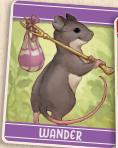
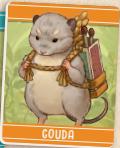
| 角色板块 | 8 块(Wander、Brisby、Templeton、Gouda、Patches、Penfold、Bernard、Nimbus) |
| 饰品卡 | 112 张(含标准饰品多套 + 4 张镜卡牌) |
每种饰品的完整套组所需张数由该饰品的「饰品价值」决定,不同饰品所需张数各不相同。牌库中共有两种完整套组(每种饰品各两套)。
2. 游戏设置
2.1 牌堆设置
- 将 112 张饰品卡洗匀。
- 移除镜卡牌: 发牌前若发现任何玩家起手包含镜卡牌,则必须将该镜卡牌放回牌堆并与牌堆顶部的一张牌交换,然后将整副牌重新洗匀。此步骤仅在手气极差时使用,多数对局无需执行。
- 从牌堆中抽出 6 张牌放置一旁,面朝下放好,构成 「计时牌库」。(5 人或 6 人游戏改为 10 张)
- 牌堆剩余部分即为 「主牌库」。将主牌库与计时牌库分置于游戏区域的左右两侧。
2.2 标记与区域设置
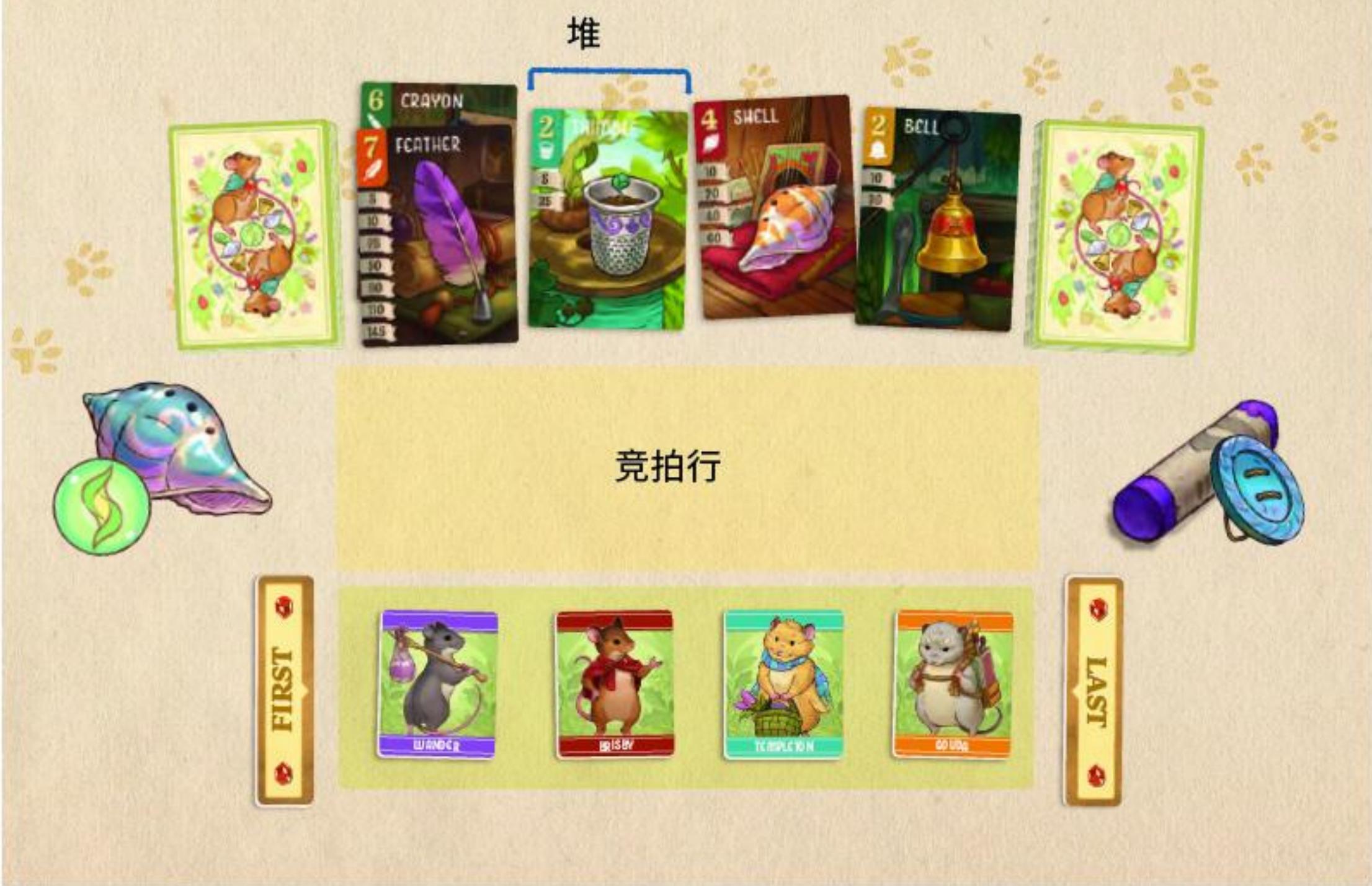
- 将 First 指示物放在桌面中央偏左位置,Last 指示物放在偏右位置。两指示物之间的空间称为 「回合顺位行」。
- 两指示物上方的空间构成 「竞拍行」,用于放置玩家的竞拍组合。
- 根据实际参与人数,每人选择一块角色板块。将未使用的角色板块收回盒中。
- 初始回合顺位: 将所有角色的角色板块以「0」面朝下、并排随机放置在回合顺位行上。这将决定第一轮竞拍的先后顺序。
3. 游戏流程
Trinket Trove 共进行 6 轮(5 人或 6 人局为 5 轮)。计时牌库耗尽时游戏结束。每轮依次经过三个阶段:
- 轮次设置 ——翻开本轮待选的饰品堆
- 竞拍与回合顺位 ——以饰品卡牌为筹码决定选取顺序
- 选取 ——依序各取两堆饰品
4. 轮次设置
每一轮开始时:
- 翻开饰品堆: 从主牌库顶端逐张翻牌,每次一张正面朝上置入桌面中央,直至每位玩家对应一张。这些已翻开的牌各自成为独立的 「堆」。
- 举例:4 人局会形成 4 堆,5-6 人局会形成 6 堆,3 人局形成 3 堆。 - 放入计时卡: 从计时牌库抽 1 张牌,正面朝上加到第一堆上。
- 5 人或 6 人局额外操作: 再从计时牌库抽 1 张牌,正面朝上加到第二堆上。 - 所有含多张牌的堆须垂直扇形展开,使每叠的名称均可见。
5. 竞拍与回合顺位
竞拍决定选取阶段的行动顺序(从先到后),由已在回合顺位行上确定出牌顺序的玩家依次执行。
5.1 构建竞拍组合
每位玩家按回合顺位行的顺序(从 First 到 Last),依次创建自己的竞拍组合:
- 从手中选出任意数量的卡牌 放入竞拍行。你可以选择不出牌(即竞拍 0 张)。此时需翻开牌库顶牌,将其正面朝上作为你的竞拍卡。
- 放置角色板块:
- 使用手中卡牌竞拍时 → 将角色板块「0」面朝下放在竞拍牌堆上。
- 竞拍 0 张时 → 使用抽到的那张牌,角色板块「0」面朝上放在其上。 - 含多张牌的竞拍须扇形展开,名称可见。
5.2 排列竞拍行
每个竞拍组合加入竞拍行时,按照从左到右的规则排序:
| 排序优先级 | 规则 |
|---|---|
| ① 卡牌数量 | 竞拍卡牌数量更多的一方靠左(视为等级更高) |
| ② 总饰品价值 | 卡牌数相同时,按所有卡牌数值之和从高到低排列 |
| ③ 出价先后 | 卡牌数和总价值均相同,后出价的一方靠左(即优先) |
每张卡牌左上角标有「饰品价值」数值,用于计算竞拍强弱。
> 提示: 竞拍行的最左侧是最先行动的顺位,最右侧是最后行动。越往左越有利。
5.3 示例
四人对局时的竞拍过程如下:
- Wander(紫色)第一个出价,在竞拍行放一张钥匙牌(价值 4)。
- Brisby(红色)紧随其后,放了两个手牌,因为出的牌数更多,所以排在 Wander 左侧。
- Templeton(蓝色)选择竞拍 0 张,从牌堆翻开一张牌,用角色板块的「0」面朝上的方式放在最右侧——因为「0 张」少于 Wander 的 1 张。
- Gouda(橙色)也竞拍 1 张,但牌面价值只有 3,低于 Wander 的 4,于是插在 Wander 和 Templeton 之间。
全部玩家竞拍完毕后,将各自的角色板块滑至回合顺位行,正下方紧贴对应竞拍组合的位置,以此标记选取阶段的行动顺序。
示例最终顺位:Brisby → Wander → Gouda → Templeton(从左到右)。
6. 选取
选取阶段按回合顺位行上的顺序(从 First 到 Last)依次进行。
6.1 基本规则
在你的回合:
- 认领两堆卡牌,将它们加入你的手牌。
- 可选的堆来源:轮次设置中的堆,或 其他玩家的竞拍组合。
- 每张竞拍都是一个独立的堆。
- 最后一位玩家(Last)可以认领所有剩余的牌。 这是游戏中唯一一位玩家能拿到自己之前拍出的牌的时机。
6.2 示例
承接上述顺位:
- 第一步:Brisby 先行动。他不能拿自己的竞拍,于是选了轮次设置中的蜡笔和羽毛作为第一堆,再拿了 Templeton 的竞拍作为第二堆。
- 第二步:Wander 选了 Brisby 的竞拍(贝壳 + 顶针)作为第一堆,再选了轮次设置中的一张顶针作为第二堆。
- 第三步:Gouda 选了贝壳和钥匙。
- 第四步:Templeton(最后一位)将剩余的齿轮和铃铛全部拿走——他也拿到了别人的竞拍之外的剩余部分。
6.3 轮次结束
- 所有玩家都完成了两次选取后,该轮结束。
- 保留你的所有手牌,不丢弃,也不返回牌库。
- 角色板块留在回合顺位行原位不动(下一轮竞拍仍沿用当前顺位)。
- 检查计时牌库:如果还有牌,进入下一轮;如果已空,游戏立即结束。
7. 游戏结束与计分
7.1 游戏结束条件
游戏在以下时机结束:
- 第 6 轮全部三轮执行完毕(5-6 人局为第 5 轮)。
- 此时计时牌库恰好被用完。
7.2 计分方式
- 分组: 将手中的牌按同名归类成组。同名的牌具有相同的饰品种类和花色图标。
- 镜卡牌处理: 镜卡牌视为百搭牌,可以加入任意一个已有的套组补足缺口。
- 完整套组与第二套组: 如果你已有某一饰品的完整套组,可以继续为该饰品组成第二个套组,两个套组分别计分。
- 总分: 把所有套组的得分累加起来就是你的最终饰品分数。
7.3 计分详情
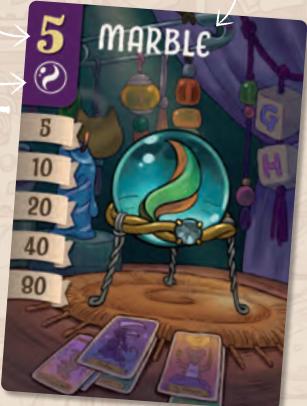
每张饰品牌底部展示一条计分阶梯——根据不同数量的卡牌组成的套组给出不同分值。阶梯上方数字代表套组中仅有 1 张时的得分,下方数字代表凑齐该饰品完整套组的总分。介于两者之间的分值表示相应数量的累计得分。
例如:2 张弹珠组成的套组可得 10 分。
原文通过计分示例直接给出的具体分值:
| 示例场景 | 得分 |
|---|---|
| 4 张羽毛(完整套组) | 50 分 |
| 完整套组的顶针 | 35 分 |
| 顶针第二套组第 1 张 | 5 分 |
| 4 张蜡笔(含 1 张镜卡补足的完整套组) | 90 分 |
| 3 张蜡笔(不足完整套组) | 0 分 |
除上述示例中直接提及的数值外,其余每种饰品的完整计分阶梯均由各卡牌自身图示给出,请参照卡面信息。
7.4 计分示例
一局结束时,Brisby 的手牌为:
- 4 张羽毛 → 完整套组(4 张):50 分
- 3 张顶针 → 完整套组(3 张):35 分
- 第 3 张顶针开启的第二套组(尚不满):5 分
- 3 张蜡笔 + 1 张镜卡 → 镜卡充当蜡笔,凑出 4 张蜡笔完整套组:90 分
- (若不借用镜卡,3 张蜡笔不足完整套组得 0 分)
Brisby 总分 = 50 + 35 + 5 + 90 = 180 分
7.5 平局处理
若多名玩家最终分数相同,则比较他们在回合顺位行上距离 First 指示物 的远近——离 First 更近的玩家获胜。
8. 双人规则
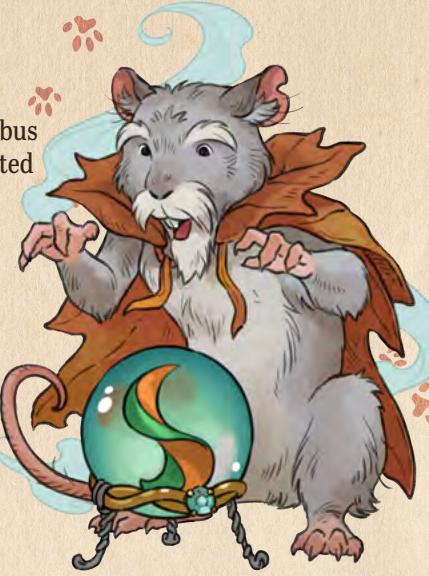
2 人游戏时引入 Nimbus 作为自动化虚拟玩家,模拟第三位玩家的效果。Nimbus 有两个特殊属性:
- Nimbus 不获得任何分数。
- Nimbus 不使用手牌竞拍,而是从牌库中取牌。
8.1 设置
按 3 人局的方式设置游戏,但角色板块中必须包含 Nimbus。计时牌库同样使用 6 张牌(与 3-4 人一致)。
8.2 Nimbus 的竞拍
当轮到 Nimbus 竞拍时:
- 他从牌库中直接翻开 2 张牌 作为他的竞拍组合。
- 这两张牌的数值用于竞拍行排序(与普通玩家同等对待)。
8.3 Nimbus 的选取
当轮到 Nimbus 认领堆时:
- 挑选竞拍强度最高的两堆拿走。竞拍强度以卡牌数量和总饰品价值综合评判(与竞拍行排序规则相同)。
- 平局解决: 如果遇到多个强度相同的候选堆,由当前回合顺位中最接近 First 标记的玩家决定 Nimbus 挑走哪一堆。
- 重要限制: Nimbus 不能认领自己的竞拍——除非他在顺位上恰好是最后一位。
8.4 Nimbus 示例
2 人对局进入选取阶段:
- Patches 先行动: 从轮次设置中选走了铃铛和镜子,再选中了 Nimbus 的竞拍(瓶盖 + 宝石)。
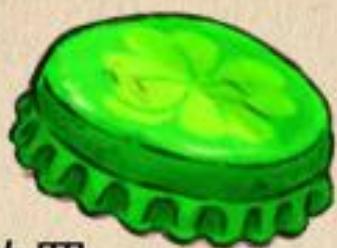
- Nimbus 行动: 剩余堆中选出最强的两堆。Patches 之前的竞拍是唯一含 2 张牌的堆,因此 Nimbus 拿走它。剩下 3 堆各含 1 张牌——纽扣、瓶盖和弹珠。其中瓶盖和弹珠同为 5 点价值,存在平局。由于 Patches 在此轮次顺位中排第一,由他决定 Nimbus 拿走弹珠,纽扣留给 Penfold。
9. 饰品牌与价值
9.1 卡牌信息
每张饰品牌显示以下四项信息:
| 位置 | 信息 | 用途 |
|---|---|---|
| 左上角 | 饰品价值 | 竞拍时计算组合强弱 |
| 右上角 | 花色图标 | 标识同一饰品类型 |
| 中央 | 饰品名称 | 用于分组计分 |
| 底部 | 计分阶梯 | 展示不同数量下的累计得分 |
9.2 套组规则
- 每种饰品的完整套组大小由其饰品价值决定。 凑齐一种饰品的完整套组后,可以继续为该饰品建立第二套组并独立计分。
- 牌库中共有两种完整套组(每种饰品各两套)。
- 镜卡牌总计 4 张,始终作为百搭使用,不参与正常的花色分组。
- 同名饰品拥有相同的花色图标,可用于辅助识别。
9.3 竞拍价值与计分的区别
注意:卡牌上的「饰品价值」(左上角)与「计分阶梯」(底部)是两个不同的概念。饰品价值仅用于竞拍时判断强弱,而计分阶梯决定了游戏中每种套组的真实得分。不要混淆两者。
关键规则与常见问题
易错规则
-
镜卡牌交换规则仅限设置阶段。 一旦游戏开始发完手牌,不再执行镜像交换。游戏中随时可能抓到镜卡牌,它们直接进入你的手牌。
-
竞拍 0 张的特殊标记。 选择竞拍 0 张时,角色板块必须以「0」面朝上放置,这既是一种视觉提醒(表明该玩家将抽取一张新牌而非消耗手牌),也是区分信号——其他玩家需要知道这位玩家并未付出真实资源。
-
首次出价者优先。 竞拍行的排列方向是从左到右递减,最左边的人最先在选取阶段行动。这意味着在竞拍行越往左越有利。
-
同一堆内所有牌一起拿走。 选取阶段一次动作是带走一整堆——你不能从中只拿一张而留下另一张。
-
Last 玩家的特权。 最后一位选取的玩家才能拿到自己的竞拍组合,因为只有当他拿走所有剩余堆之后才可能轮到自己。
-
计时牌库只进不出。 计时牌是被动分配的道具,不由玩家操控。每轮分配完后牌库永久减少,用完后游戏自动结束。
-
角色板块在整局游戏中位置不变。 从初始设置到游戏结束,角色板块在回合顺位行上的相对位置不会改变。它只是用来标记每轮竞拍的结果和选取顺位。
-
竞拍价与计分值无关。 卡牌左上角的饰品价值只用于竞拍排序,不代表该牌的得分。最终得分完全依据每卡底部的计分阶梯计算。
FAQ
Q:每轮翻多少堆?
A:等于玩家人数的数量。4 人局 4 堆,5-6 人局 6 堆,3 人局 3 堆,2 人局(含 Nimbus)3 堆。
Q:计时牌库的卡牌有什么效果吗?
A:计时牌本身没有特殊效果,它们只是作为随机变量增加每轮的卡牌堆组合变化。它们的主要作用是控制游戏轮数——用完后自动结束游戏。
Q:如果我某轮一轮都没有拍到牌怎么办?
A:不会发生这种情况。每名玩家每一轮至少能拿走两堆卡牌。即使是竞拍 0 张的玩家,在选取阶段也会作为 Last 玩家拿掉所有剩余堆。
Q:镜卡牌什么时候可以用作百搭?
A:只在最终计分时使用。游戏中的任何时候你都不能将镜卡当作其他饰品使用或在竞拍时充当替身。
常见问题(FAQ)
以下 1 条问答中 0 条来自站内玩家的真实提问,其余 1 条为本站整理的常见疑问;答复内容保持原样。
Trinket Trove支持几个人玩?
2–6 人。
去哪查完整规则
想核对具体规则细节、卡牌效果或某个回合的结算方式,可以在村了吗里选中这款游戏后直接提问。
同类桌游
- 卡坦岛德式
- 工业革命:伯明翰德式
- 勃艮第城堡:特别典藏版德式
- 方舟动物园德式
- 卡卡颂抽象
- 瘟疫危机传承:第一季美式
- 阿瑞迪亚:勇踏征途美式
- 重塑宇宙德式
- 幽港迷城美式
- 埃多拉的德鲁伊德式
规则原文(Markdown)
本站收录这款游戏的规则原文 2 个文件,此处内联渲染 2 个,可直接展开阅读或下载。
rules_zh_Trinket_Trove_46532.md12.8 KB
TRINKET TROVE
中文规则书
中文翻译 & 排版:陈斌华
TRINKET TROVE
设计:Rocco Privetera
协力:Paul Salomon
美术:Sandara Tang
2-6人●30分钟
年龄10岁+●竞争
地板之下,墙壁之间,
一个隐秘的世界生机勃勃。
月光中,收集者们匆匆钻进静谧的角落,
搜寻小小的珍宝:
镜面挂坠盒、闪亮的纽扣、发光的宝石,还有更多。
黎明破晓之际,
动物们便躲回舒适的小窝,
分享故事,交换夜晚的小玩意儿。
概述
你是一位收集者——
一个生活在人类世界边缘的可爱小生物。
在 Trinket Trove 中,你交易并收集饰品卡牌套组来装饰你的洞穴。
你需要收集相同饰品的套组,以获得尽可能多的饰品分数。
每轮都会出现新的饰品供大家争夺。你和其他玩家拿出自己的饰品来决定谁先挑选这些新饰品。
在 6 轮结束后(5 人或 6 人游戏时为 5 轮),拥有最多饰品分数的收集者获胜!
配件
1规则书
2 First/last 指示物
8 角色板块
112 小饰品卡
(卡牌信息见背面)


设置
将牌组洗牌,然后发给每位玩家4张牌作为起始手牌。如果任何玩家有一张镜子牌,则必须用它与牌组中的另一张牌交换,并重新洗牌组。


用牌组中的 6 张牌创建一个面朝下的 “计时牌库” (5 人或 6 人游戏时为 10 张牌)。将主品牌库和计时牌库分别放在游戏区域的两侧。

将 “first” 和 “last” 标记放置在桌面中央的游戏区域左右两侧。这两个标记之间的空间称为 “回合顺位行”。该空间上方构成另一个区域,称为 “竞拍行”。

为每个玩家选择一个角色板块。将所有未使用的板块顺序返回到盒子中。

通过将角色板块面朝下(0 面朝下)并排放置在回合顺位行中,随机设定游戏的初始回合顺位。
计时牌组

主牌库


竞拍行


回合顺位行
游戏流程
Trinket Trove 进行 6 轮游戏(5 人或 6 人游戏时为 5 轮)。每轮包含三个阶段:
轮次设置
竞拍
选取
通过收集相同饰品的套组来最大化你的饰品分数。镜子牌是“百搭牌”,每张镜子牌可在游戏结束时加入任何饰品套组。拥有最多饰品分数的收集者获胜!
轮次设置
·从牌组中,为每位玩家亮出1张牌,正面朝上放到桌面中央。
每张牌或每堆牌都被视为独立的“堆”,可以在选取阶段被玩家获取。
·从计时牌组中拿取1张牌,正面朝上加入第一堆。
在 5 人或 6 人游戏中,从计时牌组中拿取 1 张牌,正面朝上加入前两堆中的每一堆。
拥有多张牌的堆必须垂直扇形展开,使其名称可见。
竞拍与回合顺位
玩家现在通过提供饰品来决定回合顺位。玩家按照回合顺位行所示的顺序,从 first 到 last 依次创建自己的竞拍组合。
·从你的手中选择任意数量的牌放入竞拍区。
你可以选择从手中不出牌(即竞拍 0 张牌)。在这种情况下,翻开抽牌堆的顶牌,将其正面朝上作为你的竞拍牌。
- 将你的角色板块放在你的竞拍牌上。
如果你选择从手中竞拍 0 张牌,则将你的角色板块 0 面朝上,放置在从牌组抽出的那张牌上。如果你使用手中的牌进行竞拍,则将你的角色板块 0 面朝下放置。包含多张牌的竞拍组合应垂直扇形展开,使其名称可见。
·确定回合顺位
当竞拍组合加入竞拍区时,应根据以下规则从左到右排列:首先按牌的数量,然后按总饰品价值。牌数更多的竞拍组合视为更高,应放在更左侧。牌数相同的竞拍组合,应根据总饰品价值从左到右排列。对于牌数相同且总饰品价值也相同的竞拍组合,将后出的竞拍组合放在左侧。
回合顺位由玩家竞拍的牌的数量决定,平局时由竞拍牌的总饰品价值决定。若仍然平局,则后出价的玩家优先。
竞拍举例:

Wander(紫色)首先出价,在竞拍区放置了1张钥匙牌(价值4点)。
接下来 Brisby(红色)从手牌中拿出两张牌,由于 Brisby 竞拍的牌更多,所以放置在 Wander 竞拍的左侧。
接下来 Templeton (蓝色) 决定 “竞拍 0 张牌”,因此从牌组中翻开一张牌,使用角色板块的 0 面,并放置在竞拍区的最右侧,因为 “0 张牌” 少于 Wander 的 1 张牌竞拍。
最后,Gouda (橙色) 像 Wander 一样竞拍 1 张牌,但由于 Gouda 的牌显示 3 点,低于 Wander 的 4 点,所以 Gouda 将竞拍放置在 Wander 和 Templeton 之间。
在所有玩家都完成竞拍后,将每个角色板块下滑至回合顺位行,直接置于对应竞拍组合的正下方。这表示选取阶段的回合顺位,并提醒每位玩家所竞拍的牌。

上方的彩色姓名标签将在下一页的选取示例中使用。

选取
玩家按回合顺位行所示的顺序,从 first 到 last 依次进行回合。
· 在你的回合,认领两堆饰品牌并加入你的手牌。
你可以拿取轮次设置中的任意堆,或其他玩家竞拍的牌。每次竞拍都是一个独立的堆。last 玩家认领所有剩余的牌。这是玩家可能认领自己竞拍牌的唯一方式。
选取示例
在左侧示例中,Brisby 首先进行回合。他不能认领自己的竞拍牌,而是拿取轮次设置中的蜡笔和羽毛作为第一堆,并拿取 Templeton 的竞拍牌作为第二堆。接下来是 Wander 的回合。他认领 Brisby 的竞拍牌(贝壳和顶针)作为第一堆,并拿取回合设置中的顶针作为第二堆。
在 Gouda 的回合,他拿取了贝壳和钥匙。这仅留下齿轮和铃铛给 Templeton 拿取。

轮次结束
当所有玩家都认领了两堆牌后,该轮次结束。保留你手中的饰品牌,并让角色板块保持在回合顺位行的原位。
如果计时牌组中仍有牌剩余,则开始新的一轮。

游戏结束

游戏在 6 轮后结束(5 人或 6 人游戏时为 5 轮)。此时计时牌组将被耗尽。
最终得分
将你手中的牌按相同名称组成套组。镜子牌是“百搭牌”,每张镜子牌可以加入任何饰品套组。如果玩家拥有某种饰品的完整套组,则可以开始收集该牌类型的第二套组,并为两套组都计分。
将你所有套组的饰品分数相加来确定你的最终得分。拥有最多饰品分数的收集者获胜。如果出现平局,在回合顺位行中距离“first”标记最近的平局玩家获胜!

计分举例
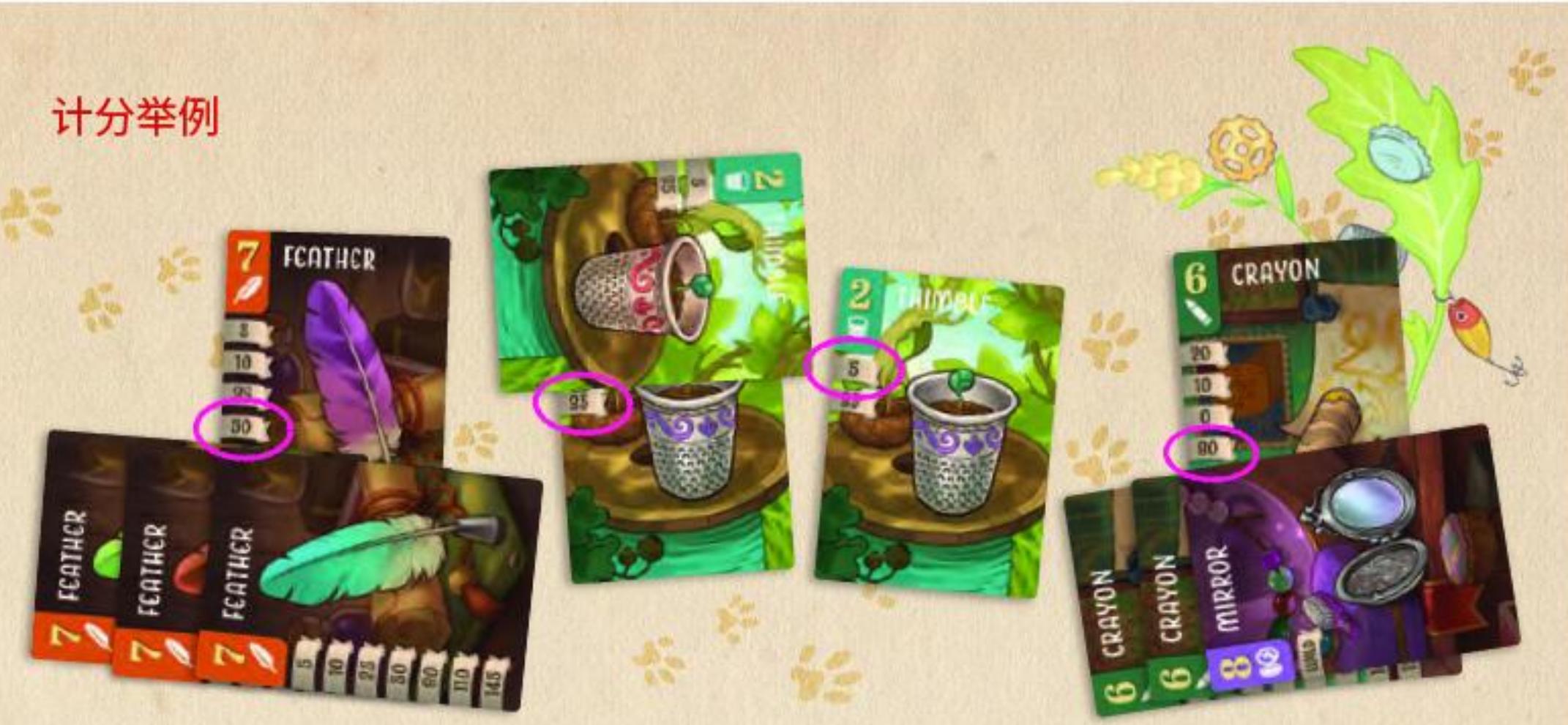
游戏结束时,Brisby 拥有 4 张羽毛牌、3 张顶针牌、3 张蜡笔牌和 1 张镜子牌。他已按上图所示排列,以便更容易看清每个套组的饰品分数。4 张羽毛牌组成的套组总共值 50 分。完整的顶针套组值 35 分。Brisby 的第 3 张顶针牌开始组成第二套组,值 5 分。Brisby 决定将他们的镜子牌计为蜡笔牌(而非羽毛牌或顶针牌)。这样组成了一个 4 张蜡笔牌的套组,值 90 分,而不是仅凭 3 张蜡笔牌能得到的 0 分。

BRISBY
将这些套组分数相加,
Brisby 的最终得分是 180 饰品分数。
(50+35+5+90=180)
2人规则
对于双人对局,使用 Nimbus 的特殊规则来模拟第三位玩家。Nimbus 是一个简单的自动玩家,能提升游戏体验。Nimbus 的玩法与其他玩家相同,但有两个例外:
-
Nimbus 不获得任何分数。
-
Nimbus 使用牌组中的牌进行竞拍。
设置为双人游戏
按照 3 人游戏的方式设置,但务必将 Nimbus 作为 3 个角色板块之一。

竞拍阶段
当轮到 Nimbus 竞拍时,他们总是从牌组中亮出 2 张牌作为竞拍牌。
选取阶段
当轮到 Nimbus 认领堆时,他们认领竞拍强度最高的两堆并将其放在一旁。如果需要解决平局,在当前回合顺位中最接近 first 的玩家决定 Nimbus 认领哪一堆平局中的堆。
提醒:Nimbus 不能认领自己的竞拍牌,除非他在回合顺位中是最后一个。

上图显示了一个双人游戏在选取阶段开始时的状态。Patches 首先行动,从轮次设置中选取了铃铛和镜子,以及 Nimbus 的竞拍牌(瓶盖和宝石)。轮到 Nimbus 时,他认领竞拍强度最高的两堆。由于 Patches 的竞拍牌是唯一剩下的 2 张牌的堆,Nimbus 将其作为第一堆认领。这剩下 3 个相同大小的堆:纽扣、瓶盖和弹珠。查看它们的饰品分数,瓶盖和弹珠同为 5 点。Patches 在当前回合顺位中处于 first 位置,因此由他来解决平局。Patches 决定 Nimbus 应该选取弹珠,将纽扣和瓶盖留给 Penfold。
饰品卡 & 计分
饰品价值用于竞拍,并表明该饰品组成完整套组需要多少张牌。牌组中每种饰品有两套完整套组(镜子总共只有4张)。
同名饰品也拥有相同的花色图标。
套组图标
游戏结束时根据套组中的牌数计算饰品分数。上方数字是1张套组的分数,下方数字是完整套组的分数。
例如,2 张弹珠组成的套组可得 10 分,如右图所示。
饰品名称

游戏设计:Rocco Privetera
开发:Paul Salomon
插画: Sandara Tang
平面设计:Manny Vega游戏测试:Tommy O'Brien, Pete Wissinger, Richard Nava, Emily Nava, Patrick Fitzgibbon, Henry R. Seymour, Gabrielle Stewart, Patrick Logan, David Burleyson, Dave Deenik
游戏时有疑问或有故事要分享?
发送邮件至 help@gamehead.com 或 在 BoardGameGeek 上提及
需要替换零件吗?
在 gamehead.com/replacement-parts 申请
想要保持联系吗?
在 gamehead.com/newsletter 订阅每月更新
© 2025 GameHead Products Incorporated。Trinket Trove 是 GameHead Products Incorporated 的商标。保留所有权利。
下载 MarkdownTrinket Trove Rulebook for Web.md12.8 KB
TRINKST TROVE
RULEBOOK
TRINKGT TROVE
Design by Rocco Privetera with Paul Salomon Art by Sandara Tang
2-6 players • 30 minutes ages 10+ · competitive
Beneath the floor boards and between the walls, a secret world thrives. By moonlight, the collectors scurry into quiet corners in search of tiny treasures: mirrored lockets, shiny buttons, gleaming gems, and more. When dawn breaks, the animals retreat to their snug little burrows to share stories and trade the night's trinkets.
OVERVIEW
You are a collector - a cute little critter living in the margins of the human world. In Trinket Trove, you trade and collect sets of trinket cards to decorate your burrow. You want to collect sets of the same trinket to score as many trinket points as you can. Each round, new trinkets will be up for grabs. You and the other players offer up your own trinkets to decide who gets first pick of the
new ones. At the end of 6 rounds (5 rounds in a 5- or 6-player game) the collector with the most trinket points wins!


SETUP

Shuffle the deck of cards and give each player 4 cards for their starting hand. If any player has a mirror they must swap it with another card from the deck and reshuffle the deck.


Create a face-down "timer deck" with 6 cards from the deck (10 cards in a 5- or 6-player game). Place the deck of cards and the timer deck on opposite sides of the play area.

Place the “first” and “last” tokens on the left and right sides of the play area in the center of the table. The space between these tiles is called the "turn order row." The space above this forms another area called the “bid row."

Select l character tile for each player. Return any unused turn order tile to the box.


Set the initial turn order for the game by randomly placing the character tiles, O-side down, side by side in the turn order row.
Timer Deck
Base Deck


Bid Row


Turn Order Row

GAMEPLAY

Trinket Trove is played over 6 rounds (5 rounds in a 5- or 6- player game). Each round consists of three phases:
Round Setup Bidding Drafting
Maximize your trinket points by collecting sets of matching trinkets. Mirrors are "wild", and each Mirror may be added to any set of trinkets at the end of the game. The collector with the most trinket points wins!
Round Setup
• From the deck, reveal 1 card per player face up into the center of the table.
Each card or pile of cards is considered a separate “lot" that can be claimed by a player during the drafting phase.
• Add a face up card from the timer deck to the first lot.
In a 5- or 6-player game, add 1 face up card from the timer deck to each of the first 2 lots.
Lots with multiple cards should always be splayed vertically so that their names are visible.

Bidding & Turn Order
Players now offer trinkets to determine turn order. Players take turns creating their bid, from first to last, as shown in the turn order row.
• Choose any number of cards from your hand to place into the bid row.
You may choose to bid 0 cards from your hand. In this case, flip over the top card of the draw deck and place it face up as your bid.
• Place your character tile on top of your bid.
If you chose to bid 0 cards from your hand, place your character tile O-side up on top of the card you drew from the deck. If you bid using cards from your hand, place your character tile 0-side down. Bids with multiple cards should be splayed vertically so the names are visible.
• Determine Turn Order.
As bids are added to the bid row, they should be arranged left to right, based first on how many cards are in the bid, and then by trinket value. Bids with more cards are considered higher and should be placed to the left. Bids with the same number of cards should be arranged left to right, based on the total trinket value of each bid. For bids with the same number of cards and the same total trinket value, place the later bid to the left.
Turn order is determined by the quantity of cards a player bid, with ties being broken by the total trinket value of the bid cards. Continued ties favor the player who bid later.
Bidding Example

Wander (purple) bids first, placing 1 Key in the bid row. Next Brisby (red) offers two cards from their hand, placing to the left of Wander's bid, since Brisby bid more cards. Next Templeton (blue) decides to "bid 0,"so they flip a card up from the deck, use the 0 side of their character tile, and place their bid to the right side of the row, since "0 cards" is less than Wander's 1-card bid. Finally, Gouda (orange) bids 1 card, like Wander, but since Gouda's card shows a 3, which is less than Wander's 4, Gouda places their bid between Wander and Templeton.
After all players have bid, slide each character tile down to the turn order row, directly beneath the associated bid. This indicates turn order for the drafting phase and serves as a reminder of which player bid which cards.

The colored name tags above are used in the Drafting Example on the next page.
Drafting
Players take their turn, from first to last, as shown in the turn order row.
• On your turn, claim two lots of trinket cards and add them to your hand.
You may take any lot from round setup or the cards bid by other players. Each bid is a separate lot. The last player claims all remaining cards. This is the only way in which a player may end up claiming their own bid.
Drafting Example
In the example on the left, Brisby takes their turn first. They cannot claim their own bid. Instead, they take the crayon and feather from round setup as their first lot, and they take Templeton's bid as their second lot. Wander is up next. They claim Brisby's bid (Shell and Thimble) as their first lot, and the Thimble from round setup as their second lot. For Gouda's turn they take the Shell and Key. This leaves only the Gear and Bell for Templeton to take.

End of Round
Once all players have claimed two lots, the round is over. Keep your hand of trinket cards and leave your character tile where it is in the turn order row.
If any cards are left in the timer deck, begin a new round.


The game ends after 6 rounds (5 rounds in a 5- or 6-player game). At this point the timer deck will be depleted.
Final Score
Arrange your hand of cards into sets of cards with the same name. Mirrors count as "wild" and each mirror may be added to any set of trinkets. If a player has a complete set for one of their trinkets, they may begin a second set of that card type and score points for both sets.
Add up the trinket points from all of your sets to determine your final score. The collector with the most trinket points wins. In the case of a tie, the tied player closest to "first" in the turn order row is the winner!


At the end of the game, Brisby has 4 feathers, 3 thimbles, 3 crayons, and 1 mirror. They have arranged it as shown above to make it easier to see the trinket points for each set. The set of 4 feathers is worth 50 points total. The complete set of thimbles is worth 35 points. Brisby's 3rd thimble begins a second set, worth 5 points. Brisby decides to count their mirror as a crayon (rather than a feather or thimble). This creates a set of 4 crayons, worth 90 points, rather than the 0 points they would have scored for the 3 crayons alone.


BRISBY
Adding these set scores together, Brisby's final score is 180 trinket points. (50+35+5+90=180)
TWO-PLAYER RULES
For a game with two players, use special rules for Nimbus to simulate a third player. Nimbus is a simple, automated player that improves the gameplay experience.
Nimbus acts just like any player with two exceptions:
-
Nimbus does not score any points.
-
Nimbus bids with cards from the deck.
Setup
Set up the game as usual for a 3-player game, but be sure to include Nimbus as one of the 3 character tiles.
Bidding
When it is Nimbus' turn to bid, they always bid 2 cards face up from the deck.
Drafting
When it is Nimbus's turn to claim lots, they claim the two lots with the highest bid strength and set them aside. If a tie must be resolved, the player closest to first in the current turn order decides which of the tied lots are claimed by Nimbus.
Reminder: Nimbus may not claim their own bid unless they are last in turn order.
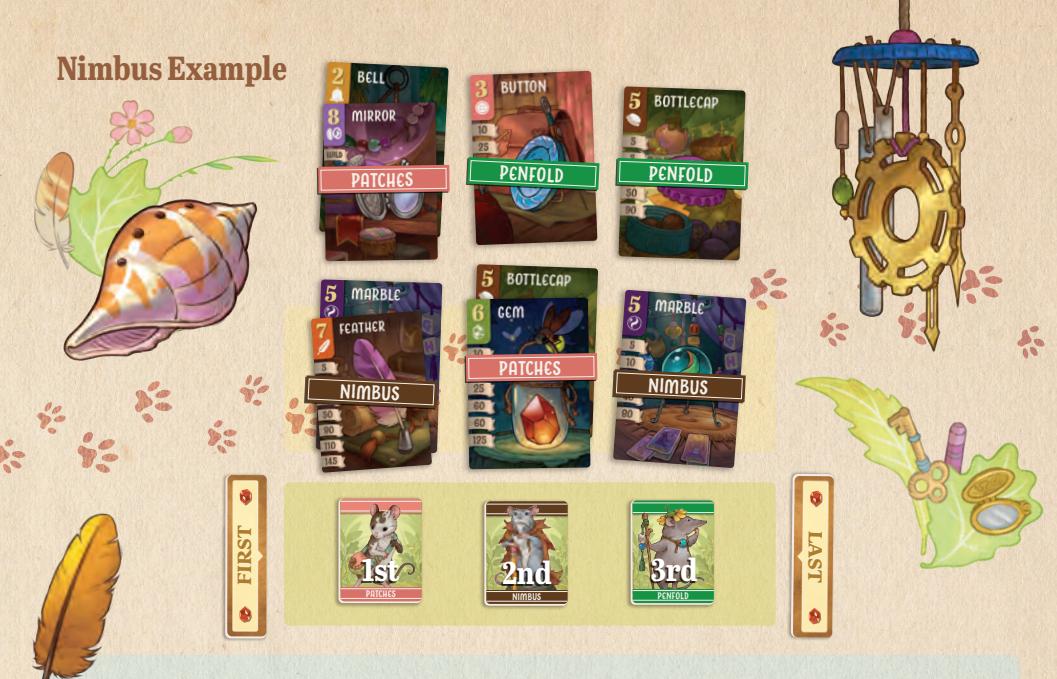
The image above shows a 2-player game at the start of the drafting phase. Patches takes the first turn and drafts the bell and mirror from round setup and Nimbus's bid (bottlecap and gem). For Nimbus's turn they claim the 2 lots with the largest bid strength. Since Patches's bid is the only remaining lot with 2 cards, Nimbus claims it as his first lot. This leaves 3 equally-sized lots: the button, bottlecap, and marble. Looking at their trinket values, the bottlecap and marble are tied at 5. Patches is first in the current turn order, so they get to resolve the tie. Patches decides that Nimbus should draft the marble, leaving the button and bottlecap for Penfold.
TRINKET CARDS & SCORING
Trinket Value is used in bidding and indicates how many cards make a full set for that trinket. There are 2 full sets of each trinket in the deck (there are only 4 Mirrors total). Trinkets with the same name will have the same suit icon as well.
Trinket points are scored at the end of the game, depending on how many cards are in the set. The top number is scored for a set of1 card, while the bottom number scores for a full set. A set of 2 Marbles, for example, would score 10 points, as shown to the right.
Playtesting: Tommy O'Brien, Pete Wissinger, Richard Nava, Emily Nava, Patrick Fitzgibbon, Henry R. Seymour, Gabrielle Stewart, Patrick Logan, David Burleyson, Dave Deenik
Game Design: Rocco Privetera Development: Paul Salomon Illustration: Sandara Tang Graphic Design: Manny Vega
Trinket Value
Trinket Name
Trinket Points
Suit Icon
HAVE A QUESTION WHILE PLAYING OR A STORY TO SHARE? Email help@gamehead.com or mention it on BoardGameGeek
NEED A REPLACEMENT PART? Request it at gamehead.com/replacement-parts
WANT TO STAY IN TOUCH? Subscribe to monthly updates at gamehead.com/newsletter
下载 Markdown原文为社区整理/出版社公开资料,版权归原作者,仅供个人学习查阅。